




Abstract
The growing global demand for sustainable and efficient energy systems has accelerated advancements in solar cell technologies. This review presents a systematic and quantitative analysis of recent developments in solar cells enabled by nanotechnology. A PRISMA-based methodology is adopted to ensure transparency and reproducibility in literature selection. Key nanomaterials such as perovskites, quantum dots, graphene, and carbon nanotubes are critically evaluated based on power conversion efficiency (PCE), stability, cost, and environmental impact. Additionally, nano-enhanced thermal systems including photovoltaic-thermal (PVT) systems, nanofluids, and phase change materials (PCM) are analyzed using thermodynamic principles. The review highlights major challenges such as degradation mechanisms, scalability, and toxicity while proposing a future research roadmap focused on stability engineering and sustainable material design.
Introduction
With rapid industrialization, population growth, and rising energy demand, the shift toward sustainable energy sources has become a global priority. Solar energy, being abundant and inexhaustible, offers a promising solution to energy challenges when harnessed efficiently (Mitali et al., 2022). Photovoltaic (PV) cells convert incident solar photons into electrical energy. Over the past decade, the global average levelized cost of electricity from PV systems has declined by nearly 85% (Abdullah-Al-Mahbub and Islam, 2023; Yolcan, 2023), making solar power economically competitive with, and often cheaper than, conventional power generation, especially in high-irradiance regions (Prema et al., 2021). Despite notable techno-economic progress, further enhancement in efficiency and cost reduction remains feasible (Sharma et al. 2022). Nanotechnology has emerged as a key research focus in this context, encompassing applications such as nanoparticles in PV cells (Ansari et al., 2021), nanofluids in PV–thermal (PVT) systems (Bandaru et al., 2021), and nano-enhanced phase change materials (nano-PCMs) for PV or PVT integration (Alva et al., 2017).
Solar energy serves as a versatile and sustainable resource, offering fundamental applications across various sectors. One of its most prevalent uses is electricity generation through PV systems, which convert sunlight into electricity for residential, commercial, and industrial purposes. Rooftop solar installations, for instance, provide clean energy to households, reducing reliance on fossil fuels and lowering energy costs. Additionally, solar thermal systems are widely used for water heating in homes and industries, offering an efficient alternative to traditional heating methods. Over 100 million solar water heating systems are in operation globally, underscoring their importance in energy conservation. In rural and off-grid areas, solar energy plays a critical role in addressing energy access challenges. Solar lanterns and solar-powered pumps enable lighting and irrigation in regions with limited grid connectivity, improving livelihoods and productivity. Furthermore, solar cookers provide a clean and eco-friendly solution for cooking, particularly in developing countries. These basic solar applications contribute significantly to reducing greenhouse gas emissions while promoting energy independence. These examples demonstrate how solar energy is transforming traditional energy use into sustainable practices across diverse contexts (Kabir et al., 2018).
Solar energy has increasingly been integrated into agriculture, addressing critical challenges such as energy costs, water scarcity, and the need for sustainable practices. The implementation of solar-powered irrigation systems is one of the most impactful applications, enabling farmers to pump water without relying on fossil fuels or grid electricity. These systems are particularly beneficial in regions with abundant sunlight and limited access to traditional energy sources, ensuring reliable water supply for crops. Solar irrigation reduces operational costs and carbon emissions, making it a sustainable alternative to conventional methods. Post-harvest losses, a significant challenge in agriculture, are also mitigated through solar technologies. Solar dryers, for instance, provide an energy-efficient way to process and preserve agricultural produce, reducing spoilage and enhancing the quality of dried products (El-Mesery et al., 2022). The solar drying systems significantly reduce dependency on traditional energy sources and improve the economic returns for small-scale farmers. Similarly, solar-powered greenhouses have transformed crop production by maintaining optimal growing conditions year-round, even in extreme climates. These greenhouses improve yields while reducing energy consumption compared to conventional heating methods (Espitia et al., 2024).
Furthermore, solar energy is now being used to power advanced agricultural technologies such as automated irrigation systems, precision farming tools, and solar tractors. The integration of solar with these technologies fosters energy independence and improves operational efficiency. Despite its advantages, challenges such as high initial costs and maintenance requirements persist, necessitating policy support and financial incentives for widespread adoption. In conclusion, solar energy is revolutionizing agriculture by promoting sustainability, enhancing productivity, and reducing environmental impacts, as supported by numerous studies in the field.
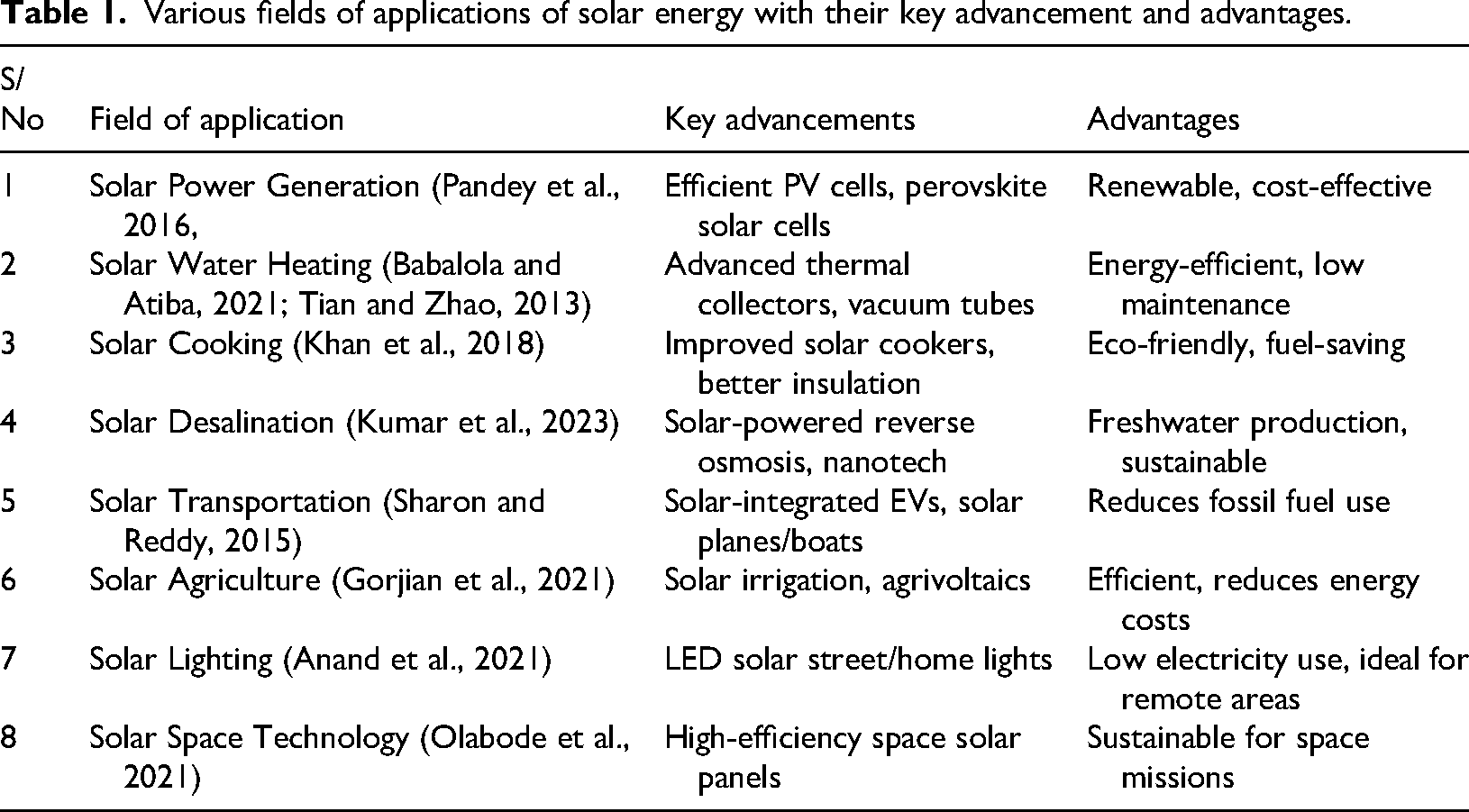
As technology evolves, solar energy applications have advanced, extending its impact across diverse industries. In agriculture, solar-powered irrigation systems and greenhouses optimize water use and improve crop yields. In transportation, solar panels are being integrated into electric vehicles and charging stations, promoting greener mobility solutions. Solar energy also plays a pivotal role in powering large-scale desalination plants, providing clean water in arid regions. Innovative solar-powered devices, such as solar drones and high-efficiency solar cooling systems, are revolutionizing their respective fields. Furthermore, solar energy is increasingly utilized in space exploration, where satellites and rovers depend on it for sustainable operations. A comprehensive review of recent advances and emerging applications of solar photovoltaic (SPV) systems, including both off-grid and grid-connected power plants was presented (Pandey et al., 2016). The study reported that the efficiency of photovoltaic systems ranged from 10% to 23%, highlighting the need for further improvement in PV efficiency for better global utilization. Tian and Zhao (Tian and Zhao, 2013) described solar collectors and thermal energy storage systems used in solar thermal applications. Babalola and Atiba (2021) focused on the application of solar-powered cars. Kumar et al. (2021) studied solar thermal energy technologies and their applications in process heating and power generation. Khan et al. (2018)) reviewed various studies and highlighted solar-powered electric vehicle charging systems. Gorjian et al. (2021), Aroonsrimorakot and Laiphrakpam (2019), and Kumar et al. (2023) demonstrated various opportunities for implementing solar energy technologies in agricultural greenhouses and farming for sustainable development. Sharon and Reddy (2015) and Anand et al. (2021) highlighted solar PVT integrated desalination technologies. Olabode et al. (2021) presented a comprehensive review of hybrid power systems for off-grid locations, focusing on design technologies, applications, and future trends. These advanced applications demonstrate the versatility and transformative potential of solar energy in addressing complex challenges across multiple sectors. Various fields of applications of solar energy are represented by Figure 1 and Table 1.
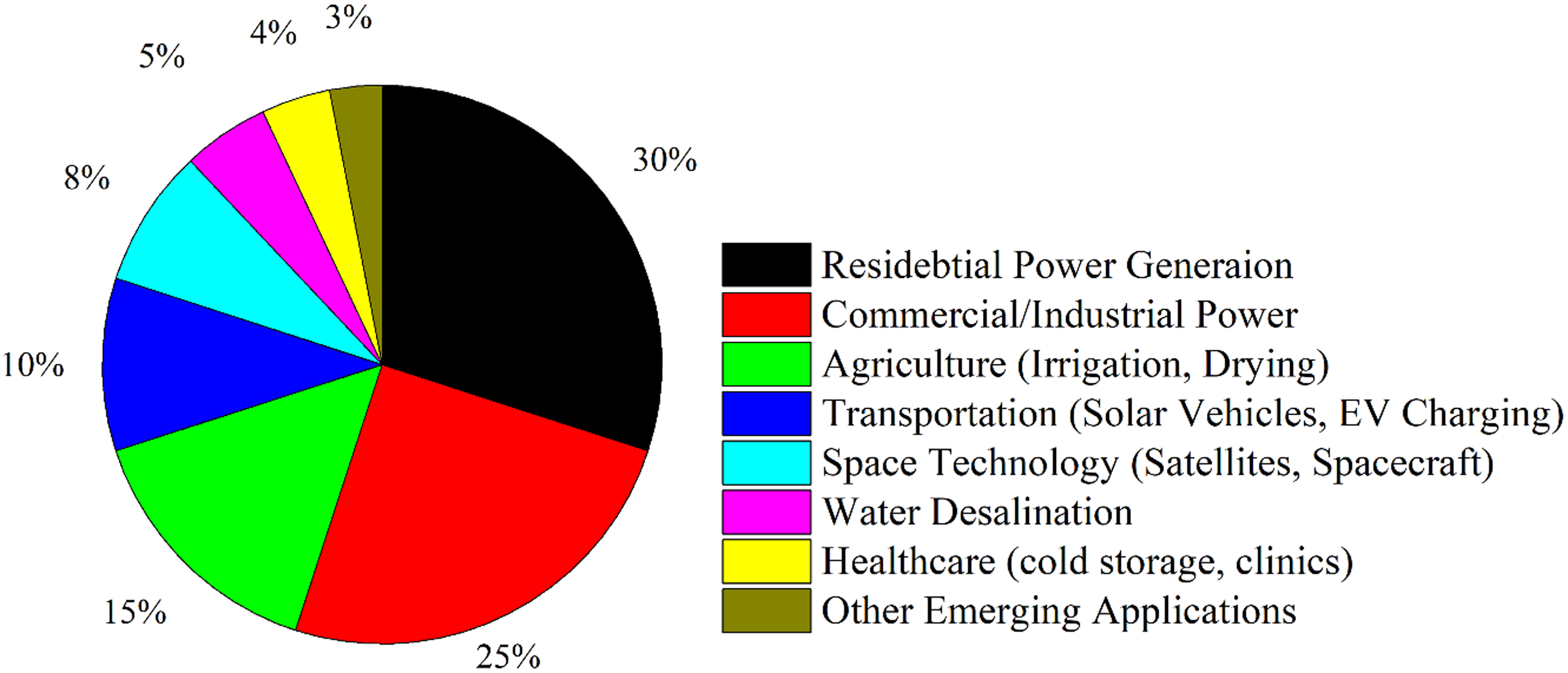
Various fields of applications of solar energy (12-22).
Various fields of applications of solar energy with their key advancement and advantages.
The global transition toward sustainable energy solutions has intensified the demand for solar energy development. As a clean, renewable, and virtually inexhaustible resource, solar energy presents a viable alternative to fossil fuels, which are rapidly depleting and major contributors to environmental pollution. Rising energy requirements driven by industrialization, population growth, and urbanization further highlight its importance. Over the past decade, the levelized cost of electricity from solar PV systems has decreased by 85%, positioning it among the most cost-competitive renewable sources (Owusu and Asumadu-Sarkodie, 2016). This cost reduction reinforces its role in enabling a low-carbon energy transition. Solar deployment is also crucial for improving energy access in remote and underserved regions, where microgrids and standalone systems have enhanced living standards and supported local economies. Integration into transportation, agriculture, and industry demonstrates its adaptability and potential for innovation. Large-scale adoption can substantially reduce greenhouse gas emissions and reliance on non-renewable resources, aiding climate change mitigation. Nevertheless, challenges such as intermittency, energy storage limitations, and high upfront costs persist. Addressing these barriers through technological innovation, supportive policies, and financial incentives remains essential for sustainable growth in solar energy utilization (Izam et al., 2022; Maka and Alabid, 2022). The applications of nanotechnology in solar energy systems have been classified into three major categories:
Solar energy, one of the most promising renewable energy sources, has garnered significant interest in recent years due to the global push towards reducing carbon emissions. The quest for more efficient and cost-effective solar cells has led to the exploration of advanced technologies, with nanotechnology emerging as a key player. Nanotechnology, which involves the manipulation of materials at the nanometer scale, offers significant potential to revolutionize solar cell technology. Accordingly, the review explores the need for nanotechnology in solar cells, focusing on its role in improving efficiency, lowering costs, and enabling novel materials. The objective of this review paper is to provide a comprehensive overview of the integration of nanotechnology in the development of advanced solar cells. It aims to analyze the fundamental principles, design strategies, and material innovations enabled by nanotechnology that enhance the efficiency, stability, and cost-effectiveness of solar cells. The paper discusses recent breakthroughs in nanomaterials such as quantum dots, perovskites, graphene, and nanostructured interfaces, highlighting their role in improving light absorption, charge transport, and overall performance. Additionally, it seeks to explore emerging trends, challenges, and future research directions, offering insights for scientists and engineers to advance the field of PV technology.
This review distinguishes itself from existing literature by integrating a systematic PRISMA-based methodology with quantitative benchmarking of nanomaterial performance metrics such as PCE, stability, and cost. Unlike conventional narrative reviews, this study establishes a direct relationship between nanomaterial properties (bandgap, carrier mobility, recombination rate) and solar cell performance. Additionally, the review uniquely combines PV and PVT perspectives, providing a holistic techno-economic and thermodynamic analysis.
Systematic review methodology
This review was conducted using a PRISMA-based systematic literature review approach to ensure transparency, reproducibility, and scientific rigor. Relevant research articles were collected from major scientific databases including Scopus, Web of Science, ScienceDirect, IEEE Xplore, SpringerLink, and Google Scholar. The literature search was performed using combinations of keywords such as “nanotechnology in solar cells,” “perovskite solar cells,” “quantum dot photovoltaics,” “carbon nanotube solar cells,” “nanofluids in photovoltaic thermal systems,” “nano-enhanced PCM,” and “advanced photovoltaic materials.”
Primarily, peer-reviewed journal articles published between 2014 and 2026 were considered to ensure the inclusion of recent advancements and technological developments. Additionally, several landmark and benchmark studies published prior to this period were also included due to their significant scientific contribution to the field. Conference papers, non-English articles, duplicate studies, and studies lacking adequate experimental or numerical validation were excluded from the review process. Initially, 652 articles were identified through database searching. After removing duplicate and irrelevant studies, 286 articles were screened based on title and abstract evaluation. Finally, 100 high-quality articles satisfying the inclusion criteria were selected for detailed review, comparative analysis, and technical assessment.
Literature survey
History of solar energy
The use of solar energy has progressed from ancient applications to advanced modern technologies (Meinel and Meinel, 1977; Sarver, T., Al-Qaraghuli and Kazmerski, 2013). Early civilizations, including the Greeks and Romans, used burning mirrors to concentrate sunlight for ceremonial purposes. In 1839, French physicist Alexandre-Edmond Becquerel discovered the PV effect, forming the foundation of solar cell technology. Bell Labs developed the first practical PV cell in 1954, marking a major milestone in the field. Interest in solar energy grew during fossil fuel crises, driving research, efficiency improvements, and cost reductions. Today, solar power is a key component of sustainable development, supporting global efforts to reduce greenhouse gas emissions and mitigate climate change. Nanotechnology now plays a central role in this progress, enabling efficiency enhancement, cost optimization, and design flexibility through nanoscale material engineering (Wang et al., 2022). The historical evolution of solar energy is illustrated in Figure 2.
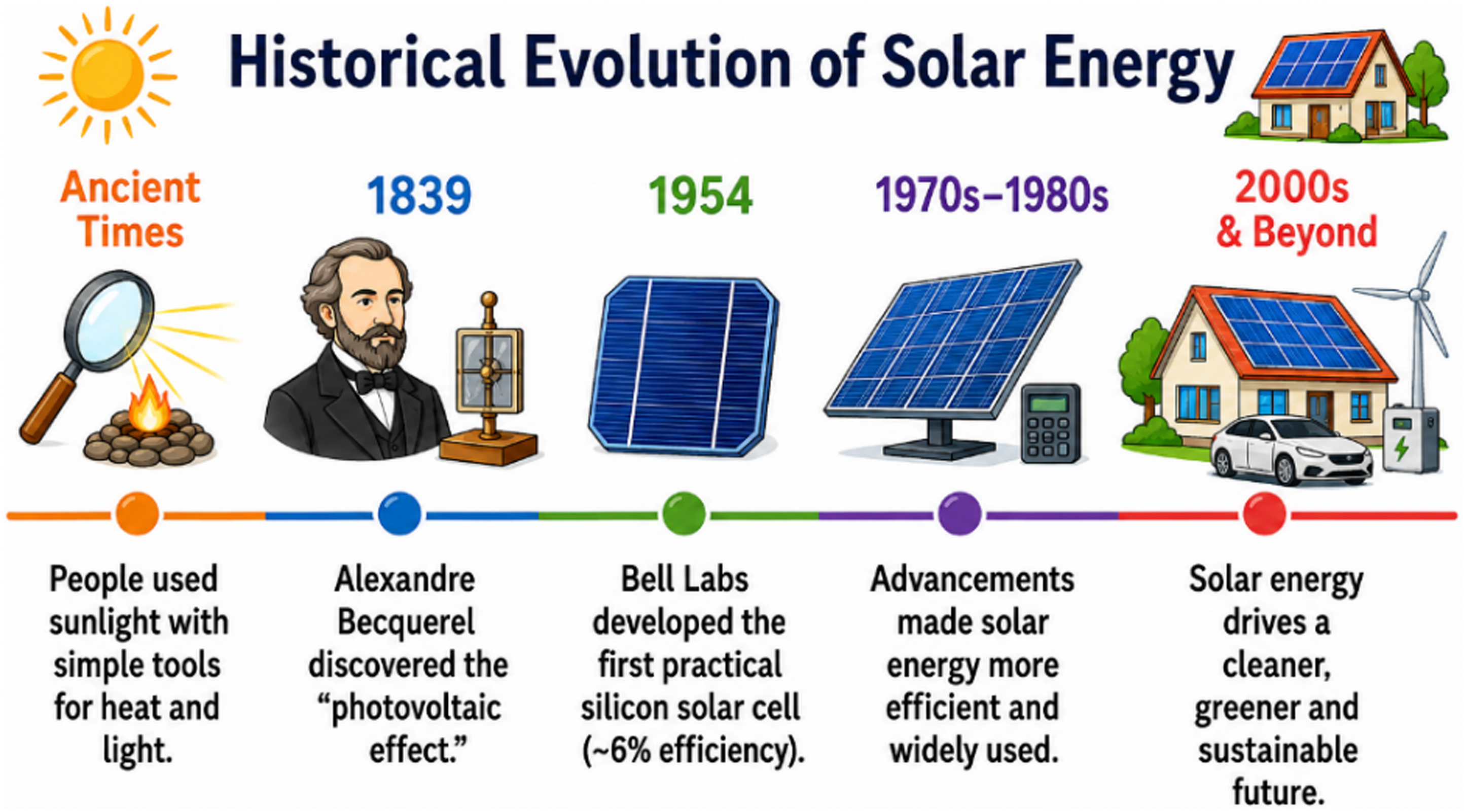
History of solar energy.
History of nanotechnology
The concept of nanotechnology was first proposed by Nobel laureate Richard P. Feynman (Singh et al. 2023). In 1974, Norio Taniguchi introduced the term “nanotechnology” to describe semiconductor processes at the nanoscale, defining it as the manipulation of materials at the atomic or molecular level (Breyer et al., 2022). The field advanced rapidly in the late 1980s and early 1990s with the invention of scanning tunneling microscopy (STM) and atomic force microscopy (AFM). Prior to 2000, research emphasized nanomaterial synthesis and nanostructure growth, producing CNTs, carbon nanofibers (CNFs), nanoporous membranes, and two-dimensional nanoarrays through methods such as the two-step template process and sol–gel techniques (Li et al., 1999, Niihara and Suzuki, 1999; Heulings et al. 2001). Nanowires were fabricated using similar approaches (Kubo and Nozoye, 2002.), while solid-state reactions enabled controlled nanostructure deposition (Wang et al., 2006). Efforts were also directed toward commercial applications (Boroditsky et al., 2000; Manickam et al., 2026; Vigneshwaran et al., 2026), with materials such as InGaAs and GaN proving effective in light-emitting diodes. Yang et al. (2007) incorporated CNTs and CNFs into a polystyrene matrix, achieving enhanced electromagnetic interference shielding suitable for industrial use. Over the past two decades, research has expanded to three-dimensional hybrid nanostructures, widely applied in energy storage, solar cells, and gas sensors (Chen et al., 2013; Liang et al., 2013). Ultralong nanowire arrays, up to 20 cm in length and 50 nm in diameter, have been utilized in flexible electronics, photonics, biochemical sensors, and PV devices (Yeon et al. 2013). Tungsten oxide (WO3) films have shown promise for improving solar water splitting efficiency. The annealing of nickel-coated porous carbon structures resulted in a new three-dimensional nanostructured graphene-encapsulated nickel core–shell electrode. A highly interdependent and dynamic process was observed that resulted in the complete reversal of the spatial orientations of the two-component system after the annealing process. Xiao et al. examined the mechanism of carbon diffusion and observed unexpected morphological changes of the nickel in response to carbon crystallization. The new nickel–graphene core–shell electrode demonstrated excellent electrochemical properties with promising applications in micro-batteries and biosensors (Xiao et al., 2012). The chronological development of nanotechnology is illustrated in Figure 3.
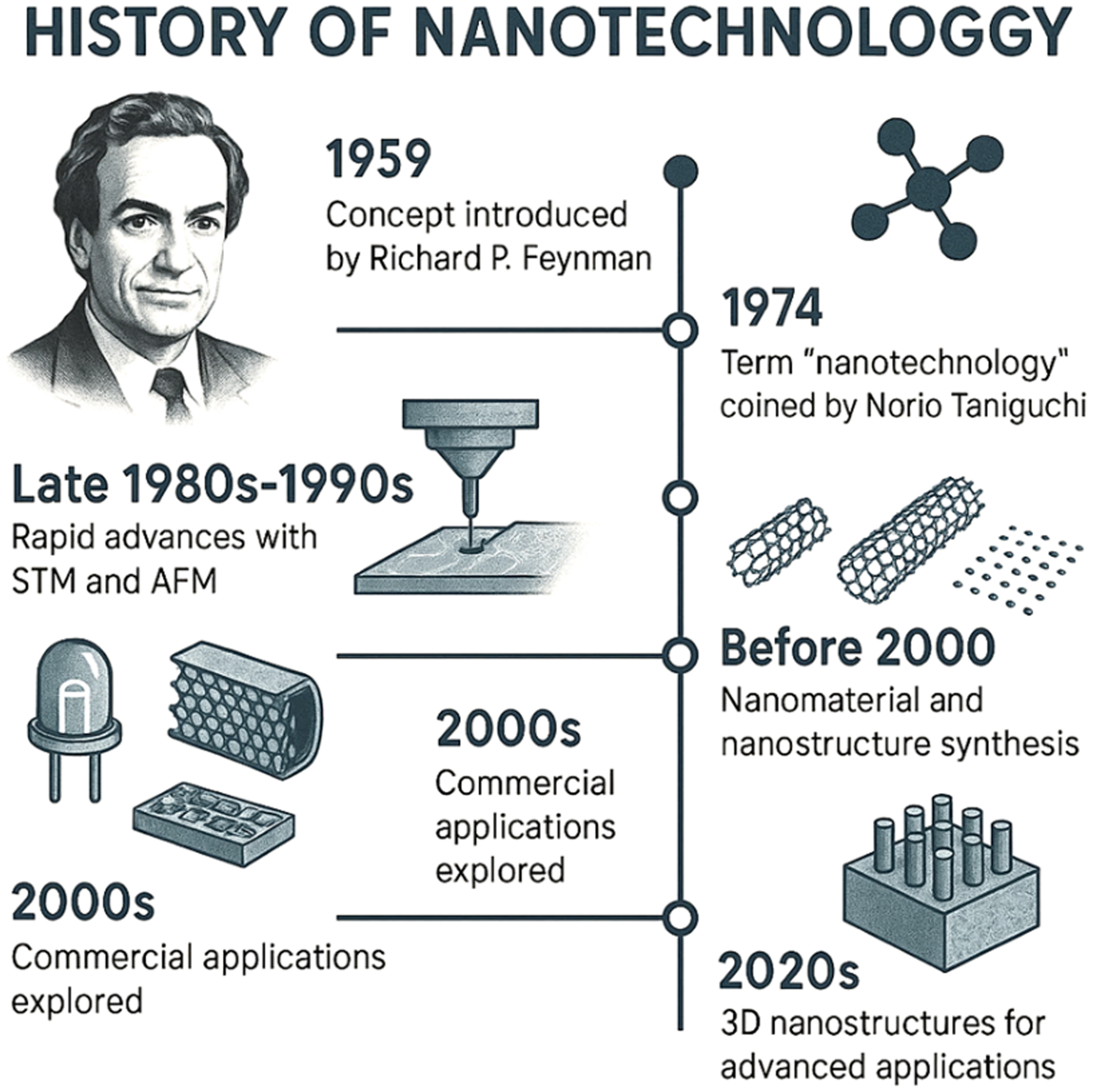
History of the development of nanotechnology.
Structures of nanomaterials
Nanomaterials play a vital role in the advancement of solar energy by offering unique structural properties that enhance efficiency, lower costs, and broaden application possibilities. These materials, including quantum dots, nanowires, and thin films, exhibit quantum confinement effects and increased surface area, which improve light absorption and charge carrier transport (Hu et al. 2021). Quantum dots, for example, can be adjusted to absorb specific light wavelengths, optimizing energy conversion. Nanowires create direct electron pathways, minimizing energy loss, while thin films facilitate the development of lightweight and flexible solar cells, making them suitable for diverse applications. The ability to precisely control these nanostructures enables the optimization of key solar cell parameters such as bandgap, carrier lifetime, and light trapping, contributing to the evolution of next-generation high-efficiency solar technologies (Lieber, 1998).
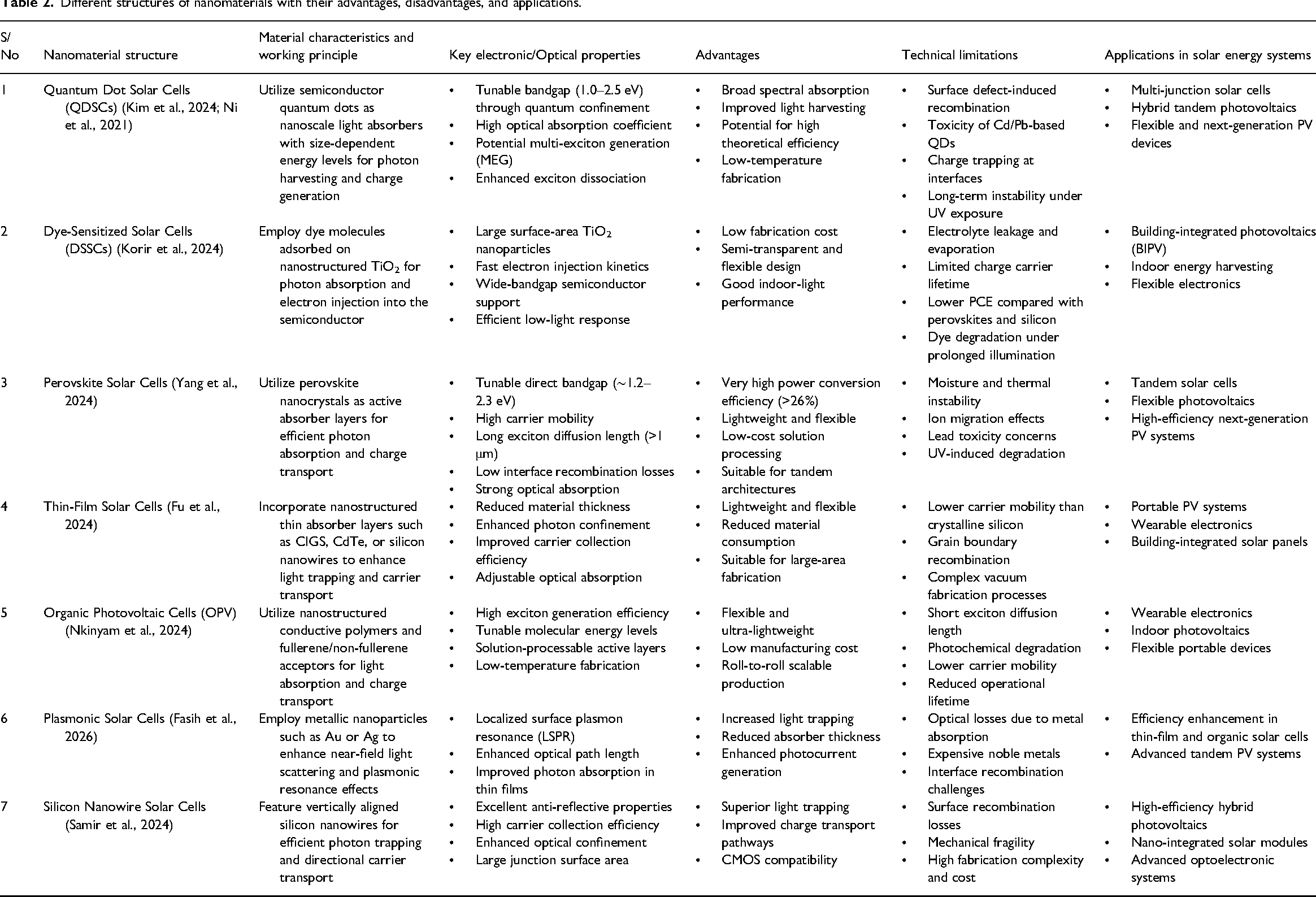
Nanostructures refer to systems where at least one dimension is 100 nanometers (nm) or smaller. They are categorized based on their dimensionality: 0D nanostructures are confined to the nanoscale in all three dimensions, 1D nanostructures are nanoscale in two dimensions, while 2D nanostructures have one dimension within the nanometer range. In contrast, 3D nanostructures extend beyond the nanoscale in all directions. Additionally, some structures exhibit 3D-like characteristics, formed by the assembly of 0D, 1D, or 2D components (Xu et al., 2017). Nanotechnology utilizes two main strategies for constructing nanostructures: the bottom-up and top-down approaches. The bottom-up method involves assembling nanodevices from atomic or molecular building blocks, whereas the top-down technique employs electron beams, extreme ultraviolet light, or X-ray lithography to directly create nanodevices on semiconductor substrates. The distinctive structural properties of 0D nanomaterials, such as their high surface-to-volume ratio and minuscule size, contribute to enhanced quantum confinement effects and edge phenomena. Various types of 0D nanomaterials have been developed, each offering unique benefits (Li et al., 2016). Graphene quantum dots, for example, are carbon-based nanoparticles with exceptional physical, chemical, and photoluminescence properties, making them highly versatile in biological applications (Chung et al., 2021). Carbon quantum dots were accidentally discovered by Xu et al. (2004) during the purification of single-walled carbon nanotubes (SWCNTs). They are valued for their outstanding light-emission properties, including tunable luminescence, single-photon emission, biocompatibility, low toxicity, chemical stability, and ease of functionalization with biomolecules. These characteristics make them ideal for applications in bioimaging, drug delivery, PVs, and sensing. Similarly, research on fullerenes, which began in 1985, identified their C60 molecular structure consisting of 12 pentagons and 20 hexagons. Fullerenes have been widely utilized in PVs, biomedicine, and catalysis. Other significant 0D nanoparticles, such as noble metal nanoparticles, up conversion nanoparticles, polymer dots, and quantum dots, play essential roles in areas like lasing, sensing, and energy technologies (Han et al., 2021). A summary of different structures of nanomaterials with their advantages, disadvantages, and applications has been tabulated and presented in Table 2.
Different structures of nanomaterials with their advantages, disadvantages, and applications.
Nanomaterials for solar panels
Nanomaterials play a crucial role in the advancement of solar panel technology, offering innovative solutions to overcome traditional efficiency and cost limitations. Their unique properties, such as high surface-to-volume ratio, tunable optical and electronic characteristics, and enhanced charge transport capabilities, enable significant improvements in light absorption, charge separation, and energy conversion efficiency. Materials like quantum dots, graphene, and perovskite nanostructures have revolutionized solar cell designs by enabling lightweight, flexible, and more efficient panels. Furthermore, nanotechnology facilitates the development of next-generation solar panels, such as dye-sensitized and quantum dot solar cells, which are cost-effective and easier to fabricate. As research progresses, nanomaterials hold immense potential to make solar energy more accessible and sustainable, accelerating the transition to renewable energy and reducing dependence on fossil fuels.
Perovskite-based solar cells have experienced significant advancements recently, notably in efficiency and commercial viability (Said et al., 2024). Efficiency improvements have been remarkable, with small-area devices achieving over 26% efficiency, and perovskite-silicon tandem cells reaching nearly 34%. In December 2024, Qcells announced a breakthrough by developing a large-area silicon solar cell with a perovskite top layer, achieving a 28.6% efficiency, potentially reducing the space required for solar installations. Additionally, perovskite solar cells (PSCs) are being integrated into consumer products; for example, Anker's Solix Solar Beach Umbrella utilizes next-generation perovskite cells to provide up to 100 W of power, demonstrating the material's versatility and potential for everyday applications. Recent certified perovskite-silicon tandem solar cells have achieved efficiencies exceeding 33% under standard AM1.5G illumination conditions. Qcells reported a certified efficiency of 28.6% for a large-area tandem device with an active area exceeding 240 cm2. However, despite these impressive efficiencies, long-term operational stability remains a major challenge due to moisture sensitivity, ion migration, and thermal degradation. Stability durations exceeding 1000 hours under continuous illumination have recently been reported using advanced encapsulation and interface engineering techniques.
Recent advancements in carbon nanotube (CNT) applications for solar cells have demonstrated their potential to enhance PV performance (Fu et al., 2026). SWCNTs have been utilized to create ideal p-n junction diodes, exhibiting significant power conversion efficiencies due to their direct bandgaps and high carrier mobility (Zhang et al., 2024). Incorporating SWCNTs into thin-film solar cells, particularly when combined with n-type crystalline silicon substrates, has resulted in power conversion efficiencies exceeding 1%. Further improvements, such as acid doping treatments, have boosted these efficiencies to over 11%. Additionally, CNTs have been explored as components in organic solar cells (OSCs) to address challenges like poor long-term environmental stability. By integrating CNTs into various components of OSCs, researchers aim to develop more efficient and sustainable devices. CNTs have been utilized in photovoltaic systems in multiple functional roles. As transparent conductive electrodes, CNT networks improve electrical conductivity and mechanical flexibility. When employed as hole transport layers, CNTs enhance carrier extraction and reduce interfacial recombination losses. In contrast, CNT-based absorber structures exhibit comparatively lower standalone photovoltaic efficiencies. Acid-doped SWCNT films have demonstrated efficiencies approaching 11% primarily when functioning as conductive interfacial layers rather than as the primary photoactive absorber material.
Perovskite and CNTs are among the most promising nanomaterials for solar cell development. While PSCs exhibit high PCE, their commercialization faces significant hurdles: achieving consistently high PCE, reducing manufacturing costs, and ensuring long-term stability. CNTs offer a potential solution by serving as transparent and conductive materials, replacing the more expensive and brittle indium tin oxide (ITO). Integrating CNTs as interlayers and back electrodes within PSCs has shown significant promise in improving both PCE and stability. This approach demonstrates the potential for CNTs to replace traditional noble metal electrodes, leading to highly efficient and stable PSCs while reducing reliance on scarce and costly materials.
Yahya et al. (2025) studied material selection and optimization for hybrid solar thermal plume systems using an adaptive neuro-fuzzy inference system (ANFIS) and k-means clustering to improve passive cooling and energy efficiency. Twenty different materials were evaluated based on daytime thermal gain, night-time cooling efficiency, ventilation rate, and energy savings under controlled experimental conditions. Silica Aerogel showed the best performance with a daytime thermal gain of 914.71 kJ, cooling efficiency of 131.07%, ventilation rate of 22.04 m3/hr, and energy savings of 72.66%. Khan et al. (Khan et al., 2025) optimized hydrogen production using biosynthesized nanostructured composites through a hybrid ANFIS–GMM model. Graphene/TiO2 (P25-Acetylene) showed the best performance with hydrogen production of 2400 μmol/g·h, photocatalytic efficiency of 98%, and stability of 56 hours. Hassan et al. (2024) evaluated various nanocomposites for photocatalytic water splitting and identified stability (27%) and hydrogen production (26%) as the most important performance criteria. Graphene/TiO2 was found to be the best nano-additive, achieving hydrogen production of 2100 μmol/g·h, photocatalytic efficiency of 95%, and stability of 50 hours. Bhatt et al. (2023) evaluated centralized chilled water systems using a multi-criteria optimization and TOPSIS approach to reduce annual cost and environmental impact. Input power (19%) and actual capacity (18%) were identified as the most significant criteria, while AC Screw 355 TR VFD achieved the highest performance score of 0.54. A summary of different nanomaterials used solar cell manufacturing with their advantages and disadvantages has been tabulated and presented in Table 3.
Different nanomaterials used in solar cell manufacturing.

Nanotechnologies for PVT systems
An emerging advancement in direct solar power generation extends beyond conventional PV systems by utilizing the heat produced on PV cells to generate low-grade thermal energy. This hybrid approach offers dual benefits: reducing PV cell temperature to minimize efficiency losses and overheating risks, and supplying thermal energy for applications such as space heating, domestic hot water, and heat pump operation. In many cases, the thermal output of PVT panels exceed their electrical generation. Incorporating nanoparticles into these systems further enhances optical properties, enabling absorption over a broader solar spectrum. Recent studies highlight that nanotechnology not only improves solar cell performance but also significantly boosts overall PVT system efficiency through advanced nano-engineering techniques (Naghdbishi et al., 2020).
The electrical efficiency of photovoltaic modules is strongly dependent on operating temperature and can be expressed as (Bahaidarah et al. 2013; Dubey et al., 2013):
Nanofluids for PVT systems
Nanofluids, which are engineered by dispersing nanoparticles in base fluids like water, oil, or ethylene glycol, play a crucial role in enhancing the performance of solar cells and PVT systems (Holkar et al., 2018). Their superior thermal conductivity and heat transfer capabilities help in efficiently dissipating the excess heat generated in solar panels, thereby improving the electrical efficiency of PV cells. Nanofluids also exhibit excellent solar radiation absorption properties due to their nanoscale size and large surface area, making them ideal for use in solar collectors and concentrated solar power systems (Izadi and Assad, 2021). In hybrid systems like PVT panels, nanofluids can simultaneously enhance thermal and electrical energy generation by reducing the temperature gradient across the system (Hosseini and Dehaj, 2021). Specific nanofluids, such as those containing graphene oxide or CNTs, have been found to significantly improve the absorption spectrum, increasing the efficiency of solar energy conversion (Alag). Additionally, nanofluids are used in advanced solar applications like direct absorption solar collectors (DASCs), where they act as both heat transfer media and solar energy absorbers. These fluids have also been explored for integrating nanomaterials like TiO2, Al2O3, and ZnO, which enhance optical and thermal properties. Despite challenges such as stability and cost, nanofluids remain a promising solution for boosting the overall efficiency and performance of solar energy systems (Attia et al., 2024; Qu et al., 2022).
Nanofluids consist of a base fluid, such as water or thermal fluids, combined with colloidal nanoparticles ranging in size from 1 nm to 100 nm. The addition of nanoparticles alters the fluid's thermal properties, such as conductivity, viscosity, and specific heat, enhancing its overall thermal performance (Alrowaili et al., 2022). This enhancement reduces the heat transfer area required on the back of solar panels. Nanofluids also exhibit excellent solar radiation absorption due to their small particle size and large surface area, which improves solar energy capture (Hussein et al., 2024). However, challenges such as thermal instability (e.g., particle suspension or agglomeration), chemical compatibility issues with system components, manufacturing complexities, and high costs of materials and preparation remain obstacles. Nanofluids are categorized based on the type of nanomaterial, its composition, and the base fluid used. For thermal applications, they are further classified into mono-nanofluids, which contain single-component materials like pure metals, metal oxides, carbides, nitrides, or carbon, and hybrid nanofluids, which are mixtures or composites of different nanomaterials. Mono-nanofluids, in particular, have been extensively studied for their diverse applications in thermal processes (Bharadwaj et al., 2024). Although nanofluids significantly improve thermal conductivity and heat transfer characteristics in PVT systems, their engineering applicability depends on several critical factors. Increased nanoparticle concentration may increase viscosity and pumping power requirements, thereby affecting overall system efficiency. Reynolds number, particle agglomeration, pressure drop, and long-term fouling behavior must also be carefully considered during system optimization. Experimental studies indicate that thermal efficiency enhancement beyond optimum nanoparticle concentration may become negligible due to hydraulic losses (Abdulhaleem et al., 2023; Sardarabadi et al., 2017). A summary of recent developments of different nanofluids used in solar cell manufacturing has been tabulated and presented in Table 4.
Recent developments of different nanofluids used in solar cell manufacturing.
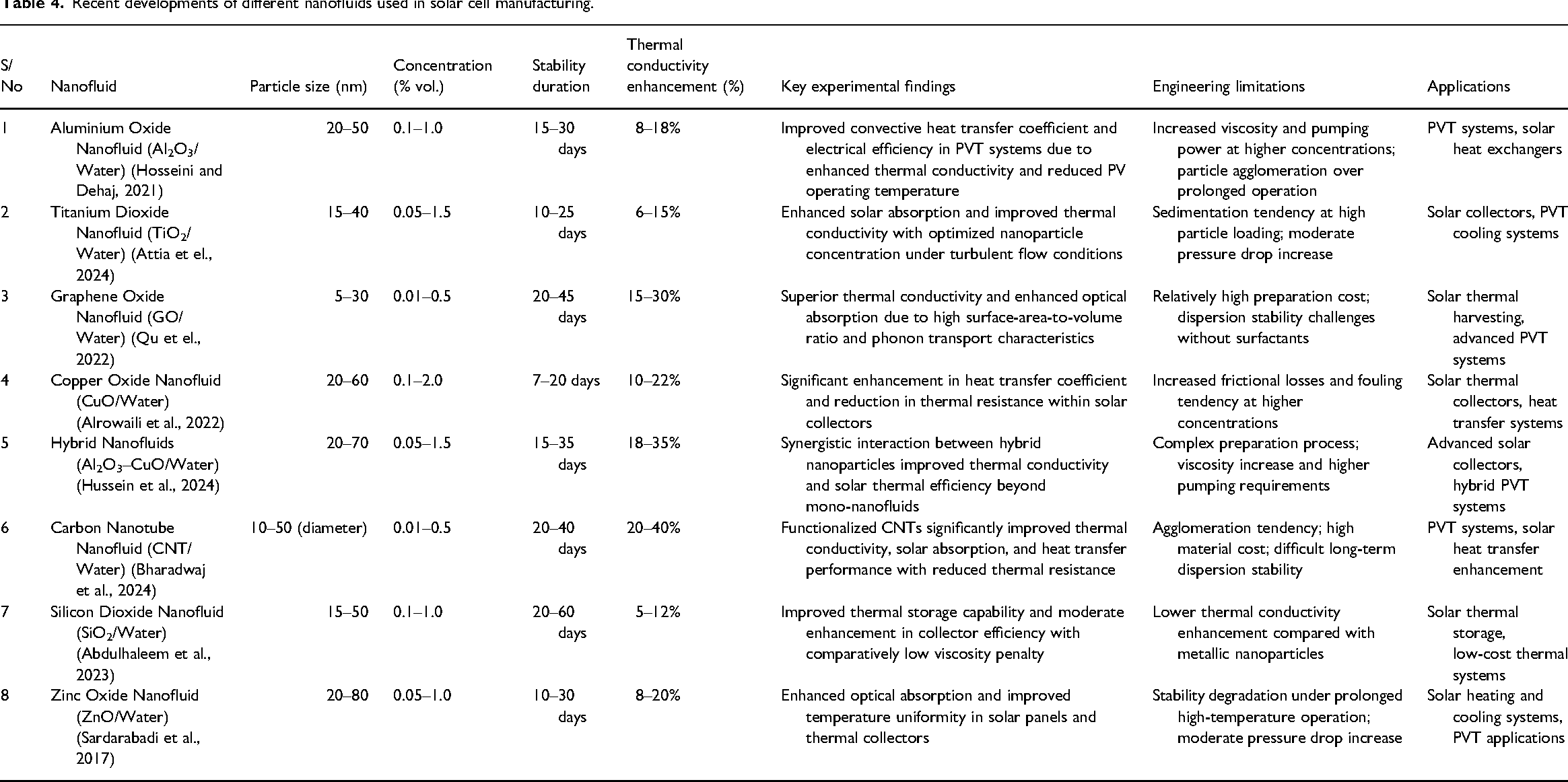
The thermal performance of nanofluids depends strongly on nanoparticle concentration, particle size, dispersion stability, and base fluid properties. Experimental studies reported thermal conductivity enhancements ranging from 8% to 35% using nanoparticle concentrations between 0.1% and 2% by volume. Nanoparticle sizes commonly ranged between 10 and 80 nm, while stable dispersion durations varied from several days to multiple weeks depending on surfactant usage and preparation methods.
Economic and commercialization aspects of nanotechnology-based solar cells
Cost remains one of the most critical factors influencing the large-scale commercialization and industrial deployment of nanotechnology-based solar cells. Although advanced nanomaterials such as perovskites, quantum dots, graphene, and CNTs have demonstrated remarkable improvements in photovoltaic efficiency and optical performance, several economic and manufacturing challenges still limit their widespread adoption. Conventional crystalline silicon photovoltaic systems currently dominate the market due to their mature fabrication technology, long operational lifetime, and continuously declining production costs, typically ranging from approximately $0.20/W to 0.40/W depending on manufacturing scale and region. In contrast, emerging nanotechnology-assisted solar cells aim to further reduce production costs through low-temperature processing, solution-based synthesis, inkjet printing, and roll-to-roll manufacturing techniques.
PSCs, for example, offer significant economic advantages because they require lower material consumption and simpler fabrication processes compared with conventional silicon-based technologies. Similarly, organic and quantum dot solar cells provide opportunities for flexible, lightweight, and large-area photovoltaic applications with potentially lower manufacturing expenses. However, issues related to long-term stability, encapsulation requirements, degradation under environmental exposure, and scalability of nanomaterial synthesis increase the overall system cost and hinder commercial viability. Additionally, certain nanomaterials such as indium-, gallium-, and noble metal-based nanoparticles involve resource scarcity and higher raw material costs, which may affect future market scalability. Therefore, future commercialization efforts should focus on developing low-cost, environmentally sustainable, and highly stable nanomaterials together with scalable manufacturing techniques to achieve economically viable next-generation solar energy systems.
Environmental issues
Integrating nanotechnology into solar cell development raises important environmental concerns that need to be addressed for sustainable implementation. A key issue is the potential toxicity of specific nanomaterials, such as cadmium in quantum dots and lead in perovskites, which may harm ecosystems and human health if not properly handled during production, use, or disposal (Rickerby and Morrison, 2007). The production process for nanomaterials often involves energy-intensive methods and the use of hazardous chemicals, contributing to greenhouse gas emissions and environmental degradation. Moreover, the end-of-life disposal and recycling of nanomaterial-based solar cells present challenges due to the difficulty in separating nanoscale components and managing their potential toxicity (Babatunde et al. 2019). The release of nanoparticles into the environment can lead to their accumulation in soil and water, potentially causing long-term ecological effects (Babatunde et al., 2019). Moreover, large-scale production of nanomaterials to meet industrial needs may increase resource consumption and waste generation. To mitigate these challenges, it is essential to develop eco-friendly and non-toxic nanomaterials, adopt sustainable manufacturing techniques, and implement effective recycling strategies. Strengthening regulatory frameworks and guidelines for handling, disposal, and lifecycle assessment (LCA) of nanomaterials is also crucial to reducing their environmental impact while maximizing the advantages of nanotechnology in solar energy applications (Kumar et al., 2024).
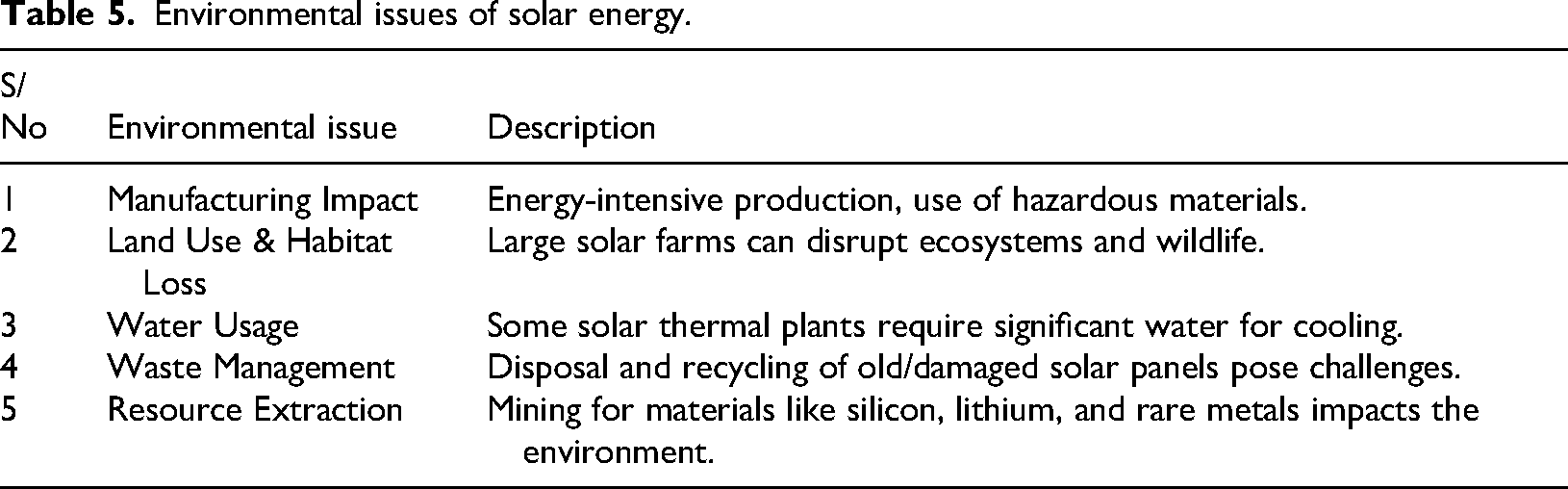
LCA and environmental risk indicators have become increasingly important in evaluating recent advancements in nanotechnology-based solar cells (Kim et al., 2016). Although nanomaterials such as perovskites, quantum dots, graphene, and CNTs significantly enhance photovoltaic efficiency, their environmental impacts during material extraction, fabrication, operation, and end-of-life disposal must be carefully assessed (Bauer et al., 2008). Recent studies have emphasized the use of environmental risk indicators including toxicity potential, recyclability, energy payback time, carbon footprint, leaching behavior, and end-of-life recovery feasibility to evaluate the sustainability of advanced solar technologies (Pallas et al., 2020). Lead-based perovskites and cadmium-containing quantum dots raise concerns regarding heavy metal leakage and ecological toxicity, whereas carbon-based nanomaterials generally exhibit lower environmental risks and improved recyclability. Furthermore, lifecycle analysis has shown that nanotechnology-assisted solar cells can substantially reduce greenhouse gas emissions and energy consumption compared with conventional fossil fuel-based power systems when proper recycling and encapsulation strategies are implemented (Babu et al., 2025). Different environmental issues of solar energy are summarized in Table 5 (Babu et al., 2025; Kadenic et al., 2024).
Environmental issues of solar energy.
Policy implications of solar cells using nanotechnology
The advancement of solar cells using nanotechnology presents several policy implications that require thoughtful consideration to maximize benefits while addressing potential challenges. Governments need to establish comprehensive regulatory frameworks to manage the environmental and health risks associated with nanomaterials used in solar cells, such as cadmium in quantum dots and lead in perovskites (Isibor, 2024). Policies should mandate the development and use of eco-friendly and non-toxic alternatives, promoting sustainable innovation. Incentives, such as subsidies and tax breaks, can encourage industries to invest in research and development for nanotechnology-based solar cells and facilitate their large-scale adoption. Policymakers must also address the high production costs of nanomaterials by supporting advancements in scalable and cost-effective manufacturing processes. To enhance sustainability, policies should focus on establishing efficient recycling and disposal systems for nanomaterial-based solar cells, ensuring that toxic components do not harm the environment (Lyu et al., 2024). International collaboration is critical to creating standardized safety protocols and promoting knowledge-sharing across nations. Additionally, educational and workforce development initiatives should be prioritized to equip professionals with the skills needed to advance nanotechnology in solar energy. By aligning regulations, incentives, and innovation, policies can help realize the full potential of nanotechnology in transforming the solar energy landscape while ensuring environmental and societal well-being (Sakthimurugan et al., 2026).
Challenges
Integrating nanotechnology into solar cells comes with several key challenges that need to be overcome to achieve its full potential. A primary concern is the stability of nanomaterials, including perovskites and quantum dots, which are highly vulnerable to environmental conditions such as moisture, UV radiation, and temperature fluctuations, resulting in gradual degradation. Below are some of the major challenges in this field of research.
Major challenges of solar energy and the advancements of addressing them are summarized in Table 6.
Key challenges of solar energy and the advancements addressing them.

The long-term stability of nanotechnology-assisted solar systems remains a major challenge. PSCs suffer from moisture ingress, ion migration, UV-induced degradation, and thermal instability. Organic photovoltaic systems experience photochemical degradation under prolonged illumination exposure. CNTs and graphene interfaces are vulnerable to oxidation and defect formation, which reduce carrier transport efficiency over time. In nanofluid-based systems, particle agglomeration and sedimentation may reduce thermal performance and increase maintenance requirements.
Conclusion
Nanotechnology offers great potential for advancing solar energy by enhancing efficiency, lowering costs, and enabling the creation of innovative materials with superior characteristics. Incorporating nanomaterials into solar cells can result in more efficient and cost-effective energy solutions, supporting the shift toward renewable energy. However, issues related to stability, scalability, and environmental impact must be resolved to maximize its effectiveness in solar applications. The key points of this review are summarized below.
Efficiency is the primary concern when it comes to solar cell technology. Traditional silicon-based solar cells have made substantial progress over the years but still fall short of their theoretical efficiency limits. Nanotechnology can address this limitation by enabling the development of novel materials with superior properties. Nanomaterials, such as quantum dots, nanowires, and nanotubes, have unique optical and electrical characteristics that can enhance the light absorption and charge collection efficiency in solar cells. For example, quantum dots are highly tunable in terms of size and bandgap, allowing for better absorption of sunlight across a broader spectrum of light. QDSSCs achieved higher efficiencies compared to conventional dye-sensitized solar cells due to their ability to absorb lighter and improve charge transport. Recent advancements in nanotechnology have significantly enhanced the performance of solar cells by improving efficiency, stability, and cost-effectiveness. Innovations such as quantum dots, perovskites, nanowires, and plasmonic structures have led to better light absorption, charge transport, and overall energy conversion. Additionally, the development of flexible and lightweight nanomaterial-based solar cells has expanded their potential applications. While challenges related to long-term stability, scalability, and environmental impact remain, ongoing research and sustainable manufacturing practices continue to drive progress, bringing nanotechnology-based solar energy solutions closer to widespread adoption. A significant barrier to the widespread use of solar technology is the high production cost, particularly for silicon-based solar cells. Nanotechnology offers a solution by enabling the development of thin-film solar cells, which require less material than conventional silicon cells. Cost-effective nanostructured materials, such as organic PVs and perovskite solar cells, can be manufactured using scalable techniques like roll-to-roll printing. Additionally, nanomaterials facilitate the use of lower-cost substrates and flexible materials, making them suitable for diverse applications, including integration into windows and rooftops. The advancement of perovskite solar cells with nanostructured materials demonstrates their potential for high efficiency at reduced production costs. Nanotechnology enables the development of novel materials for solar cells beyond the limitations of traditional silicon-based technology. By allowing material engineering at the atomic and molecular levels, researchers have created advanced semiconductors like perovskite and organic materials, which offer easier processing and lower production costs compared to silicon. Integrating nanomaterials further enhances solar cell performance by boosting light absorption, improving charge transport, and minimizing recombination losses. In particular, nanostructures play a crucial role in advancing perovskite solar cells, significantly improving their efficiency and stability. In addition to improving efficiency and reducing costs, nanotechnology has the potential to enhance the sustainability of solar cells. Nanomaterials can be engineered to be more environmentally friendly and less resource-intensive. For instance, organic solar cells and perovskite solar cells require fewer raw materials and can be produced with less energy compared to traditional silicon-based cells. Furthermore, the development of recyclable nanomaterials can help address the end-of-life disposal challenges associated with solar cells. Nanotechnology also enables the development of bifacial solar cells, which can capture sunlight from both the front and rear surfaces, increasing the overall energy yield without needing additional land or resources. Nanotechnology-assisted solar systems have demonstrated substantial performance improvements, including photovoltaic efficiency enhancements exceeding 30% in tandem structures and thermal efficiency improvements up to 28% in nano-enhanced PVT systems. Future research should focus on improving long-term stability, scalable manufacturing, environmentally friendly nanomaterials, and integrated multifunctional solar systems. A technology roadmap emphasizing commercialization, lifecycle sustainability, and cost reduction strategies has also been proposed. While the potential of nanotechnology in solar cells is immense, there are still significant challenges to overcome. One of the main concerns is the stability and longevity of nanomaterials, especially in outdoor environments where solar cells are exposed to harsh weather conditions. The scalability of nanomaterial-based solar cells is another hurdle, as current manufacturing processes need to be optimized for large-scale production. Additionally, concerns regarding the environmental impact of nanomaterials and their disposal need to be addressed to ensure that nanotechnology in solar cells remains sustainable
Future scopes
By overcoming existing challenges and unlocking future possibilities, nanotechnology has the potential to transform solar energy systems by enhancing their efficiency, affordability, and adaptability. Future research directions that can build upon and complement the current study are outlined below.
AI usage
The authors used AI tools for language refinement and presentation. All scientific content and analysis were developed and verified by the authors, who take full responsibility for the work.
Footnotes

Author contributions
Bappa Mondal contributed to the conception design, and first draft preparation. Debayan Bhowmik and Alemu Workie Kebede contributed to the interpretation of the outcomes and commented on previous versions of the manuscript. All authors read and approved the final manuscript.
Funding
The authors received no financial support for the research, authorship, and/or publication of this article.
Declaration of conflicting interests
The authors declared no potential conflicts of interest with respect to the research, authorship, and/or publication of this article.