



Abstract
Problematic smartphone use (PSU) is smartphone usage that is, in some way, damaging to the user. PSU represents a growing public health concern that could be addressed via behavioral intervention. We recruited six college students who reported negative side effects of smartphone use and sought to decrease their PSU. The effects of a contingency management (CM) + deposit contract intervention on PSU was evaluated. During the CM + deposit contract condition, participants deposited $40 and had the opportunity to earn back their entire deposit by meeting daily smartphone usage goals. To promote adherence to study protocols, participants also had the opportunity to earn a $20 cooperation bonus. For all participants, lower levels of PSU were observed during intervention relative to baseline. The CM + deposit contract intervention produced consistent decreases in PSU for four participants (mean reduction percentages above 40% were obtained) and had inconsistent effects on PSU for two participants (mean reduction percentages below 20%). Maintenance of intervention effects was limited for all participants. Although preliminary, results suggest that CM + deposit contract interventions could be a viable, low-cost approach to addressing PSU. Potential explanations for our findings and avenues for future research are discussed.
The number of Americans who own a smartphone has risen steadily over the past 10 years, from 35% in 2011 to 85% in 2021 (Pew Research Center, 2021). Smartphones have become pervasive in many people’s daily lives and offer opportunities for social interaction, information gathering, task completion, and entertainment (Horwood & Anglim, 2018). Despite the benefits that smartphones afford, there is growing concern about people’s use of smartphones (Billieux et al., 2015). Evidence of this concern can be found in some of the terms used in research involving people’s use of smartphones. Mobile phone overuse (R. Kim et al., 2015), excessive smartphone use (Karsay et al., 2019), smartphone addiction (Lee et al., 2014), and problematic smartphone use (PSU; Horwood & Anglim, 2018) are all terms used to describe smartphone usage that is, in some way, damaging to the user. PSU is the term that will be used in the remainder of this paper. A recent review found that PSU is associated with a variety of negative outcomes, including declines in academic performance, impaired sleep quality, negative emotions, being less resilient to distractions, insufficient time management, monetary overspending, reduced productivity, negative impacts on relationships, and dangerous driving (Busch & McCarthy, 2021).
Given the harmful outcomes correlated with PSU, it has been identified as an emerging public health concern (van Velthoven et al., 2018). Consequently, there is increased interest in developing empirically supported interventions to decrease PSU. According to Busch and McCarthy (2021), PSU interventions can be divided into three categories: information-enhancing, capacity-enhancing, and behavior reinforcement strategies. Information-enhancing strategies include warnings and education about the effects of PSU. Capacity-enhancing strategies include smartphone apps that provide warnings to users or parents about high levels of smartphone use or counseling interventions aimed at addressing skill deficits (i.e., social or communication skills) that are presumed to contribute to PSU. Behavioral reinforcement strategies include regulatory apps that prevent users from using smartphones (or certain apps) after a specific duration of use or make smartphone use more difficult by requiring the user to emit effortful responses to access the smartphone. Regulatory apps have been found to be effective at reducing PSU (e.g., J. Kim et al., 2019), but a noted drawback of this approach is that users may be able to disable or delete the regulatory apps.
Behavior analytic research focused on PSU or cell phone use more broadly is limited, but the outcomes of prior studies are promising. M. E. Jones et al. (2019) evaluated the effects of an interdependent group contingency on cell phone use in a high school class. During baseline, the teacher did not disrupt or address student cell phone use. During the interdependent group contingency, students could earn 10 minutes of free time with their phones at the end of class if everyone refrained from phone use during teacher-led instruction. Results indicated that the group contingency produced decreases in cell phone use at both the group (i.e., entire class) and individual student level. Similarly, Hernan et al. (2019) found that the Good Behavior Game, an interdependent group contingency, in conjunction with an antecedent strategy (a clear box that phones were deposited in), decreased inappropriate phone use in two high school classrooms. In another study, Clayton et al. (2006) evaluated the effects of active prompting (i.e., signs) on phone use in drivers on a college campus. A student held up signs on campus that read, “Please hang up--I care.” Results indicated that active prompting increased cell phone hang-ups.
Another behavioral approach that could be used to treat PSU is contingency management (CM). During CM interventions, a reward is delivered to an individual contingent on objective evidence of behavior change. CM has been used to decrease harmful behaviors such as smoking (e.g., Dallery & Glenn, 2005) and illicit substance use (e.g., Beckham et al., 2018) and to increase healthy behaviors such as physical exercise (e.g., Nastasi et al., 2020). Because self-report may produce inaccurate measures of behavior (Finney et al., 1998), CM researchers frequently rely on devices to measure participant behavior (or products of behavior). For example, Fitbits tracked participant steps (Nastasi et al., 2020), carbon monoxide (CO) monitors measured levels of CO in breath (Dallery & Glenn, 2005), urine samples measured levels of opioids and cocaine (Petry et al., 2013), and scales measured participant weight (Bloom et al., 2020). The use of objective rather than subjective measures of behavior may be particularly important when targeting PSU as there is evidence that subjective reports of smartphone use do not reliably correlate with actual usage (Lee et al., 2017; Wilcockson et al., 2018). CM researchers use devices to measure participant behavior in the natural environment across long time periods (e.g., days, weeks, and months) rather than measuring behavior during brief experimental sessions in a controlled setting (as is common in behavior analytic research).
During CM interventions, participants are required to submit behavior data to the researcher at predetermined times. For example, in Dallery et al. (2008), participants submitted CO samples twice daily in front of a webcam that researchers monitored to ensure that samples were submitted by participants. After participants submit their data, researchers determine if a pre-established behavior change goal has been met. If participants meet the behavior change goal, the researcher delivers a reward. If participants do not meet the goal, the reward is withheld. In prior evaluations of CM, rewards have included money (e.g., Orr et al., 2018), vouchers (e.g., Rohsenow et al., 2017), and prizes (e.g., Petry et al., 2013).
One of the frequently cited drawbacks of CM is the financial cost of providing rewards to participants over the course of the study. To address this drawback, many researchers have used deposit contracts in conjunction with CM. Deposit contracts require participants to voluntarily deposit a specific amount of money with the researcher prior to the intervention. During the intervention, participants receive refunds contingent on meeting behavior change goals. One advantage of CM + deposit contract interventions relative to traditional CM interventions is that they are less resource-intensive because they do not require the researcher or an external funding agency to provide capital for participant rewards; instead, participants deposit their own money. Dallery et al. (2008) found that a CM + deposit contract intervention and a traditional CM intervention produced similar decreases in participant smoking, but the CM + deposit contract intervention was much less costly. Another potential advantage of CM + deposit contract interventions is that individuals who elect to enroll in the study presumably have self-identified the need for the behavior change.
CM + deposit contract interventions have been widely used in behavioral health research to increase beneficial behaviors such as physical activity (Donlin Washington et al., 2016) and decrease harmful behaviors such as smoking (Jarvis & Dallery, 2017). For example, Stedman-Falls and Dallery (2020) compared the effects of technology-based and in-vivo CM + deposit contract interventions on participant exercise (i.e., daily step count). Each day, participants deposited $10 with the researcher and had the opportunity to earn back their deposit if they met their daily step count goal. In the technology-based condition, PayPal was used to exchange money, and the researcher electronically sent performance graphs and feedback to participants. In the in-vivo condition, participants met with the researcher at the beginning and end of each in-person condition to exchange money and receive vocal feedback and printed graphs. Participants experienced both interventions; however, half of the participants experienced the technology-based intervention first, and the other half experienced the in-vivo intervention first. Overall, seven out of nine participants met their step count goal each week in both conditions and most participants expressed a preference for the technology-based condition because it was more convenient.
Recent advances in technology, including improvements to smartphones, have made it possible to carry out many procedures involved in CM interventions remotely. Specifically, technology can be used to monitor participant behavior, verify participant identity, deliver rewards to participants, and accept participant deposits (Dallery et al., 2019). One advantage of technology-based CM interventions is that they could make CM more accessible to populations that have traditionally been underserved (rural populations). Many in-vivo CM studies require participants to travel to a research site so researchers can collect behavior data and deliver rewards. This approach precludes the participation of individuals who do not live close by and individuals who face barriers to visiting the research site regularly. Another advantage of technology-based CM interventions is that they allow researchers to monitor participant behavior and provide rewards in real-time, reducing the delay between the desired behavior change and the delivery of the reward.
Smartphone ownership has risen dramatically in the past decade, and although smartphones offer numerous benefits to users (including facilitating the remote delivery of behavioral interventions), PSU is a growing public health concern. For the purposes of this paper, we define PSU as smartphone use that, according to the user, has resulted in negative side effects. Evaluations of behavioral interventions designed to decrease PSU are limited and additional research in this area could be beneficial. CM + deposit contract interventions could offer a viable, low-cost treatment for PSU, and to date, no studies have investigated the effects of a CM + deposit contract intervention on PSU. The purpose of this study was to evaluate the effects of a CM + deposit contract intervention on PSU in college students. This study also sought to add to existing studies on technology-based CM interventions, as this entire study was conducted remotely during the COVID-19 pandemic.
Method
Participants
Two undergraduates and four graduate students enrolled in a small, private university participated in this study. Participants were recruited via word of mouth, email, or the participant pool at the university where the study was conducted. We did not request demographic information from participants; therefore, this information cannot be reported. Individuals who contacted the researcher to express interest in the study were sent a pre-experimental questionnaire via email (see Appendix). Sixteen individuals completed the questionnaire. Six individuals did not qualify for the study based on their questionnaire responses and three individuals reported not being able to move forward with the study prior to setting up an intake meeting. One individual qualified for the study and attended an intake meeting but dropped out of the study for unspecified reasons. In total, six individuals qualified for participation and completed the study.
To participate in this study, individuals had to: (a) report experiencing negative side effects of using their smartphone (score of 4 or 5 on Item 2 in the pre-experimental questionnaire), (b) be willing to deposit money ($40) with the researcher, (c) have a Venmo account, (d) own a smartphone with screen recording capabilities (or a way to record their device), videoconferencing technology (Google Meet™ video conferencing system), and a screen time tracker in their phone’s regular factory settings, and (e) be willing to receive and send text messages to/from the researcher during the course of the study.
Materials
All parts of the study were conducted remotely; the researcher and participants communicated via email, text messages, phone calls, and video conferencing (Google Meet™ video conferencing system). Each participant’s personal smartphone was used during this study to (a) measure PSU data using screen time tracking applications (apps) and (b) submit PSU data to the researcher via a screen recording feature. To track participant PSU throughout the day, “Screen Time” (iPhone users) or “Digital Wellbeing” (android users) screen time trackers were used. Screen time trackers are standard apps built into most smartphones that collect data on the user’s smartphone use. Both “Screen Time” and “Digital Wellbeing” track the duration of overall usage per day (all apps combined) and individual app usage per day. These screen time trackers allow users to view their daily usage in real-time and from preceding days in the week (weekly tracking resets on Sundays). In this study, we focused specifically on the duration of PSU per day. Screen time tracking apps measure usage in 24-hours period (i.e., usage resets automatically at midnight each day and continues until 11:59 pm) To submit smartphone usage data to the researcher, participants used either the screen recording feature on their smartphone or another device to record themselves accessing their screen tracker app. Once participants had recorded their usage, they sent it to the researcher via text message or email.
Dependent Measures
The primary dependent variable was daily PSU, and data were extracted from screen recordings participants submitted to the researcher each day. Daily PSU was the total duration (minutes) that the participant used their smartphone each day. Because the use of some smartphone apps was necessary for participants’ daily functioning, we subtracted the duration participants spent using “excluded apps” from daily PSU. Time spent using the clock, calculator, calendar, global positioning system (GPS), and health apps was excluded for all participants. Some participants had additional apps excluded based on their individual needs (described below). Five minutes per day were also subtracted from daily PSU to account for time spent submitting data and communicating with the researcher.
Interobserver Agreement
A secondary observer collected data on daily PSU during 70% of baseline and 60% of intervention sessions. To train observers, we used an abbreviated version of Behavioral Skills Training (BST, Parsons et al., 2012). First, we provided observers with a written description of all study procedures and data collection guidelines. After the observer reviewed the written descriptions, the researcher answered the observer’s questions. Second, the observer practiced collecting data from training videos developed by the researcher. The observer was required to obtain 100% correct scoring across two training videos to collect data during the study. To calculate interobserver agreement (IOA), we used exact agreement with a window of 0.02 minutes (1.2 seconds). An agreement was scored when the two observers recorded the same duration of PSU within 0.02 minutes in either direction. For example, if one observer scored daily PSU as 200.67 minutes and the other observer scored 200.65 minutes, this was scored as an agreement. A disagreement was scored when the two observers recorded different durations of PSU (above the 0.02 minutes threshold). Any disagreements between the two observers were double-checked by the first author and corrected to ensure accurate data collection for refund purposes. No disagreements impacted refund delivery. Agreement was calculated by dividing the number of sessions with agreement by the total number of sessions and multiplying the result by 100 to yield a percentage. Agreement was 92.85% (range, 75%–100%) for baseline and 97.22% (range, 83.33%–100%) for intervention phases.
Procedural Integrity
A trained research assistant collected procedural integrity data on the correct implementation of study procedures during 45% of baseline and 42% of intervention sessions. To train research assistants, we used an abbreviated version of BST similar to the procedures used to train secondary observers. Research assistants had to obtain 100% correct scoring across two consecutive sessions to collect data during the study. Procedural integrity was calculated by dividing the number of steps scored as “yes” by the total number of steps in each phase. This number was then multiplied by 100 to yield a percentage. Data were collected on implementation of the following steps: (a) researcher informed the participant of upcoming phases on Sunday evenings between 6:00 and 8:00 pm, (b) researcher prompted the participant to submit the video recording if it was not received by 10:15 am the morning following a session, (c) researcher confirmed receipt of video recording within 2 hours of receiving video, (d) researcher informed participant if the daily usage goal was met and issued refunds (if applicable) within 2 hours of receiving video during CM + deposit contract phases. Procedural integrity was 100% for baseline phases and 98.64% (range, 90.90–100%) for intervention phases.
Interobserver agreement was calculated for procedural integrity using exact-trial agreement for at least 20% of sessions across all phases. An agreement was scored when both observers scored the step as “yes” or both observers scored “no.” A disagreement was scored when one observer scored a “yes,” and the other observer scored a “no” for the same step. To calculate agreement, we added the number of steps with an agreement and divided the sum by the total number of steps, and multiplied the result by 100 to yield a percentage. Agreement for procedural integrity was 100% across baseline and intervention phases.
Participant Nonadherence
Participant nonadherence with study protocols, including turning their smartphone’s screen time tracker off or failing to submit data, would have been documented but never occurred. To determine whether participants turned their screen time trackers off, we required participants to show their weekly usage data (located directly above the daily usage data) during each video. When screen time tracker apps are turned off, all previously collected data disappear; therefore, the absence of usage data earlier in the week would have indicated that the screen time tracker had been turned off. In addition, if the screen timer tracker was turned on late in the day, the bar graph provided in the screen time tracker app would display no phone usage for the period it was turned off.
Experimental Design
An ABAB reversal design with predetermined phase lengths was used with each participant to assess the effects of a CM + deposit contract intervention on PSU. Consistent with prior research (Stedman-Falls & Dallery, 2020), baseline and intervention phases were predetermined, lasting five consecutive weekdays for each participant (i.e., Monday–Friday). This phase length was chosen for three reasons: (a) to account for potential differences in PSU during weekdays and weekends, (b) to allow the researcher to plan daily refund amounts for each day of the study, and (c) because there is evidence that collecting smartphone usage data for at least 5 days reflects typical weekly usage (Wilcockson et al., 2018). Planning refund amounts in advance prevented the deposit from running out prior to the end of the study and ensured a full refund for participants who met usage goals during each day of the intervention.
Procedure
Prior to the beginning of the study, we emailed a link to an online pre-experimental questionnaire (Google Forms) to all individuals who expressed interest in study participation. Individuals who agreed or strongly agreed with Item 2 in the pre-experimental questionnaire (“I experience negative side effects of using my smartphone too much.”) were contacted via email to schedule an intake meeting. Individuals who did not agree or strongly agree with Item 2 were contacted to thank them for their interest and inform them that they did not qualify for participation.
Intake meeting
All documents were emailed to participants prior to the intake meeting, and all intake meetings were conducted using the Google Meet™ video conferencing system. First, we reviewed the consent form, the deposit contract, and the cooperation bonus with participants (detailed below). Second, we provided an overview and description of each study phase (i.e., baseline, intervention, and maintenance). Third, we described participant data collection and submission during the study. Participants were informed that they were required to video record their screen time usage data and submit a video each day of the study. Then, the researcher prompted the participant to practice creating a submission video. Creating a submission video entailed starting the screen recording feature on their smartphone, accessing the smartphone’s screen time tracking app, and verifying their identity. Participants were also prompted to set their smartphone’s screen-lock duration to 30 seconds maximum to ensure their screen was not activated for long periods of time while they were not actively using their smartphone (screen time trackers log the time that the user’s smartphone screen is activated). Fourth, we reviewed all study rules with the participant, which included: (a) participants could not allow other people to use their smartphone during the study, (b) participants were required to keep screen time tracking “on” during the study, and (c) the screen’s auto-lock duration must be set to 30 seconds. Fifth, we identified participants’ preferred method of communication (text or email) and answered any participant questions. When all participant questions were answered, participants signed the consent form and deposit contract. The researcher also signed the deposit contract and emailed a copy to participants. Finally, participants were asked to nominate any apps (in addition to the clock, calculator, calendar, GPS, and health apps) for exclusion because their use was necessary for employment or because participants did not seek to decrease their use (e.g., music apps). After intake meetings, the first and second authors met to discuss participant app nominations. All nominated apps were excluded.
General
Participants were informed about the beginning and end of all study phases via text message or email. Although participants were asked to confirm receipt, no consequences were delivered for not confirming. In all phases of the study, each 24-hours period (Monday–Friday) constituted one session. Participants were asked to submit their usage data from each session the following day by 10:00 am. For example, usage data for Monday was submitted Tuesday morning. Participants sent usage data by texting or emailing the first author their submission video. The first author confirmed receipt of each submission video. Except for answering participant questions about the study, all text and email messages sent by the researcher were scripted. During the first CM + deposit contract phase, participants had the opportunity to earn up to $20 of their $40 deposit. During the second CM + deposit contract phase, participants had the opportunity to earn back the remaining $20 of their deposit. Therefore, over the course of the study, participants had the opportunity to be refunded their entire $40 deposit if they met their daily smartphone usage goals during all 10 intervention sessions. Participants also had the opportunity to earn a cooperation bonus of $20 at the end of the study for submitting their usage data on time for 90% of sessions (fewer than three late submissions). Participants were not restricted from using personal strategies to manage smartphone use (e.g., screen time reminders).
Study phases
Baseline
Prior to baseline phases, participants were informed (via text or email) on Sunday evenings that baseline sessions would begin at midnight and that no refunds would be delivered. During baseline, we did not issue or withhold refunds or provide any feedback to participants about their PSU.
CM + deposit contract
After the completion of the first baseline phase and before the first CM + deposit contract phase began, participants deposited $40 with the researcher using the Venmo payment app. We selected a $40 deposit to be consistent with previous research (Dallery et al., 2008) and not create a large financial burden on students. Participants also met with the researcher via Google Meet™ video conferencing system or telephone call to select their daily goal. During the meeting, participants were told their mean daily PSU during baseline and asked to choose a goal (between 20–50% reduction from their baseline mean). The selected goal did not change over the course of the study. Participants were reminded in the meeting that they could earn back their entire deposit by meeting their daily goal during each session of the CM + deposit contract phases.
Prior to CM + deposit contract phases, participants were informed (via text or email) on Sunday evenings that CM + deposit contact sessions would begin at midnight and that refunds would be delivered if participants met their daily usage goals. During CM + deposit contract phases, we issued or withheld refunds contingent on participants meeting or failing to meet their daily goal, respectively. Following data submission, we also provided brief feedback to participants about their PSU. If participants met their goal, we issued a partial refund of their deposit using the Venmo payment app within 2 hours of receiving their submission video and provided feedback (“Your goal this week was ____ minutes or less of cell phone use per day. You used your phone for ___ minutes yesterday. Congratulations, you met your goal! A refund of $___ will be delivered via Venmo within 2 hours of when I received the material.”). If participants did not meet their daily goal, we did not issue a refund and provided feedback (“Your goal this week was ____ minutes or less of cell phone use per day. You used your phone for ___ minutes yesterday. You did not meet your goal. No refunds will be delivered today.”). Each day’s refund ranged from $1 to $8, and participants were not told how much each day’s refund would be. A random number generator was used to determine the refund schedule for the 10 intervention sessions. For each CM + deposit contract phase (five sessions), five numbers between 1 and 8 were generated which, when summed, equaled 20. If participants met their daily goals during each of the 10 intervention sessions, they earned back their entire $40 deposit by the end of the study. All forfeited deposit money was used for study-related costs and cooperation bonuses.
Maintenance
Two maintenance probes were conducted approximately 2 and 4 weeks after the final CM + deposit contract session. Participants were informed that two maintenance probes would be forthcoming “in a few weeks” but were not informed ahead of time which days they would occur. Participants were also reminded of the study rules (i.e., keep the screen time tracker on, do not share your phone, and keep the auto-lock duration to 30 seconds). On the morning of the maintenance probes, we sent a text message or email to participants requesting PSU data from the previous day. Participants did not make any deposits prior to maintenance probes. We did not issue or withhold refunds or provide any feedback to participants about their PSU. Timely data submission for maintenance probes was factored into the cooperation bonus contingency. Following the final maintenance probe, we delivered the $20 cooperation bonus as a lump sum to participants who met the criterion to receive it.
Social validity
To assess social validity, participants completed a pre-experimental questionnaire, a post-experimental questionnaire, and a treatment acceptability questionnaire, respectively. Questionnaires included items with rating scales, multiple-option selections, and open-ended questions. The pre-and post-experimental questionnaires gathered information about participant PSU prior to and during the study. The treatment acceptability questionnaire gathered information about the participant’s opinions regarding study procedures and outcomes. After the last maintenance session, participants completed the post-experimental questionnaire followed by the treatment acceptability questionnaire. Participants were emailed links to the two questionnaires, both of which were completed online in Google Forms. We calculated mean scores for each questionnaire item with a rating scale. We also analyzed participant responses to multiple-option and open-ended questions to assess for commonalities across participants.
Results
Figure 1 displays the daily PSU for all six participants during each phase of the study. Dashed lines in CM + deposit contract phases represent participant-selected daily goals. P1 exhibited high levels of daily PSU during both baseline phases. During CM + deposit contract phases, P1’s daily PSU was lower than baseline, and PSU was well below their daily goal in all 10 intervention sessions. P1 was refunded their entire $40 deposit and earned the $20 cooperation bonus. P1’s daily PSU during maintenance probes was variable, and PSU was similar to baseline levels during the 2-week follow-up and similar to intervention levels (below daily goal) during the 4-week follow-up. P2’s daily PSU was high and variable during the first baseline phase and slightly lower and more stable during the second baseline phase. During both intervention phases, daily PSU was lower than the initial baseline phase and well below their daily usage goal during all 10 CM + deposit contact sessions. P2 was refunded their entire $40 deposit. P2’s daily PSU during maintenance probes was similar to baseline levels. P3 displayed high levels of variability throughout all phases of the study. Across the two intervention phases, P3 met their daily goal in 3 out of 10 sessions and was refunded $11 of their deposit. In the second baseline phase, levels of daily PSU did not return to initial baseline levels immediately. In fact, PSU was below the daily goal in sessions 11 and 12. Like baseline and intervention phases, daily PSU during maintenance probes was highly variable. P3 earned the $20 cooperation bonus.
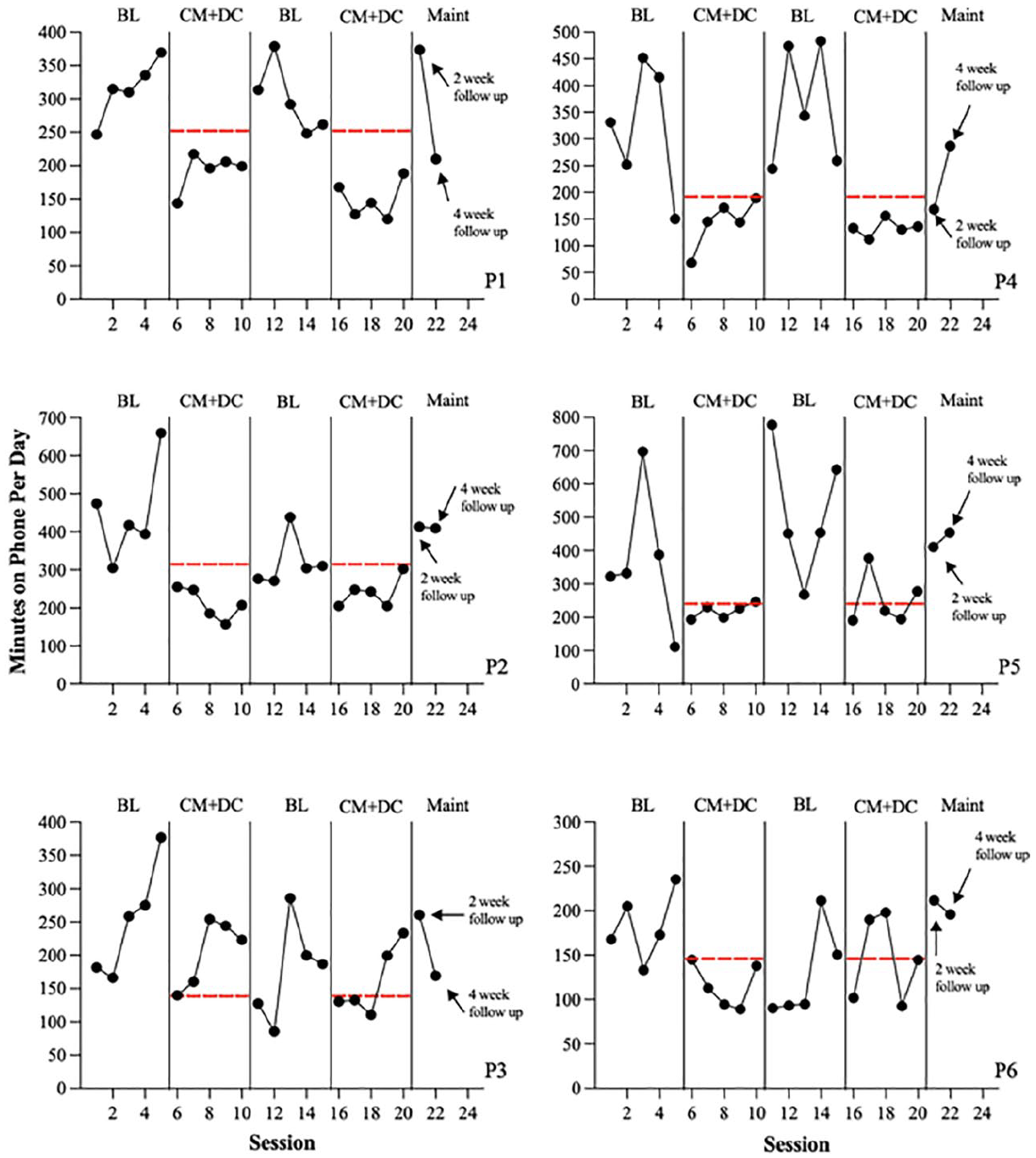
Daily PSU for all participants.
P4’s daily PSU in both baseline phases was highly variable. During CM + deposit contract phases, daily PSU was low and stable; P4 met their daily usage goal in all 10 sessions and was refunded their entire $40 deposit. Responding during maintenance probes was variable; P4 met their daily usage goal during the 2-week follow-up, but daily PSU in the 4-week follow-up was similar to baseline levels. P4 earned the $20 cooperation bonus. P5 engaged in highly variable levels of daily PSU during both baseline phases. During intervention phases, P5’s daily PSU was low and stable relative to baseline. They met their daily usage goal in 7 out of 10 intervention sessions and was refunded $30 of their deposit. P5’s daily PSU returned to baseline levels in both maintenance probes. P6’s daily PSU was high and stable during the first baseline phase and low and stable during the first intervention phase. In the reversal to baseline, their responding did not immediately return to initial baseline levels. In the second CM + deposit contract phase, daily PSU was variable. Overall, P6 met their daily goal in 8 out of 10 intervention sessions and was refunded $34 of their deposit. Responding during the two maintenance probes was similar to baseline. P6 earned the $20 cooperation bonus.
Overall, the CM + deposit contract intervention produced consistent decreases in PSU relative to baseline for four participants (P1, P2, P4, and P5). Three of those participants (P1, P2, and P4) met their daily goals in every intervention session, and P5 met their daily goal in 70% of intervention sessions. The CM + deposit contract intervention had inconsistent effects on PSU for two participants (P3 and P6). P3 met their daily goal in 30% of intervention sessions but responding was variable throughout all phases of the study. P6 met their daily goal in 80% of intervention sessions; however, PSU during the second baseline phase was well below initial baseline levels in three sessions, making it difficult to determine if the intervention was responsible for the observed effects.
Table 1 displays mean percentage reductions in daily PSU from the initial baseline phase to intervention phases (intervention mean was calculated using all 10 sessions across the two intervention phases), participant-selected daily reduction goals, and mean daily PSU across study phases for all participants. Mean reduction percentages above 40% were obtained for four participants (P1, P2, P4, and P5). The largest reduction in PSU was observed for P4, whose mean PSU was 59% lower during intervention phases relative to the initial baseline phase. Reduction percentages for P5, P1, and P2 ranged from 41% to 47%. The four participants with mean reduction percentages above 40% selected a range of daily goals for themselves (40%, 35%, 20%, and 30% reductions for P4, P5, P1, and P2, respectively). Overall, for each of these four participants, the mean daily PSU was considerably lower during intervention phases relative to baseline and maintenance. For P3 and P6, mean percentage reductions were 15% and 16%, respectively. The two participants for whom the intervention produced inconsistent effects on PSU selected vastly different goals; P3 selected a daily reduction goal of 45%, and P6 selected a daily reduction goal of 20%. Overall, for these two participants, the mean daily PSU was slightly lower during intervention phases relative to baseline and maintenance.
Mean Percentage Reduction, Reduction Goals, and Mean Daily PSU (minutes) Across Phases.
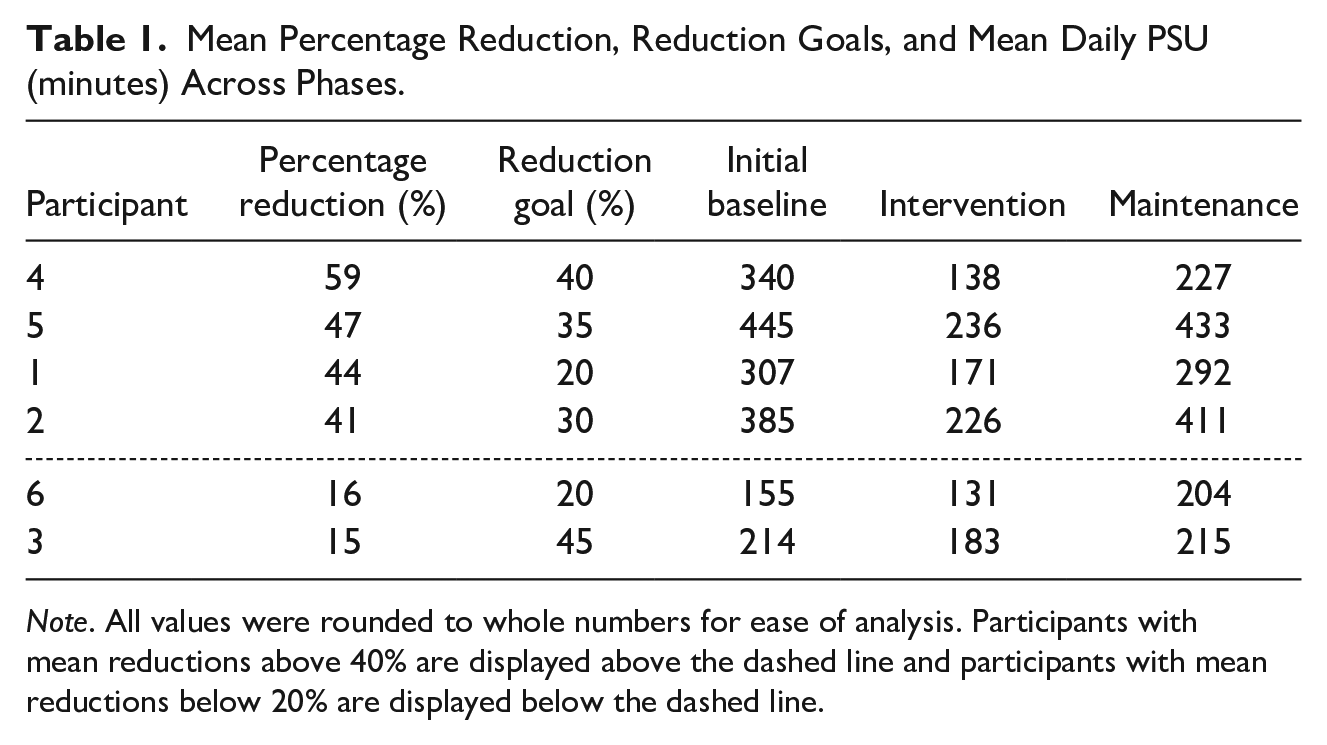
Note. All values were rounded to whole numbers for ease of analysis. Participants with mean reductions above 40% are displayed above the dashed line and participants with mean reductions below 20% are displayed below the dashed line.
Table 2 displays mean pre- and post-experimental social validity ratings as well as changes in ratings prior to and following the intervention. On the pre-experimental questionnaire, all participants strongly agreed that they wanted to use their smartphones less throughout the day. Additionally, all participants strongly agreed or agreed that they experienced negative side effects of using their smartphones too much. One participant chose a score of 5 or strongly agreed, and five participants chose a score of 4 on Question 2 (“I experience negative side effects of using my smartphone too much.”). When provided with multiple response options and asked to identify any negative side effects that they have experienced from using their smartphone, all six participants reported experiencing sleep disturbances and procrastination. Five participants reported that they had less time to complete tasks, four participants reported decreased attention and eye/neck pain, three participants reported experiencing headaches, and zero participants reported experiencing a short temper, depression, or no side effects. On the post-experimental questionnaire, five out of six participants strongly disagreed or disagreed with Item 2 (“During this study, I experienced negative side effects of using my smartphone too much.”). All participants found it challenging to not use their phones during the study and reported using strategies to try to decrease their phone usage during the study. Strategies reported included trying other activities (i.e., reading), setting time limits, and turning their phone off.
Mean Pre- and Post-experimental Social Validity Scores and Changes in Mean Scores.

Note. Score of 1 = strongly disagree; score of 5 = strongly agree
Because the negative value represents a desired change, the value was flipped.
Figure 2 displays treatment acceptability ratings. Individual participant responses are represented by single data points. Overall, treatment acceptability was favorable. Most participants found the $40 deposit amount acceptable and the deposit contract procedure acceptable and effective. All participants reported that sharing their screen time data with the researcher was not disruptive to their day. In the treatment acceptability questionnaire, one participant reported wanting the option to change their daily goal mid-study. In total, participants deposited $240 with the researcher at the start of the study, and $195 was recouped by participants. Cooperation bonuses were awarded to four participants ($80) at the end of the study. Overall, the total out-of-pocket cost of the study was $35.
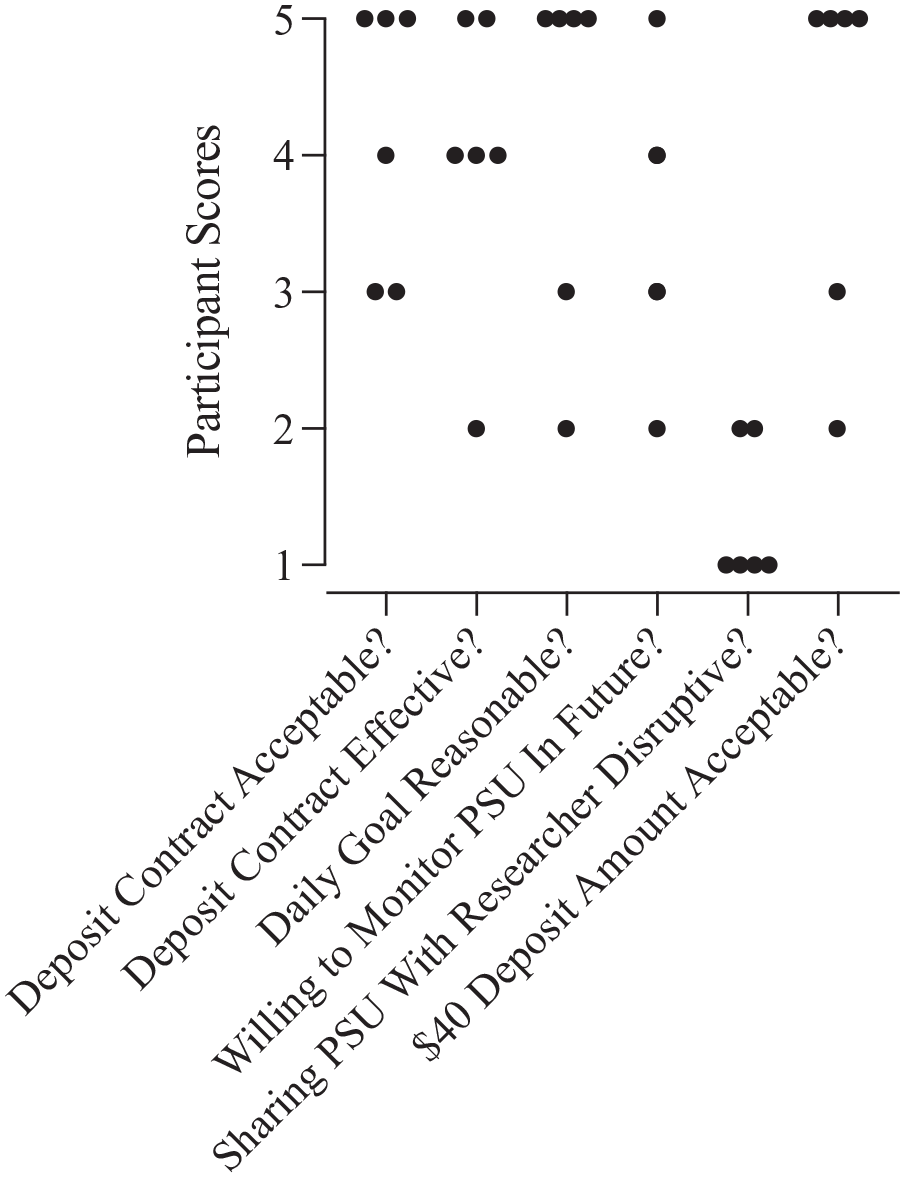
Treatment acceptability questionnaire scores.
Discussion
This is the first study to evaluate the effects of a CM + deposit contract intervention on PSU. We used a pre-experimental questionnaire as a screening tool to identify participants who exhibited PSU (i.e., participants who agreed or strongly agreed that they experienced negative side effects from smartphone use). Prior to the CM + deposit contract intervention, participants deposited $40 with the researcher and selected individualized reduction goals. The intervention took place over the course of 2 weeks (Monday–Friday), and participants received a partial refund each day that they met their goal. Participants who met their daily goal during all 10 intervention sessions recouped their entire deposit. Participants also had the opportunity to earn a $20 cooperation bonus for timely data submission. Social validity was assessed via a post-experimental questionnaire and a treatment acceptability questionnaire.
Results indicated that the CM + deposit contract intervention produced consistent decreases in daily PSU for four of the six participants. Compared to the initial baseline phase, mean reduction percentages in daily PSU during intervention phases ranged from 41% to 59% for these four participants. The greatest reduction was observed with P4, whose mean daily PSU was 340 minutes during baseline and 138 minutes during the intervention (59% reduction). Specifically, P4 spent an average of 5.6 hours per day on their smartphone during baseline and an average of 2.3 hours per day during the intervention. Consistent decreases in daily PSU during the intervention were also observed for P5, P1, and P2, whose mean reduction percentages were 47%, 44%, and 41%, respectively. Notably, mean reductions during intervention for these participants exceeded their daily goals, which ranged from 20% to 35%. Three participants met their daily goals during all 10 intervention sessions and recouped their entire deposit. One participant met their daily goal during 70% of the sessions and recouped ¾ of their deposit. Outcomes for four of the six participants in the current study provide preliminary support for the use of CM + deposit contract interventions to target PSU in college students. The CM + deposit contract intervention used in this study included a moderate deposit of $40 and participant-selected reduction goals. The intervention produced consistent decreases in daily PSU with the majority of participants, suggesting that CM + deposit contract interventions could be an effective approach for reducing PSU in some individuals. These findings add to existing research that has demonstrated CM + deposit contract interventions can be effective at producing a change in behaviors impacting health and wellness (Dallery et al., 2008; Jarvis & Dallery, 2017; Stedman-Falls & Dallery, 2020).
For the remaining two participants, the CM + deposit contract intervention produced inconsistent effects on daily PSU. Compared to the initial baseline phase, mean reduction percentages in daily PSU during intervention phases for P6 and P3 were below 20%. The smallest reduction was observed with P3, whose mean daily PSU was 214 minutes during baseline and 183 minutes during the intervention (15% reduction). Fairly limited behavior change was also observed with P3, whose mean reduction percentage was 16%. Interestingly, these two participants selected very different daily goals; P6 selected a 20% reduction goal, and P3 selected a 45% reduction goal. P6, who selected a modest reduction goal, met their daily goal in 80% of sessions, a moderately positive outcome. However, in the two intervention sessions in which P6 failed to meet their goal (sessions 17 and 18), PSU was similar to baseline levels. It is also difficult to draw conclusions about the intervention’s effect on P6’s PSU because, during the reversal to baseline, daily PSU did not quickly return to initial baseline levels. P3, who selected the largest reduction goal in the study, met their daily goal in only 30% of sessions. One possible reason the intervention produced limited behavior change with P3 is that they selected a high daily reduction goal (45%). According to Daniels and Bailey (2014), when setting performance goals, individuals should select goals that are challenging but attainable. Although the selection of an ambitious goal has the potential to produce large changes in behavior rapidly, a drawback of selecting a stretch goal is that the individual may not contact reinforcement because they frequently fail to meet their goal (Daniels & Bailey, 2014). During the first intervention phase, P3 did not meet their daily goal in any of the five sessions. It was not until the second intervention phase (sixth intervention session) that P3 met their daily goal and received a refund. When the researcher met with participants to select daily goals, participants were asked to select a daily goal between 20% and 50% reduction from their baseline mean. These values were chosen to improve the likelihood that participants would select a goal that was realistic but not inconsequential. More pronounced intervention effects may have been observed with P3 had we provided a narrower range of values or used a modest, researcher-selected goal. Another aspect of P3’s results that are worthy of analysis is the variability in responding across all phases of the study. A close examination of responding during each phase reveals that daily PSU tended to be lower during the first days of each week and higher during the last days each week. Potential explanations for this pattern of responding are unknown but could include variations in work or school schedules across the week. Overall, results for P6 and P3 suggest that the CM + deposit contract intervention produced inconsistent effects on daily PSU for two out of six college students. These findings are consistent with prior research, which found that CM + deposit contract interventions may not be uniformly effective with all participants (e.g., Stedman-Falls & Dallery, 2020).
Results from maintenance probes 2 and 4 weeks after the final intervention phase revealed that treatment effects did not maintain for most participants after the intervention was withdrawn. This, perhaps, is not surprising given that we did not explicitly program for maintenance during intervention phases. Future researchers should consider programing for maintenance by systematically fading intervention components over time, using intermittent schedules of reinforcement (Freeland & Noell, 2002), or using indiscriminable contingencies (Stokes & Baer, 1977). The lack of maintenance observed in this study could also be the result of insufficient exposure to the naturally occurring contingencies that could have supported or maintained behavior change (Stokes & Baer, 1977). In the current study, participants were only exposed to 10 intervention sessions which may have been insufficient to produce lasting treatment effects in the absence of specific maintenance programing. Ten intervention sessions may not have provided sufficient opportunities for participants to contact unprogramed reinforcers for abstinence or alternative sources of reinforcement that competed with PSU. Prior CM studies have employed a thinning or reduction phase (i.e., shaping) prior to the introduction of the final behavior change goal (Jarvis & Dallery, 2017). Future researchers seeking to evaluate the effects of CM interventions on PSU could consider using longer intervention phases, a reduction phase, or a changing criterion design to ensure sufficient exposure to the intervention and improve the likelihood of maintenance.
Collectively, results from social validity measures were favorable. In the pre-experimental questionnaire, most participants agreed with the statement, “I am on my smartphone too often throughout the day.” In the post-experimental questionnaire, when asked if they felt they were on their smartphone too often during the study, participants were less likely to agree with that statement. Prior to the study, all participants reported experiencing negative side effects of using their smartphones, including sleep disturbances, procrastination, less time to complete tasks, decreased attention, eye/neck pain, and headaches. Participants were less likely to agree that they experienced negative side effects of smartphone use during the study. One noteworthy finding was that participants reported using strategies to decrease PSU during the study, such as trying other activities (i.e., reading), setting time limits, and turning their phone off. Results from the treatment acceptability questionnaire indicated that participants found the intervention acceptable and effective overall.
This study adds to the existing literature because it is the first CM study, to our knowledge, to target PSU. Historically, CM interventions have been used to decrease target behaviors like smoking and illicit substance use (Higgins & Petry, 1999). Although there are considerable differences between substance use and PSU as dependent variables, there are some interesting parallels that are worthy of discussion. Substance use produces immediate, non-social reinforcers in the body (i.e., physiological drug effects). One of the primary challenges of treating substance use is that drug effects are available immediately upon consumption, whereas the reinforcers for abstinence and the aversive consequences of substance use are delayed and probabilistic. Similar to substance use, smartphone usage likely produces reinforcement immediately which could make this behavior difficult to treat because delayed, probabilistic reinforcers (e.g., healthy sleep patterns) are competing against immediate reinforcers. CM interventions are designed to bridge this reinforcement gap by providing more immediate reinforcers (i.e., refunds) contingent on desired behavior change. It is possible that for the two participants for whom limited intervention effects were observed, the reinforcers available for meeting their daily usage goal (i.e., refunds) did not sufficiently compete with the reinforcers available for smartphone usage. Future researchers interested in assessing the effects of CM interventions on PSU could consider using large magnitude deposits/refunds or different types of incentives.
The current study was conducted entirely remotely during the COVID-19 pandemic; no in-person contact between researchers and participants occurred. As such, this study adds to a growing body of technology-based CM research (Getty et al., 2019; Jarvis & Dallery, 2017; McPherson et al., 2018). Recent advances in technology, including improvements to smartphones, provide an opportunity to deliver CM interventions to underserved populations who might otherwise not be able to access treatment due to barriers to participation (e.g., geography, lack of transportation, or childcare). Although participants in the current study constituted a convenience sample (college students), findings from this study and prior research (e.g., Jarvis & Dallery, 2017; Stedman-Falls & Dallery, 2020) suggest that CM + deposit contract interventions can be effective even when in-person contact between participants and researchers is not possible. Given that technological devices, apps, and teleconferencing platforms are becoming increasingly accessible to different populations, continued research in this area will be needed.
CM + deposit contract interventions, such as the one used in the current study, share many similarities with traditional CM interventions. Both CM and CM + deposit contract interventions reward participants for achieving a behavior change goal. In addition, both rely on devices to measure participant behavior (or products of behavior) to determine whether behavior change goals have been met. The primary difference between CM and CM + deposit contract interventions is the source of the rewards that are delivered to participants. In traditional CM interventions, the researcher provides rewards to participants when they meet their goals. In CM + deposit contract interventions, the researcher provides a refund of the participant’s own money. One advantage of CM + deposit contract interventions is that they require fewer financial resources on behalf of the researcher or a funding agency than a traditional CM intervention. Overall, the out-of-pocket cost to conduct this study was $35. Although deposit contracts are beneficial to researchers or clinicians seeking to provide intervention, it is critical to note that deposit requirements may be a barrier to participation for some individuals, and this barrier likely disproportionately impacts individuals from marginalized communities.
Although findings from the current study are promising, some limitations should be noted. First, the CM + deposit contract intervention used in the current study may not have impacted participants’ overall daily screen time. In other words, decreases in PSU during the intervention may have been associated with concomitant increases in tablet or computer use. That said, the goal of this study was to decrease PSU specifically, not overall screen time. Future researchers may want to explore CM intervention options for decreasing overall screen time using similar screen tracking technology. A second limitation is that participants were not restricted from using strategies to manage smartphone use (e.g., apps to regulate smartphone use). Some participants reported setting time limits on app usage, and it is unclear whether these limits were used during some or all phases of our study. One possible avenue for future research could be to evaluate the effects of contingencies for adherence to app usage limitations through regulatory apps (i.e., provide rewards when users comply with app usage limits). Another avenue for future research could be to target specific app usage instead of overall daily usage. This could be particularly beneficial if participants report that they are seeking to decrease their use of specific apps or report experiencing negative side effects of using specific apps. Social networking apps have been implicated as possible antecedents to PSU (Busch & McCarthy, 2021; Nahas et al., 2018; Zhitomirsky-Geffet & Blau, 2016); therefore, interventions targeting the use of social networking apps may be an alternative approach to decreasing PSU.
A third limitation is that we used predetermined phase lengths (i.e., Monday–Friday) to account for differences in weekday versus weekend smartphone use and to allow us to plan daily refund amounts for each day of the study. Single-subject experimental designs like the reversal design used in the current study rely on steady-state responding to demonstrate experimental control. The use of predetermined phase lengths, rather than basing phase change decisions on participant responses, may have limited our demonstration of experimental control (e.g., P5 decreasing trend in the first baseline phase). Future researchers who wish to use traditional single-subject design logic without the threat of depleted deposit money could use daily deposits similar to those used by Stedman-Falls and Dallery (2020). A fourth limitation of this study is that we cannot report participant demographic information because we did not request it. It is important for future researchers in this area to report participant demographic information so that the potential effects of these variables on behavioral interventions can be assessed (S. H. Jones et al., 2020).
To date, the current study is the first to evaluate the effects of a CM + deposit contract on PSU, a growing public health concern. Prior to the intervention, all participants in this study reported experiencing negative side effects from using their smartphones too much. Overall, the intervention produced consistent decreases in daily PSU for most participants. These results suggest that technology-based CM + deposit contract interventions may be a viable and cost-effective treatment option for decreasing PSU in college students. PSU is associated with several negative outcomes, such as declines in academic performance, impaired sleep quality, and reduced productivity, to name a few (Busch & McCarthy, 2021). Therefore, even small reductions (i.e., 25 minutes) in daily PSU could be beneficial for some individuals, and evidence-based interventions to address PSU are needed. Given that this study was a preliminary evaluation, replicating these findings will be paramount.
Footnotes
Appendix
Author Note
This study was completed in partial fulfillment of the requirements for the first author’s master’s degree at Caldwell University.
Declaration of Conflicting Interests
The author(s) declared no potential conflicts of interest with respect to the research, authorship, and/or publication of this article.
Funding
The author(s) received no financial support for the research, authorship, and/or publication of this article.
