



Abstract
Why do men view morally questionable behaviors as more permissible than women do? Five studies investigated emotional factors as explanations for gender differences in moral decision-making. In Study 1 (N = 324), gender differences in perceptions of moral wrongness were explained by guilt and shame proneness. Studies 2a and 2b (combined N = 562) demonstrated that instructions to adopt an unemotional perspective (vs. standard instructions) led women to have higher immoral intentions, no longer lower than men’s, as they were in the control group. Studies 3 and 4 (N = 834) showed that men expected immoral actions to result in higher positive and lower self-conscious moral emotions than women do. Study 4 (N = 424) showed that these emotional expectancies account for gender differences in immoral intentions. Study 5 (N = 450) showed that women—but not men—experience heightened self-conscious moral emotions and regret when recalling past transgressions done for personal gain.
Historically, women were viewed as less moral than men, due in part to their higher perceived emotionality, which was thought to hinder moral reasoning (e.g., Kant, Freud). In contrast to this historic view, a substantial body of evidence within the organizational literature indicates that compared with men, women report lower intentions to engage in morally questionable actions that provide personal or professional advantages but cause abstract harm (e.g., lying during negotiations, bending rules) and view such acts as less permissible (e.g., Borkowski & Ugras, 1998; Franke, Crown, & Spake, 1997; Glover, Bumpus, Sharp, & Munchus, 2002; Kennedy & Kray, 2013; Kennedy, Kray, & Ku, 2017). Interestingly, although, generally, women are not more emotional than men, women do exhibit higher self-conscious moral emotions (SCME; Else-Quest, Higgins, Allison, & Morton, 2012) and empathic concern (Eisenberg & Lennon, 1983) than men, which are both known to predict moral decision-making (Cohen, Wolf, Panter, & Insko, 2011; Eisenberg & Miller, 1987). Integrating these literatures (and in stark contrast to the historic view), in the present studies, we tested the idea that gender differences in emotional experiences explain women’s enhanced moral concern for personally advantageous immoral actions (i.e., justice and fairness violations). Before describing these studies, we briefly review the links among gender, morality, and emotion.
Gender and Emotion
Moral judgments and behavior are influenced by the emotions people experience and their manner of regulating them (e.g., Cohen et al., 2011; Lee & Gino, 2015; Tangney, Stuewig, & Mashek, 2007). Guilt proneness, (some types of) shame proneness, and empathic concern are linked to moral decision-making (e.g., Cohen et al., 2011; Eisenberg & Miller, 1987). Generally, research has shown that women experience higher SCME than men, including guilt and shame proneness (e.g., Benetti-McQuoid & Bursik, 2005; Cohen et al., 2011; Else-Quest et al., 2012), across a wide range of age groups (Tangney & Dearing, 2002). Compared with men, women also report higher empathic concern, an other-focused moral emotion (e.g., Baron-Cohen & Wheelwright, 2004; Eisenberg & Lennon, 1983; though this is controversial, as noted below). Empathic concern has been shown to mediate gender differences in moral judgments (Rosen, Brand, & Kalbe, 2016). Although gender differences in other emotions (e.g., anger, fear) may influence moral judgments, here we focus on guilt, shame, and empathic concern given their established link to moral decision-making and their relevance to attitudes about immoral personally advantageous actions.
Gender differences have also been demonstrated in emotional intensity and regulation. Compared with men, women report higher intensity of some emotions (Brebner, 2003; Diener, Sandvik, & Larsen, 1985) and a greater tendency to attend to (versus suppress) their emotions more generally (e.g., Gross & John, 2003; Lee & Gino, 2015). Suppressing emotions can lead people to overlook the emotionally aversive consequences of moral dilemmas (Lee & Gino, 2015), focusing instead on utilitarian outcomes. Men’s higher tendency to suppress emotions may lead them to dampen aversive emotions when considering moral dilemmas. Indeed, a meta-analysis demonstrated that women experience stronger affective reactions to causing harm in moral dilemmas, leading them to prefer deontological versus utilitarian decisions (Friesdorf, Conway, & Gawronski, 2015).
Gender differences in morally relevant emotional experience and regulation call for more exploration at the nexus of these topics. Yet, besides research on women’s higher emotion-driven deontological preferences and empathic concern’s role in explaining women’s higher moral sensitivity (noted above), the potential role of emotion in explaining gender differences in moral decision-making has not been investigated. Of course, considering emotion in the context of gender is complicated by gender stereotypes.
Gender differences in emotion are controversial due to the potential influence of stereotypes and response bias (e.g., Brody & Hall, 2010; Tangney & Dearing, 2002). Compared with men, women are stereotyped as being more emotionally expressive and more apt to respond emotionally to negative life events (Hess et al., 2000). People may report gender-stereotypical emotions, which for women includes heightened SCME (e.g., Brody & Hall, 2010; Else-Quest et al., 2012), rather than their actual emotional experiences. For example, Barrett, Robin, Pietromonaco, and Eyssell (1998) found gender differences in global self-reported emotions but not in momentary ratings of emotions. In addition, Ickes, Gesn, and Graham (2000) demonstrated that gender differences in empathy only emerged when gender-role expectations were salient or when participants knew empathy was being evaluated. Nevertheless, research suggests biological and neurological underpinnings of gender differences in emotions, such as empathy (e.g., Christov-Moore et al., 2014; Rueckert & Naybar, 2008). Gender differences in emotion also emerge in observed social interactions and nonverbal displays (Brody & Hall, 2010). Consequently, though reports of emotion are certainly shaped by social expectations, well-documented gender differences in SCME are unlikely to be entirely due to these expectations. Just as social expectations and stereotypes can shape gender differences in emotion, they may also influence morality, as we describe next.
Gender Roles, Socialization, and Stereotypes
Socialization processes and gender roles shape the extent to which women and men prioritize morality and experience morally relevant emotions. Women are socially expected to be warm and caring, consistent with caregiving roles (e.g., Eagly & Wood, 1991). Such socialization could lead them to consider morality and kindness integral to their self-esteem (e.g., Josephs, Markus, & Tafarodi, 1992) and to experience negative emotions in response to behavior inconsistent with communal roles (e.g., Witt & Wood, 2010). Consistent with this, feminine gender roles are associated with higher guilt and shame proneness (Benetti-McQuoid & Bursik, 2005).
In contrast, men are expected to place less emphasis on social bonds (e.g., Eagly & Wood, 1991) and to be agentic and competitive (e.g., Rudman & Phelan, 2008). Such expectations may lead them to be more inclined to bend the rules in pursuit of personal gain despite potential consequences. Men are also socialized to be less emotionally expressive than women, particularly regarding some negative emotions like sadness and SCME (e.g., Brody, 2000; Hess et al., 2000). Thus, men may be prone to inhibit guilt when considering moral dilemmas. Consequently, men may view situations that offer personal or professional gain not as moral quandaries but as opportunities for achievement. Interestingly, men imagine that engaging in deviant behaviors, such as shoplifting, will result in more positive emotions than women do (Tibbetts & Herz, 1996), and they recall experiencing more positive affect than women after cheating in courses (Whitley, 2001). Men may expect to experience more positive emotions than women when engaging in morally questionable behaviors for self-interested gain, which may cause them to view these actions more favorably.
Of course, these potential gender differences in morality are, themselves, captured by stereotypes: Women are stereotyped as being more moral and communal than men (e.g., Nunner-Winkler, Meyer-Nikele, & Wohlrab, 2007; Williams & Best, 1990). Stereotypes can inform gender identity (Wood & Eagly, 2009) and may motivate women to self-enhance in the moral domain to accord with these stereotypes. Indeed, women score higher than men on impression management, which partially accounts for gender differences in immoral intentions and moral traits (Dalton & Ortegren, 2011; Vispoel & Forte Fast, 2000).
Alternative Explanatory Variables
In addition to emotional factors, gender roles, and impression management, other mechanisms may account for gender disparities in immoral intentions. Documented gender differences exist in a host of variables known to predict moral decision-making: Compared with men, women have higher moral identity and religiosity and lower moral disengagement (e.g., Aquino & Reed, 2002; Clark & Dawson, 1996; Detert, Treviño, & Sweitzer, 2008; Trzebiatowska & Bruce, 2012). In past research, women’s higher moral identity predicted lower moral disengagement for negotiations, which, in turn, predicted lower unethical negotiation tactics (Kennedy et al., 2017; Studies 2 and 3). We included these additional potential explanatory variables in some of the present studies to ensure that emotional factors accounted for gender differences independent of these.
Overview of Studies
Five studies examined how gender influences moral condemnation (Study 1), intentions to behave immorally (Studies 2 and 4), and emotional responses to immoral actions (Study 3-5). These studies also examined the role of explanatory variables known to be related to moral judgment and gender, as noted above. Study 1 included diverse measures of emotional experience and regulation to examine their role in accounting for gender differences in moral condemnation. We predicted that emotion-related gender differences would account for women’s higher tendency to condemn actions. Studies 2a and 2b experimentally tested whether instructions to ignore emotions affected gender differences in immoral intentions. Relative to the control condition, we expected women to exhibit higher immoral intentions (i.e., more similar to men’s) in the experimental condition.
Next, we examined potential gender differences in the emotions expected to result from immoral decisions. Study 3 tested whether men would expect more positive emotions and lower SCME than women when imagining making immoral decisions for personal gain. Building on these results, Study 4 tested whether gender differences in immoral intentions are explained by the emotions people expect to result from immoral actions. We predicted that men would expect lower SCME and higher positive emotions from immoral actions than women do, and that these emotional expectancies would predict men’s higher intentions to engage in immoral behaviors. Study 4 included the explanatory variables discussed above to confirm that expected emotions still explained gender differences in immoral intentions when accounting for potential confounds.
Study 5 probed for gender differences in SCME and regret when recalling immoral actions and whether these differences depend on the domain in which the transgression occurs (relational vs. agentic). We predicted that women would experience more SCME and regret than men when recalling past immoral actions done for academic or professional advancement. We also included the explanatory variables noted above to evaluate whether they accounted for gender differences in regret or SCME in response to moral transgressions. Together, these studies illuminate the emotional factors that underlie gender differences in moral decision-making.
Study 1
Study 1 examined whether gender differences in emotion explain women’s higher moral condemnation of various actions. We predicted that, consistent with past research, women would find moral violations more morally wrong than men. Importantly, we expected this difference to be accounted for by women’s higher guilt and shame proneness as well as lower emotional suppression. Study 1 also addressed the possibility that men view these actions as less morally wrong than women do because they perceive them as less harmful. We also measured religiosity to confirm that emotional factors explained the association between gender and moral wrongness when accounting for gender differences in religiosity.
Method
Participants and Procedures
Three hundred twenty-four Mechanical Turk (Mturk) participants (paid US$1) completed this study online. We ran as many participants as our budget allowed (here and in subsequent Mturk samples) to reach this sample size. Demographic information is reported in Table 1 (see Supplement, Table 1, for extended demographics). Participants completed the emotion measures and then rated how morally wrong and harmful they considered various actions. Unless otherwise noted, items were rated from 1 to 7 (higher scores indicate higher endorsement). Scores were aggregated across items. Table 2 shows descriptive statistics. 1
Demographic Information, Studies 1 Through 5.
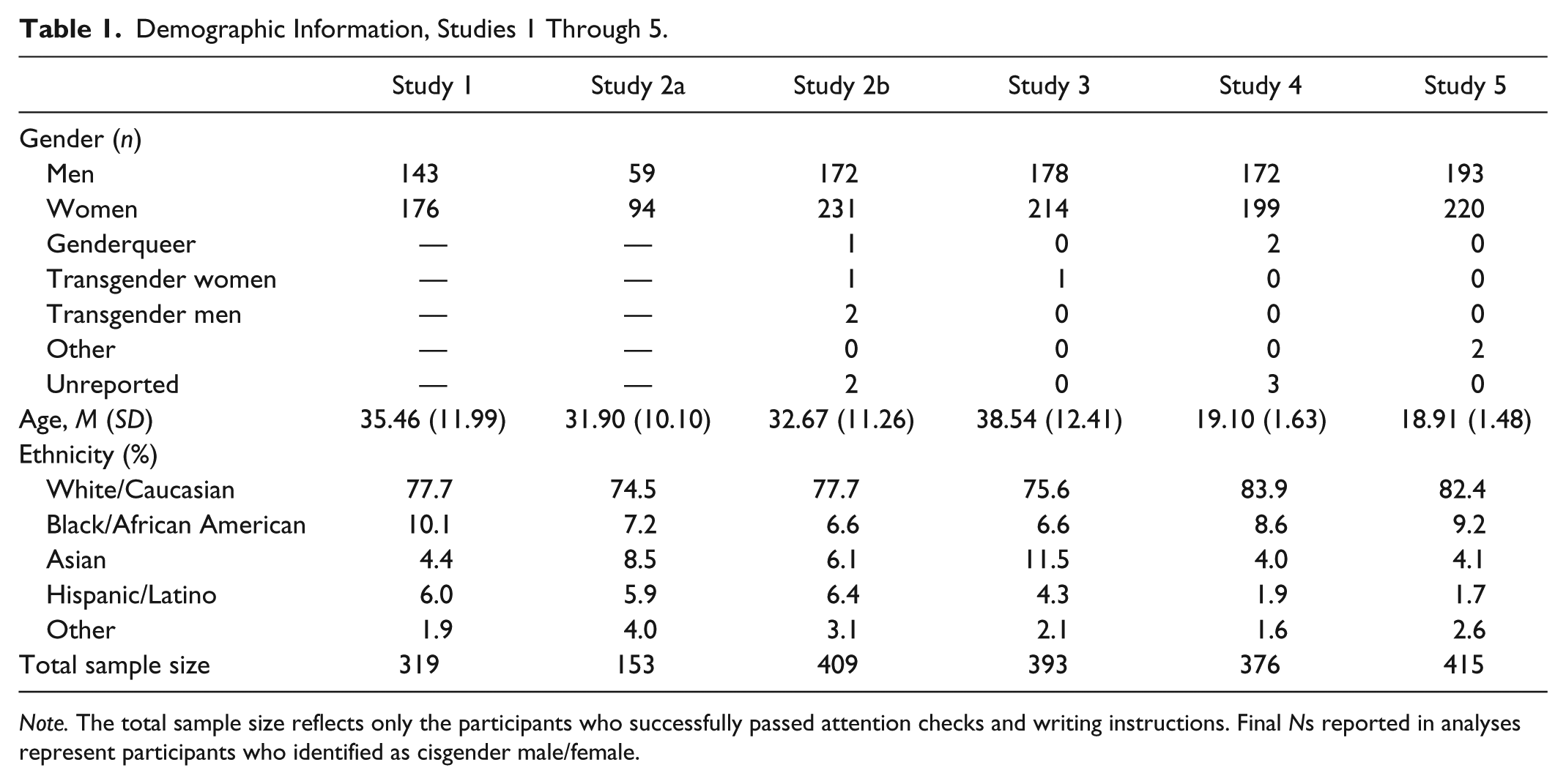
Note. The total sample size reflects only the participants who successfully passed attention checks and writing instructions. Final Ns reported in analyses represent participants who identified as cisgender male/female.
Descriptive Statistics and Correlations Among Measures, Study 1.

Note. Gender coded: women = 0; men = 1. Coefficients on the diagonal are alpha reliabilities. Partial correlations are for the association between gender and moral wrongness, controlling for each variable. 95% bootstrapped confidence interval for r between gender and moral wrongness ratings = [–.12, –.32].
p < .10. *p < .05. **p < .001.
Emotion Measures
Eight items from the International Personality Item Pool (Goldberg et al., 2006; see Supplement) measured emotional intensity (e.g., “I experience my emotions intensely”; “I am not easily affected by my emotions,” reverse-scored).
The Emotion Regulation Questionnaire (Gross & John, 2003) assessed emotional reappraisal (six items; for example, “I control my emotions by changing the way I think about the situation I’m in”), the tendency to reinterpret emotional responses, and emotion suppression (four items; for example, “I control my emotions by not expressing them”), the extent to which people attempt to not express emotions.
The Guilt and Shame Proneness Scale (GASP; Cohen et al., 2011) includes two four-item guilt subscales measuring the extent to which people feel guilty about moral transgressions (negative behavior evaluations) and expend effort into fixing them (repair tendencies). The two four-item shame GASP subscales measure the extent to which transgressions would make people feel bad about themselves (negative self-evaluations) or withdraw after a transgression (shame-withdrawal). GASP items describe emotion eliciting situations and ask participants to rate how the scenarios would make them feel. Whereas the negative self-evaluation shame subscale and both guilt subscales were positively related to moral decision-making in past research, the shame-withdrawal scale was not (Cohen et al., 2011).
Moral Judgments
Participants rated how morally wrong and harmful they considered six scenarios involving immoral opportunities for personal gain, ranging from “not at all” to “extremely” (harmful/morally wrong). These scenarios were adapted from prior work (e.g., Detert et al., 2008; Helzer & Pizarro, 2011) and shortened so that they focused on the action without contextual details (e.g., cheating on a test, lying on one’s resume; see Supplement).
Participants then reported demographics and rated intrinsic religiosity (five positively worded items from the Revised Intrinsic/Extrinsic Religiosity scale; Gorsuch & McPherson, 1989; see Supplement). Data from participants who responded incorrectly to at least two of three embedded attention check items (n = 5) were removed from analyses. 2
Results
As Table 2 shows, gender was significantly related to ratings of moral wrongness and harmfulness; for moral wrongness gender difference, t(315) = 4.07, p < .001, d = 0.46. Men scored significantly higher than women on emotional suppression; women scored higher than men on both guilt proneness subscales and on the shame-negative self-evaluation subscale. Ratings of moral wrongness and harm were positively correlated with religiosity, both guilt proneness subscales, and shame-negative self-evaluation, whereas they were negatively related to emotional suppression.
Partial correlations (Table 2) showed that none of these variables fully accounted for the association between gender and moral wrongness. To gauge the extent to which the association between gender and moral decision-making was explained by emotion variables, we entered all potential explanatory variables (those significantly related to both gender and moral judgment) in a parallel multiple-mediator model (Hayes, 2012; Model 4) with 10,000 bootstrapped resamplings using the PROCESS macro in SPSS (the same analytical procedure followed in subsequent mediation models). As shown in Table 3, shame-negative self-evaluation, guilt-negative behavioral evaluation, and religiosity were significant mediators; emotional suppression and guilt-repair tendencies were not. When controlling for these variables, gender no longer predicted moral wrongness. Single-mediator models and a multiple-mediator model predicting harm perceptions are shown in the Supplement (Tables 2 and 3, respectively).
Multiple-Mediator Model Predicting Moral Wrongness From Gender, Study 1.

Note. Model run using Model 4 in the PROCESS macro in SPSS with 10,000 bootstraps (Hayes, 2012). Predictors in all models were unstandardized. Gender coded 0 = women; 1 = men. Final column shows the standardized regression estimates (to provide an easily interpretable effect size) in a model predicting moral wrongness from gender when controlling for all variables. Gender predicting moral wrongness alone, β = –.22, p < .001; b (SE) = − 0.56 (0.14), 95% CI = [–0.83, –0.29].
p < .05. **p < .001.
Brief Discussion
Study 1 provided initial evidence that guilt and shame proneness accounted for women’s higher condemnation of immoral actions. If women’s stronger tendency to condemn actions is explained by their propensity to experience SCME, then decreasing the emotions they experience when considering moral dilemmas should heighten immoral intentions. Study 2 examined this possibility by experimentally manipulating attention to emotion prior to moral decision-making. We examined immoral intentions, rather than moral condemnation, to demonstrate that gender differences arise not only in judgments about the immorality of behaviors but also the willingness to behave immorally.
Studies 2a and 2b
Participants in Studies 2a and 2b were either instructed to adopt an unemotional perspective or were given no special instructions, and then rated the likelihood that they would engage in various morally questionable acts. In the control group, we expected to see the typical gender difference (i.e., women reporting lower likelihood of engaging in immoral acts than men). When adopting an unemotional perspective, we predicted that women would be just as likely as men to report that they would engage in immoral acts. Because men are less prone to experience guilt and shame and more prone to suppress emotions more generally (e.g., Cohen et al., 2011; Gross & John, 2003), we did not expect the manipulation to affect them. In addition to replicating Study 2a, Study 2b examined whether two potential alternatives not included in Study 1, empathic concern (an emotional factor) and gender roles, explained gender differences in immoral intentions in the control condition. 3
Method
Participants and Procedures
Mturk participants (Study 2a: N = 153, paid US$0.70; Study 2b: N = 409, paid US$0.50) completed this study online. Table 1 shows demographics. Study 2b included extended gender categories. Given the uncertainty of whether gender differences in emotion and moral judgments reflect biological or social differences, participants who did not classify themselves as (cisgender) male or female were removed from analyses examining gender here and in all subsequent studies.
Participants were randomly assigned to conditions. Control participants (ns = 77/199, Studies 2a/2b) were instructed to read the scenarios carefully and make decisions about them. In the experimental condition (ns = 76/204, Studies 2a/2b), we employed an established manipulation of emotional reappraisal (adapted from Lee & Gino, 2015; Shiota & Levenson, 2009). Unlike traditional reappraisal, we did not ask people to reinterpret their emotions (per Gross & John, 2003) but to downregulate and explicitly ignore any emotions that occur, so we refer to it as the unemotional condition. The unemotional condition participants were instructed to adopt a detached and unemotional perspective, and to “try to think about what you are reading in such a way that you feel less negative emotion.” Participants rated three scenarios (αs = .72, .64, Studies 2a and 2b) from the Unethical Business Decisions scale (Ashton & Lee, 2008), describing profitable business decisions that would be regarded as unethical/immoral (see Supplement). Participants rated whether they would make the immoral decision, from 1 (definitely not) to 4 (definitely yes), Ms (SDs) = 1.89 (0.72), Study 2a; 1.90 (0.69), Study 2b.
At the end of Study 2b, participants completed the seven-item empathic concern subscale of the Interpersonal Reactivity Index (Davis, 1983), α = .86, M (SD) = 5.25 (1.03), and the Bem Sex Role Inventory short-form (10 items each for femininity/masculinity; Bem, 1981)—for masculinity (e.g., dominant): α = .82, M (SD) = 3.26 (0.63); for femininity (e.g., warm): α = .89, M (SD) = 3.82 (0.69).
Results
Figure 1 shows the means and 95% confidence intervals (CIs) for each gender within conditions. In both studies, main effects of condition and gender were significant. For condition, F(1, 149) = 6.54, p = .012; F(1, 399) = 5.03, p = .026 (Studies 2a and 2b, respectively). For gender, F(1, 149) = 5.88, p = .017; F(1, 399) = 7.76, p = .006 (Studies 2a and 2b, respectively). In neither study was the Gender × Condition interaction significant, ps > .53. Nevertheless, we tested key hypotheses using planned contrasts for both studies. As predicted, in both Studies 2a and 2b, the first planned contrasts showed that women in the control group (–3) had lower immoral intentions than women in the unemotional condition (+1) and men in the control and unemotional (both coded +1) conditions, for Study 2a: t(149) = 3.32, p = .001, d = 0.54; for Study 2b: t(399) = 3.29, p = .001, d = 0.33. As shown in Figure 1A and 1B, in the unemotional conditions, men’s and women’s decisions did not differ, whereas they did differ in the control. The second planned contrasts showed that women in the unemotional condition (+1) had higher immoral intentions than women in the control condition (–1) (men in both conditions coded 0), for Study 2a: t(149) = 2.32, p = .022, d = 0.38; for Study 2b: t(399) = 2.10, p = .036, d = 0.21. For the control condition gender difference, d = 0.56 in Study 2a, d = 0.35 for Study 2b.
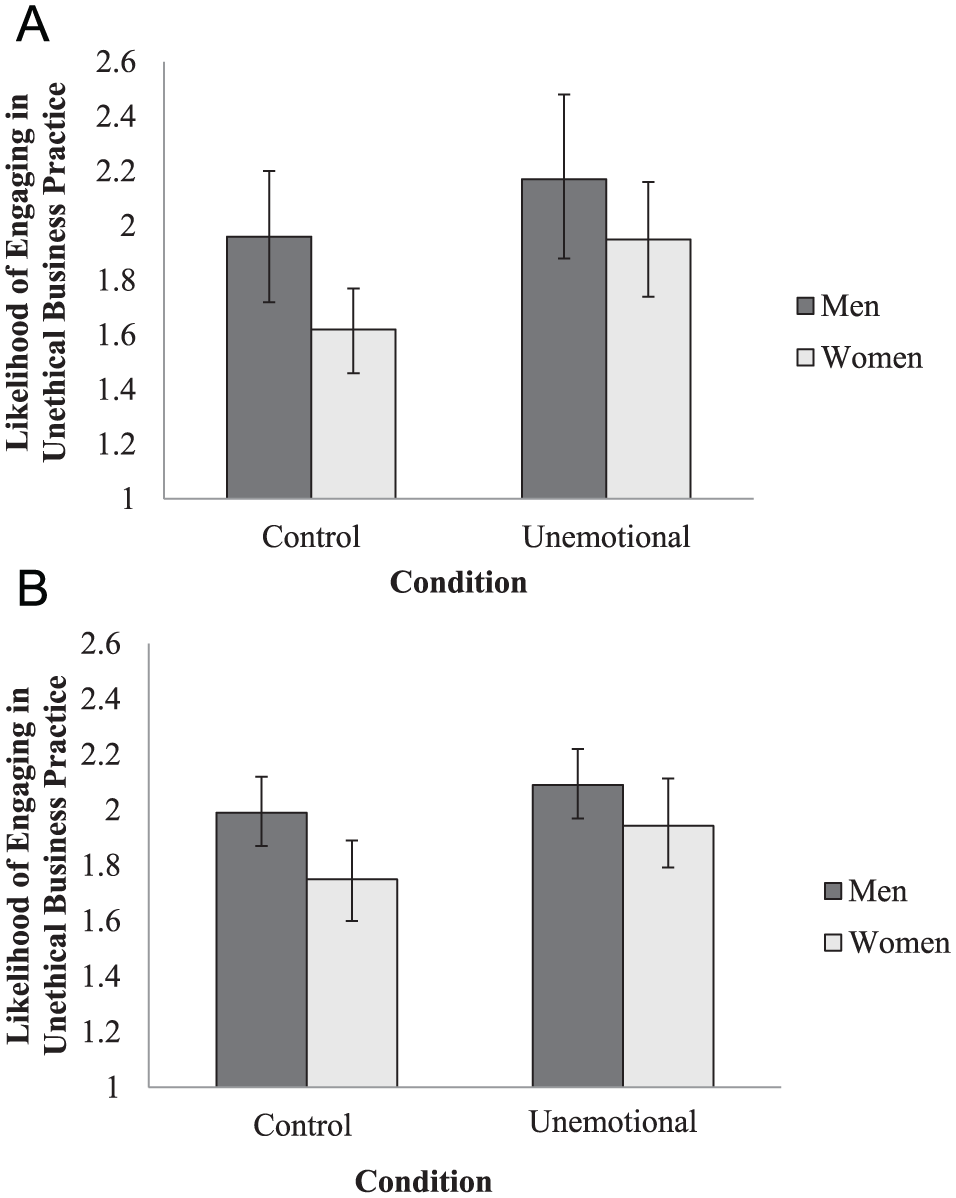
Mean ratings of the likelihood of engaging in immoral behaviors as a function of gender and condition: (A) Study 2a and (B) Study 2b.
We next assessed whether empathic concern and gender roles helped explain the gender difference in immoral intentions within the control condition in Study 2b. Gender (coded women = 0; men = 1) was negatively correlated with femininity, r = –.20, and empathic concern, r = –.31, ps < .006, but was unrelated to masculinity, r = .04, p = .57. Immoral intentions were related to empathy, r = –.23, p = .001, but not to femininity or masculinity, rs < ±.10, ps > .18. Thus, only empathy, being related to both gender and immoral intentions, could serve as a plausible explanatory variable. In a PROCESS mediation model (Model 4; Hayes, 2012), empathic concern mediated the effect of gender on immoral intentions, indirect effect, b (SE) = 0.08 (0.04); 95% CI = [0.02, 0.18]; direct effect of gender on immoral intentions, b (SE) = 0.24 (0.10), p = .02; 95% CI = [0.05, 0.43]; direct effect of gender controlling for empathic concern, b (SE) = 0.16 (0.10), p = .11; 95% CI = [–0.04, 0.36]. Exploratory analyses (Supplement; pp. 14-16; Figures 3 and 4) probed whether gender interacted with gender roles to predict immoral intentions here and in subsequent studies where they were measured.
Brief Discussion
These results provide support that women’s higher attention to emotion helps explain their lower intentions to engage in immoral behaviors. When ignoring their emotions, women heighten their immoral intentions. However, an emotion manipulation check was not included to verify that gender differences in emotion occurred. Potentially, women and men had different emotional responses to the moral dilemmas, altering the efficacy of the emotion regulation instructions, a possibility we explored next.
Study 3
If women experienced stronger negative emotions than men when considering moral dilemmas, then this would explain why instructions to ignore negative emotions had a larger effect on them. Study 3 examined whether the emotions elicited by the moral dilemmas used in Study 2 differed across men and women. This would provide further assurance that the reason the manipulation was more efficacious for women was their stronger negative emotional responses to immoral actions, rather than simply women’s higher attentiveness to the instructions.
Method
Participants and Procedures
Mturk participants completed this study online (N = 410; paid US$0.20). Table 1 shows demographics. Participants read the three scenarios from Study 2 and rated how they would feel if they were to make the immoral decision described. Instructions appearing at the end of each scenario specified the immoral action to imagine they completed (e.g., “Imagine that, as an executive for this company, you recommend that your company cut down timber beyond the legal amount”). SCME, appearing first, included guilty, regretful, and ashamed; αs = .95 for all three scenarios. 4 Positive emotions included happy, proud, and pleased (αs from .94 to .96 for all scenarios). Emotion scores were aggregated within and then across scenarios.
Results
Figure 2 displays the means for expected positive emotion and SCME. A repeated-measures general linear model with expected emotion (SCME, positive) entered as a within-participant factor and gender entered as a between-participant factor showed a main effect of expected emotion, F(1, 390) = 409.71, p < .001, and the expected Emotion × Gender interaction, F(1, 390) = 18.28, p < .001. Planned contrasts showed that when imagining making these immoral decisions, women (+1) expected to feel higher SCME than men (–1), t(390) = 4.85, p < .001, d = 0.49; women (–1) also expected to feel lower positive emotions than men did (+1), t(390) = 2.88, p = .004, d = 0.29.

Study 3: Mean ratings of emotion categories by gender.
Brief Discussion
Study 3 showed that when considering making immoral decisions, women expect to feel higher SCME and lower positive emotions than men do. These results demonstrate why instructions to ignore the negative emotions that arise from the immoral decisions in Study 2 had an influence on women but not men: Women’s baseline levels of SCME were already higher. The finding that immoral decisions provoke more expected SCME in women than men is consistent with Study 1’s results and past research (Cohen et al., 2011). Relatedly, ethical compromises have been shown to evoke more moral outrage in women than men (Kennedy & Kray, 2013).
Interestingly, these results demonstrated that men expect these immoral actions to result in higher positive emotions than women do, providing another potential explanation for why instructing men to ignore their negative emotions did not alter their immoral intentions. Study 4 examined whether gender differences in the emotions expected to result from immorality would account for women’s lower immoral intentions.
Study 4
Study 3 suggested that men expect to feel less SCME and more positive emotions than women do when making immoral decisions. Study 4 examined whether these emotional expectancies would account for gender differences in immoral intentions. We predicted that men would expect higher positive emotions and lower SCME from immoral behaviors than women do, and that these emotional expectancies would predict men’s higher intentions to engage in the behaviors. Study 4 also included variables demonstrated to be relevant to both gender and moral decision-making in past research—gender roles, moral identity, moral disengagement, religiosity, impression management, and empathic concern—to examine whether emotional expectancies still accounted for gender differences in immoral intentions when accounting for these potential confounds.
Method
Participants and Procedure
Four hundred twenty-four undergraduates at a university in the United States Midwest completed this study online for research participation credit. The sample size (here and in Study 5) was determined by the number of participants available during a semester. Table 1 reports demographics. Unless noted, all items were rated from 1 to 7 (higher scores indicate higher endorsement). Scores were aggregated across items. The emotion expectation and behavioral intentions blocks were counterbalanced to probe for order effects (n = 184 intentions first; n = 192 emotion expectations first); scenarios were randomized within blocks. Other measures were completed in the order presented below. Table 4 shows descriptive statistics.
Descriptive Statistics and Correlations Among Measures, Study 4.
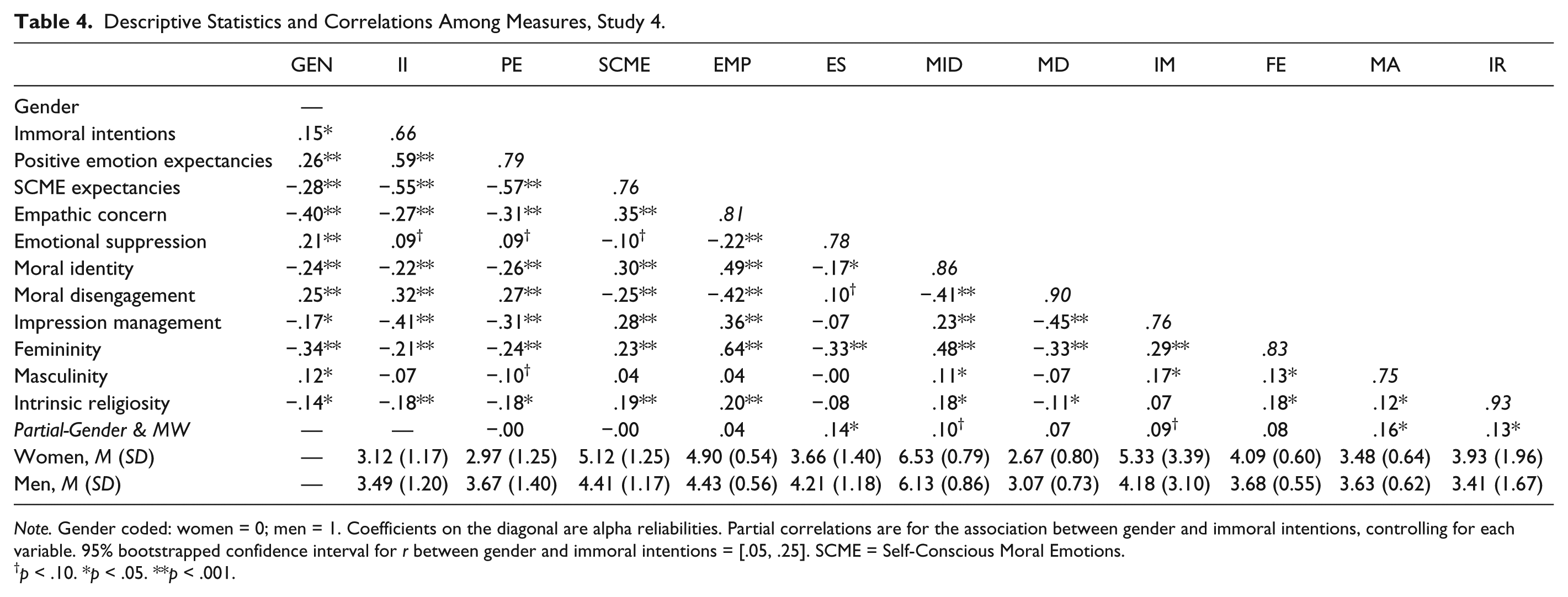
Note. Gender coded: women = 0; men = 1. Coefficients on the diagonal are alpha reliabilities. Partial correlations are for the association between gender and immoral intentions, controlling for each variable. 95% bootstrapped confidence interval for r between gender and immoral intentions = [.05, .25]. SCME = Self-Conscious Moral Emotions.
p < .10. *p < .05. **p < .001.
Emotion expectations
Participants rated how they would feel if they engaged in four immoral actions (e.g., exaggerating one’s resume; adapted from Detert et al., 2008; Helzer & Pizarro, 2011; see Supplement). 5 Scenarios indicated that outcomes were personally advantageous and the actor would not get caught for the immoral action. Positive emotions included pleased and happy (αs = .86 for all scenarios); SCME included guilty, ashamed, and regretful (αs = .91 for all scenarios). “Sadness” was also rated, but lowered the SCME alphas so was excluded. Emotion ratings were aggregated within and then across scenarios.
Behavioral intentions
Participants rated their likelihood of engaging in the immoral scenarios used in the emotion forecasting task, with higher ratings reflecting higher immoral intentions.
Explanatory variables
Afterward, participants rated potential explanatory variables, embedded within several other questionnaires to distract from the focus on morality. The 24-item Moral Disengagement Scale (Detert et al., 2008) assessed the propensity to rationalize or distort the consequences of moral transgressions (e.g., “Teasing someone does not really hurt them”). The five-item internalization subscale of the Moral Identity Scale captured whether people’s self-concepts emphasize moral traits (Aquino & Reed, 2002; for example, “I strongly desire to have these characteristics”). The eight-item masculinity and femininity subscales of the Personal Attributes Questionnaire were included to assess gender roles (Spence, Helmreich, & Stapp, 1974).
Participants completed the 20-item impression management subscale of the Balanced Inventory of Desirable Responding (Paulhus & Reid, 1991), measuring the tendency to present a favorable image of oneself (e.g., “I always obey laws, even if I’m unlikely to get caught”; see Supplement). Scores were computed by counting the number of extreme scores given to items (6’s and 7’s after reverse coding appropriate items). Participants also completed the emotional suppression and religiosity measures from Study 1 and the empathic concern measure from Study 2b.
Results
There was a main effect of order on expected positive emotion and SCME, Fs(1, 367) > 9.78, ps < .02, but not on immoral intentions, nor were there any Gender × Order interactions on these outcomes, Fs(1, 367) < 0.46, ps > .50. Expected positive emotions were higher when rated before, M (SD) = 3.43 (1.31), versus after immoral intentions, M (SD) = 3.14 (1.40). Expected SCME were lower when rated before, M (SD) = 4.64 (1.23), versus after immoral intentions, M (SD) = 4.95 (1.28). All analyses reported below collapse across both orders.
Consistent with Study 2 and shown in Table 4, women exhibited lower immoral intentions than men, t(369) = 2.96, p = .003, d = 0.31. As predicted, women expected higher SCME and lower positive emotions from the immoral actions than men. Gender was associated with moral identity, empathic concern, moral disengagement, impression management, femininity, religiosity, and impression management, which were, in turn, related to immoral intentions. Partial correlations (Table 4) showed that the association between gender and immoral intentions was eliminated when controlling for expected positive and SCME, empathic concern, femininity, and moral disengagement.
Parallel multiple-mediator models (Hayes, 2012) examined the most likely explanatory variables for the association between gender and immoral intentions based on which variables were significantly correlated with both. As shown in Table 5, expected positive emotions, SCME, and impression management mediated the association between gender and immoral intentions; other variables in the models were not significant mediators. When expected mood was excluded from models, only impression management and religiosity mediated the association between gender and immoral intentions. The pattern of results shown in Model I was identical when analyzed within the half of the sample who completed expected mood prior to behavioral intentions (Supplement, Table 5). Refer to the Supplement for single-mediator models (Table 7) and multiple mediation models examining predictors of gender differences in expected emotions and the role of impression management, respectively. 6
Multiple-Mediator Models Predicting Immoral Intentions From Gender, Study 4.
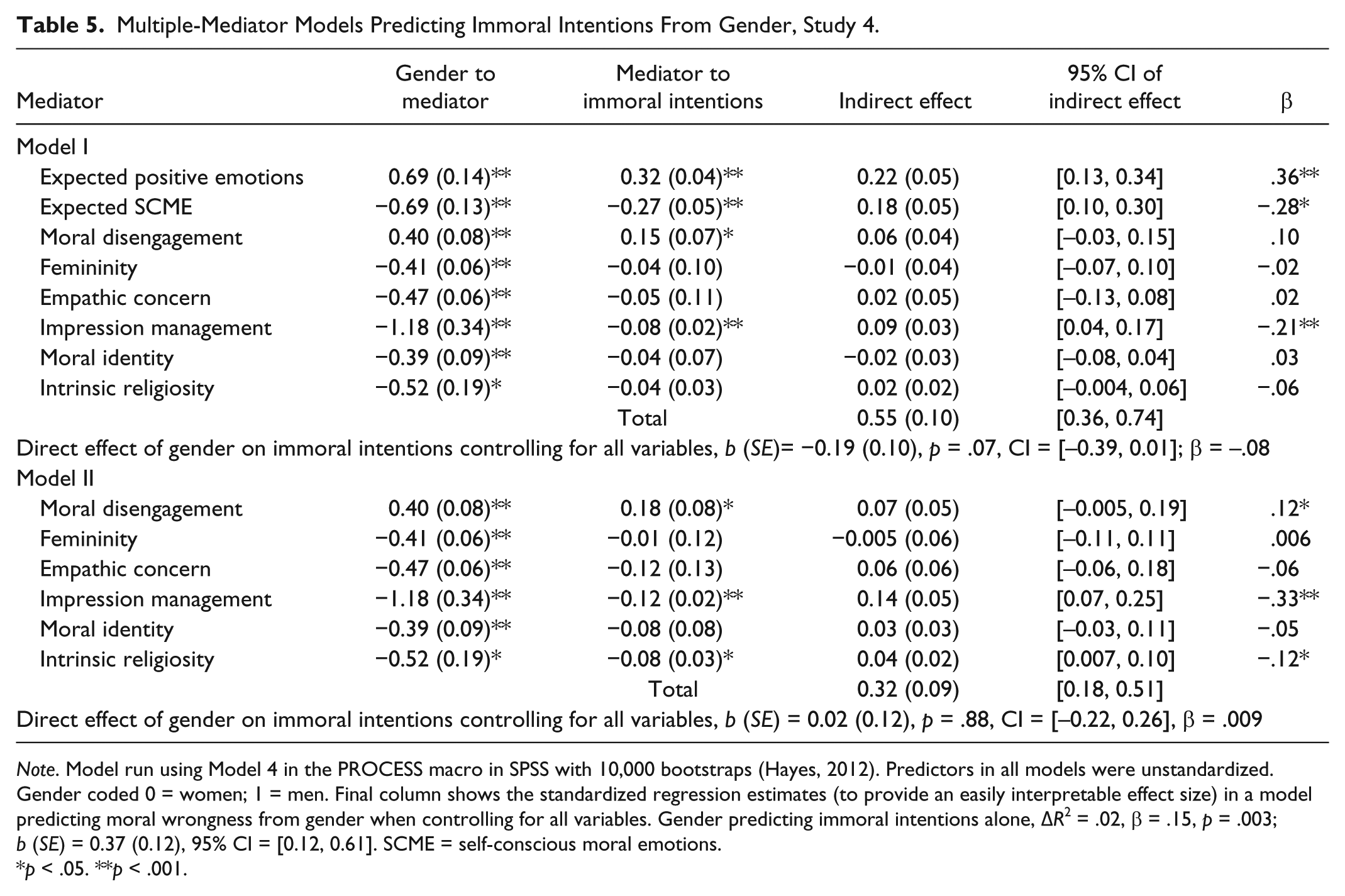
Note. Model run using Model 4 in the PROCESS macro in SPSS with 10,000 bootstraps (Hayes, 2012). Predictors in all models were unstandardized. Gender coded 0 = women; 1 = men. Final column shows the standardized regression estimates (to provide an easily interpretable effect size) in a model predicting moral wrongness from gender when controlling for all variables. Gender predicting immoral intentions alone, ΔR2 = .02, β = .15, p = .003; b (SE) = 0.37 (0.12), 95% CI = [0.12, 0.61]. SCME = self-conscious moral emotions.
p < .05. **p < .001.
Brief Discussion
Study 4 further demonstrated gender differences in immoral intentions and expected emotions from immoral actions. Importantly, emotion expectancies were the most influential explanatory variable in accounting for gender differences in immoral intentions, even alongside a host of relevant moral and personality variables. Gender differences in immoral intentions were also accounted for by impression management, attesting to the role of social norms in shaping women’s lower immoral inclinations.
In partial correlations, femininity, empathic concern, and moral disengagement each fully accounted for gender differences in immoral intentions. In Study 2b, femininity did not account for gender differences in immoral intentions, a discrepancy which may be due to the different scenarios or measures of gender roles used in these studies. Nevertheless, in multivariate models, only expected emotions, impression management, and religiosity accounted for gender differences in immoral intentions, demonstrating that moral disengagement, femininity, and empathic concern are not as relevant when considered alongside more influential predictors.
One possibility for men’s diminished negative emotions when considering these moral dilemmas is the clear opportunity for gain coupled with the lack of a clear victim, circumstances which may dampen men’s moral concerns. Study 5 examined whether gender differences in SCME would emerge when moral transgressions were more interpersonally relevant and less achievement-oriented.
Study 5
Having demonstrated gender differences in condemnation of (Study 1) and intentions to engage in (Studies 2 and 4) immoral actions for personal gain, Study 5 endeavored to further examine gender differences in emotional responses to transgressions and the potential context dependence of these emotional reactions. The previous studies examined emotional responses to hypothetical scenarios rather than real-life events. The hypothetical nature of these scenarios might amplify gender differences in expected emotions, as people conform to gender norms when reporting how they think they would feel. Another distinctive feature of the immoral scenarios in Studies 1 to 4 is that they involved opportunities for personal gain, often in the workplace, and a distant victim. Gender differences in SCME may be heightened in professional contexts, where socialization differences in agency and competition might be more relevant (e.g., Rudman & Phelan, 2008). Study 5 explored whether the gender difference would persist in an interpersonal context.
Study 5 tested for gender differences in SCME and regret when recalling immoral actions, and whether these depend on the domain in which the moral transgression occurred (relational vs. agentic). Based on the gender differences we observed thus far in immoral intentions and SCME for immoral professionally advantageous actions, we predicted that men would experience lower SCME and regret than women after recalling past actions done for professional or academic advancement. We measured regret, a central component of guilt (Tangney, Stuewig, & Hafez, 2011), to capture a more cognitive interpretation of the transgression, as opposed to one’s emotional state after recalling the transgression. We included a condition pertaining to a relational transgression to explore whether men would endorse SCME and regret in such a context and to provide comparisons to the agentic condition. We made no predictions about how the agentic versus relational conditions would differ overall because our prior studies did not examine relational contexts.
Study 5 included several explanatory variables from Study 4 to examine their roles in explaining gender differences in emotion.
Method
Participants and Procedure
Four hundred fifty undergraduates at a university in the United States Midwest completed this study online for research participation credit. Table 1 shows demographics. Unless noted, all items were rated from 1 to 7, with higher scores reflecting higher endorsement. Correlations among scales are shown in the Supplement (Table 10). Measures were completed in the order presented below unless otherwise specified.
Explanatory variables
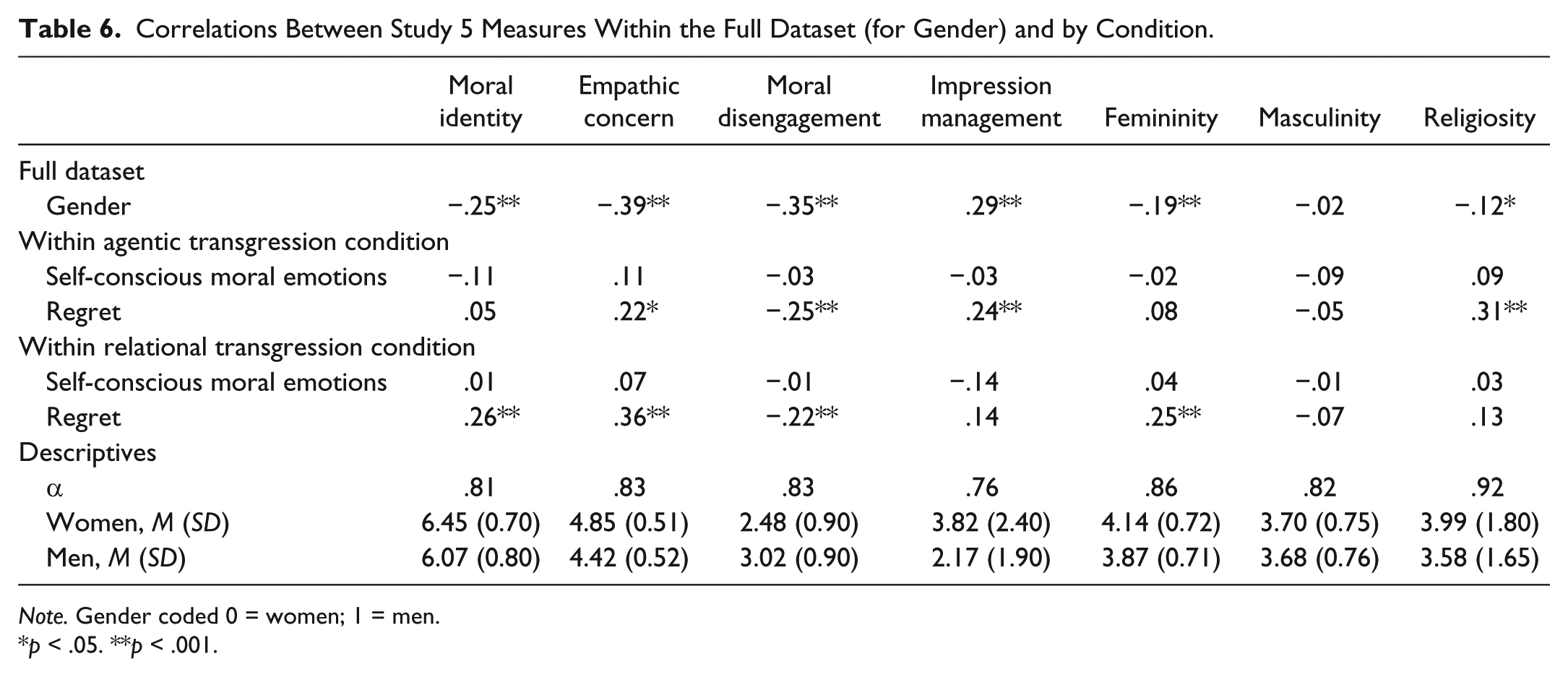
Participants completed the empathic concern measure from Studies 2b and 4, the moral identity scale used in Study 4, and shortened measures of the moral disengagement (eight items) and impression management scales (10 items) used in Study 4. We included five masculine and five feminine adjectives (Bem, 1981) to represent gender roles. Items on shortened scales (shown in Supplement) were selected because they had the highest item-total correlations with full scales in other samples. These measures were embedded within several other personality questionnaires to distract from the focus on morality. At the end of the study, participants completed the religiosity scale from Studies 1 and 4. Table 6 shows descriptive statistics.
Correlations Between Study 5 Measures Within the Full Dataset (for Gender) and by Condition.
Note. Gender coded 0 = women; 1 = men.
p < .05. **p < .001.
Immoral event writing
Participants were randomly assigned to the control (n = 152), relational transgression (n = 148), or agentic transgression (n = 150) conditions, which all involved 2-minute writing exercises. The agentic transgression instructions specified to “write about a time you did something immoral to get ahead at school or in the workplace.” 7 The relational transgression instructed participants to “write about a time you did something immoral to someone close to you, like a friend, romantic partner, or family member.” Control participants were asked to write about the pathway they took the last time they went to the store. Nine participants did not follow the writing instructions and were excluded from analyses. Key results reported below were the same when including these participants (see Supplement for content analyses of essays).
SCME and regret
After writing, participants rated how much they currently felt guilty, ashamed, and regretful (α = .86) (embedded in a list of other emotions). Whereas the emotion measures assessed how participants currently felt, two items measuring regret referred specifically to the transgression that participants wrote about (“Do you regret the action you took?” from 1 [No I don’t regret it at all] to 7 [Yes, I deeply regret it]; and “If you could do it over again, would you act differently?” from 1 [No, I would make the same decision] to 7 [Yes, I would definitely do things differently]; α = .93). Control participants did not complete regret items.
Results
SCME and regret were significantly correlated in the relational, r = .30, and agentic transgression conditions, r = .34, ps < .001. The means and CIs for SCME and regret by gender and condition are shown in Figures 3 and 4, respectively. An ANOVA predicting SCME revealed a main effect of condition (control; agentic/relational transgressions), F(2, 407) = 16.76, p < .001, but no main effect of gender or a Gender × Condition interaction, Fs < 1.31; ps > .27. For regret, an ANOVA revealed main effects of gender, F(1, 267) = 12.05, p = .001; and condition (personal vs. impersonal transgression), F(1, 267) = 26.53, p < .001, but no interaction, F(1, 267) = 00.00, p = .99. As shown in Figure 4, people were more regretful for relational versus agentic transgressions. People also experienced higher SCME for the relational transgression (vs. agentic).

Study 5: Self-conscious moral emotions as a function of gender and condition.
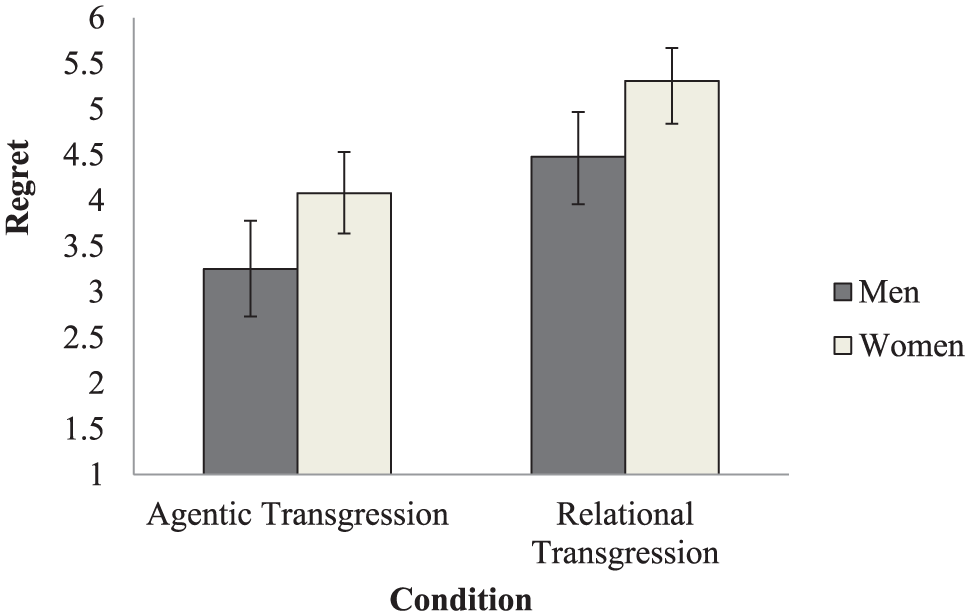
Study 5: Regret as a function of gender and condition.
We proceeded to test our specific predictions regarding women’s higher SCME and regret for the agentic transgression using planned contrasts. As shown in Figure 3, a planned contrast showed that women in the agentic transgression condition (+3) reported higher SCME than women in the control condition (–1) and men in both the control and agentic conditions (both –1) (women/men in relational transgression condition coded 0), t(407) = 2.92, p = .004, d = 0.29. Consistent with predictions, another planned contrast showed that women (+1) had higher regret than men (–1) within the agentic transgression condition (women/men in relational transgression condition coded 0), t(267) = 2.45, p = .015, d = 0.30.
We next examined potential explanatory variables for men’s diminished SCME and regret within the agentic transgression condition (see Supplement, Table 11, for relational transgression analyses). As shown in Table 6, gender was significantly correlated with moral identity, empathic concern, moral disengagement, femininity, and impression management, yet none of these variables were associated with SCME in either the agentic or relational transgression conditions. Thus, they could not explain gender differences in SCME. Within the agentic transgression condition, regret was positively related to empathic concern, religiosity, and impression management, and negatively related to moral disengagement, so these were examined as accounting for the role of gender in PROCESS mediation models (as they also related to gender, as noted above; Hayes, 2012). We first examined a parallel mediation model with these predictors. No variables individually significantly mediated the association between gender and regret, though the total indirect effect was significant, b (SE) = −0.45 (0.23); 95% CI = [–0.94, –0.02]; direct effect of gender on regret when accounting for these predictors, b (SE) = −0.38 (0.38), p = .31; 95% CI = [–1.13, 0.36]. The shared variance between predictors best explained the effect of gender on regret. We next examined these predictors in single-mediator models (shown in Table 7). Impression management and moral disengagement each fully accounted for the association between gender and regret within the agentic moral condition.
Single-Mediator Models Predicting Regret for Agentic Moral Transgressions From Gender, Study 5.

Note. Models run using Model 4 in the PROCESS macro in SPSS with 10,000 bootstraps (Hayes, 2012). Predictors in all models were unstandardized. Gender coded 0 = women; 1 = men. When these four variables were entered simultaneously in a parallel mediation model, no variables individually significantly mediated the association between gender and regret, though the total indirect effect was significant, b (SE) = −0.45 (0.23); 95% CI = [–0.94, –0.02]; direct effect of gender on regret when accounting for these predictors, b (SE) = −0.38 (0.38), p = .31; 95% CI = [–1.13. 0.36]. Thus, the shared variance between predictors best explained the effect of gender on regret.
p < .05. **p < .001.
Brief Discussion
Study 5 demonstrated that women experience more SCME and regret than men when recalling agentic transgressions. Women’s higher regret was explained by moral disengagement and impression management. When recalling relational transgressions, men and women exhibited similarly high levels of SCME. The relational transgressions evoked higher SCME and regret as compared with agentic transgressions, showing that interpersonal immorality is more distressing for both men and women.
These findings suggest that men may have a more contextualized notion of morality, leading them to experience more SCME regarding interpersonal immorality than immorality done to get ahead at school or work, whereas women may not differentiate these domains as strongly. Perhaps women perceived greater harm and victims in the agentic immoral actions, leading them to experience higher SCME and regret. However, a limitation of this study is that it was unclear whether the pattern of results emerged due to the presence of a clear victim involved or to the difference in contextual settings and rewards. People may hurt others while immorally pursuing professional rewards or provoke abstract harm during an interpersonal transgression, so it would be valuable for future research to probe how these varying contexts and victims influence emotional responses to transgressions.
General Discussion
Few studies have provided insight into why women exhibit lower inclinations toward immoral personally advantageous actions than men. The present studies provide consistent and broad evidence that gender differences in emotion contribute in important ways to women’s lower immoral intentions. A range of emotional factors were shown to explain gender differences in moral decision-making, including dispositional guilt and shame proneness (Study 1), responses to emotion regulation instructions (Study 2), and the levels of SCME and positive emotions expected to arise from immoral decisions (Studies 3 and 4). These factors predicted gender differences in moral condemnation and immoral intentions. Study 5 showed that men and women differ in the levels of SCME and regret experienced after recalling transgressions done for professional gain. In addition, across studies, the effects of emotional factors were independent of potential confounds. Together, these studies demonstrate the interplay between gender and emotion in influencing moral decision-making. Although historically women’s emotionality was thought to detract from their moral sophistication, the present data show that women’s higher SCME and lower positive affect experienced in the context of moral dilemmas explain their lower immoral intentions.
Emotions or Emotion Regulation?
In the present studies, gender differences in the types of emotions experienced in the context of moral scenarios appeared most relevant to explaining disparities in immoral intentions. When considering moral dilemmas, women experienced heightened SCME, whereas men experienced enhanced positive emotions. These results highlight that one gender is not simply more emotional overall in the context of moral decision-making, but that men and women are focusing on different emotions when considering these actions. Across studies, empathic concern also contributed to explaining gender differences in immoral intentions (consistent with Rosen et al., 2016). Because of the controversy surrounding women’s higher empathy (e.g., Ickes et al., 2000), it would be valuable for future research to probe what specifically about empathic concern contributes to gender differences in immoral intentions.
Emotional suppression and emotional intensity only weakly contributed to explaining gender differences in moral judgments/immoral intentions (Studies 1 and 4), suggesting they are unlikely to account for gender discrepancies that arise in moral decision-making. Nevertheless, there may be gender differences in regulating emotion that were not captured by the measures used here. For instance, men may initially experience comparable SCME to women in response to immorality and then quickly dampen this response.
In Studies 2a and 2b, women increased their immoral intentions when instructed to ignore their emotions, yet this manipulation did not affect men. Women’s higher SCME when considering immoral actions (Studies 3 and 4) helps to explain why. The “unemotional” manipulation in Study 2 represented one subtype of emotional reappraisal manipulations, among several other emotion regulation strategies (Webb, Miles, & Sheeran, 2012). Antecedent-focused strategies, like reappraisal, may be more effective in dampening emotional responses because they are employed before emotion occurs (e.g., Webb et al., 2012). Manipulations of emotional suppression (hiding or not allowing oneself to experience emotions as they occur) or positive reappraisal (thinking about positive aspects of a situation while ignoring negative aspects; Shiota & Levenson, 2009) may have different effects on men and women’s immoral intentions compared with emotional reappraisal. Moreover, men and women may adopt distinct strategies when regulating emotion (Whittle, Yücel, Yap, & Allen, 2011), so it would be useful to examine how various regulation strategies alter gender differences in moral judgment.
Addressing Nonemotional Explanations
Across studies, impression management, moral identity, moral disengagement, femininity, and religiosity contributed to gender differences in immoral intentions and responses to immorality, consistent with past literature noting the relevance of these factors to gender and moral decision-making (e.g., Clark & Dawson, 1996; Dalton & Ortegren, 2011; Kennedy et al., 2017; McCabe, Ingram, & Dato-on, 2006). However, across the present studies, these factors did not account for the role of emotion variables in explaining gender differences in immoral intentions and moral judgments. In Study 4, gender differences in immoral intentions were most strongly explained by expected positive emotions and SCME even when considered alongside several relevant moral and personality variables.
The Origins of Gender Differences in Morally Relevant Emotions
Examining why and how gender differences in emotion emerge in the context of moral decision-making is an intriguing direction for future research. Gender differences in emotion are sometimes considered to reflect stereotyped gender roles. However, femininity and masculinity did not account for gender differences in expected (Study 4) or experienced emotions (Study 5) in response to immoral actions (see Supplement, Table 8, for Study 4 analyses). Exploratory analyses showed that gender differences in expected positive emotions from immoral behaviors (Study 4) were accounted for by empathic concern, impression management, moral identity, and religiosity (see Supplement, Table 8). It would be valuable to further examine the roles of these variables in accounting for gender differences in emotions relevant to moral decision-making. In Study 5, none of the explanatory variables were linked to SCME in response to moral transgressions (Table 5), prohibiting an investigation into their role in explaining gender differences.
Impression management helped account for gender differences in immoral intentions (Study 4) and regret in response to agentic transgressions (Study 5). Yet, there are several reasons why gender differences in immoral inclinations (and regret) may not merely reflect response bias. Social desirability scales are widely believed to capture substantive individual differences in traits, including interpersonal self-control (Uziel, 2010), emotional stability, and conscientiousness (Ones, Viswesvaran, & Reiss, 1996). Consequently, controlling for social desirability can remove true variance in personality (e.g., Ones et al., 1996; Uziel, 2010). To the extent that impression management captures individual differences in self-regulatory capacities and communal values related to morality (e.g., Paulhus & Trapnell, 2008; Uziel, 2010), its association with immoral intentions and gender may be substantive, not artifactual. Impression management is correlated with feminine traits (Studies 4 and 5; also Marsh, Antill, & Cunningham, 1987), which themselves capture communal and moral values (e.g., warm, compassionate). Thus, the influence of impression management in the link between gender differences in immoral intentions (and regret) may reflect substantive individual differences in communal values rather than simply a response bias.
Implications and Limitations
Although the present studies examined transgressions primarily related to fairness and justice, it is possible that gender differences would extend to additional moral domains. Women prioritize the moral foundations of harm and purity more highly than men (Graham et al., 2011), so they may be less inclined toward immorality in these domains, which could similarly be explained by emotional factors. Yet, Study 5 demonstrated women and men differed in the extent to which they experience SCME and regret for relational versus professionally advantageous transgressions. Perhaps, gender differences are amplified in achievement-oriented contexts. Moreover, it is possible that women would exhibit higher immoral intentions than men if faced with moral dilemmas that pit values they care about strongly against less important ones (e.g., breaking a rule to help one’s friend).
It is worth noting that the observed gender differences in condemnation and immoral intentions were small to medium in magnitude (ds = 0.31-0.56), consistent with typical effect sizes in this research (e.g., Franke et al., 1997). This suggests that men and women do not have vastly distinct moral attitudes, but rather small disparities that arise consistently.
A limitation of this research is the use of hypothetical scenarios rather than actual behavior. Importantly, gender differences have been observed in morally relevant behaviors. Compared with men, women exhibit more honesty and cooperation in economic experiments and lower criminality and workplace deviance (e.g., Cohen, Panter, & Turan, 2013; Dreber & Johannesson, 2008; Ortmann & Tichy, 1999; Rowe, Vazsonyi, & Flannery, 1995). Women also exhibit more communally oriented prosocial tendencies than men (Eagly, 2009). Nevertheless, it is uncertain to what extent decisions about hypothetical scenarios are reflective of real behavioral choices. Future research should probe whether gender differences in moral behavior are similarly accounted for by emotional factors.
The present studies examined a limited set of emotions, yet gender differences in moral decision-making may also result from other emotions, such as anger, envy, or gratitude. Future research should examine how specific discrete emotions affect the quality of moral decisions (in women and men).
Historically, emotion was portrayed as unhelpful in optimal moral reasoning, and women were often depicted as morally inferior to men (e.g., Kohlberg, 1964). The present results demonstrate that women exhibit lower immoral intentions and higher moral condemnation than men do, and these differences are explained by women’s higher SCME and lower positive emotions experienced in the context of moral dilemmas.
Footnotes

Declaration of Conflicting Interests
The author(s) declared no potential conflicts of interest with respect to the research, authorship, and/or publication of this article.
Funding
The author(s) received no financial support for the research, authorship, and/or publication of this article.
Supplemental Material
Supplementary material is available online with this article.
Notes
References
Supplementary Material
Please find the following supplemental material available below.
For Open Access articles published under a Creative Commons License, all supplemental material carries the same license as the article it is associated with.
For non-Open Access articles published, all supplemental material carries a non-exclusive license, and permission requests for re-use of supplemental material or any part of supplemental material shall be sent directly to the copyright owner as specified in the copyright notice associated with the article.
