



Abstract
Low-status groups report lower levels of well-being than do high-status groups. Although system justification theory posits that the endorsement of system-justifying beliefs should decrease this well-being gap, the underlying mechanisms responsible for this hypothesized palliative effect have evaded empirical scrutiny. We address this oversight by arguing that system-justifying beliefs confer palliative benefits upon low-status groups by decreasing perceptions of group-based discrimination. Using nationally representative data from New Zealand (N = 12,959), we demonstrate that ethnic minorities (Study 1a) and women (Study 1b) generally report lower levels of well-being than do New Zealand Europeans and men, respectively. Nevertheless, as hypothesized, these differences were mitigated by the endorsement of ethnic- and gender-specific system justification, respectively. Mediated moderation analyses further revealed that part of the palliative effects of system justification occurred via reductions in perceived group-based discrimination. The implications of these findings for intergroup relations are discussed.
What is needed if social order is to reign is that the mass of men [and women] be content with their lot. Ideology creates “a bridge of excuses between the system and the individual,” allowing people to feel better about inequality and the myriad consequences it brings.
Many historically disadvantaged groups 1 have improved their access to material and social goods over the last century. Nevertheless, social inequality and marginalization remain indelible features of all hierarchically organized societies (Sidanius & Pratto, 1999). In addition to violating principles of justice, the ubiquitous nature of inequality negatively affects both the advantaged and the disadvantaged (Jost et al., 2008; Osborne, García-Sánchez, & Sibley, in press; Osborne, Sibley, & Sengupta, 2015; Wilkinson & Pickett, 2010).
Although inequality is harmful for both the advantaged and the disadvantaged (Jost et al., 2008; Wakslak, Jost, Tyler, & Chen, 2007), disadvantaged groups are particularly prone to the detrimental effects of pervasive social hierarchies. For instance, women have lower levels of well-being relative to men (Meisenberg & Woodley, 2014). Individuals who identify as lesbian, gay, and bisexual also report reduced psychological well-being compared with their heterosexual counterparts (Cochran, Sullivan, & Mays, 2003), and African Americans have poorer mental health relative to Whites (Williams & Williams-Morris, 2000). Finally, ethnic minorities in New Zealand, the country in which the current study takes place, report lower levels of well-being than do their New Zealand European counterparts (Lee, Duck, & Sibley, 2017).
Despite the apparent ubiquity of this well-being gap, research has largely overlooked the specific ideologies that disadvantaged groups adopt to rationalize their low status (for an exception, see Jost & Burgess, 2000). This is not to say that research has entirely neglected minorities’ reactions to marginalization. A robust literature from a social identity perspective (e.g., Tajfel & Turner, 1979) reveals that disadvantaged groups pursue identity management strategies that help them to restore a valued social identity through behavioral or cognitive responses (see Blanz, Mummendey, Mielke, & Klink, 1998). Many of these strategies (e.g., downward intergroup comparisons, selecting a complementary comparison dimension, etc.), however, undermine support for social change (Becker, 2012). Thus, the ways in which the disadvantaged cope with inequality can sometimes (ironically) reinforce the status quo. Yet, the psychological mechanisms through which members of disadvantaged groups personally benefit from legitimizing inequality have largely been ignored.
To address this oversight, the current study builds upon past research (Owuamalam, Paolini, & Rubin, 2017; Suppes, Napier, & Van der Toorn, 2019) to examine one mechanism that may explain why the legitimization of existing social arrangements buffers members of low-status groups’ psychological well-being. Specifically, we argue that the endorsement of system-justifying beliefs attenuates the well-being gap by reducing perceptions of group-based discrimination among the disadvantaged. Before presenting our study, we review the literatures on the palliative effects of ideology and the effects of perceived discrimination on well-being.
Palliative Effects of Ideology
System justification theory (Jost & Banaji, 1994) provides a compelling framework for understanding people’s beliefs regarding general and specific hierarchical social structures. Specifically, system justification theory argues that people are motivated to believe that the system in which they live is fair and legitimate. This is because believing that society is fair satisfies (a) existential needs to seek security and reduce threat, (b) epistemic needs to reduce uncertainty, and (c) relational needs to establish a shared reality with others (Jost & Hunyady, 2005). The psychological justification of the status quo is also less costly than the pursuit for social change, as collective action carries substantial social, material, and psychological costs (Eidelman & Crandall, 2009). In short, it is easier to justify the system than it is to change it.
Although justifying the system undermines group-based efforts to redress inequality, the endorsement of system-justifying beliefs confers palliative benefits on the disadvantaged by alleviating distress, reducing negative affect, and boosting well-being (Jost & Hunyady, 2003; Jost et al., 2008; but see Brandt, 2013; Owuamalam, Rubin, Spears, & Weerabangsa, 2017). Related approaches including just world theory (Lerner, 1980) and social dominance theory (Sidanius & Pratto, 1999) similarly note that people want to believe that society is fair and will accordingly endorse beliefs that enhance hierarchy. But system justification theory is unique in that it addresses internalized forms of self-derogation and theorizes that system-justifying ideologies—including just world beliefs—confer palliative benefits on well-being. Indeed, a range of system-justifying ideologies buffer disadvantaged groups from the negative mental health outcomes associated with experiencing injustices (see Jost & Hunyady, 2003).
Although the motivation to justify the system is often congruent with the desire to see the in-group in a positive light for high-status groups, members of disadvantaged groups may experience ambivalence between their system, group, and ego justification motives (Jost & Burgess, 2000). To resolve this dissonance, disadvantaged groups may sometimes support the system more than advantaged groups (see Brandt, 2013; Owuamalam, Rubin et al., 2017). Indeed, Jost, Pelham, Sheldon, and Sullivan (2003) found that those low in socioeconomic status perceived income inequality to be more legitimate than did those high in socioeconomic status. Sengupta, Greaves, Osborne, and Sibley (2017) also showed that symbolic prejudice—a type of system-justifying belief—bolstered people’s well-being particularly among those living in highly unequal areas.
System-justifying beliefs also confer psychological benefits to those who face gender inequality. Women who endorse benevolent sexism are more satisfied with their lives than are women who reject this ideology—a palliative effect mediated by the perception that gender relations are fair (Hammond & Sibley, 2011). Hammond and Sibley suggest that adopting benevolent sexism helps women to rationalize the status quo, thereby resolving the dissonance between needing to see both their in-group and society in a positive light. More recently, Osborne, Jost, Bahamondes, Stone, and Sibley (2018) found that hostile sexism conferred palliative benefits on women’s well-being over a 3-year period via the endorsement of gender-specific system justification. Similarly, a study conducted with schoolchildren in Chile showed that hostile sexism conferred palliative benefits to well-being, but only for low-status students (Vargas-Salfate, 2017).
The palliative effects of system-justifying beliefs on mental well-being extend beyond legitimizing gender inequality. Osborne and Sibley (2013) demonstrated that the endorsement of system-justifying beliefs weakened the positive relationships individual-based relative deprivation had with distress and dissatisfaction with one’s standard of living among ethnic minorities. Harding and Sibley (2013) also showed that endorsing system-justifying beliefs while experiencing active interpersonal harm had short-term positive effects on well-being. A more recent longitudinal panel study conducted across 18 countries further revealed that the palliative benefits of system justification held over a 6-month period (Vargas-Salfate, Paez, Khan, Liu, & Gil de Zúñiga, 2018). System-justifying beliefs buffer a range of groups from the mental distress associated with belonging to a disadvantaged group.
Jost and colleagues (2008) have also shown that system-justifying beliefs can even confer palliative benefits for simulated groups. In their study, the authors created an arbitrary hierarchy through a simulation that mimics societal inequality. Results showed that, although the group in power felt more satisfied with their simulated experience, they also reported more guilt relative to those in the medium- or low-power conditions, who, in turn, reported more frustration than the former groups. Critically, the endorsement of system-justifying beliefs increased satisfaction with the simulation for all groups, decreased guilt among those high in power, and decreased frustration among those with either medium or low power. The underlying reason why system justification lessened the effects of inequality on well-being, however, remains unknown.
Psychological Benefits to Overlooking Discrimination
One way that endorsing system-justifying beliefs could mitigate the negative effects of belonging to a low-status group on well-being is by altering perceptions of group-based discrimination. Unlike members of high-status groups, those who belong to low-status groups are marginalized in several spheres of life (United Nations Development Program, 2016). Critically, perceiving prolonged discrimination directed at one’s self or in-group has pervasive negative effects on well-being (Pascoe & Richman, 2009; Stronge et al., 2016) and could, under certain circumstances, elicit a type of stress that, unlike a general and adaptive brief state of psychological discomfort, is chronic (Meyer, 1995).
According to the worldview verification model of responses to discrimination (Major, Kaiser, O’Brien, & McCoy, 2007), perceived discrimination should threaten people’s well-being particularly because it conflicts with their beliefs of a fair and just system (Foster, Sloto, & Ruby, 2006). As such, consistent with the attributional path suggested by just world theory (Lerner, 1980), members of disadvantaged groups who are high on system justification may be particularly motivated to attribute group-based inequality to factors other than discrimination (Major et al., 2002). Attributing inequality to nondiscriminatory processes would reduce ideological dissonance between group and system justification motives, while also preserving positive relations with the dominant group (e.g., to avoid being perceived as “whiny”). Indeed, Major and Sawyer (2009) noted that “social systems of inequality persist . . . because members of low-status groups fail to recognize the illegitimacy of the status system and of their own disadvantaged position within it” (p. 91, emphasis added).
Previous studies demonstrate that system-justifying ideologies decrease the perception of group-based discrimination among the disadvantaged. For instance, women primed with meritocracy beliefs are more likely than women in a control group to attribute rejection by a male to themselves than to gender-based discrimination (McCoy & Major, 2007). A similar study extended these results to minorities and showed that the Status × Ideology interaction predicted declines in perceptions of ethnic-based discrimination (Major et al., 2002). Major and colleagues (2007) also found that women who were told that discrimination against their gender was very unlikely (vs. likely) reported higher self-esteem when endorsing meritocratic beliefs, but lower self-esteem among those who rejected meritocracy. Accordingly, Major and Kaiser (2017) argue that system-justifying ideologies cause perceptions of discrimination to decrease.
Although the abovementioned research indirectly supports our thesis that system justifying-beliefs confer palliative benefits to the disadvantaged by minimizing perceptions of discrimination, studies have only recently directly investigated this possibility. For instance, Owuamalam and colleagues (2017) demonstrated that creative reappraisals of social rejection by advantaged groups improved the self-esteem of women and immigrants, also showing that the process occurred via reductions in perceived discrimination and increases in the perceived fairness of the system. Suppes and colleagues (2019) similarly showed that lesbian, gay, bisexual, and transgender (LGBT) individuals who minimized perceptions of group-based discrimination reported better physical and mental well-being, noting that this association was stronger when discrimination was seen as infrequent (vs. frequent). Although both studies treated system fairness as a mediator (rather than a moderator, as hypothesized here), these studies suggest that system-justifying beliefs may provide a filter through which members of low-status groups perceive themselves as less stigmatized, thus enabling them to maintain the view that the system is “fair.” Nevertheless, research has yet to directly investigate the possibility that system-justifying ideologies confer palliative benefits to well-being by reducing perceptions of group-based discrimination.
Research Overview
We address this oversight by investigating the buffering role of system justification on the well-being gap between high- and low-status groups. Because system-justifying beliefs lessen psychological distress by alleviating the dissonance between competing justification motives (e.g., group and system justification motives) and by meeting epistemic, existential and relational needs (see Jost & Hunyady, 2003), we predicted that ethnic (Study 1a) and gender (Study 1b) differences in well-being would be attenuated among disadvantaged group members who were high (vs. low) on system justification. We further hypothesized that the mitigating effect of system justification on the well-being gap would occur through reductions in perceived discrimination, as the endorsement of system justification should allow low-status groups to escape their “spoiled” identity (see Figure 1). Given that well-being varies by age (e.g., Diener & Suh, 1998) and political ideology (e.g., Napier & Jost, 2008), we controlled for participants’ age and conservatism to demonstrate the unique mitigating effects of ethnic- and gender-specific system justification on the well-being gap. We also controlled for a set of demographic variables often associated with well-being, including income, employment status, educational attainment, and household size (see, for example, Sengupta et al., 2012).

Hypothesized model of the palliative effect of system justification on psychological well-being through minimizing perceived discrimination for the disadvantaged.
In testing these hypotheses, the current study makes multiple contributions to the literature. For one, we are among the first to explicitly investigate the moderating role of specific system-justifying ideologies on the well-being gap between high- and low-status groups. Indeed, research has focused almost exclusively on the palliative effects of general system justification. Yet, Sengupta, Osborne, and Sibley (2015) caution that “low-status groups [sh]ould display enhanced legitimation only when evaluating the fairness of the specific hierarchy responsible for their disadvantage” (p. 324, emphasis added). They concur with Lerner and Miller (1978) who similarly noted that people are mostly concerned with their own world and events that could affect their own fates. We are also one of the first to identify a specific mechanism underlying the palliative effects of ideology on well-being by arguing that system justification should attenuate the well-being gap by reducing perceptions of group-based discrimination. Finally, we examine our hypotheses across two distinct groups (namely, ethnicity and gender), thereby demonstrating the replicability of our results in separate disadvantaged groups. In doing so, we provide the most comprehensive test of the palliative effects of system justification to date by assessing the moderating effects of ethnic- and gender-specific system justification on group-based differences in well-being, and by identifying a specific psychological process through which these hypothesized effects occur (namely, via reductions in perceived group-based discrimination).
Method
Participants
The sample consisted of participants from Time 6 of the New Zealand Attitudes and Values Study (NZAVS), an ongoing nationally representative longitudinal panel study started in 2009 (see Sibley, 2018b). Data from Time 6 were collected in 2014/2015 and comprised of 15,822 participants who were included in an annual prize draw in exchange for participation in the study. Of the full sample, 12,959 participants (Mage = 48.15, SD = 13.85) gave partial or complete responses to our dependent variable and were included in this study. Sixty-three percent of the final sample were women, and most participants identified as New Zealand European (81.8%), followed by Māori (11.9%), Pacific Islander (2.5%), and Asian (3.8%). Therefore, sample weights were used to adjust for the overrepresentation of New Zealand European women (and the underrepresentation of Asians) relative to the general population (see Sibley, 2014). Table 1 displays the unweighted (leftmost columns) and weighted (rightmost columns) ratio of ethnic majority and minority men and women included in our study.
Absolute and Relative Frequencies for Gender Against Ethnicity With and Without the Use of Sample Weights.

Power
Because our participants were part of an existing dataset, we were unable to run power analyses prior to data collection. But given our sample size (i.e., N = 12,959), we are confident that we had sufficient power to detect small effects within the population.
Measures
Study 1a focused on ethnic-specific system justification and perceived ethnic discrimination, whereas Study 1b assessed gender-specific system justification and perceived gender-based discrimination. For both studies, we constructed a second-order latent measure of well-being comprised of three first-order latent variables (namely, psychological distress, personal well-being, and life satisfaction). The complete set of variables measured in the NZAVS is available online (see Sibley, 2018a). Unless noted, items were assessed on a 1 (strongly disagree) to 7 (strongly agree) scale.
Ethnic-specific system justification was measured using two items adapted from Jost and Kay’s (2005) gender-specific system justification scale: “Everyone in New Zealand has a fair shot at wealth and happiness, regardless of ethnicity or race” and “In general, relations between different ethnic groups in New Zealand are fair” (r = .32, p < .001).
Perceived ethnic discrimination was measured using one item: “I feel that I am often discriminated against because of my ethnicity.”
Gender-specific system justification was assessed using two items adapted from the gender-specific system justification scale (Jost & Kay, 2005): “In general, relations between men and women in New Zealand are fair” and “Men and women both have a fair shot at wealth and happiness in New Zealand” (r = .49, p < .001).
Perceived gender discrimination was measured using one item: “I feel that I am often discriminated against because of my gender.”
Psychological distress was measured using six items from the Kessler-6 (Kessler et al., 2010). Participants answered questions such as how often do “you feel hopeless?” or “restless or fidgety?” on a scale from 0 (none of the time) to 4 (all of the time; α = .85,
Personal well-being was assessed using four items from the Personal Well-Being subscale of the Australian unity well-being index (Cummins, Eckersley, Pallant, Van Vugt, & Misajon, 2003). Participants were asked to indicate how satisfied they were with different aspects of their life (i.e., “standard of living,” “health,” “future security,” and “personal relationships”) on a scale from 0 (completely dissatisfied) to 10 (completely satisfied; α = .75,
Life satisfaction was assessed using two items from the satisfaction with life scale (Diener, Emmons, Larsen, & Griffin, 1985): “I am satisfied with my life” and “In most ways my life is close to ideal” (r = .70, p < .001).
Covariates included age (open-ended), household income (open-ended), employment status (employed vs. unemployed), educational attainment, household size (number of children in household), and conservatism. Conservatism was assessed on a 1 (extremely liberal) to 7 (extremely conservative) scale.
Results
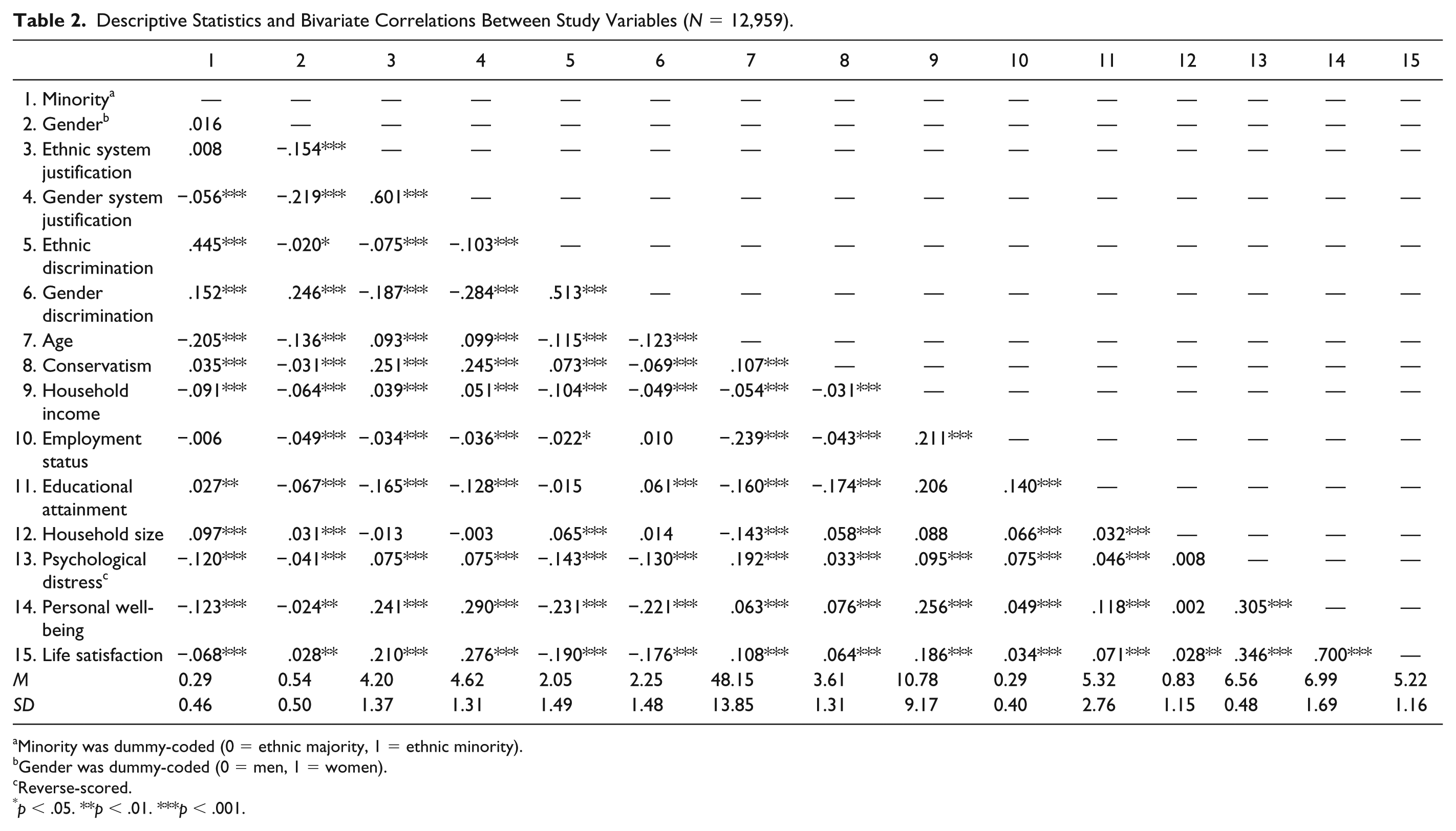
Table 2 displays the descriptive statistics and bivariate correlations for the variables included in this study. Whereas past studies indicate that system justification has a palliative effect on disadvantaged group members’ well-being, the mechanism through which these effects emerge has been elusive. Accordingly, we predicted that system justification would moderate the effects of belonging to an ethnic minority group (Study 1a) and being a woman (Study 1b) on psychological well-being because believing that society is fair should decrease minorities’ and women’s (respectively) perceptions that they will experience discrimination based on their group membership. To test these hypotheses, we conducted a set of multiple regressions, followed by a set of mediated moderation analyses, in Mplus version 8.0 (Muthén & Muthén, 1998-2017). In doing so, we calculated maximum likelihood estimates with robust standard errors. Given our large sample size, we used a conservative p < .01 criterion paired with 99% confidence intervals (CIs) to determine statistical significance.
Descriptive Statistics and Bivariate Correlations Between Study Variables (N = 12,959).
Minority was dummy-coded (0 = ethnic majority, 1 = ethnic minority).
Gender was dummy-coded (0 = men, 1 = women).
Reverse-scored.
p < .05. **p < .01. ***p < .001.
Preliminary Analyses
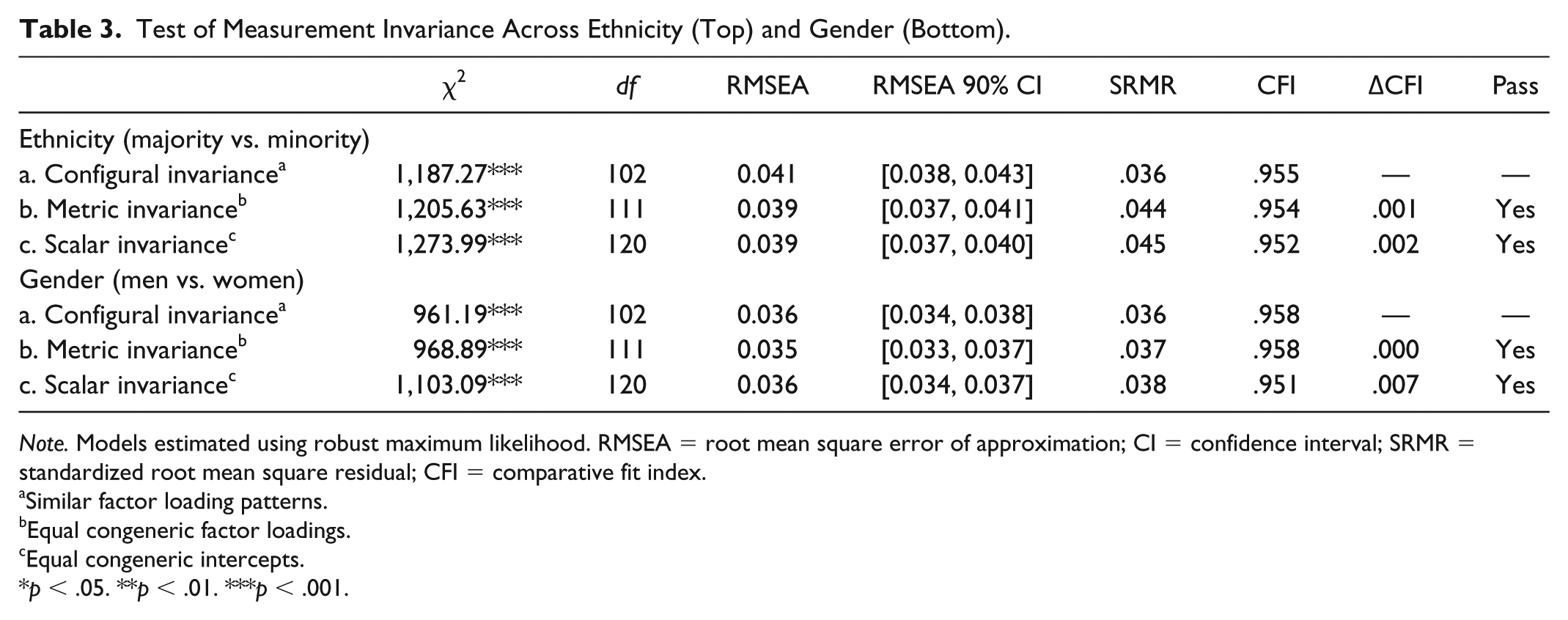
Prior to our main analyses, we investigated the measurement invariance of our first-order latent variables by estimating two separate increasingly restrictive measurement models displaying configural, metric, and scalar invariance (respectively) across minorities and ethnic majorities, and across women and men. We began by estimating a measurement model with three correlated first-order latent variables (namely, personal well-being, life satisfaction, and psychological distress [reverse-scored]) in which the factor loading patterns were similar for low- and high-status groups (configural invariance). Next, we constrained the congeneric factor loadings to equality across groups (metric invariance). In the final measurement model, we further constrained the congeneric intercepts to equality across low-status and high-status groups (scalar invariance). Results showed that our three first-order latent variables displayed scalar invariance across both ethnicity and gender (see Table 3). Thus, minorities and ethnic majorities interpreted our three well-being measures similarly, as did women and men.
Test of Measurement Invariance Across Ethnicity (Top) and Gender (Bottom).
Note. Models estimated using robust maximum likelihood. RMSEA = root mean square error of approximation; CI = confidence interval; SRMR = standardized root mean square residual; CFI = comparative fit index.
Similar factor loading patterns.
Equal congeneric factor loadings.
Equal congeneric intercepts.
p < .05. **p < .01. ***p < .001.
Study 1a
To test our hypothesis that ethnic-specific system justification would attenuate the well-being gap between minorities and ethnic majorities, we included age, conservatism, household income, employment status, educational attainment, household size, gender, and gender-specific system justification as control variables in a baseline regression model, as well as participants’ minority status and endorsement of ethnic-specific system justification (similar results were obtained when excluding our covariates; see Online Supplementary File A). In the second block of our model, we included the Minority × Ethnic-Specific System Justification interaction term, and controlled for the remaining nonhypothesized interactions (i.e., Minority × Gender-Specific System Justification, Gender × Ethnic-Specific System Justification, Gender × Gender-Specific System Justification, and Minority × Gender). We then ran two separate regressions in which perceptions of ethnic-based discrimination (Table 4) and our second-order latent variable for psychological well-being (Table 5) were regressed onto our full model (similar results were obtained when predicting each well-being measure separately; see Online Supplementary File B). Finally, we investigated whether perceived group-based discrimination mediated the interactive effects of Minority × Ethnic-Specific System Justification on well-being. Because gender did not moderate our predicted Minority × Ethnic-Specific System Justification interaction effect on either perceptions of ethnic-based discrimination or psychological well-being (see Online Supplementary File C), we present the results from models with the two-way (rather than the additional nonhypothesized three-way) interactions here.
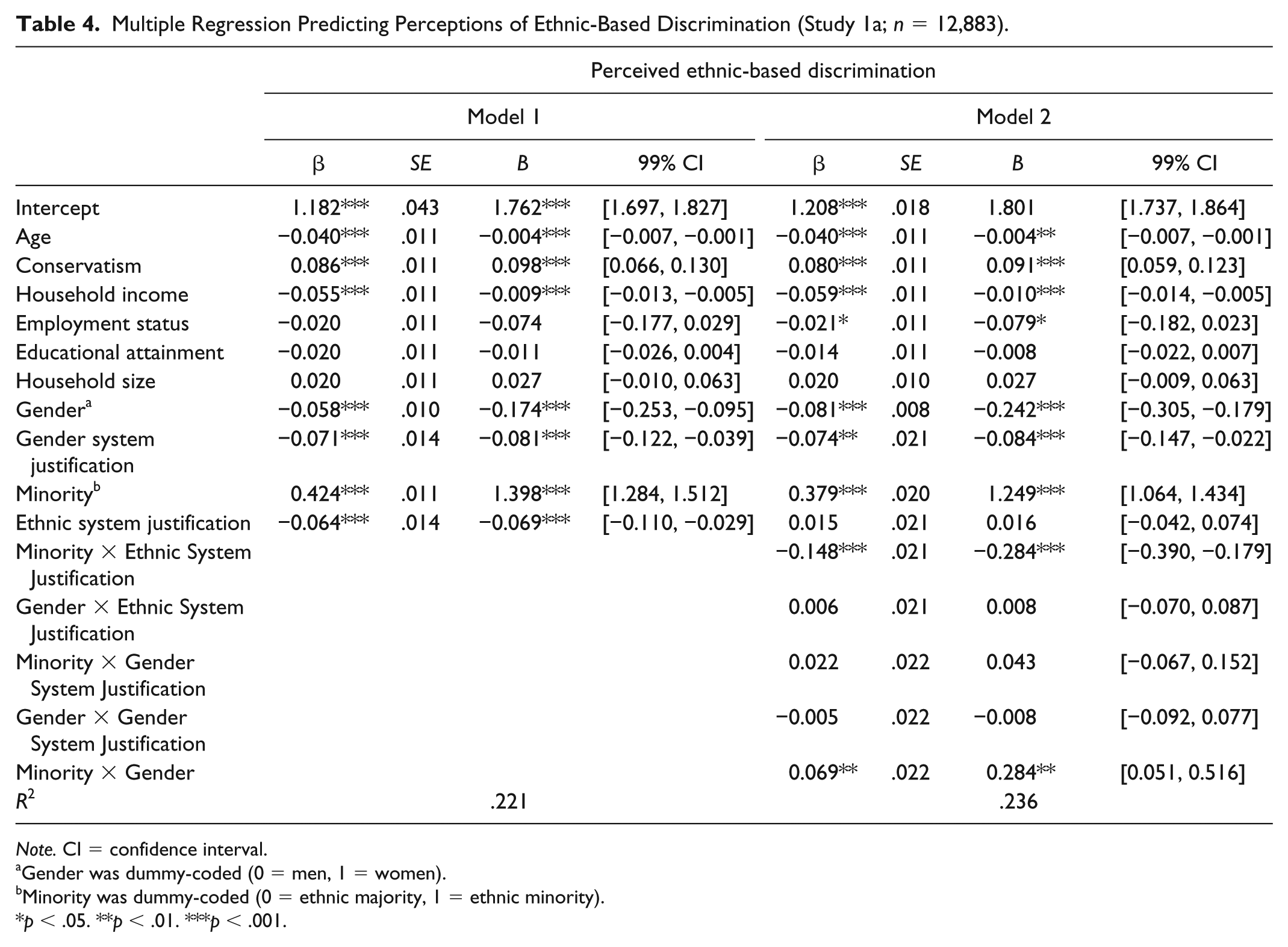
Multiple Regression Predicting Perceptions of Ethnic-Based Discrimination (Study 1a; n = 12,883).
Note. CI = confidence interval.
Gender was dummy-coded (0 = men, 1 = women).
Minority was dummy-coded (0 = ethnic majority, 1 = ethnic minority).
p < .05. **p < .01. ***p < .001.
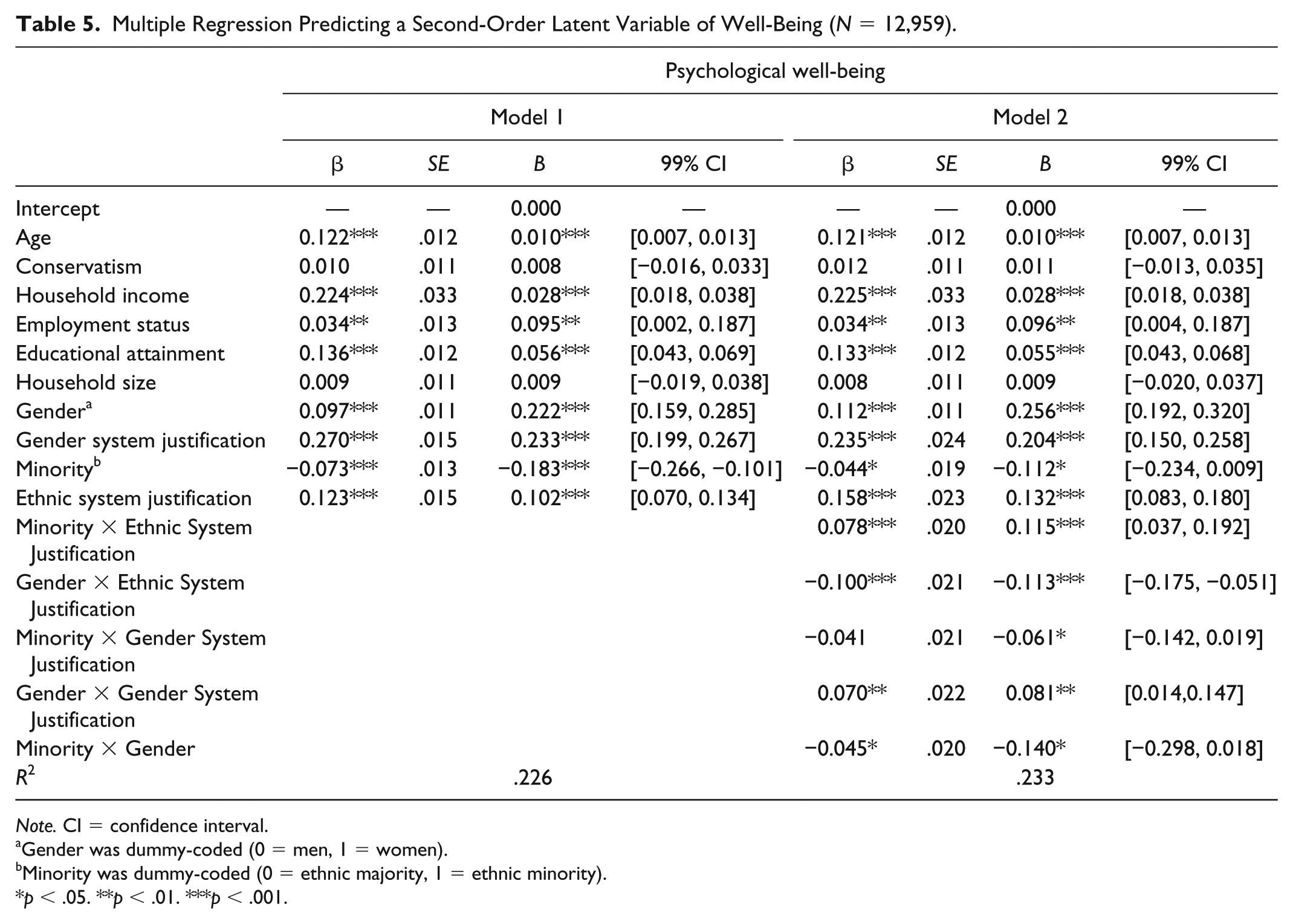
Multiple Regression Predicting a Second-Order Latent Variable of Well-Being (N = 12,959).
Note. CI = confidence interval.
Gender was dummy-coded (0 = men, 1 = women).
Minority was dummy-coded (0 = ethnic majority, 1 = ethnic minority).
p < .05. **p < .01. ***p < .001.
As a first step in testing our hypotheses, we regressed perceptions of ethnic-based discrimination onto our full model. Table 4 shows that conservatism correlated positively with perceived ethnic-based discrimination (B = 0.098, 99% CI = [0.066, 0.130], p < .001)—an effect likely driven by conservative New Zealand Europeans’ perception of being the victim of “reverse” discrimination. Conversely, age (B = −0.004, 99% CI = [−0.007, −0.001], p < .001), household income (B = −0.009, 99% CI = [−0.013, −0.005], p < .001), and gender (B = −0.174, 99% CI = [−0.253, −0.095], p < .001) correlated negatively with perceived ethnic-based discrimination. Nevertheless, after adjusting for these covariates, ethnic-specific system justification correlated negatively (B = −0.069, 99% CI = [−0.110, −0.029], p < .001), whereas minority status correlated positively (B = 1.398, 99% CI = [1.284, 1.512], p < .001), with perceptions of ethnic-based discrimination. The results from Model 2, however, reveal that ethnic-specific system justification moderated the effect of minority status on perceptions of ethnic-based discrimination (B = −0.284, 99% CI = [−0.390, −0.179], p < .001). As hypothesized, simple slope analyses showed that minorities perceived significantly more discrimination based on their ethnicity than did New Zealand Europeans, but this difference was attenuated at high (vs. low) levels of ethnic-specific system justification (Bdifference = 0.860, 99% CI = [0.639, 1.080], p < .001 vs. Bdifference = 1.638, 99% CI = [1.390, 1.887], p < .001, respectively; see Figure 2).
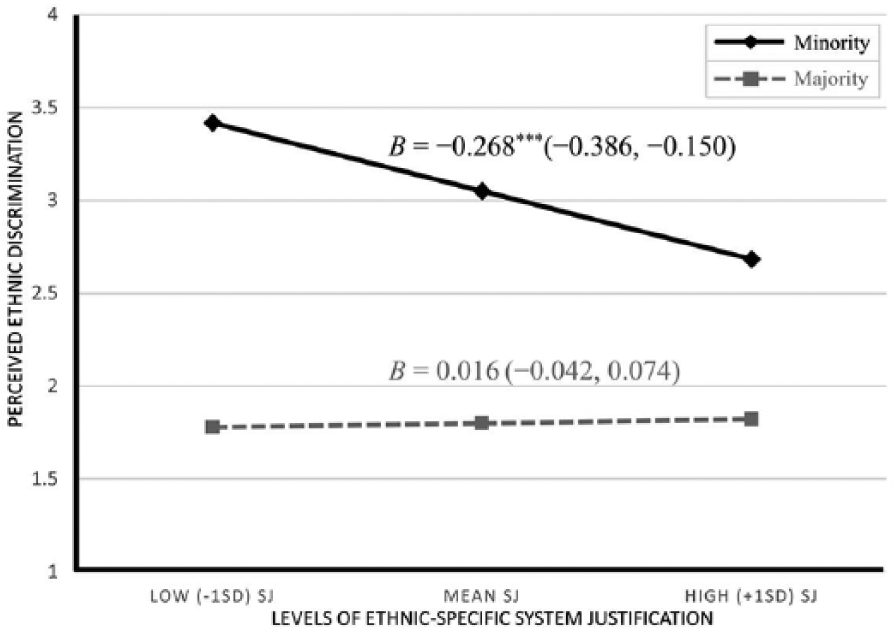
Perceived ethnic-based discrimination as a function of minority status and ethnic-specific system justification, controlling for covariates.
After demonstrating that ethnic-specific system justification attenuated minorities’ perceptions of ethnic-based discrimination, we examined the palliative effects of system justification. To these ends, Table 5 shows that age (B = 0.010, 99% CI = [0.007, 0.013], p < .001), household income (B = 0.028, 99% CI = [0.018, 0.038], p < .001), employment status (B = 0.095, 99% CI = [0.002, 0.187], p = .008), educational attainment (B = 0.056, 99% CI = [0.043, 0.069], p < .001), and gender (B = 0.222, 99% CI = [0.159, 0.285], p < .001) correlated positively with well-being, but conservatism was not significantly associated with this outcome (B = 0.010, 99% CI = [−0.016, 0.033], p = .370). Nevertheless, after adjusting for our covariates, ethnic-specific system justification correlated positively with psychological well-being (B = 0.102, 99% CI = [0.070, 0.134], p < .001), whereas minorities reported lower levels of well-being than did New Zealand Europeans (B = −0.183, 99% CI = [−0.266, −0.101], p < .001). The predicted Minority × Ethnic-Specific System Justification interaction was also significant (B = 0.078, 99% CI = [0.037, 0.192], p < .001). Simple slope analyses revealed that minorities reported significantly less well-being than did New Zealand Europeans, but that this difference was attenuated at high (vs. low) levels of ethnic-specific system justification (Bdifference = 0.045, 99% CI = [−0.105, 0.194], p = .440 vs. Bdifference = −0.269, 99% CI = [−0.441, −0.097], p < .001, respectively).
After demonstrating that ethnic-specific system justification attenuates the well-being gap between minorities and ethnic majorities, we conducted follow-up analyses examining our prediction that perceptions of ethnic-based discrimination would mediate the Minority × Ethnic-Specific System Justification interaction on well-being. To these ends, we ran a mediated moderation analysis to estimate the conditional direct and indirect effects of minority status on well-being (while adjusting for our covariates). Results revealed that reductions in perceived ethnic-based discrimination mediated this interaction effect. As hypothesized, the negative indirect effect of minority status on psychological well-being via reductions in perceptions of ethnic-based discrimination was roughly half the size at high (vs. low) levels of ethnic-specific system justification (see Figure 3 and Table 6).
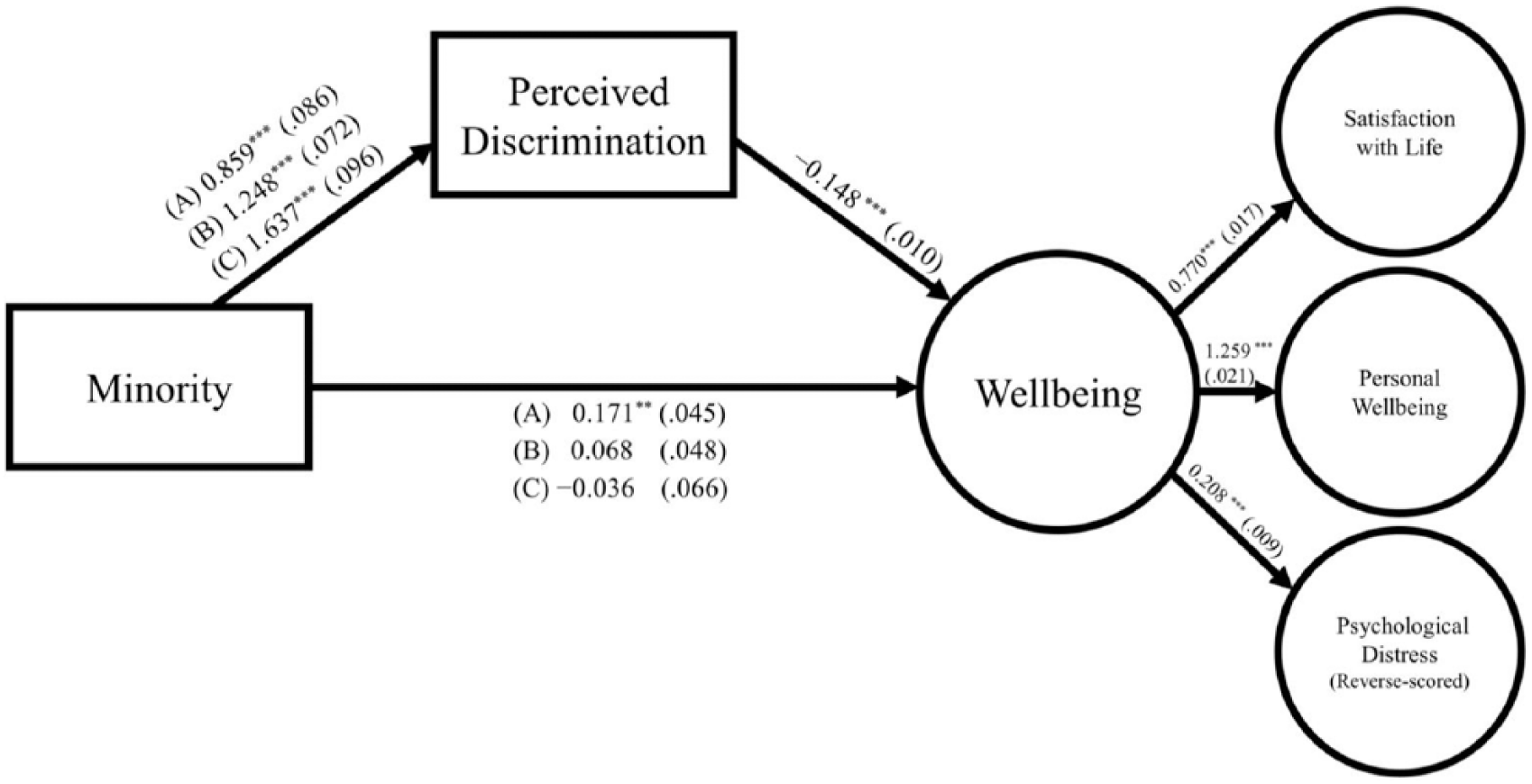
Path diagram of the direct and indirect effects of minority status on psychological well-being via perceived ethnic-based discrimination at high (+1 SD), medium (M), and low (−1 SD) levels of ethnic-specific SJ, controlling for covariates.
Conditional Indirect Effect of Minority Status on Well-Being Through Perceived Ethnic-Based Discrimination at Different Levels of Ethnic-Specific System Justification, Controlling for Covariates.
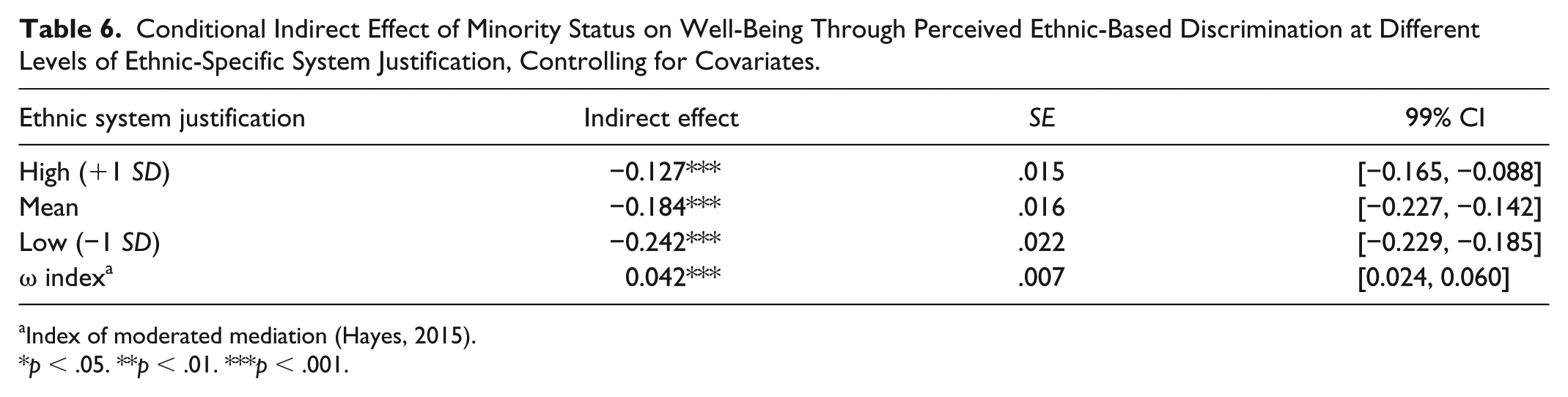
Index of moderated mediation (Hayes, 2015).
p < .05. **p < .01. ***p < .001.
Study 1b
The second part of our study examined the well-being gap between men and women. Similar to our hypotheses for ethnic minorities in Study 1a, we predicted that gender-specific system justification would moderate gender differences in psychological well-being. Moreover, we expected that the palliative effects of system justification would occur via declines in perceived gender-based discrimination. Notably, these effects should occur over and above the effects of ethnic-specific system justification, minority status, and our other covariates (similar results were obtained when excluding our covariates and when predicting each well-being measure independently; see Online Supplementary Files A and B, respectively). To test these hypotheses, we conducted the same analyses used in Study 1a, but focused on gender (instead of ethnicity). Notably, ethnicity did not moderate our predicted Gender × Gender-Specific System Justification interaction effect on either perceptions of gender-based discrimination or psychological well-being (see Online Supplementary File C). As such, we present the results from models with the two-way (rather than the additional nonhypothesized three-way) interactions here.
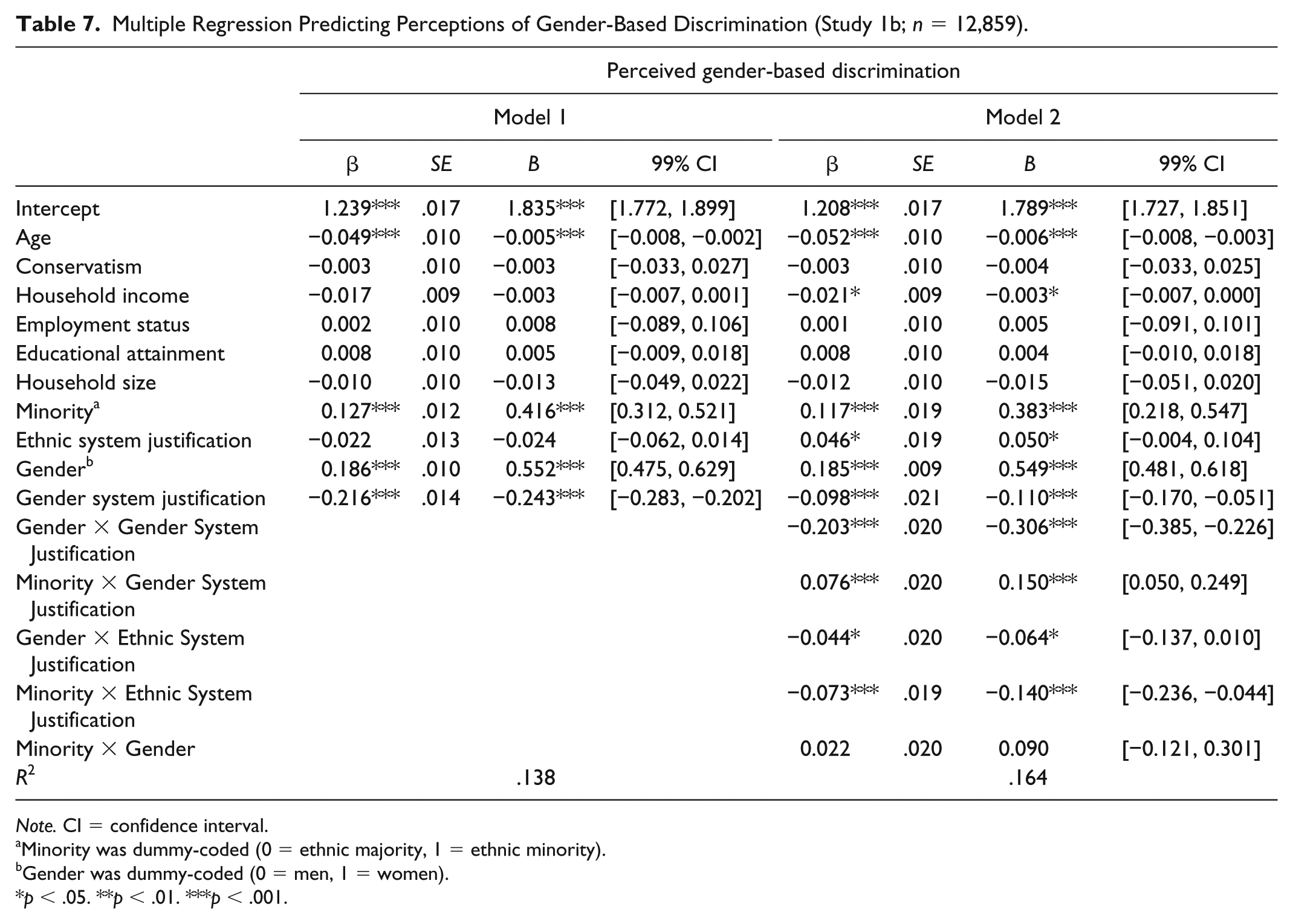
Consistent with Study 1a, we first examined the associations that gender and gender-specific system justification (as well as our covariates) had with perceptions of gender-based discrimination. As predicted, Table 7 demonstrates that women reported more gender-based discrimination than did men (B = 0.552, 99% CI = [0.475, 0.629], p < .001). Conversely, gender-specific system justification correlated negatively with gender-based discrimination (B = −0.243, 99% CI = [−0.283, −0.202], p < .001)—results that emerged after adjusting for our (mostly nonsignificant) covariates. Gender differences in perceptions of gender-based discrimination were, however, moderated by gender-specific system justification (B = −0.306, 99% CI = [−0.385, −0.226], p < .001). As hypothesized, Figure 4 reveals that women perceived more gender-based discrimination than did men at low levels of gender-specific system justification (Bdifference = 0.951, 99% CI = [0.817, 1.085], p < .001), but that this gender difference was substantially smaller at high levels of gender-specific system justification (Bdifference = 0.147, 99% CI = [0.033, 0.262], p = .001).
Multiple Regression Predicting Perceptions of Gender-Based Discrimination (Study 1b; n = 12,859).
Note. CI = confidence interval.
Minority was dummy-coded (0 = ethnic majority, 1 = ethnic minority).
Gender was dummy-coded (0 = men, 1 = women).
p < .05. **p < .01. ***p < .001.
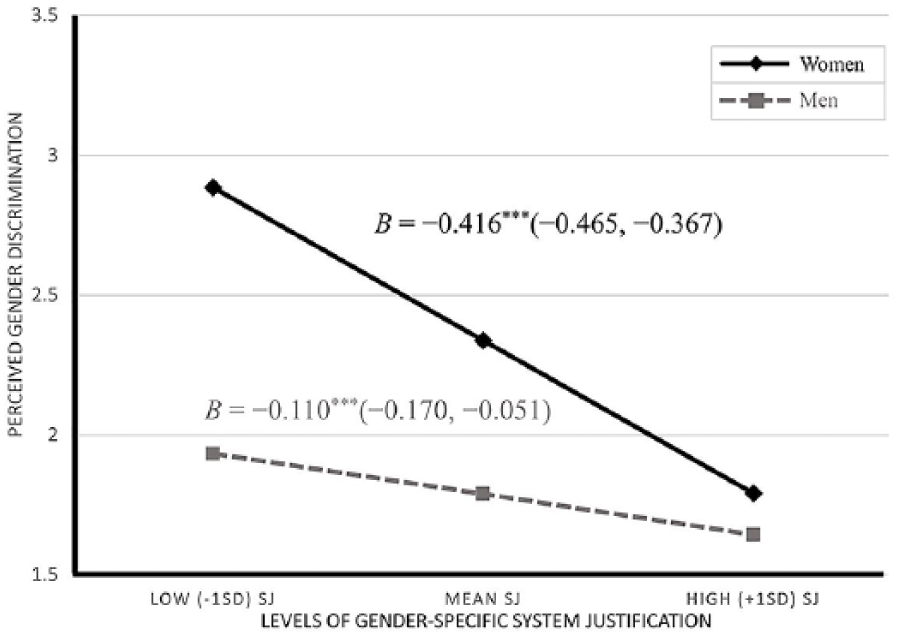
Perceived gender-based discrimination as a function of gender and gender-specific system justification, controlling for covariates.
After identifying the attenuating effects of gender-specific system justification on gender differences in perceived gender-based discrimination, we examined our hypotheses regarding the palliative effects of gender-specific system justification on well-being. Unexpectedly, Table 5 shows that, after controlling for our covariates, gender correlated positively with psychological well-being (B = 0.222, 99% CI = [0.159, 0.285], p < .001; we address this unexpected finding in our “Discussion” section). Nevertheless, as hypothesized, gender-specific system justification also correlated positively with psychological well-being (B = 0.233, 99% CI = [0.199, 0.267], p < .001). Moreover, the hypothesized Gender × Gender-Specific System Justification interaction effect on well-being was significant (B = 0.081, 99% CI = [0.014, 0.147], p = .002). Simple slope analyses revealed that women (unexpectedly) reported significantly greater well-being than did men, and that this difference was larger (rather than smaller) at high (vs. low) levels of gender-specific system justification (Bdifference = 0.362, 99% CI = [0.264, 0.460], p < .001 vs. Bdifference = 0.150, 99% CI = [0.032, 0.267], p < .001, respectively).
Although these initial results were slightly unexpected, there may still be a negative association between gender and well-being via perceptions of gender-based discrimination (and this association may vary by gender-specific system justification). Accordingly, we conducted a test of mediated moderation to investigate our hypothesis that perceived gender-based discrimination nevertheless mediated this significant moderation (see Table 8 and Figure 5). As predicted, reductions in the perception of gender-based discrimination mediated the Gender × Gender-Specific System Justification interaction effect on well-being. Specifically, the negative indirect effect of gender on psychological well-being through perceptions of gender-based discrimination was more than 6 times larger at low (vs. high) levels of system justification (Bindirect = −0.123, 99% CI = [−0.151, −0.094], p < .001 vs. Bindirect = −0.019, 99% CI = [−0.034, −0.004], p = .001). Thus, gender-specific system justification attenuated gender differences in psychological well-being by reducing perceptions of gender-based discrimination.
Conditional Indirect Effect of Gender on Well-Being Through Perceived Gender-Based Discrimination at Different Levels of Gender-Specific System Justification, Controlling for Covariates.
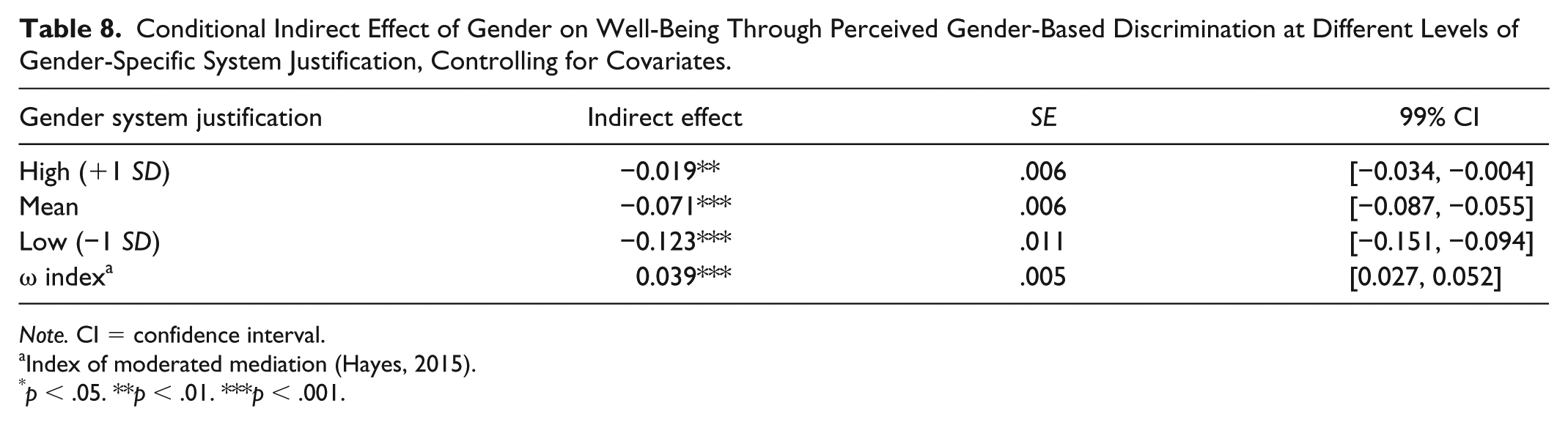
Note. CI = confidence interval.
Index of moderated mediation (Hayes, 2015).
p < .05. **p < .01. ***p < .001.
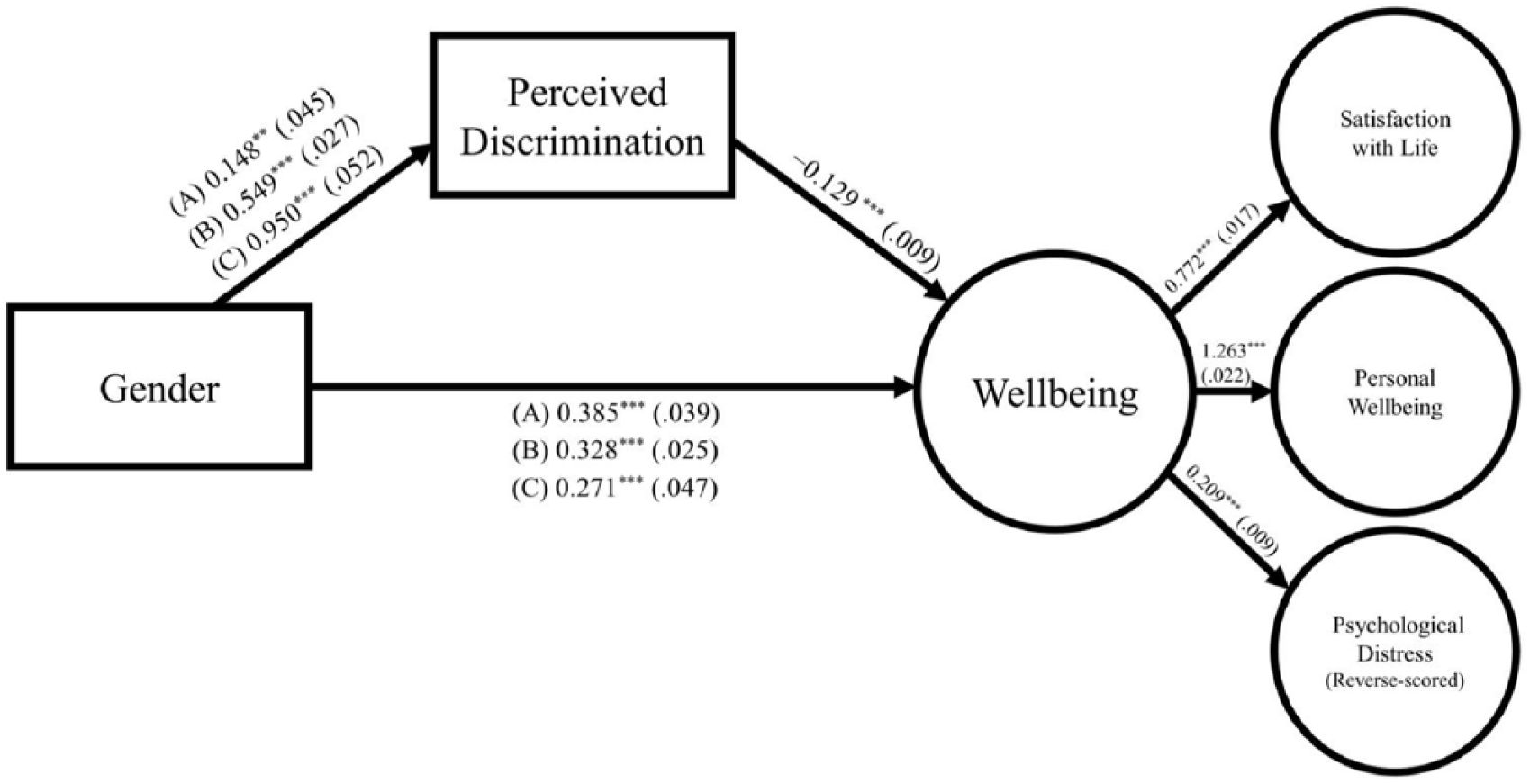
Path diagram of the effect of gender on psychological well-being via perceived gender-based discrimination at high (+1 SD), medium (M), and low (−1 SD) levels of gender-specific SJ, controlling for covariates.
Discussion
The current study investigated the hypothesis that system-justifying beliefs attenuate the well-being gap between low- and high-status groups. Specifically, Study 1a examined the relationship between ethnic minority status and well-being, as well as the possible mitigating effect of ethnic-specific system justification on this association. We also hypothesized that the predicted Minority × Ethnic-Specific System Justification interaction effect on well-being would be mediated by decreases in perceived ethnic-based discrimination. Study 1b assessed the generalizability of these results by focusing on gender differences in psychological well-being and by examining the moderating and mediating effects of gender-specific system justification and perceived gender-based discrimination, respectively.
As hypothesized, ethnic- and gender-specific system justification (Studies 1A and 1B, respectively) moderated the relationship between group status and well-being by attenuating the well-being gap between low- and high-status groups. Notably, the harmful effect of belonging to a disadvantaged group on well-being was transmitted through reductions in perceived discrimination directed toward one’s ethnicity (Study 1a) and gender (Study 1b). Thus, our results corroborate past research showing that system-justifying beliefs confer psychological benefits to both the advantaged and the disadvantaged (see Jost & Hunyady, 2003). Indeed, the main effects of ethnic- and gender-specific system justification displayed in Table 5 reveal that ethnic majorities and men also experienced increases in their well-being as a function of their endorsement of system-justifying beliefs. Given that ethnic majorities and men generally benefit from the status quo, the endorsement of system-justifying ideologies may help to alleviate the collective guilt some members of high-status groups experience when they perceive that they unjustly benefit from an unequal system (see also Mallett & Swim, 2007). 2
That group-specific ideologies moderated status-based differences in perceptions of discrimination is also consistent with previous research (Major et al., 2002). Indeed, although minorities and women perceived more discrimination directed toward their group than did ethnic majority group members and men (respectively), these relationships were moderated by group-specific system justification. That is, minorities and women high (vs. low) on ethnic- and gender-specific system justification (respectively) minimized their beliefs that they would face ethnic- or gender-based discrimination, respectively. Notably, these results emerged after adjusting for Nonfocal Status × Group-Specific System Justification interaction terms (e.g., the Gender × Gender-Specific System Justification interaction in Study 1a and the Minority × Ethnic-Specific System Justification interaction in Study 1b)—interactions that were often trivial or nonsignificant. These results support Sengupta and colleagues’ (2015) theorizing that low-status groups should be particularly motivated to justify the specific social system responsible for their disadvantaged status, but extend their research by demonstrating that group-specific system-justifying beliefs also uniquely confer palliative benefits to low-status groups.
Our results also extend previous work in this area by using nationally representative data to separately compare multiple low-status groups with high-status groups. Although past research has similarly shown that reduced perceptions of discrimination partially explain the palliative benefits of system justification among immigrants (i.e., mostly Asian immigrants in the United Kingdom; Owuamalam et al., 2017) and members of the LGBT community (Suppes et al., 2019), we are the first to demonstrate that this same mechanism extends to ethnic minorities and to women. Collectively, these studies reveal that system justification improves the well-being of members of low-status groups by fostering the perception that specific aspects of the social structure are fair and legitimate, thereby encouraging disadvantaged groups to overlook discrimination based on their group membership.
Although our results show that system justification operates similarly across ethnic minorities and women, we unexpectedly found that, after accounting for gender-specific system justification, men (rather than women) reported lower levels of psychological well-being. Inspection of Table 2, however, reveals that women did indeed report lower levels of well-being than men across two out of our three well-being measures (namely, personal well-being and our reverse-coded measure of psychological distress). As such, the results from our full model appear to capture a suppression effect driven by the inclusion of gender-specific system justification. These findings suggest that being a woman may not in and of itself lead to lower levels of well-being. Rather, the experience of being a woman and associated beliefs about the fairness and legitimacy of the gender-based status quo account for the well-being gap between men and women. After adjusting for the motivation to justify the gender-specific system (and the associated inequities that privilege men over women), women appear to have slightly higher levels of well-being than do men.
It is also important to recognize that minorities and women differ in some features of their low status (see Sidanius & Pratto, 1999). Whereas discrimination based on ethnicity is generally motivated by intergroup competition (see Sidanius & Pratto, 1999), gender-based inequality arises from both hostility and paternalism due to men’s dependence on women for heterosexual intimacy (Glick & Fiske, 1996). As such, elements of positive affect are embedded in some sexist beliefs (Glick & Fiske, 2001). Thus, some women may be satisfied with their lives in unequal contexts because they are rewarded for their compliance (see also Becker & Wright, 2011).
Despite these key differences between ethnic- and gender-based groups, our results indicate that system-justifying beliefs serve the same function across both types of low-status groups. Indeed, because minorities and women are disadvantaged by the societal status quo, both groups should be motivated to manage the potential chronic stress elicited by their stigmatized identities (Blanz et al., 1998; Tajfel & Turner, 1979). Moreover, in contrast to low-status groups with permeable boundaries, minorities and women are generally unable to pursue individual mobility as an identity management strategy. As such, they may engage in social creativity (e.g., keeping a positive mind-set, minimizing group-based discrimination, etc.) to reap the well-being benefits that accrue via system justification (see also Owuamalam et al., 2017). That is, ethnic minorities and women may adopt cognitive (rather than behavioral) identity management strategies because membership in both groups is characterized by low levels of boundary permeability.
Notably, our results are consistent with the idea that endorsing system-justifying beliefs entails overlooking injustices in the system (Jost et al., 2008). Indeed, system-justifying ideologies may provide “excuses” that enable one to avoid attributing negative experiences to an unmalleable social identity. In this sense, “the denial of disadvantage could be understood as a symptom of people’s need to believe in a just world” (Crosby, 1984, p. 374). That is, members of low-status groups may ironically be motivated to see the very unequal system that upholds their disadvantaged status as fair and legitimate to meet their fundamental needs to alleviate distress (see Jost & Burgess, 2000). In this way, system justification protects the general sense of well-being among the disadvantaged, yet at the same time undermines their group-based interests to challenge the status quo.
Although our results support the prediction that system justification attenuates the well-being gap between low- and high-status groups by reducing perceptions of group-based discrimination, other mechanisms may also contribute to these results. Indeed, by minimizing the extent to which low-status groups are personally likely to experience discrimination, system justification may also reduce uncertainty and minimize perceived threat (Major & Sawyer, 2009). In doing so, members of low-status groups who overlook instances of discrimination may preserve their belief in a “fair” and “non-threatening” system, while simultaneously fostering the belief that outcomes are foreseeable.
Our results are also consistent with research demonstrating that ethnic minorities and women often avoid labeling negative treatment toward themselves as discrimination because doing so may lead them to be viewed as “trouble makers” (Major & Sawyer, 2009). Indeed, members of high-status groups are more likely to dislike those low in status who claim to be victims of discrimination (Kaiser, Dyrenforth, & Hagiwara, 2006)—a type of hostile backlash ethnic minorities and women may attempt to avoid by endorsing system-justifying beliefs. In this sense, members of low-status groups may minimize discrimination to preserve positive relations with high-status groups.
Collectively, our results demonstrate that the palliative effects of system justification arise from the rationalization and negation of negative societal conditions experienced by the disadvantaged (Jost et al., 2008). That is, system justification appears to motivate low-status groups to rationalize group-based discrimination as fair and/or deserved (or even overlook it entirely) to maintain or restore a sense of justice in the system. Although we did not measure attributions in our study, our results imply that the disadvantaged who are high in system justification may engage in self-blame when encountering instances of group-based discrimination. In turn, self-blame may ironically provide psychological comfort by restoring a sense of justice in society—an interpretation consistent with the just world hypothesis (see Lerner & Miller, 1978).
Several authors have noted that ideological dissonance elicits distress when beliefs about the fairness of the social order conflict with perceptions of personal experiences (e.g., Bahamondes-Correa, 2016; Harding & Sibley, 2013; Jost et al., 2003). Our results extend this literature and reveal that minorities and women may be motivated to minimize the likelihood that they will experience group-based discrimination to increase consistency between systemic beliefs and perceptions of group-based (mis)treatment. Endorsing system-justifying ideologies also helps members of disadvantaged groups to meet epistemic and existential needs, thereby further increasing their satisfaction with the system (Jost et al., 2003). Ultimately, the endorsement of these beliefs may confer short-term benefits by alleviating emotional distress and by improving well-being, but may also incur deleterious long-term consequences (see Godfrey, Santos, & Burson, 2019; Harding & Sibley, 2013; Osborne, Sengupta, & Sibley, 2018).
Contributions, Limitations, and Future Research
The current research contributes to the literature on system justification theory by demonstrating (with nationally representative data) the moderating role of two hierarchy-specific system-justifying ideologies on the well-being gap between two low- and high-status groups. We also uniquely identify a specific mechanism that underlies this effect by showing that part of the reason why system justification confers palliative benefits to low-status groups is that such beliefs decrease the extent to which members of low-status groups perceive themselves to be the targets of discrimination. In this sense, system-justifying beliefs may be an unrecognized form of social creativity that allows the disadvantaged to re-establish a positive social identity without incurring the high costs associated with pursuing collective action.
Our findings also contribute to research on ideological domination by identifying a specific psychological process underlying the development of false consciousness (Jost & Banaji, 1994). To these ends, Glick and Fiske (2001) note that “dominant groups prefer to act warmly toward subordinates, offering them patronizing affection as a reward for ‘knowing their place’ rather than rebelling” (p. 110). We extend this literature by specifying how the disadvantaged are able to reward themselves (individually) through endorsing ideological beliefs (namely, by decreasing the extent to which they perceive their group is the target of discrimination).
Although our studies make multiple contributions to the literature, our research is not without its caveats. Given space constraints to our survey, we used a single-item measure of perceived group-based discrimination in both studies. Likewise, we were only able to use short-form measures for several other focal constructs (including group-specific forms of system justification). As such, we were unable to adjust for measurement error for most of the variables included in our studies. Despite these limitations, we found consistent support for our theory-driven hypotheses.
It is also important to acknowledge limitations related to “constraints on generality” (Simons, Shoda, & Lindsay, 2017). Although our results are theoretically generalizable to low- and high-status groups elsewhere, our data are derived from a nationally representative sample of the New Zealand population and, as such, may only generalize to this one national context. Our results are, however, consistent with the international literature showing that system-justifying beliefs confer well-being benefits to low-status groups in various countries including the United States (Godfrey et al., 2019; Suppes et al., 2019), Chile (Bahamondes-Correa, 2016; Vargas-Salfate, 2017), and many other nations across the globe (Vargas-Salfate et al., 2018). We extend these findings by identifying a specific mechanism through which system-justifying beliefs attenuate the well-being gap between high- and low-status groups. Nevertheless, future research should investigate the cross-cultural generalisability of our results.
Finally, research shows robust differences in the extent to which the disadvantaged feel they are personally discriminated against versus the discrimination faced by members of their in-group (Crosby, 1984; Taylor, Wright, Moghaddam, & Lalonde, 1990). Of these two phenomena, we only assessed perceptions of discrimination directed toward participants themselves—the type of discrimination socially disadvantaged people minimize the most. Thus, we are unsure if the relationships we identified here generalize to perceptions of group-based discrimination. We also are unsure of the specific attributional pattern members of disadvantaged groups pursue to minimize perceptions of discrimination and to alleviate distress, nor can we speak to the causal direction of the relationship between system justification and perceived discrimination. Indeed, others argue that perceived discrimination is an antecedent, rather than a consequence, of system justification (e.g., Owuamalam et al., 2017; Suppes et al., 2019). Yet, experimental work by McCoy and Major (2007) reveals that priming system-justifying beliefs decreases perceptions of discrimination among low-status groups—results consistent with our assumption that system justification precedes how members of low-status groups view their group’s treatment. Nevertheless, experimental and/or longitudinal data are needed to clarify the causal direction of the associations reported here.
Conclusion
The current research investigated the palliative effects of system justification on low-status groups. Accordingly, we demonstrated that one way in which system-justifying beliefs alleviate the distress faced by members of low-status groups is by minimizing the extent to which they see themselves as the target of discrimination based on their ethnicity (Study 1a) or gender (Study 1b). Our results are among the first to identify a psychological mechanism through which system justification confers psychological benefits to the disadvantaged and help to explain why people support the specific social structures that contribute to their low status. In this sense, the psychological function of ideology and its palliative effect on the well-being of the disadvantaged bridges its hegemonic function at a social level by imbuing unequal systems with legitimacy in the eyes of both those who are advantaged and those who are disadvantaged by it. Ultimately, these processes contribute to the stability of the status quo by undermining the pursuit for social change.
Supplemental Material
PSPB-17-477-OnlineSupplementaryFileA-VFINAL – Supplemental material for “We Look (and Feel) Better Through System-Justifying Lenses”: System-Justifying Beliefs Attenuate the Well-Being Gap Between the Advantaged and Disadvantaged by Reducing Perceptions of Discrimination
Supplemental material, PSPB-17-477-OnlineSupplementaryFileA-VFINAL for “We Look (and Feel) Better Through System-Justifying Lenses”: System-Justifying Beliefs Attenuate the Well-Being Gap Between the Advantaged and Disadvantaged by Reducing Perceptions of Discrimination by Joaquín Bahamondes, Chris G. Sibley and Danny Osborne in Personality and Social Psychology Bulletin
Supplemental Material
PSPB-17-477-OnlineSupplementaryFileB-VFINAL – Supplemental material for “We Look (and Feel) Better Through System-Justifying Lenses”: System-Justifying Beliefs Attenuate the Well-Being Gap Between the Advantaged and Disadvantaged by Reducing Perceptions of Discrimination
Supplemental material, PSPB-17-477-OnlineSupplementaryFileB-VFINAL for “We Look (and Feel) Better Through System-Justifying Lenses”: System-Justifying Beliefs Attenuate the Well-Being Gap Between the Advantaged and Disadvantaged by Reducing Perceptions of Discrimination by Joaquín Bahamondes, Chris G. Sibley and Danny Osborne in Personality and Social Psychology Bulletin
Supplemental Material
PSPB-17-477-OnlineSupplementaryFileC-VFINAL – Supplemental material for “We Look (and Feel) Better Through System-Justifying Lenses”: System-Justifying Beliefs Attenuate the Well-Being Gap Between the Advantaged and Disadvantaged by Reducing Perceptions of Discrimination
Supplemental material, PSPB-17-477-OnlineSupplementaryFileC-VFINAL for “We Look (and Feel) Better Through System-Justifying Lenses”: System-Justifying Beliefs Attenuate the Well-Being Gap Between the Advantaged and Disadvantaged by Reducing Perceptions of Discrimination by Joaquín Bahamondes, Chris G. Sibley and Danny Osborne in Personality and Social Psychology Bulletin
Footnotes
Declaration of Conflicting Interests
The author(s) declared no potential conflicts of interest with respect to the research, authorship, and/or publication of this article.
Funding
The author(s) disclosed receipt of the following financial support for the research, authorship, and/or publication of this article: This research was supported by a grant from the Templeton Religion Trust awarded to the second author, as well as a PhD scholarship (#72170456) funded by CONICYT awarded to the first author.
Notes
Supplemental Material
Supplemental material for this article is available online.

References
Supplementary Material
Please find the following supplemental material available below.
For Open Access articles published under a Creative Commons License, all supplemental material carries the same license as the article it is associated with.
For non-Open Access articles published, all supplemental material carries a non-exclusive license, and permission requests for re-use of supplemental material or any part of supplemental material shall be sent directly to the copyright owner as specified in the copyright notice associated with the article.
