



Abstract
Building on growing evidence that relative economic gratification may be associated with prejudice toward minorities, such as immigrants, the question remains when and why prosperity and wealth may enhance opposition to immigration. In a correlational study (Study 1, N = 498), we show that increased fear of falling in the future (individually or collectively) is associated with greater opposition to immigration. We then experimentally studied the effects of potential (Study 2, N = 294) and actual (Study 3, N = 166) downward mobility among the relatively wealthy, as well as of relatively stagnating wealthy in the context where an initially poorer group is quickly gaining wealth over time (Study 4, N = 151). We find that fear of falling among the wealthy is associated with more opposition to immigration, mediated by collective angst. We conclude that the anticipation that the economic future looks less rosy than the present evokes collective angst, which, in turn, fuels prejudice toward immigrants.
Nouveaux pauvres . . . will be much more resentful of their poverty than those who have known nothing else. The discontented middle class, whose envy of those more prosperous than themselves was considerably less than their fear of sinking from bourgeois status into the proletariat. This was exactly the same kind of social group living in a state of anxiety that Adolf Hitler later gathered around him to provide his first large body of followers.
The above quotes point to the resentment that well-off individuals may feel when they fear that, over time, they either have lost power, wealth or social standing, or will lose it in the future. According to Olson (1963) the resentment among those that have known wealth and then lose it is often greater than that of those who never had wealth. Likewise, referring to sentiments among Austrian voters in the lead up to WW2, Zweig (1942/2009) suggests that it was the fear of falling and the fear of losing status and wealth that led in Austria to support for populist leaders (including Hitler). Both Olson and Zweig allude to what Ehrenreich (1990) describes as the “fear of falling” among those that have historically experienced relative gratification but anticipate future relative deprivation and/or a decline in wealth or status. And, so they argue, this is consequential. As Zweig argued (1942/2009), those who have traditionally been advantaged but fear falling from their privileged position will often seek a scapegoat. Their resentment is often directed toward those that are seen as responsible for this downfall: minorities such as immigrants, refugees and, in Zweig’s era, Jews (Zweig, 1942/2009, p. 83).
Here, we explore empirical evidence for this prediction. More specifically, we argue that those who are relatively high status or wealthy in society may become fearful of falling when they are either anticipating or actually experiencing downward mobility. This will trigger collective angst (i.e., the fear of the future vitality of their group) which leads to a response geared toward protecting the status quo. One such response may be to lash out at a third party perceived to have facilitated the rise of relatively deprived groups (e.g., left-wing urban elites, see Mols & Jetten, 2015). Another response may be to oppose those who are seen as threatening the status quo—that is, immigrants. Before outlining our predictions in greater detail, we will provide an overview of existing knowledge about when and why relative gratification may be associated with opposition to immigration.
The Wealth Paradox
While there is considerable evidence that relative deprivation and poverty are associated with negative attitudes toward immigrants (see Esses et al., 2001), relative gratification work supporting the “Wealth Paradox” (Jetten, 2019; Mols & Jetten, 2017) shows that there is also evidence that high status or high wealth may be associated with negative attitudes toward minorities and immigrants. 1 For example, researchers examining the relationship between wealth and outgroup attitudes found that outgroup hostility follows a V-curve pattern, with strongest prejudice being displayed among those who feel they are worse off than others (Relative Deprivation) and those who feel they are better off than others (Relative Gratification; Dambrun et al., 2006; Guimond & Dambrun, 2002; Jetten et al., 2015; Mols & Jetten, 2017). For example, among a large representative sample in South Africa, Dambrun and colleagues (2006) found a V-curve relationship whereby hostility toward immigrants was associated with participants’ perceptions of economic deprivation and with perceptions of economic gratification. Furthermore, Guimond and Dambrun (2002) found experimentally that negative attitudes toward African immigrants in France were highest when students (compared with students in a no-information control condition) were presented either with a scenario that the future after leaving university looked bleak making them feel relatively deprived or when they were told that the future looked rosy and that they could expect relative gratification (e.g., that they had a high probability of finding a job after obtaining their degree).
Further evidence of the V-curve was obtained in a study using an experimental virtual reality design where participants were temporarily made to feel wealthy or poor (for details, see Jetten et al., 2015). In this hypothetical virtual online society called Bimboola, participants were randomly allocated to a poor, moderately wealthy, or wealthy group after which they were informed that a new group (called “Newcomers”) was about to join Bimboola. Results showed a V-curve relationship whereby those in the poor income group and those in the wealthy income group were more opposed to immigration by the newcomers compared to those in the moderately wealthy group (Jetten et al., 2015, Study 2).
The notion that relative gratification is associated with less generosity is also consistent with research into charitable giving (Piff et al., 2010) and evidence that relative gratification is associated with populist voting (Mols & Jetten, 2017). For example, a recent study analyzing public support for Donald Trump during the 2016 Presidential election found that support for Trump can be seen as an attempt “by members of already dominant groups to assure their continued dominance” (Mutz, 2018, p. 9).
Nevertheless, despite robust empirical support for the V-curve, there is also evidence that those who are wealthy are not always more hostile toward immigrants compared with those who are less well off. Indeed, several studies have found that high status group members can be relatively magnanimous toward lower status groups including minorities and immigrants (Bettencourt et al., 2001). How can we reconcile these inconsistent findings?
Wealth Threat as a Moderator to Relative Gratification Effects
In line with classic social identity theorizing (Tajfel & Turner, 1979), what seems to be key in explaining these mixed findings is whether wealthy or high status groups perceive their higher status as secure or under threat. Scheepers and Ellemers (2005) provided physiological evidence for the importance of status security in explaining responses of members of high status groups. High status group members had higher blood pressure than low status group members when high status group members conceived of the possibility that the high status of the group might change (and that they may lose status and become the lower status group).
While these studies were concerned with threats to the general status of groups, there is some evidence that similar effects are observed when wealthy groups experience that their financial status is threatened. Harvey and Bourhis (2011) randomly allocated participants to a poor or wealthy group in a minimal group context. They found that when wealth positions were fixed (wealth was secure), those in a wealthy group compared with those in the poor group were more likely to share their resources equally with subordinate poor group members. In sum then, there is growing evidence that threat responses are higher when high status is insecure and when high status group members fear downward mobility. What remains to be examined, though, is whether such threat responses may be associated with negativity toward those seen as a threat to the status quo—minorities or newcomers.
Some evidence for the prediction that an insecure high wealth position will enhance opposition to immigration was found in the context of the Bimboola paradigm (Jetten et al., 2017). Those who were wealthier were found to be particularly sensitive to the stability of the economic situation such that they were more fearful of the future when they perceived that the economic context was unpredictable and unstable compared with stable. In a second study, Jetten and colleagues (2017) found that for participants in the wealthiest group, opposition to the arrival of the newcomers was higher when the economy was presented as unstable—as a bubble about to burst—than when the economy was presented as stable. In a further test of this hypothesis, LeBlanc et al. (2015) found in a study among undergraduate students at a prestigious Canadian university that participants who were led to believe that they would lose their advantaged position in the future were more prejudiced toward a minority group (i.e., Aboriginals in Canada) than participants who received information that their advantaged status was stable.
The Present Research
In sum, and consistent with social identity theorizing (Tajfel & Turner, 1979), even though members of wealthier groups may be magnanimous and open to immigration when their status is secure (because they already compare favorably in terms of status), they may feel threatened when they perceive that their wealth is under threat and this may result in attempts to maintain and defend the status quo by, for example, being less tolerant of immigrants. Here, we systematically explore factors that may trigger the “fear of falling” among majority group members (Study 1) and wealthier groups (Studies 2–4) and by exploring responses of those who fear that their wealth could dissipate in a short timespan because boundaries between wealth groups are permeable (vs. impermeable, Study 2) or because positions of high wealth groups in society are unstable and changeable (vs. relatively stable and unchangeable high wealth positions, Study 3) or because the affluent worry that their wealth is stagnating while the wealth of poorer groups is quickly accumulating (vs. the poor’s wealth growth is also stagnating, Study 4). See Table 1 for an overview of these various operationalizations of status threat in the current studies and see Supplemental Material for more information on instructions and measures.
Overview of Various Operationalizations of Status Threat in Studies 1 to 4.
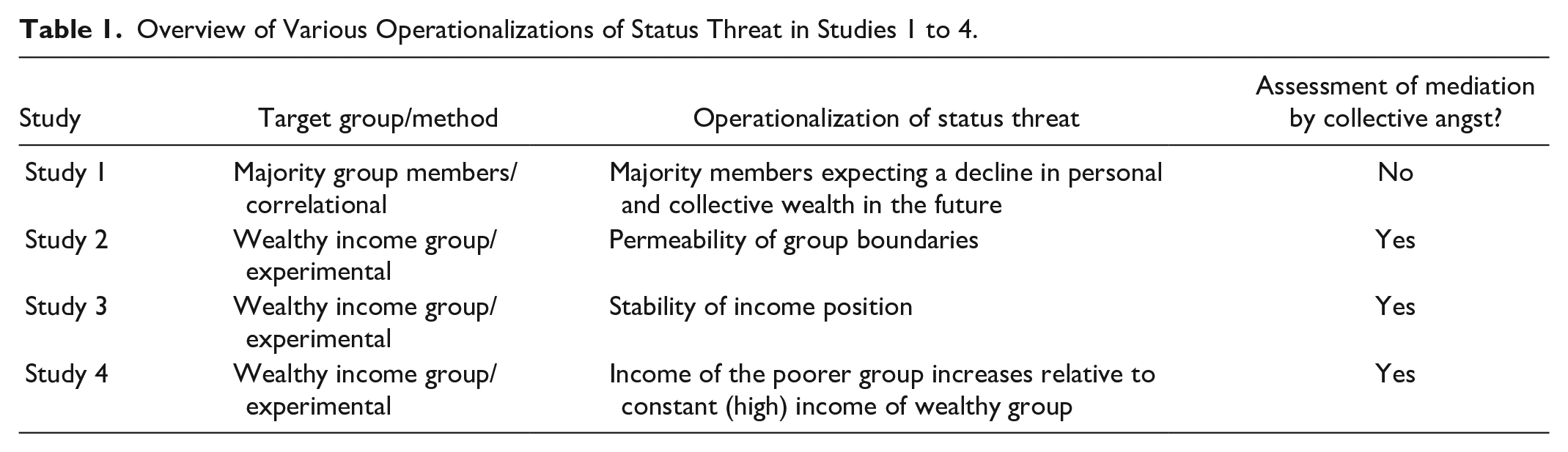
In Studies 2 to 4, we also explore processes underlying the fear of falling and focus in particular on collective angst (Wohl & Branscombe, 2009) as a mediator between status threat and opposition to immigration. In particular, building on findings by Jetten et al. (2015; Study 4), we propose that anxiety about the security of high status will enhance the fear for the future vitality of the group (i.e., collective angst) and this will enhance status protection behaviors, taking the form of greater opposition toward immigrants.
Study 1
In a preregistered study, we explore support for the prediction that fear of falling is associated with greater opposition to immigration among majority group members (Australian residents) correlationally. The aim of this study was twofold. First, we examined whether the fear of falling would be associated with greater opposition to minority members (i.e., immigrants). Second, we focused on the fear of falling that might be associated with personal self-interest as well as collective-level (sociotropic) outcomes by examining the extent to which participants anticipated that their own personal financial future, as well as that of Australia, would deteriorate or improve in the next decade. In line with findings by Jetten et al. (2015, Study 4), we anticipated that both fear of personal, as well as collective falling, in the future would predict opposition to immigration.
We preregistered this study (https://osf.io/85djf/?view_only=f05eb0fed727430bb1d9ade8b100d310) and we explored support for our hypotheses in a community sample in Australia. We examined whether fear of falling, operationalized as concerns about personal future income, as well as Australia’s future income, is associated with greater opposition to immigration to Australia.
Method
Procedure and participants
The study was part of a larger online survey examining participants’ perceptions of their life in Australia and their views of Australian society more generally. Here, we focus on a subset of measures. Participants were sampled in 2019 via Taverner (an Australian-based market research company) which covered all Australian states and territories. The inclusion criteria were that participation was limited to Australian residents who had to be older than 18 years. Participants received financial reimbursement for their participation.
Based on the effect size of data by Jetten et al. (2015, Study 4), we estimated that a total of 500 participants would give 92% power to detect the expected effect. This took account of the number of participants who (a) failed the overall attention and manipulation check or (b) failed to complete more than 50% of the measures in the full survey. Data collection was stopped once 500 participants met inclusion criteria. Because two participants had missing values on one of the key variables, the final sample consisted of 498 participants (260 females, 234 males, three “Other,” and one “prefer not to say,” with an average age between 40 and 49 years).
Measures
Personal wealth
This construct was measured by asking participants to respond to the item “Relative to others in your country, how would you classify your own wealth?” (1 = Very poor, to 7 = Very wealthy).
Fear of falling
We measured this construct by asking whether participants expected a decline in personal and collective wealth in the future. The item assessing personal fear of falling was: “In 10 years’ time, do you expect to be much poorer, about the same as now or much wealthier?” (1 = Much poorer to 7 = Much wealthier). To study the effects of fear of falling collectively, we included the item: “In 10 years’ time, do you expect Australia to be much poorer, about the same as now or much wealthier?” (1 = Much poorer to 7 = Much wealthier). We recoded the items so that higher scores indicate a higher fear of falling and analyzed them separately.
Opposition to immigration was measured using six items assessing both realistic threat perceptions (e.g., “Immigrants take resources and employment opportunities away from Australians”) and symbolic threat perceptions (e.g., “The cultural practices of immigrants threaten the Australian way of life”). Responses were recorded on 7-point scales ranging from 1 = Strongly disagree to 7 = Strongly agree. Participants did not differentiate between realistic and symbolic threat and we combined the items to form one scale, alpha = .95.
Results
Examination of the mean scores revealed that opposition to immigration was slightly below the midpoint of the scale (M = 3.88, SD = 1.75), but not significantly so, t(497) = 1.54, p = .13. The mean personal fear of falling score was not significantly different from the midpoint of the scale (M = 4.03, SD = 1.29), t(497) = 0.59, p = .56. However, the collective-level fear of falling mean score was slightly but significantly higher than the midpoint of the scale (M = 4.21, SD = 1.14), t(497) = 4.14, p < .001, suggesting that, on average, participants were inclined to believe that Australia would lose wealth in the future. Personal and collective-level fear of falling were significantly and positively correlated (r = .48, p < .001).
Hypothesis testing involved examination of a bivariate correlation of the association between participants’ fear of falling (at both the personal and the collective level) and opposition to immigration. We also examined the partial correlation between the variables, controlling for personal income. Examination of the correlation between these variables revealed that the more that participants feared that it was likely they would personally lose wealth in the future (i.e., personal fear of falling) the more they opposed immigration, r = .18, p < .001 (and r = .11, p = .02 when controlling for personal wealth). Similar relations were found at the collective level: the more participants thought Australia would lose wealth in the future, the more they opposed immigration to Australia, r = .21, p < .001 (not controlling for personal wealth), and r = .16, p < .001 (controlling for personal wealth).
Discussion
In a study among a community sample of a majority group in Australia, we found that the fear that the financial future will be worse than the present was associated with more opposition to immigration. This relation was observed both at the personal level as well as the collective or national level. In other words, when participants feared their personal wealth or their nation’s wealth would decline in the next 10 years, they were more opposed to immigrants settling in their country. After demonstrating the phenomenon with correlational data, we set out to explore evidence of causality and the underlying mechanism in three follow-up experiments.
Study 2
In our first follow-up experiment, we manipulated wealth and the permeability of group boundaries in the fictional virtual reality society of Bimboola (see Jetten et al., 2015). We then informed participants in this virtual reality community that “newcomers” would be joining their society. We measured collective angst (the proposed mediator) and opposition to immigration as the main dependent variable. Our predictions focused on the high wealth group and we hypothesized that participants in the high wealth group would be more opposed to newcomers when boundaries between wealth groups were said to be permeable (which meant that there was a chance that they would find themselves in a poorer wealth group in the second part of the study) compared with when boundaries between wealth groups were impermeable (whereby they would not have to fear being moved to a less wealthy position in the course of the study). A similar pattern of results was predicted for the mediator, collective angst (fear for the future vitality of the group). In particular, collective angst was predicted to be higher among the wealthy group when boundaries between wealth groups were said to be permeable than when they were said to be impermeable.
In relation to the effect of the permeability of boundary manipulation on the poorest group and the moderate wealth group, it is possible that the effects of permeability of group boundaries is asymmetric. For a member of a high status group, permeability may be more threatening; for a low status group member it may be potentially liberating. Therefore, and consistent with classic social identity theory predictions (Tajfel & Turner, 1979), we believed it to be conceivable that the poorest groups would perceive permeability of boundaries as an opportunity to challenge the status quo (i.e., have less collective angst and more positive views of newcomers compared with conditions of impermeable group boundaries).
Method
Participants and design
The design consisted of a 3 (wealth: poor, moderate wealth, wealthy) × 2 (permeability: low vs. high) between-subject design. Budgetary constraints determined our sample size. We aimed to recruit 300 MTurk workers (all U.S. citizens) taking account of 54 participants that we omitted because they completed less than 50% of the measures. 2 The final sample consisted of 295 participants (151 women, 143 men, one missing). They were aged between 18 and 68 years (M = 36.15, SD = 12.29). Cell sizes varied from 47 to 51. All participants were paid US$1 for participation in the study which took 10 to 15 min. Data collection took place in 2014.
Manipulation of wealth
The experiment was conducted online. After participants had given their consent to participate, they were asked to imagine that they were going to live in a fictitious virtual reality society called Bimboola (Jetten et al., 2015). Participants learned that Bimboola consisted of five income groups whereby Income Group 1 was the poorest group and Income Group 5 was the wealthiest group. Participants were randomly allocated to one of the three income groups in the middle: Income Group 2 (poor group), Income Group 3 (moderate wealth group), or Income Group 4 (wealthy group).
To enhance the realism of the procedure, participants were invited to purchase the essentials in life, such as a house, mode of transport and holiday, to get their life started. Participants could only select and purchase items that their income group or a lower wealth income group could afford, but not the more expensive items that were shown but displayed as “beyond the financial means of your income category.” While the houses, cars, and holidays accessible to the wealthier income groups in Bimboola were luxurious and extravagant (large mansions, top of the range cars, and expensive holidays) the items that people from the less wealthy group could purchase were of much poorer quality, including run-down houses, old and damaged cars, or less expensive holidays (Jetten et al., 2015).
Participants completed a manipulation check asking them to indicate to what extent they agreed with the statements “my group is poor” (recoded) and “my group is rich” on a 7-point scale ranging from 1 = Strongly disagree to 7 = Strongly agree (r = .67, p < .001). We also checked whether participants correctly recalled which group they were assigned to with the item “which income level have you been assigned to?”
Manipulation of permeability
After this, we manipulated permeability of group boundaries adopting a procedure used by Ellemers et al. (1988) by emphasizing either that participants would stay in the assigned income group for the rest of the study (i.e., impermeable group boundaries condition) or that there was a possibility that they would only be in the assigned income group for the first part of the study (i.e., permeable group boundaries condition). In the permeable group boundaries condition participants were explicitly told that: In the second part of the study, you may be moved into either a higher or lower income group. We will not inform you just yet whether your income group will change. We first like you to answer a couple of questions on how you experience the situation.
To check whether participants perceived the permeability of group boundaries manipulation as intended, they were asked to respond to two questions: “how likely is it for you to be reassigned to a higher income group?” and “how likely is it for you to be reassigned to a lower income group?” (1 = Not at all likely, 5 = Very likely). The two items were averaged with higher scores indicating higher permeability perceptions (r = .31, p < .001).
Dependent Measures
Collective angst
An eight-item measure, adapted from Jetten and Wohl (2012), was used to assess collective angst. Participants were required to indicate their agreement with statements such as “I am worried about the future vitality of my income group.” Four items were reverse coded, after which all items were averaged (α = .93). Responses were recorded on 7-point scale with endpoints ranging from 1 = Strongly disagree to 7 = Strongly agree.
Opposition to immigration
Participants were informed that a new group (called newcomers) was about to join Bimboola. They were told that these newcomers wanted to rebuild their lives in Bimboola and that they may need some assistance from existing members of the community of Bimboola.
To measure opposition to immigration (i.e., the newcomers), 21 items (adopted from Jetten et al., 2015) measuring both symbolic (e.g., “The cultural practises of the new group will threaten the Bimboolean way of life”) and realistic threat perceptions (e.g., “The presence of people from this new group will increase unemployment in Bimboola”) as well as general items (e.g., “I think our group should not allow newcomers to Bimboola”) were included. Responses were measured on a 7-point scale from 1 = Strongly disagree to 7 = Strongly agree (α = .96).
After completing all measures, participants were debriefed, paid, and thanked for their participation.
Results
Wealth manipulation check
All participants correctly reported the income group they had been assigned to. A 3 (wealth) × 2 (permeability of group boundaries) ANOVA on the wealth check revealed only a main effect of income group, F(2, 287) = 298.98, p < .001,
Permeability of group boundaries manipulation check
A 3 (wealth) × 2 (permeability of group boundaries) ANOVA on the permeability check asking about the likelihood to be reassigned to a higher income group revealed a main effect of the permeability of group boundaries manipulation, F(1, 287) = 73.19, p < .001,
A 3 (wealth) × 2 (permeability of group boundaries) ANOVA on the permeability check asking about the likelihood to be reassigned to a lower income group revealed first a main effect of wealth group, F(1, 286) = 7.37, p = .001, whereby the wealthy income group was most likely to think that they would be reassigned to a lower wealth group (M = 2.63, SD = 1.32) followed by those in the moderate income group (M = 2.21, SD = 1.12) and lowest for those in the poor income group (M = 2.08, SD = 1.00).
The expected permeability main effect was also significant, F(1, 286) = 104.66, p < .001,
Indeed, exploring the response of those in the wealthy income group assigned to the permeable group boundaries condition, we found that they judged the likelihood of being reassigned to a lower income group in the second part of the study to be higher (M = 2.63, SD = 1.32) than the likelihood of being reassigned to a higher income group, M = 1.84, SD = 0.96, t(96) = 5.17, p < .001. This comparison was not significant for the moderate wealth group, t(97) = 1.53, p = .13, or the poor income group, t(97) = 0.75, p = .46.
We conclude that both the wealth and permeability of group boundaries manipulations were successful.
Collective angst
A main effect for the wealth group was found, F(2, 288) = 67.94, p < .001,
We also found a significant interaction between wealth group and permeability of group boundaries, F(2, 288) = 3.55, p = .03,
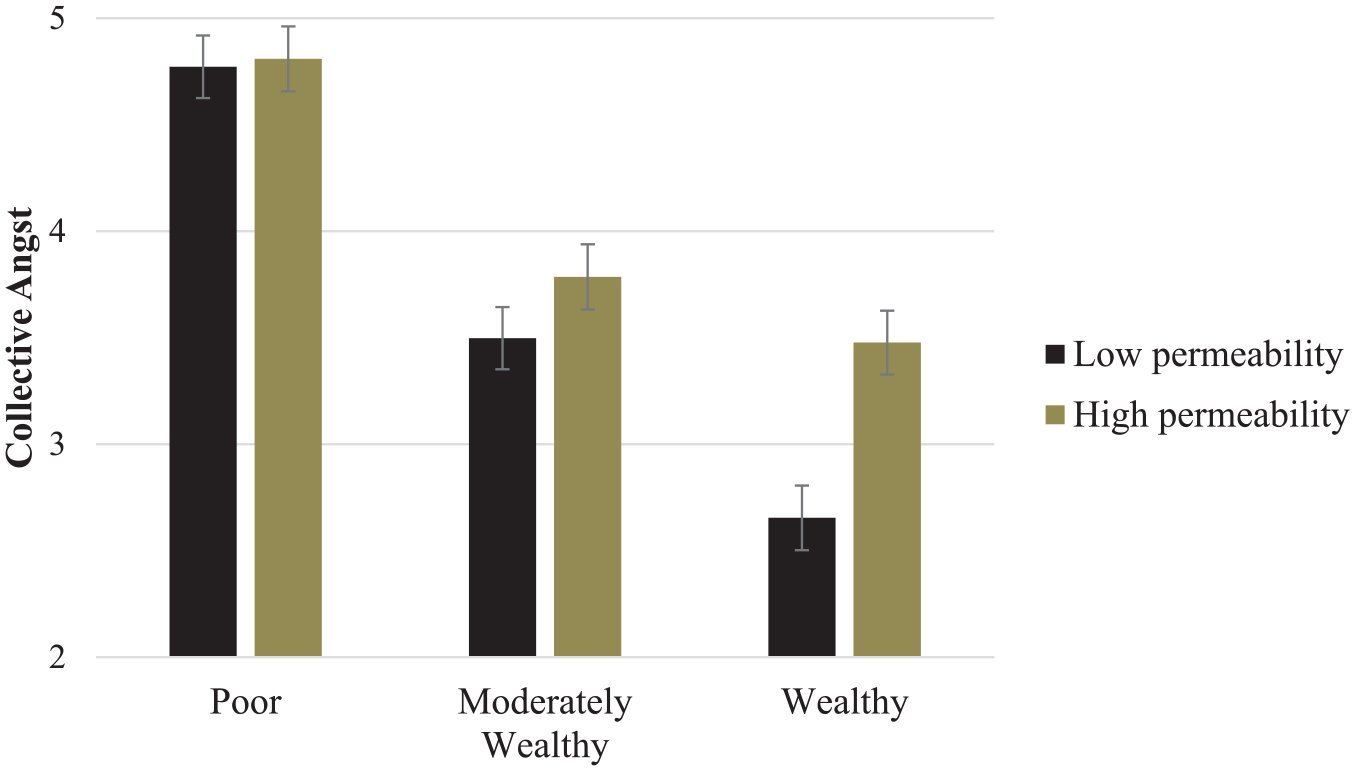
Collective angst (i.e., fear for the future of one’s income group) as a function of wealth and permeability of group boundaries (Study 2).
Opposition to immigration
We found only a main effect of wealth group, F(2, 288) = 6.57, p = .002,

Opposition to immigration as a function of wealth and permeability of group boundaries (Study 2).
Mediational analysis
We examined whether collective angst mediated the (nonsignificant) interaction between manipulated levels of wealth (predictor variable) and permeability (moderator) on opposition to immigration (Model 8, Hayes, 2013). This analysis, using 5,000 bootstrap samples, confirmed moderated mediation such that the interaction impacted collective angst and through this individuals’ opposition to the newcomers, index = .10, 95% CI = [.02, .21].
Discussion
In this experiment, in line with our predictions we found a main effect for permeability of group boundaries (i.e., greater collective angst when boundaries were permeable compared with when they were impermeable) and a main effect for wealth (i.e., less collective angst the higher the wealth). However, these effects were qualified by an interaction between permeability of group boundaries and wealth group. It was only for those in the wealthy group that collective angst was higher when group boundaries were permeable than when they were impermeable.
For the opposition to immigration measure, we only found a main effect for wealth group whereby increasing wealth was associated with less opposition to immigration. Even though we did not find evidence of an interaction between permeability of group boundaries and wealth group on opposition to immigration, mediational analyses suggested an indirect interactive effect between permeability of group boundaries and wealth group through collective angst to opposition to immigration.
A number of factors might explain why we only found partial support for our hypotheses in this first study. First, the permeability of group boundaries manipulation may not have been strong enough because we manipulated a potential change in the wealth condition in the future, not an actual change. 3 Second, we manipulated permeability of group boundaries by informing half of our participants that their wealth position might change in the second half of the study, but did not indicate whether they would become richer or poorer. Even though participants in the wealthy income group were more likely to expect downward than upward mobility, the manipulation cannot unambiguously be seen as a fear of downward mobility (as induced by the manipulation). We conducted a second experiment that addressed these weaknesses.
Study 3
Whereas Study 2 examined the potential of upward or downward mobility in the future, in Study 3 we manipulated actual change over time in wealth position. We did this by assigning participants to a wealthy group after which we provided them with feedback that, over time, their group’s wealth had either decreased, remained the same, or that their group had become even wealthier. This design allowed us to assess whether, among the wealthy, actual change in their groups’ wealth affected collective angst and opposition to immigration.
Method
Participants and design
We used a single factor between-subject design with five levels. We used the same Bimboola paradigm as in Study 2 whereby all participants were initially assigned to Income Group 4, after which, in the second part of the study, their income group’s wealth dropped to that of Income Group 1, Income Group 2, or to Income Group 3 (representing collective downward mobility), their wealth stayed the same (i.e., they stayed at the Group 4 income level representing stability) or their wealth became similar to that of Income Group 5 (representing collective upward mobility). We thereby manipulated collective mobility consisting of four permeable group boundaries conditions (downward or upward mobility) and one impermeable group boundaries condition (no change in the wealth of the income group over time).
We aimed to recruit 200 MTurk workers (sample size was determined by budgetary constraints) taking account of 52 participants that we omitted because they completed less than 50% of the measures. The final sample consisted of 166 participants (78 women, 88 men, all U.S. citizens). They were aged between 18 and 74 years (M = 36.22, SD = 13.76). Cell sizes varied from 30 to 36. All participants were paid US$1 for participation in the study which took 10 to 15 min. Data collection took place in 2014.
Manipulation of wealth
The experiment was conducted online. After participants had given their consent to participate, as in Study 2, they were asked to imagine that they were going to live in a fictitious virtual reality society called Bimboola. Participants were then randomly assigned to Income Group 4 and they were asked to start their life by purchasing a house, a car, and a holiday. We checked whether participants correctly perceived the group to which they had been assigned and they completed a manipulation check asking them to indicate to what extent they agreed with the statements “my group is poor” (recoded) and “my group is rich” on a 7-point scale ranging from 1 = Strongly disagree to 7 = Strongly agree (r = .42, p < .001).
Manipulation of mobility
The mobility manipulation was introduced as follows: Bimboola is being affected by economic change. The financial times are improving for some income groups, getting worse for other income groups and for some income groups there is little change in their income position and they remain where they were to begin with.
In the downward mobility conditions, participants were told: “Unfortunately, your group’s income has decreased compared to what it was, and your group’s economic standing has declined.” Participants were then told that their group’s income is now comparable with that of Income Group 3, Income Group 2, or Income Group 1. The drop in income was described as “a moderate decline,” “a substantial decline,” or “a drastic decline,” respectively. Conversely, in the upward mobility condition, participants were told that “Fortunately, your group’s income has increased substantially compared to what it was and your group’s relative economic standing has risen. Your group’s income is now comparable to that of group 5.” Finally, in the impermeable boundaries condition, participants were told: “Your group’s income and relative economic standing remains unchanged and your income group stays at the income of group 4.” Participants were then again invited to purchase a house, car and holiday, now selecting items that matched their more recent income level (e.g., participants who had been told that their group’s income level had dropped to that of Income Group 2 could now only purchase items open to Income Group 2). The newcomer group was then introduced as in Study 2.
Collective angst and opposition to immigration
The same measures as used in Study 1 were used to assess collective angst (α = .94) and opposition to immigration (α = .96). Responses to both scales were measured on a 7-point scale from 1 = Strongly disagree to 7 = Strongly agree. After completing all measures, participants were debriefed, paid, and thanked for their participation.
Results
Wealth manipulation check
All participants answered correctly that they were assigned to the middle-income group. In addition, a one-way ANOVA on the wealth check showed that randomization was successful and participants in the five conditions did not differ initially in the extent to which they perceived that they were wealthy, F(4, 161) = 0.52, p = .72,
Collective angst
A one-way ANOVA on the collective angst measure showed significant group differences in line with the mobility manipulation, F(4, 161) = 70.24, p < .001,
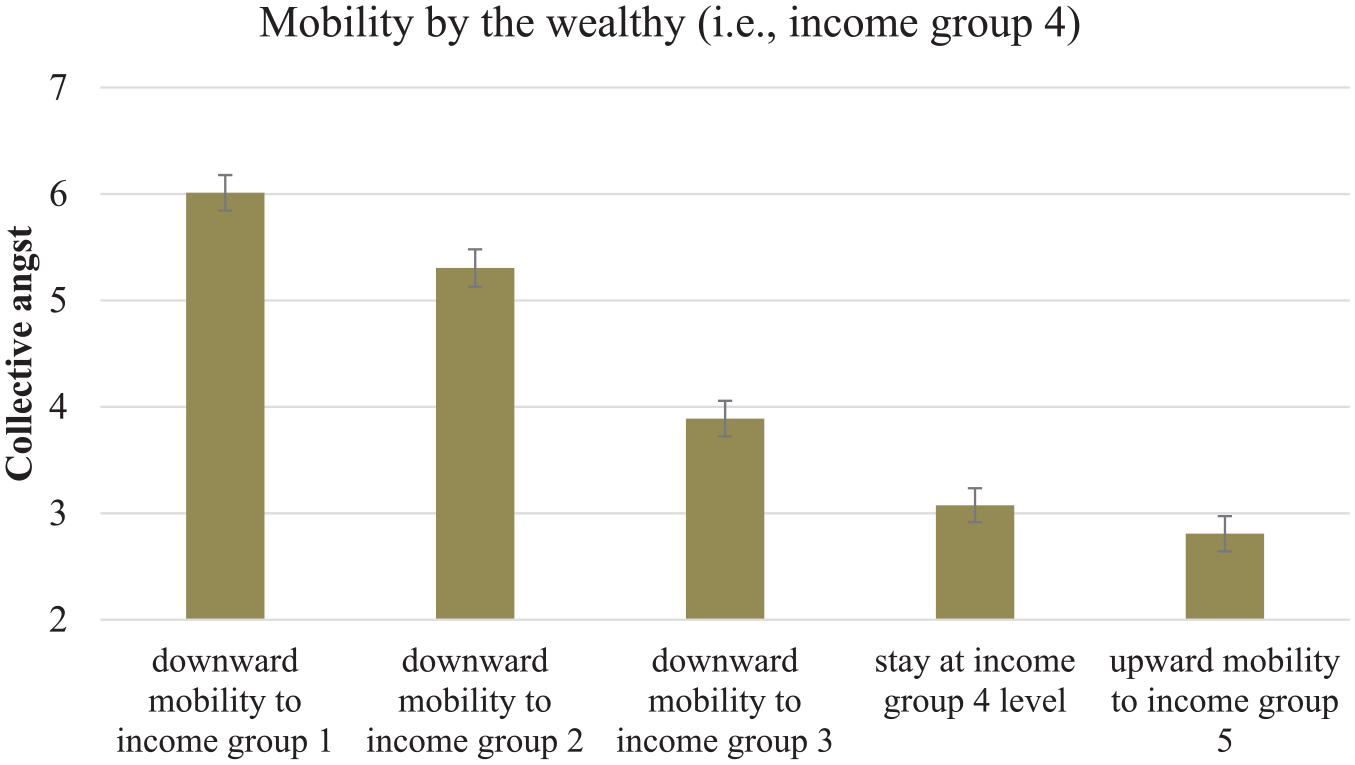
Collective angst among the wealthy (i.e., Income Group 4) as a function of mobility (Study 3).
Opposition to immigration
A one-way ANOVA on the opposition to immigration measure showed significant group differences consistent with the mobility manipulation, F(4, 161) = 4.06, p = .004,
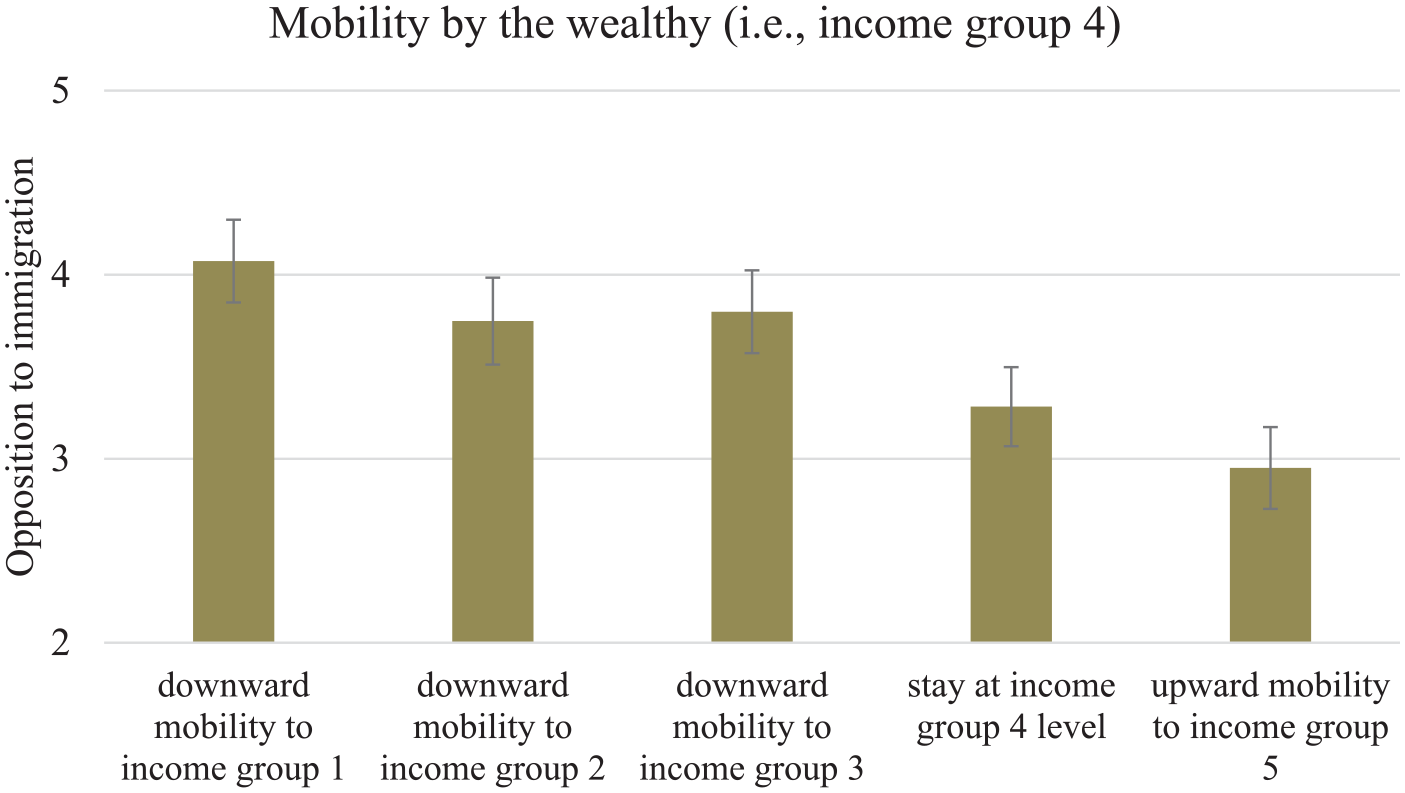
Opposition to immigration among the wealthy (i.e., Income Group 4) as a function of mobility (Study 3).
Mediational analysis
We examined whether collective angst mediated the relationship between manipulated levels of mobility on opposition to immigration (Model 4, Hayes, 2013). Levels of mobility were coded ranging from 1 to 5, ranging from falling to the 1 = Lowest income group to 5 = Highest income group. Confirming evidence of mediation, we found a significant indirect effect of mobility via perceptions of collective angst on opposition to immigration, indirect effect = −.13, 95% CI = [−.21, −.05].
Discussion
We found support for our key prediction in a study context where wealthy participants were confronted with actual downward mobility (varying from slight to more extreme wealth loss), stability of the wealth position, or actual upward mobility (whereby they change from being wealthy to being very wealthy). Specifically, mediational analysis showed that the greater the wealth loss, the more collective angst participants reported and this was predictive of greater opposition to immigration.
Study 4
In the previous two studies, we explored how participants’ collective angst and their opposition to immigration is affected when they are expecting they might drop in terms of their wealth (Study 2) or when they actually drop down from a wealthier income group to a poorer group (Study 3). In a final study, we examined another possibility that might make relatively wealthy people feel relatively deprived. We explored how members of a relatively wealthy group feel when, over time, they are standing still and stagnating, while another group that was initially deprived, rapidly gains wealth and closes the initial wealth gap. 4 In other words, we explored how collective angst and opposition to immigration among a wealthy group is affected when confronted with a situation when other, initially poorer groups appear to be climbing the ladder faster over time than one’s own group.
Method
Participants and design
We aimed to recruit 200 MTurk workers (sample size was determined by budgetary constraints). In total, 184 participants started the survey, but 33 participants completed less than 50% of the measures, leaving 151 U.S.-based participants in the final sample (81 women, 70 men). They were aged between 18 and 74 years (M = 34.97, SD = 12.12). Cell sizes varied from 22 to 27. All participants were paid US$1 for participation in the study which took 10 to 15 min. Data collection took place in 2014.
The design was a 2 (wealth group: wealthy vs. poor) × 3 (change in wealth gap: closing gap, increasing gap, no change) experimental design.
Manipulation of wealth and the closing of the gap
Participants took part in an online study in which they were allocated randomly to one of two groups in a virtual society: the blue group (which would turn out to be the poor group) or the red group (which would turn out to be the wealthy group). Participants were told to imagine they lived in the year 2003, that their new life as a citizen had begun, and that they needed to purchase goods that allowed them to start their life in this society. Initially, the wealthy red group would start with US$2.5 million whereas the blue group was provided with (a) also US$2.5 million, (b) US$1.5 million, or (c) only US$300,000. Participants were then provided with opportunities to purchase houses and cars that varied in price. If there was money left after this, they were asked whether they would like to contribute money to charity, buy a luxury boat, paintings, or valuable jewelry. The money that they did not spend would automatically go into a saving account.
After this, participants were asked to imagine that 10 years had passed and that it was now the year 2013. They were provided with an update on their group’s wealth: while participants in the wealthy red groups were informed that their income had not changed over these 10 years (remained at US$2.5 million), the poorer blue group was told that they now had US$1.5 million. Note that the income gap between the poor and the wealthy group was similar in all three conditions in 2013—US$1 million and the wealthy group was still wealthier in all conditions. What differed was whether, over time, the poorer group had gained, lost, or remained the same in terms of wealth relative to the wealthy group.
This produced three conditions: a decreasing wealth gap condition, a condition in which the wealth gap between the two groups stayed the same across the course of the study, and a condition in which the gap between the two groups increased over time. Again, participants were provided with an opportunity to shop and indicate how they wished to spend their money.
After the second spending round, participants learned that a newcomer group (again called the “Newcomers”) would join the society and that the members of this group would also be given an opportunity to purchase goods.
Measures
Participants again completed a manipulation check asking them to indicate to what extent they agreed with the statements “my group is poor” (recoded) and “my group is rich” on a 7-point scale ranging from 1 = Strongly disagree to 7 = Strongly agree, r = .75, p < .001. We also checked whether participants correctly recalled how much money their group had in 2003 and then in 2013.
Collective angst was measured using an abbreviated five-item measure used by Wohl and Branscombe (2009, α = .94) and an abbreviated four-item opposition to immigration measure. Items were: “I think we should send back those immigrants who do not make an economic contribution to this country,” “I think we should send back those immigrants who have broken the law and committed serious offences,” “Those immigrants who do not have immigration documents should be sent back to their countries,” and “It is unfair to the people of one country if immigrants take jobs and resources” (1 = Strongly disagree to 7 = Strongly agree; α = .86).
Results
Manipulation check
A 2 (wealth group: wealthy vs. poor) × 3 (change in wealth gap: closing gap, no change vs. increasing gap) between-groups ANOVA was conducted on the manipulation check perception of group wealth. Results revealed a large significant main effect of wealth group, F(1, 145) = 66.96, p < .001,
Only four participants allocated to the wealthy group and two allocated to the poor group did not correctly report the amount that their group owned in 2003 and 2013. Because results reported below were substantively identical regardless of whether we included those six individuals, we retained them in the analyses. In sum, these results suggest that the manipulation of wealth group was successful.
Collective angst
A 2 (wealth group: wealthy vs. poor) × 3 (change in wealth gap: closing gap, increasing gap, no change) ANOVA on the collective angst measure showed a main effect for wealth group, F(1, 145) = 4.82, p = .03,
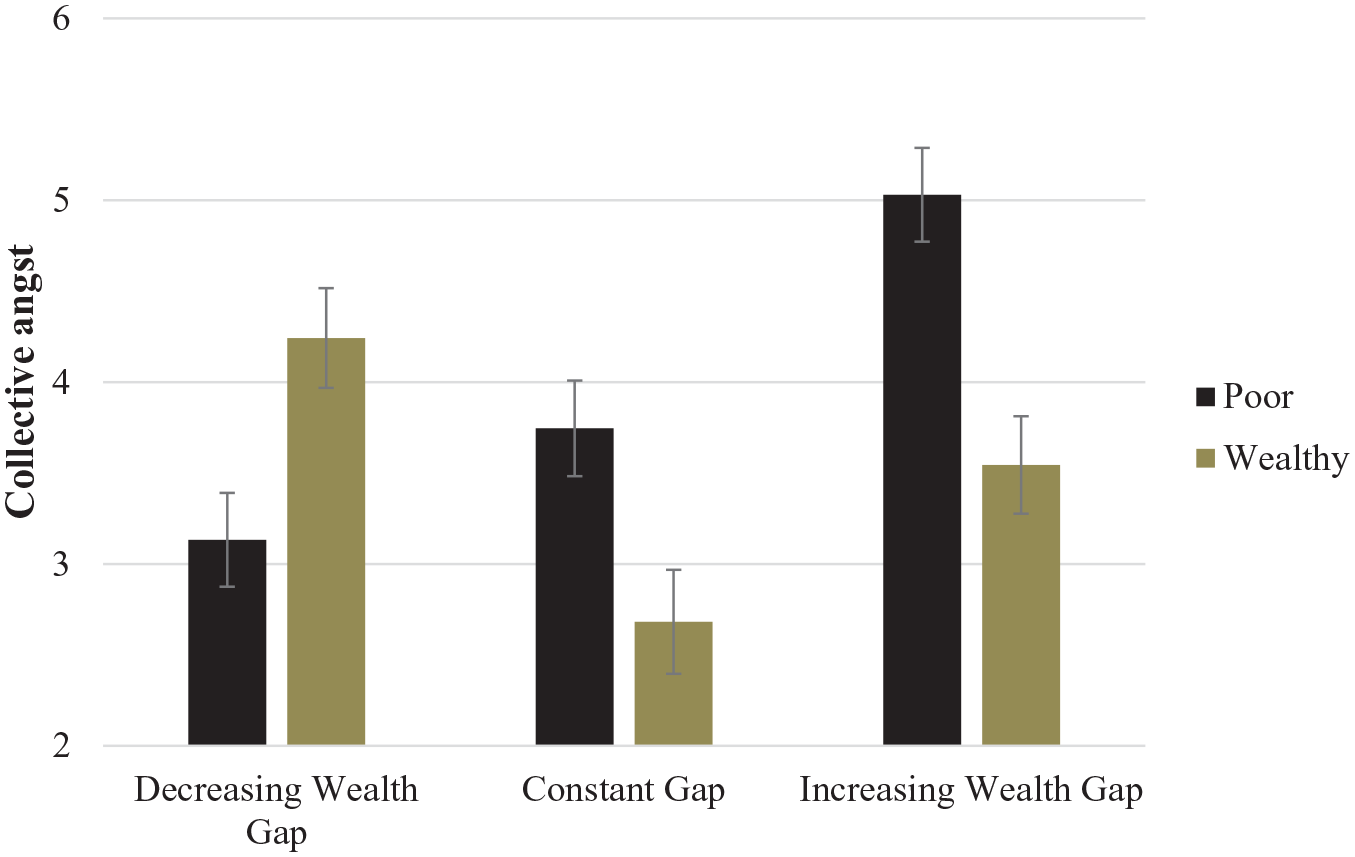
Collective angst among the wealthy and poor as a function of the change in the wealth gap (Study 4).
We analysed the interaction by exploring differences between conditions separately for those in the wealthy and the poor group. For the wealthy group, we found that the wealth gap conditions differed significantly, F(2, 68) = 8.15, p < .001, whereby collective angst was significantly higher in the decreasing wealth gap condition (M = 4.24, SD = 1.37), than the no change condition (M = 2.68, SD = 1.13, p < .001), and marginally significantly different from the increasing wealth gap condition (M = 3.54, SD = 1.40, p = .07). Collective angst was also higher in the no change condition than in the increasing wealth condition, p = .03. For completeness, we also examined differences by change in the wealth gap within the poor group conditions. We found a significant difference as a function of changing wealth gap conditions, F(2, 77) = 13.48, p < .001. Specifically, collective angst was highest in the increasing gap condition (M = 5.03, SD = 1.29), somewhat lower but not significantly so in the no change condition (M = 3.75, SD = 1.41, p = .11), and significantly lower in the decreasing gap condition (M = 3.13, SD = 1.40, p < .001).
Opposition to immigration
A 2 (wealth group: wealthy vs. poor) × 3 (change in wealth gap: closing gap, increasing gap, no change) ANOVA on the opposition to immigration measure showed only a significant interaction between wealth and change in wealth gap, F(2, 145) = 6.03, p = .001,
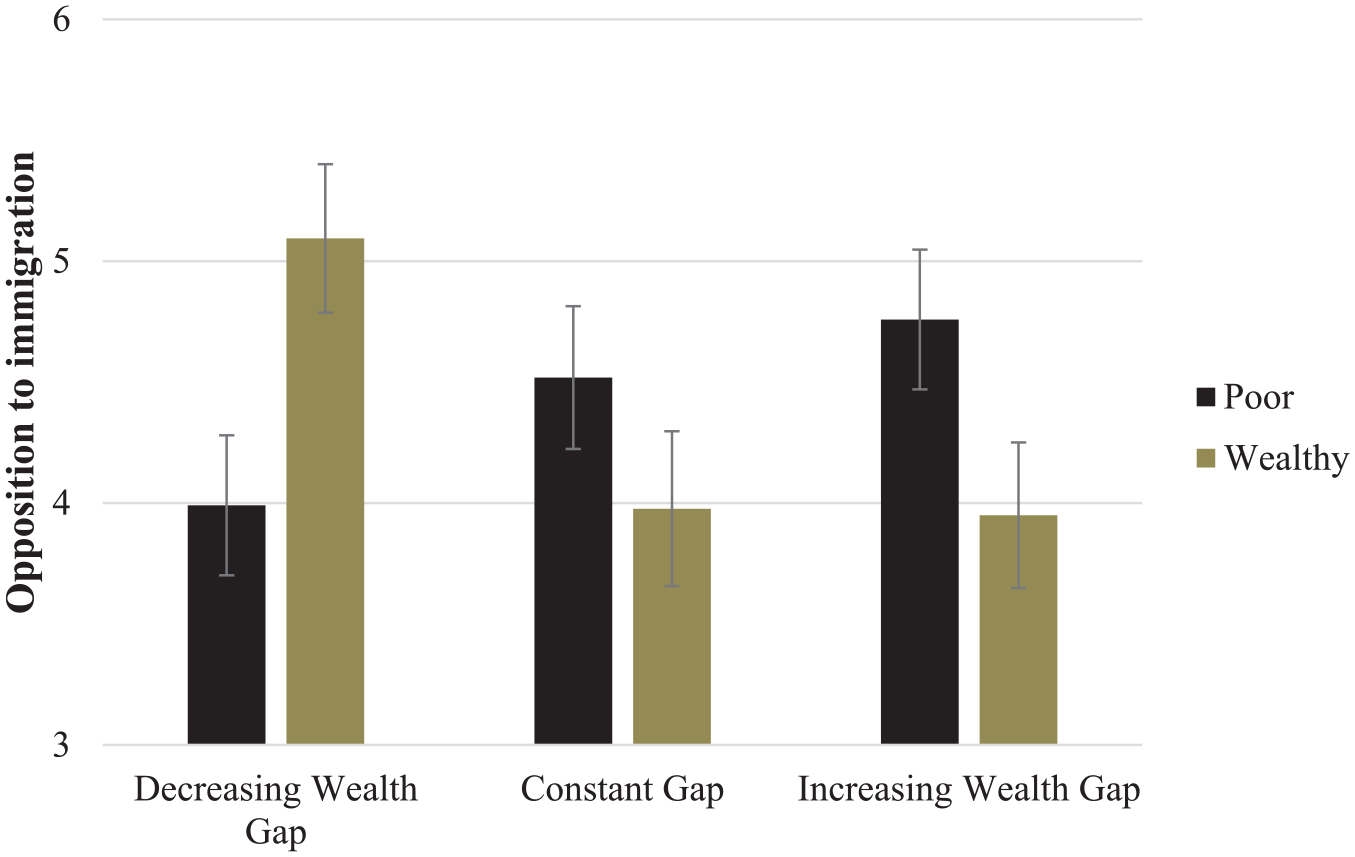
Opposition to immigration among the wealthy and poor as a function of the change in the wealth gap (Study 4).
Mediational analysis
We examined whether collective angst mediated the interactive effect of wealth group and change of the wealth gap on opposition to immigration (Model 8, Hayes, 2013). This analysis, using 5,000 bootstrap samples, confirmed moderated mediation whereby wealth group and change in the wealth gap interacted to impact collective angst, which in turn was associated with greater opposition to immigration, index = .26, 95% CI = [.03, .55].
Discussion
Focusing first on the behavior of the wealthy group whose wealth stayed constant over the course of the study, we found that a decreasing wealth gap (i.e., the poor group gaining wealth over time while the wealthy group stayed stable) led to increased levels of anxiety about the future among the wealthy. We found a similar effect for the wealthy on the opposition to immigration measure: it was also in the decreasing wealth gap condition that opposition to newcomers was higher than when the gap stayed the same over time or further increased in magnitude. In other words, when the wealth of the wealthy was stagnating over time, mere knowledge that another group was gaining wealth enhanced collective angst, which on further mediational analysis showed, increased opposition toward newcomers to the society.
Closer inspection of the results for the poor group also showed an interesting pattern of results. Across the board, collective angst was higher among the poor than among the wealthy, and these levels were higher when the poor group lagged behind over time. However, there were no differences across conditions in opposition to immigration as a function of changing wealth gaps—a finding which appears at odds with a relative deprivation hypothesis according to which collective angst translates into greater prejudice.
General Discussion
Broadly speaking, there are two contexts in which it is likely that people experience status threat: when they are at the bottom of the hierarchy with no prospect of upward mobility (i.e., stable low status or wealth), or when they are high status and/or wealthy and fear that they will lose status or wealth (i.e., unstable high status or wealth, see Jetten, 2019). Here, we focused on the latter set of circumstances and explored whether the fear of falling from a relatively wealthy position forms “fertile soil” for collective angst and increasing anti-immigrant sentiments.
Across the studies, we find in a preregistered correlational study in a community sample in Australia (Study 1) that higher fear of personal wealth loss in the future is associated with greater opposition to immigration. Likewise, at the collective level, a greater fear that the future wealth of the nation will decline was also associated with greater opposition to immigration. We then provide experimental evidence (which revealed stronger effect sizes than in Study 1) that, among more wealthy group members, potential (Study 2) or actual (Study 3) wealth loss enhances opposition to immigration because downward mobility enhances collective angst about the future of the group. In Study 4, we find that when the wealth gap between a wealthy and poor group closes over time (because of stagnating wealth among the wealthy group combined with quick wealth growth over time by an initially poorer group) also enhanced opposition to immigration compared with a constant wealth gap condition or an increasing wealth gap condition. In this study too, we find that the decreasing wealth gap triggers greater collective angst, with this fear of the future vitality of the group mediating the opposition to immigration effect. In sum, to our knowledge our work is the first to demonstrate that (the fear of) falling from a higher wealth position (now or in the future) provokes collective angst and this enhances opposition to immigration. We observe these effects in both, minimal group experiments as well as in analysis of associations in attitudes in real-world contexts, providing evidence of the robustness and external validity of our findings.
Implications and Contributions
Our findings are generally in line with research on threat responses whereby higher status or wealthier groups become protective of their wealth privileges when they fear that previous gains may be lost (i.e., “status anxiety”; De Botton, 2004; Ehrenreich, 1990, see also De Tocqueville, 1835/2000), when there is a possibility that, in the future, the majority group might become the minority (Major et al., 2016), and/or when relevant comparison groups may be acquiring wealth and status at a faster pace (Hochschild, 2016, see also Jetten, 2019). Our findings are also consistent with research showing a physiological stress response when animals (Sapolsky, 2004) or humans (Scheepers & Ellemers, 2005) perceive that their higher status is under threat as well as with research on loss aversion suggesting that we lose more in satisfaction from potential status losses than we gain satisfaction from potential status gains of the same magnitude (Prospect Theory; Kahneman & Tversky, 1979).
What is new about our research is that we connect the two literatures, which provide (a) evidence that the fear of falling among the wealthy evokes angst and (b) observations that harsh stances against those who aspire to join the society (e.g., immigrants or refugees) are at times found among not only the poorest segments of society (so called relative deprivation reasoning) but also the wealthier people experiencing relative gratification (Jetten et al., 2015; Mols & Jetten, 2017). Combined, the two processes provide a more nuanced and complete understanding of the way that economic forces shape prejudice—it is not necessarily those at the bottom of the economic ladder who fear immigration most, at times it is those who have a lot, particularly when they fear they are losing what they have. It is the fear that “everything might vanish tomorrow” (Hochschild, 2016, p. 170) that makes those who feel economically privileged fearful of the future. The fear of falling evokes a threat response and makes people protective of what they have (Wang et al., 2019) and distrustful of newcomers who might further jeopardize the precarious and vulnerable wealth position (Jetten et al., 2017). In our view, these insights are essential for political scientists seeking to understand the recent surge in support for populist parties with an anti-immigration agenda. After all, there is not only growing evidence these parties have performed remarkably well in times of economic prosperity, but also, and more importantly here, that income alone is a poor predictor for radical right voting (Norris, 2005).
Limitations and Directions for Future Research
Despite the contribution of our work, we note several limitations and outstanding questions. First, in our analysis, we paid limited attention to those at the poorer end of the wealth spectrum. Of interest though, consistent with work by Mullainathan and Shafir (2013), it was those in the poorer wealth categories who felt chronically fearful of the future (i.e., high collective angst). In Study 2, we did not find evidence for the classic social identity theory prediction that permeability of boundaries provides cognitive alternatives to the status quo (i.e., future possibilities for upward mobility) alleviating collective angst levels. It is not clear why we did not find evidence for this prediction and it might be useful to conduct further research to explore how socio-structural factors affect collective angst among the poor. In particular, it may be fruitful to manipulate the legitimacy of group boundaries in future studies to explore whether the poor are more likely to challenge the status quo when status relations are perceived as illegitimate. For the wealthy though, we expect that collective angst and opposition to immigration would be higher when legitimacy of status relations is rather high because this is associated with a higher sense of entitlement to the high status position (Guimond & Dambrun, 2002; LeBlanc et al., 2015, see also Jetten, 2019).
Second, it is of interest that in Studies 2 to 4, the newcomers’ arrival was independent of the wealth position of participants. In that sense, there was no realistic conflict with the newcomers whereby participants would expect to have to compete for scarce resources with the newcomers. While it is a strength of the design that realistic threat concerns were unconfounded with the manipulations, it would be of interest to explore in future research whether opposition to immigration is more pronounced when the fear of falling is combined with the fear that one will have to compete materially (e.g., for jobs or houses) with newcomers. This would seem important because in real-life settings opposition to immigration is often justified using realistic threat arguments (Esses et al., 2001).
The paradigms allow for many other interesting follow-ups. For instance, we did not specify whether wealth was responsible for potential or actual falling and this could moderate the effects that we observed here (with the wealthy being less negative to other groups when individuals or groups are responsible for their own downfall). Furthermore, one can wonder to what extent collective angst reflects individual level angst. While Study 1 findings suggest that the fear of falling leads to more opposition to immigration at both the personal level as well as the collective or national level, Studies 2 to 4 did not explore personal level fear of falling or personal angst and it is unclear whether similar effects as those observed would have been found at the personal as well as the collective level. Both follow-up options should be examined in future research.
Conclusion
There is a growing body of evidence that suggests that it is not necessarily the ones who are most vulnerable economically who are most supportive of calls to curb immigration. Consistent with this reasoning, in four studies, we find that the more those with higher wealth fear losing their wealth (now or in the future), the more they start to experience collective angst about the future vitality of their group and their wealth status and this fuels negative attitudes toward immigrants and minorities. This should serve as a stark reminder of a process that Adam Smith warned of: Riches leave a man always as much and sometimes more exposed than before to anxiety, to fear and to sorrow (Smith, 1776). Here, we show that even though people may have a lot, it is this fear of falling that may well boost opposition to immigration.
Supplemental Material
Jetten_Online_Appendix – Supplemental material for Prosperous But Fearful of Falling: The Wealth Paradox, Collective Angst, and Opposition to Immigration
Supplemental material, Jetten_Online_Appendix for Prosperous But Fearful of Falling: The Wealth Paradox, Collective Angst, and Opposition to Immigration by Jolanda Jetten, Frank Mols and Niklas K. Steffens in Personality and Social Psychology Bulletin
Footnotes
Declaration of Conflicting Interests
The author(s) declared no potential conflicts of interest with respect to the research, authorship, and/or publication of this article.
Funding
The author(s) disclosed receipt of the following financial support for the research, authorship, and/or publication of this article: This study was supported by Australian Research Council Discovery grants (DP120100053 and DP170101008).

Supplemental Material
Supplemental material is available online with this article.
Notes
References
Supplementary Material
Please find the following supplemental material available below.
For Open Access articles published under a Creative Commons License, all supplemental material carries the same license as the article it is associated with.
For non-Open Access articles published, all supplemental material carries a non-exclusive license, and permission requests for re-use of supplemental material or any part of supplemental material shall be sent directly to the copyright owner as specified in the copyright notice associated with the article.
