




Abstract
Four studies investigated the link between cross-race friendships and attraction. In Study 1, White Australian participants (N = 240) who reported friendships with racial outgroup members were more likely to report attraction to the members of the racial group their friends belonged to. Studies 2a (N = 300 White American participants) and 2b (N = 303 White British participants) showed that experiences of cross-race non-verbal intimacy, perceived cross-race reciprocity in attraction, positive perceived ingroup norms about dating cross-racially, and warmth toward the racial outgroup were particularly important in explaining the friendship–attraction link in majority samples. Study 3 (N = 292 Black British participants) showed that in addition to the mediators above, self-disclosure was key to explaining the friendship–attraction link for racial minority group members. These findings extend the contact literature by exploring the specificity and mediators of the link between contact and attraction in the context of race relations.
Intimate contact with various racial outgroup members (e.g., cross-group friendships) is reliably associated with a reduction in prejudice toward those racial outgroups (Davies et al., 2011; Marinucci et al., 2021). By extension, such intimate contact may also promote romantic attraction to racial outgroup members, who would otherwise be deemed undesirable by those high in racial prejudice (Herman & Campbell, 2012). Indeed, preliminary evidence shows that contact predicts openness to forming romantic relationships with racial outgroup members (Brooks & Neville, 2017; Coley et al., 2008). To date, however, little more is known about this link. The present research aims to assess (a) whether this association specifically emerges only for the racial outgroup a person has friends from, (b) what variables mediate this association, and (c) whether this pattern of mediation is consistent across racial majority and minority group members.
Intergroup Attraction as an Indicator of Non-Prejudice
Research shows that many people are resistant to the idea of forming romantic or sexual relationships with a member of another race (Herman & Campbell, 2012; Paterson et al., 2015). The rejection of potential partners based on race or ethnicity alone has been linked to general racial prejudice (Han, 2007; Thai, 2020). For example, attraction and romantic receptivity to members of racial outgroups (or lack thereof) is associated with racial stereotypes (Wilkins et al., 2011), intergroup anxiety and biases (Levin et al., 2007), and general warmth toward the relevant racial outgroups (Herman & Campbell, 2012). People who reject others based on race are also considered by observers to be more racist (Thai et al., 2019).
Given that cross-race attraction is a possible indicator of underlying prejudice, established mechanisms that reduce prejudice, such as intergroup contact, may also mitigate intergroup biases during mate selection. Indeed, positive contact with racial outgroups has been linked to more positive attitudes toward others’ interracial relationships (Johnson & Jacobson, 2005), and reduced social distance with racial outgroup members (Bastian et al., 2012). Paterson et al. (2019) demonstrated that participants’ positive contact with a religious outgroup was significantly associated with their own receptivity to romantic relationships with members of that religious outgroup. By extension, this should mean that intimate contact with members of a racial outgroup, in the form of cross-race friendship, would be associated with greater attraction to that racial outgroup.
Intergroup Attraction as an Extension of Interpersonal Attraction
The idea that cross-race friendships would be associated with greater attraction is also theoretically sustained by the literature on interpersonal attraction. In particular, research on familiarity effects shows that people tend to be more likely to become attracted to those with whom they frequently encounter and interact (Finkel et al., 2015). In the domain of cross-race attraction, cross-race friendships inherently promote familiarity, providing individuals greater opportunity for exposure and interaction with racial outgroup members. Thus, friendships with members of a racial outgroup should be associated with attraction to members of that outgroup.
The Present Research
There is preliminary evidence of the proposed cross-race friendship–attraction link. Coley and colleagues (2008) found that people with more cross-race friendships were more open to dating interracially. Furthermore, Brooks and Neville (2017) found that White men who had greater cross-race friendships with Black people reported more attraction to Black women whose (fictional) dating profiles they were shown.
The present research builds upon this nascent work by further elucidating the association between cross-race friendships and attraction to racial outgroup members in a number of ways. Study 1 establishes the base association by testing whether White participants’ friendships with members of a number of racial minority outgroups predicts greater attraction to each of those racial outgroups. In doing so, we provide the first test of whether the friendship–attraction link is race-specific, or whether friendships with one racial outgroup can predict attraction to other racial outgroups. Studies 2a and 2b aim to identify, for the first time, the mediators of the friendship–attraction association and replicate this pattern of association across two samples of White participants. Study 3 tests for the cross-race friendship–attraction link and mediators of this association in a sample of Black participants to determine whether this link emerges for minority group members.
Study 1
Study 1 sought to establish whether the cross-race friendship–attraction link emerges for a variety of racial outgroups, as well as the racial specificity of the link. In this study, White Australian participants reported their friendships with, and attraction to, six racial minority outgroups. Building on previous research on the prejudice-reducing effects of positive intimate contact (Davies et al., 2011), as well as the attraction-increasing effects of familiarity (Finkel et al., 2015), we hypothesized that friendships with members of a racial outgroup would predict greater attraction to that racial outgroup. We also took advantage of our assessment of the friendship–attraction link with multiple racial outgroups to test for secondary transfer effects (Pettigrew, 2009). Specifically, we sought to examine whether friendships with members of one racial outgroup might also predict attraction to members of other racial outgroups.
Finally, we sought to rule out the alternative possibility that the link between cross-race friendship and attraction was a byproduct of a general orientation associated with hostility toward outgroups. We therefore measured social dominance orientation to include as a covariate in the present study. Given its hierarchy-enhancing ideology, those high in social dominance orientation would be more likely to reject both platonic and romantic relations with racial minority group members, especially those stereotyped as lower in status (Lalonde et al., 2007).
Method
Study 1 was not preregistered. We report all measures and exclusions across all studies in this article. Materials and data for Studies 1–3 can be accessed through the Open Science Framework: https://osf.io/dtj3c/ (see Methodology File in the Supplemental Material).
Participants
Participants were Australian undergraduate students recruited from a first-year psychology course who were reimbursed with course credit for their participation. A total of 300 students participated. Given the research question at hand, only White students were retained, leaving a final sample (N = 240; Mage = 22.27, SD = 7.18) comprising 169 female (70.4%) and 71 male (29.6%) participants, of whom 203 identified as heterosexual (84.6%), 27 as bisexual (11.3%), eight as gay (3.3%), and two as “Other” (0.8%). Sensitivity power analyses indicated sufficient power to detect a small-medium effect size (f2 = 0.05–0.6) with 80% power across all studies in this article.
Measures
Cross-race friendships
A two-item scale adapted from Turner et al. (2007) was used to measure participants’ friendships with members of each of six racial outgroups—specifically, Black, Asian, South Asian, Latinx, Middle-Eastern, and Indigenous people (i.e., “How many [group] friends do you have?” 1 = none at all, 5 = a great deal; “How often do you spend time with your [group] friends?” 1 = never, 5 = all the time). Items were averaged for an index of friendships with members of each outgroup (refer to the correlations tables for Cronbach’s alphas). Ingroup (i.e., White) friendships were also assessed and controlled for, given that past research has shown that ingroup friendships are associated with less positive attitudes toward outgroup members (Levin et al., 2003).
Cross-race attraction
Three questions gauged the extent to which participants found members of the racial outgroup “physically attractive,” “sexually desirable,” and “romantically desirable” (1 = not at all, 7 = extremely). Three further questions asked participants whether they would “have sexual relations with,” “have romantic relations with,” and “marry” a member of the racial outgroup (1 = strongly disagree, 7 = strongly agree). These items were combined and averaged to form an index of attraction to each racial outgroup.
Social dominance orientation
The 16-item SDO7 scale (Ho et al., 2015) was used to measure social dominance orientation (e.g., “Some groups of people are simply inferior to others.” 1 = strongly oppose, 7 = strongly favor). Items were averaged such that higher scores indicated greater social dominance orientation.
Other covariates
Consistent with past work linking gender and sexual orientation to interracial dating preferences (Babbitt, 2013), we also controlled for these variables in our analyses.
Results
Descriptive statistics and bivariate correlations are displayed in Table 1. Even at a bivariate level, the friendship–attraction links were largely race-specific, as friendships with members of a racial outgroup were either only, or tended to be more strongly, associated with attraction to that specific racial outgroup.
Means, Standard Deviations, and Bivariate Correlations Between All Variables in Study 1 (N = 240).
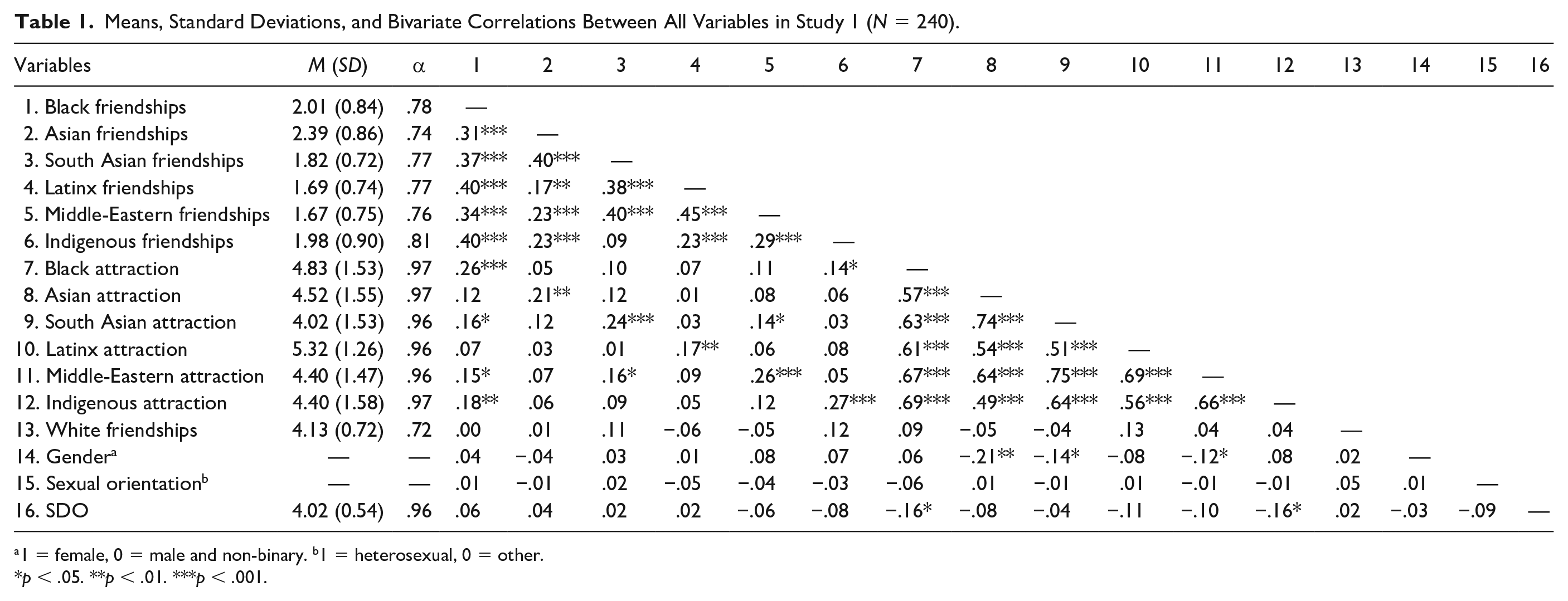
1 = female, 0 = male and non-binary. b1 = heterosexual, 0 = other.
p < .05. **p < .01. ***p < .001.
Path analysis was used to explore the associations between cross-race friendships and attraction. Friendships with all racial outgroups were included in the model concurrently as predictors of attraction to each racial outgroup. The model is displayed in Figure 1. The inclusion of ingroup friendships with White people, gender, sexual orientation, and social dominance orientation did not alter the direction or significance of any pathway, but they were retained in the model as covariates. The path analysis was conducted in Mplus (v8.3; Muthén & Muthén, 2017) using a maximum likelihood estimator. The results for each pathway are displayed in Table 2. Friendships with members of each racial outgroup were significantly positively associated with attraction to that specific racial outgroup, βs ≥ .18, ps ≤ .007, but no other racial outgroup, βs ≤ –.14, ps ≥ .063. Ingroup friendships with White people were only significantly positively associated with attraction to Latinx people.
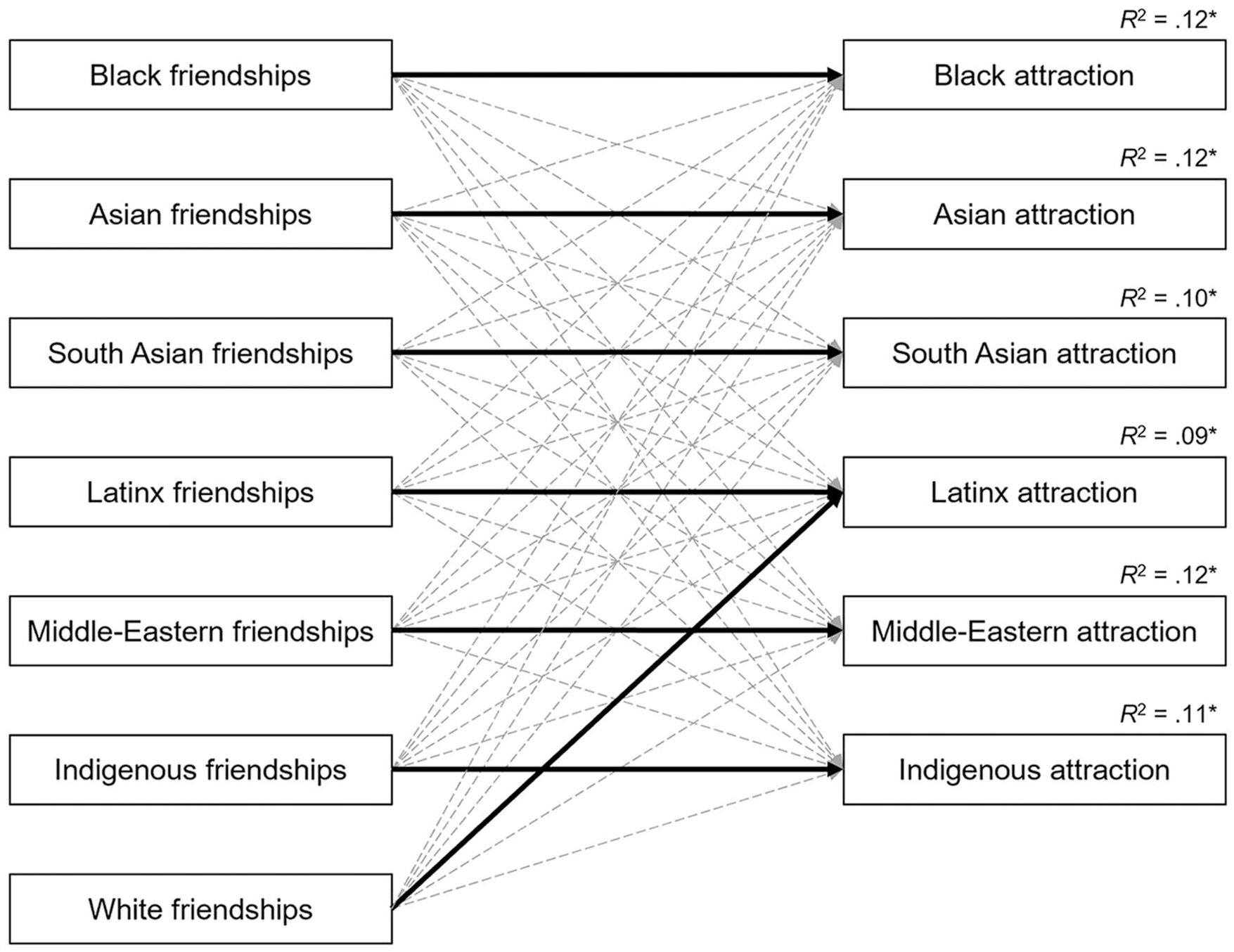
A depiction of the path analysis examining the links between cross-race friendships and cross-race attraction.
Cross-Race Friendships and Covariates as Predictors of Attraction in Study 1 (N = 240).

Note. Significant effects are bolded.
Discussion
Consistent with hypotheses, Study 1 demonstrated that cross-race friendships with members of a number of racial outgroups were consistently associated with attraction toward these outgroups. These relationships were largely race-specific, such that friendships with one racial outgroup predicted attraction to that specific racial outgroup, alone. The one exception to this emerged for attraction to Latinx people, which was also predicted by friendships with other White people. Past work reveals that a minority of Latinx people identify racially as White, which may explain this pattern of results (López, 2005). By and large, the predominantly race-specific associations between cross-group friendships and attraction observed in the present study suggests there may be no secondary transfer effect of contact (Pettigrew, 2009) in the domain of attraction, or that any secondary transfer effect that does exist is too small to be detected with the current sample. The observed racial specificity, even in the bivariate correlations, increases confidence that these relationships were not a result of common method variance (Lindell & Whitney, 2001).
In sum, Study 1 corroborated a link between friendships with a racial outgroup and attraction to members of that outgroup. Little is understood, however, about the mechanisms underlying this association. Past work has simply interpreted the link between intergroup contact and attraction as a familiarity effect (Brooks & Neville, 2017), and the results of Study 1 could be explained by familiarity. That is, it is possible that it is not friendship explaining the results in Study 1, but rather mere exposure to specific outgroups. Although familiarity is certainly important, we seek to go beyond this and explore whether the friendship–attraction link can be explained by mechanisms specific to the experience of intimate friendship. The presence of such patterns of mediation would support the idea that friendship itself is implicated in cross-race attraction, whereas the absence of mediation would be consistent with the idea of mere exposure being enough to bolster intergroup attraction.
Given the breadth of mediators we planned to assess in the following studies, and the fact that Study 1 had already established the racial specificity of the friendship–attraction link, it was unfeasible (in terms of participant burden) to continue to assessing participants’ perceptions regarding multiple outgroups. We therefore focused on just one intergroup context from Study 2 onwards. Specifically, we made the decision to examine the friendship–attraction link in the context of Black–White relations in the United States (Study 2a) and the United Kingdom (Studies 2b and 3), given this is a relevant intergroup context, where substantive intergroup tension exists. Doing so ensured we could better embed this work within the past intergroup contact literature, which has traditionally seen a strong focus on Black–White intergroup dynamics (Pettigrew & Tropp, 2006).
Study 2
Study 2 extended upon Study 1 by exploring the mediators underlying the association between cross-race friendships and attraction. To date, no research has explored the mediators of this association, largely conceptualizing the link as simply a familiarity effect (e.g., Brooks & Neville, 2017). We sought to expand on this literature by investigating potential mediators of the link, drawn from disparate literatures on intergroup contact and interpersonal attraction.
Intergroup Warmth
First, the extent to which people have more favorable attitudes toward a racial outgroup more generally is perhaps the most proximal determinant of the degree to which they are attracted to members of that racial outgroup (see Allport, 1954). Given previous direct evidence of both a link between contact and intergroup warmth (Davies et al., 2011; Pettigrew & Tropp, 2006) and between intergroup warmth and attraction (Herman & Campbell, 2012), we propose that intergroup warmth could explain the cross-race friendship–attraction relationship. Apart from being a potential direct mediator of this relationship, intergroup warmth might also function as a conduit through which other mediators are linked to attraction.
Traditional Contact Mechanisms: Intergroup Anxiety, Empathy, and Trust
It is possible that the traditional mechanisms explaining the relationship between contact and prejudice (e.g., intergroup anxiety, empathy, trust; Hayward et al., 2017; Pettigrew & Tropp, 2008; Tam et al., 2009) also mediate the association between contact and attraction. Paterson and colleagues (2019) found little evidence of a direct mediating role of anxiety, trust, and empathy on the link between interreligious contact and romantic receptivity. These mediators, however, were robust predictors of interreligious warmth. Although the link between interreligious warmth and romantic receptivity was not tested in Paterson and colleagues’ (2019) study, it is possible that these traditional contact mediators can indirectly predict cross-group attraction through warmth. That is, greater empathy and trust, and lower levels of anxiety, may allow for general warmth, which in turn may be associated with desire.
Attraction-Centered Mechanisms: Perceived Similarity and Reciprocity
Given that attraction is conceptually distinct from prejudice, other factors pertinent to attraction might play a more pivotal role in explaining the cross-race friendship–attraction relationship. Turning to the literature on attraction, similarity to a prospective partner is a key predictor of attraction; people tend to be attracted to those whom they perceive they are alike (Tidwell et al., 2013). Perceived similarity with outgroup members has, in turn, been shown to mediate the traditional contact-prejudice link (Gaertner et al., 2000). For example, Wright and Tropp (2005) showed that White students in integrated classes with Latinx students perceived greater similarity between themselves and Latinx children than those in segregated White-only classes, which in turn improved intergroup attitudes.
Reciprocity has also been identified as a key predictor of attraction; people tend to be attracted to those they believe are attracted to them and repelled by those they believe might romantically reject them (Eastwick et al., 2007). In the context of cross-race dating, research shows that people are more likely to cross racial boundaries when reciprocating romantic contact than initiating it (Lewis, 2013). Although the construct of perceived reciprocity has not been explored in the intergroup contact literature, it conceptually overlaps with idea of perceived outgroup norms, meta-perceptions, and (inversely) cognitions of rejection, which have been assessed as mediators of the traditional contact-prejudice link (Barlow et al., 2009; Techakesari et al., 2015; Turner et al., 2008). For example, Turner and colleagues (2008) found that extended intergroup contact induced more positive beliefs that the outgroup had favorable attitudes toward the ingroup, which was in turn associated with lower prejudice toward the outgroup.
Taken together, cross-race friendships may increase people’s perceptions that members of the outgroup are similar to them and would be receptive to having intimate romantic relationships, increasing the chances for attraction, either directly or indirectly through promoting greater intergroup warmth.
Intimacy Mechanisms: Self-Disclosure and Non-Verbal Intimacy
Merely having racial outgroup friends does not automatically confer improvements to intergroup perceptions such as those outlined above (e.g., warmth, anxiety, empathy, trust, perceived similarity, reciprocity). Rather, this positive change emerges as a result of having extended intimate experiences with such friends (Davies et al., 2013; Turner & Feddes, 2011). Theoretically, individuals are likely to experience verbal (e.g., self-disclosure) and non-verbal intimacy (e.g., physical touch, smile) in the context of friendships (Reis & Shaver, 1988). If these friendships are cross-racial, this heightened verbal and non-verbal intimacy may improve the above intergroup perceptions (Davies et al., 2013), increasing preparedness for, and openness to the possibility of, a cross-race romantic partner with whom such forms of intimacy are expected.
Verbal intimacy, especially that which takes the form of self-disclosure, promotes closeness in interpersonal relationships, both platonic and romantic (Collins & Miller, 1994; Laurenceau et al., 1998). Self-disclosure is both an established mediator of the contact-prejudice relationship, and a mechanism that links positive contact to the other mediators of the contact-prejudice relationship, including intergroup anxiety, empathy, and trust (Tam et al., 2009; Turner & Feddes, 2011; Turner et al., 2007). The attraction literature also shows that self-disclosure predicts greater perceived similarity (Sprecher et al., 2013) and perceived partner responsiveness, essentially reciprocity, in intimate relationships (Shelton et al., 2010). Thus, self-disclosure may be a gateway through which cross-race friendships produce positive change (Davies et al., 2013), and may thus potentially account for increased attraction following friendships.
Like verbal intimacy, non-verbal intimacy, such as smile and touch, has also been shown to escalate intimate relationships by promoting psychological closeness and attraction (Givens, 1978). Although the intergroup contact literature has not yet examined the association between positive contact and non-verbal intimacy behaviors, there is research that has linked friendship to greater non-verbal intimacy behaviors and physical contact (Monsour, 1992). Thus, non-verbal intimacy may function, as verbal intimacy does, to explain the cross-race friendship–attraction link. In fact, given the visual and tactile nature of sexual and romantic attraction (Singer, 1984), non-verbal intimacy may be an even more powerful mechanism than verbal intimacy in this specific context. Intimacy within a friendship with a member of a racial outgroup may open people up to the possibility of similar intimacy with a romantic partner from the racial outgroup.
Normative Mechanisms: Perceived Ingroup Dating Norms
Paterson et al. (2019) found that perceived ingroup dating norms were a robust mediator of the relationship between interreligious contact and romantic receptivity—the more positive contact participants had with members of a religious outgroup, the more they perceived that their friends and parents would be supportive of them dating a member of that religious outgroup, and in turn, the more receptive they were to dating or marrying a member of that religious outgroup. The role of ingroup dating norms have also been demonstrated in the context of race; social network approval predicts dating within and outside racial group boundaries (Liu et al., 1995). We therefore investigate perceived ingroup dating norms as a mechanism to explain the cross-race friendship–attraction link in tandem with the other mechanisms described above.
The Proposed Model
Based on the literature above, Study 2 aimed to test a model whereby cross-group friendship predicts intimacy behaviors (i.e., greater self-disclosure and non-verbal intimacy), which in turn predicts traditional contact mechanisms (i.e., lower anxiety, higher empathy and trust) and attraction-centered mechanisms (i.e., greater perceived similarity and reciprocity). The concurrent mediating role of perceived ingroup dating norms was also examined. The link between these mechanisms and cross-race attraction, both directly and indirectly (through warmth), was tested. The full proposed model is displayed in Figure 2. These relationships were examined across two studies. First, the model was tested in a sample of White American participants in the context of attraction to Black people (Study 2a). This study was then replicated with a sample of White British participants again in the context of attraction to Black people (Study 2b).
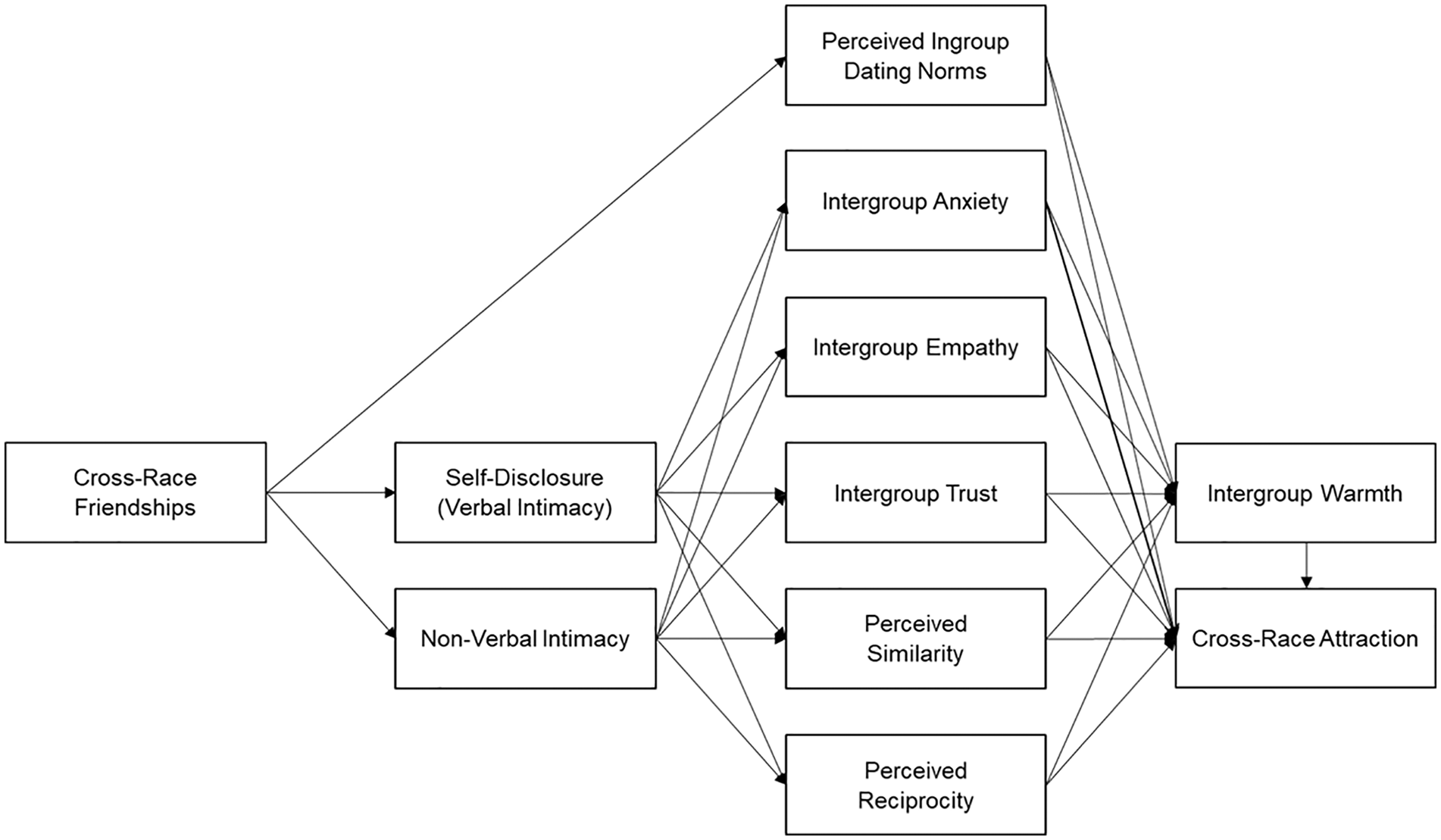
The proposed model of the link between cross-race friendship and cross-race romantic attraction.
Method
For Study 2a, our preregistration included the study design, planned sample size, and preliminary analysis: https://osf.io/nu4ed/. 1 Study 2b was not preregistered but was a replication of Study 2a with a different sample.
Participants
Study 2a
White American participants were recruited from Prolific Academic, an online subject pool widely used in social psychological and behavioral research (Peer et al., 2017). The final sample (N = 300; Mage = 31.01, SD = 10.86) comprised 107 female (35.7%), 188 male (62.7%), and 5 non-binary (1.7%) participants, of whom 217 identified as heterosexual (72.3%), 49 as bisexual (16.3%), 20 as gay (6.7%), and 14 as “Other” (4.7%). Participants were paid ₤0.50 for their participation.
Study 2b
White British participants were recruited from Prolific Academic. The final sample (N = 303; Mage = 37.85, SD = 13.07) comprised 195 female (64.4%), 107 male (35.3%), and 1 “Other”-identifying (0.3%) participant, of whom 265 identified as heterosexual (87.5%), 26 as bisexual (8.6%), 9 as gay (3.0%), and 3 as “Other” (1.0%). Participants were paid ₤2 for their participation.
Measures
Studies 2a and 2b employed the same measures. Items within each scale were averaged to form an index of the variable being measured.
Cross-race friendships
Friendships with Black people was measured as per Study 1.
Cross-race attraction
Attraction to Black people was measured as per Study 1, with the addition of one more item (for a seven-item scale) asking participants whether they would “date” a Black person.
Intergroup warmth
A feeling thermometer (Pettigrew & Tropp, 2006) measured warmth toward Black people (i.e., “On a scale of 0–100, please rate the warmth of your feelings toward Black people,” 0 = cold, 100 = warm).
Intergroup anxiety
Four items adapted from Stephan and Stephan (1985) measured anxiety about interacting with Black people (e.g., “I would feel uncomfortable when interacting with a Black person,” 1 = strongly disagree, 7 = strongly agree).
Intergroup empathy
Five items adapted from Tam and colleagues (2009) measured empathy toward Black people (e.g., “When thinking about Black people, to what extent do you feel compassionate”). 2
Intergroup trust
Two items were developed to measure trust toward Black people (e.g., “I feel like I can trust Black people.,” 1 = not at all, 7 = very much).
Perceived similarity
Three items adapted from Henderson-King and colleagues (1997) measured perceived similarity to Black people (e.g., “How similar do you think you are to Black people,” 1 = not at all similar, 7 = extremely similar).
Perceived reciprocity
Four items were adapted from Turner and colleagues (2008) to measure participants’ beliefs about whether Black people would be interested in forming romantic relations with them (e.g., “To what extent do you think that a Black person would be willing to have romantic relations with you?,” 1 = not at all, 7 = extremely).
Self-disclosure
Three items adapted from Turner et al. (2007) measured amount of self-disclosure to Black people (e.g., “How often do you talk about how you are feeling to someone Black?,” 1 = never, 7 = always).
Non-verbal intimacy
Four items were developed to measure non-verbal intimacy behaviors with Black people (e.g., “How often do you hug someone Black?,” 1 = never, 7 = always).
Perceived ingroup dating norms
Two items adapted from Paterson and colleagues (2019) measured perceptions of support for a romantic relationship with a Black person in their close circles (e.g., “How do you think your friends would feel about you dating a Black person?,” 1 = very negatively, 7 = very positively).
Covariates
To account for previous romantic engagement with Black people, which could exert influence on attraction to Black people (Allen & Uskul, 2019), one item was adapted from Paterson and colleagues (2019) to be used a covariate in analyses (i.e., “How many previous intimate relationships (sexual or romantic) have you had with a Black person?” 1 = 0, 7 = 6+). Gender and sexual orientation were also controlled for, as per Study 1.
Results
Descriptive statistics and bivariate correlations for Studies 2a and 2b are displayed in Tables 3 and 4, respectively. For both studies, path analyses were computed to examine the indirect effect of cross-race friendships on attraction, via the proposed mechanisms. The full model (Figure 2) was estimated using maximum likelihood in Mplus. After examining the direct effects and total indirect effect of cross-race friendships on attraction, we computed the combined indirect effects for ingroup dating norms, self-disclosure, and non-verbal intimacy. Much like how the total indirect effect is an aggregate of each of the specific mediation pathways between cross-race friendships and attraction, these combined indirect effects are an aggregate of each of the specific indirect pathways running through these parallel mediators. 3 By examining the statistical significance of these combined indirect effects, we can assess the overall importance of these key mediating variables and avoid overinterpreting small, specific indirect effects. Significant combined indirect effects were then dissected into their composite parts, and the specific indirect effects were examined. The significance of each indirect effect was determined using bias-corrected and bootstrapped 95% confidence intervals (Hayes, 2009). The specific indirect effects are reported in Table 6. The reported results focus on significant effects replicated in both studies.
Means, Standard Deviations, and Bivariate Correlations Between All Variables in Study 2a (N = 300).
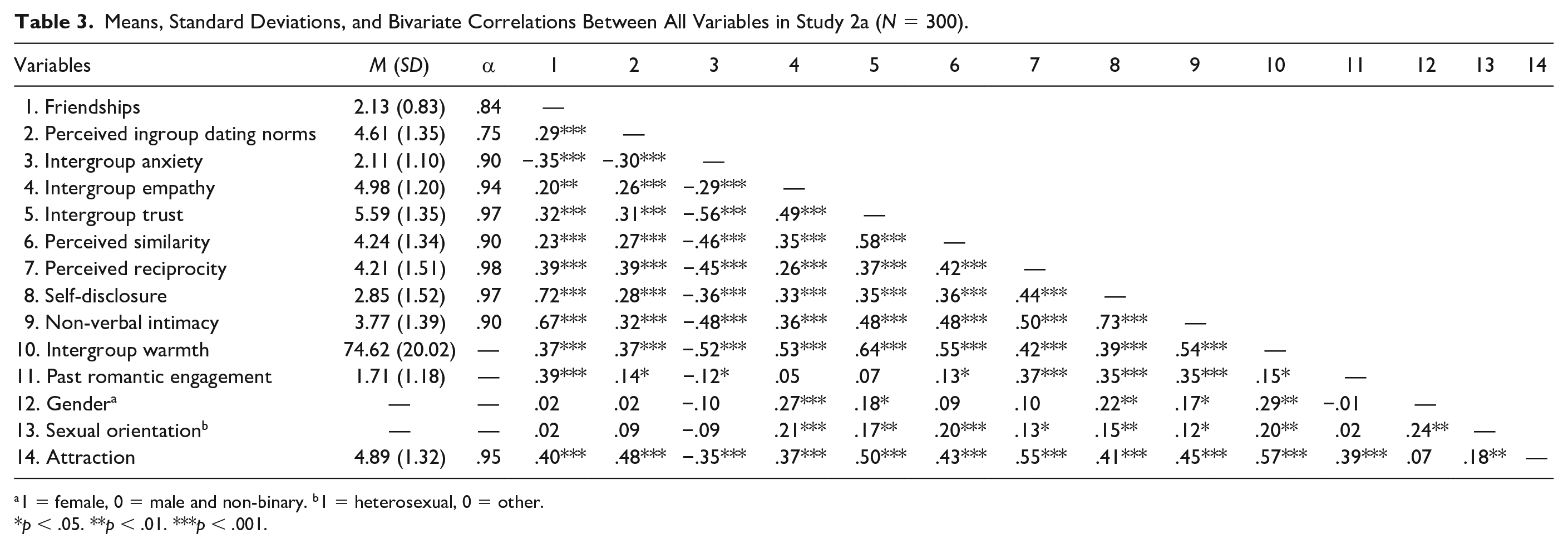
1 = female, 0 = male and non-binary. b1 = heterosexual, 0 = other.
p < .05. **p < .01. ***p < .001.
Means, Standard Deviations, and Bivariate Correlations Between All Variables in Study 2b (N = 303; White British Participants).
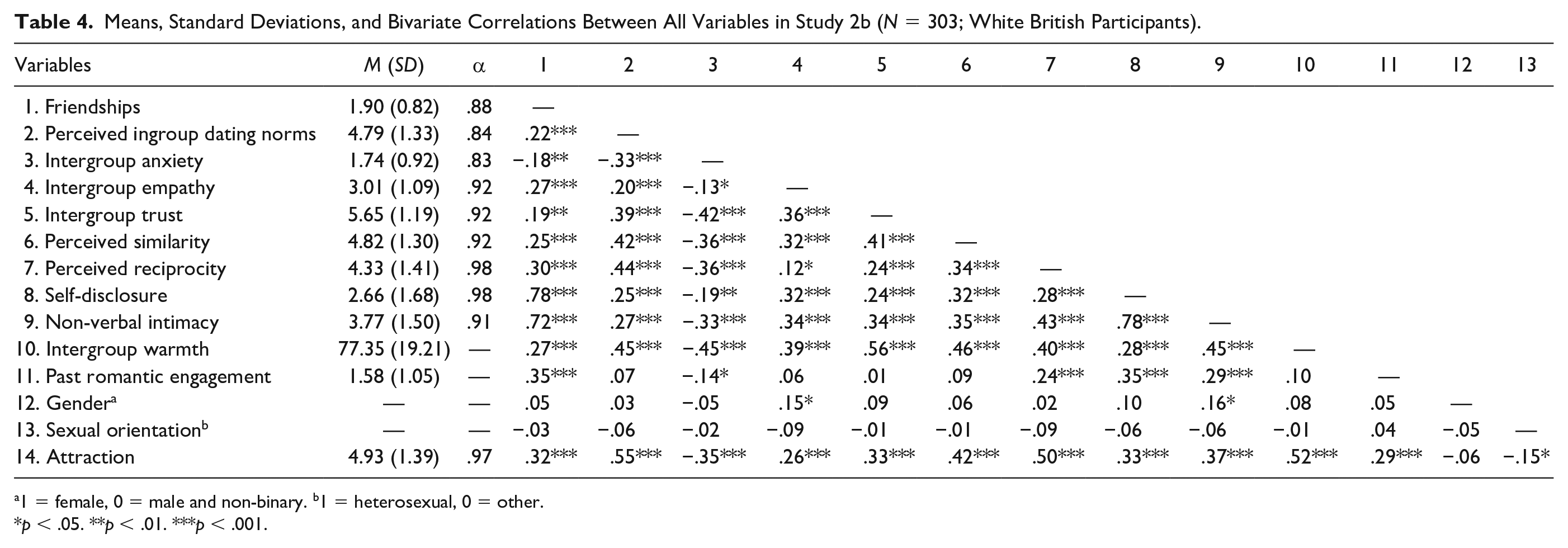
1 = female, 0 = male and non-binary. b1 = heterosexual, 0 = other.
p < .05. **p < .01. ***p < .001.
Although the hypothesized model was informed by the extant literature examining each mediator separately, we note that it is just one of several theoretically viable configurations of the relationships between these variables. Given the relative paucity of research examining all these mediators together (to explain the relatively novel cross-race friendship–attraction relationship, no less), our test of this proposed model was largely exploratory.
Direct effects
As outlined in Table 5, cross-race friendships predicted greater self-disclosure, greater non-verbal intimacy, and more positive ingroup dating norms across both studies. Self-disclosure was not consistently related to any of the subsequent outcomes, but non-verbal intimacy predicted lower anxiety, and greater empathy, trust, similarity, and reciprocity. Subsequently, warmth was significantly predicted by ingroup dating norms, anxiety, empathy, trust, and similarity.
Standardized Regression Coefficients for Each of the Pathways Tested in Studies 2a, 2b, and 3.
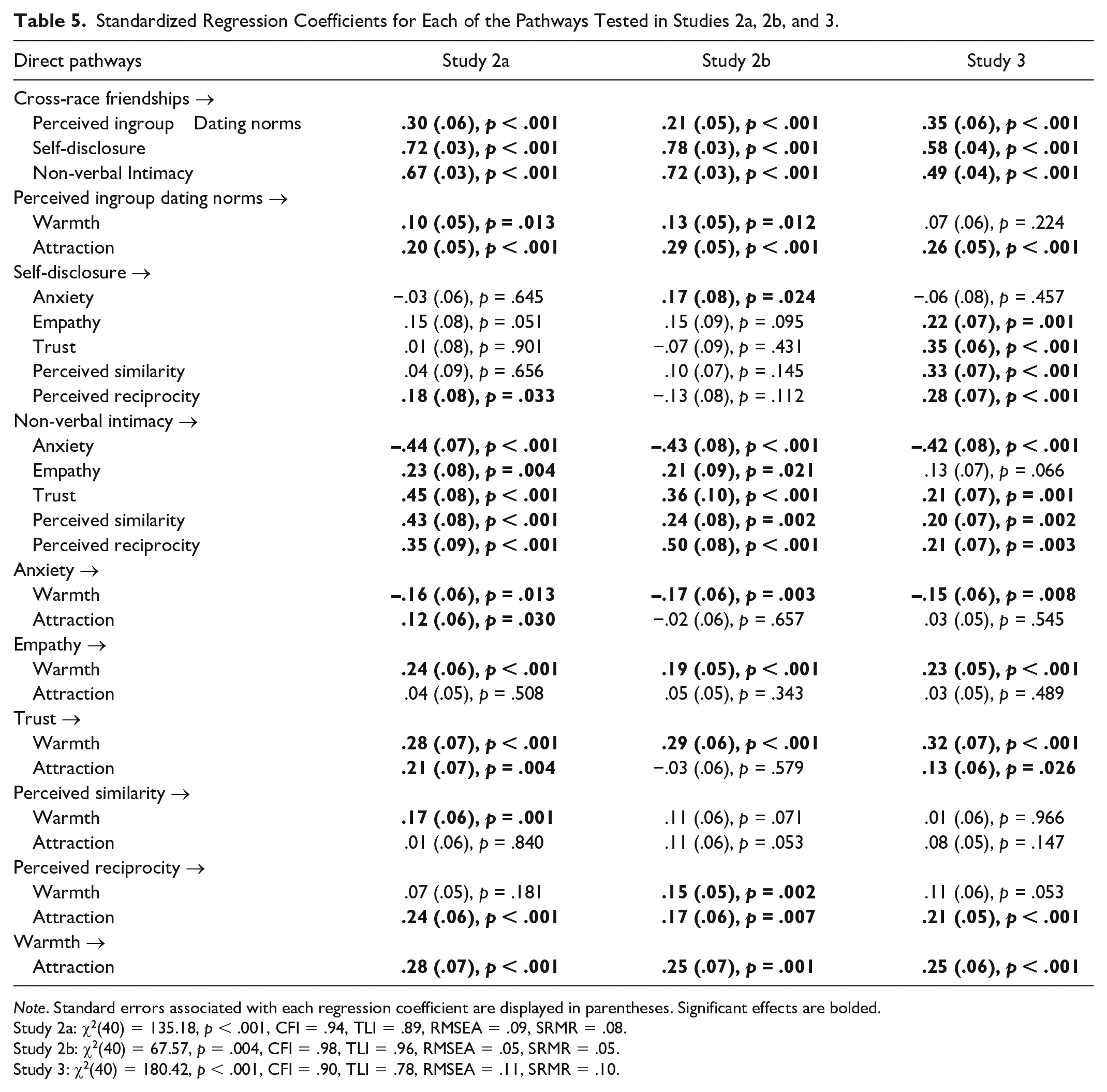
Note. Standard errors associated with each regression coefficient are displayed in parentheses. Significant effects are bolded.
Study 2a: χ2(40) = 135.18, p < .001, CFI = .94, TLI = .89, RMSEA = .09, SRMR = .08.
Study 2b: χ2(40) = 67.57, p = .004, CFI = .98, TLI = .96, RMSEA = .05, SRMR = .05.
Study 3: χ2(40) = 180.42, p < .001, CFI = .90, TLI = .78, RMSEA = .11, SRMR = .10.
Importantly, participants who reported greater trust, greater reciprocity, and more positive ingroup dating norms, reported greater attraction to Black people in Study 2a, but only reciprocity was related to attraction in Study 2b. Finally, warmth predicted greater attraction to Black people. Empathy and similarity did not significantly predict attraction to Black people in either study.
Indirect effects
Overall, cross-race friendships were significantly and positively indirectly associated with attraction across both studies. As shown in Figure 3, the combined indirect effects via non-verbal intimacy and ingroup dating norms were significant. In contrast, the combined indirect effect via self-disclosure was not significant in either study.
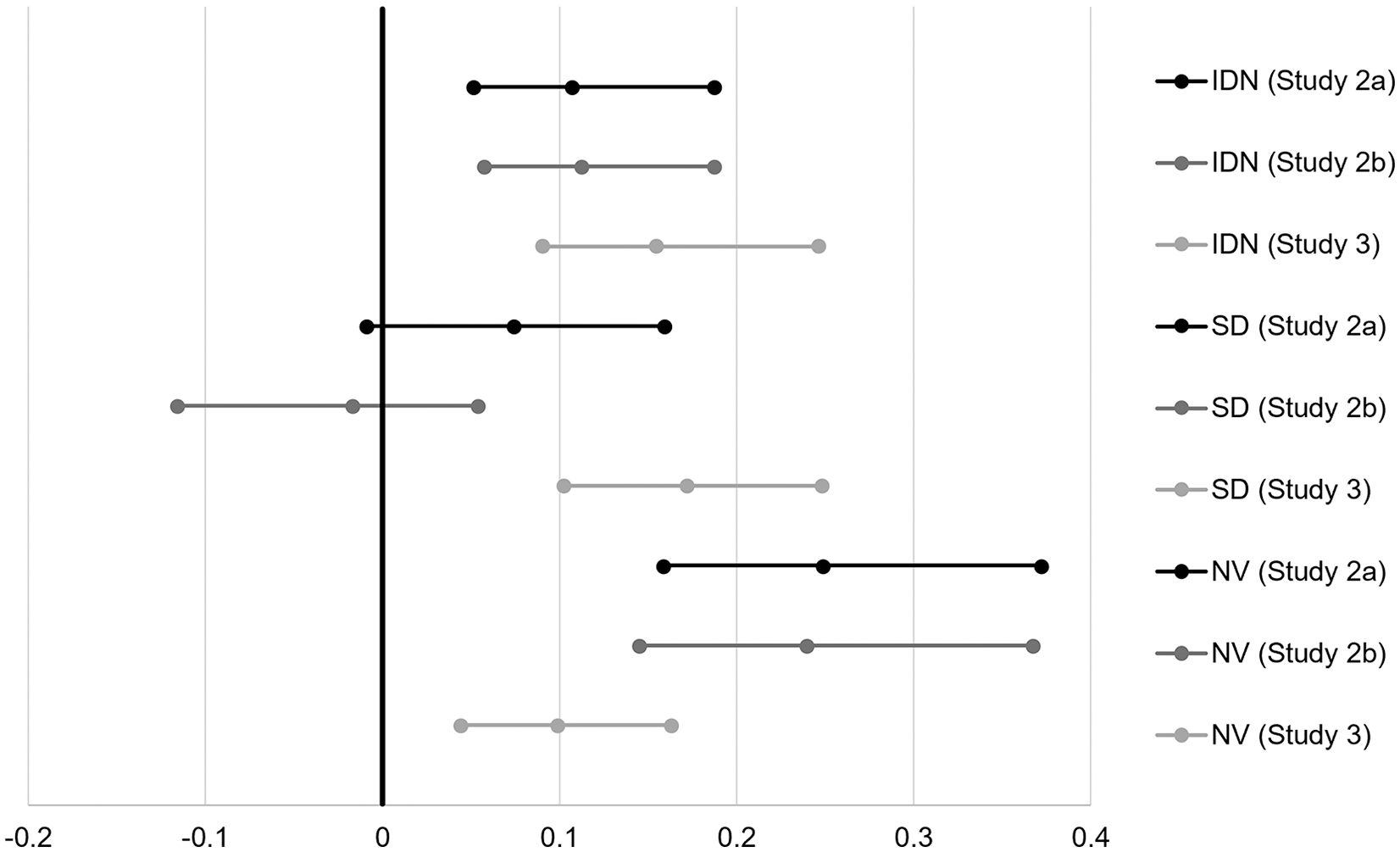
A forest plot showing the combined indirect effects and bootstrapped 95% confidence intervals of cross-friendships on attraction via ingroup dating norms (IDN), self-disclosure (SD), and non-verbal intimacy (NV).
Non-verbal intimacy mediated the association between cross-race friendships and attraction via a number of specific pathways (see Table 6). First, people who had more cross-race friendships reported more experiences of non-verbal intimacy, which in turn directly predicted greater attraction via trust and reciprocity. Another four significant specific indirect effects running from non-verbal intimacy through to greater warmth and subsequent attraction emerged via lower anxiety, and greater empathy and similarity. In addition to the non-verbal intimacy mechanisms, the cross-race friendship–attraction relationship was also significantly mediated by ingroup dating norms, both directly, and via warmth.
Unstandardized Specific Indirect Effects Running Through Non-Verbal Intimacy, Self-Disclosure, and Perceived Ingroup Dating Norms in Studies 2a, 2b, and 3.
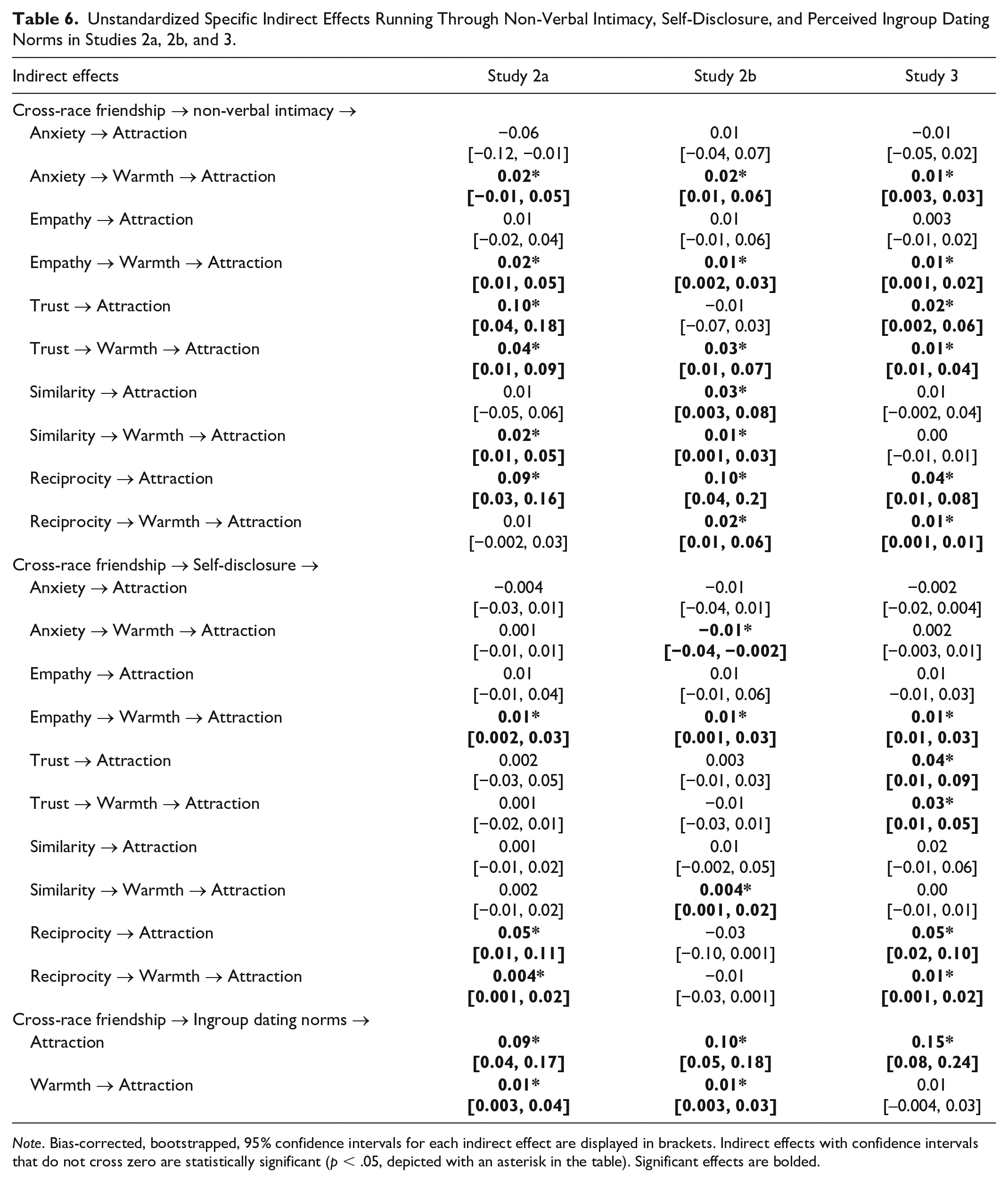
Note. Bias-corrected, bootstrapped, 95% confidence intervals for each indirect effect are displayed in brackets. Indirect effects with confidence intervals that do not cross zero are statistically significant (p < .05, depicted with an asterisk in the table). Significant effects are bolded.
There were two specific indirect effects from cross-race friendships via non-verbal intimacy that were significant in Study 2b that did not emerge in Study 2a. The first was from non-verbal intimacy to attraction through similarity, and the second was from non-verbal intimacy to warmth and subsequently attraction through reciprocity.
Discussion
Consistent with hypotheses, Studies 2a and 2b demonstrated that having cross-race friendships was associated with attraction. They also extended upon Study 1 by highlighting several important mediators of this association. Non-verbal intimacy emerged as an important, novel mechanism linking cross-race friendships to attraction, predominantly through perceptions that the racial outgroup would reciprocate attraction. In addition, non-verbal intimacy was also associated with intergroup warmth through reduced anxiety and increased empathy, trust, and perceived similarity, consistent with the broader literature on the contact-prejudice association (Hayward et al., 2017; Pettigrew & Tropp, 2008; Tam et al., 2009). Intergroup warmth, in turn, predicted greater attraction. In line with Paterson and colleagues (2019), perceived ingroup dating norms emerged as the other important mediator of the friendship–attraction link. These mediators, especially those concerning the important role of non-verbal intimacy suggests that cross-race friendships predict attraction, not merely due to familiarity from being frequently exposed to an outgroup member, but due to embodied experiences with members of those outgroups.
Study 3
Study 3 aimed to explore the cross-race friendships–attraction association as well as the mediators underlying this association in a racial minority sample. Romantic relationships and intimate partnerships are, by definition, dyadic activities undertaken consensually due to a reciprocated interest. It is therefore important to examine antecedents of cross-race attraction from the perspective of racial minority group members. Given the power structures that have differentially governed their lived experiences, cross-race friendships may hold a different meaning for racial minority group members, leading to disparate outcomes (e.g., Barlow et al., 2013; Tropp & Pettigrew, 2005; although see Barlow et al., 2019). There is also evidence that different mediators emerge as most important in explaining the contact-prejudice association for racial majority group members compared to minority group members (Hayward et al., 2017).
Study 3 sought to test the proposed model (Figure 2) with Black British participants, in the context of attraction to White people. Although the above literature suggests that the contact-prejudice association can differ for racial minority group members, no firm hypotheses were made regarding the mechanisms in the present study, given this represented the first investigation into the mediators of the cross-race friendship–attraction association from a minority perspective.
Method
Study 3 was not preregistered but was a replication of Studies 2a and 2b with a minority sample.
Participants
Black British participants were recruited from Prolific. The final sample (N = 292; Mage = 31.05, SD = 9.25) comprised 210 female (71.9%), 81 male (27.7%), and 1 “Other”-identifying (0.3%) participant, of whom 275 identified as heterosexual (94.2%), 12 as bisexual (4.1%), 2 as gay (0.7%), and 3 as “Other” (1.0%). Participants were paid ₤2 for their participation.
Measures
All variables were measured using the same scales from Studies 2a and 2b (except here, Black participants answered these questions in reference to White people).
Results
Descriptive statistics and bivariate correlations are displayed in Table 7. The model tested and analytical approach was identical to Studies 2a and 2b.
Means, Standard Deviations, and Bivariate Correlations Between All Variables in Study 3 (N = 292; Black British Participants).
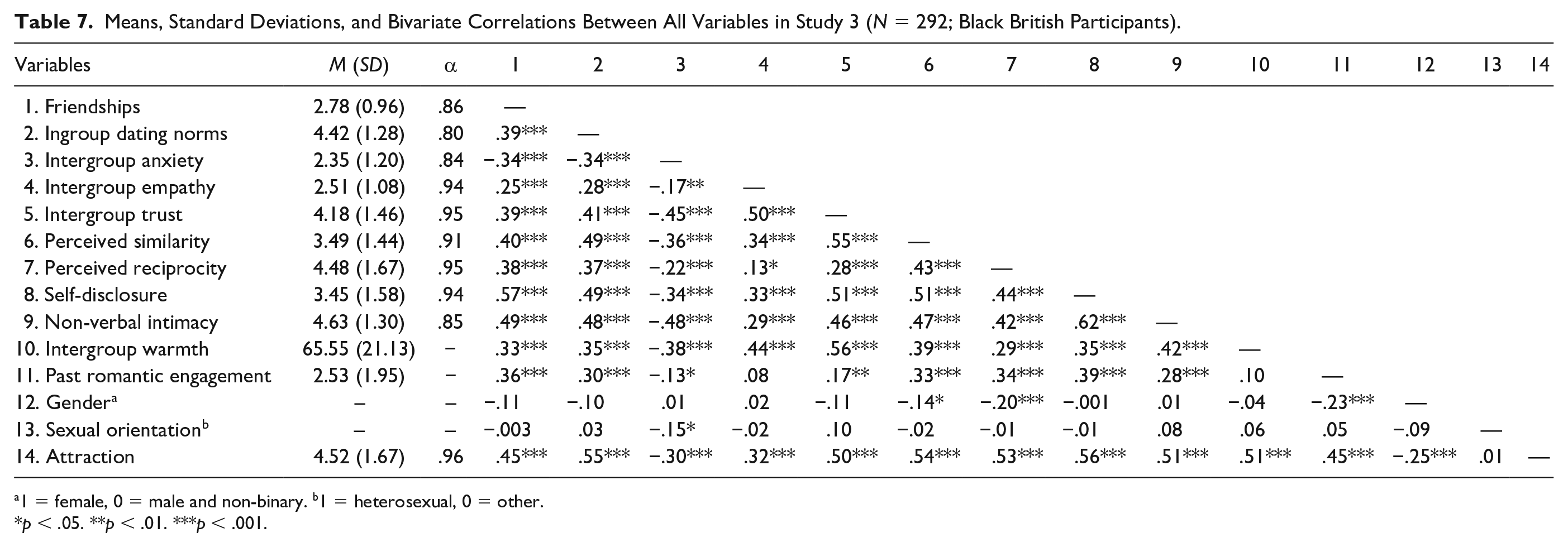
1 = female, 0 = male and non-binary. b1 = heterosexual, 0 = other.
p < .05. **p < .01. ***p < .001.
Direct effects
As outlined in Table 5, cross-race friendships predicted greater self-disclosure, greater non-verbal intimacy, and more positive ingroup dating norms. In turn, self-disclosure predicted greater trust, empathy, similarity, and reciprocity, but did not predict anxiety. Non-verbal intimacy predicted lower anxiety, and greater trust, similarity, and reciprocity, but did not predict empathy. In turn, warmth was significantly predicted by anxiety, empathy, trust, and reciprocity, but not predicted by ingroup dating norms or similarity.
Importantly, Black participants who reported greater trust, greater similarity, greater reciprocity, and more positive ingroup dating norms, reported greater attraction to White people. Furthermore, warmth predicted attraction to White people. Anxiety and empathy did not significantly predict attraction to White people.
Indirect effects
Overall, cross-race friendships were significantly and positively indirectly associated with attraction. As shown in Figure 3, the combined indirect effects via non-verbal intimacy and ingroup dating norms were significant. Unlike for White participants in Studies 2a and 2b, the combined indirect effect via self-disclosure was also significant for Black participants.
Non-verbal intimacy again mediated the association between cross-race friendships and attraction via a number of specific pathways (see Table 6). First, people who had more cross-race friendships reported more experiences of non-verbal intimacy, which in turn directly predicted greater attraction via trust and reciprocity. Another three significant specific indirect effects running from non-verbal intimacy through to greater warmth and subsequent attraction emerged via lower anxiety and greater trust, empathy, and reciprocity. In addition to the non-verbal intimacy mechanisms, the relationship between cross-race friendships and attraction was again significantly mediated by ingroup dating norms.
Examining the composite parts of the significant combined indirect effect of self-disclosure that emerged exclusively for Black participants in this study provided evidence that the relationship between cross-race friendships and attraction was mediated by trust and reciprocity. In addition, self-disclosure predicted greater warmth and subsequent attraction via higher empathy, trust, and reciprocity.
Discussion
Study 3 established an association between cross-race friendships and attraction for Black participants. Whereas some mechanisms explaining this association were similar to those that emerged for White participants in Studies 2a and 2b, this study also highlighted mechanisms exclusive to racial minority group members. Consistent with findings for White participants, non-verbal intimacy emerged as a key mechanism linking cross-race friendships to attraction. For Black participants, non-verbal intimacy predicted increased attraction to White people through its association with greater trust in White people and perceptions that White people would reciprocate attraction. In addition, non-verbal intimacy predicted greater intergroup warmth through its association with lower anxiety and greater trust and perceived reciprocity. Intergroup warmth, in turn, predicted greater attraction. Perceived ingroup dating norms again emerged as another important mediator of the friendship–attraction link for Black participants as it did for White participants.
The present study also elucidated the role that self-disclosure plays in racial minority group members’ attraction to members of the White majority. Self-disclosure, similar to non-verbal intimacy, also predicted Black participants’ attraction to White people though its association with greater trust in White people and perceptions that White people would reciprocate attraction. In addition, self-disclosure predicted increased intergroup warmth through intergroup empathy, trust, and perceived reciprocity.
General Discussion
The present research investigated the relationship between cross-race friendship and attraction. Together, these studies produced a number of novel contributions to the intergroup contact and interpersonal attraction literatures.
Robustness and Specificity of the Cross-Race Friendship–Attraction Association
The four studies collectively found a cross-race friendship–attraction link across both majority and minority samples, reinforcing preliminary evidence of such a relationship in past work (Brooks & Neville, 2017; Coley et al., 2008). Study 1 further demonstrated, for the first time, that the cross-race friendship–attraction association is largely race-specific—friendships with members of one racial outgroup only reliably predicted attraction to that specific outgroup. This apparent absence of a secondary transfer effect (Pettigrew, 2009) in the domain of cross-race attraction suggests an important theoretical distinction between intergroup prejudice and attraction. One possible reason for this distinction is that prejudice may be more monolithic in nature, whereas attraction may be more outgroup specific.
Previous work shows that people who are prejudiced toward one outgroup (e.g., Black people) usually tend to be prejudiced toward others (e.g., Asian people), something that can be accounted for by an underlying generalized prejudice factor (Akrami et al., 2011). If positive contact reduces prejudice toward one racial outgroup, these positive attitudes may more easily generalize to other outgroups, given that they are connected by an amorphous, non-specific prejudice. Attraction is more visceral and visual than are intergroup attitudes (Singer, 1984). Attraction to a racial outgroup may therefore depend on the specific embodied experiences an individual has had with members of that outgroup. Future research should continue to explore the qualities of intergroup attraction that differentiate it from prejudice.
Mediators of the Cross-Race Friendship–Attraction Association
Studies 2a, 2b, and 3 were the first to determine the mediators of the cross-race friendship–attraction link across both racial majority and minority group members. Consistent with Paterson and colleagues’ (2019) findings on interreligious attraction, perceived ingroup dating norms also explained the friendship–attraction relationship. People with more friendships with members of a racial outgroup perceived their friends and family to be more supportive of them dating that outgroup, and this, in turn, predicted greater attraction to members of that outgroup.
The present research also introduced non-verbal intimacy as an unexplored intimacy mechanism. Physical contact and other friendly non-verbal signaling across racial lines were associated with positive intergroup feelings and perceptions that, in turn, predicted attraction. One important mechanism potentially facilitated by non-verbal intimacy was that of perceived reciprocity. Sharing intimate, non-verbal interactions with racial outgroup members was associated with impressions that members of the racial outgroup would reciprocate attraction, which directly predicted one’s own attraction to that outgroup. Non-verbal intimacy was also positively associated with traditional contact mechanisms—anxiety, empathy, and trust—which in turn were associated with intergroup warmth, in line with the broader contact literature (Hayward et al., 2017; Pettigrew & Tropp, 2008; Tam et al., 2009). Feeling more favorable towards a racial outgroup was, in turn, associated with outgroup attraction.
Although the rationale for non-verbal intimacy was grounded in the well-established literature examining verbal intimacy (i.e., self-disclosure) as a contact mechanism, it unexpectedly emerged as a stronger and more reliable mediator of the relationship between cross-race friendship and the other variables in the model when tested alongside self-disclosure. The findings suggest that, far from being a mechanism unique to explaining the contact-attraction link, non-verbal intimacy may play an important role in explaining the contact-prejudice link, more broadly. Indeed, non-verbal communication may often be a more powerful communicative tool than verbal communication (Hinde, 1972). The present research should therefore set in motion a new line of inquiry into non-verbal intimacy as a contact mediator.
Majority and Minority Differences in the Cross-Race Friendship–Attraction Association
Although non-verbal intimacy eclipsed self-disclosure in explaining the cross-race friendship–attraction relationship for White participants, Study 3 showed that self-disclosure played an important role in explaining this link for Black participants. Working much in the same way as non-verbal intimacy, self-disclosure was also associated with the traditional contact mechanisms of lower anxiety and higher empathy and trust, which predicted greater intergroup warmth and attraction. Self-disclosure also predicted feelings of reciprocity in attraction, which directly predicted greater cross-race attraction.
These findings suggest that racial minority group members may place greater emphasis on verbal intimacy than majority group members do when it comes to developing cross-race attraction. This may be attributed to their differential approaches to verbal intimacy in a broader sense. For example, Olson and colleagues (2018) found that Black participants perceived the conversational topics they generated when getting to know a new acquaintance to be more intimate than White participants perceived theirs to be. Research suggests that it is particularly important for racial minority group members to be able to disclose their experiences of racism, inequality, and cultural differences to White people with whom they wish to form interracial relationships (Foeman & Nance, 2002). For Black people, being able to mutually disclose about such experiences to White friends may allow for the warmth and trust required to develop a romantic relationship. Future research should build on this by continuing to elucidate the differential needs of racial majority and minority group members when it comes to contact and attraction.
Broader Contributions to the Literature
This research extends upon work on familiarity effects in the domain of romantic attraction (Finkel et al., 2015) by demonstrating that greater familiarity with racial outgroup members, through cross-group friendships, can predict greater attraction to those outgroups. Going beyond this, we demonstrate that the friendship–attraction link is not simply a mere exposure effect, but that important experiential mechanisms like non-verbal intimacy and self-disclosure (for minority group members) may play a role in explaining it. In doing so, it also contributes to the literature on interracial relationships. Although many scholars have argued that the willingness to form intimate romantic relationships with members of a racial outgroup is an important barometer of abolished racial boundaries (Allport, 1954), very little research has examined the link between intimate contact and this indicator of racial prejudice. The present research advances the contact literature by explicating this underexplored association.
This work also helps to uncover aspects of the contact experience itself that can facilitate positive change. Contact has been described as a “black box” where people enter an experience and leave as a different person (Harwood, 2010; Ioannou & Panagiotou, 2020). It is understood that contact experiences can reduce prejudice through established mediators, but considerably less is known about the experience itself and whether different experiences lead to different outcomes (Keil & Koschate, 2020). By introducing non-verbal intimacy as a novel mechanism alongside verbal self-disclosure, the present research has provided additional insight into the variable experiences of intergroup interactions, thus advancing our understanding of what lies within the “black box” of positive contact.
The fact that non-verbal intimacy had not been previously considered as a contact mediator also highlights the tendency of the contact literature to intellectualize the lived experience of those involved in intergroup contact. A disproportionate focus on the more theoretical cognitive and affective mediators of contact has diverted attention from the behavioral mechanisms that exemplify the contact experience. Friendships and close intimate relationships are embodied, and it may be that these experiences go further to change our attitudes than do colder and more deliberate rationalizations.
Limitations and Future Directions
As our studies were cross-sectional, no causal conclusions can be drawn regarding the relationship between cross-race friendships and attraction. Although the relationship is framed such that cross-race friendships predicts attraction, it is also possible (and indeed likely) that greater attraction to particular racial outgroups encourages people to selectively develop more friendships from those outgroups. Previous research has established that the contact-prejudice link is bi-directional (Pettigrew, 2008), and it is likely that the relationships demonstrated in the present study work in the same way. Also, while the proposed mediation model was grounded in past work, it is just one of several theoretically viable configurations of the relationships between these variables. Future research should employ longitudinal designs to explore the temporal nature and (bi)directionality of the observed relationships. Experiments using manipulations of intimate cross-racial contact in the lab (e.g., the “Fast Friends” procedure; Aron et al., 1997), may further illuminate whether cross-race contact can causally affect outgroup attraction.
Another limitation of the present research was that we did not account for the geographic proximity of participants to different racial outgroups, or in other words, the diversity of their immediate environment. Theoretically, being more proximal to racial outgroup members may separately promote both cross-group friendships and intergroup attraction (Emerson et al., 2002; Fujino, 1997), and this may contribute to explaining the overall friendship–attraction relationship observed in the present work. Past research shows, however, that although greater opportunity for contact with a racial outgroup predicts cross-group friendships, it often has no direct relationship with outgroup attitudes (Turner et al., 2007). Similarly, regional diversity does not reliably predict outgroup attitudes, whereas contact with the outgroup does (Barlow et al., 2013). Thus, proximity may be unlikely to predict cross-race attraction itself, but may be a necessary precursor to the friendship–attraction link. That is, it could increase the likelihood that an individual would form cross-race friendships, which would in turn, facilitate attraction. It should be noted, however, that geospatial data suggests individuals predominantly interact with members of their ingroup, even in highly diverse settings (Dixon et al., 2020).
Collectively, the above work converges around the notion that proximity may not be sufficient on its own to increase cross-race attraction. Indeed, proximity could not account for certain processes that were tested in the present work, such as self-disclosure or non-verbal intimacy, which are most likely to be gained through close contact. Nevertheless, future longitudinal research should assess geographic proximity to racial outgroups alongside measures of cross-race friendships and attraction. This would allow us to better model the temporal relationships between these variables and further contribute to our understanding of the developmental trajectory of cross-race friendships and romantic relationships.
It should be noted that the items used to measure cross-race friendships in the present research were not objectively precise. For example, participants may not have had a clear, standardized reference or norm they could use to gauge whether they had “a little” or “a lot” of outgroup friends. Despite the subjective nature of these items, however, the relationship between the two cross-race friendship items was strong across all studies. Although we did not measure objective quantity, we did capture people’s subjective feelings about the amount of intergroup friendships they have, which may be more important in predicting their intergroup perceptions (Barlow et al., 2013). Nonetheless, future work should determine whether more objective measures of contact yield similar results.
Future research should also explore the nuances of the link between cross-group friendships and attraction. For example, whereas the present work focused on cross-race friendships, it would be beneficial to determine whether superficial positive contact with racial outgroup members would also be associated with greater attraction. Past evidence that mere (positive) contact reduces prejudice (Pettigrew & Tropp, 2006) and mere exposure increases attraction (Finkel et al., 2015) would suggest that superficial contact may still be associated with attraction in the same way friendship was found to be in the present work. It is possible, however, that without the “active ingredients” of cross-group friendships that we found support for in the present study (e.g., self-disclosure, non-verbal intimacy), the effects of superficial contact on attraction may be less marked.
Relatedly, future work should consider exploring the differential impact of contact quantity and quality on attraction. The present research examined contact quantity, but focused solely on friendships, which are, by nature, high in contact quality. Past research that has differentiated between these two dimensions shows that contact quantity is associated with more positive implicit attitudes and contact quality is associated with more positive explicit attitudes (Tam et al., 2006). It is possible that the link between contact and attraction follows similar patterns. Thus, researchers should consider assessing both contact quantity and quality, as well as both explicit and implicit measures of cross-race attraction to build upon the findings the present study. Including explicit and implicit measures of attraction may also allow for us to test whether the friendship–attraction link mirrors the friendship-prejudice link in other ways. For example, cross-race friendships tend to predict implicit prejudice toward outgroups directly, whereas their relationship with explicit prejudice is mediated by other variables (Turner et al., 2007). The friendship–attraction link may follow the same rules.
Conclusion
The present research builds upon the contact literature by demonstrating that cross-race friendships are associated with greater attraction to racial outgroup members (Studies 1, 2a, 2b, 3), and establishing the racial specificity of this link (Study 1). We also introduce non-verbal intimacy as an important mechanism of this link that predicts attraction via both perceived reciprocity in attraction and warmth (through the traditional contact mediators; Studies 2a, 2b, 3). For racial minority group members, we highlight the additional importance of self-disclosure as a mechanism explaining this link (Study 3). These findings speak to the complex association between cross-race friendship and desire and to the broader potency of contact as a force to abolish intergroup boundaries.
Supplemental Material
sj-docx-1-psp-10.1177_01461672211026130 – Supplemental material for An Investigation of the Relationship Between Cross-Race Friendships and Attraction
Supplemental material, sj-docx-1-psp-10.1177_01461672211026130 for An Investigation of the Relationship Between Cross-Race Friendships and Attraction by Michael Thai, Alexander W. O’Donnell, Rhiannon N. Turner and Fiona Kate Barlow in Personality and Social Psychology Bulletin
Footnotes
Declaration of Conflicting Interests
The author(s) declared no potential conflicts of interest with respect to the research, authorship, and/or publication of this article.
Funding
The author(s) disclosed receipt of the following financial support for the research, authorship, and/or publication of this article: Fiona Kate Barlow is supported by an Australian Research Council Future Fellowship (FT150100147).

Supplemental Material
Supplemental material is available online with this article.
Notes
References
Supplementary Material
Please find the following supplemental material available below.
For Open Access articles published under a Creative Commons License, all supplemental material carries the same license as the article it is associated with.
For non-Open Access articles published, all supplemental material carries a non-exclusive license, and permission requests for re-use of supplemental material or any part of supplemental material shall be sent directly to the copyright owner as specified in the copyright notice associated with the article.
