




Abstract
We propose that awe has multifaceted relations with existential isolation, a feeling of separation between the self and others or the world. Three studies examined the relation between awe and existential isolation via feelings of small self (vastness, self-size, self-perspectives) and a sense of connectedness. Awe (vs. a control topic) was induced either using virtual reality (Study 1) or a recall task (Studies 2 and 3) and was indirectly associated with higher and lower levels of existential isolation through differing pathways. Awe was associated with lower feelings of existential isolation via an increased sense of vastness, which in turn predicted greater connectedness; whereas awe was associated with higher feelings of existential isolation via increased sense of feeling small, which in turn predicted lower connectedness. This work advances understanding of the complex nature of awe—revealing its competing effects on the self and the social connectedness pathways through which awe can influence existential isolation.
Upon looking out into space, astronaut Edgar Mitchell described a sense of interconnectedness and harmony with the world around him. Yet when a client of psychotherapist Irvin Yalom looked into space, he described a sense of aloneness and groundlessness.
Then, looking beyond the Earth itself to the magnificence of the larger scene . . . My understanding of the separate distinctness and the relative independence of movement of those cosmic bodies was shattered. There was an upwelling of fresh insight coupled with a feeling of ubiquitous harmony -a sense of interconnectedness with the celestial bodies surrounding our spacecraft. Edgar Mitchell (2008, p. 58) At the age of twelve he was sleeping outside, looking at the sky, and suddenly felt himself separated from mother earth and drifting between the stars. Where was he? Where did he come from? Where did God come from? Where did something (rather than nothing) come from? He felt overcome with aloneness, with helplessness, and with groundlessness. Yalom (1980, p. 359)
This juxtaposition highlights the complex nature of awe to be both “profoundly positive and terrifyingly negative” (Keltner & Haidt, 2003, p. 303). The emotion of awe is experienced in the face of vastness (i.e., something larger than one’s self, either physically or conceptually) that violates existing schemas and elicits the cognitive need for accommodation to process and reform one’s broken schema (Keltner & Haidt, 2003). In experimental and correlational studies, awe is often accompanied by a deep sense of interconnectedness (see Chen & Mongrain, 2021), including connectedness with others (Bai et al., 2017; Van Cappellen & Saroglou, 2012), nature (Yang et al., 2018), and the world or universe (Shiota et al., 2007). Yet, awe can also lead one to feel insignificant and alone (Shiota et al., 2007) upon confrontation with the smallness of oneself in comparison to vastness of the experience (Keltner & Haidt, 2003). These competing positive and negative experiences may then have divergent implications for peoples’ phenomenological sense of connection and isolation.
Existential isolation is the feeling that no one else shares one’s own subjective experience of the world (Helm, Greenberg, et al., 2019). The opening quotes suggest that awe, with its capacity to increase feelings of connectedness, may reduce feelings of existential isolation, yet awe, with its capacity to engender feelings of separateness and insignificance, may also increase feelings of existential isolation. The complexity of awe (e.g., Gordon et al., 2017) may thus produce divergent or competing reactions. This complexity echoes extant research where awe simultaneously increases and decreases one’s sense of meaning in life via positive affectivity and a diminished self, respectively (Rivera et al., 2020). The present research addresses these issues, examining the impact of awe on existential isolation and exploring potential mechanisms through which such effects might emerge.
The Nature of Awe and Its Consequences
Awe and Connectedness
The lion’s share of research on awe points to its interpersonal nature (Nelson-Coffey et al., 2019). Awe encourages one to turn outward toward others (Shiota et al., 2017) and promotes collective engagement and prosocial behavior (Bai et al., 2017; Keltner & Haidt, 2003; Piff et al., 2015; Prade & Saroglou, 2016; Stellar et al., 2017). For example, awe of God was associated with a deep sense of connectedness with others (Krause & Hayward, 2015). Furthermore, among those higher in religiosity/spirituality, childbirth-induced awe promoted feelings of oneness with friends, and nature-induced awe promoted feelings of oneness with people in general (Van Cappellen & Saroglou, 2012).
Such connectedness extends beyond interpersonal domains. Both awe and elevation—another self-transcendent emotion—have been found to increase spirituality (i.e., “the personal search for connection with a larger sacredness”), as measured by universality (i.e., “a belief in the unitive nature of life, a sense of interconnectedness among all forms of life and all people”) and connectedness (i.e., “a belief that one is part of a larger human orchestra, a sense of connection across time and place”; Saroglou et al., 2008; Van Cappellen et al., 2013). Furthermore, elevation was also found to increase connectedness to nature via increasing other self-transcendent positive emotions, including awe (Moreton et al., 2019). Even spiritual experiences elicited from psychedelic substances have been shown to increase feelings of connectedness to others (Forstmann et al., 2020), humanity, nature, and the universe, partly through experiencing awe (Forstmann et al., 2020; Gandy et al., 2020; Hendricks, 2018; van Mulukom et al., 2020; Watts et al., 2017). It may be worth noting that while the majority of research on awe has focused on more positive experiences of awe (see Monroy & Keltner, 2022), awe experiences can also be negative or frightening (e.g., Gordon et al., 2017). Therefore, it is still unclear if the findings that awe leading to greater connectedness would apply to more negative experiences as well, or if these are unique to positive experiences of awe. However, we continue to base these current predictions on more positive rather than negative experiences.
Awe and Small Self
A critical mechanism by which awe fosters connectedness—and in fact a hallmark of awe—is that it decreases an emphasis on the self, commonly called the experience of a small self (Bai et al., 2017; Shiota et al., 2007; Sturm et al., 2022). The small self has typically been conceptualized as a diminished sense of self and personal concerns, which is often elicited by physical or conceptual vastness (Piff et al., 2015; Shiota et al., 2007). With these processes, attention shifts away from the self to others or larger entities (Piff et al., 2015) or away from mundane issues toward larger life concerns (Perlin & Li, 2020). The resultant sense of small self can have disparate downstream consequences. On one hand, a sense of small self is a mechanism by which awe increases prosocial behaviors (Piff et al., 2015) and feelings of closeness to others in one’s social network and community (Bai et al., 2017). On the other hand, this sense of small self is a mechanism by which awe deceases perceptions of meaning in life (Rivera et al., 2020).
These divergent findings may be best explained by separate facets of small self. Initial research conceptualized two facets of the small self (vastness and self-diminishment), yet more recent work suggests the small self has three separate facets (Tyson et al., 2022): vastness vis-à-vis the self (a sense of something larger than the self), self-size (the perception of feeling smaller), and self-perception (trivializing one’s daily concerns). It may be that awe-induced vastness fosters a sense of connection to the larger world (i.e., one focuses on how much world is out there) and associated consequences, whereas seeing oneself as small may foster perceived disconnection from that world (i.e., there is so much that one is not a part of) and associated consequences. Indeed, vastness is conceptualized and measured not only as sensing something greater than one’s self but also feeling one is a part of that something greater, connecting one to things beyond one’s self. Conversely, self-size is conceptualized and measured with items related to feeling small and insignificant (Piff et al., 2015; Shiota et al., 2007; Tyson et al., 2022). This distinction may be why, vastness was related to greater self-esteem and identification with humanity, whereas smaller self-size (and self-perception) was related to lower self-esteem and identification with humanity (Tyson et al., 2022).
Thus, it may be that as awe diminishes the centrality of the self to focus on the vastness of the world, it promotes feelings of connectedness, both to other people and to humanity or the universe. Yet, as awe increases feeling small in the presence of incomprehensible vastness, it may also reduce the connections one feels with others and the world. In the present studies, we consider these issues through the lens of awe’s capacity to affect feelings of existential isolation.
Existential Isolation
Irvin Yalom (1980) defined existential isolation as the “unbridgeable gulf between oneself and any other being . . . [and] to an isolation even more fundamental—a separation between the individual and the world” (p. 355). In the broadest sense, humans filter and interpret experiences through our own senses and can never truly know the firsthand experiences of another (Mueller, 1834–1840/1912). But not everyone is equally aware of this inherent separation. Recent research (e.g., Helm, Greenberg, et al., 2019; Pinel et al., 2017) argues that people who feel alone in their experience, as if no one shares or understands their subjective perceptions, have heightened existential isolation. In this way, feelings of existential isolation can be understood as a form of subjective interpersonal isolation; subjective because the individual is sensing or aware they perceive the world differently than others, and interpersonal because this awareness highlights a divide between the self and another. This awareness may manifest situationally (e.g., due to a particular interaction or event) or may be experienced chronically (e.g., prolonged feelings of separateness due to sociocultural factors; Helm, Greenberg, et al., 2019). 1
Generally, existential isolation has been found to be associated with negative outcomes. For example, existential isolation is associated with greater depression and suicidal ideation (Constantino et al., 2019; Helm, Medrano, et al., 2020), less identification with one’s groups (Helm, Lifshin, et al., 2019), and insecure attachment (Helm, Jimenez, et al., 2020). Similarly, those with strong social connections, such as secure attachment (Helm, Jimenez, et al., 2020), relational fulfillment (Helm, Medrano, et al., 2020), or strong psychological buffering mechanisms such as elevated self-esteem (e.g., Helm, Lifshin, et al., 2019), tend to report lower existential isolation, or be less susceptible to reminders of existential isolation. These findings underscore the point that greater feelings of existential isolation are associated with lower social cohesion and connection with others.
One potential reason that existential isolation may disrupt normative social functioning is that humans exist in a symbolic culturally substantiated world in addition to the physical world (e.g., Berger & Luckmann, 1966). As many social psychological theories have pointed out (e.g., terror management theory, meaning maintenance model), socially constructed worldviews are inherently fragile and can be undermined or exposed (e.g., Routledge & Vess, 2018). Yalom (1980) discusses how experiences of defamiliarization (i.e., when cultural objects providing structure and stability—such as objects, roles, values, ethics—are seemingly stripped of meaning) can bring one into an experience of existential isolation. Heidegger (1927) described this experience as geworfenheit or “thrownness,” a general awareness of the arbitrary nature of social convention. Yalom (1980) writes that, “experiences where one is alone, and everyday guidelines are suddenly stripped away, have the power to evoke a sense of the uncanny—of not being at home in the world” (p. 361). In other words, these destabilizing experiences can bring a person into stark awareness of the seemingly unbridgeable gap between themselves and others or even the world. The present studies consider how awe might (and might not) be one such destabilizing experience.
The Present Research: Awe and Existential Isolation
Awe experiences may have competing consequences for existential isolation. The present research examines these issues and explores the relationship with a particular focus on potential mechanisms of influence: small self and feelings of connectedness. 2 We began this research with the prevailing idea in the literature that the small self is a unitary construct. This led to the hypothesis that, with an awe experience, focus of the self is diminished, which may facilitate connecting with others and the world. Thus, by extension,
Hypothesis 1 (H1): An awe experience may lead to lower existential isolation because one feels more connected with others and the world.
However, as the research unfolded and Studies 1 and 2 were conducted, the aforementioned distinction of the three facets of the small self (vastness, self-size, and self-perspectives; Tyson et al., 2022) revealed more nuanced possibilities. Specifically, vastness (i.e., “I feel like I am in the presence of something grand”) and self-size (i.e., “I feel small or insignificant”) appear to be qualitatively different, particularly in how they may be related to existential isolation. Vastness may engender connectedness through associated feelings of wonder and spirituality, whereas a smaller self-size may engender a lack of connectedness through associated feelings of insignificance. As noted earlier, in previous research, vastness was related to greater connectedness to humanity, while a smaller self-size was related to lower connectedness (Tyson et al., 2022; but see also Bai et al., 2017 for seemingly alternative findings).
From this emergent perspective, it may be that, via vastness, awe may lower existential isolation (Hypothesis 1a). While via a smaller self-size, awe may increase existential isolation (Hypothesis 1b).
The self-perspectives facet (i.e., “I feel like my day-to-day concerns are relatively trivial”) does not seem to be inherently related to existential isolation, thus we do not have a clear prediction regarding this facet. Of note, if both positive (via smaller self-size) and negative (via vastness) predicted pathways occur simultaneously, they have the potential to counteract each other; each pathway is potentially suppressing the other, and therefore, awe would not have a total indirect effect on existential isolation. 3
Study 1 examined the effects of a virtual reality (VR) awe induction on people’s feelings of small self, connectedness, and existential isolation, in comparison to another positive but non-self-transcendent emotion: amusement. Study 2 sought to replicate and expand the effects of Study 1 with a different awe induction. Finally, Study 3 is a preregistered replication of Study 2, with new measures of the small self-dimensions. In these studies, we report all measures (unless otherwise noted), manipulations, and exclusions.
Study 1
Study 1 assessed the relations between awe and existential isolation, specifically through perceptions of small self and connectedness to others and the world. Following previous research (Chirico et al., 2016; Stepanova et al., 2019), awe was induced using VR. Prior research suggests that awe increases one’s perceptions of small self and connectedness. If feelings of small self-direct attention away from the self and toward others and the world, awe should then increase connectedness through perceptions of small self. These increased feelings of connectedness should then reduce feelings of existential isolation. These predictions are thus captured by a hypothesized serial double mediation, such that awe will increase small self-perceptions, which in turn will predict increased feelings of connectedness, which in turn will predict decreased feelings of existential isolation. Study 1 was initially conceptualized with this unitary conception of small self and analyzed accordingly. As more nuanced ideas were developed, we explored if there are indeed divergent effects of vastness and a smaller self-size, which will guide the models in the following studies.
Sample size was determined based on a different study. Previous research using an awe manipulation has shown that a total of 200 participants can detect small effects with mediation tests after awe manipulations (Nelson-Coffey et al., 2019). While the current study exceeded this number of participants, it may be underpowered for a serial mediation model. Regardless, the available data could be used as an initial test for the current hypotheses.
Method
Participants
Participants (N = 236) were recruited from a midwestern university research participant pool for a study on “Virtual Reality and Emotions” and were compensated with class credits for completing the survey. 4 Participants (59.3% female, one did not report; ages 18-49 years, Mage = 18.92, SDage = 2.53) identified as 75.8% Caucasian, 9.3% African American, 5.5% other, 4.7% Asian/Pacific Islander, 3.4% Latino/Hispanic, 0.4% American Indian (two did not report). The majority (71.6%) reported having little to no previous experience with VR.
Procedure
Participants were randomly assigned to an awe (n = 127) or amusement (n = 109) condition prior to coming into the lab. 5 Upon arrival to the lab, participants were informed that the purpose of the study was to understand the relationship between VR and emotions. Participants in both conditions sat at a desk and wore an Oculus Go VR headset. Those in the experimental condition (i.e., awe condition) watched a 5-min video of a drone flying over the Alps mountains in 4k high definition (see https://osf.io/ksjgx/ for study videos). The video included vast and scenic landscapes and panoramic views of mountains, valleys, forests, trees, lakes, and more. Those in the amusement condition watched a 5-min video of animals acting like humans. The video included a walrus playing a saxophone, a bear riding in a motorcycle sidecar waving to people, a dog riding a tricycle, and more. Participants in both conditions watched these videos in a VR movie theater environment, in which they had an immersive 360-degree experience with the videos playing on a large movie theater screen. Immediately following the VR experience, participants completed a survey on a computer tablet. Study measures were presented in the order listed below.
Measures
Emotions
After the VR manipulation, participants reported the extent to which they felt 18 emotions, including awe, amazement, wonder, amusement, and fun on a 7-point scale (1 = not at all to 7 = extremely). Assessment of these emotions also functions as manipulation checks.
Small Self
The Small Self-Scale used by Preston and Shin (2017; adapted from Piff et al., 2015; Shiota et al., 2007) assessed three components of a small self. Participants reported the extent to which they felt “like I am small or insignificant” (i.e., self-size), “like my day to day concerns are relatively trivial” (i.e., self-perspectives), “like I am part of a greater whole,” “the existence of things more powerful than myself,” and “like I am in the presence of something grand” (i.e., vastness). These five items were rated on a 7-point scale (1 = strongly disagree to 7 = strongly agree) and averaged into a small-self composite (α = .71).
Connectedness
Watts’ Connectedness Scale (Watts et al., 2022) was used to measure connectedness to others and the world with 13 items (e.g., “I felt connected to all humanity”; α = .80; dropping the connectedness to self-subscale, which was unrelated to the current predictions). Participants responded to how they felt for each of the items on a 0 to 100 visual analog scale slider from “not at all” to “entirely.”
Existential Isolation
The Existential Isolation Scale (Pinel et al., 2017; α = .82) was used to measure the degree to which participants self-reported general feelings of existential isolation and was measured with six items. Participants responded on a 7-point scale (1 = strongly disagree to 7 = strongly agree) to items such as “I feel like people share my outlook on life” (reverse scored).
Results
Preliminary Analysis
First, we examined the zero-order correlations across conditions (Table 1). Of note, we examined the relation between self-reported feelings of awe and amusement with our measures of interest, to further see if these effects are unique to feelings of awe. Self-reported feelings of awe and amusement were positively related. Feelings of awe (but not amusement) were positively related to perceptions of a small self and connectedness. Both awe and amusement were unrelated to existential isolation. Small self was positively related to connectedness and unrelated to existential isolation. Finally, connectedness was negatively related to existential isolation.
Study 1 Correlations Across Conditions.
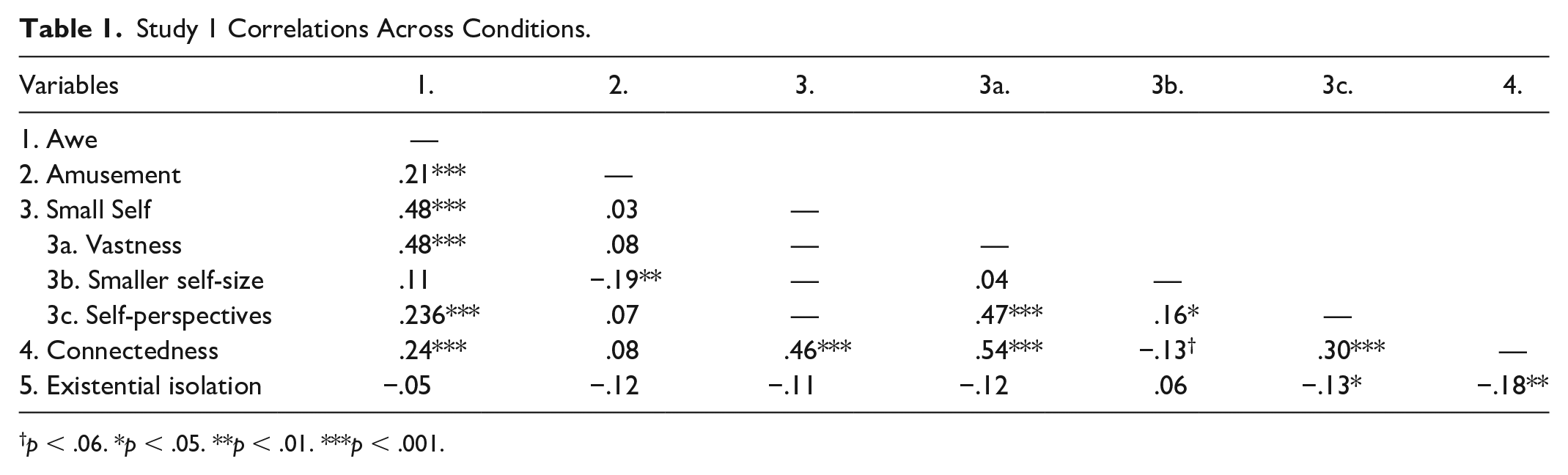
p < .06. *p < .05. **p < .01. ***p < .001.
Second, the experimental and control conditions were compared to determine if the manipulation effectively induced awe and amusement respectively (see Table 2). Participants in the awe condition reported greater awe, amazement, and wonder than those in the amusement condition. Conversely, participants in the amusement condition reported greater amusement and fun than those in the awe condition. These patterns indicate that the experimental manipulation effectively induced awe and the control manipulation effectively induced amusement.
Study 1 Mean (SD) and Tests of Significance of Reported Emotions and Outcome Measures Following Virtual Reality Experience.
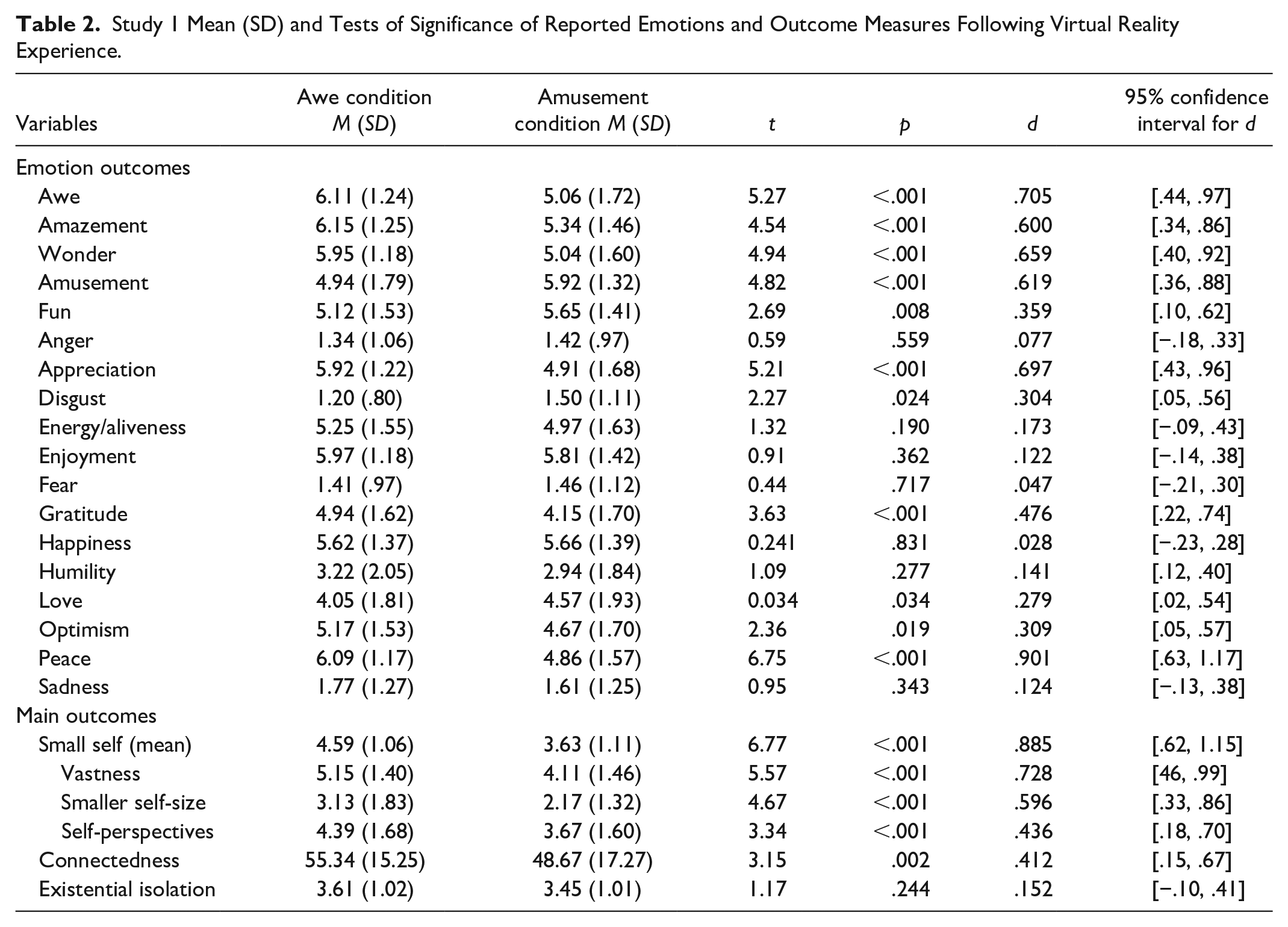
Third, we tested with independent samples t-tests, whether the awe manipulation (relative to the amusement manipulation) increased feelings of small self, connectedness, and existential isolation. See Table 2 for descriptive statistics and tests of significance. As predicted, those in the awe condition reported greater feelings of small self and connectedness, compared with the amusement condition. Finally, there was no difference between conditions on existential isolation.
Primary Analysis
A path model (with lavaan R package; Rosseel, 2012) tested direct and indirect effects between condition and existential isolation via small self and connectedness and Table 3 presents the structural effects and indirect effects of this model. Results revealed a negative indirect effect of awe on existential isolation, such that awe led to greater perceptions of small self, which was associated with greater connectedness, and lower existential isolation. In addition, the direct effect of awe on existential isolation was significant and positive after accounting for model mediators.
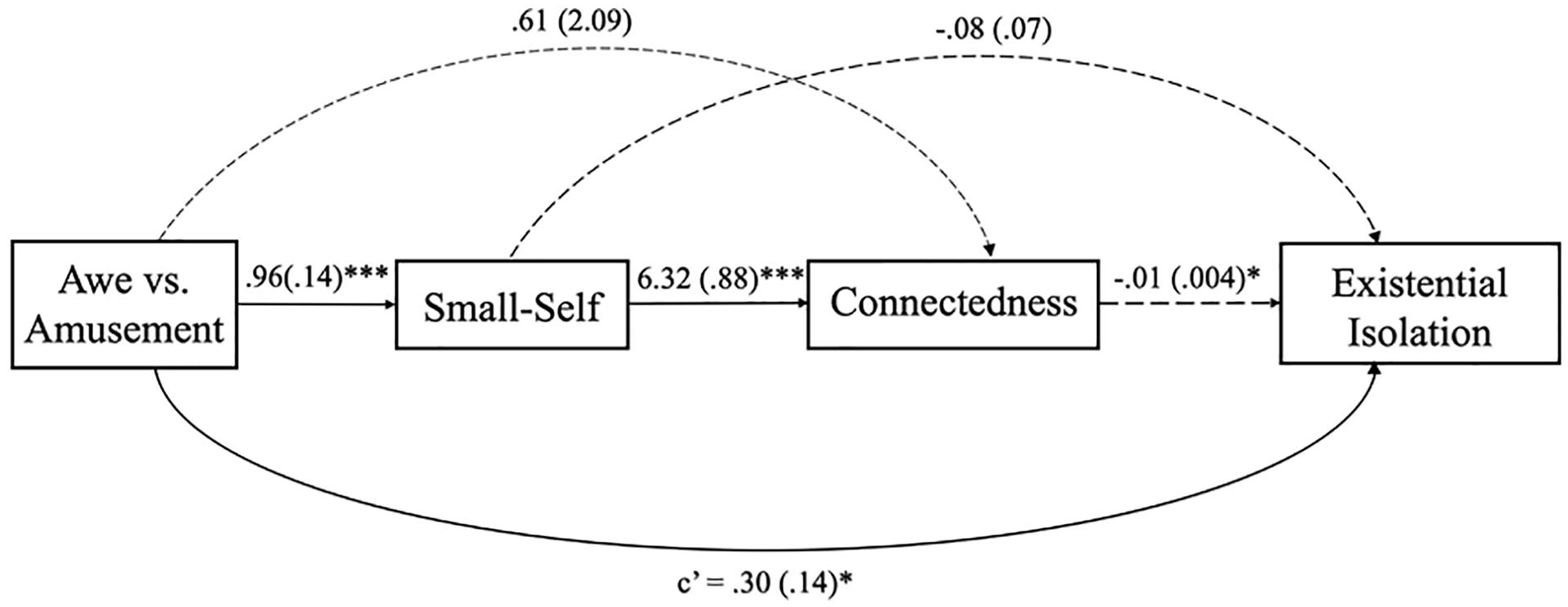
Study 1 Model With Parameter Estimates.
Study 1 Indirect Effects (SE), Significance, and Confidence Intervals.

Note. Condition is coded as awe condition = 1 versus amusement condition = 0. CI = confidence interval. EI = existential isolation.
Exploratory Analysis: Differences in Small Self-Subscales
The same path model was run as before, but using vastness (three items; α = .80), smaller self-size (one-item) and self-perspectives (one-item) as separate predictors to connectedness, and Table 3 presents the structural and indirect effects of this model. The awe condition reported greater vastness, smaller self-size, and greater self-perspectives compared with the control condition (see Table 2 for independent samples t-test). Vastness positively predicted connectedness, whereas self-size negatively predicted connectedness. Self-perspectives were unrelated to connectedness. Overall, there was a marginal negative indirect effect from awe to existential isolation, such that awe led to greater vastness, which predicted greater connectedness, predicting lower existential isolation. The indirect effect with self-size was positive but insignificant. The indirect effect with self-perspectives was negative but insignificant. This suggests that the pathway with the small self was mainly driven by vastness, but not the other facets.
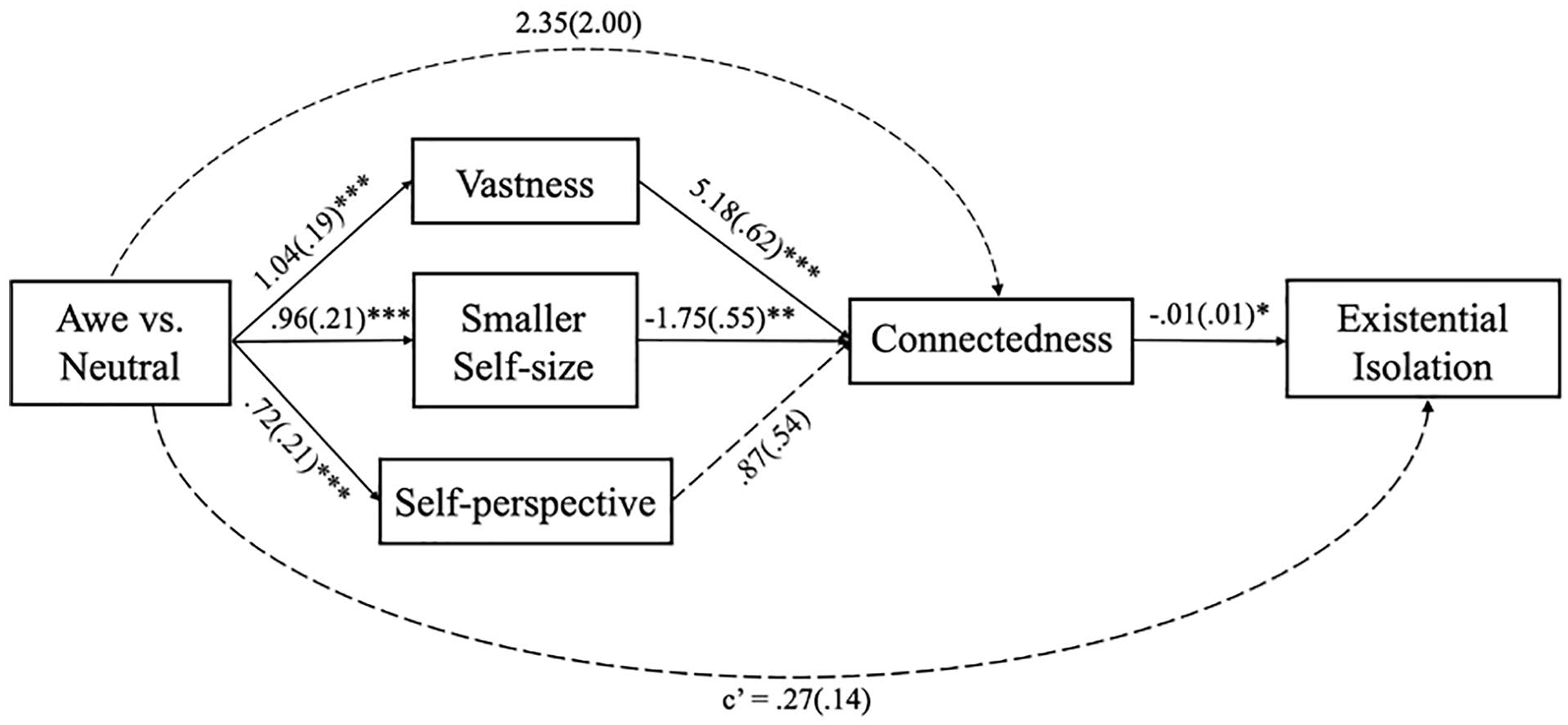
Study 1 Model With Parameter Estimates Exploratory Analysis With Small Self-Subscales Separated.
Study 1 Discussion
Study 1 supported the proposition that awe can lead to lower existential isolation and started to uncover pathways through which such an effect emerges. Replicating prior work on awe (e.g., Bai et al., 2017), the present awe induction increased both a sense of small self and connectedness. These perceptions appear to play a pivotal role in how awe influences existential isolation. Specifically, a path model provided initial evidence that awe increased perceptions of small self, which in turn predicted more connectedness, which in turn predicted less existential isolation.
Further exploratory findings of the small self-construct suggested that vastness and self-size operate differently. Vastness positively predicted connectedness, and the indirect effect from awe, though marginal, suggested that the positive association with connectedness contributed to lower existential isolation. In contrast, smaller self-size was negatively related to connectedness, and the overall indirect pathway from awe to existential isolation, via self-size, was positive but insignificant. Self-perspectives were unrelated to connectedness and thus existential isolation.
Although these analyses suggest small self-dimensions may have distinct effects, the analyses were exploratory and await replication before they can be confidently interpreted. In addition, while there was enough power for the independent samples t-test, the serial mediation pathway analyses were underpowered (a post hoc power analysis revealed 62% power). Addressing these limitations was the purpose of Study 2. Finally, the opposite effects of vastness and smaller self-size on connectedness, and subsequently existential isolation, appear to reveal the suppression effect observed in the analysis utilizing small self as a unitary construct. But this is speculative and awaits further testing in an additional study.
Study 2
Study 2 aimed to replicate and assess the generality of Study 1 findings by using a different awe manipulation and recruiting an online adult sample instead of a student sample. We also added a measure of accommodation to elucidate another potential mechanism through which awe may increase existential isolation. When awe undermines accustomed schemas and one’s worldview is “shattered,” one may be left stunned (a sense of defamiliarization or challenge to understand one’s experience, Yaden et al., 2019), needing to re-accommodate and feeling as though, in Yalom’s words, “we are not at home.” In this case, awe experiences may lead to higher existential isolation because awe accentuates one’s separation from the world.
We expect to replicate Study 1 and find that awe increases feelings of vastness, smaller self-size, self-perspectives, and connectedness. Furthermore, we predicted awe will indirectly predict lower feelings of existential isolation via vastness increasing connectedness, but potentially predict greater existential isolation via smaller self-size decreasing connectedness. Self-perspectives remain included in the model, though, based on Study 1, we do not predict it to be related to existential isolation.
Utilizing the observed serial indirect effect size in Study 1, a Monte Carlo power analysis simulation (Schoemann et al., 2017) revealed 500 participants were needed to obtain at least 80% power. Given the present study uses a different manipulation in a new context, we opted to collect 600 participants (300 per condition) to ensure there was sufficient statistical power.
Method
Participants
Participants (N = 616) were recruited from Cloud Research (Litman et al., 2017) for a study on “past experiences.” Participants needed to be over 18 years and have a 95% HIT (Human Intelligence Task) approval rate to participate. Participants were compensated US$0.50 for completing the 10-min, online study. Seven participants were excluded for either not completing the study or failing an attention check question. The remaining participants (N = 609; 57.6% female, 41.7% male, .5% nonbinary, one not reported, ages 18-88, Mage = 42.27, SDage = 14.46) identified as White (73.4%), Asian (12%), Black/African American (9.4%), Hispanic/Latino (5.7%), other (1.5%), American Indian or Alaska Native (.8%), and Native Hawaiian or Pacific Islander (.5%).
Procedure
Participants were randomly assigned to an awe (n = 270) or neutral condition (n = 339).
6
Adapted from Yaden et al. (2019), participants in the awe condition were asked to: Please take a few minutes to think about a particular time, fairly recently, when you felt intense awe. Now that you have chosen a SINGLE experience of intense awe, please describe your experience in about 2 full paragraphs in the box below. While you are writing, please focus as much as possible on the experience itself, rather than what led up to it, what happened afterwards, or your interpretation of the experience. Try to be as descriptive and specific as possible.
Participants in the neutral condition were given similar instructions but asked to think about what they did this past week. After writing about their experience, participants were asked to respond to a series of questionnaires on how they felt during that experience.
Measures
Emotions
Participants were asked: “Thinking back on your experience, please rate the extent to which you felt the following emotions during the experience you just described.” They then reported the extent to which they felt nine emotions (amusement, anger, awe, fear, grateful, happiness, hopeful, peaceful, and sadness) on a 7-point scale (0 = not at all to 6 = extremely).
Small Self and Connectedness
Vastness (α = .92), self-size, self-perspectives, and connectedness (α = .83) were assessed using the same items as in Study 1. Participants were asked to report on each item in relation to how they felt during their experience.
Accommodation
A subscale from the Awe Experience Scale (AWES; Yaden et al., 2019) was used to measure accommodation (α = .89): a sense of defamiliarization or challenge to understand the experience (e.g., “I felt challenged to mentally process what I was experiencing”). Participants responded to five items on a 7-point scale (1 = strongly disagree to 7 = strongly agree). Again, participants were asked to report on each item in relation to how they felt during their experience.
Existential Isolation
Existential isolation (α = .89) was assessed as in Study 1. However, here, participants were asked to reflect, “now that you have had this experience,” and to think about how much they agree/disagree with each of the statements.
Other measures were included for exploratory purposes not germane to this manuscript.
Results
Preliminary Analysis
First, we examined the zero-order correlations across conditions (Table 4). Of note, reported feelings of awe were related to greater accommodation, vastness, smaller self-size, self-perspectives, and connectedness but was unrelated to existential isolation. Vastness was positively related to smaller self-size and self-perspectives. Vastness and self-perspectives were related to greater connectedness and unrelated to existential isolation. Smaller self-size was unrelated to connectedness and positively related to existential isolation. Vastness, smaller self-size, and self-perspectives were related to greater accommodation. Connectedness was negatively related to existential isolation, but accommodation was unrelated to existential isolation and connectedness.
Study 2 Correlations Across Conditions.
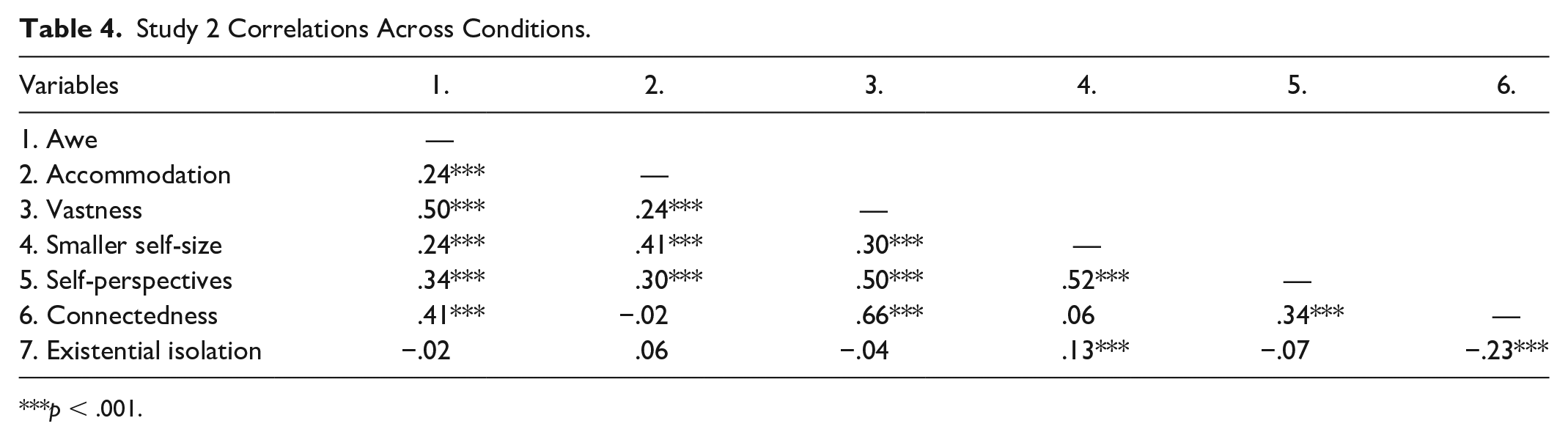
p < .001.
Second, independent samples t-tests compared conditions on our measured variables. See Table 5 for descriptive statistics and tests of significance. Participants in the awe condition reported greater feelings of awe and related emotions than those in the neutral condition, indicating that the manipulation worked as intended. As predicted, participants in the awe condition reported greater feelings of vastness, smaller self-size, self-perspectives, connectedness, and accommodation than those in neutral condition. There was no difference in existential isolation between the two groups.
Study 2 Means (SD) and Tests of Significance of Reported Emotions and Outcome Measures Between Awe and Neutral Conditions.

Primary Analysis
As in Study 1, a path model was used to test the direct and indirect effects between condition and existential isolation. Figure 3 and Table 6 present the structural and indirect effects of this model. There was a significant negative indirect effect between awe and existential isolation, such that awe led to greater perceptions of vastness, which in turn predicted greater connectedness, which in turn predicted lower existential isolation. This was also found for self-perspectives. Furthermore, there was also a significant positive indirect effect between awe and existential isolation, such that awe led to greater perceptions of smaller self-size, which in turn predicted lower connectedness, which in turn predicted greater existential isolation. Finally, accommodation did not mediate the relation between awe and existential isolation. 7
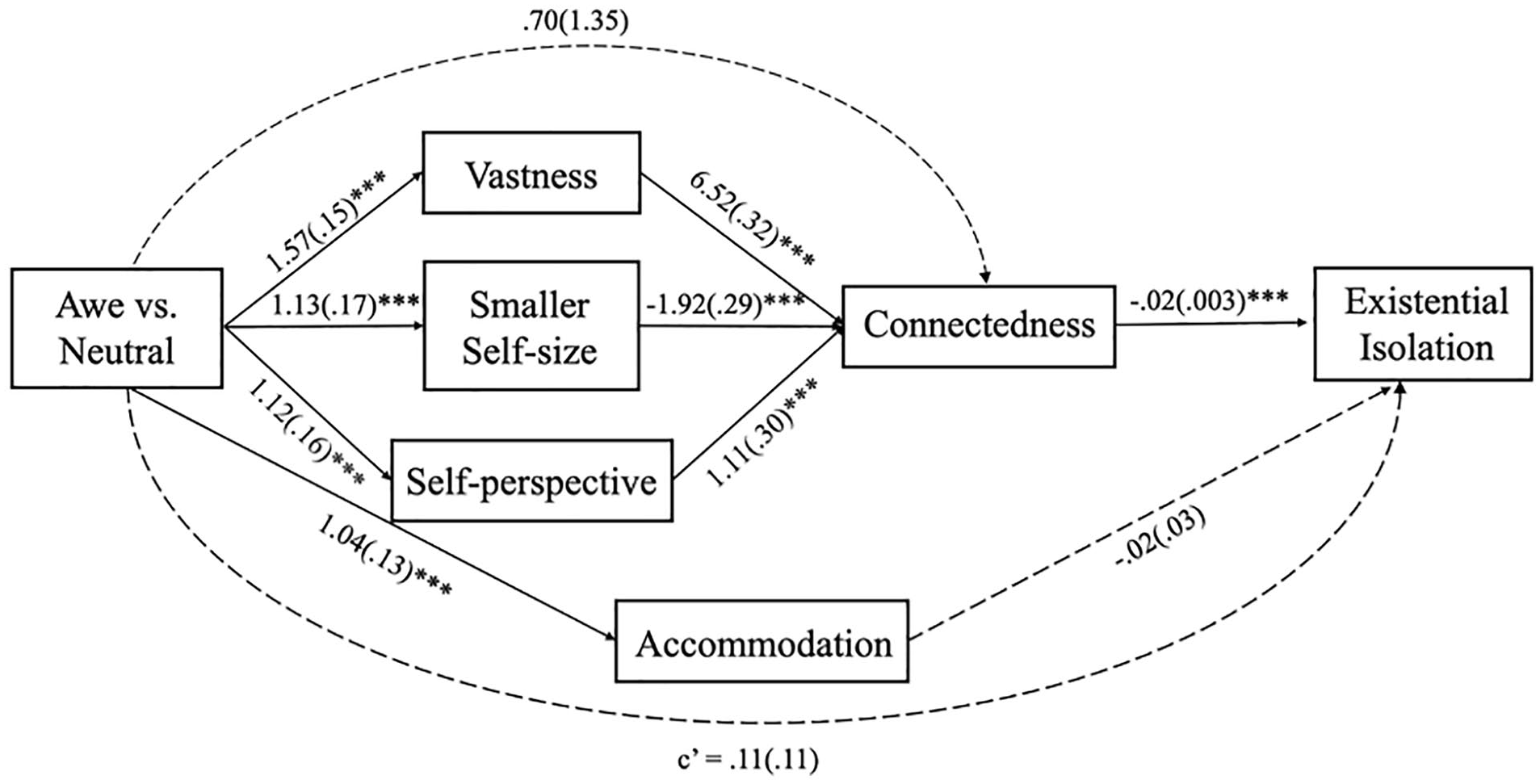
Study 2 Model With Parameter Estimates.
Study 2 Indirect Effects (SE), Significance and Confidence Intervals.

Note. Condition is coded as awe condition = 1 versus neutral condition = 0. CI = confidence interval. EI = Existential isolation.
Study 2 Discussion
Replicating Study 1 and prior research, the reflective awe induction increased self-reported awe, feelings of vastness, smaller self-size, self-perspectives, connectedness, as well as accommodation, thus setting the stage for considering their impact on existential isolation. Consistent with Study 1, we again found evidence that awe increased feelings of vastness, which in turn predicted increased connectedness, and through these mechanisms, predicted lower existential isolation. The same pattern of effects was found with self-perspectives. Awe also increased feelings of smaller self-size, which in turn predicted less connectedness, and by these mechanisms, predicted greater existential isolation. As in Study 1, the total indirect effect from awe to existential isolation was null, due to the directionally contrasting specific pathways. Thus, it appears that awe can simultaneously have contrasting indirect effects on existential isolation through its capacity to increase feelings of both self-diminishment and vastness.
Contrary to hypotheses, despite awe-increasing accommodation, there was no evidence that awe increased existential isolation via accommodation. In hindsight, the manipulation used in this study, whereby some participants recalled and were asked to “re-live” an experience of awe, may make it difficult to detect downstream consequences of a need for accommodation because participants, at least to some extent, have already resolved the need for accommodation and made sense of the experience. Of course, it may also be that accommodation is not involved in how awe affects existential isolation. We return to this issue in the General Discussion.
In Study 3, we conducted a preregistered replication of Study 2 using the same manipulation and sample population, but using a more comprehensive small self-measure (Tyson et al., 2022). Importantly, though Study 2 revealed clearer patterns with the self-size and self-perspective facets of small self, they were only measured with a single item each.
Study 3
The aim of Study 3 was to replicate Study 2 with an expanded measure of the small self. Study 3 took advantage of this recent refinement to examine finer grained distinctions regarding the facets of small self through which awe can affect existential isolation. All materials and hypotheses were pre-registered prior to data collection 8 : https://osf.io/ksjgx/.
Based on Studies 1 and 2, we predicted that awe (compared with a neutral condition) will increase feelings of vastness, smaller perceived self-size, self-perspectives, and connectedness. We did not expect a condition difference in existential isolation. Second, we predicted that awe would indirectly decrease existential isolation via the serial mediation of vastness increasing connectedness. In addition, awe would indirectly increase existential isolation via the serial mediation of perceived self-size decreasing connectedness. Finally, we planned to continue to explore the self-perspective subscale as a potential mediator between awe, connectedness, and existential isolation (as Studies 1 and 2 provide conflicting evidence).
Using a Monte Carlo power analysis for indirect effects of serial mediation (Schoemann et al., 2017), 400 participants would be needed to obtain at least 80% power using the smallest effect observed in the previous study. Therefore, we aimed to collect 500 participants to account for attrition and the possibility of observing a smaller effect size.
Method
Participants
Participants (N = 512) were recruited from Cloud Research (Litman et al., 2017) to participate in a study about past experiences. Participants needed to be 18 years or older and live in the United States and were compensated for participating in an online study. Eighteen participants were excluded for not following the prompt (e.g., did not write about an awe/neutral experience). The final sample (N = 494, 68.2% female, ages 19-77, Mage = 41. 37, SDage = 13.70) identified as White (76.3%), Asian (11.3%), Black or African American (9.1%), Hispanic or Latino (5.9%), American Indian or Alaska Native (1.4%), or other (1.2%).
Procedure and Measures
Participants were randomly assigned to write about a past awe experience (awe condition n = 211) or something they did during the past week (neutral condition n = 283). Then, they reported on their emotions, perceptions of small self, and connectedness (α = .84) during their experience, as well as their feelings of existential isolation (α =.89).
The same measures were used as in Study 2 (with the exception of removing accommodation), but with an expanded measure of the small self (Tyson et al., 2022). The small self was measured with three subscales: vastness (5 items; α = .93), perceptions of self-size (5 items; α = .80), and self-perspectives (2 items; α = .76) on a scale from 1 (not at all true) to 7 (very true). Three of the self-size items were pictorial: Participants were asked to select the image that best represented how big or small they felt during their experience, with circles, a stick figure, and signature, each increasing in size from 1 (smallest) to 7 (largest; reverse scored). To stay consistent with scoring on the vastness and self-perceptions subscales, perceptions of self-size were recoded such that a greater score reflects greater feelings of small self (smaller self-size; consistent with Studies 1 and 2).
Results
Preliminary Analysis
First, we assessed for zero-order correlations across conditions Table 7). Self-reported feelings of awe were positively related to perceptions of vastness, smaller self-size, self-perspectives, and connectedness, but unrelated to existential isolation. Vastness was positively related to smaller self-size and self-perspectives and smaller self-size were also positively related to self-perspectives. Vastness and self-perspectives were both positively related to connectedness, while smaller self-size was negatively related to connectedness. Existential isolation was negatively related to vastness, positively related to smaller self-size, and unrelated to self-perspectives. Connectedness was negatively related to existential isolation.
Study 3 Correlations Across Conditions.
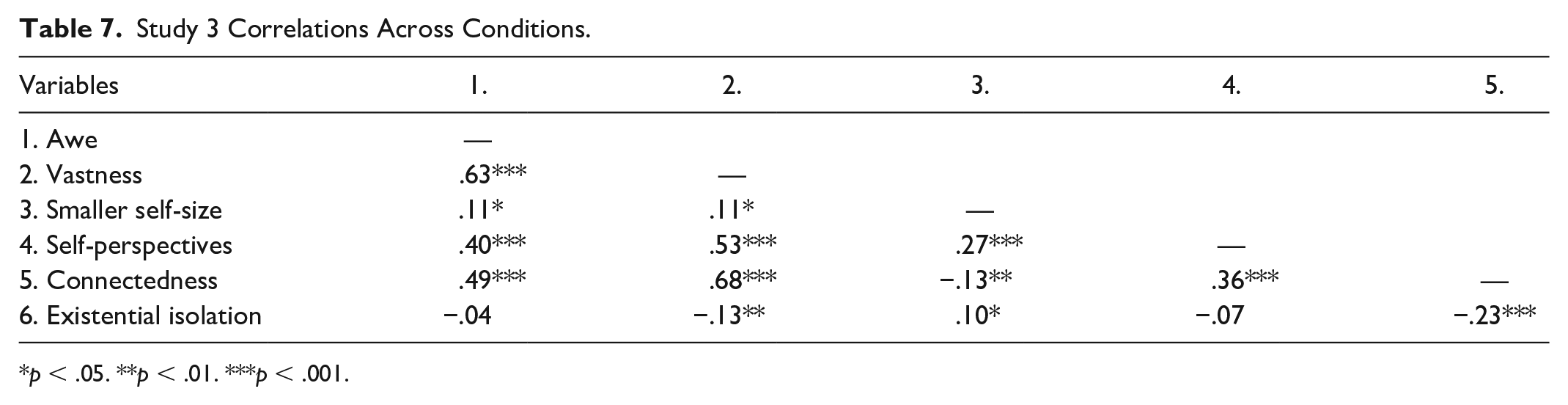
p < .05. **p < .01. ***p < .001.
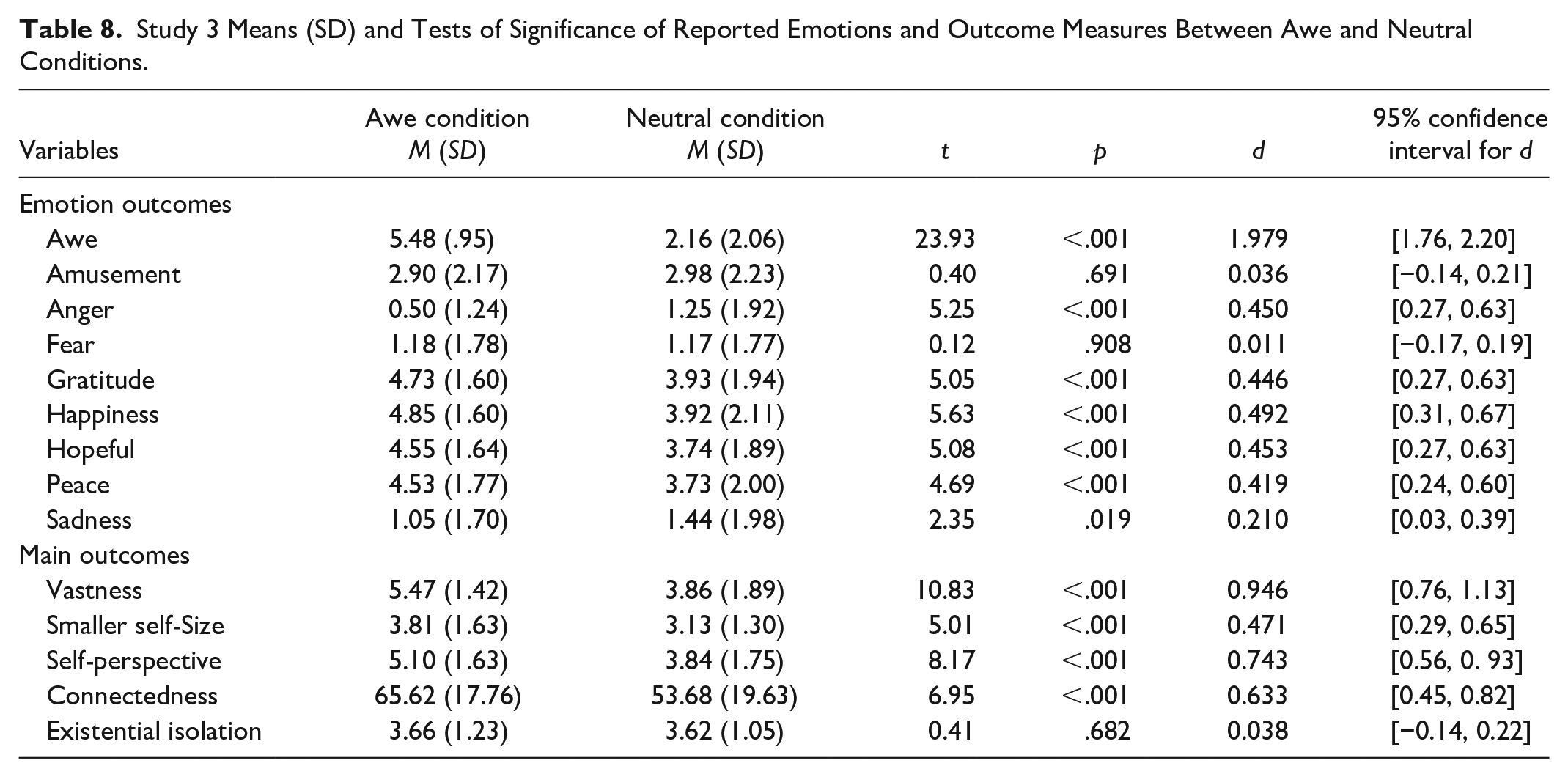
To check the effectiveness of the manipulation, emotional responses were compared across conditions. Participants in the awe condition reported greater feelings of awe than those in the neutral condition. See Table 8 for all emotional outcomes. Second, conditions were compared on small self dimensions, connectedness, and existential isolation. See Table 8 for descriptive statistics and tests of significance. As predicted, participants in the awe condition reported greater vastness, perceived self-size, and self-perspective, and connectedness, but not existential isolation, compared with those in the neutral condition.
Study 3 Means (SD) and Tests of Significance of Reported Emotions and Outcome Measures Between Awe and Neutral Conditions.
Primary Analysis
Next, we examined the indirect effects between awe and existential isolation with a path model. Figure 4 and Table 9 present the structural and indirect effects. Vastness predicted greater connectedness, while self-size predicted lower connectedness. Self-perspective, however, did not predict connectedness. Overall, awe increased and decreased existential isolation through two serial pathways. Awe led to greater vastness, which predicted greater connectedness, which was associated with lower existential isolation. Simultaneously, awe led to smaller self-size, which predicted less connectedness, which was associated with higher existential isolation.

Study 3 Model With Parameter Estimates.
Study 3 Indirect Effects (SE), Significance, and Confidence Intervals.
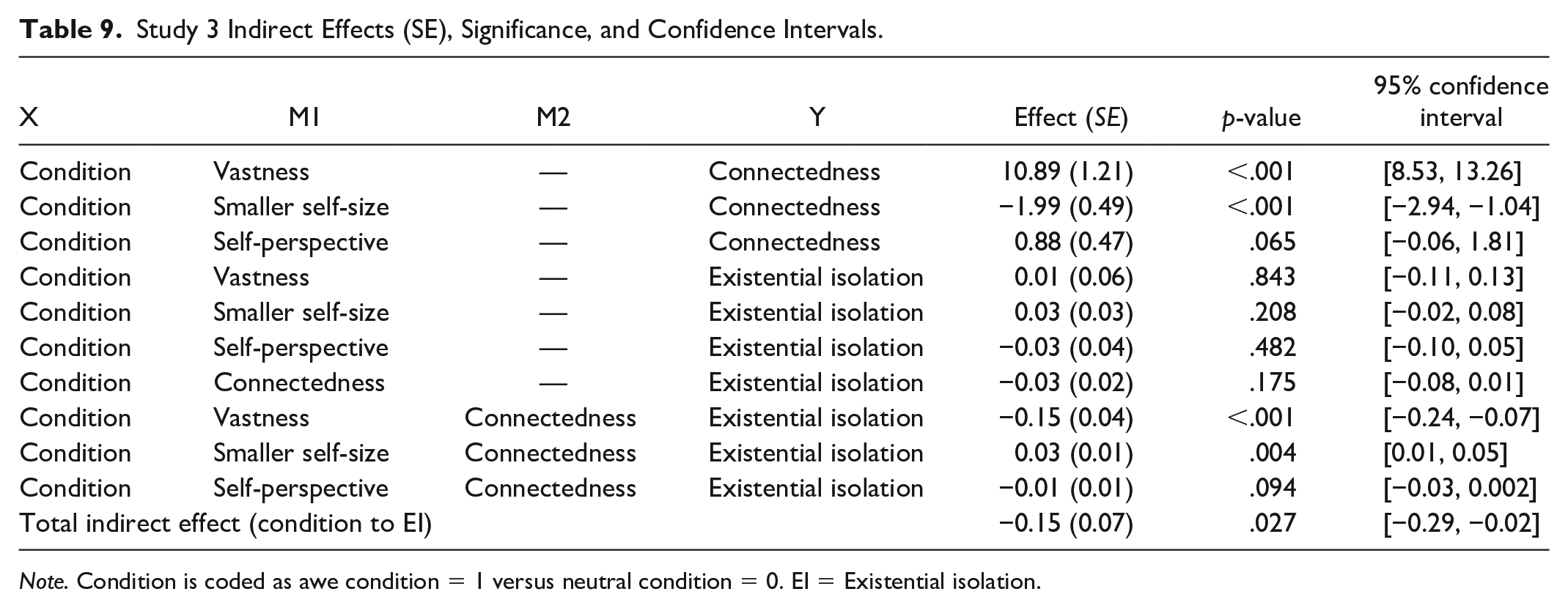
Note. Condition is coded as awe condition = 1 versus neutral condition = 0. EI = Existential isolation.
Study 3 Discussion
Consistent with hypotheses, Study 3 clarified how different dimensions of small self were associated with higher or lower connectedness and in turn predicted more or less existential isolation. The reflective awe induction increased all three dimensions of small self (vastness, smaller perceived self-size, and self-perspectives), which replicates Tyson et al. (2022). The increased sense of vastness that resulted from the awe manipulation predicted greater connectedness. Yet, the increased smaller self-size that resulted from the awe manipulation predicted lesser connectedness. These differing patterns of connectedness help to explain how awe influences existential isolation. Specifically, awe contributed to lower existential isolation via feelings of vastness predicting more connectedness. Conversely, awe contributed to greater existential isolation via feelings of smaller perceived self-size predicting less connectedness. There was no indirect pathway from awe to connectedness via the self-perspective dimension of small self.
General Discussion
The present studies examined the potential for awe experiences to have a complex influence on feelings of existential isolation. Study 1 found evidence that a VR awe experience, relative to a VR amusement experience, can decrease existential isolation via increased small self, which in turn predicted increased connectedness. Across all three studies, we were able to explore the differences in small self-dimensions. Vastness (i.e., the sense that there is something larger than the self), predicted increased connectedness, which predicted decreased existential isolation. Whereas feelings of a smaller self-size (i.e., feeling physically small/insignificant) predicted less connectedness, thereby predicting increased existential isolation. Studies 2 and 3 expand upon Study 1 with a new awe induction (i.e., recall experience) and Study 3, a preregistered replication, uses expanded measures of the small self. Finally, while self-perspectives (i.e., the diminishment of one’s concerns) was consistently related to greater connectedness, when controlling for the other facets in the pathway analysis, it was no longer related to connectedness in Studies 1 and 3 and only predicted connectedness, and thus by extension, less existential isolation, in Study 2. Therefore, it is unclear if this dimension plays a consistent role in how awe influences existential isolation.
The present studies build from prior research (e.g., Rivera et al., 2020) to continue to map out the multifaceted consequences of awe; in this case, applied to the novel domain of existential isolation. In so doing, the studies invite novel consideration of the existential landscape by advancing research on the connection between awe and the small self, on the relationships between small self and connectedness, on the impact of connectedness on existential isolation, and on existential isolation more broadly.
Awe and Small Self
The present research provides a nuanced perspective on the construct of small self by demonstrating differential relationships between the facets of small self and connectedness. While previous research has focused on vastness and self-diminishment from feeling small (Bai et al., 2017; Piff et al., 2015), these studies expanded our understanding of awe and the small self by using the three separate factors identified by Tyson and colleagues (2022). The present work highlights the importance of considering all three factors because of their potential association with differential downstream implications of experiencing awe.
Small Self and Connectedness
The present work also contributes to research on the relationships between small self and connectedness. Previous research found that a smaller self-orients individuals toward a social collective (assuming collective identities; inclusion of the self in one’s community; Bai et al., 2017). Here, we found that the implications of a smaller self for connectedness depend on the facet of small self the individual may be experiencing. Vastness and self-perspective tended to predict greater connectedness, and perceived smaller self-size predicted less connectedness. As the self is complex, what is going on when awe diminishes the self is likely similarly complex. As noted, a diminished self may reflect feeling physically small or unimportant, while it also may reflect less attention on the self (Stellar, 2021). Or alternatively, a quieting of the ego, that allows for more self-enhancement (Perlin & Li, 2020). All these effects on the self point to different consequences for connectedness. On one hand, Bai and colleagues’ findings suggest that the shift in attention away from the self increases connectedness, as this shift allows attention to be focused more on others and one’s community. A quieter ego may predict similar consequences as one becomes more oriented toward group concerns (Perlin & Li, 2020). On the other hand, feeling unimportant or insignificant would predict disconnection from others or the community (as found in the current studies). Feeling as though one does not matter is predictive of numerous negative outcomes associated with aloneness, lower meaning in life (see King & Hicks, 2021), and, as seen here, lower connectedness and greater existential isolation. While this complexity of self-diminishment may help explain the differences seen here and Bai and colleagues (2017), future research is still needed to explore these questions further.
In addition, vastness, self-perspectives, and smaller self-size predicted connectedness differently. Vastness reflects a positive aspect of an awe experience, and specifically, the collective experience—feeling like one is a part of something bigger than oneself. Similarly, by lowering one’s day-to-day concerns (self-perspectives facet), one may be prioritizing higher group concerns, affording a “we” versus “me” perspective (Perlin & Li, 2020). However, in this study, feeling small reflected a negative aspect of an awe experience, and specifically, a negative view of the self. Thus, this would lead to more negative interpersonal consequences, such as a sense of aloneness or lack of connectedness. Overall, awe seems to both increase and decrease one’s feelings of connectedness, through different dimensions of the small self. By extension, awe both increases and decreases feelings of existential isolation.
Implications for Existential Isolation
These findings also have important broader implications for the emerging literature on existential isolation. Existential isolation has generally been associated with negative outcomes such as depression (Constantino et al., 2019), suicidal ideation (Helm, Medrano, et al., 2020), death-thought accessibility (Helm, Lifshin, et al., 2019), and lower in-group identification and self-esteem (Helm, Lifshin, et al., 2019). The current findings suggest that perhaps one way to mitigate these associations is by fostering awe experiences that direct attention away from oneself toward something greater to increase deeper feelings of connectedness. This suggestion is broadly consistent with Yalom’s (1980) proposition that people avoid confrontation with existential isolation by merging the self with a task, group, or person (Helm, Greenberg, et al., 2019), thereby mirroring the shift of attention away from the self and toward another entity.
In addition, we predicted and found that connectedness would alleviate feelings of existential isolation as its current operationalization reflects a perceived disconnection from others (self-other existential isolation). Future research could benefit from trying to capture a separate type of isolation, from the world (self-world existential isolation), that Yalom describes.
Study 2 also tested defamiliarization, as measured by accommodative processes, as a potential pathway by which awe may increase feelings of existential isolation. This pathway was not supported. It may be that when recalling a past awe experience, accommodative processes have already occurred, and though one can recall experiencing a need for accommodation, it’s effect on existential isolation would have passed. Future research should measure accommodation and its relation to existential isolation directly following or even in the midst of an awe experience (thus prior to the experience being accommodated). Of course, such measurement presents considerable methodological, if not procedural, challenges. In addition, this direction would benefit from measuring self-world existential isolation, as defamiliarization likely engenders a feeling of separation from the world rather than from others.
The type of awe experience may also affect its influence on existential isolation. While some literature suggests that some awe experiences can be positive or negative (i.e., eliciting fear in nature) and therefore leading to different outcomes (Gordon et al., 2017), most research focuses on more positive awe experiences. It is likely that negative, threatening awe experiences increase existential isolation more so than positive, uplifting awe experiences. In addition, when awe is experienced alone, it may exacerbate the feeling that no one understands your experiences, leading to greater existential isolation. Whereas when awe experiences are shared, they should alleviate such feelings (Pinel, 2018). More systematic attention may be needed to understand how types of awe experiences (e.g., emotional valence, context of experience, shared or alone, nature vs. non-nature experiences) affect outcomes differently.
Limitations and Strengths
There are limitations to these studies. First, samples in all three studies were primarily white and all studies were conducted in an American context. It is possible that awe experiences may affect connectedness differently across various cultural contexts (e.g., in a culture that emphasizes collectivism). It is also important to note the potential influence of historical context in which the studies were conducted; a context consumed with a world coping with COVID-19 and its likely affects on people’s sense of connectedness and isolation. In this regard we note that while Study 1 was conducted pre-COVID, Studies 2 and 3 were conducted during the mid-stages of the pandemic. Furthermore, with the retrospective manipulation used in Studies 2 and 3, reflecting on one’s past could have also caused participants to compare the past to the present, heightening their sense of disconnection during the pandemic and exaggerating their reports of connectedness at the time of awe event. Of course, the actual influence on the results is difficult to fully spell out, as these possibilities (i.e., for both an increase and decrease in connectedness from awe) are speculative.
Finally, the experimental designs of these studies support the causal interpretation of the mediation analyses. However, the paths between small self-dimensions, connectedness, and existential isolation are ultimately based on cross-sectional analyses and thus the causal positioning of pathway variables is conceptually and not methodologically determined. Experimental manipulations of vastness, self-size, and self-perspectives would be needed to support the causal relation. However, manipulating vastness without simultaneously manipulating self-size may pose a challenge, as the literature suggests that the vastness of the awe experience is what makes a person feel small. Nevertheless, we attempted to inform this ambiguity by examining if alternative mediational models would be supported by the data.
The present analysis predicts that connectedness and existential isolation have a bidirectional causal relationship, such that greater existential isolation would also predict lower feelings of connectedness. To test this theoretically consistent alternative, serial mediation models, where connectedness and existential isolation switch places, were run for each study and can be found in the Supplemental Materials (Figures S3-S6 and Tables S2-S4). Studies 2 and 3 (but not Study 1) suggest some support for this model. In Studies 2 and 3, awe indirectly predicts lower connectedness via a smaller self-size predicting greater existential isolation. Study 2, but not 3, shows that awe indirectly predicts increased connectedness via self-perspectives predicting lower existential isolation. And Study 3, but not Study 2, shows that awe indirectly predicted increased connectedness via vastness predicting lower existential isolation. Therefore, while there is some evidence in support of this alternative model, there are inconsistencies in which facets’ pathways show persistent results, with only via a smaller self-size being consistent across two studies.
A second alternative model that does not follow from the present analysis was also tested. Specifically, in this serial mediation model, we switched the order of small self and connectedness, such that awe increases connectedness, which, in turn, predicts small self and in turn existential isolation (see Supplemental Materials, Figures S7-S10 and Tables S5-S7). Studies 1 and 3 show no evidence for this alternative model. Thus, taken together across the studies, these alternative models received less empirical support than the model that guided the research. Nonetheless, such evidence is tentative and more research, perhaps benefiting from diary and experience sampling methods, is needed.
Despite these limitations, the present studies have multiple noteworthy strengths. First, the effects were observed with two distinct types of awe manipulations, including an actual induction via VR (Study 1) and a recall experience (Studies 2 and 3), supporting the generalizability of the findings. Second, effects were observed in two study settings (in-person and online) and with two types of samples (university students and MTurk workers), which also increase the generalizability of these findings. Third, the research begins to disentangle the differential influences of small self on connectedness. Finally, this is the first work to establish an association between awe and existential isolation and the possible mechanisms of this relationship.
Conclusion
In this work, we have demonstrated that awe has competing effects on existential isolation. In addition, these studies highlight the importance of considering multiple dimensions of small self as they have the potential to predict both connecting (e.g., via vastness) and disconnecting (e.g., via self-size) to others and the world. It appears that the complex nature of awe has multidirectional effects on the self and how one relates to others that generatively invites further research to unpack awe’s existential implications more fully.
Supplemental Material
sj-docx-1-psp-10.1177_01461672221144597 – Supplemental material for The Impact of Awe on Existential Isolation: Evidence for Contrasting Pathways
Supplemental material, sj-docx-1-psp-10.1177_01461672221144597 for The Impact of Awe on Existential Isolation: Evidence for Contrasting Pathways by Megan E. Edwards, Peter J. Helm, Steven Pratscher, B. Ann Bettencourt and Jamie Arndt in Personality and Social Psychology Bulletin
Footnotes
Declaration of Conflicting Interests
The author(s) declared no potential conflicts of interest with respect to the research, authorship, and/or publication of this article.
Funding
The author(s) received no financial support for the research, authorship, and/or publication of this article.

Supplemental Material
Supplemental material is available online with this article.
Notes
References
Supplementary Material
Please find the following supplemental material available below.
For Open Access articles published under a Creative Commons License, all supplemental material carries the same license as the article it is associated with.
For non-Open Access articles published, all supplemental material carries a non-exclusive license, and permission requests for re-use of supplemental material or any part of supplemental material shall be sent directly to the copyright owner as specified in the copyright notice associated with the article.
