Abstract
Placemaking is a valuable place-based development and integration tool in rural communities. This study examines how placemaking processes and outputs are associated with residents’ bonds with local places through survey data collected in rural communities in Indiana. Results reveal that policy communication and localized public spaces design are critical for increasing residents’ place dependence and place identity. These findings help pinpoint how local governments utilize placemaking in rural communities to effectively strengthen residents’ ownership of public spaces while further providing implications for residents’ empowerment and community planning in local governance scholarship.
Local government officials and community leaders are increasingly prioritizing place investments as a community development and integration strategy aimed at enhancing quality of public amenities and bolstering vibrancy in hopes of attracting and retaining a talented workforce (Hambleton and Howard 2013). For instance, Michigan’s then-governor, Rick Snyder, said in 2011: Neighborhoods, cities, and regions are awakening to the importance of “place” in economic development. They are planning for a future that recognizes the critical importance of quality of life to attracting talent entrepreneurship and encouraging local businesses. Competing for success in a global marketplace means creating places where workers, entrepreneurs, and businesses want to locate, invest, and expand. This work has been described as a “sense of place” or “place-based economic development” or simply “placemaking.” (Kelly et al. 2017, 437)
A trendy term, placemaking is a long-established practice deployed for renovation, upgrade, or maintenance of public space and concept in urban design and planning scholarship. Over the past two decades, it has become local government’s collaborative, participatory policy tool where the public, private, and nonprofit sectors engage in placemaking planning, decision-making, implementation, and evaluation processes. Placemaking as democratic intervention focuses on active involvement of all interested community residents and can also strengthen the bonds between residents and community places (Manzo and Perkins 2006).
However, previous studies on placemaking and public space almost exclusively examine urban contexts. Rare are analyses that discuss those in rural settings because urban areas are seen as central points of supra-government and hubs of populations (Potter 2010). Rural placemaking remains under-studied. Compared with urban areas, rural regions show differences in demographic and economic changes that determine political behaviors (Benton 2019; Cramer 2016). In rural towns, population density is low due to out-migration, many neighbors are known to each other, and residents are homogenous in terms of ethnicity, age, and profession, particularly in agricultural areas (Potter 2010; Trautman 2016). Also, conformity pressures in these areas weigh more heavily, and residents are politically conservative (Benton 2019; Cramer 2016; Catlaw and Stout 2016). In this circumstance, many policymakers and elected officials in rural communities are investing in placemaking to bring about a change in rural demography and economies without fully understanding what works and what does not work well. This study aims to examine how rural placemaking plays a role in building a resident’s place dependence and identity as short-term and long-term program outcomes, respectively, which in turn affects demographic and economic trends in rural areas.
Previous residents’ empowerment and community planning research discusses how placemaking can empower communities, strengthen ownership of public spaces, and increase the emotional and symbolic bonds between community residents and their public environments (Vey 2019). Place dependence and identity concern the positive socio-psychological bonds that develop between individuals and their surrounding environments (Gurney et al. 2017). These place-based bonds are essential in local politics and economies in rural areas because they help overcome collective action problems, enhance community cohesion, and reduce the out-migration rates. As people are willing to donate substantial amounts of time, money, or efforts to improve the public places that they treasure and belong to (Balassiano and Maldonado 2015), understanding how placemaking can be performed to increase a resident’s place dependence and identity leads to more effective community development and integration strategies.
While placemaking, place dependence, and place identity have been studied discretely to varying degrees in the residents’ empowerment and community planning literature, they have not been considered together. Previous studies have focused on individual feelings and experiences toward local places and not fully elaborated on placemaking processes and outputs (as collective experiences toward “good” public spaces) in developing a resident’s place dependence and identity in a rural context. While previous studies have made a distinction between place dependence (functional attachment) and place identity (emotional attachment), not many empirical studies examined 1) how a local government deploys placemaking in a rural community and 2) how residents perceive the public spaces created through placemaking and how those perceptions are associated with a resident’s place dependence and identity, respectively.
In this paper, we draw critical connections among a resident’s experiences of placemaking processes, assessment of public places created through placemaking, place dependence, and place identity. In doing so, this study extends research on residents’ empowerment and community planning scholarship and helps local governments, policymakers, community leaders, and residents analyze placemaking strategies from the short-term and long-term perspectives. Specifically, we ask: 1) How is a rural community resident’s participatory experience with a local government’s placemaking associated with their place dependence and identity? and 2) How does a rural community resident’s assessment of a local government’s placemaking relate to their place dependence and identity?
Placemaking as Local Government’s Place-based Development and Integration Tool
Placemaking is described as a collaborative effort by individuals living within a specific setting to reinvent their surrounding environments (Silberberg et al. 2013). Placemaking includes projects of renovation, upgrade, or maintenance of lived spaces to create the attractiveness of cities, provide value-added amenities and improve the quality of life (Balassiano and Maldonado 2015). Placemaking can occur as a pop-up event such as farmers and artisan markets and festivals or a long-term project such as a public plaza, public park, street arts, open streets project, and a community garden. Placemaking efforts have served as catalysts to social and economic revitalization in urban areas as well as disadvantaged, smaller rural communities (Hou and Rios 2003).
Although placemaking is a relatively recently coined term, its principles have long been established. In the 1950s and 1960s, urbanists such as Jane Jacobs, Kevin Lynch, and William Whyte first advocated for making places of, for, and by the people as a counter to the post-War planning and design that treated humans as another variable in the built environment (Zitcer 2018). This nascent principle was also in response to a loss of sense of place and place attachment. A physical area becomes a “place” when people use, experience, and internalize it. People are more likely to stay at the place. As people become attached to a place, the place is used in pursuit of socially and culturally shared goals, and vice versa (Balassiano and Maldonado 2015).Given the interdependent nature between humans and places, scholars espoused philosophies that elevated the citizenry’s role in creating inviting public spaces as the building block for improving neighborhoods and cities (Silberberg et al. 2013).
Currently, placemaking is further delineated based on how it is implemented and by whom. Local governments in rural areas support participatory placemaking and place-led community development policies. Art-based creative placemaking shows the most common example of this approach. Through the collaborative partnership across sectors and government levels, such as state and local public agencies, corporations, nonprofit art organizations, and local community groups, creative placemaking can motivate residents’ empowerment and support community development (Pierce, Martin, and Murphy 2011). The National Endowment for the Arts’ Our Town grant programs also emphasizes the collaborative partnership between local governments and nonprofits for art-based creative placemaking projects (National Endowment for the Arts n.d.). County and municipal governments invest in collective action efforts with community members through cultural district development and revitalization projects of vacant properties (Mayor’s Institute on City Design 2018).
In line with this participatory practice in placemaking, Balassiano and Maldonado (2015, 647) developed the term “lived” placemaking to refer to bottom-up participatory processes that explain how residents “appropriate space for daily living, through small, individual gestures and social relationships that attach meaning to space.” When residents are included during placemaking planning processes and use the place, people become attached to a place and wish to contribute to further the community improvement (Balassiano and Maldonado 2015). The concept of “lived” placemaking is a helpful consideration given the growing interest local governments and community leaders have in enhancing the quality of place and building amenities.
Public spaces (re)created by placemaking are important venues for various activities and essential to residents’ well-being and the livability of communities at the state and local levels (Smaldone, Harris, and Sanyal 2005). Placemaking is an investment and exercise in improving these valuable collective resources. Placemaking is both an end-result (product) as well as a means to get there (process). There is some common ground in emphasizing the extent to which the practice must involve and impact not only built capital, but also human and social capital (Balassiano and Maldonado 2015; Silberberg et al. 2013). Placemaking, then, is both a facilitator for and a result of the place-people relationship.
Place Dependence, Place Identity, and Placemaking
The relationship between people and place is essential to both placemaking and building sustainable communities. Since the 1970s, scholars have paid attention to why and how people bond with their home, neighborhood, and community through shared experiences because it is understood that sense of place attachment improves individual and community well-being. Among the benefits for individuals are positive mental health outcomes, higher levels of trust, and a heightened sense of stability (Anton and Lawrence 2014). For communities, the positives of increased attachment include environmental protection, better-maintained homes, desire to stay in place, and more substantial support for local initiatives (Debenedetti, Oppewal, and Arsel 2014). Place attachment is also positively associated with improving political engagement and participation, increasing donations (of time, effort, and money), and motivating protection of both physical and social capital—all of which are related to placemaking as both a means and an end. These studies help policymakers understand why residents participate or not in collective actions (Devine-Wright 2009) and how the residents react to and are impacted by place-based policy change as place attachment facilitates collective action in relation to stewardship and public participation in community matters (Manzo and Perkins 2006).
The sense of place attachment describes “the bonds people form with places and the meanings they ascribe to them” (Gurney et al. 2017, 2). It is conceptualized as two notions, comprising functional (place dependence) and emotional (place identity) attachment in relating to community development and sense of community cohesion (Anton and Lawrence 2014). Place dependence refers to “the degree to which occupants perceive themselves to be strongly associated with and dependent on a particular place” (Moore and Graefe 1994, 19) and captures residents’ perceived instrumental value about a place. Place identity is defined as the extent to which places offer individuals the opportunity to express and affirm their personal identity (Gurney et al. 2017), captures the residents’ symbolic attachment to a place, and influences community stability in rural areas (Mayes 2010). Research shows that place identity is positively correlated with involvement in town meetings and local volunteer activities (Cuba and Hummon 1993). Place dependence tends to precede place identity (Moore and Graefe 1994).
These two concepts have been found to explain different dimensions of place attachment (functional or physical attachment vs. emotional or symbolic attachment) and result in different outcomes on human attitudes and behaviors such as environmental protection attitudes, civic engagement, and mobility decision-making (Moore and Graefe 1994). Understanding factors behind place dependence and identity in relation to placemaking in rural areas provides an essential means by which policymakers and local public managers facilitate the process of residents’ empowerment and plan, design, and develop public spaces from the short-term and long-term perspectives. Specifically, local policymakers can focus on factors associated with place dependence, as a short-term placemaking outcome, to motivate recent incomers’ or transitory residents’ functional attachment to their rural community. On the other hand, local policymakers can consider factors relating to residents’ place identity as a long-term placemaking outcome to manage long-term residents’ mobility and community stability in rural areas.
Resident Participation and Empowerment in Placemaking
Local governments have developed various interactive forms of resident participation that are inherently empowering and positively affect democracy and democratic value. For example, resident involvement in local projects’ planning and budget monitoring enhances feelings of responsibility for public matters, increases public engagement needs, and makes policymaking and implementation transparent, equitable, and efficient (Michels and de Graaf 2017). In public projects, local problems could be addressed in time, and policy failure (e.g., inequitable outcomes for low-income and minority residents) could be prevented if local governments allow residents’ participation in the early stages of planning (Lalicic and Önder 2018; Silverman et al. 2019). Resident participation is defined as a process that provides residents with an opportunity to influence public decision (Head 2007) and is seen as a vital aspect of public placemaking at the local level. Through an examination of ten local placemaking cases in the United States, Silberberg et al. (2013) argue that the placemaking process is superior to what is ultimately created. A public space’s full potential can only be met if and when people are brought together to help create it—from ideation to planning to implementation (Silberberg et al. 2013).
Increased interests in placemaking practice among local governments demonstrate the importance of residents’ empowerment and engagement within the context of what Balassiano and Maldonado (2015) call “lived” (bottom-up) placemaking. Placemaking process is concretized as empowerment because of the residents’ ability to self-define and represent particularities of their places and control over natural or other resources for their community improvement. Also, placemaking is an inherent network process that motivates residents to discuss, negotiate, and bargain their preferences toward collective responses (Pierce, Martin, and Murphy 2011). Engagement in placemaking facilitates building trust among participants and between residents and local governments, raises social awareness about public matters, and even elevates the perceived success of an urban planning project (Lalicic and Önder 2018). While previous studies suggest that a stronger sense of place attachment is a conduit for more engagement (Zhang, Matsuoka, and Huang 2018), not many have empirically shown the reverse direction from engagement in placemaking processes to place attachment using the quantitative research design.
While there are varying degrees or levels of participation in local matters, we focus on two types of residents’ engagement in placemaking projects: verbal communication and physical involvement. First, communication is foundational to the shared understandings of political and policy preferences and communal beliefs about policy cause and effect regarding local matters. Common understandings are the product of communication. Second, residents physically donate their money, time, and energy to take civic action and achieve purposive community change (Rothman 1996). We examine how residents’ involvement in placemaking projects in rural communities connects them to their place, focusing on place attachment’s two critical aspects—place dependence and place identity.
Placemaking Outputs and Place Dependence and Identity
Well-designed, high-quality public spaces have the ability to support and promote all public and communal life. The meaning and importance of local community places held by residents can result from their experience with the public spaces. Perceived place meanings are translated into strong functional and emotional bonds with the places, thus influencing whether and how they might participate in local politics or policymaking (Manzo and Perkins 2006). Residents who perceive the public spaces created by placemaking as “good” are more likely to feel committed to their locality (Vey 2019). When residents positively perceive the aesthetic and functional values offered by the public spaces made by placemaking, they feel improved well-being and a sense of attachment in their community (Stefaniak, Bilewicz, and Lewicka 2017; Anton and Lawrence 2014) and are willing to engage in public matters. This is why many local governments prioritize place investments to retain residents and the workforce. This study examines what constitutes “good” public spaces and then suggests hypotheses regarding the association between perceived placemaking outputs and place dependence and identity.
The literature on community planning has suggested three primary design-related concepts about the “making” outputs of good placemaking. First, they focused on attributes of a public space such as physical setting or form, environment, aesthetics, and spatial aspects (Zhang, Matsuoka, and Huang 2018; Debenedetti, Oppewal, and Arsel 2014). Second, they identified human or social interaction, social life, and activities or activation as central to high-quality public spaces (Manzo and Perkins 2006). When public spaces are “sittable” or walkable and can provide at least ten things to experience, they are considered great places (Project for Public Spaces 2000). Lastly, culture, heritage, and meaning have been recognized as essential to place (Miguel 2016). Guided by community planning literature, we focus on physical (aesthetics and attributes), social (opportunities for social activities and interaction), and cultural (local history, heritage, and culture) aspects of place to examine residents’ assessment of “good” public spaces made by placemaking. These classifications mostly align with the Knight Foundation’s empirical findings about the factors that attach residents to their communities in 26 communities: aesthetics (physical beauty and green spaces), social offerings (opportunities for social interaction and citizen caring), and openness (how welcoming the community is to different people; Knight Foundation 2010).
Previous studies also provide specificity regarding implicit and explicit associations among each place element, attributes, and place attachment. Social interaction and participation in the social life of public spaces can have an impact on place attachment. Experiences in a place also help create meaning as it gives meaning to a space (Scannell and Gifford 2010). As a concept, “meaning” is often seen as a byproduct of place attachment (Kyle et al. 2003). However, Miguel (2016) notes that a loss of physical character and meaning impacts place attachment. How meaning can be incorporated into the design, or outputs, of a space is less studied and rarely accounted for in the planning process (Manzo and Perkins 2006). Incorporating local heritage and culture into physical or social aspects of the space is one way to facilitate meaning-making (Manzo and Perkins 2006). A resident’s place dependence and identity will increase when they experience public spaces reflecting their local identity and culture, particularly in rural communities (Accordino 2019; Dabson 2019). Thus, the following hypotheses are developed,
Frequent interactions with places and other people living in the places provide people with high chances to experience, realize, and create personalized place meanings, which in turn makes place dependence and identity stronger (Manzo 2005). The degree of place dependence and identity is often associated with time spent in a location. Stefaniak, Bilewicz, and Lewicka (2017) suggests that smaller places (i.e., home or a single public square) prompt more intense attachment than larger ones (i.e., a city or region). In this sense, local governments in small towns attempt to develop short-term and long-term placemaking projects that can contribute to increasing social connectedness between people and public places. The amount of time spent and the frequency of visits to a public space created by placemaking projects in rural communities will increase place dependence and identity (Ujang and Zakariya 2015).
All in all, Figure 1 shows the hypothesized associations between placemaking process, outputs, place dependence, and place identity.
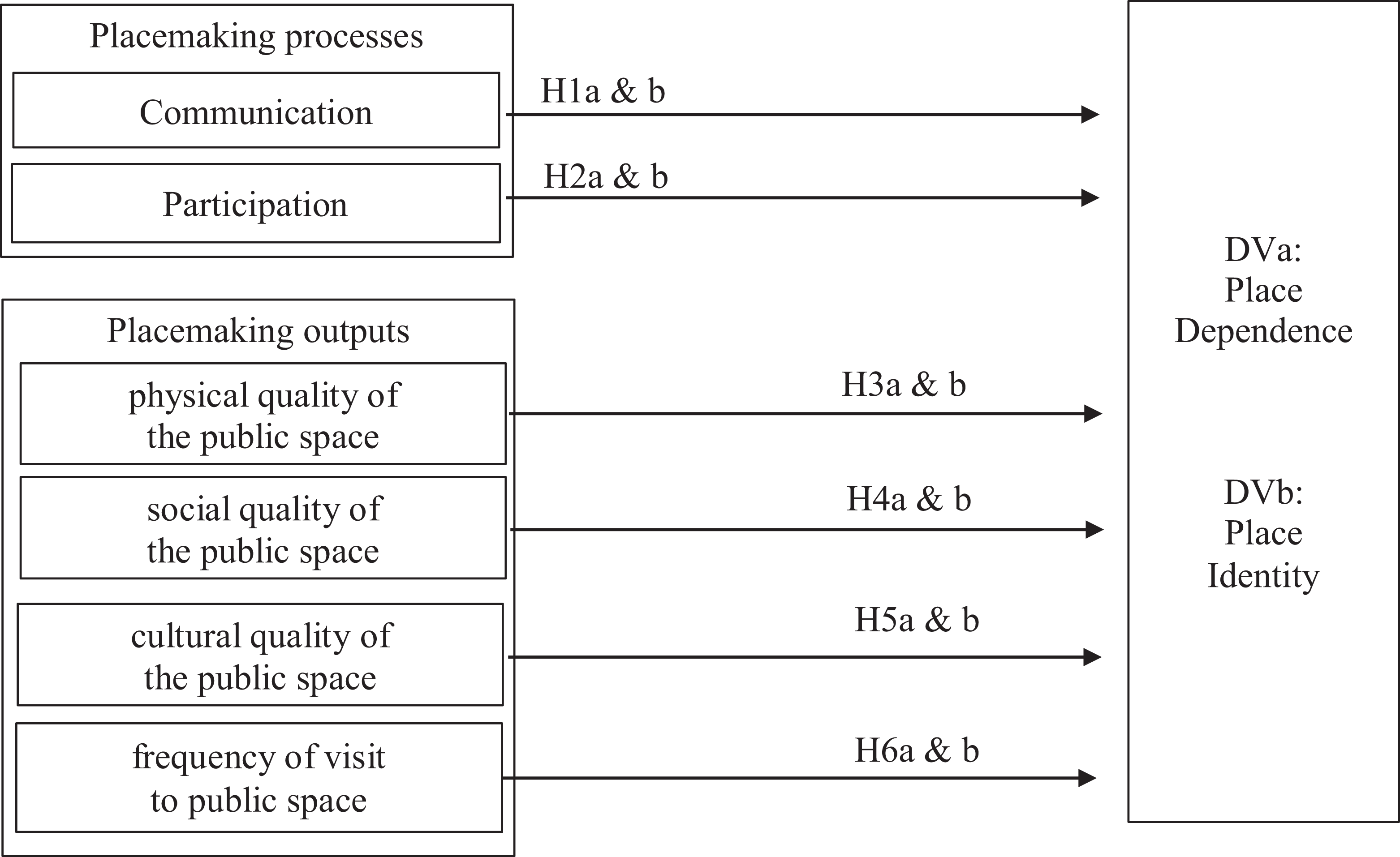
Conceptual model.
Method
Case Selection: Placemaking in Rural Communities in Indiana
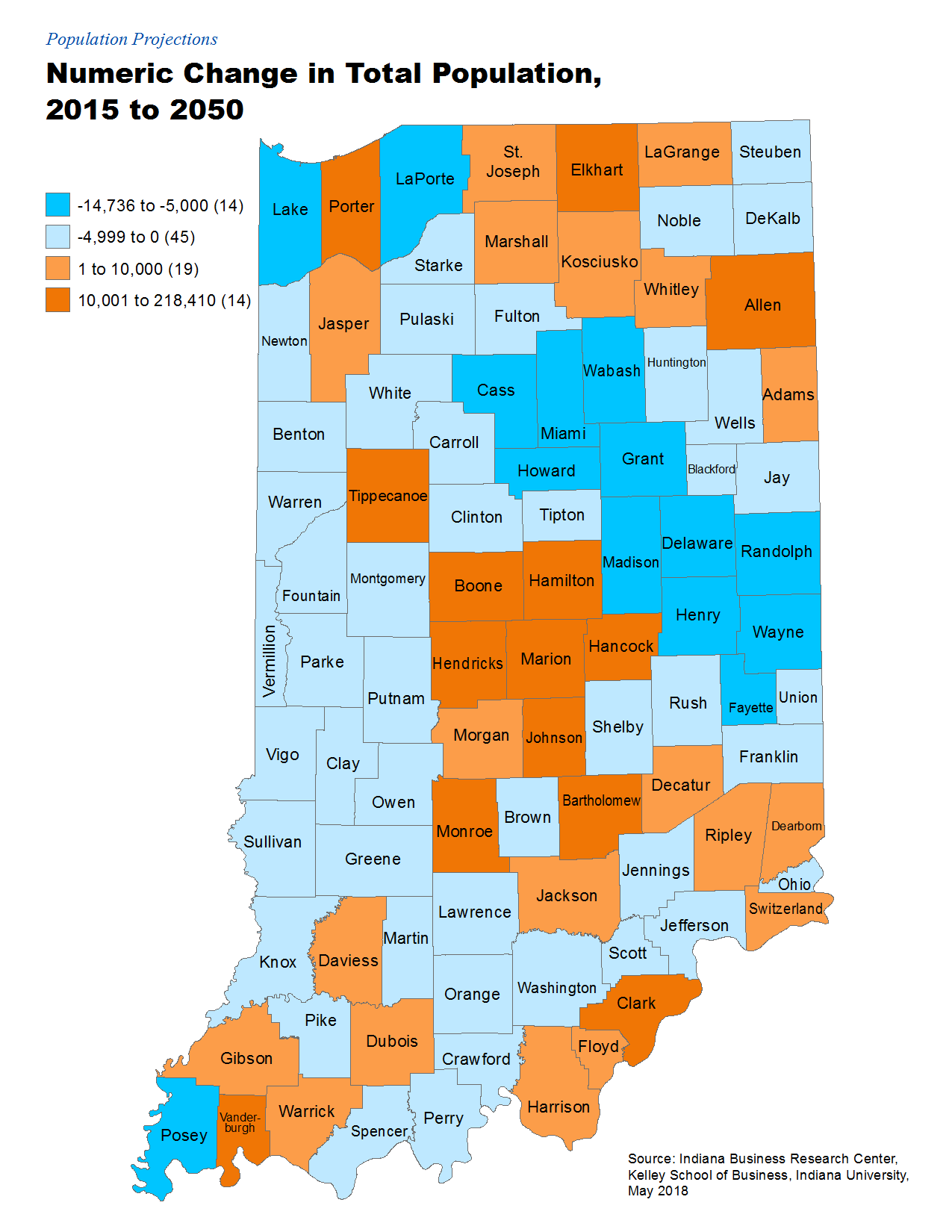
Indiana is a Rust Belt state and has also shown ongoing macro-level migration challenges (Indiana Business Research Center 2018). Efforts to improve communities and stem brain drain through quality of place investments are not a new phenomenon in Indiana, but the emphasis on and embeddedness of placemaking has become more prominent. The Indiana Office of Community and Rural Affairs (IOCRA) has increasingly directed funding toward placemaking endeavors. From the agency’s website: A hallmark of OCRA is placemaking. We were the first state agency to introduce this crowd gathering idea through our grant opportunities. This is one of the many reasons the agency continues to be creative and innovative to meet the needs of Indiana communities.
We focus on placemaking projects in three rural communities dispersed geographically within Indiana: Corydon, Huntingburg, and Tipton. Each of them is located in the southern, southwestern, and northern part of Indiana, respectively. They represent a typical rural community in the U.S. and their local governments recently implemented a placemaking project. As a representative case of larger rural communities in the U.S., each is characterized as rural because they fall on the lower end of the U.S. Census Bureau’s range for what it defines as urban clusters (size of the population between 2,500 and 50,000; Ratcliffe et al. 2016). Median household incomes in three selected cases are close to the median household income in mostly rural counties in the U.S. ($47,020; see Supplemental Table 1). All three communities have developed a new or reimagined an existing public space through facilitated placemaking within the past five years.
Corydon opened Bicentennial Plaza in 2017, but the project was rooted in the community’s involvement with the aforementioned Hometown Collaboration Initiative (HCI). Community feedback throughout the HCI process demonstrated the need for a public gathering space connected to downtown. Leveraging momentum from HCI, the community raised over $1 million to transform a parking lot into Bicentennial Plaza, named because Corydon was Indiana’s first state capital in 1816. Huntingburg’s 2014 designation as a Stellar Community initiated several downtown projects. City leaders recognized the need to enhance a sense of place while creating a place to host events. Market Street Park is framed by Huntingburg’s iconic former city hall and Fourth Street, the community’s Main Street. It opened to the public in 2017. The Alley in Tipton was also created to help fill the void of public gathering space in the community’s downtown. Several civic organizations pursued the project, opting to seek 50 percent of the funding through crowdsourcing. The space was completed in 2017. The placemaking processes utilized and outputs realized also had known similarities and differences, allowing for more robust analysis. Supplemental Table 1 outlines relevant data points pertaining to the three communities.
Data Collection and Analyses
From September to October 2019, we administered an online survey to residents through each local government’s Facebook pages and various email lists (For the recruitment languages, see Supplemental Text 1). The sample employed for this study consists of residents 18 years of age and older in Corydon, Huntingburg, and Tipton, IN. They are also expected to use technology for communicating with their governments because of the selected online survey approach. Thus, the sample for this study is characterized as being somewhat civically engaged in rural communities. The estimated survey population is less than 4,359 (1,642 in Corydon, 916 in Huntingburg, and 1,901 in Tipton) when each community’s age makeup is only considered. 1 218 participants started the main part of the survey, but 180 participants completed it (49 from Corydon, 95 from Huntingburg, and 74 from Tipton). The response rate is at around 5 percent (5.4 percent in Corydon, 5.3 percent in Huntingburg, and 4.5 percent in Tipton). We further discussed it as the limitation of this study in the conclusion section.
The respondents mean age group is between 35–44 years old and 45–54 years old (SD = 1.49) with 65 men (36. 11 percent) and 115 women (63.89 percent). 156 (86.67 percent) respondents owned their houses, and 172 (95.56 percent) respondents are whites. To examine the drivers behind place attachment in the context of small-town placemaking projects, we collected quantitative survey data about (1) levels of place dependence, (2) levels of place identity, (3) placemaking engagement experience (i.e., consultation, participation, and donation), (4) assessment of the quality of the public space created by a placemaking project, and (5) frequency of visits to the public space created by a placemaking project.
Dependent Variables
As for our first dependent variable, place dependence was defined as “the degree to which occupants perceive themselves to be strongly associated with and dependent on a particular place” (Moore and Graefe 1994, 19). Place dependence was measured by the following three items: (1) “I feel attached to my community”; (2) “My community feels like home”; and (3) “I am proud of my community” (Kimpton, Wickes, and Corcoran 2014; Anton and Lawrence 2014). Respondents rated their levels of place dependence on a scale from one to five (1 = strongly disagree, 3 = neither agree nor disagree, 5 = strongly agree).
Our second dependent variable, place identity, was defined as the extent to which an individual defines a personal identity in relation to a specific place (Gurney et al. 2017). Place identity was measured by two items: (1) “I feel like I belong in my community” and (2) “I identify with my community” using a five-point scale (1 = strongly disagree, 3 = neither agree nor disagree, 5 = strongly agree; Kimpton, Wickes, and Corcoran 2014; Anton and Lawrence 2014).
Independent Variables
First, community engagement is defined as a process that provides residents an opportunity to influence public decisions. In local placemaking, we considered two aspects of public participation: informing/consultation and creating/donation. Placemaking engagement in informing and consultation was measured by the extent to which respondents were informed or consulted before, during, or after placemaking using a five-point scale and (1 = strongly disagree, 3 = neither agree nor disagree, 5 = strongly agree; Lalicic and Önder 2018; Head 2007). The following three statements are used: “My community leaders informed me about the idea of X Project early in the process,” “Community leaders informed me about X Project after it opened,” and “My community leaders consulted me about X Project during the planning process.”
Second, to measure Placemaking engagement in creation and donation, respondents were asked whether they either physically participated in or financially contributed to the placemaking project using two items (Yes = 1 and No = 0): “I was involved with physically building X Project” and “I donated money to help fund X Project” (Lalicic and Önder 2018; Head 2007).
Third, to measure what constitutes “good” public spaces, we focused on three primary design-related concepts: physical and aesthetic settings, social activities, and cultural elements. Physical and aesthetic elements of the good public space were measured by thirteen items using a five-point scale (1 = strongly disagree, 3 = neither agree nor disagree, 5 = strongly agree; Lewicka 2011; Mantey 2015; Zeisel 2006; see Supplemental Table 3).
Fourth, Social activities of the good public space were measured by the following three statements: “There are things to do in X Project on a daily basis”; “There are things to do in X project during special events that happen on occasion”; and “X Project allows me to connect with other people in my community” using a five-point scale (1 = strongly disagree, 3 = neither agree nor disagree, 5 = strongly agree; Project for Public Spaces 2000).
Fifth, cultural meaning of the good public space was measured by the following statements: “X Project reflects the community’s culture in some way” and “X Project reflects the community’s history in some way” using a five-point scale (1 = strongly disagree, 3 = neither agree nor disagree, 5 = strongly agree; Manzo and Perkins 2006; Miguel 2016).
Sixth, the frequency of visit to the public space was measured using a seven-point scale (0 = never, 1 = rarely, 2 = once a month, 3 = more than once a month, 4 = once a week, 5 = more than once a week, and 6 = daily; Ujang and Zakariya 2015).
Control Variables
We controlled for age using eight categories (from 18–24 to 85 or older), gender (0 = others, 1 = female), ethnicity (0 = others, 1 = white), homeownership status (0 = no, 1 = yes), and the number of acquaintances that a resident has, using a four-point scale (0 = none, 1 = not many, 2 = a few, 3 = a lot; Kimpton, Wickes, and Corcoran 2014; Lewicka 2011). Also, dummy variables for the communities (Corydon, IN and Huntingburg, IN) were included in the models to control observable differences between geographical locations.
Our analysis examines the determinants of a resident’s place dependence and place identity in the local governments’ placemaking in a small-sized, rural community. We use factor analyses to understand the dimensionality of key variables in the model and construct composite indices. Our factor analyses verifies one-factor structure of our two dependent variables (place dependence and place identity) and independent variables such as engagement (inform/consult), engagement (involve/donate), social activities of the public space, and cultural meaning of the public space (see factor analyses results in Supplemental Table 3). However, two dimensions are identified for the physical and aesthetic elements of the good public space: Physical and aesthetic attributes (factor 1) and Safety and comfort (factor 2; see factor analyses results in Supplemental Table 3). After deriving indices based on calculated factor analysis scores, we model the hypothesized relationships between placemaking and two elements of place attachment (i.e., dependence and identity) using multiple regression analyses in Stata version 15 (StataCorp 2017).
Findings
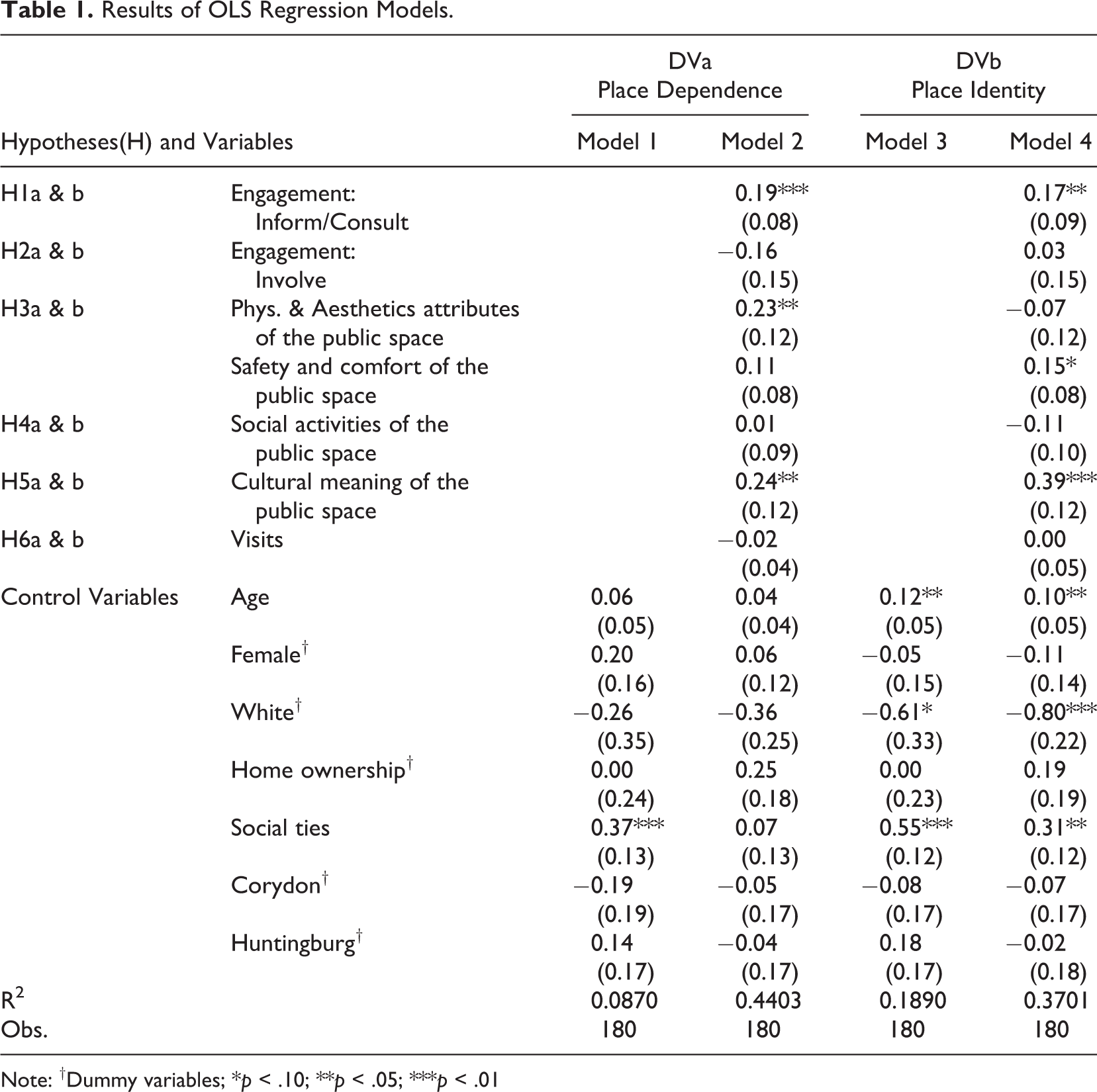
As shown in Table 1, we added independent variables in Model 1 and 3 (control models) to test our hypotheses. 2 Model 2 and 4 present standardized coefficients for independent and control variables to show their relative importance on a resident’s place dependence and place identity in a rural area. For the control variables, Model 4 indicates that a resident’s age and social ties are positively and significantly associated with place identity. Residents are more likely to have a higher place identity when they are older and have many social acquaintances in their community. However, white residents are less likely to have a higher place identity than non-white ethnic groups.
Results of OLS Regression Models.
Note: †Dummy variables; *p < .10; **p < .05; ***p < .01
Regarding H1a and b and H2a and b, we predicted that a resident’s engagement in local placemaking projects would be a significant predictor for place dependence and place identity in a rural area. Our results show that the coefficients on Engagement: Inform and Consult are positive and significant for the residents’ place dependence (p < 0.01) and place identity (p < 0.05), supporting H1a and H1b. Residents who frequently communicated with the local governments about placemaking projects could have more opportunity to understand the values of the place-led community development projects and to exchange their opinions and ideas. Such a repeated interaction with the local governments can lead to more intense place dependence and identity among residents (Balassiano and Maldonado 2015; Silberberg et al. 2013; Toolis 2017). However, we did not find any significant findings regarding the association between physical participation in the placemaking project or donation and place dependence and identity, not supporting H2a and H2b.
Also, we hypothesized that residents’ perceived outputs of the public space created by placemaking projects are positively associated with their place dependence and place identity, focusing on physical and aesthetic settings (H3a and b), social offerings (H4a and b), and cultural elements (H5a and b). Public spaces are environments that stimulate social interactions, facilitate political mobilization, and help prevent crime. Public spaces can present mental and physical health benefits (Pacheco 2017). Our results show that the coefficient on Physical and aesthetic attributes of the public space is positive and significant for a resident’s place dependence (p < 0.05), partially supporting H3a. The coefficient on Safety and comfort of the public space is positive and significant for a resident’s place identity (p < 0.10), partially supporting H3b. Residents tend to stay in a place longer and define their personal identity in relation to their locality when they perceive the constructed public space to be physically appealing and safe. The importance of well-designed spaces, which each placemaking project was purposeful in achieving, has been documented often (Pacheco 2017), and these findings confirm the role that aesthetic factors and safety perception can play in connecting residents to place.
However, we did not find any significance of social offering on place dependence and identity (see insignificant coefficients on Social activities of the public space in Model 2 and 4). We also found the positive effect of the cultural meaning of the public space on both place dependence and place identity, supporting H5a (p < 0.05) and H5b (p < 0.01). Residents tend to feel more strongly associated with their place and define their personal identity in relation to their locality when they perceive the constructed public space reflects their local culture and history (Dabson 2019). Meaning is often a phenomenon considered a derivative of increased place attachment and not as a design feature that can influence it. However, we found the value of perceived meaning primarily using the presence of characteristics tied to local culture and heritage as proxies (Manzo and Perkins 2006; Miguel 2016).
Lastly, while we predicted the positive effect of the number of visits to the public spaces on place dependence and identity, we found that our H6a and H6b are not supported (see insignificant coefficients on Visits in Model 2 and 4).
Discussion and Conclusion
State and local governments in the United States increasingly adopted placemaking as place-based community development and integration tool in rural communities. This study examines how placemaking processes and outputs are associated with a resident’s bonds with local places through survey data collected in rural communities in Indiana. Our findings indicated that (1) policy communication between residents and the local government before, during, or after placemaking projects and (2) having public spaces that reflect local identity and culture increases the residents’ place dependence and place identity in rural communities. Also, physical and aesthetic values of the public spaces created by placemaking projects play an essential role in increasing rural community residents’ place dependence. Safety perception toward the public space created by placemaking is positively associated with place identity. These results suggest three theoretical points on the residents’ empowerment and community planning literature.
First, local governments in rural areas can enhance residents’ place dependence and place identity by facilitating a more informed approach to residents’ empowerment in placemaking projects. Although residents’ physical participation in or donation to the placemaking project does not play a vital role in place dependence and place identity, our findings show that residents’ interactions with their local governments through persistent policy communication is positively associated with place dependence and identity. As residents’ empowerment literature highlights both actual exercise of control and psychological sense of control (Feldman and Westphal 2000), interactive, deliberative processes provide local governments with opportunities to explain their reasons for pursuing certain directions of politics and understand residents’ positions about placemaking projects. These processes can also allow residents to understand technically difficult situations, express their needs toward the placemaking, and see holistic, communitywide sustainable solutions (Michels and De Graaf 2017). Residents’ deliberative engagement can ensure that public spaces’ purpose and use meet the local community’s needs (Pacheco 2017). While examining two types of residents’ empowerment in placemaking projects, our findings suggest public discourse for informing a decision seems essential for increasing place dependence and identity rather than dictating the decision. Local governance practices need to be continuously informed and refined through deliberative social learning and adaptation between residents and local governments in rural settings.
Second, local governments need to prioritize aesthetic attractiveness to their residents, safety of the public space, and cultural specificities of the area to generate a strong relationship between residents and places when planning a public space. Our findings suggest that well-executed placemaking endeavors can attract people to public spaces and help buttress place attachment in rural communities. The attractive conditions of public spaces can invite people to be on the streets, parks, or sidewalks and foster walking and cycling, allowing people to access local commerce. At the same time, people feel better and tend to be more active in attractive public spaces (Pacheco 2017). Also, incorporating design features that demonstrate a connection to the community’s culture and heritage is an essential factor in increasing place identity, as a long-term placemaking outcome, because it gives residents a sense of ownership of public spaces. Our findings suggest that incorporating elements that relate to and reflect the community’s past and/or present story is positively associated with place attachment.
Third, different underlying factors determine place dependence and place identity in the context of rural placemaking even though there is overlap in empirical indicators of the dimensions. Building residents’ place identity to their local community seems to take more time than developing their place dependence. Previous studies suggested that place dependence and place identity explain different aspects regarding people’s bonds to a physical place. For example, since a place meets people’s functional needs, people become dependent on the place and choose to stay there. However, since a place makes people feel unique and consistent with the people’s subjective ideas of who they are, they are more likely to be assimilated to the place and choose to stay there and engage in local political activities (Anton and Lawrence 2014).
In our empirical analyses, place dependence, as a short-term placemaking outcome, is found to be driven by residents’ engagement (informing and consultation) in the placemaking projects, perceived aesthetic attributes of the public spaces, and cultural meanings of public spaces. On the other hand, place identity, as a long-term placemaking outcome, is formed based on residents’ engagement (informing and consultation) in the placemaking projects, perceived safety of the public space, cultural meanings of public spaces, residents’ age, ethnicity, and the residents’ number of social connections in their community. Our findings confirm the notion that the nature of place dependence differs from that of place identity and ensure the belief that distinctiveness and familiarity are fundamental factors for shaping place identity, particularly among long-term residents, to a local community. These findings may suggest that building a functional, well-designed, and enjoyable public space is important for incomers’ and transitory residents’ preference to stay in a rural community.
The people-place relationship is complicated. Understanding the relationship is critical for the local governments to develop a place-led community development policy (Hambleton and Howard 2013). While our findings provide valuable insights into the relationship between local governments’ placemaking practices and residents’ place dependence and identity, many compelling questions remain. First, one area for future works is potential variation in the relationship between placemaking practices and place dependence and identity by residents’ diverse sociopolitical characteristics. For example, Manzo and Perkins (2006) distinguish how individuals with various political positions and social classes use public spaces differently. Understanding placemaking and place dependence and identity related to marginalized groups and “insider” and “outsider” (Manzo and Perkins 2006) concerns is a specific area for further exploration. Second, as with all empirical research, our findings are limited by observable data from three rural communities’ populations that have access to technology (i.e., internet access and Facebook accounts) and use it for communicating with their local governments in Indiana. 3 Given these data collection concerns, our findings are limited to a somewhat civically engaged group of people in rural areas. As for future research, larger, more representative samples from diverse geographical areas using different data collection methods (e.g., mailing survey) are needed further to test the relationship between placemaking, place dependence, and place identity. Third, an underlying assumption of this study may be a presumption that a community placemaking project is necessarily linked to place dependence and identity. However, other factors, such as local economic opportunities, may explain the degree of place dependence and identity more than placemaking-specific variables. The inclusion of other objective characteristics of a rural town in addition to placemaking-related psychological variables, in the model can be the next step in this research (Pretty, Chipuer, and Bramston 2003). Fourth, a future study needs to employ in-depth interviews and qualitative analysis to obtain a rich understanding of a resident’s perspectives toward place dependence and identity. Since we used the survey questionnaire and quantitative approach, we may not entirely preclude the possibility that survey respondents misunderstand the languages of the survey questions. Lastly, a future study could also elaborate on the causality between placemaking and place dependence and identity by employing a longitudinal research design. It could provide a more dynamic and comprehensive understanding of the drivers of place dependence and place identity in a local community.
Supplemental Material
Supplemental Material, SLGR_20-0066R2,_Table_1_Supplement - Does Placemaking Lead to a Resident’s Greater Place Dependence and Place Identity in Rural Communities? Empirical Evidence in Indiana
Supplemental Material, SLGR_20-0066R2,_Table_1_Supplement for Does Placemaking Lead to a Resident’s Greater Place Dependence and Place Identity in Rural Communities? Empirical Evidence in Indiana by Jeongyoon Lee and Brian Blackford in State and Local Government Review
Supplemental Material
Supplemental Material, SLGR_20-0066R2,_Table_2_Supplement - Does Placemaking Lead to a Resident’s Greater Place Dependence and Place Identity in Rural Communities? Empirical Evidence in Indiana
Supplemental Material, SLGR_20-0066R2,_Table_2_Supplement for Does Placemaking Lead to a Resident’s Greater Place Dependence and Place Identity in Rural Communities? Empirical Evidence in Indiana by Jeongyoon Lee and Brian Blackford in State and Local Government Review
Supplemental Material
Supplemental Material, SLGR_20-0066R2,_Table_3_Supplement - Does Placemaking Lead to a Resident’s Greater Place Dependence and Place Identity in Rural Communities? Empirical Evidence in Indiana
Supplemental Material, SLGR_20-0066R2,_Table_3_Supplement for Does Placemaking Lead to a Resident’s Greater Place Dependence and Place Identity in Rural Communities? Empirical Evidence in Indiana by Jeongyoon Lee and Brian Blackford in State and Local Government Review
Supplemental Material
Supplemental Material, SLGR_20-0066R2,_Text_1_Supplement - Does Placemaking Lead to a Resident’s Greater Place Dependence and Place Identity in Rural Communities? Empirical Evidence in Indiana
Supplemental Material, SLGR_20-0066R2,_Text_1_Supplement for Does Placemaking Lead to a Resident’s Greater Place Dependence and Place Identity in Rural Communities? Empirical Evidence in Indiana by Jeongyoon Lee and Brian Blackford in State and Local Government Review
Footnotes
Declaration of Conflicting Interests
The authors declared no potential conflicts of interest with respect to the research, authorship, and/or publication of this article.
Funding
The authors received no financial support for the research, authorship, and/or publication of this article.

Supplemental Material
The Supplemental material for this article is available online.
Notes
References
Supplementary Material
Please find the following supplemental material available below.
For Open Access articles published under a Creative Commons License, all supplemental material carries the same license as the article it is associated with.
For non-Open Access articles published, all supplemental material carries a non-exclusive license, and permission requests for re-use of supplemental material or any part of supplemental material shall be sent directly to the copyright owner as specified in the copyright notice associated with the article.