




Abstract
Intersectionality is an ascending perspective in public policy research, gaining ever wider recognition in the discipline. The purpose of this study is to systematically review the literature to assess the current state of intersectional public policy research. This study describes the temporal and research site trends, discipline, type of research methodology, multiple categories of intersectionality in public policy studies, and policy area. Particular attention is given to the categorization of the multiple applications of intersectionality in public policy studies identified in this review: intersectional framework, intersectional perspective, and intersectional critique. The results give a comprehensive picture of existing research on the topic, thus providing researchers with a solid foundation for further study.
Personal Reflexive Statement
Teresa Garcia’s interest in this topic stems from her social identity as a Latina woman committed to addressing the issues surrounding diversity, equity, and inclusion. She currently works at the Center for Multicultural and Diversity Education at the University of Arkansas where she is responsible for implementing programs targeted at minority students and hopes to continue this work towards the achievement of diversity and inclusion in society. Anna Zajicek is the Associate Dean in the Fulbright College at the University of Arkansas, Fayetteville. She is one of the authors of the book Incorporating intersectionality in social work practice, research, policy, and education, as well as multiple publications focused on intersectionality featured in peer-reviewed journals. Her academic pursuits reflect a longstanding commitment to understanding the process that both reproduce and challenge social inequalities—specifically, the intersections of gender, race, class, and age.
Intellectual beginnings of intersectional approaches to the lived experiences of marginalized groups can be found in the writings of late nineteenth and early twentieth century African-American scholars (Murphy et al. 2009). A key consideration in the subsequent formulations of intersectionality has been its “dedication to addressing all oppressions” (Murphy et al. 2009:21). In the policy arena, since legal theorist Crenshaw (1989) introduced intersectionality to the legal and policy literature, scholars have debated its relative strengths and weaknesses in theoretical, methodological, and policy terms. Intersectionality has been called “an ungainly term for a very important, multidimensional sensibility” (Thorne 2006:476). Manuel (2006) refers to it as “intersectionality theory.”
In the specific context of public policy, intersectionality reveals the limiting and exclusionary nature of the policymaking process (Manuel 2006). In the light of intersectionality, public policy studies identify the way specific acts and policies address the inequalities experienced by various groups, considering how social identities such as race, gender, class, sexual orientation, and nationality interact to form unique meanings and complex experiences within and between groups in society (Hankivsky and Cormier 2011). Given that individuals have multiple social identities and are members of more than one group in society, they can simultaneously experience oppression and privilege. Thus, through the application of intersectionality to public policy, differences among multiple grounds of identity become more apparent, and these differences can find expression in constructing public policies.
In a recent article, Breslin, Pandey, and Riccucci (2017) reviewed different conceptualizations of intersectionality that have emerged since 1989 with the goal of extending the integration of intersectionality in public policy leadership studies. Upon reviewing 25 years of literature on public leadership, they concluded that scholars tend to focus on one aspect of inequality, homogenizing women and constructing a false binary between women and men. The purpose of this study is different. We aim to systematically review select public policy literature to assess how intersectionality has been included in empirical public policy studies. Given the purpose of this work, we use a relatively narrow definition of intersectionality, defining it as a normative theoretical argument and an approach to conducting empirical research. We define intersectional research as characterized by a “purposed/intended and integrated exploration of the simultaneous operations and/or effects of two or more categories of inequality” (Murphy et al. 2009).
A common core of intersectional studies involves the analysis of intersecting and interacting social locations and identities that shape and influence social experiences. Exactly how intersectionality moves across disciplines turns not only on the various theoretical and methodological prisms commonly informing the discipline, but also by the extent to which race, gender, class, sexual orientation, and national origin are seen as categories of difference that have customarily been acknowledged.
Using a systematic review of the literature, this study addresses the question of how intersectionality has been integrated in empirical public policy research. In order to address this question, we will first trace the history of intersectionality in public policy literature. Here we focus on the literature that has explicitly introduced intersectionality into public policy domain (defined as public policy journals) and discuss how these works conceptualized intersectionality. Next, we examine public policy studies that make references to intersectionality to discern how it has been integrated in these studies. We hope that by shedding light on the “how” of integration, this study will facilitate the development of innovative theoretical arguments and new intersectional empirical research designs in this area of scholarship. We do not focus on conceptual integration (see above).
Literature Review
In a path-breaking text that introduced intersectionality to public policy, Manuel (2006) discussed the benefits of using an intersectional approach in public policy studies. Given policy is not experienced in the same way by all populations, no social problem that policy attempts to address can be seen through a single-axis framework. For instance, Hancock (2007) discussed the way in which the intersectional approach can produce results that can improve both the diagnosis of a policy problem and a prescriptive solution. Intersectionality enables an inclusive multi-leveled approach that dynamically engages factors in policy making across several categories of difference. Rather than simply adding categories, intersectionality acknowledges the unique experiences at the intersection of two or more social categories that intertwine (Hancock 2007). In public policy, the most useful intersectional ideas are structural, political, and “identity negotiation.” These intersectional ideas allow meaningful and socially impactful differences to be fully expressed in the policymaking process.
According to Manuel (2006), the state of intersectionality integration in public policy in 2006 was the use of interaction terms in quantitative scholarship, and the term intersectionality was not used in policy scholarship. Manuel (2006) noted that in some instances, scholars mentioned the main tenets of intersectionality (pay homage) but did not use it as an analytical framework. In fact, Manuel (2006) concluded that while the actual application was limited or perhaps even missing, the debates about the meaning of intersectionality were ample.
In 2011, Hankivsky and Cormier (2011) argued that, despite the rapidly growing body of intersectional literature, public policy analyses grounded within intersectionality were largely undertheorized and methods for integrating intersectionality into policy processes were in initial stages, or perhaps missing. In a different context, Stacey (2006) discussed multiple ways in which the term “missing” can be interpreted, including failing to achieve something, to leave something out, to feel the absence, and to fail to comprehend. A critical question is that of a yardstick that can be used to assess integration. For instance, integration in professional association sections (Armstrong 2004), the existence and the size of sections, jobs ads and hiring practices (Stacey 2006), and the existence of journals (Stacey and Thorne 1996). Progress can be uneven and occur at a different pace or in a different manner across disciplinary fields and subfields (Stacey and Thorne 1985), curricula and/or the most influential disciplinary texts (Thorne 2006). Building on these ideas, in this study, we focus on integration of intersectionality in public policy scholarship by examining the policy areas in which intersectional studies have been published.
Although public policy scholars have investigated the utilization and encouraged the integration of intersectionality in public policy, we still know little about the trends in integrating intersectional research in this area. This review represents a systematic attempt at identification of trends in public policy-related research with regard to the integration of intersectionality. In addition to providing a foundation for researchers interested in the topic of intersectionality and its integration in public policy, this study can inform policymakers who are interested in expanding their perspectives on how policies may affect different populations.
Method
The primary method used to answer the research question was systematic literature review. Data was collected for the literature review during the period of September to November 2017. 1 Following Norris, Zajicek, and Murphy-Erby (2010), we focused on the period from 2010 to 2017 because intersectionality was not introduced to policy studies until the publication of Manuel’s work in 2006. Given the period and the fact that an interval exists between the emergence of a new framework within its integration for the mainstream journals and other types of publications, we examined articles published a few years later; that is, since 2010 (Norris et al. 2010).
We started with conducting a broad multidisciplinary search in several electronic databases including EBSCO, ProQuest, JSTOR, and Web of Science. The articles were selected using the two keywords “intersectionality” and “policy.” Even though the use of these two keywords as search terms might miss articles that do not use the terminology due to the politics of publishing, we decided to focus on these two search terms for the feasibility of this review. The initial search generated 539 articles. EBSCO generated 220 results using the following limiters: Scholarly Journals, Published between 2010 and 2017, Periodical Publication, Article Document Type, English Language. ProQuest generated 166 results using the following limiters: Published between 2010 and 2017; Scholarly Journals; and English Language. JSTOR generated 107 results using the following limiters: Published between 2010 and 2017; and English Language. The initial search on Web of Science generated 46 results using the following limiters: Published between 2010 and 2017; and English Language.
During the first round of reviews, articles without an abstract, method selection and duplicate references were removed. In alignment with typologies used previously in analysis of intersectionality research (Jones, Misra, and McCurely 2013), each of the 539 articles were coded as either “empirical” or “non-empirical.” If the research method used was quantitative, qualitative, or mixed method, the article was categorized as empirical. Quantitative method was defined as a methodology for conducting research reporting a statistical relationship between the variables. Qualitative method was defined as a methodology for collecting data that is not numerical in nature (e.g., case study, ethnography, and historical). Mixed method was defined as a methodology for conducting research that involves both quantitative and qualitative research in a single study. If the research methods were not defined by the authors or included reviews, editorials, commentaries, and theoretical analysis, the article was categorized as non-empirical. Although both empirical and non-empirical research are legitimate ways of engaging in policy research (Aikens, McKenzie, and Vaughter 2016) articles without original empirical research were excluded for the purpose of this review.
During the second round of reviews, 431 abstracts were reviewed using NVivo qualitative software. The criteria used to screen the abstracts included: (1) constitute research published in a scholarly or professional journal, (2) constitute a policy-focused research based on intersectionality, (3) written in English. Even though an article did not need to contain extensive remarks about a public policy, nor be mainly about a public policy to be included in this literature review, it had to necessarily discuss intersectionality in the public policy context to be considered a policy-focused research.
Aikens et al. (2016) discuss the challenges of delimiting literature searches, including acknowledgment that this process and the subsequent review are the result of making specific choices. In this regard, we need to acknowledge that our choice to use “intersectionality” and “policy” as search terms might have resulted in omitting the works that did not use this terminology, including the works that do not use the term “intersectionality” because of the fear that some journals could reject the manuscripts that are openly intersectional. Further, we chose to limit our review of intersectionality policy research to literature published in peer-reviewed journals in order to provide a comprehensive and systematic review of this particular body of literature. Next, despite attempts to provide a comprehensive survey of the policy literature to date, we recognize the limits of surveying only English language literature. Based on the database and English-language journals reviewed, this analysis primarily includes research on settings in the United States, Canada, and the United Kingdom. Relatively few studies focused on Latin America, Africa, and Asia-Pacific regions. After a complete review of the 431 articles and the exclusion of those that were not policy-focused, there were a total of 185 articles.
During the third round of reviews, we manually reviewed each article in order to identify emergent themes and determine categories of analysis. These analyses were exploratory in nature, combining basic quantification of trends (publication year, journal discipline, research site counts and percentages) and research approaches (counts of methods), with deeper qualitative analysis of content-based themes discussed within the articles (category of analysis, policy area, and theoretical framework).
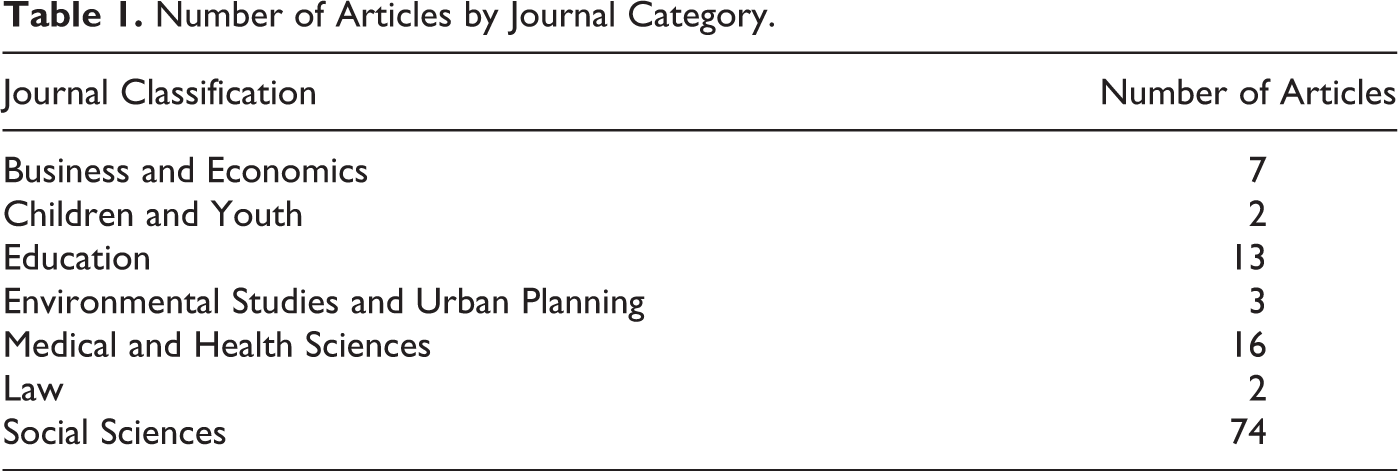
In order to examine trends within intersectional public policy analysis on different disciplines, we categorized the journals in which each article appeared based on the subject classification given to the journals by the Ulrichsweb Global Serials Directory. 2 If the database specified more than one field for a journal, we took the first one into account. Journals classified by the Ulrichsweb Global Serials Directory as Anthropology, Communications, Humanities, Literature, Political Science, Social Services, Sociology, and Women’s Studies were coded as Social Sciences. In addition, journals classified as Drug Abuse and Alcoholism, Handicapped-Physical Impairment, Public Health and Safety were coded as Health and Medical Sciences. The codes for journal categories are listed in Table 1.
Number of Articles by Journal Category.
Furthermore, we coded each article for the policy area and the category of analysis it focused on, as defined by the authors of the articles, except for Political Participation. The policy area was coded as Political Participation if intersectionality was applied to examine the way in which categories of analysis play a role in the shaping of political institutions, political actors, the relationships between institutions and actors, and the relevant categories themselves (Hancock 2007). The codes for policy areas and category of analysis are listed in the Appendix.
Finally, we coded the types of intersectionality analysis used: intersectional framework, intersectional perspective (Hess 2012), or intersectional critique. Articles that applied intersectionality as a framework to conduct and interpret data analysis were coded as intersectional framework. Articles that used intersectionality to present and discuss the research findings were coded as intersectional perspective. Finally, articles that did not study intersectional categories, but rather applied intersectionality to examine a text, discourse, or policy in order to determine whether they are intersectional were coded as intersectional critique. Articles that were coded as additive were not coded as intersectional, even if they identified themselves as such. For instance, Theobald (2017) attempted to apply a multi-level intersectional approach to analyze the development of systematic disparities based on the intersection of migration status and skill level. However, the author performed a separate frequency analysis of care workers by migrant background, level of skill, and sector of employment, calling into question the degree to which the study truly reflects an intersectional approach. For this reason, the study was not included in this review. Previous research has argued that these types of additive approaches are not truly intersectional since they do not try to explain or understand how categories interact (Collins 1993). After the third round of reviews, there were a total of 117 articles.
Findings
The 117 studies included in the final review show the magnitude of the application of intersectionality to public policy studies. In what follows, we discuss review findings in relation to temporal and research site trends, discipline, type of research methodology, and key policy areas in the literature.
Temporal and Research Site Trends
The total of 117 research articles had publication years spanning from 2010 to 2017. Most articles were published in 2011, 2012, and 2013. In each of these years, there were nineteen public policy analysis publications based on intersectionality. The research site of most public policy analysis based on intersectionality in 2010 was the United States (eleven articles). This timing follows the introduction of intersectionality to policy studies by Manuel’s work (2006), and the interval that exists between the emergence of a new framework and its integration in the mainstream journals (Norris et al. 2010). However, there was a decline in publications that had the United States as the research site in 2011 (eight articles), 2012 (nine articles), and 2013 (five articles). Thus, we can attribute the spike of intersectional public policy analysis in 2011, 2012, and 2013 to intersectionality’s status as a United States theory that has moved to other places (Patil 2013).
Table 2 provides a broad overview of the number of articles from countries in each of the five regions: Africa, Asia-Pacific, Europe, Latin America, and North America. The Latin America region was the most under-represented region with only one article. There was a total of seven publications on settings in Africa, five publication in the Asia-Pacific region, thirty-nine publications in Europe, and sixty-two publication in the North America region. The remaining three articles in this review were international in scope.
Number of Articles by Region.
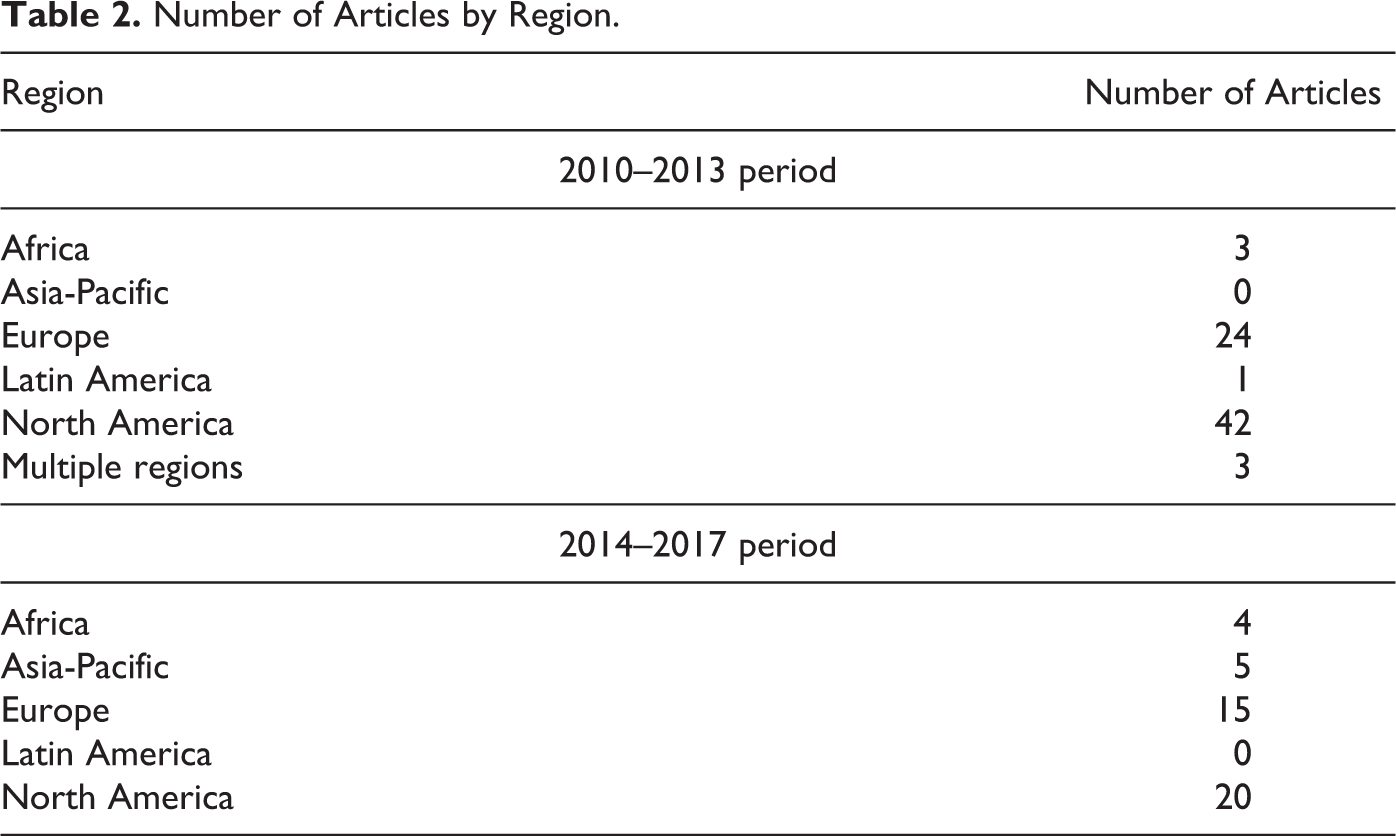
Gaps in research coverage are evident by the entirely underrepresentation of many countries in Latin America, Eastern Europe, Asia, and Africa. It is important to note, however, that in some cases policy research is being undertaken and communicated in venues other than English-speaking journals. The review also indicates a high quantity of articles that focus on particular countries—the United States, Canada, and the United Kingdom—representing over half of the total articles in the review. This finding is aligned with previous discussions of the geographic distribution of published intersectionality research (Patil 2013), and is particularly significant to the interpretation of policy areas arising from the review. We suggest that the policy areas identified through this review are largely reflective of the most heavily researched national policy contexts.
Discipline
Intersectional public policy research appeared in a variety of journals. We classified the journals in which each of the 117 articles appeared based on the subject classification given to the journals by the Ulrichsweb Global Serials Directory and our subsequent coding. Despite some of the earliest applications of intersectionality being to legal studies and the wide use of intersectionality in legal research in the 1980s (Barmaki 2020), we identified only two intersectional public policy articles published in law journals between the period of 2010 to 2017. This finding is surprising given Crenshaw’s (1989) significant contributions to the legal thought and legal theory (Carastathis 2018). We suggest that this may be due to legal scholars being less likely to use the word intersectionality. In recent years, there has been increased scholarly skepticism as intersectionality’s suitability for use in legal studies (Barmaki 2020; Cho 2013; Chow 2016).
Among the 117 articles, most were published in Social Sciences journals (63 per cent), which underlines that intersectionality is “a key theory in social sciences” (Barmaki 2020). The publication of intersectional public policy research in journals from different disciplines, however, indicates the applicability of intersectionality to different policy issues. For instance, a number of articles focused on medical and health science (14 per cent), education (11 per cent), and business and economics (6 per cent).
Research Methodology
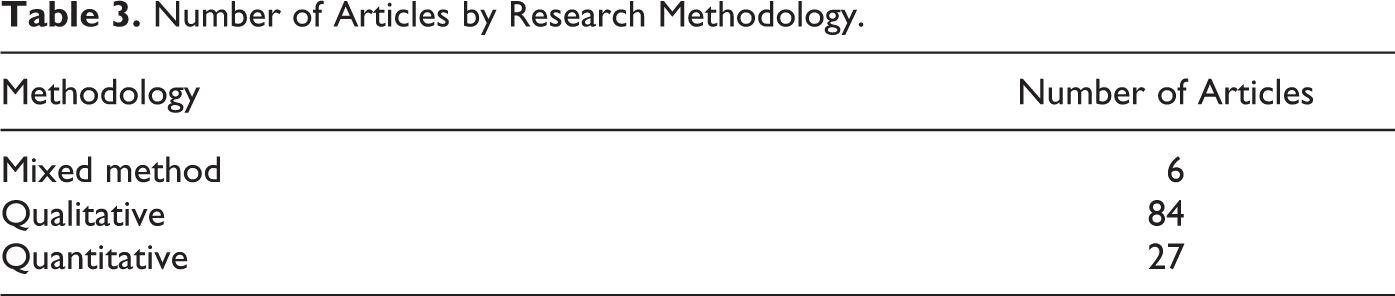
Even though intersectionality has gained more popularity in recent years, researchers still face difficulties incorporating principles of intersectionality into quantitative methods research. The debate of whether intersectionality is better suited for qualitative or quantitative research is evident in our findings. Of the total of 117 articles reviewed, 84 applied qualitative methods (72 per cent), 27 applied quantitative methods (23 per cent), and 6 applied mixed methods (5 per cent) (Table 3).
Number of Articles by Research Methodology.
Generally, researchers prefer qualitative research to apply intersectionality because qualitative methods allow for a more complex analysis of social reality and understanding of the social life of the researched compared to quantitative methods (Davis 2014). In this context, qualitative methods would be more compatible with the theoretical language and intent of intersectionality (Shields 2008). For example, McLaughlin, Uggen, and Blackstone (2012:632) argue that survey data cannot show “how manifold and mutually reinforcing identities intersect, because it is difficult to keep sight of respondents as a whole when controlling for individual characteristics.” Although the authors applied quantitative methods to analyze the impact of supervisory authority, gender nonconformity, and workplace sex ratios on workplace harassment, they had to perform a separate analysis to examine how sex, supervisory authority, and race intersect to shape harassment experiences.
Not all methodologies allow for the complex analysis of multiple dimensions of social life and identities required by intersectionality. It may be difficult to accommodate an intersectional approach within quantitative research that applies single linear regressions, for example, because it models the relationship between a dependent and a single independent variable. However, as argued by McCall (2005), “the quantitative social sciences are also a valid and important field to practice and apply intersectionality” (p. 68). Many articles identified in this literature review effectively applied quantitative research methods to capture the complexity of multiple social locations (e.g., Blom, Huijts, and Kraaykamp 2016; Halim, Yount, and Cunningham 2016; Halim, Yount, Cunningham, and Pande 2016; Malmusi et al. 2014).
The most common way in which intersectionality was analyzed in the quantitative studies identified in this review was through statistical interactions in regression modeling. It is important to note, however, that “all interactions generate some technical and interpretive hazards” (Bauer and Scheim 2019:240). In addition, there are many other ways to model intersectionality quantitatively, for example, through a comparison of groups that differ on multiple axes (e.g., Bauer and Scheim 2019; Harnois 2005). The most common axes of inequality identified in this review include certain categories such as race/ethnicity, gender, class, sexuality, and immigration status.
One study that is representative of the effective incorporation of the principles of intersectionality into quantitative methods research was Liévanos’ (2015) study, which applied quantitative research methods to analyze the spatial and demographic factors associated with cumulative air-toxic health risks at multiple geographic scales across the United States. Using logistic regression analyses, Liévanos (2015) tested intersectional environmental inequality hypotheses on the predictors of tract presence in air-toxic lifetime cancer risk (LCR) clusters by race and immigrant status. He concluded that isolated Latino immigrant-economic deprivation is the strongest positive demographic predictor of tract present in air-toxic LCT clusters, followed by black-economic deprivation and isolated Asian/Pacific Islander immigrant-economic deprivation.
Thus, although there is still a debate of whether intersectionality would be compatible with quantitative research methods, findings from this review show that it is possible to capture the complexity of multiple social locations or identity inherent to intersectionality not only through qualitative methods, but also through quantitative research methods.
Intersectionality
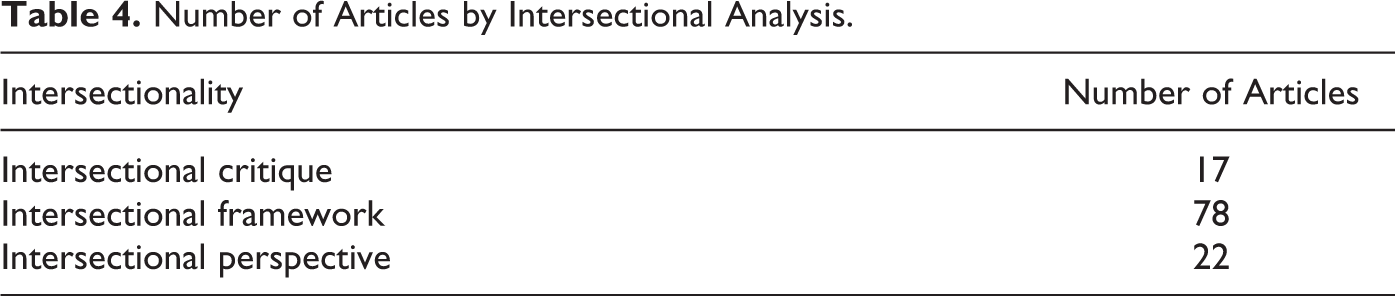
This review identified and categorized the multiple applications of intersectionality in public policy studies. Articles that applied intersectionality as a framework to conduct and interpret data analysis were classified as intersectional framework. Articles that used intersectionality to present and discuss the research findings were classified as intersectional perspective. Finally, articles that applied intersectionality to examine a text, discourse or policy in order to determine whether they are intersectional were classified as intersectional critique. Most of the articles identified in this review applied intersectionality as a framework (78 articles), followed by intersectional perspective (22 articles), and lastly intersectional critique (17 articles) (Table 4).
Number of Articles by Intersectional Analysis.
The intersectional framework was applied to conduct and interpret data analysis. In this way, the intersectional framework was used to deconstruct, compare, and disaggregate multiple identities to uncover the complexity of experiences (Hess 2012). Most of the research that applied intersectionality as a framework examined the effects of multiple, interrelated identities on health (e.g., Bengiamin, Capitman, and Ruwe 2010; Watts, Liamputtong, and Mcmichael 2015; White 2014), social (e.g., Parashar 2014; Walker and Melton 2015), legal (e.g., Brown 2013; Parker and Hefner 2015), political (e.g., Hughes 2011; Ondercin 2013), and economic outcomes (e.g., Hajdu et al. 2013; Hirsto, Katila, and Moisander 2014).
In what follows, we will examine articles that represent the application of intersectionality as a framework in the main policy areas of study identified in this review, namely education, health, equality, social, immigration, labor and welfare. In the education policy area, Snapp et al. (2015) analyzed the effect of actual or perceived sexual and/or gender identity and race on discipline experiences in school. In this study, intersectionality was used to uncover the fluid identities of LGBTQ youth that shape their experiences in school. In the health policy area, Joe (2015) analyzed the impact of the intersection of gender, caste, wealth, and place of residence on immunization in India. He concluded that being in vulnerable intersectional groups, especially female scheduled castes and tribes (SCST) children from rural areas, result in lower levels of health compared to other intersectional groups. By applying intersectionality as a framework, this study highlighted the magnitude of intersectional inequality in India, and its association with immunization level. In the equality policy area, Hughes (2011) applied intersectionality to analyze the effects of gender and minority quotas on minority women’s representation in national legislature. Along the same lines, Tatari and Mencutek (2015) applied an intersectional framework to examine the impact of race/ethnicity, gender, and religion on political representation in London.
Articles that used intersectionality to present and discuss the research findings were classified as intersectionality perspective. When used as a perspective, intersectionality was applied to examine the way general patterns and processes of discrimination or privilege tend to be similar across certain categories of analysis (Hess 2012). For instance, Bobbitt-Zeher (2011) used intersectional perspective to discuss how issues of intersections of race and gender appeared on discrimination narratives constructed from sex discrimination cases brought before the Ohio Civil Rights Commission. Even though the author did not explicitly apply intersectionality to create a discrimination narrative for each of the 219 formal sex discrimination cases that she analyzed, she used intersectionality as a perspective to discuss her findings. In this way, the author shed light on the discriminatory actions that occurred not only by gender, but also across racial groups. In her findings, Bobbitt-Zeher (2011) identified that the frequency of some kinds of stereotypes were greater in the narratives of women of color, and that qualitative differences emerged in employers’ comments toward women of color.
In turn, articles that applied intersectionality to examine a text, discourse or policy in order to determine whether they are intersectional were classified as intersectional critique. To illustrate the application of intersectional critique, we will examine Reisel’s (2014) comparison of the political discourse in the Swedish and Norwegian discrimination law committee reports. Reisel (2014) investigated whether intersectionality had been addressed in the process of reforming anti-discrimination and equality legislation in Sweden (A Coherent Discrimination Law) and Norway (A Comprehensive Protection against Discrimination) through the analysis of the dominant frames in the discourse of political actors that interpret different situations and events, contribute blame or causality, and suggest lines of action. Through the application of intersectional critique, the author unraveled differences between the two discrimination law committee reports, even though both were “quite similar at first glance” (2014:235). While the Norwegian report took a more general universalistic approach, the Swedish report seemed more “pragmatically attuned to the challenges associated with social differences” (2014:235). The author argued that although the framing of the Swedish report would potentially be more conducive to handling the question of intersectional discrimination, because of the more explicit consideration of differences as well as the structural aspects of inequalities, neither the Swedish nor the Norwegian report attempted to “come to terms with empirical or theoretical challenges that the intersections literature poses to an anti-discrimination and equality law” (2014:235). In this way, intersectional critique was applied to examine and compare similar policies in two countries to determine whether they addressed the issue of intersectional discrimination.
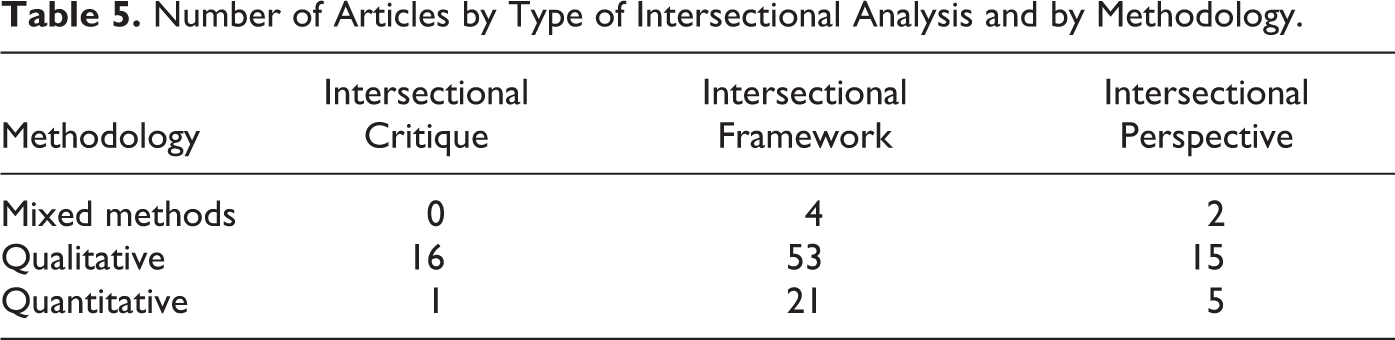
Finally, analysis of the type of intersectional analysis by methodology shows that even though the majority of articles identified in this review relied primarily on qualitative research methods, the distribution of the articles by methodology varied according to each type of intersectional analysis (Table 5). While 94 percent of intersectional critique articles applied qualitative research methods, 68 percent of intersectional framework and perspective articles applied qualitative research.
Number of Articles by Type of Intersectional Analysis and by Methodology.
Policy Area
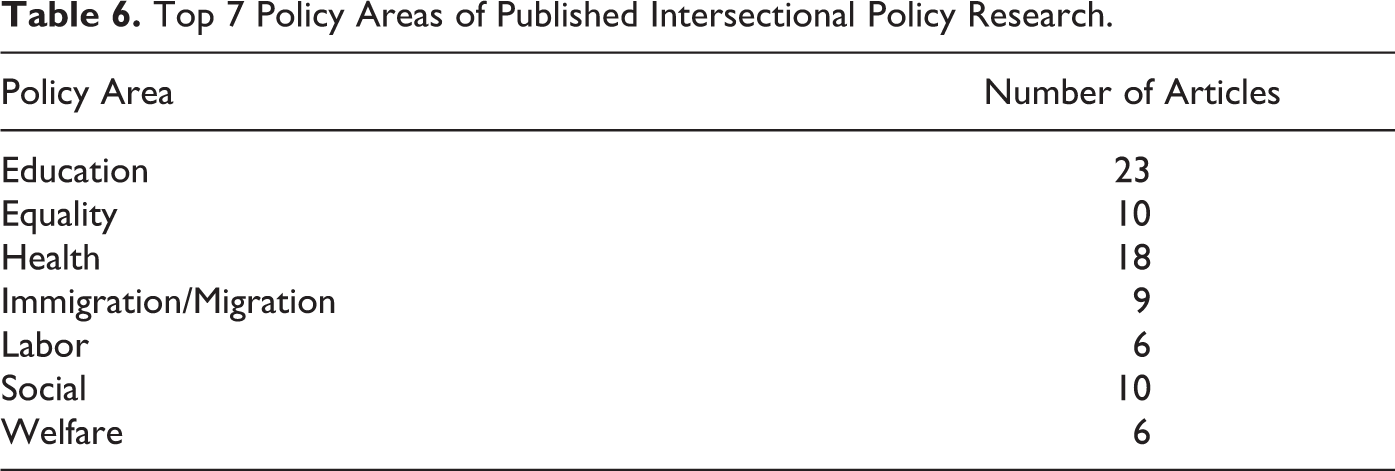
The main policy areas of study identified in this review were education (20 per cent), health (15 per cent), equality (8 per cent), social (8 per cent), immigration/migration (7 per cent), labor (5 per cent), and welfare (5 per cent) (Table 6). This finding is associated with previous discussions of the geographic distribution of published public policy research based on intersectionality. We suggest that the policy areas identified in this review are largely reflective of the most heavily researched national policy contexts—United States, Canada, and the United Kingdom. This finding is aligned with previous research that found that most intersectionality applications focus on the global North in general and in the United States in particular, reflecting the transnational power structures that shape academic knowledge production and distribution (Patil 2013).
Top 7 Policy Areas of Published Intersectional Policy Research.
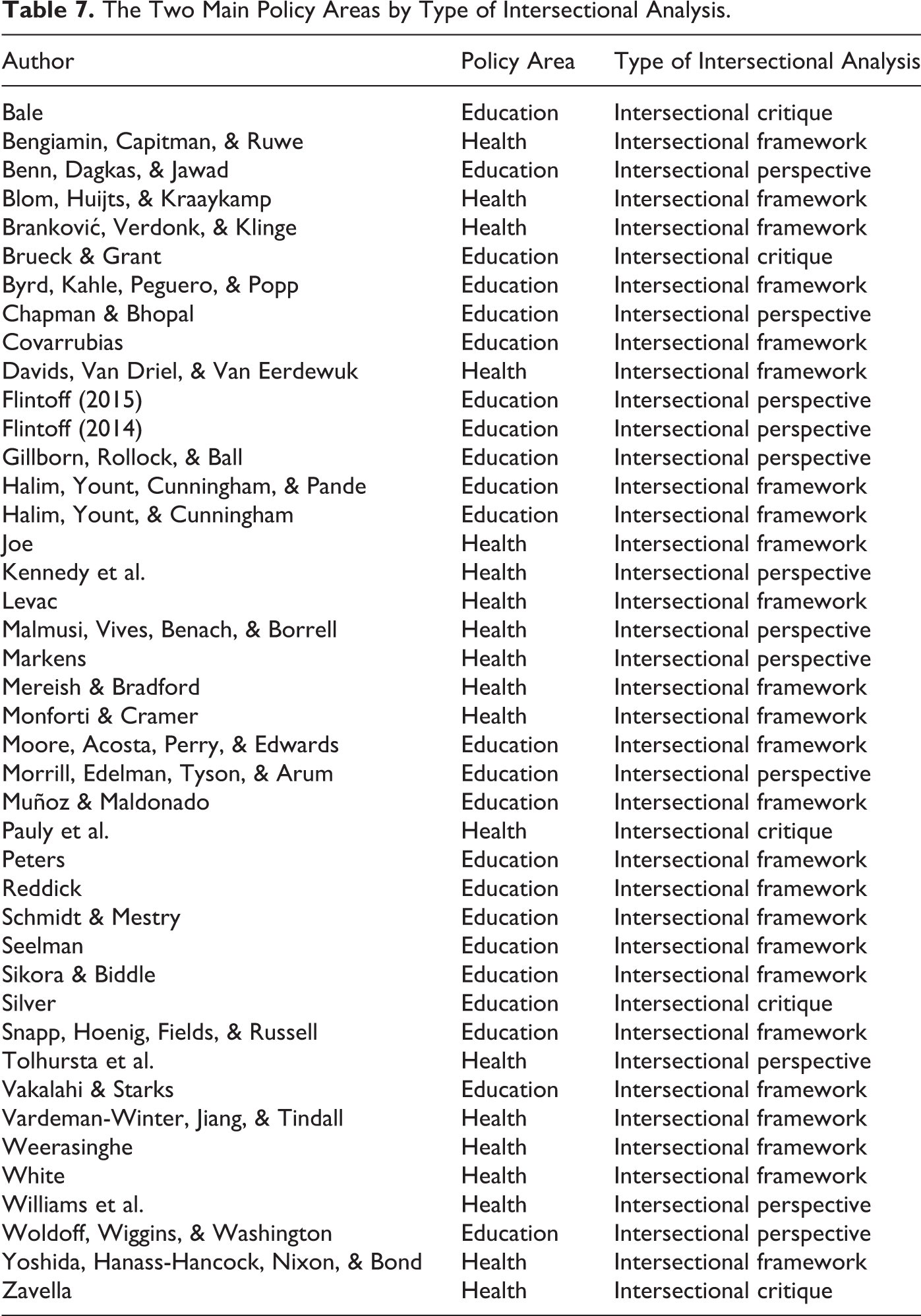
Analysis of the major policy areas identified in this systematic review (education and health policy) by type of intersectional analysis reveals that most education and health public policy research applied intersectionality as a framework to conduct and interpret data analysis, rather than applying intersectionality to present the research findings (Table 7). In the health policy area, for example, Blom et al. (2016) used intersectionality theory to derive hypothesis tests related to ethnic health inequalities.
The Two Main Policy Areas by Type of Intersectional Analysis.
In turn, analysis of the main policy areas identified in this review by methodology shows that most intersectional education policy research applied qualitative methods (18 or 78 percent of the total number of education policy articles). Similarly, 11 intersectional health policy articles applied qualitative methods (61 percent of the total number of health policy articles). This finding is closely related to our previous discussion on researchers’ primary use of qualitative methods to investigate intersectionality. Nonetheless, the development of insightful guidelines for the use of quantitative methods to conduct intersectional research across different disciplines may lead to an uptake in the number of quantitative intersectional research in the future (Bowleg and Bauer 2016).
Conclusion
The list of strengths and resources intersectionality can bring to public policy is quite long and includes its potential for conceptual reconstruction of existing theories, its focus on power, inequality, and social change, and its applicability to qualitative as well as quantitative research (see, e.g., Alway and Breslin on this important subject). Intersectionality is especially important in the construction of public policy because policies that are created based on single categories of identity may create “policy invisibility,” whereby those who experience multiple forms of inequality and disadvantage are ostracized (Corus et al. 2016). Alway (1995:214) lists the main reasons behind integration of feminist theory by sociology. These reasons include radical challenge it poses, unfamiliarity, lack of grounding in any of the major disciplinary paradigms, and questionable status as theory. Over two decades later, intersectionality appears to face a very similar challenge.
This systematic review explored how intersectionality is carried out in public policy research, including a synthesis of research findings and an identification of trends in public policy research based on intersectionality. We identified and categorized the varied applications of intersectionality in public policy studies, namely intersectional framework, intersectional perspective, and intersectional critique, which can be used for initial orientation in future research. Gaps in this literature were identified regarding the research site and methodology of intersectional public policy studies. We identified the need to incorporate principles of intersectionality into quantitative methods research and expand the research of intersectionality to public policy in countries other than the United States, Canada, and the United Kingdom, which represented over half of the total articles in this review.
In the rest of this conclusion, we discuss the main benefits of the application of intersectionality in policy studies, in general, followed by a discussion of the added value of intersectionality in select areas of substantive policy studies: education, health, immigration, and welfare. In general, the widely established benefits of using intersectionality in policy studies include: (1) recognition that policy problems are defined and policies are developed and implemented in the context of overlapping and intersecting systems of domination, privilege, and discrimination; (2) emphasis on policy benefits and implications for groups located at the intersection of multiple identities; and (3) more accurate approaches to policy evaluation. The overall benefit is a more insightful, holistic, and comprehensive research, leading to analyses that “reveal meaning-making processes of privilege and exclusion in policy making and ultimately lead to the reconstruction of harmful and oppressive policies” (Hankivsky and Cormier 2011: 219).
In the area of education policy research, the main advantage of intersectionality is its ability to expose how education policies advantage and/or disadvantage various student populations based on their intersecting locations, especially racial/ethnic and social class locations. In this research area, one-dimensional policy studies often use social class as a proxy for race/ethnicity and vice-versa, resulting in overgeneralizations regarding the impact of education policies. In the area of health policy studies, intersectionality can assist us with recognizing and exposing the complexity of individual and institutional health inequities brought about by health policies. In this research area, intersectionality is especially important in highlighting the needs of understudied and underserved populations. In addition, such research focus can also assist policy researchers in advancing more equitable health policy solutions. Similarly, intersectional examinations of immigration policies not only reveal which intersectionally-defined groups are advantaged or disadvantaged, but also explore the specific policy mechanisms that underline disparate effects. Finally, intersectional social welfare policy research can assist in exposing the racialized and gendered constructions of deserving and undeserving poor through the controlling images of the welfare queen, for example.
In addition to providing a needed foundation for public policy researchers, this advancement will help policymakers understand the outcomes they should expect. Findings from this research have both practical and research implications. It provides a synthesis of public policy research employing intersectionality across various public policy areas. The understanding gained from this research allows intersectional and public policy researchers to identify appropriate strategies for improving and to make recommendations for policymakers at the institutional level. For researchers who are interested in this line of inquiry, we identified and highlighted studies on public policy analysis grounded within an intersectional framework or perspective, or applying intersectional policy critique, providing an important resource for scholars in their future research endeavors.
Footnotes
Declaration of Conflicting Interests
The author(s) declared no potential conflicts of interest with respect to the research, authorship, and/or publication of this article.
Funding
The author(s) received no financial support for the research, authorship, and/or publication of this article.
