



Abstract
As the expectations for including creativity in K–12 education continually grow, creative process skills equip students with thinking strategies to generate and evaluate ideas. This systematic review explored existing research on elementary and secondary gifted classroom environments that promote creative process skills. A database search yielded peer-reviewed literature, empirical and practitioner-focused, for systematic evaluation. A critical examination of literature published from 2011 to 2019 identified characteristics of educational environments that foster creative processes and highlighted key themes, including integrating creative process skills, adaptive environments, reflective classroom culture, and challenges to implementation. Implications for classroom application and suggestions for future research are discussed.
Subotnik et al. (2019) asserted that “being creative requires courage, self-confidence, concentration, preparing for setbacks, and knowing how the ‘game’ is played” (p. 6). The development of these psychosocial skills requires supportive classrooms and the intentional cultivation of creativity. Within schools, the creative process emerges in classroom environments and is shaped by culture (Hennessey, 2015; Starko, 2018). Developmentally, students are influenced by their immediate settings (e.g., home environment, classrooms) and the intersection of those settings with other external factors (e.g., culture, power structures, and social relationships). Thus, the development of creativity is a dynamic system of interactions whereby the person interdependently interacts with a variety of environments (i.e., systems; Bronfenbrenner, 1994; Csikszentmihalyi, 1996; Dai, 2017). Creativity does not develop in isolation. In classroom contexts, developing creativity requires student and instructor engagement and an open environment that supports guided and independent investigations that use innovative methods and solutions (Reisman, 2017; Renzulli, 2012). Classroom systems need to be deliberately structured to optimize student motivation for creative performance (Hennessey, 2015). Contexts and classroom environments vary, and what constitutes a conducive environment for developing creativity is not always clear to educators (Lamb, 2020). It is vital for educational leaders to understand the complexity of these interactions to make decisions that support giftedness and talent development within their schools (Datnow, 2012), particularly when implementing practices to promote creativity in the classroom.
The field of gifted education has long been interested in understanding creativity as a trait and as a process for problem-solving (e.g., creative people; Simonton, 1994; component of giftedness; Renzulli, 1978), but as talent development became a focus of gifted education, research shifted to include inquiry on how to foster creative learning environments to develop talent (Beghetto & Kaufman, 2017; Kettler et al., 2018; Lamb, 2020; Renzulli, 2012; Starko, 2018; Subotnik et al., 2011; Tannenbaum, 1983). In 2011, Subotnik et al. published a theoretical framework for talent development that was a watershed moment for researchers and practitioners in gifted education. They critically reviewed key problems in gifted education, suggesting a way forward to potentially unify research agendas and to focus practitioners on research-based principles for developing talent in gifted learners. Specifically, they called for the “organization of programs around the tools needed to reach the highest possible levels of creative performance or productivity” (Subotnik et al., 2011, p. 4). To serve students in gifted education programs and to prepare them for future education and career opportunities, educators must embrace the work of developing creative pedagogy and creating classroom environments that support the application of creative thinking skills.
Although the literature on developing creative potential and curriculum to engage students in creative production is abundant, there is a scarcity of research on structuring gifted classroom environments to optimize the development of creativity and talent (Csikszentmihalyi, 1996; Hennessey, 2015; Subotnik et al., 2011), particularly regarding the use of the creative process (Sawyer, 2012). Although scholars in gifted education have called for more research on the development of creativity in childhood and adolescence, this area has not been fully explored with respect to the creative process in gifted education and recommendations for educators.
Creativity and Talent Development Over Time
In a presidential address to the American Psychological Association, Guilford (1950) posed the need to explore how to identify “creative promise in our children and our youth” (p. 445) and emphasized that studies of creativity had been sorely neglected by researchers. Guilford highlighted the urgency of studying creative processes to understand “individual differences” in navigating the creative process that might be “important for identifying the potentially creative” (p. 451). Torrance (1965) later posited that recognition of “creative behavior, creative thinking, creative abilities, and creative potential” is particularly useful for tailoring classroom instruction to the meet the needs of individual students (p. 667). Torrance defined creativity as “the process of becoming sensitive to problems, deficiencies, gaps in knowledge, missing elements, [and] disharmonies” (p. 663) and suggested that these processes, also used by scientists and artists, should be brought into classroom learning settings. Nearly a decade later, the first federal definition of gifted and talented connected creativity to giftedness. The Marland Report defined gifted and talented students as those “who require differentiated educational programs” to meet their academic potential, and the report to the United States Congress specifically listed “creative or productive thinking” as a domain for school-based identification and talent development (Marland, 1972, p. 2). This broadened, multidimensional view of giftedness encouraged the development of domain-specific talent, the identification of creative ability, and the integration of creative pedagogy within gifted programs (Beghetto & Kaufman, 2017; Renzulli, 1978, 1986).
Creativity and Conceptions of Giftedness
In gifted education, creativity has a long-standing history and association with conceptions of giftedness (Renzulli, 1978; Sternberg & Lubart, 1995). Whereas Guilford (1950) and Torrance (1965) focused on creative individuals and the process of creativity, Renzulli (1978, 2012) broadened perspectives of giftedness and creativity with a three-ring conception in which he recognized that giftedness requires the ongoing development of domain-specific abilities, psychosocial skills, and creative behaviors. Renzulli suggested that giftedness is more closely related to the way an individual develops over time (i.e., behavior, state), rather than a fixed element of who they are (i.e., trait). The idea that giftedness is related to behaviors (i.e., creativity, task commitment) that evolve over time was “in essence a process theory” (Dai, 2017, p. 179), and this concept has been widely applied in school contexts through the Schoolwide Enrichment Model, which focuses on personalized, product-focused investigations of real-world problems (Renzulli, 1977, 2012). The emergence of such developmental perspectives represented a shift in the field, away from static conceptions of giftedness and toward a more dynamic viewpoint that giftedness is a complex set of interactions between individuals and their environments (e.g., home, school; Ziegler & Stoeger, 2017). The field of gifted education has only begun to empirically explore the precise nature of those interactions, and many questions remain unanswered (e.g., Are some person–environment interactions more important than others? Which interactions should be prioritized in classroom instruction?; Plucker & Barab, 2005).
The Role of Creativity in Developing Talent
Although creativity in the classroom is not exclusive to the highly able or the highly motivated, the development of creativity is essential to talent development. Individuals “who develop exceptional talent in productive ways usually do so in the hope of making original contributions to the fields in which they work—of contributing creatively” (Starko, 2018, p. 231). Scholars have recognized that creative ability can interact with an individual’s personality, their environment, and the opportunities they are presented (i.e., chance) to allow the individual to further develop that talent (Gagné, 2017) and make creative contributions to the domain (e.g., production or performance; Tannenbaum, 1983). For instance, in production domains, such as marketing or engineering, the ultimate goal of talent development is not merely expertise, but rather creative contributions within a professional field (Simonton, 2017). There still remains some uncertainty about how to nurture talent in the gifted classroom to prepare high-ability students for professional creative achievements in adulthood, but several components have been highlighted by scholars in the field (Torrance, 1970, 2004; Treffinger, 2004), including finding a passion (Piirto, 2010), harnessing motivation (Worrell, 2018), building expertise (Ericsson & Pool, 2016), and encouraging creative thinking (Kettler et al., 2018; Starko, 2018; Torrance, 2004). Subotnik et al. (2011) presented a pivotal perspective on the development of talent and defined giftedness as a developmental process that is domain specific and malleable. Although the path to outstanding performance may begin with demonstrated potential, giftedness must be developed and sustained by way of training and interventions in domain-specific skills, the acquisition of the psychological and social skills needed to pursue difficult new paths, and the individual’s conscious decision to engage fully in a domain. (p. 6)
From this perspective, giftedness develops over time, and thus classroom environments should incorporate the development of domain-specific skills, including discipline-specific creative processes. Gifted students need creativity “at every stage of their talent development in order to advance the disciplines they study” (Starko, 2018, p. 248) and to move from competence to expertise in a domain. Kaufman and Beghetto (2009) challenged misconceptions of creativity by reminding educators that not all creativity has to be eminent or domain-changing (Pro-C, Big-C), and that smaller creative contributions (mini-C, little C), such as those that happen in classrooms, are equally valuable to the development of creative thinking skills for high-ability learners. Authors of talent development theories, including the Talent Development Framework proposed by Subotnik et al. (2011), emphasize the importance of understanding how “domain-specific ability interacts with deliberate practice to result in creative performance beyond mastery of high-level technique” (p. 18). They further urged the incorporation of creative processes and the cultivation of psychosocial skills that could be carried with students throughout the talent development trajectory. Expertise theorists downplay the role of ability in favor of deliberate practice (e.g., Ericsson & Pool, 2016), but talent development theorists insist that ability and the development of psychosocial skills matter (Olszewski-Kubilius et al., 2016; Subotnik et al., 2011). Dai (2017) emphasizes the fact that “environmental press” (e.g., opportunities, challenges) and “socio-cultural mediation” (e.g., resources, tools, values; p. 176) are external influences that can help or hinder the interaction of ability, psychosocial skills, and creativity in the talent development process. The environment must support the specific talent domain and creativity within that domain for the individual to progress to competence and expertise (Dai, 2017; Subotnik et al., 2019).
The creative process in context
Although there are numerous definitions of creativity in the field, Plucker et al. (2004) defined creativity as “the interaction among aptitude, process, and environment by which an individual or group produces a perceptible product that is both novel and useful as defined within a social context [emphasis in original]” (p. 90). Puryear and Lamb (2020) noted that researchers investigating domain-specific creativity in professional contexts (e.g., business, education, psychology) favored Plucker et al.’s (2004) definition due to its focus on the interactions between abilities, processes, and environments. Lamb (2020) identified this “interaction piece” as a vital aspect of classroom instruction and suggested that “educators should consider classroom factors that impact students’ creative thinking and how these factors can be used to foster creative classroom environments” (pp. 282–283). To create classroom environments that are conducive to creativity, scholars (e.g., Sawyer, 2012) have encouraged explicitly teaching the creative process.
Sawyer (2012) synthesized the major creative process models of the 20th and 21st centuries and created a recursive stage model that represents decades of research-based best practices for encouraging creative ideas, products, and performances, which aligns with Plucker et al.’s (2004) definition of creativity as a process. Sawyer’s eight stages include (a) finding the problem, (b) acquiring knowledge, (c) gathering related information, (d) incubation, (e) generating ideas, (f) combining ideas, (g) selecting the best ideas, and (h) externalizing ideas. Dai (2017) and other scholars in gifted education and creativity (Csikszentmihalyi, 1996; Hennessey, 2015; Renzulli, 2012; Simonton, 1994) have emphasized the importance of environment in the development of the creative behaviors that are necessary for successful engagement in talent domains, which makes creative pedagogy a critical element of school-based academic, creative, and career-related talent development.
Creative pedagogy
Developing creative thinking in the classroom requires the use of creative pedagogy, which includes teaching methods and practices that encourage creativity (Kettler et al., 2018). Subotnik et al. (2019) pointed out that educators and students must understand the metacognitive aspects of knowing how to play “the game” in a particular field of study, which includes an understanding that the “rules of the game” are continually in flux, and can be adapted. Creative pedagogy requires modeling an active learning process that works in a sequence and includes gaining knowledge, critiquing knowledge claims, examining evidence and perspectives (e.g., lateral thinking; de Bono, 1985), engaging in reflection and conversation (Kettler et al., 2018), and searching for alternative explanations and solutions (Scardamalia & Bereiter, 2006). Thus, educators need to be engaged in an ongoing process of understanding relevant teaching strategies and tactics to develop students’ creative thinking capacity (e.g., fluency, flexibility, originality, elaboration; Torrance, 1970; resistance to premature closure; Reisman, 2017). For instance, popular pedagogical strategies for bridging expertise and creativity include incorporating creative problem-based learning units situated in the subject matter (Treffinger et al., 2006; Yew & Goh, 2016), brainstorming techniques (e.g., SCAMPER; Eberle, 1997), or engaging in metacognitive conversations (Sawyer, 2012). Although there are numerous strategies available, there is limited empirical information available to gifted education professionals regarding strategies they can use and how to construct learning environments (both physically and pedagogically) to best facilitate developing creative potential in classroom contexts.
Creative environments
Csikszentmihalyi (1996) asserted that the process of turning creative potential into creative contributions is highly influenced by the environment; and, therefore, creativity can be developed in anyone given the right environmental conditions. Hennessey (2015) proposed the Classroom System Model, which accounts for the influence of the environment and classroom culture on individual differences in students’ task motivation, domain expertise, and engagement with the creative process (see also Amabile, 1996). If the aim of gifted education is to “transform potential talent during youth into outstanding performance and innovation in adulthood” (Subotnik et al., 2011, p. 6), then classroom environments need to provide opportunities for gifted students to learn domain-specific creative processes in various talent domains. Educators play a large role in developing classroom environments and cultures (i.e., little-c culture; Hennessey, 2015) to support the cultivation of talent and creative production for high-ability learners. However, in doing so, educators must acknowledge the interplay between various developmental systems that help shape these environments and how particular systems (i.e., classrooms, schools, school districts) influence the creative process (Bronfenbrenner, 1994; Csikszentmihalyi, 1996).
Systems to support creativity and talent development
Systemic thinking assumes that reality can be explained best by interconnected components that interact within an environment (Ziegler & Stoeger, 2017). Systems approaches (e.g., Hennessey, 2015; Subotnik et al., 2011) can be applied to the interaction of elements underlying the development of creativity and talent. Hennessey (2015) described the influence of Big-C culture (i.e., values, norms, power distance, social cognition, psychology of self) on little-c culture (i.e., classroom or workplace culture) and the way both cultures affect individual differences in motivation to master domain-specific knowledge and engage in the creative process. Together, the Talent Development Framework and the Classroom System Model comprise a systematic perspective that provides a useful lens to examine the influence of environments on the development of creativity in gifted and talented classrooms and considerations for educational leaders who are implementing creative pedagogy within their schools (Csikszentmihalyi, 1996; Hennessey, 2015; Ziegler & Stoeger, 2017).
Theoretical Framework
This systematic review focuses on the time period following Subotnik et al.’s (2011) clarion call for changes in the field of gifted education to assess whether the field has moved toward identifying and applying best practices for creating learning environments that are conducive to gifted students reaching the “highest possible levels of creative performance or productivity” (p. 4). Numerous contributions have been made to the literature on creativity prior to 2011, but this systematic review examines whether and to what extent the field of gifted education has conducted and disseminated research on creative classroom environments for developing talent in gifted and high-ability students since the publication of Subotnik et al.’s (2011) Talent Development Framework. Both talent development theorists (e.g., Subotnik et al., 2011) and expertise theorists (e.g., Ericsson & Pool, 2016) focus on the process of moving from ability to competence and competence to expertise in a domain, and those processes include creative ideation and creative production. In this review, the term creative process represents creative thinking, creative performances, and creative products. This review conceptualizes giftedness and creativity as developmental processes that are influenced by classroom environments. We use the terms “gifted,” “talented,” “highly able,” and “high-ability” to denote students served in classroom settings and to be consistent with the terminology in the articles reviewed. When we discuss environments, we are specifically referencing classrooms and the systems within which these classrooms operate (e.g., state school accountability systems, local education agencies), not societal factors or family environments.
The definition of giftedness and goals for developing talent from the Talent Development Framework (Subotnik et al., 2011) guided this inquiry. Specifically, we used the authors’ call for talent development in gifted educations programs “to allow [individuals] to maximize their potential in the domains in which they are performing at the upper end of the distribution” (Olszewski-Kubilius et al., 2016, p. 142) by focusing on creative thinking “as an essential element in the transformation of expertise to creative productivity or eminent contribution” (p. 145) to construct our theoretical framework. We used the Plucker et al.’s (2004) definition of creativity as a guide in our review due to its focus on the interconnectedness of multiple variables in the creative process, though the definition does not elaborate on the specifics of the creative process. We used Sawyer’s (2012) stages of the creative process to identify the recursive stages individuals and groups move through as they create. In addition, we used the Classroom System Model (Hennessey, 2015) to inform our perspectives on the environmental factors in systems that support the development of creativity and talent.
Purpose and Research Questions
Creativity in the classroom is a dynamic and complex phenomenon that warrants close attention from both researchers and practitioners. Although obstacles remain for educators who are trying to provide the optimal environment for creative thinking skills, it is important to evaluate what new learning has been published since Subotnik et al. (2011) called for changes to gifted education and talent development practices. This study explored the existing research on elementary and secondary gifted classroom environments that promote the creative process. The following research questions guided this systematic review:
Positionality
Three doctoral candidates affiliated with the College of Education at a large university in Texas comprised the research team. All research team members have specializations in gifted education and experience as educators in K–12 classrooms. The research team has content expertise in creativity, social-emotional needs, gifted identification and programming, teacher preparation, leadership, and talent development. As researchers and practitioners, the team members have experienced both sides of the research to practice divide and are interested in research that can help bridge that gap.
Method
For this systematic review of literature, the Preferred Reporting Items for Systematic Reviews and Meta-Analyses (PRISMA) checklist and four-phase flow diagram guided the analysis (Liberati et al., 2009; Moher et al., 2009).
Database Selection
The initial search focused on electronic databases with publications in education, creativity, and psychology. The databases included Academic Search Complete, Education Database, Educational Resources Information Center (ERIC) via EBSCOHost, Education Source, Professional Development Collection, PsycARTICLES, Psychology and Behavioral Sciences Collection, PsycINFO, and Sage Journals Online.
Search Terms
Searches performed in each database used the terms “creativity” and “gifted” to search within abstracts and “classroom,” “environment,” and “process” to search within complete texts. Searches were limited to peer-reviewed, full-text articles published in English from January 2011 to August 2019. The year 2011 was chosen as the starting point for this systematic review to examine scholarly writing published since the call for research on creativity in Subotnik et al. (2011). The initial database search concluded in October 2018; an additional search was completed in August 2019. These searches generated 163 articles, 48 of which were duplicates (see Figure 1).
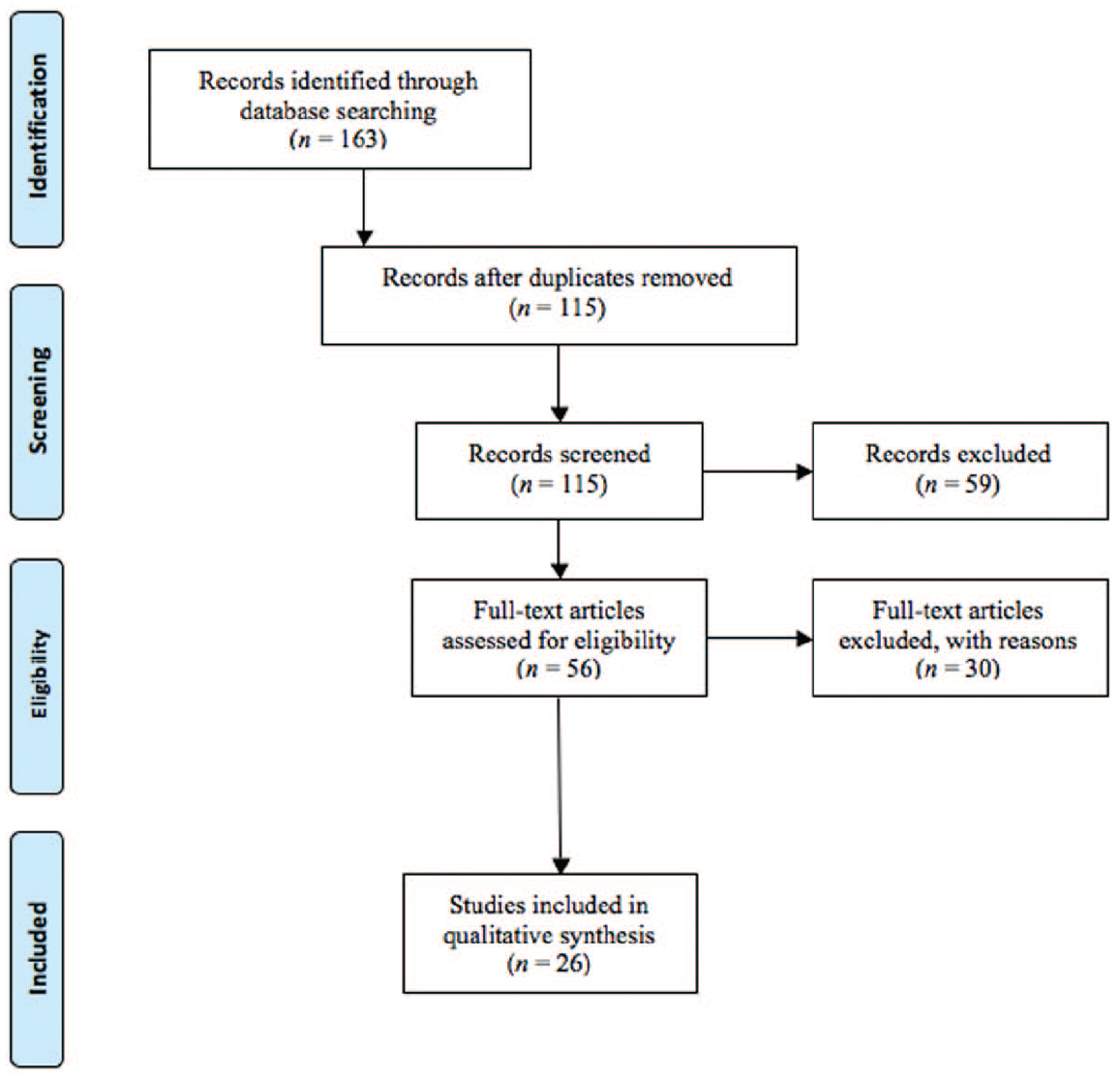
Article Screening Process.
Article Screening
After removing the duplicate articles, the title and abstract of each article (n = 115) were screened to ensure that the article met initial requirements in topic (creative process) and setting (K–12 classroom or school-based program). Because the review was intended to be exploratory and we were initially unsure of the quantity and variety of studies available, the search was not limited to empirical articles (i.e., quantitative, qualitative, mixed methods). We chose to include practitioner pieces, theoretical frameworks, and curriculum overviews along with empirical research studies, and we screened each article to determine the article type (e.g., quantitative study, qualitative study, practitioner guide). In addition, full articles were read to determine whether RQ1 (What research is available for gifted education professionals on creating classroom environments conducive to creative processes?) could be answered. After the screening process, 59 articles were excluded and 56 articles were retained for the next phase of screening (see Figure 1).
Quality Screening
An article quality rubric was developed (see Table 1) to further screen the articles for inclusion. Each article was evaluated using a 5-point scale (1 = “inadequate” and 5 = “exemplary”) on nine criteria that were developed from the research questions. The rubric was initially tested on three articles. After reading and rating the same three articles using the rubric, we met to discuss the rubric scores. Scores for each of the individual criteria were within one point in every category. We discussed scoring procedures to ensure a common understanding of the rubric items and the scoring process before proceeding to the remaining articles.
Article Quality Rubric.

Note. Sawyer’s (2012) creative process stages: find the problem, acquire the knowledge, gather related information, incubation, generate ideas, combine ideas, select the best ideas, externalize ideas.
After the rubric calibration process, articles were divided and assigned to each of the three research team members so that all 56 articles were independently scored by two team members. Research team members calculated a total rubric score for each article by summing the scores on all nine criteria. The mean of the two raters’ scores for each article was calculated to represent an overall quality score. Rubric quality scores ranged from 21 to 43.5, out of a total possible score of 45 (M = 33.65, SD = 6.36). A score of 36 or higher represented an article with an adequate, good, or exemplary rating. Articles with mean scores below 36 (n = 30), representing poor and inadequate ratings, were excluded from the analysis, leaving a total of 26 articles (see Figure 1). One article was obtained from Academic Search Complete, 21 from Sage Journals Online, three from Education Database, and one from the Professional Development Collection database.
Data Analysis
The qualitative data analysis process used a general inductive approach (Thomas, 2006) that included thematic analysis to identify, organize, and report patterns within the included articles (Clarke et al., 2017). Each included article was coded and analyzed for categories and themes (Ryan & Bernard, 2003; Saldaña, 2016).
Coding
We conducted independent parallel pattern coding (Saldaña, 2016) focused on key terminology in the research questions (e.g., gifted classroom environments, creative processes, research-based methods) and six a priori codes developed during the article screening process, including creative process stages (Sawyer, 2012), creative process skills, physical environments, performance feedback, product feedback, and classroom culture (Ryan & Bernard, 2003; see Table 2) to evaluate the full text of each article. We conducted further open coding to explore beyond the a priori codes and connect the elements of the theoretical framework to the variation in classroom environments described in the articles. Initial descriptive open codes were determined based on the three articles read by all three researchers. We independently coded the three articles and then met to negotiate agreement on the emergent codes (Campbell et al., 2013). These negotiated emergent codes were used for the remainder of the articles. When other emergent codes were identified in the data, they were discussed, compared with existing codes, and added or collapsed into existing codes (Clarke et al., 2017; Thomas, 2006).
Categories, Themes, and Codes.

Developing categories and themes
After independently coding all articles, we met to discuss repetition within articles, identify similarities between articles, and negotiate agreement on the assignment and naming of individual codes and categories (Ryan & Bernard, 2003; Saldaña, 2016). Descriptive information for each article (e.g., research design, creative process stages, key findings), final codes, and potential categories and themes were organized in an online cloud-based matrix (i.e., AirTable). The final categories included (a) integrating creative process skills, (b) adaptive environments, (c) reflective classroom cultures, and (d) challenges to implementation. Once categories were established, we examined article excerpts and data memos. We independently drafted potential themes within each category and then met to negotiate discrepancies until a consensus was achieved. The categories and themes were collaboratively reviewed, defined, and named within the context of the research questions (Clarke et al., 2017; Thomas, 2006).
Findings
A total of 26 articles, with publication dates ranging from 2011 to 2019, met the final vetting requirements (see Table 3). International articles from Australia, Canada, China, Korea, and Turkey were included (Chan & Yuen, 2015; Chandra Handa, 2015; Jo & Ku, 2011; Sak, 2013; Scott, 2011); however, most of the articles (n = 21) were from the United States. The majority of the articles (n = 23) were published in gifted education journals, including Gifted Child Today (n = 14), Gifted Education International (n = 5), Journal for the Education of the Gifted (n = 1), and Roeper Review (n = 1). Two articles were published in domain-specific education journals, including Education and Science (n = 1) and General Music Today (n = 1). The Subotnik et al.’s (2011) Talent Development Framework, which formed the parameters for the review, was published in Psychological Science in the Public Interest. Five empirical articles were reviewed, of which two were qualitative (Chan & Yuen, 2015; Wu et al., 2019) and three were quantitative (Jo & Ku, 2011; Kettler & Bower, 2017; Sak, 2013). Of the remaining articles, most (n = 16) were practitioner-focused and written with classroom teachers as the primary audience (Beason-Manes, 2018; Chandra Handa, 2015; Coxon, 2012; Firmender et al., 2017; Fletcher, 2011; Gavin & Casa, 2013; Groman, 2019; Hagge, 2017; Hébert et al., 2014; Hines et al., 2019; Schroth & Helfer, 2017; Scott, 2011; Senne et al., 2016; Shively et al., 2018; Thompson, 2017; Westberg & Leppien, 2018), but several (n = 5) were more theoretical in nature with a broader audience that included researchers and school personnel (Miller, 2012; Renzulli, 2012; Renzulli & Reis, 2012; Subotnik, 2015; Subotnik et al., 2011). Overall, the 26 articles described learning environments for gifted students with an emphasis on classroom systems that promote and support creativity and the creative process.
Summary of Reviewed Studies.

In the coding process, four categories (integrating creative process skills, adaptive environments, reflective classroom culture, challenges to implementation) were identified. In the following sections, we describe six themes related to integrating creative process skills, two themes related to adaptive environments, three themes related to reflective classroom culture, and three themes related to challenges to implementation (see Table 2).
Integrating Creative Process Skills
Authentic problem finding
The first theme about integrating creative process skills is that finding authentic problems can create meaningful learning. To begin the creative process in the classroom environment, gifted students need opportunities to find authentic problems and pursue passions within a domain of interest or skill (Renzulli, 2012; Subotnik et al., 2011). Options in the articles ranged from open-ended problems and interest-based investigations (Westberg & Leppien, 2018) to community activism (Beason-Manes, 2018) and design-focused problem-solving (Senne et al., 2016; Shively et al., 2018; Thompson, 2017). Westberg and Leppien (2018) discussed the importance of independent “investigations of real problems and solutions” (p. 13), and Coxon (2012) suggested that “children be provided with problems” that “require them to decide what evidence is relevant and to offer their own interpretations of what the evidence means” (p. 281). These learning experiences used interest-based inquiry to examine real-life issues that students wanted to solve in domains of interest (e.g., science, math, community activism; Firmender et al., 2017; Gavin & Casa, 2013; Jo & Ku, 2011; Thompson, 2017) that were relevant to their current situations in school (e.g., bullying; Groman, 2019). The literature suggested that teachers harness student interest in local or global problems (e.g., environmental concerns, Beason-Manes, 2018; accessibility, Schroth & Helfer, 2017). Of the strategies discussed for problem finding, collaboration with peers (Hagge, 2017), a focus on the vocabulary and thinking practices of professionals in a domain (Gavin & Casa, 2013), and making interdisciplinary connections (Senne et al., 2016) were suggested to engage high-ability learners in relevant, meaningful, autonomous learning experiences.
Acquiring knowledge and gathering information
The second theme related to integrating creative process skills is that acquiring knowledge is necessary for creative ideation and production. To move forward in the creative process and begin generating ideas, students must have background knowledge in the domain. Educators in the articles provided opportunities for gifted students to build an initial knowledge base by delivering lectures or providing textbook chapters (Chandra Handa, 2015; Coxon, 2012; Gavin & Casa, 2013; Groman, 2019; Miller, 2012). However, educators better supported the creative process when they built systems that prepared gifted students to acquire domain knowledge from other sources, such as conversations with experts (Fletcher, 2011; Senne et al., 2016; Shively et al., 2018; Westberg & Leppien, 2018) and more knowledgeable peers (Hagge, 2017), from real-time data collection (Jo & Ku, 2011), or from vetted internet sources. Classroom environments that encouraged high-ability students to gather knowledge as part of the creative process were student-driven and educators provided flexible guidance and opportunities for research rather than disseminating knowledge through lectures (Chandra Handa, 2015; Groman, 2019; Thompson, 2017).
Balancing teacher- and student-directed learning
Renzulli and Reis (2012) argued that educators should employ an inductive (student-centered) approach with gifted students to maximize student engagement rather than using a deductive (teacher-directed) model of learning. In the articles, gifted and talented learners searched for support for a scientific hypothesis (Jo & Ku, 2011), information about how to construct a board game (Westberg & Leppien, 2018), guidance on how to engage in problems like mathematicians (Firmender et al., 2017; Gavin & Casa, 2013; Sak, 2013), and suggestions for how to solve accessibility issues in schools (Senne et al., 2016). These student-centered, interest-driven environments allowed students to direct their own learning.
Exploration and metacognition
Besides gathering knowledge, gifted students needed time to think about their own thinking (metacognition) and explore additional possibilities (Hines et al., 2019). Chandra Handa (2015) described elements of a learner-centered framework of creative pedagogy and suggested that educators facilitate an environment with opportunities for students to interact with their knowledge and environments to “explore the possibilities” before developing their creative products (p. 125). Schroth and Helfer (2017) contended that children in primary grades (K–2) should be provided “an array of material” to “see the breadth of information in their world while exploring a few topics in depth” (p. 20). Authors also argued that students should be allowed to explore topics in more depth as they get older to deepen their knowledge base (Renzulli & Reis, 2012; Subotnik et al., 2011; Wu et al., 2019) as they move from domain competence to domain expertise. In addition, Thompson (2017) discussed how teachers can guide gifted students through creative thinking techniques to enhance metacognition, a vital component of the creative process. Not only were students able to explore possibilities, but when provided opportunities to reflect on their own thinking, they thought critically about multiple perspectives to generate potential solutions (Chandra Handa, 2015). When teaching gifted students about sustainability and environmental issues, Schroth and Helfer (2017) suggested encouraging students to explore concepts in a way that has practical application to the classroom and the community (e.g., How can we recycle in our classroom?).
Providing time to synthesize learning
The third theme about integrating creative process skills is that incubation gives students time to synthesize learning. Firmender et al. (2017) described incubation as a “stage of rest, wherein one walks away from the problem for a while to allow the brain to continue working on the problem subconsciously” (p. 207). Hines et al. (2019) and Shively et al. (2018) contended that educators often overlook the need for incubation in the creative process. Hines et al. (2019) advocated for the use of Torrance and Safter’s (1990) Incubation Model of Teaching to incorporate more opportunities for gifted students to seek “connections between content and ideas, or events from past experiences, present problems, and future images” (p. 39) beyond the classroom. Beyond just providing time for ideas to incubate, authors advocated for explicitly teaching students to defer judgment when they consider an idea (Beason-Manes, 2018; Firmender et al., 2017; Gavin & Casa, 2013; Groman, 2019). Deferring judgment allowed students to record and carefully consider ideas before discarding them (Thompson, 2017) and required teachers to provide “adequate time” instead of asking students to complete tasks “on-demand” or on a “preset schedule” (Firmender et al., 2017, pp. 207–208). In Jo and Ku’s (2011) investigation of how teachers used real-time data in project-based learning tasks for gifted students, teachers posted sample student solutions for 1 week while students continued to work, which provided more time for students to look at diverse solutions as they worked toward uniquely solving the problem. Shively et al. (2018) also noted the importance of time and asserted that incubation is a crucial factor in critical and creative thinking, stating that “if students need to return to a stage or develop new ideas, they may need more time” (p. 152).
Generating and combining ideas
The fourth theme about integrating creative process skills is that the process of generating and combining ideas is recursive. In other words, after brainstorming an initial set of ideas, some of those ideas may need to be combined, and as the creative process evolves, it may be necessary to generate additional ideas. Educators used creative and divergent thinking strategies to encourage fluency in idea generation (Chan & Yuen, 2015; Chandra Handa, 2015). Some common strategies used for generating ideas with gifted and talented students were brainstorming, strategic questioning by the teacher, and guided questioning with peers (Gavin & Casa, 2013). For example, Firmender et al. (2017) advocated for developing mathematical creativity through supportive classroom communities and environmental structures that give ample opportunities for students to generate ideas, pose questions, and collaboratively develop arguments. Similarly, Gavin and Casa (2013) encouraged educators to have students engage in thinking practices similar to mathematicians in the field by coming up with “new outside of the box ideas to try” (p. 144) and to foster student enjoyment of finding new approaches to solve problems. For all domains, Shively et al. (2018) recommended educators use techniques such as “reverse brainstorming, attribute listing, and SCAMPER (i.e., an acronym of question prompts to guide idea generation; Substitute, Combine, Adapt, Minimize/Maximize, Put to other uses, Eliminate, Reverse/Rearrange)” (p. 154) and other strategies to encourage critical and analogical thinking with gifted students.
Connecting
Multiple articles described making connections between ideas, between the problems and potential solutions, and between the ideas and the project constraints as crucial steps in the creative process (Hagge, 2017; Senne et al., 2016; Shively et al., 2018). In addition, authors suggested that creative problem-solving strategies in the classroom can connect spatial and creative abilities during science, technology, engineering, and mathematics (STEM)-specific units, such as computer programming, architectural drawing, and scientific inquiry (Coxon, 2012; Jo & Ku, 2011; Sak, 2013; Senne et al., 2016; Thompson, 2017). For example, Coxon (2012) noted that robotic units were a “means by which children can be engaged with a spatial challenge and creativity in computer programming” (p. 282), an activity that required connecting ideas from multiple domains of knowledge (Senne et al., 2016). Gifted students may be better able to make “opportune connections” when they are prepared, whether that preparation comes through background knowledge, personal experience, or classroom learning (Subotnik et al., 2011, p. 21).
Perspective-taking
Gifted students should not only participate in lessons that encourage them to evaluate the environment from their own perspective but also to question and take the perspectives of others (Firmender et al., 2017; Fletcher, 2011; Scott, 2011; Senne et al., 2016; Shively et al., 2018). Creative thinking relies on examining different perspectives to generate ideas (Subotnik et al., 2011). Shively et al. (2018) encouraged teachers to have their students consider other perspectives and positions in their Design Thinking Model (empathize, define, ideate, prototype, test). The model encouraged students to start the creative process by empathizing with the end user of the creative product. Likewise, Sak (2013) suggested fostering mathematical creativity by exposing students to concepts in “different units, with different problem-solving goals, at different times, and from different perspectives” (p. 55). Fletcher (2011) advocated for allowing gifted students to have conflicting opinions to learn how to resolve disagreements when working collaboratively and to learn from those perspectives to help generate ideas.
Selecting the best ideas
The fifth theme related to integrating creative process skills is that selecting the best ideas requires reflection. After students generated ideas, they engaged in reflection and evaluation to identify and select ideas to consider when creating products or performances (Chandra Handa, 2015; Senne et al., 2016). Students had to reflect on their understanding of the topic and the cultural context to evaluate the originality and usefulness of their ideas and determine which ideas they should continue processing. For example, Senne et al. (2016) described a wayfinding task that required gifted students to evaluate their environment and find ways to improve how people moved from place to place without getting lost. Students spent an extensive amount of time troubleshooting potential solutions and weeding out those that did not work. Authors recommend that educators build supportive environments in which high-ability students feel comfortable interacting with their ideas and with others while they reflect upon and evaluate their end goal (e.g., solution, product; Chandra Handa, 2015; Hébert et al., 2014; Renzulli, 2012; Westberg & Leppien, 2018) before moving forward with the best ideas.
Critical reflection
Multiple articles stressed the importance of critical evaluation of products by the individual student, their peers, or their teacher (Chandra Handa, 2015; Coxon, 2012; Renzulli, 2012; Senne et al., 2016; Subotnik et al., 2011). Authors suggested that external evaluative feedback should not be delivered early in the creative process while students are still formulating thoughts and exploring options because this could deter potential ideas (Firmender et al., 2017; Fletcher, 2011). Hagge (2017) described the online learning community Scratch, an interest-driven learning experience for students to develop their computer programming and storytelling talents using self- and peer-evaluations to reflect on products to make refinements at various points in the creative process. Similarly, Hines et al. (2019) highlighted the fact that educators must intentionally allow and build in time for reflection and revision so students can refine their ideas before any formal evaluation.
Evaluation
The attention to creative productivity in gifted education that Subotnik et al. (2011) described is evident in the multitude of recommendations authors made about the process of evaluating students’ creative products (Kettler & Bower, 2017; Renzulli, 2012; Renzulli & Reis, 2012; Senne et al., 2016; Subotnik et al., 2011; Thompson, 2017). Chan and Yuen (2015) examined teacher beliefs and practices regarding creativity and found that although teachers associated creativity with “thinking, reflection, analytic skills, and action to solve problems or generate ideas” (p. 206), they also associated creativity with the development of a product. Alternatively, Shively et al. (2018) concentrated on how educators evaluate the process of creating and recommended educators foster a more supportive and inspiring environment using rubrics to assess creative and critical thinking prior to the development of a final product. Other authors suggested educators assess the process rather than focusing on the product to promote gifted students’ empowerment, engagement (Beason-Manes, 2018), imagination, and innovation (Chandra Handa, 2015). Kettler and Bower (2017) described areas of evaluation that still need considerable attention in the literature: the consistency of teacher evaluation of creative products, how creative products are utilized in gifted identification, and the alignment between creative rating scales and creative products in the classroom.
Product and performance feedback
The sixth theme related to the integration of creative process skills is that feedback shapes future creative endeavors. Authors in the articles encouraged teachers of gifted and talented students to allow class time for students to share their work, either formally to an audience (e.g., professionals in the domain; Beason-Manes, 2018; Renzulli, 2012; Senne et al., 2016; Westberg & Leppien, 2018) or informally to the class (Fletcher, 2011; Hébert et al., 2014; Jo & Ku, 2011). To progress toward a quality final product and competence in the domain, talented students in gifted classrooms engaged in ongoing dialogue with their teacher (Gavin & Casa, 2013; Jo & Ku, 2011) and with peers (Hébert et al., 2014; Shively et al., 2018). Building school-based mentoring relationships between high-ability students and professionals (e.g., independent study courses, projects with mentors; Beason-Manes, 2018; Fletcher, 2011; Renzulli & Reis, 2012; Schroth & Helfer, 2017; Subotnik et al., 2011; Westberg & Leppien, 2018) was one suggestion for providing learners with valuable domain-specific feedback, so they could begin to understand the nuances of creative thought and production within the field.
Adaptive Environments
Flexible physical and digital environments
The first theme related to adaptive environments is that flexible physical and digital environments allow for student-centered exploration. The authors of several articles described the physical classroom environment as space to work. For instance, students should have flexible spaces to work and problem-solve in the “real, dimensional world outside of school” (Beason-Manes, 2018, p. 20). Shively et al. (2018) and other authors (e.g., Senne et al., 2016; Thompson, 2017) encouraged teachers to ensure that students have space to design (e.g., makerspaces); however, there was limited instruction for educators on how to construct these physical spaces. Alternatively, Beason-Manes (2018) provided an online classroom environment for high-ability students to use digital spaces to collaborate in the creative process. Students in gifted and talented classes also explored outside environments, including natural spaces and exterior architecture, to work on specific problems (Schroth & Helfer, 2017; Senne et al., 2016; Thompson, 2017). Senne et al. (2016) recommended teachers routinely ask, “Is the space generous enough for the activities to take place?” before embarking on a lesson. Although physical space is not unique to learning environments for gifted and talented students, the scope and scale of the interest-driven investigations talented students may choose to take on makes this element of the microenvironment (e.g., individual differences in class composition) a practical consideration that does need to be addressed.
Access to resources
The second theme related to adaptive environments is that access to resources is necessary for creative production. To participate in the gifted classroom activities described in the articles, high-ability students needed access to a variety of resources, both tangible and digital, to support research, exploration, collaboration, and production, including computers and other devices that connect to the internet (Beason-Manes, 2018; Coxon, 2012; Firmender et al., 2017; Fletcher, 2011; Groman, 2019; Hagge, 2017; Hébert et al., 2014; Jo & Ku, 2011; Renzulli & Reis, 2012; Senne et al., 2016; Thompson, 2017; Wu et al., 2019), access to experts and mentors (Beason-Manes, 2018; Fletcher, 2011; Renzulli & Reis, 2012; Schroth & Helfer, 2017; Subotnik et al., 2011; Westberg & Leppien, 2018), software programs (Coxon, 2012; Hagge, 2017), and tangible materials, such as books, art supplies, or musical instruments (Groman, 2019; Scott, 2011). For example, gifted classrooms focused on STEM require access to specific resources commonly found within STEM professions (e.g., devices for coding, construction materials, and equipment for scientific experiments). Across the articles, authors suggested that gifted education teachers in the curriculum planning stage assess the resources their high-ability students will need for investigations that use creative process skills to determine if they have access to those materials or if they need to acquire them. Notably absent from the literature in this review was information on how to access resources or funding to obtain resources.
Reflective Classroom Culture
Adapt to student needs and provide appropriate challenge
The first theme about reflective classroom culture is that teachers can adapt to student needs by providing appropriate levels of challenge. Within the gifted classrooms in the articles, students’ ability levels varied widely. The authors suggested having systems in place to ensure that each student is challenged (Hines et al., 2019; Subotnik, 2015; Subotnik et al., 2011; Westberg & Leppien, 2018; Wu et al., 2019). Differentiation required gifted education teachers to understand their high-ability students’ strengths and to make plans to engage those strengths and interests in investigations using the creative process to facilitate new learning (e.g., Wu et al., 2019). Authors argued that providing appropriately challenging opportunities and instruction aligned with student abilities supports student motivation to be creative (Chan & Yuen, 2015; Fletcher, 2011; Gavin & Casa, 2013; Renzulli, 2012; Renzulli & Reis, 2012), which aligns with research on developing talent (e.g., Talent Search Model; Stanley, 1976; Subotnik et al., 2011). Classroom structures that allowed high-ability students to build psychosocial skills and move through appropriately challenging instructional content (e.g., required curriculum, state standards, and interest-based investigations) flexibly at their own pace opened time to engage in more creative endeavors (Firmender et al., 2017; Hines et al., 2019; Westberg & Leppien, 2018) and supported creative production (Hébert et al., 2014; Subotnik, 2015; Subotnik et al., 2011).
Intentional system-building that encourages the creative process
The second theme related to reflective classroom culture is that intentional system-building can encourage engagement in the creative process. Miller (2012) described the intersection of domain-relevant skills, creativity-relevant skills, and task motivation as interactions that “are influenced by intentional and unintentional environmental factors” (p. 99; see also Amabile, 1996). Similarly, Subotnik et al. (2011) contended that systems must be deliberately constructed to help talented students move from domain knowledge to domain competence as they further develop their talent. Throughout the articles, authors described how teachers engaged in system-building and intentionally planned for creativity within existing structures both in and outside their gifted and talented classrooms (Beason-Manes, 2018; Chandra Handa, 2015; Thompson, 2017). Educators made decisions about their level of involvement in the classroom (Fletcher, 2011; Renzulli, 2012; Scott, 2011; Westberg & Leppien, 2018) to monitor and adapt to student needs (Senne et al., 2016; Shively et al., 2018; Subotnik, 2015; Subotnik et al., 2011; Westberg & Leppien, 2018). Educators incorporated structures outside their classrooms by encouraging community involvement through expert partnerships and mentorships (Chandra Handa, 2015; Renzulli & Reis, 2012; Subotnik et al., 2011; Westberg & Leppien, 2018) and by providing students with opportunities for activism within the community (Beason-Manes, 2018; Schroth & Helfer, 2017). Educators also sought to understand student backgrounds, incorporated relationship building through teacher and peer feedback (Gavin & Casa, 2013), and provided opportunities for student reflection and collaboration (Beason-Manes, 2018; Chandra Handa, 2015; Firmender et al., 2017; Hagge, 2017; Hébert et al., 2014; Jo & Ku, 2011; Shively et al., 2018; Thompson, 2017).
Coaching psychosocial skills
The third theme associated with reflective classroom culture is that teacher-guided psychosocial skills coaching helps students navigate the creative process. Subotnik et al. (2011) argued that strength in psychosocial skills is necessary for gifted students to progress from domain competence to domain expertise and to reach eminence or professional creative productivity. These psychosocial skills must be “actively and deliberately cultivated via programming, counseling, and mentoring of students” (Subotnik, 2015, p. 46). Subotnik (2015) urged educators and parents to intentionally cultivate gifted students’ psychosocial skills by rewarding effort, teaching that mistakes are learning opportunities, and encouraging risk-taking, self-confidence, and persistence through “high stress, high performance activities” (p. 47).
Motivation to create
Motivation is crucial to the development of creativity and talent in gifted students (Subotnik et al., 2011). Subotnik (2015) further explained that “intrinsic motivation and persistence through good and bad times are basic psychosocial skills needed to transform abilities into competencies, competencies into expertise, and expertise into great performances or creative productivity” (p. 44). Authors agreed that providing appropriate challenges for gifted students was linked with higher engagement and increased motivation (Fletcher, 2011; Renzulli, 2012; Renzulli & Reis, 2012; Subotnik, 2015; Subotnik et al., 2011). Fletcher (2011) discussed how an internal motivation to create contributes to higher creative productivity when one views the task as personally “meaningful and challenging” (p. 40). Westberg and Leppien (2018) asserted that providing authentic learning opportunities through independent investigations, similar to the authentic explorations in the Schoolwide Enrichment Model (Renzulli & Reis, 2012), increased student motivation and self-efficacy, along with other psychosocial benefits. Educators who guided students through the creative process suggested that providing specific feedback “may help students develop self-regulation and metacognitive thinking abilities” (Shively et al., 2018, p. 157), which are necessary for the continued engagement required to achieve expertise and creative productivity (Subotnik et al., 2011).
Dealing with ambiguity
Subotnik et al. (2011) emphasized that students need to develop “flexible thinking, or the ability to apply information from a different area to a new problem when needed” (p. 16), and that this can influence the development of more creative products across various domains. The role of the teacher described in the articles included helping students adapt to ambiguous situations (e.g., Thompson, 2017) and encouraging flexibility in generating different ideas. Chandra Handa (2015) described tolerance of ambiguity as the “ability to keep contradictory ideas in mind” and suggested that educational environments need to support gifted and creative students as they “explore possibilities, keep their options open, and learn to cope with the uncertainty” (p. 125). Authors suggested that educators intentionally plan for and encourage students to engage in perspective-taking and processing ambiguous ideas, which they contend are aspects of flexible thinking within the creative process (Chandra Handa, 2015; Shively et al., 2018). In addition, gifted classrooms that allowed and encouraged failure provided a sense of safety (Coxon, 2012; Fletcher, 2011; Hébert et al., 2014), encouraged perseverance through difficult tasks (Chandra Handa, 2015; Hébert et al., 2014; Subotnik, 2015; Subotnik et al., 2011), and cultivated the psychosocial foundation students need for delving into the creative process.
Challenges to Implementation
Domain-specific curriculum
The first theme related to challenges to implementation is that domain-specific curriculum often has to be adapted. The articles highlighted creative processes and implementation strategies for gifted classrooms in domains that included math (Firmender et al., 2017; Gavin & Casa, 2013; Sak, 2013), science (Jo & Ku, 2011; Schroth & Helfer, 2017; Thompson, 2017), applied math and science (Senne et al., 2016), computer programming (Coxon, 2012; Hagge, 2017), writing (Firmender et al., 2017; Groman, 2019; Kettler & Bower, 2017), music (Scott, 2011), and art (Groman, 2019). Each of these subject areas required very different instructional approaches, so the domain-general creative process strategies suggested by several articles (Chandra Handa, 2015; Shively et al., 2018; Westberg & Leppien, 2018) would have to be adapted to fit specific course requirements in other contexts and to differentiate for individual learners. The gifted education teachers who designed learning experiences using real-world, domain-specific reading and instructional materials had to adapt them and learn some of the nuances of professional practice in a domain. For example, teachers and gifted students alike needed help interpreting real-time scientific data (Jo & Ku, 2011) and drawing and reading architectural blueprints (Senne et al., 2016).
Standards and testing
The second theme related to challenges to implementation is that following curriculum standards and preparing for testing are nonnegotiable requirements in many schools. Teachers and learners in gifted and advanced academic classrooms experienced conflicts related to grade-level standards, student performance on standardized tests, and campus-level expectations for teachers, including curricular requirements (e.g., scope and sequence documents) laid out by school leaders (e.g., Big-C culture influences little-c culture; Hennessey, 2015). Gifted classroom teachers felt pressure from observers (e.g., administrators, parents) to justify their efforts to prepare their high-ability students for accountability measures, such as high-stakes standardized tests, which took time away from creative pursuits and independent investigations (Chan & Yuen, 2015; Coxon, 2012; Gavin & Casa, 2013; Hines et al., 2019; Sak, 2013; Senne et al., 2016; Thompson, 2017; Westberg & Leppien, 2018). Some authors (e.g., Coxon, 2012) described enrichment activities that could be started in the gifted classroom and extended to out-of-class clubs and competitions. Other authors recommended a focus on deep conceptual understanding of content (e.g., Gavin & Casa, 2013; Thompson, 2017) and explicit instruction about creativity in a domain (e.g., Sak, 2013) to work within the required curriculum and tested standards and continue to prepare high-ability students to move from ability to competence and expertise. Yet, other authors suggested using a system of diagnostic and ongoing formative assessments to gauge student mastery and to compact the curriculum or allow gifted and talented students to move flexibly through content they have already mastered (Hines et al., 2019; Westberg & Leppien, 2018).
Time constraints
The third theme about challenges to implementation was that time constraints limit opportunities for creativity. Teachers in the articles had to be selective about how to spend their limited class time (Fletcher, 2011; Hagge, 2017; Hines et al., 2019; Sak, 2013; Senne et al., 2016). The recommendations for gifted and talented curriculum adaptations in these articles included diagnostic testing and ongoing formative assessments (e.g., Hines et al., 2019) to determine whether high-ability students in the course had mastered content slated for the current grade level in an earlier grade, including standardized test content designed to evaluate proficiency on basic skills. These classroom systems, including intentional curriculum compacting (e.g., Fletcher, 2011), allowed students to move flexibly through the content and freed up time for high-ability students to engage in independent investigations using the creative process.
Discussion
The purpose of this study was to examine existing literature on gifted classroom environments conducive to the creative process. Using the Talent Development Framework (Subotnik et al., 2011) and the Classroom System Model (Hennessey, 2015) to evaluate the literature, we found that there is an abundance of information (e.g., models, best-practice recommendations) for educators on how to structure gifted and talented classrooms to integrate creative process skills. The number of articles (n = 26) clearly suggests interest in the topic, but there is room for additional scholarship. We found that the literature detailing gifted classroom environments and the creative process since Subotnik et al. (2011) has been primarily practitioner-focused, rather than empirical. This indicates a need for more empirical research on preparing students who receive gifted services to become innovators, creative producers, and agents of social change. Although there are articles and research studies written for practitioners on creating classroom environments that are conducive to the creative process, educators may not have access to those resources if they are housed behind paywalls (e.g., journals, databases). If researchers can access literature on developing creative process skills but practitioners cannot, the research-to-practice divide will continue to widen.
In reviewing the literature, we found that integrating the creative process involves providing time for strengths-based, interest-driven investigations, encouraging creative productivity through feedback, and building a schoolwide culture for creativity. Gifted education professionals interested in developing creativity need to implement differentiated programming and design collaborative environments to move individuals from competence to expertise. More specifically, schools need to establish reflective cultures (i.e., little-c culture) and coach students in psychosocial skills development in the classroom. Limitations, future directions, and implications for practice are discussed below.
Integrating the Creative Process
Providing time for strengths-based, interest-driven investigations
Gifted education professionals need to identify student strengths and interests to better align advanced learning opportunities with the development of talent (Fletcher, 2011; Lee et al., 2020; Subotnik, 2015). In the classroom, finding a problem that resonates with a high-ability student’s interests and strengths and that relates to the broader culture (e.g., Big-C culture) was related to motivation to engage in the creative process (Beason-Manes, 2018; Csikszentmihalyi, 1996; Hennessey, 2015; Westberg & Leppien, 2018). Specific strategies for problem finding included learning the terminology of the discipline (Gavin & Casa, 2013) and bringing in information from the professional domain to make connections (Sawyer, 2012; Senne et al., 2016). As students progress through the creative process, it is critical for teachers to monitor whether or not students have relevant and accurate background information before they begin synthesizing ideas into products (Chandra Handa, 2015; Olszewski-Kubilius et al., 2016; Sawyer, 2012). Once a student has a sufficient amount of background knowledge, classrooms can be organized to foster an encouraging environment for students to explore their own research interests and discover problems they want to solve that are similar to those that professionals in the field pursue (Hennessey, 2015; Plucker et al., 2004; Renzulli, 2012; Renzulli & Reis, 2012; Sawyer, 2012; Subotnik et al., 2011; Thompson, 2017; Wu et al., 2019).
Sawyer (2012) incorporated incubation, or a waiting period to internalize new learning, as part of the creative process because he believes it is “an overlooked component of the creative thinking process” (p. 47). Due to time constraints, educators often overlook the need to incorporate time for incubating ideas (Hines et al., 2019; Shively et al., 2018). Classrooms that support the creative process need to be intentional about teaching students to defer judgment when generating ideas and providing adequate time to do so (Gavin & Casa, 2013; Groman, 2019). The literature suggests that providing more time and deferring judgment are not domain-specific phenomena (Sawyer, 2012); however, being able to provide this extra time within existing structures will be largely dependent upon individual classrooms (i.e., values and norms) and school cultures (Hennessey, 2015).
Encouraging creative productivity with feedback
Gifted education scholars focus on creativity through the lens of (a) productivity theory (Olszewski-Kubilius et al., 2015; Renzulli, 1986; Sawyer, 2012; Simonton, 2017; Tannenbaum, 1983), which is the assumption that fluency of ideas and the strategic selection of ideas leads to greater creative production, and (b) on achieving “the highest possible levels of creative performance or productivity” (Subotnik et al., 2011, p. 4). Generating ideas can require small moments of insight over time as a result of experiences and knowledge acquired within a domain (Beghetto & Kaufman, 2017; Gavin & Casa, 2013; Sawyer, 2012). Combining techniques or modes of inquiry from other disciplines within the classroom can provide ways for gifted students to see patterns across disciplines and generate additional ideas (Hagge, 2017; Sawyer, 2012; Shively et al., 2018). This aligns with Kaufman and Beghetto’s (2009) ideas that little-c creativity not only requires independent thinking but also relies on examining different perspectives to generate ideas (e.g., Subotnik et al., 2011). Within classrooms, students hold varying cultural perspectives, so it is vital to have the opportunity to consider other values, norms, and social cognitions (e.g., attitudes, perceptions of behavior) as they engage in the creative process (Hennessey, 2015).
To select the best ideas in a domain—those that are innovative and have potential—students must engage with the topic (e.g., apply domain-specific knowledge) and their immediate and larger environments (e.g., little-c culture, Big-C culture; Chandra Handa, 2015; Hennessey, 2015; Plucker et al., 2004; Sawyer, 2012; Senne et al., 2016). It is crucial that those who evaluate products have knowledge of the domain (Sawyer, 2012) and the creator’s environment (Csikszentmihalyi, 1996; Hennessey, 2015). Product evaluation should be undertaken with the goal of engaging high-ability students in the constant process of critical reflection and self-evaluation (Hagge, 2017; Hines et al., 2019; Sawyer, 2012). For example, mentorship between high-ability students and professionals (Renzulli & Reis, 2012; Subotnik et al., 2011) can help high-ability learners through feedback that acknowledges the systems (e.g., gatekeepers; Sternberg, 2018; Big-C culture; Hennessey, 2015) that guide innovation in the domain (Kettler & Puryear, 2016; Knotek & Babinski, 2018; Meyer et al., 2021; Subotnik et al., 2019). Expertise theorists contend that knowledgeable coaching, deliberate practice, and growth-focused feedback are the keys to progressing in a talent domain and sustaining the motivation required to reach eminence (Ericsson & Pool, 2016). In classroom settings, it is customary to evaluate and score student work, so creative ideas can be assessed much easier if they result in a product (e.g., performances, presentations, writing). The feedback high-ability students receive about their products and performances can shape how, and even if, they engage in future creative endeavors in and out of the classroom (Beghetto & Kaufman, 2017; Dai, 2017). Classroom systems that support open dialogue (i.e., little-c culture; Hennessey, 2015) and critical reflection are vital to the continued development of creativity within talent domains and whether individuals move from ability to competence and competence to expertise (Dai, 2017; Firmender et al., 2017; Fletcher, 2011; Hébert et al., 2014; Shively et al., 2018; Subotnik, 2015; Subotnik et al., 2011).
Building a schoolwide culture for creativity
Hennessey (2015) observed that “researchers in one subarea [of creativity] seemed entirely unaware of advances in another” (p. 199), which highlights the need to synthesize research from gifted education, creativity, and talent development with other disciplines, such as educational leadership. Some articles did discuss how to create classroom environments (e.g., little-c culture) to develop ability into competence and competence into expertise, how to differentiate learning within standard-based instruction, and how to develop reflective cultures to support psychosocial skills for the creative process (e.g., creative thinking skills, persistence, and increase motivation). It was clear from the practitioner articles in the review that these elements of creative pedagogy (Kettler et al., 2018; Lamb, 2020) and little-c culture (Hennessey, 2015) in classrooms for high-ability were important for fostering environments conducive to the use of creative process skills, but the obstacles associated with the norms and values held by school organizations and state systems were not fully addressed. Future research should continue to examine how classroom environments can support the creative process through a systems approach with a broader focus on external systems (e.g., funding, policies, standards, and school systems) and the role of educational leadership in integrating creativity into schools. For instance, STEM-focused programs that use problem-based learning and design processes have been widely implemented within gifted programs (e.g., Shively et al., 2018). Despite the fact that nearly one third of the articles discussed STEM disciplines (n = 9), there was little guidance on larger issues related to how to construct physical spaces, access classroom resources, train educators, or address the identification of traditionally underrepresented students in gifted education programs focused on STEM talent development. More research is needed to focus on classroom connections to school culture (e.g., Big-C culture to little-c culture), as well as a greater focus on the broader systems that govern schools and classrooms. These systems (e.g., state education agencies, local school boards) can intentionally and equitably support the integration of creative process skills within gifted classroom environments across disciplines (Hennessey, 2015; LaBanca et al., 2014).
Developing Creativity Through Differentiated Programming
Hennessey (2015) suggested that classroom environments are related to individual differences in motivation to engage in expertise-building in a domain. The stages of the creative process (Sawyer, 2012) allow teachers in gifted education to continuously gauge student learning and to provide scaffolding to help high-ability students navigate challenging curriculum or move on to find new challenges. When teachers have strong collaborative relationships with students (Hébert et al., 2014; Westberg & Leppien, 2018), they can formatively assess a student’s mastery of content and creative process skills (Jo & Ku, 2011; Kettler & Bower, 2017), be more responsive to the need for differentiation (Coxon, 2012; Fletcher, 2011), and scaffold creative endeavors as high-ability students move through the often vulnerable process of creativity in challenging academic content domains (Subotnik, 2015; Subotnik et al., 2011). The field of gifted education was built on the principle that individual differences exist (Kettler et al., 2020); therefore, understanding how individual differences should be approached in the classroom is of vital importance. Existing systems (e.g., state standards, local education agency policy, district curriculum) require educators to use standards-based curriculum; however, differentiated classroom environments modify learning experiences to match student interests and strengths, provide flexibility in delivery of instruction, adapt to domain-specific learning needs, and provide adequate challenge for students within the classroom (e.g., Inman & Roberts, 2018).
Moving from competence to expertise
Classroom systems that allow students to flexibly advance through the content must be intentionally created and maintained to preserve students’ intrinsic motivation to learn advanced content at an accelerated pace (Hennessey, 2015) and to move from competence to expertise in a domain (Olszewski-Kubilius et al., 2018; Subotnik et al., 2011). Acquiring background knowledge related to the domain is a precursor to developing competence (Hagge, 2017; Renzulli, 2012; Renzulli & Reis, 2012; Senne et al., 2016; Subotnik et al., 2011). However, developing expertise can take a substantial amount of consistent effort (Ericsson & Pool, 2016). Although most gifted education teachers do not have the opportunity to work with their high-ability students for the length of time it takes to reach eminence in a domain, they can help students make progress in the classroom time they do have. LaBanca et al. (2014) described a high school leadership academy that focuses on workforce preparation using blended learning (e.g., digital and experiential learning) as part of a grant to “facilitate desegregation” and comply with the Connecticut State Supreme Court ruling in Sheff v. O’Neill (p. 23). The school curriculum is based on technology-enhanced challenge projects, similar to the Schoolwide Enrichment Model (Renzulli, 2012). Participation in these projects has led to notable academic gains for students who previously did not have opportunities to learn in enriched educational settings. However, the success of this program requires coordinated efforts by school leaders and teachers, as well as systems that promote creative thinking and professional quality products (Dai, 2017; Hennessey, 2015). The articles in this review emphasize that teachers who are well-versed in their subject matter can apply the principles of deliberate practice, provide reflective feedback, and help high-ability students develop the psychosocial skills necessary for the long road toward expertise. In addition, these approaches have the potential to engage students and shrink opportunity gaps, achievement gaps, and excellence gaps (LaBanca et al., 2014; Plucker & Peters, 2016).
Designing environments for collaboration
Classroom structures that support mastery-learning and acceleration (e.g., conferencing, structured reflection) require a collaborative classroom culture that understands and willingly engages in the creative process together (Hennessey, 2015). In today’s context, this includes physical and digital environments where educators actively build classroom communities to encourage the creative process (Beason-Manes, 2018; Hagge, 2017). For instance, physical environments should change based on student and teacher needs (i.e., multiple configurations inside or outside the classroom). This flexibility gives high-ability learners in the midst of guided and independent investigation one more layer of support for creative risk-taking (Hennessey, 2015). Specifically, makerspaces in a physical classroom can provide tangible materials and opportunities to build community through cooperative product manufacturing, assembly, and troubleshooting among groups of high-ability students (Groman, 2019). In digital environments, online communities can provide a virtual space to find resources, publish products, receive feedback and collaborate with peers, mentors, or experts across the globe. The development of these classroom structures can help scaffold learning and encourage both mastery and creativity. However, the resources required for creative ideation and production—whether physical or virtual—highlight issues of equity and access because the systems (e.g., local education agencies, school leadership) that allocate these resources (e.g., physical space, supplies, and digital resources) to classroom teachers vary widely (Hamilton et al., 2018; Hennessey, 2015).
Reflective Cultures and Psychosocial Skills Development
Cultivating little-c culture
The environment that educators cultivate within the larger Big-C culture (i.e., norms, values, power distance, social cognition, and psychology of self) to construct the little-c culture of their gifted classrooms influences whether high-ability students are able to reflect on their failures and successes and develop the psychosocial skills necessary to engage in the creative process and develop their talents (Hennessey, 2015; Lamb, 2020; Subotnik et al., 2011). Of the psychosocial skills “essential to continued involvement in any domain” (Olszewski-Kubilius et al., 2019, p. 2), Rinn and Crutchfield (2020) argued that schools should focus on developing the malleable and reciprocal skills of motivation and self-concept in gifted students. As motivation is the factor that distinguishes gifted individuals who move past domain competence and domain expertise to become eminent and creatively productive (Olszewski-Kubilius et al., 2015), the little-c classroom culture that impacts the motivational orientation of students is an essential element for creative and talent development. Educators must understand that the environmental factors that influence self-concept, motivation, and creative behavior are both intentional and unintentional (Miller, 2012). To move to a more collaborative atmosphere that empowers talented students to take part in the creative process, educators must acknowledge that power dynamics (e.g., teacher–student relationships, district-school dynamics) and other environmental factors (e.g., student familial backgrounds, school funding, outside contexts) affect the gifted classroom environment (Hennessey, 2015; Plucker et al., 2004).
Supporting psychosocial skill building
Teachers of high-ability students must intentionally plan for differentiation and address individual differences to create a classroom culture (e.g., little-c) that reduces competition and unrealistic expectations so that intrinsic motivation can “flourish” (Hennessey, 2015, p. 203). Teachers can facilitate intentional, supportive environments by building a system that is responsive to student needs and provides appropriate challenges (Senne et al., 2016; Shively et al., 2018; Subotnik et al., 2011; Westberg & Leppien, 2018), while encouraging students as they adapt to interactions with others and to their own successes and failures (Beason-Manes, 2018; Chandra Handa, 2015; Coxon, 2012; Fletcher, 2011; Hébert et al., 2014; Jo & Ku, 2011; Shively et al., 2018; Thompson, 2017). Authentic problem finding and solving experiences can serve as meaningful and appropriately challenging experiences for high-ability students (Fletcher, 2011; Renzulli & Reis, 2012; Westberg & Leppien, 2018) and provide an opportunity for perspective-taking, which helps students improve relationship-building skills, think flexibly, and cope with uncertainty (Beason-Manes, 2018; Chandra Handa, 2015; Hagge, 2017; Schroth & Helfer, 2017). Educators can also reinforce motivation by planning interest-focused learning (Renzulli, 2012), increase self-regulatory skills (Callan et al., 2021; Ridgley, 2019) by designing student-directed learning (Hagge, 2017; Hines et al., 2019) and providing timely and specific feedback (Firmender et al., 2017; Fletcher, 2011; Shively et al., 2018), and they can increase self-concept and resilience by organizing opportunities for risk-taking and experiencing failure without adverse consequences (Coxon, 2012; Fletcher, 2011; Hébert et al., 2014; Schlechty, 2011).
Limitations and Future Directions
Although this critical review of the literature yields important findings for researchers and school personnel alike, one major limitation is the lack of empirical research on creative processes within gifted classroom environments. Only five empirical articles met the requirements for final inclusion (Chan & Yuen, 2015; Jo & Ku, 2011; Kettler & Bower, 2017; Sak, 2013; Wu et al., 2019). This scarcity of empirical studies in the search returns for this systematic review may be due to differences in conceptions of giftedness (Plucker & Barab, 2005; Plucker et al., 2017), the difficulty of defining creativity (Plucker et al., 2004), the wide variety of interpretations as to what constitutes the creative process (Sawyer, 2012), and the variation in terminology used by authors of scholarly publications. Articles may also have been unintentionally excluded during the initial database search as a result of search terms (i.e., “gifted”), database selection, and limiting the scope of the review to journal articles and not including book chapters or dissertations. Future reviews could include additional combinations with broadened search terms and different inclusion criteria.
Furthermore, obtaining permission to conduct research in a K–12 classroom setting can be difficult and might cause researchers to explore other avenues, such as undergraduate programs and workplace creativity. In addition, some talent development trajectories are primarily shaped outside of school (e.g., sports, music, and dance) and others (e.g., psychology) begin in postsecondary settings (e.g., college, career), so limiting the search to K–12 school-based environments may have excluded articles discussing those contexts. Although each of the 26 articles mentions giftedness and/or developing talent, more than half of the articles (n = 15) do not provide an explicit definition of giftedness, so it is difficult to determine if the articles are comparing the same construct. This review is limited in scope to focus on the shift in gifted education research called for by Subotnik et al. (2011). Future inquiry could include expanded time parameters, as it is likely that there are more quality articles on this topic published before 2011.
The articles in the review present some research-based strategies for practitioners in gifted education, but there are notable gaps. Due to the domain-specificity of talent development and the application of creative process skills, the research is split between articles that focus on discrete topics (Scott, 2011; Senne et al., 2016) and those that address skills that may transfer across domains (Hines et al., 2019). This highlights a potential conflict for scholars in gifted education between whether to pursue research on domain-specific or domain-general strategies. If the topic is too narrow, it benefits fewer research consumers. If the topic is too broad, readers who want to apply the information to classroom contexts with gifted and talented students may have to substantially adapt the content, which adds to the time constraint problem many classroom teachers already face. So, while there is some recent scholarship on the characteristics of classroom environments that promote creative process skill development for high-ability learners (Kettler et al., 2018; Lamb, 2020; Starko, 2018), the overall lack of research on this topic indicates there is substantial room for more empirical investigations on domain-specific and domain-general creativity in gifted education.
Practical considerations such as limited time, standardized testing, and required curriculum may make some teachers reluctant to implement creative process strategies in their classrooms. The literature did not present empirically supported systems to shift teacher mindsets and encourage the adoption of creative pedagogy for high-ability students. However, scholarship in gifted education suggests that educators who have systemic support (e.g., district policies, school administrators, classroom teaching peers) for creative pedagogy and the use of creative process skills for instruction may be more likely to implement and maintain classroom structures conducive to developing creative thinking and production (Beghetto & Kaufman, 2017; Dai, 2017; Hennessey, 2015; Lamb, 2020). Although several articles suggest incorporating structured reflection into the creative process for talented students, there is little guidance about how to differentiate that process in elementary and secondary gifted and advanced academic classrooms (Sawyer, 2012). More specific descriptions of successful school-based systems for the development of creativity and talent (LaBanca et al., 2014; Renzulli & Reis, 2012) would be helpful for practitioners in gifted education. This review of literature also highlights variation in physical classroom environments and access to resources. The gifted education literature discussed current trends, including flexible seating and constructing needs-based physical and digital environments, but did not address the disparity between the resources available to individual schools and classroom teachers (e.g., financial, space, technology infrastructure, administrative support, gifted education services; Hamilton et al., 2018). Unequal access to resources can limit the ability of teachers to provide some of the learning opportunities the articles suggest for highly able students.
Finally, many of the articles did not address how students are identified for gifted programs and how these gifted classroom instruction models are aligned with their identification practices and with longer term outcomes of programming. Gifted programs need to be mindful of the alignment between identification with creativity measures and program offerings (Lee et al., 2020; Matthews, 2015; Peters et al., 2020). Future directions in research should consider longitudinal examinations of the intentional use of the creative process in classroom environments and its relationship to students’ domain-specific creative productivity in the long-term. Additional research could consider asking the question “have the goals of gifted education changed?”
Implications for Practice
Developing creative potential in the classroom requires a systematic approach that encompasses “(a) curriculum and resources, (b) professional learning and training, and (c) an environment of support and creative accountability” (Kettler et al., 2018, p. 231). To support environments that foster creativity, educational leaders need to establish district and campus-wide goals with the aim of developing talent through creativity-based initiatives (e.g., problem-based learning, creative pedagogy, independent study and mentorship). Educational leaders can align these goals with state standards and the National Association for Gifted Children’s (NAGC; 2019) Pre-K–Grade 12 Gifted Education Programming Standards.
The NAGC (2019) Pre-K–Grade 12 Gifted Education Programming Standards provide evidence-based practices for gifted education professionals who support high-ability students in school settings. Curriculum in classrooms for high-ability students should include “models of inquiry to engage students in critical thinking, creative thinking, and problem-solving strategies, particularly in their domain(s) of talent” (Standard 3.4.3; NAGC, 2019). Teachers may also need to bring in “role models” for talented students who can provide instruction and feedback in domains “that match their interests, strengths, and needs” (Standard 1.4.1; NAGC, 2019). Teachers can benefit from “ongoing professional learning” to “understand and apply research to practice with regard to psychosocial skills necessary for the development of gifts and talents” (Standard 6.2.1; NAGC, 2019). In addition, it is critical that educators “regularly reflect on and assess their instructional practices,” (Standard 6.4.1; NAGC, 2019) including the systems and structures within the classroom that present opportunities for, or obstacles to, creativity. In classroom environments, educators who “model respect for individuals with diverse abilities, interests, strengths, learning needs, and goals” not only support creativity but also construct collaborative learning cultures that encourage risk-taking and promote the giving and receiving of critical feedback required to advance from ability to competence and competence to expertise in a talent domain (Standard 1.2.3; NAGC, 2019). These standards do not represent all of the relevant outcomes and practices in the Pre-K–Grade 12 Gifted Education Programming Standards, but they do show a sampling of the best practices for developing creativity and talent in school-based gifted education programs. Application of the evidence-based practices in the NAGC Pre-K–Grade 12 Gifted Education Programming Standards (see NAGC, 2019; see also Kettler et al., 2018; Lamb, 2020) can guide educators in constructing classroom systems that support creative thinking and preserve intrinsic motivation to engage in the creative process and domain-specific talent development (Dai, 2017; Hennessey, 2015).
Conclusion
Although only a small portion of the articles reviewed are empirical, the abundance of practitioner-focused literature suggests that supporting the creative process through gifted classroom environments is an area of interest. Hunsaker (2005) astutely observed that research housed in databases and journals is not always readily available to educators, which widens the gap between research and practice. Although this review found multiple articles with lesson plans and frameworks for implementing the creative process, practitioners may not have access to these resources without paid subscriptions to databases or individual journals. For research-based methods to reach the classrooms, practitioners must be able to easily seek and find examples they can implement. It is clear that deliberately crafted gifted classroom environments can be conducive to the creative process, and that educators can benefit from learning the steps of the creative process, the elements of a positive classroom culture, and how to overcome obstacles to creative ideation and production.
Footnotes
Declaration of Conflicting Interests
The authors declared no potential conflicts of interest with respect to the research, authorship, and/or publication of this article.
Funding
The authors received no financial support for the research and/or authorship of this article.
