



Abstract
Scholars do not dispute that Lewis Terman is an influential figure in the field of gifted education. What is less well understood is the extent of that influence within the field and outside the field of gifted education. Citation analysis provides one method to quantify and analyze a scholar’s influence. In our analysis, we use citation analysis to categorize and analyze a sample (n= 213) of scholarly works which cite one of Lewis Terman’s Genetic Studies of Genius or successive works produced by his students. Our analysis provided evidence that nearly half of all citations of Terman’s work are considered incidental and do not directly reference his work or legacy. Furthermore, we found that negative citations of Terman’s work were in the minority compared with positive and neutral citations.
In all academic fields, there are seminal works that are influential and continue to be discussed years after their initial publication. In the field of gifted education, Lewis Terman’s series of studies entitled Genetic Studies of Genius is one of those seminal works. Terman’s Genetic Studies of Genius and the successive work done on this study from his laboratory at Stanford University have garnered citations in 1,499 unique scholarly works across 555 academic English-language journals (Hodges et al., 2021). Terman is considered by scholars as an early major contributor to research in gifted education and is even referred to as the “Father of Gifted Education” for his contributions (Winkler & Jolly, 2014). Despite 95 years since the publication of Terman’s initial volume, his work continues to be cited by contemporary scholars in gifted education (T. L. Cross & Cross, 2021; Dai, 2020; Jolly & Warne, 2019; Warne, 2019; Warne et al., 2019; Warne & Liu, 2017; Zeidner, 2020).
Scholars outside gifted education also cite Terman’s Genetic Studies of Genius. The majority of those citations are within the fields of psychology and education, but scholars in diverse fields such as medicine, engineering, and biology have cited his work as well (Hodges et al., 2021). Anyone, scholar or otherwise, conducting a citation search of Terman’s Genetic Studies of Genius can clearly surmise that the works are highly cited. What the citation information does not describe is exactly how or in what manner those citations occur.
Not all citations of Terman’s work frame his legacy in a positive light (Warne, 2019). Although scholars in gifted education have not disputed the influence of his legacy (Winkler & Jolly, 2014), they have still been critical of it. Warne (2019) highlighted major criticisms of Terman’s Genetic Studies of Genius leveled by scholars in the field of gifted education. Scholars decried Terman’s Genetic Studies of Genius’ legacy as one that created an overemphasis on intelligence quotient (IQ) as a measure of intelligence as well as a legacy tinged with racism and classism (Warne, 2019).
In a recent blog post published by the National Association for Gifted Children (NAGC), Trotman Scott et al. (2020) denounced a call for proposals on Lewis Terman’s Genetic Studies of Genius by NAGC’s scholarly academic journal, Gifted Child Quarterly. In their commentary, the authors described Terman’s legacy as Unhelpful/Unusable, Negligent, Separatist, Polemic, Eugenics grounded, Culturally Unresponsive/Assaultive, Ill-informed research, Accusatory, and Lies (words that yield the acronym ‘UN’SPECIAL). One of the pervasive problems of gifted education is the continued underrepresentation in gifted programs of children who are Black, Latinx, Native American, English-language learners, and/or from homes who qualify for federal meal subsidies (Goings & Ford, 2018; Hamilton et al., 2018; Hodges et al., 2019; Mun et al., 2016, 2020; Peters et al., 2019). The authors contend that Terman’s work and legacy created a foundation within the field that supports the pervasive problem of underrepresentation of these children. Furthermore, in acknowledging and finding merit in Terman’s legacy, scholars in gifted education implicitly support the inequality that Terman’s legacy represents to those authors (Trotman Scott et al., 2020). In other words, to say that Lewis Terman and his Genetic Studies of Genius is controversial in the field of gifted education is an understatement.
However, how Terman’s Genetic Studies of Genius is viewed outside gifted education is not well understood by scholars within the field. It is unknown whether this critical view of his legacy is held by the wider fields within academia or just relegated to the academic microcosm that is gifted education. For example, within the field of medicine, scholars specializing in gerontology, pediatrics, and neurology draw upon and cite Terman’s Genetic Studies of Genius. Furthermore, how these scholars outside the field of gifted education utilize Terman’s work in their own scholarship is unknown. The possibility exists that the perception and controversy regarding Terman’s work and legacy extend beyond the field of gifted education into the broader framework of academia. Understanding Terman’s legacy outside the field of gifted education allows for scholars within the field to better understand his influence within academia.
Moreover, the quality of citations is not all equal. There is the possibility that concerns about the influence of Terman’s Genetic Studies of Genius could be exaggerated despite its high citation count. Early in the history of citation analysis, scholars noticed that highly cited works tended to be exponentially cited (Price, 1976). Referred to as cascading citations, these take place when work was cited due to being highly cited (and presumed worthy of being cited further) rather than having direct relevance to the work of the citing scholar. Technology and search algorithms have exacerbated this problem. Search results displayed by academic search engines factor in the citation count of an article when ranking relevant works (Martín-Martín et al., 2017). In turn, these search results influence what scholars cite. In other words, the possibility exists that Terman’s perceived legacy is inflated due to the mechanics of a search algorithm rather than due to the content of his scholarship.
This case focuses on two aspects of how Terman’s legacy is used by scholars within and outside the field of gifted education. The first aspect that we examine is the quality of citations of Terman’s work. An examination of the quality of citations will provide information on whether Terman’s legacy is inflated through the phenomena of cascading citations (Price, 1976). In our case, we define the quality of citations based on the rate of nonincidental citations. The second aspect we examine is the sentiment of citations of Terman’s work. In other words, we seek to examine if scholars are citing Terman negatively, positively, or in a neutral manner. Through examining this aspect, we are better able to understand how scholars within and outside the field of giftedness view Terman’s legacy.
Purpose
The purpose of this study is to assess how Lewis Terman’s Genetic Studies of Genius is cited in the literature. Specifically, the purpose of this study is to extend and provide context to the findings of Hodges et al. (2021). In their examination of the citation rate of Terman’s Genetic Studies of Genius, the authors found differential citation rates between gifted and nongifted scholarly works. The authors noted that Terman’s Genetic Studies of Genius remains influential in and out of the field of gifted education. What is not known is the context of that influence or how that influence manifests within those scholarly works that cited Termans’s Genetic Studies of Genius.
Scholars understand the extent to which his works have been cited (Hodges et al., 2021) but do not yet understand how his works have been cited. Contemporary scholars have criticized Terman’s legacy for his overemphasis on IQ, which has become equated with intelligence and giftedness for many educators (Borland, 2009; Trotman Scott et al., 2020; Warne, 2019). Because children from marginalized backgrounds do less well on standardized tests of intellectual ability than do others, thereby reducing their likelihood of being admitted to gifted programs, contemporary critics see the use of these measures as reflecting racist and classist bias (Hodges et al., 2018). Furthermore, some scholars accuse those within the field of supporting structures of racism and classism within education due to poor representation of students from diverse racial/ethnic groups and socioeconomic strata (DeCuir & Dixson, 2004; Mansfield, 2015). The extent to which those accusations are a direct result of Terman’s legacy is unknown. Terman’s legacy must be well placed within the context of how it has influenced the academic community. Until then, discussions of its influence in contemporary academia are largely based on speculation rather than evidence.
The second purpose of this case is to provide a direct extension to the study by Hodges et al. (2021). In their analysis, the authors conducted a bibliometric analysis of Terman’s Genetic Studies of Genius and two follow-up works produced from his Stanford lab (Holahan et al., 1995; Oden, 1968). Although the authors provided compelling quantitative evidence of Terman’s influence within gifted education and the larger academic landscape, their analysis lacked the potential context that a qualitatively focused textual analysis could provide. In conducting this deeper, qualitative analysis, we hope to complement and extend the work done by Hodges et al. (2021).
To better understand how Terman’s Genetic Studies of Genius influenced gifted education and the wider field of academia, the following research questions were addressed in this study:
Literature Review
Terman’s Legacy in Gifted Education
The influential work of several renowned psychologists led to the development of scholarly interest and growth in the field of gifted education. In particular, American psychologist Lewis Terman made profound contributions to this field due to his pioneering research in intelligence. Prior to Terman’s work, not much research had been devoted to giftedness aside from Galton’s work asserting individual differences in intelligence. Galton’s writings and attempts to use physical traits including height and weight to determine varying levels of intelligence and individual differences influenced Terman (Simonton, 2020). His contributions included the development of the Stanford-Binet Intelligence Scale (Terman, 1916) and longitudinal studies of gifted children that led to the seminal collection of work, Genetic Studies of Genius. In the early 1900s, Terman and his colleagues at Stanford University revised the Binet-Simon measuring scale of intelligence of his time created by French psychologist Alfred Binet and his student Theodore Simon. This new revision, called the Stanford-Binet Intelligence Scale (1916), included a broadened age range into adulthood, added tests such as arithmetic reasoning items and a form board, and, most notably, used IQ as the composite score rather than mental age, modifying Stern’s original formula of mental age divided by chronological age by multiplying the result by one hundred (Boake, 2002). The Stanford-Binet Intelligence Scale quickly became the most widely used intelligence test and the forerunner of all intelligence assessments in the United States (Boake, 2002). Using this scale, Terman studied California schoolchildren with IQs of 135 and above (affectionately nicknamed Termites) throughout their lifetime and found that they were better psychologically adjusted, healthier, and achieved more academic success compared with a control group (Bracken, 2012; Robinson & Clinkenbeard, 2008). These results helped dispel beliefs commonly held at the time that gifted individuals were socially awkward, maladjusted, and sickly (Bracken, 2012; Jolly, 2008; Lubinski, 2016).
Although Terman made positive contributions to the field, he also left behind a complicated and controversial legacy. One such complication included California’s 1920’s demographics, which had relatively few residents who were not White at the time of Terman’s work (Warne, 2019). As Crosby and Hastorf (2000) noted, Terman has been both “hailed and vilified, throughout his life and in the decades since his death” (p. 144). Critics have found problematic Terman’s strong adherence to the following three principles “(a) that IQ tests measure a construct with physical reality, (b) that intelligence is largely of genetic origin, and (c) that intelligence is stable over time” (Crosby & Hastorf, 2000, p. 141). They have questioned his overemphasis on IQ as an indicator of giftedness despite potential instability of IQ (Ziegler et al., 2012), claims about the ability of IQ to predict future achievement that may have been exaggerated (Dai, 2018), and support for a “meritocracy that undervalued non-Whites, women, and low-income individuals” (Warne, 2019, p. 4). His work is further shadowed by his early involvement with and promotion of the eugenics movement (Fallace, 2016; Jolly & Warne, 2019; Warne, 2019), although as he became older and Terman’s support for eugenics lessened (Warne, 2019). On the contrary, various scholars have provided evidence for the empirical robustness of intelligence research in the heritability of IQ or general intelligence (Plomin et al., 2016; Polderman et al., 2015); its ability to predict various positive life outcomes, including occupational, academic, health, and socioeconomic (Brown et al., 2020; Lubinski & Benbow, 2021; Strenze, 2007); and its long-term stability (Deary, 2014; Deary et al., 2013) even from infancy (Yu et al., 2018). Criticism and controversy related to Terman should not negate the empirical findings present in the scholarly field outside gifted education.
Terman’s Genetic Studies of Genius
Terman’s Genetic Studies of Genius is a collection of work produced by Lewis Terman and his students that continued following his death. During Terman’s life, four volumes of the Genetic Studies of Genius were published, with the fifth volume being published posthumously (Hodges et al., 2021). Aside from the second volume in Terman’s Genetic Studies of Genius, the study followed 1,528 individuals throughout their lives starting in childhood (Terman, 1926) and into old age (Holahan et al., 1995).
The initial volume of Terman’s Genetic Studies of Genius, titled Mental and Physical Traits of a Thousand Gifted Children, was published in 1925. Terman sought to comprehensively describe his sample of children. These children had tested high on IQ tests or were the siblings of children who had tested high on IQ tests, were located near the Stanford campus in California, and were largely White. In his description, he described the children’s mental traits, academic interests, nonacademic interests, and physical characteristics. Furthermore, Terman described the families of his participants. In his attempt to exhaustively describe his participants, he even described the neatness and size of their homes (Terman & Oden, 1947, p. 16). His goal with this work was to show that children’s high IQ was not related to physical, mental, and social deficiencies.
The second volume, The Early Mental Traits of Three Hundred Geniuses, was published shortly following the first volume’s publication by Terman’s graduate student, Catharine Cox (1926). This volume would be the only volume in the series not to focus on Terman’s sample of children. Instead, Cox provided an analysis of 300 individuals throughout history. She used biographical information to estimate each individual’s probable IQ as well as their personality.
The third volume returned to analyzing and describing Terman’s sample of individuals. Published 4 years after his initial volume, The Promise of Youth: Follow-Up Studies of a Thousand Gifted Children (Burks et al., 1930) focused on the academic achievement and mental abilities of the children rather than their physical traits. Terman provided extensive case studies of individual students in this volume. Surprising to scholars in the field of psychology, the attrition rate of students was low between the initial recruitment reported in Volume 1 and the follow-up study in Volume 3 (Stoke, 1931). Terman and his students would not publish another volume until his sample of children had entered adulthood (Terman & Oden, 1947).
Terman and his student, Melita Oden, contacted his participants 3 times over the span of a decade: 1936, 1940, and 1945. Their follow-up report and the fourth volume in the Genetic Studies of Genius was entitled The Gifted Child Grows Up: Twenty-Five Years’ Follow-Up of a Superior Group (Terman & Oden, 1947). In this volume, Terman focused on his participants’ professional and nonprofessional outcomes. Information was gathered from an expanded sample that included not only the original participants but also their spouses (to assess marital happiness) and the IQ scores of their children (Terman & Oden, 1947). In addition to a discussion of outcomes, Terman described the participants who had died, going into detail about their accomplishments and the cause of their death (e.g., natural, accidental, suicide, and wartime). Furthermore, Terman also conducted a follow-up of the physical and mental characteristics of his subjects. This would be the final volume published within Terman’s lifetime.
One and a half years after Terman’s death, Melita Oden published the fifth volume of the Genetic Studies of Genius, entitled The Gifted Group at Mid-life (Terman & Oden, 1959). The volume explored the careers, political attitudes, and marriage history of study participants. Participants in this sample faced the same struggles in relationships as nongifted individuals. They married and divorced, they had children, they struggled with their sexuality, and they faced fears and doubts in their personal lives. Terman and Oden (1959) found that their participants had performed well in comparison to other college graduates. Using comparison data from Havemann and West, Terman and Oden (1959) found that their sample was more likely to be professionals than other individuals with similar levels of education. On the differences in outcomes between the men and the women in his sample, Terman and Oden (1959) lamented the social factors that inhibited their sample’s women from achieving similar professional outcomes as the male counterparts. The main driving point in this volume was that although the gifted might have similar social outcomes as the general populace, their professional accomplishments were greater. Although Terman had passed away, his students would carry on his work and continue to follow-up with his sample of individuals.
Nearly a decade later, Melita Oden published her solo follow-up of The Gifted Group at Mid-life, entitled The Fulfillment of Promise: 40-Year Follow-Up of the Terman Group (Oden, 1968). In this work, Oden sought to analyze and answer why there was such great variability in outcomes among the individuals within Terman’s sample. Among Terman’s sample of individuals, not all individuals reached eminence. Oden noted that a portion of individuals, despite their intellectual advantages, led normal and mundane lives. On the other hand, Oden noted that the socioeconomic status of the individual’s household during childhood was positively correlated with achievement and negatively correlated with the likelihood of divorce. In other words, Oden described the achievement of individuals within Terman’s sample as being a complex mix of ability, environmental factors during childhood, and personality.
The third generation of scholars in Terman’s Stanford lab published a follow-up to the 1968 volume entitled The Gifted Group in Later Maturity (Holahan et al., 1995). Their work focused on the well-being and life satisfaction of participants. Holahan et al. (1995) found that participants who were optimistic, particularly about aging, were more likely to report higher life satisfaction in later maturity. Furthermore, Holahan et al. remarked that 38.1% of those participants surveyed stated that they would change nothing about their lives. In terms of economic well-being, Holahan et al. disaggregated their findings by sex. The authors noted that disparity in economic well-being was greatest between male and female professionals. Interestingly, of female participants, those who had the most similar economic well-being of their male professional counterparts were housewives. In other words, women who pursued careers outside being a housewife were not as economically well-off as those women who were housewives. The authors noted that for women in the study, due to societal norms making access to advanced careers difficult to impossible, these individuals channeled their ambition into nonvocational pursuits. The greatest similarity between men and women noted by Holahan et al., regardless of vocational or nonvocational pursuit, was the factor that personality traits such as self-esteem, motivation, and goal orientation (as measured during childhood) were strong predictors of success throughout participants’ lifetimes.
Throughout the five volumes of Terman’s Genetic Studies of Genius and the subsequent work produced by his Stanford lab colleagues, an overarching theme emerged that intelligence was not enough. Terman and his proteges would not be the only scholars to utilize the wealth of data that were collected as part of his study. These data would be used by other scholars to examine the influence of intellect on a variety of outcomes.
Although most scholars who used Terman’s data focused on the participants in his study, others found use in the historical analysis done by Cox (1926) in the second volume of the Genetic Studies of Genius. Simonton and Song (2009) recovered the scores that Cox used to conduct her analysis of historical figures. The authors used modern methodological techniques to reanalyze Cox’s data. In a surprising finding that ran contrary to the main thesis of the Genetic Studies of Genius, Simonton and Song (2009) found that genius was not always correlated with mental health. In particular, the authors found that creative writers and authors were more likely to have “inferior” mental health as children and to display psychopathologies as adults.
Terman’s Genetic Studies of Genius led to studies that not only examined the data collected but also examined those scholars who carried out the study. Rogers (1999) examined the correspondence between Terman and the 30 female researchers he hired to work on the Genetic Studies of Genius. Terman hired exclusively female researchers as he believed that they would be better able to connect with the participants and their parents (Rogers, 1999). Rogers (1999) found that “societal expectations and conventions” (p. 168) had little influence on women’s productivity. Instead, child care, marriage, and other personal responsibilities influenced their productivity.
Citation Analysis of Terman’s Genetic Studies of Genius
A recent study examined the pattern of citation of Terman’s Genetic Studies of Genius (Hodges et al., 2021). The authors collected all scholarly works that cited one of Terman’s Genetic Studies of Genius and used a descriptive framework to examine where those scholarly works were published (in terms of the academic field) and how the rate of citations has changed over time. Furthermore, the authors compared the pattern of citations of Terman’s Genetic Studies of Genius between those scholarly works appearing in gifted education academic journals and those appearing in nongifted education academic journals. The authors found differential rates of citations between gifted and nongifted academic journals (Hodges et al., 2021). The area that the authors did not assess was how Terman was cited by scholars. For example, although the authors noted that gifted education academic journals had a higher rate of citations than nongifted education academic journals, the content of those citations was unknown. High rates of citation are not necessarily positive (Zhang et al., 2013). In short, understanding the pattern of citations of Terman’s Genetic Studies of Genius is critical in understanding the influence of Terman’s work. That said, without an examination of the content of those citations, the influence of Terman’s Genetic Studies of Genius is not completely known.
Content Analysis of Citations
Scholarly analysis of citations began in the 1970s with the work of Chubin and Moitra (1975), Moravcsik and Murugesan (1975), and Price (1976). Moravcsik and Murugesan (1975) used content analysis of citations to assess citation quality within the field of physics. They noted a trend of perfunctory or incidental citations wherein highly cited articles in physics were cited although they might not be relevant to the text. The authors speculated that the highly cited work was referenced due to its being highly cited rather than its actual relevance. Expounding upon their work, Chubin and Moitra (1975) explored the content of those citations that were not incidental within physics literature. They pointed out that an article could be cited because scholars were criticizing what was wrong in the article rather than using it to support their own findings. Finally, Price (1976) provided the foundation of bibliometric research with his text that laid out a general framework for analyzing citations.
The modern framework used by scholars expands upon the work of Chubin and Moitra (1975), Moravcsik and Murugesan (1975), and Price (1976). Tahamtan and Bornmann (2019) noted that citations should be considered within context. Furthermore, with the advent of modern computational methods and resources, ignoring context is inappropriate (Tahamtan & Bornmann, 2019). We used the citation content analysis framework described by Zhang et al. (2013). Under their framework, they extend the work of previous scholars by stating that the context of a citation should be acknowledged and coded appropriately. Zhang et al. (2013) noted that in addition to the manner (incidental/nonincidental) and function of a citation, an author can cite a work in a positive, negative, mixed, or neutral manner. The authors noted that even within an objective citation of another author’s work, context is important. For example, an author who points out another study as foundational to their field is citing with a positive sentiment, whereas an author who points out the methodological flaws of a study is citing with a negative sentiment. Both citations can be equally objective, but the underlying sentiment is different. A final recommendation of Zhang et al. (2013) is to have a consistent coding framework applied across all citations within a study. Using the framework of Zhang et al. (2013), we hope to provide the appropriate context to a citation analysis that Tahamtan and Bornmann (2019) consider to be critical.
Method
To address the research questions, we performed a content analysis of citations of the five volumes of Terman’s Genetic Studies of Genius, the subsequent work published by Oden (1968), The Fulfillment of Promise: 40-Year Follow-Up of the Terman, and second follow-up The Gifted Group in Later Maturity (Holahan et al., 1995). Using citations of these seven works, we were able to produce a direct extension of the work of Hodges et al. (2021). In our description of the method and results, when we refer to the Genetic Studies of Genius, we are referring to the five volumes associated with the Genetic Studies of Genius and the two follow-up works by Oden (1968) and Holahan et al. (1995). In our analysis, we focus on two aspects of a given citation, whether the citation is within a gifted education journal and the characteristics of that citation. A flow chart describing our process can be seen in Figure 1.
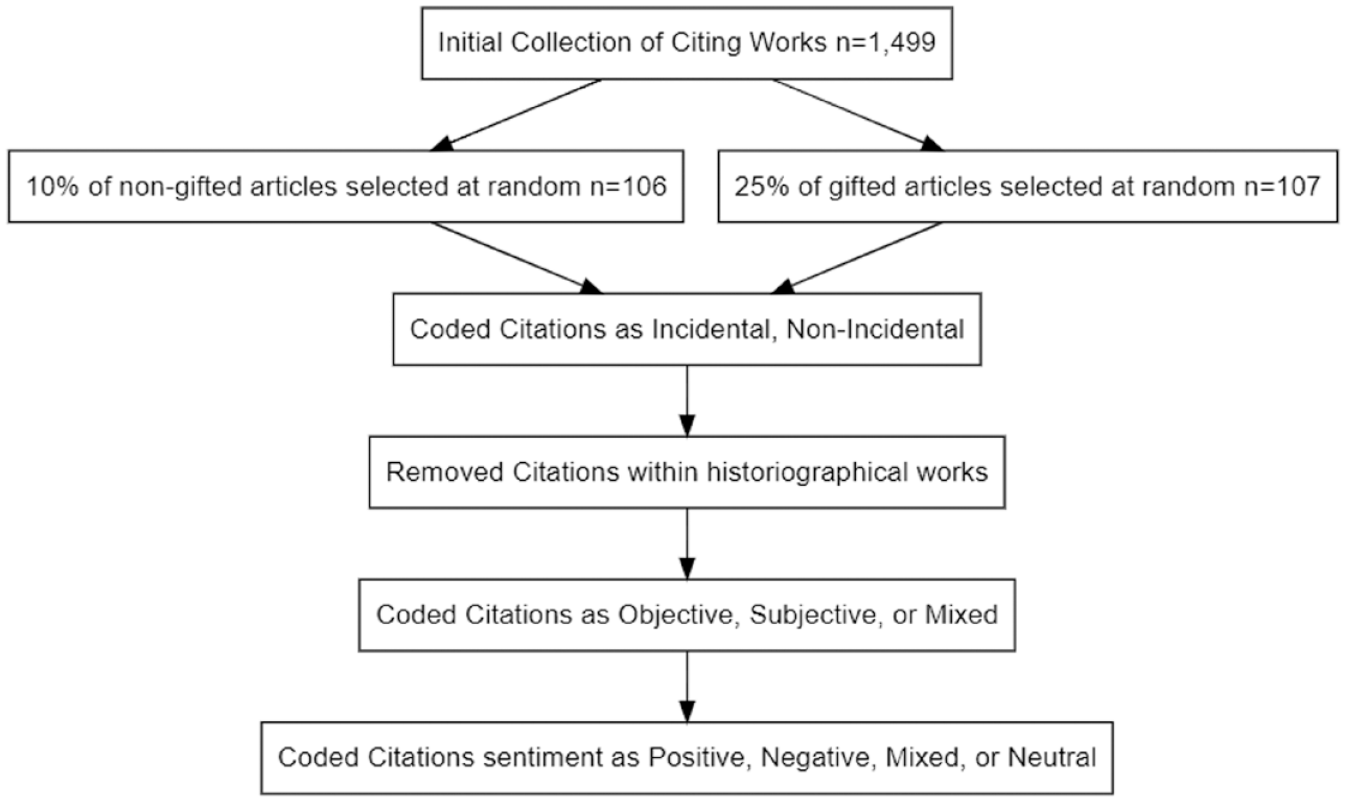
Flowchart describing the process of coding citations of Terman’s works.
Scope of Search
Our scope of search is scholarly academic works found within the English-language, peer-reviewed journals. We did not include books, gray literature (e.g., dissertations and unpublished papers presented at academic conferences), or works produced in non-peer-reviewed or non-English-language journals. As we are working to extend the findings from Hodges et al. (2021), delineating from the scope of search used by the authors would undermine our stated purpose.
Process for Obtaining Scholarly Works
Our unit of analysis for this study was the text of a scholarly academic work found in English-language, peer-reviewed journals that cited the Genetic Studies of Genius. We included only peer-reviewed journals to ensure scholarly rigor and quality (Jesson et al., 2011) and thus excluded non-scholarly journals and unpublished gray literature from our analysis. Furthermore, we excluded books from our analysis as they traditionally lack peer review (De Bellis, 2009).
Prior to beginning our content analysis, we first gathered those scholarly works that cited the Genetic Studies of Genius. To do so, we searched Google Scholar using the bibliometric software Publish or Perish 6 (Harzing, 2017). We chose to conduct our search using Google Scholar as opposed to other academic search engines or databases due to its comprehensive coverage (Martín-Martín et al., 2018). Estimates of Google Scholar’s coverage of the corpus of academic literature are calculated at 93% to 96% (Martín-Martín et al., 2018). Academic databases such as Web of Science and Scopus tend to have poor coverage of the academic literature in the social sciences, with coverage dependent on the country of origin and year the scholarly work was published (Harzing, 2019).
The next step in our data gathering was screening search results using our inclusion criteria. We performed a search for the Genetic Studies of Genius within Google Scholar using Publish or Perish 6. We conducted one search for each work, totaling seven searches. The output for a given Google Scholar search includes works that do not fit our inclusion criteria. Works that were outside the scope of our analysis were removed from the list of scholarly works. Furthermore, authors of scholarly works that met our inclusion criteria would cite more than one of the works within the Genetic Studies of Genius. In this case, we removed the duplicate works, leaving only a single instance of each scholarly work. The final count of unique citations of the Genetic Studies of Genius was 1,499 across 555 English-language academic journals.
Classification of Journals
We classified scholarly works based upon the academic journal in which they were published as either gifted or nongifted. Following our collection of citations, we then proceeded to classify the academic journals from where the citation originated. We used three indices to classify journals: Elsevier’s SCImago Journal Rank (SJR), Worldcat, and a university library. Our primary classifier was SCImago. The secondary was Worldcat. Our tertiary index was the university library. None of the three indices included all English-language academic journals that were included in our analysis.
Using these indices, we assigned a primary and secondary field. We classified journals as being gifted education journals if they were classified as primary (Educational Psychology) and secondary (Gifted Education). For example, an author who publishes a manuscript within the Journal for the Education of the Gifted publishes within the primary field of educational psychology and secondary field of gifted education. We used this approach to classify all the scholarly works that cited Terman’s Genetic Studies of Genius (N = 1,499).
Classification of Citations
To understand Terman’s influence upon the scholarly field, we sampled from our body of collected unique scholarly works that cited Terman’s Genetic Studies of Genius (N = 1,499) and analyzed how the authors cited Terman’s work. We drew the sample of citations using probability sampling (Elo & Kyngäs, 2008). Probability sampling involves randomly selecting a portion of citations to use in the content analysis. Furthermore, articles were not equally distributed across the time period analyzed. To create a representative sample of articles that would allow us to understand changes in citations over time, we further added weights to each article. These weights increased the likelihood of selection during probability sampling. Articles were weighted based on the number of articles within a given decade. Articles within decades with fewer citing articles were more likely to be selected. Using this technique, we sampled 10% of nongifted articles (n = 106) and 25% of gifted articles (n = 107). Our goal with this method was to exceed the minimum number of sampled articles needed to conduct a content analysis as described by Crowley and Delfico (1996). Note, we did not have access to all articles in our initial random selection of articles. When we were unable to access an article through our university or online, we randomly selected an article from the remaining pool to replace the unobtainable article.
Our classification of the citations of Terman’s Genetic Studies of Genius was completed in multiple steps. Our analysis team consisted of two faculty members and one research assistant. Citations were divided first into two groups: citations from journals classified as gifted education journals and those from journals not classified as gifted education journals. We followed the outline from Hodges et al. (2021) in their determination of gifted education journals.
To develop our classification scheme, we followed the guidelines described by Zhang et al. (2013). Particularly, we focused on two macro themes within Zhang et al.’s guidelines: type of citations (objective, subjective, and mixed) and sentiment of the citation (positive, negative, neutral, and mixed). Citations were also coded as incidental, nonincidental, and extensive (e.g., historiographies). Definitions of these terms and examples can be found within the associated Supplemental Text.
We evenly divided the 213 research articles that contained citations among team members, where each citation was independently coded by two team members. If there was a dispute among coders, the team met and discussed the dispute with the third team member providing input. The team then agreed upon the codes for the citation. To come to an agreement, the disputed citation was reviewed again by all three team members and then referenced with the coding sheet. In all cases, all three team members came to an agreement, and there was no instance with a split coding decision (i.e., only two of three team members arguing for one code). Further details of our classification scheme can be found within the associated Supplemental Text.
Results
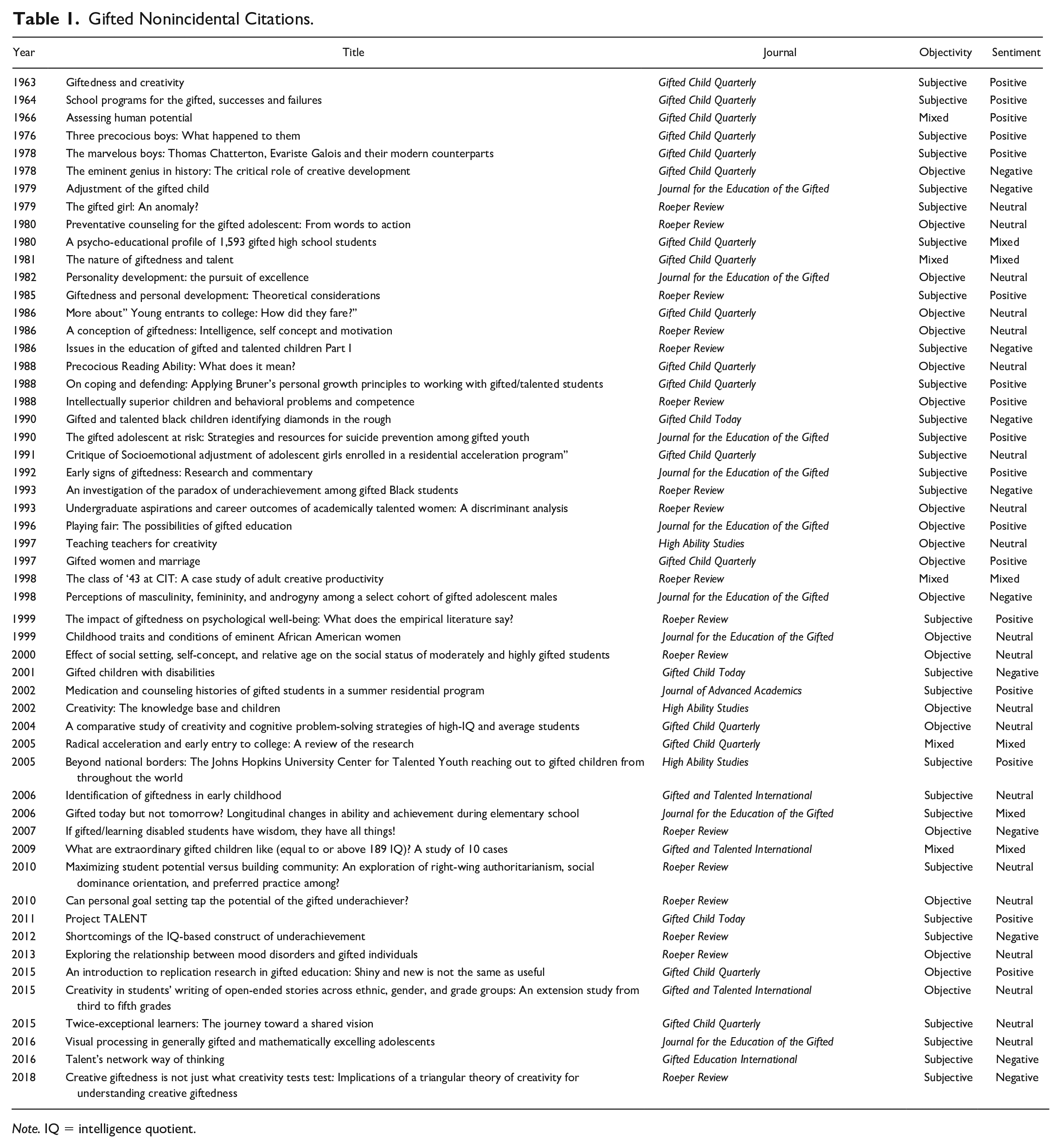
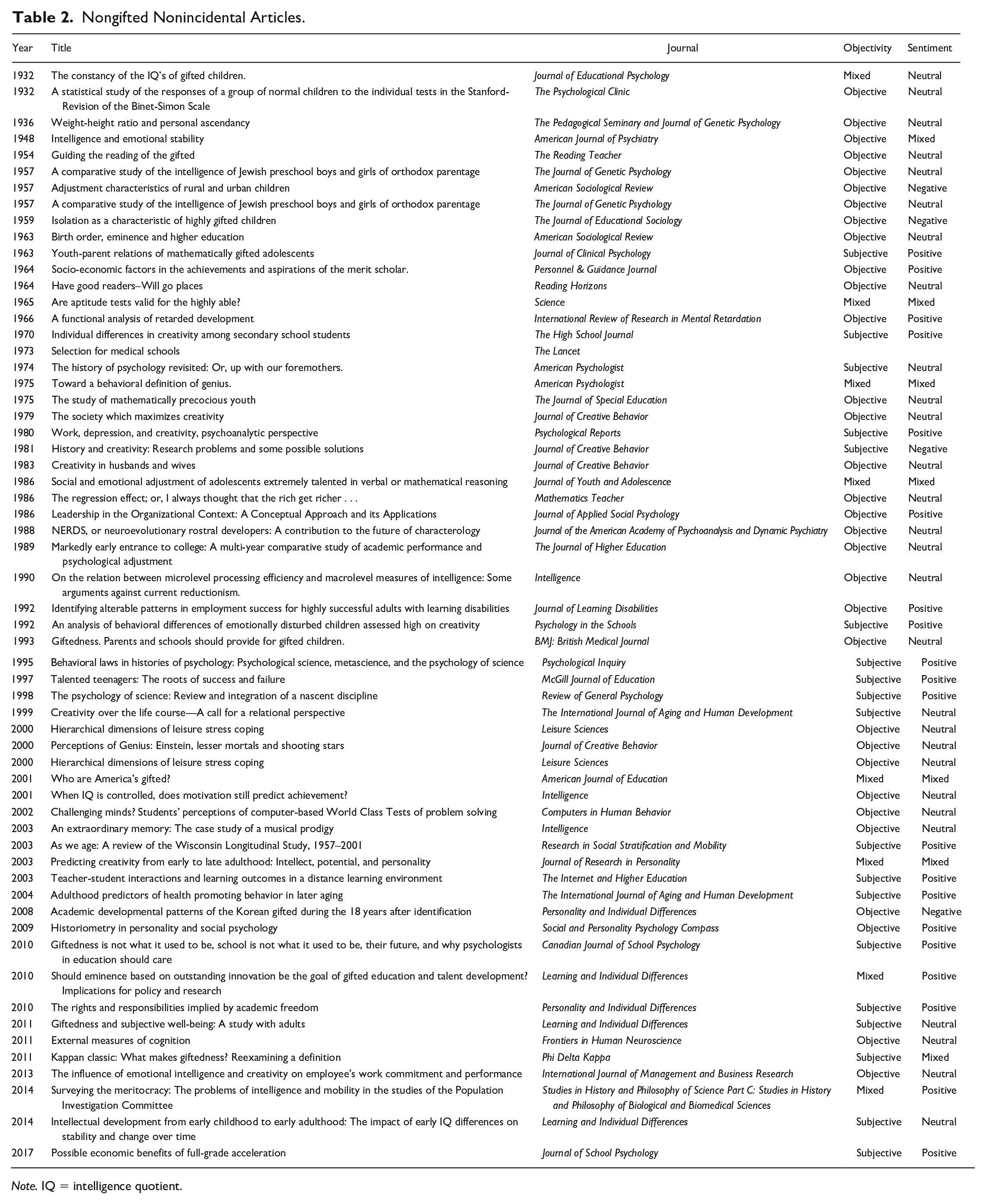
Tables 1 and 2 contain a list of scholarly works included within our analysis. Included in the list are the title of the scholarly work, year of publication, and journal where the scholarly work was published. Furthermore, all associated codes can be found in Tables 1 and 2.
Gifted Nonincidental Citations.
Note. IQ = intelligence quotient.
Nongifted Nonincidental Articles.
Note. IQ = intelligence quotient.
Articles Published in Gifted Education Journals
Objective citations
In this section, we provide overall rates of citations and select exemplars of the in-text citations classified as objective neutral, objective positive, and objective negative found in gifted education journals. A comparison of the pattern of citations between gifted and non-gifted education journals can be found in Figures 2, 3, and 4. The overall rate of nonincidental citations was 54 (50.47%) of 107 for articles published in gifted journals. From the remaining 53 incidental citations, 7 were classified as extensive and 46 were incidental citations. Of those 54 nonincidental citations, a total of 21 were classified as objective citations (19.63%). Within the objective classification, 12 were identified as objective neutral (11.21%). This provides evidence that the majority of citations of Terman’s work cited by articles published in gifted education journals are largely either incidental citations or objective statements regarding the methods or findings of Terman’s work.
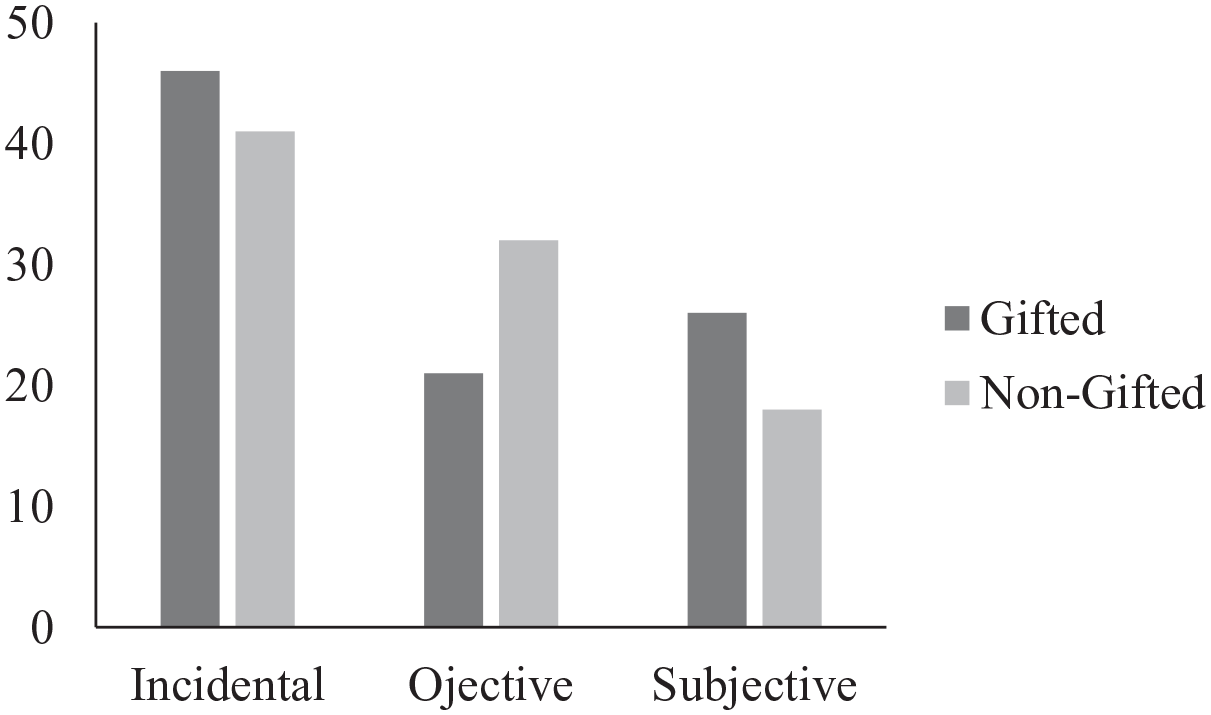
Frequency of incidental, objective, and subjective citations between gifted and nongifted scholarly works.
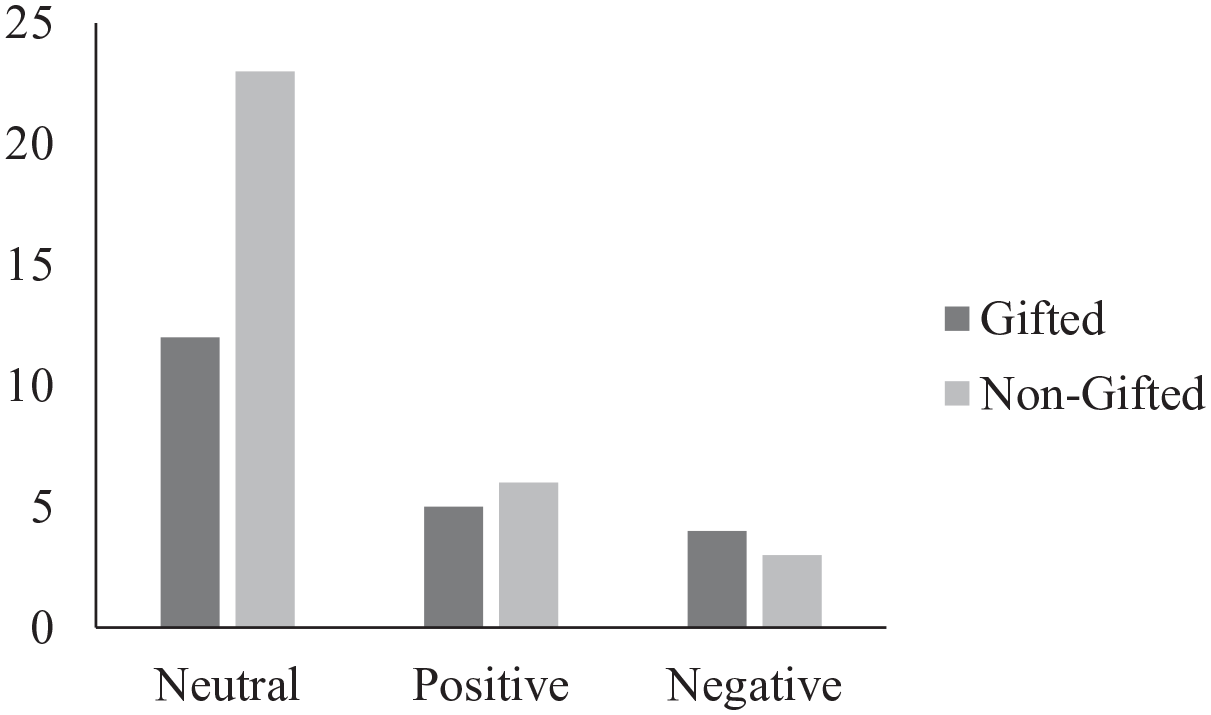
Sentiment across objective citations between gifted and nongifted scholarly works.
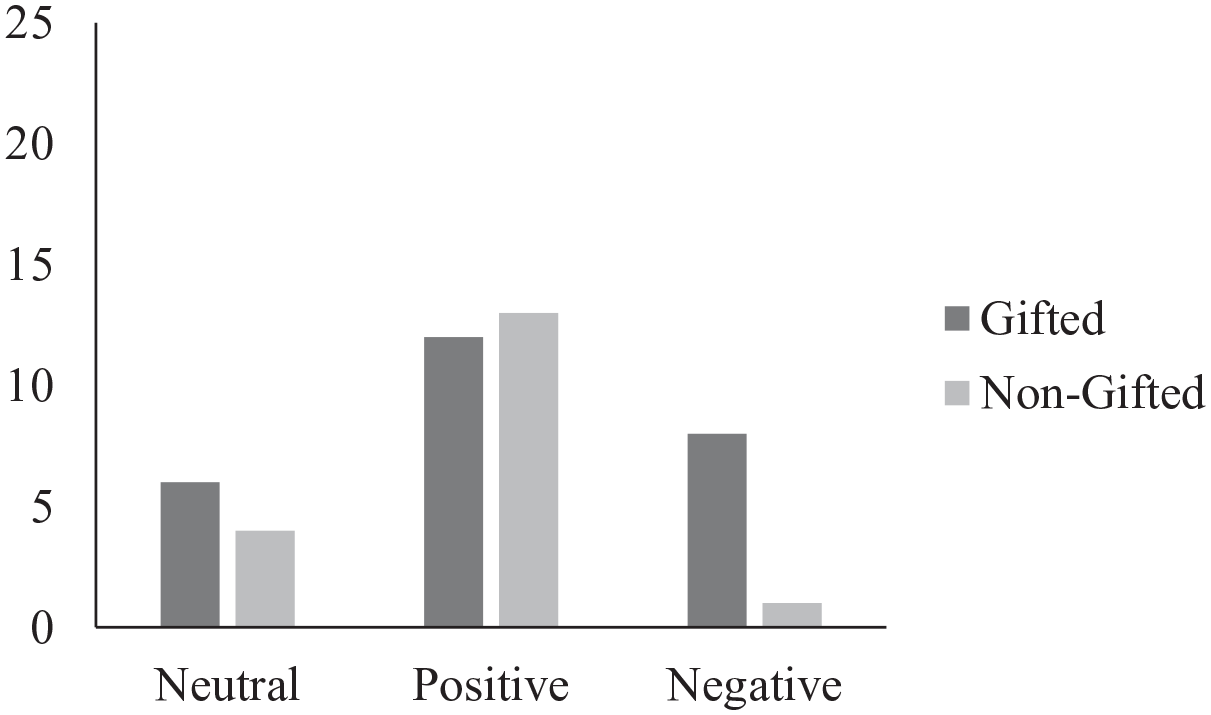
Sentiment across subjective citations between gifted and nongifted scholarly works.
The following textual example from different articles was classified as objective neutral and demonstrates how authors cite Terman’s work without interpretation/critique or particular sentiment. In the following objective neutral example, Freeman and Walberg (1999) referred to Terman and his colleagues work in an objective manner without sentiment, “Catherine Cox (1926), in collaboration with Louis Terman, selected about 300 highly accomplished people of previous centuries largely by the criterion of the number of words written about them in American, English, French, and German biographical encyclopedias” (p. 402).
Of the 107 articles we reviewed, only 5 contained citations of Terman’s work that we classified as objective positive. Below is a selection of textual examples classified as objective positive. Note that although these examples may provide positive qualifiers or support an argument or conclusion within the author’s manuscript, the classification remains objective because the authors refer to Terman’s work without interpretation or critique. For example, in their paper, Pendarvis and Howley (1996) provided two citations in the same paragraph with positive qualifiers and findings in relation to Terman’s work: Terman and Oden’s study (1959) study, for example, found many successful professionals and businesspersons among the population identified as gifted by virtue of childhood IQ scores in the 98th and 99th percentiles. An earlier study (Terman, 1926) had already associated these children’s physical and personal attractiveness with their high IQ. (p. 216)
In another example, Feldhusen (2002) discussed creativity as involving a thinking process that required a necessary knowledge base. He also referred to two different, positive examples of Terman’s work to support his own paper’s argument about creative children and adults: Creatively productive people in the Terman and Oden sample (1947) had often been accelerated in school and thus had large and advanced knowledge bases and were characterized by ability to stick with a task for a long time. (Feldhusen, 2002, p. 180) Those children in the Terman sample who went on to high level or creative achievement in adulthood (Terman & Oden, 1959) were characterized by their precocity (many had been grade advanced in school) and their strong motivation to persist at tasks. (Feldhusen, 2002, p. 182)
We coded four articles as objective negative (3.77%). This means that the rate of authors expressing alignment with Terman’s findings without subjective sentiment is <4%. Below is an exemplar of an in-text citation we labeled as objective negative. Simonton (1978) discussed Cox’s (1926) findings with a negative qualifier and described dissonance between their findings: Incidentally, it is worth pointing out that the positive correlation which Cox (1926) found between I.Q. and eminence is spurious. Even though her 301 geniuses are much brighter than average—more than four standard deviations above the mean—the correlation between I.Q. and eminence within the sample vanishes when a time-wise sampling bias is controlled (see Simonton, 1976a). (p. 189)
Subjective citations
In this section, we also provide overall rates of citations and select exemplars of the in-text citations classified as subjective neutral, subjective positive, and subjective negative found in gifted education journals. Of the 53 nonincidental citations, slightly more were subjective citations than objective. We classified 26 as subjective or close to a quarter of the total 107 citations (24.53%). Of the 26, we found that 6 articles were coded as subjective neutral. These citations were largely objective citations that included a qualifier or a qualifying statement. An example of this classification can be found in J. R. Cross et al. (2010) as they provided their perspective on the following, One of the persistent challenges in the field of gifted education has been finding appropriate, practical means of identifying gifted students. From the time of Terman’s (1925) use of an IQ test to identify subjects for his study of genius, various approaches to identification have been taken. (p. 237)
Twelve articles framed Terman’s work in a subjective positive manner (11.32%). In other words, authors who expressed positive sentiment regarding Terman’s work were more likely to do so in a subjective manner. The most common form of subjective positive sentiment was to describe the historical significance of Terman’s work. Two examples of subjective positive articles are provided. In a paper published more than 50 years ago, Karowe (1963) discussed with subjective and positive sentiment, “Probably the longest and surely one of the best studies on gifted children is that begun by Terman in 1921” (p. 165) followed by a description of Terman’s study. In another older publication, Montour (1978) stated her subjective and positive perspective that “The Early Mental Traits of Three Hundred Geniuses (Cox, 1926) established that the talented child is the father of genius” (p. 74).
Finally, we classified 8 articles as subjective negative (7.54%), which were fewer than the articles we coded as subjective positive but greater than articles coded as subjective neutral. A prime example of a subjective negative citation can be found in an article by Cline and Hegeman (2001) where they posited that, Stereotypic expectations work against gifted individuals with disabilities in two ways. Misconceptions concerning the gifted have been created by the Terman studies. Based on the longitudinal research which began with Terman (Burks et al., 1930; Cox, 1926; Terman, 1926; Terman & Oden, 1947, 1959) a wide-spread assumption existed that gifted children have high IQ’s, score well on achievement tests, exceed norms in all areas of development, are good looking, motivated, and mature (Cline & Schwartz, 1999). (p. 18)
Mixed citations
The third classification was for mixed citations. We identified six articles with citations that contained a mix of objective or subjective citations and/or positive, neutral, or negative sentiment (5.66%). For example, in Gross and van Vliet’s (2005) paper on a review of research on radical acceleration and early college entrance, two different subjective in-text citations have a mixture of sentiment regarding Terman’s work. The first example is positive using qualifiers such as “remarkable retrospective study,” while the second example includes a critical observation, giving it a negative sentiment: Cox’s (1926) remarkable retrospective study of the childhood and youth of 300 of the most eminent individuals of history, which was planned as a parallel study to Terman’s (1925) initial investigation of gifted schoolchildren in California and consequently focused on early indications of unusual precocity, likewise found that many of these highly productive adults, whether they were educated wholly or partly at home, entered university at remarkably early ages. (p. 157) Admittedly, the subjects of the Galton (1869) and Cox (1926) studies were selected on the basis of their remarkable lifetime achievements; equally gifted individuals who did not achieve remarkable adult productivity were not reported. (p. 157)
Articles Published in Nongifted Education Journals
Objective citations
We provide rates of citations and select exemplars of the in-text citations classified as objective neutral, objective positive, and objective negative found in nongifted education journals in this section. The overall rate of nonincidental citations was 60 of 106 (56.60%) for articles published in nongifted journals. From the remaining 46 citations, 5 were classified as extensive and 41 were incidental citations (38.68%). Of those 60 nonincidental citations, we coded 23 as objective neutral (21.70%), 6 as objective positive (5.66%), and 3 as objective negative (2.83%). The majority of citations outside gifted education journals that cite Terman’s work are either incidental citations or objective neutral ones. In contrast to our sample of gifted education articles, there was a notably higher percentage of objective neutral articles published in nongifted journals.
We provide two examples of objective neutral citations. In the first, Wallinga and Crase (1983) simply stated that “In a follow-up study of Terman’s gifted group, Oden (1968) reported that the 100 most successful men had wives who were more often college graduates than the wives of the 100 least successful men” (p. 277). In another example, Richardson et al. (2002) observed that “Terman (1925), Renzulli (1977), and George (2000), among others, characterize gifted students as possessing high ability, high motivation and high creativity especially when faced with problem solving” (p. 635).
In the following example of an objective positive citation, Bijou (1966) used the work of Terman and his colleagues to support a prior statement, On one hand, interactions with environmental events which reinforce, discriminate, and interrelate varieties of culturally serviceable behaviors are expected to produce individuals with large repertories of socially, intellectually, and vocationally valuable (highly reinforceable) behaviors. Reports by Terman and his co-workers on the background and achievements of high-IQ children and their offspring support this contention (Cox, 1926; Terman, 1926; Terman & Oden, 1947). (p. 10).
Finally, in the following objective negative citation, Burchinal et al. (1957) described differences between findings from Terman and other authors’ findings. The authors stated that, Burgess and Cottrell 1 and Schroeder 2 found that married persons who came from a rural or small town background tended to have somewhat better chances of happiness in marriage than couples who came from an urban background. This relationship, however, was not found by Terman and Oden 3 or by Locke. (pp. 81–82)
Subjective citations
We provide rates of articles classified as subjective neutral, subjective positive, and subjective negative and provide select exemplars found in nongifted education journals in this section. Of the 60 nonincidental citations, we coded 4 as subjective neutral (3.77%), 13 as subjective positive (12.26%), and 1 as subjective negative (.94%). The overall rate of positive sentiment was slightly higher or 17.92% for nongifted education journals versus 16.04% for gifted education journals.
In this subjective neutral citation example, Bernstein and Russo (1974) provided their subjective interpretation but without a particular sentiment toward Terman’s studies: All psychologists are familiar with the Terman studies on genius, but not many know that two of the volumes presenting the results of those studies were written by women (Burks et al., 1930; Cox, 1926), or that John B. Watson’s famous Albert experiment was coauthored with a woman (Watson & Rayner, 1920). (p. 132) A subjective positive example can be found in Offir et al. (2003), Non-intellective factors play a key role in determining the extent to which talented students fulfill their learning potential. The significance of a cluster of non-intellective traits has been identified by Terman and Oden (1959) in their 30-year follow-up study on high-IQ persons. Their study clearly indicates that traits such as persistence in the accomplishment of ends, integration toward goals, self-confidence, and freedom from inferiority complexes differentiated between achieving and non-achieving persons. (pp. 72–73)
Finally, in the only subjective negative example, we found in our sample, Bullough et al. (1981) provided a subjective interpretation and criticism of Terman’s work: Researching all those who have been significant creative and intellectual achievers in history is impossible even if time and resources are unlimited; historical data in many periods is far too meager to get any kind of personal or societal data. Cox (1926) had dealt with the problem by limiting her study to 301 individuals from 16 nations over four centuries. Though her study might be indicative of the backgrounds of 301 individual achievers, it is not necessarily an indicator of the backgrounds of those significant intellectual and creative achievers who were not included in her study. Moreover, by isolating individuals, many factors are ignored, such as interaction with a group which might or might not be important. (p. 104)
Mixed citations
We identified 10 articles with citations that contained a mix of objective or subjective citations and/or positive, neutral, or negative sentiment (9.43%). For example, in Brody and Benbow’s (1986) article on the social and emotional adjustment of verbally or mathematically talented adolescents, the authors had both subjective and objective statements that were positive in sentiment: This myth was refuted by Terman (1925) in his monumental study of 1,528 gifted children with IQs of at least 135. He found that his sample of gifted children tended to be superior to the general population in social and emotional adjustment. (p. 2)
Terman-Focused/Historical
In total, there were 12 studies that we classified as studies that extensively cited Terman’s work. These studies either were historical examinations of Terman’s work or utilized Terman’s sample. For example, Jolly (2008) wrote a historical examination of Lewis Terman’s work that described the positive and negative consequences that stem from Terman’s work. In another example, Borland (1990) used Terman and his work to compare and contrast the work and legacy of Leta Hollingworth. In the case of this article, Terman was not the focus of the historical examination but was used to compare another eminent scholar within gifted education. The following excerpt from Tania and Stocking (2002) is an example of how Terman’s work is cited as foundational in psychological and social comparisons of gifted and nongifted individuals: Research in the area of social/emotional functioning of gifted and talented students stems from the early work of Terman (1925) and Hollingworth (1926). Terman reported that his gifted sample exhibited lower levels of mental illness and adjustment problems and was psychologically and socially more stable than nongifted peers. (p. 91)
Furthermore, the authors made use of Terman’s data to conduct their own research as in Leibowitz (1974). The author utilized the Terman sample to demonstrate that Terman students who were accelerated realized greater economic returns than their nonaccelerated peers as they entered into the workforce earlier (and thus sacrificed fewer economically productive years within schools). Overall, these studies demonstrate the scholarly value of Terman’s work through historical examination and in the data he collected.
Discussion
Gifted Education
Within articles citing Terman in Gifted Education journals, authors cited Terman with the positive sentiment more so than the negative sentiment within our sample. More bluntly, positive citations of Terman’s outnumbered negative citations of Terman’s work, 3 to 1. A common theme across these citations was the historical significance of Terman’s work within the field. This is not surprising, as Terman’s work is consistently seen as foundational work within the field of gifted education (Jolly & Warne, 2019).
One important caveat to citations of Terman’s works by authors as historically significant or famous should be noted. Although Zhang et al. (2013) would ascribe positive sentiment toward such citations (e.g., saying a study is famous if positive and infamous if negative), an author’s statement that a study is historically significant does not indicate why the author believes that the study is historically significant. In other words, a declaration of historical significance cannot be deemed indicative of positive sentiment.
Aside from historical significance, one area where authors cited Terman’s work in a subjective positive manner was in Terman’s contributions to the field. Particularly, the authors noted that Terman’s findings were revolutionary in their time. For example, Delisle (1990) stated that “The longitudinal studies of Terman (Terman, 1926; Terman & Oden, 1947) helped to dispel the myth that a bridge connects giftedness with psychological disorders.” The revolutionary idea that Terman espoused was that being gifted did not make an individual more prone toward mental illness (Warne, 2019). These findings helped dispel common myths held at the time that gifted individuals were mentally unstable, maladjusted, and sickly (Bracken, 2012; Jolly, 2008; Lubinski, 2016).
Of those articles that were negative toward Terman’s work, eight were subjectively negative and four were objectively negative. Subjective negative citations could be found in Ziegler et al. (2012) where the authors discussed the inappropriateness of examining underachievement through the lens of IQ-based criteria; Leaverton and Herzog (1979) where the authors discussed the misuse of Terman’s findings within the K–12 system; Ford and Harris (1990) where the authors remarked how Terman’s foundational work led to underidentification of students who are Black for gifted services; and Sternberg (2018) where the author discussed how the field has an overreliance on intelligence testing stemming from Terman’s work. Of those citations that were objectively negative, two discussed shortcomings within Cox’s analysis of historical persons where the other one discussed how the field has evolved from Terman’s original findings. None of the negative citations state outright that Terman was incorrect but instead note the negative influence that his work has had on the field of gifted education.
Finally, an important point of reference when discussing Terman’s influence within the field of gifted education is the rate of incidental citations. In our sample, 38.86% of citations were incidental. This points to a substantial portion of perceived influence likely being less than it seems. It is important to note, however, that such a high rate of incidental citations is a consequence of a highly cited and influential work (Price, 1976).
Outside Gifted Education
In contrast to articles published within gifted education journals, articles published in nongifted education journals had a positive-to-negative sentiment rate that was >5 to 1. The bulk of those positive citations were also subjective rather than objective. This means that citations with positive sentiment were more likely to be ones that used a qualifier or positively framed Terman’s work rather than just stating that it aligned with their work or that their work supported Terman’s findings. Within those citations with positive sentiment, the most common meaningful word used was “monumental” (n = 4), followed by “well-known” (n = 3), and “classic” (n = 3). In other words, the majority of citations with positive sentiment were in regard to the historical significance of Terman’s works, similar to those citations within gifted education journals with positive sentiment.
Interestingly, of the citations with subjective negative sentiment, one was focused completely on Cox’s work (Bullough et al., 1981) stating that her sample was inadequate. Another article that contained a mix of sentiment included a citation with a subjective negative sentiment. In this article, Konstantopoulos et al. (2001) stated that Terman’s primarily descriptive method led to “somewhat anecdotal” conclusions. In other words, in the case of the two subjective negative citations, both were critiques of the methodological approaches with negative qualifiers. This contrasts the negative sentiment citations found in works published in gifted education journals where authors described Terman’s negative influence upon the field.
Similar to gifted education, incidental citations were the largest category of citation type with 41 of the works surveyed citing Terman’s work in an incidental manner. This suggests that cascading citations of Terman’s works happen outside gifted education as well as within. Given the overall large volume of citations of Terman’s work, high incidental citations that are indicative of cascading citations are expected (Price, 1976).
Implications for the Field of Gifted Education
Overall, is Terman’s work unique in how it is cited? Price (1976) and Zhang et al. (2013) would likely say no. The authors (Price, 1976; Zhang et al., 2013) would likely comment that the citation behavior surrounding Terman’s work is like that of other highly cited works. The high rate of incidental citations is indicative of the phenomena of cascading citations (i.e., a work accrued enough citations that it begins to be cited for being highly cited [Price, 1976]). Largely, within our sample, those scholars who cited the work with either positive or negative sentiment did so in the context of the influence or significance of the work rather than on the merits of its findings. As Zhang et al. (2013) would likely note, Terman’s works are being cited due to their place in the history of a field rather than due to the scholarly positioning of their findings in relation to Terman’s works.
Perhaps timelier, in the context of the response from NAGC to the special issue of Gifted Child Quarterly, it is very likely that the direct and contemporary influence of Terman’s work on the field of gifted education based on the review of citations is minimal. Scholars citing Terman’s work do so either because it is highly cited (indicative of the high rate of incidental citations) or because it is a historical study that is highly cited. Terman’s method, his findings, and his interpretation of those findings are not what is being cited within the current body of literature. The fact that NAGC’s response to the special issue labeled Terman’s work as “‘UN’SPECIAL” likely brings more attention to Terman’s work than it was receiving beforehand.
As shown in Hodges et al. (2021), citation rates for Terman’s works are decreasing and likely will continue to decrease. Terman’s work would continue to be cited, but it is likely those citations would be rarer outside historiographies or scholars reexamining the data Terman collected. The question that the field of gifted education must now wrestle with is whether to let Terman’s work fade into “historical significance” (e.g., a work whose primary citations are either incidental or, when nonincidental, do not reference Terman’s findings or conclusions) or to reexamine his work through a modern social justice lens. It is recommended that scholars choose the latter. While citations to Terman’s work may be fading, his legacy, particularly in the prevalence of IQ and cognitive assessments used to identify students for gifted programming, is still quite impactful (Borland, 2009; Hodges et al., 2021; Pfeiffer, 2015). For culturally, linguistically, and economically diverse students, cognitive assessments can be among the greatest barriers to their accessing gifted services (Hodges et al., 2018; Hodges & Gentry, 2021; Mun et al., 2016; Siegle et al., 2016). It is important for the field of gifted education to reflect critically on its origins and seek ways to move forward and reconcile itself with those origins in productive and inclusive ways.
Limitations
One limitation of this study is the classification system we used. We classified scholarly works based on the English-language academic journal in which they were published. We recognize that this is an imperfect approximation. A scholarly work can be published in an academic journal in one field while its influence may be seen in another field. For example, a recent publication within Gifted Child Quarterly described applications of machine learning within gifted education (Hodges & Mohan, 2019). The citations for this work appear outside academic journals associated with gifted education. In other words, although the scholarly work was published in Gifted Child Quarterly, it has had limited influence thus far on the field of gifted education.
Furthermore, although we sampled 25% of scholarly works that appeared in gifted education academic journals and 10% of scholarly works that appeared in nongifted education academic journals, it is possible that our results and conclusions are not representative of all scholarly works that cited Terman’s Genetic Studies of Genius. In particular, the rate of nonincidental subjective citations was 22.54%. Although we sampled a total of 213 (14.21%) scholarly works citing Terman’s Genetic Studies of Genius, the comparatively low rate of incidence of nonincidental subjective citations could indicate that our sample of nonincidental subjective citations is not representative of the larger corpus of scholarly works.
Conclusion
This analysis provides an in-depth look into the varied ways in which Terman’s work is cited in and out of the field of gifted education and brings awareness not only to the quantity but also to the quality of references made to what is often considered a seminal work. For the purpose of this analysis, explicitly defining the types of citations containing the works of Terman was important to effectively describe the integrity of the citations. The analysis demonstrates specific areas of consideration including a better understanding of how the work of Terman has become synonymous with IQ and intelligence and how its influence has extended beyond the field of gifted education.
This analysis found that gifted scholars are more likely to be critical of Terman’s work than scholars outside the field, evidenced by a nearly 3 to 1 ratio of positive citations in gifted education and a 5 to 1 ratio of positive citations outside the field of gifted education. This brings awareness to the need to better evaluate the use of Terman’s work and judgment of its actual influence versus its perceived influence potentially due to faulty citation practices, including over reliance on cascading citations. This is also a good reason why gifted-focused scholars should consider empirical evidence that has accumulated outside the field in the many decades since Terman’s research, such as in intelligence literature, to have a more balanced perspective on contemporary issues. The emphasis should be on what the rigorous evidence base shows to date. In addition, the results of this analysis bring to light how scholars use Terman’s work. Furthermore, the results raise the question about the pervasiveness of citations using Terman’s work compared with how pervasive the influence of Terman’s work currently is. However, while citation does not necessarily equal influence, it is important to note that this analysis does not discount racially biased practices that have been elicited by Terman’s work. With this understanding, scholars can be more conscientious of ways in which Terman is cited and of the integrity of these citations.
Supplemental Material
sj-pdf-1-jeg-10.1177_01623532211023596 – Supplemental material for Lewis Terman in Context: An Analysis of Citations of Genetic Studies of Genius Inside and Outside the Field of Gifted Education
Supplemental material, sj-pdf-1-jeg-10.1177_01623532211023596 for Lewis Terman in Context: An Analysis of Citations of Genetic Studies of Genius Inside and Outside the Field of Gifted Education by Jaret Hodges, Rachel U. Mun and Rebecca Johnson in Journal for the Education of the Gifted
Footnotes
Declaration of Conflicting Interests
The authors declared no potential conflicts of interest with respect to the research, authorship, and/or publication of this article.
Funding
The authors received no financial support for the research and/or authorship of this article.

Supplemental Material
Supplemental material for this article is available online.
Author Biographies
References
Supplementary Material
Please find the following supplemental material available below.
For Open Access articles published under a Creative Commons License, all supplemental material carries the same license as the article it is associated with.
For non-Open Access articles published, all supplemental material carries a non-exclusive license, and permission requests for re-use of supplemental material or any part of supplemental material shall be sent directly to the copyright owner as specified in the copyright notice associated with the article.
