



Abstract
Students report experiencing elevated levels of academic stress while in Advanced Placement (AP) and International Baccalaureate Diploma (IBD) classes. In response, we developed a classwide, preventative coping and connectedness curriculum, which consists of 12 50-minute modules for 9th-grade students enrolled in accelerated coursework. In this pilot study, we implemented the curriculum in 2 schools and sought user feedback. After describing the curriculum, we examine the acceptability of this social-emotional curriculum at three stages: prior to, during, and following implementation. Overall, all stakeholders—including students, parents, and educators—deemed the curriculum highly acceptable. Teachers, administrators, and parents rated the content and lessons as highly acceptable for addressing students’ academic stressors and development of necessary coping and strategies. Included is a discussion of these findings relative to prior acceptability research, including research with gifted learners, limitations, and the role of acceptability in the line of inquiry for this curriculum intervention development.
Advanced curricula, such as Advanced Placement (AP) and the International Baccalaureate Diploma (IBD) Program, have been recommended by scholars in gifted education as appropriate service options for gifted learners in high school (Feldhusen, 1995; Foust et al., 2009; Kettler & Hurst, 2017; Southern & Jones, 2015; Van Tassel-Baska, 2001). The pace, rigor, access to like-ability peers, and complexity of course content have been touted as benefits that appeal directly to the advanced cognitive development of gifted learners (Foust et al., 2009; Van Tassel-Baska, 2001). Scholars in gifted education also contend that gifted students’ educational development should not be limited to academic opportunities, but should include social and emotional development (Peterson et al., 2015; Peterson & Jen, 2018). Although students identified as gifted experience typical adolescent developmental milestones, gifted learners—due to their unique characteristics—experience these developmental milestones differently than their peers not identified as gifted (Peterson & Jen, 2018). Gifted students may have heightened sensitivities, particularly in response to environmental stimuli (Mendaglio, 1995) such as challenging coursework, as well as overexcitabilities (i.e., emotional, imaginational, intellectual, psychomotor, and sensual; Piechowski, 2013).
Although students who are gifted often perform above grade level in schoolwork, they may experience dissonance between their advanced cognitive performance and on or below chronological-age social and emotional development, a phenomenon known as asynchronous development (Niehart et al., 2002; Peterson & Jen, 2018; Robinson, 2008). Thus, being intellectually and/or academically advanced, yet chronologically on- or below-level in terms of navigating the social-emotional implications of these abilities can present gifted learners with challenges in effectively managing novel experiences or stressors (i.e., coping). Thus, gifted students may be emotionally at risk when they encounter college-level classes during their first year of high school at the age of 14 or 15 years, when they are also navigating the onset of adolescence along with a new educational environment and increased social demands inherent to high schools. Indeed, Moon (2002) noted that early adolescence is a time when gifted youth may have the greatest need for social-emotional supports given the simultaneous occurrence of increasingly demanding programmatic transitions and critical developmental milestones.
Although the literature points to the social and emotional risks gifted learners may experience, students who are gifted may be especially adept at hiding outward signs of difficulties (Moon, 2009). Without indication that students identified as gifted are struggling, educators may focus almost exclusively on cognitive aspects of learning and overlook opportunities for social and emotional learning (Moon, 2009). Gifted education researchers (Moon, 2009; Peterson & Jen, 2018; Robinson, 2008) have called for the inclusion of social and emotional components within the educational curriculum to address the seen and unseen affective needs of gifted children. While AP and IBD courses focus on the development of cognitive learning dimensions, which address gifted learners’ needs for intellectual stimulation (Foust et al., 2009; VanTassel-Baska, 2001), the inclusion of curricula addressing social and emotional development is warranted given the affective needs of gifted adolescents.
In this paper, we examine the acceptability of a newly developed social-emotional curriculum, consisting of 12 50-minute modules. Most modules focus on teaching students healthy ways to manage academic stressors experienced by students in accelerated high school coursework (Shaunessy et al., 2006; Suldo et al., 2008; Suldo & Shaunessy-Dedrick, 2013a, 2013b). Other modules build students’ skills in other factors associated with AP and IB student success (i.e., positive mental health and academic outcomes), including affective and behavioral forms of student engagement as well as eustress (Suldo et al., 2018). As the curriculum addresses students in AP and IBD, below we discuss both programs, stress among these students, factors associated with academic and mental health among this population, the need for a social-emotional curriculum to support AP and IBD students, and how to evaluate an affective curriculum.
Advanced Placement and International Baccalaureate
Both AP and IBD coursework have been recognized as appropriate curricular options for students who are identified as gifted and whose academic needs warrant accelerated learning opportunities (VanTassel-Baska, 2001). Indeed, AP courses have been touted as “the best large-scale option for bright students who want to take college-level courses in high school” (Colangelo et al., 2004, p. 2), and are the most-frequently pursued of all accelerated curricular offerings at the secondary level (College Board, 2017; Kolluri, 2018). Studies of talent search participants, or those scoring at or above the level of college freshman on college entrance exams while in middle school, indicate that these learners report AP as their most-often selected accelerated option due to the inherent rigor and intellectual stimulation of the coursework (Lubinski et al., 2001). Advanced Placement is a type of accelerated learning option (Southern & Jones, 2015) afforded to students who seek above-grade-level learning experiences (Callahan et al., 2015; Kolluri, 2018). The College Board (2020) offers 38 AP courses; in 2018 and 2019, AP exams were taken by students in Grades 9 through 12 (College Board, 2020). Following a push for access to advanced coursework for all learners, accessibility to AP courses increased (Kolluri, 2018). Despite this increased access to AP courses throughout the United States, significant racial enrollment gaps persist. Districts with a larger representation of Black and Hispanic students and disparities in race and income experience the largest AP participation gaps (Xu et al., 2019).
Although the IB Diploma Program is less frequently available in the United States and thus, fewer students enroll (College Board, 2017), the program has been heralded by the gifted community for its breadth, depth, rigor, and attention to cultivating both cognitive and affective skills in students (Hertberg-Davis & Callahan, 2014; Kettler & Hurst, 2017). The IB Diploma Program includes coursework in languages, science, mathematics, and literature (Chichekian & Shore, 2014). AP is offered on a course-by-course basis, whereas IB Diploma students enroll in a series of courses across six domains and complete benchmark assessments, including an extended essay and a service component (IBO, 2020). Students formally enter IBD courses in Grades 11 and 12, but in some states, such as Florida (Hamley & Walker, 2013), students may apply and receive admission into a Pre-IBD program serving students in Grades 9 and 10. Successful Pre-IBD matriculation leads to IBD coursework in Grades 11 and 12. The proliferation of Pre-IBD programs in Florida has led to the development of state-approved Pre-IBD coursework, including a course titled Inquiry Skills, designed to foster the development of educational goals and strategies for navigating courses and problem-solving (Orange County Public Schools, 2017).
Students who complete AP and IBD coursework are reported to experience positive post-secondary outcomes. For example, accelerated students experienced higher college acceptance, enrollment, and graduation than classmates who did not pursue accelerated coursework (Chajewski et al., 2011; Edwards & Underwood, 2012; Halic, 2013; Mattern et al., 2013). Honors college students who completed at least four IB courses in high school had higher scores on mathematics placement exams and greater college persistence than classmates who did not take IBD courses at one university (Conley et al., 2014). Likewise, students who completed AP courses were more academically successful in their first year of 4-year college than college peers who did not take AP (Shaw et al., 2012). Although there are many studies that have linked positive academic outcomes with completion of AP and IBD courses, other research has addressed affective considerations, including difficulties with managing school and social life (Foust et al., 2008), maintaining healthy sleep schedules (Foust et al., 2008), and coping with academic stress (Shaunessy et al., 2006; Suldo & Shaunessy-Dedrick, 2013b).
Stress Among Advanced Placement and International Baccalaureate Students
Perceived stress reflects stress experienced subjectively after one’s set of resources to deal with a given challenge are taxed (Lazarus & Folkman, 1984), while environmental stressors reflect the cumulative number of objective external events experienced (e.g., death of a family member, family move) that pose a threat to one’s well-being (Grant et al., 2003). The majority of research about the effects of elevated stress among youth has historically focused on adolescents at risk for dropping out of school, and has documented an inverse relationship between stress and quality of mental health (Galaif et al., 2003). Because of these established associations, the effects of stress on AP and IBD students’ mental health have been of interest (Shaunessy et al., 2006; Suldo & Shaunessy-Dedrick, 2013b). These studies showed relative differences between students in accelerated high school courses and general education courses such that AP and IBD students, by comparison, were more academically successful and have fewer in-school behavior problems (Shaunessy et al., 2006; Suldo & Shaunessy, 2013a) and have levels of emotional health (e.g., life satisfaction, internalizing symptoms of distress) that parallel those seen in normative samples of U.S. high school students (Suldo et al., 2018). Nevertheless, students in AP and IB students have significantly higher levels of perceived stress when compared to students in general education, even after accounting for personality and socioeconomic differences (Suldo et al., 2008; Suldo & Shaunessy-Dedrick, 2013).
Stress experienced by AP and IBD students stemmed from a relatively unique source of environmental stressors—academic demands, which referred to an overwhelming academic workload comprised of an extensive daily amount of homework and concurrent complex projects, combined with pressure to succeed (Feld, 2011; Milburn, 2011). In contrast, typical teenagers were more likely to experience academic struggles, including poor grades, challenges with course content, teachers, and a mix of social and transitional issues (e.g., Byrne et al., 2007). The responses to stress that AP and IBD students experience included chronic fatigue (Foust et al., 2008); maladaptive coping strategies, such as sleep deprivation, substance use, cognitive withdrawal, and self-isolation (Milburn, 2011); and emotional distress (Suldo et al., 2009). In prior research of IB and Pre-IB students, greater stress pertinent to academic requirements was strongly associated with more internalizing symptoms of mental health problems, reduced life satisfaction, and more externalizing problems (Suldo et al., 2009). Notably, the magnitude of these correlations was significantly lower among general education students. Such findings suggested that students in accelerated programs may be more sensitive to manifesting adverse effects of stress than peers not pursuing accelerated curricula, underscoring the need for educators to act proactively and provide these learners with skills to avoid the deleterious outcomes associated with stress.
Recent research provided a nuanced understanding of the stress, coping responses, and mental health of AP and IBD students (Suldo et al., 2018). Suldo and colleagues investigated predictors of academic success and mental health of 2,379 AP and IB students in Grades 9–12 from 20 AP and IBD programs in 19 high schools throughout one Southeastern state. The sample included sizeable numbers of students from groups historically underrepresented in AP and IB, with regard to race/ethnicity (i.e., about 12% of participants were African American, 12% Hispanic, and 13% multiracial; the remainder of the students were Caucasian [49%] or Asian [14%]) and socioeconomic status (i.e., 28% were eligible for free or reduced-price meals; about 37% of mothers and 44% of fathers did not have college degrees). Among the findings, most AP and IBD students performed well in their classes (about 75% had a grade point average at or above a “B” average; ≥ 3.0 on a 4-point scale), and by their own accounts, did well emotionally though more students appeared to be at risk for mental health concerns than might be expected given their positive academic adjustment. For example, on measures of general mental health, approximately 35% of the participants did not indicate positive levels of life satisfaction, and about 15% reported elevated symptoms of emotional or behavioral problems (Suldo et al., 2018). Regarding emotional experiences at school, more than 70% of students reported symptoms of school burnout, indicating they felt overwhelmed, inadequate, or cynical about the meaning of school (Suldo et al., 2018).
Factors Associated With Academic Success and Mental Health for Advanced Placement/International Baccalaureate Students
Recent research has attempted to discern what factors predict AP and IBD students’ academic success and mental health (Suldo et al., 2018). These predictors included those considered malleable, or those that may be “changed by the education system to improve student education outcomes” (Institute of Education Sciences, 2017, p. iv). The malleable predictors Suldo et al. identified were strategies used by students to cope with academic demands; aspects of students’ engagement within and outside of school; and perceptions of eustress (i.e., “desirable, and advantageous response to a stressor” [Branson et al., 2019, p. 321]) and authoritative parenting. These factors explained variability in AP and IB students’ outcomes (course grades and AP/IB exam performance) even after accounting for the robust effects of prior achievement (academic skills in middle school) and family socioeconomic level (Suldo et al., 2018).
With regard to strategies used by students to cope with academic demands, the category of approach coping was one of the critical predictors of better student outcomes (Suldo et al., 2018). Approach coping included six strategies: (a) time and task management; (b) seeking academic support from educators, tutors, and study groups; (c) seeking support from family; (d) positive thinking and other forms of cognitive reappraisal; (e) turning to spirituality, if applicable; and (f) relaxation (Suldo et al., 2015). In contrast, Suldo and colleagues (2018) identified different ways of coping that predicted poor mental health and/or academic outcomes. These coping strategies included avoidance and isolation. Avoidance strategies include (a) taking shortcuts, such as cheating in class or copying a classmate’s homework; (b) using illicit substances, such as alcohol, drugs, or another person’s prescription medications; (c) excessive sleeping; (d) abandoning schoolwork; and (e) skipping school (Suldo et al., 2015). In previous research of AP and IB students, isolation appeared as a typical form of retreating socially from one’s community, friends, and family to handle one’s problems independently, or to navigate difficulties without the assistance of others (Shaunessy-Dedrick et al., 2015).
In addition to coping, multifaceted student engagement emerged as a significant predictor of better outcomes among AP and IBD students. In particular, positive mental health outcomes and academic success were associated with students’ cognitive engagement and motivation, while affective engagement predicted better mental health outcomes (Suldo et al., 2018). Behavioral engagement, indicated by participation in structured extracurricular activities, yielded more modest associations with life satisfaction and academic outcomes when considered alongside other forms of engagement it promotes such as school connectedness (affective engagement). These findings about predictors of AP and IBD students’ outcomes aligned with previous research documenting motivation (Krumrei-Mancuso et al., 2013) and cognitive engagement (Robbins et al., 2006) as predictors of positive academic outcomes among college freshmen. Similarly, Blackburn’s (2018) discussion of rigor called for educators to address motivation through prompting students to consider the value of what they are learning.
Need for Affective Curriculum for Advanced Placement and International Baccalaureate Diploma Students
Accelerated high school coursework allows students the opportunity to learn advanced concepts and content while earning college-level credit. Students in accelerated high school courses, such as Advanced Placement (AP) or courses within the International Baccalaureate Diploma (IBD) program, reported enjoying courses that are academically demanding, learning with others who have similar goals and abilities, and learning from educators who provide stimulating learning experiences (Hertberg-Davis & Callahan, 2014). Colleges and universities often recognized AP and IBD coursework as rigorous (Kolluri, 2018; Perna et al., 2015), and, depending on a student’s performance on end-of-course AP or IBD exams, may award advanced standing (College Board, 2021; IBO, 2019). Despite these academic benefits associated with AP and IBD, students enrolled in these courses experience stress, which has been notably greater and qualitatively different from stress experienced by students who do not enroll in accelerated courses (Suldo & Shaunessy-Dedrick, 2013a). These differences in perceived stress between students in accelerated curricula and students in general education coursework are not present prior to high school, but can be detected by the end of the first semester of high school (Suldo & Shaunessy-Dedrick, 2013b).
Academic stress among students enrolled in AP and IBD, as well as the negative consequences of such stress on mental health and academic burnout, has become better understood in recent years (Shaunessy et al., 2006; Suldo & Shaunessy-Dedrick, 2013b). Negative sequelae of stress stemming from heightened academic demands include diminished personal happiness (life satisfaction), chronic fatigue, and reliance on maladaptive coping strategies (Feld & Shusterman, 2015; Foust et al., 2008; Leonard et al., 2015; Suldo et al., 2008, 2015). The absence of an appropriate social-emotional learning program to address the academic and affective needs of AP and IBD students also has emerged as a concern (Suldo et al., 2016). Such a program would prepare students to cope with the demands unique to the AP/IBD context (i.e., academic workload and achievement pressure), would provide instruction in the specific coping strategies and other resilience factors such as student engagement and eustress that predict success among AP/IBD students, and would be developmentally appropriate (i.e., for high school freshmen, as compared to youth starting college at a typical university). Taken together, the elevated, unique nature of AP/IBD students’ stress and potential consequences of unmanaged academic stress underscored the need for a multifaceted universal prevention intervention appropriate for this population.
The factors associated with success in AP and IBD that are arguably the most amenable to classroom-based instruction included skills in coping with academic stressors and/or engaging with school (e.g., managing time, engaging in extracurricular activities). Of the established coping interventions examined in peer-reviewed studies, many focus on perceived stress, which may be elevated for many AP and IBD students due to academic stressors, but few programs directly address management of academic stress or were created for use with high school students (Suldo et al., 2016). In comparison to the limited literature on coping applicable to students in AP and IB, even less was known about how to increase student engagement or motivation during the high school years for individuals not at imminent risk for school drop-out. Notably, none of the existing coping interventions addressed all six effective coping strategies that have been linked with AP, IBD, or Pre-IBD student success (Suldo et al., 2018); instead, interventions focused on a particular aspect of approach coping such as relaxation (e.g., through mindfulness strategies) or time and task management.
In sum, research-based social-emotional curricular supports for high school students in accelerated curricula are limited in the literature. The paucity of these supports was critical given the aforementioned stress elevations among AP and IB students, links between perceived stress and diminished mental health, and links between diminished mental health and reduced academic outcomes, such as GPA (Suldo et al., 2011), and lower rates of post-secondary education (Breslau et al., 2008). Having established a need for curricular supports for high school students in accelerated curricula, a critical next step involved determining if such curricular supports in the form of a universal intervention would be perceived by stakeholders (e.g., students, teachers, counselors, parents, etc.) as an acceptable approach to address this need. In the following section, the construct of curriculum acceptability is discussed.
Curriculum Acceptability
Studies pertaining to intervention development typically focus on the degree to which the intervention addresses a behavior of concern. A critical consideration for any intervention in schools is also an assessment of an intervention’s acceptability prior to implementation (American Psychological Association [APA], 2002; Council for Exceptional Children [CEC], 2014; Erchul & Sheridan, 2014; National Association of School Psychologists [NASP], 2010). Within the study of social validity, acceptability was the extent to which individuals deem an intervention as acceptable, fair, and reasonable for the problem under consideration (Lakin & Shannon, 2015). Research about treatment acceptability indicated teachers were more likely to choose an intervention if it aligned with their teaching philosophy (Carter & Pesko, 2008), and teachers were more likely to rate an intervention as acceptable if the treatment was minimally intrusive (Carter, 2007), if the intervention procedures were familiar to teachers (Han & Weiss, 2005), and if the intervention was easy to implement (Rademaker et al., 2021). Treatment acceptability has become widely recognized as foundational to “fair and ethical treatment” (Elliot, 2017, p. 271) in the delivery of services for children. Further, soliciting practitioner reactions to interventions were viewed as beneficial in informing the subsequent planning process for treatment implementation and were recognized as a step that can affect treatment fidelity and stakeholder outcomes (Elliot, 2017).
Despite these benefits, investigations of social validity—particularly acceptability—have not been as widely explored in the literature (Hurley, 2012; Tsai & Kern, 2020), as have effects of interventions. Researchers (Carter, 2007; Strohmeier et al., 2014) have lamented the fact that such investigations were rarely the primary goal of research, which they viewed as a missed opportunity since explorations of social validity—including acceptability—“can provide researchers with valuable information regarding the sustainability potential of the intervention” (Rademaker et al., 2021, p. 2). While acceptability can be assessed prior to and following intervention implementation, all too often, researchers have assessed acceptability after an intervention has been deployed and finalized (Carter & Wheeler, 2019; Hurley, 2012). Waiting until the intervention was finalized to solicit this critical input about the intervention can “seem too little too late since it is important to involve important stakeholders, like teachers from the beginning, and not after the job is already done” (Rademaker et al., 2021, p. 3). In this paper, at multiple points in the implementation process of the intervention we explored stakeholders’ views of whether the intervention was appropriate for addressing accelerated students’ academic stress and reasonable for use in high school classrooms (Carter, 2007).
Historically, acceptability research has been conducted in what (State et al., 2017) termed an indirect manner with mostly elementary school teachers. State and colleagues emphasized that there are no studies to date that documented teacher ratings throughout the process of intervention implementation. Whereas State and colleagues’ work focused on adolescent social and emotional behavior, their observations have relevance beyond their discipline. A limitation of State and colleges’ work was that while high school students were recipients of a behavioral intervention, only teachers’ perspectives were solicited about the acceptability of the intervention, when in fact students’ views may have added a critical dimension to the understanding of acceptability.
Evaluations of acceptability via participant and stakeholder ratings have been recommended to gain a broad understanding of the intervention (Lakin & Shannon, 2015). Raters may have included students, parents, teachers, administrators, and others associated with those implementing or receiving the intervention, all of whom may have viewed the intervention differently. Increasingly, researchers included voices other than, or in addition to, the teacher in examining aspects of social validity. For example, Worthen and Luiselli (2017) investigated high school students’ satisfaction and approval of a 10-week mindfulness intervention program, and (Tomaino et al., 2021) examined aspects of social validity through surveying parents and educators of students with severe developmental disabilities and high behavioral needs about the feasibility and effectiveness of distance learning programs during COVID-19.
Study Purpose
To address the social-emotional needs of AP and IBD students addressed in the literature, we designed an affective classwide intervention that targets ninth-grade students enrolled in accelerated courses and piloted this intervention in two schools. Hereafter, we discuss the classwide intervention as a curriculum because of its classroom context. This pilot stage was intended to inform us of the acceptability of the curriculum based on input from multiple reviewers prior to, during, and following the pilot intervention. This pilot stage served as an informational development stage in the curriculum design process that preceded a subsequent larger efficacy study (in progress; also see Ferron et al., 2021). In this pilot stage, we answer the question: Do stakeholders see this curriculum as an acceptable investment of instructional time in supporting high school students in accelerated curricula?
Method
Setting
The social-emotional curriculum consisted of a classwide intervention (i.e., a universal intervention) for ninth-grade students enrolled in AP and Pre-IB Diploma courses and was comprised of 12 50-minute modules as well as a follow-up intervention specifically for accelerated students who needed more one-on-one support (i.e., a selective intervention) in managing academic stressors. We selected ninth-grade students for the intervention based on the input of our local educational partners, which included district leaders, educators, and students involved with AP and IBD. Students, especially, emphasized the need for early intervention as students entered these accelerated programs and encountered academic stress during the first semester of high school. A long-term plan for AP and IBD student support included annual booster sessions to reinforce the central underpinnings, though these were not the focus of this paper.
Following an ecological model of environmental supports for students (Bronfenbrenner, 1977; Kelly, 1966), the classwide program included training of AP and Pre-IBD teachers in the philosophy and co-facilitation of the classroom intervention with the intervention development team. The teacher training materials mirrored those of the student curriculum in content, skills, activities, and media, and included facilitation guidance, notes about empirical research support for program content, and optional learning extensions. In tandem with the classwide program, parents were offered two information sessions after school hours that provided an overview of the goals of the student program and information on cultivating a home environment to promote student success. This pilot study was part of a larger, multi-year study. During this pilot year, we implemented the newly developed intervention in two school settings and we sought user feedback about the curriculum; in a subsequent year, we conducted an efficacy study involving more school sites and classrooms and investigated the effects of the curriculum on targeted outcomes. This paper focuses on the acceptability of the classwide curriculum (i.e., intervention) during the pilot year.
Development of a Preventative Coping and Connectedness Curriculum for Accelerated High School Students
Development of the classwide curriculum occurred in four stages: (a) conceptualization, (b) development, (c) refinement, and (d) reduction. These stages evolved specific to the project goals; a work plan developed by the research team, a partnering school district, and stakeholders at four district schools; and cooperation among the research team and various stakeholder groups. Students were introduced to advanced content on coping and engagement not typically examined within the high school curriculum (e.g., recognizing eustress; investing in and initiating relationships; and recognizing one’s role in making concerted plans to manage stressors). The curriculum also included a discussion of prior research findings and a tutorial on statistical correlations to provide students with a foundational understanding of the basis for the coping strategies discussed. In this sense, the content of the curriculum was above grade level due to the reading level of the materials as well as the depth and complexity of the issues and content explored. Scholars in gifted education have emphasized that advanced content and concepts are appropriate for learners who demonstrate the need for above-level academic opportunities (Callahan, 2006; Callahan et al., 2015; Robinson et al., 2007; VanTassel-Baska, 2001). Furthermore, the curriculum meets the NAGC (2019) Curriculum Planning and Instruction Standards, as it provides “advanced, conceptually challenging, in-depth, distinctive, and complex content,” and addresses both cognitive and affective needs of gifted learners (p. 10). The curriculum also included interdisciplinary connections and advanced processes, as well as opportunities for metacognition, all of which can be meaningful elements of curriculum for gifted learners (VanTassel-Baska & Stambaugh, 2006).
Advancing Coping and Engagement (ACE) Universal Curriculum Modules and Objectives.
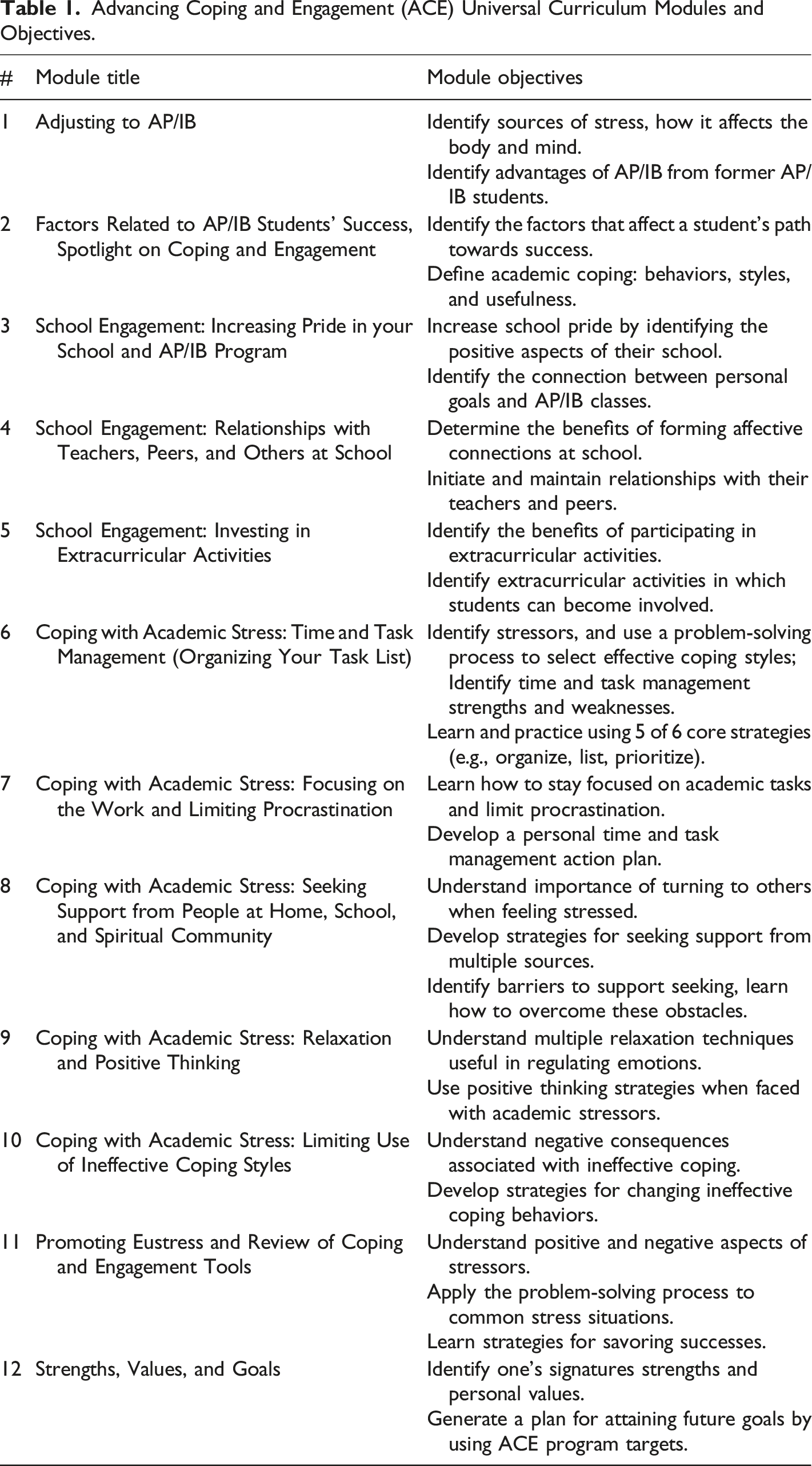
Content in the Advancing Coping and Engagement Curriculum
The 12-module ACE curriculum begins with a module focused on Stress to introduce the global concept of stress, to normalize stress as a phenomenon experienced by individuals of all ages, including by high school students in accelerated coursework. Multiple types of stress are introduced, as well as ways that individuals of all ages may experience stress. The second module focuses on coping as a means to manage stress; a variety of effective (approach) and ineffective (avoidance) approaches are identified. A rationale for effective approaches is offered in the context of a normative sample of high school students in accelerated high school courses.
After these introductory modules on stress and coping, three modules focus on cognitive and behavioral engagement in school. Module 3 seeks to increase students’ connectedness with school through building students’ motivation and capacity to form connections with their teachers, their academic program, and their school. Through the module, students learn the benefits of forming affective connections at school, increased their school pride by identifying the positive aspects of their school, and identify the connection between their personal goals and accelerated classes. In Module 4 students learn of prior research (Suldo et al., 2018) in which accelerated high school students who were connected to school tended to experience academic success and positive emotional well-being. Students learn about the benefits of forming affective connections at school, how to initiate and maintain relationships with both teachers and peers, and how to problem solve around potential barriers—such as transportation or schedule conflicts—that may arise in establishing connections with others. Students are provided models of how to initiate interactions at school with peers and teachers proactively before they may encounter challenges in school; they are encouraged to forge these relationships early in an academic year to minimize awkward communication that may arise should they experience a challenge and need to consult with these individuals for assistance. The 5th Module also addresses school engagement through extracurricular activities. Again building on prior findings with accelerated students (Suldo et al., 2018), students learn that AP and IBD students involved in extracurricular activities in their school or community performed better academically, had greater life satisfaction, and reported fewer mental health problems than students who were not involved in extracurriculars. In this module students also learn about the differences between extracurricular experiences and part-time jobs in terms of academic outcomes, well-being, and mental health based on prior research (Suldo et al., 2018) as well as the return on investment for hours spent in extracurricular experiences.
Modules 6 through 10 address coping. In Modules 6 and 7, students learn about time and task management, primarily through (a) organizing materials, (b) listing activities, (c) breaking large tasks down into steps, (d) managing time, and (e) prioritizing tasks. In Module 7 students are provided guidance on increasing task focus and reducing procrastination. In Module 8, students learn about cultivating a network to whom they can turn for support in their community when experiencing academic stress. This network might include the student’s family, teachers, tutors, counselors, coaches, older classmates, community members, and spiritual leaders. In Module 9 students learn about becoming fully present, recognizing their thoughts and feelings, and managing their reactions to circumstances, particularly negative emotions. Similarly, students learn about managing heightened states brought on by stress through relaxation techniques in order to self-regulate emotions. Students also learn the benefits of positive thinking in managing challenges and stressors. Though students learn about ineffective coping strategies in Module 2, this topic is revisited in Module 10 with a focus on avoidance and withdrawal, which are common strategies particularly as adolescents sought to problem-solve independently. Students are reminded, as with each module, of the empirical rationale for the recommended approaches. Students review effective coping strategies in Module 11 and also learn about eustress, a positive reaction to stress (Branson et al., 2019). In Module 12, students identify their signature character strengths, personal values, and long-term goals. Then, students create an individualized plan for how to apply the skills learned in prior ACE modules during pursuit of their long-term goals.
Refinement of the Advancing Coping and Engagement Curriculum
Demographics of School Populations and Student Participants in the Development and Implementation of the ACE Program.

Note. FRL = Eligible for free or reduced-price lunch. For Curriculum Development Year 1, 10 students did not complete the race/ethnicity questions.
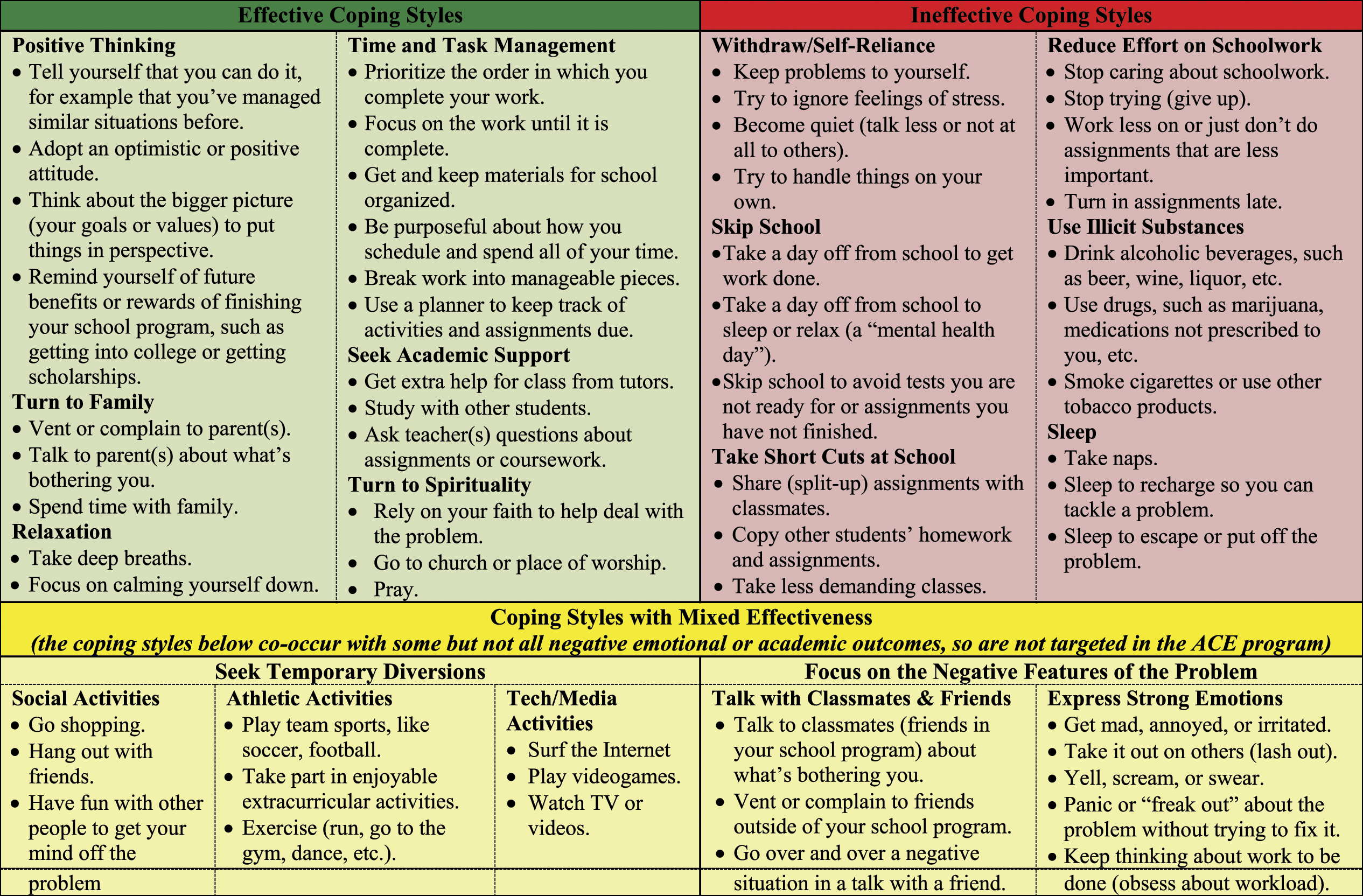
Coping chart for high school students in AP/IB classes.

Responding to academic stress: Coping behaviors and styles (additional information for back of coping chart).
Procedures for the Pilot Study
We partnered with two different high schools (C, D) in the same district to implement the ACE curriculum in 2016–2017. In July 2016, we provided a two-day summer institute for 11 educators from Schools C and D to review the ACE curriculum. Following this professional development/training, ACE was implemented at each site during the fall semester in 15 classes (6 Pre-IBD in School C, with 3 classroom teachers; 9 AP in School D, with 2 teachers) that served predominantly ninth-grade students 1 . In line with the sequence of modules displayed in Table 1, we implemented the first 10 Modules throughout the fall semester (August–November), followed by Modules 11 and 12 at School C in late November. School D was unable to redirect additional instructional time for Modules 11 and 12. Modules were facilitated on a weekly basis, primarily on Tuesdays or Wednesdays according to the school’s alternating day schedule (School C) or on Thursdays (School D). In a given week, each module was repeated 15 times, with different combinations of research team members and teachers taking lead and support roles in the delivery of content. In each combination of three adults, delivery was led by one of four members of the university research team (a faculty member in gifted education, two post-doctoral fellows in school psychology, and a doctoral student in school psychology). The classroom teacher co-facilitated by contributing to discussions and activities. The third adult present was an additional research team member (doctoral students and a university faculty member in school psychology) prepared to co-facilitate and provide individual assistance to students as needed but who primarily observed student reactions to activities. Immediately after delivery of a module, students provided acceptability data via surveys (discussed below).
We also invited all parents of students in the 15 classes to attend two parent information meetings. We held Parent Session 1 in September, approximately one month after the beginning of the academic year, then Parent Session 2 about two months later (November). During Session 1, we provided parents an overview of the purpose and features of the ACE curriculum, while in Session 2 we shared information about parenting practices and home environments associated with student mental health and academic success.
Participants
The 11 educators who took part in the summer institute included 6 AP and IBD teachers, 3 school mental health staff, and two Assistant Principals of Curriculum. Five teachers sought student participation and parent permission from all ninth-grade students enrolled in a state-approved Pre-IBD course, Inquiry Skills (School C), or AP Human Geography (School D). We invited students who returned signed parent consent forms to take part in the portions of the larger study that involved collection of personal and confidential data (e.g., assessment of student mental health and academic outcomes across time, as analyzed in studies reported elsewhere [O’Brennan et al., 2020; Parker et al., 2019; Suldo et al., 2019]) while all students in the classrooms where ACE was implemented were invited to provide anonymous feedback on their perceptions of the curriculum. A total of 331 ninth-grade students agreed to participate in the larger study (participation rate = 93.0%; 3.6% of parents declined consent; 3.4% of students did not return parent consent forms). As shown in Table 2, about 48% and 61% of student participants were White while more than half of participants from School C and 39% of participants from School D were from minoritized racial and ethnic groups. Seventeen parents attended Session 1 and 18 parents attended Session 2.
Measures of Acceptability of the Advancing Coping and Engagement Curriculum
Leading practitioner and professional organizations recommended that researchers consider acceptability as a part of their evaluations of interventions (APA, 2002; CEC, 2014; NASP, 2010). Acceptability refers to the way in which an intervention’s procedures were judged to be “appropriate, fair, reasonable, or intrusive” (Finn & Sladeczek, 2001, p. 63). NASP’s (2010) guidelines indicated that researchers examine acceptability at multiple points in the development and application of an intervention, including the planning stage, implementation, and evaluation. Likewise, CEC’s (2014) recommendations for acceptability focused on the subjective ratings of the intervention.
To develop tools for participants to use to rate acceptability, we reviewed existing measures of acceptability, such as the Treatment Evaluation Inventory (Kazdin, 1980), the Intervention Rating Profile (Witt & Elliott, 1985), the Treatment Acceptability Questionnaire (TAQ, Hunsley, 1992), and the Usage Rating Profile-Intervention (Chafouleas et al., 2009). We then developed an item pool for use in data collection as described below. The procedures we used to generate and review the items were critical in supporting the content validity of the acceptability measures (American Education Research Association, American Psychological Association, National Council of Measurement in Education 2014).
Student Acceptability of the ACE Program: Ease of Understanding (Q1), Amount of Material Appropriate for Timeframe (Q2), and Likelihood of Using Concepts and Skills Learned (Q3).

Note. Response scale ranged from 1 (Strongly Disagree) to 5 (Strongly Agree). The number of students who rated a given module varied due to the anonymous and voluntary nature of data collection. All students present for a given module were invited to provide ratings of the module they just experienced in class. For module 1 and most implementations of module 2, acceptability data were gathered using paper-and-pencil surveys. For some sections of module 2 and modules 3–11, data were gathered digitally as students were directed to access an online survey using cellular phones or other electronic devices.
Mean Educator and Parent Acceptability Ratings of ACE Program Student and Teacher Materials.

Note. Numbers in parentheses are standard deviations. Response scale ranged from 1 (Strongly Disagree) to 5 (Strongly Agree). Higher scores represented higher acceptability. In the top portion of this table, words presented in brackets illustrate how survey items were modified for use with parents.
Results
To summarize responses from the acceptability surveys, we examined item-level statistics (e.g., M and SD) across a respondent group who provided data at a particular time point. Scores of 4.0 and higher on the 5-point scale on items were conceptualized as indicating high levels of acceptability, in terms of a positive affective response to the meeting.
Acceptability Ratings Before Implementation of Advancing Coping and Engagement
After they participated in the summer professional development training, administrators, teachers, and school mental health staff indicated a high level of initial acceptability for the ACE curriculum based on their familiarity with the rationale, learning objectives, content, activities, materials, and examination of the student curricula during the summer institute. As shown in Table 4, mean ratings for the five items ranged from 4.82 to 5.0. Ratings also indicated a very high level of acceptability for the teacher materials with all average ratings exceeding 4.0.
Acceptability Ratings During Implementation of Advancing Coping and Engagement
We continued to monitor both parents’ and students’ acceptability ratings of the ACE curriculum during implementation. As shown in Table 4, responses provided immediately following both parent information sessions indicated that parents had a high level of acceptability of the student program. For each item, average ratings were equal to or exceeded 4.0.
As shown in Table 3, scores reflected a high acceptability of the intervention curriculum among the AP and IB students who participated in an ACE module. For each of the 10–12 Modules, the mean score within each curricular group exceeded 4.0 for items about the ease of understanding of the material presented, and the appropriateness of the activities for completion in a class period. Regarding their likelihood of applying the content of a given module inside and outside of school, both groups of AP and IBD students had positive appraisals of Modules that focused on developing coping skills involving time and task management (Module 6, Module 7) and relaxation and positive thinking (Module 9) as well as identifying and limiting use of ineffective coping responses (Module 10). For IBD students (School C), average ratings of usability exceeded 4.0 for modules focused on developing coping skills involving seeking social support (Module 8) or identifying one’s strengths, values, and goals (Module 12). For AP students (School D), the average rating of usability exceeded 4.0 for Module 3, which focused on building connections through increasing pride in one’s school and academic program. Ratings of usability for the remaining modules ranged from 3.75 (Module 5—building connections through investing in extracurricular activities) to 3.98 (Module 4—building connections through investing in relationships with people at school), which were still above the neutral point and quite close to the desired threshold of 4.0.
Acceptability Ratings After Implementation of Advancing Coping and Engagement
We continued to address acceptability of the curriculum post implementation from the four classroom teachers who had participated in the summer institute and hosted facilitators from the university research team in their classrooms. At this point, the teachers had not only become familiar with the curriculum during the summer institute and observed the implementation of the intervention, but they also had been privy to student discussions of the intervention both during the class and when the facilitator was not present. At the conclusion of the program, teachers maintained high acceptability of the ACE curriculum (see Table 4). For each item, average ratings were equal to or exceeded 4.0.
Discussion
This study assessed the acceptability of a new intervention, the Advancing Coping and Engagement (ACE) curriculum, developed to help ninth-grade students foster skills to connect to school and manage stressors commonly experienced during the transition from middle school to the first year of accelerated high school curricula. Ratings from multiple assessments of acceptability before, during, and after implementation supported that the curriculum is highly acceptable to all stakeholders. Such support for perceived value of any novel intervention from potential end users (in this case: teachers and administrators) and target audiences (in this case: students and parents) from design and development research was critical to establish prior to further investment of resources in efficacy research and dissemination (Institute of Education Sciences and National Science Foundation, 2013; Rademaker et al., 2021). Findings from the current study represented a first step in establishing the promise of an intervention grounded in research on the malleable factors associated with success among high school students in accelerated curricula (Suldo et al., 2018). This intervention addressed a critical gap in the literature, specifically the need for a social-emotional curriculum to support high school students entering accelerated curricula, a population prone to experiencing elevated stress due to enhanced academic demands (Suldo & Shaunessy, 2013a, 2013b).
Social validity findings from this study shed light on the potential sustainability of the intervention on the whole and with respect to particular aspects (modules). The ACE curriculum was designed to develop students’ skills in engaging at school, coping with academic stress, embracing eustress, and engaging in goal-directed behavior. Students’ ratings of each module suggested higher acceptability for curricular materials focused on coping, in particular those that cultivated skills. These high ratings were common across AP and IB groups for the following modules: Time and Task Management (Organizing Your Task List; Limiting Procrastination); Relaxation and Positive Thinking; Limiting Use of Ineffective Coping Styles; as well as the module intended to harness student motivation through examination of a student’s Strengths, Values, and Goals. While gifted learners are often advanced in cognitive abilities, they may not be as advanced in their social-emotional skills. Given that accelerated high school courses, such as AP, were offered for college-credit pending end-of-course exam scores, the asynchronous development (Peterson & Jen, 2018) of some students may be more acute at this stage of transition than at others, and may explain why some ninth-grade students who have previously been successful in school began to experience challenges in accelerated high school courses (Moon, 2002). It was notable that the modules students rated most favorably focused on skills that some may not have learned or refined prior to ninth grade, such as effectively organizing and prioritizing use of time, including time for studying and breaks/leisure. Learning these and other coping and engagement strategies may foster greater awareness in students of the importance of seeking opportunities to connect with others at school, whether these others are classmates in extracurricular activities, club sponsors, or friends and family who can serve as networks of support during challenging times throughout school (Skinner et al., 2013).
Most current acceptability studies ask consumers—typically elementary teachers—to rate proposed interventions after reading or listening to hypothetical vignettes describing the problem and proposed intervention (State et al., 2017). Notably, the current study involved secondary teachers and students, and solicited feedback about the intervention from educators prior to the interventions—when they had the opportunity to review it closely for several days, and following the intervention, after they had the opportunity to consider the totality of the intervention, reflect upon what they saw occur in their classrooms, and consider the effect of the intervention on their students on non-intervention days. We found that administrators and school staff who participated in the summer training and reviewed the ACE curricula materials across multiple days rated the program near the top of the response metric on each of the acceptability items. These same adults may have rated the intervention favorably due to the length of the intervention—about 50 minutes per week for 10–12 weeks—in line with other research suggesting interventions requiring less than three hours per day are associated with higher ratings of acceptability by educators (Elliott et al., 1984). Gresham (2009) hypothesized that acceptability measured after treatment has been initiated may be more accurate than prior to initiation because of teachers’ familiarity with the intervention. In this study, classroom teachers were present and partners in facilitating the intervention, so their thoughts about the treatment at multiple stages of the study are especially valuable in understanding the acceptability of the intervention. The finding that classroom teachers involved in ACE implementation maintained high acceptability after the loss of 10–12 classes of instructional time speaks to the high value educators with first-hand knowledge placed on the goals and usefulness of the program.
To date, few studies of acceptability involving interventions for gifted students or accelerated learners have been published. In a study of an affective curriculum targeting perfectionism, Mofield and Chakraborti-Ghosh (2010) addressed social validity ratings received from middle school students in Grades 6, 7, and 8 following the implementation of a 6-week curriculum. Likewise, following the implementation of a 4-week long series of lessons, Eker and Sak (2016) assessed the social validity of a creative thinking technique among 307 students in Grades 6–8. In both of these studies, acceptability ratings were collected following the intervention. The current study advances the literature on intervention acceptability in the field of gifted education by illustrating an example in which acceptability ratings were collected from administrators, teachers, and mental health staff before curriculum implementation; from students and parents during implementation; and from teachers following implementation. Further, this study solicited subjective judgments from stakeholders who represent a cross-section of individuals involved with the curriculum intervention, including the students, their teachers, parents, school mental health professionals, and administrators (curriculum coordinators of AP or IBD)—a host of individuals that has heretofore not been collectively represented in a single study, much less in a high school study.
As the acceptability ratings indicate, each group of stakeholders deemed the curriculum highly acceptable. Notably, students found the materials understandable and appropriate for the given class time allotted and also indicated that they were highly likely to apply what was addressed in the curriculum in the future. Parents, teachers, and administrators rated the content and lessons as highly acceptable for addressing students’ academic stressors, assisting students in developing necessary coping and strategies, and likely to positively affect students’ academic performance and mental health. These ratings provided evidence of social validation (Gresham & Lopez, 1996), a recommended benchmark for developing interventions.
Limitations
This study involved samples of students from four schools who were interested in participating in a study of AP and Pre-IBD students. These participants provided valuable insights about the curriculum and were an integral part of the intervention development process; however, students who participated may have been those who inherently saw the value of research as well as the importance of learning to cope with stress and navigate difficulties following academic challenges or setbacks. Acceptability will be most evident when we learn if teachers—provided with the curriculum described here—actually use it, and if evidence of the efficacy of the curriculum can be documented. Further, the majority of teachers, and parents who participated in the curriculum development identified as white females. In contrast, the racial diversity in student samples from schools A, B, C, and D is a strength of the study. It should be noted that because student acceptability ratings were anonymous to facilitate honest responding, it is not possible to determine if students from minoritized groups (e.g., Black or Hispanic students) had unique perceptions of the curriculum.
Implications for Future Research
This study from a pilot stage describes the development, implementation, and acceptability of a newly developed curriculum designed to provide ninth-grade AP and pre-IBD students with skills in managing academic stress through coping and engagement. To determine how the curriculum affects students’ academic performance and mental health, additional research is needed and some is underway (in progress; Ferron et al., 2021). This pilot study involved the collection of primarily quantitative acceptability data during implementation. Future studies may expand the evaluation of acceptability to include qualitative and quantitative data as well as formative and summative measures. In keeping with the aforementioned ecological model, parents’ perspectives about how students are responding to the curriculum at regular, repeated intervals during implementation would allow for additional insight, and additional data collection, such as coping and engagement journals maintained by students, may shed light on the frequency, application, and utility of these skills among AP and pre-IBD students. Pending support for positive impact of the ACE curriculum on student success, future research should also develop strategies for disseminating intervention training and implementation materials to the intended end users—educators of AP and IB students. The design and development work described in this manuscript reflects the initial stages of a multi-year process to develop authentic, acceptable, and applicable materials that were tailored to the specific educational experiences of students in accelerated courses.
Conclusion
Students new to accelerated coursework in high school may find the pace and academic demands challenging, particularly as they adjust to new social settings. To aid in the transition for ninth-grade students who enroll in programs that include AP courses and prepare them for the IB Diploma program, learning how to navigate academic stressors early and engage with their new school setting may be essential for continued academic and social-emotional success. The goals of the ACE curriculum are to build the factors associated with academic and emotional success among students in accelerated programs, which includes increasing representation of students from minoritized groups. In this study, the ACE program was piloted with more than 300 ninth-grade AP and pre-IBD students. The students involved in the development and initial implementation work were diverse with regard to accelerated program (AP or IB), gender, and racial and ethnic identity. Findings from this two-year study provide initial support for the acceptability of the ACE curriculum, which has been deemed an important first step in intervention development (APA, 2002; CEC, 2014; IES & NSF, 2013; NASP 2010). Perceptions of acceptability by students, their classroom teachers, their school mental health staff, and curriculum coordinators for AP or IBD indicate favorable reviews of each of the 50-minute learning experiences as well as the program on the whole. The positive subjective judgments of the ACE curriculum by the intended users and target audiences support a high likelihood of eventual treatment adoption (Lakin & Shannon, 2015; Von Brock & Elliott, 1987) pending subsequent studies that provide empirical support for efficacy of ACE in improving student outcomes.
Footnotes
Acknowledgment
The authors of this manuscript would like to acknowledge the assistance of the following members of the university research team: Kai Zhuang Shum, Camille Hanks, Elizabeth Storey, Amanda Moseley, and Joy Wang.
Declaration of Conflicting Interests
The author(s) declared no potential conflicts of interest with respect to the research, authorship, and/or publication of this article.
Funding
The authors disclosed receipt of the following financial support for the research, authorship, and/or publication of this article: The research reported here is supported by the Institute of Education Sciences, U.S. Department of Education, through Grant R305A150543 to the University of South Florida. The opinions expressed are those of the authors and do not represent views of the Institute or the U.S. Department of Education.
