




Abstract
This study features a content analysis of gifted education doctoral dissertation studies from 2006 through 2016 (n = 683) to identify the characteristics and shifts of the field. The major topics of the studies were categorized into the National Association for Gifted Children’s 16 networks and compared with the future directions suggested by the State of the States in Gifted Education report to locate the gaps between research and practical needs. The findings of this study not only outline gifted education’s significant features and trends but also provide an understanding of the evolving nature and insights of the field such as research methods, data sources, study participants, and journal publication rates.
Introduction
The field of gifted education, as well as research on giftedness, emerged at the beginning of the 20th century as an expanded field of educational psychology (Jolly, 2018; Jolly & Kettler, 2008). Despite its short history, the field has grown rapidly in the past few decades and developed its own distinct and significant body of knowledge (Dai et al., 2011). Currently, the field includes a broad range of topics and issues (Callahan et al., 2017) compared to its early research focused on the heredity, intelligence, and characteristics of gifted students (Jolly, 2004; VanTassel-Baska, 2018). However, Dai et al. (2011) insisted that due to the field’s lack of highly structured academic disciplines, gifted education research lacks coherent issues, conceptual clarity, robust methodology, and criteria. Accordingly, gifted education scholars have continuously argued for a long-term and well-established research base and the development of substantive practices for the education of students with gifts and talents (Coleman & Cross, 2005; Coleman et al., 2003; Dai, 2017; Hernández-Torrano & Kuzhabekova, 2020; Matthews et al., 2008; McCoach et al., 2003; Parker et al., 2010; Warne et al., 2012). In this respect, it is important to note, “regardless of where responsibility lies, rigorous examination of a field’s research is a way to identify critical priorities and practices” (Jolly & Kettler, 2008, p. 427). Therefore, as VanTassel-Baska (2006, 2018) asserted, a systematic and organized research agenda is necessary to move the field forward and synthesize the ideas and concepts that can be applied to develop policies and further practices.
To meet the needs of systematic content analysis of the research in gifted education, we investigated dissertation studies from 2006 to 2016 to explore and predict the field’s future direction. A comprehensive examination of doctoral dissertation research is meaningful given such analysis has the potential to indicate the research directions of the next generation of gifted education experts (Lekwa & Ysseldyke, 2010). The research topics, methods, and designs applied by candidates may provide additional critical indicators of the needs and challenges of the field. Given that the doctoral dissertation research uniquely provides renewed perspectives and an extensive understanding of evolving trends, patterns, and gaps (Maynard et al., 2014) in gifted education, it would help field experts to prepare and develop new directions.
Prior Content Analysis Research of the Field
There has been some research on the trends, issues, and research methods of the gifted education field (Carter & Swanson, 1990; Coleman et al., 2007; Dai et al., 2011; Friedman-Nimz et al., 2005; Hays, 1993; Jolly & Kettler, 2008; Parker et al., 2010; Rogers, 1989; Ziegler & Raul, 2000). For instance, Friedman-Nimz et al. (2005) found that research on giftedness and gifted education dramatically increased from 1969 to 2000. Ziegler and Raul’s (2000) review of articles published in 1997–1998, however, reported that the definitions and identification in the field of gifted education lacked consensus and relied heavily on practical convenience.
To be specific, Hays (1993), who examined articles published in Gifted Child Quarterly, Roeper Review, and the Journal for the Education of the Gifted through 1989, analyzed the publications’ topics compared with the National Association for Gifted Children (NAGC) networks. He found curriculum, instruction, creativity, and program development were the most frequently highlighted topics, and argued that the study reflected the practical concerns of gifted education. Jolly and Kettler’s (2008) analysis of gifted education research from 1994 to 2003 concluded that, on the contrary, there was a disconnect (e.g., lack of intervention studies) between the research priorities and recommendations made by the National Excellence: A Case for Developing America’s Talent report (U.S. Department of Education, 1993). Dai et al.’s (2011) study of 1234 articles from 1998 to 2010 on giftedness, gifted education, and creativity also revealed a gap between theory and practice (e.g., the difference between psychological understanding of the development of giftedness and its establishment via education).
In terms of the methods employed by researchers, prominent trends such as the emergence of qualitative studies and the dominance of descriptive research were also observed (Coleman et al., 2007); after analyzing 124 qualitative research published from 1985 to 2003 in major American gifted education journal, Coleman et al. (2007) proposed that researchers should systematically analyze the types of qualitative research being done. In addition, Rogers (1989), who reviewed articles from 1975 to 1986 (n = 870); Carter and Swanson (1990), who studied the 25 most frequently cited gifted education articles from 1972 to 1988; and Parker et al. (2010), who examined four premier journals in the field of gifted education (i.e., Gifted Child Quarterly, Journal for the Education of the Gifted, Journal of Secondary Gifted Education, and Roeper Review), concluded that the field lacked evidence-based, data-driven research.
Based on prior research, more recent bibliometric studies published within 10 years focused on specific topics to investigate current studies in the field (Carman, 2013; Hernández-Torrano & Kuzhabekova, 2020; Hodges et al., 2021; Long et al., 2014; Warne et al., 2012). For example, Hernández-Torrano and Kuzhabekova (2020) not only studied publications and citations of journals in gifted education from 1957 to 2017 but also investigated leading countries/regions, institutions, and researchers publishing in gifted education journals and their collaboration networks. Long et al. (2014) focused on research productivity and performance of journals with the topic of creativity sciences; Hodges et al. (2021) examined how Lewis Terman’s genetic studies of genius have influenced academia through a citation analysis; Carman (2013) conducted a content analysis based on the 104 empirical articles from 38 journals differentiating between gifted and nongifted students and described most common methods of identifying them; and Warne et al. (2012) investigated types of statistical methods used in gifted education journals from 2006 to 2010.
Identification and Special Populations Issues in the Gifted Education
The identification process has been a sensitive issue for a long time in the field of gifted education as it affects which students receive services (Davis et al., 2013; McClain & Pfeiffer, 2012). As a result of the controversy regarding using a single intelligence test or a one-time exam, a multidimensional approach is commonly accepted as the current identification process (Davis et al., 2013). For example, intelligence, ability/aptitude assessments, and academic achievement/performance tests may be used with a combination of inventories to evaluate students’ motivation, creativity, personality traits, and leadership along with nominations from teachers, parents, peers, and even gifted students themselves (Brown et al., 2005; McClain & Pfeiffer, 2012).
The State of the States in Gifted Education Reports in 2014–2015 (National Association for Gifted Children & Council of State Directors of Programs for the Gifted, 2015) and 2018–2019 (Rinn et al., 2020) also provided data on the current identification status of students with gifts and talents by state. 1 Based on the information supplied by the states (n = 33) in 2014–2015, the criteria/methods for identification were determined at the state level in 12 of those states and at the local level in 21 states. Most states (n = 19) had adopted multiple criteria to identify students, and all 19 specified at least two types of required information. The most frequently applied criteria were IQ scores (n = 13), achievement data (n = 13), nominations (n = 12), state-approved assessments (n = 9), and portfolios (n = 8). Among the 51 responded states in the 2018–2019 report (Rinn et al., 2020), the research team found that the majority of states (n = 38) had legal mandates to identify gifted and talented students; however, it noted that 13 states did not. The report also indicated that 30 states that provided data identified 2%–19% of the student populations for the gifted programming. When the respondents were asked if specific criteria or methods for identification were completely state-mandated, eight out of 51 revealed that they were completely state-mandated, 19 were determined partially by the Local Educational Agency (LEA), 19 were not state-mandated, and five responded “other.”
Concerns still exist regarding the identification process (Heller, 2004; Lee et al., 2021), particularly when identifying students from underserved groups (Carman et al., 2018; Collins et al., 2020; Crabtree et al., 2019; Peters & Engerrand, 2016), as our field has been often criticized as an elitist provision supporting privileged students (Gagné, 2018). Students from culturally different backgrounds or students from economically disadvantaged families are less frequently identified for gifted programs, which has been a long-held criticism of the field (Ford, 2010; Hodges et al., 2019; Lakin, 2018; Lamb et al., 2019; Lee et al., 2022; Matthews & Rhodes, 2020; Plucker et al., 2017). The 2014–2015 State of the States in Gifted Education report rated the “inclusion of underrepresented students” highest in its need for attention. When the 2018–2019 report asked each state to describe their efforts to close the equity gap, 24 states provided responses. The report shared common themes that emerged across states; (a) use of universal screening; (b) professional development related to the identification of underserved populations for GT teachers, specialists, coordinators, and administrators; (c) collaborative efforts with other relevant departments or institutions (e.g., district English Language Department, local university); (d) state mandate specifically addresses equity in gifted identification; and (e) state or federal funding specifically targeted to address equity in gifted identification.
Purpose of the Study
The purpose of this study was evaluative, descriptive, and historical in nature. We aimed to analyze what kinds of dissertations are currently being published in gifted education and to categorize the research strands over a specific time period (Thomas, 2003). Identifying the discrepancies between research and practice and reconciling this divide is important to move the field forward (Ambrose et al., 2010). Studying the trends, issues, and contributions over multiple years helps us to examine the past and present as well as plan for the future of the field (Hays, 1993). More research is required to comprehensively explain the findings and trends of gifted education. An analysis of gifted education dissertation research is one of the options that can be used to assess the current state of gifted education work (e.g., Anastas [2012] conducted similar studies in the social science field). Dissertation research conducted by doctoral candidates is a culminating project often based on their interest areas. Considering that dissertations are accomplished under a committee’s advisement, the dissertation can also mirror the personal and professional interests (Anastas, 2012; Maynard et al., 2014) of those with expertise in gifted education. In this vein, our research focused on analyzing an 11-year time span (2006–2016) of gifted education dissertation studies.
Research Questions and Hypotheses
What trends are evident in the field of gifted education from 2006 to 2016? 1. What are the trends of major themes, research methods, and data sources in gifted education dissertations over the past decade? 2. How is dissertation research being conducted and what are the major characteristics (i.e., data collection method, participants, school subject areas, rate of identification-related studies, and journal publication rate)?
For the first question, we hypothesized (a) the study of topics including special populations would increase over 11 years, (b) quantitative studies make up a majority of the studies alongside the increase of qualitative studies, and (c) the increase of the secondary data use given the findings from the previous research (Coleman et al., 2007; Dai et al., 2011; Jolly & Kettler, 2008; Maynard et al., 2014). Descriptive statistics and correlation analyses showing the relationship of the annual percentage of dissertations in the specified categories with the year were used to check the hypotheses. For the second question, although the dominant use of STEM compared to non-STEM subjects was expected in general (Jolly & Kettler, 2008; Matthews et al., 2008), we did not make any assumptions in terms of data collection method, data sources, study participants, the proportion of identification-related studies, and journal publication rates with its institutions. Descriptive statistics were used to answer this question.
Methods
Content analysis was used in this study to identify the major constructs of gifted education dissertation research. Weber (1990) explained that content analysis has been applied in diverse fields of study to show a field’s particular trends and the overall body of literature. Researchers regard the content analysis technique as a flexible method for analyzing textual data (Cavanagh, 1997; Tesch, 1990). It offers important information vis-à-vis the topics addressed, types of research, and even the professionals who contribute to the field. As such, content analysis can be useful in its general illumination of the field as it describes what has been accomplished in the field, which helps us predict future trends. In this vein, we explored what types of dissertation studies were conducted under several categories (they are described in detail in the Data Categories section). In addition, we added correlation analyses that reflect the relationship of the annual percentage of dissertations on the specified categories with the year, adopted by Maynard et al.’s (2014) study, to investigate whether there has been a substantial increase or decrease of certain topics or methods.
Data Collection
Dissertations were collected from an 11-year period (2006–2016), and we first retrieved the data in January 2017. Although not exhaustive, an 11-year period can provide a reasonable and considerable amount of data to investigate the trends and the features of the field (Maynard et al., 2014). ProQuest Dissertations & Theses Global was used as the source of the research sample. This database is well known for its comprehensive collection of dissertations and theses. A total of 683 articles (an annual average of approximately 62) were reviewed in this investigation. As shown in Figure 1, the dissertations were distributed almost evenly from 2008 to 2013, with an average of around 70 per year. The data from 2006 to 2007 and 2014 to 2016—the beginning and ending of the period in focus—have relatively fewer dissertations, with an average of 52 studies. Number of dissertations from 2006 to 2016 with topics related to gifted education.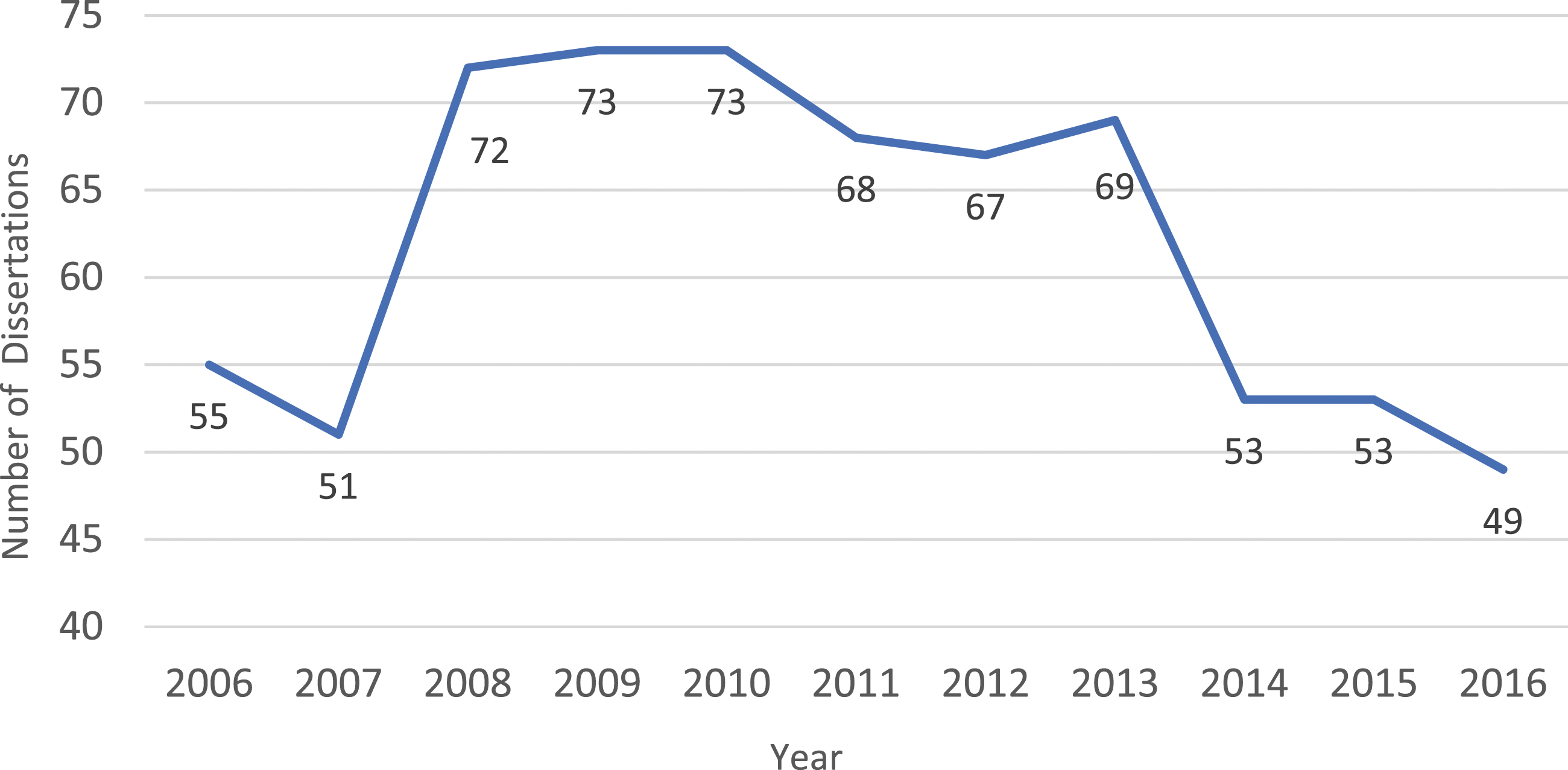
The database features directories divided into the following search criteria: year of publication, author and faculty, institution, keywords, main topic, options for a doctoral dissertation or master’s thesis, and language. In this research, we selected five key search terms: “gifted,” “talented,” “high potential,” “high achiever,” and “twice-exceptional.” Most of the results in the field of gifted education used the term “gifted” or “gifted education” as the first of several keywords. Although creativity is one of the topics that are popularly studied in the field of gifted education (Dai et al., 2011), we did not include this word because diverse fields (e.g., organizational behaviors and business leadership) also frequently study this topic, which yields exceedingly irrelevant study findings; as we were still interested in creativity studies in gifted education, we included them when the studies included the term of “gifted” as well.
After selecting the five search terms, “doctoral dissertation only” as well as the specific period of “January 1, 2006” to “December 31, 2016” were entered. The language was limited to “English only” so that no translation was required for the analysis. Then, the research team downloaded the 11 years of data.
We initially found 717 dissertations; however, we removed irrelevant manuscripts and a total of 683 studies remained. Among the 683 final lists, eight studies were conducted from the non-U.S. institutions (i.e., six from Canada and one each from England and Hong Kong). To determine whether a manuscript was relevant and should be included in this study, we read the title, abstract, and key words of the dissertation to determine whether the manuscripts corresponded to the field of gifted education. As a first step, the keywords of each dissertation were examined. Although the keywords sometimes included the terms “potential” or “talented,” these did not guarantee that the dissertation was related to gifted education. Thus, some of the manuscripts with these keywords were removed.
For instance, the dissertation Integrated Talent Management in Health Care: A Delphi Study (Ohnmacht, 2016) was included in the initial search results because it contained the keywords “high potential” and “talent”; however, other keywords such as “social sciences, health and environmental sciences, Delphi, leadership development, open systems theory, and succession planning” as well as the title itself revealed that this dissertation was not directly related to our field. Likewise, we removed several irrelevant dissertations by examining the keywords and titles. These manuscripts were from the fields of social science, psychology, natural science, and engineering. We also deleted some dissertations in the general education field that were not specifically related to gifted education. Examples include: (a) Facilitating a Transdisciplinary Approach in Teacher Education Through Multimodal Literacy and Cognitive Neuroscience (Krause, 2015); (b) The Effects of a Web-Based Mathematics Program on Student Achievement (Woody, 2013); and (c) Essays on Strategic Communication (Kolotilin, 2012). Although some search results included content related to gifted and talented individuals or high achievement, dissertations were also removed when they focused on adults or human resources. Examples of the deleted dissertations are as follows: (a) An Examination of How Participation in a Cohort-Based Leadership Development Program for High-Potential Employees Contributes to the Development of Leaders at a Major Professional Services Firm in the United States (Bialek, 2014); (b) The Talented Tenth Revisited: Socialization and Retention for Black Junior Faculty at HBCUs (Ellis, 2011); and (c) Tangible Versus Non-Tangible Recognition, Job Satisfaction, and Employee Loyalty of High Achievers at Nonprofit and For-Profit Organizations (Fernandez, 2012).
Data Analysis
To systematically identify the research trends and major characteristics of the gifted education field, we decided to analyze dissertations based on the following categories: (a) topics based on NAGC’s 16 networks; (b) research methods; (c) data collection methods; (d) data sources; (e) participants of study; and (f) other research evaluations including school subject areas, the proportion of identification-related studies and studies of underrepresented students, and a rate of connection to peer-reviewed journals and its location of publication.
We closely read each abstract and keywords to determine the nature of the research. When the features were ambiguous, the original chapters were read for accuracy. Each dissertation was coded to one category among the options (the options are explained in detail in the Data Category section), except for the data collection method and subject sections where we selected multiple categories described in the manuscript. We developed the final codes for each category after reviewing the first 2 years of the data. When we identified more than one possible category for the topic section, the abstract and/or chapters were carefully reread to decide the option that best represented the manuscript (Maynard et al., 2014).
The internal consistency and reliability of an analysis are critical to its findings (McCrae et al., 2011). To increase the study’s reliability, each of us 2 coded the first 2 years of data and discussed the discrepancies to standardize the coding method. Then, we each coded half of the remaining total data (4.5 years per person) and exchanged the coded files for cross-checking. When we disagreed, we discussed the coded segments until we reached an agreement. The initial agreement between the authors was 80.2%.
Data Categories
Topics Based on NAGC Networks
When categorizing the topics, we followed what Hays (1993) did in his research; we replicated his method by classifying the topics based on the 2016–2017 NAGC networks. Although many ways exist to divide and categorize research topics, grouping by NAGC networks can be one of the simple and practical ways to investigate the field. The NAGC networks are designed with a primary emphasis on exploring special interests, issues, and concerns within the broad field of gifted and talented education. The 16 NAGC networks (see Appendix) used as topic categories in this study were: arts; computers and technology; conceptual foundations; counseling and guidance; creativity; curriculum studies; early childhood; GLBTQ; global awareness; middle grades; parent and community; professional development; research and evaluation; STEM; special populations; and special schools and programs. Moreover, we subdivided the “special populations” category (e.g., ethnicity, income, and twice-exceptional) in this study to more comprehensively understand the trends.
After reading the abstracts, we categorized each dissertation into one of the 16 networks. We found that it was difficult to categorize some dissertations because (a) they fit multiple categories or did not clearly fit any category and (b) the network categories are not discrete. For instance, teachers’ perceptions of giftedness, gifted students’ perfectionism, and the effect of differentiation methods in the classroom are topics that were difficult to categorize with full confidence because of the two reasons indicated above. For the internal consistency of the coders, each network’s description and mission statement were referenced as guidelines.
Studies regarding the perceptions of administrators, superintendents, and teachers were categorized as “parent and community” members who directly support and serve gifted students. We decided to assign studies focusing on identification tests, the comparison of achievement test scores, and correlation studies that focused on statistical methods into the “research and evaluation” category. Dissertations covering topics such as classroom strategies and management, teaching–learning methods including differentiation, and diverse educational instructions were categorized into the “curriculum” section. Although these topics did not specifically deal with certain subject areas, they substantially contributed to developing curricula and standards. Studies on underachievers were designated as the “special population” category. Research on gifted students’ socioemotional aspects (including perfectionism) were placed in the “counseling and guidance” category. Dissertations regarding theories of development; growth mindset; self-concept; characteristics of giftedness; students’ perception and experience; leadership and policy; psychological concepts (e.g., metacognition); and discipline were allotted to the “conceptual foundations” category.
Rates of the Studies Related to Identification and Special Population
Specifically, we investigated the types and frequency of special population subgroups included in dissertations such as twice-exceptional, English language learners, and studies dealing with students’ race and/or family income. The final categories were “ethnicity,” “English language learner (ELL),” “low socioeconomic status (SES),” “twice-exceptional (2e),” “underachiever,” and “combined.” We also examined the proportion of the studies related to identification, given the topic’s longstanding history within the field.
The State of the States in Gifted Education Reports
The results of the topic categorizations were then compared with the State of the States in Gifted Education reports, which functioned as a research framework in this part of the study. The report is published by NAGC in collaboration with the Council of State Directors of Programs for the Gifted (NAGC & CSDPG, 2015; Rinn et al., 2020). It explores how states provide and support programs for students with gifts and talents and provided specific information such as identification, funding, and policies as a snapshot across the U.S. The 2018–2019 State of the States in Gifted Education was published in 2020. We, however, used the previous 2014–2015 State of the States report as a framework, for the following reasons: (a) the “future directions” section of the 2014–2015 report motivated us to start this project, (b) by the time we started working on this project (2017–2019), the new version of the 2018–2019 report was not available as it was published in 2020, and (c) the 2018–2019 version does not include the information we were looking for regarding the attention needed area; rather, it described the themes that emerged (i.e., importance of federal funding, integration into and collaboration with other district/state departments, and initiatives to improve gifted services/programs with a focus on equitable access) from the data received from several states (i.e., Colorado, Delaware, New Jersey, North Carolina, Ohio, and Wisconsin). Yet, it is important to note that the 2018–2019 report included similar items such as, “select which components of LEA gifted education plans must be approved by the SEA [State Educational Agency].” The report described: Of the 21 respondents, 20 indicated that “state-required components of the plan are approved at the state level.” Other components that must be approved by the SEA included “programming” (18), “identification process of gifted students” (17), “program evaluation” (15), “teacher training” (14), “definition of gifted and talented” (11), “personnel qualifications” (10), “family engagement/involvement” (9), “funding” (8), and “other” (7). (Rinn et al., 2020, p. 35)
The 2014–2015 State of the States Report data were collected from 42 states and the report offered a detailed profile of gifted education practices that strongly affect gifted and talented K–12 students. The survey conducted in this study was composed of closed-response questions as well as open-ended questions that asked respondents to provide detailed information on gifted education in each state. The 2014–2015 report was organized into ten categories: (a) state education agencies; (b) funding for gifted and talented education; (c) mandates to identify and serve gifted students; (d) accountability; (e) definitions of giftedness; (f) identification of gifted and talented students; (g) programs and services for gifted students; (h) staffing and personnel preparation; (i) related policies and practices; and (j) new developments, concerns, and future directions. According to this report (NAGC & CSDPG, 2015), “several key themes emerged from high rates of state responses to items regarding decentralized decision-making and accountability, limited service options, the importance of professional development, the influence of federal education law, and funding issues” (p. 11).
The “future directions” section of the 2014–2015 report was used in this content analysis paper as a foundational research agenda for educators in gifted education. The respondents of the survey were asked to rate the urgency, from the most-needed to the least-needed (i.e., a 5-point Likert scale range of 2 to −2) of 17 areas. Table 1 outlines the areas by descending order. The report (NAGC & CSDPG, 2015) stated: Ratings differed from the previous report. Of note, the inclusion of underrepresented students in gifted education (e.g., low SES, Black, Latinx, Native American, disabled, ELL, and rural) was singled out last time for the number of negative responses it received, yet this time it rated highest in need for attention (average 1.38). Funding for gifted education which ranked first last time, was fourth this time (average 1.19), following the need for a national mandate for gifted education (average 1.33) and pre-service training at the undergraduate level in gifted education (average 1.27). The theme of teacher professional development continued with professional training for general education teachers to provide gifted/talented instruction (average 1.16) ranking fifth. However, teaching standards for licensure/endorsement ranked next to last [(−.06)], just ahead of the state definition of gifted (−.64). (p. 35) Rank Order of Areas of Gifted Most In-Need of Attention. Note. Adopted from the 2014–2015 State of the States in Gifted Education Report (2015) and the means and ranks are calculated based on the information given; “Respondents were asked to rate the degree of attention needed to 17 different areas. Ratings ranged from most in need of attention to least in need of attention (coded from −2 to 2 in this analysis) (p. 48)”.
Research Methods
Each dissertation was coded into one of three method categories: “quantitative,” “qualitative,” or “mixed methods.” Most studies were successfully categorized based on their abstracts and methods sections.
Data Sources
We decided whether the dissertation used “primary,” “secondary,” or both “primary and secondary” data sources. National data collected by government agencies or regional data collected by the states or schools were regarded as secondary data whereas primary data were data collected by the authors themselves.
Data Collection Method
We categorized the data collection methods and coded the multiple options (e.g., survey, focus group, and achievement score) applied in the study. Triangulation, a technique that combines several sources, is widely used to facilitate validation (Casey & Murphy, 2009). The number of data collection methods used in each dissertation was categorized from “one” to “more than five.” The categories were “achievement score/grades,” “aptitude/ability test score,” “survey,” “scale,” “descriptive data,” “experimental design,” “artifacts,” “focus group,” “interview,” “narrative,” “observation,” and “other methods.” Any state or school-based test scores were categorized as “achievement score/grades.” Validated aptitude/ability tests such as the Wechsler intelligence test and Naglieri Nonverbal Ability Test (NNAT) were classified as “aptitude/ability test score.” Instruments such as motivation scales and teacher observation scales comprised “scale.” “Other methods” included lesson plans, fieldnotes, photographs, journals, vignettes, autobiographies, diaries, criteria, course syllabi, program reviews, teacher reports, personal reflections, policy reviews, and archival data.
Study Participants
Looking at the initial 2-year dataset (2006 and 2007), we realized that the majority of studies featured students from Kindergarten through university as participants, and few were conducted with nonstudents. The latter studies often focused on the perceptions of parents, superintendents, and teachers, both preservice and in-service. The final category options were “students,” “parents,” “teachers,” “administrators,” and “other subjects.” The “other subjects” category included participants such as program coordinators, counselors, psychologists, and professionals.
School Subject Areas
When studies were based on experimental designs, curricula, instruction, perceptions, or achievement, the researchers tended to mention the environmental setting as well as the subject areas. By analyzing this trend, we were able to identify which school subject areas were used least and most frequently in the study. These groups were “STEM (e.g., math, science, technology, and engineering),” “non-STEM (e.g., art, music, language, and social studies),” and “mixed (e.g., reading and math).” In this study, STEM was used as an umbrella category that contains science, technology, engineering, or math, rather than an interdisciplinary curriculum.
Rates of the Published Studies as Journal Articles
The dissertations published as journal articles were investigated by searching the authors’ names through ProQuest. We noted which journals became an outlet to publish the studies.
Results
Research Topics and Subgroups of Special Populations
Annual Percentage of Dissertation Topics Based on 2016–2017 NAGC Networks.

Note. r indicates a correlation of the topic used and the year.
Subcategories of Special Population in 2006–2016 Dissertations.
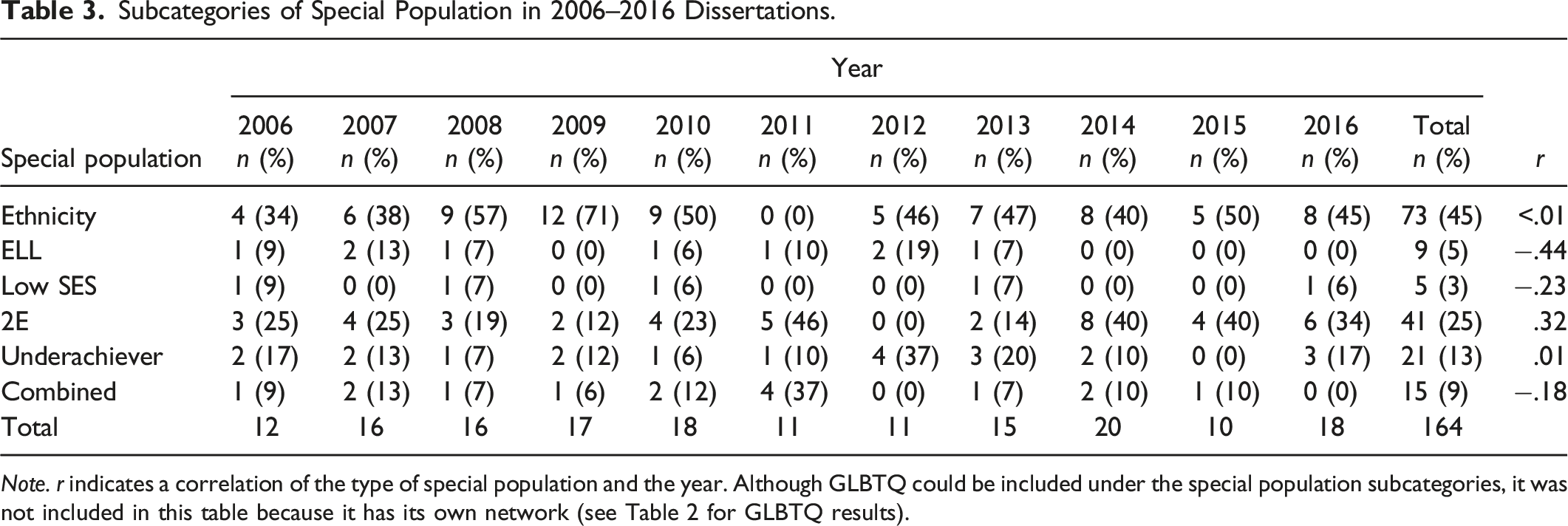
Note. r indicates a correlation of the type of special population and the year. Although GLBTQ could be included under the special population subcategories, it was not included in this table because it has its own network (see Table 2 for GLBTQ results).
Data Sources, Research Methods, and Data Collection Methods
Annual Percentage of Dissertations by Research Method and Data Source.
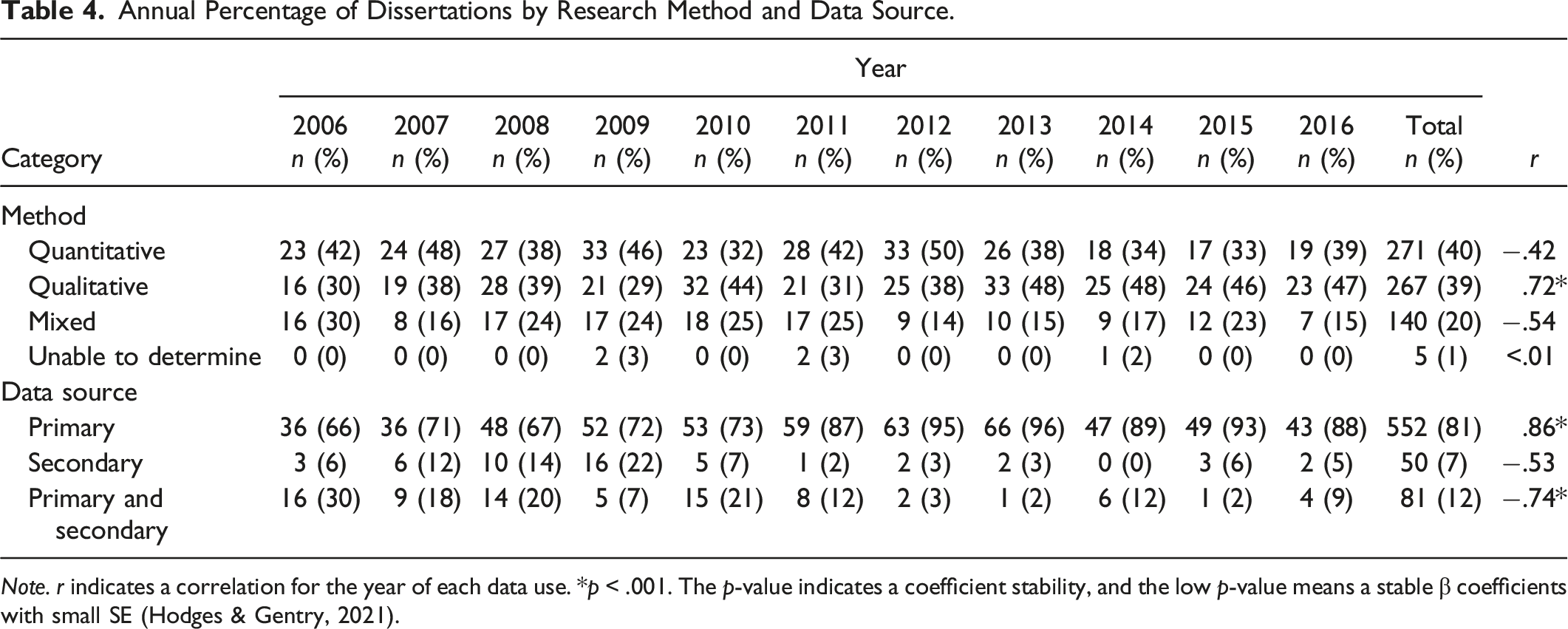
Note. r indicates a correlation for the year of each data use. *p < .001. The p-value indicates a coefficient stability, and the low p-value means a stable β coefficients with small SE (Hodges & Gentry, 2021).
The doctoral candidates almost equally employed quantitative (40%, n = 271) and qualitative (39%, n = 267) analyses in their dissertations. We also found a positive correlation between the publication year and the frequency of studies with qualitative analyses (r = .72, p < .001, ranging from 29% to 48%). For instance, 42% (n = 23) of the studies applied a quantitative method and 30% (n = 16) employed a qualitative method in 2006. In 2016, however, quantitative methods accounted for 39% (n = 19) of studies and 47% (n = 23) were qualitative methods. The result showing the increase of qualitative studies corresponded to our hypothesis; however, it did not meet our assumption that quantitative studies were overtaking the majority. They were almost equally addressed with the number of qualitative studies. On average, 20% (n = 140, 14%–30% annually) of the dissertations used mixed methods. It is worth noting that 1% (n = 5) used neither quantitative nor qualitative methods; instead, they studied curriculum development and/or reviewed gifted programs, and these were categorized into “unable to determine.”
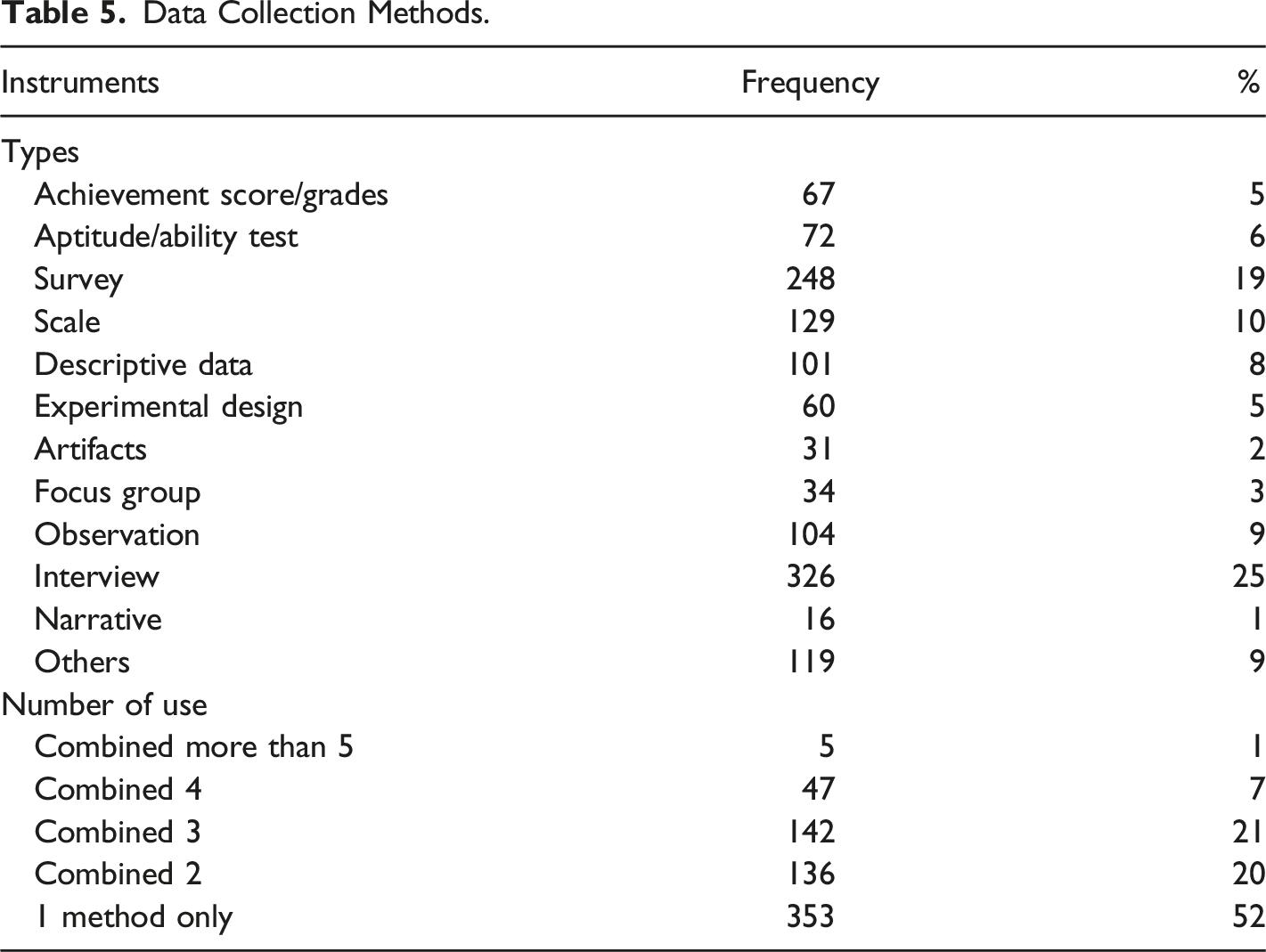
Data Collection Methods.
Study Participants and School Subject Areas
Percentage of Dissertations Related to Identification.
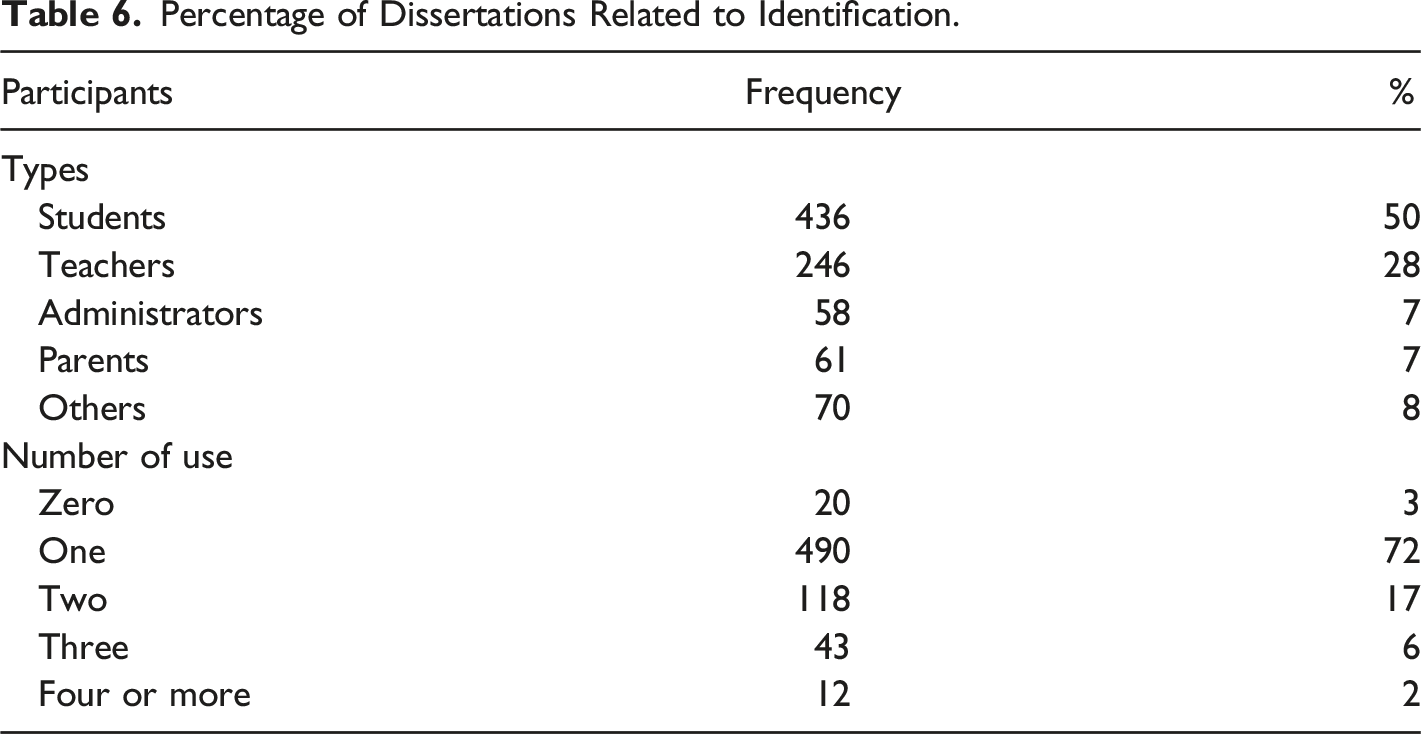
In terms of the school subject areas, 20% (n = 138) of the studies used at least one subject (content) area, whereas the remaining 80% of dissertations were not subject-specific. Among 138 studies, 51% (n = 70) of the studies used STEM-related subjects, 34% (n = 47) focused on non-STEM subjects (e.g., art, music, language, and social studies), and 15% (n = 21) combined both (e.g., reading and math). The hypothesis assuming doctoral candidates would research mostly STEM subjects compared to non-STEM subjects was substantiated from the findings.
Identification-Related Studies
Percentage of Dissertations Related to Identification.

Among those studies (20%, n = 138), 36% (n = 49) were related to identification perceptions or perspectives, 21% (n = 29) were validation studies of existing scales, 12% (n = 16) were related to policy, law, and funding. Only 3% (n = 4) were studies on instrument development and 2% (n = 3) focused on model development. Twenty-seven percent of the studies (n = 37) were categorized as other methods, with topics such as descriptive studies; bias and/or existing identification patterns; program effects on students who are identified as gifted versus those who are not identified; and alternative ways to identify students with gifts and talents who may not be identified with a traditional intelligence test.
Dissertations Published as Journal Articles
After completing their dissertation studies, some candidates published summaries of their findings in journals. A total of 51 dissertations (7%) were published as journal articles by January 2019, with an average of 4.6 articles per year. Two doctoral candidates published their dissertation work into two separate journals, which led to a total of 52 (7.6%) journal articles. We searched every author’s name via ProQuest to find out whether the dissertation works were published in the journal. We reviewed the article titles and abstracts to identify which papers were based on the dissertation studies. When it was not clear, we carefully reviewed the whole contents of both published articles and dissertations.
Dissertations Published in Journal Articles.
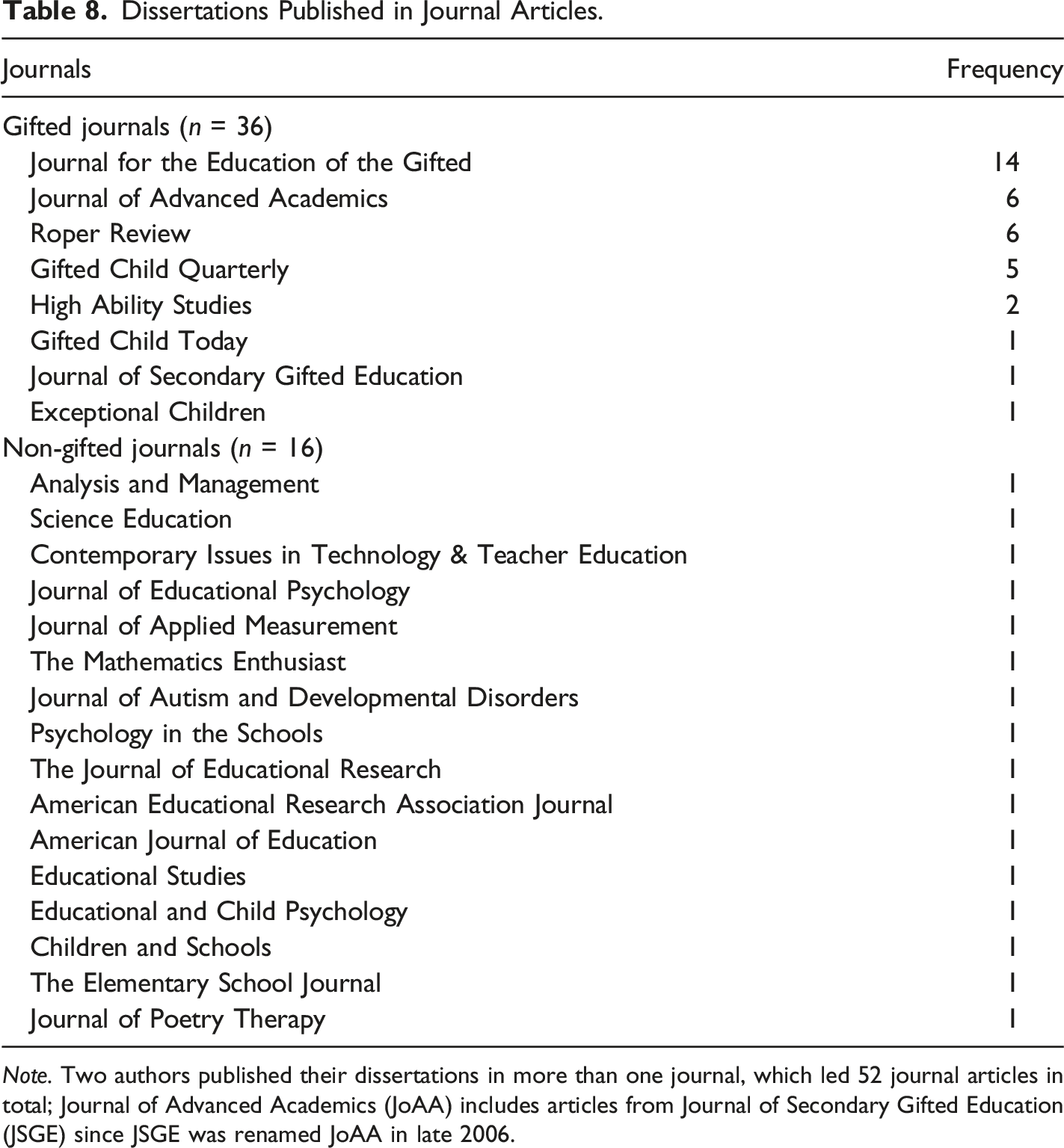
Note. Two authors published their dissertations in more than one journal, which led 52 journal articles in total; Journal of Advanced Academics (JoAA) includes articles from Journal of Secondary Gifted Education (JSGE) since JSGE was renamed JoAA in late 2006.
University List (Top 20) With the Number of Dissertations Related to Gifted Education and the Rate That Led to Publication.
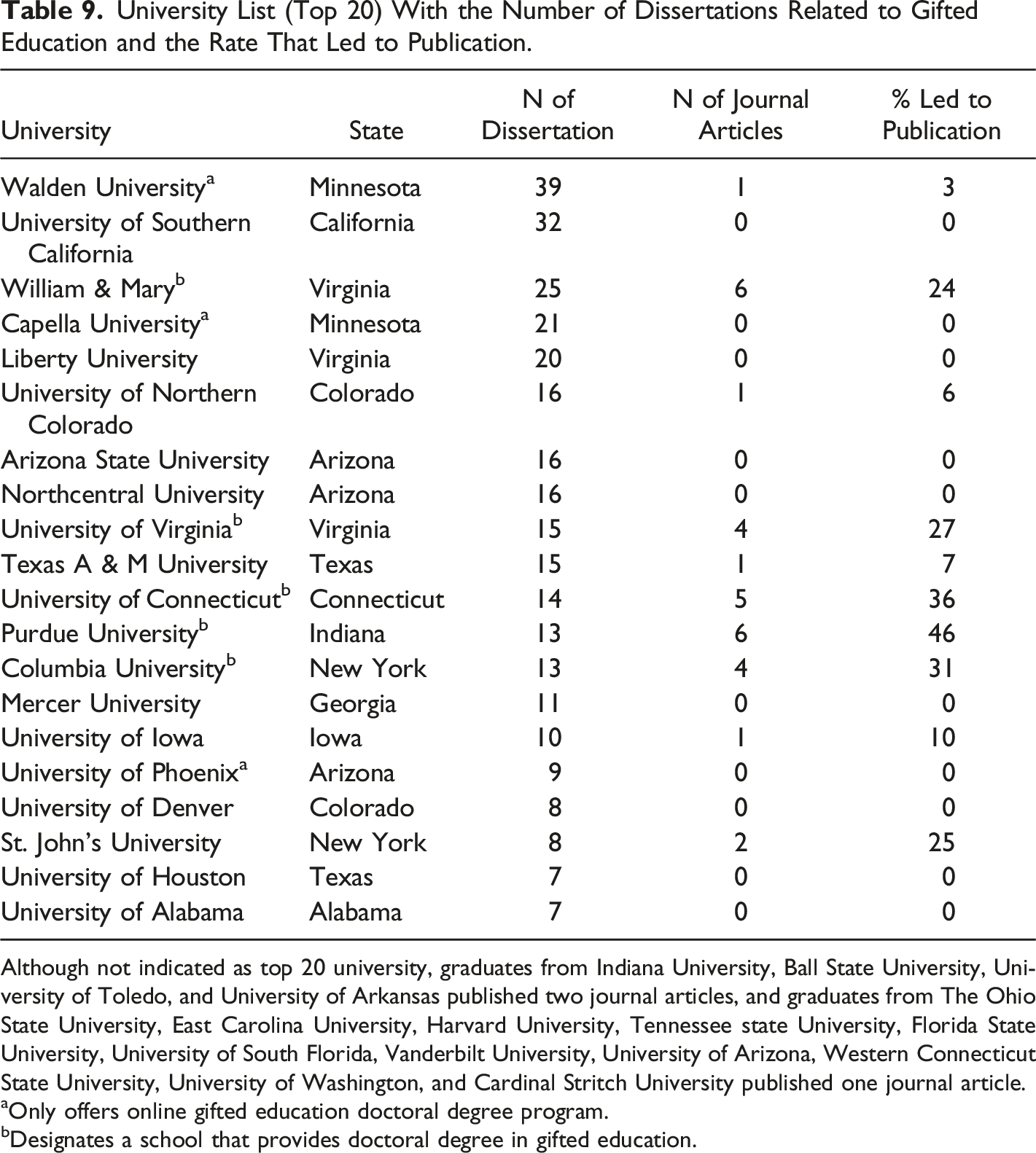
Although not indicated as top 20 university, graduates from Indiana University, Ball State University, University of Toledo, and University of Arkansas published two journal articles, and graduates from The Ohio State University, East Carolina University, Harvard University, Tennessee state University, Florida State University, University of South Florida, Vanderbilt University, University of Arizona, Western Connecticut State University, University of Washington, and Cardinal Stritch University published one journal article.
aOnly offers online gifted education doctoral degree program.
bDesignates a school that provides doctoral degree in gifted education.
Discussion
Preparing future scholars and understanding their interests is important to continuing and predicting the direction of the field (Maynard et al., 2014). Doctoral dissertation studies represent the perspectives of the future researchers in the field. This comprehensive study focused on an 11-year time span (2006–2016) to identify the trends and characteristics of emerging gifted education researchers. Our findings suggest important insights and status of the current trends in research topics, methods, data collection, data sources, participants, and comprehensive research evaluations including school subject areas, identification rates, and journal publication rates and its location of the studies.
Topics Based on NAGC Networks and Rates of Identification and Special Population Studies
One area of interest for our study was identifying the trends and priorities of dissertation topics compared with the attention areas of the 2014–2015 State of the States in Gifted Education report’s “future directions” section. The most prevalent dissertation topic in an 11-year time span was special populations (25%, n = 165), in particular, ethnicity and twice-exceptional studies; it concurs with the report’s “Inclusion of underrepresented students in GT” topic ranking that is the highest in need for attention. This finding is also in line with Jolly and Kettler’s (2008) study that topics of disadvantaged and underserved students with gifts and talents were the most predominant topics of study within gifted education from 1994 to 2003; their analysis, however, showed that issues of language diversity within the special population category appeared only once among the total of 397 articles that they reviewed for their study. Although it is an increase from what Jolly and Kettler found, only 5% of the studies focused on ELLs in our dataset as a special population, which was surprising given the growing number of students who speak languages other than English as their first language. The fact that special populations were the most frequent topic of gifted education dissertations reflects the field’s values and future mission. The findings might be used to refute the current criticism that the field of gifted education receives as instigating and supporting elitism (Gagné, 2018). It is even more promising given the fact that they are the future leaders in our field.
In terms of the attention needed areas, the report’s third, fifth, and sixth ranked topics were “preservice training at the undergraduate level in GT,” “professional training for general education teachers in GT,” and “funding for professional training in GT education,” respectively (we did not discuss the second and fourth ranked topics because they were mandating gifted programs and funding for gifted education, respectively). Even so, only 5% of dissertation studies focused on professional development and learning. However, it is important to note that many educators consider professional development and learning to be something that takes place after individuals become teachers, rather than including it during preservice teacher training. In the same way, the agendas of creativity and creatively gifted students were one of the four most frequently researched topics of 1234 studies (16%, n = 194) reviewed by Dai et al. (2011); however, only 2% of the dissertation studies reviewed by the authors in this study examined creativity which shows a gap. Nonetheless, it is noteworthy that a direct comparison between the results of our study and Dai et al.’s (2011) study might not be applicable given that we did not include creativity-only studies but the ones both contain creativity and giftedness.
Considering the inextricable connection between the identification process and gifted education, identification-related dissertations consistently accounted for an average of 20% of studies from 2006 to 2016. This corresponds to Jolly and Kettler’s (2008) finding that identification and creativity regularly appeared as keywords in gifted education journals as well as Dai et al.’s (2011) finding that identification was one of the most researched topics. Dai and his colleagues concluded that underrepresented students, however, were prominently featured in the identification studies. This may hold the same view of Jolly and Kettler (2008), who stated topics of measuring achievement and/or success no longer receive much attention due to the rising attention on accountability issues. As such, given the current trend emphasizing underrepresented groups, our results also suggest that despite the high percentage of studies related to identification, these studies featured multiple topics including perceptions, policies, and adopting multiple criteria as an identification method to equitably identify students from underrepresented groups, as the 2014–2015 State of the States in Gifted Education report suggested.
Research Methods, Data Collection, and Data Sources
We anticipated a dominant use of quantitative methods with increasing use of qualitative methods over an 11-year period based on the two prior research studies (i.e., Dai et al. [2011]; Matthews et al. [2008]). After reviewing five major gifted journals between 1996 and 2005, Matthews et al. (2008) found that 69% (n = 406) of the studies were either quantitative or mixed-methods studies whereas 31% (n = 179) of the studies were qualitative. Similarly, in their 2011 study, Dai and his colleagues corroborated by describing gifted education articles from 1998 to 2010 that although the predominant method was still quantitative (72%, n = 894), followed by qualitative (25%, n = 304), and mixed methods (3%, n = 36), it was obvious the use of qualitative methods has made substantial gains. However, we did not find that quantitative studies were predominant over this study’s 11-year time span. In fact, we found the opposite: Qualitative studies (39%, n = 267) were almost equal to quantitative studies (40%, n = 271) and the former increased over time. This is consistent with Coleman et al.’s (2007) finding that qualitative research has become a more widespread mode of inquiry in the field of gifted education. The interview (25%, n = 326) was the most frequently applied dissertation data source, which is consistent with Dai et al.’s (2011) finding that interviews accounted for 38% (n = 115) of the total qualitative studies (n = 304) investigated.
We anticipated an increase of secondary data use in doctoral dissertations; according to Maynard et al. (2014), an extant dataset—particularly a large national or state dataset—can be appealing to candidates because it has plenty of measured variables already prepared. This approach can save time and money; however, our findings showed that most doctoral candidates (80%) used only primary data in their studies. Moreover, the use of primary data increased whereas the use of secondary data decreased over the 11-year span. Secondary data including the ones collected by university-based gifted education centers often has rich contents such as longitudinal datasets. As a great deal of state or federal level secondary datasets are available for educational research with easy access, researchers in the field might find meaningful results by investigating the data that was already collected by professionals.
School Subject Areas and Study Participants
It is crucial to explore which school subject areas were frequently investigated, as they might be the talent domains that future scholars study most frequently. According to Jolly and Kettler (2008), despite the fact that researchers in the field were more likely to study students’ perceptions and attitudes toward curriculum rather than study a single subject area, mathematics was the most prominent area of study and social studies was absent from the dataset. They argued that although mathematics, science, and language arts were addressed in the studies, “other areas of curriculum such as social studies (history, government, and economics) or languages other than English failed to be addressed by the research” (Jolly & Kettler, 2008, p. 442). Although we only categorized the subject areas into three categories (STEM, non-STEM, and mixed), the statement from the former study is somewhat consistent with our findings that the predominant foci of school subjects in eligible dissertation studies (20%, n = 138) were STEM (51%, n = 70) compared to non-STEM (34%, n = 47), and mixed (15%, n = 21) disciplines.
In terms of the study participants, although more than half of the studies used students as their subjects, a variety of other participants such as parents, teachers, and administrators were involved in the dissertation studies. The result was promising, as each representative group would provide different perspectives and understandings of how to support students with gifts and talents.
Publication Rates and Locale
Our findings revealed that an average of 4.6 summaries of dissertation studies were published each year as journal articles. Considering the total number of dissertations we examined, only 7% of the studies led to a journal publication within our 11-year span as of January 2019. This may be a result of the multifaceted nature of gifted education. Historically, the field has two compatible research backgrounds—psychological foundations and educational practice (Dai et al., 2011)—which makes the low percentage of dissertation-derived journal publications unsurprising as the practitioners may not need to publish their dissertation works. This goes along with what Dai et al. (2011) mentioned, “gifted studies are a loosely organized field of research rather than a discipline, with researchers coming from different backgrounds, with different theoretical and practical interests” (p. 136).
The aforementioned characteristics of the field hold true when we compared the number of schools that offer a doctoral program specifically designed for gifted education with the number of dissertations produced in the field. More than 40 universities offer master’s degrees and certificate/licensure programs; however, less than 10 universities provide doctoral degrees with a gifted education specialty (NAGC, 2017). To be specific, although Walden University and University of Southern California had more than 30 dissertations over an 11-year time span, the doctoral candidates who published their dissertations as journal articles graduated from universities that provide doctoral-level gifted education programs. This indicates that the field is composed of two sections with regard to graduate education: educational practice and psychological foundations (Dai et al., 2011). The findings were similar to what Parker et al. (2010) reported after reviewing 506 articles from 2001 to 2006; researchers in universities with gifted doctoral programs (i.e., Ball State University [n = 23, 5%], University of Georgia [n = 23, 5%], Purdue University [n = 19, 4%], Northwestern University [n = 15, 3%], and University of Connecticut [n = 14, 3%]) published primarily (19%) in major four gifted education journals. Meanwhile, practitioners (e.g., gifted program coordinators) who were not affiliated with universities published 47 articles (9%). However, given that researchers are naturally more likely to publish their articles in the peer-reviewed journal articles, a considerable number of practitioners also published their works. This means practitioners who have hands-on experience with gifted and talented students may have brought innovative perspectives to the field.
Limitations
It is worth noting several limitations of this study when interpreting its outcomes. We used five keywords (“gifted,” “talented,” “high potential,” “high achiever,” and “twice-exceptional”) to search the dissertations related to gifted education, which may not have sufficiently encompassed all relevant search results. For instance, if we added additional keywords such as creativity and talent development, more studies that purely focused on these areas might have been included from other fields such as cognitive psychology and organizational behaviors. In addition, we have only included dissertations that were uploaded to the ProQuest Dissertations & Theses Global, the single data source of our study; this might exclude some relevant studies.
The coding categories used in this study were developed by the authors. Although we had strong coding agreement after multiple discussions, a third person using the same coding without any shared understanding of the schemes may have coded the items differently. Some dissertations could have subjectively been categorized into a different network or even into multiple networks since the networks are not discrete. In addition, although we replicated Hays’ (1993) method categorizing topics with NAGC networks as a framework, the networks themselves have very limited conceptual backgrounds and a theoretical lens. For example, we used the 16 NAGC networks of 2016–2017; however, NAGC modified the list to 15 networks in 2017–2018. The networks of counseling and guidance and middle grades were eliminated and social and emotional development was added to reflect the current state of the field. This may potentially affect the studies originally allocated into middle grades, although the studies in counseling and guidance would still be categorized into social and emotional development because counseling deals with students’ social and emotional issues. The topics we categorized were then compared with the research framework of the 2014–2015 State of the States report; some may argue that the report itself might be inaccurate and hard to draw a reasonable conclusion as not every state responded to the survey. Also, the responses from each state do not necessarily represent the current needs of the gifted education perceived by the majority of practitioners in each state.
We mentioned earlier that the findings of this study may provide insights into the research trend of the potential leaders in the gifted education field. However, we cannot necessarily argue that dissertation studies are a fruitful area predicting the field, as only 7% of dissertations resulted in published articles. Because the ones who published their dissertations may be the ones who will most likely develop their future research agenda to lead the field, current findings might not constitute sufficient data points to make statements where the field is moving. Also, given the increased pressure on doctoral students to publish articles, some authors may have prioritized completing their dissertations quickly (Maynard et al., 2014) rather than focusing on their true interests.
Implications for Future Research
In conclusion, this comprehensive study aimed to examine the major features and trends in gifted education dissertation research over an 11-year period (2006–2016). Although some believe the field is loosely organized (Dai et al., 2011), a research agenda, rigorous standards, and systematic classifications are imperative to credible research (Callahan & Moon, 2007; Ziegler & Raul, 2000). Although this study alone does not provide a complete profile of the current status of the field, it reflects the past and may provide guidance for future research directions. We recommend that future researchers continue monitoring and analyzing the trends of articles and dissertation studies to reevaluate the major topics researched in the field that are effectively connected to practices. Jolly and Kettler (2008) stated that different from meta-analyses and research reviews limited to single topic, studies of content analysis on published articles like this may offer a clear indication of the directions of our field. Additional systematic reviews of recent studies and issues are necessary to predict and plan accordingly to sustain the field of gifted education. To be specific, the current study used the State of the States in Gifted Education report (2014–2015) to explore the gaps between research and practical needs. It would be interesting to compare the results with more recent dissertation data and the latest national report. Also, the possible changes when recategorizing the contents would be (a) participants’ age based on the school level, (b) specific subject areas rather than simply divide by STEM versus non-STEM, and (c) proportion of the effect size reporting when the studies were either mixed-methods study or quantitative study.
Footnotes
Declaration of Conflicting Interests
The author(s) declared no potential conflicts of interest with respect to the research, authorship, and/or publication of this article.
Funding
The author(s) received no financial support for the research, authorship, and/or publication of this article.
