



Abstract
Children with autism spectrum disorder (ASD) have difficulties with emotion recognition and a number of interventions have been designed to address this problem. The purpose of this study was to examine the effects of video-based intervention (The Transporters) on emotion recognition in four children (aged 4–8 years old) with ASD who have limited speech in China. This study employed a multiple baseline across participants. The results indicated that the video-based intervention effectively improved emotion recognition in all children with limited speech. However, there was a limited effect in the generalization phase after 7 and 15 days completing the intervention phase. Results of this study have important implications for early intervention educators working with children with ASD.
Autism spectrum disorder (ASD) is a lifelong neurodevelopmental disorder characterized by difficulties in social interaction and restricted/repetitive interests, behaviors, or activities (Zhi, Cheong, & Jing, 2021). The prevalence of ASD is increasing, it currently affects approximately 1 in every 44 children who are under 8 years of age, a significant increase from the previous estimate of 1 in 54 children (Maenner et al., 2021). Difficulties understanding the emotional and mental states of others play a major role in the social and communicative characteristics of individuals with ASD (Baron-Cohen, 1997). Fundamental to these difficulties is an inability to recognize and discriminate emotional expressions, a skill present from at least 10 weeks of age in typically developing infants and that continues to develop through childhood (Golan et al., 2010; Haviland & Lelwica, 1987; Herba, Landau, Russell, Ecker, & Phillips, 2006).
Considered to be fundamental in the development of a child, emotion recognition has been closely linked to social skills development (Kouo & Egel, 2016; Uljarevic & Hamilton, 2013; Young & Posselt, 2012). Typically developing children can recognize and label the six basic facial expressions and their accompanying emotions by 3 years of age (Widen & Russell, 2003). Children with ASD who were 2 years old are less responsive to facial expressions exhibiting joy, fear, disgust, and pain than typically developing, age-matched children (Kouo & Egel, 2016; Scambler, Hepburn, Rutherford, Wehner, & Rogers, 2007). Deficits in emotion recognition not only affect facial expression recognition (Harms, Martin, & Wallace, 2010; Itier & Batty, 2009), vocal intonation patterns (Golan, Baron-Cohen, Hill, & Rutherford, 2007), gestures and body language (Golan et al., 2010; Philip et al., 2010), and the integration of multimodal emotional information in context (Golan et al., 2007, 2010) but also be a significant risk factor for social exclusion (Yang, 2018), peer rejection (Sette, Baumgartner, Laghi, & Coplan, 2016), bullying or isolation (Liu, Wang, Yang, Shyi, & Yen, 2019).
Training of emotion recognition is mainly based on behavioral and neurobiological levels (Berggren et al., 2018). An increasing number of interventions have been developed that aim to improve emotion recognition in individuals with ASD. Most of the currently available emotion recognition programs are video-based interventions (VBIs). Special study environments are designed to provide a favorable setting for individuals with ASD. Such environments can be designed so as to be predicable, consistent, and free from immediate social stressors (Berggren et al., 2018). Individuals with ASD study at their own pace and level of understanding and such training programs can be repeated many times until mastery (Kouo & Egel, 2016). These training programs in emotion recognition mainly include Mind Reading (an interactive guide to emotions that teaches recognition of emotion and mental state) (Itier & Batty, 2009), The Transporters (a vehicle animation video that teaches emotion recognition) (Baron-Cohen, Golan, Chapman, & Granader, 2007), The MiX (a web-based micro expression recognition training tool) (Russo-Ponsaran, Evans-Smith, Johnson, Russo, & McKown, 2016), the Emotion Trainer (which teaches emotion recognition from facial expressions) (Silver & Oakes, 2001), FaceSay (which teaches emotion recognition through photographs of facial expressions) (Hopkins et al., 2011), The Frankfurt Test and Training of Facial Affect Recognition (which trains of emotion recognition using photographs of facial expressions and strips of the eye region) (Bölte et al., 2006).
Previous research has suggested positive results for emotion recognition intervention and found that individuals with ASD have an affinity for VBI. For example, Golan et al. (2010) compared emotion recognition effects in three groups (i.e., an intervention group, a control group, and a group of typically developing children). The intervention group (n = 20) watched The Transporters every day for 4 weeks. The control group (n = 18) and typically developing group (n = 18) did not receive intervention training. The researchers found that the emotion recognition score of the intervention group was significantly higher than that of the control group, whereas there was no significant difference from the score achieved by the group of typically developing children. However, another study suggested a limited effect of emotion recognition after watching The Transporters. Williams, Gray, & Tonge. (2012) compared the effects on emotion recognition of watching The Transporters and Thomas the Tank Engine. Children with ASD in the Transporters intervention group (n = 28) showed improved performance in the recognition of anger compared with the Thomas the Tank Engine control group (n = 27), with few improvements maintained at the 3-month follow-up and concluded that The Transporters programme may be more efficacious for older children with ASD having a higher range of cognitive ability (Williams et al., 2012).
Although previous studies have tested for an effect on the emotion recognition of children with ASD when using VBI, interpretation of these studies is complicated by the varying studies assigned to and characteristics of participant. Studies have demonstrated positive and negative results in different emotion tasks. A number of researchers have suggested that subtle or difficult tasks are required to reveal emotion recognition difficulties (Smith, Montagne, Perrett, Gill, & Gallagher, 2010; Uljarevic & Hamilton, 2013). In addition to tasks, participant characteristics may impact research results. Children with ASD with a high range of cognitive ability and verbal skills are more likely to understand emotion recognition tasks and achieve better performance than children with ASD who have a low range of cognitive ability and nonverbal skills (Uljarevic & Hamilton, 2013).
Recent research suggests that VBI has the potential to improve emotion recognition. A review of studies using VBI also indicates a paucity of different traits in children with ASD (Berggren et al., 2018; Uljarevic & Hamilton, 2013). The purpose of the present study was to examine the effects of VBI on emotion recognition for children with ASD who have limited speech in China. We determined to focus on such children for two reasons. First, it has been estimated that as many as 30% of children with ASD who have limited speech will not develop the ability to speak in even short phrases (Benedek-Wood, McNaughton, & Light, 2016). When the emotion recognition of children with ASD has been successfully trained in their early years, social interaction in such children has improved with age (Rump, Giovannelli, Minshew, & Strauss, 2009). Second, it is essential to conduct an experiment using The Transporters in China to identify the program’s cross-cultural effectiveness. To this end, this study made comparisons with other relevant studies. The following research questions were addressed. (1) To what extent does VBI affect emotion recognition for children with limited speech ASD in China? Notably, the effects of emotion recognition can be revealed by matching facial expression pictures. (2) To what extent was emotion recognition generalized 7 and 15 days after VBI for four children with ASD who had limited speech? (3) What is the extent of cultural adaptability in the Chinese context after VBI?
Method
Participants
Four children were included in this study based on the following criteria. The participant (1) met the diagnosis criteria for autism spectrum disorder, with the diagnosis based on current assessment and including the results of the Childhood Autism Rating Scale (CARS) or equivalent tests (e.g., Gilliam Autism Rating Scale-Second Edition). (2) The participant was 4–12 years old. (3) The participant had limited speech (e.g., receptive language skills equivalent to at least a 30-month level, as determined by the Peabody Picture Vocabulary Test (PPVT), and the participant’s speech was less than 30% intelligible under the semantic context-unfamiliar listener’s condition of the Index of Augment Speech Comprehensibility for Children (I-ASCC)).
Recruitment of Participants
Once the primary investigator obtained the Institutional Review Board’s approval for the study, approval was sought from the autism research center at Guizhou Education University. The primary researcher then sought permission from the teachers of the children and consent from the children’s parents. A total of four participants, Yu, Han, Ben, and Wong (pseudonyms), participated in this study.
Yu was six years and six months old when the study began. At the age of three, he was diagnosed with ASD using the Chinese version of the CARS, with a score of 36.5, suggesting severe autism. In the mornings, he received early intervention services and support at the autism research center, which included 2 hr of applied behavior analysis (ABA) therapy with individualized programs in gross motor imitation, matching objects and pictures, receptive object recognition, and following two-step commands. In the afternoons, he was educated in a private elementary school. During the weekends, he stayed home with his mother, who supported his independent skills. His mother helped Yu conduct emotion recognition training, and only happy emotions could be recognized. In addition, his mother reported that Yu is fond of watching cartoon videos, especially Peppa Pig (a British animated series) and Hikarian (a Japanese animated series). According to the PPVT and I-ASCC report, his receptive language skills are equivalent to a 30-month level and 27%, respectively. His special education teachers reported that Yu has difficulty with emotion recognition.
Han was a boy four years and seven months old who was diagnosed with ASD at age two using the Chinese version of the CARS, with a score of 34, suggesting moderate autism. During this study, Han received individual training for 3 hr per day, which included gross motor imitation and speech therapy. According to his teachers’ report, he has difficulties in speech and matching tasks. Han’s speech skills comprised only a few vocalizations, and his communication consisted of two-to three-word utterances. According to the PPVT, Han’s receptive language skills are equivalent to at least a 36-month level, whereas his I-ASCC is 24%. His grandmother reported that he likes to watch animation videos and news and to listen to the radio. Ultraman (a Japanese television series) is his favorite, and he often imitates the actions of this cartoon figure. Teachers reported that Han fails to correctly recognize emotions.
Ben was seven years and three months of age. He was diagnosed with autism at three years old using the Chinese version of the CARS, with a score of 36, indicating severe autism. He was in first grade and receiving special education services, including academic and social skills instruction. Ben also received ABA therapy at the autism research center in the evening, and the training included gross motor imitation, matching objects, and following two-step directions. Ben did not follow verbal directions unless visual cues were provided. Direct observations suggested that Ben did not have an echoic repertoire but could imitate two-syllable approximations, which were recognized by familiar people only when specific establishing operations occurred. In terms of speech, Ben’s receptive language skills are equivalent to at least a 42-month level, whereas his I-ASCC is 27%. His father reported that Ben likes watching TV programs, including social news, entertainment channels, and sports channels. In addition, teachers reported that Ben cannot recognize emotions in social cues and the matching emotion picture task.
Wong was five and two months of age. He was diagnosed with autism at four years of age using the Chinese version of the CARS, with a score of 34, indicating moderate autism. He received ABA therapy at the autism research center in the morning, which included gross motor imitation, matching objects and pictures, receptive object identification, and following three-step directions. He attended preschool in the afternoon. His receptive language skills are equivalent to a 30-month level according to the PPVT, and he exhibited 29% in the I-ASCC. His parents reported that he likes cartoons and listens to nursery rhymes. Wong could ask his mother to turn on the TV when he wanted to watch it. His special education teachers reported that Wong has difficulty with emotion recognition.
Settings and Materials
The participants were recruited from an autism research center located in a metropolitan city in southwestern China. The experiment was conducted in Mandarin. The individual therapy room was 3 by 4 m in size and contained a table and two chairs for one-on-one therapy.
A laptop computer and digital camera were prepared for the experiment. We used The Transporters as our main experimental material. The Transporters consists of fifteen five-minute episodes, and a key emotion or mental state is included in each episode. In the study, we selected six basic emotions (i.e., happy, angry, afraid, sad, surprised, and disgusted) to investigate the effect because typically developing children between 2 and 7 years of age recognize and understand these emotions. Additionally, to adapt the material to the Chinese language context, the Chinese version of The Transporters was supplemented as follows: (1) A new text script was created according to the animation. (2) The voiceover was modified to make it conform to the Chinese language context. (3) Preschool and primary school teachers were asked to modify the text script to make it more appropriate for children. (4) A new video was dubbed by a professional who qualified as an excellent speaker of Mandarin (e.g., 3A level) to synchronize the new script with the original animation.
Experimental Design
A multiple baseline across participants was employed to examine the effect of VBI on emotion recognition in children with ASD who have limited speech in China. Data for each participant were collected and analyzed separately to understand the unique changes in that individual. A multiple baseline across participants design features a staggered introduction of the independent variable to participants in sequential order (Gast & Ledford, 2009). One participant receives intervention while the others remain in the baseline condition. If the introduction of the treatment is followed by a change in the dependent variable on each baseline, this represents strong evidence of a treatment effect (Bailey & Burch, 2017; Ledford, Lane, & Gast, 2018). In addition, the choice of a multiple baseline design over a reversal design was based on ethical concerns given the ability of emotion recognition ability by participants during the intervention phase.
Data Processing
A single subject design relies heavily on visual inspection. For each participant’s graphed data, the experimenter examined the level, trend, variability, overlap, immediacy of effects, and consistency of data patterns between phases (Kennedy, 2005). The level of participant data was determined to be stable when 80% of the data fell within a 25% range of the median for a given phase. Trends in the data were established using the split-middle method technique within and across phases (Gast & Ledford, 2014). To further verify the results, this study also used the statistical procedure Tau-U. Tau-U is a method for measuring data nonoverlap between two phases (Parker, Vannest, Davis, & Sauber, 2011). It is a “distribution free” nonparametric technique, with a statistical power of 91%–95% of linear regression when data conform to parametric assumptions (Brossart, Laird, & Armstrong, 2018). Tau-U follows the “S” sampling distribution. Therefore, p-values and confidence intervals are available. According to parker et al., (Parker et al., 2011), Tau-U is defined as follows

The interpretation of Tau-U effect sizes is as follows. A numerical score between 0.93–1 is considered a large effect, 0.66–0.92 a medium effect, and 0–0.65 a small effect (Parker et al., 2011).
Dependent Variable and Independent Variable
The dependent variable was the percentage of correct emotion recognition. The percentage of correct emotion recognition was calculated by dividing the total number of matches by the number of correct matching pictures. A response was counted as accurate if a participant responded independently and matched a picture to a situation within 5 s. An incorrect response was defined as providing an incorrect or no response within 5 s after the experimenter’s request or if the participant had provided no responses after completing the video two times. The independent variable in this study was The Transporter as an intervention tool.
Procedure
Preference Assessment
Prior to each intervention session, the experimenter conducted a multiple stimulus without replacement (MSWO) assessment (DeLeon & Iwata, 1996) to identify each participant’s preferred items for that training session. Specifically, 10 to 12 preferred items from a pool of previously identified preferred items were randomly selected and presented. Each participant was allowed to select one of the items at a time and interact with it for 30 s to 1 min. The selected item was not presented again in the subsequent trials. The assessment ended when the participant refused to select any items or until no items were left. The assessment session ended within 10 min for one participant. The first five frequently selected items were considered highly preferred and were used for that training session.
Baseline
The baseline condition simulated participants’ daily routines in their natural environment. During the baseline probe, no VBI was presented. The experimenter selected six basic facial emotion pictures that were taken from The Transporters, provided a simple scene that occurred in The Transporters for each facial emotion, and then asked each participant to match the facial emotion picture within 5 s. For matching afraid emotions, for example, the experimenter said to a child, “Sally is stranded above the viaduct with a storm brewing. How does Sally feel?” The participant would choose one of Sally’s facial expression pictures from three varying facial expression pictures (e.g., angry, afraid, and happy). A correct response was defined as the participant choosing a facial expression within 5 s. An incorrect response was defined as the participant choosing a wrong picture or providing no response after the experimenter initiated the question. Each participant’s baseline data had to be stable (e.g., 80% of the data falling within 25% of the median with a zero-accelerating trend) (Gast & Ledford, 2014).
Intervention
The VBI intervention condition consisted of a 5-min video followed by a 5-min training session. The experimenter placed a laptop computer on the table and told each participant “We are going to learn happy emotions today.” The experimenter then played the video and highlighted each key emotion after each episode was completed (e.g., The happy emotions is over today). After the video, each participant was asked to respond to questions (e.g., Which two pictures have the same expression?) Notably, this activity was differentiated over three levels by the number of characters offered and by the number of facial expressions offered.
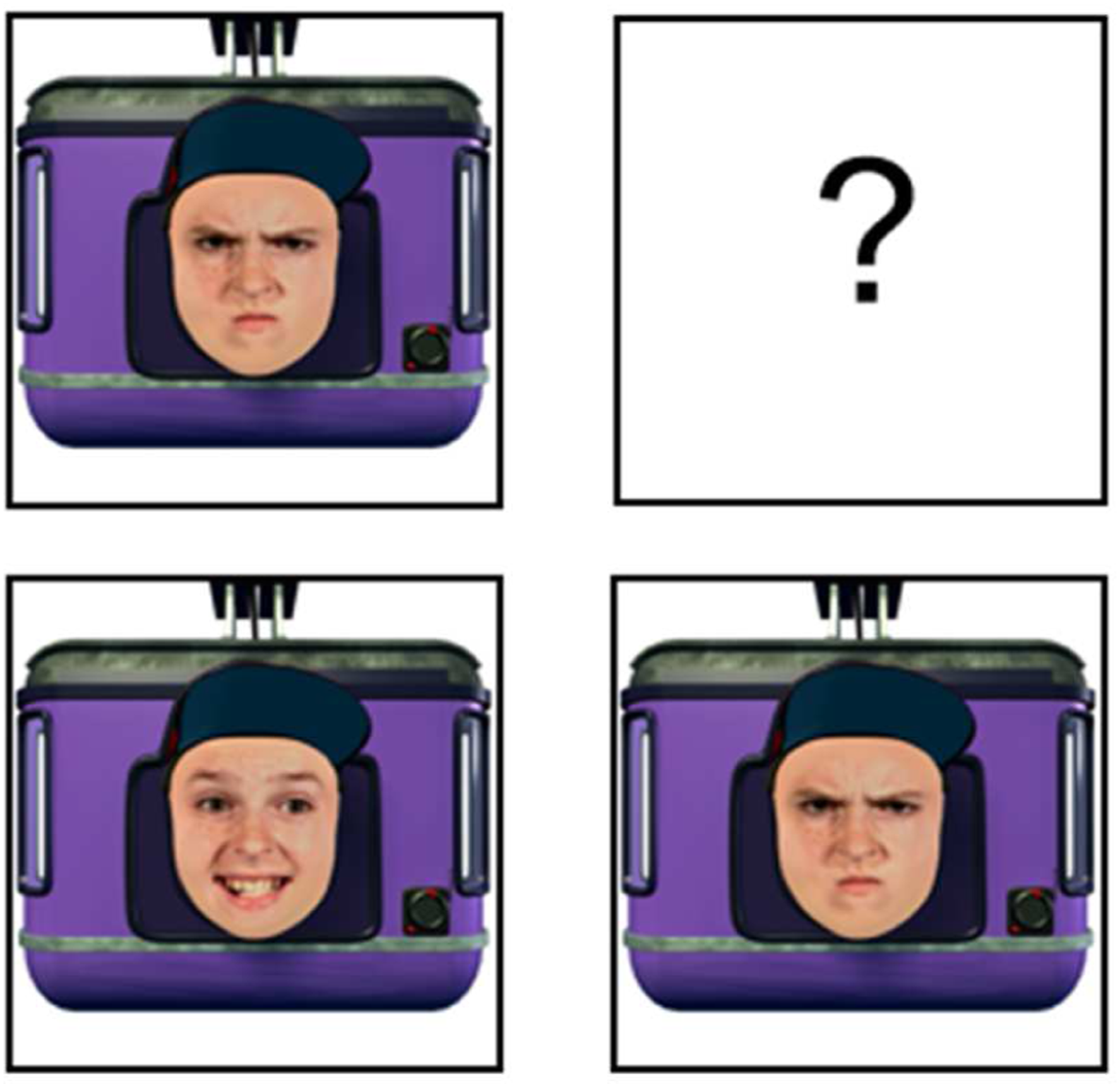
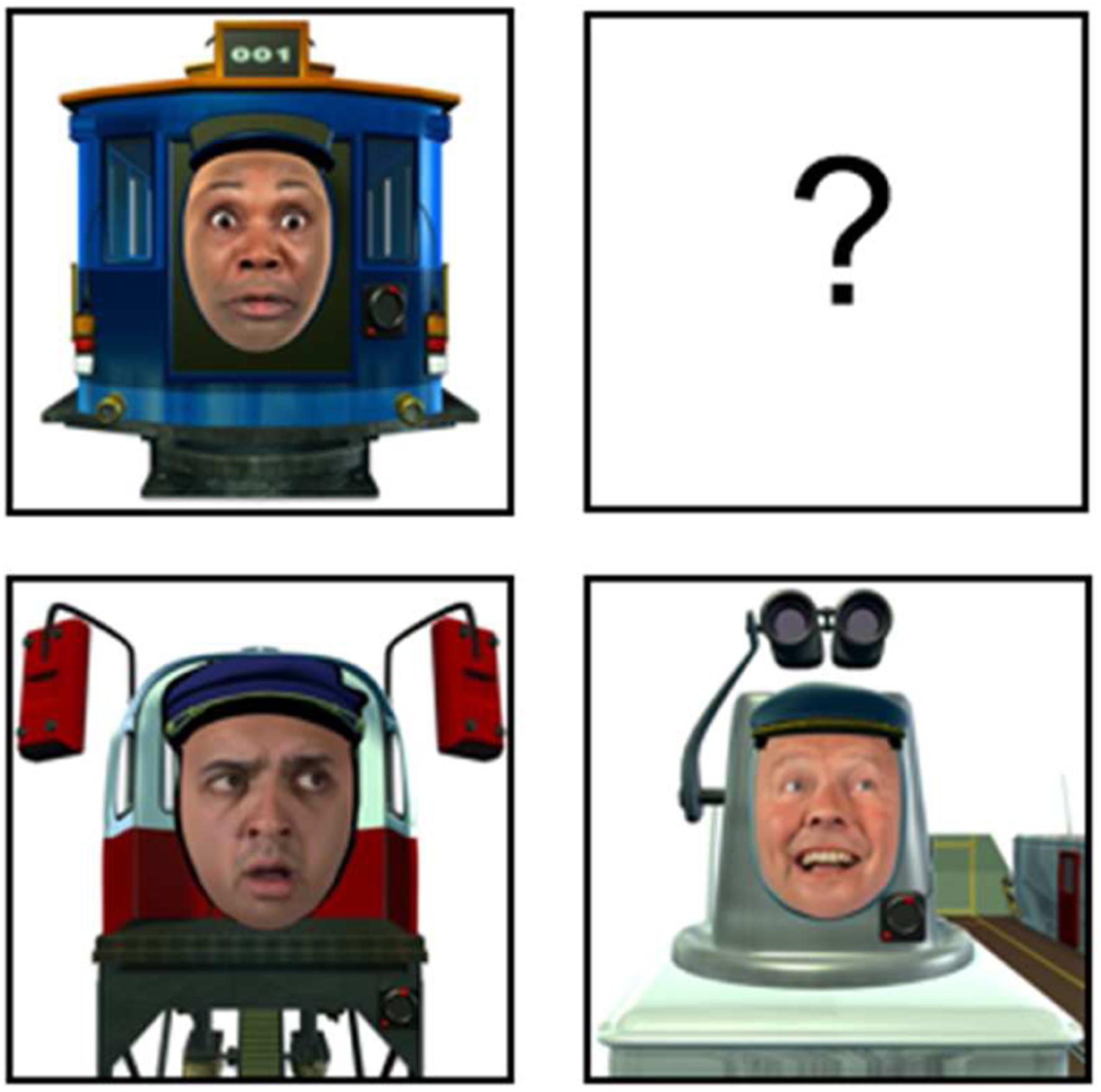
During level 1, use two Transporters characters expressing the same facial expression (e.g., see Figure 1). During level 2, use one Transporters character expressing two different facial expressions (e.g., see Figure 2). During level 3, use three Transporters characters expressing two different facial expressions (e.g., see Figure 3). This level only focused on facial expressions, with no emphasis on the characters. The mastery criterion for each level was at least 80% accurate matching of pictures during the intervention sessions for three consecutive sessions. Once participants with ASD achieved the mastery criterion, they would not receive any highly preferred items first, and then, the experimenter allowed them to engage in activities unrelated to emotion recognition. Matching the happy emotion picture in level 1. Matching the angry emotion picture in level 2. Matching the afraid emotion picture in level 3.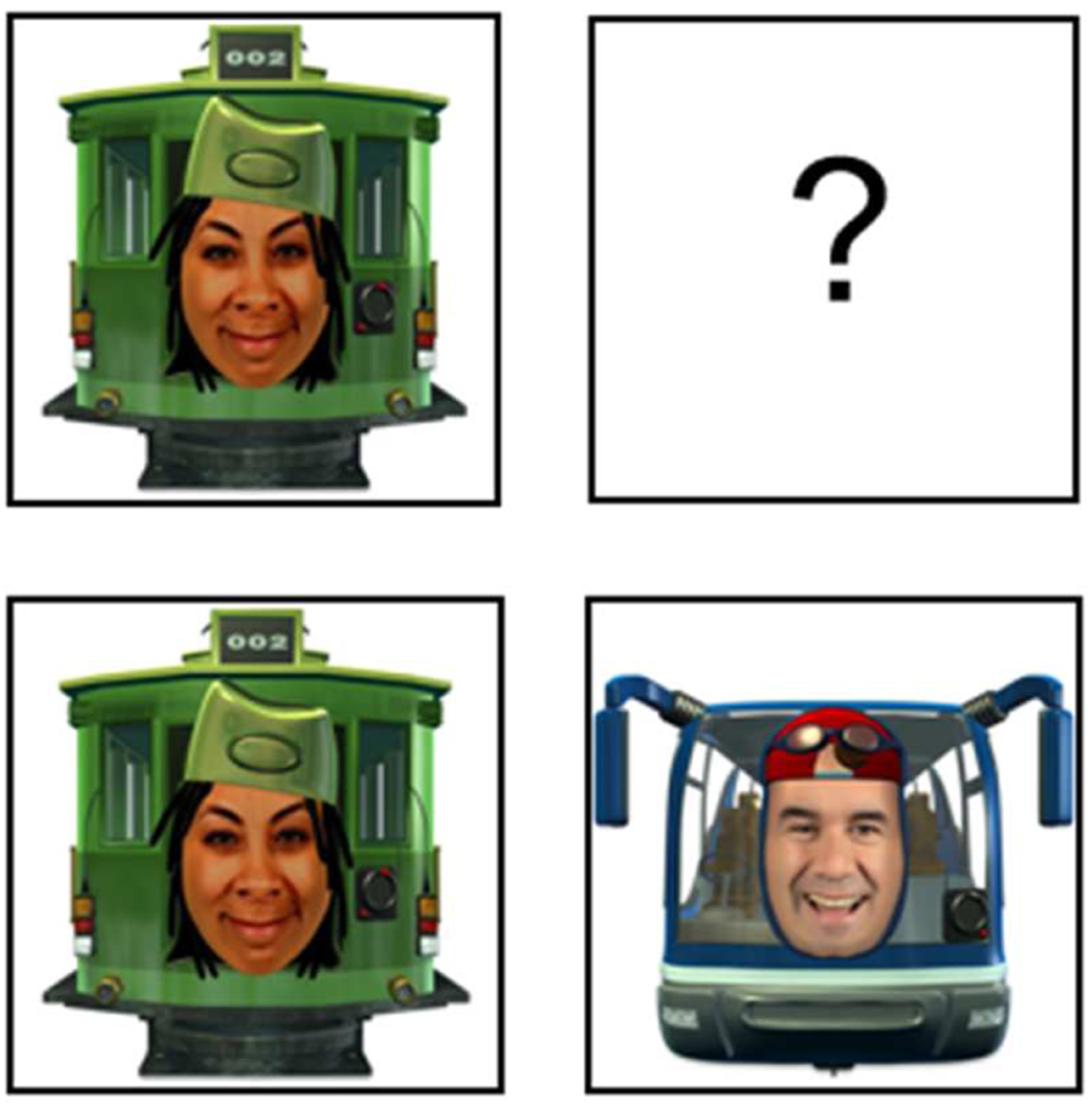
Generalization
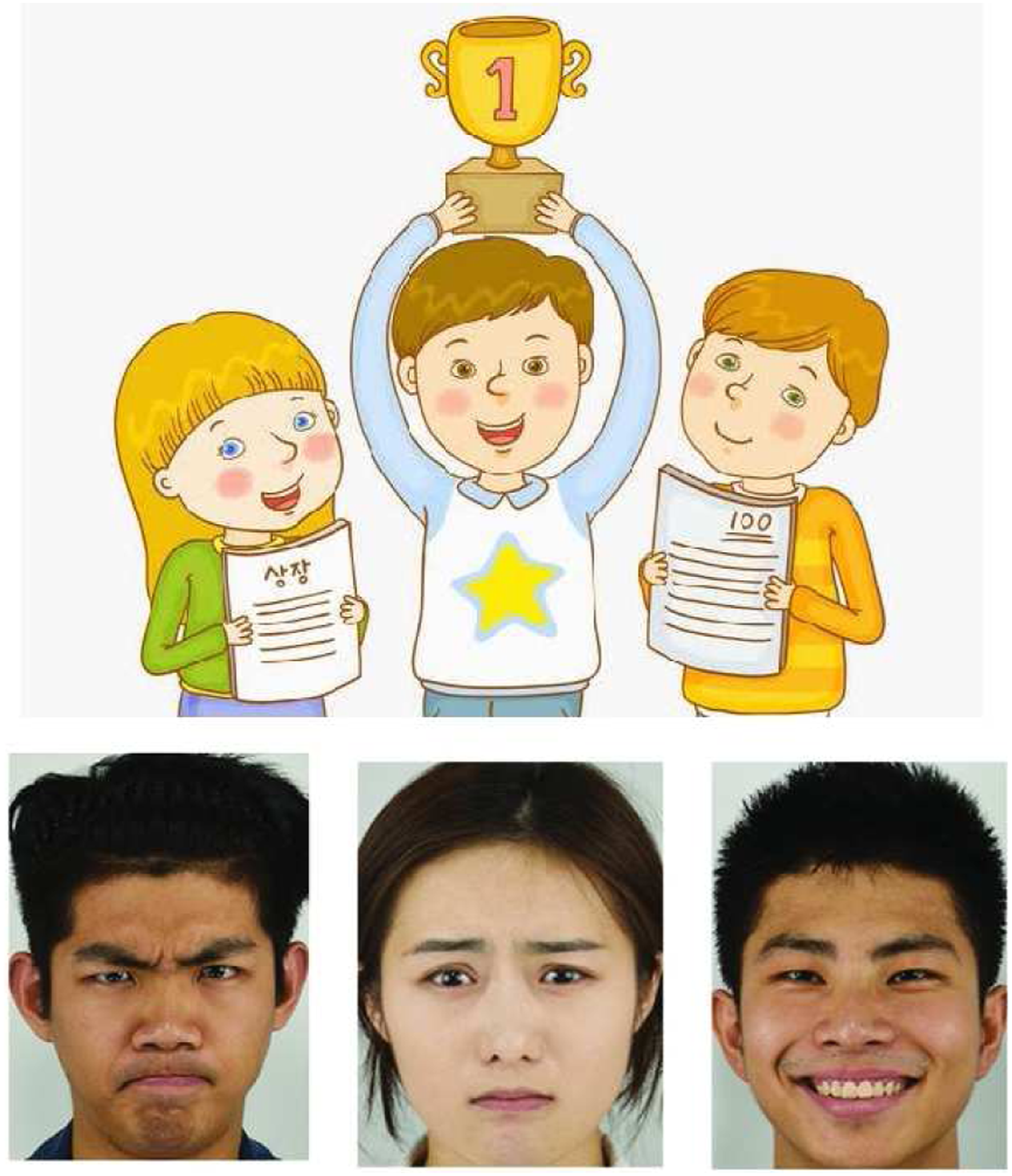
The generalization phase was conducted 7 and 15 days after the intervention phase. Two tasks were presented in the generalization phase. The first task was conducted after 7 days, and participants had to match familiar situations taken from The Transporters to the facial expressions of characters familiar from the series (e.g., see Figure 4). The second task was conducted after 15 days, and its aim was to test generalization to facial expressions that are not attached to vehicles. In this task, the participants had to match novel situations with novel expressions using a selection of human non-Transporters faces (e.g., see Figure 5). All friends came to Nigel’s home to celebrate his birthday. Gary obtained first prize in the competition.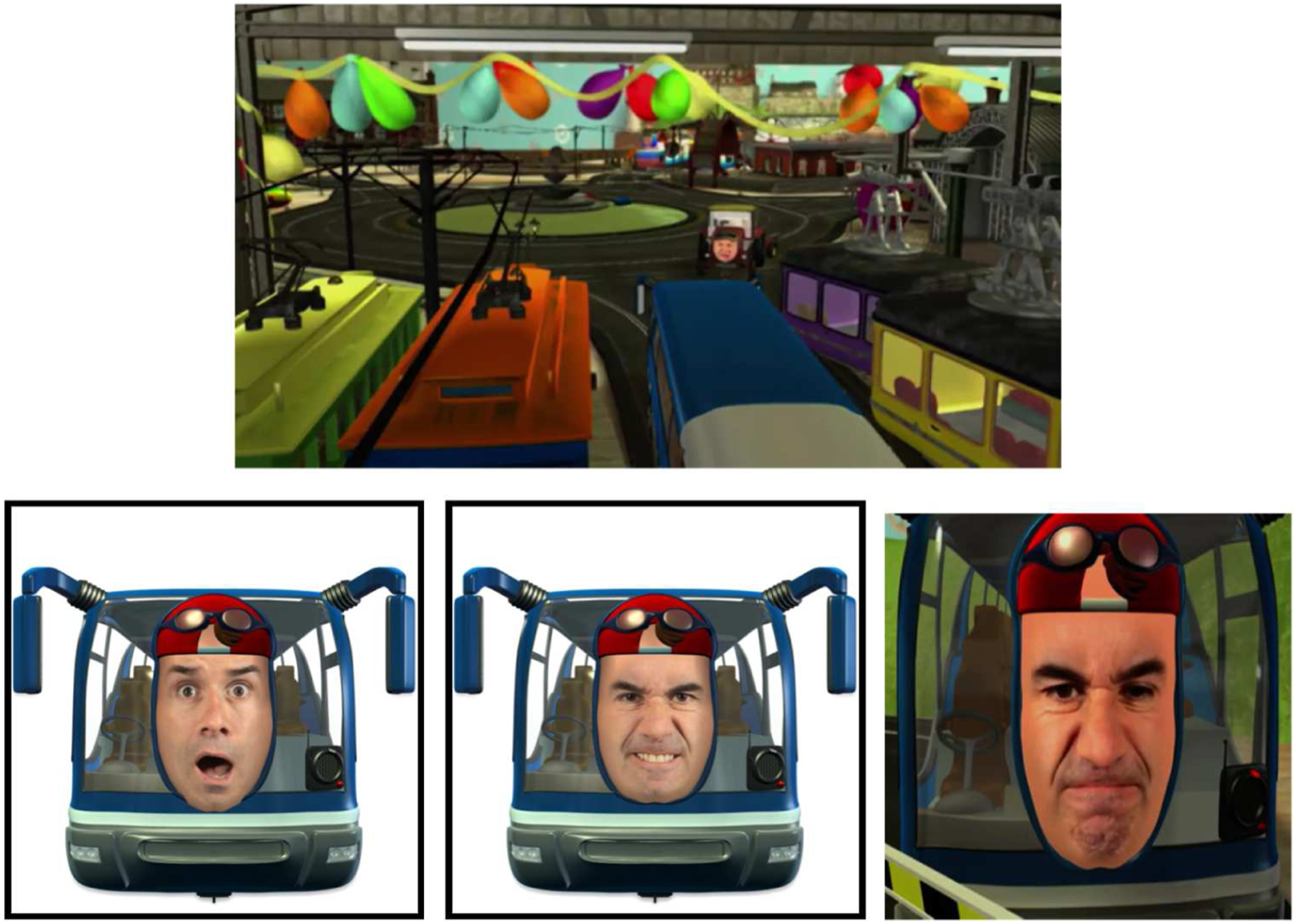
Social Validity
After the intervention was completed, the experimenter conducted a teacher/parent survey regarding acceptability, feasibility, and satisfaction with the VBI. The questionnaire had eight items. Each item was rated on a 5-point Likert-type scale (1 = “strongly disagree” to 5 = “strongly agree”). In addition, the experimenter conducted a comprehensive interview with the teachers and parents to compare the effects before and after the interventions.
Interobserver Agreement
To assess interobserver agreement (IOA), another observer (a PhD student in special education) was presented with the results of the study. The experimenter randomly selected 30% of the video recording clips during all phases for each participant. The IOA was calculated by dividing the number of agreements by the number of agreements plus disagreements and then multiplying by 100. The agreement on the percentage of VBI for Yu averaged 96%, with a range from 94% to 98%, 94% for Han, with a range from 92% to 96%, 97% for Ben, with a range from 95% to 98%, and 96% for Wong, with a range from 97% to 98%.
Procedural Fidelity
The procedural fidelity of this study was evaluated by an adapted procedural fidelity checklist developed by LaCava. The fidelity checklist had nine steps that were divided into three sections: planning, intervention, and session analysis. The researcher used the checklist to confirm the steps required for procedural fidelity with the intervention. A trained observer completed the procedural fidelity checklist for steps five to seven. The researcher and the observer marked the steps that were implemented and provided a score of one for each step. The procedural fidelity data were collected during 50% of VBI sessions across the participants. The procedural fidelity percentage was calculated by dividing the number of correct steps by the total steps and multiplying by 100. The data on procedural fidelity ranged from 97% to 99%, with an average of 98% across participants.
Results
Figure 6 represents the emotion recognition percentage during the baseline, intervention (level 1, level 2, and level 3), and generalization (Gen task 1 and Gen task 2) for the four participants. The correct percentage of emotion recognition is depicted by the y-axis. The number of sessions is depicted by the x-axis. Correct percentage of emotion recognition during the baseline, intervention, and generalization for Yu, Han, Ben, and Wong.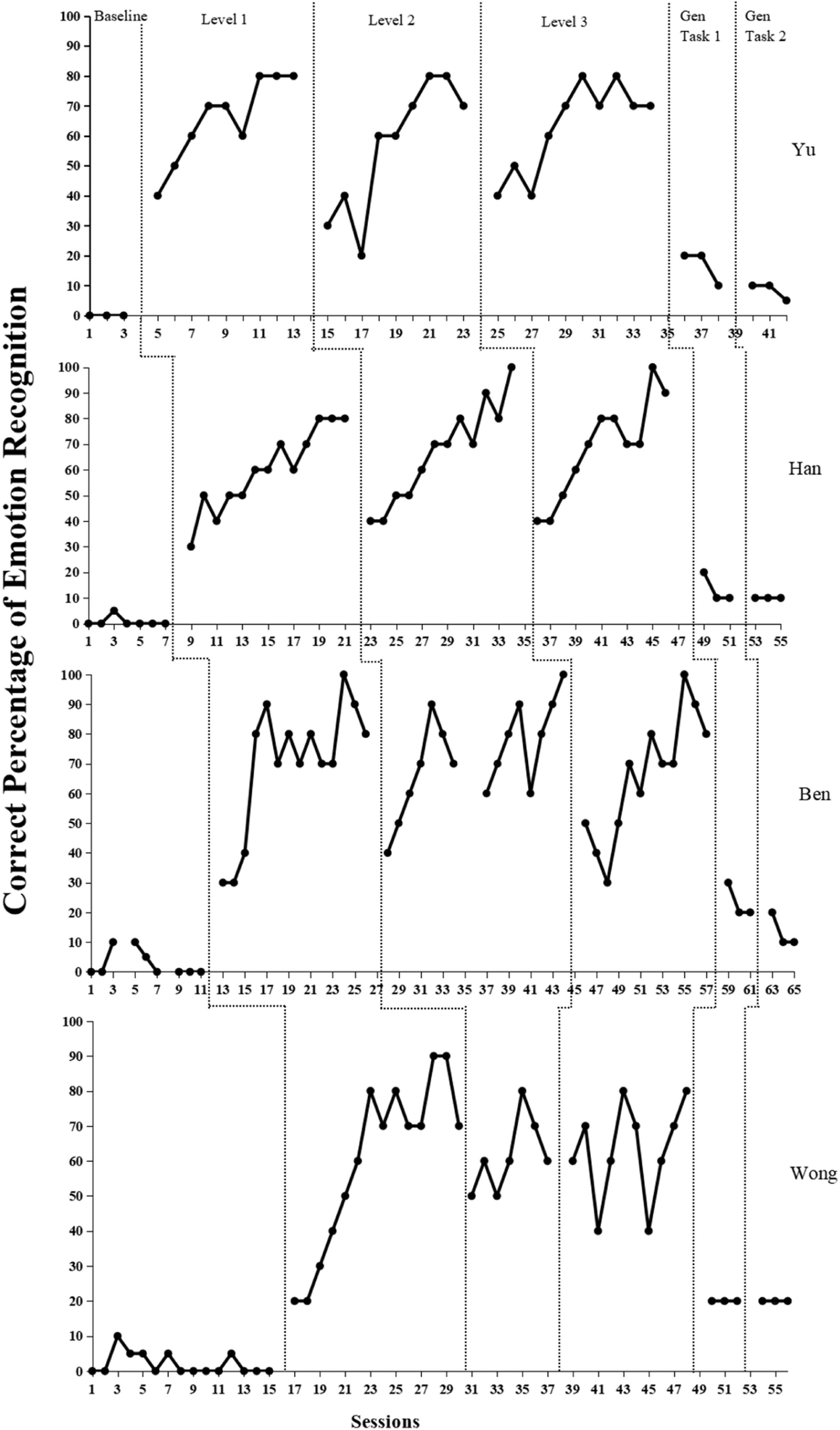
Yu did not correctly match emotion pictures (accuracy 0%) during the baseline. When the VBI was introduced, Yu’s accuracy percentage increased above his baseline level, indicating an immediate change in level between conditions. Yu achieved an average accuracy of 65.6% (range = 40%–80%) in level 1, 57.8% (range = 20%–80%) in level 2, and 65% (range = 40%–80%) in level 3. Yu’s intervention data were stable, as 80% of his data fell within 25% of the median level. The trend direction of his intervention data was accelerating, while his trend stability was deemed stable based on the level stability envelope and the trend line. The effect size measure Tau-U was 1, 90% CI [0.42, 1], demonstrating a highly effective intervention. In the generalization phase, Yu attained an average accuracy of 16.67% (range = 10%–20%) in task 1 and 8.33% (range = 5–10%) in task 2, demonstrating a limited performance following the intervention. The level and trend stability of Yu’s generalization data were stable, while the trend direction was decelerating and variable.
Han did not match correctly in six sessions during the baseline, with an average accuracy of 0.71% (range = 0%–5%). Once the VBI was introduced, Han’s accuracy percentage increased above his baseline level, indicating an immediate change in level between conditions. Han achieved an average accuracy of 60% (range = 30%–80%) in level 1, 66.7% (range = 40%–100%) in level 2, and 68.2% (range = 40%–100%) in level 3. Using the split-middle method technique, the trend direction of his data for this phase was accelerating. The trend stability of his data was also stable based on the level stability envelope and trend line. Finally, Han’s Tau-U score was 0.98, 90% CI [0.56, 1], indicating that the intervention was highly effective. However, during the generalization phase, Han attained an average accuracy of 13.3% (range = 10%–20%) in Task 1, and there was an average accuracy of 10% (range = 10%) in Task 2, indicating a limited effect. The level and trend stability of his data was stable, while the trend direction was decelerating and variable.
Ben did not match correctly in five out of nine sessions during the baseline, with an average accuracy of 4.44% (range = 0%–10%). In the intervention period, his performance increased above the baseline percentage, achieving 70% average accuracy (range = 30%–100%) in level 1, 72.67% average accuracy (range = 40%–100%) in level 2, and 65.83% average accuracy (range = 30%–100%) in level 3. Ben’s Tau-U score was 1, 90% CI [0.65, 1], indicating that the intervention was highly effective. Notably, Ben asked for two days leave because he had a cold during the intervention phase. Following the intervention, Ben attained an average accuracy of 23.3% (range = 20%–30%) in Task 1 and an average accuracy of 13.3% (range = 10%–20%) in Task 2, indicating a limited effect. The level and trend stability of his data was stable, while the trend direction was decelerating and variable.
Wong did not match correctly in ten out of fifteen sessions during the baseline, with an average accuracy of 2% (range = 0%–10%). Once the VBI was introduced, Wong’s accuracy percentage increased above his baseline level, indicating an immediate change in level between conditions. Wong earned an average accuracy of 60% (range = 20%–90%) in level 1, 61.43% (range = 50%–80%) in level 2, and 63% (range = 40%–80%) in level 3. Using the split-middle method technique, the trend direction of his data for this phase was accelerating. The trend stability of his data was also stable based on the level stability envelope and trend line. Wong’s Tau-U score was 0.9, 90% CI [0.45, 1], indicating that the intervention was highly effective. However, during the generalization phase, Wong attained an average accuracy of 20% (range = 20%) in Task 1 and Task 2, indicating a limited effect. The level and trend stability of his data was stable, while the trend direction was decelerating and variable.
Social Validity
The average ratings were 4.67 (SD = 0.56) for the acceptability of the intervention, 4.6 (SD = 0.49) for feasibility, and 4.23 (SD = 0.81) for satisfaction, which indicates good social validity using the VBI for emotion recognition. In addition, teachers and parents in the open interview suggested that there was an improvement in emotion recognition, and they hoped to continue the intervention. For example, Yu’s mother stated, “He can say it was happy and point out the cartoon’s emotions when he watched the cartoon at home.” “Ben can quickly match emotion pictures compared to his first time training and increased compliance in the classroom. He becomes more interested in facial expressions.” Ben’s teacher said. Han’s father stated, “He can control his emotions, particularly when his preferred items were taken away, which was a huge change.” Wong’s father stated, “My son was truly excited to go to the therapy room and watch cartoons, which made us happy.”
Discussion
This study provides evidence that the VBI facilitated recognition of six basic emotions in children with ASD who have limited speech in China. During the generalization phase, however, there was a limited effect on emotion recognition. The findings of this study replicate and extend previous research in three aspects. (1) It reveals the effectiveness of VBI for children with ASD who have limited speech. (2) It reveals the limited generalization effectiveness of VBI in the varying tasks. (3) It supports the cultural adaptability of VBI to Chinese culture.
We observed that the correct percentage of emotion recognition increased as the participants were exposed to VBI across the intervention phase. This finding is consistent with previous studies demonstrating that VBI (The Transporters) can enhance emotion recognition (Baron-Cohen & Wheelwright, 2004; Golan et al., 2010; Young & Posselt, 2012). It is possible that the spontaneous tacts of participants with ASD played an important role in the emotion recognition intervention. Because each key emotion was highlighted in each intervention session, all participants performed ongoing spontaneous tacts during the intervention, which increased the possibility of emotion recognition. For example, Wong had only simple spontaneous tacts (e.g., a “kuai” or “kai” sound is an approximation for “kuaile,” meaning “happy” in Mandarin Chinese), but his spontaneous tacts increased, and his performance on emotion recognition showed improvement. As suggested in previous review research, a strong tact can lead to the development of other verbal operants and facilitate emotion recognition and social interaction (Bak, Dueñas, Avendaño, Graham, & Stanley, 2021). In addition, we noted that our results are inconsistent with the study by Williams et al. (Williams et al., 2012). It is likely that there were variations in participant demographic variables, including participants having a lower range of cognitive ability and much lower verbal IQ scores.
Another finding of this study is the limited effect of generalization for participants with ASD who have limited speech. Previous studies support this finding (Bölte et al., 2002; Golan et al., 2007; Silver & Oakes, 2001). The tasks in the generalization phase aimed to gradually improve participant emotion recognition in the natural environment by encouraging the participants to apply emotions recognized in The Transporters video to real people’s facial expressions. Our results reveal that all participants with ASD had limited generalization effectiveness compared with the intervention phase. However, although the effect was limited, parents reported that participants showed strong interest in emotion recognition and were motivated to recognized emotions in a natural context (e.g., home, community, and school). A possible explanation is that participants in the generalization phase did not receive positive reinforcers, including social praise, which made it difficult to maintain their emotion recognition achievements in a natural setting (Kouo & Egel, 2016). At the same time, tasks were added in the generalization phase, which may have represented a challenge for children with limited speech, as most of these expressions did not involve enriched and obvious facial emotion traits, especially compared with the facial expressions in task 2.
Finally, our results support the cultural adaptability to Chinese culture, that is, that The Transporters can be used in the Chinese context. Parents and teachers were initially concerned regarding the effect of The Transporters, as participants were unfamiliar with the combination of animation videos and matching tasks. However, the participants gradually achieved better outcomes over the baseline phase as the experiment progressed. Direct observation found that all participants were interested in watching The Transporters and that there was no escape behavior. Because this paper is the first to discuss this approach in China, it adds to the scarce literature and can serve as a resource for teachers and parents.
Limitations and Directions for Future Research
The results and implications of this study’s findings must be explained relative to several limitations. First, the study did not develop recognition of complex emotions in the intervention, as previous research found that the majority of children with ASD first find difficulty with basic emotion recognition, followed by complex emotions (Lacava, Golan, Baron-Cohen, & Smith Myles, 2007; Rice, Wall, Fogel, & Shic, 2015). Thus, future studies should seek to replicate and extend this intervention with complex emotions. An additional limitation is that the study only involved matching facial expressions. We recommend that future researchers conduct more facial expression tasks, such as sorting facial expressions and odd-one-out facial expression tasks, to examine the intervention’s effects on emotion understanding for children with ASD. Furthermore, future research may consider comparing varying demographic variables. A systematic review found that only two studies have discussed the effect of VBI on adults with ASD, but even fewer studies have examined the effect of VBI on adults with ASD who have limited speech (Lee, Lam, Tsang, Yuen, & Ng, 2018).
Conclusion
In closing, the results of this study indicate that the VBI facilitated emotion recognition in four children 4–8 years old who had limited speech. However, there was limited effectiveness in the generalization phase. This study has important implications for educators, teachers, and parents providing interventions for children with ASD who have limited speech, especially in China. Our findings suggest that VBI (The Transporters) is a promising approach to teaching emotion recognition in children with ASD who have limited speech. However, more research is needed on generalization effects in different natural tasks and settings.
Supplemental Material
Supplemental Material—Effects of a Video-Based Intervention on Emotion Recognition for Children With Autism Who Have Limited Speech in China
Supplemental Material for Effects of a Video-Based Intervention on Emotion Recognition for Children With Autism Who Have Limited Speech in China by Zhi Wang, Loh Sau Cheong, Jing Tian, Hai yan Wang, Yue Yuan, and Qian Zhang in Journal of Special Education Technology
Footnotes
Declaration of Conflicting Interests
The author(s) declared no potential conflicts of interest with respect to the research, authorship, and/or publication of this article.
Funding
The author(s) received no financial support for the research, authorship, and/or publication of this article.

Supplemental Material
Supplemental material for this article is available online.
Author Biographies
References
Supplementary Material
Please find the following supplemental material available below.
For Open Access articles published under a Creative Commons License, all supplemental material carries the same license as the article it is associated with.
For non-Open Access articles published, all supplemental material carries a non-exclusive license, and permission requests for re-use of supplemental material or any part of supplemental material shall be sent directly to the copyright owner as specified in the copyright notice associated with the article.
