



Abstract
The objective was to assess active ingredients, change mechanisms, and fidelity in interventions aiming to increase the quality of smoking cessation care in the Dutch primary healthcare setting. We conducted a systematic review searching five scientific databases on August 2nd, 2019, updated on October 28th, 2021. We included effect data of behavioural interventions aiming at improving the provision of smoking cessation support by Dutch primary care providers to their patients. We excluded studies published before 2000 and those without a behavioural support intervention for primary care providers targeting smoking cessation in their patients. We found 1939 articles and included 15 distinct interventions in the review. We provided an overview of study characteristics, intervention effects, fidelity, active ingredients and change mechanisms using the Behaviour Change Techniques (BCT) Taxonomy and Mechanisms of Action (MoAs) protocols. Interventions seemed more effective when including a face-to-face component, using active learning strategies and providing a tool to help follow the guidelines in practice (e.g., physical cards with information). BCTs, MoAs, and fidelity were overall poorly reported on. To support the application of smoking cessation practices in Dutch primary care, we recommend implementation of face-to-face training programs incorporating active skill training elements combined with practical tools.
Keywords
Introduction
Primary care providers play an important role in supporting patients in their smoking cessation journey (Anderson & Jane-Llopis, 2004; McNeill & Bates, 2000). For example, international data shows that primary care providers are somewhat successful in their effort to support smoking cessation by giving a brief quit smoking advice (Stead et al., 2008) and, more so, when they offer more intensive forms of assistance (Aveyard et al., 2012). Moreover, primary care providers have a widespread reach into the population (Aveyard et al., 2012). In The Netherlands, people visit, for example, the general practitioner (GP) on average 4.5 times per year (Dutch Central Bureau for Statistics [CBS], 2022) and 78.8% of the Dutch population sees their dentist once a year (CBS, 2021). Different to many other countries (e.g., the United States), all Dutch citizens are covered by basic insurance, thus making primary healthcare very accessible. Moreover, in The Netherlands, people can only get access to secondary healthcare system (e.g., specialist care in hospitals) via a referral from a primary healthcare provider. This “gatekeeping” model of providing care in The Netherlands puts the primary care providers in a unique position to address preventive health services including smoking cessation. As of 2019, the Dutch basic insurance covers smoking cessation support by the GP without out-of-pocket expenses (Ministry of Health Welfare and Sport, 2018), however, this is limited to once a year. People who need multiple quit smoking attempts need to pay this out of pocket or need additional private health insurance. Nevertheless, Dutch primary healthcare providers play a crucial role in initiating and motivating successful quit attempts. This reduces the need to send people to the more expensive secondary healthcare system, lowering the overall healthcare costs.
National guidelines are implemented in The Netherlands that describe the multiple and individualised steps that need to be taken to ensure effective smoking cessation care in primary care (Chavannes et al., 2017; Verbiest et al., 2017), see Figure 1 for a schematic overview of these guidelines. The current Dutch guidelines are similar to the 5A or briefer 3A framework used in the UK (UK government, 2009) and US (Fiore et al., 2008), such that they both recommend to provide advice, asses motivation, assist stop attempts, and arrange follow-up. However, the Dutch guidelines have more specific content, for example, it includes practical counselling techniques and types of behavioural support (see for full comparison: Verbiest et al., 2017). The Dutch guidelines stem from the Minimal Intervention Strategy (MIS) developed between 1993 and 1994 in collaboration with key stakeholders (GP organisations, two Dutch universities and the Dutch government). The implementation of the MIS occurred in 1996 through refresher courses for existing GPs and through integration into the curriculum for GPs in training (Pieterse et al., 1997), the MIS was first evaluated in 2001 (Pieterse et al., 2001). Flow chart Dutch smoking cessation guidelines. Note. NTR = Nicotine Replacement Therapy.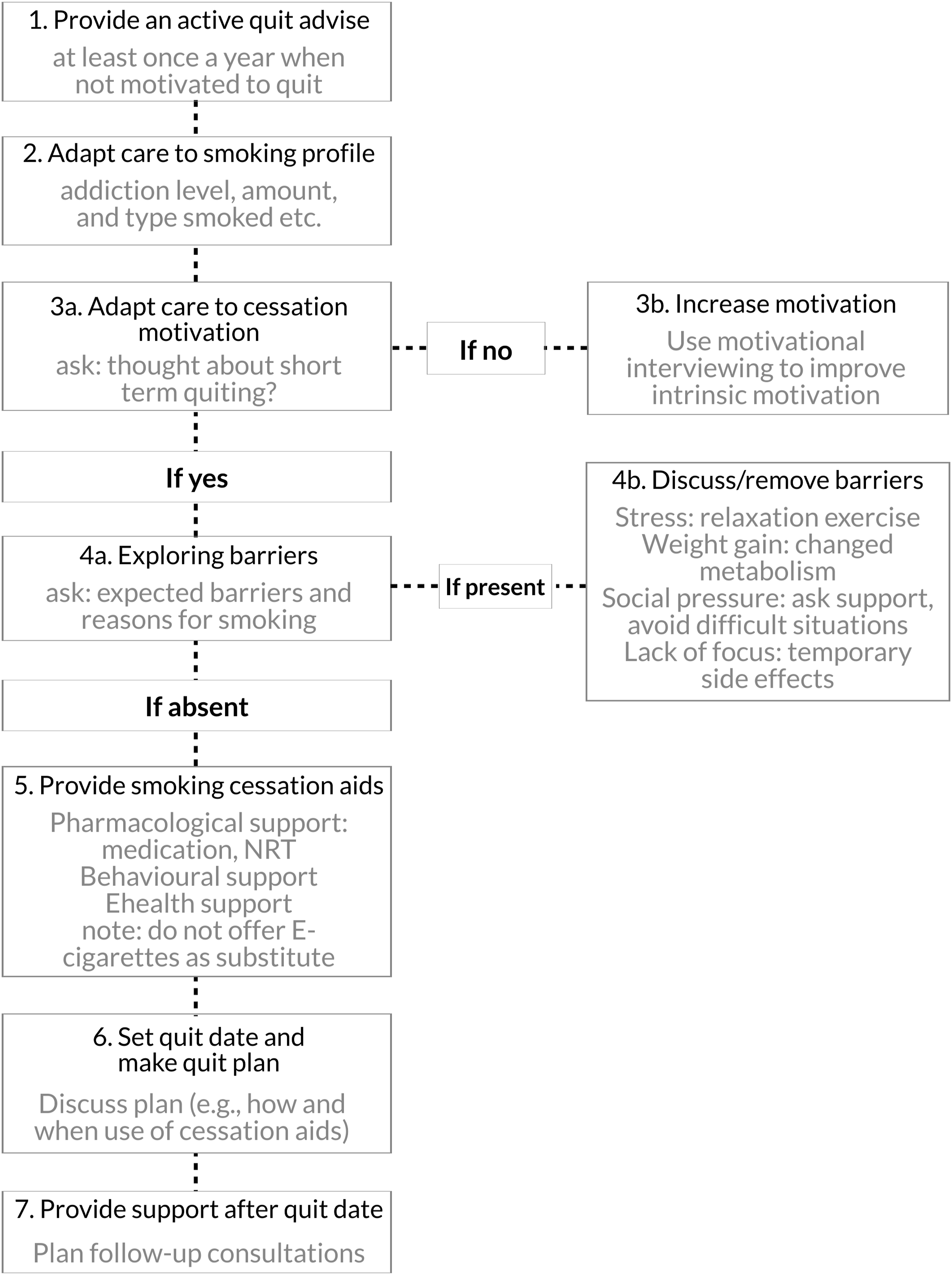
Although the use of the current guidelines has shown to be effective in reducing smoking rates (Chavannes et al., 2017; Verbiest et al., 2017), the implementation of smoking cessation care by Dutch primary care providers is not yet optimal. The Dutch primary care providers have reported time constraints, patients’ unwillingness to quit, low self-efficacy, and the perceived low quality of smoking cessation counselling training classes as barriers to adhere to guidelines (De Ruijter et al., 2017; Oude Wesselink et al., 2017; van Rossem et al., 2015; Verbiest et al., 2017). This may be problematic because UK data shows that the implementation quality of smoking cessation support provided by primary care providers is directly related to the quit rate of their patients (Grimshaw & Russell, 1993; Miller & Kearney, 2004). To improve guideline adherence and, subsequently overall quality of support, interventions have been developed to provide Dutch primary care providers a grounding in providing the needed support to patients.
Quality of support in Dutch primary care providers can be improved in various ways. Some interventions support the uptake of the entire guidelines (de Ruijter et al., 2018), others only support implementation of a specific part – or parts – of the guideline (e.g., adopting motivational interviewing techniques to increase motivation to quit (Noordman et al., 2014) – 3b in flowchart). For instance, Carson et al. (2012) found that Dutch primary care providers who had received training were more likely than untrained colleagues to perform relevant smoking cessation tasks outlined in the guideline, such as asking patients to set a quit date, making follow-up appointments, counselling smokers, and providing self-help materials. Other examples of interventions that aim to improve quality of support in Dutch primary care providers are government supervision programs (Oude Wesselink et al., 2015) or providing accreditation when implementing the national guidelines (van Doorn-Klomberg et al., 2014). On an individual level, some of these interventions have shown to be successful in increasing quality of care (e.g., Cramm & Nieboer, 2015), whereas others have not (e.g., van Lieshout et al., 2015). It is unclear what intervention components change the behaviour of Dutch primary care providers in effective support interventions that are missing in ineffective support interventions. Mapping the active ingredients in interventions aiming to improve the quality of smoking cessation care given by Dutch primary care providers may be a powerful method for providing a comprehensive evaluation of effectiveness of certain intervention components. In turn, understanding the effective components of interventions will ensure improved intervention design in the future.
Protocols have been established to systematically map active ingredients of interventions (Centre for Healthy Living, 2019; Michie et al., 2017). The active ingredient protocol (Centre for Healthy Living, 2019) indicates the existence of three types of active ingredients in an intervention: general, content-related and specific. General active ingredients are the intervention elements that apply to all behaviour change interventions (e.g., co-creation of the intervention, incentives provided for participation in a training). Content-related active ingredients are overarching characteristics that either relate to the intervention goal (e.g., targeting co-morbidity), target group (e.g., tailoring of intervention content to healthcare providers) or methodology (e.g., stepwise intervention-diffusion). Specific active ingredients are intervention elements targeting behaviour change (e.g., techniques improving quality of smoking cessation care in primary care providers). To systematically map specific active ingredients of behaviour change interventions, the behaviour change taxonomy by Michie and colleagues (Michie et al., 2013) is frequently used. This taxonomy contains 93 hierarchically clustered behaviour change techniques (BCTs). A BCT is expected to be an active ingredient, which can effectively instruct people to do something with the aim to change the targeted behaviour (Carey et al., 2019; Michie et al., 2013). Additionally, the mechanism of action (MoA) protocol represents the process through which a BCT affects behaviour (Carey et al., 2019; Connell et al., 2019). MoAs mediate the relationship between a BCT and the specific behaviour the BCT targets. Extracting all active ingredients from existing interventions can respectively provide a deeper insight into what techniques are effective in changing behaviour and how these techniques attain behaviour change.
The BCT taxonomy has been used to successfully identify specific active ingredients in smoking cessation interventions (De Ruijter et al., 2021; Michie, Churchill, & West, 2011; Michie, Hyder, et al., 2011) and to identify active ingredients in interventions targeting general behaviour change in healthcare providers (Colquhoun et al., 2017). However, the BCT taxonomy has not yet been used as a method to identify active intervention components targeting primary care providers to implement effective smoking cessation care in their practice. Moreover, current reviews and studies do not adequately account for the quality of the interventions nor their implementation fidelity (Hagger et al., 2020; Walton et al., 2017). This is problematic, because when interventions are not implemented as planned and the intended active ingredients of an intervention were not or poorly used, it is difficult to accurately validate intervention effectiveness. Hence, it is crucial to take fidelity into account when establishing active ingredients that influence intervention effectiveness.
This study’s objective was to provide a systematic review on all three types of active ingredients, MoAs, and implementation quality in existing interventions aiming to increase the quality of smoking cessation care in Dutch primary healthcare (e.g., uptake of [part of] the Dutch smoking cessation guidelines). The specific questions addressed in this systematic review are as follows: (a) What study characteristics (i.e., type of intervention, theory-base, sample characteristics, intervention focus) can explain the effectiveness of an intervention?; (b) Which active ingredients or combination of active ingredients is used more often in effective versus ineffective interventions?; (c) What are the mechanisms of change that underlie intervention efficacy?; and (d) Does the quality of implementation fidelity affect intervention effectiveness? Answers to these questions can inform intervention policies in The Netherlands and development of support interventions for primary care providers worldwide, facilitating a smoke-free generation in the future.
Materials and Methods
Study Design
Following the PRISMA reporting guidelines, a systematic review was conducted to explore the use of various intervention components targeting Dutch primary care providers offering behavioural support for implementing high quality smoking cessation aid.
Search Strategies
Three different sources (scientific and intervention databases and smoking cessation experts) were searched to ensure a comprehensive and inclusive search strategy. Five scientific databases were systematically searched (Pubmed, Web of Science, Cochrane, Medline, and the Education Resources Information Center) and online intervention databases included websites of several Dutch funding organisations, like the Dutch Organisation for Scientific Research.
Initial searches were conducted on August 2nd, 2019, an update of the search was conducted on October 28th, 2021. The following search terms and their Dutch equivalents were entered in the intervention databases: smoking, smoker, smoke, tobacco, addiction, and cigarette. For scientific databases, the search terms were more comprehensive and combined keywords for concepts related to smoking, primary care, the study design, and the geographical region of interest. Search terms were restricted to appear in the title and/or abstract of manuscripts published after the year 2000. The full search string can be found on https://osf.io/pdnm8/. The input of smoking cessation experts (defined as somebody that works in the smoking cessation industry or research area), and input obtained via their professional networks, made up the final source. Experts were contacted via email on August 14, 2019 and were provided with information about the inclusion criteria and an overview of relevant interventions that were already identified via the online databases described above. Based on this information, they were asked whether they knew of additional interventions that fit the inclusion criteria that were missed by our search. They were given a response period of 5 weeks.
Screening Process
Inclusion and Exclusion Criteria.
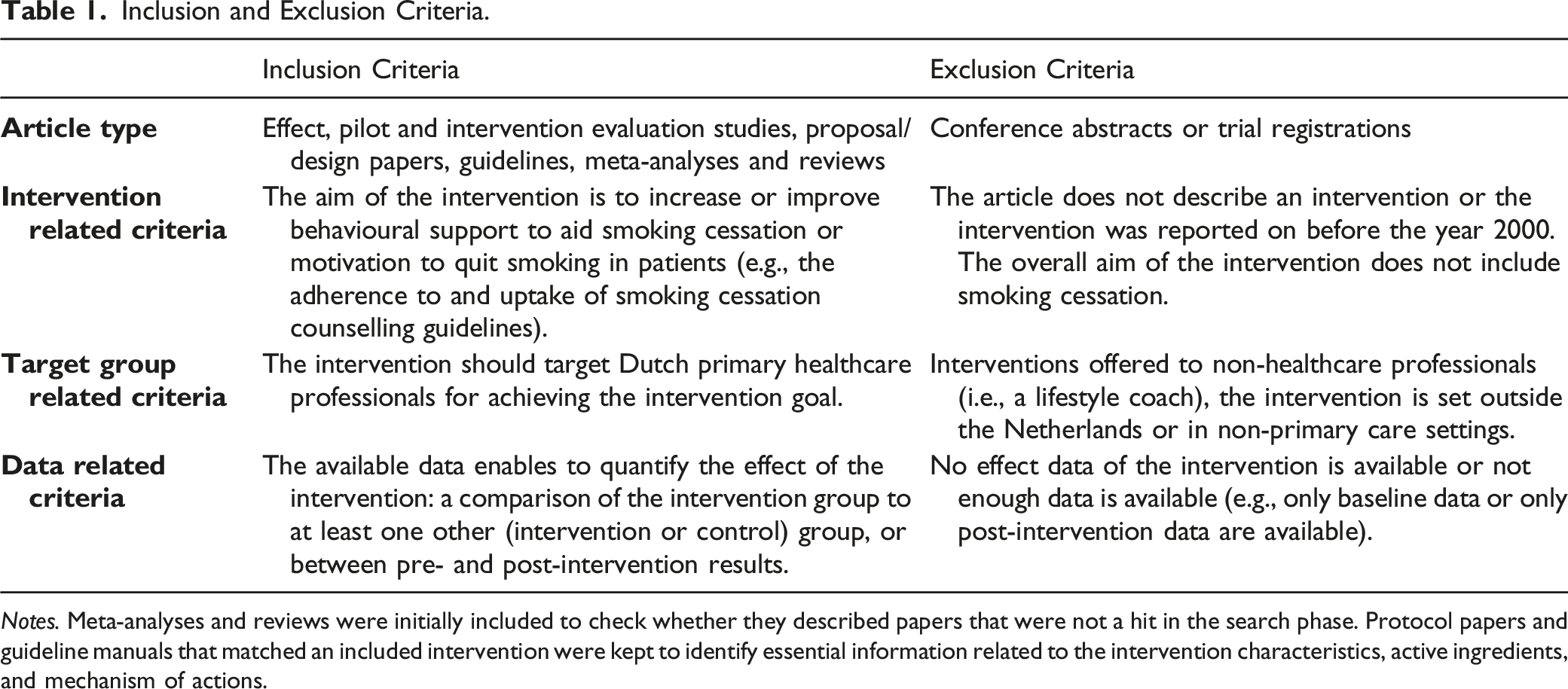
Notes. Meta-analyses and reviews were initially included to check whether they described papers that were not a hit in the search phase. Protocol papers and guideline manuals that matched an included intervention were kept to identify essential information related to the intervention characteristics, active ingredients, and mechanism of actions.
Next, the full texts were read to determine eligibility for final inclusion. In case insufficient information about an intervention was available during this selection process, study authors or intervention owners were contacted via email and/or phone to retrieve additional information. Furthermore, articles describing potential supplemental material in addition to effect data of an intervention (e.g., study protocol, guideline, cost-effectiveness evaluation) were saved separately. The entire selection process was conducted by two researchers. During this process, they verified each other’s work by checking whether articles were rightfully excluded. In case of discrepancies ambiguities were discussed with a third researcher, after which agreement was reached in all cases.
Data Abstraction
Excel was used to organise data abstraction for each intervention, including information about study characteristics, active ingredients, and implementation characteristics. An overview of all abstracted information is provided in Table A1 of the Appendix. Prior to abstraction, coding rules were created. For instance, following the BCT protocol (Michie et al., 2013), the main coding rule for coding a BCT was that the description needed to contain a verb that refers to an action taken by the person delivering the technique. Following the MoA protocol (Carey et al., 2019), MoAs were identified when a description was provided of how behaviour change was expected to occur when implementing the intervention. To pre-test inter-rater agreement of these coding rules, the researchers abstracted data from the same intervention, compared the individually abstracted data, and discussed any coding inconsistencies (inter-rater agreement: 88%). Accordingly, small changes were made in interpretations to the coding rules, after which the first coder started abstracting data from the remaining interventions. During abstraction, regular consensus meetings were held with the second coder to ensure consistent application of the coding rules. Upon completion, two checks were performed to ensure high quality data abstraction. First, the second coder randomly checked 5% of the included interventions, verifying the coded BCTs and MoAs, as coding these was deemed most sensitive for bias and inconsistencies (Wood et al., 2014). This check resulted in high agreement between researchers, as only a single BCT was added. Second, following protocol (Michie et al., 2013), the first coder coded the confidence levels during abstraction (1 = not sure, 2 = highly confident) and was not sure about 11% of the total 130 BCTs coded. Upon discussion with the second coder, 7% of these BCTs codes were changed.
After data abstraction, the active ingredients of each intervention were summarised and reported back via email to the study authors or intervention owners. This way, they could verify the coding work and feedback any additional active ingredients that might have been missed based on what was reported in the records. Eight out of the 14 study authors reported back (60%) and verified the work. At this time, three additional documents were obtained, which provided additional information for three interventions.
Analyses Plan and Data Preparation
Four steps were taken to prepare the abstracted data for analyses. First, data abstracted from different papers describing the same intervention (e.g., protocol and effect paper) were merged. Second, the intervention effect on smoking cessation support was quantified based on reported results for the target behaviour. Target behaviour was operationalised as a behaviour targeted by the intervention to increase quality of smoking cessation support given by primary care providers (e.g., guideline adherence). Given that most interventions did not report effect sizes, nor reported all information needed to calculate effect sizes, it was decided to categorise the interventions into three rudimental categories: ‘effective’, ‘mixed results’ or ‘ineffective’. An intervention was categorised as ‘effective’ when the target behaviour was statistically significantly improved compared to the control group or baseline measures. Interventions were categorised as having ‘mixed results’ when primary care providers showed improvements on part of the target behaviour (e.g., guideline adherence on two out of five steps). Interventions were categorised as ‘ineffective’ when the target behaviour did not statistically significantly improve compared to the control group or baseline measure.
In the third step, a quality assessment was conducted on the implementation data abstracted to assess fidelity. Fidelity was operationalised through four constructs (Dusenbury et al., 2003): adherence (were all intended components delivered?), dose (was the amount of all intended components delivered?), quality of delivery (how well were the components delivered?), and participant responsiveness (how did the participant appreciate the intervention?). A score between 0 and 3 was given to each of these four constructs, with 0 indicating a missing value (not reported); 1 (reported, but low quality of implementation); 2 (reported with an acceptable quality of implementation); and 3 (reported with a good quality of implementation). The overall quality assessment of implementation (QAI) score per intervention was the sum score of all four constructs (range: 0–12). Two researchers scored all interventions, the inter-rater reliability was high (85%). In the final step, tables were created to systematically organise all the abstracted data per effectiveness category and descriptive analyses were conducted.
Results
An overview of the search and selection process, including reasons for exclusion for all sources are illustrated in the PRISMA flowchart (see Figure 2). PRISMA flowchart of study selection.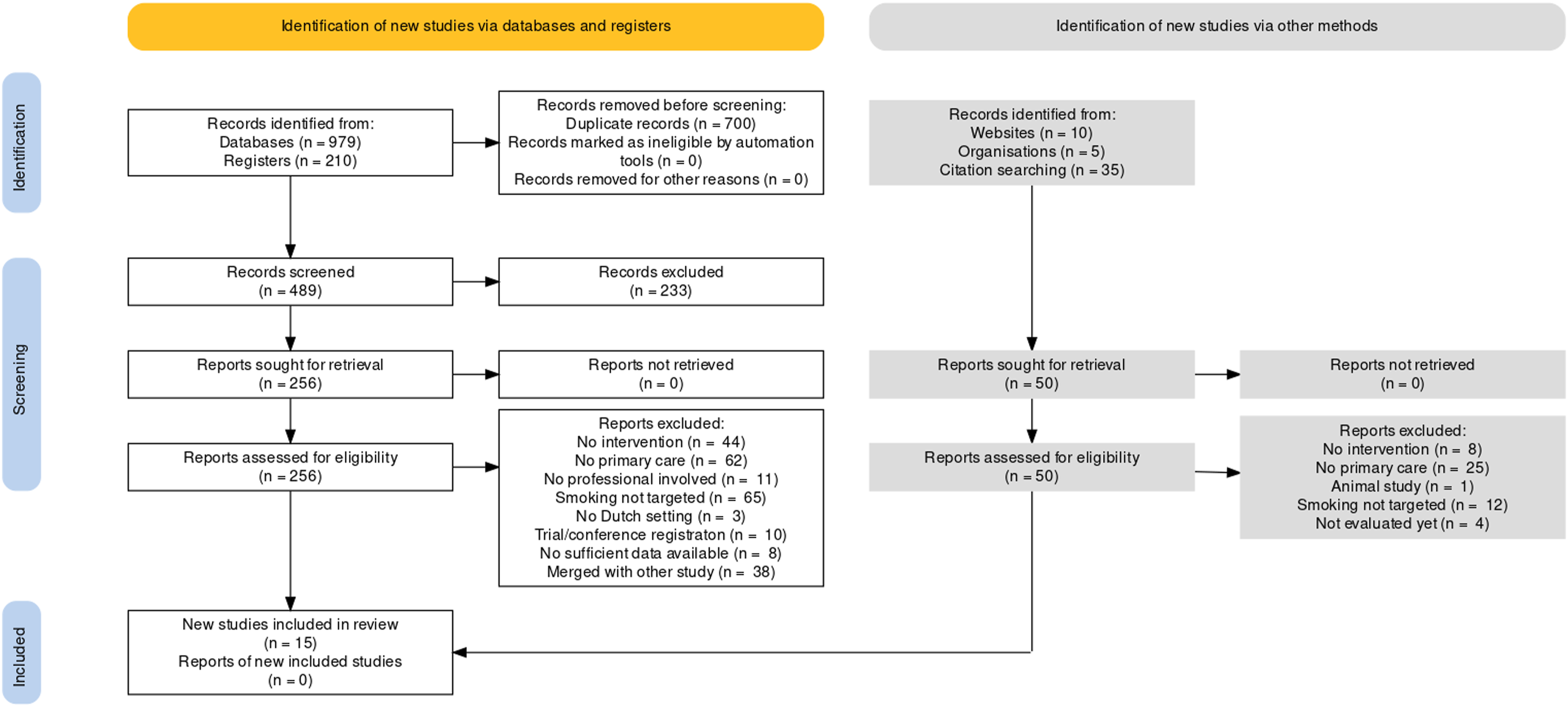
In total, 15 unique interventions targeting behaviour change in smoking cessation support by Dutch primary care providers were included. Table A2 in the Appendix provides an overview of the study characteristics and the effects of included interventions. The table shows that seven interventions were categorised as ‘effective’, five as ‘mixed results’ and three as ‘ineffective’ in changing the target behaviour. Seven interventions were primarily focused on improving smoking cessation care, while the others were focussed on improving care for several health behaviours, which included smoking cessation. Behaviours targeted included adherence to smoking cessation guidelines (n = 7), provision of quality of care (n = 4), integrating care (n = 2), provision of stop smoking advice (n = 2), referring to a smoking cessation program (n = 1), and improving communication and clinical skills (n = 1). One study (de Ruijter et al., 2018) reported a cost-effectiveness analysis and found the intervention to be very cost-effective in increasing the application of the guideline for practice nurses (incremental cost-utility ratio of €18,431.00/QALY).
The length of the interventions varied from 1-hour to 3 years (M = 47.6 weeks, SD = 42.5 weeks) and 43% of the interventions included long-term follow-up measurements (M = 75.6 weeks post-training, SD = 41.6 weeks). Furthermore, about half of the interventions were based on theory (46.7%). The samples consisted of GPs (n = 5), practice nurses (n = 3), midwives (n = 1), dentists (n = 1), respiratory nurses (n = 1), or multidisciplinary teams (n = 4).
Intervention Characteristics per Level of Effectiveness
Four types of interventions were included (see Table A4 in Appendix for intervention descriptions): educational training programs where participants received information (i.e., passive learning; n = 8), education training programs where participants actively engaged (i.e., active learning; n = 4), programs exerting top-down control (i.e., audit; n = 2, once in combination with active learning), and programs where participants were provided with a tool that supports achieving the target behaviour in practice (n = 4, once in combination with passive learning and once in combination with active learning). Collating the data per effectiveness category, the ‘ineffective’ interventions were all passive learning training programs without any provisions of tools, whereas more than half of the ‘effective’ interventions (57.1%) consisted of an active training program with three (42.9%) providing a tool which continued to support the primary care providers to achieve the target behaviour in practice. Examples of tools include simplified versions of the official guidelines, physical cards or a web portal with information. Primary care providers could access these tools at any time and were encouraged to use them during consultations with patients for whom it was in their best interest to stop smoking, facilitating the consultations.
Furthermore, it appeared that ‘ineffective’ interventions all included online components (i.e., were blended or fully online) or where fully delivered over the telephone. None of the face-to-face interventions were ‘ineffective’. Most ‘effective’ interventions were not based on theory (80% vs. 60% in the ‘ineffective’ and ‘mixed results’ categories). The data shows that the ‘ineffective’ interventions all targeted practice nurses, whereas the interventions in the ‘mixed results’ and ‘effective’ categories targeted mostly GPs or a mix of professionals.
General, Content Related and Specific Active Ingredients
Table A3 in the Appendix provides an overview of different categories of active ingredients in all included interventions. General active ingredients were not often reported. None of the studies reported whether they used a protocol for intervention development. Moreover, none reported on how they made their intervention compatible with their population, however, five interventions (33.3%: n = 3 ‘effective’ and n = 2 ‘ineffective’) reported to use co-design. Three studies (20%: n = 1 in each effectiveness category) offered their participants (the primary care providers) incentives and one trained the trainer (6.6%: ‘mixed results’).
None of the interventions used the BCT taxonomy to label specific active ingredients. The BCT-category coded most was ‘Shaping knowledge’, coded 27 times: six times in ‘effective’ interventions, seven times in interventions with ‘mixed results’ and 14 times in the ‘ineffective’ interventions. Techniques from the category ‘Feedback and monitoring’ were coded 22 times in total: five times in ‘effective’ interventions, nine times in interventions with ‘mixed results’, and eight times in the ‘ineffective’ interventions. When observing individual techniques within the BCT-categories, the two most coded BCTs in the included interventions were ‘Instruction on how to perform the behaviour’ and ‘Feedback on behaviour’, these were coded 21 times in nine interventions and 18 times in nine interventions, respectively. On average nine BCTs (SD = 8.98) were coded per interventions (range 0–27). In four interventions a high number of BCTs were coded (range: 15–27), in six interventions an average number of BCTs were coded (range: 4–7), whilst in the five remaining interventions a low number of BCTs were coded (range: 0–4). On average fewer BCTs were coded in the ‘effective’ interventions (M = 8.7) compared to the number of BCTs coded in interventions with ‘mixed results’ (M = 14.4) or ‘ineffective’ interventions (M = 38.3).
Five interventions described content related active ingredients, three of which targeted the intervention goal, one the target group and three the methodology. Of these five, two interventions were from the ‘ineffective’ and ‘effective’ categories, and one from the ‘mixed result’ category.
Mechanisms of Action Underlying Behaviour Change
Overview of Reported BCT-MoA’s Links.

Notes. Interventions categorised as ‘ineffective’ are indicated by (−), interventions categorised as having ‘mixed results are indicated by (+/−), and interventions categorised as ‘effective’ are indicated by (+). Following protocol, only BCT’s specifically linked with one MoA in the text (one BCT with one MOA) are reported.
Quality Assessment of Implementation
Implementation constructs were not often reported (see Table A4 in Appendix). Out of the 15 interventions, four reported adherence (26.7%, with one reporting high quality of adherence), six reported dose (40.0%, with none reporting high quality dose), nine reported acceptance level of the intervention (60.0%, with three reporting high quality acceptance), and none of the interventions reported quality of delivery. The overall mean QAI was 2.41 (SD = 1.93, n = 15), 2.33 (SD = 2.00, n = 3) for ‘ineffective’, 2.60 (SD = 2.50, n = 5) for ‘mixed results’ and 2.29 (SD = 1.28, n = 7) for ‘effective’ interventions. When only including those who reported on fidelity (excluding the zeros), we found a mean QAI of 3.40 (SD = 1.48, n = 11), 3.50 (SD = 1.50, n = 2) for ‘ineffective’, 4.33 (SD = 1.70, n = 3) for ‘mixed results’ and 2.67 (SD = 0.94, n = 6) for ‘effective’ interventions. ‘Effective’ interventions reported more often fidelity characteristics (85.7%) compared to interventions with ‘mixed results’ (60.0%) or ‘ineffective’ interventions (66.7%).
Discussion and Conclusion
Discussion
We systematically reviewed behavioural interventions from 2000 onwards that had the objective to improve the quality of smoking cessation practices in Dutch primary care providers by improving their behaviour. We identified 15 interventions: seven ‘effective’, five with ‘mixed results’, and three ‘ineffective’ in changing behaviours of Dutch primary care providers. These findings are in line with the previous review conducted in this area in 2012 (Carson et al., 2012), who concluded that primary care providers who had received training were more likely to perform tasks related to smoking cessation than untrained controls. Our findings add to this previous knowledge that the type of training appears to be important: the ‘ineffective’ studies all consisted of a passive training program aimed to increase knowledge by providing information, while most studies in the ‘effective’ category reported on training programs where participants actively engaged with the information received and often received a tool that supported them to achieve the target behaviour while in practice.
Often, this tool consisted of simplified versions of the official guidelines, physical cards with information or a web portal with helpful and useful information, which primary care providers could access at any time. This suggest that simpler and briefer guidelines (i.e., the 5 A's or even the briefer 3 A's as used in the UK (UK government, 2009) or US (Fiore et al., 2008)) may be effective practical tools that can be used when counselling, especially when time poor. Such substitutions of the more detailed guidelines may ensure primary healthcare providers integrate evidence-based smoking cessation practices at an increased rate as they can optimise their time available to address smoking cessation. Previous studies showed that when guidelines are used by primary care providers to structure consultations with smoking patients, and full adherence to these evidence-based guidelines is achieved, the communication was more effective, subsequently positively contributing to quality of smoking cessation care (Grimshaw & Russell, 1993; Richmond et al., 2017). Providing primary care providers with tools on how to better follow the guidelines, including brief versions of the guidelines (e.g., 3 A's (UK government, 2009)) may thus be helpful to achieve behaviour change.
The ‘ineffective’ studies all had programs with online components, were fully online or delivered over the phone, while half of the face-to-face interventions were ‘effective’ (and the other half had ‘mixed results’). This suggests that (partly) online interventions may be less effective in changing behaviour of primary care providers. A possible explanation may be low digital competences and/or low willingness to use online methods among primary care providers in the included samples (Ingebrigtsen et al., 2014; Konttila et al., 2019). Hence, targeting digital competences and improving the attitude of primary care providers towards digital methods before delivering an online intervention may increase its effectiveness. This is especially important in current times, where face-to-face interventions are restricted because of the COVID-19 pandemic. Digital competencies, attitudes and willingness to use digital tools are likely to increase when primary care providers have positive experiences with technology, when there is a positive team climate with support for innovation, including time allocated, co-operation, practical support and resources for the implementation, and when they feel safe participating with the technology (Konttila et al., 2019). Alternatively, we recommend to provide hybrid variants, where learning is blended to improve compliance of primary care providers. Subsequently, this allows building positive experiences with technology, which in turn may enhance attitudes and willingness to use technology on a more regular basis.
Based on the results found, we were unable to further differentiate the active components in interventions reporting successful changes in target behaviours from those that did not for several reasons. Firstly, the general active ingredients category was very poorly reported on; information about the compatibility with the target population, training of intermediaries, and whether a protocol was used for intervention development was absent. Secondly, a visual inspection of the distribution of BCTs across ‘effective’, ‘mixed results’ and ‘ineffective’ studies suggested no clear pattern of association between the presence of individual BCTs and reported intervention effectiveness. Third, not one intervention reported quality of delivery and approximately 70% of interventions did not report adherence or dose, which is problematic since it is well-established that fidelity of implementation is important in achieving intervention outcomes (Durlak & DuPre, 2008). These findings are similar to studies that previously attempted to systematically map active ingredients in interventions in another clinical setting (McParland et al., 2018). An explanation for why various active ingredients were not able to differentiate effectiveness may be due to other factors that were not considered, such as characteristics of the patients (Walsh & McPhee, 1992) and healthcare context or organisational structure (Hoffmann et al., 2014). It could also be due to the quality of the reported components; regrettably, intervention descriptions provided limited information on techniques and strategies used to change behaviour, nor was the quality of implementation well reported. Hence, we could not investigate the effects of these intervention components on intervention effectiveness in detail as planned. Consistent use of intervention reporting standards, also in scientific publications in general (e.g., Hoffmann et al., 2014), might aid future systematic reviews in establishing components that are imperative for effectiveness.
The reporting of working mechanisms linked to the intervention techniques was concerning: most interventions lacked any hypotheses regarding how their interventions would change behaviour. Those mentioning the MoAs typically only defined the overall expected mechanism of change of the intervention as a whole, not per active ingredient, and lacked any testing of the assumed mechanism(s). The most described MoA was knowledge; however, this MoA was not reported in the ‘effective’ category of interventions. It seems that current ‘ineffective’ and ‘mixed results’ interventions mainly hypothesize that when knowledge increases, subsequently smoking cessation care will improve. Yet, this hypothesis was never directly tested. Some included interventions tested whether knowledge increased as a result of their intervention and found no effect. Multiple other studies have shown that changing knowledge is not enough to change behaviour (e.g., Olsen et al., 2015; Shuval et al., 2007). Current behaviour change theories acknowledge that other determinants are more important than increasing knowledge (Davis et al., 2015). Although these theories were mentioned in some of the included studies, the effects of these other determinants were never systematically tested. This finding exemplifies the need for researchers to specify the theory-based mechanisms through which they expect their behaviour change interventions to work. This need has also been put forward by another recent review (Hagger et al., 2020).
Study Limitations
The main limitation of this review was the coding subjectivity. Yet, subjectivity was limited by the strict and systematic use of the BCT taxonomy and protocol and through multiple checks with the second coder. All intervention developers were contacted to verify the active ingredients of their intervention and most authors confirmed our findings. Other limitations may be the rudimentary effectiveness categorisation and the subjectivity of the self-designed QAI score. Yet, there was no existing and more objective known method that could be used instead. Determining effectiveness has proven difficult, as no homogeneous target behaviour was discussed, nor were effect scores or statistical values systematically reported, which are needed to calculate effect scores. The subjectivity of the QAI scale was reduced as it was double scored and based on the well-established and most often reported operationalisation of fidelity characteristics (Proctor et al., 2011) identified by Dusenbury et al. (2003). Nevertheless, we acknowledge that this scoring system needs to be validated to ascertain reliability before assessing implementation fidelity widely.
Conclusion
This review on smoking cessation training programs summarised research findings from the Dutch primary healthcare system and can be used as a template to review active ingredients of interventions in other healthcare systems. Results show that current interventions mainly provide primary care providers with instructions on how to perform smoking cessation counselling and feedback on their counselling behaviour in a passive learning environment. Subsequently, the increase of knowledge of primary care providers was the key hypothesised mechanism to improve their smoking cessation care. This hypothesis was, however, not empirically tested and such interventions were found to be less effective in improving quality of smoking cessation care than interventions that were not focussed on knowledge (only). Next, we found that active training programs, which also implemented a tool supporting primary care providers in practice seemed more likely to be effective in changing behaviour of primary care providers. Additionally, the effect of online interventions showed to be inferior to face-to-face interventions, indicating that more work needs to be done to successfully translate effective face-to-face interventions to an online setting or to explore blended forms of learning. Lastly, we found that rigorous documentation of intervention content, implementation, and proposed mechanisms of actions is very limited. Improved reporting is required to further enhance our understanding of interventions that aim to improve quality of smoking cessation care carried out by primary care providers in The Netherlands.
Footnotes
Declaration of Conflicting Interests
The author(s) declared no potential conflicts of interest with respect to the research, authorship, and/or publication of this article.
Funding
The author(s) disclosed receipt of the following financial support for the research, authorship, and/or publication of this article: This study was funded by ZonMW, project number: 555002004. We declare that the funders were not involved in the conceptualisation, conducting, analysing or interpreting of the data.
Data Availability Statement

Appendix
Type of Data that was Abstracted for Each Intervention. Notes. BCT = Behaviour Change Technique; MoA = Mechanism of Action; Data were only abstracted when information was available.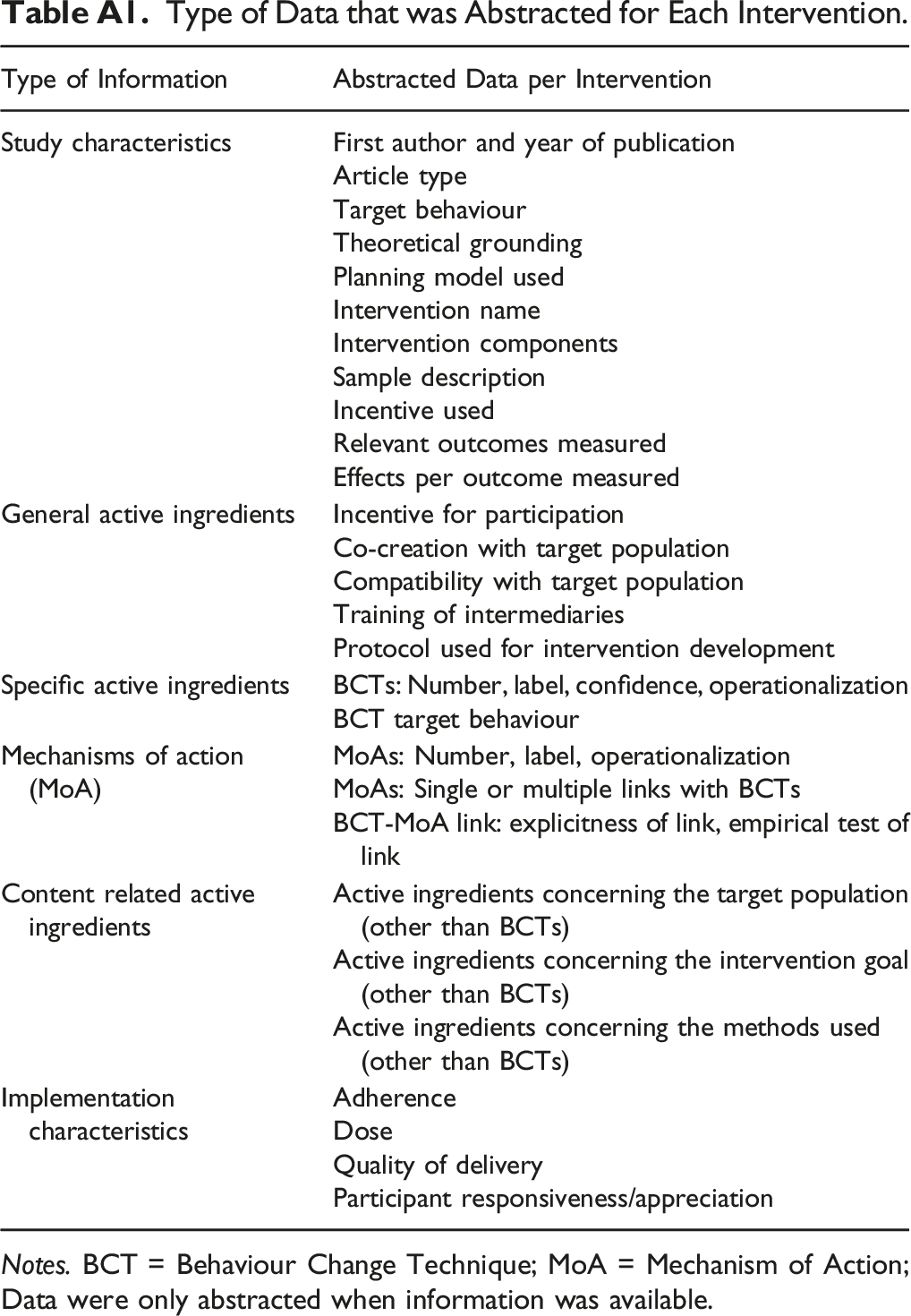
Type of Information
Abstracted Data per Intervention
Study characteristics
First author and year of publication
Article type
Target behaviour
Theoretical grounding
Planning model used
Intervention name
Intervention components
Sample description
Incentive used
Relevant outcomes measured
Effects per outcome measured
General active ingredients
Incentive for participation
Co-creation with target population
Compatibility with target population
Training of intermediaries
Protocol used for intervention development
Specific active ingredients
BCTs: Number, label, confidence, operationalization
BCT target behaviour
Mechanisms of action (MoA)
MoAs: Number, label, operationalization
MoAs: Single or multiple links with BCTs
BCT-MoA link: explicitness of link, empirical test of link
Content related active ingredients
Active ingredients concerning the target population (other than BCTs)
Active ingredients concerning the intervention goal (other than BCTs)
Active ingredients concerning the methods used (other than BCTs)
Implementation characteristics
Adherence
Dose
Quality of delivery
Participant responsiveness/appreciation
Overview of the Included Interventions and its Study Characteristics, Effects and Cost-Effectiveness. Notes. Interventions categorised as ‘ineffective’ are indicated by (−), interventions categorised as having ‘mixed effects’ are indicated by (+/−), and interventions categorised as ‘effective’ are indicated by (+). M = Mean, SD = Standard Deviation; IQR = Inter Quartile Range; wk = week; GP = General Practitioner; PN = practice nurse; PACIC= Patient Assessment Chronic Illness Care; IG = Intervention Group; CG = Control Group; MI = Motivational Interviewing; CVD = Cardio-vascular disease; ICM = I-Change Model; SDT = Self-Determination Theory; TTM = Trans-Theoretical Model; ASE = Social–Psychological (Attitude–Social Influence–Self-Efficacy) model; QAI = quality assessment score ranging from 0 (not reported) to 3 (high quality of construct. * = Outcome measure and effects in Tsiachristas et al., 2015 were based on all 16 disease management programs (DMPs), however, only two DMPs met our inclusion criteria. Given all DMPs had significant results, it was inducted that the two included DMPs were also significant.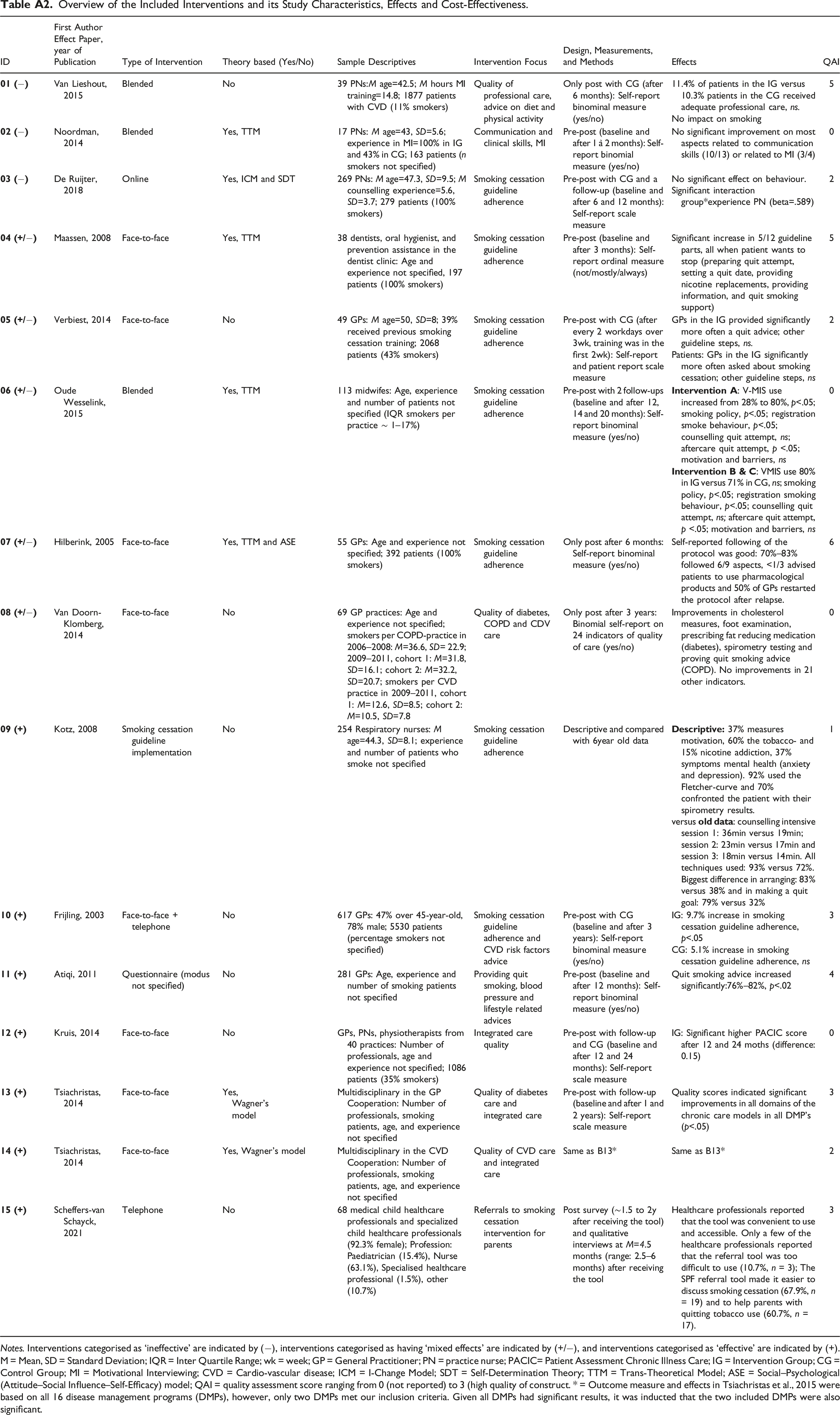
ID
First Author Effect Paper, year of Publication
Type of Intervention
Theory based (Yes/No)
Sample Descriptives
Intervention Focus
Design, Measurements, and Methods
Effects
QAI
Van Lieshout, 2015
Blended
No
39 PNs:M age=42.5; M hours MI training=14.8; 1877 patients with CVD (11% smokers)
Quality of professional care, advice on diet and physical activity
Only post with CG (after 6 months): Self-report binominal measure (yes/no)
11.4% of patients in the IG versus 10.3% patients in the CG received adequate professional care, ns.
No impact on smoking5
Noordman, 2014
Blended
Yes, TTM
17 PNs: M age=43, SD=5.6; experience in MI=100% in IG and 43% in CG; 163 patients (n smokers not specified)
Communication and clinical skills, MI
Pre-post (baseline and after 1 à 2 months): Self-report binomial measure (yes/no)
No significant improvement on most aspects related to communication skills (10/13) or related to MI (3/4)
0
De Ruijter, 2018
Online
Yes, ICM and SDT
269 PNs: M age=47.3, SD=9.5; M counselling experience=5.6, SD=3.7; 279 patients (100% smokers)
Smoking cessation guideline adherence
Pre-post with CG and a follow-up (baseline and after 6 and 12 months): Self-report scale measure
No significant effect on behaviour.
Significant interaction group*experience PN (beta=.589)2
Maassen, 2008
Face-to-face
Yes, TTM
38 dentists, oral hygienist, and prevention assistance in the dentist clinic: Age and experience not specified, 197 patients (100% smokers)
Smoking cessation guideline adherence
Pre-post (baseline and after 3 months): Self-report ordinal measure (not/mostly/always)
Significant increase in 5/12 guideline parts, all when patient wants to stop (preparing quit attempt, setting a quit date, providing nicotine replacements, providing information, and quit smoking support)
5
Verbiest, 2014
Face-to-face
No
49 GPs: M age=50, SD=8; 39% received previous smoking cessation training; 2068 patients (43% smokers)
Smoking cessation guideline adherence
Pre-post with CG (after every 2 workdays over 3wk, training was in the first 2wk): Self-report and patient report scale measure
GPs in the IG provided significantly more often a quit advice; other guideline steps, ns.
Patients: GPs in the IG significantly more often asked about smoking cessation; other guideline steps, ns2
Oude Wesselink, 2015
Blended
Yes, TTM
113 midwifes: Age, experience and number of patients not specified (IQR smokers per practice ∼ 1–17%)
Smoking cessation guideline adherence
Pre-post with 2 follow-ups (baseline and after 12, 14 and 20 months): Self-report binominal measure (yes/no)
0
Hilberink, 2005
Face-to-face
Yes, TTM and ASE
55 GPs: Age and experience not specified; 392 patients (100% smokers)
Smoking cessation guideline adherence
Only post after 6 months: Self-report binominal measure (yes/no)
Self-reported following of the protocol was good: 70%–83% followed 6/9 aspects, <1/3 advised patients to use pharmacological products and 50% of GPs restarted the protocol after relapse.
6
Van Doorn-Klomberg, 2014
Face-to-face
No
69 GP practices: Age and experience not specified; smokers per COPD-practice in 2006–2008: M=36.6, SD= 22.9; 2009–2011, cohort 1: M=31.8, SD=16.1; cohort 2: M=32.2, SD=20.7; smokers per CVD practice in 2009–2011, cohort 1: M=12.6, SD=8.5; cohort 2: M=10.5, SD=7.8
Quality of diabetes, COPD and CDV care
Only post after 3 years: Binomial self-report on 24 indicators of quality of care (yes/no)
Improvements in cholesterol measures, foot examination, prescribing fat reducing medication (diabetes), spirometry testing and proving quit smoking advice (COPD). No improvements in 21 other indicators.
0
Kotz, 2008
Smoking cessation guideline implementation
No
254 Respiratory nurses: M age=44.3, SD=8.1; experience and number of patients who smoke not specified
Smoking cessation guideline adherence
Descriptive and compared with 6year old data
versus 1
Frijling, 2003
Face-to-face + telephone
No
617 GPs: 47% over 45-year-old, 78% male; 5530 patients (percentage smokers not specified)
Smoking cessation guideline adherence and CVD risk factors advice
Pre-post with CG (baseline and after 3 years): Self-report binominal measure (yes/no)
IG: 9.7% increase in smoking cessation guideline adherence, p<.05
CG: 5.1% increase in smoking cessation guideline adherence, ns3
Atiqi, 2011
Questionnaire (modus not specified)
No
281 GPs: Age, experience and number of smoking patients not specified
Providing quit smoking, blood pressure and lifestyle related advices
Pre-post (baseline and after 12 months): Self-report binominal measure (yes/no)
Quit smoking advice increased significantly:76%–82%, p<.02
4
Kruis, 2014
Face-to-face
No
GPs, PNs, physiotherapists from 40 practices: Number of professionals, age and experience not specified; 1086 patients (35% smokers)
Integrated care quality
Pre-post with follow-up and CG (baseline and after 12 and 24 months): Self-report scale measure
IG: Significant higher PACIC score after 12 and 24 moths (difference: 0.15)
0
Tsiachristas, 2014
Face-to-face
Yes, Wagner’s model
Multidisciplinary in the GP Cooperation: Number of professionals, smoking patients, age, and experience not specified
Quality of diabetes care and integrated care
Pre-post with follow-up (baseline and after 1 and 2 years): Self-report scale measure
Quality scores indicated significant improvements in all domains of the chronic care models in all DMP’s (p<.05)
3
Tsiachristas, 2014
Face-to-face
Yes, Wagner’s model
Multidisciplinary in the CVD Cooperation: Number of professionals, smoking patients, age, and experience not specified
Quality of CVD care and integrated care
Same as B13*
Same as B13*
2
Scheffers-van Schayck, 2021
Telephone
No
68 medical child healthcare professionals and specialized child healthcare professionals (92.3% female); Profession: Paediatrician (15.4%), Nurse (63.1%), Specialised healthcare professional (1.5%), other (10.7%)
Referrals to smoking cessation intervention for parents
Post survey (∼1.5 to 2y after receiving the tool) and qualitative interviews at M=4.5 months (range: 2.5–6 months) after receiving the tool
Healthcare professionals reported that the tool was convenient to use and accessible. Only a few of the healthcare professionals reported that the referral tool was too difficult to use (10.7%, n = 3); The SPF referral tool made it easier to discuss smoking cessation (67.9%, n = 19) and to help parents with quitting tobacco use (60.7%, n = 17).
3
Overview of General, Specific (BCTs) and Content Related Active Ingredients. Notes. The darker the cell gradient the more often a BCT was coded in one study (white indicates not included).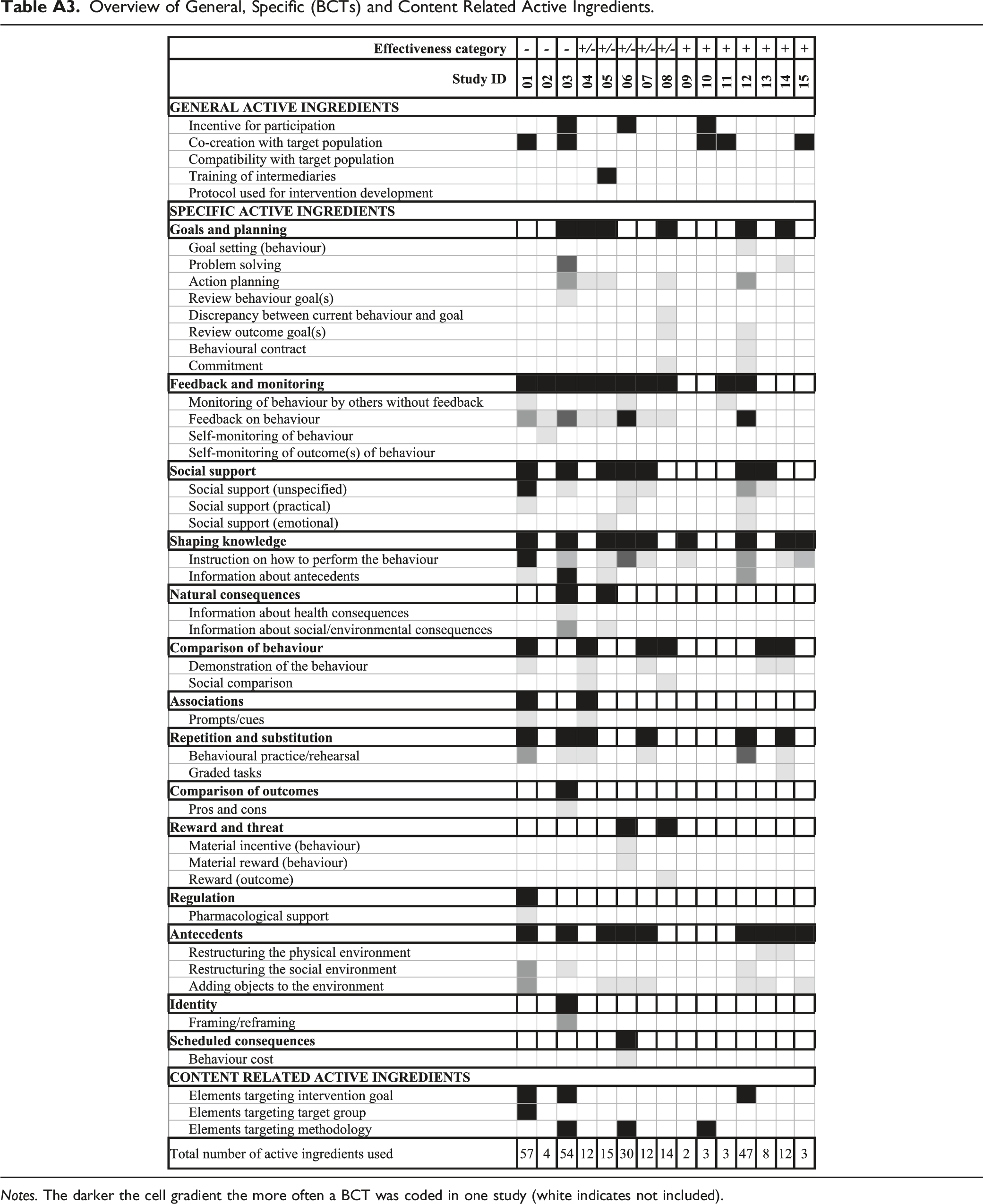

The total number of active ingredients used include the multiple times the BCT was coded. General and content related active ingredients were coded binominal (black indicates that the intervention included the active ingredients (+1 in total number of active ingredients used), white indicates not used).
Implementation Assessment of Included Interventions. Notes. Interventions categorised as ‘ineffective’ are indicated by (−), interventions categorised as having ‘mixed effects’ are indicated by (+/−), and interventions categorised as ‘effective’ are indicated by (+). QAI = quality assessment score ranging from 0 (not reported) to 3 (high quality of construct); SD = standard deviation; PN = practice nurses; GP = general practitioner; MI = motivational interviewing; V-MIS = minimal intervention strategy for midwifes (L-Mis for lung nurses); SCC = smoking cessation counselling; CVD = cardiovascular disease; COPD = chronic obstructive pulmonary disease.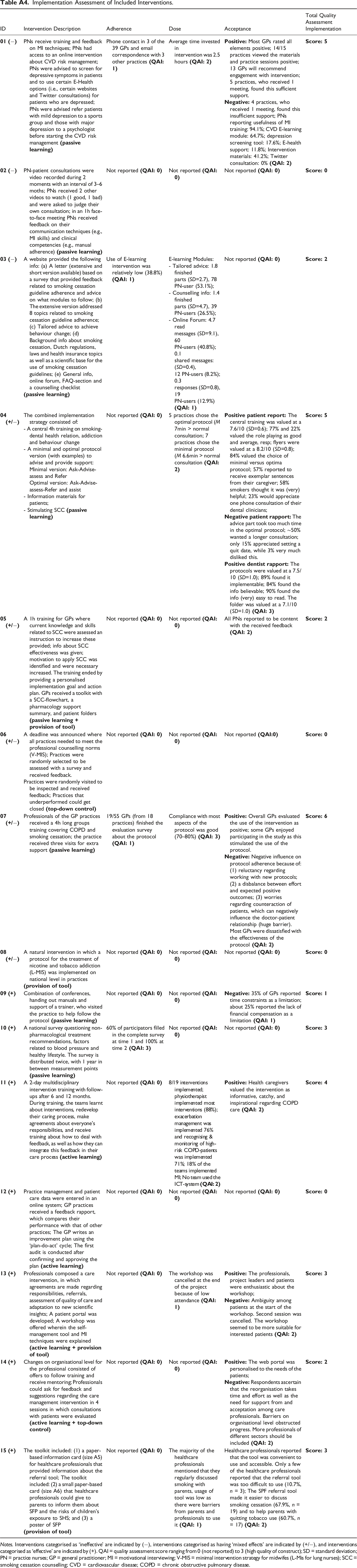
ID
Intervention Description
Adherence
Dose
Acceptance
Total Quality Assessment Implementation
PNs receive training and feedback on MI techniques; PNs had access to an online intervention about CVD risk management; PNs were advised to screen for depressive symptoms in patients and to use certain E-Health options (i.e., certain websites and Twitter consultations) for patients who are depressed; PNs were advised refer patients with mild depression to a sports group and those with major depression to a psychologist before starting the CVD risk management
Phone contact in 3 of the 39 GPs and email correspondence with 3 other practices
Average time invested in intervention was 2.5 hours
PN-patient consultations were video recorded during 2 moments with an interval of 3–6 moths; PNs received 2 other videos to watch (1 good, 1 bad) and were asked to judge their own consultation; in an 1h face-to-face meeting PNs received feedback on their communication techniques (e.g., MI skills) and clinical competencies (e.g., manual adherence)
Not reported
Not reported
Not reported
A website provided the following info: (a) A letter (extensive and short version available) based on a survey that provided feedback related to smoking cessation guideline adherence and advice on what modules to follow; (b) The extensive version addressed 8 topics related to smoking cessation guideline adherence; (c) Tailored advice to achieve behaviour change; (d) Background info about smoking cessation, Dutch regulations, laws and health insurance topics as well as a scientific base for the use of smoking cessation guidelines; (e) General info, online forum, FAQ-section and a counselling checklist
Use of E-learning intervention was relatively low (38.8%)
E-learning Modules:
- Tailored advice: 1.8 finished parts (SD=2.7), 78 PN-user (53.1%);
- Counselling info: 1.4 finished parts (SD=4.7), 39 PN-users (26.5%);
- Online Forum: 4.7 read messages (SD=9.1), 60 PN-users (40.8%); 0.1 shared messages: (SD=0.4), 12 PN-users (8.2%); 0.3 responses (SD=0.8), 19 PN-users (12.9%) Not reported
The combined implementation strategy consisted of:
- A central 4h training on smoking-dental health relation, addiction and behaviour change
- A minimal and optimal protocol version (with examples) to advise and provide support:
Minimal version: Ask-Advise-assess and Refer
Optimal version: Ask-Advise-assess-Refer and assist
- Information materials for patients;
- Stimulating SCC Not reported
5 practices chose the optimal protocol (M 7min > normal consultation; 7 practices chose the minimal protocol (M 6.6min > normal consultation
A 1h training for GPs where current knowledge and skills related to SCC were assessed an instruction to increase these provided; info about SCC effectiveness was given; motivation to apply SCC was identified and were necessary increased. The training ended by providing a personalised implementation goal and action plan. GPs received a toolkit with a SCC-flowchart, a pharmacology support summary, and patient folders
Not reported
Not reported
All PNs reported to be content with the received feedback
A deadline was announced where all practices needed to meet the professional counselling norms (V-MIS); Practices were randomly selected to be assessed with a survey and received feedback.
Practices were randomly visited to be inspected and received feedback; Practices that underperformed could get closed Not reported
Not reported
Not reported
Professionals of the GP practices received a 4h long groups training covering COPD and smoking cessation; the practice received three visits for extra support
19/55 GPs (from 18 practices) finished the evaluation survey about the protocol
Compliance with most aspects of the protocol was good (70–80%)
A natural intervention in which a protocol for the treatment of nicotine and tobacco addiction (L-MIS) was implemented on national level in practices
Not reported
Not reported
Not reported
Combination of conferences, handing out manuals and support of a trainer, who visited the practice to help follow the protocol
Not reported
Not reported
A national survey questioning non-pharmacological treatment recommendations, factors related to blood pressure and healthy lifestyle. The survey is distributed twice, with 1 year in between measurement points
60% of participators filled in the complete survey at time 1 and 100% at time 2
Not reported
Not reported
A 2-day multidisciplinary intervention training with follow-ups after 6 and 12 months. During training, the teams learnt about interventions, redevelop their caring process, make agreements about everyone’s responsibilities, and receive training about how to deal with feedback, as well as how they can integrate this feedback in their care process
Not reported
8/19 interventions implemented; physiotherapist implemented most interventions (88%); exacerbation management was implemented 76% and recognising & monitoring of high-risk COPD-patients was implemented 71%; 18% of the teams implemented MI; No team used the ICT-system
Practice management and patient care data were entered in an online system; GP practices received a feedback rapport, which compares their performance with that of other practices; The GP writes an improvement plan using the ‘plan-do-act’ cycle; The first audit is conducted after confirming and approving the plan
Not reported
Not reported
Not reported
Professionals composed a care intervention, in which agreements are made regarding responsibilities, referrals, assessment of quality of care and adaptation to new scientific insights; A patient portal was developed; A workshop was offered wherein the self-management tool and MI techniques were explained
Not reported
The workshop was cancelled at the end of the project because of low attendance
Changes on organisational level for the professional consisted of offers to follow training and receive mentoring; Professionals could ask for feedback and suggestions regarding the care management intervention in 4 sessions in which consultations with patients were evaluated
Not reported
Not reported
The toolkit included: (1) a paper-based information card (size A5) for healthcare professionals that provided information about the referral tool; The toolkit included: (2) a small paper-based card (size A6) that healthcare professionals could give to parents to inform them about SFP and the risks of children’s exposure to SHS; and (3) a poster of SFP
Not reported
The majority of the healthcare professionals mentioned that they regularly discussed smoking with parents, usage of tool was low as there were barriers from parents and professionals to use it
Healthcare professionals reported that the tool was convenient to use and accessible. Only a few of the healthcare professionals reported that the referral tool was too difficult to use (10.7%, n = 3); The SPF referral tool made it easier to discuss smoking cessation (67.9%, n = 19) and to help parents with quitting tobacco use (60.7%, n = 17)