



Abstract
This study aims to compare caffeine intake and physical activity levels in university students with severe and ineffective fatigue and examine the relationship between them. A total of 647 (F:527; M:120) university students were included in this cross-sectional study. Individuals' socio-demographic information, severity of fatigue (Fatigue Severity Scale (FSS)), amount of caffeine intake and physical activity level (International Physical Activity Questionnaire-Short Form (IPAQ-SF)) were evaluated. It was determined that 56.5% of the university students (age: 21.21 ± 2.57) participating in the study had severe fatigue. Caffeine intake and physical activity level of students with severe fatigue were statistically significantly lower than those with ineffective fatigue (p < 0.05). In addition, there was a weak negative correlation between fatigue and caffeine intake (r = −0.157; p < 0.001) and physical activity level (r = −0.096; p < 0.017). There was a significant positive correlation between caffeine intake and physical activity (r = 0.143; p < 0.001). This study showed that a significant portion of university students have severe fatigue. In addition, individuals with severe fatigue have decreased caffeine intake and lower physical activity levels. To reduce fatigue, caffeine intake in safe doses should be encouraged in accordance with the individual’s metabolic and physiological parameters. In addition, physical activity counseling should be given to encourage physical activity.
Introduction
Fatigue is difficulty initiating or maintaining voluntary activities (Chaudhuri & Behan, 2004). It is also expressed as a subjective condition that goes beyond feeling tired and sleepy, cannot be predicted with the effort spent, and prevents the fulfillment of duties and responsibilities due to the lack of a clear definition (Strahler et al., 2016). It is one of the most common complaints in the general population. It has been reported that up to half of the adult population complains of fatigue (Pawlikowska et al., 1994). University students also have similar rates of fatigue compared to adult populations (Strahler et al., 2016; Tanaka et al., 2008; Yoshikawa et al., 2014).
Fatigue negatively affects the quality of life during university years by causing deterioration in academic performance (Nagane, 2004), a decrease in attention (Yusli et al., 2021), an increase in stress level (Strahler et al., 2016), and a decrease in physical health (Frederick et al., 2021). Therefore, fatigue is a significant concern in university students. Although gender, diseases, and academic demands cause fatigue in university students, caffeine intake (McLellan et al., 2016), adequate sleep, decreased sedentariness, and regular physical activity may play a role in managing fatigue (Nelson et al., 2008).
Caffeine is a widely consumed psychoactive substance in coffee, chocolate, energy drinks, tea, and carbonated beverages. An average daily caffeine intake of 400 mg does not pose a health risk (McLellan et al., 2016). Caffeine may often be used as a fatigue measure (Dorrian et al., 2011). Due to its effect on adenosine receptors, caffeine increases alertness, reduces fatigue, and increases energy (Lorist & Tops, 2003; McLellan et al., 2016). This effect has been demonstrated in various populations that need to cope with fatigue (Burke, 2008; Olson et al., 2010). Caffeine has positive effects at moderate doses and adverse effects on daily performance and quality of life at higher doses (McLellan et al., 2016). However, the lack of evidence regarding the relationship between fatigue and caffeine in university students with higher than average daily caffeine intake is noteworthy (McLellan et al., 2016).
Previous studies have shown that university students have decreased physical activity levels and increased sedentary behavior (Carballo-Fazanes et al., 2020; Castro et al., 2020; Hosteng et al., 2019). Attending classes, studying, time spent in front of the computer (Carballo-Fazanes et al., 2020), and lack of motivation cause this situation (Tao et al., 2019). Therefore, there is an increase in physical discomfort (Hosteng et al., 2019) and fatigue levels (Frederick et al., 2021). Studies have shown a negative relationship between physical activity level and fatigue (Egerton et al., 2016; Engberg et al., 2017). However, one study reported that activities of daily living had a little short-term effect on overall fatigue. For this reason, it is necessary to investigate the relationship between physical activity on somatic complaints such as fatigue (Strahler et al., 2016). In addition, an increase in the level of fatigue leads to a decrease in the physical activity level of individuals. In this context, there is a bidirectional relationship between both factors (Egerton et al., 2016).
Fatigue may affect individuals and lead to a decrease in quality of life. Therefore, various methods are used to manage fatigue (Nelson et al., 2008). Considering the increased caffeine intake and decreased physical activity levels in young people, the relationship of these factors with fatigue is important. Although there are various studies in this context in the literature, the relationship between fatigue with caffeine intake and physical activity in university students is not clear. Examining these parameters is important for planning strategies to reduce fatigue. Therefore, this study aimed to compare caffeine intake and physical activity levels in university students with severe and ineffective fatigue and to examine their relationship with each other.
Methods
Study Design and Sample
Students studying at different departments at Karabuk University between February and May 2022 participated in this observational-cross-sectional study. The population of this research consists of 47,428 students studying at Karabuk University in the spring term of 2022. To calculate the sample size from the group whose total population is known, the sample size calculation table was used when the universe was known (Yazıcıoğlu & Erdoğan, 2004). The minimum sample size was calculated as 381 at the confidence interval of 95% (α = 0.05) for the number of individuals required to be included in the population. Although the minimum sample size calculated for the study was 381,647 students who gave consent were selected to increase the power of the study. The sample of the study consisted of 647 students who accepted to participate in the study and met the inclusion criteria. The convenience method was used as the sampling method in the study. This method was used because the students on the campus were close to the researchers and easy to reach. After the participants were informed about the purpose of the research, informed consent forms of the volunteers were obtained through the online form. Then the questionnaire was sent to the participants online (WhatsApp and email) and administered via an electronic Google form. Individuals under 18, those with perception and communication problems, and pregnant and lactating women were excluded from the study. This study was approved by the Karabuk University Non-Invasive Clinical Research Ethics Committee (Protocol No: 2022/791).
Data Collection
The survey was administered via an electronic Google form and submitted online (WhatsApp and email) between January and May 2022. The questionnaire consists of four parts: sociodemographic information, caffeine intake amount form, Fatigue Severity Scale (FSS), and International Physical Activity Questionnaire-Short Form (IPAQ-SF).
Sociodemographic Information Form
In this form, participants’ age, gender, body weight, height, smoking-alcohol use, and chronic disease information were questioned.
Caffeine Intake Amount Form
For determining the amount of caffeine, the amount and frequency of consumption of different foods and beverages containing caffeine were examined. Caffeinated foods and beverages were determined based on a previous study conducted in Turkey (Köksal et al., 2017). Caffeine amounts were measured based on the United States Department of Agriculture-USDA’s international database of nutritional composition, product labels, and studies of the caffeine content of nutrients (Köksal et al., 2017).
Fatigue Severity Scale
The scale was first developed by Krupp et al. (1989) and assesses the severity of fatigue in individuals. The scale consists of nine questions that indicate a perception of fatigue based on the responses, and a score from 1 (strongly disagree) to 7 (strongly agree) is selected to indicate the degree of agreement with each item. Turkish validity and reliability of this scale were determined by Armutlu et al. (2007), and the cronbach alpha coefficient was determined as 0.94. The total score is the average of the scores of nine items, and scores of four or higher indicate severe fatigue (Armutlu et al., 2007). Therefore, for grouping, <4 points were categorized as “ineffective fatigue” and ≥4 points as “fatigue”.
International Physical Activity Questionnaire-Short Form
To determine the physical activity levels of individuals, IPAQ-SF was used developed by Craig et al. (2003). The Turkish validity and reliability of the questionnaire were made (Saglam et al., 2010). The questionnaire evaluates the level of physical activity in the last week. Physical activities performed for at least 10 minutes at a time are considered in the IPAQ. The seven-question form includes information about walking, moderately vigorous activities (carrying light load, bicycling at a regular pace, folk dances, bowling, or table tennis, etc.), and time spent in vigorous activities (heavy lifting, aerobics, football, basketball, or fast bicycling, etc.). In determining the level of physical activity, a score is obtained as “MET minutes/week” by multiplying the minutes, days, and metabolic equivalence (MET) for each type of physical activity. Physical activity levels are classified as low (<600 MET min/week), moderate (600–3000 MET min/week), and high (>3000 MET min/week) (Craig et al., 2003).
Statistical Analysis
Data analysis was performed using the SPSS 27 (Statistical Package for Social Science) program. Numerical data mean
Results
Evaluation of Some Characteristics of the Participants According to the Severity of Fatigue.
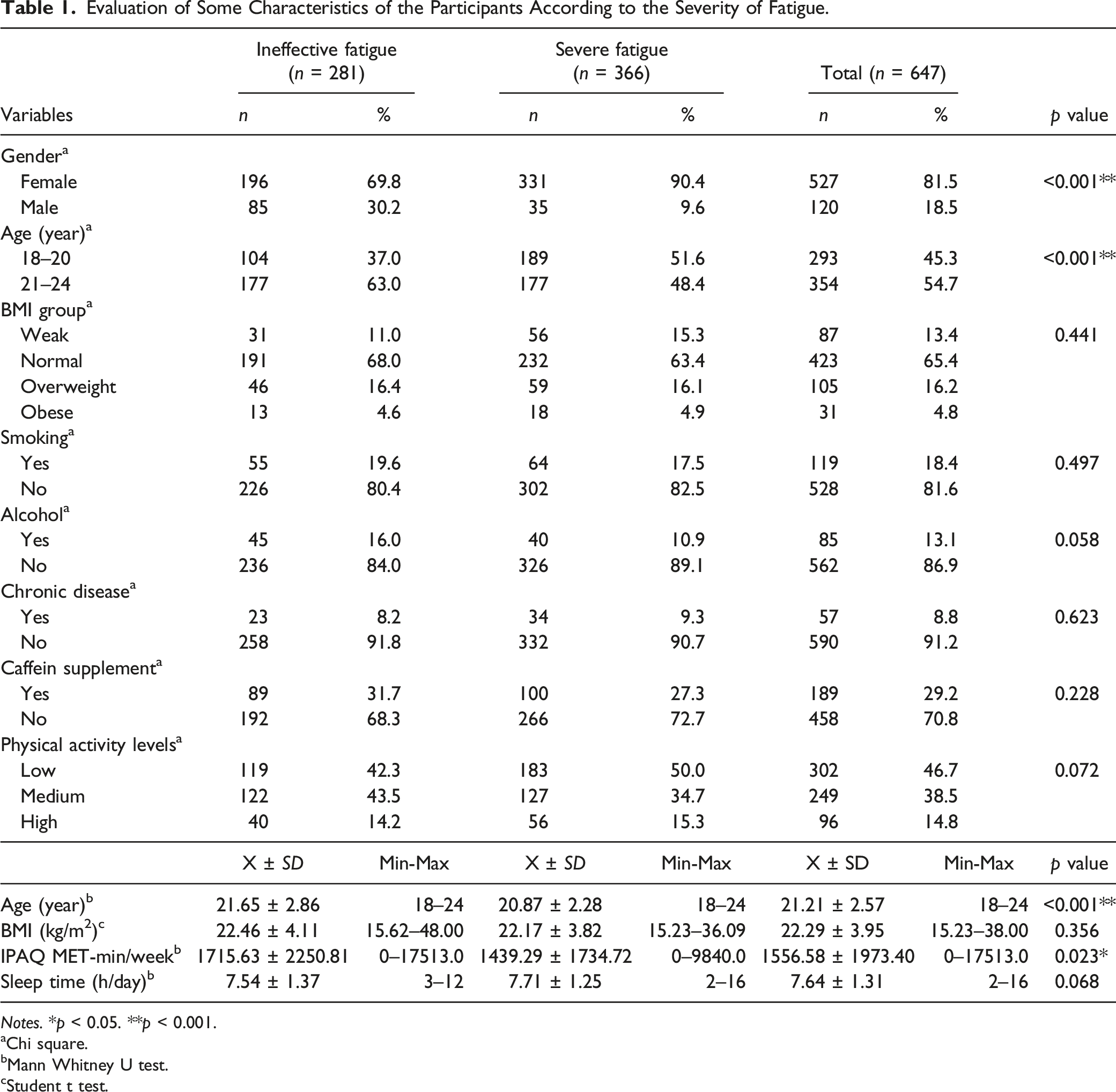
Notes. *p < 0.05. **p < 0.001.
aChi square.
bMann Whitney U test.
cStudent t test.
Individuals’ average daily caffeine intake was evaluated according to the severity of fatigue. The average daily caffeine intake was 347.55 ± 267.09 mg in individuals with severe fatigue and 404.98 ± 288.18 mg in individuals with ineffective fatigue. Accordingly, individuals with severe fatigue had a statistically significantly lower daily average caffeine intake than individuals with ineffective fatigue severity (p = 0.009) (Figure 1). Evaluation of the average daily caffeine intake of the participants according to the severity of fatigue.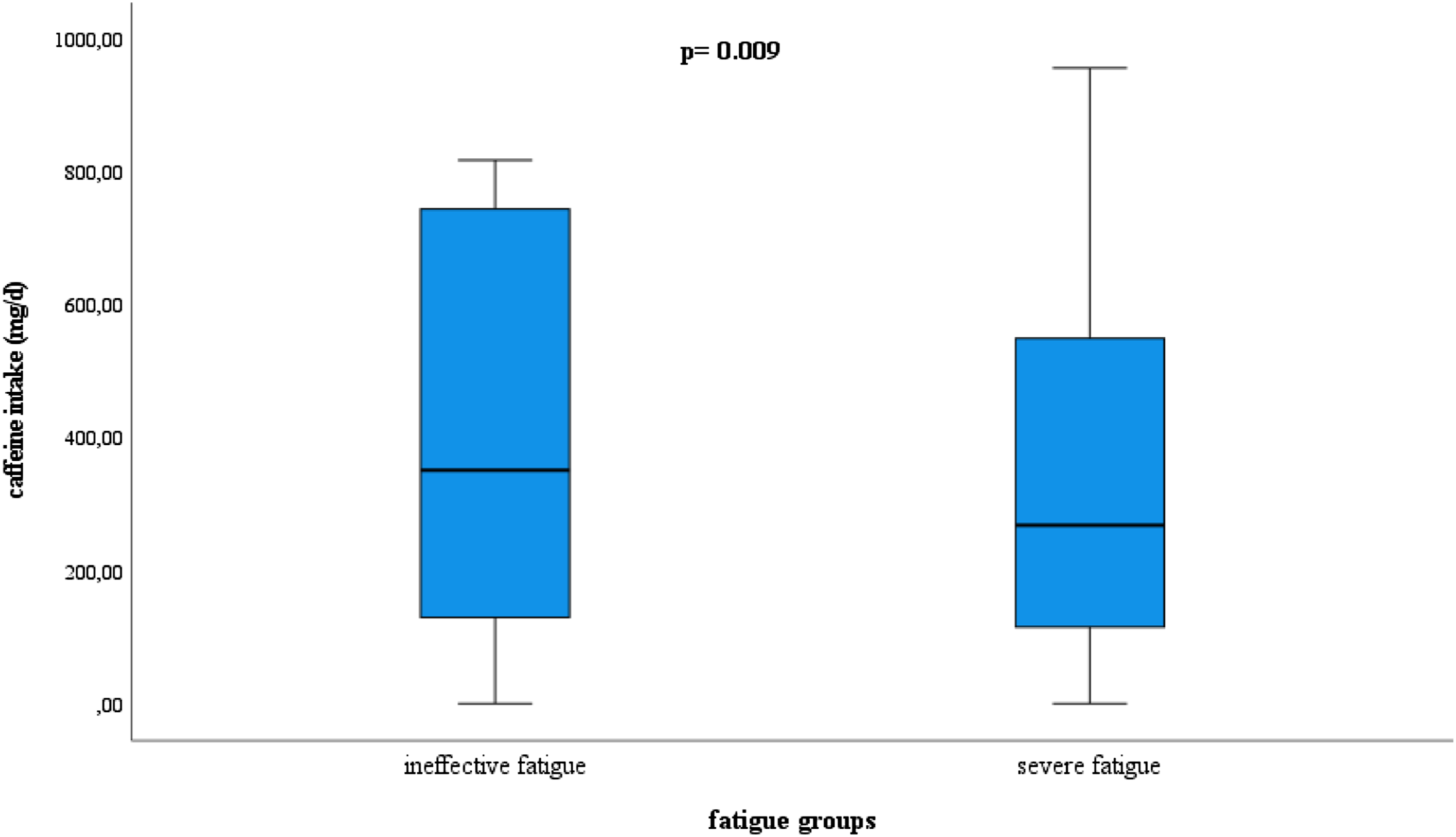
Evaluation of the Relationship Between Soe Characteristic of the Participants.

Notes. Pearson Correlation test. *p < 0.05; **p < 0.01; ***p < 0.001.
Discussion
In this study examining university students, it was determined that caffeine intake and physical activity level were lower in individuals with severe fatigue. In university students, the level of fatigue was associated with caffeine intake, physical activity, and sleep duration. In addition, caffeine intake and physical activity were found to be correlated with each other.
The prevalence of fatigue in university students is increasing, which raises concerns (Shim et al., 2019). In our study determined that 56.5% of university students had severe fatigue. In the literature, the prevalence of fatigue in university students varies. Tanaka et al. (2008) and Yoshikawa et al. (2014) reported the prevalence of fatigue in this population as 16.7% and 13.7%, respectively. Another study showed that university students had a 40% and 50% prevalence of fatigue at the beginning of the semester and during the exam period, respectively (Bouloukaki et al., 2017). Previous studies have shown that women have more fatigue than men (Egerton et al., 2016; Kizhakkeveettil et al., 2017; Torquati et al., 2018; Watt et al., 2000). The high prevalence of fatigue in our study may be due to the high number of people of the female gender, similar to the literature.
It is stated that fatigue is higher in the first years of university compared to the following years (Kizhakkeveettil et al., 2017). This study also showed that younger university students had more fatigue. In general, the level of fatigue increases with age (Christie et al., 2016; Watt et al., 2000). However, Engberg et al. (2017) in their study on the general population, showed that younger individuals had more fatigue, consistent with our study. In our study, it is thought that factors such as the adaptation process to university, increased work tempo, and stress may cause younger university students to experience more fatigue.
Fatigue is a symptom that significantly affects individuals’ lives. In this context, caffeine intake is one of the methods used to prevent fatigue (Dorrian et al., 2011). Previous studies have shown that caffeine acutely reduces mental and physical fatigue and improves mood in the young and elderly populations (Fuller et al., 2021; Haskell-Ramsay et al., 2018). Another study noted that older women were less likely to feel tired as the amount of caffeine ingested through coffee and tea increased (Torquati et al., 2018). In addition, studies have emphasized the effectiveness of caffeine in reducing or delaying the fatigue associated with various exercise training (Burke, 2008; Fett et al., 2018). Parameters such as academic demands, stress, and insomnia in university students cause physical and mental fatigue, resulting in general fatigue and exhaustion independent of performance (Frederick et al., 2021; Nagane, 2004; Strahler et al., 2016). However, apart from performance-based fatigue, the relationship between general fatigue and caffeine intake in university students is unclear. This study observed that college students with severe fatigue consumed less caffeine than those with ineffective fatigue. At the same time, it was determined that fatigue had an inverse relationship with caffeine intake. This effect of caffeine on fatigue occurs through the central nervous system. Adenosine in the brain reduces the concentration of neurotransmitters such as dopamine, serotonin, and acetylcholine in the body. Caffeine increases the concentration of these neurotransmitters in the central nervous system by blocking adenosine receptors. As a result, it plays a role in improving fatigue by providing alertness (McLellan et al., 2016). In addition, in the present study, only the amount of caffeine from nutrients was calculated, not from dietary supplements containing caffeine. Since there was no difference between the groups in terms of dietary supplements containing caffeine, the effect of dietary supplements on the study results may be ignored. Therefore, considering the known effect of caffeine and the results of the current study, caffeine intake may play a role in managing general fatigue in university students.
Recent studies have emphasized that the level of physical activity in university students gradually decreases, and there is an increase in sedentary life (Carballo-Fazanes et al., 2020; Frederick et al., 2021; Tao et al., 2019). In addition to the decrease in physical functions, general fatigue occurs in university students due to a decrease in the mental process associated with the education process (Nagane, 2004; Strahler et al., 2016). Previous studies have shown that fatigue and physical activity affect each other and have a bidirectional relationship in adults and working individuals (Bláfoss et al., 2019; Egerton et al., 2016). However, the relationship between general fatigue and physical activity in university students has not been proven.
This study found that university students with severe fatigue had lower physical activity levels and decreased compared to those with ineffective fatigue. At the same time, an inverse relationship was observed between fatigue and physical activity. Similar to this study, Strahler et al. (2016) showed a strong association between physical activity in those experiencing less chronic stress and fatigue. Contrary to our study, Christie et al. (2016) found no association between physical activity and self-reported fatigue outcomes in younger groups. As determined in this study, it was observed in the literature that women experienced more fatigue (Kizhakkeveettil et al., 2017; Torquati et al., 2018) and had lower physical activity levels (Carballo-Fazanes et al., 2020; Engberg et al., 2017). Therefore, the fact that the sample of this study is larger, the number of women is higher, and the mean age is lower may explain the difference from Christie et al.’s (2016) study. In addition, fatigue can affect participation in physical activity (Torquati et al., 2018). The high prevalence of fatigue in our study may also explain this situation. It is necessary to reduce and prevent the fatigue experienced by university students due to its negative impact on their quality of life. An intervention study showed that low-intensity exercise might effectively reduce education-related fatigue in university students (De vries et al., 2016). Therefore, considering the results of this study, it is thought that encouraging physical activity in university students will play an important role in reducing fatigue.
Sleep duration and sleep quality also vary in relation to fatigue. Decreased sleep duration and poor sleep quality may affect university students’ academic performance and mental health, leading to fatigue (Hershner & Chervin, 2014). A recent systematic review showed that better sleep quality and adequate sleep duration were moderately associated with a lower feeling of fatigue (Frederick et al., 2021). Consistent with the literature, sleep duration and fatigue were also associated in the current study. In addition, our study found a positive correlation between caffeine intake and physical activity. Caffeine, which is an ergogenic substance, provides an increase in performance by playing a role in reducing fatigue caused by exercise (Fett et al., 2018; McLellan et al., 2016). In addition to the literature, the results of this study showed that caffeine intake might also be effective in increasing compliance with current physical activity guidelines. It is also thought that the relationship between caffeine and physical activity may be due to the effect of caffeine on fatigue.
This study has several limitations. First, caffeine intake and physical activity results were obtained by self-report. More subjective results were obtained compared to a device that measures individuals’ activity levels and diaries that record their caffeine intake. In addition, sedentary time has not been studied. It is recommended that it be evaluated in future research for a clearer understanding of the relationship between fatigue and physical activity. The majority of the participants in this study are women. Gender difference is effective in interpreting the results; therefore, ensuring gender equality is important for a more objective interpretation of the results. Another limitation is that the results cannot be generalized because the study was conducted in a single center. As seen in our study, physical activity and caffeine intake are related, but the relationship between these parameters and fatigue is unclear. In addition, since this study is a cross-sectional study, the results cannot be interpreted in a causal integrity. Since these intertwined parameters, such as fatigue, caffeine intake, and physical activity, influence each other, further studies are needed to fully understand the underlying mechanism of association. In addition, since the fatigue evaluation was taken from students studying in different departments, factors such as academic demand and course intensity may also have impacted the results. Also, factors such as the beginning, middle, and end of the term were not considered during the data collection. This may also have affected the results. Finally, using the convenience sampling technique makes it difficult to generalize the current findings to university students.
In future studies, multicenter studies are recommended in which potential variables (caffeine intake, physical activity, sleep, etc.) and possible confounding factors (age, gender, department, etc.) that may affect fatigue are evaluated with further analysis.
Conclusion
This study showed that more than half of university students have severe fatigue. In addition, it has been determined that individuals with severe fatigue have less caffeine intake and lower physical activity levels. Fatigue can negatively impact life in younger populations such as university students. Therefore, to reduce fatigue, caffeine intake in safe doses should be encouraged in accordance with the metabolic and physiological parameters of the individual. In addition, physical activity counseling should be provided to encourage physical activity.
Footnotes
Declaration of Conflicting Interests
The author(s) declared no potential conflicts of interest with respect to the research, authorship, and/or publication of this article.
Funding
The author(s) received no financial support for the research, authorship, and/or publication of this article.
