



Abstract
Since the early 1990s, Malaysian society has displayed a deepening concern over steady increases in reported cases of child abuse in the country. For many Malaysians, knowledge of this issue comes from the mainstream media. This research analyses media coverage of child abuse in two mainstream English-language daily newspapers throughout 2010. The analysis focuses on how this issue is presented and ‘framed’ in the media. Through the use of simple episodic framing and a distorted focus on extreme cases of child abuse, media coverage internationally obscures the reality of child abuse as it occurs within the context of contemporary social, cultural, religious or political systems. This hinders any genuine understanding of the problem, leading to flawed solutions. We find these international patterns largely replicated in Malaysia. Furthermore, gendered socialization processes in Malaysia make women and mothers principally responsible for family life and there is a tendency to blame and punish mothers for child abuse even when they are not the perpetrators. Internationally, child welfare experts and academics have advised the media to focus reporting on the underlying causes of abuse so that the issue can be better understood and addressed and this advice is pertinent for Malaysia today.
Since the early 1990s, the Malaysian public, government and media have displayed deepening concern over steady increases in reported cases of child abuse in the country. For many Malaysians, knowledge of the issue of child abuse derives from the mainstream media. This research analyses the 2010 media coverage of child abuse in two English-language Malaysian newspapers, The Star (TS) and The New Straits Times (NST). We focused on the framing of this issue in the Malaysian print media to explore how this issue is understood and responded to by Malaysian society, and also how the media influences and shapes social attitudes and solutions. The paper offers the first sustained analysis of child abuse in the Malaysian media.
Background
Children have been mistreated and subjected to violence throughout history but the naming of this mistreatment as ‘abuse’ rather than punishment, discipline or cruelty is recent. Kempe first described the Battered Baby Syndrome in 1962 and by the early 1970s increased awareness emphasized protection and treatment (Oates, 1993: 1). The causes of child abuse and neglect are a complex combination of personal, cultural and social factors that are part of a ‘continuum of culturally defined and accepted child rearing practices’ of which severe punishments are simply one extreme (Djeddah et al., 2000: 90–91). Higher during social transition and conflict, studies also show that sexual abuse is five to seven times higher in girls but that physical abuse is twice as common for boys. The World Health Organization (WHO) (2011) associates ‘rigid gender roles, including definitions of masculinity linked with dominance and hierarchical gender relations’ to these disparities. Similar to violence against women, child abuse is ‘a social and collective problem that reflects the unequal gender power relations in patriarchal societies’ (Damant et al., 2008: 124) coupled with the power relations of most adults over children.
Child abuse in Malaysia
Following Kempe, doctors at Kuala Lumpur Hospital documented the emergence of child abuse in Malaysia (Woon et al., 1974). From the early 1980s, when cases began to be formally registered, child abuse has grown as a public health and social policy issue. During this time, the social and political environment in Malaysia underwent huge transition. Child abuse was catapulted into mainstream awareness by the tragic abuse and death of two-year-old ‘Baby’ Balasundaram in 1990, highlighting the role of the media in garnering public attention (Kasim, 2001) and forcing government action (Ariffin, 1995: 367). Along with awareness of child abuse, sharp increases in official reporting of cases has occurred (Noordin et al., 2008). State Social Welfare Department reported cases have increased from 93 in 1981, to 970 in 1991; 1242 in 2002; 1999 in 2006 and 3047 in 2010 (Ariffin, 1995: 355; Department of Social Welfare, 2010). These figures are also highly gendered, with approximately two thirds of victims being female. Reported cases are likely to represent only 10% of total cases perpetrated, as most victims and their families remain too ashamed or unable to report violations (UNICEF, 2009). The Universal Periodic Review examines human rights in United Nations (UN) member states every four years. In 2009 it noted concern about the persistence in Malaysia ‘of patriarchal attitudes and deep-rooted stereotypes’ and ‘problems faced by the girl child’. The review stated, ‘violence against children in the family, remained a serious problem. Owing to strong taboos, victims and witnesses rarely reported these cases’, noting also that corporal punishment remained lawful (Child Rights Information Network, 2011).
The Malaysian government updated legislation in the form of the Child Protection Act 1991 (Ariffin, 1995: 356) and made it a focus of the national planning process. Strategies to protect children from abuse warranted a separate section of the Ninth Malaysia Plan 2006-2010 and a National Child Policy and National Child Protection Policy was approved in 2009. However, the issue was given less prominence in the Tenth Malaysia Plan 2011-2015, which was more focused on the economy and achieving developed country status by 2020.
When public awareness of child abuse first emerged in Malaysia, it was considered by many to be a Western import that had not previously existed in Malaysia’s traditional extended families (Kasim, 1993: 6; Nathan and Woon, 1981: 247). Initial reports were treated with degrees of scepticism, or considered isolated or aberrant, and not indicative of a national problem. Abuse was attributed to abrupt social changes that had degraded extended families, such as internal migration to industrial centres and urbanization. Smaller nuclear families, often with a working mother, were seen as unable to cope with the full burden of child care (Ariffin, 1995; Cho, 1990; Kasim, 2001; Nathan and Woon, 1981). A ‘resurgent Islam’ has resulted, partially to combat these perceived ‘ills of Westoxification, collapsing family values and general social decline’ (Stivens, 1998b: 70–71).
Feminist and media analysis of child abuse
Following Kempe’s work child abuse became a media issue internationally (Goddard, 1996; Nelson, 1984; Scott and Swain, 2002). This raised community concern and awareness, resulting in increased reporting of child abuse (Mendes, 2000: 50, 52; Tonmyr and Jack, 2010: 91) and precipitated government responses. Analysis of media coverage is crucial, as the media continues to shape child abuse and child protection policies (Mendes, 2000: 50–51, 2001: 27–28; Scott and Swain, 2002; Shirk, 1997). However, analysis has been primarily concerned with Western countries (Hesketh and Lynch, 1996) and none has been previously undertaken in Malaysia (Kasim, 2001: 142).
Media representation of child abuse has been criticized for its tendency to sensationalize, to focus on individual cases and its failure to consider socio-economic context so that chronic forms of abuse such as neglect or emotional abuse are obscured (Ayre, 2001). A sensationalist focus on sexual abuse creates the impression that this is prevalent when the incidence is low compared with neglect (Tonmyr and Jack, 2010: 93). These distortions over-sensitize readers to particular risks, fostering moral panic and leading to simplistic solutions for complex and entrenched social problems (Ayre, 2001: 889; Mendes, 2000: 52–54). Abuse within the family is under-represented and non-familial abuse over-represented, which protects the traditional institution and values of the family (Mendes, 2000: 52–53). Child abuse is attributed to social changes such as ‘divorce, homosexuality, sex education, abortion, and working mothers’ (Mendes, 2001: 29). This view supports a social conservative political agenda and narrow child protection systems focused on punishment of perpetrators, while the deeper causes and their appropriate reform are neglected.
Feminist media analysis has largely focused on issues of violence against women. Carll’s (2005) study of rape coverage found that articles supplied fewer details than those about murder or assault, reinforcing ideas that, ‘violence [against women] was an isolated ideology or deviance’ denying the ‘social roots’ of violence against women and absolving the wider society from any responsibility (Carll, 2005: 145). Feminists also contend that intra-familial abuse is downplayed by the media, protecting a father’s rights and patriarchal family structures (Goddard and Saunders, 2000; Gordon, 1988: 141; Gough, 1996: 368). The 1970s feminist reframing of child abuse pointed out that a distorted focus on abduction, sexual abuse and murder of children by strangers depicted child sexual abuse as a horrible external pathology, when the greatest real danger to children was the ‘ordinary’ men they already knew (Smart, 1989).
Child protection regimes have also historically policed mothers, further protecting patriarchal interests (Hooper, 1992; Smart, 1989). Blaming mothers who fail to protect their children or detect abuse is a recurrent moral theme in child welfare discourses, which also shifts attention and blame from patriarchal systems (Hooper, 1992; Smart, 1989). This view of mothering simply reflects the patriarchal context in which it takes place (Damant et al., 2008: 128). Like the attention given to mothers in child abuse reportage, studies on the media portrayal of rape identify a focus on the role and behaviour of the woman reflecting ‘cultural myths and patriarchal assumptions about the proper role and behaviour of women’ (Carll, 2005: 145). These insights have yet to make an impact in many non-Western societies and this paper offers an application of some of these theoretical insights to the situation in Malaysia, where they are refracted through the lens of a resurgent Islam and the national government’s conservative ‘Family Values’ policies.
Method and media content analysis
The media is a ‘business of finding, constructing and selling “news”’, requiring ‘immediacy and drama’ rather than accuracy (Kitzinger, 1996: 323). Insight into media coverage of issues requires analysis of this construction via a ‘highly interpretive and value-laden process’ based on ‘socially created collective universals and traditional understandings’ that often represent and reinforce stereotypes (Akhavan-Majid and Ramaprasad, 1998: 133). The overall framing of media news stories ultimately reflects the ideology of the wider socio-political system (Souza, 2010: 478–479).
Akhavan-Majid and Ramaprasad (1998: 134) assert that the link between news frames and ideology has remained largely unexplored in the literature. They document that theorists have identified three types of ideology that influence the framing of media: dominant ideology, elite ideology and journalistic ideology. We can identify an elite ideology in the Malaysian media as the policy orientation of the government, which overlaps with the dominant Islamic ideology, which is aligned in Malaysia with a Malay-centred nationalist ideology. In our case study we also identify a gender ideology as outlined above in the methods section, with further discussion below.
Print media content analysis, both qualitative and quantitative, identifies media characteristics, such as medium, production techniques, messages, sources used and context (Macnamara, 2006: 5; Shoemaker and Reese, 1996); and the counting of key variables that determine the likely impact of an article, including topics or issues covered, their prominence; design, photos and graphics; audience, circulation and frequency.
A lack of detail or context in a media article that focuses exclusively on the event and persons is common in news and is called ‘episodic’ framing (Iyengar and Kinder, 1991: 2). Both victim and perpetrator are presented as individuals rather than as expressions of broader sociological trends. This makes readers less likely to implicate government, policy or society. Feminist perspectives on media coverage point out that episodic framing obscures issues of power imbalances, reinforcing the ‘patriarchal status quo’ (Bullock, 2007: 40) and reflects a conservative view of society (Smart, 1989). In contrast, thematically framed or feature-style articles tend to present issues in a more complex manner and mention, or even critique, policies and solutions.
Two English-language newspapers, TS and the NST, were monitored for coverage of child abuse. Articles with the subject of child abuse and children’s issues were manually ‘clipped’ from the newspapers during 2010 to form a database of 1694 articles. The choice of a single year or a slice of time represents a ‘particular historical moment’ with which to examine the discourse on child abuse in Malaysia (Anderson, 2012). One limitation of this research is that we are not yet in a position to compare coverage with other years. However, we assess the attention given by both English-language papers to the issue of child abuse as significant and sustained throughout 2010.
Our quantitative analysis data on page number, size of articles and graphics were entered into SPSS (18.0 version) software, the results of which are presented in the Discussion section. The articles were coded according to basic categorization of the type of abuse they covered, such as child murder, sexual abuse and abandonment or baby dumping or neglect (see Figure 5). The category of Opinion and Comments covered all these issues. Once this was completed, all items were excluded that did not conform to child abuse as defined by the WHO: Child abuse or maltreatment constitutes all forms of physical and/or emotional ill-treatment, sexual abuse, neglect or negligent treatment or commercial or other exploitation, resulting in actual or potential harm to the child’s health, survival, development or dignity in the context of a relationship of responsibility, trust or power. (WHO, 2011)
This reduced the number of items to 675 and the number of categories from 37 to 14.
Articles in this study were qualitatively assessed by utilizing the media analysis technique of ‘framing’ (Iyengar and Kinder, 1991). Articles were coded either episodic (specific event-focused, much like a short crime report) or thematic (an in-depth article giving context and issue focused). Our analysis conformed to the international literature (Bullock, 2007; Iyengar and Kinder, 1991) finding that most articles were episodic, as discussed below. Identifying political bias and use of information sources within articles was key to identifying the qualitative frames. Qualitative content analysis follows two approaches: behaviourist, which counts effects or the creation of public opinion, and, secondly, humanist, or how content reflects the society and the culture producing it (Macnamara, 2006: 4; Shoemaker and Reese, 1996). In the case of child abuse in Malaysia, both these effects will be discussed. Due to the open political bias inherent in the newspapers studied and due to the international language of the papers there is a third effect to be considered in this case and that is how Malaysia portrays itself to an international audience.
The Malaysian media
The nearly 30 million citizens of Malaysia are ethnically diverse and this is reflected in the media. Four Malay-language newspapers reach 28% of the population, six Chinese language papers reach another 18% and the two English-language dailies monitored here reach 9%. The addition of two Tamil newspapers totals a reach of 54%. 1 Relevant to this, English-language newspapers have the benefit of being consumed across the three main ethnic groups: Malays, Chinese and Indian making the content representative of a wider national audience rather than one bounded by ethnicity. Ethnic diversity is not matched by the politics of the newspapers, as they are largely controlled by the ruling political alliance and reflect a mainstream government view. As this bias is well known it can be assessed as open and partisan, yet it also includes hidden ideological content such as attitudes towards gender (cf. Shoemaker and Reese, 1996: 42). These newspapers have a good reputation for quality of content and providing credible information in Malaysia, although they are well-known to be pro-government and nationalistic in persuasion (Open Source Centre, 2009).
In 2009 TS was the highest-circulation English-language newspaper (309,181 a day), while the NST trailed behind with half that number (139,763). Both are tabloid format and retail for RM$1.20. TS, a national business daily, heavily laden with corporate advertisements, is described as having a serious intellectual content providing in-depth reporting on domestic and political news. The readership of the TS is approximately half Chinese (46%), one quarter Malays (29%) and one quarter Indian (25%).
The NST Press publishes three newspapers in Malaysia and claims a market domination of 63% (600,000 copies sold and 5 million readers daily). The NST is the English-language version of the Berita Harian, a national Malay paper and the associated Harian Metro, the local state-based version. The readership remains mostly Malaysian and content is primarily local. The Harian Metro has the highest circulation figures in the country and offers a local and sensational style. Therefore, the media impact of a NST article is magnified through reproduction.
The NST is focused on popular Malaysian culture and local Malaysian human interest stories, such as those surrounding family and children – the future nation-builders. Child abuse is a political and controversial topic that raises profoundly moral issues for how modern Muslims should live. While Malaysia is not an Islamic state, Islam is the official religion and the constitution assumes all Malays are Muslim (Stivens, 2006: 355). Islamic law is applied to Muslims, for which separate Syariah courts exist.
Discussion
Overall media coverage of child abuse
Malaysian society has been made aware of child abuse by extensive coverage by the media (Kasim 2001). Both TS and the NST carried sustained reportage, virtually daily, of child abuse throughout 2010. However, the NST published more, just over an article per day (369), while TS published 306 over the year (see Figure 1). Crime-style or ‘episodic’ articles accounted for 68% (459) of these. The extra 63 articles published by the NST accounted for an extra 6060.8 centimetres of column space and can be partially explained by the higher numbers of published items in the particular months of February (+11), March (+19), August (+27) and September (+12) (see Figure 2).
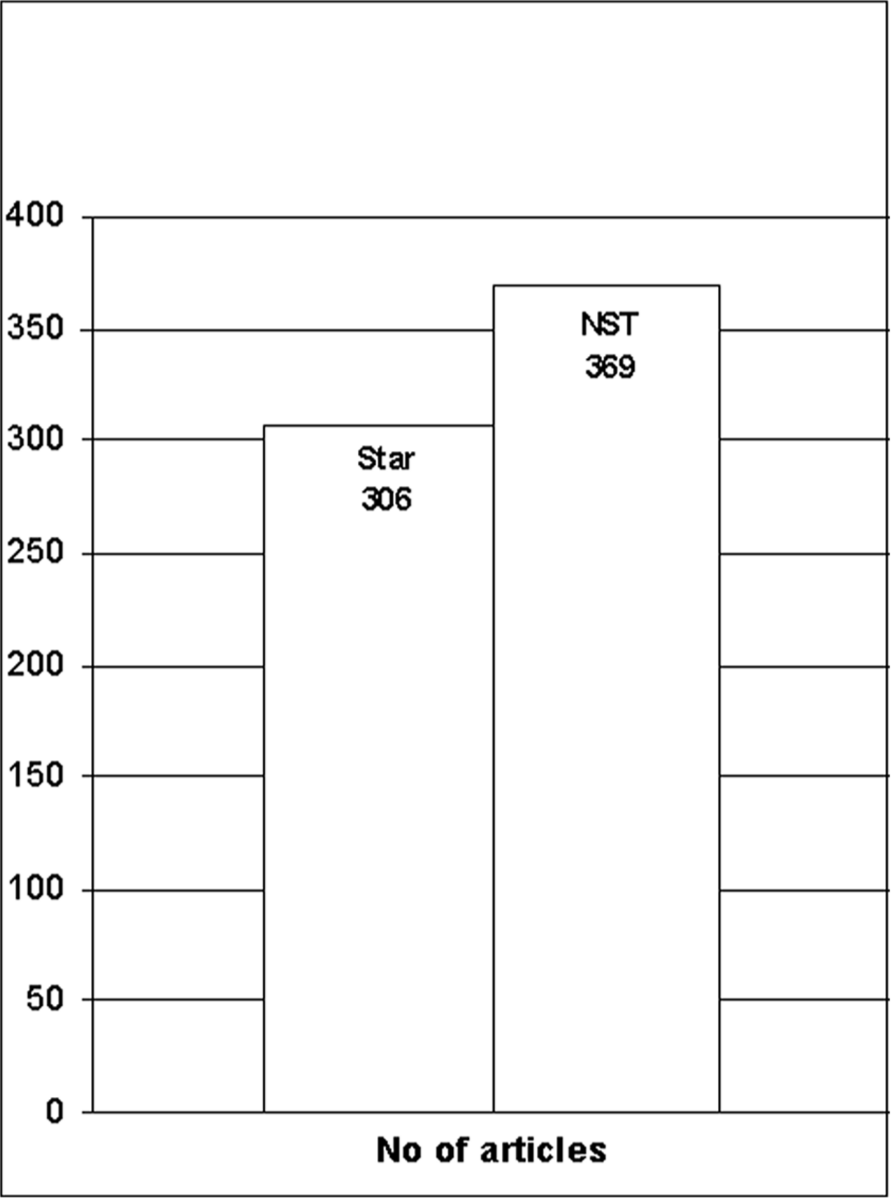
2010 Total newspaper articles related to child abuse. NST: New Straits Times.
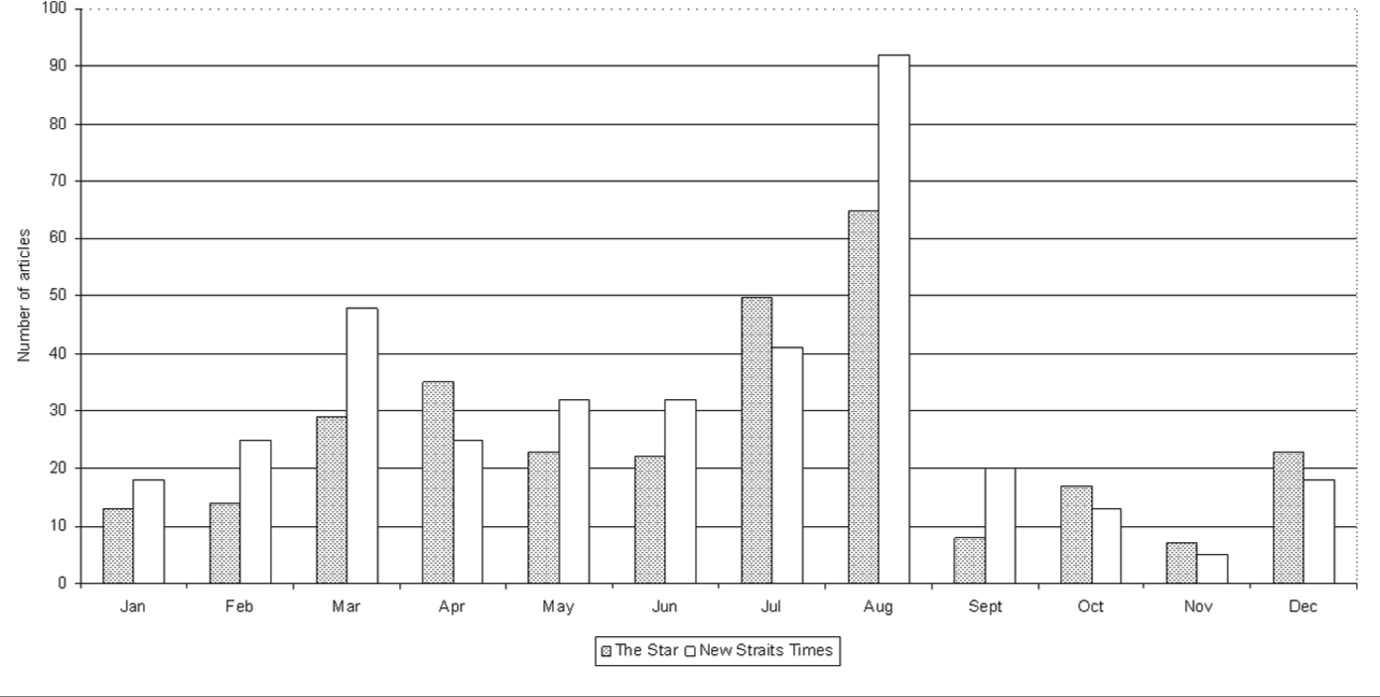
Newspaper articles related to child abuse by month.
It is clear from these figures that the NST invests more time and resources to covering these human interest and family issues than TS, which has a dryer, corporate focus. We conclude that the NST (and its associated Malay-language versions) are more concerned with contemporary Malay social issues, such as the ones we are analysing here. This assumption is supported by the fact that that almost 33 of the 63 extra items were made up of a category labelled ‘Opinions and comments’. Thus, it is reasonable to assume that this coverage reflects the political persuasion and audience of the newspaper: nationalistic, Islamic, mainstream, modern, Malay for which this issue is controversial. We can also assume that reporting substantially reflects state-sanctioned attitudes to child abuse.
This discussion also considers the perspectives of those cited in the articles and their status and credibility. Child abuse is most often framed in the newspaper articles as a crime ‘story’ in simple episodic articles and when deeper analysis is given it is framed in particular ways. Thematic frames were identified by immersion in the data through reading, the analytical processes of exclusion of articles that did not fit WHO definitions, the SPSS data entry and assembling of totals percentages and tables, and the sorting of articles into episodic and thematic. During this time researchers also identified the key child abuse stories of 2010 (discussed below) and spent time contextualizing them culturally and socially. These results were discussed with the research team and in an iterative process key stories and themes were identified. The approximately 20 key thematic articles, including associated graphics, were identified and analysed to derive the qualitative frames.
The broad framing of these articles was a conservative Malay-Muslim morality easily explained by the dominance of Malays as the largest and indigenous ethnic group and Islam being the official religion. Various perspectives expressed and the position of experts fell along a spectrum of Malay-Muslim morality from a masculine religious conservative perspective, which emphasized a strict Islamic morality and punishment of perpetrators at one extreme and the views of educated liberal progressives advocating modern, secular and clinical or social policy solutions at the other. We can assess these two perspectives as the right and left of our qualitative ‘frames’ and assume that the beliefs of most Malaysians fall somewhere between them. This is borne out by Stiven’s work on middle-class Malaysian families who embrace fragments of both traditional and modern in their ‘post-modern’ lives (Stivens, 1998a, 1998b).
The ‘middle-ground’ frame in this spectrum is represented by the human and maternal face of the government through responses by the Minister of Women, Family and Community Development, Datuk Seri Shahrizat Abdul Jalil, and the Prime Minister’s wife, Datin Seri Rosmah Mansor. They are given a large amount of space in the newspapers and their comments are most often presented uncritically with accompanying colour photos (a good indicator of what the editors choose to emphasize), which is also not surprising given the pro-government stance of both papers. These women maintain fairly conservative Islamic positions on morality and ethics but, on occasion, the Minister advocates more progressive or ‘modern’ proposals in the pursuit of pragmatic solutions to the problems faced by Malaysian society, particularly to the controversial abandonment of new-born babies, all the while maintaining a sombre and pious tone on moral issues. These two senior women are presented in the media as moral examples of modern Islamic womanhood; their representation is at once highly political and also gendered, clearly indicating that issues pertaining to children are the concern and responsibility of women.
Events and their reporting over 2010
The number of articles related to child abuse is a key quantitative method in counting and assessing the importance of an issue to media and in society. Figure 2 represents these figures and illustrates the rise in reporting in March to April and July to August, when significant spikes in the number of published articles and items occurred, again with more items devoted to these events and issues in the NST than TS. The variation in their reporting depended very much on events and topical debates as they arose throughout the year. These spikes were driven by the timing of significant events, including the bringing to justice of the perpetrators from past cases. An exponential effect on the amount and quality of media coverage was apparent when several events occurred in a short space of time. At these times more thematic articles appeared. In the months of March to April and July to August the reporting of child abuse in the English-language press in Malaysia reached the level of moral panic, as outlined above (Ayre, 2001: 889).
While the most common category of child abuse articles was related to sexual abuse (accounting for 21% of the total of all items analysed here – see Figure 5), these events did not drive the spikes in coverage of child abuse overall. These articles appeared when individual sensational cases occurred, yet this was obscured by reporting of court cases that followed crimes several years later. It is not the quantitative analysis of how many articles are published on this issue, but the qualitative analysis of how this issue is framed and skewed by the newspapers that is significant for our study and is discussed in the section below: Media coverage by issue. It was instead the tragic cases of the abandonment of new-born babies and their subsequent deaths that are fundamental in explaining the quantitative analysis of volume of articles and explaining some of the spikes in reporting. Three new cases of abandonment were reported in February 2010, following on from several similar cases and a huge debate about this issue at the end of 2009. This tragic problem associated only with the Malay Islamic community, the core constituency of the NST, due to the illegality and shame of having a child out of wedlock. Other ethnic communities may also abandon new-borns, but this was not covered in media in our study. The renewed public debate in February about abandonment included the solution of ‘baby hatches’ and sex education. This topic was selected as one of them major issues to analyse qualitatively due to the volume of articles published on the topic (it is the second highest category of child abuse articles; see Figure 5) and a description of the presentation follows, particularly focusing on the thematic-style articles the debate generated. These thematic-style articles offered the rich data that provided evidence for the three qualitative frames mentioned above.
‘Baby dumping’, as this problem is referred to, received sustained media attention throughout 2010, which relied upon a constant set of ‘credible’ official sources that dominated other possible sources and points of view (c.f. Souza, 2010: 478–479). On 16 February, the NST published a feature article graphically describing the condition of the bodies of five dead babies found dumped over the last four months and asserted that 100 babies were abandoned in this way every year in Malaysia. The article conveyed a sense of social crisis that needed to be urgently addressed by the government. A photo of a stern Minister Shahrizat appeared beside the 16 February article emphasizing her calls for ‘awareness and religious programmes targeted at youth’, and reminding readers that her welfare officers, dubbed ‘protectors’, were tasked with identifying unwanted pregnancies and providing ‘assistance’ to the mothers. The Prime Minister’s wife, Rosmah, was also quoted briefly, declaring the act of ‘dumping’ new-borns as ‘cruel’.
On the same day, another article in the NST featured spiritual leader Datuk Nik Aziz, accompanied by a small photo of the elderly man attributing ‘baby dumping’ to ‘too much freedom’, irresponsibility and lack of moral values among youth, and the neglect of religious obligations in daily life. He advocated punishment and penalties, as well as a return to strict religious morals. Rosmah was quoted as calling for ‘stern action’ against baby dumpers in a corresponding Star article. In the same item, Gerakan political party President, Tan Sri Dr Koh Tsu Koon, was quoted as describing a particular case as ‘a heinous and heartless act’ and the Jamaah Islah Malaysia Vice-President also is recorded as advocating shelters, ‘to counsel single pregnant women to lead a meaningful life’.
A much smaller series of articles in February provided a more modern, secular and policy-oriented frame. Significantly, no photos accompanied these articles. Two articles appearing on 17 February, one in TS and one in the NST, quoted G Palanivel, the Deputy-President of the Malaysian Indian Congress and a former Deputy-Minister of the Department of Welfare, who advocated empathy and support for the mothers. Presumably due to his Indian constituency, Palanivel was not constrained by Islamic beliefs. The NST also published another small article towards the end of the month: ‘Experts should hold talks in schools’, quoting the Chair of the Parent Action Group, Datin Noor Azimah Abdul Rahmin, who advocated sex education in school and parents more closely supervising their teenagers. Other articles presented the opinion of social welfare experts, academics or international consultants, such as the UNICEF representative to Malaysia, who empathized with the plight of the mothers and advocated new systems to cope with these situations (17 February 2010, NST ‘Help mothers in crisis situations’).
Child murder was the third highest category of child abuse articles (see Figure 5) and we assess their content, again particularly in the thematic articles. February also saw the abuse and death of three-year-old Syafia Humairah Sahari at the hands of her mother’s boyfriend (the lawful husband and father was in jail for another murder). The death of the little Malay girl filled 21 separate articles across the two papers. One article describes the visit of Minister Shahrizat to the grieving mother, Nurhamim, accompanied by a large photo of the shameful mother being counselled by a stern Shahrizat who was quoted as stating that Nurhamim would be brought to a welfare home for ‘rehabilitation’. No such Ministerial visit was made to the parents of 16-month-old Indian boy Hareswarra Karigalam, abused and killed and by his former babysitter’s husband, in March, which filled 11 articles across the two papers. The abuse and killing of Chinese girl Jasmine Lee by her step-father and mother in April filled five articles and also did not warrant Ministerial attention. Instead media and the Minister focused on the death of Syafia as an ‘early warning’ to society: ‘If we choose not to care, then a social tsunami will occur and erode moral values in our society’. Moral responsibility for the abuse was clearly placed upon the mother even though she was not the perpetrator, and this was clearly associated with her illicit relationship with the abuser. The tsunami image conveys the sense of the magnitude of these moral dangers inherent in aberrant Islamic Malay wives and mothers.
In June a large thematic feature article was run in TS on page SM4 titled ‘Circle of Love’ about OrphanCARE’s baby hatch, which opened on 25 May in Petaling Jaya (a satellite town 18 km from Kuala Lumpur) by Minister Shahrizat and the efforts to find a ‘loving family’ for abandoned babies. The Shelter Home Executive Director is reported as having to defend the baby hatch from criticisms that it will ‘encourage people to have premarital sex and engage in reckless behaviour’. The article portrays staff attempts to encourage empathy for the mothers and suggest there might be more to their stories than simply loose morals: …one should not put the blame solely on the mothers, many of whom hide their pregnancy—out of shame and fear of repercussions from society and family for having a child out of wedlock. Some are victims of rape… For a person to abandon her baby, she must have been in a terrible state of mind. It’s difficult to imagine.
There was another spike in incidents and articles about baby dumping in July–August (called the baby-dumping season in a 19 August Star article – page N2 – due to celebrations held around New Year’s and Valentine’s Day), which resulted in the publication of several thematic articles on the issue. Episodic articles accompanied by colour photos appeared concerning the first couple to be charged under new laws with intentionally abandoning a child. The baby had been found alive and taken to a local hospital, while a young factory worker, Mohammed Zolhalmi Khamis, 18, and his girlfriend, 17, were sentenced; he to two years in jail and she to detention at a ‘school’ until her 21st birthday. Her parents stated they would later marry. No mention of the fate of the baby or any account by the young parents was presented. Several thematic articles followed singling out pornography as the main cause of moral laxity leading to baby dumping and also debating a Cabinet initiative to charge parents caught for baby dumping with attempt to murder or murder, if the child subsequently died, rather than abandonment or infanticide. Those charged could face up to 30 years’ jail or the death sentence.
A 7 August NST thematic article, ‘Syariah stand on abandoned children’, presented Islamic theological arguments for the care of abandoned infants calling it ‘an act of great merit and service’. While this article holds firm that the death of the babies is the fault of the mother, and to a lesser extent the absent fathers, it does demonstrate an emerging Islamic middle-ground perspective. Within this frame the circumstances and reasons for the abandonment of babies are excluded entirely. The problem was broken down into separate solutions: one for the babies – compassionate and caring as determined by Islamic ethics – and a more punitive one, also based on Islamic beliefs, for the ‘sinning’ and silent parents.
Media focus and page prominence
A further significant finding came from the quantitative technique of assessing page prominence, which provided an indication of issues of media focus. There were only 16 page-one articles about child abuse during the year, which were evenly distributed between the two newspapers. This demonstrates a similar editorial policy that the front page is reserved for issues of national importance, particularly relating to politics, both national and international. However, outright sensationalism accounted for five page-one articles about particularly shocking or ghastly child rapes, sexual and physical abuse. The other stories that made the front page were those with political implications, such as child trafficking across international borders (five in TS and one in the NST). The hugely controversial subject of ‘baby dumping’ warranted two page-one articles and child marriage, one. Only two page-one articles about child abuse carried more generalist concerns: one about abduction and one about neglect.
There were a larger number (28) of page-two articles (23 in the NST and five in TS) and significantly more (43) page-three articles (35 in TS and eight in the NST). By far the largest theme for page-two articles concerned baby dumping (9), reflecting the concern of Malays about this issue, as already discussed. Nine page-two articles were devoted to child marriage. 2 The finding we can garner from this analysis of page prominence is that the media focus reflects issues of controversy and concern to the modernizing Islamic middle classes.
However, the majority of articles (418 or 61.9%) concerning child abuse are placed on page 11 or higher. The NST published 227 of these types of articles to 191 in TS; we can attribute this difference to the style of the two newspapers. These are small, mostly episodically framed articles at the back of the newspaper and accordingly have lower prominence and position; theoretically, they have a lower capacity to shape public opinion. The largest category of articles ‘Opinion and comment’ (as shown in Figure 5) accounts for some of these articles (TS published 27 of these items compared to 60 in the NST). These items are grouped together in a special section at the back of the newspapers, yet they may be a more solid reflection of community feeling and contemporary culture in Malaysia, since they are voices of the readers. The additional 33 items of this kind carried by the NST reflect what we have already discussed about the popularist style of this publication as compared with TS: the NST positions itself in the market as a ‘people’s paper’. A further finding from this analysis of page prominence is that child abuse is an issue ordinary Malaysians care very deeply about, on which writers often speak from personal experience, or a moral or emotional conviction.
Media coverage by issue
Figure 5 shows a summary of the articles published sorted into categories of child abuse. If we compare these numbers with the actual incidence of reporting of abuse, as in Figures 3 and 4, we can gain a rough insight into how the media representation compares to the reality and more clearly identify any bias and explore the social and political interests that may be apparent. We can only make broad generalizations here as the figures do not include the same categories. Also the Department of Social Welfare (DSW) figures do not include police or hospital cases (which means some cases may be counted in different ways in various statistics). Cases of child murder and death are not included in either DSW or police figures represented here, as the DSW concerns itself with the welfare and care of living children and the police count murder in other statistics.
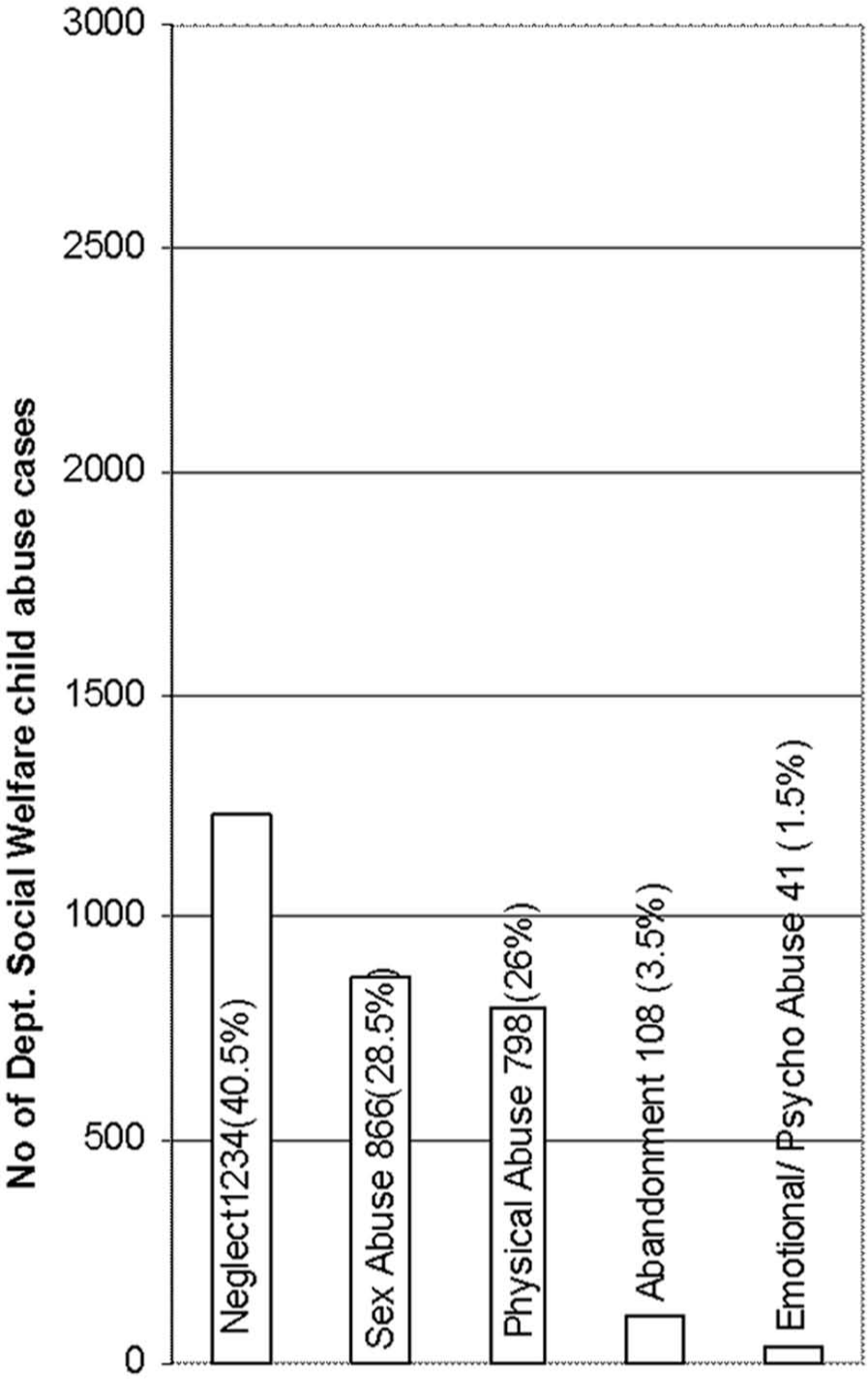
2010 Department of Social Welfare reported child abuse and maltreatment cases.
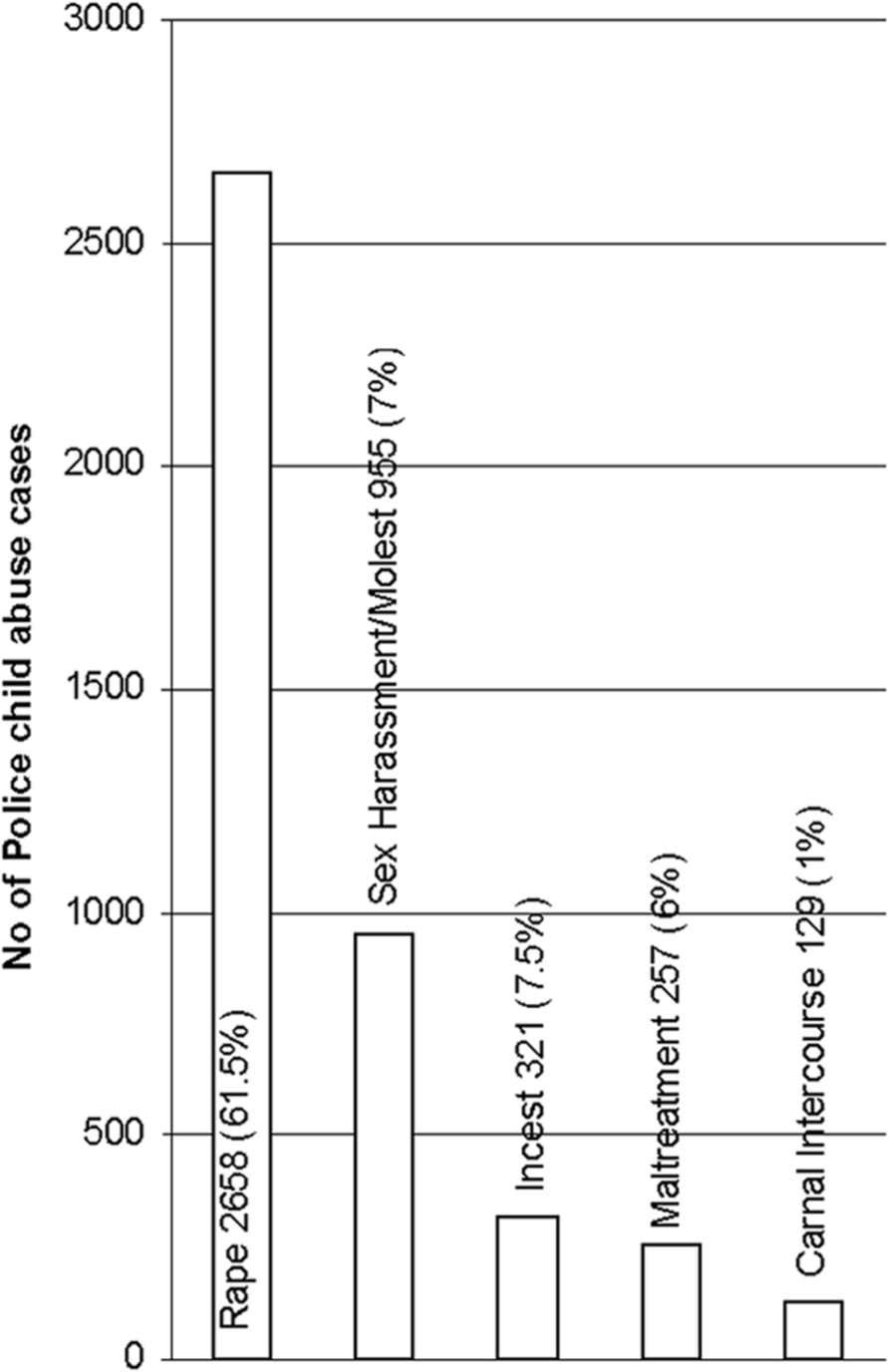
2010 Royal Malaysian Police reported child abuse and maltreatment cases.
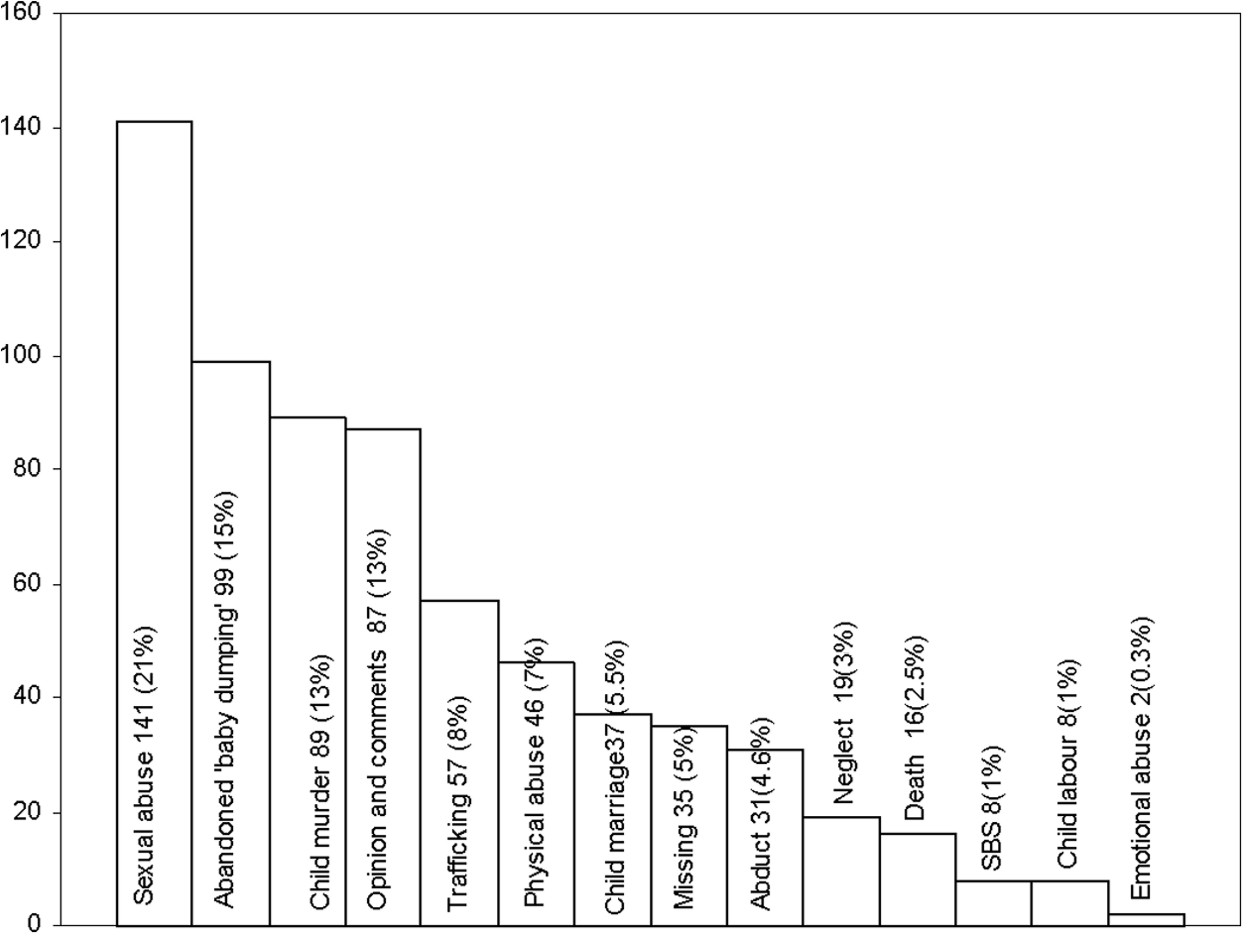
2010 newspaper articles related to child abuse by issue. SBS: Shaken Baby Syndrome.
The most significant disparity that we can see here is that child neglect, which accounts for the highest category of all DSW cases (40.5%), only accounts for 3% of all media articles. Reporting on emotional child abuse (0.3%) is also under-represented according to the DSW figures (1.5%). This under-representation maybe a result of neglect and emotional abuse being considered a less newsworthy subject; or, perhaps because these less tangible forms of abuse are more difficult to measure and describe in print media, which mostly describes child abuse cases in simplistic ‘victim and villain’ terms in episodic articles. As noted, there is less knowledge and awareness about the more subtle forms of abuse, such as child neglect, and this could also be the reason for the underreporting (Noordin et al., 2008). This conforms to the international research, which found that although neglect was the most commonly reported type of child abuse, it was rarely mentioned in the media (Tonmyr and Jack, 2010: 93). Also, these types of abuse are more likely to be familial and this too conforms to international patterns of under-representation of familial abuse in the media, which may be judged too disturbing or confronting for readers.
Physical child abuse accounts for 26% of the DSW reported child abuse cases, but only 7% of all the articles and items published in 2010. Those reported were the worst and most sensational of the physical abuse cases. Also of note is over-representation in the media of the baby dumping issue, accounting for 15% of media articles but only 3.5% of DSW cases. We can understand this by the cultural significance of the issue in contemporary Malaysian society and the controversial national public debate.
The largest topic of newspaper items related to child abuse was sexual abuse, accounting for 21% of the total of all newspaper items analysed here, which is a significant under-representation of the actual percentage of these type of cases reported to the DSW in 2010 (28.5%) and 77% of all police cases, averaging out at around 50% of all cases (see Figures 3 and 4). This may be accounted for by the fact that most sexual abuse presented in the media is non-familial abuse, when in fact most sexual perpetrators are known to the victim, also conforming to international research (Mendes, 2000: 53; Tonmyr and Jack, 2010). This area needs further investigation in Malaysia, particularly because most victims are girls.
The 105 newspaper articles relating to child murder and death (15.5%) have no corresponding state figures to compare with as noted. In any case these articles also include accounts of court cases and sentencing of the perpetrators of cases where events being litigated occurred in previous years. Three child murders, as noted, consumed much of the coverage. Here we can observe the international pattern that the minority of horrific abuse cases are given the majority of media attention. The less understood and more ‘everyday’ incidents of child abuse, physical abuse and neglect are more problematic to portray and less sensational and, although they comprise the majority of reported cases in the DSW statistics, they are largely absent in the media sample studied here.
Conclusion
Media content analysis of TS and the NST detected these patterns of over-representation of the relatively rare, horrific incidents of child abuse and effects of the use of episodic framing. Both of these patterns distort the reality of child abuse in Malaysia in a number of ways and do little to reveal the underlying causes of abuse. It means a deeply complex situation is reduced and reported in simple good and evil scenarios. In these scenarios it is not grinding poverty, social disadvantage, social isolation, mental illness or discrimination that are at fault but the simple equation of one evil individual taking advantage of a vulnerable child. This produces a lack of understanding, moral outrage or panic, which leads to simplistic or inappropriate solutions and yet no doubt sells many newspapers. In addition, by blaming ‘strangers’ for child abuse (or in extreme cases the pathology of individual parents) no further examination is required of the cultural, political and ethical systems of the broader society and how they are implicated. Child welfare professionals and academics have advised the media internationally to report on the underlying causes of child abuse and neglect (Kitzinger, 1996) and these recommendations are relevant to Malaysia.
Yet the reporting of the sensational and high-profile child abuse cases generated a sense of moral panic, a ‘social tsunami’, which afforded the Minister the necessary authority to introduce a new and modern policy shift. Still, a large part of the problem remained uncovered by the media and unaddressed: the situation for young and vulnerable mothers. Here we can see how social, cultural, ethical and political forces also distort the media representation of child abuse and this can be seen clearly in Malaysia because of the government’s direct control of the media. If the missing accounts of the young mothers who abandoned their babies were included in media coverage highlighting the underlying causes of the problem of baby dumping, then perhaps a greater understanding of the situation would lead to a more effective, holistic solution. Accounts of events by the mothers of abandoned babies and other mothers like Nurhamim would be a rich topic for future research in Malaysia.
Alongside the techniques of media content analysis we have also employed feminist analysis of child abuse. This highlighted how the representation of child abuse by the media blames mothers disproportionately, obscuring the responsibility of ‘ordinary’ male perpetrators and also disempowering children. The tendency to blame mothers for child abuse, even when they are not the perpetrators, was apparent in the portrayal of mothers in the Malaysian media. For women in sexual relationships with men other than the fathers of the abused children, like Nurhamim, the blame and disapprobation on the mother is all the greater as a good mother would never put her own needs above the welfare of her children (Hooper, 1992). In these media discourses images of mothers recur: bad mothers, unable to protect their children; and good mothers, overwhelmingly feminine representatives of a maternalized national government who intercede on behalf of abused children. Mothers implicated in the abuse of children are harshly judged through these maternalist representatives. These findings resonate with feminist analyses of child abuse internationally.
Little academic analysis of media representation of child abuse in non-Western contexts has been undertaken (Hesketh and Lynch, 1996; Kasim, 2001). This article is a contribution to filling that gap and charting the complexities this issue presents in an Asian, and in this instance an Islamic, context. We can see from the differences in coverage between the two newspapers that child abuse is a significant concern in modern Islamic Malaysian society with unique manifestations such as ‘baby dumping’ and under-age marriage, which are politically sensitive areas for the government to manage. The highlighting of these issues may also serve to break the silence around cultural and ethical practices within which child abuse occurs and the higher incidence of sexual abuse of girls.
The broad politico-social trends of patriarchy and constructions of neo-traditionalist families that have been documented in Malaysia since the 1970s have been widely interpreted by theorists as a response to fast-paced and disruptive social change and modernization. Stivens writes, ‘The family is presented as a critical site for producing new versions of purer Islam, and parents, especially women, within it carry a large responsibility for securing an Islamic future through the rearing of children’ (Stivens, 2006: 358). Family values are promoted in authoritarian domestic government campaigns and have been accompanied by international political coalitions with other Muslim countries and, ironically, with conservative Christians to ‘defend’ and ‘strengthen’ the family and lobby against abortion, homosexuality, liberalism and feminism (Stivens, 2006: 357–362).
How the government-controlled press in Malaysia portrays child abuse demonstrates a national politics in Malaysia dominated by conservative and patriarchal values, which seeks to blame child abuse on modern social changes while valorizing traditional families and values. With ever-increasing reported incidents of child abuse, a more direct solution to the problem that was suggested over 20 years ago is to simply extend children’s rights over their own body, autonomy and privacy, ‘a radical concept which would require the transformation of family power relations’ (Kitzinger, 1988: 85). While this is indeed radical, the deep concern for the welfare of children demonstrated by Malaysian people, as apparent in this media analysis, may require it.
Footnotes
Funding
This research received no specific grant from any funding agency in the public, commercial or not-for-profit sectors.