




Abstract
Using data from China Health and Retirement Longitudinal Study (N = 3864), we examined the relationship between proximity to aging parents and depression among middle-aged (45–64 years) married individuals in China. Our study depicted and explained the declining coresident rate and showed a majority of adult children live separately from their parents. Children living in different households had higher levels of depression than coresident children, including those living adjacently. Furthermore, having a coresident spouse increased the levels of depression of sons living in an adjacent dwelling and in the same city, and reduced the levels of depression of daughters living farther away. More intergenerational economic support increased the levels of depression of daughters living in an adjacent dwelling. These findings may offer a reference for married adult children to reconstruct intergenerational proximity and adjust intergenerational relations.
Introduction
Most East Asian countries have seen rapid modernization in recent decades. Economic growth has raised living standards and challenged traditional social norms, with family relationships under a Confucian patrilineal culture becoming more egalitarian and bilateral (Choi et al., 2019; Zhao et al., 2021). Influenced by the extended nature of family and filiality emphasized by Confucianism, it remains a primary concern of married persons in contemporary China to maintain proximity to their parents, especially geographic proximity. When people make decisions about proximity, a key factor in the decision is social norms. If there are conflicts between personal demands and cultural expectations (Kim et al., 2011), the ensuing discrepancies in intergenerational exchanges and relationship quality (Yi et al., 2019) can affect the wellbeing of adult children.
Most studies on intergenerational proximity and wellbeing have explored relationships from the parental perspective (Ren & Treiman, 2015; Xu et al., 2019). Studies from the perspective of adult children are limited, especially for middle-aged married persons (Kim et al., 2011). Yet this is a critical period: people may reassess their marriages and their relations with aging parents when entering mid-life, as they are required to provide care to both older and younger family members (Silverstein et al., 2020; Wang et al., 2020). Most middle-agers in China can be called baby boomers. They were born during the first (1950–1957) and second (1962–1971) baby boom. The first baby boom occurred when the founding of People’s Republic of China led to a stable society; the economy developed and childbirth was encouraged. The second baby boom occurred because people postponed having children until the end of the domestic political movement and the great famine (Yang et al., 2015). The average annual birth rate of the two baby booms was around 36‰; 271 million people were born in the second baby boom, accounting for 19.18% of the current total population (Yang et al., 2015).
Influenced by family planning policy, these baby boomers have seen a transition in family structure and a decreased family size. In the context of the modernization process accelerated by the market reform and the opening-up policy, they face conflicts between modernization and tradition and need to choose whether to pursue personal development or follow social norms. The longevity of the older generation and low fertility of the younger generation affect the intergenerational kinship structure, leaving the middle-aged population with an increased burden – meeting the societal expectation of the familial obligation to support elders (Xu et al., 2019). In the context of a possible clash between career and care, we wondered if and how middle-aged children’s proximity to their aging parents would influence their wellbeing.
Some studies have noted the decreasing proportion of married individuals living with aging parents (Yang, 2017; Xu et al., 2019). Others have analyzed the relations between intergenerational coresident status and the wellbeing of adult children (Copp et al., 2017; Kim et al., 2011). Little attention has been given to the impact of varying levels of geographic proximity on adult children’s depression (Li et al., 2019). However, given the increased geographic mobility accompanying economic and social development, it seems wise to examine the depression of middle-aged children on the basis of differences in geographic proximity to aging parents. With the increasing convenience of geographic mobility and the labor opportunities brought by the opening-up policy, it is common for baby boomers to leave their parents in early stages of their work careers. At the same time, the increased internal migration leads to more family issues in spousal and parental relationships because of the burgeoning numbers of left-behind family members (including women and the elderly) (Tong et al., 2019).
In traditional Chinese culture, familism and intergenerational reciprocity mean adult children, especially sons, retain a close relationship with their aging parents after marriage, and close geographic proximity reflects the closeness of family kinship (Chang, 2013). Children tend to leave their parents’ home after entering adulthood in Western societies (Copp et al., 2017), but in China, it is normal for sons to continue living with their parents after getting married (Chu et al., 2011). An old Chinese saying, “daughters married away are just like water spilled away,” indicates the lower family status of daughters and their reduced obligation to support parents. However, social norms for sons and daughters are changing, albeit gradually (Zhang & Liao, 2010). Now, both sons and daughters are responsible for taking care of aging parents. With the increase in women’s family status and bargaining power (Cheng, 2019), it is necessary to discuss the different intergenerational interaction patterns for sons and daughters. Therefore, to better understand the impact of proximity on the wellbeing of adult children, we explored gender differences. A related concern was the effect of spouses on wellbeing. With the social changes in women’s role in the family and society, it seemed likely that spousal roles might also have evolved.
Consequently, in this study, we investigated the relations between adult children’s geographic proximity to their aging parents and depression. To better understand changes in Chinese society, we also examined the spousal influence and analyzed gender differences.
Background
Modernization Theory
Modernization theory argues urbanization and industrialization have influenced the family structure and function, as well as traditional social norms and values associated with family life (Goode, 1963). Modernization encourages children in rural areas to pursue education and jobs in urban areas; this increases their geographic distance from their parents and leads to a nuclear family structure. Economic independence further impairs their responsibility to take care of their parents, and this weakens the family function of supporting and caring (Goode, 1963). People also expect to pursue romantic relations in marriage, and this causes them to focus on the spousal relationship (Choi et al., 2019). Modernization theory proposes families in developing countries will also experience a modernizing process due to global industrialization and will see similar changes in family relationships, patterns, and concepts.
However, studies have found that the modernization process in East Asia is different from that of Western countries in demographic and family patterns, such as, for example, the maintenance of the stem family. Stem family refers to a family structure wherein the intergenerational relationship is the main axis; it mainly consists of grandparents, a pair of married children and grandchildren who live together under the authority of the grandparents’ generation (usually grandfathers) (Li & Jiang, 1990). In Korea and Japan, although modernization has reduced family size, postponed marriage, and decreased the fertility rate, the process is much slower than in Western countries. Influenced by Confucian culture, few people give birth to children and live with partners before marriage. Despite similarities in the cultural context, China differs from other East Asian countries in its maintenance of strong intergenerational relationships, traditional family values, and the relatively stable structure of the stem family (Ji, 2019).
East Asian scholars have developed modernization theory by observing social transformations and family changes. Chang (1999) proposed a concept of compressed modernization to describe the rapid socioeconomic development since the World War II in South Korea. He argued South Koreans have spent less time experiencing the modernizing process found in Western countries, and this has led to the coexistence of traditional and modern elements. He further suggested that China and Japan had experienced a similar process and were confronting conflicts brought by rapid development.
Ji (2019) recognized the complexity of modernity in the Chinese context and proposed a concept of “mosaic familism” to describe the multi-core family system embedded in traditional intergenerational relationships. She suggested parents and children depend on each other at different stages of the life course. This concept reflects the importance of family and indicates a tendency to return to tradition. At the same time, it allows changes and initiative, including among women, and this differs from the Confucian culture where patriarchy has absolute economic and moral rights.
Thus, we argue that the friction between modernization and tradition may not only create conflicts but also bring negotiation and cooperation, and this may lead to the emergence of new family patterns, relationships, and norms.
Adult Children’s Proximity to Aging Parents and Wellbeing
The literature on relationships between intergenerational proximity and wellbeing mainly center on coresident and separate living status (Kim et al., 2011; Yi et al., 2019). Few studies have discussed the wellbeing of married adult children in the context of proximity to parents, and findings are unclear (Lei et al., 2015; Xu, 2013). Some studies have shown that living with aging parents may improve the mental health of adult children and increase their marital satisfaction because of the sharing of housework, especially the duty of looking after children (Yi et al., 2019). Living in the same household may offer both generations more opportunities to exchange emotional support, and the fulfillment of filial obligation may reduce the anxiety of adult children (Kim et al., 2011). Some argue that frequent contacts and different ideas may lead to conflicts, create tension, and impair intergenerational relationships (Ren & Treiman, 2015). Others say coresidence may not influence the wellbeing of adult children, because interactions and emotional exchanges matter in intergenerational relationships, not the living environment (Wang et al., 2014).
A growing body of research has debated the impact of intergenerational geographic proximity on adult children’s wellbeing and conceptualized geographic proximity in three ways: spatial (Compton & Pollak, 2015; Choi et al., 2020), regional (Choi et al., 2020) and time (Li et al., 2019). For example, in a study of spatial proximity, Choi et al. (2020) found a majority of adults (74.8%) had parents or adult children within 30 miles. Furthermore, this living arrangement may enhance solidarity and increase wellbeing because the generations can deal with hardships together. These authors also recognized the importance of regional proximity, with similar labor markets, housing markets, natural environment, and local governance. In their analysis of time proximity, Li et al. (2019) found adult children living more than 30 minutes away from their parents had higher levels of depression than coresident adult children. Family and friend support moderated the effect of geographic proximity on depressive symptoms. When they combined the three definitions, Dubas and Petersen (1996) found the relations between intergenerational geographic proximity and depression showed a U-curve for adult children. In Asian countries, some studies have introduced new living arrangements brought by the emerging conflicts between modernization and tradition: “separating without leaving” and “separating and leaving”. The former means children living in a residence close to parents; both generations may have independent living space. The latter means children living in a residence farther away from parents (Zheng & Fang, 2018). These living arrangements coexist with a traditional patrilocal pattern, common in countries with a Confucian culture. The intergenerational relationships within a patriarchal culture may override geographic and socioeconomic mobility (Li et al., 2019), making the influence of geographic proximity on wellbeing unclear.
Mechanisms Linking Intergenerational Proximity to Aging Parents and Wellbeing
In China, modernization promotes internal migration and challenges the cultural influence on intergenerational proximity. Studies show adult children’s coresidence rate with parents has declined (Lin & Yi, 2013). The changes in the broader society, including economic development and family policy changes, reverberate with the changes in families’ intergenerational proximity. Family planning policy has reduced family size, and each family may only have one child. This, in turn, improves woman’s status both in society and in the family. The popularization of education has increased their income, further enhancing their bargaining power. In traditional Chinese culture, sons are expected to live with their parents and take responsibility for supporting them, especially the eldest sons. Married daughters are expected to live with their husbands and parents-in-law and do not have responsibility for supporting parents, unless they volunteer and are permitted to help (Zhang, 2012). Today, however, instead of an emphasis on filial obedience in a patriarchal culture, relationships are more equal, close, and bidirectional (Du et al., 2020). Sons still assume more responsibility for parents than daughters, but they have comparatively less power in their own spousal relationships because of women’s increased bargaining power. Daughters are beginning to take responsibility for parents and have comparatively more power in spousal relationships.
Spousal Separation
Along with the increase of individualism and the decline of patriarchy, spousal relationships have become more important, and modernization theory suggests they may replace the role of intergenerational family relationships. However, this remains unclear in China (Zhao et al., 2021). From the perspective of choosing the best household economic strategy, it is common for adult children to migrate to ensure a better livelihood. They may need to rearrange family living arrangements because of the uncertain employment opportunities and higher living costs occasioned by migrating.
As mentioned previously, we included the impact of spousal relationships on intergenerational relationships in our analysis, aiming to examine the importance of horizontal relationships in contemporary China. Work on spousal separation focuses on left-behind families; such work can shed light on the ways spouses maintain family bonds and deal with intergenerational relationships and their respective impacts on wellbeing (Tong et al., 2019).
However, there is no consensus on the impact of spousal separation on intergenerational proximity and wellbeing (Chen et al., 2015). Having a coresident spouse may increase an individual’s wellbeing because of the pleasure of intimacy, the co-handling of caring needs, sharing of housework, an increase in social networks, and the improvement of welfare (Lu, 2012; Tong et al., 2019).
Some studies suggest that living with parents may decrease married adult children’s level of depression because they have followed social norms and taken care of parents and spouses together (Yi et al., 2014). Studies indicate that aging parents may share the housework or look after younger children in exchange for caring support (Lei, 2013). This, in turn, benefits adult children’s mental health and life satisfaction. Others argue living with parents may cause family conflicts because there is more housework and caring work, and older and younger people may have different ideas about living habits and educating the young (Zheng & Fang, 2018). In addition, adult children may offer more economic support to their families when living separately. On the one hand, it may reduce their anxiety about giving financial support; on the other hand, it may bring a sense of loss, as they cannot receive instrumental and emotional support, especially if they are not living with spouses (Oshio, 2012).
Gender Differences
As gender norms and patriarchal living arrangements have reduced the benefits of marriage for women, intergenerational proximity may have different impacts on the wellbeing of sons and daughters (Hsieh & Jou, 2012; Oshio, 2012). In the process of social transformation, the complex changes in the mechanisms of family responsibility related to decision-making and marital intimacy may be particularly pronounced in women, and this could impact their mental health (Tong et al., 2019). However, the increases in women’s social status and bargaining power have challenged traditional intergenerational relationships and exchanges. This can be seen in the literature on the intergenerational interactions of sons and daughters in Confucian societies.
Intergenerational ties remain strong in contemporary China. Most elderly parents live with their adult children, but they also maintain a higher level of interaction and exchange with adult children who live separately (Ji et al., 2015). However, their living arrangements and interactions vary for sons and daughters. In China, sons always live with or live close to their parents (Hsieh & Jou, 2012). Studies have shown that living close to parents increases adult children’s wellbeing because of the downward intergenerational instrumental support given to them and their spouses (Lei, 2013). The emotional support from coresident parents may also comfort them and benefit their marriages (Hsieh & Jou, 2012). However, studies have indicated that their wives are expected to deal with most of housework, and living with parents-in-law may increase the workload. This may affect the interaction and communication of the younger couples and decrease their wellbeing and marriage quality (Oshio, 2012).
Studies have found that an unsuccessful son may stay with his parents after getting married because he cannot live on his own, while a successful daughter may challenge the traditional norms by living with her husband and her parents (Oshio, 2012; Lei, 2013). Studies have also found that families living with wives’ parents always need extra economic or emotional support (Lei, 2013). That means daughters may live with their parents if their parents-in-law cannot provide the same or a better living environment. Living with parents may increase married women’s wellbeing (Lei, 2013). Meanwhile, a close relationship with parents-in-law may increase men’s life satisfaction, and this benefits their marriage (Oshio, 2012). In addition, there is a strong intergenerational economic exchange between adult children and their parents, and this may buffer the negative effect associated with family conflicts when living together or being absent from family activities when living separately (Tong et al., 2019).
Studies have shown that married daughters, especially daughters living with parents, may offer more economic support to parents than married sons. Their improved resources, such as education and income, enable them to give more economic support, and this may bring them satisfaction (Zhang, 2012).
Conclusion
The nature of intergenerational relationships in China fundamentally changes when adult children live apart from their parents, and their direct support of caring, housework and family resources sharing may drop accordingly (Xie & Zhu, 2009). However, the fact that they may offer more economic support when living separately may decrease the pressure on them, and reduce their anxiety about meeting social norms (Tong et al., 2019).
In sum, findings on the relations between intergenerational proximity and wellbeing of adult children are inconclusive. Intergenerational support, potential conflicts between family roles, expectations of family behaviors, and cultural context all play a role. Further research is needed to be more precise.
Hypotheses
Within the context of the increased importance of the nuclear family and the weakening of family relations, middle-aged Chinese face new challenges when dealing with family members, especially older parents (Ji, 2019). The rapid aging of the population, increased life expectancy, and underdeveloped social security system reinforce the tradition of living with parents (Cheng, 2019). Moreover, familism and collectivism are rooted in Chinese culture, causing adult children to look after their elders (Chang, 2013). Thus, in a sense, living with parents allows children to fulfill the obligation of taking care of elders; at the same time, it requires them to shoulder the burdens of finance, emotions (Wei & Zhang, 2011), and housework, while running the risk of arousing intergenerational tension (Liu et al., 2020). Adult children living separately may not experience the physical pressure of caring for older parents, but they may feel guilty because they are not providing the care their parents need (Wang et al., 2020).
When children live close to parents in an adjacent dwelling or courtyard, on the one hand, they have privacy and can focus on the spousal relationship; this may avoid conflicts in household affairs or disagreement on how to educate the young generation (Zheng & Fang, 2018). On the other hand, they can still receive downward emotional support and maintain a strong family bond (Hsieh & Jou, 2012). The “distance of a bowl of soup” in Japan, that is, “boil a bowl of soup and deliver it while still hot”, is an expression of the advantages of living adjacently (Zheng & Fang, 2018). Given the above argumentation, we posit the following:
The spousal relationship is also very important to Chinese (Cheng, 2019). One study found that more than half of the adult children surveyed (56.64%) were inclined to choose the spousal relationship rather than the intergenerational one as the axis of family relations (Zhao et al., 2021). The balance and compromise between spouses and parents will influence wellbeing. Individuals whose spouses live in a separate household (e.g., because of migration) may feel more pressure and experience negative emotions. A coresident spouse may share their life pressures and offer emotional and instrumental support (Kim et al., 2011), especially when living away from aging parents. Separate households may be a result of work migration; family conflicts may also lead to separate living arrangements (Tong et al., 2019). Living separately from parents may avoid conflicts associated with housework and living habits. Given the increasing importance of spousal relationships, adult children may adjust their proximity with parents according to their spouses’ point of view (Ren & Tang, 2014). However, it is still unclear whether spousal relationships can influence intergenerational relationships, or to what degree, in the Chinese context. We posit the following:
The different intergenerational interactions of sons and daughters are also of interest. While in traditional Chinese culture, daughters have lower family status and a restricted role, today, they are more likely to take the initiative within the family and hold more bargaining power in spousal relationships (Cheng, 2019). Married daughters may maintain a close relationship and exchange economic, instrumental, and emotional support with their parents (Zhang, 2012). For sons, the increased rate of their wives’ participation in the job market and increased initiative in making family decisions may impair their own authority; meanwhile, wives’ reduced time on family chores may reduce their marriage satisfaction (Chen et al., 2015). For daughters, their husbands’ emerging tendency to accept gender equality may increase their wellbeing (Chen et al., 2015). Thus, we posit the following:
Studies have found high affectional solidarity between middle-aged children and aging parents (Kim et al., 2011) and suggested that positive interactions may increase the wellbeing of both generations (Qian & Knoester, 2015). The continuous economic burden and diminishment of mutual exchanges may decrease the wellbeing of children living away from parents. While adult children living separately from parents may be able to provide more economic support than coresident adult children (Gao et al., 2012), their needs for instrumental and emotional support may not be met (Gao et al., 2012). Although adult children may provide emotional support by telephone or social media, such as WeChat in contemporary China, older persons are much less likely to use virtual networks (Knodel & Pothisiri, 2015), and the reduced frequency of interactions may impair family ties and reduce wellbeing (Lee et al., 2020). The fact that nonresident adult children offer more upward support and receive less downward support may reduce their wellbeing, and we assume applies to both sons and daughters. Thus, we posit:
Method
Data
The data were drawn from the China Health and Retirement Longitudinal Study (CHARLS), a nationally representative dataset gathered by the National Natural Science Foundation of China in Peking University. It uses multistage stratified PPS sampling to investigate such information as demographics, family structure/transfer, health status and functioning, income and consumption etc. of Chinese residents aged 45 and older. The baseline wave (2011) includes about 10,000 households and 17,705 individuals in 150 counties/districts and 450 villages/resident committees. Respondents are followed up every 2 years. We chose CHARLS because it is a convincing and representative dataset, and it surveys the intergenerational proximity of middle-aged people to their aging parents in detail, recording their coresident status and geographic proximity.
To examine the relations between proximity to aging parents and the wellbeing of middle-aged married individuals in China, we matched 2015 CHARLS (N = 21,095) with 2013 and 2011 CHARLS datasets to trace back such information as demographics (age, Hukou, educational level) and family structure (the presence of kinship). Because the statistical caliber of the core independent variable showing the intergenerational geographic proximity with parents in 2011 was different from the other two waves, we used the panel data of 2013 and 2015. For these two waves of data, after we dropped missing variables, the overall sample was 13,930 persons aged 16–92 years. Then, we restricted the sample to middle-aged married individuals who had answered their parents’ information (N = 4226). Finally, we limited our sample to 3864 married respondents (aged 45–64 years) whose parents were alive. Of these, one third (30.19%) were in both 2013 and 2015; one third (37.7%) were only in 2013; one third (32.11%) were only in 2015. The result of a two-step Heckman test (b = 17.10; p = 0.33) showed there was no selection bias in choosing married persons with living parents.
Variables
We used the ten-item version of the depressive symptoms scale proposed by the Center for Epidemiological Studies to measure the levels of depression of respondents (Radloff, 1977). This dependent variable recorded how they had felt and behaved the preceding week, using the following items: (1) “I was bothered by things that don’t usually bother me”; (2) “I had trouble keeping my mind on what I was doing”; (3) “I felt depressed”; (4) “I felt everything I did was an effort”; (5) “I felt hopeful about the future”; (6) “I felt fearful”; (7) “My sleep was restless”; (8) “I was happy”; (9) “I felt lonely”; and (10) “I could not get ‘going’”. We reversed the responses of (5) and (8), and then coded the response of each evaluation on a 0 (rarely or none of the time; < 1 day) to 3 (most or all of the time; 5–7 days) scale. The Cronbach’s alpha of these 10 items was 71.55%, showing strong internal reliability.
The independent variable was the geographic proximity to aging parents. We classified geographic proximity according to Chinese administrative division as: (1) living in the same household; (2) living in an adjacent dwelling (living in an adjacent dwelling or living in the courtyard of the parents’ apartment); (3) living in the same village/neighborhood (living in a different household but in the same village or neighborhood); (4) living in the same city (living in a different village or a different neighborhood in the same city); and (5) living outside the same city. For separate living arrangements, we further defined “living in an adjacent dwelling” as “separating without leaving”, and “living in the same village/neighborhood”, “living in the same city”, and “living outside the same city” as “separating and leaving”.
We included several control variables that may be correlated with the relations between intergenerational proximity and depression: age (Copp et al., 2017), gender (Sun et al., 2011), Hukou (Shu & Yang, 2014), socioeconomic status (Xu, 2018), health condition (Choi et al., 2019), the presence of kinship (Ren & Treiman, 2015), intergenerational economic support (Lei, 2013), and survey year. Age was a continuous variable, and the square of age was used to measure the curvilinear relationship between age and depression. Gender was a dichotomous variable, and female gender was the contrast category. Hukou was a categorical variable, and urban Hukou was the contrast category. Socioeconomic status was defined by years of schooling and annual income. Two dummy indicators were used to measure the health status of respondents, including chronic diseases (1 = yes) and disabilities (1 = yes). Presence of kinship was composed of three continuous variables – the number of living parents, number of living siblings, and number of living children – and one dummy variable indicating respondents’ coresident status with spouses (1 = yes). We included three control variables for spouses: socioeconomic status, health status and the presence of kinship. These were measured, respectively, by whether respondents had a job (1 = yes), chronic disease (1 = yes), and the number of living parents. Intergenerational economic support was the ratio of the upward intergenerational economic support (from adult children to aging parents) divided by the downward intergenerational economic support (from aging parents to adult children).
Analytic Strategy
We used random effects models because of the data characteristics and the result of a Hausman test. We used two waves of unbalanced panel data from 2013 and 2015 CHARLS. One third (30.19%) of our respondents could be traced back; for most of them, the independent variables did not change (66.29%). The result of the Hausman test (p = 0.08) suggested the use of random effects models. Random effects models may deal with the heteroscedasticity problem and improve the validity of the estimation results (Li & Lu, 2020).
Our analysis proceeded in progressive stages with seven models. Model 1 and Model 2 presented the relations between intergenerational proximity and depression of middle-aged adult children based on geographic proximity (same household, adjacent dwelling, same village, same city, outside the same city) to their aging parents, with and without control variables. In Model 3, we tested interactions to determine whether living with a spouse moderated the relations between intergenerational proximity and depression. In Models 4 and 5, we examined the effects of gender (male and female, respectively). In Models 6 and 7, we tested the influence of intergenerational economic support.
Results
Descriptive Analysis
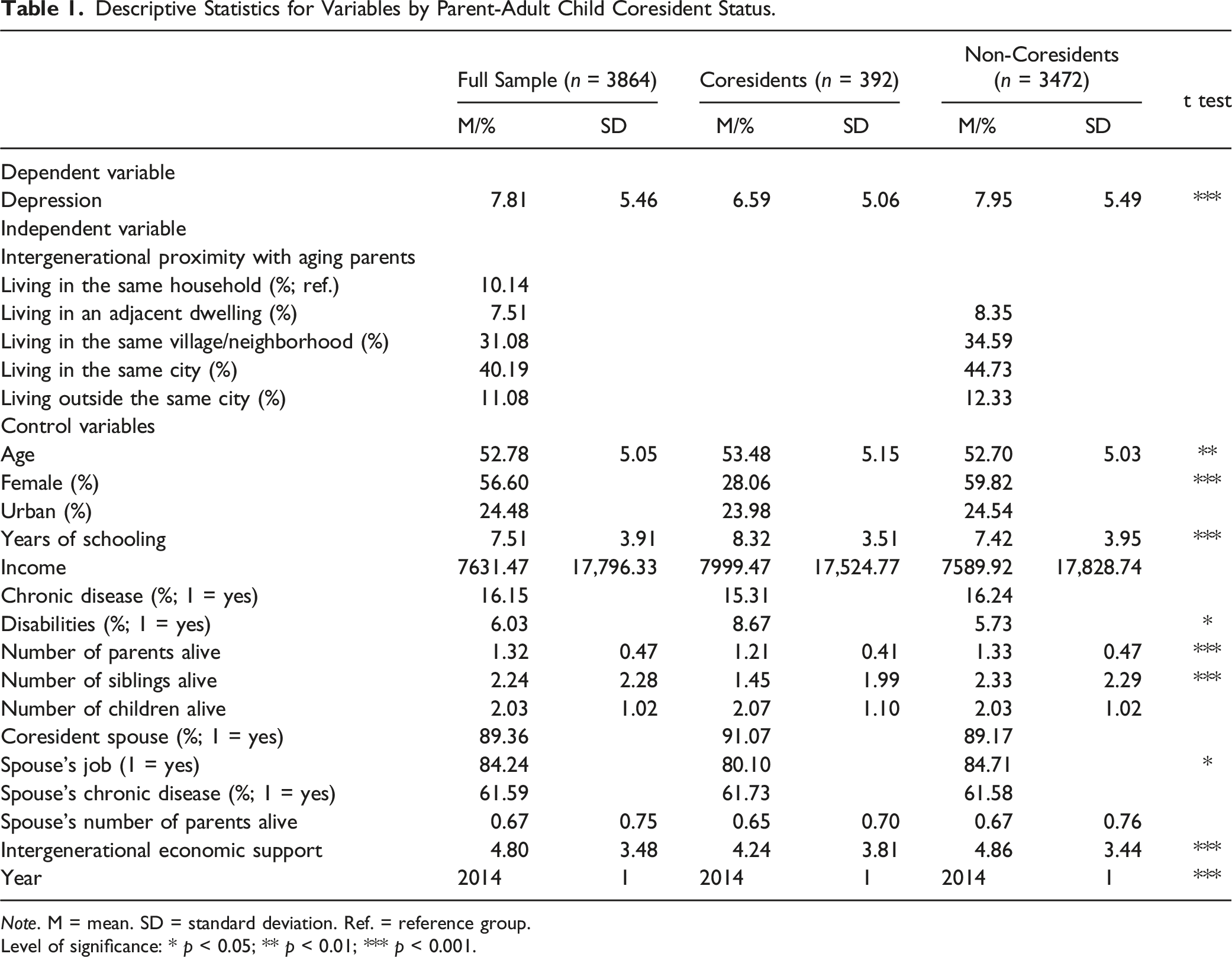
Descriptive statistical results showed that a majority (89.86%) of respondents lived in different households from their parents. Of these, about one half (44.73%) lived in the same city, one third (34.59%) lived in the same village/neighborhood, one eighth (12.33%) lived outside the same city, and one twelfth (8.35%) lived in an adjacent dwelling.
Results indicated the level of depression was relatively low (M = 7.81; SD = 5.46), and the levels of depression of adult children who lived with aging parents (M = 6.59; SD = 5.06) was lower than those of non-coresident adult children (M = 7.95; SD = 5.49). We also measured the depressive symptoms of adult children with different intergenerational geographic proximity. Adult children living in the same city as their parents had the highest level of depression (M = 8.26; SD = 5.63). This was followed by adult children living outside the same city (M = 8.07; SD = 5.54), adult children living in an adjacent dwelling (M = 7.62; SD = 5.27), adult children living in the same village/neighborhood (M = 7.59; SD = 5.31), and adult children living in the same household. Furthermore, the results showed the levels of depression of adult children living in an adjacent dwelling and those living farther away from aging parents (M = 7.98; SD = 5.51) were higher than those of adult children living with their parents.
Descriptive Statistics for Variables by Parent-Adult Child Coresident Status.
Note. M = mean. SD = standard deviation. Ref. = reference group.
Level of significance: * p < 0.05; ** p < 0.01; *** p < 0.001.
Random Effects Models
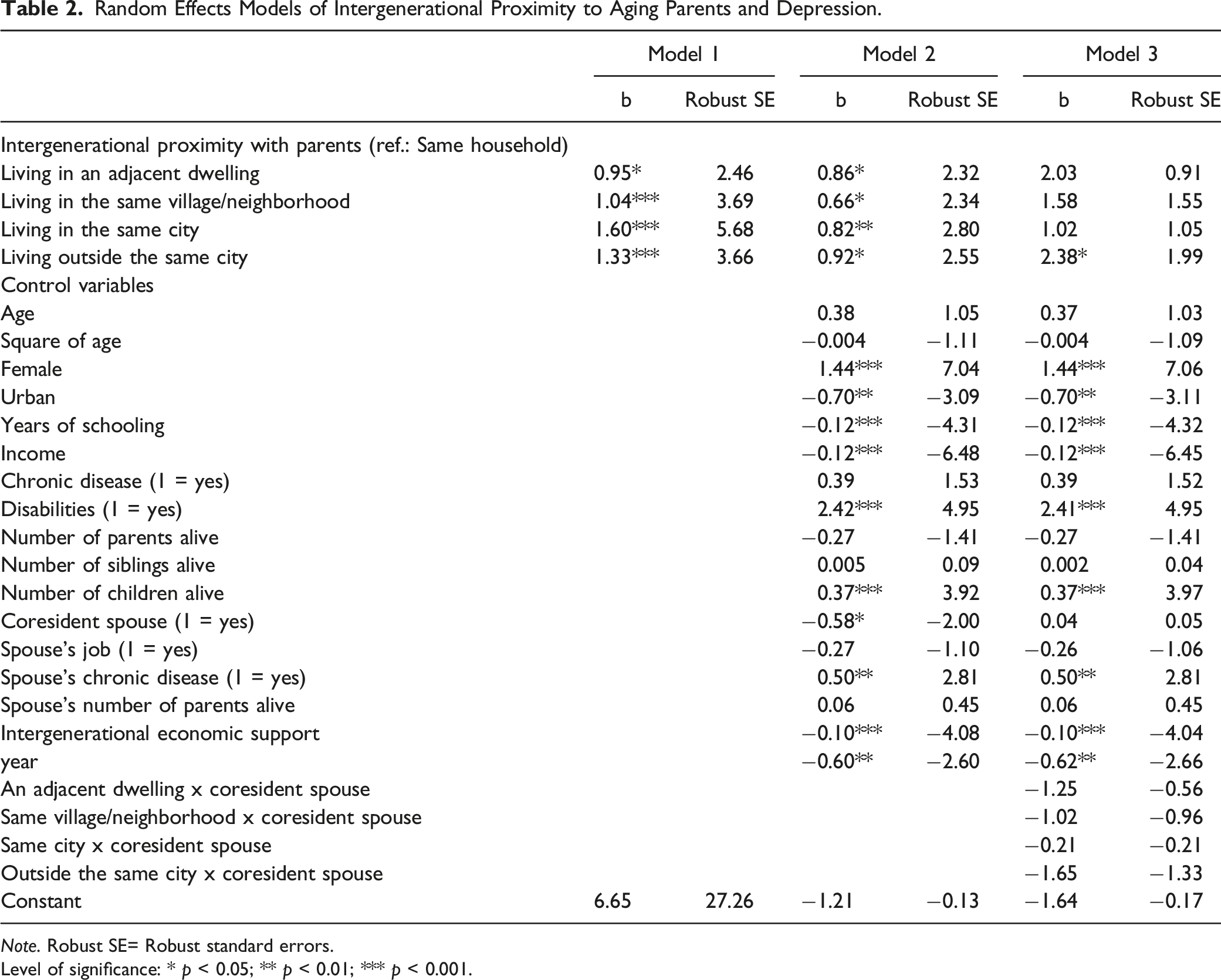
Random Effects Models of Intergenerational Proximity to Aging Parents and Depression.
Note. Robust SE= Robust standard errors.
Level of significance: * p < 0.05; ** p < 0.01; *** p < 0.001.
Adult children living in a different household still had higher levels of depression than those living with aging parents after adding background characteristics (Model 2). Living in an adjacent dwelling increased their depression by 0.86 (b = 0.86; p < 0.05), living in the same village/neighborhood increased it by 0.66 (b = 0.66; p < 0.05), living in the same city increased it by 0.82 (b = 0.82; p < 0.01), and living outside the same city increased it by 0.92 (b = 0.92; p < 0.05). Some control variables were also significant, and their coefficients were stable across models. These findings were consistent with prior studies (Cheng, 2019; Li et al., 2014; Zheng & Fang, 2018). We found females had a higher level of depression than males (b = 1.44; p < 0.001). Having urban Hukou reduced the level of depression (b = −0.70; p < 0.01). Higher education (b = −0.12; p < 0.001) and higher income (b = −0.12; p < 0.001) reduced the level of depression. Having disabilities (b = 2.42; p < 0.001) and having more living children (b = 0.37; p < 0.001) increased the level of depression. Having a coresident spouse decreased the level of depression (b = −0.58; p < 0.05), while the chronic disease of spouses increased it (b = 0.50; p < 0.01). Finally, offering more upward intergenerational economic support decreased it (b = −0.10; p < 0.001).
Next, we tested the interactions in Model 3 to determine whether having a coresident spouse influenced the effect of intergenerational proximity on depression. Our results showed that having a coresident spouse moderated the levels of depression of adult children living in different households, but adult children living outside the city still experienced higher levels (b = 2.38; p < 0.05). However, the interactions were not significant (hypothesis 2a was rejected), and we assumed this was due to the different intergenerational interaction patterns for sons and daughters with aging parents.
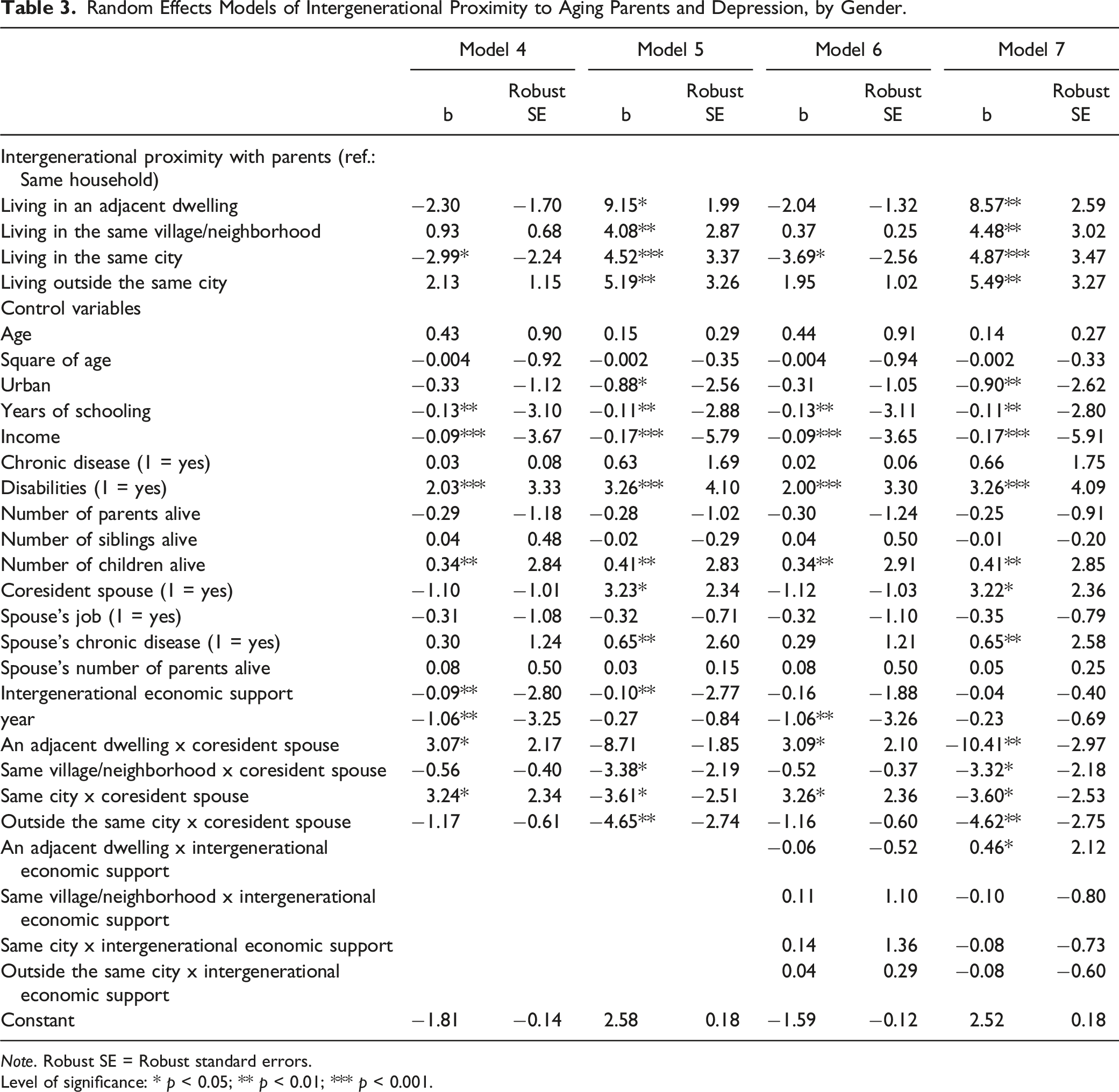
Random Effects Models of Intergenerational Proximity to Aging Parents and Depression, by Gender.
Note. Robust SE = Robust standard errors.
Level of significance: * p < 0.05; ** p < 0.01; *** p < 0.001.
Model 5 showed that having a coresident spouse decreased the levels of depression of daughters (hypothesis 2c was confirmed), but the levels of depression of daughters living in different households than their parents were still higher than those of coresident daughters. Specifically, daughters living in an adjacent dwelling had higher levels of depression than coresident daughters (b = 9.15–8.71 = 0.44; p < 0.05), and having a coresident spouse did not significantly influence the relationship. Daughters living in the same village/neighborhood had higher levels of depression than coresident daughters (b = 4.08–3.38 = 0.70; p < 0.01), but having a coresident spouse decreased depression (b = −3.38; p < 0.05) (hypothesis 2c was confirmed). Daughters living in the same city had higher levels of depression than coresident daughters (b = 4.52–3.61 = 0.91; p < 0.001), but having a coresident spouse decreased depression (b = −3.61; p < 0.05) (hypothesis 2c was confirmed). Daughters living outside the same city had higher levels of depression than their coresident comparators (b = 5.19–4.65 = 0.54; p < 0.01), but once again, having a coresident spouse decreased depression (b = −4.65; p < 0.01) (hypothesis 2c was confirmed). The depression level changed with an inverted U shape tendency with the increasing of geographic proximity, and daughters living in the same city had the highest level of depression, followed by daughters living in same village/neighborhood, daughters living outside the same city, and daughters living in an adjacent dwelling.
Finally, we tested interactions in Model 6 and Model 7 to determine whether offering more upward intergenerational economic support influenced the effect of intergenerational proximity on the depression of sons (Model 6) and daughters (Model 7). Offering more upward intergenerational economic support did not significantly influence the levels of depression of sons living in different households (hypothesis 3a was rejected). However, for daughters living in an adjacent dwelling, offering more upward intergenerational economic support increased the level of depression by 0.46 (b = 0.46; p < 0.05) (hypothesis 3b was confirmed), but the level was lower than among those living with aging parents (b = 8.57–10.41 + 0.46 = −1.38; p < 0.05). As before, the level of depression showed an inverted U shape tendency with the increasing of geographic proximity. The coefficients of variables in Model 4 and Model 5 were also stable in Model 6 and Model 7, respectively.
Discussion
In China, compressed modernization as proposed by Chang (1999) has led to the coexistence of traditional and modern elements, and the Confucianism rooted in Chinese culture has deepened the phenomenon. The conflicts created by this process have caused many to reconsider family relations; at times, their decisions have challenged the Confucian patrilineal norms, especially in the context of intergenerational living arrangements. Our specific area of interest was the effect on wellbeing of middle-aged married persons’ proximity to their aging parents. We also explored a possible spousal influence and analyzed gender differences.
First, we found the coresident rate of middle-aged married individuals with their parents has dropped. We believe this is a result of modernization. At the same time, however, we found a continuation of a traditional cultural influence, thus supporting Chang’s (1999) articulation of compressed modernization. As we argued in the Introduction, middle-aged Chinese represent a baby boomer generation caught between tradition and modernization. They have experienced market reform and the opening-up policy in China and have had to decide whether to follow cultural norms, such as staying with and caring for their parents, or to pursue outside opportunities. Our results confirmed the gradually decreasing power of traditional culture by indicating only one tenth (10.14%) of married adult children live with their parents. This is a staggering drop from 40% in the 1980s (Tsui, 1989), and 24.8% in 2010 (Institute of Social Science Survey of Peking University, 2012). The decreasing coresident rate reflects the emergence of individualism and the weakening of patriarchy, a finding consistent with some previous work (Du et al., 2020; Ji, 2019). Yet tradition remains salient; the strength of traditional culture was apparent in our finding of a higher proportion of males among coresident adult children (71.94%), and a higher proportion of females among non-coresident children (59.82%). In the traditional Chinese family system, married sons, especially the eldest sons, always live with their parents (Chu et al., 2011). Daughters are not required to support their parents; they live with their husbands and parents-in-law after marriage (Zhang & Liao, 2010). Thus, our examination of the geographic proximity of adult children confirmed the ongoing effects of traditional cultural norms in Chinese society.
Second, we found adult children had higher levels of depression when living apart from their parents. We received the same result after adding control variables, and this made our results more stable and convincing. This finding is not surprising; it is consistent with previous work finding adult children living farther away from their parents report more depression (Li et al., 2019). By looking at different levels of geographic proximity, however, we discovered that a new residential pattern, one we termed “separating without leaving”, increased their depression as well. We believe this reflects the salience of strong intergenerational relationships and traditional values – in other words, the continued influence of familism (Chang, 2013). Living separately from aging parents, even if it is just across town, violates traditional norms and creates pressure on the violators (Wang et al., 2020). Previous research suggests the lack of intergenerational support decreases the wellbeing of non-coresident adult children (Gao et al., 2012), so these children may try to compensate by providing more economic support. We found the intergenerational economic support of adult children living adjacently (mean = 4.54; SD = 3.56) was higher than the coresident adult children (mean = 4.24; SD = 3.81). The intergenerational economic support of adult children living farther away (mean = 4.89; SD = 3.42) was also higher. Living separately may reduce their wellbeing because they cannot receive the same instrumental and emotional support as their coresident comparators, so they offer higher upward economic support to compensate and improve wellbeing. We therefore suggest contemporary intergenerational living arrangements reflect a response to family needs in the context of complex modernity.
Third, we found living with a spouse did not affect the level of depression caused by intergenerational proximity. Modernization theory argues spousal relationships will replace intergenerational relationships as the main axis of the family (Goode, 1963). We innovatively used the coresident status with a spouse to examine the impact of spousal relationships on intergenerational relationships; our results indicated the modernization argument is not suitable for contemporary China. Despite the increasing importance of spousal relationships, traditional culture still has a strong influence. This conclusion was supported by our exploration of the different intergenerational interaction patterns for sons and daughters.
Sons and daughters have different status and roles in traditional families, with sons responsible for taking care of parents and daughters caring for parents-in-law. Daughters currently enjoy the same support and inheritance rights as sons (Zhang, 2012). They take the initiative and have more independence in the family and also have more voice and recognition in the larger society (Cheng, 2019). Thus, we examined the impact of spousal relationships on intergenerational relationships from a gender perspective to determine the impact of intergenerational geographic proximity on the depression of sons versus daughters.
Our results showed that having a coresident spouse increased the levels of depression of sons living in an adjacent dwelling and in the same city. In contrast, having a coresident spouse reduced the levels of depression of daughters in the “separating and leaving” context. These contrasting findings can be explained by a mix of tradition and change. Sons still shoulder heavier responsibility for parents. Their wives have less bargaining power when living with parents-in-laws and do most of housework (Zheng & Fang, 2018). When living separately from the sons’ parents, however, wives’ bargaining power increases, and sons are less able to take the initiative in spousal relationships. Moreover, the increased family status of their wives may impair the sons’ authority, and women’s increased job participation may cause conflicts because they spend less time on housework (Chen et al., 2015). Our study indicated that most of the sons’ wives (76.45%) have a job. Thus, in terms of intergenerational geographic proximity, we believe the relatively reduced ability to take the initiative in spousal relationships occasioned by increased distance from the parents decreases the wellbeing of sons. Daughters also need to take responsibility for supporting parents, but social norms are less demanding. With women’s improved socioeconomic status and the spread of gender equality (Chen et al., 2015), daughters have more bargaining power when living with parents and have relatively increased initiative in spousal relationships when living separately. Their husbands enjoy a more harmonious relationship with parents-in-laws (Zhang & Liao, 2010), as indicated by a Chinese saying “mothers-in-law love their sons-in-law, as much as their daughters”. Therefore, we suggest women’s relatively increased initiative in spousal relationships and stronger more egalitarian intergenerational relationships may increase daughters’ wellbeing.
We examined the impact of intergenerational economic support and found more upward intergenerational economic support increased the levels of depression of daughters living in an adjacent dwelling, but having a coresident spouse reduced it. Thus, daughters living in an adjacent dwelling had lower levels of depression than their coresident comparators. We believe “separating without leaving” may increase daughters’ wellbeing because of the maintenance of privacy and ongoing convenience of intergenerational exchanges. This finding is consistent with previous work (Zheng & Fang, 2018). Living adjacently with their husbands enables daughters to fulfill the social norm of supporting parents. Although the higher upward intergenerational economic support and less caring, housework, and resource-sharing with parents may increase their life pressure (Tong et al., 2019), their depression level is lower than coresident adult daughters. In Chinese traditional culture, daughters offer economic support to parents for emotional reasons not because it is their responsibility (Xie & Zhu, 2009), and it is an unexpected gift if parents offer them economic support (Xie & Zhu, 2009). We believe the changes in social norms mean daughters are now more responsible for supporting their parents, but the more equal and bilateral intergenerational relationships moderate the pressure to do so.
Admittedly, our study had some limitations. First, we used intergenerational economic support to measure intergenerational exchange. Due to data limitations, we cannot determine the extent of instrumental and emotional support. A lack of such support may reduce the wellbeing of both generations (Kim et al., 2011). Therefore, intergenerational exchanges such as housework assistance and regular contacts and meetings may be included in future studies. Second, we focused on married individuals. Yet people of differing marital status (single, divorced, widowed) may have different expectations and pressures, as well as different proximity to and exchanges with their elders (Tan, 2018). This may affect their intergenerational closeness to their aging parents and their own wellbeing. Future studies may explore the relations of intergenerational proximity and wellbeing of adult children of different marital status. Third, reverse causality is a concern: the wellbeing of children may influence their geographic proximity to parents. Fourth, we used 2013 and 2015 CHARLS data as a panel dataset to analyze the wellbeing of adult children as this related to their residential patterns with their parents, and this short interval could not reveal the dynamic nature of intergenerational proximity and wellbeing. Future studies may use longitudinal data to analyze these features, explore the mutual exchanges within the different family processes, and study the responses of both generations in the context of intergenerational proximity.
In sum, this study revealed the maintenance of and changes in traditional family relations in a time of compressed modernization by exploring changes in intergenerational geographic proximity and considering the differential impact of spousal relationships on sons and daughters. We found the importance of spousal relationships has increased, but we also found close intergenerational relationships and familism continue to have value in contemporary China. Our results reaffirm that married sons and daughters have different interaction patterns with aging parents. At the same time, they reflect the changes in social norms governing the responsibilities of sons and daughters, as well as women’s increased social status and their ability to take the initiative in spousal relationships. We believe this study may offer a reference for adult children to adjust their intergenerational proximity to their parents and contribute to the understanding of family relations in China, and other societies governed by Confucian culture.
Footnotes
Declaration of Conflicting Interests
The author(s) declared no potential conflicts of interest with respect to the research, authorship, and/or publication of this article.
Funding
The authors disclosed receipt of the following financial support for the research, authorship, and publication of this article: This work was supported by a Major Project of National Social Science Foundation of China (21ZDA101) and a Major Project of Zhejiang Philosophy and Social Science Foundation (19YSXK03ZD).
