




Abstract
There is limited understanding of aging experiences among transgender (trans) women in Latin America and the Caribbean. The purpose of this community-engaged, formative study was to explore lived experiences and perceptions of aging among trans women in Santo Domingo, Dominican Republic. From August to October 2024, we conducted in-depth interviews with trans women (n = 19) 45 years and older and analyzed data using narrative and thematic techniques. Tranquilidad, meaning peace or tranquility, was the central theme related to participants’ experiences as older trans women and their hopes for aging. Key themes within tranquilidad included: (1) stability, (2) living freely, (3) family dynamics, and (4) peer and partner support. Salient threats to tranquilidad included economic precarity, social isolation, and the pervasive nature of intersectional stigma. Findings reflect that aging can be a joyful process and highlight the need for multi-level efforts to reduce stigma and improve quality of life for older trans women.
Introduction
Transgender (hereafter, ‘trans’) people experience inequitable health outcomes across the life course, yet there is limited research focused on older trans adults, and even less specifically focused on older trans women. In one of the first studies to examine health outcomes of older trans adults in the US, Fredriksen-Goldsen et al. (2014) found that older trans adults were at higher risk of poor physical health, disability, depressive symptoms, and perceived stress compared with cisgender lesbian, gay and bisexual older adults. Several comparative studies have documented high burdens of a range of physical and mental health conditions among older trans women compared to cisgender women and men (Choi & Meyer, 2016; Getahun et al., 2018; Hughto et al., 2023; Poteat et al., 2021), but there is limited research on the lived experiences with aging specifically among trans women.
Accumulated stress related to manifestations of different forms of stigma related to gender, HIV, employment, and other factors over the life course, and the addition of stigma related to aging, can impact health and wellbeing among older trans adults (Kittle et al., 2023; Lampe et al., 2024; Simmons, 2020). Such intersectional stigma, or the “the confluence of multiple stigmatized identities, social positions and stigma-related barriers”, can negatively impact health and wellbeing (Sevelius et al., 2024). Understanding the multidimensional nature of intersectional stigma is critical for “deepening awareness and visibility” of the aging experience of trans women, which Fabbre et al. (2025) argue is a key principle of advancing the field of queer gerontology (Fabbre et al., 2025).
For example, internalized and anticipated trans stigma can cause psychological distress and deter healthcare seeking and screening (Ceolin et al., 2024; Hoy-Ellis & Fredriksen-Goldsen, 2017; Kiran et al., 2019; Kittle et al., 2023). Internalized transphobia has also been associated with subjective cognitive decline (Wolfe et al., 2024). At the interpersonal level, enacted stigma in the form of social rejection by family and community can lead to social isolation and loneliness among older trans adults (Adan et al., 2021; Kim et al., 2025; Lampe & McKay, 2025; Pang et al., 2019). At the structural level, anti-trans policies and employment discrimination drive economic vulnerability, which can have an array of negative health implications during older adulthood including stress, poor mental health, and limited access to health services (Adan et al., 2021; Pang et al., 2019). As a result of intersectional stigma, trans older adults may experience the paradox of “needing while avoiding” whereby they need support due to the lacking family and social support networks but avoid accessing formal services out of fear (Moone, 2023).
Social capital, including the social networks and social ties connecting people within and beyond the trans community, can be an important source of health promoting support and resistance to stigma throughout the life course (Kittle et al., 2023; Li et al., 2023). Though there is little literature focusing specifically on midlife and older trans women, research with LGBTQ + older adults offers insights into how social capital can act as both a protective and health-promoting factor. For example, in a sample of sexual and gender minority older adults in the US, having larger and denser social networks and more engagement with the LGBTQ community were protective against subjective cognitive impairment (Kim et al., 2025). In a study with older trans adults, where over half the participants identified as trans women, researchers found that engaging with peer support groups was a key factor in facilitating access to healthcare and positive healthcare experiences (Lampe et al., 2025). Other studies with older trans adults have found that trans elders are interested in “giving back” to their trans communities and supporting other older trans adults, while also noting a lack of community spaces for older trans people (Adan et al., 2021; McFadden et al., 2013; Pang et al., 2019). In addition to determining burden and determinants of health, there is a need to understand the role of different forms of social capital across settings and assess their potential to promote and support health and wellbeing among trans people as they age.
The context of trans rights in Latin America and the Caribbean (LAC) is complex. While several countries in the southern cone have recently advanced laws to protect and promote the rights of trans people, most countries in the LAC region lack any form of social recognition or protection for trans individuals. As a result, there is limited epidemiological data on the health experiences of trans women across the life course, including into older adulthood. A recent qualitative study in Colombia documented that older trans women experience a complex interplay of both threats and assets across multiple levels as they age that distinguishes their experience from cisgender older adults (Reyes et al., 2026). Trans women in the Dominican Republic (DR), where the current study was conducted, frequently experience family rejection, which can lead to insufficient support and social isolation among trans women in older age given the central role of the family in elder caretaking in Dominican society (Barrington et al., 2017; Ebereonwu, 2024; Higgins et al., 2024). Employment discrimination, drive by intersectional stigma related to gender and HIV, is a key social determinant of health among trans women in the DR (Barrington et al., 2017). The purpose of this study was to explore lived experiences and perceptions of aging among trans women in Santo Domingo, DR and identify priority areas for future research, theory, and action. We aimed to advance understanding of the interplay between factors such as intersectional stigma and social support and obtain a contextualized understanding of aging in the Dominican context to inform future research, practice and policy.
Methods
Design
This was a community-engaged formative qualitative study initially motivated by trans leaders in the DR who identified aging as a research priority for their community given the lack of data and limited understanding of experiences and needs of older trans women. The study was approved by the Institutional Review Board at the University of North Carolina and the Consejo Nacional de Bioetica (CONABIOS) in the DR.
Sample
Eligibility criteria were: (1) self-identify as a trans woman using locally appropriate terminology that reflect a range of identities including “trans,” “trans woman,” “transvestite,” and “woman” and (2) being at least 45 years of age. While the legal definition of an older adult in the DR is 65 years old (Ley No. 352-98 sobre Protección de la Persona Envejeciente, 1998), we chose the minimum age of 45 years based on input from community leaders who determined that this represented the lower limit of “older adults” in their community. We purposively sampled potential participants through two approaches. First, trans community leaders referred potential participants based on their community knowledge and networks. Second, we recruited from a cohort of trans women with HIV participating in a pilot randomized control trial of an intervention to promote optimal HIV care and treatment outcomes and overall wellbeing. All potential participants who expressed interest were screened for eligibility and scheduled to come to the study office in Santo Domingo. Written informed consent was obtained followed by the interview in a private office. Participants were compensated 800 Dominican pesos (∼$12 USD).
Data Collection
We developed a semi-structured guide including open-ended questions and probes about the context of participants’ lives as trans women, experiences with aging, and expectations related to aging. We focused on both expectations and experiences to maximize our understanding of the role of aging in participants’ lives. Informed by our prior work with trans women in this setting, we probed on the role of social determinants including intersectional stigma related to gender, age, HIV status and social capital, support and cohesion (Barrington et al., 2021, 2023; Carrasco et al., 2018). The guide was iteratively reviewed with community leaders, revised, and piloted prior to starting data collection. From August to September 2024, consenting individuals participated in qualitative in-depth interviews. Interviews were conducted by two members of our team in Spanish and audio-recorded with participant consent. In all, we conducted nineteen in-depth interviews. Average interview time was 68 minutes (range 43–101 minutes).
Data Analysis
Audio recordings were transcribed verbatim in Spanish and analyzed using a combination of narrative and thematic techniques (Maxwell & Chmiel, 2014). We wrote a narrative summary in Spanish of each participant’s life and aging experiences. This summary served to reduce the data while keeping a contextualized understanding of each participant’s “story”. Next, we developed a codebook, which included deductive codes related to a priori topics of interest and inductive codes identified through data review. Two coders piloted the codebook, reviewed code applications and definitions, revised, and then coded remaining transcripts using Dedoose version 9.0.107 (Dedoose, 2023). Upon reviewing the code outputs along with the narrative summaries, we developed matrices to further reduce data and visualize patterns of themes across participants. Finally, we wrote memos to facilitate interpretation (Saldaña, 2009). Through these various phases of analysis, we identified the central theme of “tranquilidad” or tranquility, which was the word participants used to describe experiences and hopes for the aging process. To saturate our understanding of tranquilidad, we then reviewed the data for explicit and implicit uses of the term with phrases such as “peace”, “safety” and “security.” Our research team met throughout the analysis process to discuss the findings, provide context, and develop interpretations. Preliminary results were presented to representatives from the trans community, government agencies, civil society, and funding organizations in Santo Domingo in December 2024. The cross-sectoral discussion and reactions to the data in this dissemination event further aided in shaping our interpretation and aided in defining implications of the study findings. The dissemination process also highlighted the limited understanding of the experiences of trans women outside of the realm of HIV care.
Results
Description of Study Sample
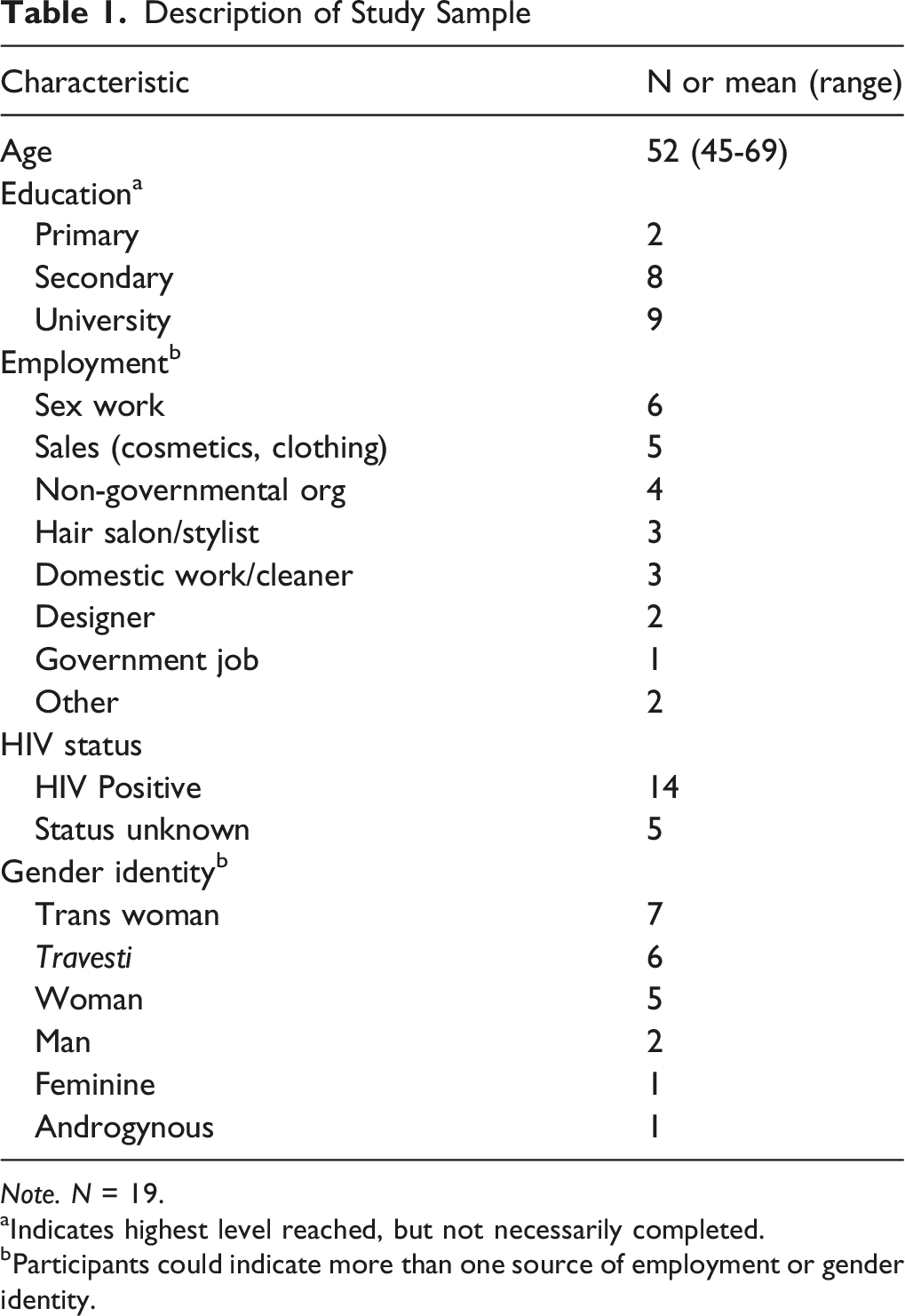
Note. N = 19.
aIndicates highest level reached, but not necessarily completed.
bParticipants could indicate more than one source of employment or gender identity.
Sample Description
Mean participant age was 52 years (range 45–69 years). Almost half (n = 9) had at least some university-level education. Most participants had multiple sources of employment; sex work, sales, and positions with non-governmental organizations were the most common jobs. One participant reported having a government position. Most participants (n = 14) had been diagnosed with HIV. The most common gender identities participants described were “trans woman,” “travesti,” and “woman”; several participants reported more than one identity, reflecting the spectrum of gender expression.
“Tranquilidad”
Tranquilidad, meaning tranquility or peace, was the overarching theme throughout narratives of and hopes for aging. Tranquilidad was a central component of participants’ conceptualizations of healthy aging and included having a secure job, a safe place to live, friends, and time to enjoy life. A 51-year-old participant described how she felt her body ask for this peace in response to the accumulated burden of stress during her lifetime, Well, as an aging trans woman, I think about tranquility…And to be, after this rough life that one has led, now to be in peace, to be in tranquility. (51, woman)
Tranquilidad was also described as the sense of satisfaction and joy for having made it to an older age as a trans woman, “being alive is beautiful” (45, feminine). Living to this age was also viewed as an achievement, “because not many have” (51, woman). My life cycle. What comes to mind? Oh, what can I say. That this (being alive) is an achievement. Making it to a certain age, still being a trans woman? Happy. (56, woman)
This participant went on to explain how much her lived experience as a trans woman had changed over her lifetime, …but before, life was terrible. Before, (if) you went out to the street with a skirt on, ay! Here in the Dominican Republic, going out during the day with a skirt, high heels, a wig, purse, in the 80s, 70s, part of the 90s? People would yell at you, 10, 20, 30 people would come after you, yelling ugly things. (56, woman)
While some participants felt more comfortable expressing their gender as they aged, others noted the ongoing threat of violence towards trans women as a threat to tranquilidad, …if I want to go out with a heel this high and a short short, whatever, and feel like I am Celia Cruz, let me be Celia Cruz, if that is what I feel…you understand? But, what happens is that in many neighborhoods, if you do that, you know, you can be jumped, they mistreat you, if you have anything on you, they steal it. (47, trans woman)
Together, these quotes reflect the interplay between individual and contextual factors shaping participants’ decisions about how to express themselves as they age in a way that will not threaten their tranquility.
Simplicity was another key part of tranquilidad as participants aged. The thing is, I like simple things like exercising, I love to exercise, I love to walk, and simply with walking, I am happy. I can walk for 70,000 kilometers (laughs). These little things fill me up, they satisfy me (laughs). I am not the type for very complicated things in life. (49, androgynous)
In addition to walking, other forms of simple living that brought peace and tranquility included having pets and cultivating plants. One participant expressed the meaning of plants in the context of her aging process, Of course, keep them green since I have not been able to be green and young, so (at least) they can be young and beautiful. (51, trans woman)
The notion of simplicity was repeatedly contrasted to the stress and chaotic complexity of survival as a trans woman. Finally, participants mentioned the importance of being at peace with God and the tranquility that they felt as a result of their faith.
Stability
Stability was a key component of tranquilidad in the aging process, with employment as the key to stability and meeting basic needs. When probed to define tranquilidad, one participant responded, Having a job, to have a job. Because I know that everything, everything comes back to you having a job. Because everything is dependent on that. We all need a job. When you have a job, you are tranquil because you know what you can do the day you get paid. (52, trans woman)
As reflected in Table 1, most participants relied on multiple jobs, mostly in the informal sector, and lacked benefits such as retirement or pensions, which was a major driver of economic stress. No, aside from physical health, the (financial) base that you have, that you should have for your retirement…Especially as an independent worker…Our benefits are not the same…And aging with dignity in these countries and especially in my case of trans women and gay men, it can be really, really, really tedious. (49, androgynous)
In addition to lacking benefits, many noted that their lives had been focused on day-to-day survival without the ability to plan or take a break, which had prevented them from living tranquilly. A job, a job. Me with a job, I could go anywhere. I (could) plan my vacation and I go. I would say, I am going this month to this place, I am going this week to this place. (56, trans woman)
One participant did odd jobs while studying to be a lawyer, with the hope of living more peacefully, I am studying law, to have my degree in law, to have economic stability. And to create this little nest where I generate, where I generate my peace. (47, trans woman)
Notably, participants did not discuss retirement or not working. Rather, they emphasized that as they aged, they hoped to have a stable or less stressful job with many specifically noting a desire to rely less on sex work and the informal street economy.
The emphasis on stable employment as part of tranquilidad was also a reflection of how participants were used to being economically self-reliant with limited access to social protection from the state or financial support from family or partners. Not being able to sustain my life…I mean, not being able to pay for a place to live, not being able to keep up my nutrition…or that someone else has to (take care of me). That depresses me, that someone else would have to give me what I need to spend. (51, trans woman)
However, participants who relied on sex work as their main form of employment noted the need to start “leaving the street.” Reducing sex work was described as necessary due to the danger experienced in the street, which many noted as increasing as they aged, as well as the toll of the work on their bodies. The majority of us trans women we have to endure rough nights because that is what we live from…Sometimes you get home (from doing sex work) in the morning and all you have is a fan and the electricity goes off….You spend the day unable to sleep due to the heat…And then at 7 pm you have to start getting ready to go look for your sustenance, because you have got to pay the rent…(51, trans woman)
Another participant explained how age became another stratum for discrimination and competition in the context of aging as a trans woman sex worker, But, as time goes on, as you pass the time, you see, you start losing your physical beauty because time ends it all, you see. The time comes and even the same trans women discriminate against you, they say to you “open your eyes,” the same clients, the same men, they tell you that even if you do yourself up, you still have your years, you see? (51, woman)
This combination of working nights in dangerous circumstances, living in a context where basic needs such as electricity were not guaranteed, and increasing competition from younger sex workers had a negative effect on participants’ overall wellbeing and threatened their tranquilidad as they grew older.
Living Freely
Another component of tranquilidad in the aging process was freedom of expression, which included being able to dress, act, and move through the world without limits, mostly related to stigma and discrimination, as they aged. …to have a lifestyle that is more tranquil…To do things that you like to do…To not limit yourself from what you like to do because of what people will say…To dress like I want to…And to have good friends (laughs). (69, travesti)
Many participants had adapted their gender expression to the parameters of rigid cultural definitions of gender roles to survive and protect their stability. However, several noted that, as they aged, they had developed more self-love and pride in themselves and hoped to live more freely. Well, as they say, enjoy my old age…I mean, live my life to the fullest, have fun, enjoy myself…Yeh, go out with my friends and with no worries, exactly, without discrimination, not being discriminated against. (56, trans woman)
One participant who stated “I feel comfortable with myself” later expressed her fear of no longer “putting herself together” as she got older and losing herself in this process, I am very scared based on what I have seen…like the way this older trans woman I knew died many years ago, an older trans woman, she was a lot older than me. She worked with me in my office, but then she lost her ability to work. I felt that she isolated herself and she wasn’t the same. When I saw her again, she wasn’t made up. All of these things make me scared. To not have the possibility, at least, to make it to the end with my hands and my feet made up…To be beautiful, because the most important thing for me is to be put together. Nothing else matters to me. (59, woman)
These quotes reflect the dynamic nature of agency and desires related to gender expression and affirmation across the life course and the power of observing the experiences of other older trans women. Another participant expressed concern about being dressed as a man during the 24-h public viewing period following death if she didn’t have anyone to defend her identity.
Beyond feeling free, many participants noted the importance of living in a safe space that they owned, or at least had control over, I would like to have my (own) house, even if it is small….But, to have a place that I know is mine and where I know I can be tranquil. Where no one is going to kick me out. Like, to have this space, a space for me. (45, trans woman)
This same participant expressed the importance of having the freedom to control who visited them and what they talked about in their home without judgement from others. Additionally, several participants discussed leaving the city (Santo Domingo) and moving to a smaller town to get away from being judged or attacked all the time and living in a more tranquil environment as they grew older.
Family Dynamics
Relationships with family were discussed as both a threat to and requirement for tranquilidad in the aging process. Many participants expressed concerns about loneliness and the conundrum of feeling a need for connections to others for support as they aged, but lacking people they could count on. One participant expressed distress about being “abandoned” by her family without anyone to count on and no way to support herself. I am going to be abandoned, no one is going to take care of me, no one. No, I don’t want to think about this, just let it happen. At this age, with little (economic) action in the street, without a (stable) job…It is too much for a person on their own. (51, trans woman)
In the context of family rejection, the fear of abandonment extended into death, I have seen a lot of trans friends who have died and the ones that die, it’s like it was a nobody who died. They bury them and take them to the cemetery and that’s it. (58, trans, travesti)
This participant was actively saving for her funeral as her parents had already passed away and she did not feel she could count on her living family to honor her gender identity in death.
Participants expressed experiencing family rejection while noting the importance of family support as they aged. One participant reflected on the joy they felt from their relationship with their family as they aged, What brings me joy? You know what brings me joy, having achieved so many things, having God and such a wonderful mother, and such a cool, fabulous family, like my family on my mother’s side – that makes me so happy!. And mostly because they’ve supported me in my gay life. And in my current trans life. (56, woman)
As they reached an older age, however, many participants reflected on the impact of their parents dying, in particular mothers, especially if they didn’t have partners or children, Yes, because, imagine when you don’t have your mother anymore, you can’t even count on the support of your mother, and you don’t have kids…imagine that. Life is more difficult. (45, trans woman)
The experienced and anticipated impacts of increasing loneliness and solitude as elders aged and passed away was a threat to tranqulidad.
Peer and Partner Support
Relationships with other trans women were also complex. Participants appreciated having shared understanding and camaraderie with other trans women, but many indicated that they did not have close friendships with other trans women due to lack of trust and competition, especially related to sex work. Participants also noted stigmatization and judgement between trans women, which limited their feelings of cohesion. You know that those of us in this trans world, even though we are rejected all the time, we are also very nasty [to each other] (laughs). (47, trans woman)
Despite this complexity, many participants emphasized the importance of trans friends and social networks as they aged. Participants expressed a desire to share love with others, …I think that what one has, the life experience that one has had, (now) one is looking for more peace, tranquility, harmony. And to share a little of the love that one carries inside, express it to others (trans women), so that they feel it (47, trans woman).
Beyond their personal tranquilidad, they also wanted a more tranquil environment for other trans women, …all my friends, I want them to be happy…Happy, without discrimination, that we can go places and no one discriminates against us. Rather, enjoy ourselves. (56, woman)
However, the dynamics of these social networks were in transition for many, especially as they “left the street” and made changes to their way of living as they aged. Actually, my friends sometimes invite me to activities and things, they say to me “what is up with you,” “you are old,” all of this, because I don’t go out like I used to. (58, trans travesti)
Participants also described how they adapted their social activity to have more safety and tranquility in their lives while still engaging in things they liked to do, like drag shows, which required being out late and in dangerous circumstances. No, there is no safety. So, we are going out less…for example, I have been invited to a show for a trans friend’s birthday and what we do is gather in a friend’s house and we get dressed and do our makeup….And then when we leave the show, we spend the night at a trans friend’s house and the next day I go home. (58, trans travesti)
This participant also noted that they avoid walking in the street, which introduced an additional economic burden of having to pay for taxis.
Finally, having a stable partner was another connection identified as a critical part of tranquilidad in the aging process, What do I plan to do in the future to take care of myself? For example, having a stable partner, having a steady job that was not sex work, a business. Have a steady partner and leave the street. (45, trans woman)
Some participants considered a steady partner part of a healthy future because a partner can prevent loneliness and provide support, A healthy future would be to live tranquilly in my house, maybe with my partner, with a steady partner, someone who loves me and I love them…(to) know that I have someone who is waiting for me at home, for me to share with them, I mean, to give my all to this person… (58, trans travesti)
Related to the sub-theme of living freely, one participant noted they wanted a partner with whom they could be themselves, That we can talk about any topic without fears. Because, you know that you reach a certain age and you feel free say what you think (59, woman)
This quote captures the desire for agency and being able to be themselves in the context of intimate partnerships.
Discussion
In this community-engaged formative qualitative study, participants used the concept of tranquilidad (tranquility) to describe their experiences with and desires for aging. Joy in the aging process was derived from the sense of achievement at having reached midlife or an older age and the positive relationships in participants’ lives. A key part of achieving and sustaining tranquilidad was reducing stress through improving economic stability and living with simplicity supported by pets, plants, and healthy routines. Discussions of tranquility, peace, and simplicity in aging contrasted with the participants’ narratives of individual, interpersonal, and structural manifestations of intersectional stigma and stress throughout their lives. As such, the pursuit of tranquilidad in the aging process can be seen as an act of “true self-care” (Fabbre et al., 2025) and resistance to the stigma that shapes the daily experience of trans women in Santo Domingo (Kerrigan et al., 2024; Li et al., 2023). Understanding these experiences and the priorities of older trans women is a key part of advancing a critical queer gerontology (Fabbre et al., 2025).
Such acts of resistance have been described as “resourcefulness,” which Lampe and Pfeffer (2024) define as, “tactical processes involving marginalized communities obtaining and using resources to further minimize inequity within and beyond healthcare settings”. The concept of resourcefulness has been offered as an alternative to “resilience,” which is critiqued for focusing on coping and maintaining the status quo and failing to address fundamental causes (Derickson, 2016; Lampe & Pfeffer, 2024; Suslovic & Lett, 2024). Lampe and Pfeffer identified a dichotomy of avoidance and advocacy resourcefulness strategies used by transgender, non-binary and intersex adults in the US to minimize inequity in the context of sexual and reproductive healthcare. For example, older trans men engaged in the resourcefulness strategy of avoiding healthcare due to limited cultural competency; while such avoidance could negatively impact physical health, it served to protect their mental health and wellbeing by preventing negative and damaging clinical encounters. In contrast, trans women and non-binary participants engaged in the resourcefulness strategies of self-advocacy to improve healthcare experience and access to resources (Lampe & Pfeffer, 2024).
Our participants’ narratives of their pursuits of tranquilidad included both avoidance and advocacy strategies. Examples of avoidance included moving (or planning to move) out of urban areas to live in small towns perceived to be safer and less stressful. Examples of advocacy included pursuing careers not traditionally available to trans women in the DR, such as becoming a lawyer, and engaging in health-promoting behaviors such as walking, getting more sleep, and reducing drug and alcohol use. While the concept of resourcefulness strategies centers these community-defined acts of resistance in response to stigma, Lampe and Pfeffer (2024) recognize that these acts do not necessarily change the fundamental causes of inequities and that both avoidance and advocacy continue to place the burden of change on the part of the affected populations. There is a need for structural-level change to sustainably improve health outcomes and longevity among trans women (Lampe & Pfeffer, 2024). Similarly, Suslovic and Lett (2024) argue for interventions to support healing from and addressing fundamental causes of health inequities, rather than using resilience as an intervention strategy to cope with inequities.
Participants in our study also framed being able to work as a key part of their tranquilidad. Notably missing was any discussion about retirement as part of the aging process. This reality of reliance on the informal economy into older adulthood is not unique to trans women in the Dominican context where most adults work in the informal sector and lack access to pensions (Fundación NTD Ingredientes & Fundación Saldarriaga Concha, 2018). However, the impact on trans women is potentially exacerbated by their limited access to social protection measures and family support networks. Studies have documented that older trans populations face economic precarity and need to work into older age due to limited savings, financial stability, and support networks (Espinoza, 2014; Pang et al., 2019; Witten, 2014b). In our study, age stigma, especially in the context of sex work, added to economic stress and created additional competition in the realm of sex work, which threatened already tenuous social network ties with other trans women (Henry et al., 2024; Lampe & Pfeffer, 2024). Beyond access to employment, workplace stress has been found to have direct and mediated effects on cognitive health, highlighting the importance of the workplace setting for supporting healthy aging (Barbee & McKay, 2023). There is a persistent need to address employment discrimination related to gender through improved policy and legal frameworks and enforcement and to expand health promoting employment opportunities for trans women throughout their life course and across educational backgrounds.
Concerns about loneliness, because of losing older family members and not having solid family and friend networks and partners, have also been well documented in the literature on trans aging (Fredriksen-Goldsen, 2011; Persson, 2009; Witten, 2014a, 2014b). Older trans adults face a conundrum related to the costs versus the benefits of counting on their families, trans peers, and current, or more often, potential partners while also fearing mistreatment and rejection (Barrington et al., 2021; Higgins et al., 2024; Lampe & McKay, 2025). The potential for pets and plants to fill some of this void has been described in the LGBT aging literature (Muraco et al., 2018). Despite limited trust, participants noted a desire to connect with other trans women and to support younger generations to have a more positive social experience, which has been found in other studies (McFadden et al., 2013). Researchers have argued for collectivist, peer-centered approaches to healing while also challenging inequitable structures (Lampe et al., 2025; Suslovic & Lett, 2024). Our team developed a multilevel intervention with actions at the individual, peer, healthcare provider and community levels to promote optimal HIV and mental health outcomes among trans women by reducing stigma and strengthening social cohesion that could offer a model to promote holistic health and wellbeing among trans women across the life course (Barrington et al., 2021). Li et al. (2023) refer to the construction of alternative gender affirming social networks as “authenticated social capital.” Traditional notions of social capital are anchored around access to trust, reciprocity and support conditioned on conforming to normative expectations, including norms related to gender and sexual orientation. Authentication is the (re)construction of social capital in response to social exclusion and rejection when someone does not conform (Li et al., 2023). Developing reciprocity is a key component of this reconstruction that could be important in our study setting, where participants were concerned about not having anyone to count on as they aged (Li et al., 2023).
Participants in our study straddled both authenticated and unauthenticated social capital, whereby they maintained connections with families and communities that may not understand or support their gender identity and simultaneously engaged with small trans social networks, and in some cases, community support and mobilization with other trans women. Recognizing the ability to sustain both authenticated and unauthenticated social capital could make this concept more actionable and aligned with the lived experiences of older trans women across settings where there is a desire and need to both sustain connections to family networks who may not be affirming while also creating more affirming networks. Additionally, authentication may need to be viewed along a spectrum as family and community networks may change over time with increasing acceptance creating more access to social capital (Higgins et al., 2024).
Finally, while research in the US has identified health disparities among LGBTQ populations in rural settings (McKay et al., 2024), another strategy to have a more tranquil life was moving out of congested urban centers to small towns and “campos” (rural communities). Such areas were expected to bring more peace and tranquility and be consistent with participants’ desire to “live freely” and leave the street economy. In the Dominican setting, communities of origin or where participants have family connections may offer more acceptance of older trans women due to the respect for elders in such settings and increasing acceptance of trans people. These perceived social benefits outweighed having to travel farther for healthcare, especially since many people with HIV prefer to attend clinics far from where they live anyway. Most research with trans women in the DR has been conducted in Santo Domingo, highlighting a need to assess the experiences of trans women in small cities and towns in terms of social determinants of health and wellbeing in the context of aging and assessment of healthcare provider attitudes and biases, which could impact access to quality services.
Limitations
First, our sampling approach was purposive, as we aimed to interview individuals who had experiences or perceptions related to aging, but also pragmatic, resulting in a sample that had previous engagement in research and a high level of connection to the trans community. As a result, the perspectives they shared may not represent individuals who are less connected and engaged. Second, we used a combination of questions and probes around lived experiences and perspectives on aging. While this provided insights into past and current experiences and future expectations, the nuance between experience and expectation was sometimes subtle. Nevertheless, our community-engaged approach added rigor to the study by first responding to a community-identified research gap and, second, assuring that our design, instruments, and interpretation were appropriate. Additionally, by building on our past research while maintaining an inductive, data-driven approach to analysis, we stayed close to participants’ stories and experiences.
Conclusions
In this formative, community-engaged qualitative study, we found that trans women in Santo Domingo hope for a more peaceful and less stressful life as they age, but their economic opportunities are limited, and they fear being alone and lacking partners and supportive social networks. A key takeaway from this study is that aging can be a joyful process while highlighting the need for multi-level efforts to reduce stigma and improve quality of life for older trans women. There is a need for simultaneous action at individual, social, and structural levels to resist and reduce stigma, promote social capital and support, and advocate for structural change to improve economic opportunities for aging trans women.
Footnotes
Acknowledgments
We are grateful to the participants for sharing their time and experiences. We also acknowledge the staff and support team at the HIV Vaccine and Research Unit at the Instituto Dermatológico y Cirugía de Piel Dr. Huberto Bogaert Díaz that made this work possible.

Ethical Considerations
This study was approved and monitored by the Consejo Nacional de Bioética en Salud (CONABIOS) (#029 2023) and the ethics committee of the Instituto Dermatológico y Cirugía de Piel Dr. Huberto Bogaert Díaz (IDCP) (no study number) in Santo Domingo, Dominican Republic and the University of North Carolina at Chapel Hill Institutional Review Board in Chapel Hill, NC (#24-1398).
Consent to Participate
Written informed consent was obtained from all participants prior to data collection.
Funding
The authors disclosed receipt of the following financial support for the research, authorship, and/or publication of this article: The study was supported with funds from the United States National Institutes of Health through the National Institute of Mental Health (NIMH) [R34MH129218]. Mannat Malik was supported by a Doctoral Foreign Study Award through the Canadian Institutes of Health Research (#181628).
Declaration of Conflicting Interests
The authors declared no potential conflicts of interest with respect to the research, authorship, and/or publication of this article.
Data Availability Statement
Requests for data can be submitted to the first author (