




Abstract
The association between felt gender typicality (self-perceived similarity to the same-gender peer group) and psychosocial adjustment (self-esteem, peer social competence, depression, victimization, and aggression) was examined in a sample of early adolescents in New Delhi, India (N = 296, 130 girls, mean age = 12.73 years). We also explored whether adolescents’ gender-differentiating cognitions (felt pressure for gender conformity, work sexism, and entity beliefs) affect their adjustment, alone and in interaction with felt typicality. Results indicated that felt typicality was associated with higher self-esteem in girls and in older adolescents, with lower depression in older adolescents, and with higher peer social competence. Gender-differentiating beliefs were especially detrimental to girls’ and younger adolescents’ psychosocial adjustment, with mixed results for boys’ adjustment. Gender beliefs also moderated the influence of felt typicality on adjustment. Felt atypicality was associated with greater depression and aggression when adolescents also reported strongly sexist beliefs; and with greater victimization for older adolescents who had high felt pressure or work sexism. Further, boys with strong entity beliefs failed to derive peer social competence from felt typicality. Results indicate that gender self-discrepancy—a disconnect between how one sees oneself in relation to the same-gender peer group and how one feels one’s gender should be—is problematic.
Introduction
Gender identity is a multidimensional construct that represents the cognitive and affective linkages individuals make between the self and their gender collective (Tobin et al., 2010). Felt typicality (self-perceived similarity to the same-gender peer group) is a dimension of gender identity that bears a positive influence on child and adolescent well-being, over and above the influence of assorted gender-typed attributes (Egan & Perry, 2001). Studies with children and adolescents in the United States (US) have often replicated this pattern of results (Carver, Yunger, & Perry, 2003; Smith & Leaper, 2006; Yunger, Carver, & Perry, 2004), albeit primarily for white Caucasian American children (Corby, Hodges, & Perry, 2007). Empirical studies that have examined these associations in samples outside the US including studies conducted in Britain (Menon, 2011), the Netherlands (Bos & Sandfort, 2010), Colombia (Drury, Bukowski, Velasquez, & Stella-Lopez, 2013), and China (Yu & Xie, 2010) typically replicate the relationship between felt typicality and adjustment in children and adolescents. The present study was designed to examine the relationship between felt gender typicality and psychosocial adjustment in early adolescents in India.
In India, gender is a central organizing feature of life and social emphasis is placed on conformity to culturally valued gender ideals (Mahalingam, 2007). Traditional patriarchal gender norms govern both rural and urban society in India. The present study’s sample was from New Delhi, which is an urban metropolitan city in northern India. In contrast to other regions in India, gender inequality in northern India is especially stark, with a marked preference for sons over daughters (Bhat & Zavier, 2003), and greater aggression against women (Mukherjee, Rustagi, & Krishnaji, 2001). Urban cities in India are comparatively more gender egalitarian, as women are educated and employed alongside men, although gender inequalities still persist (Datta, 2005; Patel & Parmentier, 2005). Social discrimination against women coexists (paradoxically) with cultural and religious beliefs that deify womanhood. Cultural ideals of masculinity for men and chastity for women are especially relevant (Mahalingam, 2007), and endorsing such gender ideals is a source of well-being for both adolescents and adults in India (Mahalingam & Balan, 2008; Mahalingam & Jackson, 2007; Yim & Mahalingam, 2006). Social contexts that are characterized by strong pressures for gender differentiation are more likely to heighten the impact of felt gender typicality on adjustment (e.g., Drury et al., 2013). Given the sociocultural pressures for gender differentiation in Indian society, felt gender typicality may be an especially salient influence on Indian adolescents’ well-being. Also, given the patriarchal gender norms, it would be reasonable to predict that felt gender typicality may benefit Indian boys more than it benefits Indian girls.
The influence of gender identity on US children’s psychosocial adjustment differs by race/ethnicity (Corby, Hodges, & Perry, 2007), suggesting that gender norms and beliefs within different communities form an important context that shapes the adaptive versus maladaptive quality of gender identity dimensions (Tobin et al., 2010). Within a culture too, individuals likely differ in the degree to which they endorse gender norms or hold gender-differentiating beliefs. Bem (1981) proposed that children develop a gender schema, or a generalized tendency to differentiate the genders, that influences their self-concepts and motivates gender-typed behavior. We explored whether a gender schema influences Indian adolescents’ well-being. Three gender-differentiating cognitions were measured to represent the gender schema construct. The first was felt pressure for gender conformity, which reflects the amount of pressure children report from parents, peers, and the self, to avoid other-gender activities, attributes, and behaviors. Felt pressure is often noted as a dimension of gender identity (e.g., Egan & Perry, 2001), and is typically associated with internalizing problems (especially in girls) as well as with different gender-typed attributes (Egan & Perry, 2001; Yunger et al., 2004). Another aspect of the gender schema that was measured was work sexism. It refers to the degree to which adolescents believe that men and women should occupy traditional gender roles at the workplace. Sexist beliefs across multiple domains predict boys’ aggression towards girls (Pauletti, Cooper, & Perry, 2014). The dimension of work sexism was chosen for study because Indian adolescents in an urban setting are at the threshold of choosing academic options in high school that lead to specific careers, thus sexist beliefs about work and occupations may have implications for adolescents’ self-concepts and well-being. We also measured entity beliefs, the degree to which adolescents believe that gender differences are biologically rooted and immutable, as opposed to socialized and fluid. Because felt pressure, sexist beliefs, and entity beliefs could reflect the operations of a harmful gender schema (Bem, 1981; Pauletti, Menon, Cooper, Aults, & Perry, 2017; Tobin et al., 2010), we expected that each would undermine adolescent well-being. Further, because women occupy a subordinate position in the social hierarchy (Ridgeway & Correll, 2004), each of the above gender-differentiating beliefs was expected to be especially damaging to girls’ psychosocial adjustment.
We also examined whether Indian adolescents with strong gender-differentiating cognitions are especially sensitive to the influence of felt gender atypicality on adjustment. In this regard, we tested Perry and colleagues’ gender self-discrepancy hypothesis (Perry, Pauletti, & Cooper, in the current issue of this journal). Presumably, the combination of felt gender atypicality and strong gender-differentiating cognitions creates a problematic disconnect between how one sees oneself and how one feels one should be (i.e., a gender self-discrepancy). Similar to how discrepancies between the actual and ought self-states contribute to agitated distress (Higgins, 1991) we expected that gender atypical adolescents who felt strong felt pressure, who hold sexist beliefs, or who endorse an entity view of gender differences, are likely to view their atypicality as incompatible with their gender beliefs. They could be alarmed at this discrepancy and react with dismay, which might manifest in low self-esteem, and other adjustment problems. A corollary to this hypothesis is that felt typicality would also be most beneficial to adolescents with strong gender-differentiating cognitions. This expectation is consistent with findings from the social psychology literature indicating that social identification effects are often accentuated for those who hold strongly rigid beliefs (Hong et al., 2003; Kray, Howland, Russell, & Jackman, 2017).
Early adolescents in New Delhi, India, responded to self-report measures of felt typicality, gender-differentiating beliefs, and psychosocial adjustment. Using regression based statistical procedures we examined three hypotheses. First, that felt typicality would be associated with positive self-concept and adjustment in Indian adolescents, and that these associations would be stronger for boys than for girls. Second, that gender-differentiating beliefs would be harmful to Indian adolescents’ psychosocial adjustment, with a stronger impact on girls than on boys. Third, that gender-differentiating beliefs would moderate the influence of felt typicality on adjustment, such that self-perceived gender atypicality would be especially distressing to adolescents who endorse strong gender-differentiating beliefs.
Method
Participants
The sample included 296 early adolescents (130 girls and 166 boys) in the 6th (N = 69), 7th (N = 122) and 8th (N = 105) standards of a Kindergarten to 12th standard school in New Delhi, India. Participants ranged in age from 10.87 to 14.54 years with a mean age of 12.73 years (standard deviation (SD) = 0.84). The sample was predominantly North Indian (92%) and Hindu (76%), although other religions were also represented (10% Sikh, 4% Jain, 2% Muslim, and 8% Other). Most participants reported that their parents were highly educated (73% with a post-graduate degree and 25% with a college or university degree) and married (97%). Approximately half of the participants lived in a nuclear family (43% in a joint family structure).
Procedure
In August 2015 all students in the 6th–8th standards of the school were invited to participate in the study and were given the parent consent forms to take home. An introductory letter described the study purpose and procedures, and parents were asked to sign and return the consent form if they did not wish for their child to participate in the study. Twelve students’ parents denied consent. Students present on the date of survey administration were asked for their signed assent prior to beginning the study survey; only one student did not sign the assent form, and was thus not given the survey. A teacher introduced the study and then read out the instructions for the first set of questions. Participants worked on the questionnaire independently, and returned the survey to the teacher in a sealed envelope. It took approximately one hour for students to complete the questionnaire.
Measures
Self-report scales measuring felt typicality, gender beliefs, and psychosocial adjustment were administered. Other measures that are not relevant to the current study were also administered.
Felt gender typicality
Pauletti, Cooper, and Perry’s (2014) adaptation of Egan and Perry’s (2001) measure was used to assess felt typicality. The felt typicality scale (5 items, α = 0.60) assessed the degree to which children feel that they are similar to others in their same-gender group. The scale was scored from 1 to 4 with higher scores reflecting greater felt typicality.
Gender-differentiating beliefs
Felt pressure was measured with Pauletti et al.’s (2014) adaptation of Egan and Perry’s (2001) self-report scale (7 items, α = 0.86). It assessed the degree to which children feel pressure from parents, peers, and the self, to avoid other gender behavior. Work sexism (8 items, α = 0.70) was measured with a subscale from the Children’s Sexism Questionnaire developed by Menon, Menon, Tobin, and Perry (2007). The sexism scale is negatively associated with psychological androgyny (Pauletti et al., 2017) and positively associated with boys’ aggression towards girls (Pauletti et al., 2014). Items assessed traditional gender beliefs in occupational and workplace settings and responses could range from 1 (disagree strongly) to 5 (agree strongly). Scores were averaged across items and higher scores represented greater endorsement of work sexism. Entity beliefs (6 items, α = 0.65) in gender differences were measured using a scale adapted by Menon (2006) from Hong et al. (2003). Items assessed the degree to which adolescents believed gender differences to be fixed and immutable as opposed to fluid and changeable. Items were presented using Harter’s fixed-choice response format. A sample item (reverse coded) is: “Some kids think that girls are born with very different personalities than boys, but Other kids don’t think that girls are born with very different personalities than boys.” Each scale response could range from 1 to 4, and higher scores represented greater felt pressure, work sexism, and an entity view of gender differences.
Psychosocial adjustment
Adolescents’ self-esteem and peer social competence were assessed with Harter’s (1985) global self-worth scale (6 items, α = 0.70), and self-perceived peer social competence scale (6 items, α = 0.67), respectively. Both scales were scored from 1 to 4 with higher scores reflecting greater self-esteem and peer social competence. Depression (10 items, α = 0.74) was assessed with Kovac’s (1981) Depression Inventory. Each item presents three statements and the participant selects one of the three that best reflects their affect. Items were scored from 1 to 3, with higher scores indicating greater depression. Victimization (6 items, α = 0.87) and aggression (6 items, α = 0.89) were assessed with the reduced aggression/victimization scales by Orpinas and Horne (2006). Participants reported on the number of times in the past seven days they had been the victims of, and a perpetrator of, aggressive behavior at school. Responses could range from 0 to 6+. Scale scores were formed by averaging across relevant items, and higher scores indicate greater victimization and aggression.
Results
Demographic Differences in Measures
Nine multiple regressions were conducted to assess whether the felt typicality, gender-differentiating beliefs, and adjustment measures were influenced by demographic variables. Each measure served as the dependent variable in separate analyses. Age in years, family structure (1 = nuclear family, 0 = other), religion (1 = Hindu, 0 = other), parent education (1 = post-graduate degree, 0 = other), and gender (1 = boys, 0 = girls), were entered as simultaneous predictors. Parent education predicted higher felt typicality (β = 0.13, t = 1.99, p = 0.047) and age predicted lower felt pressure (β = -0.10, t = -2.04, p = 0.042). Parent education predicted lower depression (β = -0.15, t = -2.38, p = 0.018), and belonging to a nuclear family predicted greater aggression (β = 0.13, t = 2.07, p = 0.039). Religion did not predict any of the measures. As summarized in Table 1, several gender differences were also seen. Boys reported significantly higher scores than girls on felt pressure, work sexism, entity beliefs, victimization, and aggression, but lower scores than girls on self-esteem. Because parent education, age, and gender were associated with the predictors and outcome variables, they were used as statistical controls in tests of the hypotheses.
Means and standard deviations of measures by participant gender.

Note: felt typicality, felt pressure, entity beliefs, self-esteem, and peer social competence scores could range from 1 to 4; work sexism scores could range from 1 to 5; depression scores could range from 1 to 3; and victimization and aggression scores could range from 0 to 6. For all scales, higher scores indicated greater amounts of the construct assessed. β values are standardized regression coefficients for the influence of gender (coded 0 = girls, 1 = boys) on each measure (with age, family structure, parent education, and religion controlled) in multiple regression analyses. *p < 0.05; ** p < 0.01.
Correlations Amongst Gender Measures
Table 2 summarizes partial correlations (controlling for parent education and age) among the measures separately for boys and girls. Felt typicality was not correlated with any of the gender-differentiating beliefs for either boys or girls. There were positive, albeit only modest, correlations amongst the gender belief measures. Specifically, felt pressure was associated with higher entity beliefs and work sexism for girls and higher entity beliefs for boys. Entity beliefs and work sexism were not associated. The small correlations indicate that adolescents’ gender schema is likely multidimensional, and justify the use of separate scales to assess each dimension, rather than to aggregate across the three gender-differentiating cognitions. Felt typicality and the gender-differentiating cognitions were each associated with adjustment variable. Those results are described below.
Correlations among measures.

Note: table entries are partial correlations controlling for parent education and age. Correlations for girls (N = 130) are above the diagonal and correlations for boys (N = 166) are below the diagonal. * p < 0.05; ** p < 0.01.
Associations between felt gender typicality and adjustment
The first hypothesis of this study was that felt gender typicality would be positively associated with psychosocial adjustment, and that boys may benefit more than girls, from felt typicality. As expected, felt gender typicality was associated with adjustment variables (see Table 2). For girls, felt typicality was associated with higher self-esteem and peer social competence. For boys, felt typicality was associated only with higher peer social competence. The results indicate that associations of gender identity with adjustment are similar to those reported in US studies. However, there is little support for the hypothesis that Indian boys are better able to benefit from felt gender typicality.
Associations between gender-differentiating beliefs and adjustment
The second hypothesis of this study was that gender-differentiating beliefs would be harmful to Indian adolescents’ adjustment, with greater impact on girls than on boys. In support of this hypothesis, gender-differentiating cognitions were associated with several adjustment variables (see Table 2). As expected, effects were more widespread for girls’ adjustment than for boys’ adjustment. For girls, felt pressure was associated with higher victimization, work sexism was associated with higher victimization and aggression, and an entity view of gender differences was associated with lower peer social competence and higher victimization. In contrast, for boys felt pressure was unexpectedly associated with lower depression, work sexism was not associated with adjustment, and an entity belief of gender differences was associated with higher aggression.
Interactive Effects of Felt Typicality and Gender-Differentiating Beliefs on Adjustment
The third hypothesis of this study was that felt atypicality would be especially problematic for adolescents who hold strong gender-differentiating beliefs. In order to test this hypothesis, hierarchical regression analyses were undertaken to examine the interactive effects of felt gender typicality and gender-differentiating cognitions on adjustment. Each adjustment measure served as the dependent variable in separate analyses. Parent education, age, and gender were entered on the first step as controls. In the first set of analyses felt typicality and felt pressure were entered on the second step. On the third step the two-way interaction of felt typicality × felt pressure was entered. On the fourth step the interaction terms of gender × felt typicality and gender × felt pressure were entered, and on the fifth step the three-way interaction of gender × felt typicality × felt pressure was entered. In subsequent analyses the regression was rerun replacing the felt pressure variable with the work sexism variable and then with the entity beliefs variable. Thus, a total of 15 regressions were run (three for each adjustment dependent variable). In all hierarchical regression analyses described in this paper, the continuous variables were standardized and interaction terms consisted of the cross-product of standardized variables. The main effect of felt gender typicality and gender-differentiating beliefs on the second step, the two-way interaction of felt typicality × gender-differentiating beliefs on the third step, and the three-way interaction of gender × felt typicality × gender-differentiating beliefs on the fifth step were examined.
Due to the low power of regression analyses to detect interactions between continuous predictors and due to the possibility that such interactions might still indicate strong dependence of an effect on a moderator (Jaccard & Wan, 1995; McClelland & Judd, 1993), we probed interactions if they were significant at p < 0.10. In these follow-up analyses, conducted in PROCESS, we examined the influence of felt gender typicality on adjustment at low (-1 SD) and high (+1 SD) levels of the gender belief variable. Per the hypothesis, strong gender-differentiating beliefs would heighten the influence of felt typicality on adjustment. Below, the results are presented for analyses that examined the interaction of felt typicality with each gender-differentiating belief variable.
Felt pressure
Results indicated that after controlling for covariates and felt pressure, on the second step felt typicality predicted higher self-esteem (β = 0.16, t = 2.51, p = 0.013) and peer social competence (β = 0.19, t = 3.05, p = 0.003). On the second step, felt pressure (controlling for felt typicality and other covariates) predicted lower depression (β = -0.18, t = -2.15, p = 0.032). The interactions entered on steps 3 and 5 did not predict any of the adjustment variables. Thus, there was no evidence to support the idea that felt pressure interacts with felt typicality to predict adjustment.
Work sexism
On the second step, after controlling for covariates and work sexism, felt typicality predicted greater self-esteem (β = 0.16, t = 2.56, p = 0.011) and peer social competence (β = 0.19, t = 2.96, p = 0.003). On the same step, work sexism predicted lower self-esteem (β = -0.16, t = -2.23, p = 0.026) and trended towards predicting greater victimization (β = 0.13, t = 1.91, p = 0.058), over and above the influence of covariates and felt gender typicality. On step 3 the two-way interaction of felt typicality × work sexism predicted depression (t = -1.85, R2 Δ = 0.013, p = 0.066), victimization (t = -2.67, R2 Δ = 0.023, p = 0.008), and aggression (t = -2.67, R2 Δ = 0.023, p = 0.073). The three-way interaction of sex × felt typicality × work sexism did not significantly predict any of the adjustment variables. Follow-up analyses revealed that felt atypicality predicted greater depression (β = -0.26, p = 0.022), victimization (β = -0.34, p = 0.003), and aggression (β = -0.23, p = 0.039), but only at high levels (+1 SD) of work sexism. At low levels (-1 SD) of work sexism, felt atypicality was not significantly associated with depression (β = -0.02, p = 0.755), victimization (β = -0.01, p = 0.884), or aggression (β = -0.01, p = 0.982). These interactions are depicted in Figures 1, 2, and 3. The results support our hypothesis that adolescents who feel gender atypical are especially likely to feel distressed if they hold strong gender-differentiating beliefs.
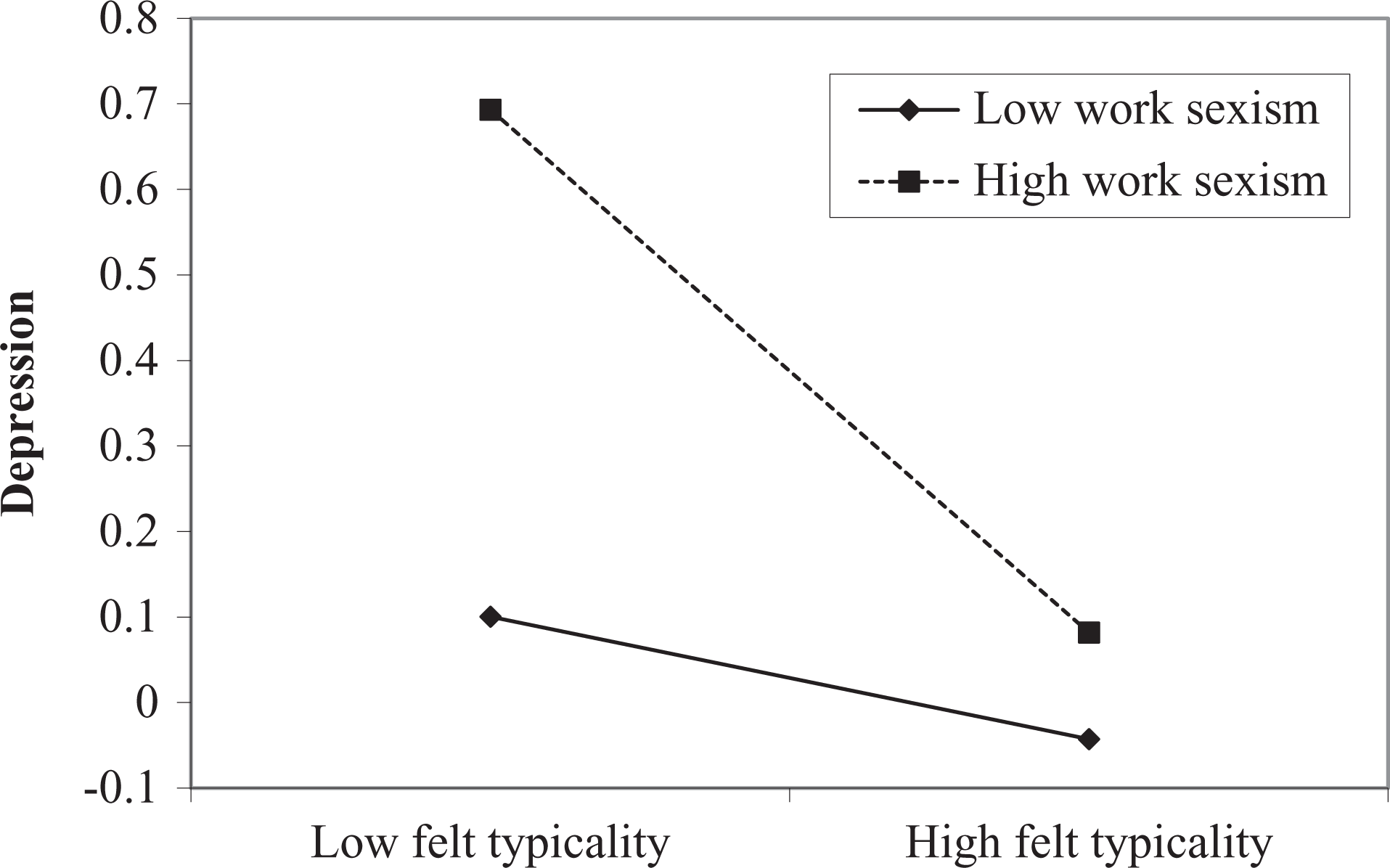
Influence of felt typicality on depression at low (-1 standard deviation (SD) from the mean) and high (+1 SD from the mean) levels of work sexism.
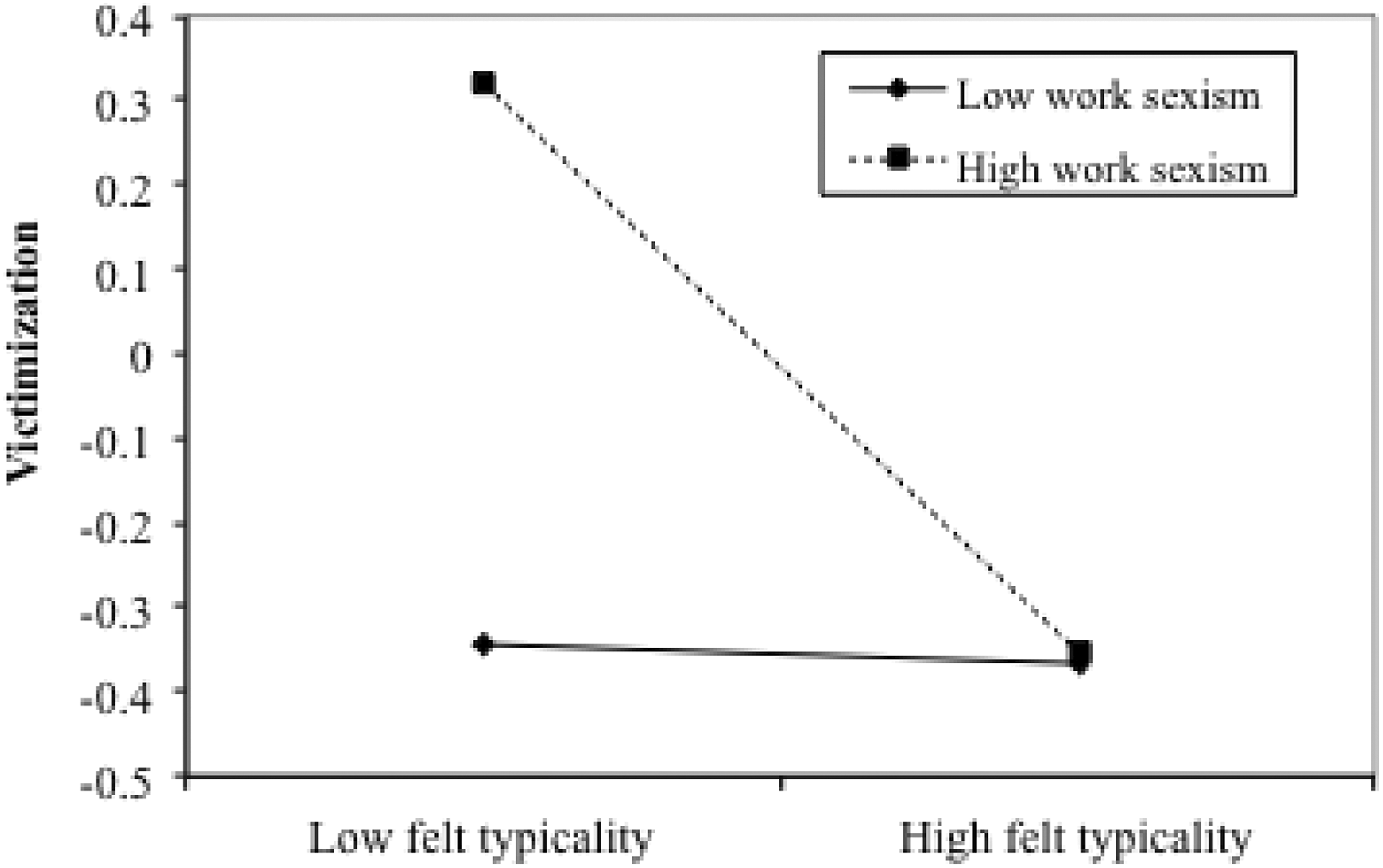
Influence of felt typicality on victimization at low (-1 standard deviation (SD) from the mean) and high (+1 SD from the mean) levels of work sexism.
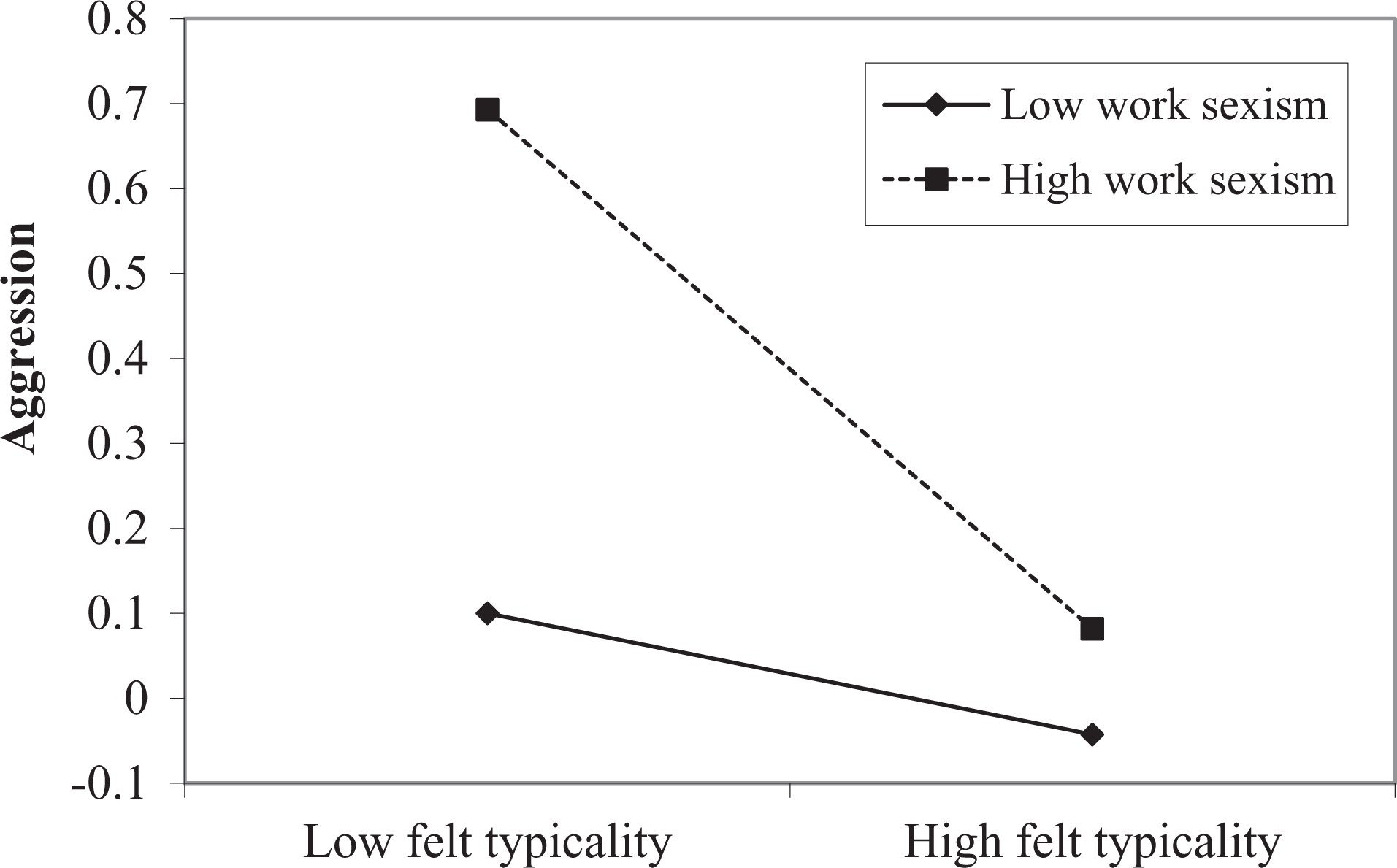
Influence of felt typicality on aggression at low (-1 standard deviation (SD) from the mean) and high (+1 SD from the mean) levels of work sexism.
Entity beliefs
Results indicated that after controlling for covariates and entity beliefs, on the second step felt typicality predicted higher self-esteem (β = 0.15, t = 2.30, p = 0.023) and peer social competence (β = 0.19, t = 2.98, p = 0.003). On the second step, entity beliefs (controlling for felt typicality) predicted greater aggression (β = 0.17, t = 2.82, p = 0.005). Only one interaction term predicted an adjustment variable. On step 5 the three-way interaction of gender × felt typicality × entity beliefs predicted peer social competence (t = -2.11, R2 Δ = 0.017, p = 0.037). This interaction was examined again using PROCESS and results indicated that the interaction of felt typicality × entity beliefs predicted peer social competence in boys (t = -2.17, p = 0.031) but not in girls (t = 0.738, p = 0.460). The simple slopes analysis indicated that as boys’ entity beliefs increased from low (-1 SD) to high (+1 SD) levels, the influence of felt typicality on peer social competence decreased in impact from strongly positive to null (β = 0.49, p = 0.002 and β = 0.09, p = 0.529, respectively). On the other hand, as girls’ entity beliefs increased from low (-1 SD) to high (+1 SD) levels, the influence of felt typicality on peer social competence increased, although neither effect was statistically significant (β = 0.12, p = 0.136 and β = 0.26, p = 0.122, respectively). Thus, as can be seen in Figure 4, felt typicality is beneficial to boys’ feeling accepted by their peers, but only when boys also endorse a fluid, incremental view of gender differences. This pattern of results runs counter to the hypothesis that strong entity beliefs heighten the impact of felt typicality on adjustment.
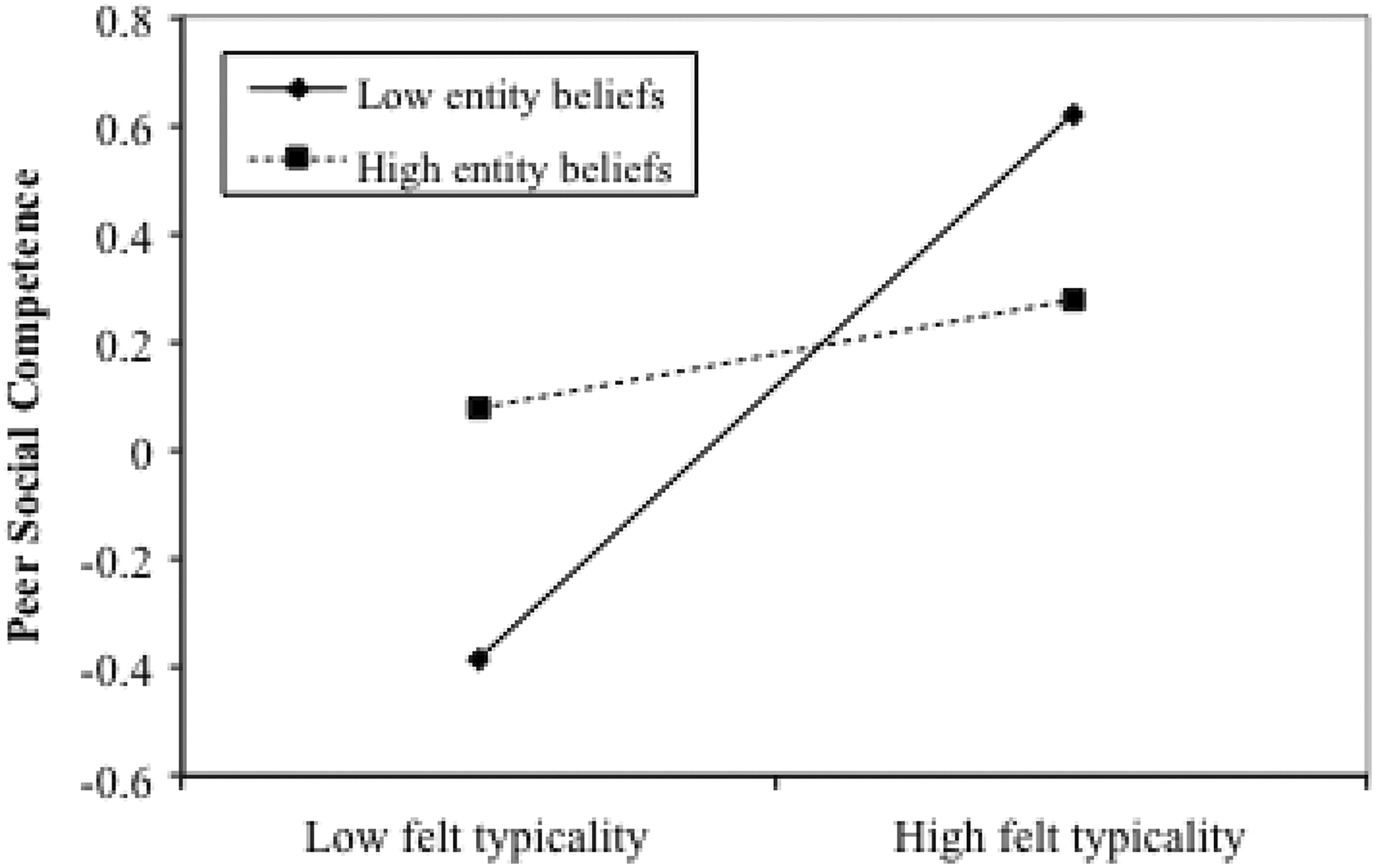
Influence of felt typicality on boys’ peer social competence at low (-1 standard deviation (SD) from the mean) and high (+1 SD from the mean) levels of entity beliefs.
Supplementary Analyses: Examining the Role of Age as a Moderator
Although age-dependent changes in the association between felt typicality and adjustment, or between gender-differentiating cognitions and adjustment were not hypothesized, we explored whether age moderates these associations. Hierarchical regression analyses were undertaken to examine the interactive effects of felt typicality and age on adjustment. Each adjustment measure served as the dependent variable in separate analyses. Parent education and gender were entered on the first step as controls. On the second step felt typicality and age were entered, and on the third step the two-way interaction of felt typicality × age was entered. Analyses were rerun replacing felt typicality with each of the gender-differentiating cognitions, to explore whether the association of gender-differentiating cognitions with adjustment is moderated by age. Significant interactions were further probed using PROCESS wherein the influence of the predictor on the criterion was examined for younger (-1 SD from the mean, i.e., 11.8 years and below) and older (+1 SD from the mean, i.e.,13.5 years and above) adolescents.
Results indicated that on step 3 felt typicality interacted with age to significantly predict self-esteem (p = 0.067) and depression (p = 0.010). In both these cases follow-up analyses revealed that felt typicality was associated with higher self-esteem and with lower depression, but only for older children (β = 0.30, p = 0.004, and β = -0.29, p = 0.005, respectively), not for younger children (β = 0.07, p = 0.295, and β = 0.02, p = 0.778, respectively).
Certain of the gender-differentiating cognitions also interacted with age to predict adjustment. Specifically, on step 3 age interacted with felt pressure to predict aggression (p = 0.026) and with work sexism to predict victimization (p = 0.017). Follow-up analyses indicated that these gender-differentiating cognitions are primarily problematic for younger children. As age increased from low (-1 SD) to high (+1 SD) levels, the association between felt pressure and aggression changed from positive (β = 0.18) to negative (β = -0.09), although neither association was statistically significant (p = 0.057 and p = 0.401, respectively). In a similar vein, work sexism predicted greater victimization only for younger children (β = 0.26, p = 0.004), not for older children (β = -0.01, p = 0.911).
Finally, we explored whether the interactive effects of felt typicality and gender-differentiating beliefs on adjustment (Hypothesis # 3) is further moderated by age. The hierarchical regression model described in the previous section was amended to replace interactions with gender with interactions with age. Thus, steps 1, 2, and 3 remained unchanged, the two-way interactions of felt typicality × age and a gender-differentiating belief × age were entered on step 4, and the three-way interaction of felt typicality × gender-differentiating belief × age was entered on step 5. The three-way interaction on step 5 was examined to explore whether age moderated the interactive effects of felt typicality and gender beliefs on adjustment.
Results indicated that victimization was predicted by the three-way interactions of felt typicality × felt pressure × age (p = 0.056) and felt typicality × work sexism × age (p = 0.087). Follow-up analyses revealed that in both cases felt atypicality was associated with higher victimization only for older children who reported high levels of felt pressure (β = -0.51, p = 0.005) and work sexism (β = -0.58, p < 0.001), respectively. This pattern of results provides further support for the gender self-discrepancy hypothesis, albeit only for older children.
In summary, this study shows that felt typicality positively influences Indian adolescents’ adjustment, although certain associations are qualified by gender and age. Specifically, felt typicality is associated with higher self-esteem in girls and in older children, with lower depression in older children, and with peer social competence for all Indian adolescents. Results also indicate that gender-differentiating cognitions are especially harmful for girls and for younger children. They are associated with greater victimization and aggression, and lower peer social competence in girls. Although an entity belief regarding gender differences was associated with increased aggression in boys, felt pressure was associated with lower depression in boys. It is important to note that older children were unaffected by felt pressure and work sexism, whereas younger children with strong felt pressure and work sexism also reported higher aggression and victimization, respectively. Further, several of the links between felt gender typicality and adjustment were moderated by children’s gender beliefs. Gender atypicality is especially problematic for older children who report strong sexist beliefs. And, incremental views about gender differences enable gender typical boys to feel accepted by their peers.
Discussion
Several studies have indicated that felt gender typicality bears positive implications for child and adolescent mental health, at least for white Caucasian-American children (Carver et al., 2003; Egan & Perry, 2001; Smith & Leaper, 2006; Yunger et al., 2004). The current study was designed to examine whether the influence of felt typicality on adjustment in replicated in Indian adolescents. We also explored whether gender schema (operationalized as strong gender-differentiating cognitions of felt pressure, work sexism, and entity beliefs) harm adolescents’ psychosocial adjustment. Finally, we examined whether gender schematic adolescents (i.e., those with strong gender-differing beliefs) are especially vulnerable to the effects of felt gender atypicality on adjustment and mental health, presumably due to painful gender self-discrepancies in their self-concepts.
Before we discuss the associations with adjustment, it is important to first note the demographic correlates of felt typicality and gender-differentiating cognitions in Indian adolescents. Aside from a positive association with parental education, felt gender typicality was not differentiated by age, religion, or gender, in Indian adolescents. Similar to studies in the US (e.g., Carver et al., 2003; Egan & Perry, 2001), felt pressure was negatively associated with age in Indian adolescents, supporting the perspective that strong felt pressure in adolescence might be non-normative (Menon et al., 2017). Several gender differences were seen, with Indian boys reporting greater felt pressure, work sexism, and entity beliefs, than Indian girls. These gender differences are similar to those reported in studies conducted in the US (e.g., Pauletti et al., 2017).
In many respects the associations between felt typicality and adjustment variables accord with findings reported with US children. Felt typicality was associated with higher peer social competence in both Indian girls and boys, and also with higher self-esteem in girls. These associations held true even after statistically controlling for demographic covariates and for each of the gender-differentiating beliefs. Supplementary analyses revealed further associations of felt typicality with depression and self-esteem, but these effects were limited to older children. The age-dependent associations suggest that gender typicality becomes increasingly more important to the psychosocial wellbeing of children as they mature and progress through middle school and into adolescence.
The examination of the associations between gender-differentiating beliefs and adjustment is an important contribution of this study, and speaks to Bem’s (1981) assertion that gender schema impact adolescent self-concept and adjustment. To our knowledge no prior study has examined the association between adolescents’ gender beliefs and their psychosocial well-being. It is relevant to note that the gender-differentiating beliefs measured in this study were not strongly intercorrelated, suggesting that the gender schema is not a unitary construct. As expected, aspects of the gender schema had a negative impact on adolescents’ adjustment, although the results differed by gender, age, and the specific gender-differentiating cognition being assessed.
Specifically, felt pressure, work sexism, and entity beliefs were each associated with victimization in Indian girls, with work sexism and entity beliefs also associated with greater aggression and lower peer acceptance, respectively, in this group. The negative impact of gender-differentiating cognitions on Indian boys’ adjustment was limited, with only entity beliefs associated with greater aggression. Unexpectedly, felt pressure appeared to be beneficial to Indian boys as it was negatively associated with boys’ depression. This result bears similarity with Corby et al.’s (2007) finding that Latino boys in the US who reported strong felt pressure were protected against victimization. Perhaps the positive affect that results from felt pressure in Indian boys has to do with patriarchal gender norms in Indian society, and with the higher social status accorded to boys in India, as endorsing cultural gender ideals in India favors mental health and well-being (Mahalingam & Balan, 2008; Mahalingam & Jackson, 2007; Yim & Mahalingam, 2006). The supplementary analyses indicated that certain of the associations between the gender-differentiating beliefs and adjustment were limited to younger children in India. Felt pressure and work sexism were associated with greater aggression and victimization in younger children. In fact, as age increased, the relationship between these gender-differentiating beliefs and adjustment ceased. Thus, it appears that during early adolescence, unlike felt typicality, which assumes greater salience with increasing age, gender-differentiating beliefs become less influential at impacting adolescent adjustment. These age-dependent associations might be attributed to maturation and cognitive development in adolescence. These results also indicate support for gender intensification during adolescence (Hill & Lynch, 1983), but only with regards to the growing importance adolescents themselves place on fitting into a gender collective.
We proposed that adolescents who feel gender atypical are especially likely to report distress when they hold traditional or rigid gender beliefs, owing to the self-discrepancy between their gender standards and their self-perceived typicality. The results generally supported this hypothesis as felt atypicality predicted more depression and aggression in Indian adolescents only when they also endorsed high work sexism. Further, felt atypicality predicted more victimization, but only for older children who also reported strong felt pressure or high work sexism. It is important to note that for adolescents who reported egalitarian gender beliefs, felt atypicality was not associated with these outcomes. Thus, feeling gender atypical is not inherently damaging; rather, it becomes so when accompanied by the endorsement of gender inequalities. This finding is of significance to parents, educators, and clinicians, as promoting gender egalitarian values might be especially beneficial for gender atypical children who are depressed or victimized. The results also indicated that the benefits of felt typicality for boys’ peer social competence was limited to those who also viewed gender differences as fluid rather than fixed. Taken together the results indicate that individuals who endorse gender equality and an incremental theory of gender differences are protected against the negative adjustment correlates of felt atypicality and are also better equipped to gain peer acceptance from felt typicality.
Although the results shed light on the adjustment correlates of gender identity in an international context, this study is not without its limitations. The cross-sectional research design precludes one from drawing conclusions about the direction of causality. We have interpreted the results as suggesting that felt gender typicality and gender-differentiated beliefs influence adjustment, but the reverse causal hypothesis cannot be ruled out (although longitudinal research in the US indicates greater support for the felt gender typicality to adjustment causal hypothesis, Yunger et al., 2004). Another limitation of this study is that both the predictor and criterion variables were measured using self-report scales, thus increasing mono-method bias. A longitudinal research design and the use of a variety of measurement techniques would remedy this issue. Finally, because this study does not include adolescents in another culture (for example, the US) as a point of comparison, we do not have empirical evidence to ascertain if Indian adolescents are any more or any less gender differentiating than those in other parts of the world. Future research may examine such sociocultural differences in the impact of felt typicality and gender beliefs on adjustment.
In conclusion, both felt gender typicality and gender-differentiating cognitions have implications for the self-concept and well-being of Indian adolescents. Results replicate previously reported benefits of felt typicality for adjustment and mental health, and also shed light on the harmful effects of gender-differentiating beliefs for adolescent girls and younger children. Importantly, results attest to the utility of examining the nature of adolescents’ gender beliefs when considering the impact of felt typicality on adjustment. Gender atypicality is harmful only to the extent that gender atypical adolescents also hold rigid gender beliefs and schema. Thus, gender egalitarianism might serve a protective function against the psychosocial disadvantages typically associated with gender atypicality.
Footnotes
Acknowledgements
We thank Sumita Dutta and Snigdha Dutta for their assistance with data collection. We thank the Principal and students of Modern School Vasant Vihar for their support of, and participation in, this research study.
Funding
The authors received no financial support for the research, authorship, and/or publication of this article.