




Abstract
This study investigated child-reported family obligation values (FOVs) in early adolescence as a moderator for associations between mother-, father-, and child-reported parental psychological control (PC) in early adolescence and child-reported internalizing and externalizing symptoms in middle and late adolescents in the Philippines. Data were drawn from three waves of a larger longitudinal study, when the Filipino youth were in late elementary grades (age M = 12.04, SD = 0.58; N = 91), in junior high school (age M = 15.03, SD = 0.59; N = 80), and in senior high school (age M = 17.00, SD = 0.59, N = 75). Results revealed that high levels of FOV buffered the positive associations between mother-reported PC and internalizing symptoms in late adolescence, and between child-reported PC and internalizing symptoms in middle and late adolescence, as well as externalizing symptoms in late adolescence. Conversely, low levels of FOV exacerbated the associations between mother- and child-reported PC on externalizing symptoms in late adolescence. Findings suggest that FOV may shape the meaning and influence of PC for children and adolescents in contexts where familial obligations are normative and important.
Keywords
Parenting behaviors are known to affect adolescent adjustment depending on cultural factors in the family (e.g., Fung & Lau, 2012). Rejection and hostility cause poorer outcomes in adolescents, but this effect may be mitigated when perceived as care or support for the family, especially in family-oriented cultures (Lansford et al., 2018). Such findings provide insights on how cultural and family values nuance the impact of various parenting behaviors, particularly for adolescents in non-Western and Global South contexts. Recent studies suggest that family obligation values (FOVs), or the psychological sense of importance in fulfilling duties for the family, can protect adolescents from negative outcomes through fostering better relationships with their parents (e.g., Son et al., 2022; Yan et al., 2022). However, there remains a dearth of longitudinal studies exploring FOVs as a moderator for negative parenting behaviors like psychological control.
Parental psychological control is exemplified in acts of insidiously manipulating the thoughts and feelings of the child to make them behave as desired (Barber, 1996; Silk et al., 2003). Such parenting behaviors are not uncommon in family-oriented cultures such as the Philippines where parental authority and child obedience are valued (Alampay, 2014). However, psychological control has long been associated with higher levels of internalizing symptoms, or inner-directed distress (e.g., anxiety, depression), and externalizing symptoms, or under controlled behaviors (e.g., aggression, delinquency) in children across cultures (e.g., Bornstein et al., 2017; Luebbe et al., 2018; Pesigan et al., 2014). Long-standing experience with psychological control could have enduring implications on adolescents who are also dealing with biological, cognitive, and social changes. Thus, there is a need to understand variables and mechanisms that protect youth from the negative impacts of parental psychological control.
This study examines whether FOVs moderate the long-term risks of parental psychological control, measured in early adolescence, on the development of internalizing and externalizing symptoms in urban Filipino middle and late adolescents. In so doing, this study contributes to literature on longitudinal effects of parental psychological control contingent on the level of FOVs, especially in interdependent cultures that emphasize family relationships.
Parental Psychological Control and Adolescent Adjustment
Parental psychological control is evident when parents control the thoughts and feelings of their child in subtle yet harmful ways to conform with their expectations (Barber, 1996; Silk et al., 2003). This may include creating feelings of guilt for the child, withdrawing love and affection, and worsening the relationship quality between the parent and child when the child does not behave as desired. Such a negative environment puts the child at risk for developing internalizing and externalizing symptoms, as their autonomy and volition are hindered. Based on Deci and Ryan’s (1985) Self-Determination Theory (Moller et al., 2007; Ryan & Deci, 2000), one of the fundamental needs of a person to achieve psychological well-being is the capacity to exercise autonomy and self-volition. Since parental psychological control limits this, children with psychologically controlling parents are also likely to respond with more internalizing and externalizing symptoms (e.g., Soenens & Vansteenkiste, 2010). Indeed, recent studies have found both direct and indirect relations between parental psychological control and internalizing and externalizing symptoms among adolescents in both individualistic and interdependent cultures (e.g., Bornstein et al., 2017; Gao et al., 2015). Longitudinal effects from early exposures to psychological control have also been reported (He et al., 2019; Rogers et al., 2020; Zhu & Shek, 2021).
Despite these, the negative effects of parental psychological control might be buffered, reversed, or nonexistent in some familial cultural contexts. When such parenting practice is interpreted as a form of concern, there may be no relation between parental psychological control and internalizing and externalizing symptoms, as found in a study in Hong Kong (Fung & Lau, 2012). Furthermore, the effects of psychological control may also vary based on the quality of the relationship between the parent and the child (Murray et al., 2014). Theories have emphasized the importance of culture and family in understanding outcomes, which occur in a system of relations (e.g., Kerr & Bowen, 1988; Rosa & Tudge, 2013). Thus, although some studies in interdependent cultures have found similar negative effects of parental psychological control, the potential buffering effect of cultural and familial values cannot be fully disregarded.
FOVs as a Moderator
FOVs involve duties that are expected and considered important for the sake of the family (Fuligni et al., 1999; Fuligni & Pedersen, 2002). These duties may include respecting elder family members, spending time with siblings and relatives, and assisting the family by running errands or caring for another family member. As a psychological sense of importance, FOVs guide the thoughts, feelings, and motivation toward fulfilling duties (Telzer et al., 2014). These may not translate to actual behaviors associated with the duties but still influence how the child and other family members respond to the presence, absence, and quality of these behaviors. In interdependent cultures, these values may help nurture family closeness and well-being (e.g., Alampay, 2014; Telzer et al., 2014).
The aforementioned interdependent nature of FOVs makes it a possible moderator of the effects of various parenting behaviors, including parental psychological control. The negative outcomes of parenting behaviors can be buffered or become positive if the child perceives the parenting behavior to be a norm in their culture (Deater-Deckard & Dodge, 1997). Relatedly, the Interpersonal Acceptance-Rejection Theory (Rohner & Lansford, 2017; Rothenberg et al., 2021) posits that the sociocultural context of the parent and the child affects their perception of accepting and rejecting behaviors. Furthermore, the child may cope with rejection by depersonalizing hurtful events. When parental psychological control is viewed in the context of FOVs that emphasizes care for the well-being of the family, then less internalizing and externalizing symptoms may ensue (see Figure 1).
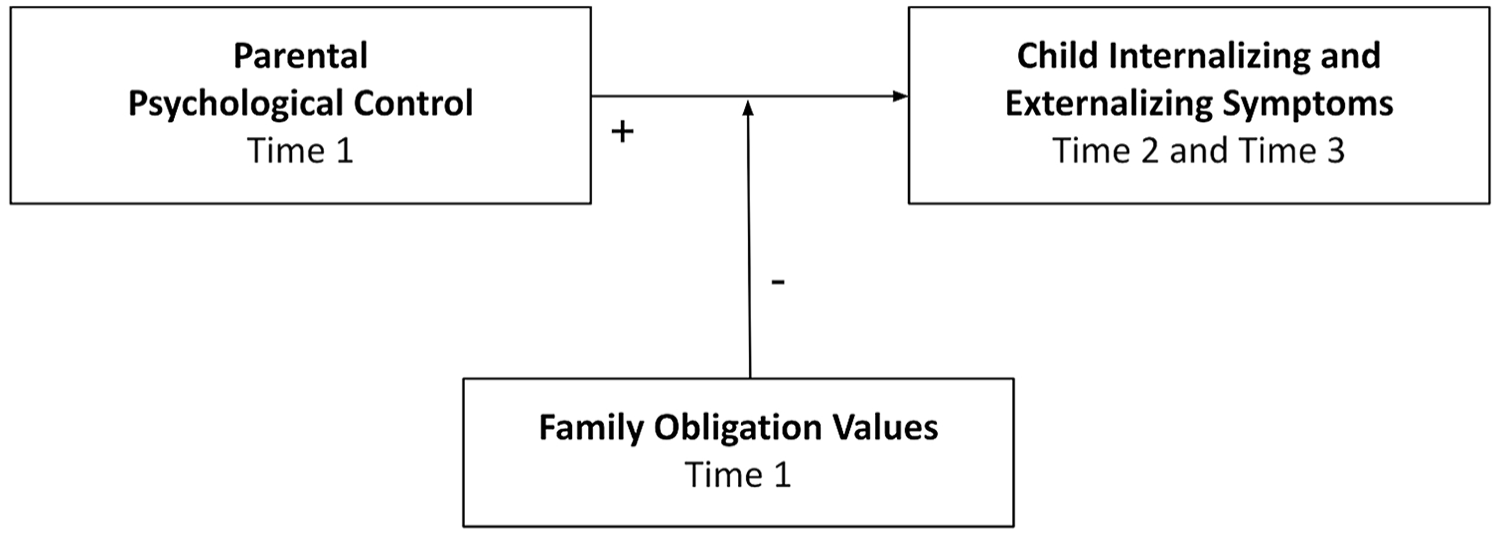
Family Obligation Values (Time 1) Hypothesized to Buffer the Positive Associations Between Psychological Control (Time 1) and Internalizing and Externalizing (Times 2 and 3).
There appears to be a dearth in studies that examine FOVs as a moderator for parental psychological control, but some studies suggest the possibility of this relationship. Lansford et al. (2016) found that among mothers, fathers, and young children in nine countries including the Philippines, higher levels of FOVs were associated with parenting behaviors that were more controlling and authoritarian. This suggests the potential normativeness of parental control in the context of FOVs. Moreover, adolescents have been found to have better adjustment when FOVs interact with negative factors such as deviant peer relationships (Germán et al., 2009) and high levels of stress (Corona et al., 2017). Besides these, improvements in adolescent adjustment were found through positive parent–child relationships characterized by warmth, support, and communication, which are associated with FOVs (Son et al., 2022; Stein et al., 2020; Yan et al., 2022). Indeed, Jocson (2020) found that among Filipino fathers, the heightened importance of family welfare and harmony, known as familism, had positive associations with parental warmth and negative associations with parental rejection when the family experienced low risks in living conditions. Altogether, these suggest the potential buffering effect of FOVs on the negative effects of parental psychological control.
Filipino Adolescents and Their Parents
In the Philippines, parental psychological control may be more normative for adolescents who hold high levels of FOVs. Adolescents value family obligations, cohesiveness, and respect parental authority, while developing autonomy (Alampay, 2014). They accept that parents continue to have rules and control over them, albeit decreasing, until adulthood. This serves as a means for parents to continue to provide guidance and support to their children, and the children likewise continue to seek advice from their parents (Alampay, 2014; Alampay & Rothenberg, 2021). While high expectations from family obligations can make adolescents vulnerable to internalizing and externalizing symptoms, their sense of importance toward assisting their family also gives them a sense of fulfillment, purpose, and identity (Alampay, 2014; Garo-Santiago, 2009). Thus, FOVs may serve to buffer the effects of parental psychological control on internalizing and externalizing symptoms.
Although similarities exist in family values, some differences are apparent in the parenting behaviors of Filipino mothers and fathers, which could translate to differences in children’s experiences of psychological control from each parent. Mothers are expected to carry traditional roles of being the primary caregiver to their children even in instances when they are the main provider for the family or are working abroad (Alampay, 2014; Ballaret & Lanada, 2021). On the other hand, fathers are expected to financially support the family. As a result, children are likely to spend more time and develop emotional bonds with their mothers than fathers as they are growing up. While both mothers and fathers in the Philippines have been found to endorse authoritarian attitudes, mothers were found to have relatively more progressive attitudes compared to fathers (Alampay & Jocson, 2011). Nevertheless, mothers have also been found to engage in harsher and more rejecting parenting behaviors than fathers (Jocson, 2021). Although these parenting behaviors may be associated with psychological control, to date, there are no studies that have specifically examined differences in psychological control among Filipino mothers and fathers.
The Current Study
Studies suggest that FOVs can protect adolescents from developing internalizing and externalizing symptoms (e.g., Milan & Wortel, 2015; Son et al., 2022). However, few have examined FOVs as a moderator of parental psychological control, which has been associated with more internalizing and externalizing problems. The current study examines these associations and tests the following hypotheses: (1) parental psychological control in early adolescence (Time 1) is positively associated with internalizing and externalizing symptoms in middle and late adolescence (Times 2 and 3) and (2) FOVs moderate these positive associations. Figure 2 shows the specific relations tested using child-, mother-, and father-reported psychological control. Separate models are tested for the different reporters of psychological control and for Time 2 and 3 outcomes.
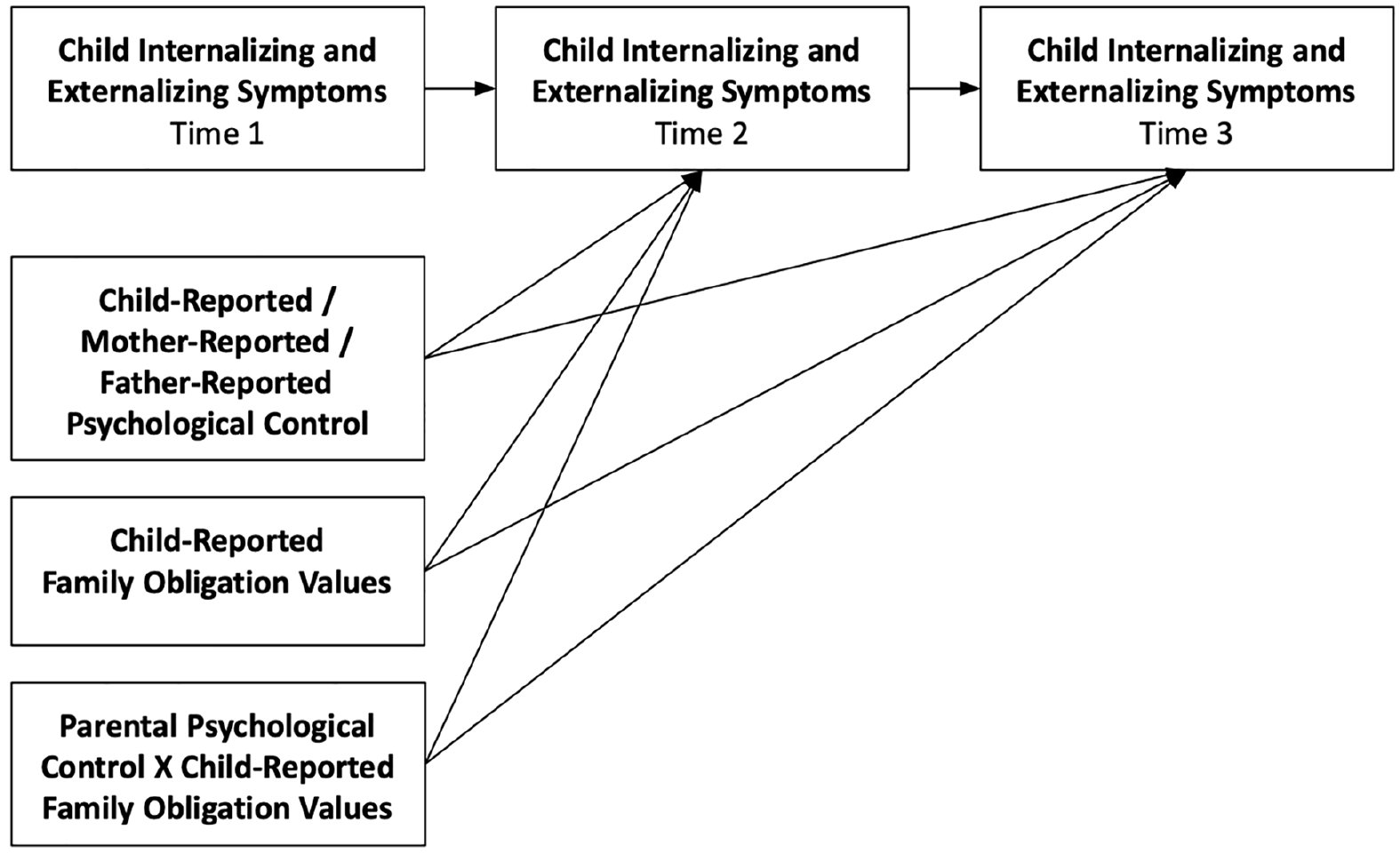
Specific Relations Tested in the Study.
Method
Participants
The Philippine data of the Parenting Across Cultures longitudinal research was used for this study. Participants were recruited from 11 schools in Quezon City, the most populous city in Metro Manila, through purposive stratified sampling to ensure that the distribution of socioeconomic status was representative of the city. Data were drawn from Wave 5 (Time 1) when the children were early adolescents (Mage = 12.04, SDage = 0.58); Wave 8 (Time 2) when children were in middle adolescence (Mage = 15.03, SDage = 0.59); and Wave 10 (Time 3) or during late adolescence (Mage = 17.00, SDage = 0.59). At Time 1, the data comprised 91 families with 88 mothers (Mage = 42.01; SDage = 6.53), 77 fathers (Mage = 44.00; SDage = 7.57), and 91 children (53% female). Among the parents, 86.8% indicated that they were married; the rest were never married, separated, or widowed. In terms of income, 42.9% reported having low income, 34.1% were reportedly middle income, 22.0% reported having high income, and 1.0% did not specify.
The attrition of participants resulted in the decreasing sample sizes across waves. At Time 2, there were 78 mothers, 60 fathers, and 80 children (51% female). At Time 3, there were 73 mothers, 57 fathers, and 75 children (51% female). As Hayes’ PROCESS macro utilizes complete data to perform moderation analyses, respondents with missing data for the focal variables in any of the time points were excluded. A total of 15 mothers, 13 fathers, and 16 children dropped out from Time 1 and Time 2. Independent t-tests showed that the respondents who dropped out did not significantly differ in the focal variables from the remaining sample in Time 3.
Procedures and Measures
All measures were translated to Filipino and back translated to English by different members of the research team. All researchers were fluent in both languages. Translations were refined and reviewed item-by-item via pilot tests and team discussions to ensure the cultural appropriateness, validity, and equivalence in meanings (Erkut, 2010; Maxwell, 1996; Peña, 2007).
Surveys were conducted by trained graduate student research assistants. Parents were given the option to answer through structured oral interviews or self-administered paper surveys; children responded via oral interviews until Time 3 when they were also given the option to answer independently. In the structured interviews, each question was read out loud to the participants who were provided with visual aids containing the response scales. Each interview lasted about 1–2 hr. After completing the interviews, participants were given gift certificates as tokens for their time and participation. Procedures were reviewed and approved by the Ateneo de Manila University research ethics committee (ADMUREC_15_009CA5).
Parental Psychological Control
Adolescents, mothers, and fathers responded to seven items from a measure by Silk et al. (2003) at Time 1. Children indicated the extent of their agreement with each statement describing their parents or guardians (e.g., “My parents tell me that their ideas are correct and that I should not question them”). Parents responded to parallel statements and asked the extent to which each statement described them (e.g., “I tell my child that my ideas are correct and that he/she should not question them”). Participants responded using a 4-point scale, ranging from 1 (strongly disagree) to 4 (strongly agree). The mean score for all the items was used for analysis, with a higher score indicating higher levels of parental psychological control. The scale showed acceptable Cronbach’s alpha reliabilities (child α = .63; mother α = .62; father α = .68) and had established validity (Silk et al., 2003).
Family Obligation Values
Eighteen items from a scale by Fuligni et al. (1999) were administered to adolescents at Time 1. Eleven items asked about the frequency that the child is expected to spend time with and assist the family (e.g., “Spend time with your family on weekends”), which is rated on a scale of 1 (almost never) to 5 (almost always). The remaining seven items were on the perceived importance for the adolescent of doing different acts of respect and service for the family (e.g., “Do well for the sake of the family”), which is rated on a scale of 1 (not important) to 5 (very important). The mean score for all items was used, with a higher score indicating higher levels of FOVs. The scale has been used in multi-country study that includes the Philippines and demonstrated validity (Lansford et al., 2016). It showed a good level of reliability among the adolescent participants in Time 1 (Cronbach α = .84).
Internalizing and Externalizing Symptoms
Adolescents reported on their internalizing and externalizing behaviors using the anxiety/depression and externalizing subscales of the Achenbach (1991) Child Behavior Checklist (CBCL) in Times 1 and 2, and the Young Adult Self-Report (YASR) in Time 3. The CBCL anxiety/depression subscale included 14 items (e.g., “I feel lonely”) and 17 items for YASR at Time 3 (e.g., “I worry about my future”). The CBCL externalizing symptoms subscale had 29 items at Times 1 and 2 (e.g., “I am mean to others”) and 27 items for YASR at Time 3 (e.g., “I get in many fights”). Children were asked to rate each statement from a scale of 0 (not true) to 2 (very true or often true). Sums were obtained, with higher scores indicating more internalizing and externalizing symptoms. The scale has been used in multi-country study that includes the Philippines (Lansford et al., 2016), and its validity has been well documented in studies (Ebesutani et al., 2010). Good Cronbach’s alpha reliability scores were obtained for internalizing (Time 1 α = .86; Time 2 α = .87; Time 3 α = .90) and externalizing symptoms (Time 1 α = .85; Time 2 α = .85; Time 3 α = .86).
Data Analysis Procedure
Moderation analysis was conducted using the PROCESS v4.1 macro package for SPSS (Hayes, 2018). Child-reported internalizing and externalizing symptoms in early adolescence (Time 1) was used as covariates for associations between parental psychological control and symptoms in middle adolescence (Time 2); likewise, symptoms at Times 1 and 2 were included as covariates for relations with symptoms in late adolescence (Time 3). Overall, six moderation models were tested, with three models for internalizing symptoms and three for externalizing symptoms.
Results
Preliminary Analyses
Descriptive results (Table 1) indicate that the mean scores for parental psychological control (PC) across informants were about in the middle of the scale of 1–4, with slightly higher scores for children. The mean for child-reported FOV is approximately 4 in a 5-point scale, consistent with expectations of the importance of familial obligations in Filipino families. Means for internalizing symptoms show slight increases over time.
Means and Standard Deviations of Variables.

Note. LPS: lowest possible score; HPS: highest possible score. Parental psychological control and family obligation values were assessed at Time 1.
Table 2 shows the bivariate correlations of the study variables. Mother-reported PC was negatively associated with internalizing symptoms in middle and late adolescence. FOV was likewise negatively associated with internalizing and externalizing symptoms.
Bivariate Correlations of the Variables.
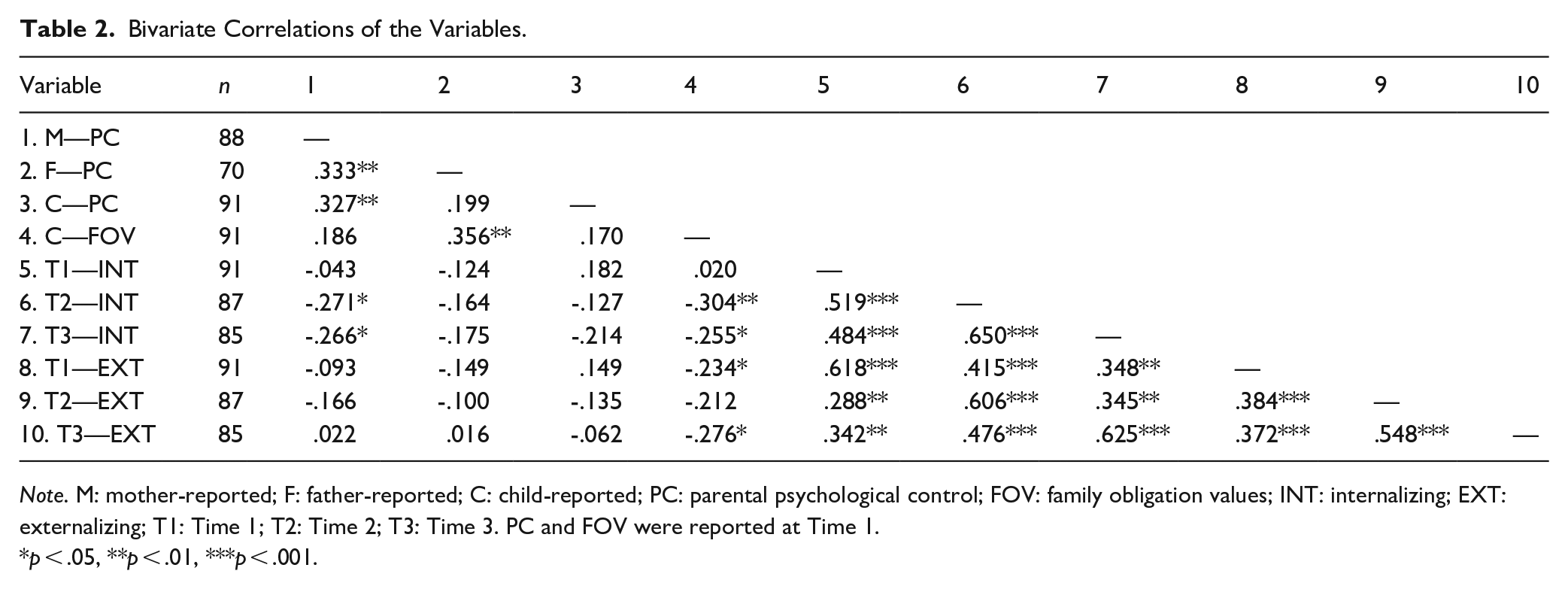
Note. M: mother-reported; F: father-reported; C: child-reported; PC: parental psychological control; FOV: family obligation values; INT: internalizing; EXT: externalizing; T1: Time 1; T2: Time 2; T3: Time 3. PC and FOV were reported at Time 1.
p < .05, **p < .01, ***p < .001.
Primary Analyses
Assumptions for moderation analyses were met based on homoscedasticity and linearity of data, independence of errors based on the Durbin-Watson estimates, and absence of multicollinearity. There were slight deviations from normality based on the normal probability plot and histogram of the main variables (i.e., PC, FOV, internalizing, externalizing).
Internalizing Symptoms
Results of the regression analyses are summarized in Table 3. In the model of mother-reported PC, significant positive associations were found between PC and child-reported FOV and internalizing symptoms at Time 3. Moreover, FOV significantly buffered the positive association between PC and child-reported internalizing at Time 3, B = −7.55, SE = 2.49, p < .01 (95% CI = [−12.51, −2.58]). Simple slopes analysis revealed that mother-reported PC was significantly associated with less child-reported internalizing symptoms at high levels of child-reported FOV, B = −6.47, SE = 2.15, p < .01 (95% CI = [−10.77, −2.18]). There were no significant associations between PC and internalizing problems when the child reported low or average levels of FOV. The interaction effect is illustrated in Figure 3.
Regression Results for Internalizing Symptoms.
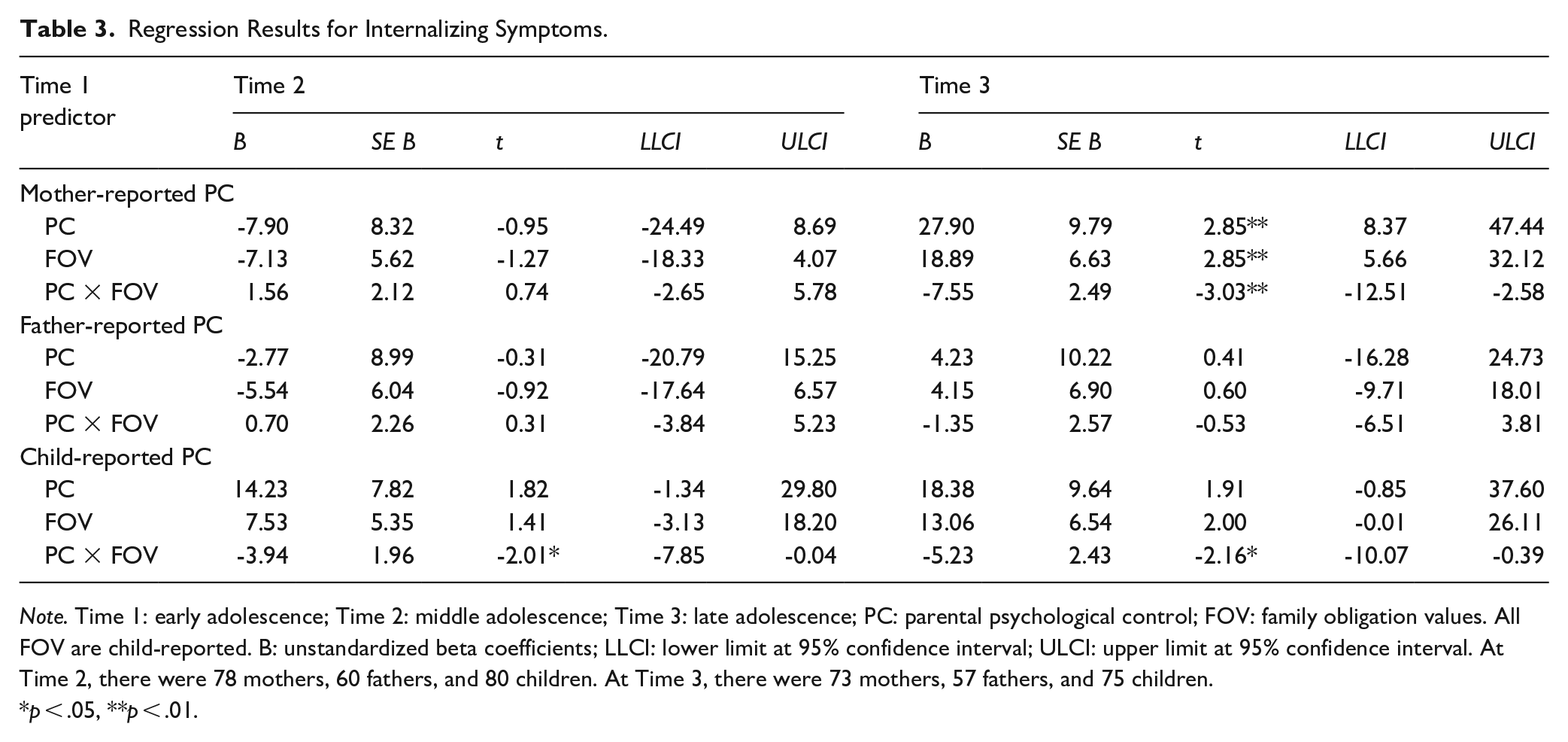
Note. Time 1: early adolescence; Time 2: middle adolescence; Time 3: late adolescence; PC: parental psychological control; FOV: family obligation values. All FOV are child-reported. B: unstandardized beta coefficients; LLCI: lower limit at 95% confidence interval; ULCI: upper limit at 95% confidence interval. At Time 2, there were 78 mothers, 60 fathers, and 80 children. At Time 3, there were 73 mothers, 57 fathers, and 75 children.
p < .05, **p < .01.

Simple Slopes Analysis for Mother-Reported Psychological Control in Early Adolescence (Time 1) and Internalizing in Late Adolescence (Time 3). T1: Time 1 (early adolescence); T3: Time 3 (late adolescence); PC: parental psychological control; INT: internalizing. N = 73.
In the child-reported PC models, significant moderation effects were found in Time 2 as well as Time 3. Simple slopes analysis (Figure 4) revealed that at high levels of child-reported FOV, child-reported PC was significantly associated with fewer internalizing symptoms in Time 2, B = −3.72, SE = 1.56, p < .05 (95% CI = [−6.82, −0.62]), and Time 3, B = −5.45, SE = 1.94, p < .01 (95% CI = [−9.33, −1.57]). When the child reported low or average levels of FOV, there were no significant associations between PC and internalizing outcomes. No significant associations were found between PC, FOV, and internalizing. Likewise, no significant effects were found in father-reported PC models.

Simple Slopes Analysis for Child-Reported Psychological Control in Early Adolescence (Time 1) and Internalizing in Middle and Late Adolescence (Time 2 and 3). T1: Time 1 (early adolescence); T2: Time 2 (middle adolescence); T3: Time 3 (late adolescence); PC: parental psychological control; INT: internalizing. N = 80 at Time 2, N = 75 at Time 3.
Externalizing Symptoms
In the model of mother-reported PC, FOV also buffered the positive associations between PC and externalizing symptoms in Time 3 (see Table 4). Simple slopes analysis (Figure 5) showed that mother-reported PC was significantly associated with higher child-reported externalizing symptoms at Time 3, when the child had earlier reported low levels of FOV, B = 4.92, SE = 1.81, p < .01 (95% CI = [1.30, 8.54]). A significant positive association was also found between mother-reported PC and externalizing at Time 3.
Regression Results for Externalizing Symptoms.

Note. Time 1: early adolescence; Time 2: middle adolescence; Time 3: late adolescence; PC: parental psychological control; FOV: family obligation values. All FOV are child-reported. B: unstandardized beta coefficients; LLCI: lower limit at 95% confidence interval; ULCI: upper limit at 95% confidence interval. At Time 2, there were 78 mothers, 60 fathers, and 80 children. At Time 3, there were 73 mothers, 57 fathers, and 75 children.
p < .05, ***p < .001.
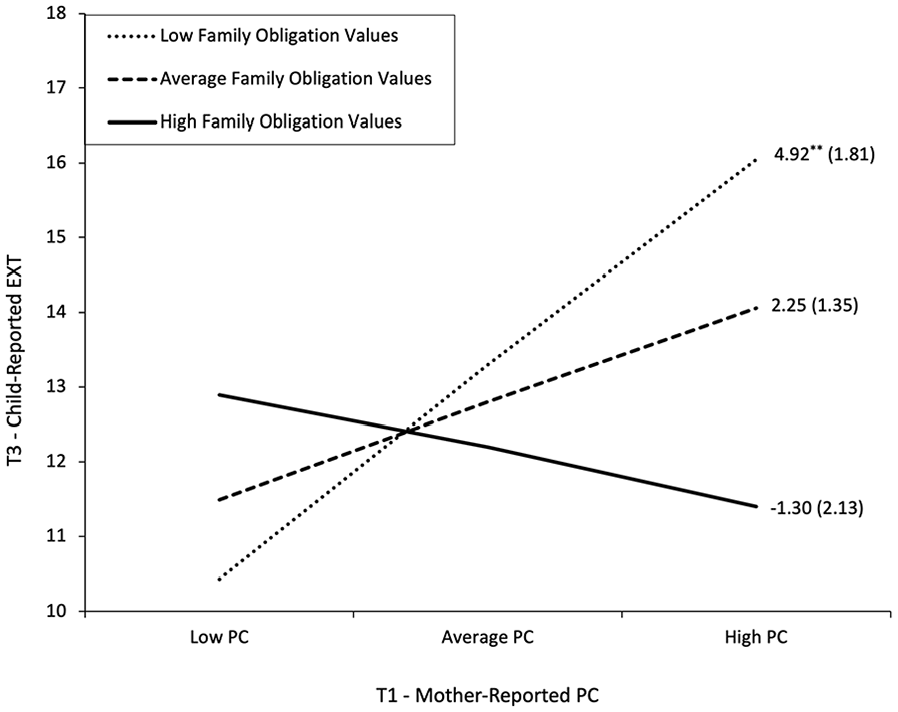
Simple Slopes Analysis for Mother-Reported Psychological Control in Early Adolescence (Time 1) and Externalizing in Late Adolescence (Time 3). T1: Time 1 (early adolescence); T3: Time 3 (late adolescence); PC: parental psychological control; EXT: externalizing. N = 73.
Similarly, a significant moderation effect was found in Time 3 in the child-reported PC model. Based on the simple slopes analysis (see Figure 6), child-reported PC was significantly associated with less externalizing in Time 3 when they had reported high levels of FOV, B = −4.75, SE = −2.70, p < .01 (95% CI = [−8.26, −1.24]). At low levels of FOV, however, PC was significantly associated with more externalizing, B = 5.18, SE = 1.67, p < .01 (95% CI = [1.85, 8.50]). Significant positive associations were found between child-reported PC and externalizing in Time 3, and child-reported family FOV and externalizing in Time 3.
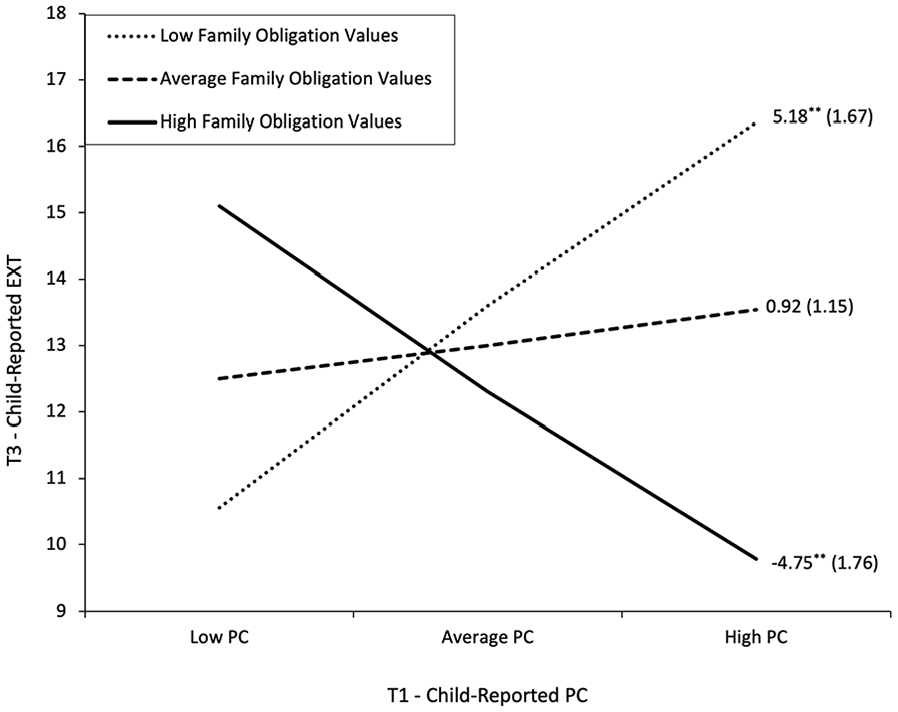
Simple Slopes Analysis for Child-Reported Psychological Control in Early Adolescence (Time 1) and Externalizing in Late Adolescence (Time 3). T1: Time 1 (early adolescence); T3: Time 3 (late adolescence); PC: parental psychological control; EXT: externalizing. N = 75.
No significant effects were found for the model of father-reported PC.
Discussion
This study examined child-reported FOVs during early adolescence (Time 1) as a moderator for longitudinal links between mother-, father-, and child-reported parental psychological control in early adolescence (Time 1), and child-reported internalizing and externalizing in middle (Time 2) and late adolescence (Time 3). As hypothesized, mother-reported psychological control in early adolescence was associated with more child-reported internalizing and externalizing in late adolescence, and child-reported psychological control was associated with more externalizing in late adolescence. The positive associations are consistent with previous studies that found negative effects of parental psychological control over time (e.g., Bornstein et al., 2017; Luebbe et al., 2018). These also support arguments regarding adolescents’ need for autonomy and volition to achieve better well-being as posited in the Self-Determination Theory (Ryan & Deci, 2000). Since psychological control acts to undermine the autonomous motivation of the adolescent, particularly in this period when they are consolidating their sense of self and identity, then this parenting behavior increases the risk of emotional and behavioral issues. For example, adolescents who pursue their own interests but experience disapproval, guilt induction, or love withdrawal from parents may internalize or externalize. Notably, there was no significant association in some models for middle adolescence and late adolescence. This is contrary to expectations and may be due to the presence of FOVs, as will be discussed subsequently.
In line with the second hypothesis, high levels of FOVs buffered the effects of mother-reported psychological control on internalizing symptoms in late adolescence, and child-reported parental psychological control on internalizing symptoms in middle and late adolescence as well as externalizing symptoms in late adolescence. Conversely, low levels of FOVs exacerbated the positive associations between mother- and child-reported parental psychological control and externalizing symptoms in late adolescence. The buffering effects of FOVs affirm the Interpersonal Acceptance-Rejection Theory (Rohner & Lansford, 2017) and other contextual models that highlight how cultural nuances in the family may shape the child’s interpretation of rejecting parenting behaviors (e.g., Deater-Deckard & Dodge, 1997). FOVs involve the devotion of time and support for the family, which may also nurture family closeness and well-being (e.g., Alampay, 2014; Stein et al., 2020; Telzer et al., 2014). Perhaps high levels of FOVs can shape the interpretation and influence of parental psychological control in the context of care for the family’s well-being. For example, parents’ guilt induction, cold shoulder, and silent treatment when the adolescent fails in school may be understood by the adolescent as part of parents’ desire that they do well for the sake of the family. Another possibility is that the child reports less internalizing and externalizing symptoms even with negative parenting as they understand the value of responsibility toward the family and performing duties expected of them by the family (see Telzer et al., 2015). Thus, high levels of FOVs protected the adolescents from the negative influence of parental psychological control.
On the other hand, low levels of FOVs exacerbated the positive associations between mother- and child-reported parental psychological control in early adolescence and externalizing symptoms in late adolescence. This suggests that adolescents may be more likely to externalize when their autonomy is hindered by their psychologically controlling parents, particularly in the absence of the sense of importance of familial obligations. These add support to previous studies that suggest lower levels of FOVs to be associated with more externalizing symptoms (e.g., Crockett et al., 2024; Telzer et al., 2014). Lower levels of FOVs may hinder opportunities for adolescents to feel connected to and communicate with the family (Bustos & Santiago, 2023; Telzer et al., 2014), which could otherwise help them recast or make sense of the negative parenting behaviors they experience. In spending less time fulfilling responsibilities or engaging in activities with family, these adolescents may also receive less support and advice from family members. As they continue to experience psychologically controlling parenting behaviors, they may become more vulnerable to acting out of anger or frustration, seeking attention, engaging in risky activities, and being negatively influenced by peers. Notably, the exacerbating effects of low levels of FOVs during early adolescence were not found with internalizing symptoms in middle and late adolescence. This finding is contrary to expectations from literature (e.g., Bustos & Santiago, 2023; Telzer et al., 2015; Tsai et al., 2020) and warrants further investigation.
Interestingly, significant longitudinal associations were mostly found in late adolescence. This may partly be because it is a time of transition to young adulthood, when the roles of psychological control and family obligations are particularly pertinent. Adolescents may experience greater responsibilities while continuing with their identity seeking, making life decisions about education and work, and seeking more autonomy as they continue fulfilling family obligations (Alampay, 2014; Arnett et al., 2014; Shek et al., 2020). Nevertheless, their values may also help them continually feel close to their family, derive a sense of purpose about their lives, and make sense of their earlier negative experiences with their parents (Telzer et al., 2015). By late adolescence, they may have developed more cognitive capacity for self-control and self-regulation to minimize impulsive and risky behaviors than during early and middle adolescence (Casey et al., 2011). This may enable them to better make sense of the FOVs they experienced earlier, view it alongside psychological control, and engage in less internalizing and externalizing. Together, these could also explain the complexity of the results wherein the variables by themselves were found to be associated with more internalizing and externalizing, but in combination, FOVs played a significant role as a moderator for parental psychological control in some models in late adolescence.
The consistency of effects from the models of mother- and child-reported psychological control is also worth noting. These are expected as mothers are conventionally more involved in child rearing while fathers focus more on working to support the economic needs of the family (Alampay, 2014; Ballaret & Lanada, 2021). Thus, children’s experiences of control and FOVs may come more from their interactions with their mothers. Notably, father-reported psychological control did not show any significant associations with the moderator or outcome variables. However, the child-reported variable did not ask about mothers and fathers separately, so we do not know the extent to which the parenting behaviors were actually experienced from fathers. Moreover, mother- and father-reported psychological control were significantly positively associated with each other, suggesting cultural beliefs that are shared and expressed by both parents, especially in interdependent familial contexts.
Altogether, the findings of this study imply the need to understand cultural contexts in the family to unpack the effects of parental psychological control and FOVs on the development of internalizing and externalizing symptoms in adolescence. The results nuance the existing literature and demonstrate how culturally normative family factors interact to magnify or diminish negative outcomes in adolescent adjustment. Researchers and practitioners are encouraged to examine parental psychological control and FOVs together as well as separately and in the context of other culturally significant variables toward understanding and minimizing adolescent distress and behavior problems. For instance, future research may further examine the cultural meanings and interactions of parenting behaviors such as warmth, support, communication, and control, which are typically defined from a Western perspective. Results likewise suggested that FOVs by themselves may have negative aspects, even in the Philippine context where they are normative, and thus should be examined further. From a practical standpoint, the results indicate that framing parenting behaviors in the context of important family or cultural values may imbue those behaviors with more positive meaning. Parents and adolescents may be helped to reflect on and communicate about these underlying values so as to buffer negative effects and enhance positive outcomes for adolescents. Despite the protective effects of FOVs, this study is among many others that find psychologically controlling parenting to be a negative practice which should be discouraged through interventions.
Limitations and Recommendations
While this study used a longitudinal and multi-informant design, the results must be considered in the context of its limitations. First, the study used a limited sample size drawn from an urban area in the Philippines; thus, findings are not generalizable to the broader Filipino population. Future researchers may consider a larger sample that represents Filipino youth and parents from different areas in the country. Second, the use of regression-based moderation analysis only indicates associations but not causal relations. However, the longitudinal design allows relatively stronger inferences about the associations between earlier behaviors and later outcomes. Third, the measures for FOVs and adjustment were only based on child reports. In the future, reports of other family members may be considered. Fourth, the reliability of the measure for parental psychological control can be improved with other widely used measures with established reliability and validity levels (e.g., Barber, 1996). Fifth, FOVs were measured based on the child’s perceived expectations from family to fulfill obligations. Previous studies have measured this on the child’s own expectations with regard to fulfilling familial obligations (e.g., Telzer et al., 2013, 2015). Future studies may examine differences between the youths’ expectations from themselves and perceived expectations from the family. Sixth, child-reported paternal and maternal psychological control were not distinguished in this study and can be considered to further unpack the mechanisms of parental psychological control.
Conclusion
This study examined child-reported FOVs in early adolescence as a moderator of the longitudinal associations between mother-, father-, and child-reported psychological control in early adolescence and child-reported internalizing and externalizing symptoms in middle and late adolescence. Moderation effects were found in models for both symptoms, mainly in late adolescence, where high levels of FOVs predicted less symptoms while low levels predicted more. The findings suggest that FOVs may shape the meaning and influence of parental psychological control for children and adolescents in the Philippine context.
Footnotes
Funding
The author(s) disclosed receipt of the following financial support for the research, authorship, and/or publication of this article: This research has been funded by the Eunice Kennedy Shriver National Institute of Child Health and Human Development grant RO1-HD054805 and Fogarty International Center grant RO3-TW008141. This research was also supported by National Institute on Drug Abuse (NIDA) Grant P30 DA023026, the Intramural Research Program of the NIH/NICHD, USA, and an International Research Fellowship at the Institute for Fiscal Studies, London, UK, funded by the European Research Council under the Horizon 2020 research and innovation program (grant agreement No 695300-HKADeC-ERC-2015-AdG).
