



Abstract
Institutional environments, comprising regulative pressures by funding agencies and journal publishers, and institutional resources, including the availabilities of data repositories and standards for metadata, function as important determinants in scientists’ data-sharing norms, attitudes and behaviours. This research investigates how these functions influence biological scientists’ data-sharing norms and how the data-sharing norms influence their data-sharing behaviours mediated by attitudes towards data sharing. The research model was developed based on the integration of institutional theory and theory of planned behaviour. The proposed research model was validated based on a total of 608 responses from a national survey conducted in the USA. The Partial Least Squares (PLS) was employed to analyse the survey data. Results show how institutional pressures by funding agencies and journals and the availabilities of data repository and metadata standards all have significant influences on data-sharing norms, which have significant influences on data-sharing behaviours, as mediated by attitudes towards data sharing.
Keywords
1. Introduction
Data sharing is important in the biological sciences for diverse reasons: (a) to reproduce scientific studies and test the validity of prior findings [1, 2]; (b) to aid in instruction by helping student scientists learn with real-world data sets [3, 4]; and (c) to promote scientific work and foster progress by building on previous work [5, 6]. Since data-sharing behaviour promises high payoffs, discussions to promote data sharing [7] or foster the feasibility of metadata use [8] have increased in the hope of fostering greater accessibility of scientific data.
Technological advances provided by data repositories and metadata standards and the increasing influence that open access advocates have had on scholarly communication to be more open with the scientific process [9] have helped promote an increase in data-sharing behaviour and have fostered additional expectations about data availability. Many of these expectations are fuelled by institutional pressures, including mandatory policies from universities, journal publishers and funding agencies to make research data more accessible. In step with this, scientific and governmental communities have developed data repositories, such as Dryad, Figshare and Data.gov, and metadata standards, such as Data Documentation Initiative [10], Darwin Core [11], Ecological Metadata Language (EML) [12] and Content Standard for Digital Geospatial Metadata (CSGDM) [13] to facilitate the free and open exchange of data.
Despite the technological advances, institutional pressure to foster data sharing activities has been a major factor in sharing data. Since 2002, the National Institutes of Health (NIH) has made it a policy that all investigators applying for at least US$500,000 worth of funding must address data-sharing activities in their applications [14]. Journal publishers, especially large ones, are also likely to have data-sharing policies [15], even though some have pointed out problems with data-sharing and peer-review practices [16]. Given the role that institutional actors have in influencing the dissemination and form of scientific output, this research investigates how institutional environments (i.e. regulative pressures by funding agencies and journal publishers) and institutional resources (i.e. the availability of data repositories, and standards for metadata) influence biological scientists’ data-sharing norms and behaviours and how attitudes about data sharing mediate their data-sharing behaviour.
2. Literature review
Data sharing is not always perceived as a virtue and perspectives often vary by field of study. For example, Blumenthal et al. [17] found that geneticists in the life sciences were more likely to deny data requests than were non-geneticists in that field. Later, Blumenthal et al. [18] confirmed this finding by surveying US geneticists and other life scientists. In this study, 44% of geneticists and 32% of other life scientists participated in various forms of data withholding during the 3 years prior to the study.
Data withholding rates also depend on the publication status of research. In the study of life scientists, Blumenthal et al. [18] found that data used in articles after the articles were published were more often withheld (geneticists 35%, other life scientists 25%) than were data used in pre-published works (geneticists 23%, other life scientists 12%).
In terms of personal concerns, scholars have raised diverse issues about data sharing. Louis et al. [19] found that scientists avoid sharing their data in order to protect their own or their students’ abilities to publish. Similarly, Campbell et al. [20] reported that geneticists deliberately withhold publication-related data because they want to keep further publication opportunities open for themselves, their graduate students and postdoctoral fellows. Scientists also fear that their data will be misused or used without appropriate attribution [21–23]. Also, data sharing requires considerable administrative work, but many scientists do not have enough time and support from their organizations to manage their data [24]. For this reason, scientists may fear information requests because a significant amount of time in involved with addressing those requests [25].
Several studies exist on the characteristics of scientists who readily or refuse to share their data. Campbell et al. [26] found that scientists who withheld research data, published many articles and applied for patents were more likely to be refused access to others’ data. Piwowar and Chapman [27] and Piwowar [28] used bibliometric analysis to identify the characteristics of biologists who share their data with others. They found that researchers with high levels of career experience and impact were more likely to share their data [27], and that the more prior experience authors had with sharing or reusing data, the more likely they were to share their data [28]. With regards to the characteristics of scientists who were refused access other’s data, Vogeli et al. [29] found that scientists were less willing to share their data with those who have industry relationships because of fears that the data might be used for commercial purposes.
Prior studies focused on the importance of metadata standards in data sharing under the context of research collaboration. Recently, many research groups have introduced and encouraged the adoption of metadata standards to enable data discovery and reuse [30–33]. Previous studies have largely focused on the development of metadata standards within specific scientific fields [34–37]. For example, the field of ecology developed the Ecological Metadata Language (EML) to organize and manage ecological data [35], and the field of life science developed its own metadata standard for experimental research to encourage data sharing and archiving [38]. Standardized data and metadata allow for a more collective research practice [37] and for data integration in a distributed environment [34].
Previous research identified organizational and environmental factors influencing scientists’ data sharing. In regards to organizational factors, Campbell and Bendavid [39] reported that, according to a survey of 79 technology transfer officers, research universities’ institutional policies prevent scientists at those universities from sharing research materials without a material transfer agreement. Regarding environmental factors, Tenopir et al. [24] found that the decision to share data relies on what stage of publication research is in when others request the data. Other scholars have found that competitiveness in either research laboratories or scientific communities negatively influences scientists’ data sharing [24, 29]. In the context of a research laboratory or group, the competition for recognition positively influences data-sharing behaviours within that research group or laboratory [29], and similarly, in the context of a research community, the competitiveness of a field of research negatively influences scientists’ data-sharing behaviours within that field [24].
3. Theoretical framework
This study developed its theoretical framework based on the integration of institutional theory [40] and the theory of planned behaviour [41] by focusing on the community norm of data sharing. First, this research employed the theory of planned behaviour to understand how individual scientists’ attitudes towards data sharing, subjective norms and perceived behavioural controls (i.e. availabilities of resources such as metadata and data repositories) influence their actual data-sharing behaviours.
The theory of planned behaviour is a well-established social psychology theory that states that specific salient beliefs influence behavioural intentions and subsequent behaviour [41]. It explains an individual’s behaviour based on his or her behavioural intentions, which in turn is influenced by his/her attitude towards the perception of subjective norms regarding behaviour and the perceived behavioural controls for conducting the behaviour. Determinants of behavioural intention include attitude, subjective norm and perceived behavioural control, which in turn is determined by underlying belief structures including attitudinal, normative and control beliefs [41]. Attitudinal beliefs refer to an individual’s deeply held opinions and ideas about the consequences of a given behaviour; normative beliefs refer to a person’s deeply held opinions and ideas about the perceived expectations of specific referent individuals or groups for his/her behaviours; and control beliefs refer to an individual’s perception about whether he or she can perform a particular behaviour easily or with difficulty.
This research’s theoretical framework also builds on insights from Scott’s [40] institutional theory. According to Scott [40], institutions shape individuals’ beliefs and their behaviours by positing institutional influences on behaviours. Individuals are embedded in institutional environments that provide individuals with a basis for actions and shape individuals’ behaviours [42, 43]. Individual actors consider diverse institutional influences in order to interpret what actions are legitimately available to them and make their decisions [44]. These institutional pressures provide guidelines and constrain actions [40].
Scott [40] identified the three pillars of institutional pressures: regulative, normative and cultural–cognitive. Regulative pressure includes coercive aspects of institutions, such as laws or rules, which regulate and constrain actors’ behaviours. The regulative pillar forces compliance through fear of sanctions for disobedience [40]. Normative pressures can be defined as the legitimizing means that stem from collective expectations in a particular institutional context [40, 45]. Scott [40] argued that normative pressures, as collective expectations, are important mechanisms for determining appropriate and legitimate behaviours in a community. Lastly, cultural–cognitive pressures push social actors to voluntarily and consciously copy other successful and high-status actors’ practices and behaviours, and this is because the social actors believe that those successful actors’ actions are more likely to produce positive results [45].
Both the theory of planned behaviour and the institutional theory include normative constructs – subjective norms in theory of planned behaviour and normative pressures in institutional theory. This research focused on the role of norms in biological scientists’ data-sharing behaviours. Science as a social activity relies on interaction among individual scientists [46]. Social interaction within the scientific communities follows the norms that regulate scientific research, practice, publication and scientists’ data-sharing practices. Understanding scientific norms with regards to data sharing is important because the norms influence scientists’ data-sharing behaviours.
4. Research model and hypotheses
4.1. Research model
Using the theoretical framework from the theory of planned behaviour and institutional theory, biological scientists’ data-sharing behaviours can be explained by (a) their attitudes towards data sharing that is formed from their behavioural beliefs and their expected evaluations of the outcomes of data sharing; (b) the perceived controllability of their data-sharing behaviours, which focuses on resource-facilitating conditions including the availability of metadata standards and data repositories; and (c) the institutional pressures, which include regulative pressure by funding agencies and journal publishers. More importantly, this research assumes that the community norms of data sharing indirectly influence data-sharing behaviours that are mediated by attitudes towards data sharing and that data-sharing norms are also affected by both resource facilitating conditions (i.e. metadata standards and data repositories) and institutional pressures (i.e. funding agencies’ and journals’ regulative pressures). Figure 1 shows the research model for biological scientist’s data-sharing behaviour.

Research model for biological scientists’ data sharing behaviour.
4.2. Hypotheses development
4.2.1. Regulative pressure by funding agencies
In terms of regulative pressures, this research examined whether regulative pressures by funding agencies and journal publishers influence biological scientist’s data-sharing behaviour either directly or indirectly and as mediated by data-sharing norms and then by attitudes towards data sharing. Regulative pressures are defined as ‘both formal and informal pressures exerted on individuals or organizations by institutions or other organizations upon which they are dependent’ [45]. The regulatory pressure provides individuals with governmental or authoritative power that regulates individuals’ behaviours [47]. In the context of biological sciences, both funding agencies and journal publishers would be the resource-dominant and authoritative organizations that influence their regulative pressures on biological scientists’ data-sharing behaviours. Also, pressure from funding agencies and journal publishers would increase the norm of data sharing in biological science communities [47].
Major funding agencies in biological sciences, such as NIH and National Science Foundation (NSF), require grant awardees to deposit collected data [48, 49]. Consequently, regulative pressure from such funding agencies would seem to affect scientists’ data sharing positively. Prior studies reported that regulative pressure by funding agencies have a significant influence on scientists’ data-sharing behaviours [50, 51]. This research assumes that the funding agencies, as resource-dominant organizations, create regulative pressures on biological scientists. Additionally, this research assumes that these regulative pressures may solidify normative data sharing practices in the biological sciences. Scott [47] argued that coercive pressures in an organization increase its shared norms. Therefore, this research proposes that regulative pressure by funding agencies influence data-sharing norms and behaviours.
4.2.2. Regulative pressure by journal publishers
Like the regulative pressure created by funding agencies, major formal scientific communication channels, such as peer-reviewed journals, work as a regulative function for disseminating and evaluating scientific knowledge. Recently, a number of biological science journals have required their authors to share their research data used in their published articles by (a) depositing data in publicly available data repositories, (b) sharing research related materials upon request, and (c) providing supplementary publication-related services [52, 53]. Since a number of journal publishers currently exert regulative pressure on the authors of scientific articles through their editorial policies on data sharing, regulative pressure by journal publishers would positively influence scientists’ data-sharing behaviours. Also, the regulative pressure by journal publishers would increase data-sharing norms in biological science communities [47]. Therefore, this research proposes that regulative pressure by journal publishers has a significant relationship with biological scientists’ data-sharing norms and behaviours.
4.2.3. Availability of data repository
Resource-facilitating conditions known as external perceived behavioural control in the theory of planned behaviour indicate an important behavioural control factor that influences biological scientists’ data-sharing behaviours. External perceived behavioural control is an individual judgment about the availability of resources and opportunities to perform the behaviour [54]. Biological scientists’ judgments about the availability of data repositories within their disciplines, and the existence of metadata standards including data sharing protocols and procedures, may influence biological scientists’ data-sharing behaviours either directly or indirectly and as mediated by data-sharing norms and then attitudes towards data sharing.
This research assumes that the availability of data repositories in biological science communities facilitates biological scientists’ data-sharing behaviours. In addition, this research assumes that the availability of data repositories would increase biological scientists’ data-sharing norms by providing the shared infrastructure where biological scientists can interact with other scientists for data sharing. Scholars have argued that the availability of data repositories has a positive influence on scientists’ data sharing. Brown [52] argued that, in the field of molecular biology, the acceptance and usage of disciplinary data repositories has improved research dramatically, by providing a storage and retrieval mechanism for the research data in the field’s publications. Fennema-Notestine [55] argued that the Biomedical Data Repository in clinical communities has increased data accessibility and supported existing research and education related to data-sharing structures. Cragin and colleagues [22] argued that scientists may experience difficulties sharing data in part because data repositories are not readily available or suitable. Therefore, this research proposes that the availability of data repositories would influence data-sharing norms and behaviours.
4.2.4. Availability of metadata
This research also assumes that the availability of metadata standards in biological sciences would help biological scientists’ data-sharing behaviours by providing shared protocols and procedures for storing and interpreting scientific data in biological sciences. In addition, the shared protocols and procedures for data sharing would increase data-sharing norms, which would influence biological scientists’ data-sharing behaviours as mediated by attitudes towards data sharing. A metadata standard is defined as data about data that formalizes and standardizes unorganized data [56]. Standardized data vocabularies help biological scientists avoid generating heterogeneous representations of similar datasets [57]. The limitations of metadata standards and descriptions make it more difficult for scientists to discover and use data from more than one research centre [58]. Scholars have argued that, in order to stabilize and maintain scientific data and advance data-sharing practices, scientific researchers must develop consistent metadata standards [59]. Therefore, this research proposes that the availability of metadata standards would influence both norm of data sharing and data-sharing behaviour.
4.2.5. Norm of data sharing
This research examines whether regulative pressures by funding agencies and journal publishers and the availability of data repositories and metadata standards affect biological scientists’ data-sharing norms, and that the data-sharing norms influence biological scientists’ attitudes towards data-sharing behaviours. Collective expectations become community norms through association, training, education and shared resources [45]. The community norms can be influenced by resource-dominant organizations (e.g. funding agencies and journal publishers) and shared resources (data repositories and metadata standards) in a community [60]. Individuals are likely to adjust their behaviours according to their beliefs about what other members in the same community view as appropriate [61]. Biological scientists’ norms of data sharing would positively influence their attitudes towards data sharing in terms of social and moral obligations [40]. Therefore, this research proposes that a biological scientist’s norms of data sharing would positively influence his/her attitude towards data sharing.
4.2.6. Attitude towards data sharing
Finally, this research assumes that biological scientists’ attitudes towards data sharing would positively affect their actual data-sharing behaviours. In the context of knowledge sharing, prior studies have found that individuals’ attitudinal beliefs and specific attitudes towards knowledge sharing function as important motivational factors that strongly influence their knowledge-sharing behaviours. Ryu and colleagues [62] found that physicians’ attitudes towards knowledge sharing positively influence physicians’ intentions to share their knowledge. Bock and Kim [63] found that attitudes towards knowledge sharing positively influence the knowledge-sharing intentions in an organizational environment. However, owing to the low explanatory power for the path from the intention to conduct a certain behaviour to actual behaviour [64, 65], prior studies employing theory of planned behaviour as a theoretical framework have investigated the direct relationships between attitude and behaviour without intention as a mediator, and they have found significant relationships between attitude and behaviour without intention [66, 67]. Recent studies also found that both health and social scientists’ attitudes towards data sharing have direct relationships with their actual data-sharing behaviours [68, 69]. Therefore, this research proposes that biological scientists’ attitudes towards data sharing would positively influence their actual data-sharing behaviours.
5. Research method
This research employed a survey to evaluate the research model and hypotheses developed above. The survey is a well-known quantitative research method based on the responses to questions by a sample of individuals in a large population [70]. The survey method can be used to investigate the research constructs and their relationships in the research model of biological scientists’ data-sharing behaviours.
5.1. Target population and sampling
The target population of this research includes biological scientists in US academic institutions. The sampling frame includes biological scientists that were registered in the Community of Scientists’ Database provided by ProQuest Pivot. As of 16 September 2012, there were 113,120 registered scholars in 15 major biological science disciplines including biochemistry, biological science, bioinformatics, biophysics, biotechnology, botany, cell biology, developmental biology, ecology, entomology, genetics, microbiology, molecular biology, neuroscience and zoology.
This research employed stratified sampling by randomly selecting about 400 scientists from each biological science discipline for a total of 6000 biological scientists across 15 areas. The potential survey participants belonged to US academic institutions and worked as faculty members or post-doctoral researchers, and they have published research papers within two years. The results were analysed using structural equation modelling (SEM). Since this study has 22 explanatory indicators for six independent variables, the minimum sample size for valid SEM analysis would be at least 220 biological scientists [71].
To solicit responses to the survey, an initial email that introduced the study and described eligibility was sent on 15 November 2012. Out of the 6000 randomly selected sampled biologists, 1475 (24.6%) potential participants could not be reached because they did not have valid email addresses – they were either retired, had moved to different academic institutions or the database did not have valid email addresses. Finally, a total of 4525 potential participants received the email message with the link to online survey.
5.2. Constructs and measurement
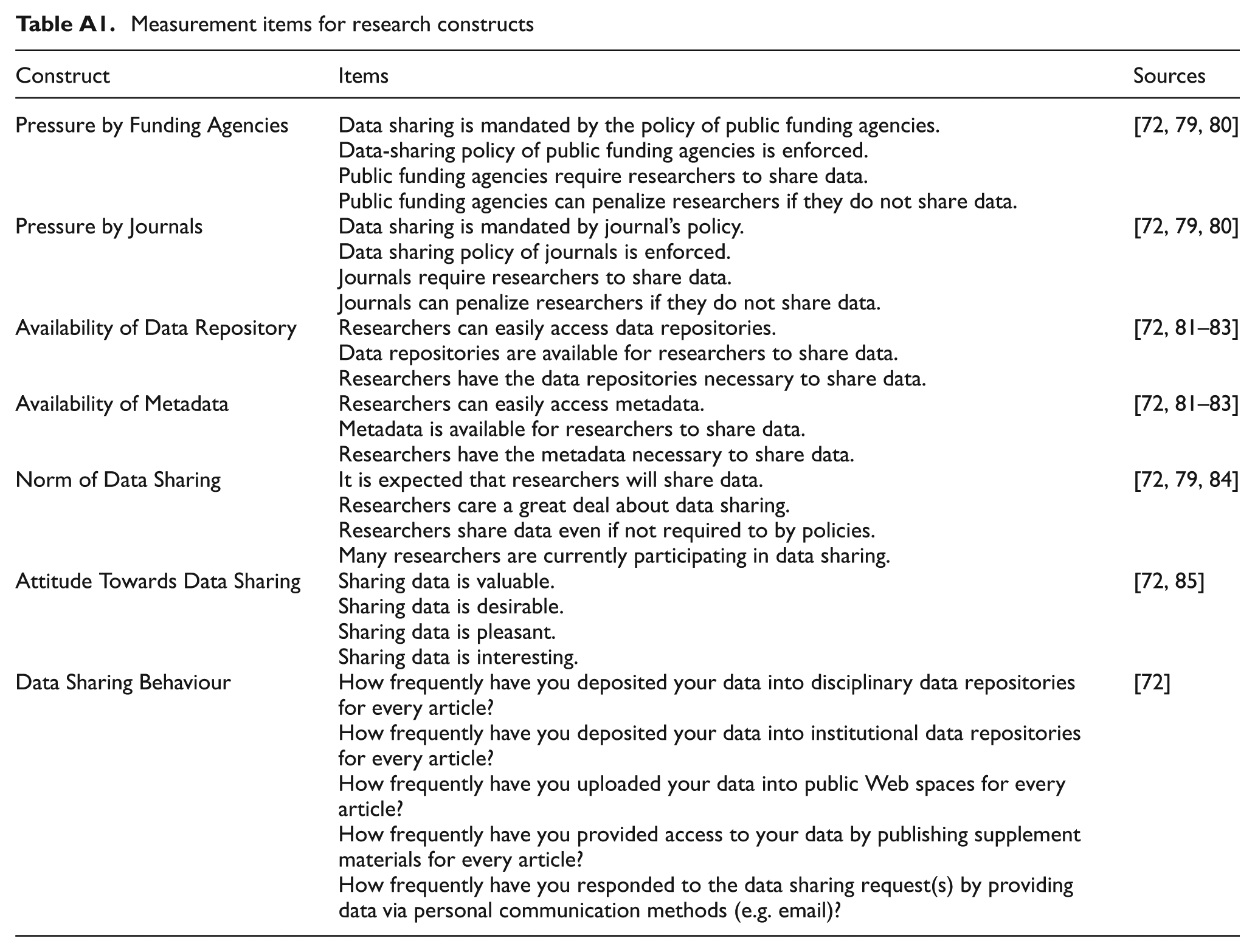
The measurement items were adopted from prior literature [72]. In order to reduce the time spent on the survey, redundant measurement items were removed, leaving only key measurement items in each scale. Also, the survey questionnaire was grouped into five parts, which included an introduction, and then sections designed to measure institutional pressures, individual perceptions, data-sharing behaviours, and demographic information. Several questions were included to identify scholars who generate actual research data, such as ‘Do you produce actual research data?’
Lastly, for consistency purposes, a seven-point Likert scale was selected for all measurement items. The measurement scales ranged from ‘Strongly Disagree’ to ‘Strongly Agree’ for scientists’ perceptions about the institutional factors regarding their data sharing; or ‘Never’ to ‘Always’ for their data-sharing behaviours. For data-sharing behaviours, several measurement items were employed to address diverse types of data-sharing behaviours: depositing data into disciplinary and/or institutional repositories; submitting data as journal supplements; and providing data to others via personal communication methods. The measurement items for research constructs are included in the Appendix.
5.3. Data collection procedure and result
The survey instrument was distributed by email on 19 November 2012, and two reminders were sent on 17 December 2012 and 14 January 2013. The online survey was closed on 15 February 2013. The email message included an introduction to and a description of the purpose of the survey, along with a link to the survey. Out of 4525 potential survey participants initially selected, there were still 63 people (1.4%) who could not be reached because the email message with a link to the survey was returned. People also responded by email regarding their ineligibility to be considered in the survey, because they were retired and did not produce any research data (56, 1.2%), student scientists (35, 0.8%) or not scientists (33, 0.7%). Therefore, an additional 187 out of 4525 were removed from the sample. Therefore, 4338 out of 4525 email messages were delivered to the potential participants. A total of 789 valid submissions were recorded on the survey website, and those 789 valid responses were used for the initial data analysis (response rate is 17.4%).
Since this research focuses on biological scientists working in US academic institutions as faculty members or post-doctoral researchers with recently produced research data with regards to their publications, we excluded (a) any scientists who worked in non-academic institutions since their data-sharing decisions are usually made by their organizations (83, 10.5%), (b) student scientists since they may not provide accurate answers related to regulative pressures by funding agencies and journal publishers, and they also have limited ownership of the data they collect under research projects led by faculty members (64, 8.1%), and (c) scientists who had not produced any research data related to their publications within 2 years (34, 4.3%). Therefore, a total of 608 responses were used for the final data analysis.
5.4. Demographics of the respondents
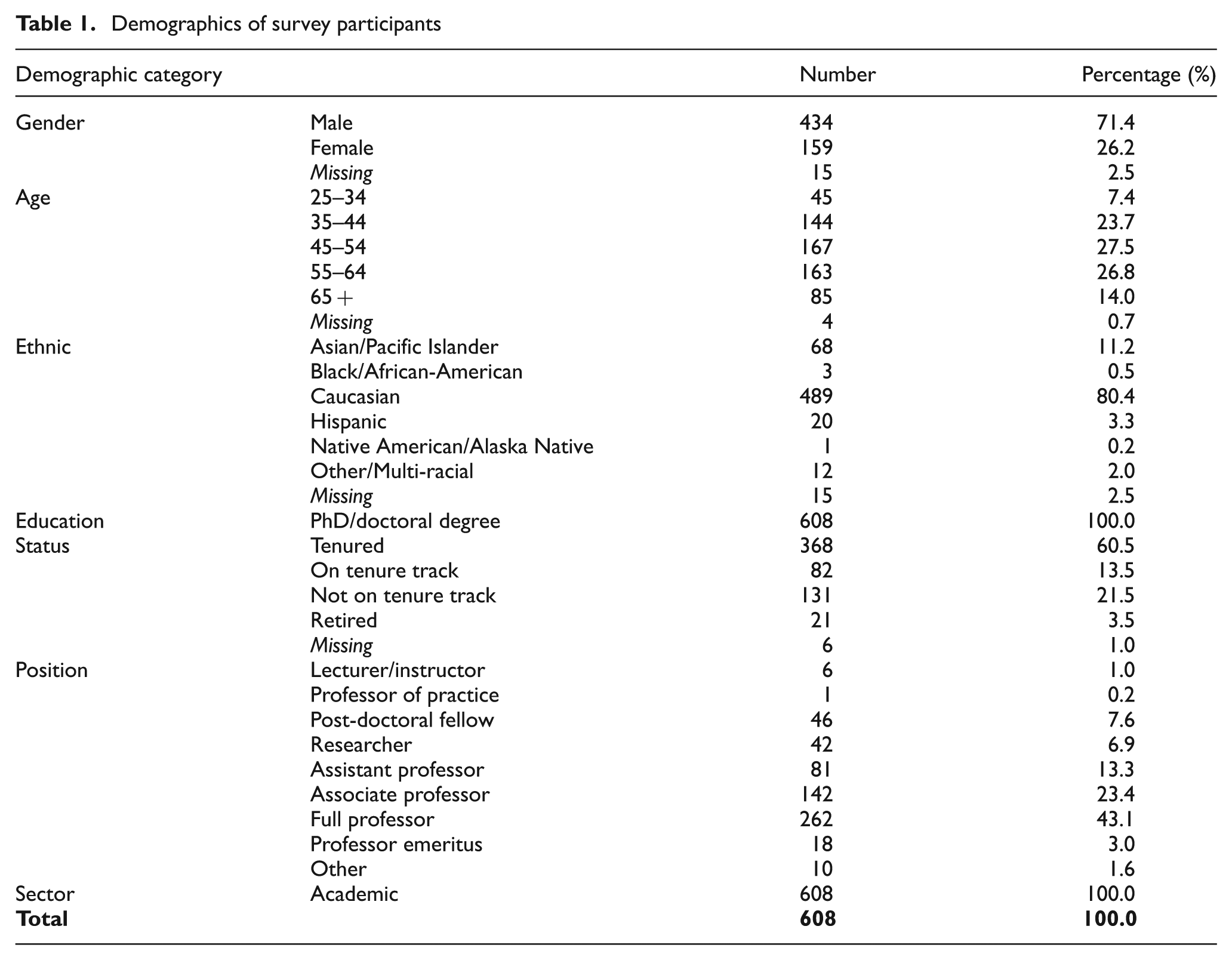
Table 1 summarizes the demographic data of 608 valid participants including gender, age, ethnicity, education, position and tenure status. Of the selected sample of 608 biological scientists, there were 434 male participants (71.4%) and 159 female participants (26.2%), while 15 participants (2.5%) did not indicate their gender. In terms of ethnicity, the majority of respondents were Caucasian (489, 80.4%). The rest of the respondents reported Asian (68, 11.2%), Hispanic (20, 3.3%), African-American (3, 0.5%), Native American (1, 0.2%) and Other/Multi-racial (12, 2.0%) ethnicities. Fifteen participants (2.5%) did not indicate ethnicity. In terms of position, most survey participants were professors. They were listed as full professor (262, 43.1%), associate professor (142, 23.4%), assistant professor (81, 13.3%), professor emeritus (18, 3.0%), professor of practice (1, 0.2%) and lecturer (6, 1.0%). There were also these distinctions in respondents: post-doctoral fellow (46, 7.6%), researcher (42, 6.9%) and other position, such as director or research professor (10, 1.6%).
Demographics of survey participants
With regards to the specific disciplines in biological sciences, 608 survey participants belonged to 20 biological science disciplines according to NSF discipline classification. The average and median ages of the survey respondents in 20 biological science disciplines were 30.4 and 23, respectively. The majority of the survey participants were from Neuroscience (73, 12.0%), Microbiology, Immunology, and Virology (70, 11.5%), Ecology (60, 9.9%), Molecular Biology (57, 9.4%), Biochemistry (55, 9.0%) and Genetics (48, 7.9%); however, some disciplines had fewer than 10 participants including Anatomy (4, 0.7%), Pathology (6, 1.0%) and Other Biosciences (8, 1.3%). The specific disciplinary information in biological sciences is presented in Table 2.
Specific disciplines in biological sciences of survey participants

6. Data analysis and results
Structural equation modelling was used to validate the research model developed above and to evaluate the hypothesized relationships among the research constructs. This research employed the partial least squares (PLS) technique since the main purpose of this study is intended exploration rather than confirmation [73]. This research utilized SmartPLS 2.0 [74] for PLS-based SEM analysis. Also, a two-stage approach proposed by Hair and colleagues [75] was employed to conduct the data analysis with SEM. A measurement model was analysed to evaluate whether measurement items account for their designated research constructs, and then a structural model was employed to evaluate the hypothesized relationships among the research constructs.
6.1. The measurement model
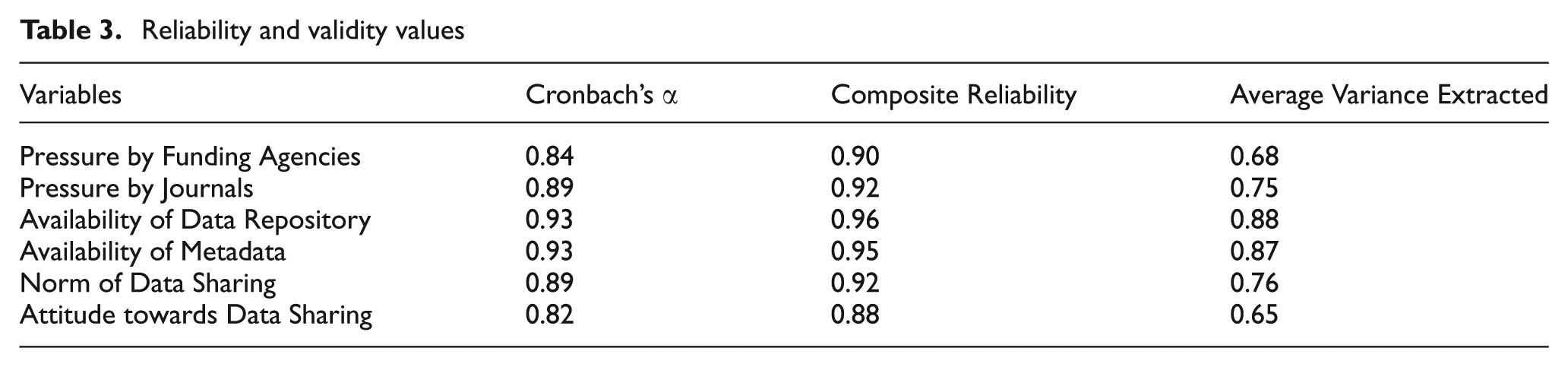
The measurement model was assessed by reviewing content validity, measurement reliability and construct validity. For content validity, most of the measurement items were adapted for this research with minor modifications from diverse studies. The complementary use of the measurement items from multiple sources increases both the breadth and the validity of the content [76]. Measurement reliability was evaluated using Cronbach’s α and Composite Reliability (CR) values. Cronbach’s α and CR values range from 0.82 (Attitude towards Data Sharing) to 0.93 (Availabilities of Data Repository and Metadata) and from 0.88 (Attitude towards Data Sharing) and 0.96 (Availability of Data Repository), respectively, which exceed their minimum threshold values of 0.70 [73, 77]. With regards to construct validity, both CR and average variance extracted (AVE) were assessed to ensure convergent validity. The CR values ranged from 0.88 to 0.96 and all are greater than the recommended value of 0.70 [75]. The AVE values ranged from 0.65 (Attitude towards Data Sharing) to 0.88 (Availability of Data Repository) and all are also greater than the recommended value of 0.50 [71]. These show satisfactory convergent validity. Table 3 presents Cronbach’s α, CR and AVE values for the research constructs in this study.
Reliability and validity values
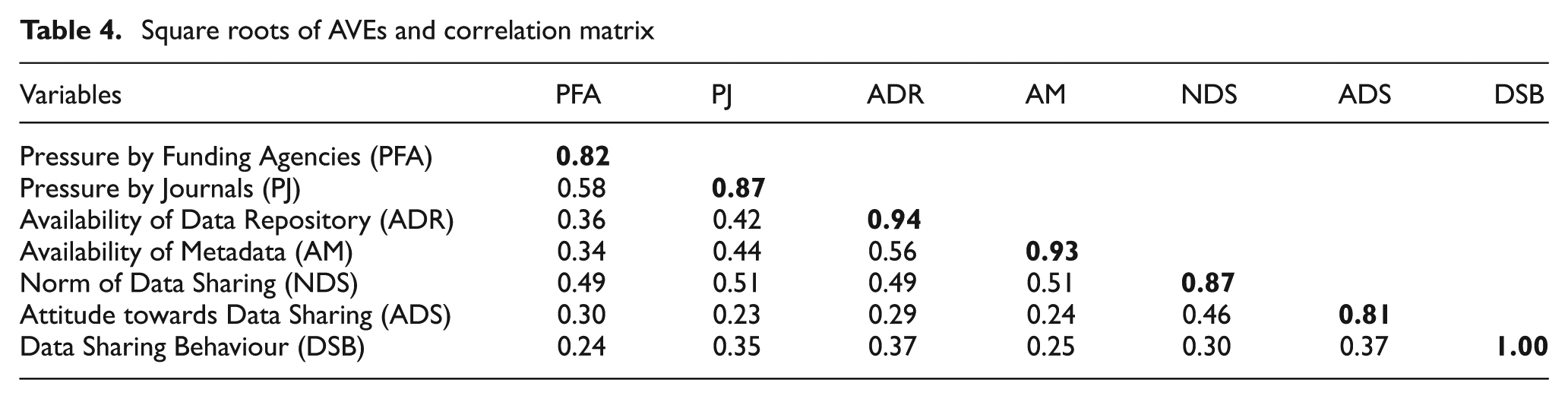
In addition, discriminant validity was warranted by examining the inter-construct correlations and the square root of the AVE [71, 73]. The square roots of constructs’ AVEs (on the diagonal line in Table 4) exceeded the inter-construct correlations (the outside of the diagonal line in Table 4). This shows acceptable discriminant validity as well as convergent validity. Table 4 presents the correlation matrix with the square roots of AVEs.
Square roots of AVEs and correlation matrix
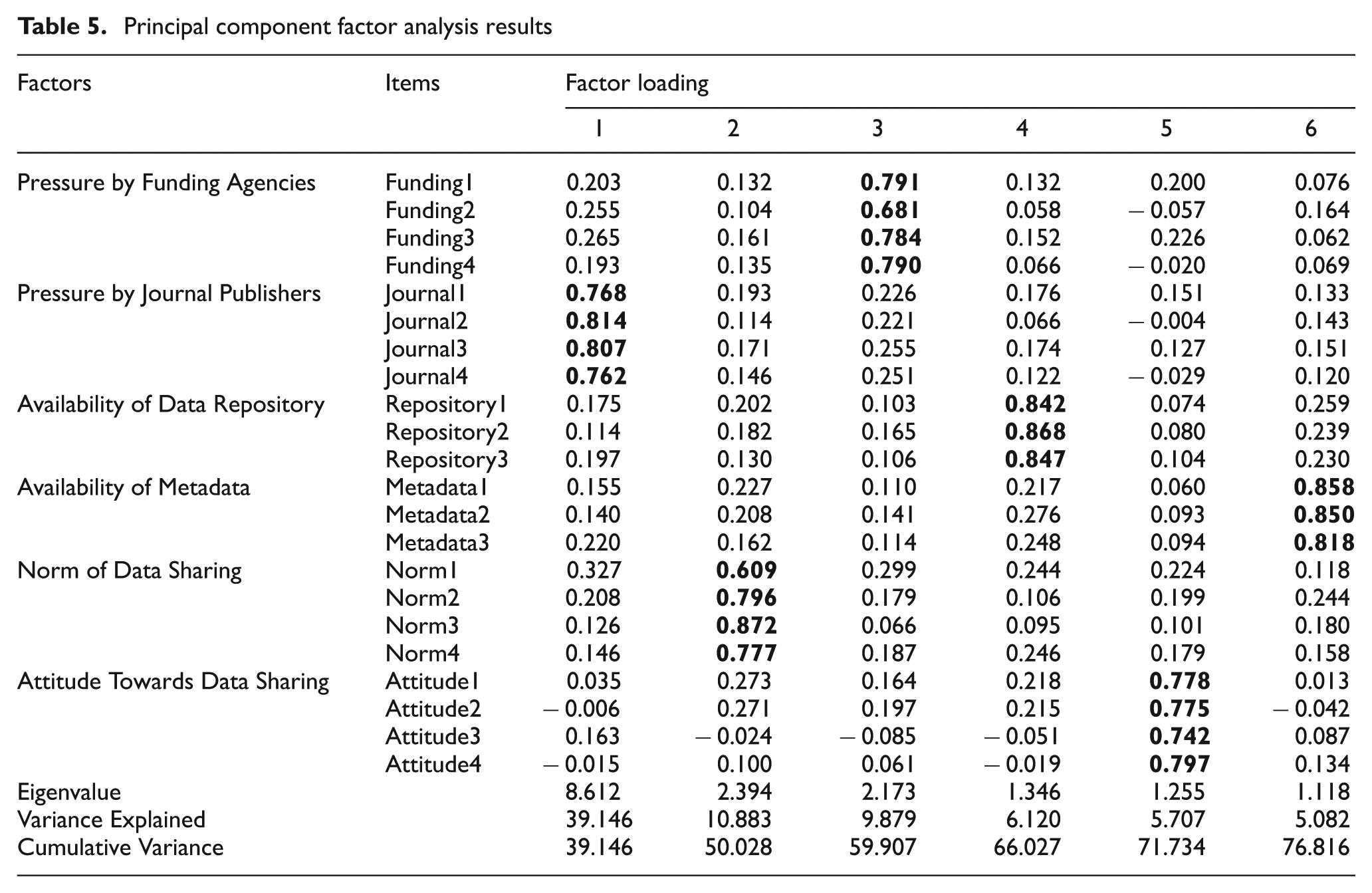
Both convergent and discriminant validity were warranted by performing factor analysis. The principal component factor analysis with Varimax rotation was conducted using SPSS 21. The results of factor analysis show that a set of items measuring the same construct have relatively high factor loading values, indicating convergent validity, and the items measuring different constructs have relatively low factor loading values. The factor loading values of the measurement items for their designated constructs range from −0.085 to 0.327, which are greater than the minimum loading value of 0.40 [78]; the factor loading values of the measurement items for their non-designated constructs range from 0.609 to 0.872, which are lower than the required loading value of 0.40 [78]. This shows that the research constructs have both reliable convergent and discriminant validities. The principal component factor analysis results are presented in Table 5.
Principal component factor analysis results
6.2. The structural model
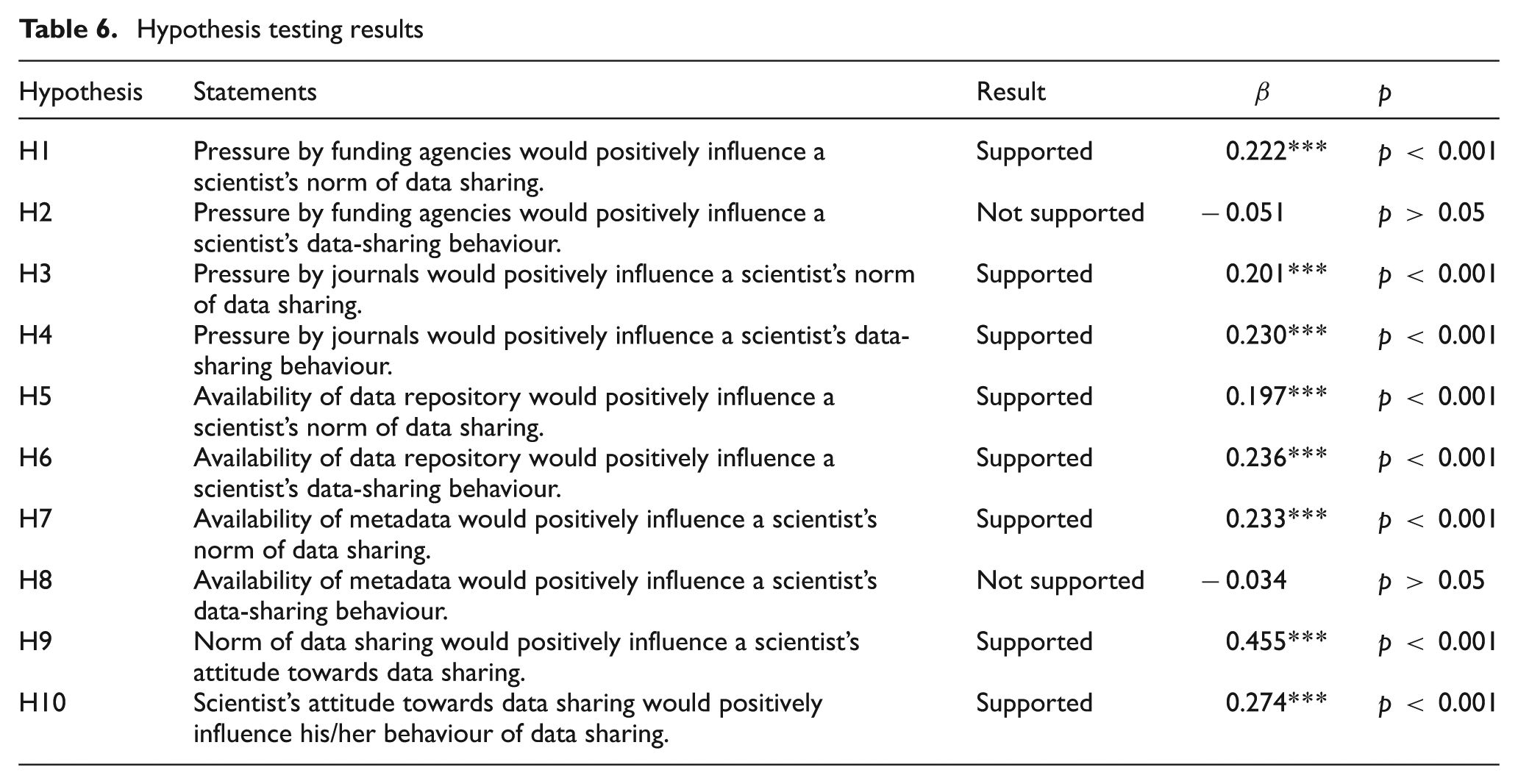
The SEM analysis shows how regulative pressures by funding agencies and journal publishers and how the availability of data repositories and metadata standards influence biological scientists’ data-sharing behaviours, as directly or indirectly mediated by data-sharing norms and then attitudes towards data sharing. With regards to the direct effect towards data-sharing behaviour, both regulative pressure by journal publishers (β = 0.230, p < 0.001) and the availability of data repositories (β = 0.236, p < 0.001) were found to have significant influences on biological scientists’ data-sharing behaviours; however, both regulative pressure by funding agencies (β = −0.051, p > 0.05) and availability of metadata standards (β = −0.034, p > 0.05) were not found to have significant influences on data-sharing behaviours.
With regards to the effect towards data-sharing norms, regulative pressures by funding agencies (β = 0.222, p < 0.001) and journal publishers (β = 0.201, p < 0.001) and availability of data repositories (β = 0.197, p < 0.001) and metadata standards (β = 0.233, p < 0.001) were all found to have significant influences on biological scientists’ data-sharing norms. Subsequently, biological scientists’ norms of data sharing were found to have a strong influence on their attitudes towards data sharing (β = 0.455, p < 0.001). Lastly, biological scientists’ attitudes towards data sharing were also found to have a strong influence on their actual data-sharing behaviours (β = 0.274, p < 0.001). Regulative pressures by funding agencies and journal publishers and the availability of data repositories and metadata standards account for 42.7% of the total variance in biological scientists’ norms of data sharing (R2 = 0.427). Data-sharing norms account for 20.7% of the total variance in biological scientists’ attitudes towards data sharing (R2 = 0.207). Finally regulative pressure by journal publishers and availability of data repository all explain 25.0% of the total variance in biological scientists’ actual data-sharing behaviours (R2 = 0.250). Figure 2 and Table 6 below shows the results of hypothesis testing.

Research model validation results (unstandardized β, ***p < 0.001, **p < 0.01, *p < 0.05).
Hypothesis testing results
7. Discussion
The results of this study yield several interesting perspectives. First, the existence of metadata standards was not found to have a significant influence on data-sharing behaviour in this study. However, the results also show that metadata standards do influence data-sharing norms. This suggests that data sharing practices may be positively influenced if scientists form control beliefs about what is possible and develop positive pre-existing beliefs about what standards exist and how those standards may facilitate data management.
The results of this study also show a significant relationship between the existence of data repositories and the development of data-sharing norms and data-sharing behaviour. This means that the availability of data repositories may also help scientists develop community norms around data sharing, and these norms may influence data-sharing behaviour as mediated by attitudes (and not only influence data-sharing behaviour directly).
Interestingly, this study confirms results from prior studies [27, 72] that funding agencies’ pressures on scientists to share data did not have a significant or direct relationship with data-sharing behaviour. However, this research shows that these pressures to share data do have an influence on the development of data-sharing community norms, and these norms do influence data-sharing behaviour as mediated by attitude.
Perhaps not surprisingly, given that scholarly publishing is the end goal for many academic scientists and is the primary mode to communicate research findings, this study indicates that journal policies about data sharing affect both data-sharing norms and behaviours the strongest. We speculate that the primacy of journals in this function may also explain why data-sharing norms and behaviours are still not prevalent. The creation of metadata standards and data repositories, and the role of funding agencies to pressure scientists to share research data, can all be traced to actions that can be attained by a subset of associations, organizations, government agencies, or other central, top-down agencies. However, the number of journals and thus the number of policies that exist complicate a collective action to influence widespread data-sharing norms and behaviours.
Scientists’ comments from the survey further illustrate some of the complexities involved in developing data-sharing norms and behaviours. A post-doctoral fellow in neuroscience indicated in a comment that these complexities exist because data sharing is not common even if it is required. Furthermore, the comments help show that, in order for data-sharing norms and behaviours to develop, the institutional forces that influence these scientists need to be strong enough to influence scientists’ work flows, and that these work flows need to involve other institutional actors. For example, one neuroscientist commented that, although data sharing is required by the NIH, there is no enforcement of this policy, and thus no institutional framework to make data sharing happen. Alternatively, as a developmental biologist phrased it, data sharing is ‘ipso facto.’
One ecologist commented on the influence that journal pressure has on data sharing expectations. The ecologist noted recent changes journals have made to require or mandate data depositing, and in particular, highlighted the efforts by esteemed and notable journals. A cell biologist’s comment, however, showed that, although journals can disseminate data, they may be good only at sharing particular types of data, such as small data files that allow easy dissemination. Such data types include ‘sequence data, atomic coordinates for protein structures, and microarray/gene expression analysis’ as examples.
The comments also help clarify how the existence or non-existence of repositories and the affordance or lack thereof influence data-sharing norms and behaviours. One scientist in microbiology, immunology and virology noted that frameworks for storing microarray biological data are well developed, but data repositories dedicated to storing and organizing non-microarray data do not exist. This was confirmed by a molecular biologist, who noted the requirements to store microarray data in repositories and also the lack of requirements to store data related to preliminary experiments, ‘replicates that contribute to means’, and so forth.
Two scientists commented on issues concerning metadata in data sharing. These comments are particular insightful about the kind of data that scientists expect to share. An ecologist noted that, while metadata exists for storing a variety of types of data, there is no metadata standard that would describe ‘the parameters selected for simulation models’. Another comment, also by an ecologist, noted the desire to make their data public, but expressed frustration with the lack of a metadata standard that would help describe the data in a way that would make it understandable to others.
8. Conclusion
This research found that pressures by funding agencies and journals and the existence of data repositories and metadata standards, that is, disciplinary resources, all have significant relationships with data-sharing norms, and these lead to positive attitudes towards data sharing and then actual data-sharing behaviour. Pressure by journals and the availability of data repository also have significant influences on biological scientists’ data-sharing behaviours; however, pressure from funding agencies and the existence of metadata standards do not have significant relationships with data-sharing behaviours in this research. Although funding agencies’ pressures and metadata standards do not have significant influences on data-sharing behaviours directly, they significantly influences biological scientists’ data-sharing norms, which led to positive attitudes towards data sharing and further actual data-sharing behaviours. Therefore, this research suggests that we can promote biological scientists’ data sharing by having well-established metadata standards and data repositories as well as standardized regulations by funding agencies and journals, and that this can help biological scientists develop strong norms of data sharing in their disciplines, which can significantly influence data-sharing behaviours mediated by attitude towards data sharing. Future research may consider examining how demographic factors such as tenure status, age or years spent in research affect norms of data sharing and actual data-sharing behaviours. Also, future research needs to investigate the availability of a procedure or protocol for data management as another critical attribute for the metadata construct or another important factor for data sharing.
Footnotes
Appendix
Measurement items for research constructs
| Construct | Items | Sources |
|---|---|---|
| Pressure by Funding Agencies | Data sharing is mandated by the policy of public funding agencies. | [72, 79, 80] |
| Data-sharing policy of public funding agencies is enforced. | ||
| Public funding agencies require researchers to share data. | ||
| Public funding agencies can penalize researchers if they do not share data. | ||
| Pressure by Journals | Data sharing is mandated by journal’s policy. | [72, 79, 80] |
| Data sharing policy of journals is enforced. | ||
| Journals require researchers to share data. | ||
| Journals can penalize researchers if they do not share data. | ||
| Availability of Data Repository | Researchers can easily access data repositories. | [72, 81–83] |
| Data repositories are available for researchers to share data. | ||
| Researchers have the data repositories necessary to share data. | ||
| Availability of Metadata | Researchers can easily access metadata. | [72, 81–83] |
| Metadata is available for researchers to share data. | ||
| Researchers have the metadata necessary to share data. | ||
| Norm of Data Sharing | It is expected that researchers will share data. | [72, 79, 84] |
| Researchers care a great deal about data sharing. | ||
| Researchers share data even if not required to by policies. | ||
| Many researchers are currently participating in data sharing. | ||
| Attitude Towards Data Sharing | Sharing data is valuable. | [72, 85] |
| Sharing data is desirable. | ||
| Sharing data is pleasant. | ||
| Sharing data is interesting. | ||
| Data Sharing Behaviour | How frequently have you deposited your data into disciplinary data repositories for every article? | [72] |
| How frequently have you deposited your data into institutional data repositories for every article? | ||
| How frequently have you uploaded your data into public Web spaces for every article? | ||
| How frequently have you provided access to your data by publishing supplement materials for every article? | ||
| How frequently have you responded to the data sharing request(s) by providing data via personal communication methods (e.g. email)? |
Acknowledgements
We would like to acknowledge the ProQuest Pivot for allowing us to use its Community of Scientists Scholar Database in recruiting the survey participants.
Funding
This research received no specific grant from any funding agency in the public, commercial or not-for-profit sectors.