




Abstract
This article attempted to examine research support services, information services, print collections, digital resources and information literacy using bibliometric analysis from 2001 to 2020. The main aim was to consolidate the published studies on the research support services in academic libraries in the Web of Science (WoS) indexed documents. However, there has been a lack of quantitative measurements on the subject. Thus, we used the bibliometric method and found a total of 4079 published documents. The study findings revealed that the topic of ‘information literacy and library’ was on top with a total number of 2168 publications, 3047 articles as a type of published documents, 3662 publications in English and a considerable increase in publications as per years were found. The top author named Fourie I was found with 106 citations and 22 articles started in 2001. Similarly, the University of Illinois found on top organisations out of 2609, United States on top out of 113 countries and information literacy as a keyword out of 6179. Furthermore, the Journal of Academic Librarianship placed at top of sources out of 726 and the National Institutes of Health NIH USA as a top funding agency.
Keywords
1. Introduction
The recent decades showed a rapidly changing pedagogy and research support services in academic libraries among researchers across the globe [1–4]. Similarly, the hasty growth and utilisation of technological advancements further triggered demand for emerging support services from university libraries [5,6]. Presently, the use of modern support services has an important role to enhance the quality of libraries. These services include digitisation of print collections, open-access data, data management, information services, information literacy and services, open access of publishing access to the latest techniques of searching research material and bibliometric techniques [7–9]. In response, universities tried their efforts to change research support in academic libraries as per the need of library users [10–12]. For instance, academic libraries extended their services to users to provide research support to research scholars and students at their homes during COVID-19 pandemic [2,13]. It is pertinent to mention here that online support services in academic libraries were already available to the users in developed countries; however, it further strengthened the services. On the contrary, most of the developing nations struggled to transform their academic libraries to the online support services during the pandemic.
It has been observed that the academic activities have been shifter to an online teaching for the last 2 years. Therefore, academic libraries have also been transformed into online information services and digital resources along with information literacy to facilitate online academic activities [14–17]. Furthermore, diversified research work was conducted on these research support services in developing and developed countries [7,18–21]. These scholars and researchers used different research design and data analysis techniques to conclude their studies, including qualitative, quantitative, content analysis, observational research and bibliometric analysis [2,22–24]. It is important to mention here that the term ‘bibliometrics’ was coined in 1969 and used in several studies to compile published documents across the globe [25–27]. However, this method gained a lot of attention in the last decade through the important roles played in the field of library sciences discipline and evaluation of research, scientific publications and assessment through a quantitative approach on published documents the world over [25]. Owing to the importance of bibliometric technique, the present study aimed to evaluate research support services, information services, print collections, digital resources and information literacy using bibliometric analysis from 2001 to 2020. Thus, this study may provide insights to fill the gap in research in the field of library and information science.
1.1. Objectives of the study
We formulated the following objectives to evaluate research support services, information services, print collections, digital resources and information literacy using bibliometric analysis from 2001 to 2020:
To examine the published documents by their topics and document types,
To find out the published documents by their language and years,
To determine published documents by their top 20 results of authors’ information,
To determine the published documents by top 20 organisations and keywords,
To access the published documents by top 20 counties,
To scrutinise published documents by top 20 sources of publications, funding agencies and citations.
2. Review of literature
Historically, the academic libraries manually operated in academic institutions for a long time [28,29]. It was the time when the text was preserved manually in libraries. Researchers and scholars travelled long to study rarely available text to complete their research. However, with the steady transformation in technology, the academic libraries were converted into e-libraries to facilitate the researchers through the web of knowledge established across the developed world [30]. Due to the advancement of technology, all types of documents have been transformed and stored in online research webs by developed countries. Moreover, it was intended to facilitate the researchers and scholars to further achieve the milestones in academia [31–33]. Thus, researchers found easy access to the research support services through academic libraries to the Web of Knowledge. In the past, the research support services in academic libraries have been a serious concern across the globe [7,34–36], as several types of research have been conducted on research support services in developing and developed countries [9,18,37–39]. The trend of research-on-research support services in developed countries has significance due to the use of modern technology that transformed academic libraries. Thus, a considerable scientific study has raised concerns on research support services that further enhanced the capacity of the academic libraries [40–42]. Most of these studies revealed that academic libraries are providing and facilitating research support services to research scholars and academics [7,25,34,35].
As far as the bibliometric analysis technique is concerned, it has been extensively used by researchers to analyse scientific productivity in the field of library science and other linked disciplines [9,31,33,43–46]. Through this method, researchers focused to analyse published documents, including books, letters, proceeding papers, book reviews, articles, abstracts and editorial materials used in scientific publications [41,47–49]. Similar studies are conducted across the globe by analysing the frequency, quality and emergence of already existing research documents. The study by Ahmad et al. [38] was based on research in the Arab world from 1980 to 2020 using the bibliometric technique. Furthermore, the findings of Noor et al. [50] asserted that knowledge management was based on social media employing a bibliometric approach to analyse data. However, a recent study by Aristovnik et al. [51] pointed out science and social science response towards COVID-19 using the bibliometric study method. It is important to mention here that several researchers used the bibliometric analysis technique to clinch their study findings in the field of research support services in academic libraries the world over [7,52–54]. These studies also include the findings of Su and Sun [55] on library users’ information, Schiuma et al. [56] on authorship pattern, Zeng et al. [57] on innovation efficiency and Bapte [58] on information literacy. Based on the review of literature, thus, this study aimed to evaluate scientific documents on research support services, information services, print collections, digital resources and information literacy using bibliometric analysis from 2001 to 2020. Therefore, we intended to evaluate the research support services, information services, print collections, digital resources and information literacy using bibliometric analysis from 2001 to 2020.
3. The data and methods
For the present study, we used the bibliometric analysis technique to conduct the present study. For bibliometric analysis, we extracted data from the Science Citation Index database, Web of Science (Core Collection). We used search query as TITLE: TS = (‘Research Support Services’ AND ‘Library’) OR TS = (‘Information Services’ AND ‘Library’) OR TS = (‘Print Collections’ AND ‘Library’) OR TS = (‘Digital Resources’ AND ‘Library’) OR TS = (‘Information Literacy’ AND ‘Library’) with a period of 2001 to 2020. With the help of these queries, a total of 4079 published documents were found and further analysis was employed. The indexes in the core collection of Web of Science were SCI-EXPANDED, SSCI, A&HCI, CPCI-S, CPCI-SSH, ESCI, CCR-EXPANDED and IC. The data were extracted on 5 February 2021 at 10:00 a.m. (GMT). We used Biblioshiny, VOSviewer and MS Excel software for bibliometric analysis. Furthermore, the data were presented in tables and figures to show the trend results and a conclusion was drawn. Furthermore, the analysis was performed by three authors equally and also contributed equally in all sections of this article.
4. Results and discussions
This section provides the results derived from bibliometric analysis of 2001–2020 on the topic of research support services in academic libraries. Furthermore, this section is divided into different sections based on the objectives of the study along with discussion.
4.1. Objective 1: To examine the published documents by their topics and document typesduring 2001–2020
Table 1 described the distribution of published documents by their topics and document types from 2001 to 2020. The first part (a) of the table was focused on the topic of the document. Data in the table revealed that 53.152% (out of 4079) of the published documents were on information literacy and the library. Similarly, 35.18% of the publications were on information services and libraries during 2001–2020. On the contrary, there was a smaller portion of published documents title on research support services & library (0.833%) and print collection & library (1.691%). It asserted that more than half (53.152%) of the published documents were on information literacy and library topic (see Table 1). Thus, information literacy and library was very important topic for authors and used as a topic for publication. The study findings were also supported by the findings of Bapte [58], Pinto et al. [59] and Tallolli and Mulla [60].
Distribution of published documents by their topics and document types (2001–2020).
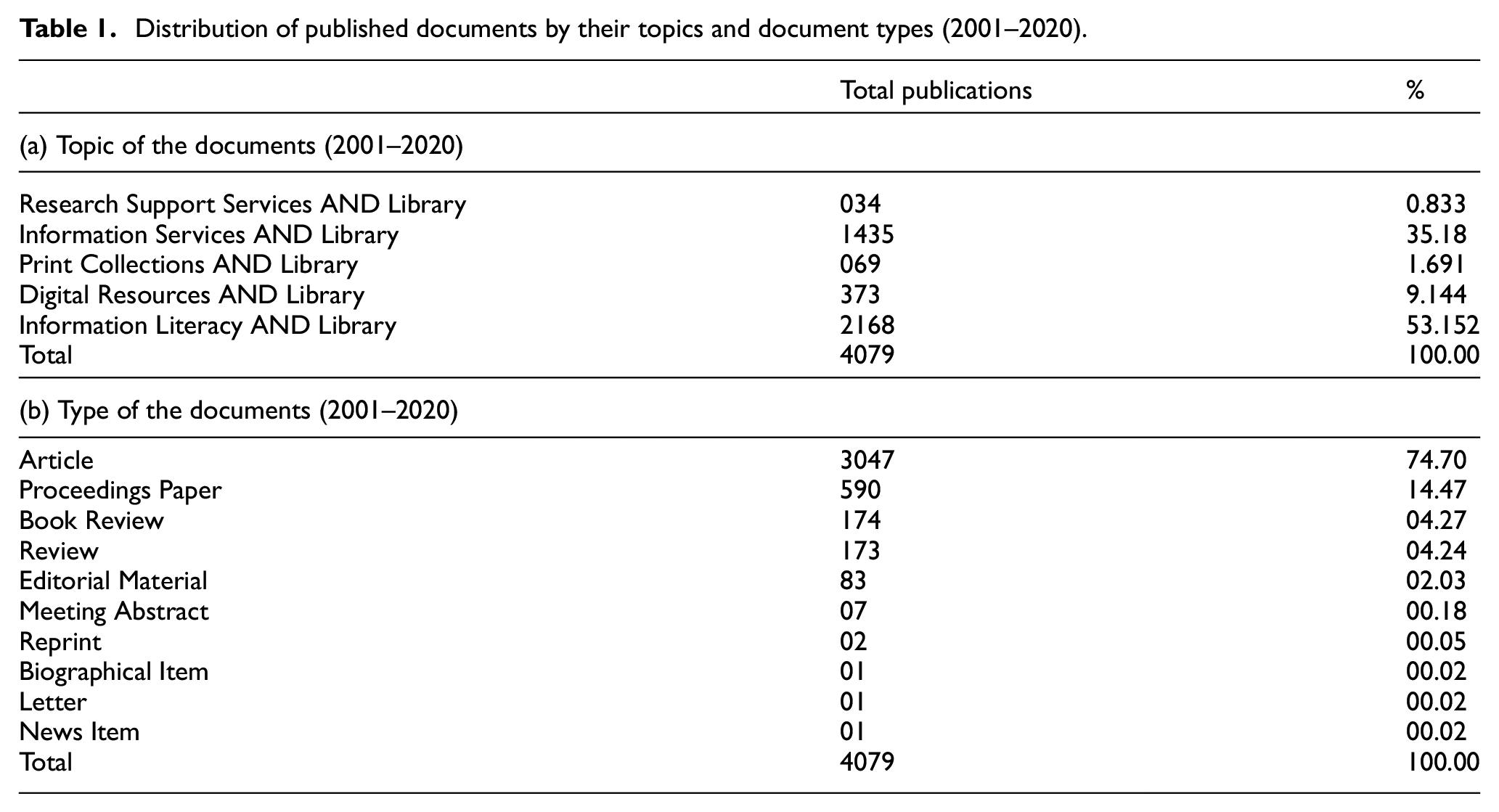
The second part (b) of Table 1 highlighted the type of published documents during 2001–2020. There was 74.70% (out of 4079) of the published documents were in article form and 14.47% of documents were as proceedings papers during 2001–2020. Similarly, 4.24% of the documents were published as a review and only 0.02% of them were named as a letter. Furthermore, a similar proportion of published documents were reported as the bibliographical item (0.02%) and news item (0.02%). It is pertinent to mention here that 8.68 documents were published in a year on average and 5.652 citations per document in each year. Moreover, the total references used in 4079 published documents were 74,715. Based on the data, it was concluded that more than half of the published documents were published as an article (see Table 1). Hence, the article as a document was very important for authors and published during 2001–2020. Furthermore, the study findings were also lined up with the findings of Shonhe [61] and Goksu et al. [36].
4.2. Objective 2: To find out the published documents by their language and years during 2001–2020
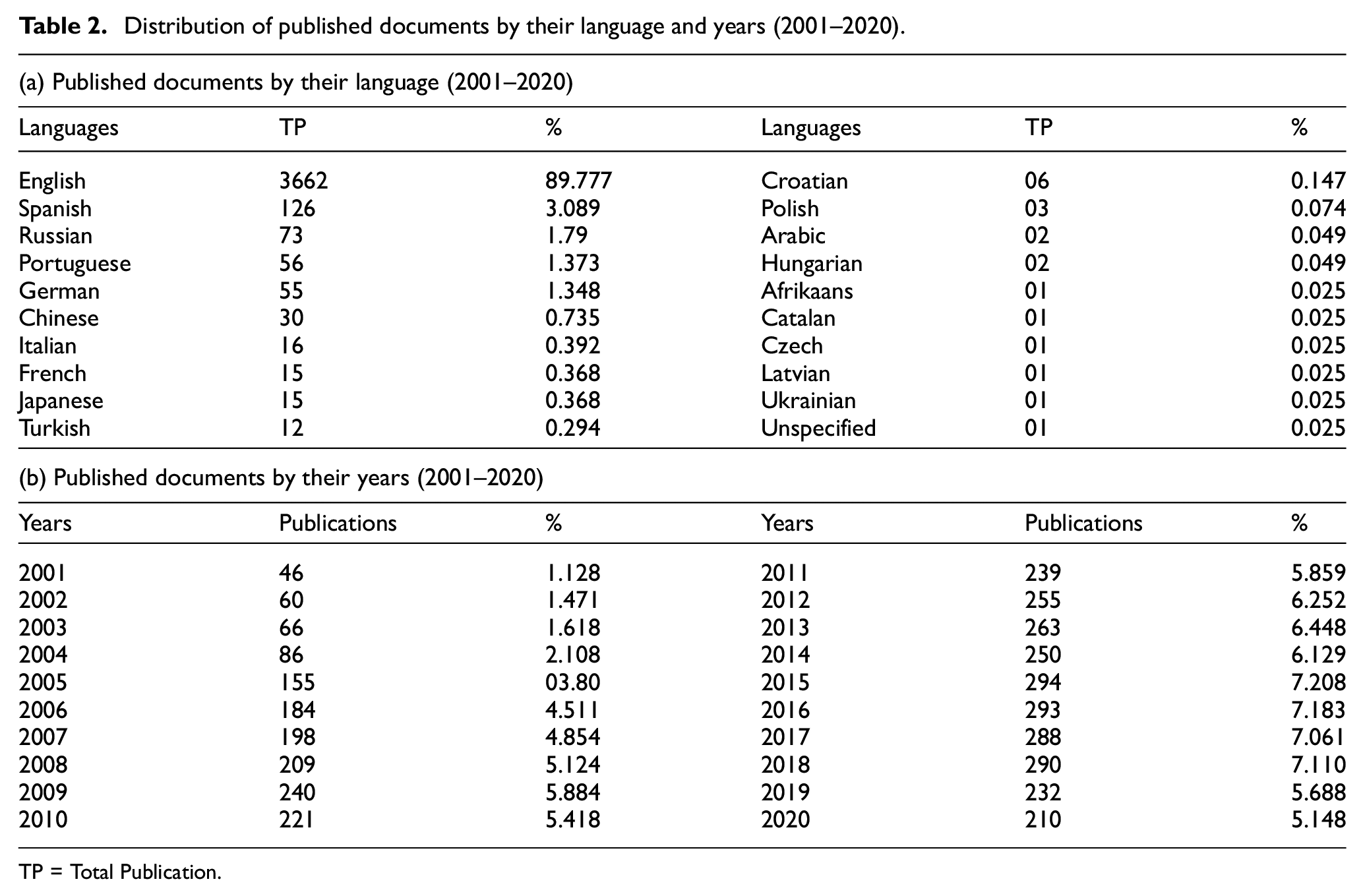
Table 2 described the distribution of published documents by their language and year of publication from 2001 to 2020. The first part (a) of the table was focused on the language of the document. Data in the table revealed that 89.777% of the documents were published in the English language and 3.089% of the publications were published in the Spanish language during 2001–2020. On the contrary, there was a smaller portion of published documents in the language of Chinese (0.735%), German (1.348%) and French (0.368%). However, a similar proportion of published documents were reported in Afrikaans and Catalan language as 0.025%. Furthermore, documents published in the language of Czech, Latvian, Lithuanian and Ukrainian were also reported as parallel proportions, that is, 0.072. Nonetheless, among the top 20 languages of published documents, there was a similar and smaller proportion of Czech, Latvian and Ukrainian reported as 0.025%. It asserted that the majority (89.777%) of the published documents were published in the English language during 2001–2020. Thus, the English language was very important for authors and used as a language of published documents. It is pertinent to mention here that the English language is an international language (see Table 2). Thus, the authors selected this language for a wider readership for their research documents. The study findings were also supported by the findings of Raffaghelli and Stewart [34], Kuzhabekova [25] and Sahu and Parabhoi [47].
Distribution of published documents by their language and years (2001–2020).
TP = Total Publication.
The second part (b) of the table was focused on the distribution of publications by their years. Data in the table revealed that 5.148% of the documents were published in 2020 and 5.688% of the publications were published in 2019. On the contrary, there was a higher portion of published documents in the year 2018 (7.11%), 2017 (7.061%), 2016 (7.183%) and 2015 (7.208%). However, a smaller proportion of published documents was also reported in the years 2003 (1.618%) and 2002 (1.471%). However, a different proportion of published documents was reported in 2001 (1.128%) and 2004 (2.108%). It affirmed that a higher number of documents (294 in numbers) were published in 2015 compared with other years (see Table 2). The study findings were also supported by the findings of Karisiddappa et al. [41] and Morrisey [62].
4.3. Objective 3: To chalk out published documents by their top 20 results of authors’ information during 2001–2020
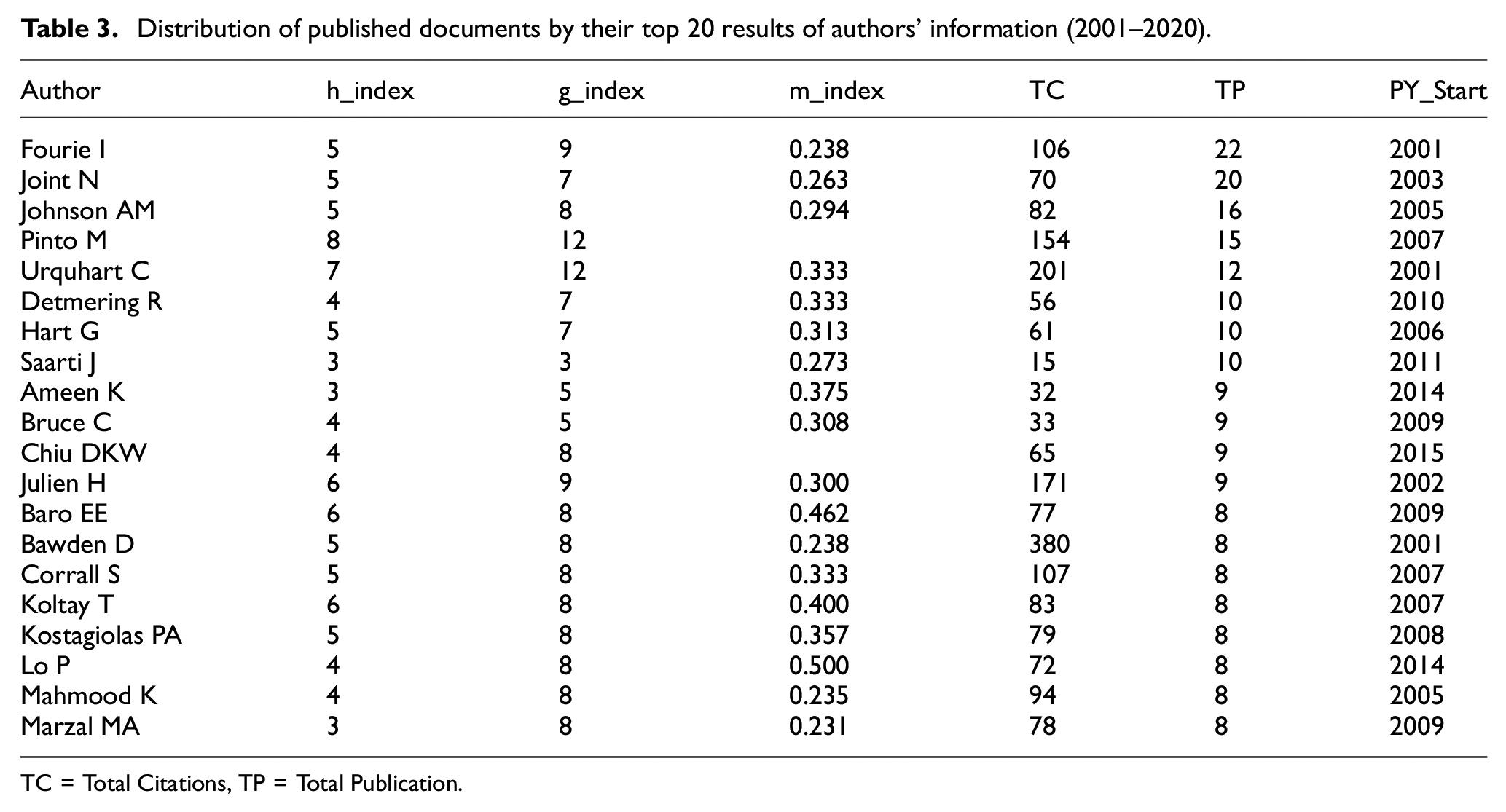
Data in Table 3 described the distribution of published documents by their top 20 results out of a total of 6503 authors’ information from 2001 to 2020. It is pertinent to mention here that single-authored documents were 1532 and multi-authored documents were found as 4971 in numbers. Data in the table revealed that the top author name was Fourie I having an h-index of 5, g-index of 9, m-index of 0.238, total citations 106, with 22 publications starting from 2001. Similarly, Joint N had 20 publications with 70 citations, Johnson AM had 16 publications with 82 citations and Pinto M had only 15 publications with 154 citations starting from 2007. Conversely, the author named Marzal MA also appeared in the top 200 authors with eight publications and 78 citations starting from 2009. It stated that an author named Fourie I was at top of the authors’ information list with 22 publications and 106 citations (see Table 3). The study findings were also supported by the findings of Schiuma et al. [56] and Tomaszewski [63].
Distribution of published documents by their top 20 results of authors’ information (2001–2020).
TC = Total Citations, TP = Total Publication.
4.4. Objective 4: To determine the published documents by top 20 organisations and keywords during2001–2020
Statistics in the Table 4 revealed the top 20 names out of 2676 organisations and keywords based on published documents during 2001–2020. The first part (a) of the table was based on the top 20 organisations. Data indicated that the University of Illinois was at the top of the list with 50 number of published documents (with 251 citations). In second place, the University of Strathclyde was standing with 34 publications from 2001 to 2020. Furthermore, the CUNY, University of North Carolina and the University of Sheffield had the same number of publications, that is, 27 in number. On the contrary, the University of Michigan was at the bottom of the top 20 organisational published documents from 2001 to 2020 (see Table 4 & Figure 1). It is important to mention here that several studies reported top organisations based on published documents [10,64–66].
Distribution of published documents by top 20 organisations and keywords (2001–2020).

TP = Total Publication, TLS = Total Link Strength.
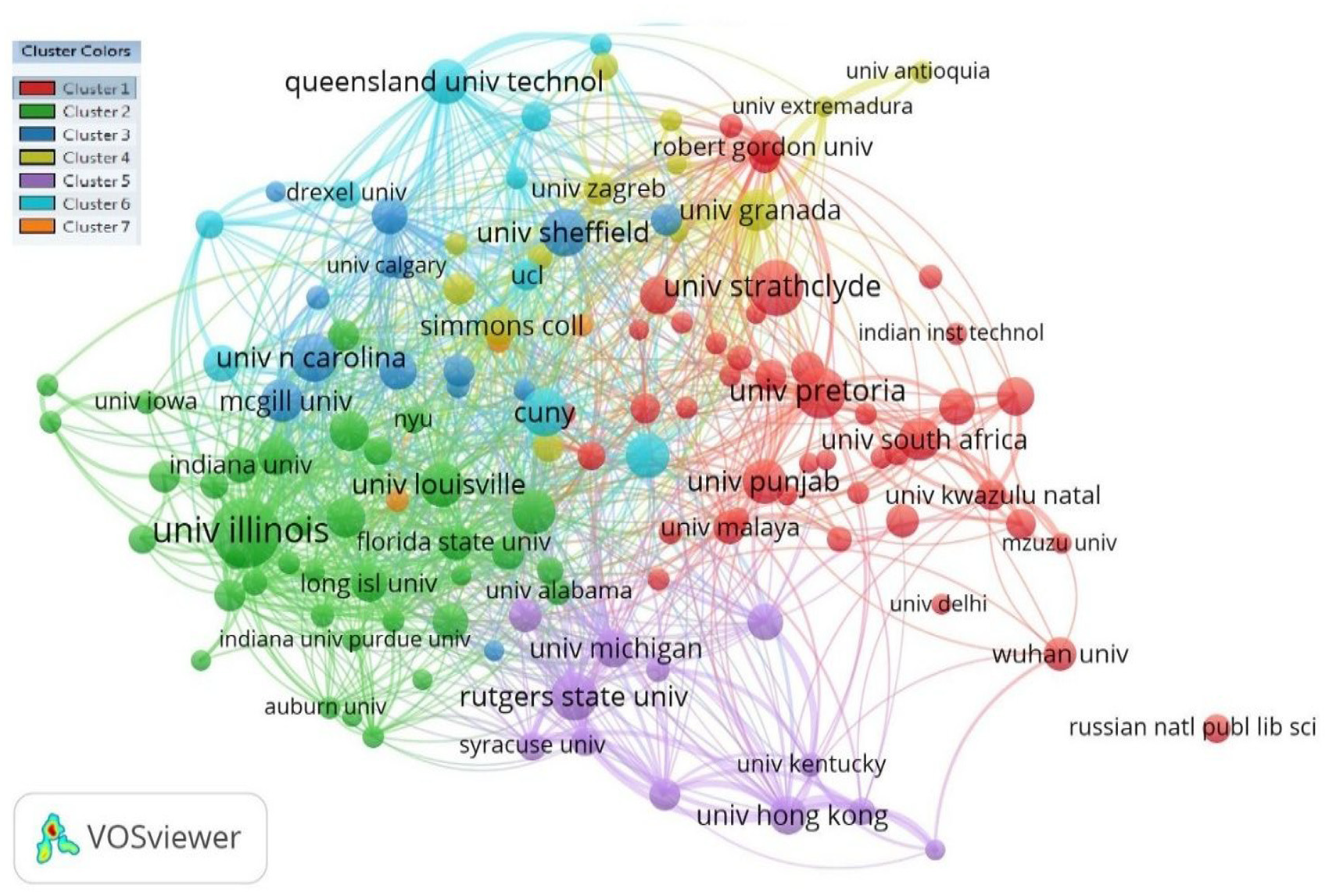
Published documents by top productive organisations (2001–2020).
The second part (b) of Table 4 presented the top 20 keywords used in the published documents during 2001–2020. Data in the table pointed out that information literacy were on the top of the top 20 keywords with a total number of 1177 and academic libraries placed at second number with a total number of 428 as occurrence. Similarly, information services were used as keywords 420 times and libraries as 282 times in the published documents from 2001 to 2020. Furthermore, students, education, instruction, information, university libraries, the Internet, skills, digital libraries, librarians, public libraries, higher education and literacy were also used as the top 20 keywords in the published document in the said period of publication. However, assessment and impact were used as lowest as a keyword in the top 20 keywords in published documents in 20 years. It is important to mention here that the total keywords were 1414 in the number and 6179 total authors’ keywords used in the published documents. The keywords as information literacy and academic libraries were on the top of the list of top 20 keywords (see Table 4 & Figure 2). The study findings are aligned with the findings calculated keywords in the published documents such as Ajibade and Mutula [49], Huang et al. [26] and Tallolli and Mulla [60].

Published documents by top 20 keywords (2001–2020).
4.5. Objective 5: To access the published documents by the top 20 countries during 2001–2020
Data indicated in Table 5 showed a list of publications by the top 20 countries from 2001 to 2020. Data in the table revealed that 0.387378% of the documents were published in the United States (out of 113 countries) and 0.080298% of the publications out of 4079 were published in China during 2001–2020. On the contrary, there were a different proportion of published documents in the United Kingdom (0.078502%), Brazil (0.016419%) and Canada (0.043612%). However, a similar proportion of published documents were reported in New Zealand and Finland as 0.007183%. Furthermore, documents published in Australia (0.035146%), South Africa (0.033350%), Russia (0.020267%) and Ireland (0.008722%) were also reported in the top 20 countries. Nonetheless, among the top 20 languages of published documents, there was a smaller proportion of Pakistan, that is, 0.007696% out of 4079 documents. It asserted that the United States was on top of 20 countries based on published documents from 2001 to 2020, as the United States is English-speaking country and used English as a language of published documents. It is pertinent to mention here that the English language is an international language and the United States was on top of 20 countries based on publications on the subject underhand (see Table 5 & Figure 3). Thus, the authors selected their language for a wider readership for their research documents. The study findings were also supported by the findings of Abernethy and Holderied [67], Tallolli and Mulla [60] and Morrisey [62].
Distribution of published documents by top 20 counties (2001–2020).

TP = Total Publication.
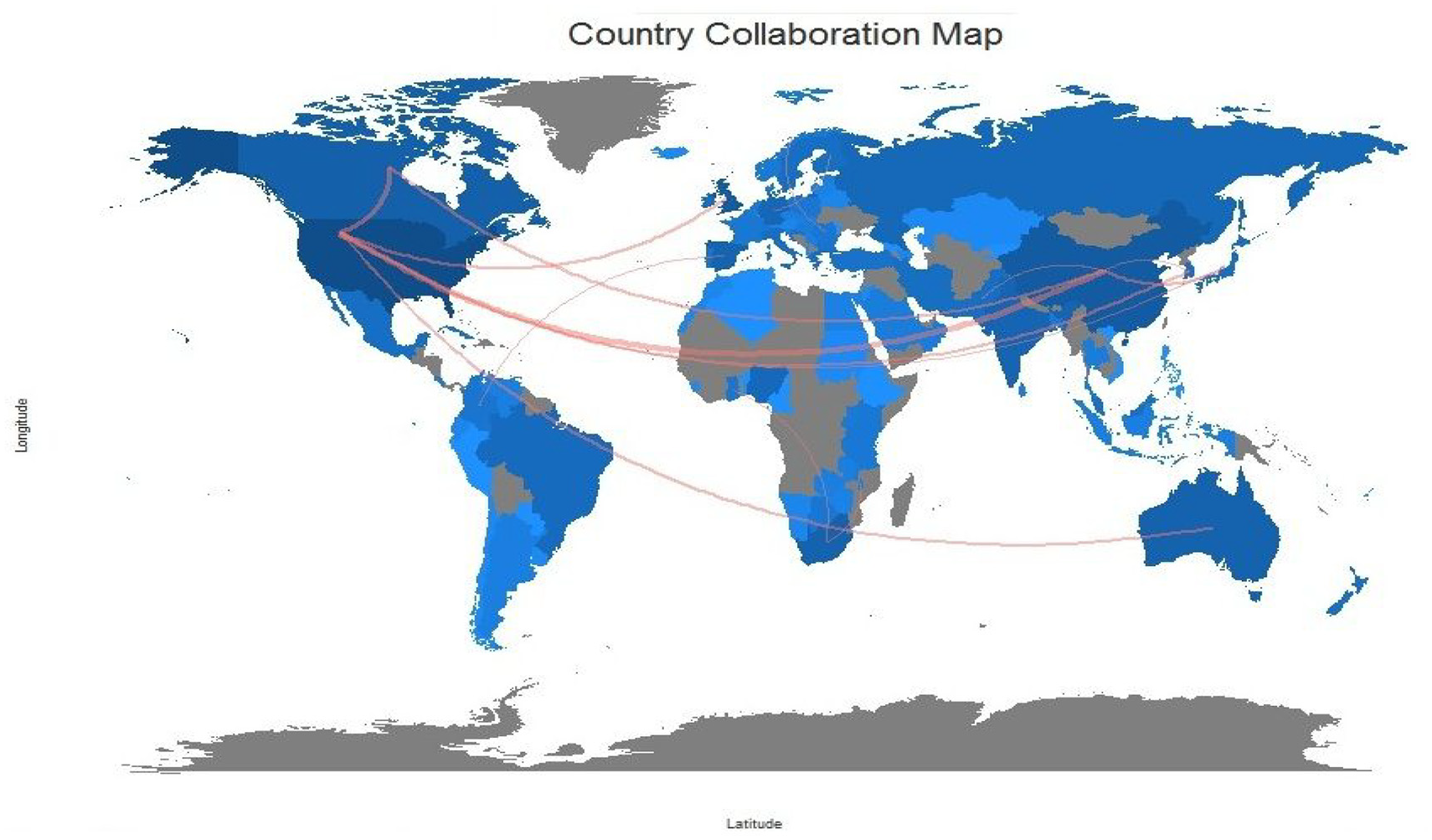
Published documents by top counties (2001–2020).
4.6. Objective 6: To scrutinise published documents by top 20 sources of publications, funding agencies and citations during 2001–2020
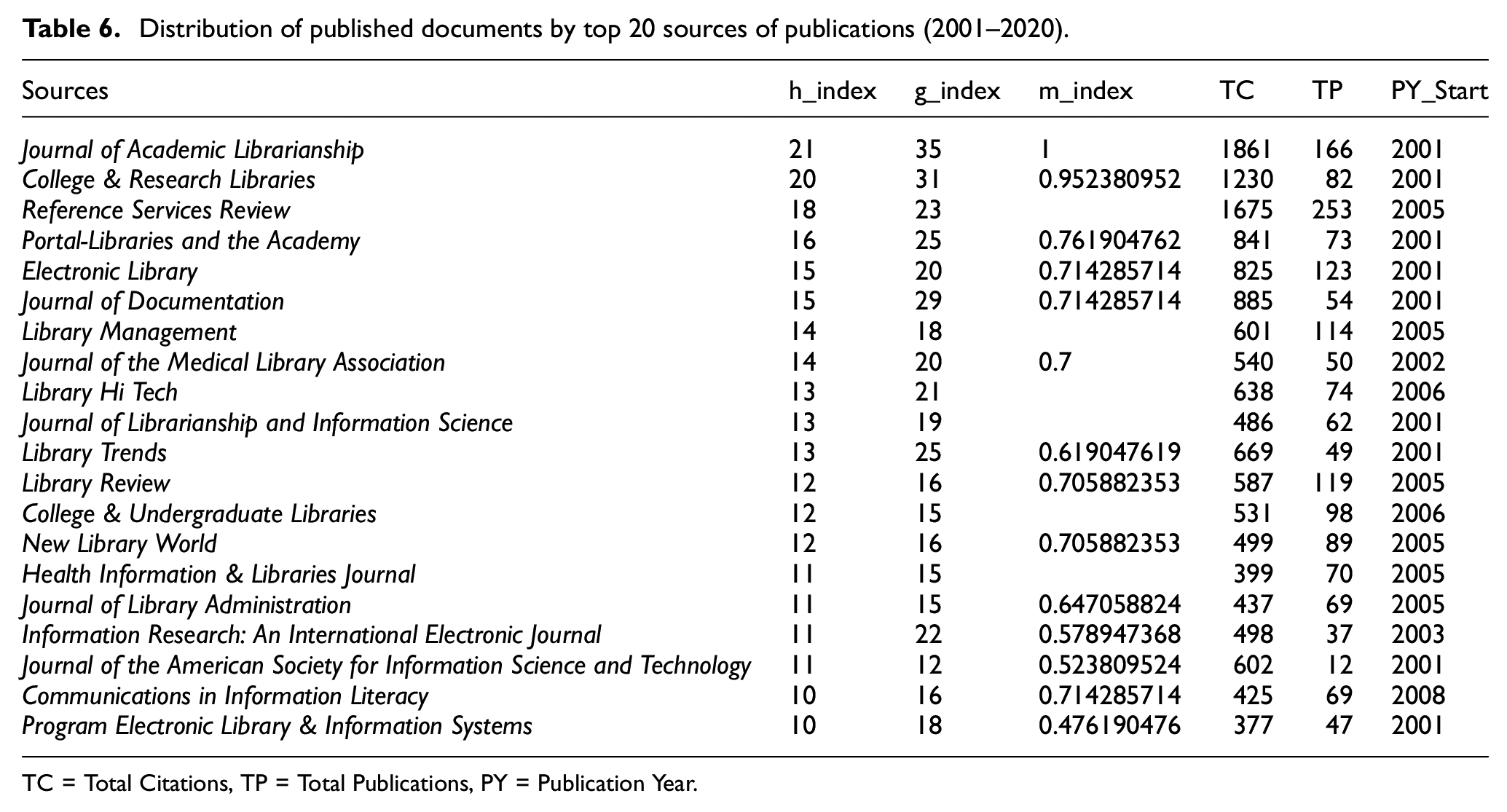
Regarding sources of publications, Journal of Academic Librarianship placed at top of sources out of 726 with h-index of 21, g-index of 35, m-index of 1, total citations of 1861, total publications 166 and publication year starting from 2001. Furthermore, College & Research Libraries was placed at second number with h-index of 20, g-index of 31, total citations of 1230, total publications 82 and publication year starting from 2001. However, Information Systems was placed at bottom of sources of top 20 published documents during 2001 to 2020 with h-index of 10, g-index of 18, m-index of 0.476190476, total citations of 377, total publications of 47 and publication year starting from 2001. It is pertinent to mention here that the Journal of Academic Librarianship was placed at the top and Information Systems placed at bottom of the top 20 sources of published documents (see Figure 4, Appendix 1, Table 6). The study findings are aligned with the findings of several researchers’ analysed top sources of published documents [7,68].

Published documents by top 20 sources of publications (2001–2020).
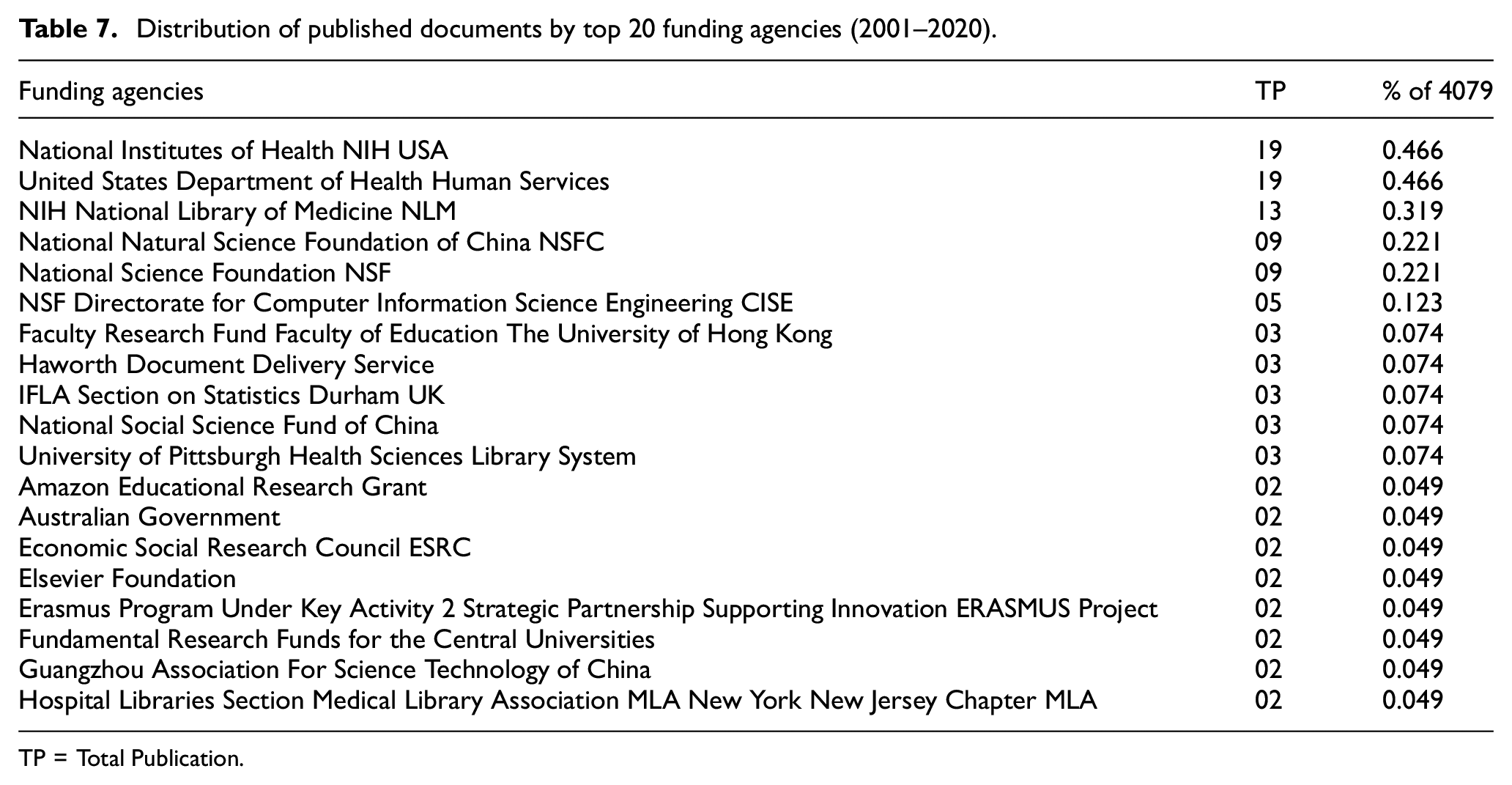
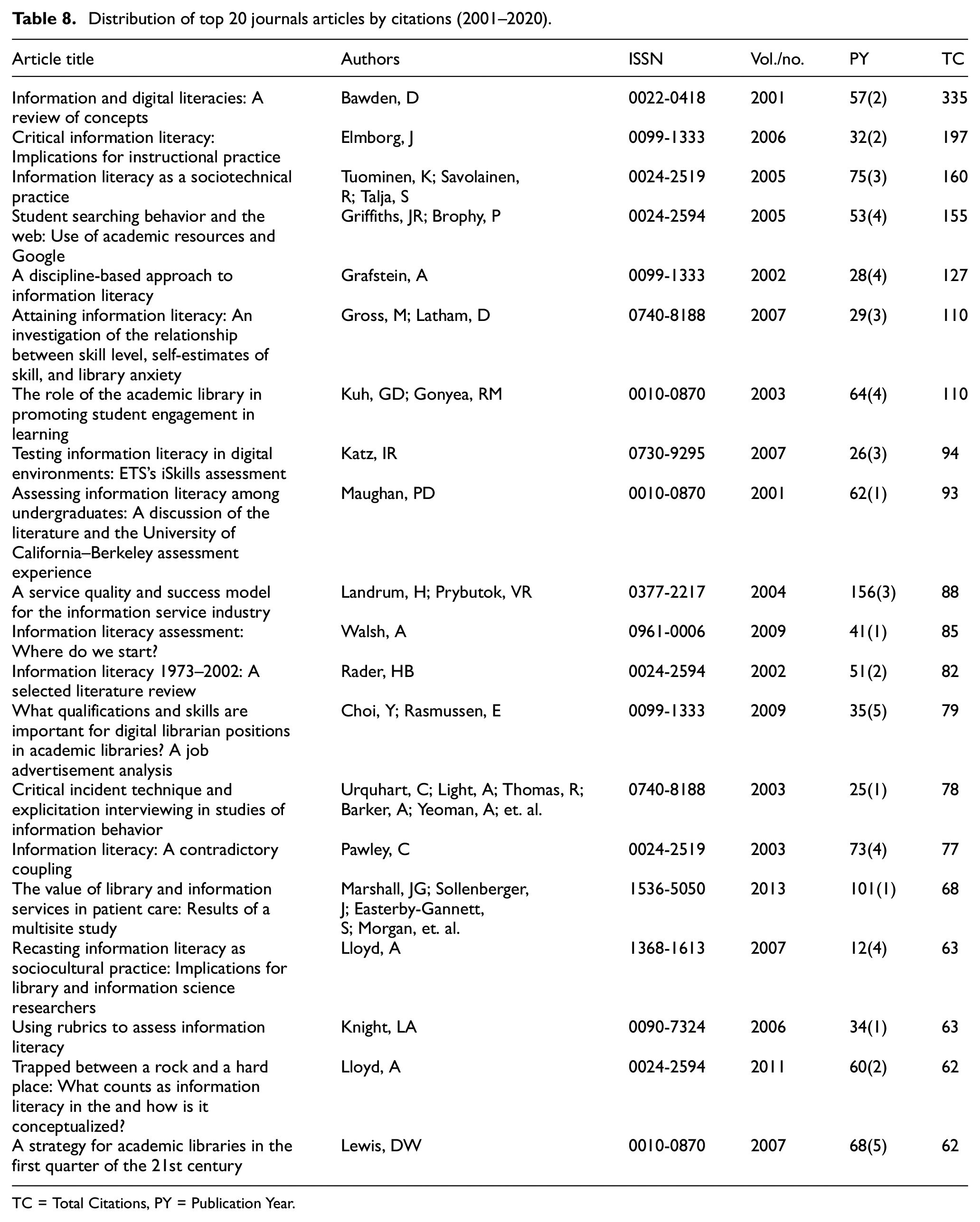
Furthermore, the National Institutes of Health NIH USA and United States Department of Health Human Services (0.466% out of 2676) were in the top list of published documents by the top 20 funding agencies during 2001–2020. Similarly, NIH National Library of Medicine NLM was placed at the third position with 0.319% of 2797 in published documents. On the contrary, the New Jersey Chapter MLA and Hospital Libraries Section Medical Library Association MLA New York with the same proportion (0.049% out of 4079) were placed at bottom of the top 20 funding agencies/organisations of published documents from 2001 to 2020 (see Appendix 2, Table 7). Regarding the top 20 articles with citations, an article titled, ‘Information and Digital Literacies: A Review of Concepts’ (written by Bawden D in 2001, ISSN-0022-0418, Vol./No. 57(2)) with total citations of 335 was listed at top of the list during 2001–2020. Conversely, an article titled, ‘A Strategy for Academic Libraries in the First Quarter of the 21st Century’ (written by Lewis DW in 2007, ISSN-0010-0870, Vol./No. 68(5)) with total citations of 82 was placed at the bottom of the top 20 published documents during the said period (see Appendix 3, Table 8).
5. Conclusion
Based on the bibliometric analysis, we concluded that this method enabled researchers to gain more in-depth insights into the selected topic and support to recognise variables that were used during research in the research support services in academic libraries. It has been shown the growing importance of publishing metrics in hiring/promotion decisions in the article. Faculty personnel committee and university upper administration are increasingly taking into consideration metrics such as journal impact factor, h-index, citation analysis and journal acceptance rates. The study was mainly based to examine research support services, information services, print collections, digital resources and information literacy–oriented published documents indexed in Web of Science from 2001 to 2020. It concluded that the topic of ‘information literacy and library’ was on top with a total number of 4079 publications in the form of articles in the English language from the United States. Furthermore, the top author’s name was Fourie I and the University of Illinois was the top organisation. The keyword ‘information literacy’ was highly used, the top publications were in the Journal of Academic Librarianship and the National Institutes of Health NIH USA was the top funding agency. It is recommended that further bibliometric studies may be conducted from other databases and using other students’ academic performance in higher education–related topics.
6. Limitations of the study
The present bibliometric study was based on publications in the Web of Science only and we did not use other databases agencies. Furthermore, it only focussed to examine research support services, information services, print collection, digital resources and information literacy using bibliometric analysis from 2001 to 2020. Thus, we did not use other related topics, including interlibrary loans, document delivery services, computer labs and professional staff.
Footnotes
Appendix 1
Distribution of published documents by top 20 sources of publications (2001–2020).
| Sources | h_index | g_index | m_index | TC | TP | PY_Start |
|---|---|---|---|---|---|---|
| Journal of Academic Librarianship | 21 | 35 | 1 | 1861 | 166 | 2001 |
| College & Research Libraries | 20 | 31 | 0.952380952 | 1230 | 82 | 2001 |
| Reference Services Review | 18 | 23 | 1675 | 253 | 2005 | |
| Portal-Libraries and the Academy | 16 | 25 | 0.761904762 | 841 | 73 | 2001 |
| Electronic Library | 15 | 20 | 0.714285714 | 825 | 123 | 2001 |
| Journal of Documentation | 15 | 29 | 0.714285714 | 885 | 54 | 2001 |
| Library Management | 14 | 18 | 601 | 114 | 2005 | |
| Journal of the Medical Library Association | 14 | 20 | 0.7 | 540 | 50 | 2002 |
| Library Hi Tech | 13 | 21 | 638 | 74 | 2006 | |
| Journal of Librarianship and Information Science | 13 | 19 | 486 | 62 | 2001 | |
| Library Trends | 13 | 25 | 0.619047619 | 669 | 49 | 2001 |
| Library Review | 12 | 16 | 0.705882353 | 587 | 119 | 2005 |
| College & Undergraduate Libraries | 12 | 15 | 531 | 98 | 2006 | |
| New Library World | 12 | 16 | 0.705882353 | 499 | 89 | 2005 |
| Health Information & Libraries Journal | 11 | 15 | 399 | 70 | 2005 | |
| Journal of Library Administration | 11 | 15 | 0.647058824 | 437 | 69 | 2005 |
| Information Research: An International Electronic Journal | 11 | 22 | 0.578947368 | 498 | 37 | 2003 |
| Journal of the American Society for Information Science and Technology | 11 | 12 | 0.523809524 | 602 | 12 | 2001 |
| Communications in Information Literacy | 10 | 16 | 0.714285714 | 425 | 69 | 2008 |
| Program Electronic Library & Information Systems | 10 | 18 | 0.476190476 | 377 | 47 | 2001 |
TC = Total Citations, TP = Total Publications, PY = Publication Year.
Appendix 2
Distribution of published documents by top 20 funding agencies (2001–2020).
| Funding agencies | TP | % of 4079 |
|---|---|---|
| National Institutes of Health NIH USA | 19 | 0.466 |
| United States Department of Health Human Services | 19 | 0.466 |
| NIH National Library of Medicine NLM | 13 | 0.319 |
| National Natural Science Foundation of China NSFC | 09 | 0.221 |
| National Science Foundation NSF | 09 | 0.221 |
| NSF Directorate for Computer Information Science Engineering CISE | 05 | 0.123 |
| Faculty Research Fund Faculty of Education The University of Hong Kong | 03 | 0.074 |
| Haworth Document Delivery Service | 03 | 0.074 |
| IFLA Section on Statistics Durham UK | 03 | 0.074 |
| National Social Science Fund of China | 03 | 0.074 |
| University of Pittsburgh Health Sciences Library System | 03 | 0.074 |
| Amazon Educational Research Grant | 02 | 0.049 |
| Australian Government | 02 | 0.049 |
| Economic Social Research Council ESRC | 02 | 0.049 |
| Elsevier Foundation | 02 | 0.049 |
| Erasmus Program Under Key Activity 2 Strategic Partnership Supporting Innovation ERASMUS Project | 02 | 0.049 |
| Fundamental Research Funds for the Central Universities | 02 | 0.049 |
| Guangzhou Association For Science Technology of China | 02 | 0.049 |
| Hospital Libraries Section Medical Library Association MLA New York New Jersey Chapter MLA | 02 | 0.049 |
TP = Total Publication.
Appendix 3
Distribution of top 20 journals articles by citations (2001–2020).
| Article title | Authors | ISSN | Vol./no. | PY | TC |
|---|---|---|---|---|---|
| Information and digital literacies: A review of concepts | Bawden, D | 0022-0418 | 2001 | 57(2) | 335 |
| Critical information literacy: Implications for instructional practice | Elmborg, J | 0099-1333 | 2006 | 32(2) | 197 |
| Information literacy as a sociotechnical practice | Tuominen, K; Savolainen,R; Talja, S | 0024-2519 | 2005 | 75(3) | 160 |
| Student searching behavior and the web: Use of academic resources and Google | Griffiths, JR; Brophy, P | 0024-2594 | 2005 | 53(4) | 155 |
| A discipline-based approach to information literacy | Grafstein, A | 0099-1333 | 2002 | 28(4) | 127 |
| Attaining information literacy: An investigation of the relationship between skill level, self-estimates of skill, and library anxiety | Gross, M; Latham, D | 0740-8188 | 2007 | 29(3) | 110 |
| The role of the academic library in promoting student engagement in learning | Kuh, GD; Gonyea, RM | 0010-0870 | 2003 | 64(4) | 110 |
| Testing information literacy in digital environments: ETS’s iSkills assessment | Katz, IR | 0730-9295 | 2007 | 26(3) | 94 |
| Assessing information literacy among undergraduates: A discussion of the literature and the University of California–Berkeley assessment experience | Maughan, PD | 0010-0870 | 2001 | 62(1) | 93 |
| A service quality and success model for the information service industry | Landrum, H; Prybutok, VR | 0377-2217 | 2004 | 156(3) | 88 |
| Information literacy assessment: Where do we start? | Walsh, A | 0961-0006 | 2009 | 41(1) | 85 |
| Information literacy 1973–2002: A selected literature review | Rader, HB | 0024-2594 | 2002 | 51(2) | 82 |
| What qualifications and skills are important for digital librarian positions in academic libraries? A job advertisement analysis | Choi, Y; Rasmussen, E | 0099-1333 | 2009 | 35(5) | 79 |
| Critical incident technique and explicitation interviewing in studies of information behavior | Urquhart, C; Light, A; Thomas, R;Barker, A; Yeoman, A; et. al. | 0740-8188 | 2003 | 25(1) | 78 |
| Information literacy: A contradictory coupling | Pawley, C | 0024-2519 | 2003 | 73(4) | 77 |
| The value of library and information services in patient care: Results of a multisite study | Marshall, JG; Sollenberger,J; Easterby-Gannett,S; Morgan, et. al. | 1536-5050 | 2013 | 101(1) | 68 |
| Recasting information literacy as sociocultural practice: Implications for library and information science researchers | Lloyd, A | 1368-1613 | 2007 | 12(4) | 63 |
| Using rubrics to assess information literacy | Knight, LA | 0090-7324 | 2006 | 34(1) | 63 |
| Trapped between a rock and a hard place: What counts as information literacy in the and how is it conceptualized? | Lloyd, A | 0024-2594 | 2011 | 60(2) | 62 |
| A strategy for academic libraries in the first quarter of the 21st century | Lewis, DW | 0010-0870 | 2007 | 68(5) | 62 |
TC = Total Citations, PY = Publication Year.
Declaration of conflicting interests
The author(s) declared no potential conflicts of interest with respect to the research, authorship and/or publication of this article.
Funding
The author(s) received no financial support for the research, authorship and/or publication of this article.
