




Abstract
Background
Human capital is a critical asset for organizations, impacting financial performance and market value. Maintaining a stable, committed workforce is challenging. Job satisfaction emerges as a pivotal factor influencing employees’ intentions to leave or turnover intention. However, both encompass diverse dimensions that can exert positive or negative effects.
Objectives
To explore the common factors affecting job satisfaction and turnover intention, focusing on the significant positive and negative relationships.
Method
A systematic review based on the PRISMA framework has been conducted. The data has been precisely identified, evaluated, and extracted from the SCOPUS database based on set benchmarks.
Result
The investigation revealed a variety of determinants that exhibit a significant correlation with job satisfaction and turnover intention, manifesting in both positive and negative associations. Furthermore, these elements have been linked to established motivational theories, suggesting a theoretical underpinning for the observed relationships between workplace dynamics and employee behavior.
Conclusion
The result intended to provide a comprehensive understanding of the factors by offering a framework for studying job satisfaction and turnover intention guiding future research in the field of knowledge.
Introduction
The pursuit of decent work and economic growth, as embodied in Sustainable Development Goal 8 (SDG 8), is a pressing global concern. Achieving this goal necessitates a deeper understanding of the complex dynamics governing employment relationships. At the global level, the World Bank estimates that approximately two billion people are engaged in informal employment, lacking access to basic labor rights and social protections. 1 This underscores the need for organizations to prioritize fair and sustainable employment practices, ensuring that employees’ rights and well-being are respected at every organizational level.
Employees are an organization’s most crucial strategic resource. Yet, in today’s competitive landscape, retaining employees for the long term is a significant challenge for an organization. Employee turnover is not just a threat but also incurs additional financial costs. It also affects the organization’s reputation, as high turnover rates can tarnish both its value and public image. 2 The process of employee turnover is not abrupt but develops over time. While managers cannot prevent turnover once an employee decides to leave, they can influence the factors that contribute to turnover intention (TI). 3 Numerous studies have aimed to identify these factors, yet managing them remains a complex issue from a managerial perspective.
Job satisfaction is often cited as a pivotal factor in the health of the employer-employee relationship.4,5 It’s not only crucial for the well-being and productivity of employees but also plays a significant role in their retention. A higher level of job satisfaction tends to be inversely related to turnover intention,4–9 meaning that when employees are happy with their jobs, they are less likely to consider leaving the company.
Other factors also play a role in an employee’s decision to remain with or leave an organization. 10 Moreover, the escalation of employee turnover rates brings about adverse challenges, including the substantial financial and non-financial costs associated with recruitment, as well as a decline in organizational efficiency and productivity. 11
While job satisfaction is intricately linked to employees’ intentions to leave, it constitutes a broad and complex field of study. The multifaceted nature of job satisfaction 12 means it is influenced by numerous factors, rendering it challenging to comprehensively address.
Although extensive research has been conducted on the factors influencing JS and TI independently, very few studies have undertaken a comprehensive examination of the shared factors that concurrently impact both JS and TI as dependent variables. This notable absence of integrated analysis creates a significant knowledge gap in understanding the complex interplay between these two interconnected variables. Therefore, a systematic review is essential to synthesize existing literature and illuminate the common determinants of JS and TI, providing a foundation for future empirical research in this area.
The review encompasses an analysis of publications using bibliometric indicators. Utilizing VOS-viewer, the paper endeavors to discern the determinants impacting employees’ job satisfaction and turnover intention.
Methodology
To achieve the study’s objective, a Systematic Literature Review (SLR) has been carried out with the help of the PRISMA framework. SLR is a review of a formulated question that uses systematic and explicit methods to identify, select, and critically appraise and analyze the relevant research. Recently, the method of a systematic literature review has been defined as an effective method for systematically and critically rigorously evaluating literature that leads to a robust conclusion of what is existing and unknown in an area.10,11 The present study has considered both definitions to fulfill the formulated objectives.
Furthermore, the PRISMA (Preferred Reporting Items for Systematic Reviews) framework has been introduced by Liberati and others. 11 By using the PRISMA statement, the methodology has been divided into four steps, that is, Search Strategy, Selection Criteria (inclusion) and Quality Assessment (exclusion), and Data Extraction.
Search strategy
The data has been extracted from the Scopus database based on availability and accessibility using the combination of keywords “Relationship,” “Job Satisfaction,” and “Turnover Intention.” “Intention to leave” and “intention to quit” are also used somewhere in place of turnover intention and “Work Satisfaction” is in place of “Job Satisfaction.” A total of 1861 articles, conference papers, reviews, book chapters, and other documents have been identified by using the above keywords.
Selection criteria
Selection criteria/inclusion criteria for the study.
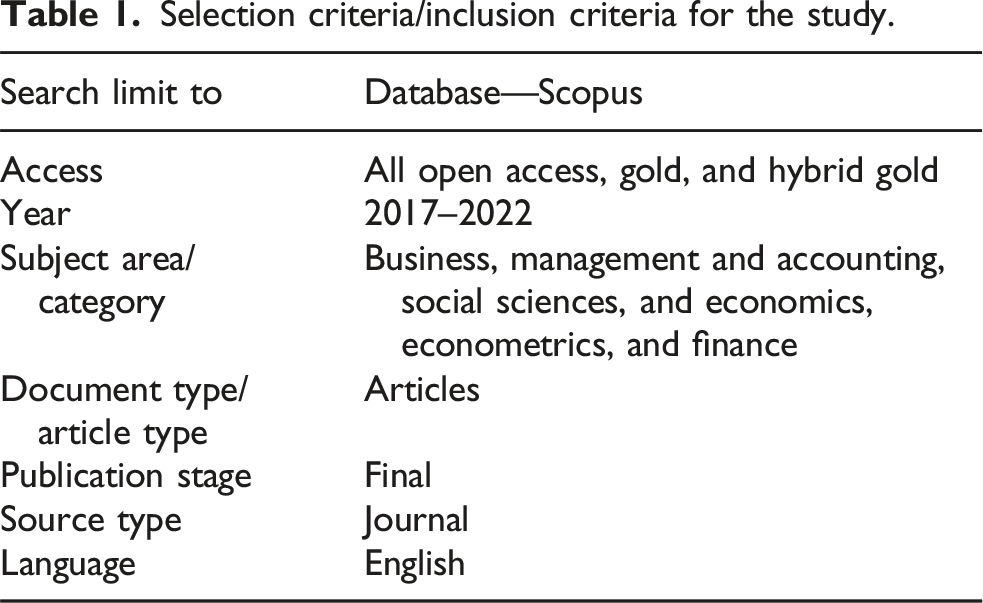
The following search strategies have been used for the extraction of data in the Scopus database:
(TITLE-ABS-KEY (“Job Satisfaction” OR “Work Satisfaction”) AND TITLE-ABS-KEY (“Relationship”) AND TITLE-ABS-KEY (“Turnover Intention” OR “Intention to Quit” OR “Intention to Leave”)) AND (LIMIT-TO (PUBSTAGE, “final”)) AND (LIMIT-TO (OA, “all”) OR LIMIT-TO (OA, “publisher full gold”) OR LIMIT-TO (OA, “publisher hybrid gold”)) AND (LIMIT-TO (PUBYEAR, 2022) OR LIMIT-TO (PUBYEAR, 2021) OR LIMIT-TO (PUBYEAR, 2020) OR LIMIT-TO (PUBYEAR, 2019) OR LIMIT-TO (PUBYEAR, 2018) OR LIMIT-TO (PUBYEAR, 2017)) AND (LIMIT-TO (DOCTYPE, “ar”)) AND (LIMIT-TO (SUBJAREA, “BUSI”) OR LIMIT-TO (SUBJAREA, “SOCI”) OR LIMIT-TO (SUBJAREA, “ECON”)) AND (LIMIT-TO (LANGUAGE, “English”)) AND (LIMIT-TO (SRCTYPE, “j”).
This study has examined research articles published between 2017 and 2022, a 5-year window that has been commonly employed in bibliometric analyses to assess research trends, productivity, and impact, providing a balanced perspective on recent research activity in the field. 12 Moreover, the year 2023 has not been considered due to potential publication and indexing delays, ensuring a more comprehensive picture of research trends.
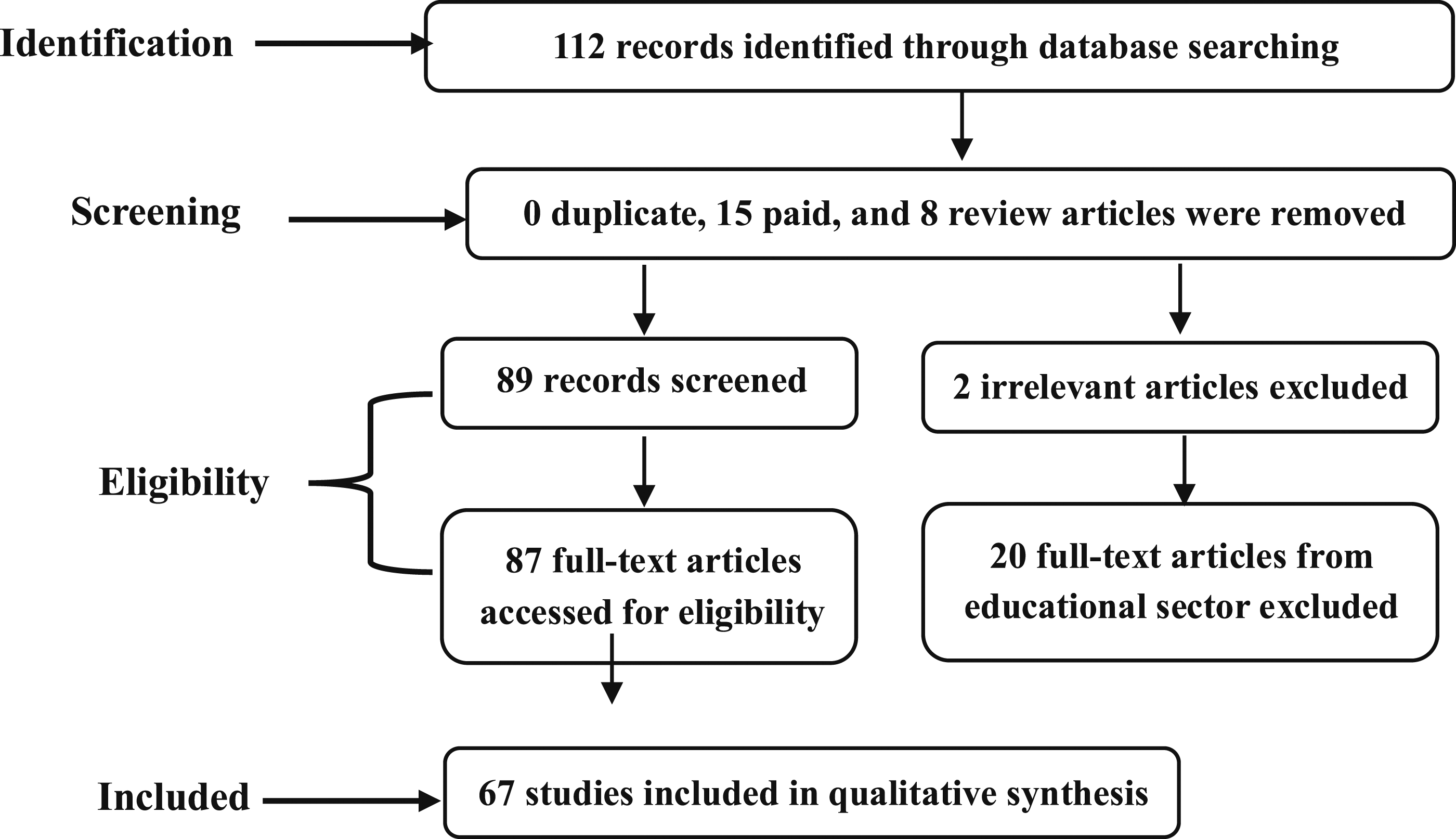
After applying the selection criteria, 112 articles have been extracted. A .csv file containing the same data (i.e., 02nd February 2024) has been downloaded and converted into Excel.13–15,51
Quality assessment
At this point, exclusion criteria have been set for a better assessment of data for the study. The exclusion criteria are given below. a. b. c. d. e. f.
The flow of inclusion and exclusion criteria is shown with the help of the PRISMA framework. Figure 1 demonstrates the flow of inclusion and exclusion of data at every stage. PRISMA framework for inclusion and exclusion of articles.
10
Data extraction
After applying exclusion criteria, two irrelevant articles were excluded from 89 abstracts as they did not lead to the goal of the study. Following this, 15 paid and 8 review articles were removed. Furthermore, after a comprehensive examination of the remaining articles, 20 more articles were eliminated which were not fulfilling the objectives of the study. Finally, a total number of 67 articles have been selected for the study.
Data analysis techniques
The data analysis comprised three phases. i. Initially, the general features were determined by analyzing the selected articles’ distribution by year and publication region. ii. The second phase involved evaluating citations and keyword co-occurrence using VOS-viewer to gauge the importance of the retrieved articles. This phase also revealed the relationship between major keywords in the studies. iii. Lastly, common factors from the correlation and regression table were extracted in the third phase to assess their influence on job satisfaction (JS) and turnover intention (TI). Using Excel or similar spreadsheet software, the relationship between these factors and their impact on JS and TI (whether positive or negative) was further analyzed.
Findings and result
The selected peer-reviewed articles illustrate the relationship between the common factors affecting JS and TI of employees in different organizations. As described in section 2.5, the data has been analyzed in the following section in three steps. At the first point, the data analysis has been done with the help of Excel, which contains the distribution of articles per year that is, 2017 to 2022, and the region-wise distribution of publications, which shows the general characteristics of all the articles. However,
Phase 1
Distribution of published articles between the years 2017 and 2022
Graph 1 demonstrates the distribution of articles from 2017 to 2022. Each year is represented on the horizontal axis, while the vertical axis denotes the number of articles published. In particular, it highlights a notable increase in the number of articles published in the year 2020, followed by a decrease in subsequent years. It could be due to the COVID-19 pandemic, which prompted a surge in research and publications across different fields as researchers sought to understand and address its impact on various aspects of society. Distribution of articles per year (2017–2022).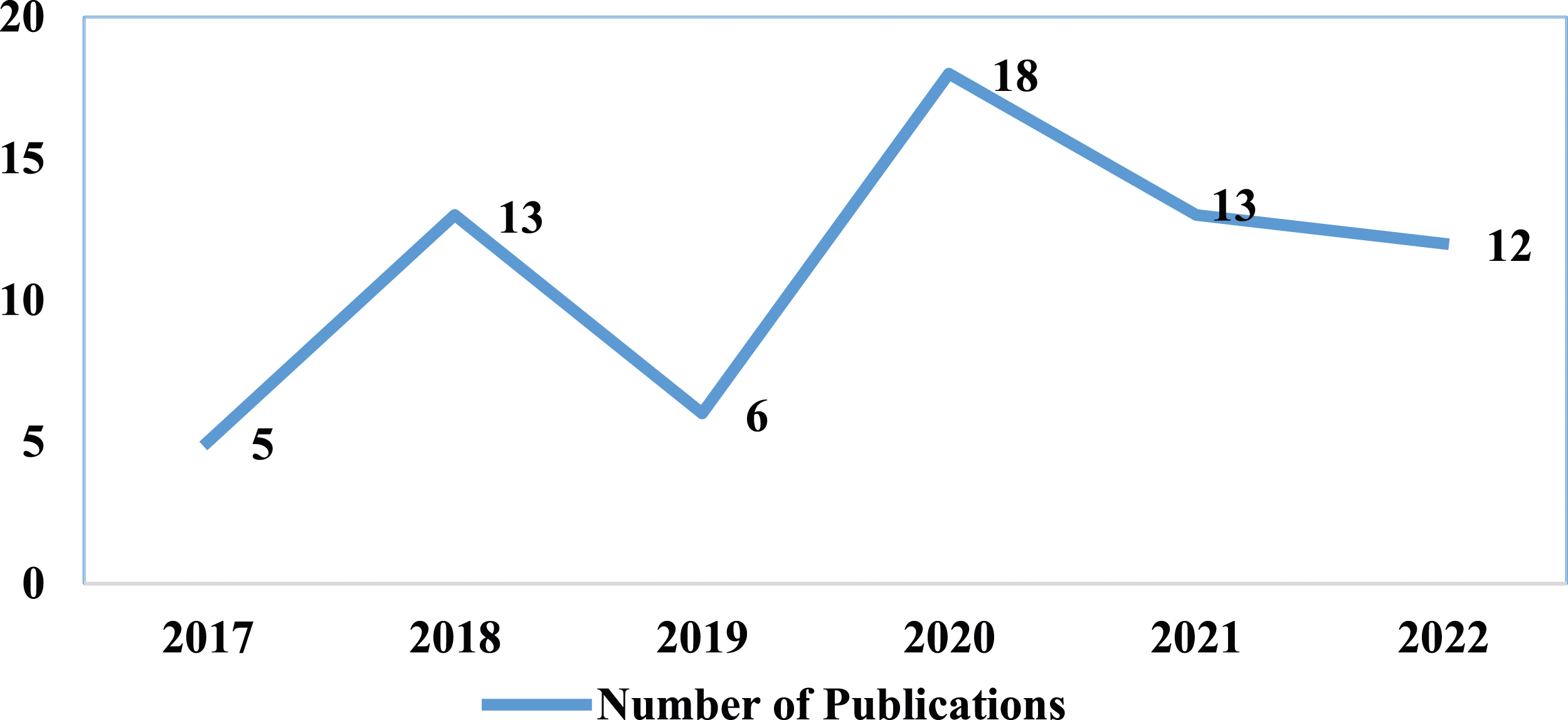
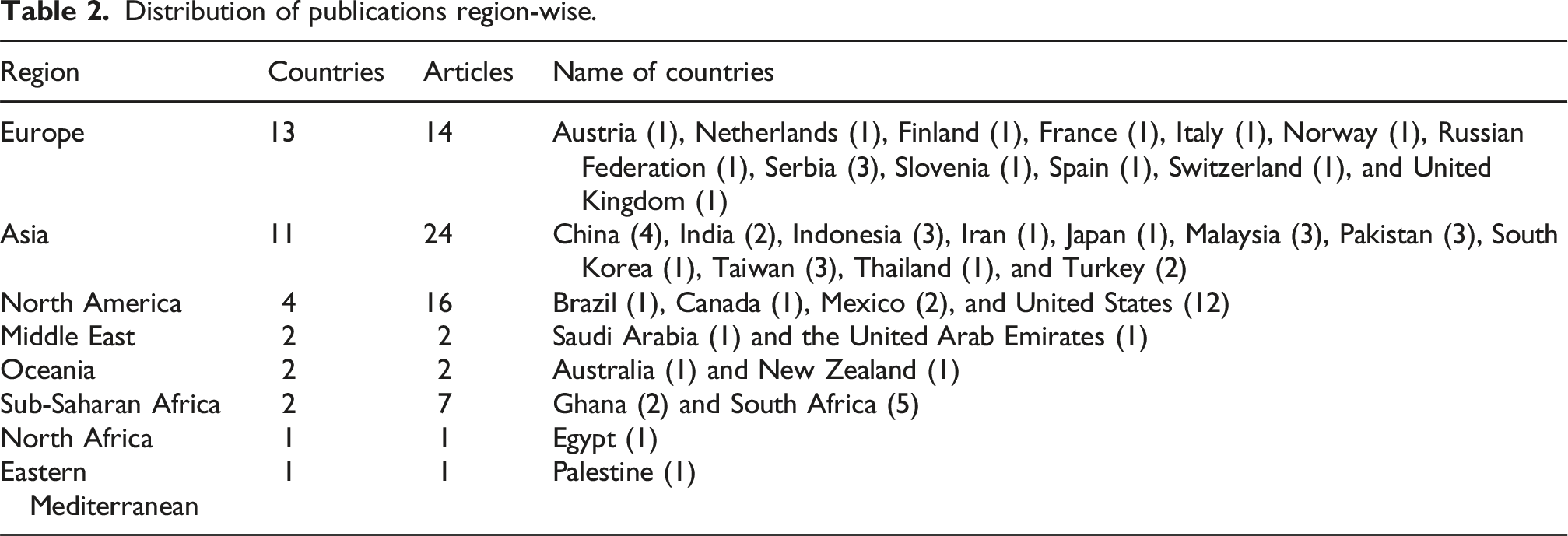
Distribution of publications region-wise
In this section, an examination of region-wise publications has been conducted to ascertain the contributions of various countries in the domain of job satisfaction (JS) and turnover intention (TI) studies. The world map depicted in Figure 2 illustrates the country-wise distribution of articles, offering a visual representation of the data related to the study areas of JS and TI among employees. Country-wise distribution of the articles.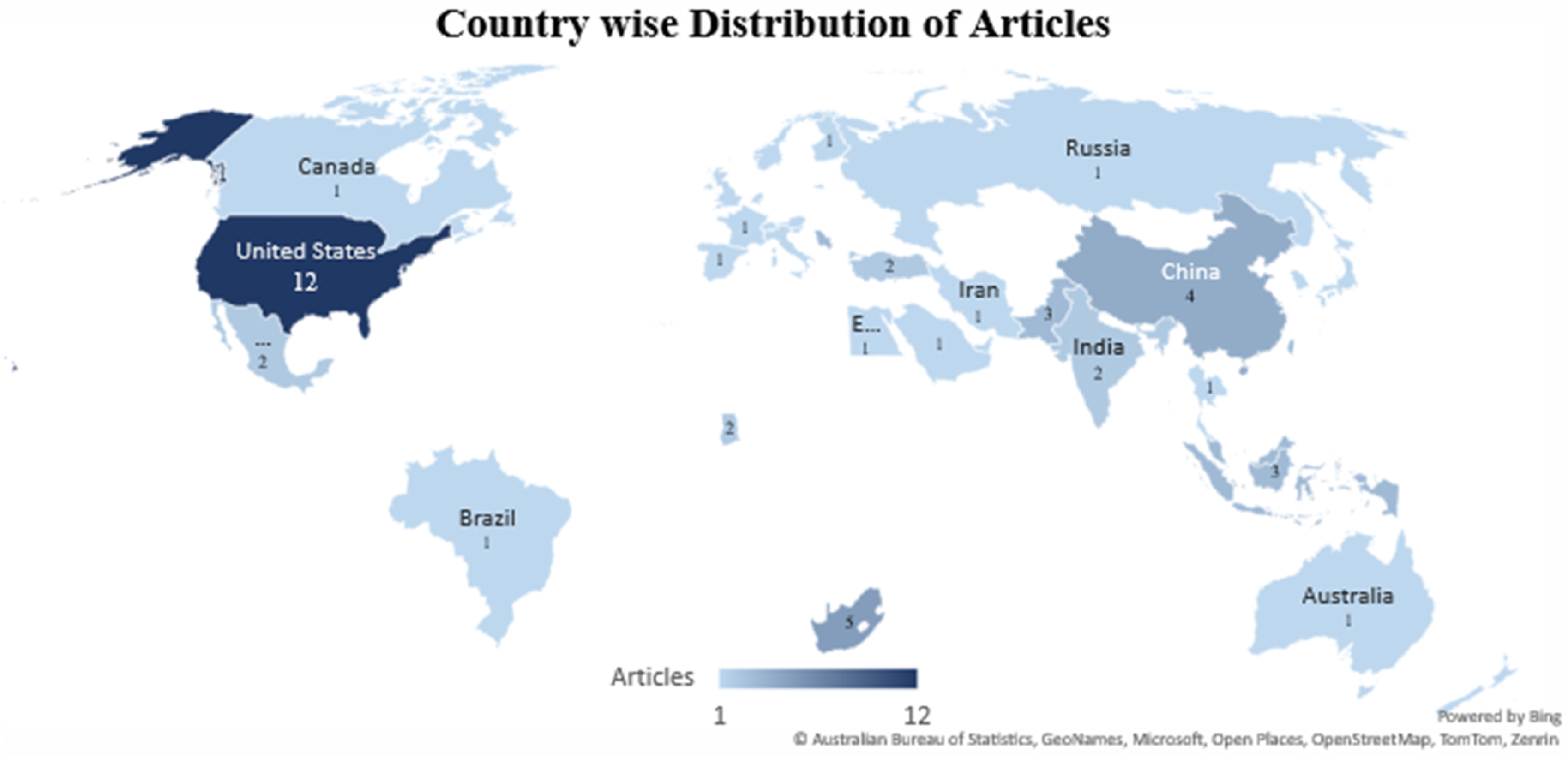
In the map, varying shades of color are utilized to denote the intensity of research activity within each country. The darkest color represents countries where the highest volume of work has been conducted, while the lightest color indicates countries with minimal research activity in the domain of JS and TI (Figure 3). Keyword co-occurrence map.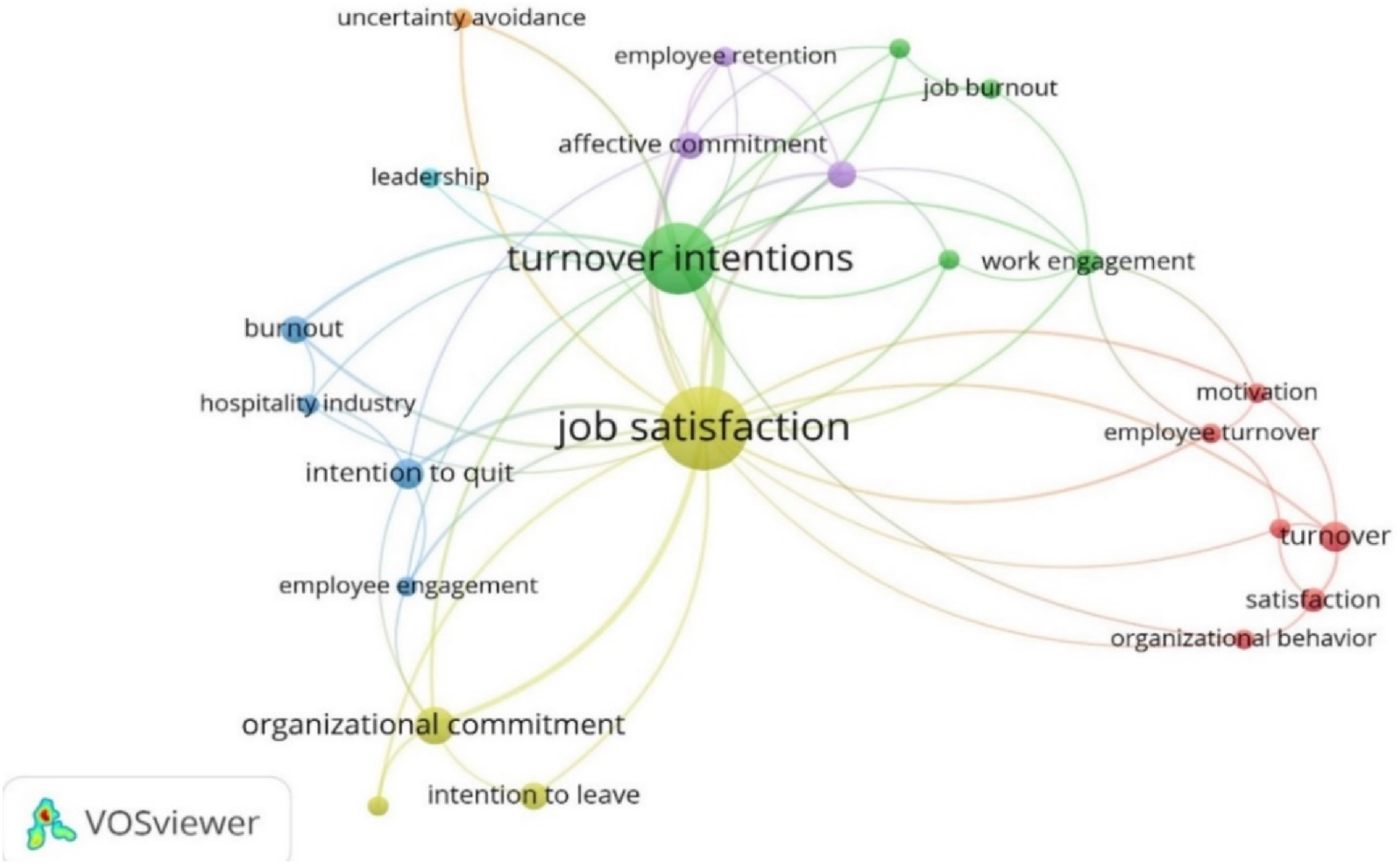
Distribution of publications region-wise.
Phase 2
VOSviewer is a powerful tool for visualizing and analyzing citation networks and keyword co-occurrence. By identifying the number of citations per journal and exploring keyword co-occurrence patterns, researchers can gain valuable insights into research the research landscape and identify emerging trends and influential publications in the field of study.
Citation by source (journals)
Citation by source (journals).
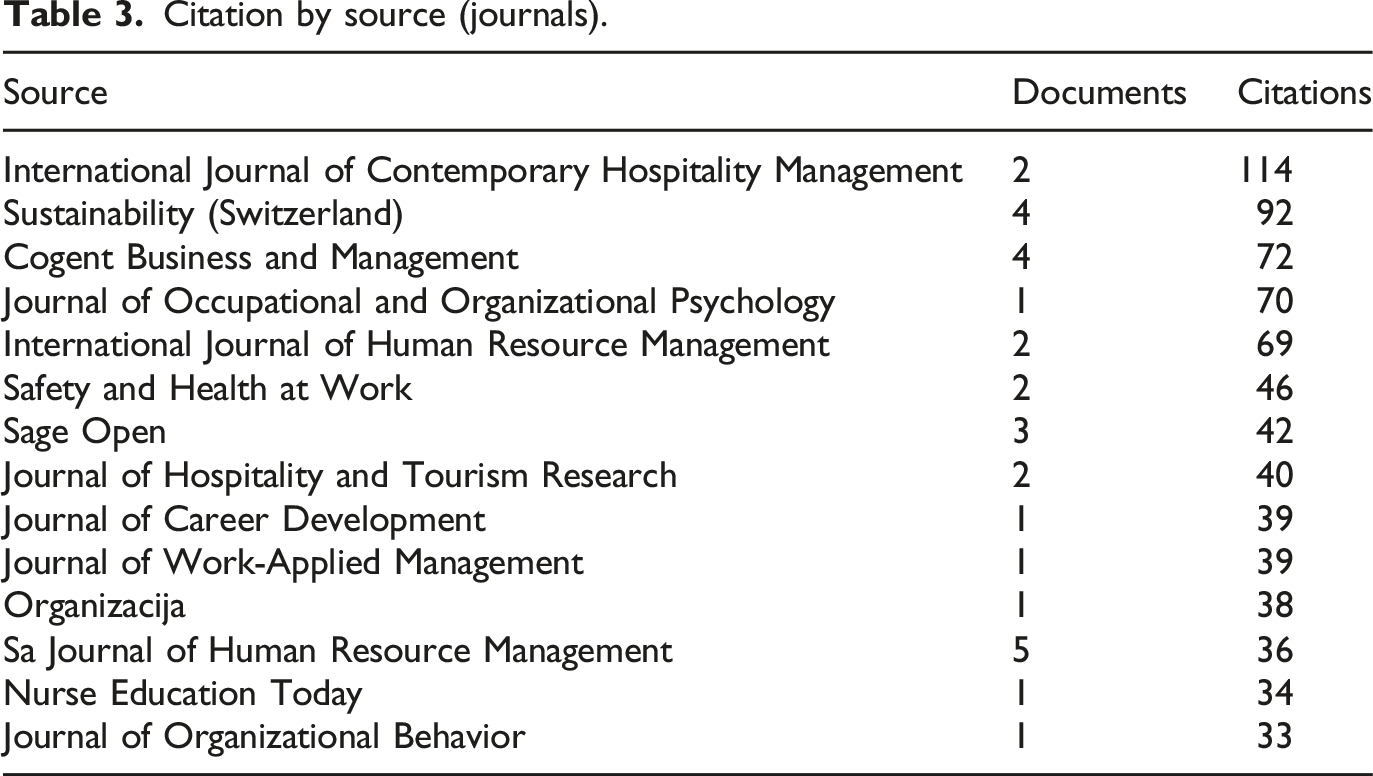
Using this information can serve as a compass for guiding future research activities, offering a comprehensive understanding of the scholarly discourse relevant topic of interest. At this stage, the number of citations per journal and keyword co-occurrence were determined using VOSviewer.
Keyword co-occurrence
The map effectively showcases the strength of keyword co-occurrence, with a total strength of 67 observed in the selected articles. In the map, the size of each circle corresponds to the frequency of keyword occurrences, with larger circles indicating a higher number of occurrences. Additionally, the strength of the relationship between keywords is depicted by the darkness of the connecting lines; darker lines represent stronger relationships.
Phase 3
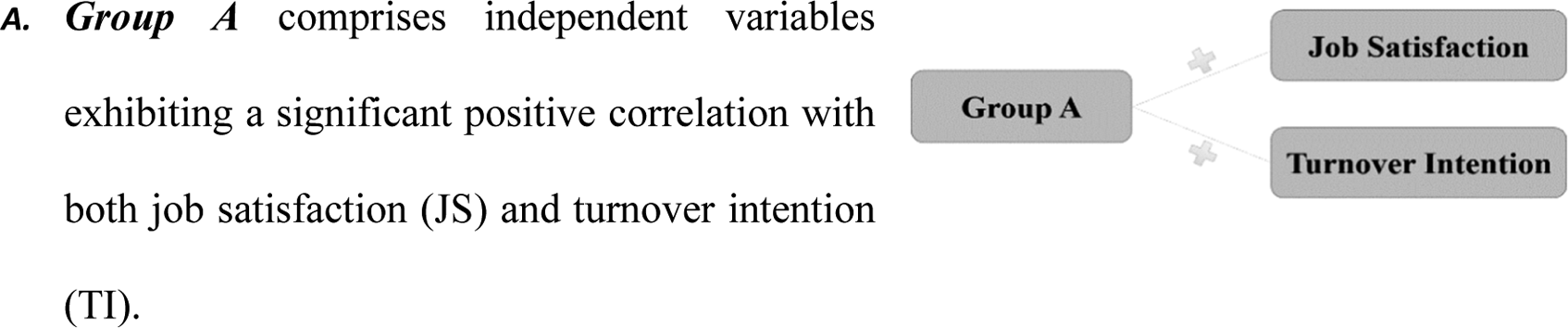
In the third stage of analysis, common factors influencing both JS and TI have been systematically examined and categorized into four distinct groups: Group A, Group B, Group C, and Group D. These groups delineate the factors that exhibit a positive effect on both JS and TI, facilitating a comprehensive understanding of their impact within organizational contexts.
Factors and their relationship with job satisfaction and turnover intention.

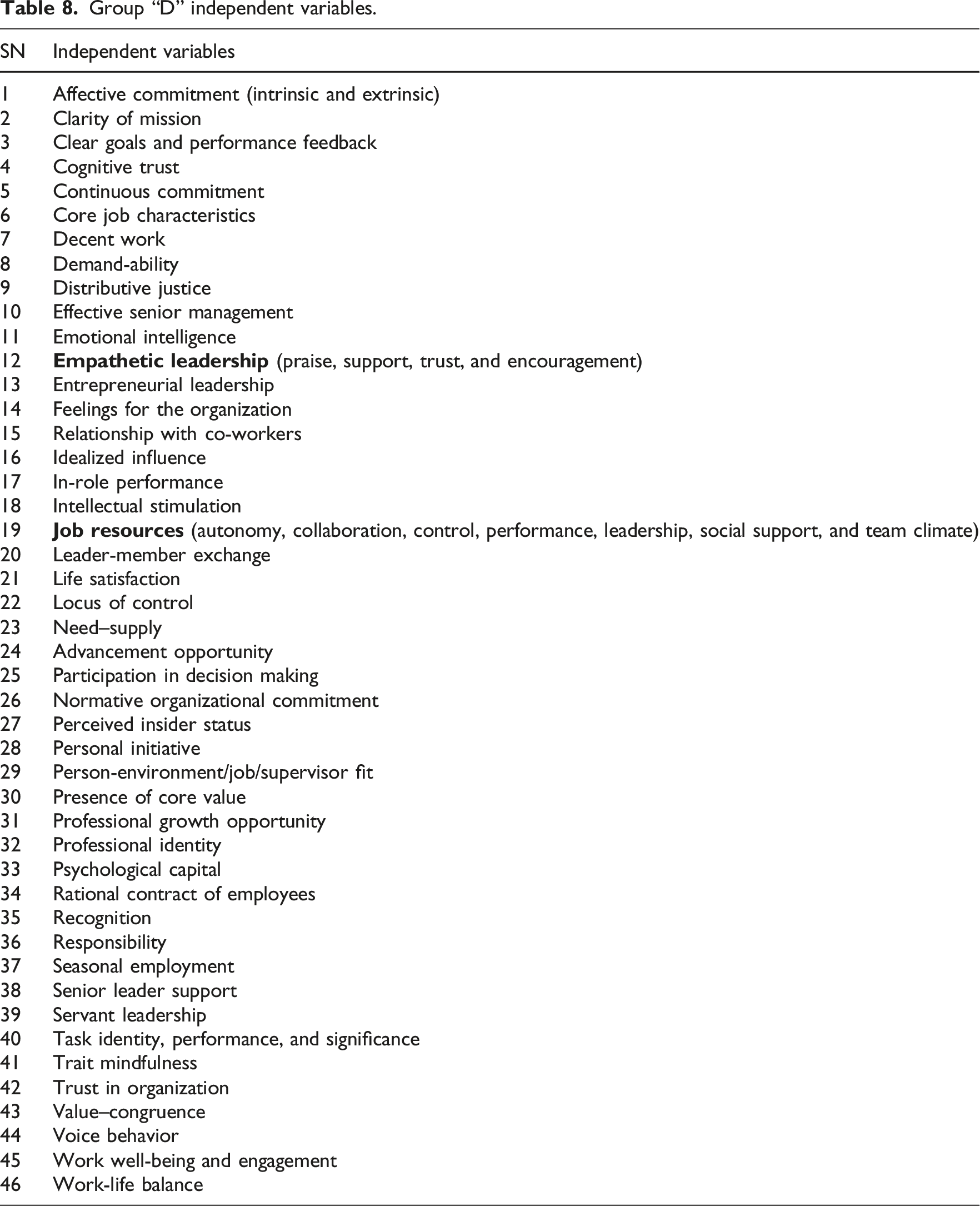
Independent variables under Group A, Group B, Group C, and Group D


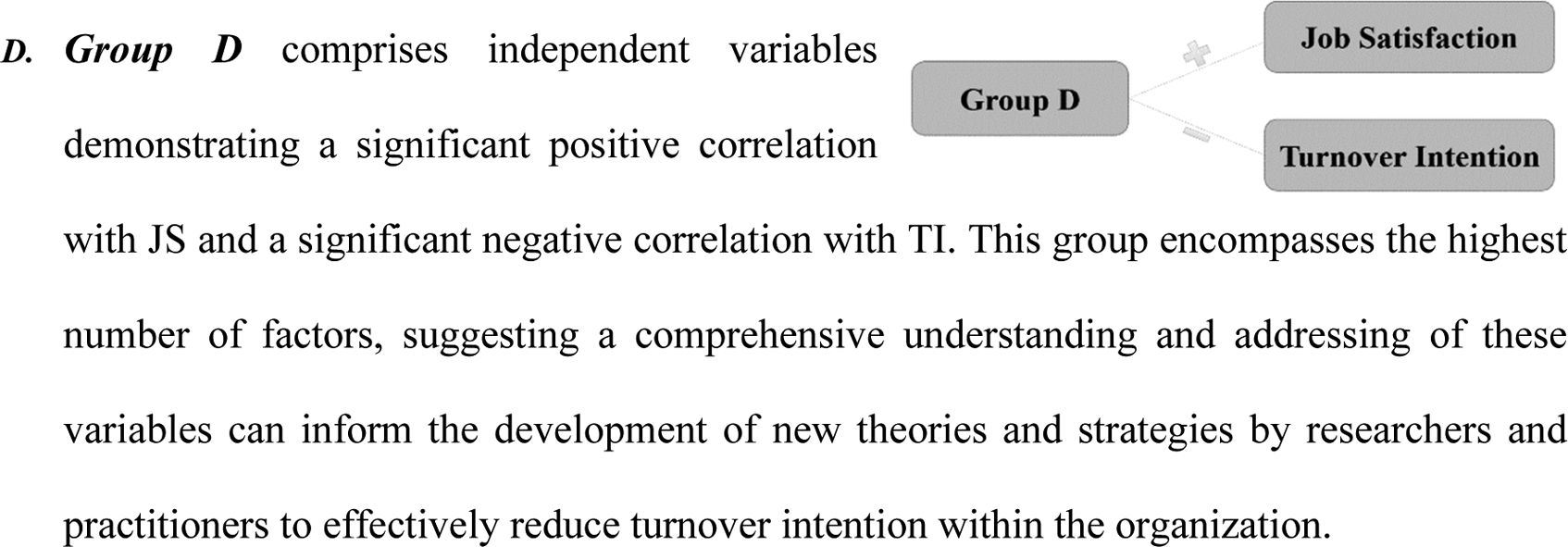
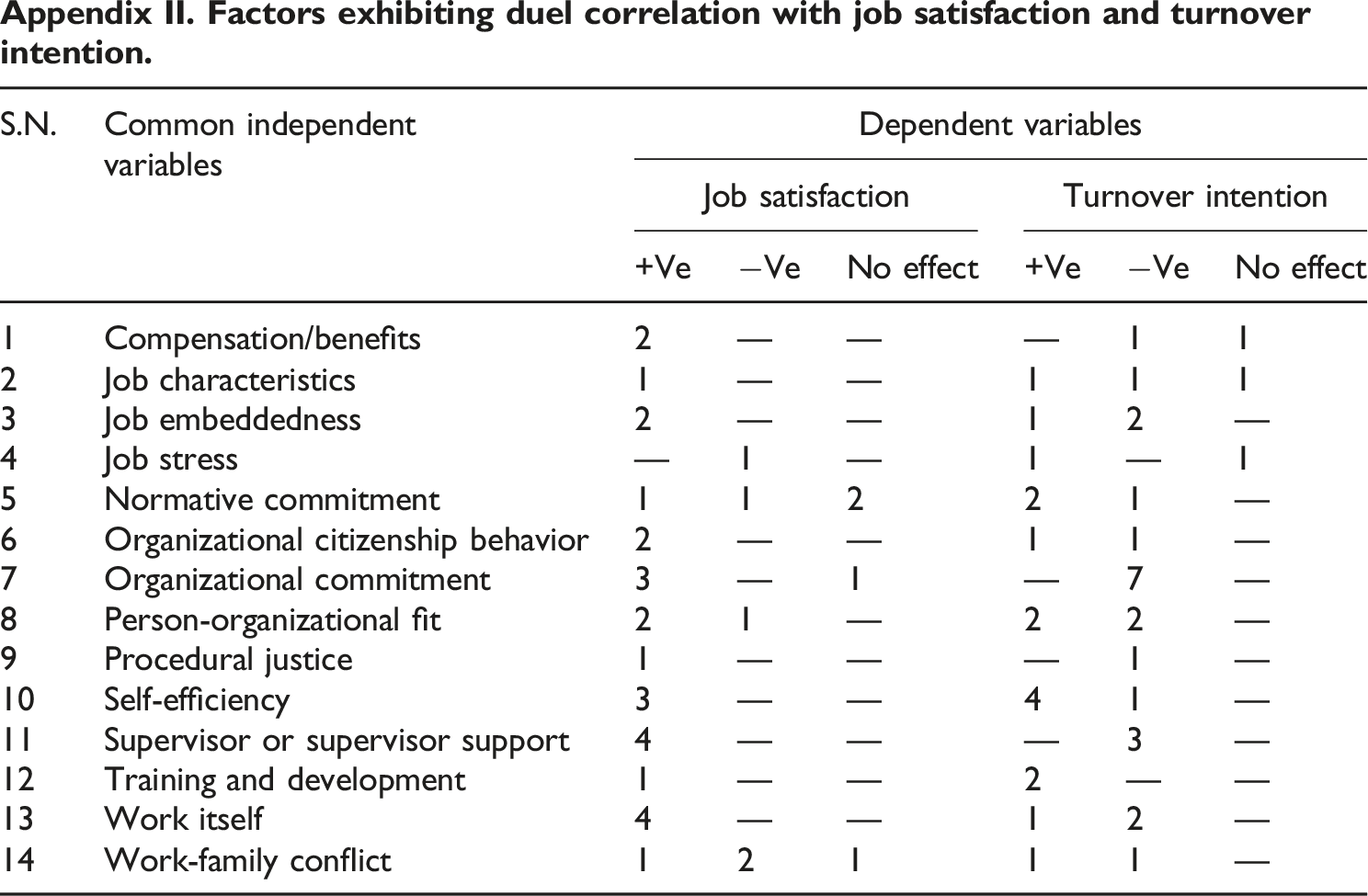
Several other factors have been identified that exhibit a dual correlation with both job satisfaction and turnover intention. However, as investigating this dual relationship was not the primary focus of the study, a table containing these factors is included in the appendices under the heading
Work motivational theories and their relevance to workplace dynamics
Understanding and improving employee behavior in the workplace is fundamental for organizational success. This section explores the significance of linking motivational theories to factors of job satisfaction and turnover intention, explaining their implications for workforce dynamics. Work motivation is considered an essential catalyst for the success of organizations as it promotes employees’ effective performance. An organization’s goal depends upon employees’ performance driven by workplace motivation. 78 It has been found that insufficiently motivated perform poorly, despite being competent.78,79 Therefore, rather than simply turning up at work, employers expect their staff to work with full motivation. 80 Work motivation is one of the essential causes of individual behavior in an organization. 79
Several decades of research explored the dynamics that initiated work-related motivation. 81 Significant contributions have been made to the socio-psychological perspective of work motivation such as personal factors like age, gender, educational level, living setting, health status, and family support; social exchange, interaction among individuals and contextual factors, culture, social situation, and psychological needs.82–86 It has been found that there are integrated dynamics affecting motivation and performance in the workplace 82 if see the lens of the hierarchical model of intrinsic such as beliefs, emotions, behavior group membership, 87 and extrinsic motivation such as incentives, rewards, and recognition. 88
Group “A” independent variables.

Group “B” independent variables.

Group “C” independent variables.

Group “D” independent variables.
Motivational theories and their relevance to workplace dynamics.

Motivational factors serve as insightful frameworks that help to understand employees’ behavior at the workplace. By aligning these theories with factors influencing JS and TI, organizations can gain profound insights into the drivers of employee actions which establishes a foundational understanding necessary for the implementation of strategies aimed at effectively addressing employee needs and motivations.
Conclusion
The SLR of existing literature on job satisfaction and turnover intention reveals a growing body of research in this field. Exploring the existing literature highlights key factors influencing employee turnover intention, including job satisfaction, perceived ease of use, trust, social influence, attitude, and facilitating conditions, conversely, perceived risk and perceived cost emerge as significant negative predictors of job satisfaction.
Notably, this study identifies gaps in the existing literature, with a limited geographical scope and a predominance of qualitative research methods like longitudinal or experimental research methods. Future studies need to expand on these findings, exploring the complex relationships between JS, TI, and organizational outcomes in diverse contexts. Additionally, incorporating qualitative and mixed-methods approaches will provide a more comprehensive understanding of this critical issue. By addressing these gaps, researchers and practitioners can develop effective strategies to enhance job satisfaction, reduce turnover intention, and promote sustainable employment practices.
Limitation/s and future directions
This review aims to contribute to the ongoing conversation and knowledge-building process in the field, but it does not establish causal relationships or provide managerial implications. By acknowledging the limitations of the SLR, the results can be considered as a foundation for future research.
Researchers need to evolve existing theories of JS and TI rather than remain confined to traditional perspectives. Theories must be used as a foundation to develop new, more relevant theories that align with contemporary organizational dynamics. This will enable a deeper understanding of the intricate factors influencing JS and TI.
Future research could explore the complex relationships between the identified independent variables and dependent variables (JS and TI), using longitudinal or experimental designs to establish causality. Investigating context-specific factors, such as industry or organizational size, may also provide a more nuanced understanding of the relationships.
Statements and declarations
Footnotes
Author contributions
Conflicting interests
The authors declared the following potential conflicts of interest with respect to the research, authorship, and/or publication of this article: The authors whose names are listed immediately below certify that they have no affiliations with or involvement in any organization or entity with any financial interest (such as honoraria; educational grants; participation in speakers’ bureaus; membership, employment, consultancies, stock ownership, or other equity interest; and expert testimony or patent-licensing arrangements) or non-financial interest (such as personal or professional relationships, affiliations, knowledge, or beliefs) in the subject matter or materials discussed in this manuscript.
Funding
The authors received no financial support for the research, authorship, and/or publication of this article.
Declaration of generative AI
No AI tool has been used to generate this study. However, the “Grammarly” tool has been used for grammatical correction.

Appendix
Publication per source. Factors exhibiting duel correlation with job satisfaction and turnover intention. Significant correlation of job satisfaction and turnover intention. Significant correlation of turnover intention and job satisfaction.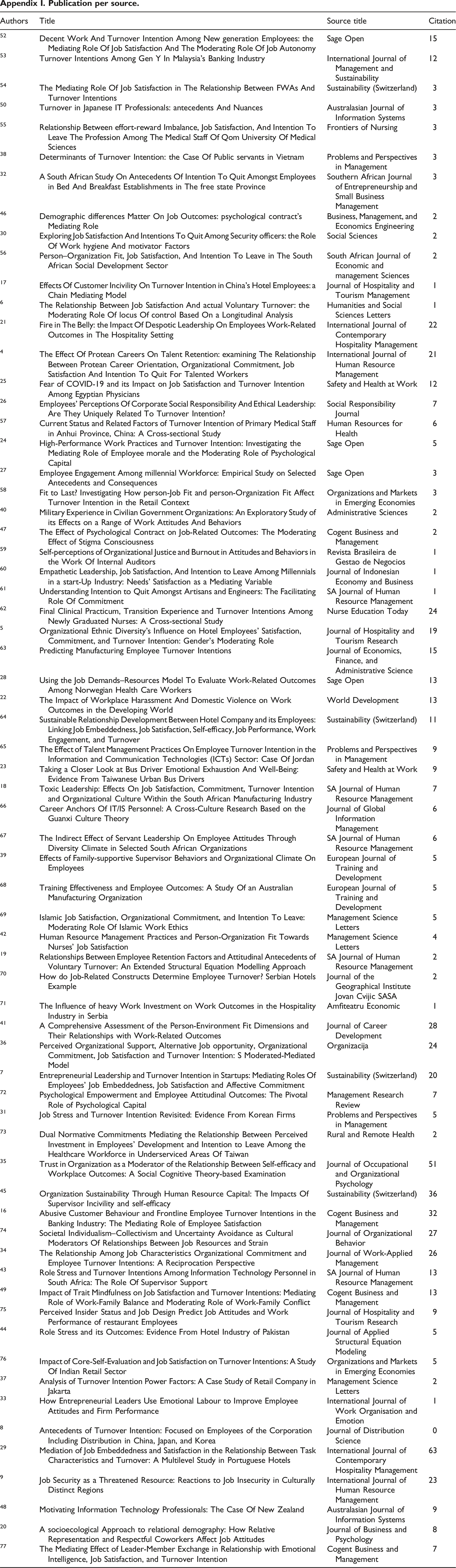
Authors
Title
Source title
Citation
52
Decent Work And Turnover Intention Among New generation Employees: the Mediating Role Of Job Satisfaction And The Moderating Role Of Job Autonomy
Sage Open
15
53
Turnover Intentions Among Gen Y In Malaysia’s Banking Industry
International Journal of Management and Sustainability
12
54
The Mediating Role Of Job Satisfaction in The Relationship Between FWAs And Turnover Intentions
Sustainability (Switzerland)
3
50
Turnover in Japanese IT Professionals: antecedents And Nuances
Australasian Journal of Information Systems
3
55
Relationship Between effort-reward Imbalance, Job Satisfaction, And Intention To Leave The Profession Among The Medical Staff Of Qom University Of Medical Sciences
Frontiers of Nursing
3
38
Determinants of Turnover Intention: the Case Of Public servants in Vietnam
Problems and Perspectives in Management
3
32
A South African Study On Antecedents Of Intention To Quit Amongst Employees in Bed And Breakfast Establishments in The free state Province
Southern African Journal of Entrepreneurship and Small Business Management
3
46
Demographic differences Matter On Job Outcomes: psychological contract’s Mediating Role
Business, Management, and Economics Engineering
2
30
Exploring Job Satisfaction And Intentions To Quit Among Security officers: the Role Of Work hygiene And motivator Factors
Social Sciences
2
56
Person–Organization Fit, Job Satisfaction, And Intention To Leave in The South African Social Development Sector
South African Journal of Economic and management Sciences
2
17
Effects Of Customer Incivility On Turnover Intention in China's Hotel Employees: a Chain Mediating Model
Journal of Hospitality and Tourism Management
1
6
The Relationship Between Job Satisfaction And actual Voluntary Turnover: the Moderating Role Of locus Of control Based On a Longitudinal Analysis
Humanities and Social Sciences Letters
1
21
Fire in The Belly: the Impact Of Despotic Leadership On Employees Work-Related Outcomes in The Hospitality Setting
International Journal of Contemporary Hospitality Management
22
4
The Effect Of Protean Careers On Talent Retention: examining The Relationship Between Protean Career Orientation, Organizational Commitment, Job Satisfaction And Intention To Quit For Talented Workers
International Journal of Human Resource Management
21
25
Fear of COVID-19 and its Impact on Job Satisfaction and Turnover Intention Among Egyptian Physicians
Safety and Health at Work
12
26
Employees’ Perceptions Of Corporate Social Responsibility And Ethical Leadership: Are They Uniquely Related To Turnover Intention?
Social Responsibility Journal
7
57
Current Status and Related Factors of Turnover Intention of Primary Medical Staff in Anhui Province, China: A Cross-sectional Study
Human Resources for Health
6
24
High-Performance Work Practices and Turnover Intention: Investigating the Mediating Role of Employee morale and the Moderating Role of Psychological Capital
Sage Open
5
27
Employee Engagement Among millennial Workforce: Empirical Study on Selected Antecedents and Consequences
Sage Open
3
58
Fit to Last? Investigating How person-Job Fit and person-Organization Fit Affect Turnover Intention in the Retail Context
Organizations and Markets in Emerging Economies
3
40
Military Experience in Civilian Government Organizations: An Exploratory Study of its Effects on a Range of Work Attitudes And Behaviors
Administrative Sciences
2
47
The Effect of Psychological Contract on Job-Related Outcomes: The Moderating Effect of Stigma Consciousness
Cogent Business and Management
2
59
Self-perceptions of Organizational Justice and Burnout in Attitudes and Behaviors in the Work Of Internal Auditors
Revista Brasileira de Gestao de Negocios
1
60
Empathetic Leadership, Job Satisfaction, And Intention to Leave Among Millennials in a start-Up Industry: Needs’ Satisfaction as a Mediating Variable
Journal of Indonesian Economy and Business
1
61
Understanding Intention to Quit Amongst Artisans and Engineers: The Facilitating Role Of Commitment
SA Journal of Human Resource Management
1
62
Final Clinical Practicum, Transition Experience and Turnover Intentions Among Newly Graduated Nurses: A Cross-sectional Study
Nurse Education Today
24
5
Organizational Ethnic Diversity’s Influence on Hotel Employees’ Satisfaction, Commitment, and Turnover Intention: Gender’s Moderating Role
Journal of Hospitality and Tourism Research
19
63
Predicting Manufacturing Employee Turnover Intentions
Journal of Economics, Finance, and Administrative Science
15
28
Using the Job Demands–Resources Model To Evaluate Work-Related Outcomes Among Norwegian Health Care Workers
Sage Open
13
22
The Impact of Workplace Harassment And Domestic Violence on Work Outcomes in the Developing World
World Development
13
64
Sustainable Relationship Development Between Hotel Company and its Employees: Linking Job Embeddedness, Job Satisfaction, Self-efficacy, Job Performance, Work Engagement, and Turnover
Sustainability (Switzerland)
11
65
The Effect of Talent Management Practices On Employee Turnover Intention in the Information and Communication Technologies (ICTs) Sector: Case Of Jordan
Problems and Perspectives in Management
9
23
Taking a Closer Look at Bus Driver Emotional Exhaustion And Well-Being: Evidence From Taiwanese Urban Bus Drivers
Safety and Health at Work
9
18
Toxic Leadership: Effects On Job Satisfaction, Commitment, Turnover Intention and Organizational Culture Within the South African Manufacturing Industry
SA Journal of Human Resource Management
7
66
Career Anchors Of IT/IS Personnel: A Cross-Culture Research Based on the Guanxi Culture Theory
Journal of Global Information Management
6
67
The Indirect Effect of Servant Leadership On Employee Attitudes Through Diversity Climate in Selected South African Organizations
SA Journal of Human Resource Management
6
39
Effects of Family-supportive Supervisor Behaviors and Organizational Climate On Employees
European Journal of Training and Development
5
68
Training Effectiveness and Employee Outcomes: A Study Of an Australian Manufacturing Organization
European Journal of Training and Development
5
69
Islamic Job Satisfaction, Organizational Commitment, and Intention To Leave: Moderating Role Of Islamic Work Ethics
Management Science Letters
5
42
Human Resource Management Practices and Person-Organization Fit Towards Nurses’ Job Satisfaction
Management Science Letters
4
19
Relationships Between Employee Retention Factors and Attitudinal Antecedents of Voluntary Turnover: An Extended Structural Equation Modelling Approach
SA Journal of Human Resource Management
2
70
How do Job-Related Constructs Determine Employee Turnover? Serbian Hotels Example
Journal of the Geographical Institute Jovan Cvijic SASA
2
71
The Influence of heavy Work Investment on Work Outcomes in the Hospitality Industry in Serbia
Amfiteatru Economic
1
41
A Comprehensive Assessment of the Person-Environment Fit Dimensions and Their Relationships with Work-Related Outcomes
Journal of Career Development
28
36
Perceived Organizational Support, Alternative Job opportunity, Organizational Commitment, Job Satisfaction and Turnover Intention: S Moderated-Mediated Model
Organizacija
24
7
Entrepreneurial Leadership and Turnover Intention in Startups: Mediating Roles Of Employees’ Job Embeddedness, Job Satisfaction and Affective Commitment
Sustainability (Switzerland)
20
72
Psychological Empowerment and Employee Attitudinal Outcomes: The Pivotal Role of Psychological Capital
Management Research Review
7
31
Job Stress and Turnover Intention Revisited: Evidence From Korean Firms
Problems and Perspectives in Management
5
73
Dual Normative Commitments Mediating the Relationship Between Perceived Investment in Employees’ Development and Intention to Leave Among the Healthcare Workforce in Underserviced Areas Of Taiwan
Rural and Remote Health
2
35
Trust in Organization as a Moderator of the Relationship Between Self-efficacy and Workplace Outcomes: A Social Cognitive Theory-based Examination
Journal of Occupational and Organizational Psychology
51
45
Organization Sustainability Through Human Resource Capital: The Impacts Of Supervisor Incivility and self-efficacy
Sustainability (Switzerland)
36
16
Abusive Customer Behaviour and Frontline Employee Turnover Intentions in the Banking Industry: The Mediating Role of Employee Satisfaction
Cogent Business and Management
32
74
Societal Individualism–Collectivism and Uncertainty Avoidance as Cultural Moderators Of Relationships Between Job Resources and Strain
Journal of Organizational Behavior
27
34
The Relationship Among Job Characteristics Organizational Commitment and Employee Turnover Intentions: A Reciprocation Perspective
Journal of Work-Applied Management
26
43
Role Stress and Turnover Intentions Among Information Technology Personnel in South Africa: The Role Of Supervisor Support
SA Journal of Human Resource Management
13
49
Impact of Trait Mindfulness on Job Satisfaction and Turnover Intentions: Mediating Role of Work-Family Balance and Moderating Role of Work-Family Conflict
Cogent Business and Management
13
75
Perceived Insider Status and Job Design Predict Job Attitudes and Work Performance of restaurant Employees
Journal of Hospitality and Tourism Research
9
44
Role Stress and its Outcomes: Evidence From Hotel Industry of Pakistan
Journal of Applied Structural Equation Modeling
5
76
Impact of Core-Self-Evaluation and Job Satisfaction on Turnover Intentions: A Study Of Indian Retail Sector
Organizations and Markets in Emerging Economies
5
37
Analysis of Turnover Intention Power Factors: A Case Study of Retail Company in Jakarta
Management Science Letters
2
33
How Entrepreneurial Leaders Use Emotional Labour to Improve Employee Attitudes and Firm Performance
International Journal of Work Organisation and Emotion
1
8
Antecedents of Turnover Intention: Focused on Employees of the Corporation Including Distribution in China, Japan, and Korea
Journal of Distribution Science
0
29
Mediation of Job Embeddedness and Satisfaction in the Relationship Between Task Characteristics and Turnover: A Multilevel Study in Portuguese Hotels
International Journal of Contemporary Hospitality Management
63
9
Job Security as a Threatened Resource: Reactions to Job Insecurity in Culturally Distinct Regions
International Journal of Human Resource Management
23
48
Motivating Information Technology Professionals: The Case Of New Zealand
Australasian Journal of Information Systems
9
20
A socioecological Approach to relational demography: How Relative Representation and Respectful Coworkers Affect Job Attitudes
Journal of Business and Psychology
8
77
The Mediating Effect of Leader-Member Exchange in Relationship with Emotional Intelligence, Job Satisfaction, and Turnover Intention
Cogent Business and Management
7
S.N.
Common independent variables
Dependent variables
Job satisfaction
Turnover intention
+Ve
−Ve
No effect
+Ve
−Ve
No effect
1
Compensation/benefits
2
—
—
—
1
1
2
Job characteristics
1
—
—
1
1
1
3
Job embeddedness
2
—
—
1
2
—
4
Job stress
—
1
—
1
—
1
5
Normative commitment
1
1
2
2
1
—
6
Organizational citizenship behavior
2
—
—
1
1
—
7
Organizational commitment
3
—
1
—
7
—
8
Person-organizational fit
2
1
—
2
2
—
9
Procedural justice
1
—
—
—
1
—
10
Self-efficiency
3
—
—
4
1
—
11
Supervisor or supervisor support
4
—
—
—
3
—
12
Training and development
1
—
—
2
—
—
13
Work itself
4
—
—
1
2
—
14
Work-family conflict
1
2
1
1
1
—
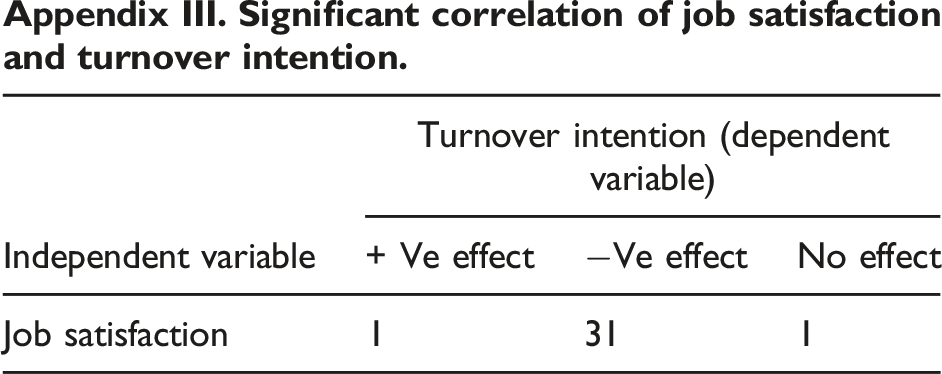
Turnover intention (dependent variable)
Independent variable
+ Ve effect
−Ve effect
No effect
Job satisfaction
1
31
1
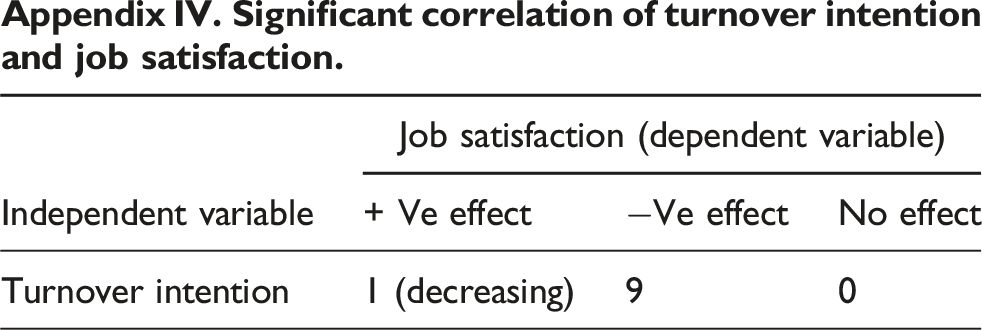
Job satisfaction (dependent variable)
Independent variable
+ Ve effect
−Ve effect
No effect
Turnover intention
1 (decreasing)
9
0