



Abstract
Background
Cultural intelligence (CQ) is crucial for successful cross-cultural interactions, particularly in the context of increasing diversity and globalization. Notwithstanding the increasing research in this domain, numerous theoretical and empirical gaps remain unresolved.
Objective
This study aims to identify key conceptual frameworks and highlight unresolved research gaps, thereby informing future scholarly work and practical applications.
Methods
A systematic review of existing literature was conducted to synthesize the current understanding of cultural intelligence through a comprehensive literature analysis using the Scopus database, resulting in an initial collection of 4942 documents related to cultural intelligence. This study applied inclusion criteria to select 112 English-language publications from 2019 to 2023 that were relevant to the theme, providing a comprehensive review.
Results
The review found considerable advances in CQ conceptualization and assessment but limitations in behavioral research and context-specific measuring techniques. The methodology allows empirical studies to evaluate how CQ affects cross-cultural behaviors, such as cultural gap bridging and performance.
Conclusions
Addressing these theoretical and empirical gaps will enhance both academic understanding and practical development of CQ, facilitating more effective intercultural interactions in diverse settings. Further research should focus on developing behavioral measures, exploring contextual influences, and designing targeted interventions to cultivate CQ competencies.
Introduction
In a rapidly globalized and interconnected world, cultural intelligence (CQ), defined as the capability to function effectively in culturally varied settings, has emerged as a vital competency across professional and academic disciplines. 1 The four components of CQ (cognitive, metacognitive, motivational, and behavioral) offer a complete framework for understanding how individuals perceive, interpret, and respond in international interactions. 2 The value of CQ extends beyond theoretical curiosity; it has practical consequences for leadership, employee performance, team collaboration, and international business operations.3,4 Moreover, the concept has shown potential in boosting global competitiveness, particularly for firms functioning in international environments. 5 CQ also fosters efficient interpersonal relationships, making it useful in business situations. 1
Despite the rising corpus of research, the rapid expansion and multidisciplinary character of CQ studies spanning sectors such as psychology, education, business, and tourism have led to conceptual fragmentation and methodological inconsistencies.6,7 A systematic literature review (SLR) is thus needed to synthesize this dispersed knowledge. By combining findings from multiple disciplines, an SLR provides a structured and critical overview of existing ideas, metrics, applications, and outcomes related to CQ.
One key justification for undertaking an SLR is to systematize the enormous and heterogeneous research on CQ, thereby making it accessible and coherent for both researchers and practitioners. 8 Furthermore, a systematic assessment helps identify significant research gaps, such as unsolved challenges in CQ measurement and contextual applications7,9 and offers a path for future inquiry. Recent bibliometric studies have underlined the utility of SLRs in mapping research trends, detecting emerging topics, and evaluating the intellectual structure of the CQ domain. 10 Additionally, an SLR facilitates the integration of multiple methodological approaches and cross-cultural views, which is crucial for a sophisticated understanding of CQ development and training. This SLR is particularly pertinent in educational contexts, as personalized interventions are required to foster CQ among students and instructors.11,12 In essence, a thorough literature review is not only an academic exercise but an essential step toward advancing the theory, practice, and policy applications of cultural intelligence. By defining the current picture, revealing shortcomings, and emphasizing innovation pathways, an SLR guarantees that future research on CQ is both cumulative and beneficial.
Ang et al. 13 define cultural intelligence as comprising behavioral, cognitive, motivational, and metacognitive aspects. They recommend the Cultural Intelligence Scale, a standard tool for assessing behavioral, cognitive, motivational, and metacognitive skills. Higher cultural intelligence (CQ) may enable individuals to anticipate cultural misconceptions and delay evaluation until they gain a deeper understanding. 14 To work efficiently, they can handle unexpected surroundings, cultural clues, and behavior changes. 15 CQ’s knowledge expansion may benefit from many perspectives. Several earlier studies have shown the importance of cultural intelligence. Templer et al. 16 found that motivating CQ helps business and industrial workers adjust to changing settings. Managing personal and professional goals in a foreign culture may help enhance change. Velez-Calle et al. 17 modified the CQ measurement scale and found commercial CQ construct validity. Managers can utilize CQ to identify the most suitable candidates for international commerce positions. The study found that subsidiary CEOs’ motivating cultural intelligence (CQ) may boost subsidiary performance and social network expansion after in-patriation. 18 According to another study, expatriate CQ promotes intercultural adjustment, organizational integration, and knowledge sharing in the host nation. 19 The target country’s background and features may affect CQ efficiency. 19
Cultural intelligence is vital in showcasing the core beliefs that drive staff’s talents and willingness to create meaningful connections with guests, according to hospitality research. 20 Lam and Cheung 21 found that hotel staff with high CQ can work with multicultural guests. Another study found that tourists’ CQ significantly affects host-guest relationships. 22 Similar to the tourist perspective, research shows that a foreign trip boosts cultural intelligence (CQ). 23 According to the study, culturally intelligent residents are more likely to reveal personal information and create emotional bonds with guests. 24 Thus, hospitality business players may need CQ to form strong ties. Outcomes from various industries should enrich business and industrial perspectives. The following literature review should cover that. Peng et al. 25 recommend incorporating motivated cultural intelligence (CQ) into cross-cultural education programs to enhance students’ cultural effectiveness abroad. It is reinforced by Butkovic et al., 26 who found that motivated CQ students were more likely to study abroad. Cultural intelligence predicts career plans for college students, according to other research. Universities should include cultural intelligence training to better prepare students for careers overseas. 27 Shu et al. 15 found that personality factors and cultural intelligence affect cross-cultural adaptability in overseas students.
Some academics believe a detailed study of cultural intelligence’s antecedents in education is necessary. Kadam et al. 28 examined the many aspects that affect student cultural intelligence (CQ) in 2020. They stated that short-term trips abroad, taking a cross-cultural management course, developing local cultural competence, watching diverse films, acquiring language of work competence, making friends from other cultures, and meeting people of different nationalities all impacted CQ. Studying abroad or participating in an exchange program for at least one semester enhances students’ cognitive abilities.29,30 Alon et al. 31 suggest that cultural intelligence is primarily determined by the number of countries lived in, education, and languages spoken. Grosch et al. 32 observed that a class with more international students had higher motivating CQ despite lacking the other three CQ elements.
Additionally, the development of cultural intelligence (CQ) is shaped by several individual, contextual, and experiential factors. These antecedents clarify the mechanisms by which individuals cultivate cultural intelligence, especially in educational and professional contexts. From individual viewpoints, two primary antecedents are personality traits and cognitive ability. Openness to experience, emotional intelligence, and flexibility are consistently correlated with elevated levels of cultural intelligence (CQ). Attributes such as empathy, curiosity, and a tolerance for ambiguity enhance the capacity to navigate cultural challenges. 15 Individuals with strong metacognitive and reflective thinking abilities are better equipped to monitor and adjust their behaviors in cross-cultural contexts. 16 Subsequently, the analysis is informed by sociocultural and educational experiences within the context of relevant frameworks. Experiences such as studying abroad, engaging in international programs, or collaborating within different teams are favorably correlated with the development of cultural intelligence.28,29 Continuing education and cross-cultural training, including courses in cross-cultural management, significantly enhance cultural intelligence (CQ). 25 Therefore, background and demographic factors are important antecedents of cultural intelligence. The variety of languages spoken, the number of countries inhabited, and worldwide exposure (e.g., expatriate experience) all act as indicators of cultural intelligence (CQ). 31 Establishing relationships with individuals from diverse cultural backgrounds enhances both motivational and behavioral cultural intelligence dimensions, fostering empathetic and adaptable behaviors. 24
Furthermore, cultural intelligence yields substantial and varied consequences across personal, organizational, and social contexts. Begin by considering the behavioral and psychological consequences from a personal perspective. Individuals with strong cultural intelligence exhibit better adaptation in foreign settings, diminished cultural shock, and improved well-being.
16
Cultural intelligence also enhances communication, conflict resolution, and empathy in international interactions, promoting more inclusive and respectful relationships.
14
The next set of consequences came from organizational viewpoints. Cultural intelligence (CQ) enhances both individual and team performance, especially within multicultural teams. Elevated cultural intelligence (CQ) among leaders and staff fosters innovation by facilitating the successful merging of multiple viewpoints.
19
Leaders with high cultural intelligence can bridge cultural gaps, foster knowledge exchange, and cultivate unified team dynamics.33,34 Ultimately, in social settings, cultural intelligence yields multiple consequences. CQ functions as an introduction to activities, including mediation, facilitation, and translation among cultural groups. These activities foster social harmony and enhance multicultural collaboration.
35
In the hospitality and tourism fields, cultural intelligence (CQ) improves service quality and client happiness by facilitating culturally sensitive interactions.
21
The examination of cultural intelligence (CQ) highlights its complex nature, influenced by personal characteristics, intercultural experiences, and demographic variables. From social cohesion and organizational creativity to personal flexibility and improved communication, its profound effects underscore CQ’s pivotal role in enhancing cross-cultural effectiveness, primarily through behaviors that bridge cultural gaps. Figure 1 illustrates the antecedents and consequences of cultural intelligence. The antecedents and consequences of cultural intelligence.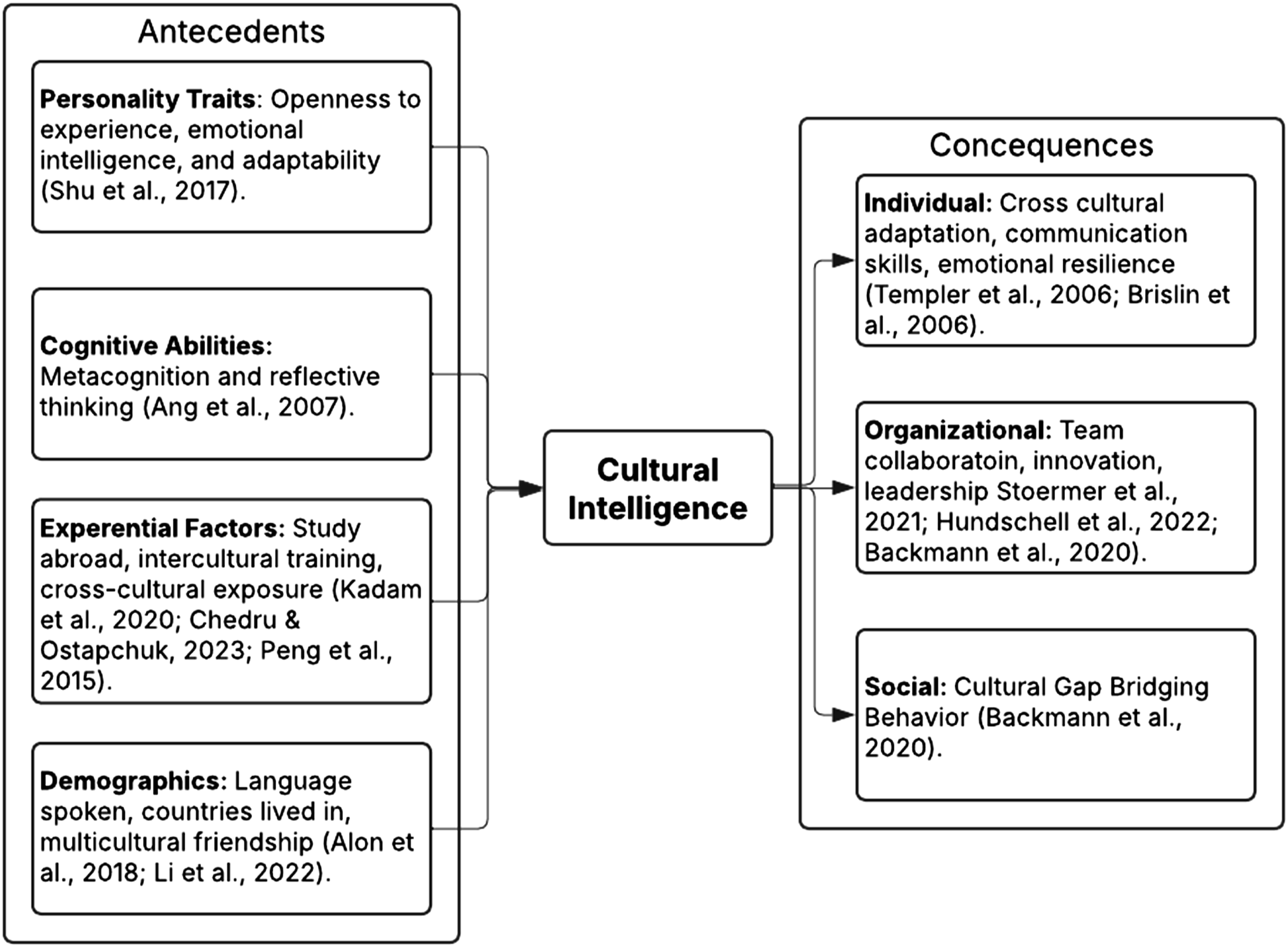
Literature review
The underlying theories aim to illuminate a philosophical phenomenon from previous research that is relevant to the subject under investigation. This literature review primarily aims to establish the current state of knowledge in areas that could contribute to the expansion of knowledge, specifically in the fields of cultural intelligence concepts and cultural gap bridging behavior. It is essential to evaluate the literature on such themes, given that we live in a turbulent, multicultural world. To begin the critical literature evaluation, the researcher selects the most relevant prior work. Several ideas about cultural intelligence have emerged over the past two decades, with most focusing on developing new contextual instruments based on the work of Earley and Ang. 36 However, this study (cultural intelligence and cultural gap bridging behavior) also addresses several formerly undiscovered elements that have lately piqued researchers’ attention in the social domain. This underlying research aims not to choose between different theories, but to enable them to ultimately collaborate and help us produce an integrated understanding of philosophical phenomena. Thus, this research might have a positive impact on the body of knowledge in cultural intelligence. Here are some key underlying notions pertinent to this investigation.
Cultural intelligence
Early theories by Spearman and Galton framed intelligence as a single, quantifiable factor, either psychophysical or general intelligence.37,38 However, subsequent research, such as Binet’s emphasis on direction, adaptation, and control, as well as Carroll’s multidimensional model, challenges the sufficiency of unidimensional constructs. These perspectives suggest that intelligence is inherently complex, involving cognitive, metacognitive, behavioral, and affective components.39,40 Despite this progression, many measurement tools continue to reflect reductionist tendencies, often capturing only select facets, which may lead to an incomplete understanding of individuals’ capabilities in real-world cross-cultural contexts.
Some views define intelligence as the ability to communicate and sustain social interactions. Understanding oneself helps others understand them. 41 Anastasi 42 defines intelligence as a behavioral trait that maximizes adaptation to a changing environment. Baltes et al. 43 state that intelligence is a field of study related to the development of psychometric intelligence structure, not a theory. Carroll 40 disagreed, arguing that intellect is universal. His thoughts encompass academic, technological, practical, and social aspects. This viewpoint differs from earlier perspectives on intelligence. Jonathan Baron experimented with psychology to improve education. A logical definition of intelligence was proposed. 44 He defines intelligence as the ability to help people attain logical goals. Intelligence concepts develop through mental activities. Berry, 45 a cross-cultural psychologist, says culture limits IQ. After repeated attempts, he changed his mind and proposed a broader definition of intelligence. He concurs with Anastasi 42 that IQ adapts culturally.
Beyond the 1921 IQ-measuring symposium, several perspectives evolved. Academic intelligence and learning methods are stressed by Brown and Campione. 46 The authors incorporate learning and transfer performance from previous research into their definitions of intelligence. Contrary to Brown and Campione, 46 Butterfield 47 suggested that while intelligence does not improve with learning, the two are nonetheless linked. The subject of how learning affects intellect must be addressed. Sternberg and Detterman 41 suggest that a perspective on intelligence that emphasizes acquiring new skills and information is more clear-cut. However, while it does not explain how knowledge is acquired or how it interacts with other cognitive system mechanisms, the assertion claims that knowledgeable individuals learn more. This assertion needs more testing to resolve the doubt. Das 48 regards intelligence as a cognitive process including planning, recorded knowledge, and concentrated attention. Planning involves creating strategies, choosing options, and implementing them. Information is processed simultaneously when transcribed or coded. The following procedure is essential for coding and planning, as well as other cognitive tasks. Three cognitive processes contribute to intelligent behavior, but hidden factors may make individuals exceptional.
Unlike the previous approach, Sternberg and Detterman 41 viewed intelligence as a complex system of talents. This contradicts Spearman’s single-factor theory of intelligence. 37 Sternberg believed that defining intelligence would clarify educational achievement. The discussion focuses on indicators of complex system functioning, rather than intelligence indicators. This defies Spearman’s single-element thesis. Hiser and Francis 49 advise exploring intelligence based on the above claim. They examine intelligence and assessment complexity. The writers aim to illuminate the historical growth of intelligence and its definitional issues. They also address the history of modern intelligence investigation. Therefore, the writers may propose specific language usage to clarify the topic.
Over the past 30 years, intelligence research has been considerable, but culturally relevant research is lacking. 36 Based on Sternberg and Detterman’s 41 modern development of intelligence, Earley and Ang 36 propose cultural intelligence as a means to explain social intelligence better. Globalization and cross-cultural relationships are part of cultural intelligence (CQ). 36 Schmidt and Hunter’s 50 definition of broader intelligence includes comprehending, assessing, and succeeding in culturally diverse situations. Globalization and ethnic diversity make cultural diversity management more vital. 51 Intelligence and evaluation are intriguing but incomplete.
Ang et al.’s 16 cultural intelligence model (CQ model) is one approach to operationalizing cultural competence. This approach defines cultural intelligence as the ability to function and manage in diverse cultural situations. 16 Ang et al. 16 added metacognitive, cognitive, motivational, and behavioral characteristics to Sternberg and Detterman’s 41 fundamental intelligence components in their cultural intelligence (CQ) multidimension. An empirical study examines the 20-item Cultural Intelligence Scale (CQS) and assesses the predictions of IQ and intercultural competency. The study evaluates CQS’s psychometric properties, including cross-validation, temporal generalizability, and cross-country generalizability. The multidimensional concept includes motivational, cognitive, behavioral, and metacognitive aspects.
Ang et al. 16 proposed a multidimensional approach, which Van Dyne et al. 52 refined. This study seeks to refine cultural intelligence (CQ) by discovering sub-dimensions for each of its four primary components. This study examines the attributes of each CQ element to gain a deeper understanding of cultural intelligence. Their study also includes the first psychometric data on the Expanded Cultural Intelligence Scale (E-CQS), which has eleven sub-dimensions. This study identifies sub-dimensions to analyze capacities and improve individual growth, advancing CQ research.
In addition to cognitive theories such as those proposed by Spearman 37 and Binet, 39 the study of intelligence has also incorporated social, cultural, and adaptive variables. Later theories, such as those by Sternberg and Detterman, expanded intelligence beyond cognitive and psychometric tests to include social, practical, and rational components. Cultural intelligence (CQ) was initially presented by Earley and Ang 36 and subsequently refined by Ang et al. 16 and Van Dyne et al., 52 who defined it as a multidimensional construct adaptable to diverse cultures. Despite extensive research, intelligence remains a complex and contentious concept, requiring a nuanced understanding of culture and context.
Cultural gap bridging behavior
The claim that human behavior is influenced by culture challenges the universality typically suggested in IQ evaluations and organizational behavior frameworks. Anastasi’s 42 viewpoint on intelligence as adaptive behavior emphasizes the contextual nature of cognition, influenced by environmental and cultural factors. This comprehension necessitates a transition from monolithic paradigms to a framework of cultural relativism in intelligence and behavior research, wherein behaviors are analyzed within their cultural contexts rather than against universal criteria. Although the impact of culture is acknowledged, empirical research examining intelligence and behavior across diverse cultural contexts is still inadequate. Theoretical breakthroughs in cross-cultural organizational behavior (OB) have not kept up with the progress in skills- and abilities-oriented literature. 53 This delay suggests a broader epistemological constraint, specifically, an excessive reliance on Western-centric frameworks and an insufficient theoretical examination of behavior as culturally contextualized.
Moreover, a significant portion of cross-cultural interaction transpires at a subconscious level, encompassing implicit value systems, communication conventions, and collective cognitive frameworks, resulting in profound diversity that is frequently overlooked or simplified to stereotypes.54,55 The literature has not yet comprehensively examined how these underlying differences affect power dynamics, decision-making, and inclusion within organizations. Cultural background should not be viewed as just one variable among many; instead, it significantly shapes the interpretive frameworks individuals apply in organizational contexts.56,57
The growing cultural diversity within organizations necessitates a shift in organizational behavior toward a constructivist and interpretive framework, acknowledging that meaning-making processes are culturally dependent.58,59 Consequently, ethnocentrism constitutes a significant obstacle to successful leadership and collaboration, since it enforces a singular perspective on diverse realities. 60 The notion of intercultural competence must transcend superficial training and evolve into an ingrained organizational competency, interconnected with strategic learning, creativity, and resilience. 35 The advent of cultural gap bridging (CGB) behaviors offers a feasible framework for implementing intercultural competence in team relations. In contrast to static trait theories, CGB reconceptualizes intercultural effectiveness as a collection of dynamic, enacted behaviors that facilitate, mediate, integrate, interpret, and provide comfort, fulfilling both cognitive and socio-emotional roles in multicultural contexts. This behavioral framing corresponds with social constructionist theories of leadership and cooperation, which perceive meaning, connections, and coordination as co-constructed through interaction. 61
CGB activities conceptually intersect with ideas such as boundary spanners, bridge makers, and brokers, although they distinctly emphasize the affective and relational aspects of multicultural collaboration. Nonetheless, the literature exhibits a lack of agreement regarding the antecedents and situational catalysts of CGB behaviors. Backmann et al. 34 emphasize the necessity for enhanced conceptual clarity about the translation of identity multiplicity (e.g., multicultural identity) into bridge behaviors, which is theoretically relevant. Their research promotes additional investigation into identity-based motivation and role theory, specifically regarding how individuals view and perform their bridge roles within team frameworks.61–63
Leadership is recognized as a crucial facilitator of CGB processes, 64 achieved not just through authoritative actions but also by exemplifying inclusive and empathetic interactions that influence team norms and psychological safety.33,65 From a transformational leadership standpoint, such conduct cultivates a collective vision that surpasses cultural limitations, motivating subordinates to converge on shared objectives while appreciating various inputs. Nonetheless, a significant requirement is still for integrative models that connect individual abilities (e.g., CGB behaviors), team dynamics (e.g., trust, cohesiveness), and organizational structures (e.g., diversity policies, reward systems) within a multilevel framework. Cross-cultural organizational behavior must also confront power imbalances and systematic disparities that determine which cultural knowledge is esteemed and which is disregarded.
As globalization increasingly diversifies organizational environments, the challenge is not merely managing differences, but utilizing cultural plurality as a catalyst for learning, creativity, and adaptive advantage. This necessitates transcending instrumental approaches to diversity and integrating inclusive leadership, cultural reflexivity, and dialogic practices into the core of organizational existence. The changing environment of culturally diverse enterprises necessitates a transformation in the study and practice of organizational behavior (OB). Transcending static, Western-centric frameworks, the incorporation of cultural gap bridging (CGB) behaviors provides a dynamic, behavior-oriented methodology for intercultural competency. Effective leadership and inclusive team dynamics grounded in cultural reflexivity and empathy are crucial for managing profound diversity. Ultimately, viewing cultural heterogeneity as a strategic asset rather than a challenge can promote innovation, resilience, and sustained organizational development.
Therefore, the purpose of this systematic literature review is to synthesize current studies on cultural intelligence and behaviors that bridge cultural gaps, identify existing gaps, especially in behavioral assessment and contextual applications, and direct future investigations to enhance both theoretical comprehension and practical interventions in cross-cultural interactions.
Methodology
This study employed a systematic literature review to synthesize and evaluate the existing body of knowledge. According to Jahani et al., 66 conducting a specific systematic literature review will result in identifying the main improvements in advancing knowledge. The researchers then employed a bibliometric approach to provide an in-depth examination of the current state of knowledge in the study. 67 Jahani et al. 66 demonstrated that a systematic literature review will clarify the main contribution to the state of knowledge development. Several sequential steps are needed to implement a systematic literature review.
This study employs a systematic literature review methodology (SLR) to comprehensively synthesize current research on cultural intelligence (CQ) and cultural gap bridging behavior. The SLR approach guarantees a rigorous, transparent, and reproducible process for identifying, selecting, and analyzing relevant scholarly works. The primary database used for the literature search was Scopus, which was recognized for its extensive coverage of peer-reviewed journals and conference proceedings in the social sciences, management, and related fields. The following outlines the Selection Process: (1) Initial Retrieval: The search yielded 4942 documents. (2) Screening Titles and Abstracts: Non-relevant titles and abstracts were screened out, reducing the pool to 756 documents. (3) We conducted a detailed review to assess eligibility based on the specified inclusion and exclusion criteria. (4) Final Selection: A total of 112 articles were selected for systematic analysis.
Inclusion and exclusion criteria.

Then, we extracted essential information from relevant papers, including objectives, conceptual frameworks, measurement instruments, and findings, and discovered deficiencies. We conducted a bibliometric analysis using VOSviewer, which illustrated keyword networks and thematic clusters, revealing research trends and focal areas. This study, which analyzes publicly accessible published material, does not engage human or animal subjects. All relevant works are duly acknowledged, following intellectual property rights.
This study began by optimizing the online database from Scopus.com, using specific keywords related to the topic: “cultural intelligence” and “cultural gap bridging behavior.” The advanced search conducted on the Scopus database identified 4942 documents relevant to the concept of cultural intelligence. Subsequently, the researcher exported the data into CSV format to facilitate network analysis using VOSviewer. This network visualization illustrates the interconnected landscape of research themes focused on the phrase “cultural intelligence,” as mapped using VOSviewer, a bibliometric analysis tool. The network graph depicts the clustering of distinct terms, highlighting the prevailing topics and their interrelations within the academic field. The dimensions of the nodes represent the frequency of the corresponding keywords, with larger nodes denoting more significant themes. The proximity of nodes indicates their co-occurrence or thematic affinity, suggesting that terms located adjacent to one another frequently appear together in research publications. Although we do not provide particular details regarding color coding, VOSviewer visualizations generally employ various hues to indicate distinct theme groups or temporal eras. The next step is to analyze the development of the cultural intelligence study. By utilizing the online platform at https://www.lens.org/lens, researchers attempt to view scholarly works over time.
Then, we selected ScienceDirect, Elsevier’s leading platform for peer-reviewed scholarly literature, to conduct the second screening phase and obtain the most relevant papers for the study, particularly those concerning cultural intelligence at the outset. As shown in Figure 2, the publication selection technique employed a systematic screening process to ensure the inclusion of high-quality and relevant material for analysis. Initially, 4942 documents were obtained from the Scopus database. Applying a set of inclusion criteria—restricting the selection to articles and review papers published between 2019 and 2023 and written in English—reduced the total to 756 pertinent materials. The studies underwent a comprehensive evaluation to assess their eligibility, resulting in the exclusion of irrelevant research. In total, 112 papers were incorporated into the final analysis, establishing a concentrated and convincing basis for the research. Publication selection methodology.
Result and discussion
Begin with the result of the network analysis by VOSviewer. The visualization of network analysis in Figure 3 illustrates that research on cultural intelligence is complex, encompassing key areas such as leadership, cross-cultural adaptation, and intercultural competence. The central location and substantial size of the “cultural intelligence” node highlight its significance in multiple research studies. The thematic clusters indicate that contemporary research includes both behavioral dimensions (e.g., communication and adaptability) and contextual elements (e.g., organization and culture). Comprehending these relationships helps recognize dominant focal points and emerging themes, directing future research toward inadequately investigated domains, such as behavioral outcomes or measurement complexities. Network visualization of “cultural intelligence” keyword in VOSviewer.
Figure 4 displays an overlay visualization that enhances the preceding network map by incorporating a temporal dimension, illustrating the evolution of research themes related to “cultural intelligence. “The yellow hues align with prior studies, focusing on fundamental topics such as leadership, intercultural adaptation, and cross-cultural proficiency. The blue tones indicate more contemporary research, concentrating on sophisticated subjects such as learning, human behavior, and the pragmatic use of CQ. This picture highlights the dynamic evolution of the field. Previous studies established a foundation by analyzing fundamental intercultural competencies; contemporary research is exploring the impact of cultural intelligence on learning methodologies and behavioral implementations. Recognizing this progression enables researchers and practitioners to discern the current focus and identify gaps, particularly the acknowledged need to investigate behavioral and measurement concerns in contemporary research. Overlay visualization of “cultural intelligence” keyword in VOSviewer.
Furthermore, Figure 5 presents a bar chart depicting the increasing trend of scholarly papers on “cultural intelligence” over the last 20 years, derived from the Lens platform. The increase beginning in the early 2000s signifies a growing scholarly interest. The period between 2020 and 2022 marks a notable increase in research output, likely influenced by globalization, the emergence of multicultural workplaces, and the COVID-19 pandemic’s emphasis on cross-cultural interactions. This trend underscores the importance of CQ research, highlighting the field’s significant expansion, particularly in recent years, which has focused on practical, behavioral, and contextual studies. Notwithstanding the development, the statistic indicates that considerable potential exists for investigating new subdomains, particularly the underexplored habit of bridging cultural gaps. The scholarly works over time of cultural intelligence from https://www.lens.org/lens/.
Similar to Figure 5, the subsequent graph in Figure 6 from Scopus illustrates a quantitative increase in published articles over time, corroborating the claim of growing scholarly interest. The data substantiates the trend noted in Lens.org, validating the notion that CQ is progressively acknowledged as essential in worldwide environments. Similar tendencies reinforce the assertion that, as the discipline evolves, it is essential to create more sophisticated assessment instruments and to comprehend the behavioral outcomes associated with CQ. The visualization highlights the importance of shifting focus from the quantity of research to the quality and depth of understanding, particularly in terms of behavioral implications and measurement validity. The scholarly works over time of cultural intelligence from Scopus https://www-scopus-com-s.web.bisu.edu.cn/.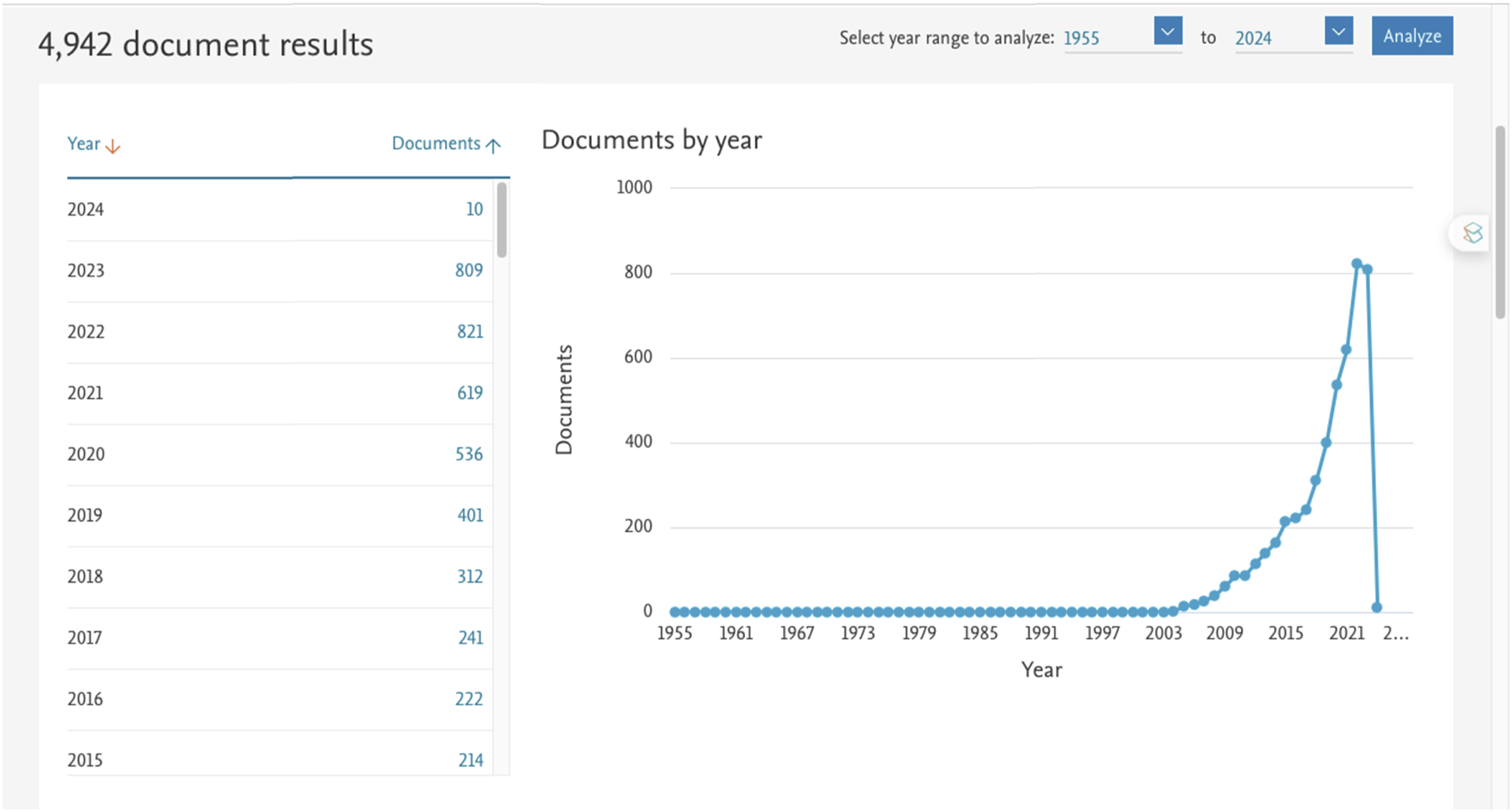
The term “cultural gap bridging behavior” is not directly represented in the network visualization of “cultural intelligence”; however, its fundamental components are meticulously incorporated into the thematic clusters of the map. Concepts such as intercultural competence, cross-cultural adjustment, communication, and adaptability fundamentally embody the essence of bridging cultural differences. These behaviors are essential for the effective implementation of cultural intelligence, especially in leadership, education, and international relations. Cultural gap bridging behavior constitutes a vital, albeit occasionally implicit, aspect of the cultural intelligence research domain, presenting significant prospects for further investigation and conceptual advancement. Thus, the following keyword is “cultural-gap bridging”; the researcher conducted an advanced search in the Scopus database through their online website. There are only 21 documents found in the Scopus online database that are relevant to this keyword. Backmann et al. 35 stated that it is essential to examine and investigate further empirical studies on cultural gap bridging behavior. There is some room for improvement in the body of knowledge about cultural intelligence as it relates to cultural gap bridging behavior. We found only 15 relevant documents that combined cultural intelligence and cultural gap bridging. There are not many academic papers in Scopus that use the keyword “cultural gap bridging”; therefore, it is clear that this idea has not been explored extensively recently. “Cultural gap bridging behavior” is important for global collaboration, cross-cultural conversation, and inclusion, but it is not formally defined or studied. Scholars now have an excellent opportunity to learn more about how this behavior relates to cultural intelligence, particularly in various types of organizations worldwide. Examining this gap can help with both theorizing and applying what we learn in leadership, team relations, and global business strategies.
This study systematically examined and analyzed the scholarly literature on cultural intelligence (CQ) and cultural gap bridging behaviors through a rigorous systematic literature review (SLR) and bibliometric analysis. The findings indicate a significant increase in CQ-related research, particularly between 2019 and 2023, highlighting the growing academic and practical importance of this concept to globalization and intercultural contact. Nonetheless, the bibliometric findings indicate that the notion of cultural gap bridging behavior is inadequately represented and insufficiently theorized in the current literature. The study reveals a significant deficiency in this area and highlights the need for further empirical and conceptual research to deepen our understanding of CQ’s behavioral expressions. Further research is necessary to investigate these features. Specifically regarding leadership, cross-cultural competency, and organizational success in various cultural contexts.
Between 2020 and 2022, there was an increase in leadership and instructional literature focused on cultural gap bridging behavior through cultural intelligence. Notwithstanding this advancement, the research overlooks cross-cultural behaviors. Only 21 papers pertain to this topic, signifying significant underdevelopment within the domain. Further research is required on cultural bridging behaviors. Various cognitive, behavioral, and motivational paradigms are employed in research. Contextual evaluation instruments are limited. Discrepancies hinder cross-setting comparisons and significant inferences. Consequently, practical approaches for accurately assessing cultural gap bridging initiatives across many contexts are essential.
Summary of key themes, gaps, and implications in cultural intelligence research.

Research gap in CQ and CGB literature.

Additionally, this study was conducted by the ethical guidelines established by the School of Business and Management at Institut Teknologi Bandung. This systematic literature review (SLR) was conducted according to the ethical guidelines for conducting research. As the study is based on the analysis of published literature, it does not involve direct interaction with human participants or animal subjects. All data utilized in this review were obtained from publicly accessible databases and publications. The researchers ensured that all relevant literature was appropriately cited to respect the intellectual property rights of original authors.
Conclusion
Understanding cultural intelligence is crucial for effective cross-cultural interactions in an increasingly multicultural and interconnected world. This study highlights the significance of cultural intelligence in educational and organizational settings, which can lead to enhanced outcomes in diverse environments. The researcher found two significant gaps in the previous research and systematic literature review. First, this study identified a potential theoretical gap in earlier studies on developing the structural instrument of the cultural intelligence concept within a specific context. Several facets of instrument refinement for particular contexts have been covered in earlier studies, including (1) establishing the initial construct of cultural intelligence,16,36 (2) refining the sub-dimension of the cultural intelligence concept, 52 and (3) proposing of cultural intelligence instrument in the business context.31,65,69
Finally, this study found an empirical gap in the earlier studies. The earlier literature lacks thorough empirical studies that focus on behavioral research. Prior studies have mainly concentrated on the antecedents and consequences of individual or organizational performance. Research on the behavioral aspect has been insufficient to assess the issue adequately. By synthesizing existing literature and identifying gaps, the study lays the groundwork for future research in cultural intelligence and cultural gap bridging behavior.
This review helps researchers and practitioners investigate these topics. Behaviors that bridge cultures affect education, organizations, policy, and research. Cultural intelligence courses should provide experiential learning through multicultural simulations and exchange programs, and rigorously analyze student improvement. In multicultural organizations, managers and staff require tailored training and leadership development to enhance intercultural communication, adaptability, and conflict resolution. Culturally bridging variables in performance assessments and recruitment boost organizational effectiveness. Policymakers and leaders must provide language support, multicultural education, and mentorship to boost engagement. Cultural bridge skills require ongoing behavioral coaching and support. Intervention strategies, empirical research, and feedback mechanisms can improve and reconcile research and practice across cultures.
The development and validation of culturally sensitive behavioral cultural intelligence assessment instruments, as well as longitudinal empirical studies of the impacts of behavioral interventions on individual and organizational outcomes, are needed in future studies. Research is needed on how business culture influences cultural bridging. These subjects will enhance cultural intelligence strategies across various settings by linking theoretical studies to practical applications. Focusing on publications over the past 5 years may overlook basic research. It focuses on behavioral cultural intelligence, restricting its knowledge of associated activities. Cultural and educational contexts may limit the generalizability of research. Due to these constraints, a study on cultural intelligence is necessary.
Footnotes
Acknowledgements
We would like to express our sincere gratitude to the School of Business and Management at Institut Teknologi Bandung and the Faculty of Economy and Business at Telkom University for their continuous support and resources that enabled us to conduct this research. We appreciate the insightful feedback and guidance of our colleagues and mentors, whose expertise helped shape our analysis and interpretations. Additionally, we extend our thanks to the authors and researchers whose prior work laid the groundwork for this systematic literature review. Their contributions to the fields of cultural intelligence and cross-cultural behavior were invaluable in guiding our study.

Author contributions
Conception: Ihsan Hadiansah
Data curation: Ihsan Hadiansah
Analysis of data: Ihsan Hadiansah
Preparation of the manuscript: Ihsan Hadiansah, Mustika Sufiati Purwanegara, Atik Aprianingsih
Revision for important intellectual content: Ihsan Hadiansah, Mustika Sufiati Purwanegara, Atik Aprianingsih
Supervision: Mustika Sufiati Purwanegara, Atik Aprianingsih.
Funding
The authors received no financial support for the research, authorship, and/or publication of this article.
Declaration of conflicting interests
The authors declared no potential conflicts of interest with respect to the research, authorship, and/or publication of this article.