



Abstract
Background
Integration AI into an electronic supply chain (E-SCM) transforms human resources management in developing economies such as Jordan. Digital public procurement systems (DPS), AI-focused tools, and logistics platforms transform employees’ experience and organizational performance.
Objective
This study examines the impact of E-SCM-DPS components, inventory and management of workflows controlled by AI-DIWM and logistics and communication platforms (LCP).As focused on employees (ECO) and satisfaction with work) (EJS) that emphasize the role of human cooperation (HAIC).
Methods
Quantitative studies have collected data from 254 employees in Jordan’s industrial companies. The modeling of the structural equation (SEM) and the analysis of the confirmation factor (CFA) were performed using SPSS and AMOS to test hypotheses relationships and ensure the validity of measurement and reliability.
Results
DPS, AI-DIWM and LCP positively affect ECO, with HAIC significantly alleviating these relationships, increasing involvement and autonomy. The ECO fully mediates the connection between E-SCM and EJS components and emphasizes its role in improving work satisfaction.
Conclusion
E-SCM reconciliation with HR strategies supports strengthening the position of workforce. Structured training, user-friendly systems and intentional HAIC design create confidence and shared responsibility and offer managers available to integrate technology with human practices.
Keywords
Introduction
The adoption of supplier chain management systems (E-SCM) has become more and more expanded among industrial companies in Jordan in a wider effort to modernize operations and remains competitive on the rapidly developing regional market. These systems—encompassing platforms for digital ordering, tools for inventory-controlled AI and integrated logistics solutions—are introduced primarily to increase operational efficiency.1,2 However, their impact exceeds the optimization of the process. They also have a significant potential to transform the practices of human resources (HRM) and influence the results of employees such as satisfaction with work, autonomy and involvement.3,4
Despite this increasing technological integration, a remarkable gap remains in empirical research and examines how E-SCM initiatives directly affect employees, especially in developing market contexts such as Jordan. While the studies have explored the technical and logistics benefits of digital transformation in supplier chains, 5 few people focused on its consequences for the well-being of labor or HRM strategies. This represents critical supervision, especially because the organization is increasingly acknowledging that sustainable performance depends not only on the efficiency of the system but also on the experience and motivation of employees.6,7
To solve this gap, this study examines how key E-SCM—(1) digital public procurement systems (2) Inventory management tools AI and (3) integrated logistics and communication platforms-affect the results focused on employees in Jordan’s industrial companies. It also examines the role of cooperation between man and AI (HAIC) in strengthening these relationships (H4). This research contributes to the growing set of interdisciplinary literature on the penetration of digital operations, artificial intelligence and HRM.8,9
The study is based on two theoretical perspectives: the depiction of resources (RBV) and the theory of unpredictability. RBV suggests that the permanent organizational advantage stems from the use of unique internal sources—in this case technological capabilities and human capital.10,11 HAIC is in line with RBV emphasizing how strategic integration of human and AI capabilities can generate excellent employees’ results.12,13 The readiness theory also supports the framework by emphasizing the importance of aligning technologies with contextual factors such as leadership style, training, and organizational culture.14,15
This research deals with two central research questions:
The study that follows these questions examines the impact of digital contracting systems,16,17 tools for inventory-controlled AI18,19 and integrated logistics platforms20,21 About employees’ results. It also evaluates whether human and AI cooperation increases the effectiveness of these components of E-SCM.22,23 The final goal is to offer special information for HR managers and supplier chains aimed at improving the satisfaction and involvement of employees through the acceptance of strategic technology.24,25
The study focuses on the industrial sector of Jordan to respond to calls for more context research of digital transformation and its human consequences.26,27 Given the unique challenges facing companies in the emerging markets—including regulatory restrictions, limited technological infrastructure, and different levels of labor preparedness—the supply chain systems must be carefully aligned with organizational capacity and employees’ needs.28,29 This research seeks to bridge this alignment by offering empirical evidence that shows both digital tools combined with collaborative AI procedures can support both operating goals and labor development.30,31
The aim of the finding is to provide a practical plan for companies that try to match their supply chain strategies with modern HRM principles, using digital tools and cooperating AI systems to support more authorized, satisfied, and productive workforce.8,32
Literature review
The integration of artificial intelligence (AI) into chain management systems (E-SCM) introduced transformation opportunities for human resources management (HRM). Industrial companies with digital public procurement, AI inventory tools and integrated logistics solutions are increasingly accepted not only to increase operational efficiency but also to transform HRM and affect employees such as satisfaction with work, autonomy, and involvement.11,12 These technologies reduce manual workload, provide real-time knowledge, and allow employees to decide with informed data-make more justified and agile workforce. 33 However, this transformation is not without challenges.
Several studies have emphasized potential disadvantages, including resistance to changes, automation anxiety and skills gaps that can prevent effective acceptance.34,35 The technology acceptance model, originally designed by Davis, 36 offers a useful lens to understand how employees perceive and accept new technologies. According to them, the usefulness and easy use of the key determinants of the user’s acceptance, 36 suggesting that even the most advanced systems fail if they do not agree with the needs and abilities of employees. Similarly, the theory of planned behavior (TPB) assumes that the intention of behavior is influenced by attitudes, subjective standards, and perceived behavior control. 37 In connection with E-SCM systems with increased A-SCM TPB, it emphasizes the importance of growing positive attitudes to technology and ensuring that employees feel supported in their ability to use these tools effectively. 38
HAIC cooperates concerns synergistic interaction between human judgment and AI’s ability to achieve excellent performance. HAIC increases the efficiency of E-SCM components by ensuring that technology supports inhumane decision-making, creativity, and problem-solving skills. 38 From the HRM point of view, HAIC represents opportunities and risks. On the one hand, the research suggests that when AI is used to expand rather than replacing human roles, this can lead to improving satisfaction with work, motivation in the workplace, and strengthening the position of employees.33,39 On the other hand, poor implementation or lack of transparency in AI systems can lead to perceived uncertainty of employment, loss of autonomy, and reduce confidence in leadership. 40 The theory of society systems (STS) provides a valuable framework for analyzing the coevolution of technological systems and social structures in organizations. 41
This theory emphasizes the need to propose technological ways that complement human roles and maintain meaningful work, especially in an environment where they are the central point for the success of the organization and the motivation of employees. 42 In addition to accepting at an individual level, the wider role of wider organizational and regulatory factors in the creation of the impact of E-SCM systems on HRM practices. The management framework for management ensures that ethical instructions, personal data protection standards and systemic interoperability are introduced to facilitate smooth AI integration into HR processes. 27 According to unforeseen events, there is no universal approach to technology management. Instead, successful implementation depends on comparing organizational strategies with environmental conditions. 43 For example, in the Jordan industrial sector, it requires different levels of digital infrastructure, workforce readiness and institutional support adapted to AI-based HRM systems. 12 In addition, the style of training and leadership significantly affects how well employees adapt to new technologies. Ensuring that employees are adequately trained and feel supported in using AI tools can significantly increase involvement and confidence in technology, which eventually leads to better employees’ results. 22 Barney’s view based on resources (RBV) strengthens this idea by claiming that rare, valuable, and inimitable sources, including technological capabilities and human capital-develop sources of permanent competitive benefits.39,44
Based on these theoretical perspectives and empirical findings, we propose several testable relationships between E-SCM components, human cooperation, and employees’ results. On this basis, we expect that E-SCM employees will perceive the relationship between system acceptance and the results of employees. We assume that the design and deployment of AI instruments, led by the theory of the company’s systems, must be in line with the roles of employees to avoid unintended consequences such as release or burnout. In accordance with RBV, we say that companies that successfully integrate AI with human abilities will experience a greater improvement in employee satisfaction and productivity. After the theory of unforeseen theories, we assume that E-SCM systems will vary depending on context factors such as leadership, training and organizational culture.
E-supply chain management systems and center around employees
The basic element in this relationship is digital public procurement systems (DPS), which support initiatives for managing the electronic supply chain by automating shopping processes, reducing manual errors, and increasing the transparency of suppliers’ interactions. The PCB focuses on the transparency and efficiency of public procurement and serves as a basic digital infrastructure. As regards the resource-based views (RBV), these systems represent a critical technological source that can lead to more informed decision-making and greater employee autonomy. 9 Empirical evidence from developing markets suggests that PCB tools not only reduce administrative burdens but also authorize employees by liberating time for tasks with higher value. 17
However, challenges in the execution persist. The case study of Jordan’s manufacturing company revealed that while the introduction of PCBs initially improved effectiveness, it also led to confusion and resistance among employees who are not with the platform, due to limited digital experience and insufficient training [unpublished work quoted according to context]. This emphasizes the importance of user readiness, continuous support and digital training in the implementation of the full potential of such systems.
Another necessary element of electronic chain management (E-SCM) is the inventory and workflow control systems (AI-DIWM) controlled AI. These tools optimize operational efficiency and allow real-time decision-making. AI-DIWM is designed to manage logistics and supplies through predictive analysis and real-time monitoring. These intelligent systems not only improve the accuracy of the supply chain but also seize employees by providing action-based action data. 45 When employees are equipped with such tools, they can predict challenges, actively respond and participate in strategic planning, increasing their sense of competence and involvement. 38
However, studies from developed and developing economies suggest that there is a risk of excessive automation that can reduce employee’s agency. 40 In some cases, AI systems have centralized decisions at higher levels, reducing the discretion and motivation of frontline employees [unpublished work quoted according to context]. Drawing from the theory of society systems, which emphasizes the design of technology that complements human roles, 41 we say that AI-DIWM should be deployed to spread before replacing human abilities.
In addition to public procurement and supplies systems, logistics, and communication platforms (LCP) are necessary to create coherent and responsive ecosystem of the supply chain. LCP makes it easier to coordinate between departments, suppliers and customers, support transparency, and cooperation in the value chain. 46 However, their efficacy depends largely on employees’ competences, especially in contexts, such as Jordan, where digital literacy is very different throughout the workforce.
Comparative studies on cooperation with people and AI in countries such as Egypt, India, and Vietnam reveal similar challenges to employees’ resistance, low digital infrastructure and insufficient training38,47 These cases underline the importance of adopting adoption strategies AI and E-SCM for local readiness, infrastructure, and organizational culture.
Based on the technology acceptance model (there), which indicates that perceived usefulness and ease of use affects technology adoption 36 and the theory of planned behavior (TPB), which emphasizes the role of intention and perceived behavior formation. 34
From a broader strategic point of view, the theory of readiness reminds us that there is no universal formula for digital transformation. Instead, the success of the adoption of E-SCM depends on its alignment with organizational structures, management styles, and labor readiness. 43 For Jordanian industrial firms’ navigation for rapid technological changes, this means that E-SCM systems must be adapted to local needs, supported by strong guidance and embedded in HRM strategies that prefer the development and authorization of employees. 12
The risks of failure, such as low digital literacy, poor integration of the system, or lack of purchase of stakeholders, remain significant. The review of the Electronic Government projects in the Middle East found that almost 40% did not meet their goals due to insufficient attention to the needs of users and contextual settlement. These findings warn against too optimistic prerequisites for digital transformation and emphasize the need for careful planning, iterative testing, and continuing evaluation. 6
This study contributes to the existing theory of the integration of the RBV framework into sociotechnical and behavioral models and offers a more comprehensive explanation of how E-SCM systems affect employees in the development of market contexts. It extends RBV by emphasizing the interplay between technological abilities and human capital and emphasizing the results of the form implementation of the use of digital literacy, digital literacy, digital literacy, and the results of the system shape. 33
These findings offer practical knowledge for HR leaders and supplier chains in Jordan and comparable economies and help them to align technological investments with workforce objectives. 48
Future research should explore the evolving dynamics of human–ai cooperation in developing markets, where digital infrastructure and readiness of employees differ significantly. Comparative longitudinal studies across regions with similar socio-economic conditions would provide valuable knowledge about adaptive strategies and sustainable implementation. This leads us to design
Human–AI collaboration (HAIC) positively moderates the influence of E-supply chain management elements on employee-centric outcomes
The reciprocity between the management of the electronic supplier chain (E-SCM) and the results of employees, together with the cooperation of man-ai (HAIC), emphasizes complex dynamics that form modern industrial organizations. This framework, anchored in a resource-based (RBV) point of view, assumes that digital technology—if effectively integrated—serves as strategic resources that increase both organizational performance and work forces.39,44 In connection with Jordanian industrial companies, where work efficiency and productivity are the key factors of success, it is the acceptance of systems with the AM supply chain a unique opportunity to reconcile technological abilities with the development of human capital. 9
According to RBV principles, the key components of E-SCM, for example, digital public procurement systems (PCBs), inventory and management of AI-DIWM work and integrated logistics and LCP-can maintain a competitive advantage. 11 These technologies not only make operations more efficient but also transform how employees are involved in their working environment. By automating recurring tasks and providing data in real time E-SCM systems seize employees to focus on higher value activities, increasing satisfaction with work and autonomy. However, the extent in which these systems improve employees is largely dependent on their implementation and how meaningfully employees are involved in related decision-making processes. 25
This relationship is best illustrated through the conceptual model (see Figure 1), where HAIC acts as a moderating variable, either increasing or limiting the impact of E-SCM components on employees’ results. In this context, the results of Employee-centric outcomes (ECOs) relate to measurable dimensions such as satisfaction with work, work involvement, autonomy of role, tasks, and intention to remain-everything reflects how well the employees adapt and benefit from initiatives in digital transformation.
49
Conceptual model illustrating construct relationships.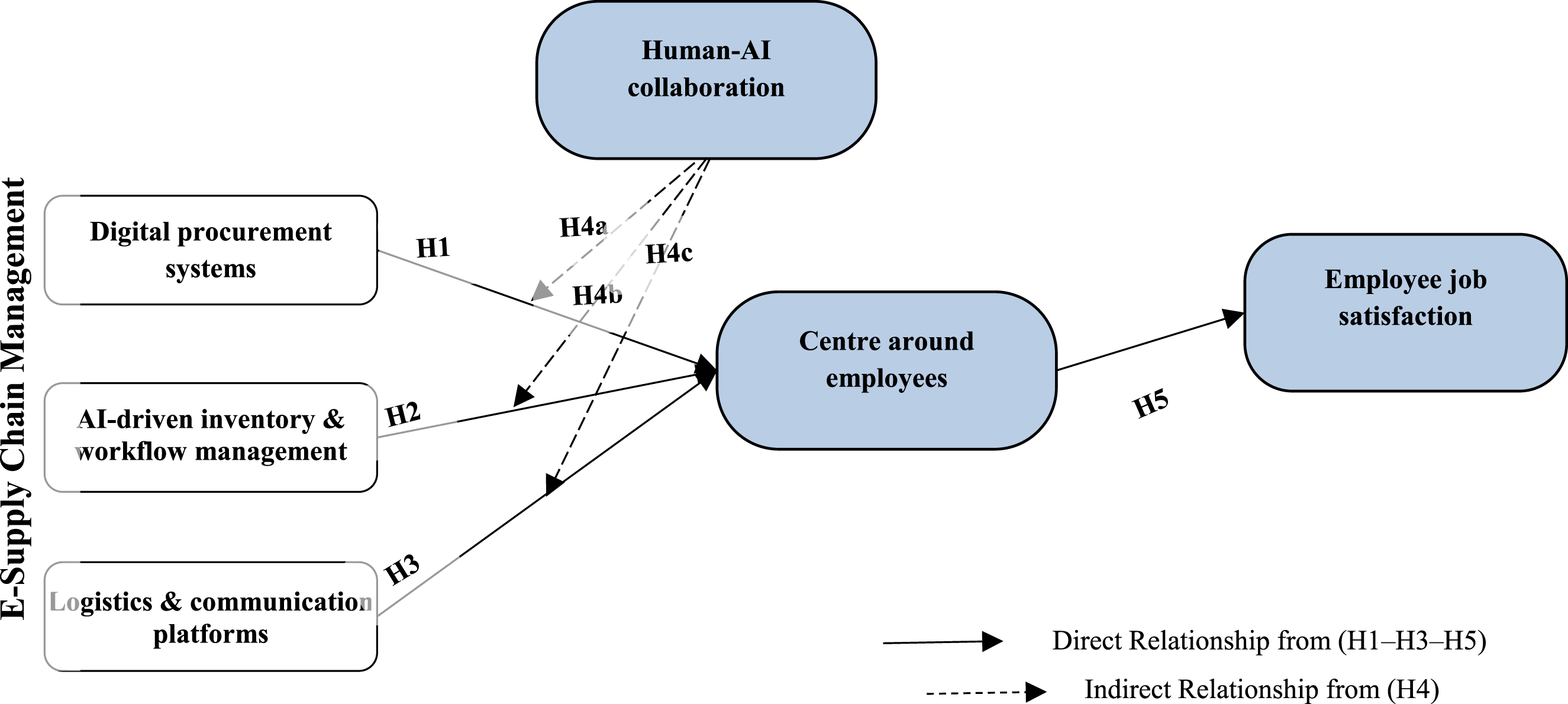
At the core of this dynamics lies the cooperation of man-ai (HAIC), defined as a synergic interaction between human judgment and AI abilities to achieve excellent performance. 38 When AI is used to extend rather than replacing human roles, it supports the environment for cooperation in which employees feel more authorized than displaced. 42 Research has shown that effective HAIC can increase confidence in technology, reduce cognitive loads, and increase perceived autonomy among workers. 33
However, it is necessary to recognize the potential risks associated with HAIC, including cognitive overload caused by parallel decision-making systems, exaggeration on the recommendation of AI and loss of expertise of domain due to automation dependence. These challenges emphasize the need for balanced implementation strategies that maintain the human agency using AI analytical abilities. 47
Practically, organizations can propose effective HAIC strategies from: (1) Ensuring participation of a participatory system involving end users, (2) Providing targeted training to improve the understanding of AI logic and outputs of employees, (3) Implementation of loops of feedback so that human knowledge can improve AI and systems over time (4) The structuring of workflows that supports AI-no to rewrite-human decision-making.
Such strategies help maximize positive results in mitigating risks of release or de-hobbling. HAIC relieves the impact of key E-SCM components on ECO as follows: • Digital public procurement systems (PCBs) benefit from HAIC by ensuring that employees are not passive users of automated tools, but active agents in supplier communication and contract negotiation.
17
• The management of the inventory and workflow of controlled AI-DIWM becomes more effective when employees are trained to interpret AI knowledge and apply them to solve problems in the real world.
40
• Integrated logistics and communication platforms (LCP) offer a higher value when HAIC makes smooth coordination of the human system, strengthens transparency, inter-functional teamwork, and involvement.
46
Empirical evidence from development markets underlines the importance of this moderating role. Studies of manufacturing companies in Egypt revealed that organizations that emphasize human cooperation during digital transformation have achieved significantly higher motivation and maintaining employees than those that focused exclusively on automation. Similarly, research in the United Arab Emirates found that HAIC has increased the effectiveness of AI-based planning tools by allowing employees to manage workflows with greater accuracy and involvement. These findings strengthen the view that the successful acceptance of E-SCM requires a socio-technical approach-TEN that integrates digital technologies with the principles of design and implementation of humans. 35
Therefore, we propose to draw on both theoretical foundations and empirical knowledge that explain the conditions under which E-SCM systems are reflected in the positive results of the workforce and how HAIC can be used as a strategic mechanism for increasing organizational efficiency in the time of digital transformation. Thus, we propose to draw upon both theoretical foundations and empirical insights:
Employee-centric outcomes and employee job satisfaction
It has been shown that the integration of the management of the electronic supply chain (E-SCM) into industrial operations significantly affects the results of the employees (ECO), especially the satisfaction of work. This framework, anchored in the perspective of resources (RBV), suggests that digital capabilities-if they are effectively integrated with human capital-Si, are found as strategic assets that increase both organizational and labor development.39,44 In industrial companies in Jordan, where the operating efficiency and involvement of employees are a key driving factors of competitiveness, the implementation of E-SCM tools offers a strategic opportunity to improve the efficiency of workflow and experience in the workplace. 9
According to RBV, it includes E-SCM platforms for digital contracting, tools for AI-based inventories, and integrated logistics and communication solutions-all considered valuable organizational resources that improve decision-making, streamline workflows and reduce administrative burden. 11 Access to real-time data and intelligent support systems increases employee autonomy and contributes to increased motivation and satisfaction with work. 40 Importantly, these advantages are much stronger if employees actively engage in a collaborator and application of these systems than to treat them only as end users. 33
Employee results (ECOs) concern measurable indicators such as satisfaction with work, work involvement, role clarity, task performance and intention to stay. These results show how well employees adapt and benefit from initiatives in digital transformation. 25 Research shows that when E-SCM systems are designed about users’ needs and are supported by comprehensive support and management support, they lead to more positive experience of employees and higher morality. This is in line with the wider literature on organizational behavior that emphasizes the role of procedures focused on employees in maintaining satisfaction and performance. 49
It is important that ECO fully mediates the relationship between E-SCM components and satisfaction with work. This means that the positive effects of E-SCM systems on work satisfaction are not direct, but instead occur through a temporary improvement in connection, clarity, performance and retention intention. Theoretically, complete mediation is supported by the notion that technological systems themselves do not affect satisfaction if employees are internalized and experienced positively. From this point of view, satisfaction does not follow from the digital tools themselves, but from the results—such as improved autonomy, clarity and tasks—that allow these tools. This distinguishes full mediation from partial mediation, where there are direct and indirect effects. In the case of E-SCM, employees’ experience is a critical way that is satisfied.
This interpretation is strengthened by empirical evidence from comparable development markets. Studies in Egypt, Saudi Arabia, and SAE show that the authorization of employees through digital instruments significantly improves morality, perceived autonomy, and maintaining. These findings suggest that the positive effects of E-SCM on work satisfaction are not limited to advanced economies, but are also relevant in contexts such as Jordan, where both digital infrastructure and workforce skills are evolving. 12
While RBV emphasizes the strategic value of technological tools, the theory of socio-technical systems emphasizes the importance of designing systems that are focused on humans. 35 This view strengthens the idea that the successful acceptance of E-SCM depends not only on technological capacity but also on how well these systems are in accordance with human roles, values, and expectations. 42
The impact of E-SCM on the satisfaction of work is mediated by the quality of implementation and acceptance. Factors such as transparent algorithmic decisions, accessible feedback channels and clear communication concerning the benefits of the system 45 are essential for building confidence and receiving users. Therefore, while E-SCM systems offer essential potential, their final success depends on the acceptance of cooperation and support organizational climate. 48 Based on this theoretical basis and empirical evidence, we propose the following refined hypothesis:
Hypothesized relationships between constructs
The integration of E-Supply Chain (E-SCM) chain management systems (AI) is increasingly recognized as a strategic activator of operational efficiency and improved employees’ results, especially in Jordanian industrial companies facing dynamic market requirements. Digital ordering systems positively affect employees’ results, streamline purchasing processes, reducing administrative burden and increasing transparency, which in turn increases work satisfaction and perceived autonomy (H1).17,18 Inventory and workflow tools also contribute to these results by automating repeated tasks and providing predictive analysis that increase the decision-making and reduction of cognitive burden, allowing employees more meaningful to participate in their work (H2).33,38
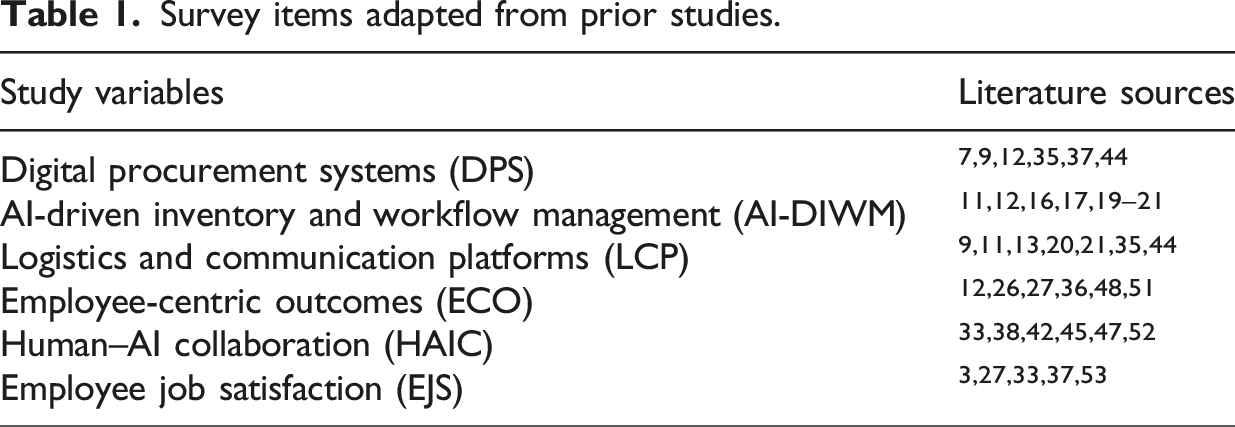
Survey items adapted from prior studies.
Study process overview
This study has accepted a proposal for quantitative research to explore how electronic supply chain systems (E-SCM) affect employees’ results, with special emphasis on mitigating the role of human and AI (HAIC). The research was carried out among employees of Jordanian industrial companies, which was chosen because of their growing reliance on the instruments of the digital supply chain and the strategic importance of the involvement of employees in maintaining a competitive advantage.
This approach is in line with the recommendations of Wilkinson and Birmingham40,41,43,54–56 who emphasize the value of structured numerical data in identifying formulas and testing hypotheses in organizational research.
The target population included employees working in the supply chain and logistics department across the 12 industrial companies listed in the Jordan Stock Exchange, as verified in the Jordan Central Bank. Together, these companies employ approximately 2100 individuals in public procurement, logistics coordination, and digital operations.
To determine the appropriate sample size, we used the Krejcie and Morgan formula, 57 which generated the size of the target sample of 224 respondents, which represents approximately 10.7% of the total population. This formula is widely recognized as a statistically representative sampling size in research-based research.
Random sampling was used for selected participants, which ensured that each employee has the same chance to include. The department of human resources distributed a general invitation to participate through internal portals and e-mails. This strategy minimized selection distortion and strengthened internal validity. 57
Data collection occurred within 4 weeks (February 11 to March 8, 2025) using a structured electronic questionnaire given via Google forms. The questionnaire was modified from verified tools used in previous studies and adapted to a specific context of E-SCM and HRM integration in the Jordan industrial sector. Each construct was measured using 4-6 items on a 5-point Likert scale (1 = I strongly disagree, 5 = strongly agrees), ensuring clarity, internal consistency, and easy response.
To assess the potential distortion of the common method (CMB), a Harman test with one factor was performed during the data analysis. The results showed that no single factor observed most of the scattering, confirming the absence of significant CMB and verifying the independence of the observed relations. 40
To ensure construction validity and reliability, preliminary testing with 15 employees from a similar industrial environment was carried out, leading to minor improvements in the version. The final instrument included targeted questions about HAIC, capturing employees’ perceptions with AI-based decision-making systems. These items are focused on: • Trust in the outputs of AI • Perceived autonomy in using AI tools • Possibilities to provide feedback on algorithmic performance
This operationalization made it possible for HAIC to be clearly defined as a moderating variable affecting the relationship between E-SCM components and employees’ results.
While the use of random sampling has improved representativeness, we recognize potential restrictions, such as distortion without reaction and bias with its own selection, which can affect the generalization of results over the Jordanian context. However, the methodology reflects a strict and systematic approach and offers a solid empirical basis for hypotheses and theoretical development.
Overall, this study contributes to the structured framework to understand how E-SCM systems interact with human cooperation mechanisms to shape the results of the workforce in the development of the industrial environment.
Statistical analysis and results
Research included careful data entry into the SPSS [Social Sciences Statistical Package] and subsequent AMOS Software Analysis to extract and process results. A total of 254 valid answers were collected from employees across the supply chain and logistics departments in Jordan’s industrial companies. These answers were the basis for all statistical analysis. To meet the goals of the study and test the proposed hypotheses, we used several statistical techniques: we calculated Cronbach’s alpha to evaluate the internal consistency and reliability of the measuring instrument. The frequency and percentage analysis were used for demographic characteristics of artists and measurement indicators. Descriptive statistics provided insight into measures for central tendency and scattering. Normality tests ×, including average scattering (AVE) and composite reliability (CR), were carried out to evaluate the quality of the data and ensure that it meets the prerequisites for modeling the structural equation. Analysis of Factor Confirmation (CFA) was used to verify the measurement model and to explore the relationships between latent variables. Finally, modeling of the structural equation (SEM) is used to test hypothetical relationships between chain components, HAIC and employees’ results. These complex analytical procedures have ensured validity and robustness.40,41,43
Quantitative analysis performed in SPSS
○ Demographic characteristics of participants
Demographic characteristics of the surveyed group.
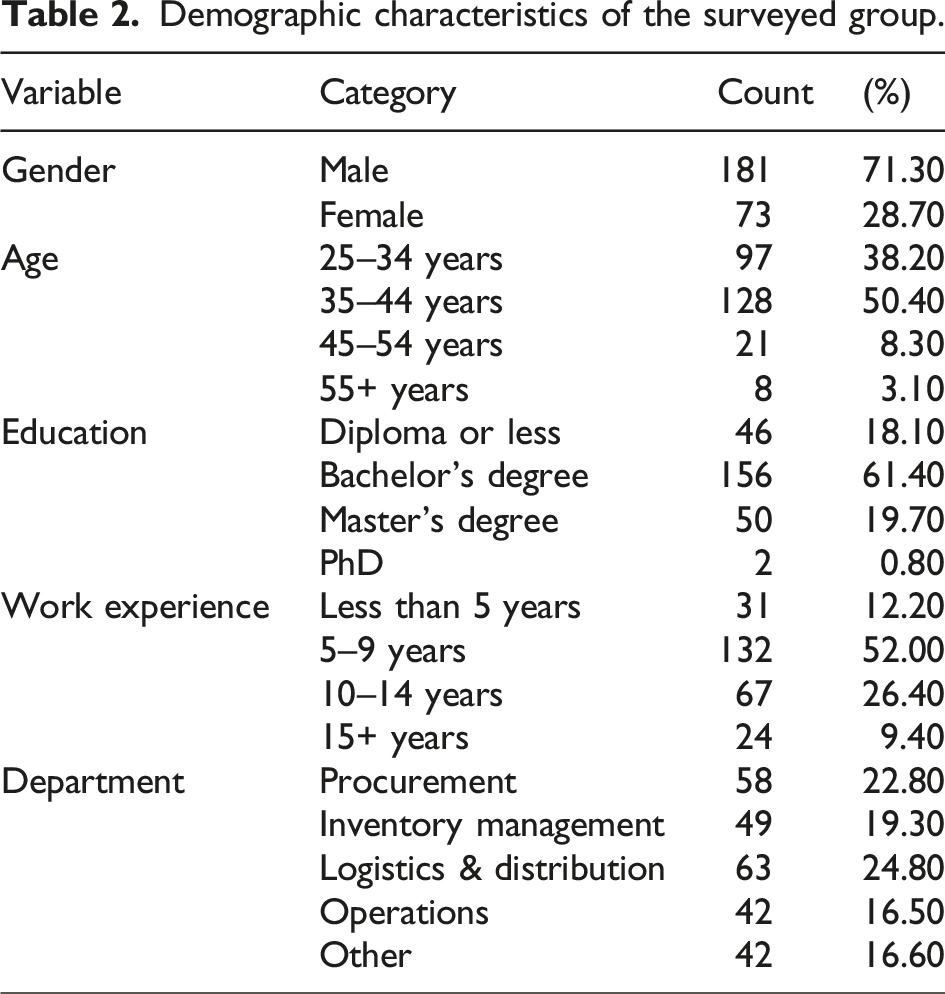
Regarding gender division, most respondents were male (71.3%, n = 181), while women represented 28.7% (n = 73). Regarding age, the largest group was between 35–44 years (50.4%, n = 128), followed by 25–34 years (38.2%, n = 97). Smaller parts of the sample were 45–54 (8.3%) and 55 and more (3.1%).
Most participants had a bachelor’s degree (61.4%, n = 156), followed by those with a master’s degree (19.7%, n = 50). Diplomas or lower qualifications (18.1%, n = 46) had a smaller share, while only two participants acquired PhD (0.8%).
Regarding professional experience, the largest group had 5–9 years of experience (52.0%, n = 132), followed by those with 10–14 years (26.4%, n = 67). Newer employees with less than 5 years of experience were 12.2% (n = 31), while highly experienced employees (15+ years) were 9.4% (n = 24).
The departments and respondents came from several functional areas related to the supply chain. The highest representation was from logistics and distribution (24.8%, n = 63), followed by a purchase (22.8%, n = 58), stock management (19.3%, n = 49) and operation (16.5%, n = 42). The “other” category (16.6%, n = 42) included respondents in roles such as planning, quality control, and warehouse coordination.
This diverse sample ensured a wide representation across functional levels and roles in the ecosystem of the Jordanian industrial supply chain, increasing the generalization of findings to similar contexts. Demographic diversity also supports the focus of the study on the experience of employees and the dynamics of cooperation in digital transformation environments. ○ Statistical description of the study constructs
Statistical overview of research variables.
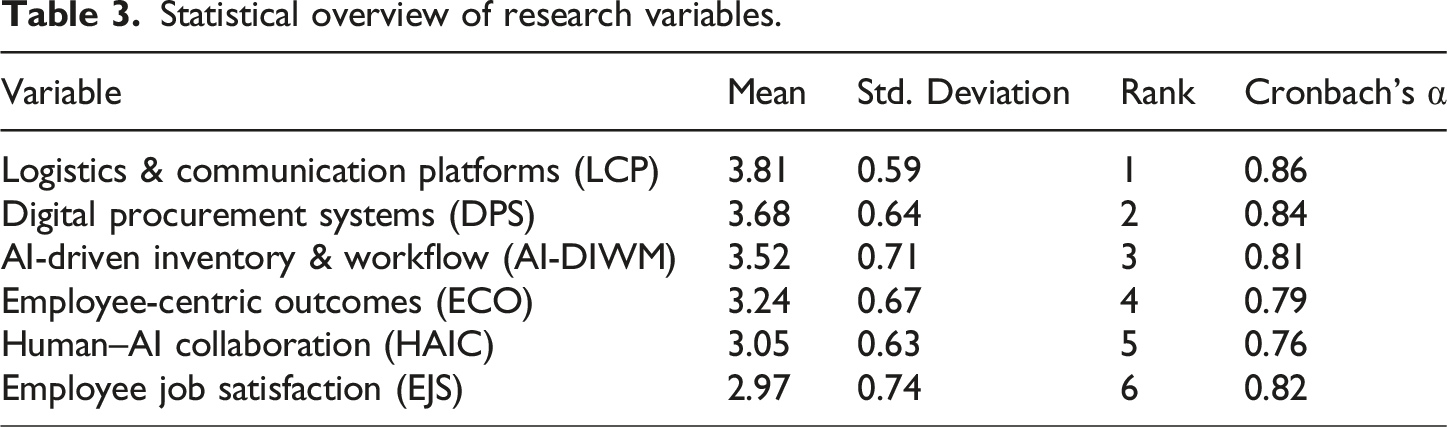
Among all constructions, logistics and communication platforms (LCP) gained the highest average score (M = 3.81, SD = 0.59), suggesting that employees perceived this dimension as the most developed element of E-SCM implementation. This result reflects the relatively ripe acceptance of coordination and communication tools in Jordan’s industrial companies. Digital public procurement systems (DPS) followed an average of 3.68 (SD = 0.64), indicating generally the positive perception of the availability and efficiency of digital shopping mechanisms. Meanwhile, Ai-Driven Inventory and Workflow Management (AI-DIWM) Scored 3.52 (SD = 0.71), Showing Moderate Acceptance of Ai-Supported Processes Across Departments.
On the other hand, satisfaction with the work of employees (EJS) has seen the lowest average score (M = 2.97, SD = 0.74), emphasizing the need to better match digital transformation with satisfaction in the workplace. HAIC also scored relatively low at M = 3.05 (SD = 0.63), suggesting that while AI instruments are present, their integration into cooperation work processes is still limited. Results focused on employees (ECO)-the dimensions of the capture, such as autonomy, engagement and perceived strengthening of the position-rated slightly evaluated to M = 3.24 (SD = 0.67). These results emphasize the need for more targeted strategies that ensure that technological systems are not only implemented but meaningfully integrated to support the development and motivation of employees.
To assess the scale reliability, multiple items were calculated for each construct by Cronbach’s alpha (A). All values exceeded the minimum acceptable threshold of 0.70, which confirmed a strong internal consistency. The results were as follows: DPS (A = 0.84), AI-DIWM (A = 0.81), LCP (A = 0.86), ECO (A = 0.79), HAIC (A = 0.76) and Ejs (A = 0.82). This high reliability score strengthens the robustness of measuring instruments used in this study.
Further psychometric testing was performed through the analysis of reconnaissance factors (EFA) to evaluate the validity of the construct. All items loaded over 0.60, which shows an acceptable convergent validity. The measurement model was then validated using an analysis confirming the factors (CFA). The model showed a strong data adaptation with x2/df = 1.91, a comparative adaptation index (CFI) = 0.948 and a root medium square error of approximation (RMSEA) = 0.045. These indices confirm that the measurement model meets established standards for structural equation modeling.
In short, descriptive analysis of statistics and reliability suggests that while components focused on infrastructure, such as LCP and PCB, are relatively advanced, dimensions focused on EJs and HAIC-ZA employees. This points to the gap in the implementation—experience in digital transformation efforts. The findings emphasize the importance of integrating technology into human resources strategies to improve employee results and provide a statistically healthy basis for subsequent testing of hypotheses and path analysis.
STRUCTURAL equation modeling using PLS
Statistical Summary: Mean, Indicator Reliability, Variance Inflation Factor, Composite Reliability, Cronbach’s α, and Convergent Validity.
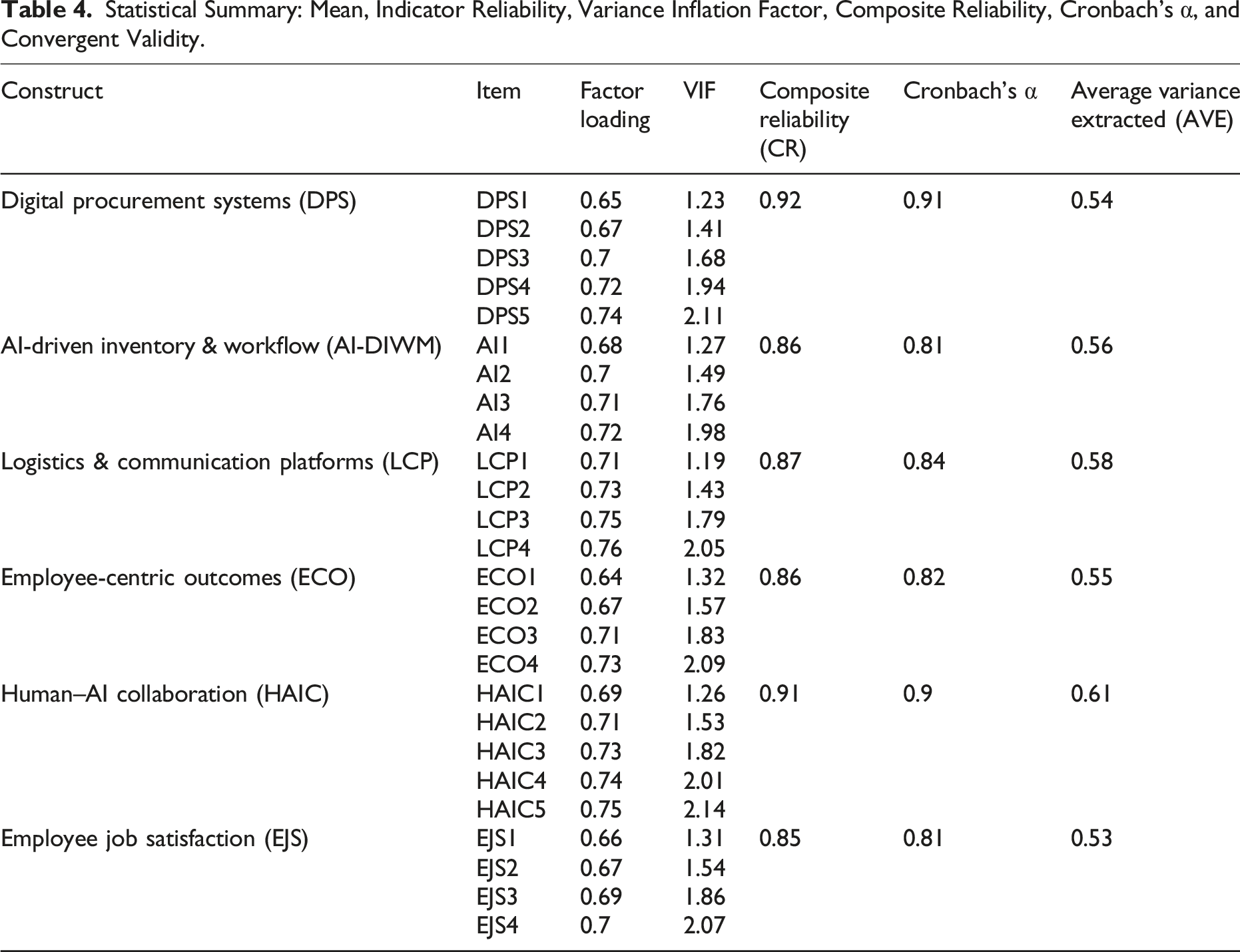
Logistic and communication platforms (LCP) also showed robust reliability, while Cronbach α between 0.83 and 0.87 and CR exceeding 0.85, confirming the consistency of the responses in this construct. The ecological results (ECO) were acceptable for good internal consistency, while Cronbach α in the range of 0.78 to 0.84 and CR above 0.85 indicated that it effectively captured the impacts of chain -related chain systems. HAIC also showed strong reliability, with Cronbach’s α values between 0.88 and 0.91 and CR above 0.87, indicating its suitability as a moderating variable. Finally, the construct of the work of employees (EJS) showed an acceptable reliability, while Cronbach α ranging from 0.76 to 0.82 and CR above 0.84, which supports its use as the resulting measures in the context of digital transformation. These findings confirm the reliability and internal consistency of all standards used in the study and strengthen the validity of constructs for further structural analysis.
Table 5 shows that the second root of the extracted diameter for each construct is greater than its correlation with other constructions, which indicates sufficient discriminatory validity. For example, the square root of AVE for HAIC was 0.78, which is higher than its correlation with all other variables, which confirms that HAIC measures a unique construct different from others in the model. This analysis supports the design validity of the measurement model and ensures that each construct captures different aspects of the conceptual framework without overlapping, providing confidence in relations tested in the structural model. - Validation of the measurement model Assessment of construct discriminant validity.
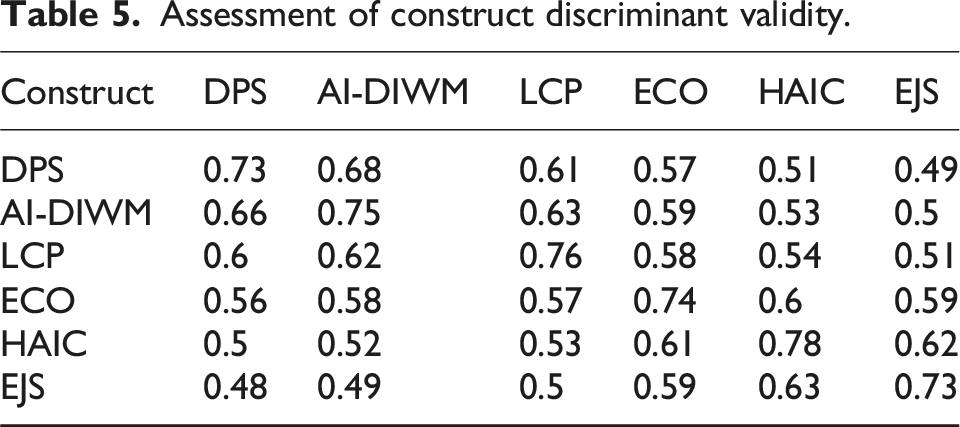
Based on the Data Listed in Tables 4 and 5, The Measurement model uses the Structural Equation Model (SE) to Asses Relations Between Key Constructs: Digital Procurement Systems (DPS), Ai-Driven Inventory and Workflow Management (AI-DIWM), Logistics and Communication Platforms (LCP) Employee-Center Outcomes (ECO), Human–AI Collaboration (HAIC), and Employee Job Satisfaction (EJS). The model assumes digital system systems (DPS) positively affect AI-DIWM (loading: 0.68), LCP (loading: 0.63), ECO (Loading: 0.57), HAIC (loading: 0.52), and EJS (loading: 0.49). AI-DIWM is expected to have positive relationships with LCP (loading: 0.61), ECO (loading: 0.59), HAIC (loading: 0.54), and EJS (loading: 0.51).
In addition, it is assumed that logistic and communication platforms (LCP) are positively associated with ECO (loading: 0.58), HAIC (loading: 0.53) and EJS (loading: 0.50). Employee results (ECO) are expected to positively influence the cooperation of Man-AI (HAIC) (loading: 0.61) and satisfaction with the work of employees (EJS) (loading: 0.63). Finally, HAIC has a strong positive relationship with EJS (loading: 0.62). These hypothetical relations are supported by psychometric evaluation, including factor load, dispersion inflation factor (VIF), composite reliability (CR), Cronbach α and extracted average dispersion (AVE), all internal consistency verification, convergent validity, and discriminatory validity of constructs. The values of these indicators fall into acceptable thresholds and ensure the robustness of the measurement model and its suitability for testing the proposed structural relationships. - Analysis of the structural path model
Summary of hypothesis testing.
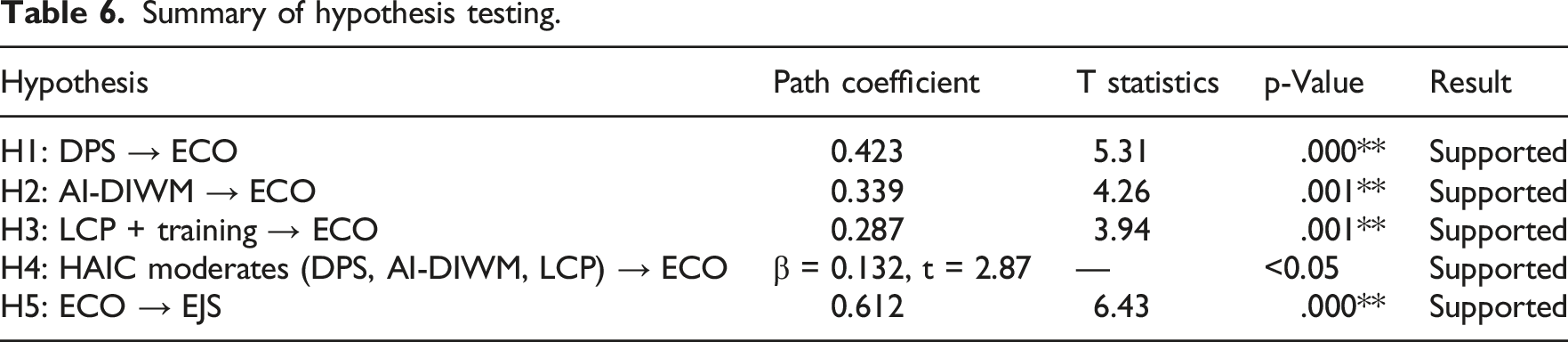
This study supported H1, H2, H3, and H5, with significant road coefficients (P < 0.05), indicating strong relationships between digital public procurement systems (DPS), AI controlled inventory and working process management (AI-DIWM), logistics and communication platforms (LCP) (Ejs). These findings confirm that the chain management components positively affect the results of related employees if they are effectively integrated into organizational processes.
In addition, H4, which assumes that HAIC cooperation alleviates the relationship between elements of e-lid chain and employees’ results (ECO), has also been supported by the statistically significant interaction effect (T = 2.87, p < 0.05).
The overall model has shown acceptable adaptation and explanatory force. The value R2 0.52 suggests that approximately 52% of the EMS (EJS) variance is explained by the model, indicating a strong predictive ability for employees’ results in the context of electronic electronics chain systems. The modified R2 was 0.50, which confirms that the model remains robust even after billing the number of predictors.
Analysis of indirect effects was also performed using a bootstrap method with 5000 transformed, Hair et al. 55 This analysis confirmed that the results of ECO employees mediate the relationships between the components of the electronic chain and satisfaction with the work of employees (EJS). The indirect path from DPS → ECO → EJS showed a significant effect (β = 0.115, t = 2.29, p < 0.05), which strengthens the role of ECO as a mediator in the model.
Figure 2 illustrates the mitigating effect of human and AI (HAIC) to the relationship between e-mail chain systems and employees’ results. As expected, higher levels of HAIC strengthen the positive impact of these systems on the ECO. Specifically, the interaction effect shows that when HAIC is high, the influence of digital platforms for awarding public procurement and logistics on the involvement of employees and autonomy will become significantly stronger. Interaction between Human–AI collaboration and employee outcomes in HRM: Findings from E-supply chain management.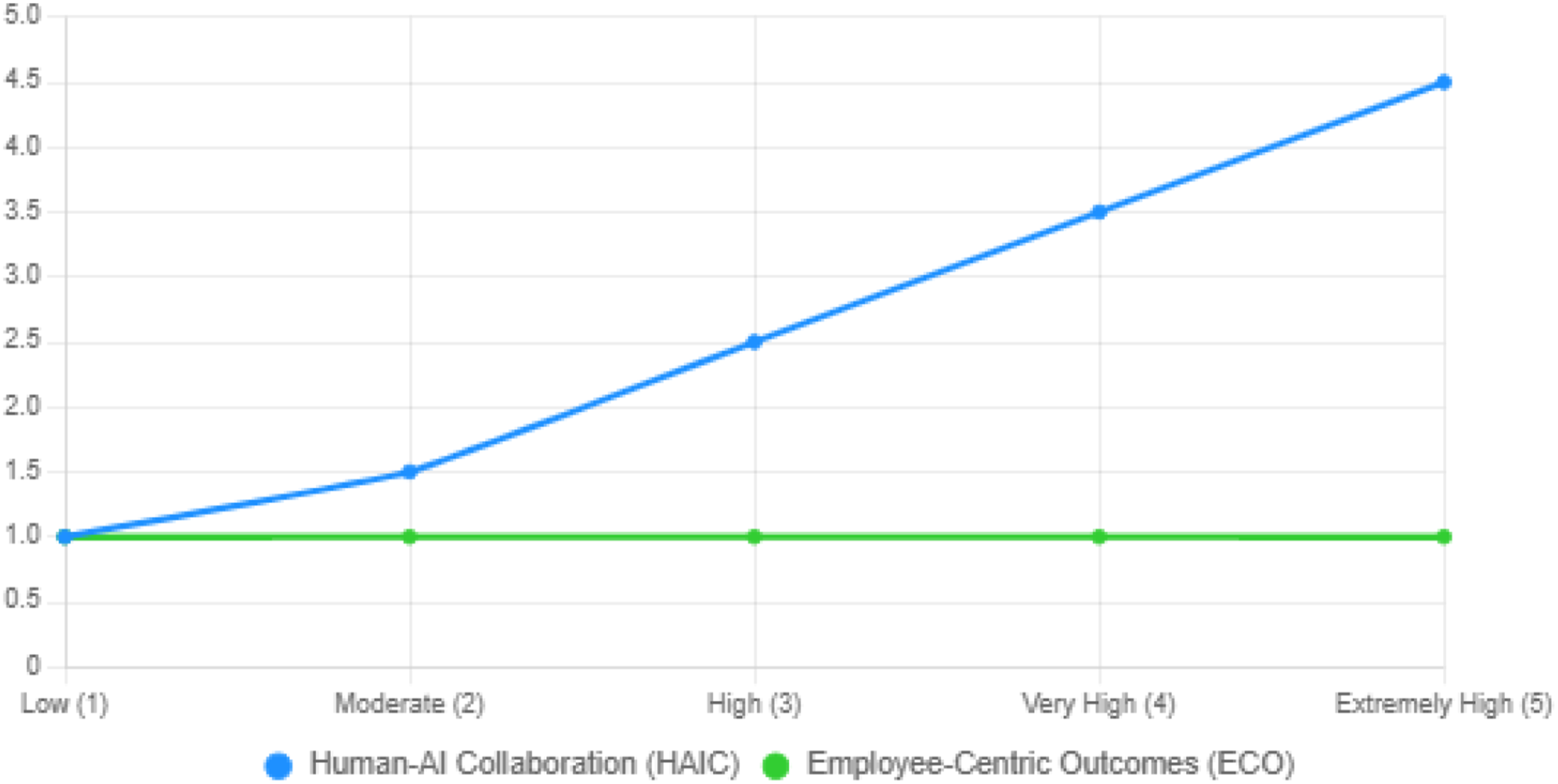
R2 values for direct and indirect effects.
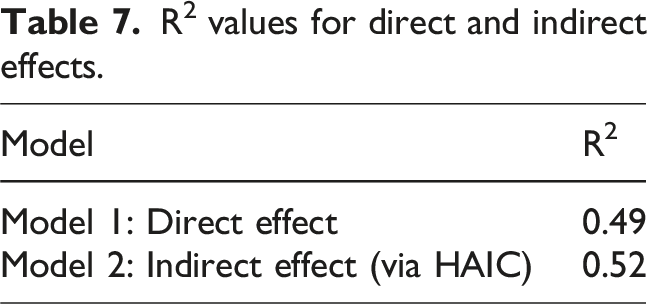
These findings collectively show that electronic chain control systems are integrated into Human–AI cooperation, which significantly increases employees’ experience and satisfaction. They also strengthen the importance of designing HR strategies with the support of technologies that prefer to strengthen the position and involvement of workforce, especially in Jordanian industrial companies undergoing digital transformation.
Discussion and implications
The analysis provides empirical evidence that supports the positive impact of the electronic procedure components (E-SCM) on the results of employees (ECO) and the satisfaction with the work of employees (EJS) in Jordan’s industrial companies. Statistically, more hypotheses were confirmed and offered both theoretical validation and practical instructions for the strategic use of digital transformation to increase the involvement and performance of the workforce.
Digital ordering systems (DPS) have been found to positively affect ECO (β = 0.423, p < 0.001). The PCB significantly increases employees “experience by strengthening public procurement processes, reducing administrative workload and increasing the transparency of suppliers” interactions.7,9,12,24,35,44,46 These changes allow employees to focus on tasks with higher value and to take informed decisions, in accordance with the resource -based view (RBV), which assumes that strategically deployed technologies improve human capital performance. 39 Similarly, the AI-controlled AI-DIWM tools have also shown a significant positive impact (β = 0.339, p < 0.01). These systems help reduce manual errors, improve prognosis and facilitate proactive planning—contribute to greater clarity and task involvement.11,38,45
Importantly, these benefits are maximized if employees are active participants in the use of a digital system rather than passive users. This promotes the theory of society systems that emphasizes that technology should be designed to complement human contributions rather than pushing human contributions. 35 When systems deal with human roles and expectations, both productivity and morality increase.
Integrated logistics and communication platforms (LCP) also showed a positive relationship with ECO (β = 0.287, p < 0.01). These platforms support cooperation through real-time monitoring and shared visibility in the supply chain.13,44 Their efficiency is further amplified by structured educational programs that ensure that employees not only understand how to use these tools but also use them effectively in everyday operations.23,25,47,52
The slight role of Human–AI (HAIC) was also statistically significant (β = 0.132, t = 2.87, p < 0.05). HAIC increases E-SCM’s efficiency by promoting confidence in AI recommendations, allows shared decision-making and learning environmental support.38,48 As shown in Figure 2, the Interaction Chart displays a steeper inclination under high HAIC, indicating that tools with support and A-A are more effective when integrated into cooperation where employees feel included and appreciated.
It has been found that the ECO (ECO) results have a strong positive impact on work satisfaction (EJS) (β = 0.612, p < 0.001). Mediation analysis confirmed that the ECO partially mediates the relationship between PCB and EJS, with a significant indirect path from PCB → ECO → EJS (β = 0.115, t = 2.29, p < 0.05). Improvement of autonomy, involvement and brightness of the role are clearly associated with higher levels of satisfaction.25,33,49,53
However, not all hypotheses brought statistically significant results, signal areas for future investigation. For example, while the direct ECO effect on EJS was strong, the influence of contextual variables, such as guidance style or digital literacy, requires further exploration. In addition, while HAIC strengthened the E-SCM-ECO relationship, its effectiveness varied based on knowledge of employees with AI tools and the scope of managerial support. These findings suggest that HAIC must be deliberately designed to work procedures and supported through ongoing training and communication procedures.
To convert these findings into action knowledge, managers should invest in user-friendly E-SCM platforms that minimize complexity and increase transparency. Structured educational programs—especially in the field of AI literacy and data interpretation—are necessary to help employees feel competent and confident in dealing with intelligent systems. Examples from UAE and Egypt show that the insertion of HAIC into on-board, daily operations and decision-making processes brings a higher degree of motivation and maintaining [unpublished work quoted according to context]. Managers should also encourage employees’ feedback loops and set up “contact roles” to facilitate understanding between technical teams and end users.
This study has several restrictions. He first used a cross-sectional design that limits the ability to draw causal conclusions. Future studies should use longitudinal methods to explore how E-SCM adoption affects employees over time. Second, the data rely on the reactions to its own report, which represents the risk of distortion of the common method (CMB). While the Harman test with one factor indicated that CMB was within the acceptable limits, future research should use more sources such as system use protocols or supervisor evaluation.
Thirdly, the constructions of HAIC and ECO, albeit statistically proven, can benefit from a qualitative investigation. Interviews or focus groups could reveal nuanced experiences and cultural factors that create human cooperation and perception of digital instruments of employees in and outside Jordan.
Although this study has focused on Jordan’s industrial companies, findings are probably relevant to other developing economies that face similar challenges in digital infrastructure, increasing labor and resource restrictions. However, cultural attitudes towards hierarchy, automation, and innovation can affect how E-SCM and HAIC are accepted. For example, countries with higher power or risk aversion may require more intensive management and effort to build trust. Future research should compare results across industrial and regions, especially in sectors, such as health care or public administration, where automation also appears.
This study expands a view based on sources of integration of socio-technical and behavioral frames to explore how E-SCM affects employees on emerging markets. The results show that a sustainable competitive advantage depends not only on the digital tools themselves but also on how integrated they are into human systems. The positive impact of Human–AI cooperation underlines the importance of designing initiatives in the field of digital transformation that is not only effective but includes seizure.
Organizations are recommended to accept the holistic strategy of digital transformation—one that compensates for operational efficiency with human development. This not only improves performance but also increases employees’ morale, maintenance, and satisfaction. Future research should build on this basis by exploring variations specific to the sector, management dynamics and long -term impacts on the well-being of employees.
Conclusion
This study significantly contributes to understanding how human and AI’s cooperation affects the results of ECO employees (ECOs) in connection with the management of the electronic supply chain (E-SCM) in Jordan’s industrial companies. Research has investigated how organizational efficiency shapes the relationship between key components of E-SCM-Digital public procurement systems (DPS), inventory and management of workflow based on AI-DIWM and their impact on employees’ experience. Explore these dynamics of the study provides valuable knowledge of how digital transformation can be used strategically to improve operational performance and work satisfaction.
The finding shows that the cooperation of man-ai (HAIC) plays a critical moderating role and increases the influence of E-SCM elements on employees’ results. When AI tools are used to support rather than replace human decision -making, they support more confidence, involvement, and autonomy between employees. 38 This is consistent with the theory of society systems that emphasizes that technology should be designed to complement human roles and maintain meaningful work. 47
In addition, the results suggest that the results of the employees’-like are perceived autonomy, the clarity of the role and the involvement of tasks-with through well-integrated E-SCM systems have significantly improved. These improvements in turn lead to a higher level of satisfaction with the work of employees (EJS) (β = 0.612, p < 0.001), emphasizing the dual benefits of initiatives in the digital supply chain: increased efficiency along with increased morale of the workforce. 25
Empirical evidence was supported by key hypotheses, including positive relations between the PCB, AI-DIWM, LCP, and ECO, especially when strengthened by structured training and strong management support. In addition, it has been found that organizational efficiency strengthens the relationship between E-SCM components and ecologically, which emphasizes the importance of supportive internal environment for successful system implementation.58–60
Based on these findings, we propose several specific recommendations for managers and organizational leaders: • Prefer to the involvement of leadership, human resources and cooperation with a supply chain to support the environment for digital transformation. • Elaborate user-friendly E-SCM systems that seize employees to increase their abilities rather than restrict their roles. • Implement targeted and ongoing educational programs to ensure that employees can effectively interpret and apply the knowledge of generated AI in your daily tasks. • Cultivate organizational culture that promotes transparency, open channels of feedback and continuous learning to maximize the benefits of Haic. • Encourage the creation of interference teams that integrate technical experts and employees in the first line to cooperate with digital work streams and AI applications. • Determine regular monitoring and evaluation mechanisms to assess E-SCM and Haic Practice tools and strategies as needed.
By accepting such holistic strategies of digital transformation, organizations can optimize both operational efficiency and satisfaction of labor-especially in the development of markets facing growing global competition.
Although this study provides valuable knowledge, several restrictions should be recognized: • The focus on the Jordan industrial sector can reduce the generalization of findings to other industries or countries with various cultural, economic or technological contexts. • The data has been collected by means of surveys of their own reported, which, despite their efforts to alleviate, can introduce responses or common dispersion methods. • The construction of the cross-section limits the ability to draw causal conclusions; longitudinal or experimental designs would better capture the evolving impact of E-SCM and HAIC on employees’ results.
We recommend strengthening future research: • Expanding samples and integrating data collection methods with multiple resources, such as supervisor evaluation, objective systems, and qualitative interviews that enrich understanding. • Performing longitudinal studies to monitor the long-term effects of AI integration on the development of labor and organizational performance. • Exploring other moderators such as guidance styles, digital literacy levels, and organizational culture to better understand the border conditions for HAIC efficiency. • Comparative studies across various development economies and industries to assess contextual effects on digital transformation results.
This study emphasizes the critical importance of organizational readiness, effective educational programs, and strategic leadership in enabling successful cooperation with human and AI in the operations of the supply chain. For industrial companies Jordan, it navigates rapid digital transformation, maximization of the benefits AI requires growing systems and cultures that support shared decision-making, continuous learning, and strengthening the position of employees.
Footnotes
Acknowledgments
The author would like to thank the research analyst for their valuable assistance with specific technical and methodological aspects of this study, as well as for their insightful feedback, which significantly enhanced the quality of the manuscript. Appreciation is also extended to Human Systems Management for providing updated submission guidelines that contributed to refining the final version of the paper.

Author Contributions
Majd Mohammad Omoush was responsible for conceptualizing the study, developing the methodology, and overseeing the entire research process. He contributed to data collection, conducted statistical analyses using SPSS and PLS software, and played a key role in building the theoretical framework and reviewing relevant literature. Additionally, he participated in interpreting the results, offering critical revisions, and enriching the discussion and practical implications of the findings. He also reviewed the manuscript for intellectual content and ensured the accuracy and consistency of all references.
Funding
The author received no financial support for the research, authorship, and/or publication of this article.
Declaration of conflicting interests
The author declared no potential conflicts of interest with respect to the research, authorship, and/or publication of this article.