



Abstract
Objectives
This paper aims to identify the orientation of leaders in terms of leadership styles and to measure the influence of leadership styles (transactional, transformational, and passive avoid leadership) in incentivizing innovations in financial institutions in Kosovo, thus filling the gap that exists between the leadership style used and the influential one in incentivizing innovations.
Methods
To achieve the objectives of the research, a quantitative method was used based on primary data. To study leadership styles, The Full Range Model of Leadership was used, where the questionnaire was created based on the Multifactor Leadership Questionnaire (MLQ 5X). The MLQ consists of 36 questions within the nine components of the full range leadership model measured through Likert scale. Part of the research were 361 workers of commercial banks and 314 workers of microfinance and FinTech institutions.
Findings
Based on the multiple linear regression analysis, transactional leadership demonstrates stronger effect on promoting innovation compared to transformational and passive avoidant style.
Novelty/improvement
This research enables giving recommendations for financial institutions in Kosovo, to enable the incentivizing of innovations through strengthening the leadership style with the greatest impact on innovations.
Keywords
Introduction
As a result of globalization and technological changes, a much more competitive market has been formed, hence the need for innovative behavior due to economic and environmental dynamics. 1 Innovative behavior is regarded as an important factor for sustainable growth, creating competitive advantage and the ability to survive.2–4 For this reason, companies must continuously innovate in order to survive, maintain a competitive advantage, and effectively manage rapid global change. 5
Based on the literature, leadership as a variable has a significant impact on innovation management, 6 increasing organizational creativity (Amabile, Moneta, & Kramer, 2004), it affects the promotion of innovation 7 and implementation of innovation projects. 8 According to the author Bel (2010), driving and managing innovation is affected by different leadership styles differently, 9 or the author Deschamps (2005) estimated that the failure of innovative projects occurs as a result of ineffective leadership. 10
According to the studies of many authors over the years, the stimulation of innovation has been considered the main function in the theories of transformational leadership,11,12 where, unlike transactional leadership, transformational leadership proved to be effective in promoting innovations. 13 Empirical and theoretical studies support the fact that transformational leaders have an affinity for supporting the values and norms of their followers to sustain organizational change and foster innovation, 14 where it has been assessed that the choice of leadership style has an important role in the effective promotion of innovations. 15
Previous studies provide support for a strong correlation between transformational leadership and innovations at the organizational level. 16 Although different leadership styles had a positive relationship with innovation, many of them showed correlations even with moderate conditions, where the connection between transformational leadership and innovation turned out to depend on other variables, where there is a need to explore mediating factors in between them. 17
Since it is considered urgent to study leadership styles to improve innovative behavior, many researchers have investigated the relationship of transactional leadership with the promotion of innovation, where the impact is different in different situations. According to the studies, the transactional style is the most present style of leadership in organizations 18 ; therefore, it has attracted the attention of researchers as an important factor of encouraging innovative behavior. 19 According to their findings, transactional leadership has a positive linear correlation with the innovative behavior of employees,20–22 while the findings of Pieterse et al. (2010), Rahmah et al. (2020), Alheet et al. (2021) are inconsistent as it turned out that the relationship between transactional leadership and the promotion of innovations is negative.23,24 In addition, the authors Sethibe and Steyn (2017), and Gemeda and Lee (2020) in their studies did not identify any correlation between the promotion of innovations and transactional leadership.25,26
Thus, although the influence of leadership styles on promoting innovation has been addressed in literature, the results are often contradictory in the case of transactional and passive avoidant leadership. This instability is an indication that the relationship between leadership and innovation is not linear but is influenced by contextual factors. According to this, the financial sector in Kosovo represents a specific context, where because of an economy in transition, this sector faces high pressure for innovation, rapid digitalization, and increased regulatory requirements. These developments create such an environment, where leadership practices function differently in consolidated financial systems. It is precisely this interplay of unstable theoretical results and a specific institutional context that makes the influence of leadership styles on promoting innovation a complex and necessary research issue, therefore, this research aims to fill the existing gap by providing a clear overview of the influence of leadership styles in promoting innovation in financial institutions in Kosovo.
Literature review
In the innovation process, the role of workers is considered a key factor, 27 despite this, there is a lack of studies that analyze the innovation process from the individual’s point of view. 28 Concerning this important predictor for promoting innovation, leadership has been evaluated, 29 where leaders are considered important factors of innovation performance, as a dual process of innovation management. First, leaders are the catalysts for creating employee opportunities that support creative thinking and innovation. 30 After that, leaders support employees’ desires to be innovative through resource allocation in terms of time, management of individual or team objectives, and allowing teams and individuals to be autonomous.31–33
So, leadership was defined as influencing factors in promoting innovation, 14 where transformational and transactional leadership is the main focus in studies that link leadership and innovation. 34
Leaders, who are oriented by the transformational leadership style, are considered positive predictors of the future of the organization, as influencers of the improvement and self-confidence of the workers, and the identification of their needs by working in cooperation to meet their needs. 35
Transformational leadership style can be linked to fostering innovation through the inclusion of several features; Bass (1985) categorized transformational leadership into five main components 11 :
Idealized Influence (Attributes) and Idealized Influence Behavioral relate to the leader’s ability to influence workers’ ideas, which focuses on the attribution of workers to the leader’s behavior, a fact related to his abilities. Concepts that are descriptive of the affinity that the leader has for influencing the thoughts and emotions of the employees and requiring commitment to support the leader’s mission and vision. 36 According to these aspects, these leaders set high standards of behavior and as such have a predisposition for admiration, respect, and trust from subordinates. 37
Inspirational Motivation: leaders with this approach have high expectations from workers and encourage them by motivating them to be more committed to achieving common goals. 38 So, leaders have such behavior whereby offering challenges they manage to motivate their followers. 39 Inspirational motivation also increases workers’ understanding of the organization’s mission and encourages the perception of the mission as a key element that is indicative of the organization’s existence. 40
Intellectual Stimulation is the simulation of followers by the leader with this approach to find the solutions to organizational problems, as behavior that creates a challenge for workers to have the opportunity to re-think the work, they do. 41
Individualized Consideration represents attention because of individual differences as well as their simulation through communication and reduction of responsibilities. 41 This approach shows care and attention to the followers by suggesting respect for them, to meet their needs as well as to develop the skills of the followers. 42
Referring to the ongoing literature, transformational leadership positively affects team innovation and effectiveness, supporting employees to operate effectively within the organization. 43 According to the study, Burcharth et al. (2017) found that autonomy is related positively to the promotion of innovation 44 ; also, Joshi et al. (2009) emphasizes the effectiveness of transformational leadership due to the encouragement of cooperation and the creation of a common goal. 45 Even the study of Gumusluogu and Ilsev (2009) identified the relationship between transformational leadership and employee innovation creativity. 46 In addition, these authors Gumusluogu and Ilsev emphasized that transformational leadership not only supports and promotes the drive for innovations but also takes care of their success in the market.46,47
As for transactional leadership, it is oriented on the relationship between leaders and pursuers, surpassing personal interests, 48 which is based on contingent reward. Transactional leadership is thought to foster efficiency within teams by focusing on rewarding worker performance, 49 and motivating workers to participate in driving innovation through the reward system. 50
According to the model, transactional leadership involves two components:
Contingent Reward is the leader’s approach that rewards employees for their performance by clarifying roles and job requirements. 51
Management by Exception Active indicates that the leaders have an important level of awareness and show a willingness to guarantee the standards. This is achieved through active and rigorous performance monitoring and prompt reaction when problems arise. 13 So, in this approach, all the leaders’ attention is focused on possible mistakes and deviations from the standards in the organization. 52
The third style addressed in this research is passive avoidant leadership, which involves two components:
Management by Exception Passive and Laissez-Faire: this type of leadership is the non-interference of leaders in problems until they become serious. So, the leader with this approach waits until the moment when the problems are fully manifested and then they take measures or in the most frequent case they do not take any step, an action which is also known as a “policy of non-intervention.” 53
Research method
To achieve the research aims, a quantitative method was used based on primary data. To study leadership styles, the questionnaire was formulated based on the Multifactor Leadership Questionnaire (MLQ), namely, The Adjusted Nine-Factor Model changed in 2009. The MLQ consists of 36 questions within the nine components of the full range leadership model measured through Likert scale.
The questionnaire was organized by being divided into five sections. Demographic questions (gender, age, education) of financial institution workers were part of the first section. Part of the second section was transformational leadership consisting of five components: Idealized Behavioral Influence, Idealized Influence (Attributes), Intellectual Stimulation, Inspirational Motivation, and Individualized Consideration, each part had four questions in total. This Leadership style had 20 questions. Part of the third section was transactional leadership consisting of two components: Contingent Reward and Management by Exception Active, where each of these two components had four questions that in total for the transactional style of Leadership were eight questions. Part of the fourth section was passive avoidant leadership consisting of two components: Management by Exception Passive and Laissez-Faire where each part had four questions that in total for this Leadership style there were 20 questions. Finally, in part of the last section of the questionnaire, five questions measured innovation in financial institutions using a Likert scale.
Financial institutions in Kosovo were part of the research, where commercial banks in Kosovo (with foreign and local capital), microfinance institutions, and FinTech were studied. According to the data of the Central Bank of Kosovo, from January 2023, 12 banks with 200 units operate in Kosovo (9 are with foreign capital and 3 with local capital) and 3788 workers are employed in all their units. 54 Therefore, Slovin’s formula was used to determine the minimum sample size based on the known population size for each financial sector. The margin of error of e = 0.05 was selected in accordance with standard empirical research practices for the social sciences, where a confidence level of 95% is considered a methodological standard for ensuring statistically stable results.
Considering that the population is 3788 employees, the representative sample regarding Commercial banks was determined based on Slovin’s formula, therefore 361 bank employees participated in the research. Additionally, refer to the following equation:
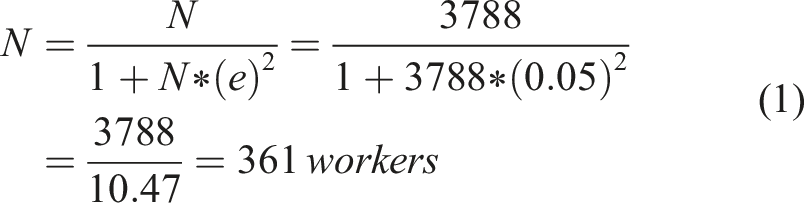
Based on equation (1), the minimum sample size threshold was set at 361, but since 100% response rates are not generally achieved in surveys, a non-response adjustment was used, assuming a non-response rate of 14%. Therefore, the number of questionnaires distributed was 420, where out of 420 questionnaires distributed, 361 valid questionnaires were received with a response rate of 86%, ensuring statistical sufficiency for analysis; the calculation was made according to the formula:

According to the same report of the Central Bank, 30 microfinance institutions operate in Kosovo, including Non-banking Financial Institutions (FinTech), of which nine are with foreign capital. The number of units of microfinance institutions is 157, which employ 1461 workers. 54
Considering that the population is 1467 workers, the representative sample for microfinance and FinTech institutions was determined based on Slovin’s formula, therefore 361 employees of these institutions participated in the research. Additionally, refer to the following equation:
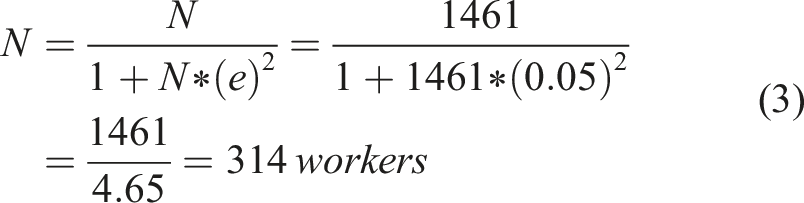
Based on equation (3), the minimum sample size for microfinance institutions and FinTech was determined to be 314 respondents, where for static adjustment of non-response a 14% non-response rate was assumed in this case as well, resulting in the number of questionnaires distributed being 365, resulting in a response rate of 87.2%. Ensuring statistical sufficiency for analysis, the calculation was made according to the formula:

In total, 785 questionnaires were distributed to all financial institutions, and 675 valid responses were received, ensuring a response rate of 86.6% and providing a solid statistical basis for the interference analysis.
In Figure 1, the flowchart of methodology is presented, where the stages through which the research has gone are explained, from the definition of the method to the analyses used to validate the hypotheses. Flowchart of method.
This paper presents the following objectives and hypotheses: Objective 1: To examine the effect of transformational leadership on incentivizing innovation. • Objective 1a: To examine the effect of idealized influence (attributes) on incentivizing innovation. • Objective 1b: To examine the effect of idealized influence (behavior) on incentivizing innovation. • Objective 1c: To examine the effect of inspirational motivation on incentivizing innovation. • Objective 1d: To examine the effect of intellectual stimulation on incentivizing innovation. • Objective 1e: To examine the effect of individualized consideration on incentivizing innovation.
H1: Transformational leadership has a positive effect on incentivizing innovation. Objective 2: To examine the effect of transactional leadership on incentivizing innovation. • Objective 2a: To examine the effect of contingent reward on incentivizing innovation. • Objective 2b: To examine the effect of management by exception (active) on incentivizing innovation.
H2: Transactional leadership has an effect on incentivizing innovation. Objective 3: To examine the effect of passive avoidant leadership on incentivizing innovation. • Objective 3a: To examine the effect of management by exception (passive) on incentivizing innovation. • Objective 3b: To examine the effect of laissez-faire leadership on incentivizing innovation.
H3: Passive avoidant leadership has a negative effect on incentivizing innovation. The relationship between the variables is presented in Figure 2. First, before the analysis for the validation of the hypotheses, the internal consistency is measured to see how strongly a group of items is related to a group. So, through Cronbach alpha as a reliability coefficient, the average correlation between the items was measured. Through this coefficient, reliability has been assessed by comparing the amount of variance or common covariance of the items with the sum of the total variance. To assess that the conditions have been met by using Pearson’s correlation to present the relationship between the two variables and multiple linear regression to measure the impact, the normality test was done. Through the Kolmogorov-Smirnov and Shapiro-Wilk tests, the normal distribution of the data was evaluated according to the rule that p > 0.05. To assess whether there is a problem with autocorrelation, that is, to measure the relationship between the current value of a variable and its past values, the Durbin-Watson test was used. In addition to the above tests, it was also assessed if the model has multicollinearity, which are high interactions between two or more independent variables in multiple linear regression. The reason for conducting such a test is that if there is multicollinearity, we may have unrealistic results in the analysis of a phenomenon when it is claimed to measure the influence of many independent variables on the dependent variable. To measure the relationship between variables, the Pearson’s correlation was used, where the correlation coefficient values range from −1 to 1. The correlation coefficient was calculated based on the following equation: To evaluate the fit of the used regression model, the coefficient of determination or R square was used, through which they evaluate how well the independent variables predict the dependent variable. R square is calculated through the following equation: To measure the impact, multiple linear regression was used, which is a statistical technique used in cases where there is me than one independent variable. In equation (7), i denotes the individual observation (respondent), with i = 1, 2, …, N, where N represents the total number of valid observations used in the regression analysis. Multiple linear regression is measured tough the following equation:




Framework of research.
Results
Reliability of the measuring instrument.

Note. Idealized Influence Attributes (IIA), Idealized Influence Behavioral (IIB), Inspirational Motivation (IM), Intellectual Stimulation (IS), Individualized Consideration (IC), Contingent Reward (CR), Management by Exception Active (MEA), Management by Exception Passive (MEP), Laissez-Faire (LF).
Part of the research was 675 employees of financial institutions, of which 361 are employees of commercial banks in Kosovo (with foreign and local capital) and 314 employees of microfinance and FinTech institutions. Of these workers, 60% (n = 405) were female, and 40% (n = 270) male. Of the employees, 26.81% (n = 181) were 18–27 years old, 33.04% (n = 223) were 28–37 years old, 21.04% (n = 142), 11.11% (n = 75) 48–57 years old, and only 8% (n = 54) were Over 58 years old. Regarding the level of education of financial sector workers, 13.19% (n = 89) had a secondary education, 56.15% (n = 379) had a bachelor’s degree and 30.67 (n = 207) had a master’s degree.
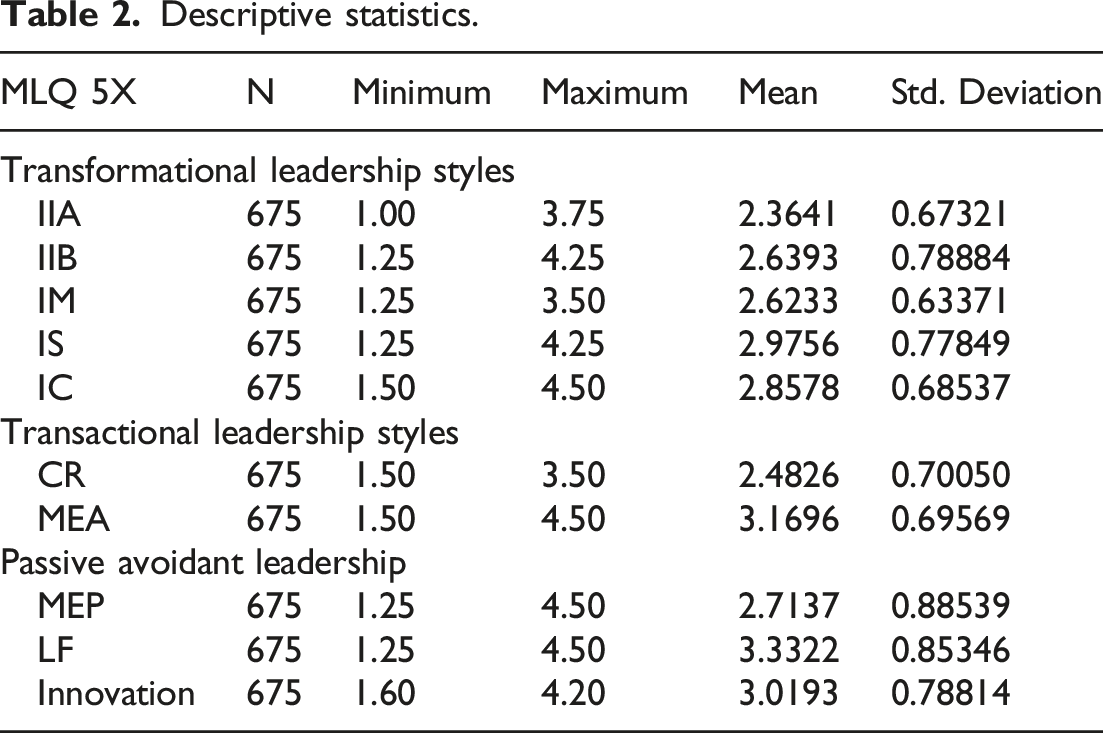
According to the descriptive results, transformational leadership consists of five factors: IIA, IIB IM, IS, and IC, where the average of the whole category is x = 2.69. If we specify each category, the average changes by several decimal values. The mean of IIA is x = 2.36 and SD = .673, which indicates that workers tend to disagree that the leader stimulates interest among colleagues and followers to see their work from new perspectives, that the leader is admired, respected, and is believed to be a model for their followers. The second factor within transformational leadership is IIB, where the mean is x = 2.63 and SD = .788, , which indicates a tendency toward disagreement that the leader goes beyond self-interest for the good of the group, takes into account the needs of others on their personal needs, considers the moral and ethical consequences of decisions and generates awareness of the mission or vision of the team and organization. The next factor within this Leadership style is IM, where the mean is x = 2.63 and SD = .633. This value, being below the neutral midpoint, indicates that workers tend to disagree that leaders speak optimistically about the future, motivate colleagues and followers to look beyond their individual interests, and stimulate individual and team spirit. The fourth factor is IS, where mean x = 2.97 and SD = .778 indicates a perception that is close to neutral but still slightly below the midpoint, suggesting neither clear agreement nor strong disagreement regarding re-examining critical assumptions, developing followers’ abilities, and stimulating innovative and creative efforts. The last factor, that is, the fifth factor in the framework of transformational leadership is IC with mean x = 2.85 and SD = .685, which indicates a tendency toward mild disagreement that leaders sufficiently pay attention to individual needs for advancement and growth, develop followers’ potential, and support employees in strengthening their capabilities.
The second style addressed in this research is the transactional leadership style, which consists of two factors: CR and MEA, the average of the entire category is x = 2.82. The first factor within this Leadership style is CR, where the mean x = 2.48 and SD = .700 show that workers disagree regarding the use of recognition and rewards as a motivating force, clarification of expected performance outcomes, and alignment of individual contributions with organizational goals. The mean of the second factor, MEA is x = 3.16 and SD = .695, which, being above the neutral midpoint, indicates that workers tend to agree that leaders actively monitor performance, keep records of mistakes, define performance standards, and intervene to correct problems in order to maintain performance levels.
Descriptive statistics.
Referring to Figure 3, which expresses the degree of agreement for transformational leadership, we note that most of the workers surveyed stated that they do not agree that their leader stimulates interest among colleagues and followers to see their work from different perspectives. Young, little admired, and respected and they do not see him as a model to follow. Also, the workers did not believe that their leader thinks for the good of the group rather than for his interest, did not pay attention to the needs of individuals, and did not consider the moral and ethical consequences of decisions. As for inspirational motivation, the leaders also did not show such an orientation, since the workers appreciated that the leader did not speak optimistically about the future, did not motivate them enough, and did not pay attention to the stimulation of individual and team spirit. Level of the agreement for transformational leadership style.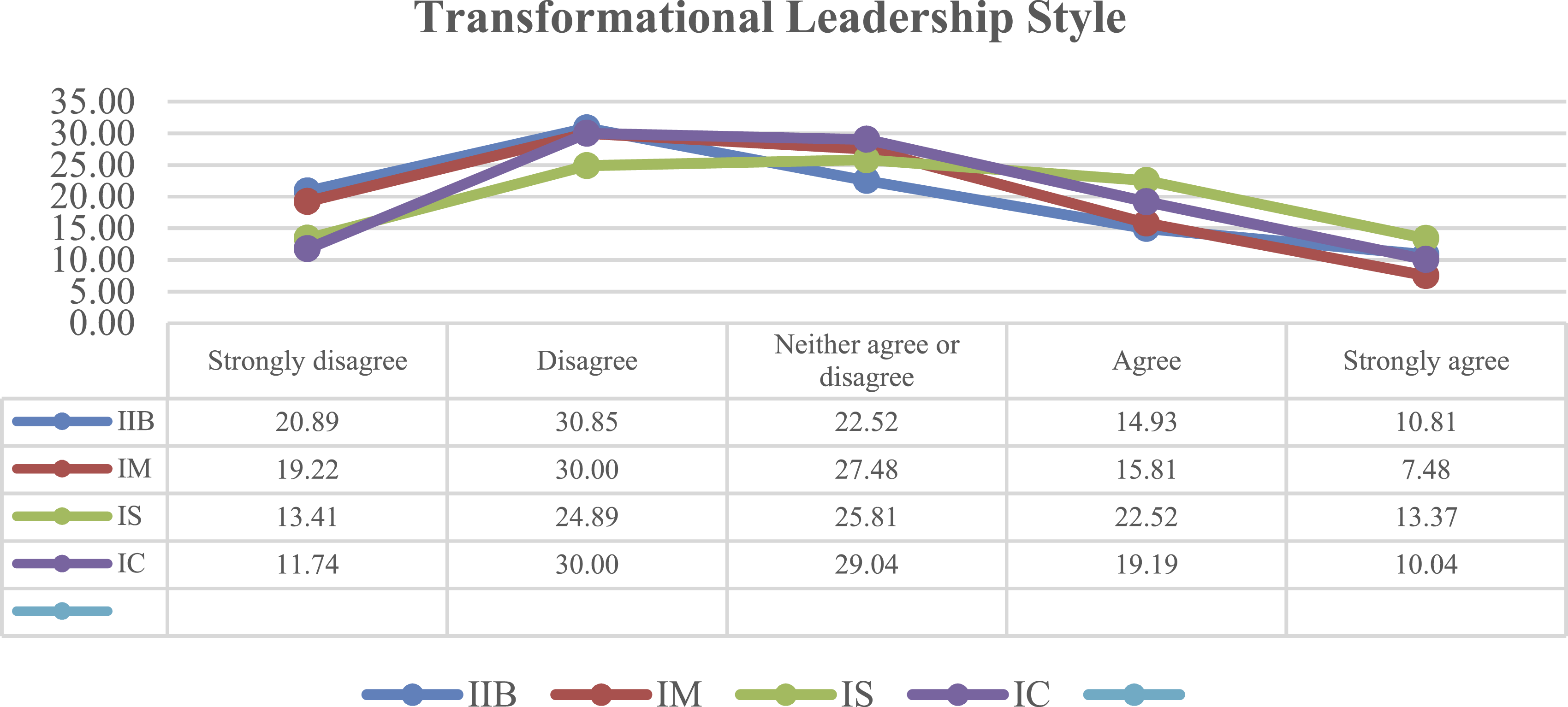
Even when we talk about individualized consideration, the leaders did not show such orientation, since it does not pay attention to the workers’ need for advancement and growth and did not try to develop the followers to higher levels of potential.
According to these results, the orientation of leaders of financial institutions is not transformational leadership, given that in all features of transformational leadership, a high result was not shown according to the workers’ perspective.
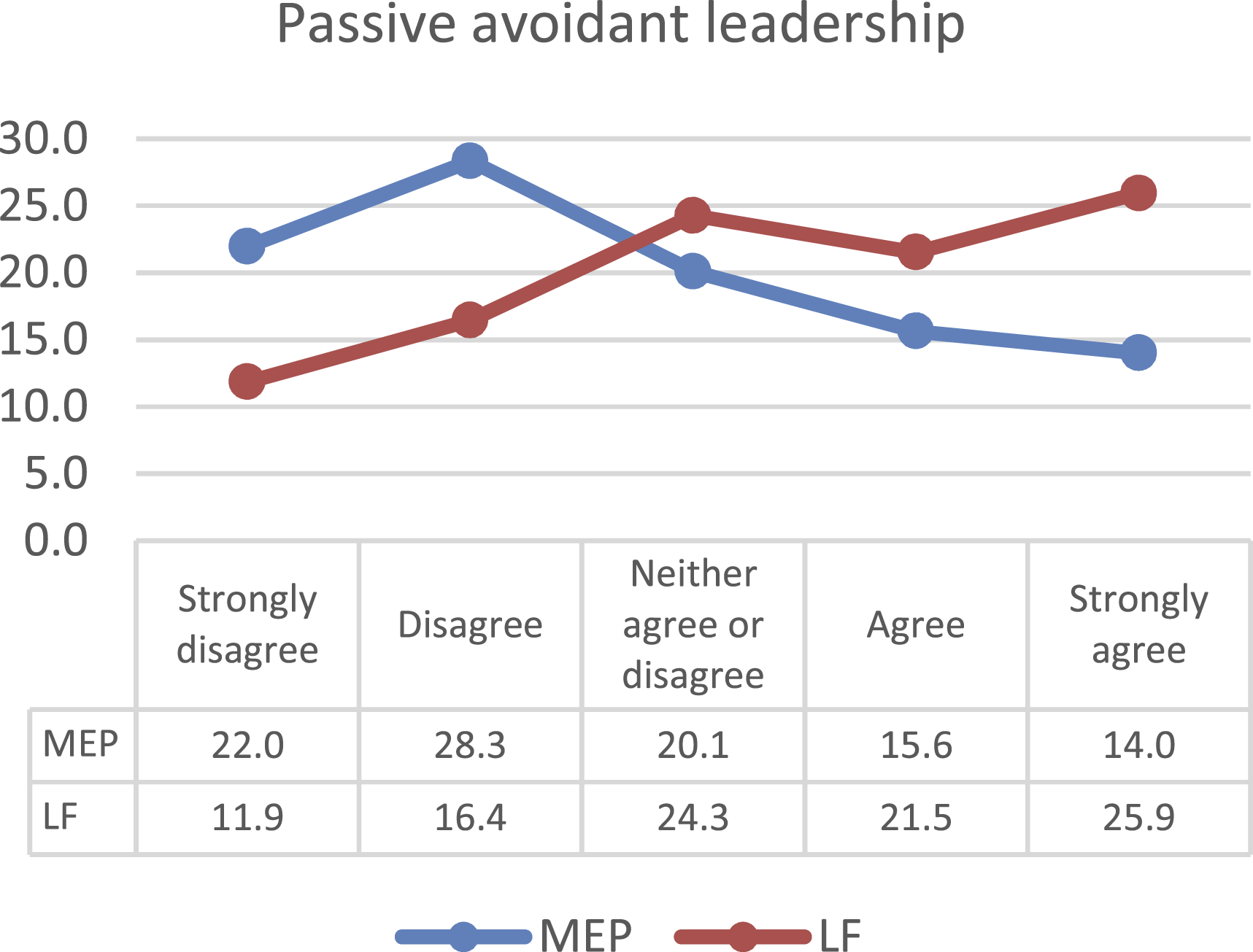
According to the results presented in Figure 4, the leaders of financial institutions in Kosovo showed an orientation in transactional leadership in terms of management by active exception, given that according to the workers’ perspective, the leader keeps records of all mistakes, defines performance standards and that what constitutes ineffective performance, is monitoring for the execution of tasks and for any problems that may be lined as well as considered corrective of problems to maintain performance levels. As for the passive avoidant leadership presented in Figure 5, the workers declared that the leaders have an approach oriented towards Laissez-Faire Leadership, given that they have autonomy in decisions. Level of agreement for transactional leadership. Level of the agreement for passive avoidant leadership.
Verification of hypothesis
Before discussing the results and validating the hypotheses, we emphasize that all the conditions to use the lower tests (correlation and multiple linear regression) are met. The first fulfilled condition is the representative inclusion of the sample in the research, then the normal distribution of the data evaluated through the Kolmogorov-Smirnov and Shapiro-Wilk test (p > 0.05), as well as according to the Durbin-Watson test, it is determined that the models do not have a problem with autocorrelation since the values are between 1.5 and 2.5.
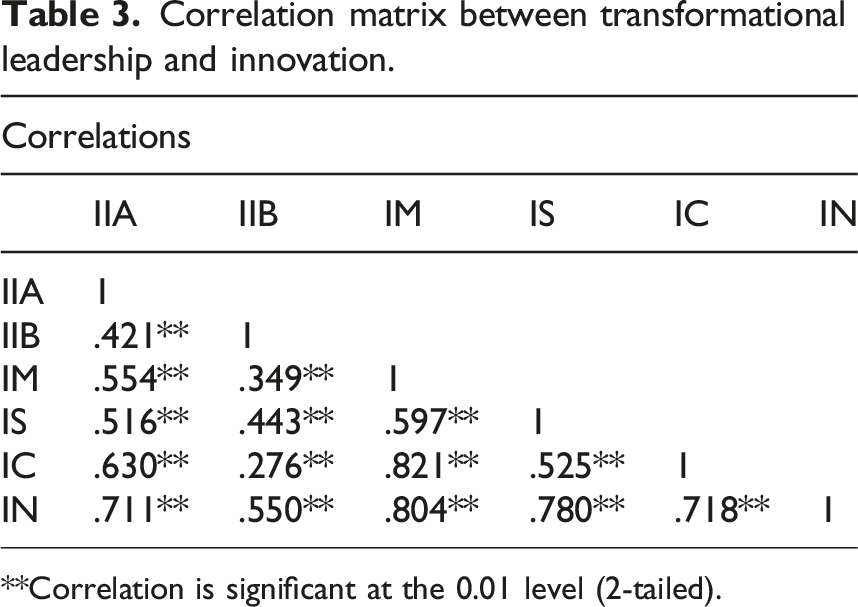
To present the connectivity between transformational leadership, which consists of IIA, IIB, IM, IS, IC, and IN, the Pearson correlation was used. According to the value of the coefficients:
r = .711 (sig = .000), between Idealized Influence (Attributes) (IIA) and incentivizing innovation (IN), there is a strong positive linear relationship.
r = .550 (sig = .000), between Idealized Behavioral Influence (IIB) and incentivizing innovation (IN), there is a moderate positive linear relationship.
r = .804 (sig = .000), between Inspirational Motivation (IM) and incentivizing innovation (IN), there is a strong positive linear relationship.
r = .780 (sig = .000), between Intellectual Stimulation (IS) and incentivizing innovation (IN), there is a strong positive linear relationship.
Correlation matrix between transformational leadership and innovation.
**Correlation is significant at the 0.01 level (2-tailed).
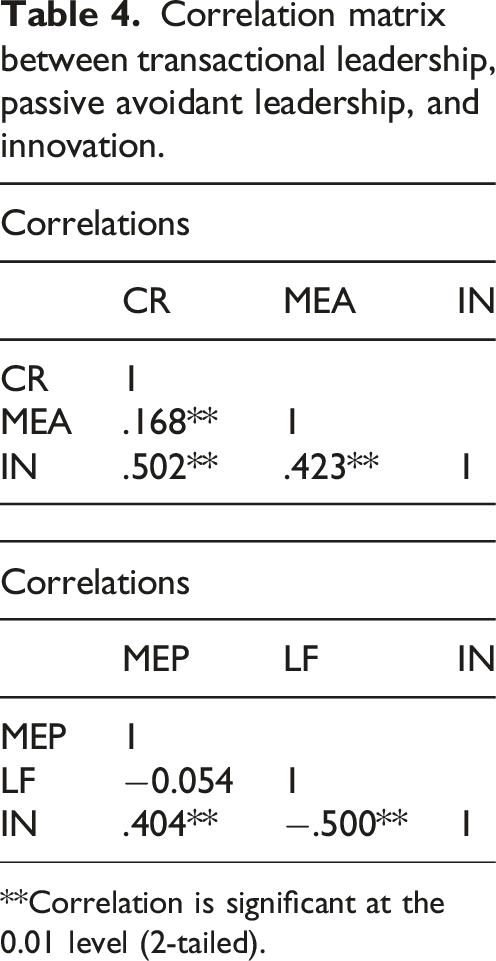
Correlation matrix between transactional leadership, passive avoidant leadership, and innovation.
**Correlation is significant at the 0.01 level (2-tailed).
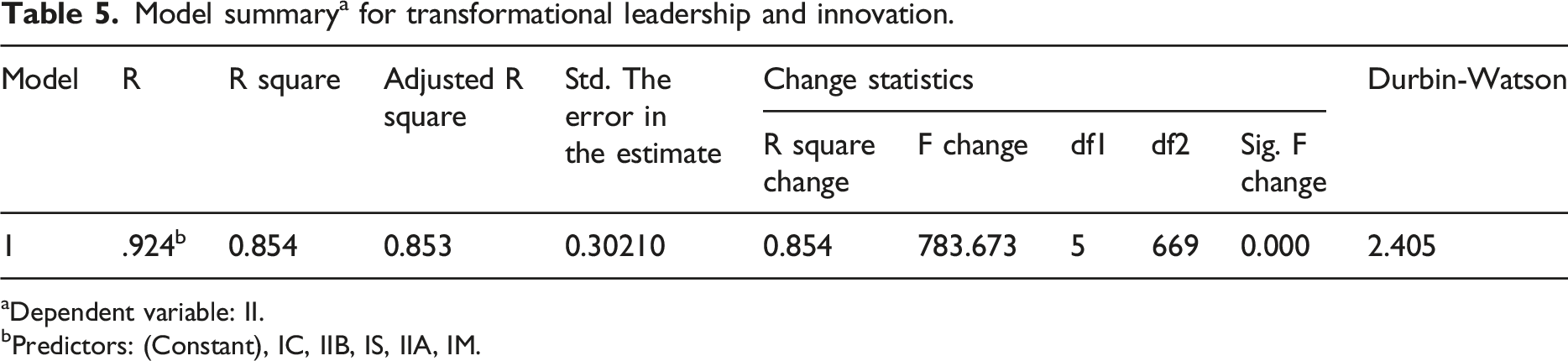
Model summary a for transformational leadership and innovation.
aDependent variable: II.
bPredictors: (Constant), IC, IIB, IS, IIA, IM.
Analysis of coefficients for transformational leadership.

aDependent variable: II.
Model: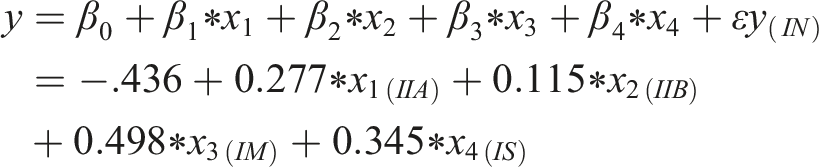
Model summary a for transactional leadership and innovation.
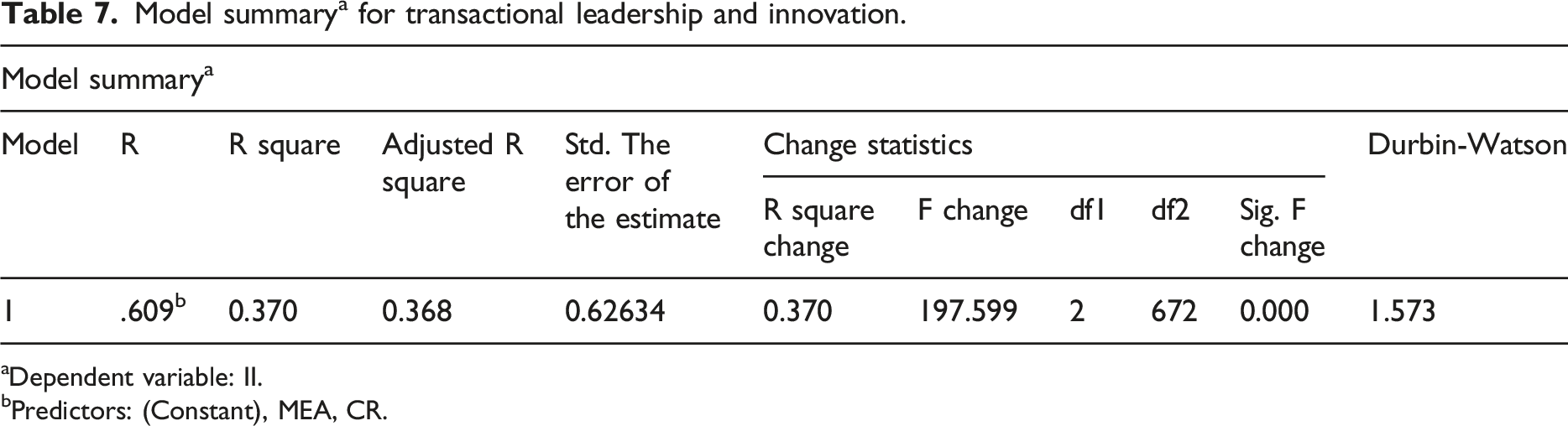
aDependent variable: II.
bPredictors: (Constant), MEA, CR.
Analysis of coefficients for transactional leadership.

aDependent variable: Innovation.
Model:
Model summary a for passive avoidant leadership and innovation.

aDependent variable: Innovation.
bPredictors: (Constant), Laissez-Faire, Management by Exception Passive.
Analysis of coefficients for passive avoidant leadership.

aDependent variable: Innovation.
Acceptance of hypothesis.

Model:

Discussion
The regression results show that transformational leadership is the strongest predictor of innovation promotion in the analyzed model. Within this style, dimensions related to inspirational motivation and intellectual stimulation appear as the strongest components associated with innovation, while individualized care is not statistically significant in the presence of other dimensions. This configuration of results is consistent with the study of Jung, Chow, and Wu (2003), who report that the impact of transformational leadership on innovation is particularly related to the articulation of vision and orientation towards organizational change. 14 This study confirms this argument by showing that visionary and cognitive dimensions are more related to innovation than interpersonal dimensions. Similarly, Pieterse, Van Knippenberg, Schippers, and Stam (2009) report that intellectual stimulation is the dimension of transformational leadership that exhibits the most consistent relationship with innovative behavior. 23 Our findings are consistent with this conclusion, as intellectual stimulation appears as one of the main components associated with innovation in the regression model. Regarding individualized care, the fact that this dimension does not result in significance in the model is consistent with the literature suggesting that not all dimensions of transformational leadership contribute equally to each organizational outcome. Wang, Oh, Courtright, and Colbert (2011) emphasize that the effects of transformational dimensions vary depending on the outcome analyzed. Our study shows that in the context of innovation, visionary and cognitive components are more determinant than relational components. 55 The results for transactional leadership show that this style is positively associated with innovation, but with a more limited impact compared to transformational leadership. This result is consistent with the analysis of Jansen, Vera, and Crossan (2009), who argue that leadership styles oriented towards control and reward are related to organizational performance and stability, while their impact on change and innovation is more moderate. 56 Findings confirm this theoretical position by showing a positive, but not dominant, relationship.
Regarding passive avoidant leadership, the results show that the laissez-faire style has a negative impact on innovation. This conclusion is consistent with the study of Skogstad, Einarsen, Torsheim, Aasland, and Hetland (2007), who report that laissez-faire leadership is associated with negative organizational consequences and a lack of effective leadership. 57 This study confirms that a lack of leadership is associated with a decrease in innovative orientation. Meanwhile, passive exclusionary management appears positively related to innovation in the model, but with a weaker impact compared to other active styles. This result should be interpreted within the limits of the tested model, without considering this style as innovative, but only as a positive statistical relationship within the analyzed configuration. 58
Conclusion
Based on the results of the research, we conclude that the leaders of financial institutions in Kosovo are oriented toward transactional leadership in terms of management by active exception, given that according to the workers’ perspective, the leader keeps records of all mistakes, defines performance standards and that what constitutes ineffective performance, is monitoring for the execution of tasks and for any problems that may be lined as well as considered corrective of problems to maintain performance levels. Also, the passive avoiding approach has been identified among the leaders’ workers declaring that the leaders have an approach oriented towards Laissez-Faire Leadership, given that they have autonomous decisions.
Referring to the Pearson correlation, we conclude that the relationship between transformational leadership and Incentive Innovation in all parameters: Idealized Influence Attributes (IIA), Inspirational Motivation (IM), Intellectual Stimulation (IS), Individualized Consideration (IC) is a strong positive linear relationship except Idealized Influence Behavioral (IIB) which presents a moderate positive linear relationship.
As for transactional leadership, we conclude that between the Contingent Reward (CR) and Incentive Innovation parameters, there is a moderate positive linear relationship, while Management by Exception Active (MEA) and Incentive Innovation has a weak positive linear relationship.
For Avoid Leadership, we conclude that the relationship between Management by Exception Passive and Incentive Innovation is a moderate positive linear relationship, while the relationship between Laissez-Faire and Incentive Innovation is a moderate negative linear relationship.
The findings of the OLS Models show that Innovation is influenced by transformational leadership by 85.4%, transactional leadership by 37%, and passive avoidant leadership by 39.3%.
Since there is a difference between the implementation of the leadership style and the most influential style in promoting innovation, it is recommended to change the leadership style from transactional to transformational leadership to achieve a higher level of innovation in financial institutions.
Supplemental Material
Supplemental Material - Leadership models and the promotion of innovation: Case study in the banking and FinTech sector in Kosovo
Supplemental Material for Leadership models and the promotion of innovation: Case study in the banking and FinTech sector in Kosovo by Fidan Qerimi, Arbëresha Qerimi, Vrullim Buja in Human Systems Management
Footnotes
Author contributions
Conceptualization: F.Q. and A.Q.; methodology: A.Q.; software: A.Q.; validation: V.B.; formal analysis: A.Q. and V.B.; investigation: F.Q.; resources: V.B.; writing original draft preparation: V.B., A.Q., and F.Q.; writing review and editing: A.Q., F.Q., and V.B.; visualization: V.B.; project administration: F.Q.; funding acquisition: V.B. All authors have read and agreed to the published version of the manuscript.
Funding
The authors received no financial support for the research, authorship, and/or publication of this article.
Declaration of conflicting interests
The authors declared no potential conflicts of interest with respect to the research, authorship, and/or publication of this article.
Data Availability Statement
The data supporting the findings of this study are publicly available in Zenodo at  59
.
59
.
Supplemental material
Supplemental material for this article is available online.
References
Supplementary Material
Please find the following supplemental material available below.
For Open Access articles published under a Creative Commons License, all supplemental material carries the same license as the article it is associated with.
For non-Open Access articles published, all supplemental material carries a non-exclusive license, and permission requests for re-use of supplemental material or any part of supplemental material shall be sent directly to the copyright owner as specified in the copyright notice associated with the article.
