




Abstract
Background
Organizations are leveraging AI technologies to streamline processes, including recruitment and selection.
Purpose
This study uses an experimental approach to examine potential job applicants’ perceptions of organizational justice, trust in AI, and intentions to pursue job offers across screening configurations. Specifically, it explores how variations in AI involvement and fairness-related features, such as transparency, reliability, and bias mitigation, affect applicants’ perceptions of distributive, procedural, and interpersonal justice, as well as their trust in the recruitment process. The study also investigates whether perceptions of organizational justice and trust in AI are associated with applicants’ intentions to pursue job opportunities.
Research Design and Method
This study adopts a quantitative experimental approach. Purposive sampling technique was applied, whereby final-year students, who represent the prospect of AI-driven recruitment at the entry level were recruited. 74 participants were randomly assigned to five scenarios describing different recruitment processes, varying in AI autonomy, human involvement, procedural design and outcome fairness. Participants’ perceptions were measured using validated scales for distributive, procedural, and interpersonal justice; trust in AI (transparency, reliability and bias mitigation); and behavioural intentions. Data were analysed using univariate and multivariate analysis of variance.
Results
Results showed that recruitment scenarios with low fairness and unjust outcomes led to lower perceptions of organizational justice and trust in AI. In contrast, hybrid human–AI systems that emphasized transparency, bias mitigation, fair outcomes, and human oversight were associated with higher trust, more positive justice perceptions, and stronger job pursuit intentions compared to AI-only systems. The findings highlight the importance of transparent and human-centered AI practices in recruitment and selection.
Conclusion
The study demonstrates that AI-supported recruitment systems are perceived more positively by job applicants when they incorporate transparency, bias mitigation, fair outcomes, and meaningful human oversight, highlighting the importance of ethical and human-centred AI implementation in organizational hiring practices.
Keywords
Introduction
Artificial intelligence (AI) technologies have taken centre stage in our lives, efficiently assisting us with various tasks. Currently, AI is reshaping conventional business functions by improving and optimizing processes, decision-making and organizational adaptability to the competitive business landscape.1,2 McKinsey 3 insights reveal that the adoption of AI technologies in core business functions increased significantly from 58% in 2023 to 72% in 2024, with organizations integrating AI across various aspects of their operations. In 2025, 78% of organizations reported using AI in at least one business function. This reflects a continued upward trend that signifies the recognition of AI’s potential to enhance business operations. This trend is also evident in the human resources functions of many multinational corporations (MNCs). Organizations are increasingly turning to AI to streamline talent acquisition, aiming to efficiently and effectively screen the right candidates faster through data-driven AI technologies. 4 While AI offers efficiency, its integration into hiring raises concerns about fairness, transparency, and trust. 5
Despite AI’s growing prevalence, its application in human resource management is proving disruptive (e.g. Refs. 6 and 7). While organizations emphasize operational benefits of AI-driven selection, applicants often perceive AI systems as opaque and impersonal, potentially undermining their confidence in the selection process.8,9 This indicates the primary concerns centre around the issues of transparency, fairness and judgement. For instance, studies by Athreya et al. 6 and Leong et al. 7 revealed that rather than feeling empowered by AI-driven hiring, many applicants reported feeling uneasy and sceptical. Likewise, for organizations, they found that the AI shortlisted candidates have inadvertently encouraged misleading impressions or deceptive behaviour. In Agnihotri and Bhattacharya 10 study, it was found that applicants are more likely to fake responses when interacting with AI systems, especially when they perceive these systems as less capable of detecting dishonesty. This raises ethical concerns about the integrity of AI-supported selection and its implications for reliability when it is used in decision-making. Subsequently, Sharma et al. 9 highlighted that the absence of clear mechanisms for bias mitigation and accountability, AI-driven selection mechanism potentially risks alienating qualified candidates who may choose not to apply at all. The perception of unfairness and lack of human oversight can lead applicants to withdraw from the process, jeopardizing the employer’s reputation and reducing the talent pool. Hence, Kumar et al. 11 and Minbaeva 12 opined that AI is a disruptive force in human resource management (HRM).
Standing at the crossroads of the AI technologies’ ability and limitations, there is growing concern from both the job applicants and organizations about its fairness and transparency, and trustworthiness and reliability. This highlights a fundamental gap in understanding how job applicants view AI-supported screening systems, which affects their perceptions of organizational justice and trust, and subsequently links to the job applicants’ intention to seek job opportunities in these organizations and environments. To address this, the current study employs Experimental Vignette Methodology (EVM), an experimental approach that allows for controlled manipulation of key constructs such as AI–human screening configuration to assess job applicants’ perception of justice, trust, and intention to pursue the job opportunities in organizations that use such screening mechanisms. Additionally, EVM is suitable for understanding the association between the job applicants’ perceptions and intentions by offering both internal validity and practical relevance in a rapidly evolving recruitment landscape. Henceforth, this study also examines how the AI versus human screening configurations are associated with job applicants’ perception of the organizational justice through a multifaced approach (i.e. distributive, procedural, and interpersonal) and to examine whether fairness-related features (e.g. transparency, reliability, and bias mitigation) are associated with higher reported perceived trust in the screening process. For more insights, this study also determines if applicants ' perceptions of organizational justice and trust in AI are associated with their behavioural intentions to pursue job opportunities at organizations implementing AI-supported selection mechanisms. This study is set to answer the following research questions. 1. Do different AI versus human screening configurations produce differences in applicants’ perceptions? 2. How do variations in AI’s role in screening (e.g. AI-only vs human–AI hybrid) and the perceived fairness of the process affect applicants’ perceptions of organizational justice (i.e. distributive, procedural, and interpersonal justice)? 3. What is the impact of fairness-related configuration features (e.g. transparency, reliability, bias mitigation) on applicants’ trust in the screening process? 4. Are perceptions of organizational justice and trust in AI associated with the job applicants’ job pursuit intentions?
The following section is organized with a literature review that covers the main theoretical foundations supporting the study, alongside the key constructs of organizational justice, trust in AI and behavioural intention. This is followed by the development of corresponding hypotheses to address the research questions. Next, the research methodology for EVM is outlined. The results and findings are then presented, along with a discussion of those findings. Finally, the concluding section is presented before the recommendations for future research.
Theoretical foundation
Organizational Justice Theory
Organizational justice refers to individuals’ perceptions of fairness within an organization, encompassing the fairness of outcomes, the procedures used to determine those outcomes, and the interpersonal treatment received during those procedures. 13 Organizational Justice Theory (OJT) has been commonly acknowledged as a significant predictor of employee attitudes and behaviours such as organizational commitment, job satisfaction, trust, and turnover intentions. 13 In the context of selection and recruitment, applicants’ perceptions of fairness are paramount. Their perceptions directly influence the organization’s attractiveness and an applicant’s intention to pursue or accept a job offer by the organization. 5
According to Colquitt, 13 organizational justice is a multidimensional construct that includes three main dimensions: distributive, procedural, and interpersonal justice. These dimensions encompass the fairness of outcomes, the procedures used to determine those outcomes, and the interpersonal treatment received during those procedures. Distributive justice refers to applicants’ perceptions of whether selection or rejection outcomes are fair and deserved based on their qualifications, effort, and performance. In AI-supported hiring, distributive justice becomes salient when applicants evaluate whether algorithmic decisions accurately reflect their competence, particularly when a strong candidate is rejected, which may be attributed to algorithmic inaccuracy or invalidity rather than personal insufficiency. 14 Procedural justice concerns the perceived fairness of the decision-making processes used to arrive at these outcomes, such as consistency, transparency, accuracy of information, bias control, and the availability of corrective or appeal mechanisms. 15 This dimension is especially critical in AI-driven recruitment, where decision processes often occur behind the scenes, heightening applicants’ concerns about transparency, explainability, and human oversight, particularly following unfavourable outcomes. Interpersonal justice focuses on the quality of treatment applicants receive throughout the selection process, including whether they are treated with dignity, respect, and politeness by organizational representatives. 16 In AI-mediated contexts, where direct human interaction may be limited, applicants may perceive algorithmic systems as impersonal or lacking empathy, potentially lowering interpersonal justice perceptions unless organizations deliberately design AI systems and communication practices that convey respect, timeliness, and professionalism. Together, these dimensions offer an essential framework for understanding how applicants perceive fairness and legitimacy in AI-supported hiring systems. Thus, it drives the research questions exploring how various AI–human screening setups influence perceptions of justice, trust in AI, and job pursuit intentions.
Organizational justice and trust in the algorithmic age
Recently, AI has advanced rapidly, and AI-powered tools are now commonly used to screen résumés, conduct preliminary interviews, and score candidates. 17 While these technologies offer effectiveness and objectivity from traditional human-led screening to automation, they raise concerns about fairness. 18 In this algorithmic age, humans are no longer the sole ‘decision-maker’ but an algorithm or a hybrid AI–human system. This shift alters how applicants perceive organizational justice and how trust is constructed (or eroded) in the algorithmic decision-making mechanism behind the process.
Choung et al. 19 explain trust in AI as users’ or applicants’ willingness to rely on AI systems based on perceived competence, reliability, and integrity. This level of trust then forms a critical determinant of user acceptance of AI technologies. When decision-making systems are perceived as fair, transparent, consistent and respectful, individuals are likely to trust and accept the outcomes, even if the outcomes are unfavourable. 13 Conversely, when the algorithms are perceived as opaque and biased, applicants may question the legitimacy of the system employed by the organizations and the procedural justice applied. 18 As such, organizational justice and trust are interrelated in shaping the perception of fair (unfair) judgements. Subsequently, it influences applicants’ intention to apply to organizations that utilize such practices. More specifically, trust depends on outcome fairness (distributive justice), transparency and accountability of the decision-making process (procedural justice) and the degree of empathy and respect conveyed in the applicant interaction (interpersonal justice). Applicants are more likely to trust AI systems when they believe that the underlying algorithms are competent, reliable, and uphold integrity. This trust is enhanced when the decision-making processes are transparent and accountable, the data used is accurate and managed responsibly, and there is meaningful human oversight to ensure ethical and fair outcomes. 20
Interplay of behavioural intention, organizational justice and trust
In addition to the organizational justice and trust perception, the applicants’ behavioural intention emerges as another critical concern. Behavioural intention reflects the applicants’ intention and decision to pursue further based on perceived justice and trustworthiness in the AI-driven recruitment process. In this study, trust in AI is conceptualized as a multidimensional construct comprising perceived transparency, reliability, and bias mitigation. 21 Transparency reflects the extent to which applicants understand how screening decisions are made, reliability captures perceptions of consistency and competence in AI-supported decision-making, and bias mitigation represents confidence that safeguards are in place to prevent unfair or discriminatory outcomes. As evidenced in past studies (e.g. Ref. 18), the perceived unfairness and injustice of AI-driven recruitment mechanisms will dissuade applicants from pursuing job opportunities in these organizations. In the present study, configurations that emphasize procedural transparency and reliable AI, or AI–human configurations, will enhance the talent pool’s intention to apply. Social Exchange Theory by Blau 22 offers an explanation in this situation whereby individuals reciprocate fair and respectful treatment with positive engagement behaviours. As such, when applicants perceive the selection process as just and trustworthy, they are more likely to pursue employment with these organizations. This stems from the importance of transparency and reliability of the recruitment mechanism of the organizations.
Hypotheses formulation
Organizational Justice Theory (OJT) offers a valuable framework for understanding how individuals assess fairness in organizational processes. This study utilizes the OJT framework to examine applicants’ perceptions of various AI–human screening configurations. Specifically, it investigates whether different levels of AI involvement in the screening process, ranging from AI-only configuration to hybrid AI–human models, influence applicants’ perceptions of distributive justice (fairness of outcomes), procedural justice (fairness of the selection process), and interpersonal justice (respectful treatment during the process). By manipulating the level of AI and human intervention, we explore how these variations influence applicants’ perceptions of organizational justice, their trust in AI, and their intentions to pursue job opportunities with organizations utilizing these configurations. Based on this premise, the following hypothesis has been developed.
There is a statistical difference in applicants’ perceptions of organizational justice, trust in AI, and job pursuit intentions across different AI versus human screening configurations.
With the increased use of AI technologies in screening applications, organizational justice becomes the applicants’ core concern. Research (e.g. Refs. 10 and 23) reveals that when AI dominates decision-making (i.e. AI-only configurations), applicants tend to perceive lower fairness because they were deprived of human interaction, empathy, and discretion. Additionally, in the selection process, algorithmic opacity, reduced transparency and the potential for bias undermine applicants’ procedural fairness perceptions. Contrary to this, when AI acts as a screening tool yet human decision-makers remain involved, that is, hybrid configurations, it potentially buffers the drawbacks of full automation with human insights, explanation and interpersonal treatment. Henceforth, when screening configuration incorporates human judgement and fairness-enhancing checkpoints (e.g. transparency, avenue to appeal, and human review), applicants’ perceptions of organizational justice may improve in comparison to solely AI-based screening configuration. Thus, the following hypothesis is proposed:
Applicants who were exposed to AI–human screening configurations with higher fairness features will report higher levels of distributive, procedural, and interpersonal justice compared to those exposed to low-fairness or AI-only configurations.
Amidst the minimal to no human oversight provided by AI screening systems, fairness and trust are two interrelated determinants of whether applicants accept the system. When candidates perceive an AI screening system as competent, benevolent, and acting with integrity, they are more likely to accept its outcomes and engage positively with the employer. In other words, if applicants trust the system and there is a transparency mechanism that helps them understand how AI makes decisions, then trust would increase, scepticism and rejection would decrease. 24 Bias mitigation practices, like algorithmic audits with human oversight, such as human-in-the-loop reviews and the availability of appeal processes, are expected to produce higher levels of trust. These measures potentially alleviate concerns about individuals being unfairly excluded by rigid algorithms. 25 Following this discourse, H3 is formulated:
Applicants exposed to screening systems that incorporate fairness-related features (e.g. transparency, reliability and bias mitigation) will demonstrate higher levels of trust in AI than those exposed to AI-only configurations.
Organizational Justice Theory (OJT) provides a critical and robust framework for evaluating applicants’ perceptions and reactions to the new wave of AI-driven selection tools. In the current study, AI-supported selection would affect the potential applicants’ intention to pursue the job opportunities in organizations that use it. Recent studies (e.g. Ref. 6) highlight the interconnections between perceptions of fairness and applicants’ behavioural intentions. Babaee et al. 5 found that when AI selection tools are perceived as unfair or lacking in justice, individuals are less likely to trust the system and are more disinclined to apply to organizations that use such technologies. Similarly, Rigotti and Fosch-Villaringa 18 argue that ambiguous and unaccountable AI systems can undermine trust, especially when applicants feel they lack recourse or understanding regarding how decisions are made. Consequently, perceptions of fairness and justice play a pivotal role in shaping applicants’ trust in technology, ultimately influencing their intentions to seek employment with the organization. With this, the following hypothesis is formulated:
Organizational justice and trust in AI are associated with applicants’ job pursuit intentions in organizations that use AI technologies.
Conceptual framework
Based on the previous discussion and the formulation of hypotheses, a conceptual framework has been developed, as illustrated in Figure 1. Experimental vignette method (EVM) was utilized to investigate the configuration of AI versus human screening. Five vignettes were created, each reflecting different levels of AI and human oversight with varied degrees of justice and distinct outcomes. It was hypothesized that these configurations would influence applicants’ perception of organizational justice and trust in AI. Subsequently, both organizational justice and trust in AI would influence applicants’ intention to pursue jobs in organizations that utilize AI-supported selection processes. Conceptual Framework of AI versus Human Screening Configurations and Applicants’ Perceptions. The model depicts that AI versus human screening configurations are associated with organizational justice and trust in AI; these perceptions are associated with job pursuit intention.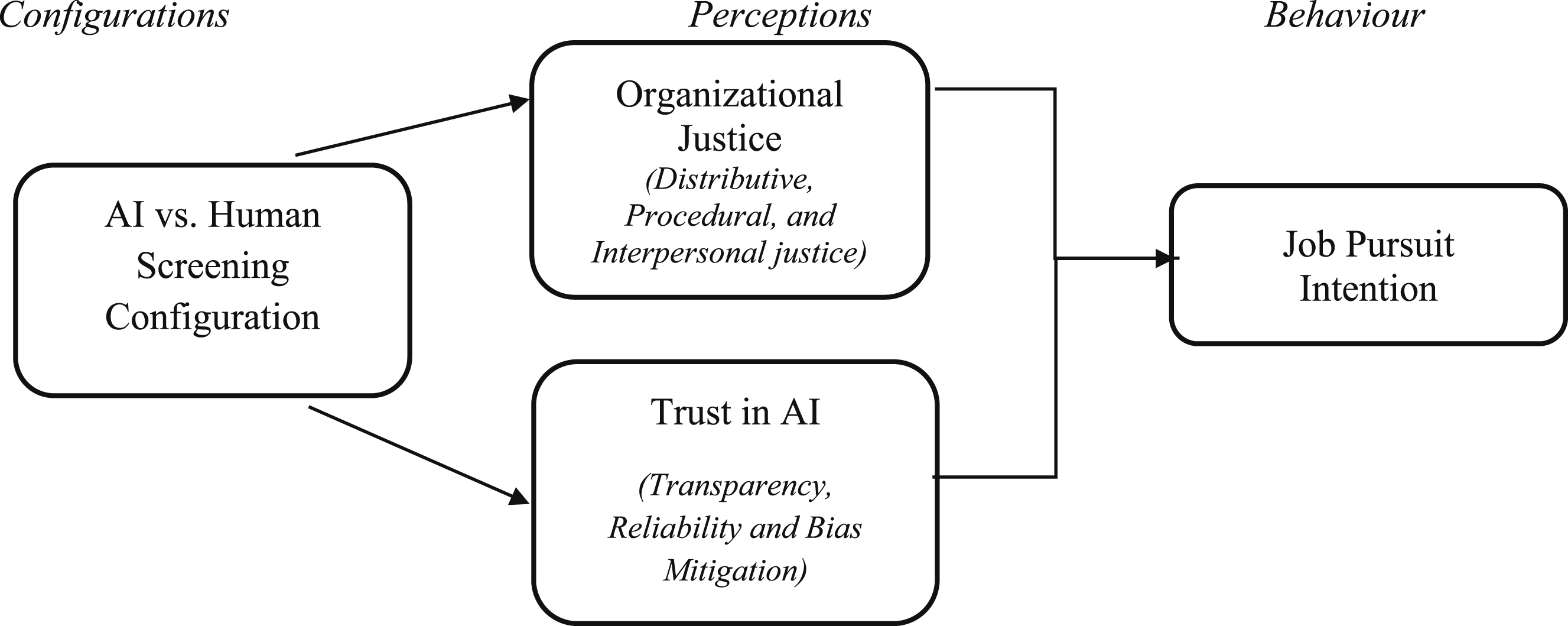
Research methodology
Research design and its justifications
A between-subjects Experimental Vignette Methodology (EVM) was applied in this study to investigate the influence of different AI versus human screening configurations on applicants’ perceptions of organizational justice, trust in AI and job pursuit intentions. EVM is a quasi-experimental technique in which participants are presented with systematically varied, realistic scenarios (i.e. vignettes) and are asked to respond to questions about them. 26
EVM was chosen to perform the current study for three core reasons. First, EVM is particularly well-suited for examining sensitive and complex organizational phenomena, such as fairness and trust in algorithmic decision-making. It allows researchers to manipulate independent variables within realistic yet controlled scenarios. 26 Second, this methodology provides an optimal balance between the high internal validity of traditional laboratory experiments. 26 By systematically manipulating key variables within the vignettes, this design allows for the establishment of associations between specific features of the AI versus human selection procedure and perceptions and reactions while controlling extraneous confounding variables. Furthermore, the use of structured scenarios enhances experimental realism, prompting more genuine responses from participants compared to abstract survey questions. Third, this approach is critical in contexts where direct experimentation may be ethically and practically infeasible, such as evaluating applicant reactions to unclear AI systems or biased outcomes. Given its methodological rigour and practical feasibility, EVM was employed in the current study to address the research questions.
Participants and procedure
A total of 74 participants were recruited from final-year university students preparing to enter the job market. 26 This sample was deliberately chosen to represent individuals facing imminent recruitment processes in the entry-level job market. This further enhances the ecological validity of the study. Participants were randomly assigned to one of five experimental conditions to ensure independence across groups and minimize potential bias. Each participant was exposed to a single video vignette simulating a realistic job application scenario. The single video included a job description, a detailed explanation of the screening process, and a final outcome notification. This approach aligns with EVM recommendations to enhance experimental realism and contextual relevance. By doing so, it allows the participants to engage with scenarios that closely mimic the actual recruitment experiences. Immediately following the vignette presented in a single short video, participants were led to complete a structured online questionnaire measuring the study’s constructs of organizational justice (distributive, procedural, and interpersonal), trust in AI (transparency, reliability, and bias mitigation), and behavioural intention to pursue the job opportunity. All constructs were assessed using validated multi-item scales, which are consistent with psychometric standards for reliability and validity in EVM research. The measures of organizational justice scale were adapted from Ötting and Maier 27 with a sample item of ‘The decision-making process described in the scenario was transparent’. While trust in AI from Langer et al. 21 was measured using multi-item scales (i.e. transparency, reliability, and bias mitigation) to capture three facets of trust in AI. Transparency items emphasized explanation clarity (e.g. understandability of decision logic) with a sample item of ‘The AI’s/Human’s/Hybrid decision-making process was understandable’; Reliability items emphasized perceived consistency with a sample item of ‘I believe the AI/Human/Hybrid described in the scenario is dependable’. and Bias Mitigation items referenced perceived safeguards (e.g. audits, human review, and appeal mechanisms) with a sample item of ‘The AI/Human/Hybrid demonstrated measures to reduce bias in decision-making’. Lastly, the behavioural intention scale to evaluate the participants’ willingness to use AI-driven hiring system was referred to Moin et al. 28 with sample items such as ‘I would be comfortable if AI was used to screen my job applications’. A 7-point Likert scale (i.e. 1 = strongly disagree; 7 = strongly agree) was used as it provides sufficient granularity to capture nuanced differences in perceptions across conditions. The measurement instruments were reviewed by the institutional review board, that is, scientific ethical review committee (SERC), with approval granted code U/SERC/56(A)-709/2025.
Experimental manipulations
To systematically examine the effects of AI versus human configurations, five distinct vignettes were developed. Each vignette represents a unique combination of procedural fairness, outcome justice, and AI–human involvement. These manipulations adhere to Aguinis and Bradley
26
recommendation on the precise operationalization of variables and realistic scenario construction. Below were the conditions developed to reflect the different levels of procedural justice, distributive justice, interpersonal justice, and outcomes. ⁃ Vignette 1: High Procedural Justice, AI-Only, Fair Outcome (N = 15) ⁃ Vignette 2: Low Procedural Justice, AI-Only, Unfair Outcome (N = 13) ⁃ Vignette 3: High Distributive Justice, Hybrid Human–AI, Bias Mitigation (N = 17) ⁃ Vignette 4: Low Distributive Justice, Hybrid Human–AI, No Bias Mitigation (N = 15) ⁃ Vignette 5: High Interpersonal Justice, Human–AI Collaboration, Fair Outcome (N = 14)
These vignettes were carefully constructed to reflect real-world recruitment practices, incorporating fairness-related features such as bias mitigation, transparency, and human oversight. While Vignettes 1 and 2 explicitly framed the outcome as fair or unfair, Vignettes 3 to 5 implicitly embedded outcome fairness through levels of distributive justice and fairness-related features. Thus, outcome perception remains a relevant factor across all conditions, albeit with varying configurations. By embedding these elements into the scenarios, the study ensures construct validity and supports the investigation of the association between screening design and applicant reactions. The research design aligns with the principles of EVM studies by incorporating elements of methodological rigour and ethical feasibility.
Results
Participants’ profile
Following the purposive sampling technique employed, 74 final-year students were recruited after obtaining their voluntary participation and consent. Out of the 74 participants, 63.51% are males and 36.49% are females. Participants were enrolled in various engineering programs and were in their final year of studies. 37.03% in Bachelor of Engineering, 25.72% in Civil Engineering, 20.09% in Applied Science, 11.81% in Chemical Engineering, and 5.35% in Technology.
Preliminary analyses
Descriptive statistics by vignette condition.
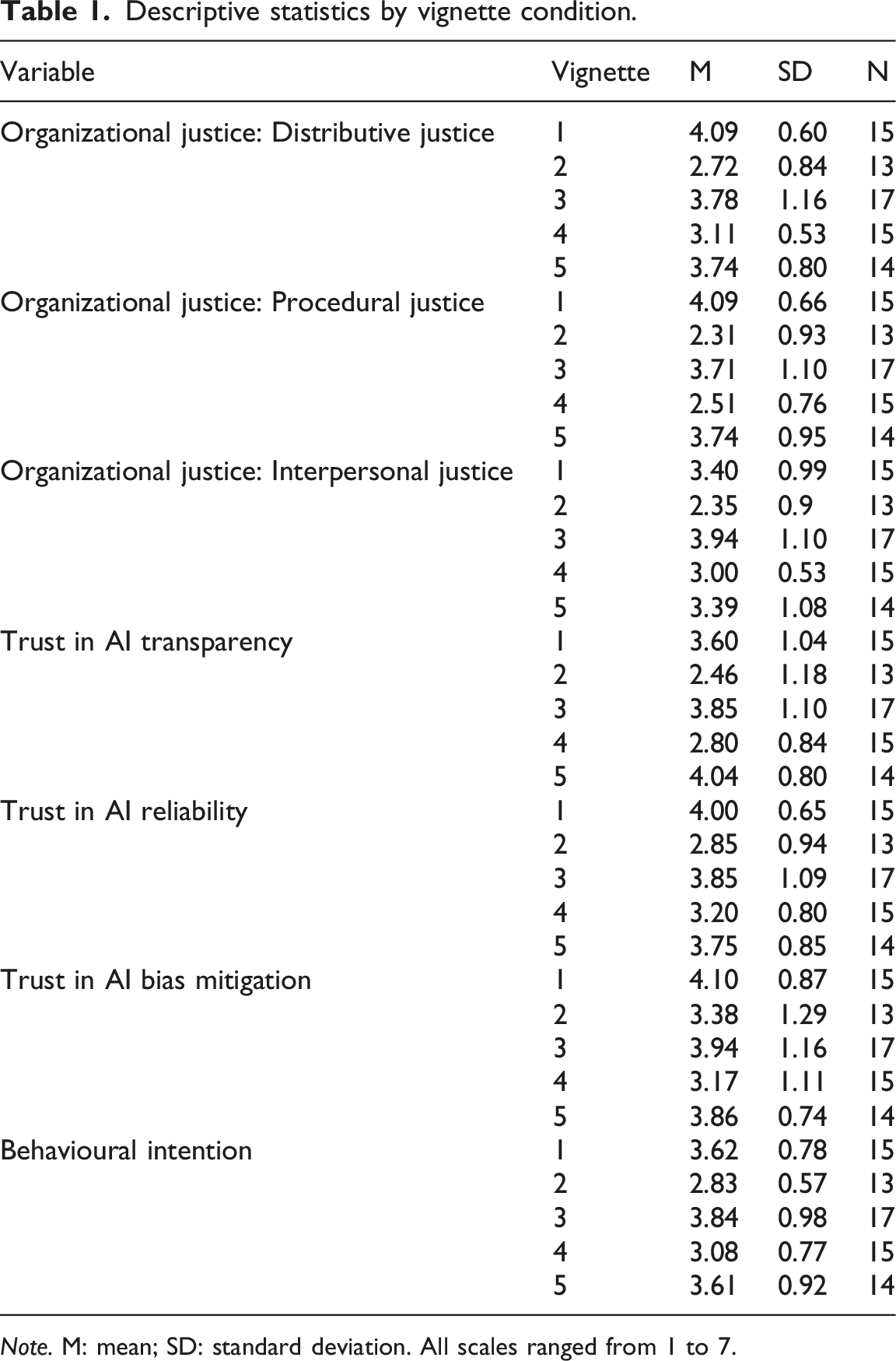
Note. M: mean; SD: standard deviation. All scales ranged from 1 to 7.
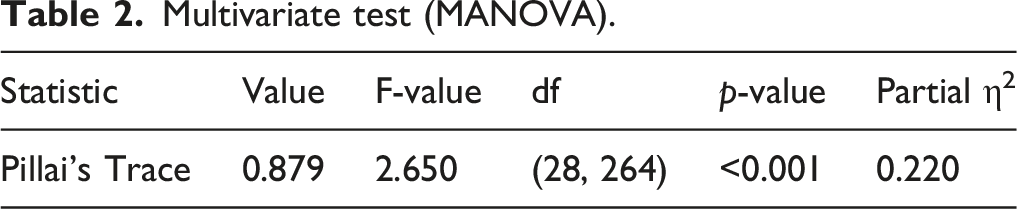
Multivariate test (MANOVA).
Univariate analysis of variance (ANOVA).
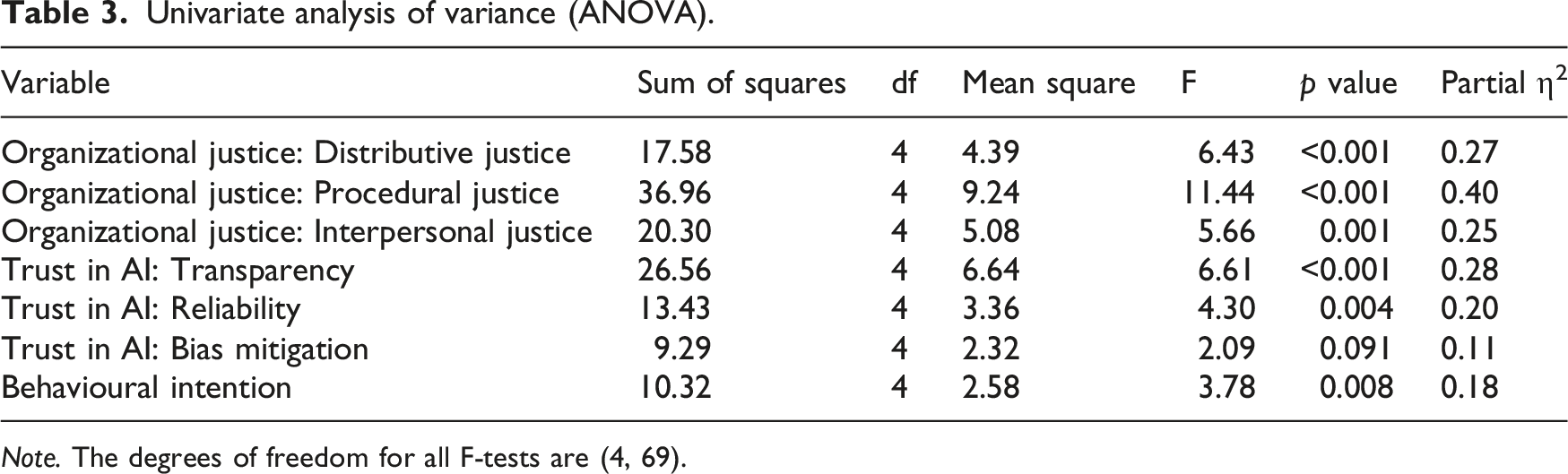
Note. The degrees of freedom for all F-tests are (4, 69).
These results provide empirical support for H2, H3, and H4. In particular, H2 was hypothesized to have significant differences in procedural, distributive, and interpersonal justice. The statistical results indicate that applicants exposed to AI versus human configurations with fairness features perceived higher levels of organizational justice. As for H3, it was hypothesized that there are differences in trust (transparency) and trust (reliability), showing that fairness-related features positively influenced trust in AI. However, the non-significant result for bias mitigation was obtained. Hence, H3 is partially supported, with significant effects observed for transparency and reliability, but not for bias mitigation. Lastly, H4 proposed that the perceptions of organizational justice and trust in AI influence applicants’ intentions to pursue job opportunities in organizations that use the AI screening mechanism was found to be significant.
Post-hoc comparisons
Tukey’s Honestly Significant Difference (HSD) post-hoc tests were conducted to examine the specific pairwise differences between the vignette conditions for each significant variable. Tukey’s HSD confirms that high-fairness hybrid models outperform low-fairness AI-only models, which is central to the current study.
Organizational justice
Perceptions of procedural justice (PJ), distributive justice (DJ), and interpersonal justice (IJ) were all significantly lower in Vignette 2 (Low PJ, AI-Only, Unfair Outcome) compared to the high-justice conditions (Vignettes 1, 3, and 5). For procedural justice, Vignette 4 (Hybrid, Low DJ, No Bias Mitigation) was also perceived as significantly less fair than the high-justice conditions. These results provide additional support for Hypothesis 2. As such, the study confirms that the configurations and outcomes substantially impact all facets of organizational justice perception.
Trust in AI
For transparency, Vignette 2 (Low PJ, AI-Only, Unfair Outcome) and Vignette 4 (Hybrid, Low DJ, No Bias Mitigation) were perceived as significantly less transparent than the high-justice conditions, particularly Vignette 3 (High PJ, Hybrid Human–AI, Bias Mitigation) and Vignette 5 (High IJ, Human–AI Collaboration) (p-values <0.050). For reliability, Vignette 2 was perceived as significantly less reliable than Vignette 1 (High PJ, AI-Only, Fair Outcome) (p = 0.008) and Vignette 3 (p = 0.023). Hence, Hypothesis 3 is partially supported because Tukey’s HSD revealed significant differences for transparency and reliability, but not for bias mitigation.
Behavioural Intention
Post-hoc analysis showed that participants’ intention to pursue the job was significantly higher in the Vignette 3 condition (Hybrid, High DJ, Bias Mitigation; M = 3.840) compared to the Vignette 2 condition (Low PJ, AI-Only, Unfair Outcome; M = 2.830, p = 0.012). Therefore, Hypothesis 4 is also supported. The results indicate a positive correlation between organizational justice and job pursuit intentions.
Discussions
Summary of corresponding research questions, objectives, hypotheses, and statistical results.
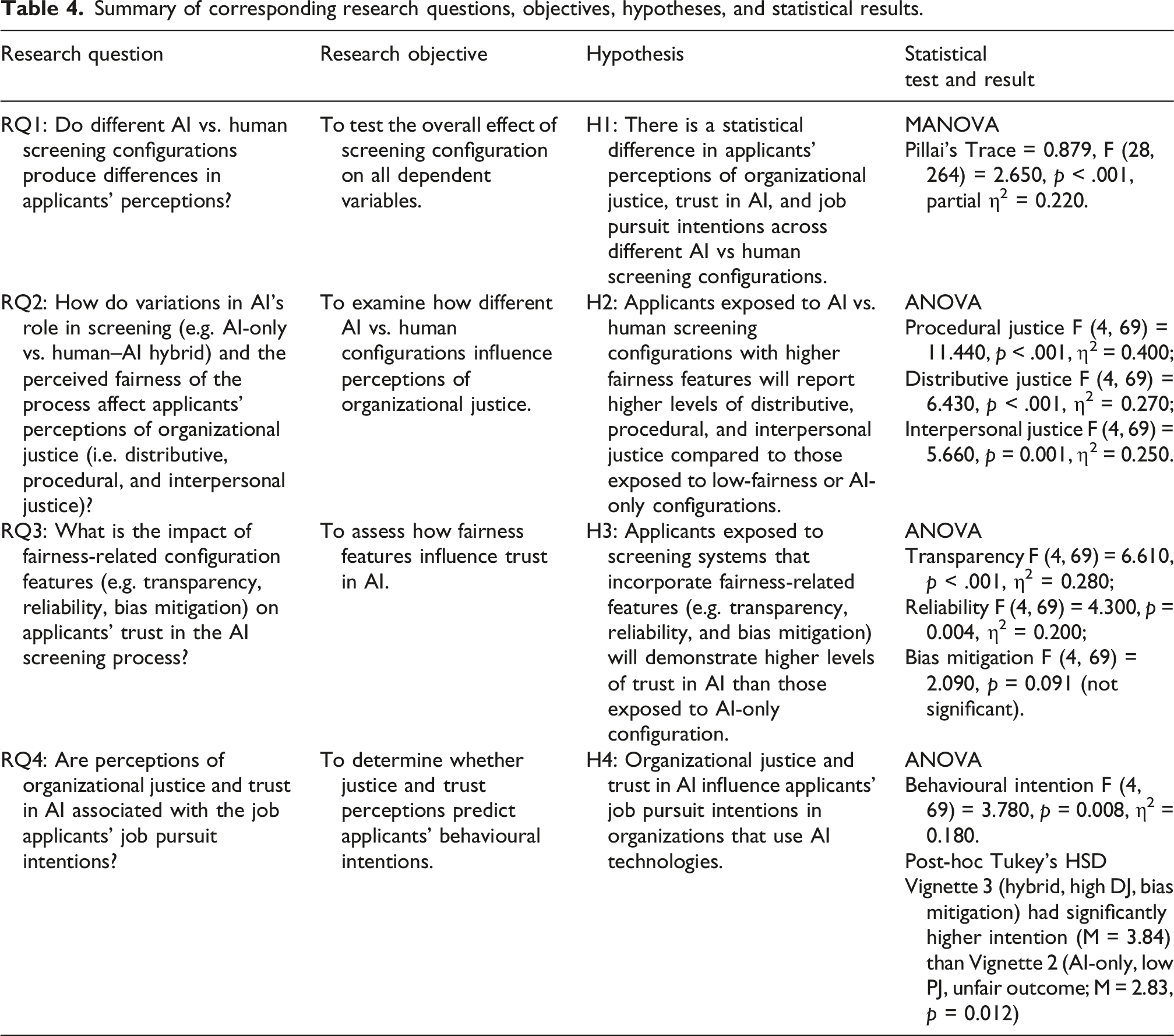
The multivariate testing confirmed H1, whereby job applicants’ perceptions vary significantly across different AI versus human configurations. While these perceptions are not uniform, they are highly sensitive to organizational justice cues embedded in the process. Likewise, H2 posited scenarios exhibiting low procedural and distributive justice (e.g. Vignettes 2 and 4) were unequivocally dampening and eroding fairness and trust. They produced negative perceptions across all the organizational justice dimensions and eroded trust in AI, particularly in terms of transparency and reliability. This is congruent with Organizational Justice Theory that fairness in process and outcome remains critical when algorithms replace human decision-makers. Conversely, high justice scenarios (e.g. Vignette 1, 3, and 5) were perceived as desirable with Vignette 3 (Hybrid Human–AI, High Distributive Justice, Bias Mitigation) yielding the highest behavioural intention scores. This finding suggests that job applicants are not inherently resistant to AI but reject opaque and unaccountable systems.
It was interesting to note that H3 obtained partial support. Transparency and reliability significantly influenced trust but not bias mitigation. This finding adds value to the body of knowledge that trust in AI is not a monolithic construct. Job applicants prioritize features that make the systems transparent, understandable, and reliable. Transparency satisfies the need for process legitimacy while reliability signals competency. While bias mitigation is crucial, it may not be seen as important by job applicants unless it is clearly demonstrated or explained. This insight reflects the findings of Choung et al. 19 and Cheong, 20 which suggest that trust relies more on perceived competency and clarity rather than on vague reassurances. Additionally, the partial support results may be attributed to the manipulation mechanism in EVM rather than the absence of an effect of bias mitigation information. In the operation of EVM for bias mitigation, the audits, human review and appeal may appear as a brief with single instance within the vignette. Further, participants evaluated a hypothetical screening description without observing an actual appeal or audit in action. As such, this could lead to the partial support results, which prior work suggests that measure effort that are asserted without a visual tangible demonstration can be underweighted in bias mitigation efforts relative to observable qualities like clarity and consistency.
Lastly, when applicants are exposed to high justice hybrid configurations, they are likely to have higher job pursuit intentions compared to those in low-justice AI-only scenarios. Turkey post-hoc analysis further confirmed that Vignette 3 outperformed Vignette 2. This reinforced the association between organizational justice, trust in AI and behavioural intention. This finding echoes Social Exchange Theory 22 that when applicants perceive justice, fairness and trustworthiness, they reciprocate with engagement and thereby willing to pursue the job offers.
Implications
The results of this study have yielded implications for both theoretical frameworks and practical applications.
Theoretical implications
This study extends Organizational Justice Theory (OJT) beyond human settings to the algorithmic contexts. OJT can be referred to demonstrate justice and fairness principles from humans to AI systems. The findings demonstrate that job applicants evaluate AI systems using traditional justice dimensions, reaffirming the relevance of procedural, distributive, and interpersonal justice in non-human decision-making. This supports the frameworks established by Colquitt 13 regarding organizational justice, while also highlighting a unique dynamic in the context of AI technologies.
Among the three dimensions of organizational justice, procedural justice emerged as the strongest predictor of overall perceptions. This reinforces Leventhal 15 fairness rules of consistency, bias mitigation and reliability. In AI-only configurations, opacity, lack of transparency, and appeal mechanisms violated these principles and hence led to negative perceptions. This finding is consistent with recent studies (e.g. Refs. 8 and 18) that highlight transparency as a cornerstone of perceived justice in algorithmic hiring procedures.
Interestingly, while transparency and reliability significantly enhanced trust, bias mitigation did not. This suggests that job applicants prioritize features that make the systems understandable and reliable over abstract assurance of fairness. Studies by Cheong 20 and Choung et al. 19 corroborate the explainability and perceived competency as primacy antecedents to trust. Theoretically, this indicates a hierarchy of fairness features. More specifically, transparency and reliability act as immediate trust drivers while bias mitigation may require explicit communication to influence the perception of the job applicants.
Lastly, Social Exchange Theory was observed in the setting of the interplay between justice, trust and behavioural intention. This study contributes to the emerging literature on algorithmic management 28 by demonstrating that organizational justice is amplified in high-stakes technology-mediated decision-making. 29
Practical implications
The findings of this study offer actionable guidance for designing AI-supported recruitment system to attract talent instead of repelling them. The findings suggest that organizations or HR professionals should avoid the black box of AI versus human screening system. Opaque algorithms erode organizational justice and trust. The current findings showed low acceptance in AI-only configurations. Organizations should implement explainable AI with clear communication about how decisions are derived.20,24 Additionally, it is crucial to prioritize transparency and reliability when communicating with job applicants. These features were the strongest predictors of trust in AI. This finding also indicates that job applicants value clarity and consistency over abstract claims of bias mitigation. Practical steps such as publishing and sharing decision criteria on algorithmic logic with real-time status updates during the screening process are highly recommended. Meanwhile, bias mitigation remains crucial. Organizations should actively conduct algorithmic audits, implement diversity checks, and establish appeal mechanisms to strengthen ethical compliance and enhance employer branding. 9 The current study also reveals the desirable outcomes of hybrid configurations. Human oversight reassures job applicants that nuanced judgement and empathy remain part of the screening process to mitigate fears of rigid automation. 7 Finally, job applicants value equitable outcomes. Organizations should validate AI configurations to ensure equitable outcomes and communicate these validations proactively. Failure to do so will risk job applicants’ withdrawal and tarnish the organization’s reputation and eventually reduce the talent pool.
Concluding remark
The integration of AI into recruitment presents a classic double-edged sword, offering substantial benefits while also introducing significant risks that must be carefully managed. The integration of AI into HR functions is no longer an option. It has emerged as an irreversible trend shaping the future of talent acquisition. However, this study demonstrates that technological advancements need to be carefully managed to reap the optimized outcomes. Applicants’ trust and engagement are connected to both perceived and actual organizational justice within the system’s design and configuration. Our experimental findings reveal that configurations that emphasize transparency, reliability and human oversight promote positive perception of organization justice and trust. In turn, it enhances job applicants’ intention to pursue job opportunities. In contrast, opaque AI-only system with low fairness cues erodes trust and discourages job applicants. From the organization’s perspective, it reduces the talent pool. Theoretically, this research reinforces Organizational Justice Theory as a robust lens in understanding job applicants’ perceptions in the AI algorithmic age. It also advances trust literature by further highlighting transparency and reliability as core drivers of trust in AI while recognizing the minimal impact of bias mitigation. Practically, this study suggests that organizations must move beyond efficient and adopt just transparent centric strategies to attract the talent pool.
Limitations and moving forward
While this study’s research objectives were met and offer some practical insights, it is not without limitations. First, although the Experimental Vignette Methodology (EVM) enhanced realism by immersing participants in job-application scenarios, simulated vignettes cannot fully capture the stakes, pressures, and contextual cues of real hiring encounters (e.g. reputation risk, actual offer acceptance). Consequently, the behavioural measures here reflect intentions rather than revealed choices, which constrains generalizability from the final year students and/or early-career sample to broader applicant populations and real organizational settings. Additionally, EVM approach has affirmed internal validity, but it limits external validity. Future research should embed similar manipulations in live recruitment pipelines (e.g. field experiments with applicants at different career stages) to validate whether these intention patterns replicate in actual applicant behaviour. Also, future research is recommended to employ longitudinal designs to examine if intentions translate into actual behaviours. Second, while we manipulated bias mitigation via audit, human-review, and appeal cues, these measured efforts were communicated briefly and not enacted visually within the vignette. This may have limited participants’ ability to differentiate conditions on the bias-mitigation subscale relative to the more salient transparency/reliability cues. We recommend future study to increase cue salience (e.g. multiple mentions and visual markers) and embed a micro visual appeal sequence to allow participants to experience the measured efforts rather than only a brief hypothetical statement. Third, the sample size was relatively modest and its demographic composition is considered limited. Future researchers should expand the study with larger and more diverse samples to enhance the generalizability of the findings. Fourth, the vignettes represented only a few of the countless ways AI can be configured in recruitment. Further research could explore other variables, such as the type of AI used (e.g. video analysis vs resume screening), the stage of the hiring process, and the nature of the job itself. Fifth, despite that this study established a link between organizational justice perception and behavioural intention, it did not measure the actual behaviour. Moving forward, researchers could track the job applicants’ behaviour following different AI-driven experiences to see if intentions translate into actions. Finally, it is suggested to utilise more advanced statistical approaches such as structural equation modelling (SEM) to examine the correlation and mediation effects in order to uncover the interrelations among organizational justice, trust in AI and behavioural outcomes.
Footnotes
Acknowledgement
The authors declared the use of AI technologies (Free online Grammarly) to correct grammatical errors and improve readability and language. After using free online Grammarly, the authors reviewed and edited the content as needed and take full responsibility for the content of the published article.

Ethical considerations
The study received approval from the Scientific Ethical Reviewing Committee, approval no. U/SERC/56(A)-709/2025.
Consent to participate
Informed written consent to participate was obtained from all the participants.
Author contributions
Conceptualization: Low, Wut, and Pok; methodology: Low; formal analysis: Low; investigation: Low and Pok; writing original draft: Low; writing review and editing: Low, Wut, and Pok.
Funding
The authors received no financial support for the research, authorship, and/or publication of this article.
Declaration of conflicting interests
The authors declared no potential conflicts of interest with respect to the research, authorship, and/or publication of this article.
Data Availability Statement
Data are available from the corresponding author upon reasonable request.