




Abstract
Background
This study investigates the impact of Spiritual Leadership (SL) on the employee’s Intrapreneurial Behavior (IB) in the hospitality sector of Pakistan.
Objective
Grounded in Self-Determination Theory, we proposed a model with the mediating effect of intrinsic motivation (IM) on the relationship between SL-IB, and moderating effect of Harmonious Work Passion (HWP) on SL-IM, and IM-IPB relationships.
Methodology
Data was collected form 252, front-line and managerial level employees using purposive sampling technique. Smart PLS 4 was used to test the measurement and structural models.
Results
The findings revealed that SL has no direct effect on IB but exerts a significant impact mediated by IM. Furthermore, HWP strengthens the SL-IM link, but weakens the IM-IB relationship.
Conclusion
This indicates a psychological mechanism, highlighting that empowering employees’ inner motivation is more critical than leadership alone. The findings offer a nuanced understanding of driving employees’ intrapreneurial behavior by highlighting the pivotal role of IM and HWP.
Keywords
Introduction
The hospitality industry is a unique sector that works in a fast-paced and highly competitive environment where being flexible and coming up with new ideas are not only advantageous but necessary for survival and growth. Unlike manufacturing and many service industries, innovation in hospitality industry is employee driven, emerging from proactive and creative behaviors of frontline staff who interact directly with customers. Within the organization the capacity for innovation is referred to as intrapreneurial behavior.1,2 Intrapreneurial behavior is a multidimensional organizational phenomenon that includes taking proactive initiative, risk taking, creativity, and opportunity recognition within the boundaries of an organization.3–5 However, encouraging such behavior is still difficult in an industry distinguished by high turnover, standardized procedures, and emotional labor, especially within the hierarchical and structured context of developing economies like Pakistan. 6
An increasing amount of research indicates that leadership styles that address deeper psychological needs can effectively motivate such extra-role behaviors. 7 Spiritual leadership (SL) has become a powerful force in improving employee well-being and performance.8,9 According to Ref. 10, SL is a leadership paradigm that uses values like vision, selfless love, and hope/faith to foster a sense of purpose, connection, and inner motivation. By providing a sense of purpose and community, SL is believed to satisfy basic psychological needs and foster the intrinsic motivation necessary for sustained innovation.
The challenge is even stronger in the situation of the hospitality industry in Pakistan. The sector has structural peculiarities such as inflexible organizational cultures, little autonomy of frontline workers, and conventional methods of management that can inhibit innovation unintentionally. 2 Although the importance of innovation in enhancing the performance of hotels and guest satisfaction has been increasingly acknowledged, 6 there is limited empirical evidence studying the psychological processes that promote intrapreneurial behaviors in hospitality staff in developing economies. 7
A growing literature suggests that those leadership styles that appeal to more profound psychological needs can be used to encourage extra-role behaviors like intrapreneurship. 8 Spiritual leadership (SL) has become one of the effective methods to improve the well-being and performance of employees.3,4 Reference 5 states that SL is a paradigm of leadership that applies such values as vision, altruistic love, and hope/faith to create a sense of purpose, connection, and inner drive. It is thought that SL fulfills the most basic psychological needs because it offers meaning and community and fosters the intrinsic drive to continue with innovation. 9
Although the theoretical potential of spiritual leadership is high, the specific processes in which the spirit of leadership is transformed into tangible intrapreneurial results in the hospitality industry are under researched. Although Ref. 7 have confirmed a considerable correlation between SL and staff intrapreneurial behavior in the tourism sector, they have not investigated the psychological mechanisms. This is one of the key gaps because the development of effective managerial interventions requires knowledge of how and when this relationship can be.
Moreover, the current body of knowledge on spiritual leadership and intrapreneurship has three major limitations. First, previous research has focused mostly on direct associations and poorly on mediating factors.10,11 The mechanism by which spiritual leadership affects innovative behaviors is in the form of a black box that needs to be unpacked both theoretically and empirically. Second, there is a lack of research investigating boundary conditions, that is, when and to whom spiritual leadership is most effective in promoting innovation. 12 Third, the hospitality industry, unlike other high-contact service industries, has not been studied in the context of spiritual leadership most of the research studies focus on healthcare, education, or manufacturing settings. 13
To fill these gaps, the research focused on intrinsic motivation (IM) as a psychological process in which SL mediates employee IB, and harmonious work passion (HWP) as a boundary condition that directs this motivational process. These variables are chosen on a theoretical basis using the Self-Determination Theory (SDT). 14 According to SDT, autonomous motivation occurs in leadership environments that meet the fundamental psychological needs of the employee’s autonomy, competence, and relatedness. Based on the argument intrinsic motivation is the most self-determined type of autonomous motivation.
Although previous researchers have investigated the role of mediators like psychological empowerment, 15 creative self-efficacy, 16 and organizational identification 17 as mediators in related leadership innovation models, the role of intrinsic motivation as the mediator between SL and IB in hospitality has not been empirically tested. Being a proximal psychological condition directly related to self-initiated and creative action,18,19 intrinsic motivation provides both theoretical accuracy and explanatory specificity to this pathway.
Harmonious work passion (HWP) is chosen as a moderator because it is an autonomous type of work identity integration. Employees with high HWP have internalized their work role in a flexible, non-compulsive manner 20 that can either increase or decrease motivational pathways produced by need-supportive leadership. 21 Although previous studies have considered passion as a mediator22,23 or have studied it in other leadership scenarios, 24 its impact as a boundary condition in the SL → IM → IB pathway has not been experimented. This research is thus a theoretically specific and empirically new addition to the body of intrapreneurship literature within the hospitality setting.
The research questions that the study will be dealing with include, does spiritual leadership have a direct effect on intrapreneurial behavior of employees, or does it have a direct effect on intrinsic motivation which acts as a mediating variable? Does harmonious work passion moderate the relationships between spiritual leadership and intrinsic motivation, and intrinsic motivation & intrapreneurial behavior? By addressing these questions, the study contributes to the current body of knowledge by explaining boundary conditions of the influence of SL on intrapreneurship in the hospitality sector of the Pakistani economy.
Theoretical background and hypotheses
Theoretical foundation: Self-Determination Theory (SDT)
The theoretical basis of the study is the Self-Determination Theory, 14 which is a macro-theory of human motivation and differentiating between controlled and autonomous forms of motivation. According to SDT, human beings have inborn psychological needs of autonomy, competence, and relatedness. Autonomous motivation, which is the most evident in intrinsic motivation, the engagement in activities because they would bring inherent rewards, is promoted by surrounding environments and social contexts that have fulfilled these three basic needs 25
The SDT can be applied best to elucidate the motivational processes involved in intrapreneurial behavior. Intrapreneurship is not a mere proactive behavior but it is a multidimensional phenomenon in organizations that includes initiation of innovation, proactiveness, internal risk-taking and recognition of opportunities in an existing organization.1,3 This is a discretionary activity that is often disruptive to routines and can hardly be maintained by extrinsic rewards or management instructions alone. 26 Studies have continually shown that autonomous motivation and intrinsic motivation in particular is a better predictor of creative and proactive work behaviors than controlled motivation.27,28 SDT thus offers a theoretically accurate and empirically validated model of how and why some leadership styles create the internal motivation required to act in an intrapreneurial manner.
Taking in view of SDT, spiritual leadership (SL) is a prototypical need supportive leadership style. All its three core dimensions are directly related to the psychological needs which SDT outlines. To begin with, the vision dimension of SL gives the employees a significant and engaging cause, which helps them feel independent by telling them why work is important and gives them latitude on how they accomplish the objectives. 10 Second, the hope/faith dimension enhances the belief that the employees have in their ability to cope with the challenges, which directly promotes the competence need and the trust in their ability to take the risk of experimentation involved in intrapreneurial activity. 29 Third, the dimension of altruistic love which is associated with a true care, trust, and concern towards followers induces a sense of psychological safety and belonging, which directly fulfills the relatedness need, and offers the interpersonal security expected by the employees to make intrapreneurial risk-taking. 9 Together, then, SL develops an organizational climate where all three fundamental psychological needs are fulfilled, allowing intrinsic motivation to develop, and, consequently, intrapreneurial behavior to thrive.
Importantly to this study, SDT also provides a theoretical explanation of the need to examine harmonious work passion as moderator. SDT suggests that internalization may take place in various ways, leading to different types of motivation and identity integration. 30 Harmonious work passion is a type of independent internalization where work is an essential and significant part of self without overwhelming other issues in life. 20 Individuals that are highly harmonious passionate, have internalized their work role in a more autonomous and adaptable manner that can influence the response to need-supportive leadership and convert intrinsic motivation into intrapreneurial action.
Justification of choosing SDT over other theories is as follows. The transformational leadership theory 31 also anticipates that inspirational leadership can have a positive impact on employee motivation and creativity but does not provide the psychological needs by which this happens and thus is less accurate at specifying the mechanism of motivation. The social cognitive theory 32 focuses on the self-efficacy as the main psychological process, yet it does not consider the satisfaction of needs or the motivation type involved. Conservation of Resources theory 33 is concerned with the preservation of resources and not motivational processes as such. The SDT is particularly appropriate to the study, in that it (a) defines the psychological needs fulfilled by spiritual leadership, (b) describes how need fulfillment leads to a specific type of motivation (intrinsic motivation), and (c) offers theoretical justification on the importance of studying how individual-level passion (HWP), which is a manifestation of independent internalization of work identity, moderates these motivational processes. None of the other theories in the leadership-motivation-intrapreneurship field offers this degree of combined explanatory detail.
Lastly, SDT provides a theoretical basis of the role of harmonious work passion as a moderator. The organismic integration theory of SDT 30 states that the internalization of work activities may take place on a spectrum, which leads to the attainment of various forms of motivation and identity integration. HWP is a type of autonomous internalization where work becomes a significant and complementary aspect of identity without pushing out other aspects of life. 20 High HWP employees have internalized their work role in an autonomous and flexible manner which we suggest increases their receptivity to the need-supportive cues conveyed by spiritual leaders which reinforces the SLIM relationship. But the same autonomous internalization can also channel the motivational energy of passionate employees into mastery and excellence in their existing positions, which will suffocate transformation of intrinsic motivation into disruptive intrapreneurial actions that may rock the current practice. 34 SDT therefore offers theoretical framework in explaining the mediated pathway (SL → IM → IB) as well as the conditional limits.
Literature review
Intrapreneurial behavior: Conceptualization and context
Intrapreneurship is the demonstration of entrepreneurial behavior, such as innovation, proactive initiative, risk-taking, and opportunity identification, within the confines of an established organization and on its behalf.1,2 IB is a construct different to the meaning of entrepreneurship as intrapreneurs are part of established organizational structures and do not create new ones; however, they are internal change agents bringing new ideas, processes, and solutions that enable organizations to become more competitive and adaptive. 3
The conceptualization of IB into multiple related dimensions has been presented in the academic literature such as innovativeness, proactiveness, risk-taking, and initiative-taking.35,36 These dimensions are not unique, but instead, they represent a pattern of discretionary and self-driven work behavior, which extends well beyond formal job specifications.
In the hospitality sector, IB is of strategic significance. Service innovation in restaurants and hotels is not often the result of a formal R&D team; rather, it is a by-product of frontline staff being involved in creative efforts to identify service gaps, suggest new solutions, and test better ways of providing to customer needs.11,12 The harms to IB by hierarchical management structure, risk-averse cultures, and low levels of employee autonomy generate structural obstacles to IB in the Pakistani hospitality context, in particular.6,37 The psychological and leadership-based antecedents of IB in this context are not only an academic practice but also have direct managerial implications. The sections that follow build the theoretical arguments behind the relationship of SL, IM, and HWP with employee IB in this context.
Spiritual leadership and employee intrapreneurial behavior
Self-determination theory argues that whenever employees are satisfied in terms of autonomy, competence, and relatedness in a social context, autonomous motivation makes it possible to engage in discretionary, self-directed behaviors, resulting in IB. 14 Spiritual leadership as a need supportive type of leadership creates such environment by connecting the work of employees to something meaningful, encouraging them by creating a sense of hope/faith and creating a climate of trust and care via altruistic love, SL also offers the motivational underpinnings of employees to initiate, experiment, and take calculated risks, the hallmarks of intrapreneurial behavior.38,39
Prior research validates this relationship, 12 discovered that there is a strong positive relationship between SL and the employee IB in the tourism industry. 13 showed that SL prompts employee innovation with the help of meaning making. 35 determined that the leadership styles that develop a feeling of purpose and psychological safety are effective antecedents of intrapreneurial behavior. A particular focus on vision and selfless care of a spiritual leader can be especially relevant in the situation of Pakistani hotels, where traditional hierarchical management approaches are widespread, 6 and where employees must be encouraged to go beyond the role description they are assigned. Based on the logic of need satisfaction in SDT and this empirical evidence, it is hypothesized that:
Spiritual leadership significantly influences the intrapreneurial behavior of the employees
Spiritual leadership and intrinsic motivation
The spiritual leadership is believed to be the aspect of the spirituality element of human experience harmonization that is the key to cultivating pleasure in individuals and others.10,40 Spiritual leadership promotes ethics, humanism, and integrity within the organizations. 41 Spiritual leadership incorporates essential behaviors. Essential to inspire oneself and help others to attain the wisdom of Internal spiritual well-being. Motivation is a perspective that describes how individual actions are guided, stimulated, and upheld to accomplish an objective.42–44 Motivation consists of intrinsic motivation that helps them to attain their goals. 45 Therefore, it is very important to motivate each individual for the purpose of aligning individual interests with the organization’s interests.
Studies found that SL influences the intrinsic motivation of the employees,46,47 showing the key role of intrinsic motivation in improving performance.38,48 Moreover, spiritual leadership is intended to generate intrinsic motivation leading towards the firm’s success. 38 Spiritual leaders focus on employee engagement in the workplace, which results in growth and development. In terms of employee growth, they remain intrinsically motivated, strive to achieve their goals, and stay actively engaged in knowledge sharing while focusing on the implementation of novel ideas within the Refs. 49,50. References 10,39 discussed that spiritually influential leaders are those who look to establish a reciprocal understanding with the followers through intrinsic motivation, leading towards bringing self-esteem and Job satisfaction for the employees in the workplace. 13
Spiritual leadership significantly influences intrinsic motivation
Intrinsic motivation and intrapreneurial behavior
The behavior is intrinsically motivational perspective of doing a specific task, with the satisfaction being an essential component expected from it. According to Ref. 51, motivation is associated with happiness, enjoyment, pleasure, and satisfaction. Moreover, self-determination has also been described as the three important components that drive intrinsic motivation: autonomy, competence, and the need to remain connected with others. 52 Previously, it was revealed that intrinsically motivated individuals tend to show optimism and challenge. 53 Therefore, the intrinsically motivated individuals can be found to have the potential to show behaviors towards the practices that provoke a balance between the important aspects of ability and challenge. Furthermore, the intrinsic motivation could directly impact the behaviors of the employees.
Self-determination theory explains that intrinsically motivated individuals tend to perform a behavior to achieve the organizational goals. 14 Further research done by Ref. 54 suggests that an individual should not only believe in their capability in terms of performing a certain behavior, but also they should expect this behavior to be influential in terms of achieving the desired outcomes. 55 A study suggests that motivation reduces the harmful relationship and tends to form the positive behaviors of the employees, leading to important proactive task behaviors and promoting entrepreneurship. Thus, it can be claimed that motivation is pivotal in terms of initiating the intrapreneurial behavior of the employees. Employees must also expect that intrapreneurship will be an instrumental aspect. Therefore, from the above literature, we draw:
Intrinsic motivation significantly influences the intrapreneurial behavior of the employees.
Intrinsic motivation as a mediator
Although H1 postulates a direct relationship between SL and IB, SDT proposes that the major channel in which need-supportive leadership impacts on the complex discretionary behaviors is not behavioral but psychological and motivational. 25 In other words, SL does not force employees to be innovative, but it fulfills the psychological needs that give rise to the intrinsic motivation that, consequently, drives self-initiated, creative and proactive behavior. The hypothesized mediating effect of IM is thus theoretically required. It defines the psychological process, by which the need-supportive properties of SL are transformed into IB.
Specifically, in case spiritual leaders offer a strong vision, inculcate hope and faith in the abilities of employees, and show selfless care and trust, employees feel greater levels of intrinsic motivation. They are interested in their work because it is meaningful and good.14,39 This autonomy motivation then invigorates intrapreneurial activities. Intrinsically motivated employees are more amenable to experimentation, initiative, new ideas, and accept the uncertainty and risk of intrapreneurial behavior as established above (H3).18,19,35 The chain proposed is thus, SL meets psychological needs → IM increases → IB increases.
Notably, intrinsic motivation is a mediator in the SL-IB relationship, yet, as far as a hospitality setting is concerned, the mediating role of intrinsic motivation has not been examined in existing related SL models, such as psychological empowerment, 15 creative self-efficacy, 16 and pro-environmental behavior. 9 IM is the psychological condition which SDT theoretically and directly implies as the result of need satisfaction, and it is the condition which is most often and consistently related with the creative, self-inspired work behavior.27,28 To consider it as the mediating mechanism of the SL-IB pathway is empirically new and theoretically required. Therefore, from the above literature, we can draw the following hypothesis:
Intrinsic motivation mediates the relationship between spiritual leadership and the intrapreneurial behavior of the employees.
The moderating effect of Harmonious Work Passion (HWP)
Although the mediating hypothesis (H4) indicates the psychological process connecting SL and IB, it fails to explain why the strength of this pathway can be different among various employees. The organismic integration of SDT is that the degree to which satisfaction of needs translates into autonomous motivation is partly determined by the extent to which the individual internalized his/her work role. 30 Harmonious work passion (HWP) is defined as the individual level difference involving the autonomous, non-compulsive internalization of work into the self that work is in harmony with other areas of life. 20 We hypothesize that HWP is a boundary condition or defines the moments when the SLIM and IMIB relationships are stronger or weaker but do not describe how the relationships take place. That is, HWP is not a mechanism between variables; it is a state of affairs whereby the strength of the relationships that exist is altered.
Concerning the SL–IM relationship, we hypothesize that the relationship is stronger at higher levels of HWP. Highly HWP employees have internalized their work role independently—they perceive work as an important way of expressing their identity. 21 Since leadership behaviors enhance the sense of purpose and belonging already cherished by harmoniously passionate employees. These employees are better psychologically, and more responsive to the vision, hope/faith, and altruistic love aspects of spiritual leadership.56,57 Consequently, the identical SL behaviors produce a larger increment in intrinsic motivation among high-HWP as compared to low-HWP employees. On the other hand, in low HWP employees, their work identity is not as highly internalised and thus they are less susceptible to the spiritual and purpose-based cues that SL offers. In this way the relationship between SL and IM depends on the extent of HWP: a strong relationship when HWP is high, a weak relationship when HWP is low.
Concerning the IM-IB relationship, we suggest that HWP moderates the relationship but in an inverse direction, the positive relationship between IM and IB gets less strong at high levels of HWP. This apparent counter-intuitive forecast is based on the following reasoning. High HWP employees will invest a lot in learning and refining their existing, in the case of hospitality this translates to providing exceptional guest service with high quality and accuracy.
34
Intrinsically motivated highly passionate employees tend to focus their motivational energy on mastery of their current position instead of disruptive, boundary-breaking intrapreneurial behaviors.
58
The satisfaction they gain because they are doing what they are good at decreases the motivation on the psychological level to continue getting more fulfillment by innovation. Moreover, within hierarchical hospitality organizations, harmonious passionate workers can adjust their interests to that of structural expectations as opposed to confronting them even when intrinsically driven they might be willing to seek adequate satisfaction in non-radical excellence as opposed to radical innovation.
20
Therefore, it has been shown that positive IM-IB relationship is diluted when the levels of HWP are high (Figure 1). Theoretical framework.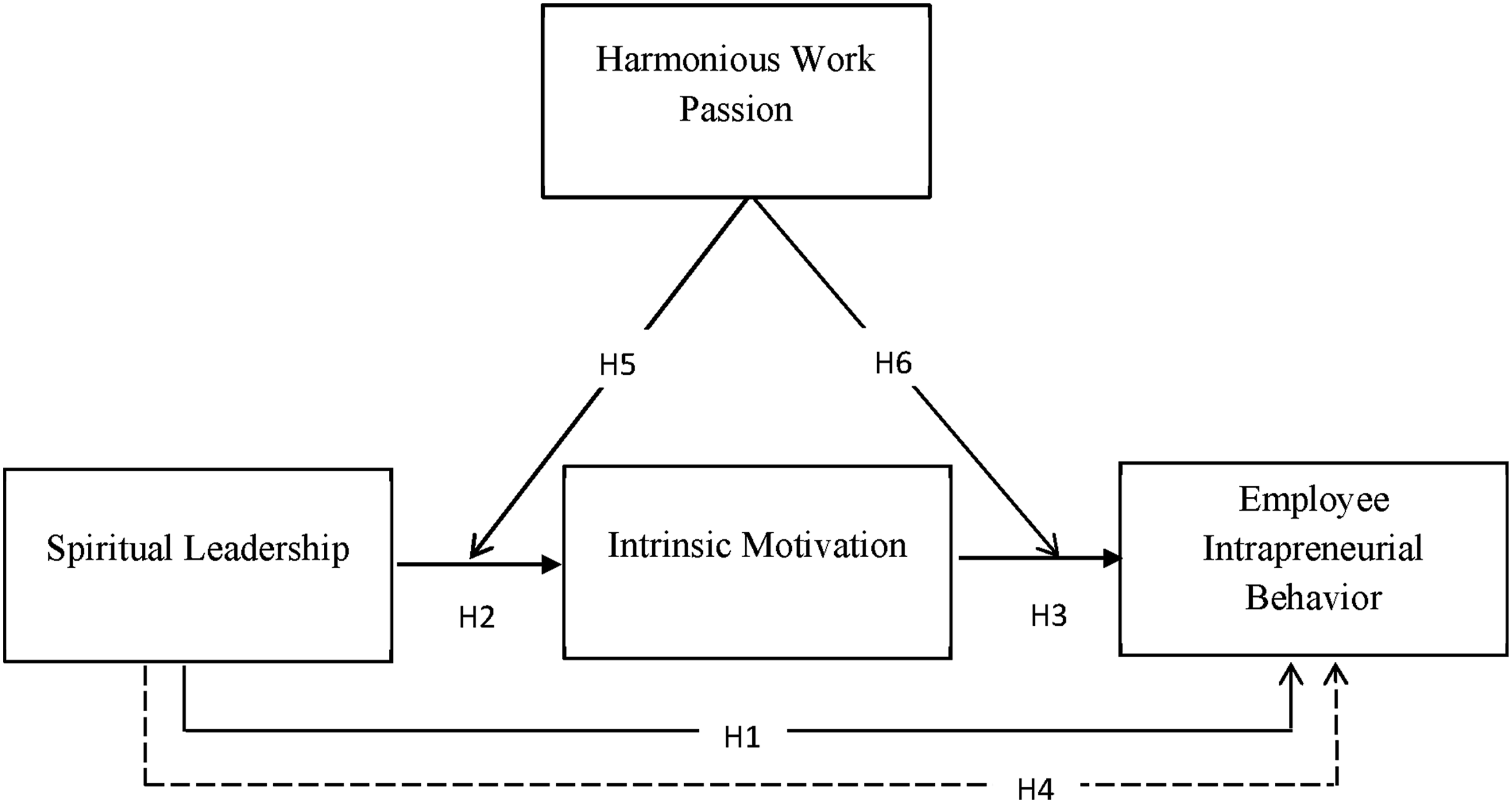
Hence, based upon the above literature, the following hypothesis is proposed:
Harmonious work passion moderates the relationship between spiritual leadership and intrinsic motivation, such that this relationship is stronger when harmonious work passion is high.
Harmonious work passion moderates the relationship between intrinsic motivation and the intrapreneurial behavior of the employees, such that this relationship is weaker when harmonious work passion is high.
Research methodology
Research design
The research design used in this study is a quantitative, cross-sectional study, which is based on the positivist paradigm. Positivist approach is the right approach to our aim of testing hypotheses concerning relationships between the variables and to generalize the results to the whole population of hospitality employees in Pakistan. 59 The cross-sectional design gives us an opportunity to record a picture of relationships between spiritual leadership, intrinsic motivation, harmonious work passion, and intrapreneurial behavior at a particular point in time, which in turn is appropriate in testing hypotheses in an under-researched setting. 60
Sampling technique and sample size
This research study gathered data from managerial and frontline employees working in hotels in Lahore, Pakistan. Lahore was selected for being second largest city in Pakistan and one of the largest tourism destinations that contains a large population of hotels of both the budget and luxury segments. 6
This study used G-Power with Effect size (medium) = 0.15, Significance level = 0.05, and Probability of rejecting null hypothesis = 0.95 to calculate the minimum sample size of 129. The study by Ref. 61 concluded that the response rate of drop-and-collect approach in the hospitality industry is 42.58%. Thus, the questionnaire was distributed to 306 international tourists to get the needed sample size of 129 respondents with the response rate of 42. The study got 252 valid responses with 82.35% response rate. 62
The drop-and-collect technique was used to gather data, delivering questionnaires to the respondents at the workplace and returning later to collect the completed surveys.60,63 This was especially appropriate since the research was aimed at employees in Lahore, where the respondents had enough time to take the survey and minimize non-response rates, and convenience.59,63
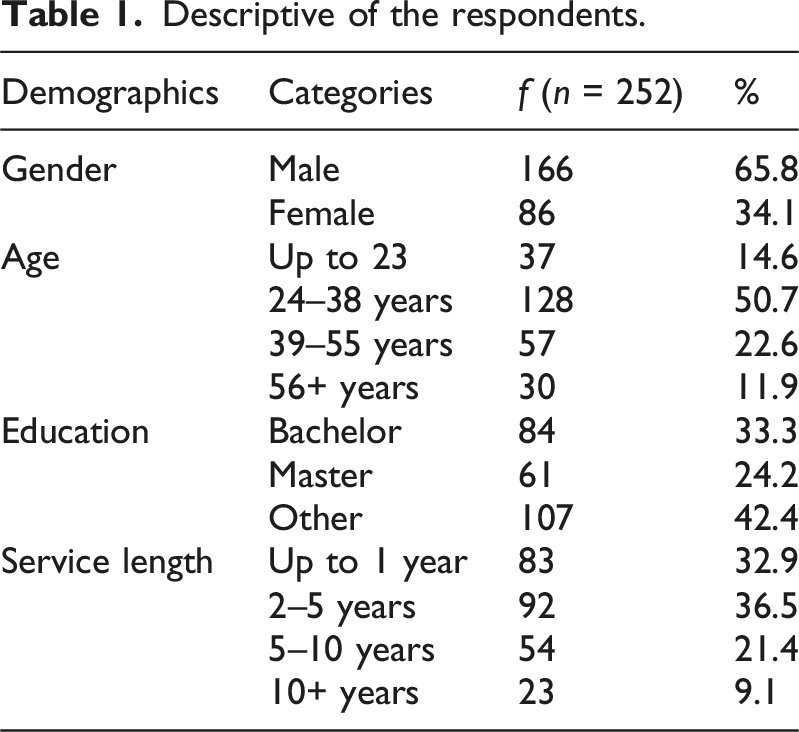
Descriptive of the respondents.
Measures
This study adapted the valid and reliable scales from the previous studies. The factor loadings and reliability of each scale were higher than 0.70 (>0.70). Seventeen seventeen-item spiritual leadership scale was adapted from the study conducted by Ref. 38 to measure the items and their reliability. Sample items for spiritual leadership scale were “My workgroup has a vision statement that brings out the best in me,” “I have faith in my organization and I am willing to do whatever it takes to insure that it accomplishes its mission,” and “My organization is trustworthy and loyal to its employees.” Furthermore. Intrapreneurial behaviors, a 15-item scale was adapted from a study of Ref. 64. The sample items were “In the course of my work, I find new ways to do things,” “I often come up with new ideas for products or services,” and “I actively search for new opportunities for the organization.” A seven items scale for harmonious work passion was adapted from Ref. 65, developed by Ref. 20. The sample items for HWP were “My work is in harmony with other activities in my life” and “My work allows me to live a variety of experiences.” Likewise, the scale of intrinsic motivation, having 4-items was measured and adapted from the study of Ref. 18. The sample items for intrinsic motivation were measured with the introductory question “Why are you motivated to do your work? and then “Because I enjoy the work itself.” All the scales were measured based on a Likert scale ranging from (1 strongly disagree to 5 strongly agree).
Data analysis and results
Common method bias (CMB)
As the data were gathered using one source and at one time, common method bias (CMB) could be the concern. 66 To deal with this problem, we ensured anonymity and confidentiality with clear communication that no information would be shared with the management. Straightforward, simple instructions, and avoiding the use of ambiguous and leading questions. After data collection, we used Harman test as a single factor test to undertake as a diagnostic measure. 66 An unrotated exploratory factor analysis of all items demonstrated that the first factor explained 29.2% of variation, which was significantly lower than the threshold value of 50% indicating no common method bias.
Measurement model
Reliability and validity of the constructs.
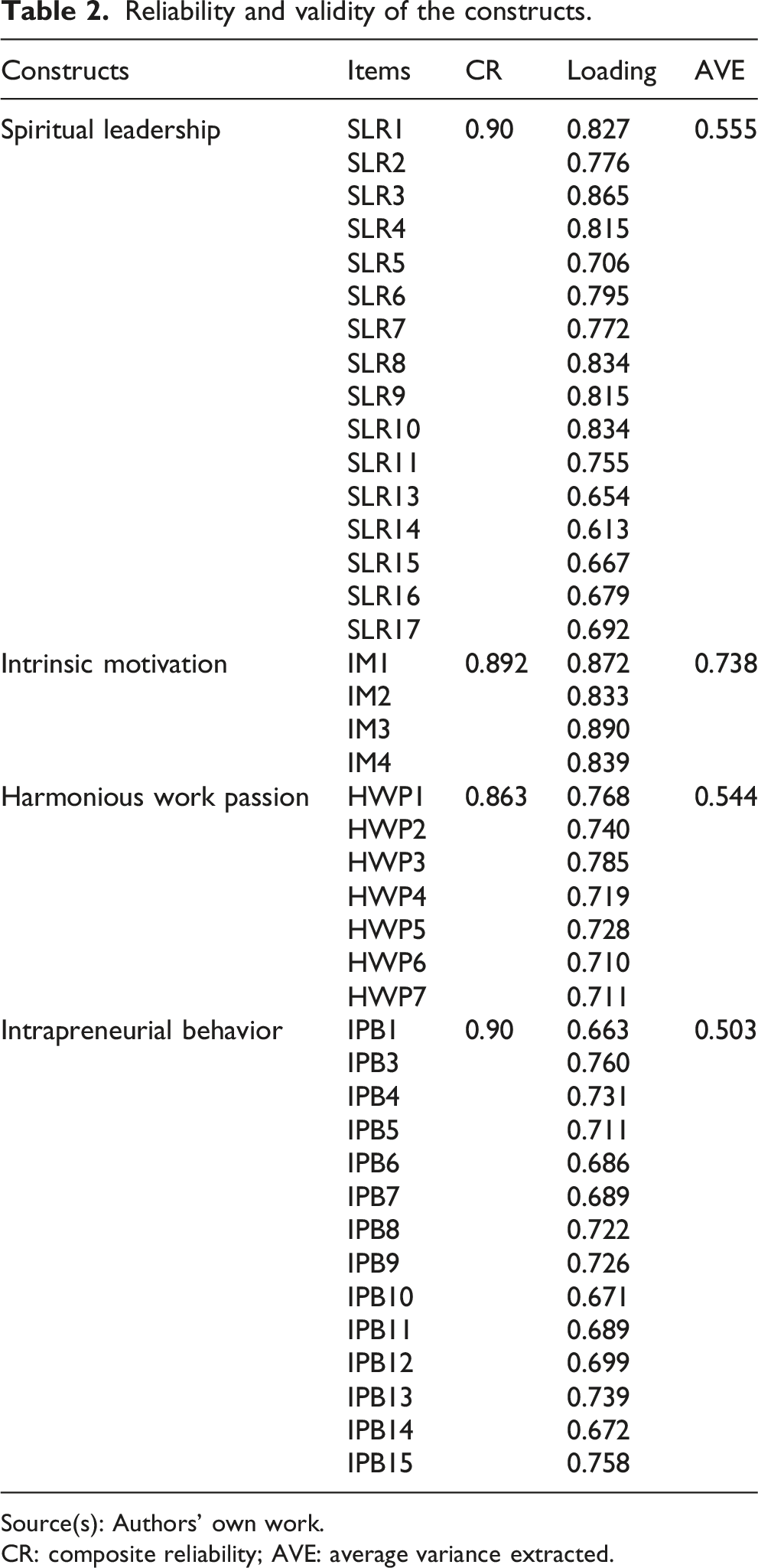
Source(s): Authors’ own work.
CR: composite reliability; AVE: average variance extracted.
Heterotrait–Monotrait Ratio (HTMT).
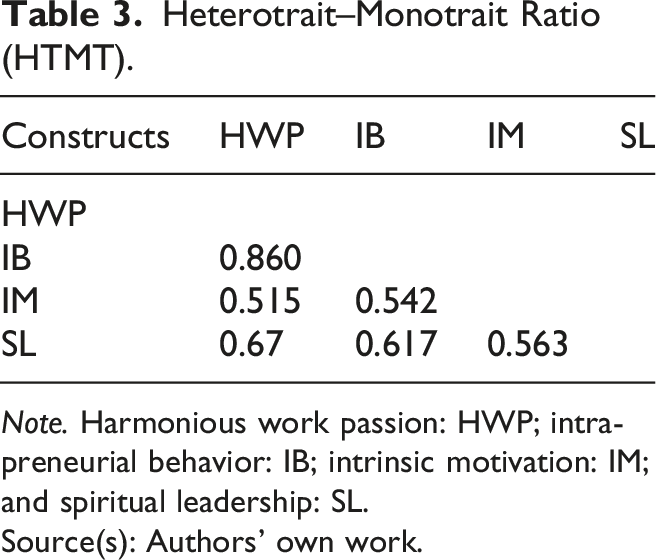
Note. Harmonious work passion: HWP; intrapreneurial behavior: IB; intrinsic motivation: IM; and spiritual leadership: SL.
Source(s): Authors’ own work.
Structural equation modeling
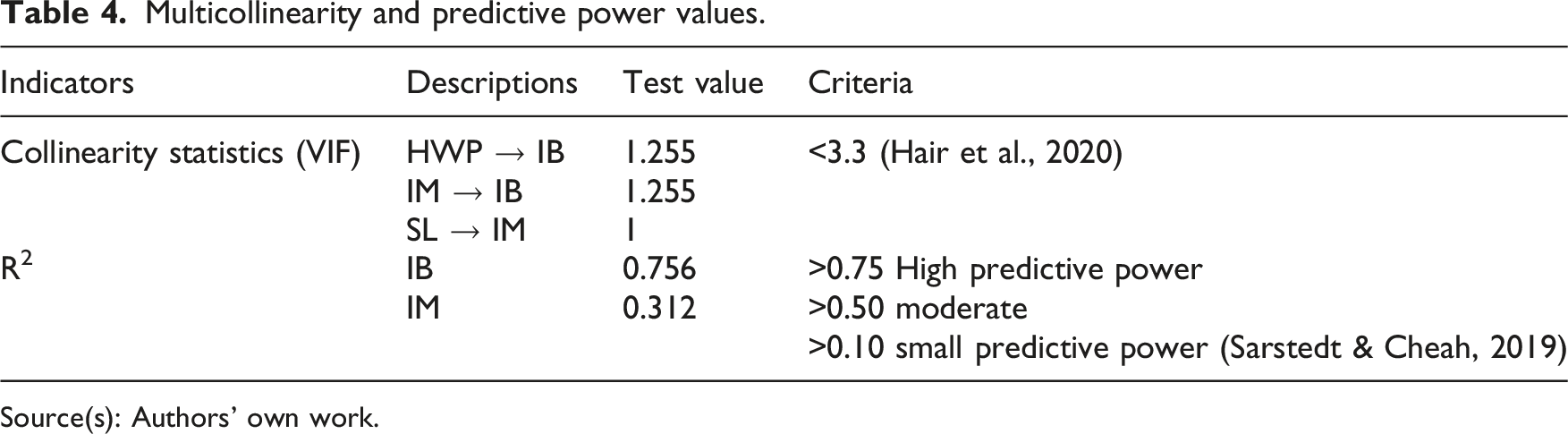
Multicollinearity and predictive power values.
Source(s): Authors’ own work.
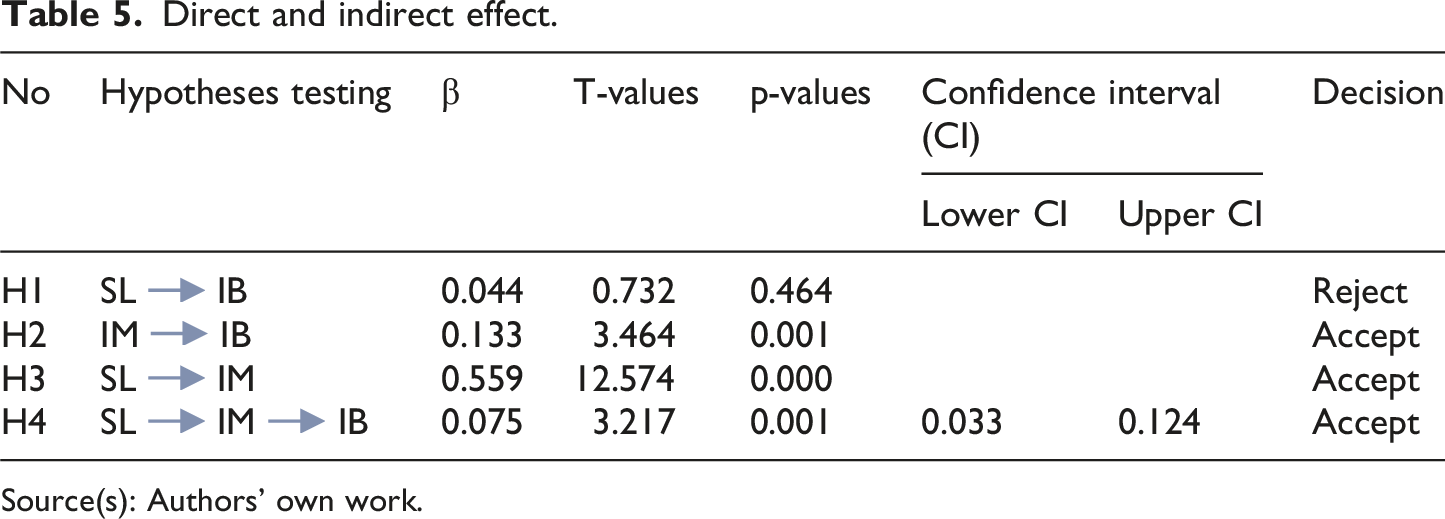
Direct and indirect effect.
Source(s): Authors’ own work.

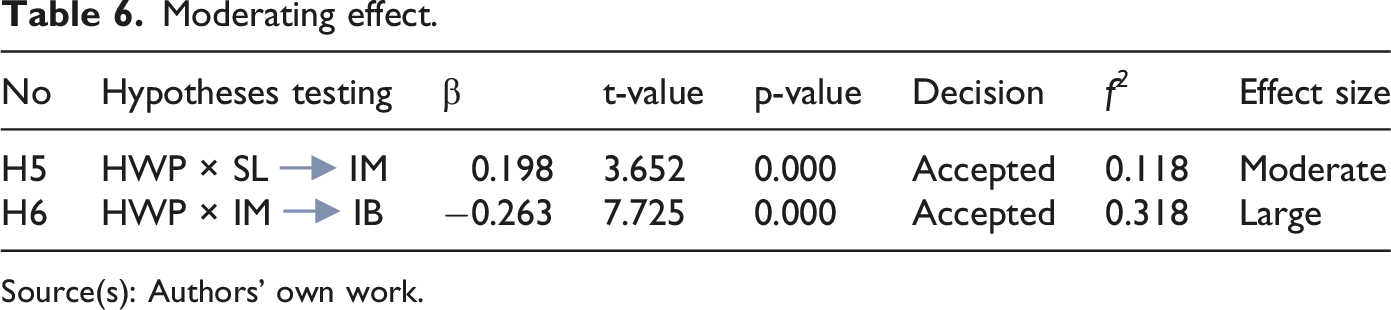
Moderating effect.
Source(s): Authors’ own work.
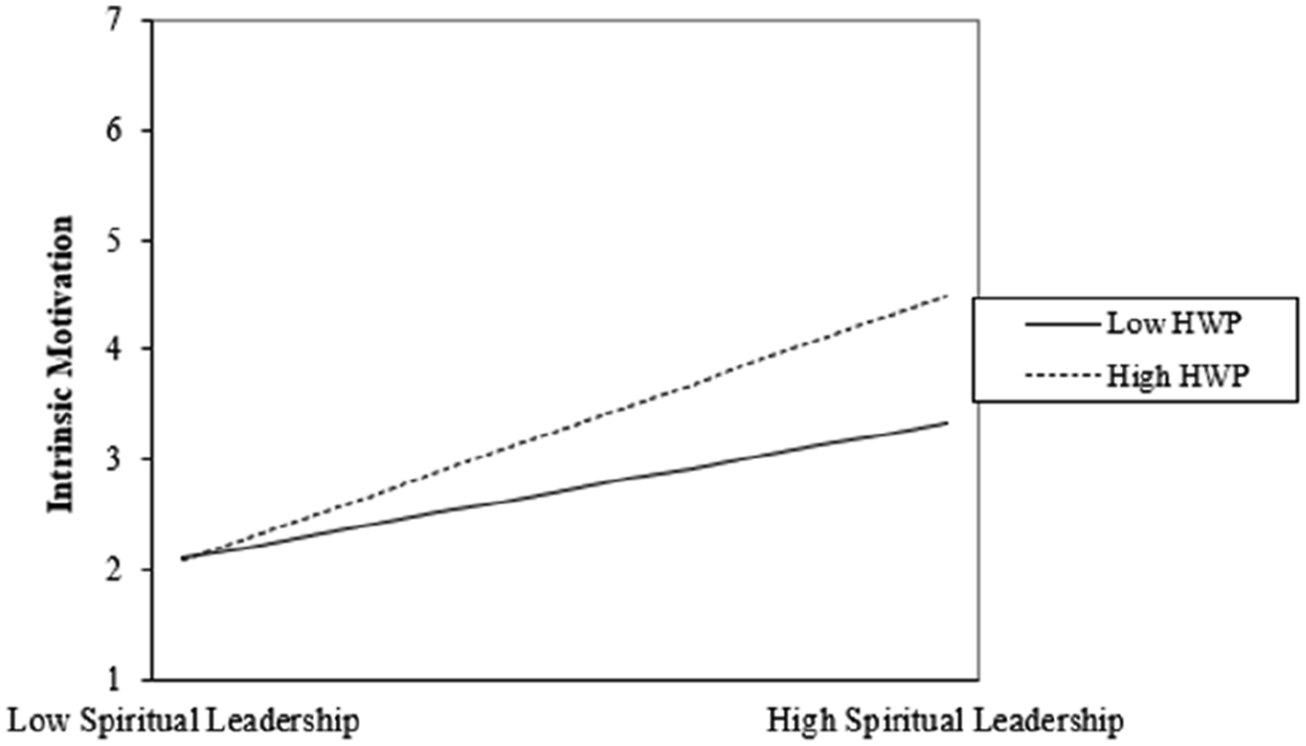
Interactive relationship.
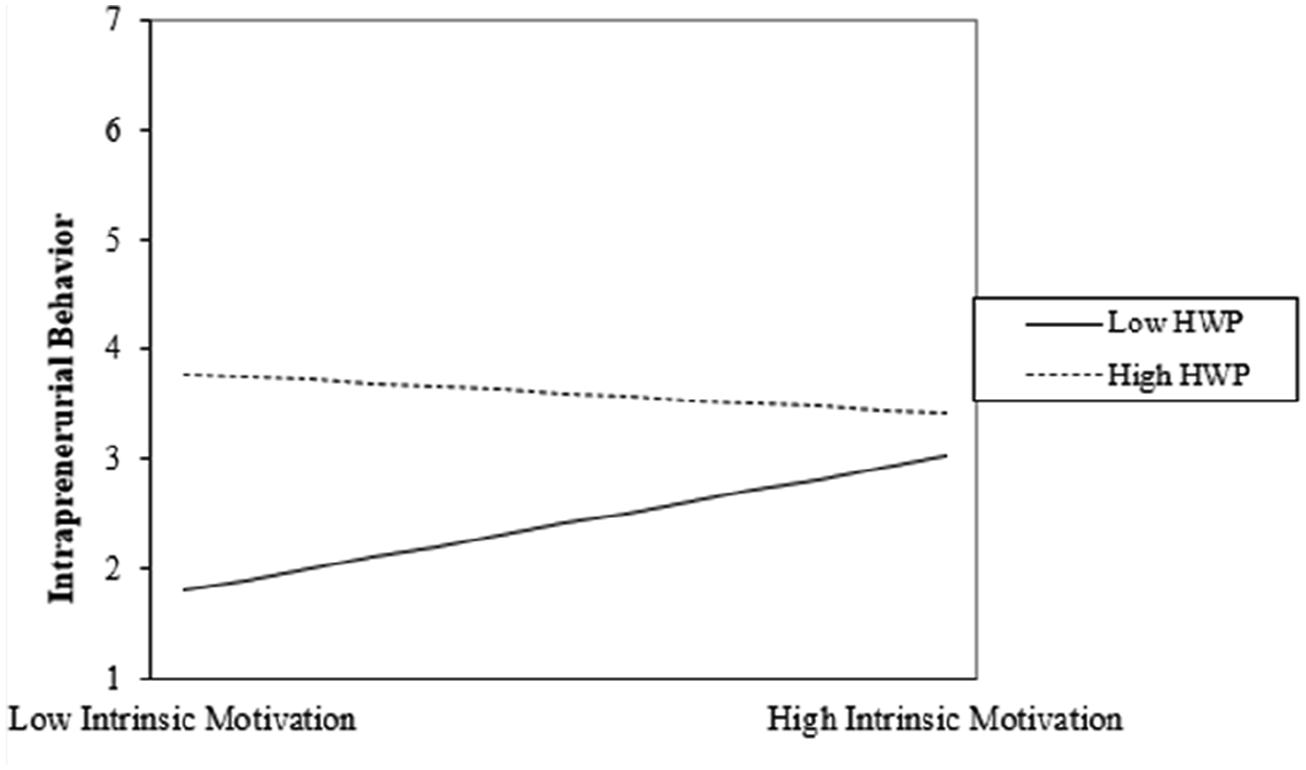
Similarly, the moderating effect of HWP on the relationship between IM -> IB is also significant with the (β = −0.263; p-value <0.005). The effect size for this relationship, that is, 0.318, is a large effect. Figure 3 shows that HWP negatively moderates the intrinsic motivation–intrapreneurial behavior relationship (β = −0.263, large effect size f2 = 0.318). When HWP is high, intrapreneurial behavior increases only modestly (from 1.8 to 3.4) as intrinsic motivation rises. When HWP is low, the slope is steeper (1.8 to 3.8). Thus, high HWP attenuates the motivation behavior link, supporting the double-edged nature of passion Interaction plot.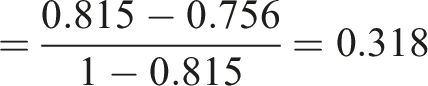
Discussion
This study examines the impact of SL and IM on IB. The results highlight the significant impact of SL on IB through IM. Additionally, this study also examines the moderating impact of HWP on the relationship between SL to IM, and IM to IB, suggesting that harmonious work passion effectively enhances IB under intrinsic motivation. The most important conclusion is that spiritual leadership has no direct impact on intrapreneurial behavior (H1 rejected). This contradicts some earlier studies such as Ref. 39, and implies that being a spiritual leader alone is insufficient to directly stimulate employee innovation in Pakistani hotels. Rather, our findings show that Intrinsic Motivation is the sole channel through which SL exerts its influence (H4 supported). This is exactly in line with our SDT framework: SL stimulates an internal drive (IM) by meeting psychological needs for relatedness, competence, and autonomy. 30 Employees are empowered to demonstrate proactive and creative behaviors by this internal motivation rather than the leadership style itself. This highlights a crucial lesson for managers: instead of assuming that leadership will inevitably lead to innovation, the emphasis should be on fostering an environment that fosters internal motivation.
This observation questions simplistic assumptions that the leadership styles can directly be converted into the preferred behaviors. Rather, it points to a key conceptualization of theory and practice, leadership has an indirect impact on innovation by setting the psychological conditions to leverage the internal motivation of employees. It is especially true of the hospitality industry, where the presence of the standardized procedures and hierarchical frameworks can restrict the ability of the leaders to directly affect the behaviors of employees. 6 Spiritual leaders cannot just dictate innovation; they should establish the drive within them that will make employees decide to be innovative.
The complexity and dual nature of Harmonious Work Passion are revealed by our research. HWP functions as an amplifier between SL and IM, as suggested by hypothesis (H5). Even greater levels of intrinsic motivation result from passionate workers’ increased openness to the significance and encouragement offered by spiritual leaders. Nonetheless, a startling and unexpected finding is the negative moderating effect of HWP on the IM-IB relationship (H6).
It suggests that there is less of a positive correlation between employees’ intrapreneurial behavior and intrinsic motivation when they have high harmonious passion. Two plausible explanations based on the hospitality setting are put forth by us: First one is that workers with high HWP may experience such intense fulfillment and absorption from mastering their primary, assigned tasks such as providing faultless guest service that they feel less of a need for or have less mental capacity for risky, disruptive intrapreneurial activities they are passionate about maintaining the status quo. 34 Their passion is deeply satisfied by excellence within their current role, reducing the drive to seek fulfillment through innovation. This aligns with research showing that passion can be channeled toward either exploitative or explorative activities, with harmoniously passionate individuals sometimes preferring the former when it provides sufficient fulfillment. 71
Second one is harmoniously passionate workers may be more inclined to modify their interests to conform to current organizational restrictions in a hierarchical hospitality setting. 20 Even when they are intrinsically motivated, they find profound fulfillment in the system, which may lessen their drive to challenge or alter it through innovation. This suggests that, under specific structural conditions, harmonious passion may unintentionally direct motivation away from radical innovation and toward incremental excellence within predetermined boundaries. 58
These results indicate that harmonious work passion is a two-sided sword within an innovation setting: it enhances the motivation formation but can weaken the translation of motivation into disruptive innovation based on some structural circumstances.
Theoretical and practical implications
There are three theoretical contributions in this study. First, it confirms intrinsic motivation (IM) as the intermediate variable that mediates the relationship between spiritual leadership (SL) and intrapreneurial behavior (IB).12,13 In comparison with previous studies on mediation,9,15,16 the IM was not studied in the SL-IB relationship in the hospitality. Second, it redefines harmonious work passion (HWP)22,23 as a moderator: HWP enhances SL-IM, yet diminishes IM-IB, demonstrating passion to be two-sided. Third, it contributes to the IB research in a under researched context of Pakistani hotels. Despite the significance of the sector,12,37 the majority of IB research is of a Western or manufacturing nature.3,36 This paper presents empirical evidence of this conditional model in this setting.
There are some practical recommendations, first, our findings recommend investing in Spiritual Leadership development by teaching managers how to express a compelling vision, the ability to create strong visions that make work meaningful, the willingness to show sincere care and selfless love to the employees, and the ability to make the employees believe in their potential to withstand adversities. 72 The development programs of leadership should be focused on the ability to communicate organizational purpose, model authentic care, and create team resilience. Hotels can introduce such practices as the vision workshops where the leaders jointly create departmental missions that are consistent with organizational purpose or introduce mentoring programs where senior leaders can model altruistic love via developmental relationships.
Second, develop intrinsic motivation systematically as opposed to equating leadership with innovation. Since the relationship between leadership and innovations is completely mediated by intrinsic motivation, organizations should deliberately establish work settings, giving people freedom to choose how to accomplish their objectives, and making sure that recognition is based on initiative and creative efforts rather than just results. This fosters creative spirit. Hotels can also introduce programs of job crafting in which employees can adjust certain job aspects to suit their personal interests and competencies. 73
Third, handle passion strategically by recognizing the complexity of passion. Managers must establish clear channels and psychological safety for motivated and passionate workers to focus their energies on intrapreneurial projects, even though cultivating a passionate workforce is advantageous. To break down silos and provide an organized outlet for creative energy, this may entail setting up cross-functional teams, “innovation time,” or idea incubators.
Fourth, reward and recognition systems should be designed to promote initiative and creative effort, rather than results. Since intrinsic motivation is the force behind intrapreneurial behavior, the extrinsic reward systems should be well structured to facilitate intrinsic motivation and not to suppress it. 74
Fifth, establish company systems through which motivated employees can act on their innovation impulses. Hotels could straighten organizational hierarchies where they are appropriate or have innovation champions with whom employees can sell ideas or run rapid prototyping.
Limitations and directions for future research
The limitations of this study provide opportunities for further investigation. The cross-sectional design does not allow causal conclusions. Although SDT offers solid theoretical justification in the belief that spiritual leadership is likely to impact intrinsic motivation, which in turn promotes intrapreneurial action, our data cannot rule out other possible causal pathways, or reciprocal relationships. Future research should employ longitudinal designs with multiple measurement waves to establish temporal precedence and examine the dynamic evolution of these relationships.
Data were collected from a single source, raising potential common method bias concerns. While we implemented procedural remedies and statistical tests suggested CMB is not a substantial concern, multi-source data would strengthen confidence in findings. Future research should incorporate supervisor ratings of employee intrapreneurial behavior and potentially peer ratings of intrinsic motivation to triangulate employee self-perceptions. Future research should test this model in various organizational and cultural contexts, as the sample came from a single nation and city limiting generalizability to other geographical and cultural contexts. The unexpected negative moderation of harmonious work passion on the intrinsic motivation-intrapreneurial behavior relationship requires qualitative investigation. While we focused on intrinsic motivation as the sole mediator, spiritual leadership likely influences intrapreneurial behavior through additional psychological mechanisms. Future research should examine alternative or parallel mediators such as psychological empowerment, 15 creative self-efficacy, 16 psychological safety, or meaningfulness. 75
Footnotes

Ethical considerations
This study underwent formal ethical review. At Minhaj University, the Board of Advanced Studies and Research (BOASAR) serves as the institutional ethics committee, operating under the national ethical framework provided by the Higher Education Commission (HEC) of Pakistan. The research protocol and instruments were submitted to BOASAR for evaluation. Upon approval of the draft proposal, BOASAR authorized the commencement of data collection with the explicit stipulations that: (1) informed consent must be secured from all participants, and (2) data collected must be used strictly for academic and educational purposes.
Author contributions
○
○
○
Funding
The authors received no financial support for the research, authorship, and/or publication of this article.
Declaration of conflicting interests
The authors declared no potential conflicts of interest with respect to the research, authorship, and/or publication of this article.
Data Availability Statement
The data that support the findings of this study are available from the corresponding author, Muhammad Umair Nazir, upon reasonable request.
Declaration of generative AI use
During the preparation of this work the author(s) used Grammarly/Quilbot in order to proofread and edit. After using this tool/service, the author(s) reviewed and edited the content as needed and take(s) full responsibility for the content of the published article.