




Abstract
Purpose
In the corporate world, the glass ceiling is like a metaphor for an invisible barrier that impedes women’s growth and advancement to higher positions. The purpose of the study is to examine the barriers that are antecedents of Diversity, Equity and Inclusion (DEI) of women’s Glass Ceiling among Indian Corporate Leaders.
Design
The study is conducted from 1200 women corporate leaders working in different corporate sectors in three states, that is, Karnataka, Andhra Pradesh, and Telangana. Further, the study examined the statistical tools of factor analysis and regression.
Findings
Interpersonal Issues, Differential Treatment, Perception of glass ceiling and organisational gender change were considered as the antecedents of women’s glass ceiling. These antecedents showed that there is a significant relationship between them and women’s glass ceiling, thereby making all the alternative hypotheses accepted.
Practical Implications
The article provides implications for companies to invest in leadership development and mentoring programs for women to break the glass ceiling.
Originality
This article contributes to understanding the present situation of women’s glass ceiling and to know about the barriers of the glass ceiling in regard to diversity, equity, and inclusion.
Introduction
Gender diversity, Equity and Inclusion (DEI) of corporate boards is essential for global competitiveness. Strategic decisions are made in the board, and when the board consists of more women, it will have a pull effect, leveraging more women into other higher-level positions. 1 Research studies have revealed that companies with more women in senior leadership roles are performing well and delivering appealing results in terms of profitability. 2 More women on corporate boards enhance performance, competitiveness, and communicates that there is no glass ceiling. Many successful companies consider gender DEI as a source of competitive advantage, and particularly as a vital facilitator of growth. There exists a statistically significant positive correlation between gender and DEI. 3
While the board sets the strategic vision and monitors outcomes, it is the top management that bears the ultimate responsibility for implementing these strategies and policies. 4 Upper echelon and organisational theories posit that the attributes of senior leaders significantly impact organisational strategy and performance. Owing to gender-based differences, numerous studies suggest that the inclusion of women in executive leadership influences these strategic decisions and results.
The mindset shaped by a leader’s personality and values often guides the strategic actions a company undertakes and the results that follow.5,6 The gender of strategic leaders is one of the vital attributes that impacts their cognitive frames of mind very strongly. Owing to differences in socialisation and upbringing, female strategic leaders tend to prioritise harmony, inclusiveness, and careful deliberation, making them more ethically conscious and less inclined to take risks.7,8
Despite laws for equal opportunities for men and women as well as substantial promotion of DEI in companies, it is notable that women are still basically in the minority in decision-making roles. This reflects the existence of the glass ceiling that creates vertical discrimination against women within companies. Women’s say in decision-making is vital for the development of a family, a company, or any country. But the hard reality is that women are underrepresented in decision-making roles, though some progress has been made.
It’s well known that companies with more gender DEI among senior leaders do much better. In recent times, research depicts that women leaders are perceived as effective as men. Evidence from a large-scale review of 360-degree evaluations indicates that women outperform in key leadership dimensions. These dimensions are such as initiative, perseverance, a commitment to self-growth, accountability for outcomes, and moral conduct. But the disturbing fact is that only 4.9% of Fortune 500 CEOs and 2% of S&P 500 CEOs are women. It is very important to look at what comes in the way of promoting women in the companies. Leaders must recognise the obstacles that limit women’s advancement, especially unconscious bias. Organisations must transform their decision-making frameworks for recruitment and advancement, ensuring that talented women are evaluated with fairness and intention. “Women make exceedingly capable leaders, in accordance with those who work most closely with them, but what’s holding them back is not a dearth of competence but lack of opportunity.” 9
In comparison with men at their level, women leaders show more concern for employee well-being. They promote diversity, equity, and inclusion (DEI), which intensely enhances employee retention and satisfaction, but unfortunately, it is not properly rewarded in many companies. It could become harder for women leaders to progress and advance when their time and energy at work isn’t recognised. To make meaningful and viable improvements toward gender equality, companies have two options: getting more women into leadership roles and, equally important, retaining the women leaders already existing. This requires pushing beyond common practices. 10
In the context of Indian companies, the glass ceiling operates as a systemic barrier that obstructs the professional development of women and other minority groups, irrespective of their qualifications and achievements. Even though there has been progress towards gender equity in the workforce. Women in India still struggle with limited access to positions of leadership, unequal pay, low levels of sponsorship, and a great deal of social norms that limit their career potential. On the other hand, the business world, which is still a man’s world, is by and large a field where women’s efforts are least appreciated. Moreover, their progression to key managerial or executive positions is blocked. Therefore, the current study aims to understand and examine the DEI of the Indian women’s glass ceiling system among the corporate leaders. 11 The study would explore the antecedents of the glass ceiling among women working as corporate as leaders and eligible/yet to become corporate leaders. The study would help us to understand the major barriers and the glass ceiling system. And thereby the study recommends the changes required to increase the number of women corporate leaders and their inclusion in the decision-making system. GLC must be understood from a human system viewpoint, even in light of growing evidence supporting the advantages of DEI projects. The statistical tools like correlation and regressions help us to understand their relationship and level of influence on GLC. This study state that there are still barriers or antecedents the influence women’s GLC. Especially in the country like India, which is a male dominated society, GLS still exists. Despite the abundance of literature on HR policies and practices related to DEI, no specific study has been published on the antecedents of DEI that impact the glass ceiling of female employees from a human systems viewpoint. 12 Therefore, it is essential to comprehend the glass ceiling of female employees from a Human Systems perspective in order to promote DEI. 13 DEI in the workplace would seek to add to the expanding corpus of knowledge on DEI by examining the GLC from a human system perspective. Many organisational DEI efforts focus predominantly on women’s GLC. The study reflects the reality that most organisations today implement some DEI initiatives and better understand the antecedents that influence women’s GLC. Thus, the present research also aims to examine the antecedents of DEI on women’s GLC among the women employees in the Indian corporate sectors through a human systems perspective. This study further helps us to identify outcome variables of GLC and reduce the priming gender bias.
Review of literature
GLC is a consequence of the larger and pervasive structure of gender that shapes social relations at paid work. The intrinsic structures that enable the hierarchy between genders at work. These are visible in economic structures like pay gap, nature of work, workplace practices, and gendered expectations. And about behaviour or appearance 14 at work, of which the glass ceiling is an offshoot, intersects with other forms of social inequality prevalent in society, like race, class, and ethnicity, to name a few. This holds especially in a country like India, which is marked by caste and regional inequalities.
An overview of the literature on the glass ceiling for corporate women leaders would include the antecedents of DEI of women’s glass ceiling system and outcomes of the glass ceiling among Indian corporate leaders. These antecedents include interpersonal issues (TI), differential treatment (DT), perception of GLC (PGC), and organisation gender culture (OGC) for promoting women to higher positions.
Interpersonal issues
In case of interpersonal issues, the influence of family-related issues on the women’s career progression and women with a preference towards family responsibilities have less chance of reaching senior positions. 15 Another important challenge faced by women is work-life balance, 16 job assignments, dealing with interpersonal issues, family dependents, company politics, male dominance, women’s discrimination, non-supportive superiors and peers, and feeling of being discarded. 17 Existence of male culture, family as well as social commitments of women revealed as a strong, significant positive relation of GLC in terms of social barriers and women’s career advancement. 18 Women executives identify motherhood, working time, and work-life imbalance as major antecedents of GLC for their career advancement. 19 The changes in women getting a relevant job were about half of men, despite being similar. But different in terms of household and children’s responsibility, as women spent more time in family-related activities than men.20,21 Human System Management policies, such as mentoring, having a friend who has the power to make decisions in the organisation to advance their career, can be an important factor for women to reduce their interpersonal issues. Some managers strongly believe that having friends among the influential decision-makers in their organisation is more likely to lead to promotions.
There is a significant relationship between TI and women’s GLC
Differential treatment
The glass ceiling effect occurs when women are treated differently in the workplace in a number of ways. There are significant disparities between male and female employees. Male employees are more likely than female employees to be promoted at every level of an organisation. The perception of unequal treatment of women can be influenced by organisational circumstances just as much as by interpersonal problems that impact the glass ceiling. 22 Additionally, one of the key components of Human System Management is that work performance is more closely related to women’s advancement. It is said that the organisation’s promotion system is more likely to believe that women are treated equally to males. So, they can use better criteria when making decisions on promotions. Additionally, by influencing whether or not women are treated differently, mentorship may have an impact on the glass ceiling problem. Companies frequently assumed that women were unwilling to relocate, and geo-mobility was sometimes a prerequisite for job success. This can result in a lack of chances for women managers who are ineligible for promotion to higher levels. Because of this, managers are likely to detect discrimination if they think this is occurring within their company. 22 Over half of women want their company to be recognised for its diversity and equitable treatment. This was further associated with a stronger belief in the existence of a glass ceiling. Differential treatment mediates the relationship between organisational factors and the perception of glass ceiling barriers, which are determined variables of Human System Management.
There is a significant relationship between DT and women’s GLC
Perception of GLC
The perception of the “GLC” is significant since it may prevent women from pursuing promotions. Women are less likely to be hired into a company’s top levels. Women are likely to view their shared attribute as incompatible with the organisation’s success criteria in organisations where women hold a large number of lower-ranking roles. 23 To the extent that they restrict themselves and reject possibilities for growth out of a fear of failure, women likewise absorb the unfavourable opinions and stereotypes held by the majority. It’s essentially a self-fulfilling prophecy. When supervisors believe that female employees have family-work difficulties, the GLC is maintained. 24 Gender identification becomes an even more potent form of identity when it is believed that social identity will take precedence over other factors that determine success. GLC effects are more likely to be attributed to structural problems by women working in unsupportive workplaces. Women at the top of their organisations will blame their immobility on a lack of motivation or human capital. 25 This indicates that depending on their stage in career cycles, women’s perceptions of a GLC differ. Women in India’s biggest and most prosperous companies are unable to break through the GLC. 26 A mere 5% of India’s 500 listed companies have a woman as a chief executive officer or managing director, according to data from the Prime database. 27 Out of these 500 businesses, 319 do not employ women in key managerial positions. Although there has been improvement, issues such as unconscious bias and gender salary discrepancies still need to be addressed for women in leadership roles.28,29 According to market capitalisation, women lead 27 out of the top 500 NSE-listed businesses. 27 There are just four of these 500 companies with more than one female CEO or MD. With three female leaders, Jindal Saw Ltd is the leading company here. The company’s MD, Sminu Jindal, is joined by Tripti Puneet Arya and Shraddha Jatia as joint MDs. In addition to being the daughters of OP Jindal’s son, Prithviraj Jindal, all three are the granddaughters of OP Jindal, who founded the business. 27 The companies that have more than one female MD or CEO are Sundaram Fasteners, Brigade Enterprises, and Apollo Hospitals. Each of these businesses has a dual managing director and two female managing directors. They are all connected to the founders. If their family started the business, women are more likely to be its leaders. 27 Few studies have shown that female leaders face barriers in terms of authority, vertical mobility, and low-status, low-paying professions that prevent them from advancing in their careers. Even when personal factors are taken into account, women still struggle more than males to assume leadership positions. 30 According to researchers, constant GLC would have an impact on the managerial achievement and advancement of female employees. 31
There is a significant relationship between PGC and women’s GLC
Organisational gender culture
Meeting the requirements of every worker who holds authority to make decisions at any level is essential for the organisation to be successful and long-lasting in its development. 11 This indicates that gender equality is a crucial element for an organisation’s longevity, which needs to be understood. It is known that there is a glass ceiling for women when male and female employees are treated differently. This discrepancy may arise because women may be harmed by their responses to delicate subjects. Additionally, women are more likely to witness a glass ceiling as well as interpersonal, situational, and discriminatory treatment in the workplace. There are a number of solutions available to female managers who see a glass ceiling in their organisation and who want additional responsibility in the form of promotions to higher levels. They can come to terms with the glass ceiling and stop hoping to rise to the top positions inside the company. As an alternative, individuals can express their concerns to the organisation’s human resources and personnel departments or directly to the management in charge. Individuals can also look for mentors and attempt to network within the company.
One strategy used by organisations that discourage women is recruitment. Higher percentages of male employees are recruited through network referrals. There would be less gender prejudice in hiring if employment agencies or job advertisements were used instead. Additionally, recruitment may occasionally be impacted when an organisation is formed through mergers and acquisitions. This is all due to gender in general, which implies that women are less able to protect themselves when jobs are ruined in difficult times and are less able to identify and take advantage of benefits or chances generated in good times. 32
Despite this, gender bias and stereotyping still pose a serious obstacle to women’s career advancement.33,34 Due to this, there is a low representation of women in management positions. 34 The phrase “GLC” refers to the unseen prejudices and obstacles that prevent people, especially women and other underrepresented groups, from advancing in their careers. 35 Malevolent role plays, unequal compensation, job insecurity, limited training, mentorship, and coaching, and a lack of support for female employees are all problems in many organisations. 36 As a result, discrimination in work demands, schedules, responsibilities, rewards, and corporate procedures, among other things, can be characterised as one of the main elements contributing to the GLC in corporate settings. 37
Women often feel that their gender is a disadvantage, even when they have similar career aspirations. But this hasn’t diminished the ambition of women who work or manage enterprises in whatever way they can. In the workplace, over 50 percent of women desire recognition, equitable treatment, and inclusion. This has led several companies to produce fewer women executives.
There is a significant relationship between OGC and women’s GLC
Research question/gap
Gender imbalance in workplaces is a common occurrence in India. In order to promote DEI, women need more strategies. Businesses need to have a clear DEI vision that, when effectively managed through human system management, increases the organisation’s profitability. In India, employment discrimination is mostly caused by structural differences. As a result, it is difficult for today’s organisations to combine different systems. Additionally, female professionals encounter individual, interpersonal, and organisational obstacles to promotion in comparison to their male counterparts. The impact of gender diversity on corporate boards on business performance has been the subject of numerous studies. However, they fail to take into account the reality that women must be present throughout the entire process, from entry-level to higher-level executive and management positions, in order for them to participate in the boardroom. As a result, the current study links DEI ideas regarding TI, DT, PGC, and OGC, which are probably related to GLS perceptions. Gender diversity efforts are becoming more widely adopted, yet there is still a dearth of empirical research assessing their effectiveness.
In order to determine whether the variables examined in the study are related to GLS, the current study tested this model (Figure 1). People may see a glass ceiling in their employment if the antecedents of DEIs lead to perceptions that women have interpersonal problems in the office, are treated differently there, and integrate diverse organisational gender cultures. Conceptual Framework of the study (Source: Own).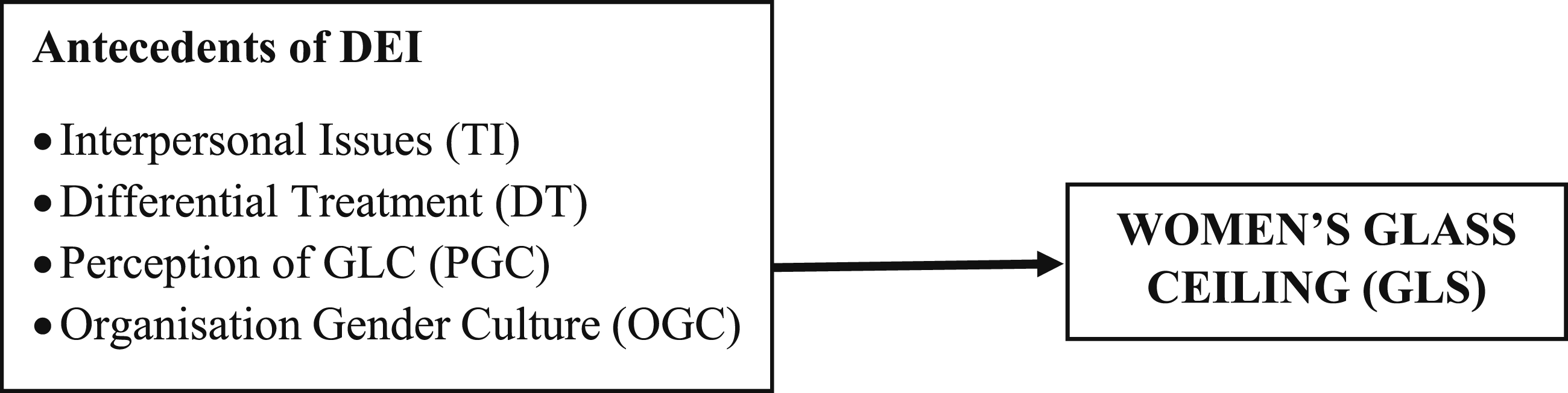
Methodology
Research design
The research study employed quantitative data analysis. It involved a survey from selected industry female managers and leaders and working women in the corporate sector.
Sampling Frame and Methods
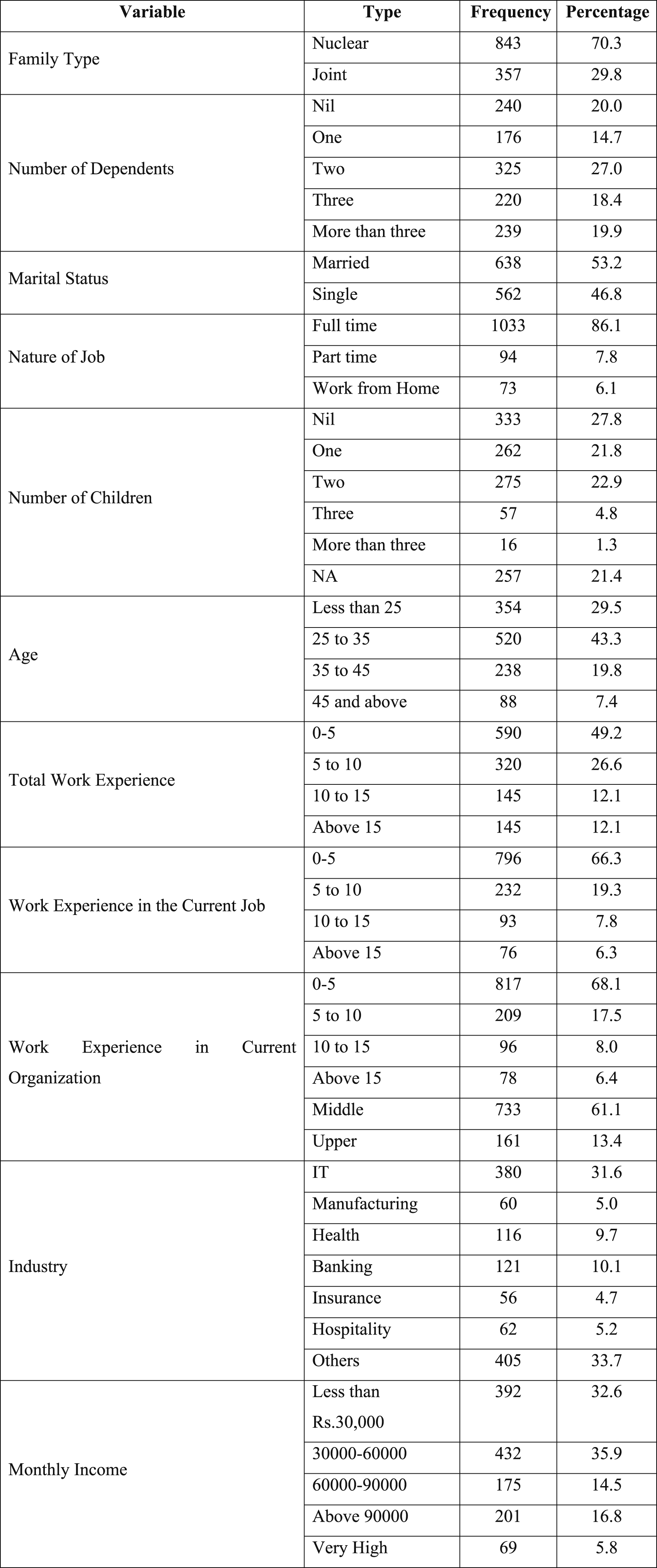
The sampling frame for the study included women working in the corporate sector representing different industries in three states – Andhra Pradesh, Karnataka, and Telangana. Cluster sampling method and purposive sampling method were used.
Sample size
The total sample size for the study is 1200, which represents different types of industries in three states.
Rationale
Keeping in mind the statistical analysis point of view in order to get better results, researchers have taken reference from Cochran’s formula for sample size calculation with the following assumptions. Study population size as Unknown, Margin of error (e) = 5%; Confidence interval = 95%, that is, Z = 1.96 and estimated population proportion (p) = 50%,
Cochran’s formula is: = ((1.96)2 × 0.5 × (1−0.5))/(0.05)2 = 385.
Based on the formula, the minimum total sample size of 1155 is required from three States and keeping in view the possibility of a few incomplete questionnaires, the data was collected from 1200 respondents.
Data collection, tools and analysis
Both primary and secondary data are used for the study. Primary data was collected using a structured questionnaire administered to the respondents. The reliability and consistency of the data collection instruments were checked through a pilot survey among 200 respondents. The data collection instruments were administered by trained field investigators, supervised by the project investigator. Secondary data was collected from journals, magazines, reports, etc.
All the collected data, information, and inputs were analysed with the help of appropriate statistical tools like factor analysis and regression analysis.
Characteristics of the sample
Measurements
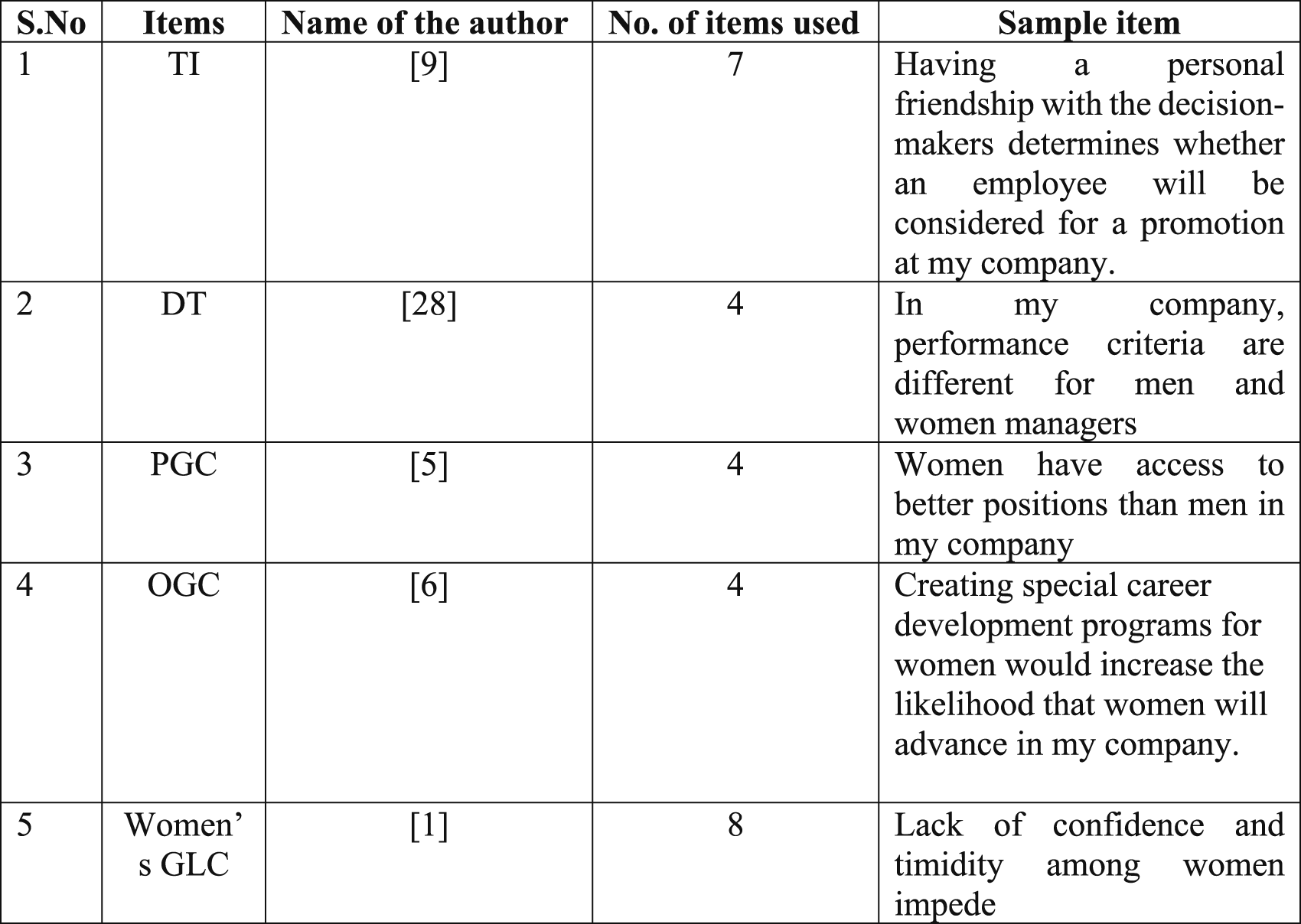
This study recorded four independent variables – TI (Interpersonal Issues), DT (Differential Treatment), PGC (Perception of Glass Ceiling), and OGC (Organisation Gender Culture) and one dependent variable, women’s GLC (Glass Ceiling). Applying the Likert Five Point Scaling technique, each variable is measured with Strongly agree (SA) −5 to Strongly disagree (SDA)-1.
Results and discussions
Reliability
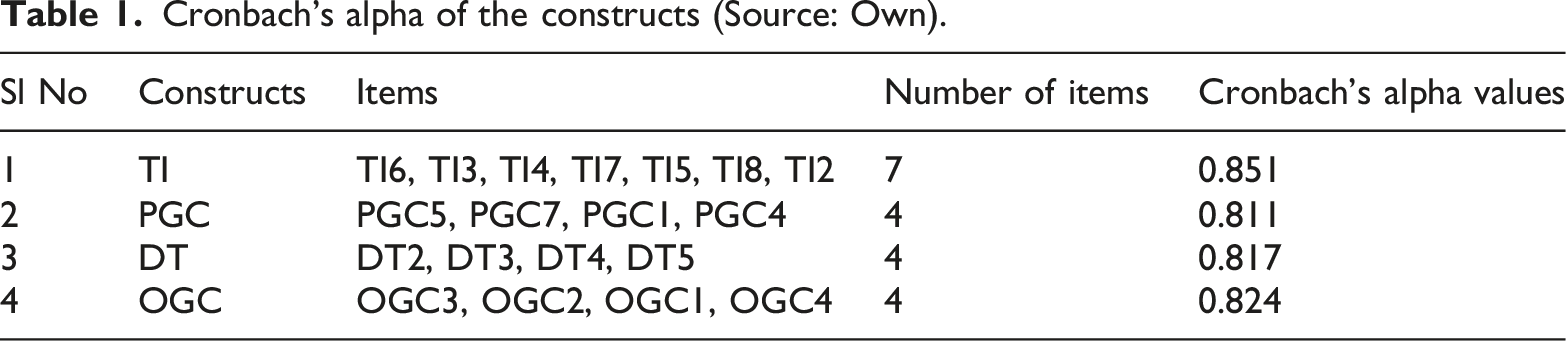
Reliability refers to the extent to which an instrument produces similar outcomes over multiple trials. It indicates the stability and accuracy of a measurement instrument on repeated trials. Reliability of an instrument is generally measured by estimating its internal consistency and which shows how a set of items is closely associated. Cronbach’s alpha is commonly used to measure the scale reliability that determines internal consistency of items based on the average inter-item correlations. Hence, to ascertain the internal consistency of the measurement instruments used in the study, the Cronbach alpha value was calculated, and the results are tabulated. Though an alpha value of 0.7 is required to say the measure is good in terms of internal consistency, any value greater than 0.5 is considered to be acceptable.
Cronbach’s alpha of the constructs (Source: Own).
Factor analysis
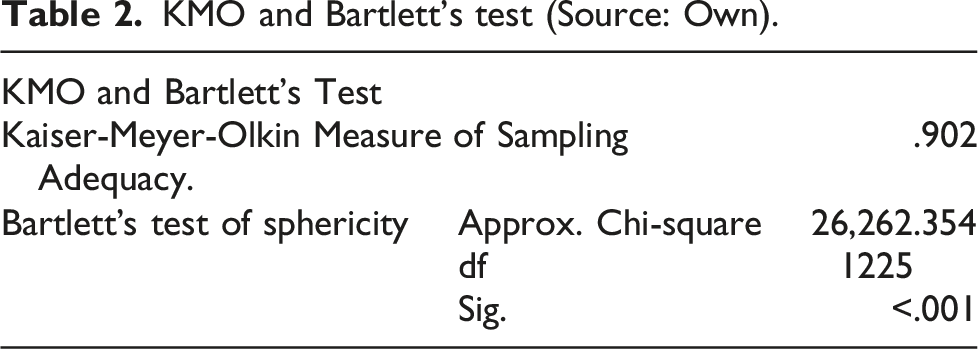
All the items of the constructs considered in the study (TI, DT, PGC, OGC) were subjected to exploratory factor analysis to explore the internal structure of these items. The results of EFA are shown below.
KMO and Bartlett’s test (Source: Own).
Results of EFA (Source: Own).
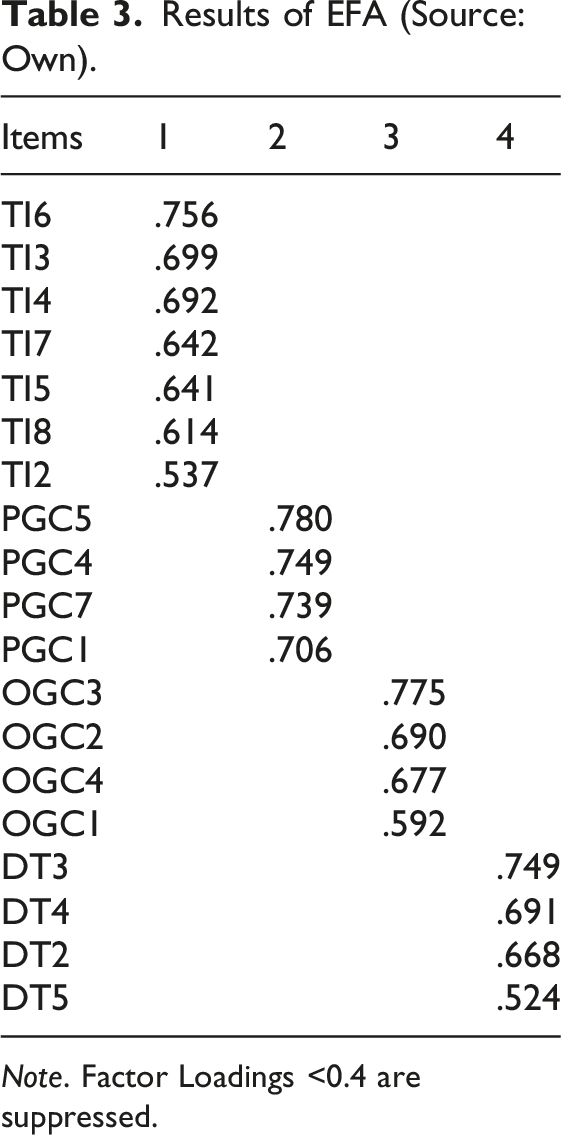
Note. Factor Loadings <0.4 are suppressed.
Regression output
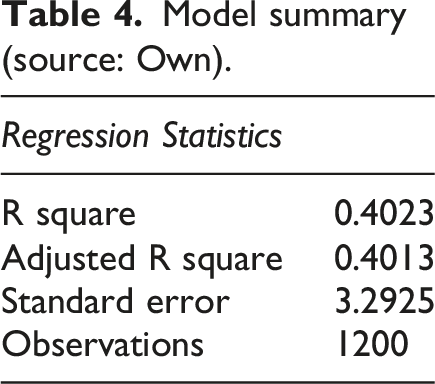
Model summary (source: Own).
Coefficients (source: Own).
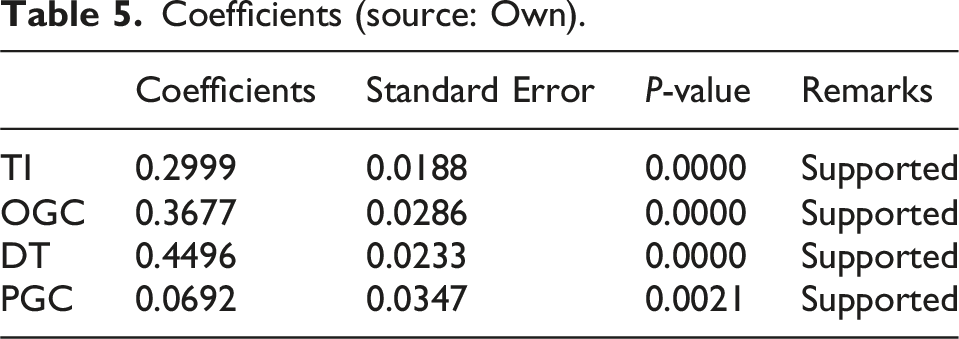
As per the statement of H1, there is a significant relationship between women’s GLC and TI. This is acceptable as the value observed in Table 5 is less than 0.05 (p < 0.01). This means there is a significant relationship between TI and women’s GLC. Therefore, this result in H1 is accepted.
About H2, there is also a significant relationship between women’s GLC and DT, which is observed from the Table.5 (p < 0.05). Therefore, there is a significant relationship between DT and women’s GLC. Hence H2 is accepted.
H3 states that there is a significant relationship between PGC and women GLC. As per the result in the Table.5, it is identified that there is a significant relationship (p < 0.05). Therefore, H3 is accepted as there is a significant relationship between PGC and women GLC.
And finally, H4 is defined as the significant relationship between OGC and women’s GLC. This can be accepted with the determinant value observed in Table 5, where the p-value is less than 0.05. Therefore, it is understood that H4 is accepted since there is a significant relationship between OGC and GLC.
Discussion
Among developing countries, India was the first to impose a quota for women’s representation on boards. According to the Companies Act of 2013, Section 149 (1), every listed company (other those with paid up equity share capital not more than 10 crore and net worth not above 25 crore) and any public company with a paid up share capital of 100 crore or more, or, turnover of 300 crore, should have at least one woman director board by 01 April 2015. While regulations have been broadly adhered to, Indian companies are yet to make significant strides in fostering authentic, inclusive workplaces. Representation of women in leadership positions in crucial committees (such as Audit and Risk Management Committees and Nomination, Remuneration & Compensation) falls short of their representation on boards (women chair less than 8% of the committees). 38
Many respondents perceived that commitment to family-child care issues, parental status, lack of leadership experience, lack of mentoring, and preference for a team of male leaders in the company as the major barriers to their career progression and advancing to higher-level positions. These are followed by exclusion from internal promotion-related decision-making process, inability to balance work with family responsibilities, absence of diversity and inclusion training initiatives within the company, exclusion from internal informal executive level networks, non-supportive superior, and lack of female role models. These perceptions may stem from persistent structural barriers, such as biased promotion practices, lack of mentorship, unequal access to high-visibility projects, or poor work-life balance support. This also signals a lack of inclusive leadership culture or poor implementation of gender equity policies at senior levels, which reinforces these negative perceptions. Hence, it is clear that interpersonal issues (TI) are associated with the women GLC, thereby supporting H1.
Though companies may have formal diversity or gender equity policies, there is a lack of strategic leadership commitment in translating gender policies into practice. It implies that senior executives may not be actively driving or being held accountable for gender inclusion efforts, policies may exist on paper but not fully practiced, monitoring mechanisms or systems are not in place and the efforts to promote gender equity are not recognised and rewarded appropriately and career progression of women & their representation in higher decision-making bodies is not seriously thought of and not properly integrated into the company’s core strategic goals or performance metrics. The spirit of gender diversity and equity lies in proper implementation, but not just in words. Therefore, it is clear that DT and OGC is associated with women’s GLC. The study findings would also support H2 by demonstrating this association.
The statistics of women’s participation in leadership roles in India (Source: World Economic Forum Report, 2025) depict a gloomy picture. Advancement of women to leadership roles is 3.6%, firms with female top managers is 6.8% and the share of women’s membership in boards is about 18%. The figures can be interpreted as a strong indication of the persistent presence of the “glass ceiling,” which is an invisible but powerful barrier that prevents many women from rising to top leadership and decision-making positions, despite their qualifications or achievements. The low composition of women on Boards of Directors is not just a statistic. It’s a reflection of the entrenched gender inequities in corporate leadership. Tackling this issue requires transformative change
Women directors are outpaced on the compensation front (typically about what men receive). Functional/performance-linked components like salary and commissions provided to women are about 60% less than their male counterparts. The number of share units given to female board members is also 52% lower compared to male board members. 38 The marked differences in pay clearly reflect systemic bias within the compensation structure and echo the well-established pay gap in the market. Therefore, the organisation needs to adopt gender change policies. From this, we can infer a relationship between OGC and GLC, which supports H4 in the study. 39
Therefore, the present study is undertaken to know the influence of DEI antecedents on women’s GLS among the women employees working in the Indian service sectors. This study adopted a Human Systems Perspective, considering the glass ceiling as an emergent outcome of the interplay of interpersonal, cultural, and perceptual dynamics within organisations. The antecedents examined—interpersonal issues, differential treatment, perception of the glass ceiling, and organisational gender culture—signify multi-level components of the human system. With the results, it is understood that there is a relationship between the antecedents of DEI and women’s GLS. But at the same time, it is observed that through the regression output, the influence of these antecedents is limited. Even though together, they shape the DEI climate and emphasise systemic patterns that restrict women’s career progression they are other determinations like personal, organisational, and societal barriers that influence the GLC. By construing these relationships through a human systems lens, the study validates how individual interactions, shared perceptions, and organisational culture collectively impact women’s glass ceiling experiences. This study further helps us to know the outcome variables of the study and reduce gender bias.
Implications of the study
It is important to normalise and support dual roles of women through inclusive workplace policies. In this context, companies should adopt flexible working arrangements through flexible working hours and hybrid models as default practices, not exceptions with a shift in focus from rigid schedules to achieving clear deliverables and outcomes. This requires a comprehensive policy that institutionalises flexible work models such as remote, hybrid, or staggered hours and shifting organisational performance measurement from physical presence to goal-oriented deliverables. This empowers women who take up lop-sided caregiving responsibilities to stay and thrive in their careers.
Employees with caregiving responsibilities should also be supported by offering in-house childcare services or subsidised access to certified external crèches. It is necessary to implement equitable parental leave policies that provide all new parents, irrespective of gender so that a shift from maternity-centric models to more inclusive family support systems takes place. In this context, it is proposed that companies with 100+ employees have to provide on-site crèche facilities/partner with certified local childcare providers/offer monthly childcare reimbursements/stipends for eligible employees. In order to support implementation, the Government could offer tax benefits, subsidies, or public-private partnership models to support organisations in fulfilling compliance standards.
Equal paid parental leave should be given for both mothers and fathers. This shifts caregiving responsibility from women alone to both parents, redefining traditional roles and promoting equitable parenting. As of now, in Indian central government organisations, child care leave is given for women only. As part of a broader policy framework, organisations may be required to submit annual disclosures on flexible work usage, leave usage and child care support, segmented according to gender and role level, as part of their gender equity or Corporate Social Responsibility (CSR) or gender audit reporting
The companies should invest in Leadership development and mentoring programs for women employees. This can be done by rolling out institutionalised mentorship programs connecting women with senior leaders for career guidance and sponsorship. This helps in nurturing high-potential leadership-ready women and breaks down the “experience gap” myth. It is also necessary to design and execute “returnship” programs for women reintegrating into the workforce post-career break, with competency update programs and project-based roles. While India has taken measures towards gender inclusion such as mandatory board-level female directors under the Companies Act, organisational investment in formal leadership development and mentoring for women remains constrained and fragmented. A policy mandate could require companies with at least 250+ employees to institutionalise formal mentorship programs for women across levels. Companies should also report Leadership Diversity Index, availability of structured leadership trajectories, and mentoring initiatives. The performance of the companies in this dimension should be tied to incentives like CSR score recognition, public procurement preferences, and tax credits for leadership investment programs.
India’s corporate sector need structured, measurable, and scalable interventions that go beyond compliance to actively invest in women’s growth. This requires establishing measurable and time-bound goals for gender diversity across executive and senior management levels with transparent annual disclosures. Gender equity benchmarks should be integrated with leadership Key Performance Indicators (KPIs) and Employee Support Group (ESG) reporting frameworks. Mandating gender-sensitisation and equity training for leaders involved in recruitment, appraisal, and succession planning, along with ensuring equal access and the nomination of high-potential women to leadership pipelines and fast-track promotion programs, is critical to fostering inclusive advancement.
To truly break the glass ceiling, organisations need to go beyond general statements of support and set clear, measurable goals around developing and promoting women leaders. This includes integrating diversity training into annual planning, specifically to challenge unconscious biases, equip managers to make inclusive decisions, and support women’s leadership journeys. When these goals are part of the company’s formal agenda, not just side initiatives, they send a powerful message: that advancing women isn’t just good public relations (PR); it’s a priority. Regular progress reviews, leadership mentoring programs, and manager accountability can help turn these goals into real and lasting change.
Conclusion
The glass ceiling signifies invisible but systemic barriers resulting from organisational, social, and cultural factors that impede women’s progress to top corporate positions. Though laws are formulated to support equality, the practical challenges confronting women remain under-addressed, leading to limited female representation in boardrooms and senior management. The Ministry’s strategic role is vital in guiding policy frameworks that not only focus on mandating equity but also foster a positive ecosystem where women can flourish professionally.
While India has made meaningful strides by instituting gender representation mandates, the lasting impact demands a shift from tokenism to building inclusive leadership environments that value, develop and elevate women into leadership across all levels. The persistence of the glass ceiling in India’s corporate sector requires coordinated policy action that combines legal mandates, corporate accountability, cultural change, and support systems for women’s advancement. The barriers identified are not just systemic – they are profoundly human
Footnotes
Acknowledgements
The authors would like to thank the National Commission for Women, New Delhi, for granting financial assistance and support for the project. Also, we would like to thank Ms.P.Yamini, Ph D Scholar, NIT Warangal, and Ms. Lankapalli Libny, Ph D Scholar, NIT Warangal, for helping us in this research work.

Funding
The authors disclosed receipt of the following financial support for the research, authorship, and/or publication of this article: The research article is based on the research project funded by the National Commission for Women, Delhi, India.
Declaration of conflicting interests
The authors declared no potential conflicts of interest with respect to the research, authorship, and/or publication of this article.
Data Availability Statement
The data cannot be shared as it is based on a research project funded by the National Commission for Women.