




Abstract
This study examines the scientific landscape of research on biological maturation in youth sport through a comprehensive bibliometric and network analysis. A total of 457 publications indexed in Web of Science were analyzed to identify production trends, thematic evolution, authorship structures, institutional collaboration patterns, and citation dynamics. Network structure was assessed using Total Link Strength (TLS). Results reveal sustained growth in publications since 2012, with maturation emerging as a central thematic axis linked to talent identification and performance research. The field exhibits moderate collaborative density, characterized by hub-oriented structures in which a limited number of authors and institutions concentrate structural influence. Institutional analysis indicates productivity concentration consistent with cumulative advantage dynamics, alongside asymmetrical participation across regions. These findings suggest that research on biological maturation in youth sport is undergoing conceptual consolidation while remaining structurally centralized. Greater cross-regional and interdisciplinary integration may enhance scientific equity and knowledge diversification within the field.
Keywords
Introduction
Biological maturation constitutes a central construct in youth sport research, given its well-documented influence on physical performance, anthropometric development, and training responsiveness during adolescence (Malina et al., 2004, 2015). Variability in maturation timing has been associated with selection biases and differential developmental trajectories, particularly within competitive sport systems (Malina et al., 2015). Moreover, the relative age effect has been shown to interact with biological maturation, potentially amplifying inequalities in talent identification processes (Cobley et al., 2009).
Over the past two decades, scientific production in this domain has expanded considerably, reflecting increasing methodological sophistication and interdisciplinary integration. Research has evolved from descriptive growth-related studies toward more complex developmental models that integrate physiological, educational, and psychosocial dimensions (Fraser-Thomas et al., 2005). Frameworks such as the Developmental Model of Sport Participation and related long-term athlete development perspectives have contributed to structuring this research agenda (Côté & Hancock, 2016). Concurrently, debates surrounding fairness and structural bias in youth sport systems have intensified, particularly in relation to age grouping policies and developmental equity (Cobley et al., 2009).
Despite this growth, the intellectual and structural organization of the field remains insufficiently mapped. Previous reviews have synthesized empirical findings concerning maturation, performance, and youth athlete development (Malina et al., 2015), yet few studies have examined the structural dynamics of knowledge production, collaboration networks, and thematic evolution within this research area. Bibliometric analyses in sport sciences have demonstrated the value of mapping scientific output and identifying collaboration patterns to understand disciplinary consolidation (Hernández-González et al., 2022).
Bibliometric and network-based approaches provide methodological tools capable of revealing latent structures within scientific domains. Analyses of co-authorship and institutional collaboration networks allow for the examination of structural positioning and cumulative advantage processes in scientific production (Wuchty et al., 2007). Furthermore, scale-free network models have shown that scientific systems often exhibit concentration dynamics, whereby a limited number of actors accumulate disproportionate connectivity and visibility (Barabási & Albert, 1999). These approaches enable the identification of both thematic convergence and structural asymmetries within expanding research fields.
Therefore, the aim of this study is to provide a comprehensive bibliometric and network analysis of research on biological maturation in youth sport. Specifically, we seek to (1) examine publication and citation trends; (2) identify dominant thematic clusters and their temporal evolution; (3) analyze authorship and institutional collaboration patterns using structural network metrics; and (4) explore the degree of concentration and asymmetry within the field.
Materials and Methods
Data Source and Search Strategy
The Web of Science Core Collection (WoS) was selected as the primary database due to its indexing rigor and suitability for bibliometric and citation-based analyses (Mongeon & Paul-Hus, 2016). The search strategy combined terms related to biological maturation and youth sport contexts using Boolean operators to ensure specificity: (“sport development”) AND (“biological maturation” OR “growth and maturation” OR “maturity status” OR “bio-banding”) AND (“youth sport” OR “talent identification” OR “young athletes”).
The search was conducted on April 2, 2025, between 8:00 PM and 12:00 PM, without restrictions on publication year. Only peer-reviewed articles and reviews were considered. Editorials, conference proceedings, and documents lacking complete bibliographic metadata were excluded.
The detailed search and selection process is illustrated in Figure 1. Initially, all retrieved records were screened. Seven documents were excluded because they did not correspond to articles or reviews. Subsequently, 24 additional documents were removed after independent review by the authors, as they did not align with the established search criteria. A final sample of 457 publications was included for in-depth bibliometric and network analysis. Study Flowchart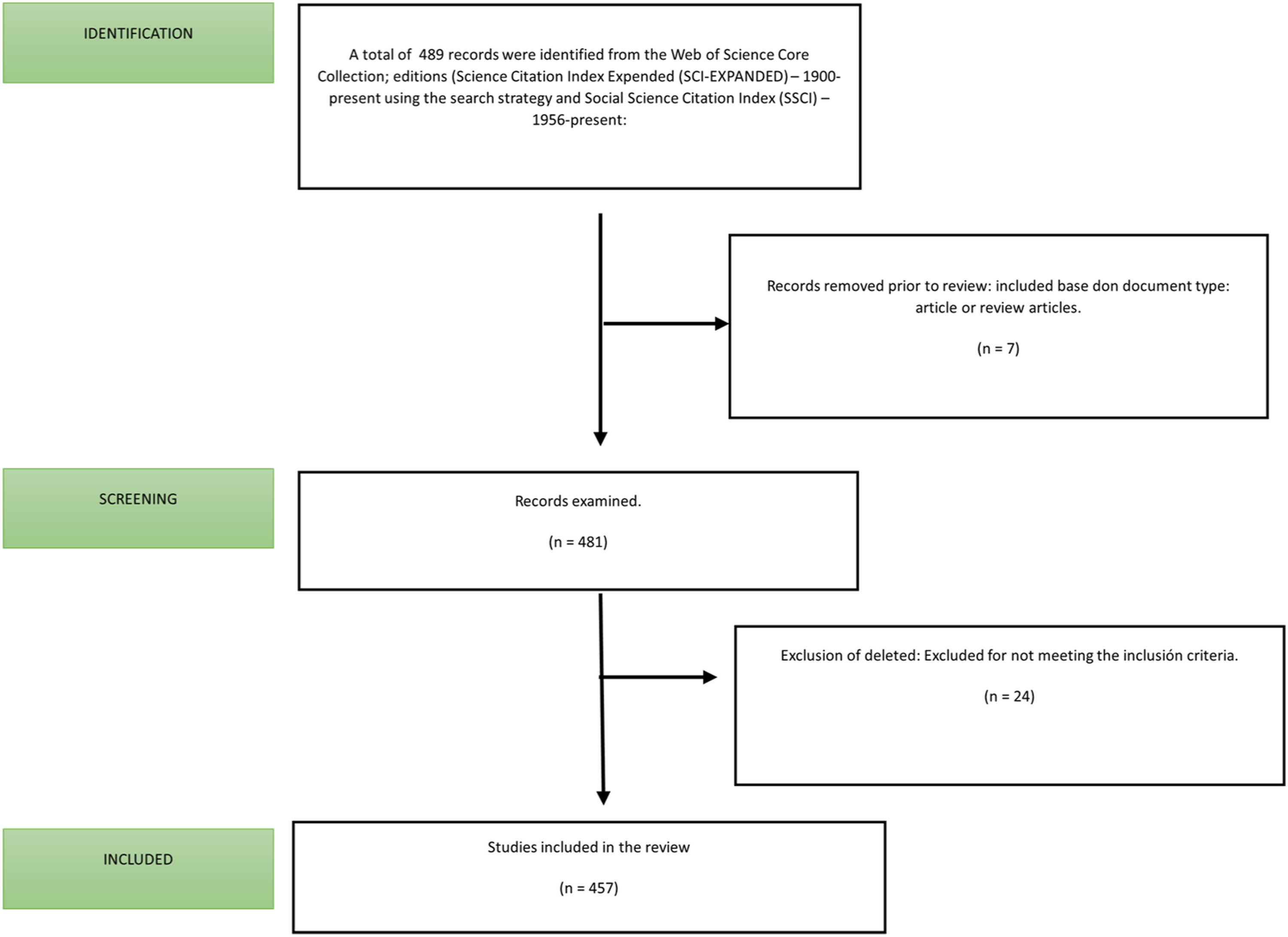
Data Extraction and Variables
All selected records were exported to Microsoft Excel for data management and coding. The following variables were extracted: Number of citations, Journal name, Year of publication, Full names of authors and co-authors, Total number of authors per document, Country of affiliation, Institutional affiliation, Article title, Document type (article or review), Abstract, Corresponding author.
For authorship analysis, all contributing authors were included.
In the country-level analysis, following previous bibliometric procedures (Hernández-González et al., 2022, 2024), the country of origin of each author was considered. If multiple authors from the same country contributed to a single publication, citations were counted only once per country for that study. The total number of publications per country was determined based on the presence of at least one affiliated author from that country.
To calculate the number of citations per author and the h-index, only publications and citations directly related to the research topic were considered. The h-index was used as an indicator of cumulative scientific impact (Hirsch, 2005).
Bibliometric Indicators
This study employed both objective and evaluative bibliometric techniques.
Objective bibliometrics focuses on quantifying scientific production and citation impact (Np: number of publications; Nc: number of citations; Na: average citations per article), allowing assessment of productivity and visibility within a research field (Wang et al., 2021).
Evaluative bibliometrics provides quantitative assessment of contributions by authors, institutions, countries, and journals, primarily through indicators such as the h-index (Hirsch, 2005; Ortega-Rubio et al., 2021). These metrics help identify influential actors and structural patterns in knowledge production (Yu et al., 2020).
The following indicators were calculated: number of publications (Np), number of citations (Nc), average citations per article (Na), and the h-index.
Statistical Analysis
Descriptive statistical analyses were conducted to summarize publication trends and citation patterns.
Correlation analyses were performed using SPSS version 27.0 (IBM Corp., USA). Linear regression analysis was conducted in Microsoft Excel to assess temporal publication trends.
Network and Visualization Analysis
Collaboration networks and keyword co-occurrence analyses were conducted using VOSviewer version 1.6.18, a software widely applied in bibliometric research (Van Eck et al., 2010).
Two types of network analyses were performed.
Co-Authorship Analysis
This analysis examined collaboration patterns among authors, institutions, and countries based on shared publications. Network nodes represent actors (authors, institutions, or countries), while links represent collaborative relationships.
Co-Occurrence Analysis
Keyword co-occurrence analysis was conducted using author-provided keywords. This technique identifies the frequency with which specific terms appear together within the dataset, allowing detection of thematic clusters and conceptual structures.
Terminological harmonization was performed to reduce fragmentation caused by synonymous expressions. Clustering was based on association strength normalization, as implemented in VOSviewer (Van Eck et al., 2010).
Network structure was evaluated using Total Link Strength (TLS). TLS represents the cumulative strength of collaborative links between a given node and all other connected nodes within the network. Higher TLS values indicate stronger collaborative integration.
Minimum occurrence thresholds were applied to enhance interpretability and reduce noise from minimally connected nodes.
Visual representations were generated to optimize interpretation through node size, link thickness, and cluster color differentiation. Additionally, MapChart was used to create customized geographic visualizations of country-level distribution.
Results
A total of 457 documents were analyzed, comprising 388 articles and 69 reviews, with the majority published in the last decade. The predominant language was English (428 documents), followed by Spanish (13) and Portuguese (5). Collectively, the publications received 14,523 citations, averaging 31.78 citations per article. The study involved 1,769 authors from 59 countries, and the articles were published in 186 journals.
Global Overview of Scientific Production
As shown in Figure 2, scientific production has followed an upward trend since 2012. The analyzed documents were published between 1986 and 2025, with nearly 88% of the works appearing from 2012 onward. A natural logarithmic transformation was applied to the annual number of publications, and linear regression performed on the transformed data confirmed significant exponential growth (R2 = 0.725, p < 0.001; Figure 2). Despite minor fluctuations, a clear upward trajectory and accelerated growth pattern were observed. These results underscore the progressive relevance of sports development and maturation research in the international scientific community. Distribution Pattern of Articles (Number of Articles per Year)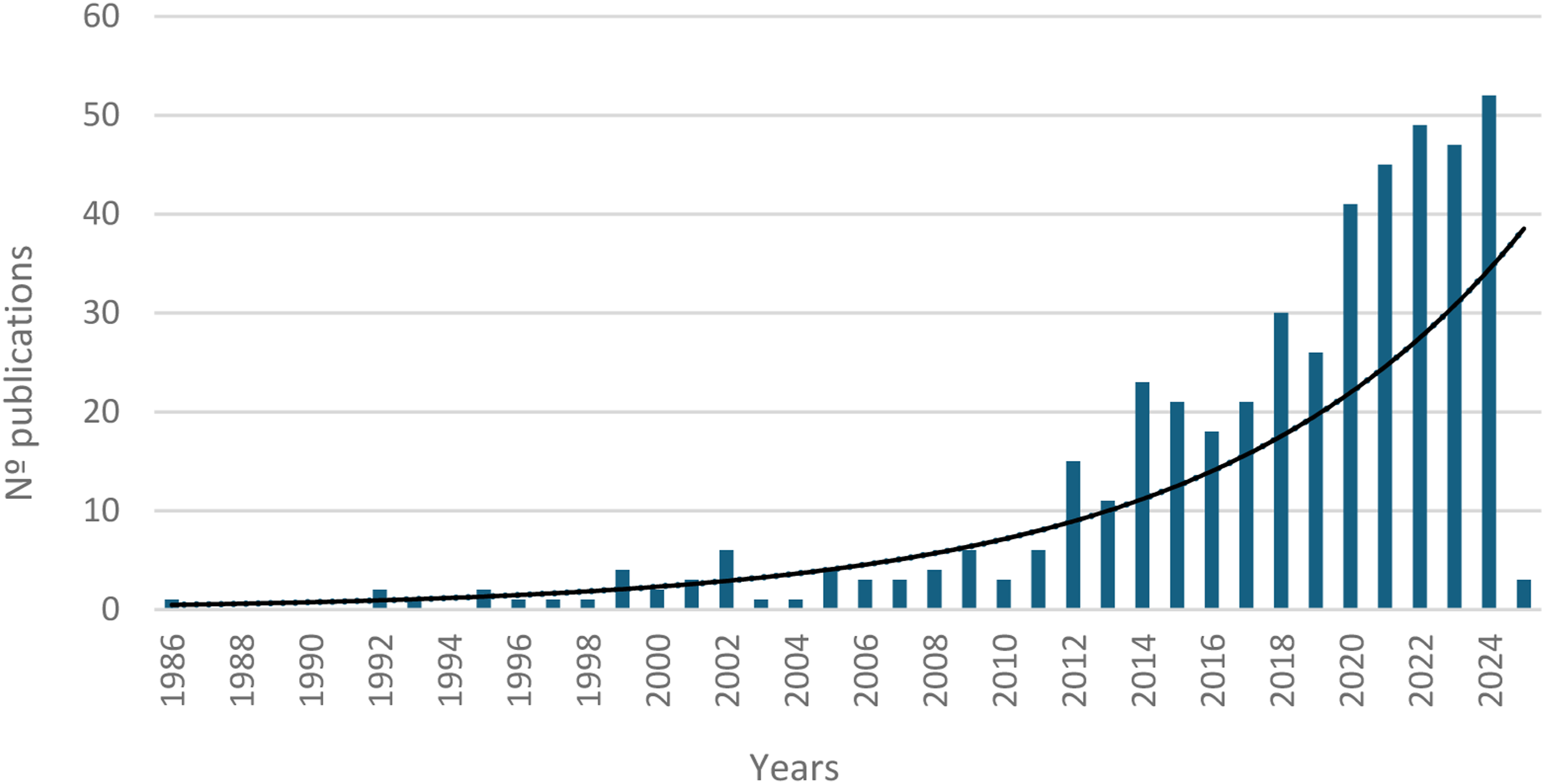
The analysis of publication terms can provide insights into key research topics and trends. This analysis was conducted using the VOSviewer software, considering titles, keywords, and abstracts. The network was constructed from 2,021 elements (keywords). Terms that appeared in at least ten publications were considered (i.e., co-occurrence relationships among every 10 keywords were analyzed), and a total of 81 terms were selected for inclusion in the network after applying the established threshold. The results of this analysis are presented in Figures 3A and 3B, showing four distinct clusters.
The red cluster, or the first node, comprises 29 keywords and is associated with terms such as “maturation,” “growth,” “age,” and “children,” among others. The most prominent term is “maturation,” which became the provisional title of the cluster. It is the most significant keyword, with 80 links to other keywords on the map and a total link strength (TLS) of 964. In decreasing order of links, the following terms are included: “growth” - 77 links (TLS 607), “age” - 77 (TLS 421), “children” - 76 (TLS 440), “sports” - 74 (TLS 215), and “adolescence” - 68 (TLS 274). The research focus based on these keywords centers on the physical and biological development of children and adolescents in relation to sports participation and physical activity.
The green cluster, corresponding to the second node, includes 24 keywords and is associated with terms such as “talent identification,” “biological maturation,” “sport,” “maturity,” and “players.” The most prominent keyword in this cluster is “talent identification,” which provisionally named the cluster. This term showed the greatest connectivity within the network (highest TLS), with links to 76 other keywords on the map and a TLS of 686. Following in decreasing order of links are: “sport” with 73 links (TLS 606), “biological maturation” with 75 (TLS 432), “maturity” with 73 (TLS 463), “players” with 69 (TLS 310), “talent development” with 63 (TLS 331), and “youth soccer” with 63 links (TLS 216). The research focus here revolves around youth soccer talent identification, particularly considering the influence of biological maturation and skeletal age on performance and player selection.
The blue cluster, the third group, includes 22 keywords related to terms such as “performance,” “strength,” “power,” “peak height velocity,” and “fitness.” The most relevant term in this cluster is “performance,” which served as the provisional cluster name. This keyword was linked to 78 other terms on the map, with a TLS of 779. Following are: “strength” with 71 links (TLS 281), “power” with 71 (TLS 251), “fitness” with 70 (TLS 313), and “peak height velocity” with 65 (TLS 220). The research focus centers on identifying athletic talent through the analysis of physical and motor performance, with particular attention to key variables such as strength, power, and speed.
The yellow cluster, the fourth and final group, includes only six keywords related to terms such as “elite,” “soccer,” “validation,” “prediction,” “height,” and “maturity offset.” The keyword “elite” is the most prominent and gave its name to the cluster. It had the highest relevance, with 68 links and a TLS of 285. Following in descending order are: “soccer” with 65 links (TLS 268), “validation” with 54 links (TLS 134), and “prediction” with 44 links (TLS 92). The research focus, labeled “elite,” centers on performance analysis in high-level football, with particular interest in identifying and developing competitively skilled players.
Although four distinct thematic clusters were identified, it is important to note that these do not represent mutually exclusive categories. Rather, they reflect interconnected conceptual dimensions within a shared scientific landscape. For instance, talent identification is inherently linked to biological maturation and physical performance, while access to elite sport can be interpreted as a subsequent phase within this developmental continuum. Accordingly, the clusters should be understood as overlapping domains that collectively structure the current research on maturation and athletic development.
The overlay visualization map allows for the observation of the temporal evolution of research topics. In our study (Figure 3(B)), no explicit connection is shown between terms and years (2016–2021), as the concepts are dispersed without a clear chronological order. However, assuming that terms may be grouped or mentioned more prominently during certain periods (even if not directly linked), one can infer a possible thematic progression based on their spatial arrangement and frequency. (A) Keyword Co-occurrence Network. Note: Node Size Indicates Occurrence Frequency. The Curves Between the Nodes Represent Keyword Co-occurrence in the Same Publication. Shorter Node Distances Indicate Higher Keyword Co-occurrences. (B) Relationship Between Keywords Over Time. Note: Keyword Colors Indicate Their Average Publication Period, Calculated by Taking the Average of the Publication Years of all Publications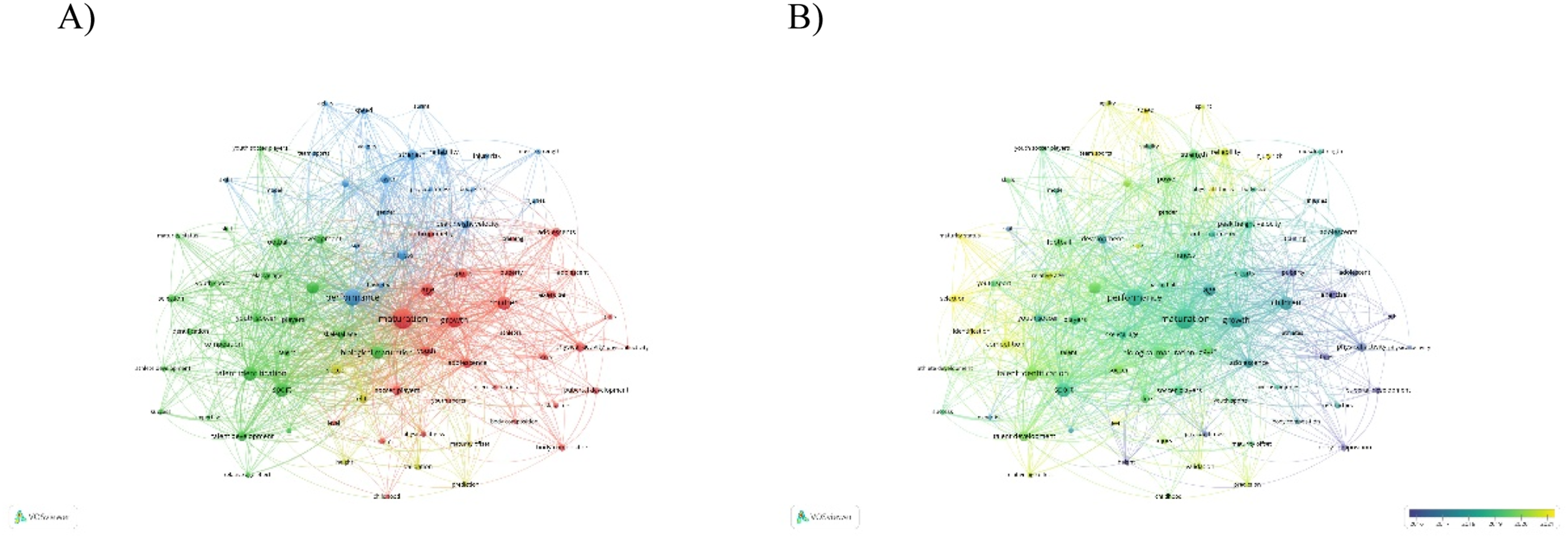
Between 2016 and 2017, terms associated with the foundations of youth sport and development — such as “team sports,” “football,” “boygames,” “physical fitness,” “strength reliability,” “village,” and “society”—tend to cluster around earlier average publication years in the overlay visualization. During 2018–2019, the emphasis shifts towards biological maturation and talent identification, as seen with terms like “biological maturation,” “peak height velocity,” “relative age effect,” “talent identification,” “athlete development,” “competition,” and “performance,” reflecting increased scientific attention to developmental inequalities (e.g., relative age effect). Finally, in 2020–2021, interest moves toward validation and integrative approaches, as highlighted by terms like “validation,” “production,” “making effect,” “habitat,” “supportive,” “care,” and “body composition,” indicating a possible trend towards critical appraisal or refinement of methods, with greater emphasis on the environment and sustainability of sport development.
Authors and Bibliometric Analysis of the Co-authorship and Citation
The 10 Most Relevant Authors in Research on Sports Development and Maturation Processes
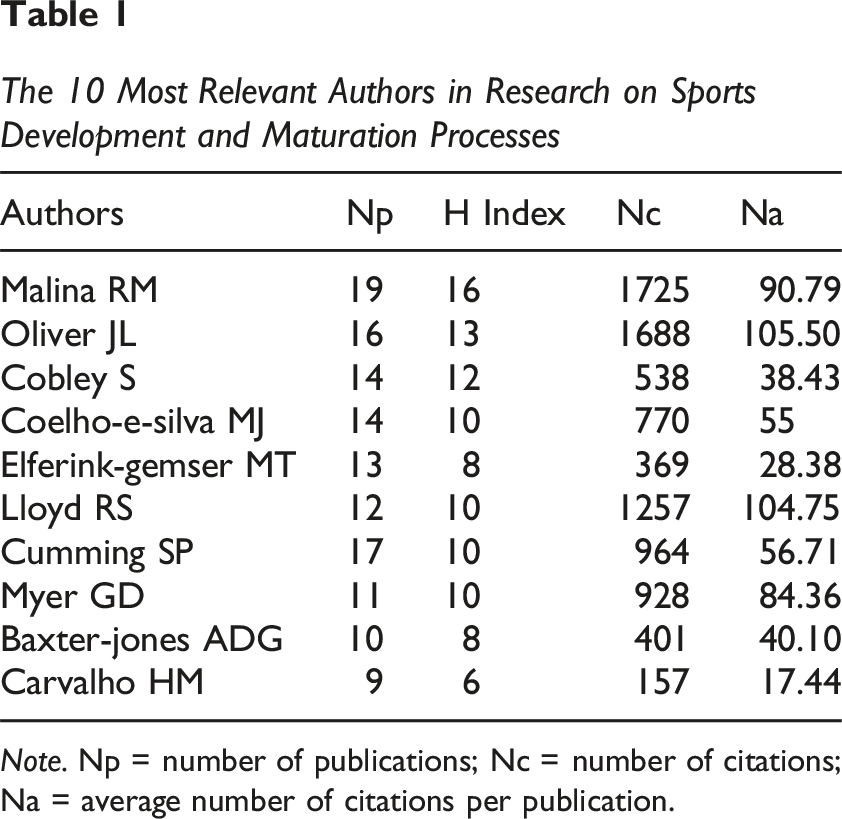
Note. Np = number of publications; Nc = number of citations; Na = average number of citations per publication.
Robert M. Malina, affiliated with the University of Texas at Austin (USA), received the highest number of citations (Nc = 1,725), with 19 published articles and an h-index of 16. His average number of citations per article was 90.79. Sean P. Cumming, from the University of Bath (England), authored 17 documents (h-index = 10), accumulating 964 citations, with an average of 56.71 citations per publication. Jon L. Oliver, affiliated with Cardiff Metropolitan University (Wales) and Auckland University of Technology (New Zealand), published 16 documents (h-index = 13), receiving 1,688 citations and achieving the highest average number of citations per article in the sample (Na = 105.5).
The correlation analysis revealed that the number of authors per article does not predict the number of citations (r ≈ 0; R2 ≈ 0). This finding suggests that, within this field, scientific impact is not directly associated with team size. Consequently, the evaluation of research influence should not rely solely on quantitative authorship indicators.
The co-authorship analysis, presented in Figure 4, was conducted using VOSviewer to identify collaborative structures among the most productive authors in youth sport development and maturation research. Only authors with at least five publications were included. Of the 1,769 authors identified, 33 met this threshold (Figure 4). (A) Authors’ Collaborative Network. Node Size Represents Number of Publications; Links Indicate Collaboration Strength; Colors Represent Clusters. (B) Authors’ Collaborative Overlay. Colors Indicate the Average Publication Year of Each Author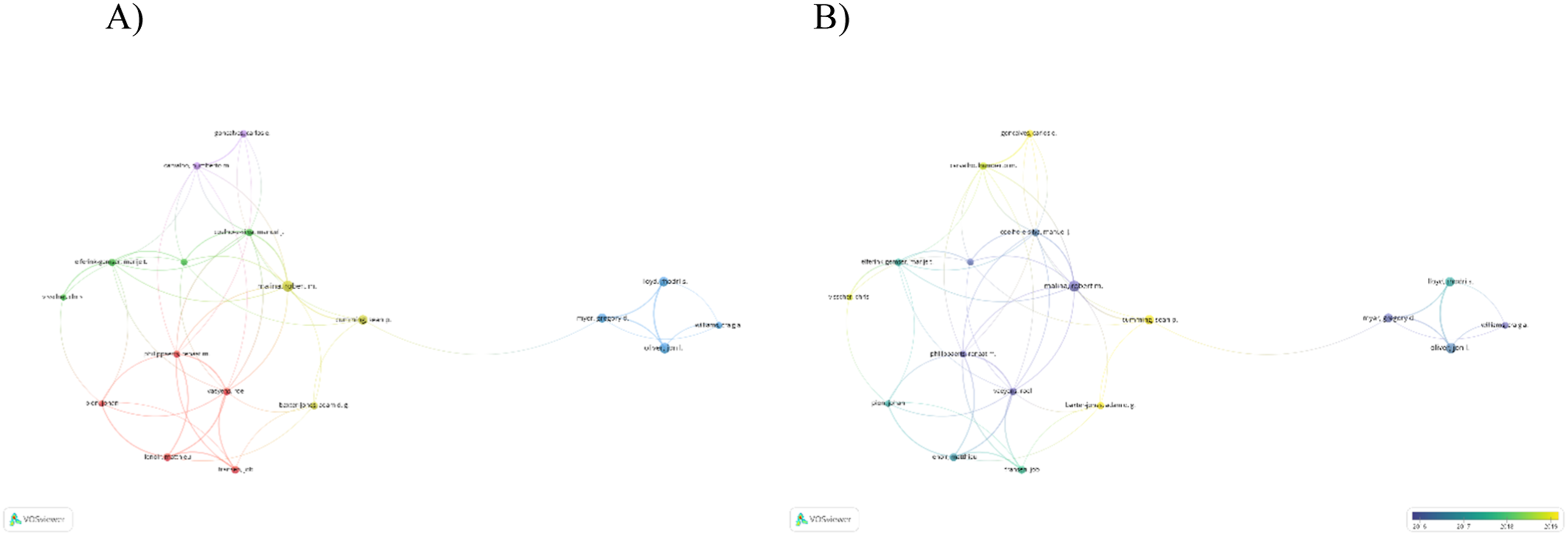
The resulting network visualization shows differentiated clusters representing collaborative subcommunities, with observable interconnections among them. Robert M. Malina occupies a prominent position within the yellow cluster (Links = 9; Total Link Strength = 21; 19 documents), functioning as a central node that connects multiple groups. His position reflects his influence in research on growth, biological maturation, and their relationship with physical performance and sport talent. His collaborative ties include researchers focused on physical performance, such as Manuel J. Coelho-e-Silva and Humberto M. Carvalho, as well as scholars specialized in developmental models in sport, including Sean P. Cumming and Adam D.G. Baxter-Jones.
A cohesive red cluster is formed by Renaat M. Philippaerts, Roel Vaeyens, and Job Fransen, whose collaborative production centers on talent identification and long-term athlete development. In contrast, a relatively independent blue cluster includes authors such as Rhodri S. Lloyd, Jon L. Oliver, and Gregory D. Myer, whose work is primarily oriented toward neuromuscular training and age-specific physical preparation.
Overall, the configuration of the co-authorship network indicates a moderate level of scientific integration. While certain clusters demonstrate strong internal cohesion and cross-group collaboration, other segments appear less interconnected, potentially reflecting thematic specialization, methodological differences, or contextual research frameworks within the field.
Institutions, Countries, and Collaborations
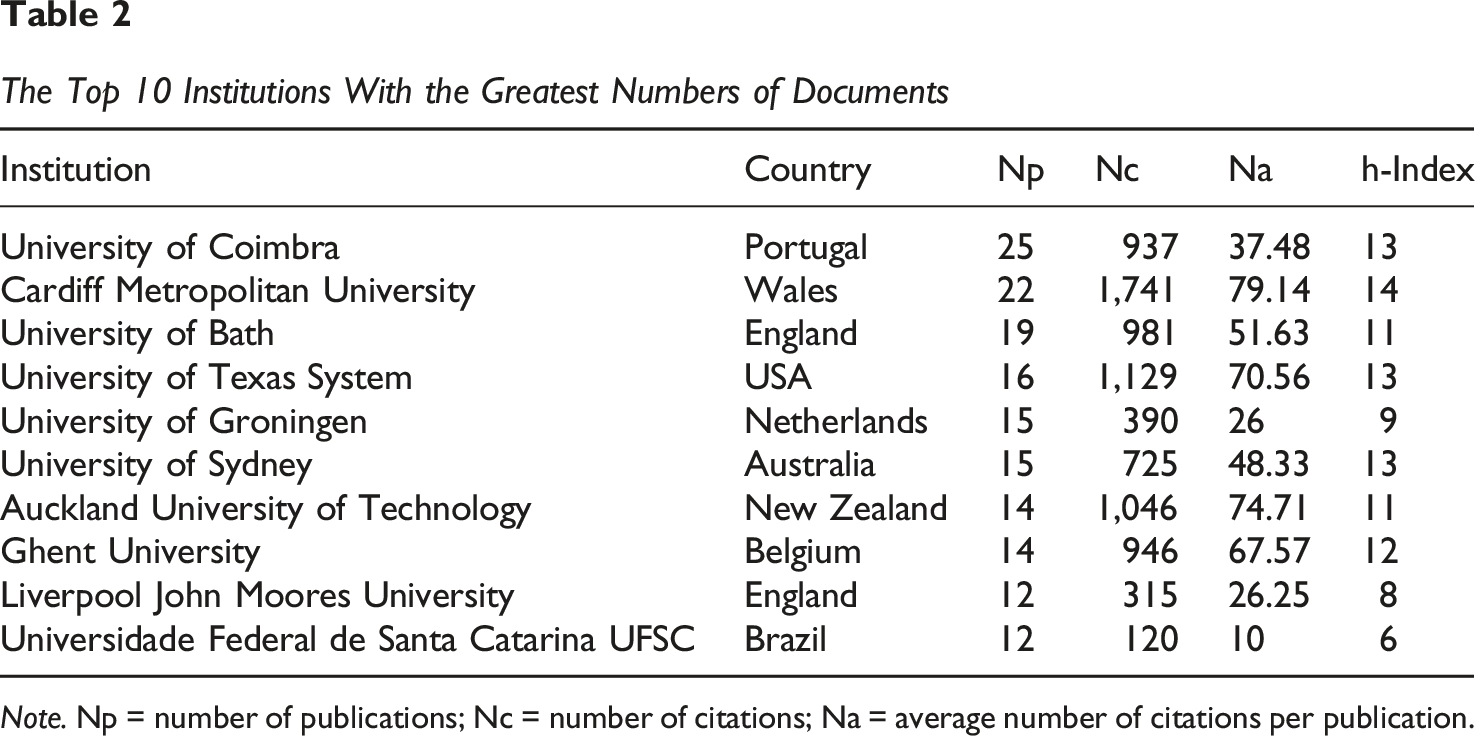
The Top 10 Institutions With the Greatest Numbers of Documents
Note. Np = number of publications; Nc = number of citations; Na = average number of citations per publication.
Regarding institutional productivity, 17.5% (n = 146) of institutions were involved in only one publication; 23.6% (n = 196) participated in two publications; 42.7% (n = 127) contributed to between three and five publications; and 14.5% (n = 43) were involved in six to ten publications. Only five institutions (1.7%) contributed to eleven or more publications.
The University of Coimbra (Portugal) (Np = 25), Cardiff Metropolitan University (Np = 22), and the University of Bath (Np = 19) were the three most productive institutions (Table 2). Six of the ten leading institutions are located in Europe. Cardiff Metropolitan University (Na = 79.14) and Auckland University of Technology (Na = 74.71) achieved the highest average number of citations per document among the top ten institutions.
For the co-authorship analysis, only institutions with at least five publications were included. Of the 830 institutions identified, 48 met this threshold (Figures 5(A) and (B)). The institutional collaboration network reveals geographically and thematically differentiated clusters, highlighting the central roles of the University of Coimbra, Cardiff Metropolitan University, and the University of Sydney. (A) Institutional Collaborative Network. Node Size Represents Number of Publications; Links Indicate Collaboration Strength; Colors Represent Clusters. (B) Institutional Collaborative Overlay. Colors Indicate the Average Publication Year of Each Institution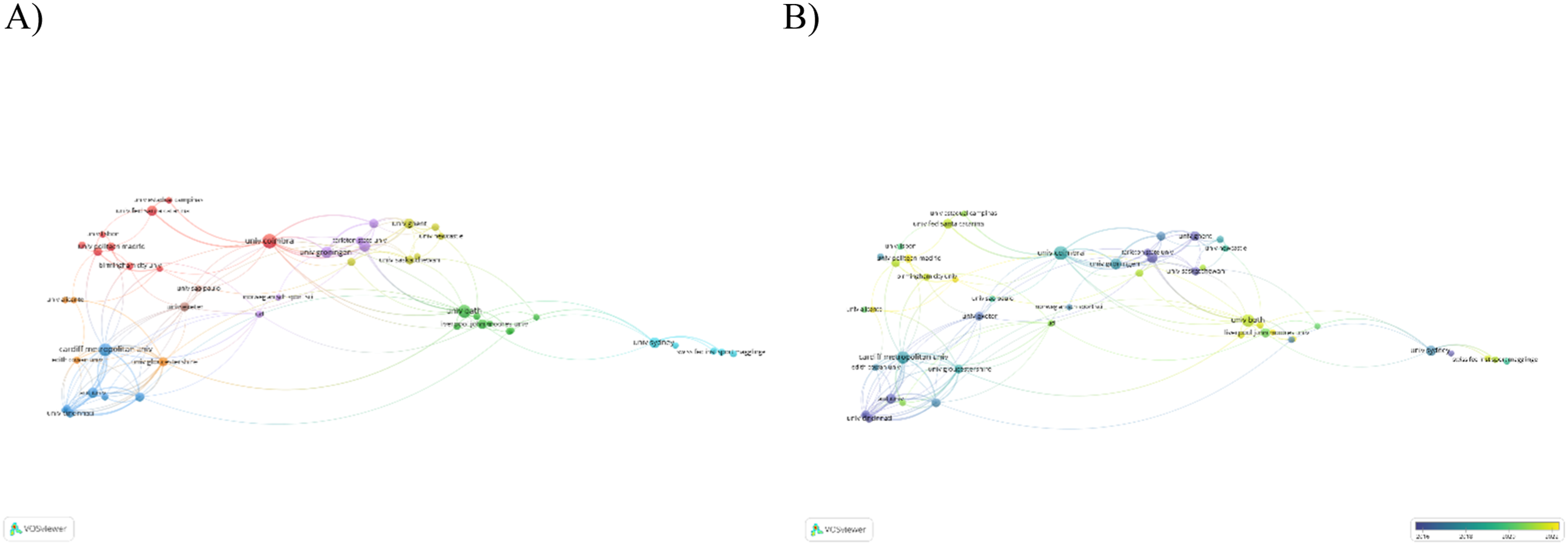
The University of Coimbra constitutes the core of a Lusophone collaboration cluster, maintaining active partnerships with Brazilian institutions such as the Federal University of Santa Catarina and the State University of Campinas, as well as Portuguese institutions including the University of Porto and the Polytechnic Institute of Viseu. Collaborative links also extend to Spanish institutions such as Universidad Loyola Andalucía.
Cardiff Metropolitan University functions as a transnational hub, connecting institutions in the United Kingdom, including the University of Bath and Liverpool John Moores University, with European partners such as the German Sport University Cologne and the University of Groningen, as well as global collaborators including Auckland University of Technology.
The University of Sydney consolidates an Asia-Pacific cluster, collaborating with Australian institutions such as the Queensland Academy of Sport and Asian partners including Kyungpook National University.
Transatlantic collaborations are also evident. For example, Harvard University and Emory University (USA) collaborate with European institutions such as Karolinska Institutet and the University of Copenhagen, as well as Latin American institutions including Pontificia Universidad Católica de Valparaíso. Institutions such as the German Sport University Cologne and the Universidad Politécnica de Madrid act as bridging nodes linking European networks with broader international partners.
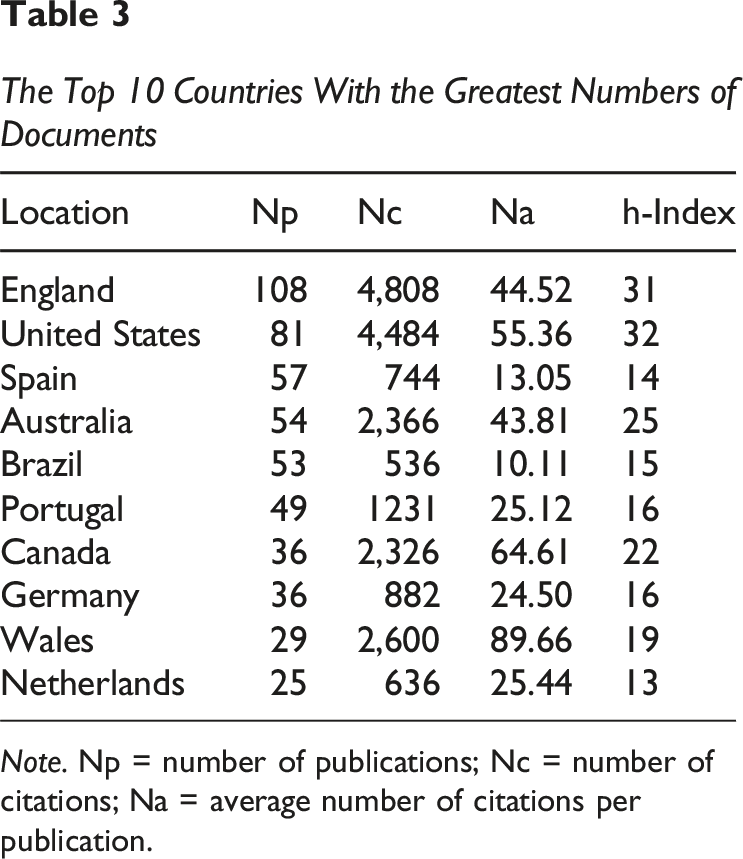
The Top 10 Countries With the Greatest Numbers of Documents
Note. Np = number of publications; Nc = number of citations; Na = average number of citations per publication.
England (Np = 108) and the United States (Np = 81) lead in terms of publication output, establishing themselves as the principal international references in this field. Both countries also demonstrate strong scientific impact, with high total citation counts (Nc = 4,808 and Nc = 4,484, respectively) and elevated h-index values (31 and 32), indicating sustained and influential research performance.
Australia (Np = 54; Nc = 2,366; h-index = 25) and Canada (Np = 36; Nc = 2,326; h-index = 22) also display notable impact indicators. Canada, in particular, achieved a high average number of citations per document (Na = 64.61). Wales (Np = 29) recorded the highest average citation rate (Na = 89.66), suggesting substantial impact relative to its publication volume.
In contrast, Spain (Np = 57; Na = 13.05; h-index = 14) and Brazil (Np = 53; Na = 10.11; h-index = 15) show considerable productivity but comparatively lower citation averages, which may indicate more limited international visibility.
Scientific production and citation indicators are predominantly concentrated in countries with well-established research systems, particularly in Anglophone contexts, whereas other regions, including parts of the Ibero-American context, demonstrate increasing participation but comparatively lower citation impact.
Figure 6 provides a geographical visualization of global scientific output in sport development and maturation. The map confirms the concentration of research production in Western countries. England (108 publications), the United States (81), and Australia (54) are clearly distinguished, reflecting their leading roles. Canada (36) also demonstrates a substantial contribution. Distribution Map Showing the Number of Published Articles per Country (MapChart)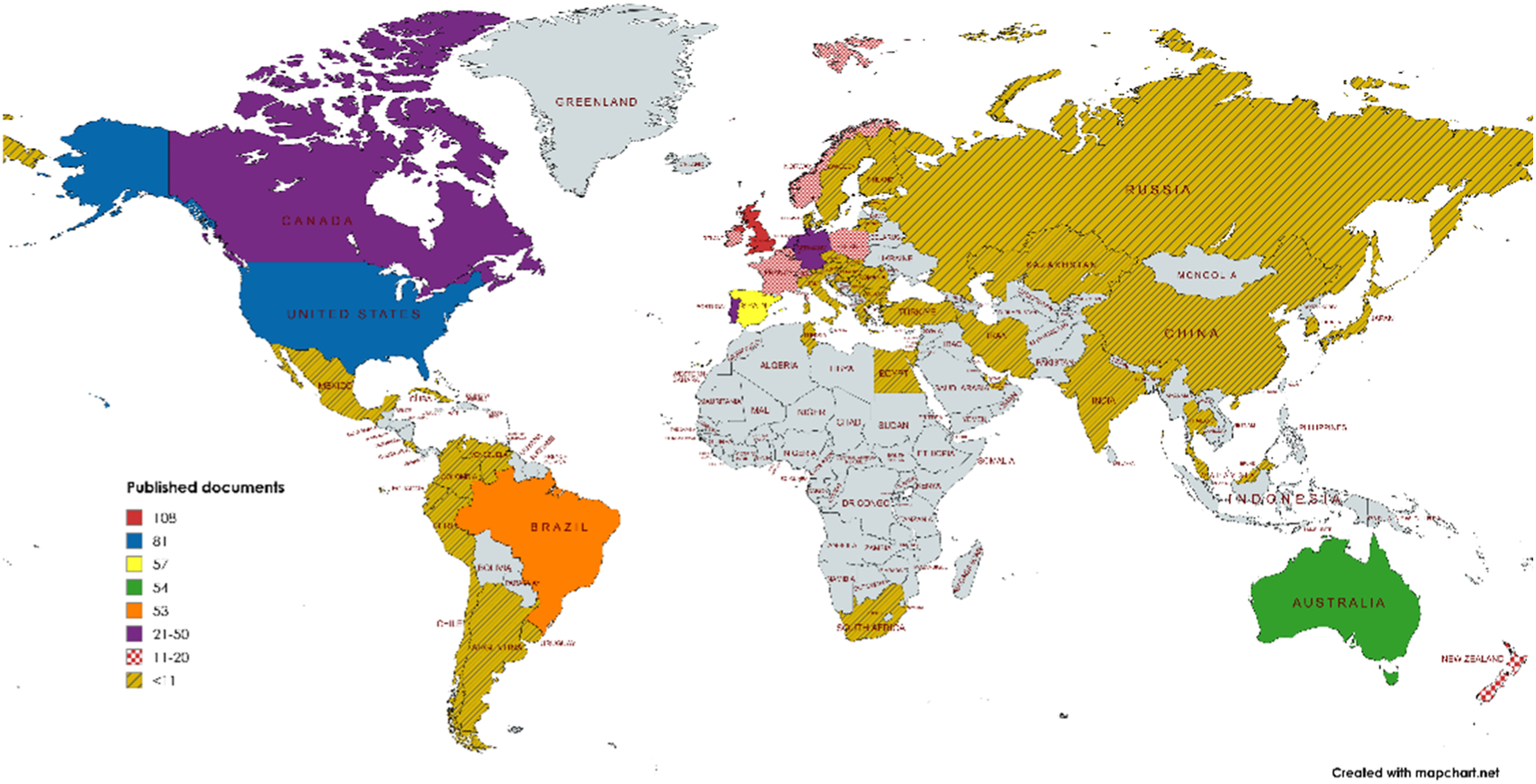
Spain (57) and Brazil (53) represent significant output within the Ibero-American context, although with more moderate average impact indicators. Other Latin American countries, including Argentina, Chile, Colombia, and Mexico, are present with fewer than 20 publications, indicating emerging participation. In contrast, much of Africa, Central Asia, and the Middle East shows limited or no contribution (fewer than 11 documents).
For the country-level collaboration analysis, only countries with at least five publications were included. Of the 59 countries identified in this phase of analysis, 29 met the inclusion threshold (Figures 7(A) and 7(B)). (A) Countries Collaborative Network. Node Size Represents Number of Publications; Links Indicate Collaboration Strength; Colors Represent Clusters. (B) Countries Collaborative Overlay. Colors Indicate the Average Publication Year of Each Country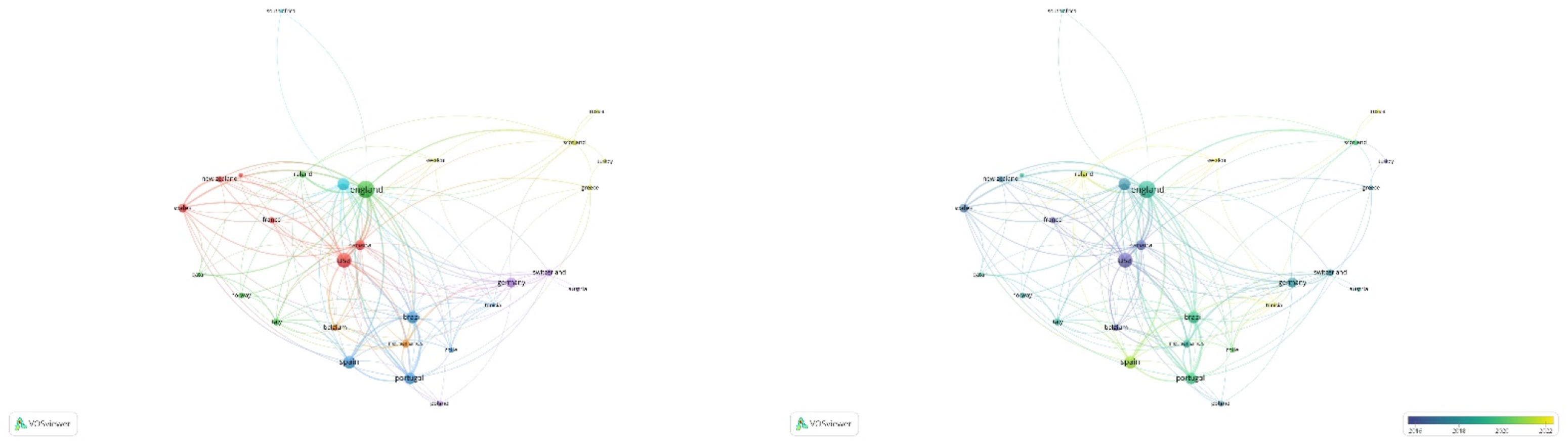
The network visualization (Figure 7(A)) reveals a densely interconnected structure centered around England and the United States, which function as principal nodes in international collaboration. Spain, Brazil, Portugal, and Australia also display substantial connectivity, although with comparatively lower centrality.
The overlay visualization (Figure 7(B)) illustrates the temporal dimension of collaboration patterns. The color gradient indicates that countries such as Brazil, Portugal, and the Netherlands intensified their collaborative activity in more recent years, particularly during the 2020–2022 period. This pattern indicates a progressive expansion and diversification of international collaboration networks in the field.
Overall, the collaborative structure appears to be led by countries with consolidated scientific systems, while progressively incorporating actors from less represented regions, reflecting an expanding global research network in sport development and maturation.
Journals Analysis
The Top 10 Research Journals
aImpact from 2021. Now excluded from principal collection of WoS.
Note. Np = number of publications; Nc = number of citations; Na = average number of citations.
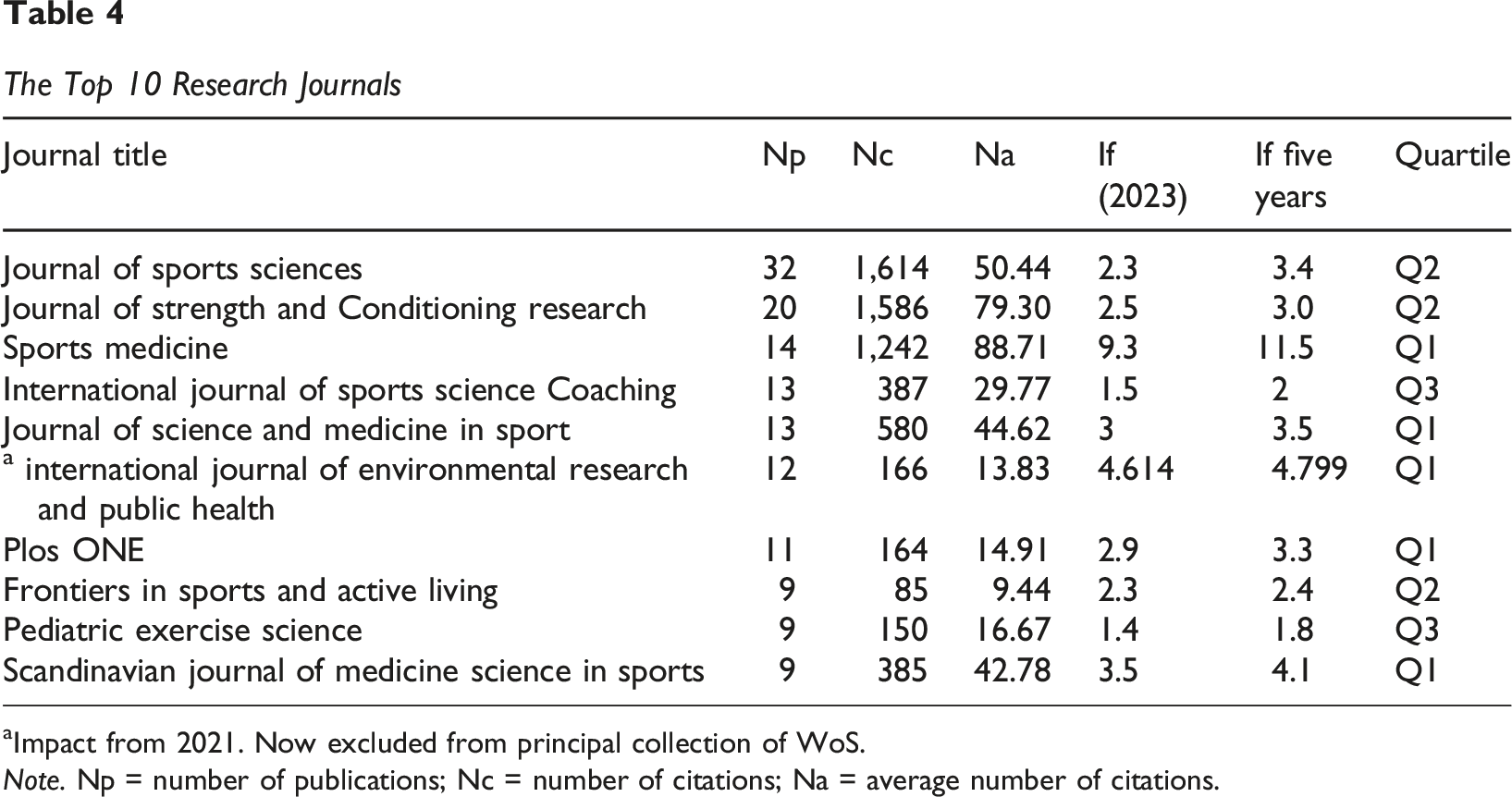
The Journal of Sports Sciences is the most productive journal, with 32 published articles (Np = 32), followed by the Journal of Strength and Conditioning Research (Np = 20). Although Sports Medicine published fewer articles (Np = 14), it recorded the highest total number of citations among the top three high-impact journals (Nc = 1,242) and the highest average citations per article (Na = 88.71), underscoring its influence within the field.
In terms of average citations per document, Sports Medicine leads (Na = 88.71), followed by the Journal of Strength and Conditioning Research (Na = 79.3). Regarding impact factor (2023), Sports Medicine (IF = 9.3) and the Journal of Science and Medicine in Sport (IF = 3.0) are both classified in Quartile 1 (Q1), reflecting their strong positioning within the journal ranking system.
By contrast, Pediatric Exercise Science (Na = 16.67) and Frontiers in Sports and Active Living (Na = 9.44) display lower average citation values, indicating comparatively reduced citation impact within the analyzed sample. Nevertheless, all journals included in Table 4 contribute substantively to the dissemination of research in sport development and maturation, with high-impact outlets such as Sports Medicine and the Journal of Sports Sciences playing a particularly prominent role.
Among the 186 journals identified in the dataset, 61 were classified as Q1 (32.25%), 56 as Q2 (30.10%), 32 as Q3 (17.20%), and 26 as Q4 (13.97%). Additionally, 12 journals (6.45%) were no longer indexed in the Web of Science Core Collection in 2023, either because they ceased publication or were removed from indexing. Overall, 62.35% of the journals (Q1 and Q2 combined) account for nearly 63% of the studies, indicating a strong concentration of publications in higher-ranked outlets.
Within the overall dataset (not limited to the top ten journals), the impact factor across the 186 journals ranged from 11.8 (British Journal of Sports Medicine) to 0.1 (Revista Brasileira de Futsal e Futebol). The distribution of impact factors was as follows: 30 journals had an IF between 0.1 and 0.9; 47 between 1.0 and 1.9; 50 between 2.0 and 2.9; and 46 had an IF above 3.0. The ten most productive journals accounted for 31.07% of the total publications and 24% of the total citations, indicating a moderate concentration of publications and citations within a limited group of journals.
Discussion
In recent years, bibliometric approaches have gained prominence as tools for mapping scientific development and identifying structural patterns within expanding research domains (Torres-Salinas, 2024; Van Eck et al., 2010). To our knowledge, this study represents the first comprehensive global bibliometric analysis specifically focused on biological maturation within youth sport, providing a structural perspective that complements prior narrative and systematic reviews (Malina et al., 2015).
From a bibliometric and Library and Information Science (LIS) perspective, the present study extends beyond its substantive focus by providing a transferable analytical framework for examining the structure and evolution of scientific fields. The combined use of performance indicators (e.g., Np, Nc, Na, and h-index) together with network-based metrics such as Total Link Strength (TLS) and science mapping techniques enables a multilevel analysis of knowledge production, integrating productivity, impact, and collaboration patterns. In this sense, the methodological approach adopted here may serve as a reference model for future bibliometric studies in other interdisciplinary domains, particularly those characterized by rapid growth and conceptual consolidation. Moreover, the identification of concentration dynamics, hub-oriented collaboration structures, and cross-national asymmetries contributes to ongoing discussions within LIS regarding cumulative advantage, inequality in scientific production, and the global organization of knowledge systems.
The findings indicate a sustained and accelerated increase in scientific production, particularly from 2012 onwards. This pattern is consistent with broader trends observed in sport sciences, where increasing methodological sophistication and interdisciplinary integration have contributed to publication growth (Hernández-González et al., 2022). Rather than representing the emergence of a new field, this expansion reflects the progressive institutionalization of a research area that has long been conceptually grounded in growth and maturation sciences (Malina et al., 2004, 2015).
Several factors may have contributed to this quantitative acceleration. The integration of biological maturation into talent identification frameworks and long-term athlete development perspectives has broadened the conceptual scope of the field (Côté & Hancock, 2016). At the same time, growing awareness of structural biases in youth sport systems, particularly those associated with maturation timing and the relative age effect, has reinforced the relevance of maturation research in both applied and policy contexts (Cobley et al., 2009).
Importantly, exponential growth does not necessarily imply thematic fragmentation. Previous research on scientific collaboration and knowledge production suggests that expanding fields often display increasing structural complexity alongside cumulative advantage dynamics (Barabási & Albert, 1999; Wuchty et al., 2007). In this context, the diversification of journals and the international distribution of contributing authors observed in the present study indicate that maturation research is increasingly embedded within a broader interdisciplinary sport science ecosystem. This expansion provides the structural basis upon which thematic specialization and collaborative concentration patterns, discussed in subsequent sections, become visible.
The keyword co-occurrence analysis revealed four interconnected thematic clusters that collectively structure the intellectual landscape of research on biological maturation in youth sport. Rather than representing isolated lines of inquiry, these clusters reflect complementary dimensions of a shared developmental framework.
The centrality of the “maturation” cluster confirms the enduring relevance of biological growth processes as a foundational construct within youth sport research. The strong association between maturation, growth, age, and adolescence aligns with longstanding evidence demonstrating the influence of biological development on anthropometric variation, physical performance, and training responsiveness during youth (Malina et al., 2004, 2015). This thematic prominence suggests that biological maturation continues to function as the conceptual anchor of the field.
The “talent identification” cluster highlights the applied dimension of maturation research. The close interconnection between talent identification, biological maturation, and sport supports prior findings indicating that selection processes in youth sport are often influenced by maturation timing and relative age effects (Cobley et al., 2009). The integration of maturation constructs within developmental frameworks such as the Developmental Model of Sport Participation and long-term athlete development perspectives further explains the expansion of this thematic area (Côté & Hancock, 2016). These models have contributed to reframing maturation not merely as a biological variable but as a structural factor shaping opportunity and progression within competitive systems.
The “performance” cluster underscores the operationalization of maturation research through physical fitness and neuromuscular indicators. The prominence of terms related to strength, power, and peak height velocity reflects the growing interest in quantifying developmental trajectories and identifying performance-related predictors in youth athletes. This trend aligns with previous research emphasizing the need for validated assessment tools capable of distinguishing between chronological and biological age influences on performance (Malina et al., 2015; Vaeyens et al., 2008).
The “elite” cluster, though smaller in size, indicates the translation of maturation research into high-performance contexts, particularly in football. This thematic area reflects the increasing demand for predictive and validation-based approaches within elite development systems, consistent with studies examining performance profiling and talent progression in competitive sport environments (Meylan et al., 2010; Vaeyens et al., 2008).
Importantly, the overlay visualization suggests temporal differentiation across these themes; however, this pattern should be interpreted cautiously. Rather than indicating a linear progression from foundational to applied research, the temporal distribution may reflect shifts in emphasis within an already established conceptual framework. The apparent increase in validation-oriented and integrative terms in more recent years likely signals methodological refinement and greater interdisciplinary engagement, rather than thematic replacement.
Overall, the thematic configuration observed in this study portrays a field characterized by conceptual cohesion around biological maturation, combined with expanding applied, performance-based, and elite-oriented dimensions. This structure reflects both continuity with foundational growth science and adaptation to contemporary concerns regarding fairness, performance optimization, and long-term athlete development.
Taken together, these thematic patterns not only reflect the cognitive structure of the field but also provide the basis for examining how this knowledge is socially organized through collaboration networks and authorship dynamics.
Authorship analysis revealed the participation of 1,769 authors, with a mean of 5.1 authors per article, indicating a level of collaboration comparable to that reported in previous bibliometric studies in sport sciences and related fields (Hernández-González et al., 2022; Yu et al., 2020). Although earlier research suggested that multi-authorship is associated with higher scientific impact (Larivière et al., 2015; Wuchty et al., 2007), the results of the present study do not show a significant relationship between the number of authors and citation counts. This finding indicates that, within this research area, scientific influence is not directly determined by team size, and may instead depend on factors such as methodological rigor, thematic relevance, or the visibility of the publication venues (Abramo et al., 2019).
From a structural perspective, the co-authorship network reveals the consolidation of a limited number of highly connected authors who act as central nodes within the field, while a larger proportion of researchers occupy more peripheral positions. This configuration is consistent with the cumulative advantage processes described in studies of scientific collaboration networks, in which a small number of actors concentrate a substantial proportion of collaborative ties and visibility (Wuchty et al., 2007). In this context, leading authors such as Malina, Coelho-e-Silva, and Cumming not only show high productivity but also occupy strategic positions that facilitate connections between different research lines, particularly those related to growth and maturation, talent identification, and youth athletic development.
At the same time, the presence of differentiated clusters oriented toward specific thematic and methodological approaches suggests a moderate level of integration within the field. While some groups are strongly interconnected, others remain more weakly linked, which may reflect disciplinary traditions, methodological specialization, or geographically defined collaboration patterns, as previously observed in comparable analyses of sport science research networks (Cugmas et al., 2016). These findings point to the existence of opportunities to strengthen interdisciplinary collaboration, especially between research lines focused on biological processes and those addressing pedagogical, psychosocial, and contextual dimensions of youth sport development.
Institutional analysis revealed a heterogeneous collaboration pattern, characteristic of contemporary scientific networks. The participation of 830 institutions in 457 publications indicates a high diversity of contributors, although with an uneven distribution of productivity. The mean of 3.64 institutions per article is consistent with previous studies reporting a growing tendency toward multidisciplinarity and interinstitutional cooperation to address complex research problems (Wuchty et al., 2007). However, the concentration of output in a small number of institutions, such as Universidade de Coimbra and Cardiff Metropolitan University, reflects the so-called Matthew Effect, whereby institutions with greater prestige and resources attract further collaboration and funding (Merton, 1968).
This concentration is reinforced by the distribution of institutional participation. Only 1.7% of institutions contributed to eleven or more publications, whereas 17.5% were involved in a single document. Such a configuration is consistent with a scale-free network model, in which a limited number of central nodes sustain most of the collaborative links (Barabási & Albert, 1999). While this structure enhances efficiency and visibility for leading institutions, it may also create barriers for peripheral actors attempting to integrate into global research networks.
Beyond productivity levels, the collaboration maps reveal differentiated structural roles within the network. Universidade de Coimbra occupies a central position in the Lusophone cluster, maintaining strong links with Brazilian and Portuguese institutions. This pattern is coherent with its historical role in academic cooperation within Portuguese-speaking countries and has been associated with long-term cultural and geopolitical dynamics in scientific collaboration (Albagli et al., 2014). Cardiff Metropolitan University and the University of Bath, in turn, show strong intra-European connections, reflecting the impact of transnational funding schemes such as Horizon Europe in consolidating collaborative consortia, particularly in applied sport sciences (European Commission, 2021). Institutions such as the German Sport University Cologne function as bridging nodes between geographically distinct clusters, mediating knowledge flows across the network, a role previously identified in sport science collaboration studies (De Bosscher et al., 2008).
The citation impact achieved by institutions such as Cardiff Metropolitan University and Auckland University of Technology may be related to their specialization in high-visibility research areas, including sport science and public health, where international collaboration is positively associated with scientific visibility (Larivière et al., 2015). At the same time, the heterogeneity of institutional names detected in the dataset highlights a recurring methodological limitation in bibliometric studies, as variations in affiliation can distort network representation. The adoption of standardized identifiers such as the Research Organization Registry has been recommended to improve data normalization in future analyses (Haak et al., 2012; Mongeon & Paul-Hus, 2016).
At the country level, scientific production is clearly concentrated in Anglophone contexts, particularly the United States and the United Kingdom. This dominance has been consistently reported in previous bibliometric studies in sport-related disciplines and reflects the influence of consolidated research systems on global scientific output (Hammerschmidt et al., 2024). Although countries such as Australia and Canada produce fewer publications, their high average citation rates suggest that targeted research strategies and strong international collaboration can enhance scientific impact. In contrast, Spain and Brazil show substantial productivity but lower citation averages and h-index values, which may be associated with differences in international visibility, access to high-impact publication venues, and positioning within global collaboration networks.
These asymmetries are also evident in the patterns of collaboration between institutions from high- and middle-income countries. Partnerships such as those between the United States and Brazil illustrate forms of cooperation in which data collection is often geographically distributed, while leadership, resources, and first authorship remain concentrated in institutions from highly developed research systems (Adams, 2013; Hayton & Blundell, 2021; Hedt-Gauthier et al., 2019). Such dynamics have been widely discussed in the literature as structural inequalities in global scientific production.
The geographical visualization reinforces these results, showing a marked concentration of scientific output in countries with established research infrastructures and a limited representation of large regions of the Global South. This imbalance raises questions regarding epistemic equity and the generalizability of current knowledge on youth sport development, and points to the need to strengthen research capacity and international cooperation in underrepresented contexts (Nielsen & Andersen, 2021).
The collaboration networks obtained through VOSviewer are consistent with previous studies that have used bibliometric mapping to analyze scientific structures. These approaches enable the identification of central actors, peripheral regions, and emerging participants in global research systems (Torres-Salinas, 2024; Van Eck et al., 2010). In this sense, although the field continues to be led by countries with consolidated scientific traditions, the increasing participation of new actors suggests a gradual expansion and diversification of the international research network.
The analysis of journals reveals a marked concentration of scientific output in a relatively small number of specialized outlets. This pattern suggests a process of thematic consolidation within specific editorial spaces that function as core references for research on sport development and maturation. Similar dynamics have been reported in previous bibliometric studies in sport sciences, where a limited number of journals account for a substantial proportion of highly cited publications (Bennett et al., 2024; Sheng et al., 2024).
The strong representation of journals located in the first and second quartiles indicates that a large part of the scientific production in this field is disseminated through high-visibility and high-prestige publication channels. This tendency reflects a strategic orientation of researchers toward journals with greater impact and international reach, with the aim of maximizing the dissemination and recognition of their work (Bennett et al., 2024; Sheng et al., 2024).
At the same time, the coexistence of generalist and specialized journals points to the multidisciplinary nature of the field. While a significant proportion of studies are published in journals focused on sport performance and training, others appear in outlets related to public health, medicine, and exercise science. This distribution reflects the complexity of the research object, which integrates biological, pedagogical, and social dimensions, and indicates an openness to diverse methodological and conceptual approaches (Coimbra et al., 2019).
The exclusion of several journals from the Web of Science Core Collection during the study period introduces an additional element for consideration. Beyond changes in editorial policies and evaluation criteria, this situation highlights the limitations of relying exclusively on quantitative impact indicators to assess the structure of scientific communication. Qualitative aspects related to editorial sustainability, scope, and indexing policies also influence the visibility and stability of publication channels.
Overall, these findings describe a field that is both expanding and increasingly consolidated in high-impact journals, but still dependent on a relatively small core of editorial platforms for the dissemination of its main contributions, a pattern consistent with Bradford’s law of scientific information concentration (Bradford, 1934).
Conclusions
This study provides the first comprehensive global bibliometric and network-based analysis of scientific production on biological maturation in youth sport. The results demonstrate a clear exponential trend in publications, particularly from 2012 onwards, confirming the progressive consolidation of this research domain within the sport science landscape.
The identification of four major thematic clusters, maturation, talent identification, physical performance, and elite sport, reveals a coherent and developmentally structured intellectual framework rather than fragmented lines of inquiry. Biological maturation emerges as the conceptual core of the field, articulating both foundational research on growth and applied approaches related to selection processes, performance assessment, and high-level sport.
From a structural perspective, the field is characterized by moderate collaborative density and a hub-oriented configuration in which a limited number of authors, institutions, and countries concentrate a substantial proportion of scientific production and citation impact. This pattern is consistent with cumulative advantage dynamics and scale-free network models, indicating a high level of consolidation but also structural asymmetries in knowledge production.
Scientific output and visibility are predominantly concentrated in countries with well-established research systems, particularly in Anglophone contexts, whereas other regions, including parts of the Ibero-American sphere, show increasing participation but comparatively lower citation impact. This geographical imbalance, together with the centrality of a small number of institutions and journals, highlights the persistence of inequalities in global scientific collaboration and the need to promote more inclusive and cross-regional research networks.
At the same time, the diversification of publication venues and the growing international collaboration observed in recent years suggest an ongoing process of expansion and gradual integration of new actors into the field. This evolution points toward a more interdisciplinary and globally connected research ecosystem.
Methodologically, the application of VOSviewer enabled the visualization of the cognitive and social structure of the field, facilitating the identification of dominant research lines, strategic collaboration hubs, and emerging areas of development. These findings provide a structural basis for future research agendas and for the design of international and interdisciplinary collaboration strategies.
Overall, research on biological maturation in youth sport can be described as a conceptually cohesive but structurally centralized field that is currently undergoing expansion and diversification. Strengthening collaboration with underrepresented regions and integrating biological, pedagogical, and socio-contextual perspectives will be essential for advancing toward a more equitable and comprehensive understanding of youth sport development.
Limitations
This study presents several limitations that should be considered when interpreting the findings.
First, the analysis was based exclusively on the Web of Science Core Collection. Although this database ensures high-quality and standardized bibliographic records, it does not provide exhaustive coverage of all scientific production. Relevant publications indexed in other databases, such as Scopus, ERIC, or regional repositories, as well as non-English language journals, may therefore be underrepresented. This constraint may contribute to the observed geographical concentration of scientific output and citation impact.
Second, bibliometric analyses rely on the accuracy and consistency of metadata. Variations in institutional names, multiple author affiliations, and potential homonymy among researchers can affect the normalization process and, consequently, the representation of collaboration networks and productivity indicators. Although data cleaning procedures were applied, these limitations are inherent to large-scale bibliographic datasets.
Third, the study adopts a quantitative and structural approach to scientific production. While this allows the identification of collaboration patterns, thematic structures, and concentration dynamics, it does not assess the methodological quality, theoretical depth, or empirical robustness of the individual studies included in the sample.
Fourth, the configuration of bibliometric networks depends on the selection thresholds applied in the analysis (e.g., minimum number of publications for authors, institutions, or countries). Different parameter settings could generate alternative network structures and slightly different cluster compositions.
Finally, the field of biological maturation in youth sport is currently undergoing rapid expansion. The results presented here should therefore be interpreted as a dynamic representation of an evolving research domain rather than as a definitive structural configuration.
Footnotes
Author Contributions
Conceptualization, V.H.-G., S.A.-R and J.R.-M. methodology, V.H.-G., N.L-J., A.G.-G, and V.S.; formal analysis, V.H.-G., S.A.-R, and N.L.-J.; investigation, V.H.-G., A.G.-G., and S.A.-R.; data curation, V.H.-G., A.G.-G., V.S, and N.L.-J.; writing—original draft preparation, V.H.-G, and J.R.-M.; writing—review and editing, S.A.-R., A.G.-G., and J.R.-M.; visualization, A.G.-G., V.S., S.A.-R, and N.L.-J.; supervision, J.R.-M, and V.H.-G.; project administration, J.R.-M.; funding acquisition, J.R.-M.; resources, V.S, and N.L-J. All authors have read and agreed to the published version of the manuscript.
Funding
The authors disclosed receipt of the following financial support for the research, authorship, and/or publication of this article: State Program for Research, Development, and Innovation Oriented to the Challenges of Society, within the framework of the State Plan for R + D + I 2020–2024: PID2020-117932RB-I00; consolidated research group “Human Movement” of the Generalitat de Catalunya: 021 SGR 01619; predoctoral grants program FI SDUR from the Department of Research and Universities of the Generalitat de Catalunya, co-funded by the European Social Fund Plus: 2024 FISDU 00122.
Declaration of conflicting interests
The authors declared no potential conflicts of interest with respect to the research, authorship, and/or publication of this article.
Data Availability Statement
The datasets generated during and/or analyzed during the current study are available from the corresponding author on reasonable request.