



Abstract
This essay explores, from an eco-political perspective, the popular mobilization led by peasants in the municipality of Atenco against Mexico City’s new international airport. It provides a case study of the dramatic worldwide changes brought about by the construction of mega-infrastructure, the intimate link between peasant communities’ social and cultural values, the lake and agricultural land put at risk by the airport construction project, and the subsequent struggle in defense of the lake and land affected by this project. Finally, it narrates the experience of the #YoPrefieroElLago (Hashtag I prefer the lake) campaign, which, amidst the presidential transition in Mexico, resulted in the airport’s cancellation, a victory for the People’s Front in Defense of Land.
Introduction
In 2018, the cancellation of the construction of a new international airport in Mexico City called the New International Airport of Mexico (NAIM; Spanish: Nuevo Aeropuerto Internacional de México), the largest investment project in the country and the third largest airport infrastructure project in the world, marked a critical moment for the country. The newly elected federal government decided to subject the continuity of the construction of the project to a public referendum. This created the conditions for a short but intense communal-popular mobilization in favor of the cancellation of the project, which had a decisive national reverberation through social media.
The peasant communities of the People’s Front in Defense of Land (FPDT) and a constellation of communities affected by environmental problems led the campaign #YoPrefieroElLago (#WePreferTheLake). The campaign resulted in a victory for the peasants and settlers in a territory that would have been otherwise radically transformed by a work of colossal proportions, extinguishing hydrosocial and agrarian relations in the basin of the old Lake Texcoco. This cycle of mobilizations was a second episode, 16 years after a first peasant victory that managed to stop the construction of a prior airport project.
We propose to understand this type of conflict as a process of territorial appropriation that produces a new order between the dominant and subaltern classes mediated through nature, that is to say, as an ecological and political conflict or eco-political conflict. At the same time, we also suggest conceptualizing the changes implied by these aggressive forms of intervention in nature as “forced metabolic disturbances.” This means that we want to place the co-production of the environment by human and nonhuman elements at the center of our analysis. Furthermore, we illustrate how communal environmentalism emerges from such conflicts, and is sometimes integrated as a defensive strategy or outlook for communal control over land, territory, or the environment.
The article is structured to initially lay out a conceptual framework that strengthens our understanding of the current wave of global dispossession and establishes similarities between Mexico and India in the struggles for the defense of land.
A subsequent section describes the metabolic–communal relationship with the land and the lacustrine system in the basin of Lake Texcoco. The section proceeds to outline the popular-peasant historicity that explains the outrage and grievance caused by a project imposed through the very visible hand of the state, along with powerful private agents. Finally, we narrate the process of communal mobilization that led to online collective action through social media and alliances with numerous sectors of Mexican civil society. This was part of a strategy to defeat a divided public opinion surrounding the project as well as the opposition of bankers, businessmen, and the right-wing sectors of the outgoing regime that had launched the airport project. We add a section of conclusions about the implications of the mobilization process and the victory of #YoPrefieroElLago (#WePreferTheLake) and its eco-political project “Manos a la Cuenca” (“All Hands on the Basin”).
Power Mediated Through Nature
The wave of accumulation by dispossession that we have experienced across the planet during the last decades has ushered in an enormous cycle of peasant, indigenous, and popular resistances formed around protecting nature. In Mexico alone, various sources report more than 200 socio-environmental conflicts in the last decade. The defense of land, territory, or natural goods has also generated research that has emphasized the negative environmental impact of infrastructure and energy projects, as well as agro-industrial, extractive, and tourist industries.
Critical thinking has defined the separation of producers from their means of life and/or means of production as a new process of modern enclosure and as part of a renewal of the forms of capital accumulation; they have thus point out how capital, through force, commercializes, privatizes, and appropriates natural wealth. The works of Joan Martínez-Alier (2006) and other ecological economists have centered their analysis around the material relations of dependency of human communities on their natural surroundings.
Despite the enlightening character of these theories and explanations, it would seem that they have overlooked the relations of domination mediated through nature, which partially explain the strong resistance of subaltern sectors in the face of dispossession. These power relations mediated through nature are expressed in at least five dimensions.
First, territories have asymmetric historical relations of access to nature. Lands, forests, water, and other natural resources have been objects of contention in the past. The historic defeats or victories of subaltern sectors crystallized territorially in the forms of property, rights to access and use of nature, or devices for territorial dispossession, segregation, and subjection. The new cycle of capital accumulation updates, reopens, and deepens the asymmetric power relations mediated through nature that have put peasants, indigenous and popular classes under a subaltern condition. With the current advance of capital, those old limits to the access and control of nature have broken down, deepening existing territorial inequalities.
Second, asymmetric power relations mediated through nature express themselves through a global socio-ecological regime. Institutional regulations and market mechanisms are not limited to changes in the forms of common or collective property nor to shifts in the forms of direct appropriation. They establish, first, a framework for the global governance of nature that ascertains a new command over natural goods and territories. Further, they also consolidate rules for the subsumption of nature, binding it to impersonal market mechanisms that determine the rhythms of exploitation as well as the forms of use of nature. These new rules often operate to the detriment of other forms of collective power for the access, management, caring, and usufruct of nature’s use values, at times weakening or disassembling communal regulatory institutions of natural goods. Said market-oriented regulations and devices impose a whole socio-ecological regime on the subaltern sectors, spawned by the highest corporate and interstate geopolitical interests, which guarantees the flow of resources and energy toward the centers of global accumulation (Moore, 2010).
Third, power relations do not only impose changes on the property and regulatory frameworks surrounding nature but also imply a “forced metabolic disruption.” Territorial planning is geared at satisfying the general productive needs of economic growth, and the various forms of capital deployment in nature alter the metabolic relationships between local communities and ecosystems. The notion of metabolism (Stoffwechsel) in Marx can very well be understood as the flows of both energy and matter between man and nature in the cycle of access, appropriation, transformation, consumption, and waste (Marx, 2019; Toledo, 2013). The dominant classes and their imposition of forms of governance, commodification, and exploitation of nature cause a forced metabolic disturbance in local communities and ecosystems: that is to say, a new local or regional order of energy and matter exchange, which favors the accumulation of capital at the expense of the vital reproduction of communities and nonhuman nature. Furthermore, the capacity of dominant economic units (enterprises) allows them to detach themselves from the biophysical consequences of production (pollution). Their power allows them to determine the prevalence of certain forms of appropriation of the values of nature.
Fourth, the deployment of capital does not only entail the dispossession of nature but also a radical transformative power: to remake nature itself. The territorial asymmetry that defines power in nature—going beyond property—is the power of a human structure over the geographical space, which allows it to harm another human structure, while this latter one finds itself incapable of preventing it (Raffestin, 2011). The advance of the market or corporate territorial reorganization often implies that communal structures cannot stop this power or its effects of appropriation, which harm or alter their own social metabolism in nature. The relations of force and imposition that detonate these “antagonisms mediated through nature” are at the same time the project of the dominant classes to remake nature in the fashion of the unceasing accumulation of capital.
Finally, communal environmentalism emerges from the conflict and the resistances against subjugation through nature. On certain occasions, under the heat of conflict, subjects in resistance to dispossession not only grasp how they are being placed under unjust and unequal conditions of relation through nature but also understand the project of the dominant classes to control and remake the land, the territory, and their goods. In opposition to this, they design—utilizing their biocultural knowledge and agroecological practices—their own projects of control, use, management, and regulation of nature. What then emerges is what I call a communal environmentalism, that is to say, an eco-political outlook surrounding communal power over nature, often, in antagonism to corporate and state power.
These five dimensions explain to us how this last cycle of accumulation by dispossession produces a new nature-mediated order between the dominant and subaltern classes. Capitalist appropriation modifies nature objectively, as well as the intersubjective power relations that are constituted through nature. Thus, one can conclude that what is at stake is not only the environmental impacts or damages, nor the modes of property, but also the forms of domination, segregation, and inequality exercised through nature. That set of antagonisms is what I call the “eco-political” (Pineda, 2022).
To understand the resistance to dispossession, we must analyze, on the one hand, the dynamic of capital and its specific forms of deployment (Pineda, 2018) and, on the other hand, the diversity and complexity of communal metabolisms in local ecosystems. Furthermore, we need at our disposal tools from a theory of collective action that is based on the grievances and outrage caused by an appropriation of nature geared toward profit maximization.
Finally, in order to improve our understanding of the eco-political conflict, it is essential that we possess a relational perspective that explains the sense and origin of the actions of corporations, governments, and social movements. Antagonism emerges as a highly contingent process from the interaction of actors that are mutually determined and structurally subjugated to logics beyond their control.
The Deployment of Capital in the Central Basin of Mexico
During the last decades, Mexican economic growth—following a centurial tendency—has required more and more investments in infrastructure as a framing condition for the reproduction of capital. One of the basic premises for global competitiveness is infrastructure, linked to the hegemonic goal of economic growth. Establishing “communal conditions” for production and the market—to borrow Marx’s terms—is one of the main state duties to secure the amplified reproduction of capital.
The three Mexican presidential administrations between the years 2000 and 2018 promoted a weak increase in investments in Mexico in comparison to other OECD countries. According to the World Bank, the OECD countries had a gross fixed capital formation of 21.8% of GDP, while in Mexico that percentage reached a lower range of 20.5% as of 2018. Nevertheless, the rise in investments was intensive in terms of territorial modernization in transport infrastructure. According to the World Economic Forum, in a period of 8 years, Mexico went from the 75th spot on the global infrastructure ranking to the 62nd spot. This was due, in part, to the increase in public investment in transport infrastructure, which grew at an annual rate of 6.8% between the years 2000 and 2015 (Presidencia de la República, 2016). Such a drive was framed by governments with a clear conservative and right-wing orientation as well as by aggressive free market policies.
Although the budget for communications and transport represented only 17% of the general expenditure in infrastructure (Clavellina, 2019), it is obvious that an aggressive wave of public investment helped to initiate the construction of projects across the country. State investment shows a growth tendency from the year 2000 onward. Later on, starting in 2015, due to the fall in the global prices of raw materials, the Mexican economic stagnation, and finally the pandemic, the tendency for investment went down. Looking at a broader period, public investment in 2009 represented 6.0% of GDP, but by 2018, it had declined to 2.8%.
These trends were concurrent with territorial conflicts, as indigenous and peasant communities opposed megaprojects of highway, energy, and airport infrastructure in Mexico. Our own data reveal that in 2014 and 2015 (the climax of investments), out of 105 territorial-communal conflicts registered in Mexico, 34% corresponded to resistances against large construction works of this kind; only falling below mining extractivism, which accounted for 55% of conflicts. 1
Furthermore, the growth of investments in transport infrastructure coincides with the evaluation made by the Inter-American Development Bank (IDB) about Latin America’s gap in infrastructure to achieve “sustainable and inclusive economic growth,” “innovation opportunities,” and “a greater integration in the continental and global value chains.” Thus, the IDB recommends the whole continent devote at least 3.1% of their annual GDP toward infrastructure until the year 2030. Water, electricity, and connectivity, as enabling conditions for economic growth, are complemented, of course, by highway, airport, and urban transport infrastructure (Brichetti et al., 2021).
Real-state capital and investments in highways and infrastructure represent enormous global economic power and, at the same time, one of the main geological forces on the planet capable of radically transforming the Earth’s crust, both through construction as well as through the extractive process and circulation of materials. In the case of NAIM, between 2014 and 2018, the unfinished construction required the extraction of 33 million cubic meters of basalt and tezontle from the stony banks surrounding the region. This is equivalent in volume to more than 30 football stadiums 2 with a capacity of 120,000 people, only in terms of stabilizing the material for the floors of the NAIM. This detonated a devastating extractive process that was resisted by numerous communities outside the formal perimeter of the construction works.
While at a global level, China dominated the first three spots of the construction corporations ranking in 2018, at a regional level, in Latin America, the large Brazilian, Chilean, and Mexican corporations led the ranking in the sector. CARSO Infraestructura y Construcción was in 2020 the fourth most important corporation in the region, according to the ranking of the magazine Construcción Latinoamericana. On the other hand, the large Ingenieros Civiles Asociados (ICA) corporation was ranked seventh in Latin America by Forbes magazine in 2015. ICA, together with CARSO and a few others, were the main Mexican companies involved in the aborted construction project. However, the centralized management of the project was conducted by the Grupo Aeroportuario de la Ciudad de México, a largely state-owned company that awarded more than 50% of the contracts to these private companies 3 (Farachala & Oseguera, 2018). In Mexico, the intimate relationship between political power and these large corporations (together with the tycoons that own them) has a long history.
The dynamics of free market globalization have radically modified the tourism sector and the airline market, as well as the physical infrastructure and the design of the airports themselves. The free-market cycle started an increase in global tourism that went from 270 million annual tourists in 1980 to more than 1 billion a year in 2014, according to the World Tourism Organization. In Mexico, tourism has contributed to nearly 8.4% of GDP between 1997 and 2015, and the arrival of tourists went from 19.3 million in 2007 to 39.3 million annually in the 10 following years (Marín & Jiménez, 2018).
As the paradigm shifted, airports were no longer conceived as a public service, but as centers for business and commerce (Acero et al., 2018). Hence, the second airport project for Mexico City was much more than a facility for air travel: It was a colossal project of 4,430 hectares over lacustrine soil conceived as an “Airport City,” which would include a commercial space of 500,000 square meters. As a whole, it would occupy 4.4 million square meters, according to the own documents of the GACM (Mexico City Airport Group, the state company responsible for coordinating construction). In other words, it was the most ambitious real-estate project in the whole metropolis and country.
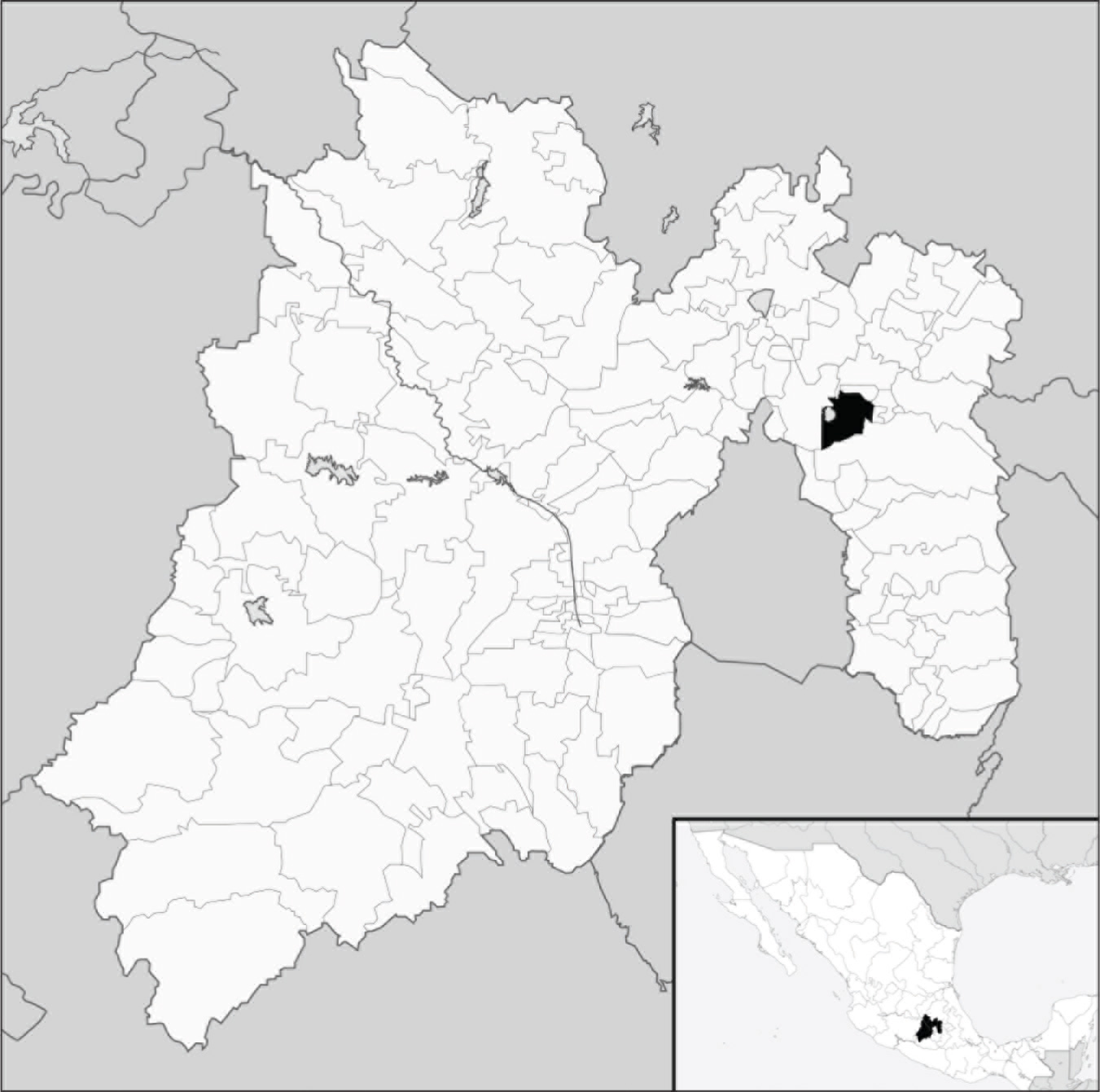
The peri-urban control of Mexico City for the construction of the new airport became a strategic matter for the administrations of Vicente Fox (2000–2006) and Enrique Peña Nieto (2012–2018) (see Figure 1). This area, where waters run, giving shape to what was the old Lake Texcoco, is also the agrarian territory of the last peasant sectors in the peripheries of the enormous metropolis of 22 million inhabitants at the center of Mexico. The enormous power of capital led the federal government to try to brutally appropriate and transform said territory on two occasions. The peasants of San Salvador Atenco and other communities ended up impeding this through a struggle that was emblematic for the whole country.
Power and Domination in Texcoco’s Social Metabolism
The agricultural lands that are part of the lacustrine system of Texcoco’s basin were distributed as a result of the Mexican Revolution of 1910 and handed over to the peasants that had reclaimed them as their own during the first decades of the century. Almost a 100 years later, the heirs of those lands led the resistance against the two airport projects, first in 2001 and then in 2014.
The revolution was experienced as a victory of the subaltern over the dominant classes in spite of the insufficiency of redistributed land. It stabilized and institutionalized the form of collective property in the so-called ejido and “communal” lands. The ejido form avoided the commercialization of land by prohibiting its sale. Crystallized in the Constitutional in Article 27, land had legally turned into indivisible and collective property.
This land ownership regime became massive with the agrarian distribution promoted by President Lázaro Cárdenas in the 1930s, in response to the enormous pressure of the peasant-popular demand for distribution. Mexico in the twentieth century cannot be understood without the peculiar pact between the political regime and the peasants through land distribution.
It is worth highlighting that at the start of the twenty-first century, the conservative and pro-market federal administration headed by Vicente Fox did not evaluate these historical relations with the land while taking the decision to expropriate them for the construction of a new airport at only some kilometers of distance from the already existing one. The reduction of land to a commodity both disregarded that historicity and humiliated the peasants.
Returning to the provision of land that was a product of the revolution, it is indispensable to understand that the relationship of subjugation the Mexican peasantry underwent a radical transformation after the rebellion. The land redistribution not only crystallized new socio-ecological frontiers for access to land as a means of production but also the access to the local ecosystem, its goods, and biodiversity, which altogether benefited the organized collectivities as communities of reproduction. The communitarian appropriation of nature established certain margins of relative material autonomy in spite of the political subordination inside the then novel postrevolutionary regime.
The poor-quality lands handed over by the Mexican state were altered by the same peasants so that brine lands (due to their location at the banks of a saline lake, that of Texcoco) could be turned fertile through organic fertilization techniques. During the entire twentieth century, peasants constituted a metabolic-productive relationship in the recovered lands with rainfed crops (such as corn, beans, squash, broad beans, alfalfa, oat, and wheat) geared toward self-consumption and the local markets. They did this through mechanisms of sharing and managing the water among ejidatarios (the shareholders of common land) and by complementing their diet with the breeding of backyard animals (chickens and pigs), as well as the performance of interfamilial chores to open furrows and share resources and tools.
At the same time, the usage of natural goods, which—from the perspective of value production—are not very profitable, in peasant families involves forms of survival and local commerce based on biocultural knowledge. Some of that knowledge includes the use of tequesquite (salt obtained from lacustrine lands), the ahuautle (eggs of insects that reproduce in water), and the spirulina seaweed (edible aquatic species rich in nutrients), among many others, constituting an agroecological relationship with the lake. Verónica Vázquez (2020) refers to this relationship as waterscape, which is the socio-natural entity that results out of the interaction between water and social dynamics.
President Vicente Fox, the public officials of the two administrations that directed the two projects, engineers, and numerous media outlets pushed for a cruel and humiliating narrative that legitimized the construction of the airport through the inferiorization of the socio-ecological metabolisms of the peoples at the banks of Lake Texcoco. The disdain for their productive forms, the diagnosis of the land as sterile or useless, and the discrimination of its inhabitants for being peasants classified as backwards or miserable, all of this enraged the communities that came together to form the FPDT.
Another dimension of conflict around power mediated through nature is how the subsistence economies in Latin America continue operating in a subjugated fashion within the framework of the global food markets. Even though the land in Mexico was protected after the revolution, the reform of Article 27 in 1992 opened up the possibility of the sale of the ejido, emulating the policies of openness, deregulation, and free market in the countryside.
Even though the quest for the mass transfer of ejido collective and communal properties toward private property failed, four phenomena appeared among the Mexican peasantry as they began to compete against transnational agroindustry. Among these was the semi-proletarization of domestic units, that is, the increasing importance of the presence of temporal or fixed salaried jobs as a complement in the face of the insufficiency of incomes from their plots of land; a growing rentierism of land for corporate monocultures or projects of ecotourism; the partial or total abandonment of farming, which opened the possibility for the urbanization of agrarian land, especially in areas at the peripheries of cities; and refuge in production for self-consumption.
The communities organized through the FPDT, and their main nucleus, San Salvador Atenco, had been suffering from many of these phenomena for years, which weakened their collective capacity for organization and their own productive capacity per family. In order to understand the importance of peasant economies for the area, one must point out that in the state of Mexico (the state that forms the periphery of Mexico City), 46% of the area is under agriculture. Of this agricultural land, 81% is used for rainfed crops (which reflects the scarce availability of technology, that is to say, a tendency of communitarian economies), and 61% is governed by social property where the system of production of corn for self-consumption dominates, a tendency that can also be seen at the national level.
Among the Mexican peasantry, there persist ejido and communal structures for the collective management of land. These structures were created by the postrevolutionary regime and have operated through assemblies. As a result, an organizational framework has been consolidated into every nucleus of collective property. The framework gathers together the landowning inhabitants and creates a communal-agrarian political sphere within every settlement. The fact that the decision-making about the land or the lakes did not take into consideration these nuclei of communal power can be seen as a part of the government’s disdain toward those who have been routinely and historically excluded.
Peasants resisted not only dispossession but also their subjugation; they resisted the imposition of new and updated forms of exclusion, humiliation, and inferiorization through the control of nature. The movement led by the FPDT featured a peasant and settler mobilization in 2001 and 2002 that included road blockades, taking over installations, massive protests, and even confrontations with the police, which forced the president to back away from the first airport project that expropriated their farmlands (Pineda, 2010).
In October 2001, President Vicente Fox decided unilaterally and without prior consultation to expropriate numerous ejidos in the municipality of Atenco for the construction of a new international airport for Mexico City, the largest in the country. Through several expropriation decrees, the peasant lands would have practically disappeared, becoming the basis for the construction of the air highways. Faced with this decision, what actually happened was a local peasant-popular uprising against the decision.
The movement, made up of the inhabitants of a dozen communities and ejidos, formed the People’s Front in Defense of the Land, which led an intense cycle of collective action that included road blockades, takeovers of facilities, mass protests supported by numerous social organizations and civil society, and even confrontations with police forces.
The powerful mobilization, its presence in the media, and the national attention it received for being the first social movement to take place in a democracy, as well as the fierce community resistance to the project, forced the then president of Mexico to reverse the first airport project. The triumph of the Atenco movement turned the FPDT into a national referent among the subaltern sectors and the political left, an example to be followed by the people.
More than a decade later, in 2014, then President Enrique Peña Nieto from the old Institutional Revolutionary Party took a decision that not only reopened the conflict but also signified a radical socio-territorial decision: If the airport project had been stopped by the peasants who owned those farmlands, then a new construction would take place just a few kilometers away, in order to avoid resistance. This would imply building on lacustrine lands, that is to say, building the new airport by completely disappearing Lake Texcoco. This decision, which could seem insane, was supported by the most sophisticated engineering, a gigantic public investment, and an enormous state-corporate propaganda apparatus. The decision would completely eliminate the local ecosystem and, with it, the metabolic and historical relationship of the peoples with the lake’s waters. In the face of that decision, the campaign #YoPrefieroElLago (#WePreferTheLake) emerged.
The Second Airport Struggle
The government’s decision to build on top of wetlands, lagoons, water mirrors, and regulatory reservoirs of numerous rivers that converge in the area inflamed the environmental dimension of the conflict and eclipsed the agrarian resistance against the first project. The government’s new strategy wanted to make it seem as if the project would finally be carried out in spite of the peasant opposition to it, given that the dispossession of their agricultural lands had now been discarded and had been replaced by the proposal to extinguish the very ecosystem that surrounded these lands. This new strategy also affected the human construction in the lacustrine systems, which had to be radically modified to allow for the progression of the airport block. Among these constructions, an artificial water body of almost 2,471 acres stood out, which had been originally created for the regulation of waters in the area. After several decades, the water body had turned into a refuge for around 185,000 birds of 250 different species due to its location within the central migratory route of North American birds. This lake, located less than 2.2 miles from the airport’s runways, had to be drained due to the risk of collisions between the birds with the planes (Pineda, 2018).
After the peasant victory in 2002, the state promoted a counterinsurgency strategy against the communities that make up the FPDT. The people in resistance were divided, bought, harassed, prosecuted, and jailed, weakening their communitarian coalition. Besides the strategy to disarticulate the Front—which included one of the worst repressive episodes in contemporary Mexican history—the government purchased communal lands and small plots, planning ahead for the construction of highways for the new airport. The announcement of the 2014 project stirred up land speculation, reopening another danger of the so-called airtropolis: frenzied urbanization.
The administrations of Felipe Calderón and Enrique Peña Nieto, with their hands tied to decree new land expropriations due to the possible reaction of the FPDT, sought to convert the property from ejido to private. As we have described, ejidal property kept peasants intertwined without the existence of a land market, due to its protection by Article 27 of the Constitution. However, since the 1990s, neoliberal administrations have promoted a structural reform to open not only land but also other natural resources to private property and the market.
However, this reform had not yet affected the lands of the different ejido nuclei of Atenco because the reform had a certification procedure and subsequent assembly approval for the change of ownership. Different federal institutions promoted between 2006 and 2018 that the peasants themselves carry out the procedure for the change of ownership to “full domain,” that is, to renounce the form of collective property represented in the ejido and transition to private property in each individual plot.
Like other counterinsurgency strategies, the aim was to dissolve the support of the peasant and popular base of the FPDT. The federal institutions and private negotiators lobbied intensively in each nucleus, the change of ownership and the subsequent sale of the land, offering substantial resources to each peasant separately or other benefits and secondary works for the communities.
This sparked a huge intracommunity confrontation between those who continued to resist selling the land and those who accepted the government’s offers. All of this was taking place while the leaders of the FPDT had been imprisoned and sentenced to more than 100 years in prison. The repressive acts of 2006 in Atenco shook the country, and the denunciation of the human rights violations of more than 200 detainees, including some 30 women who suffered systematic sexual aggressions by police forces, was taken to international human rights organizations.
The factious use of justice grossly manipulated the legal processes against the FPDT leaders to keep them for years in prison while promoting the change of land ownership. The hegemonic media unleashed a wave of lynching and demonization against the peasant movement. The weakening of the FPDT opened the conditions to retake the airport project.
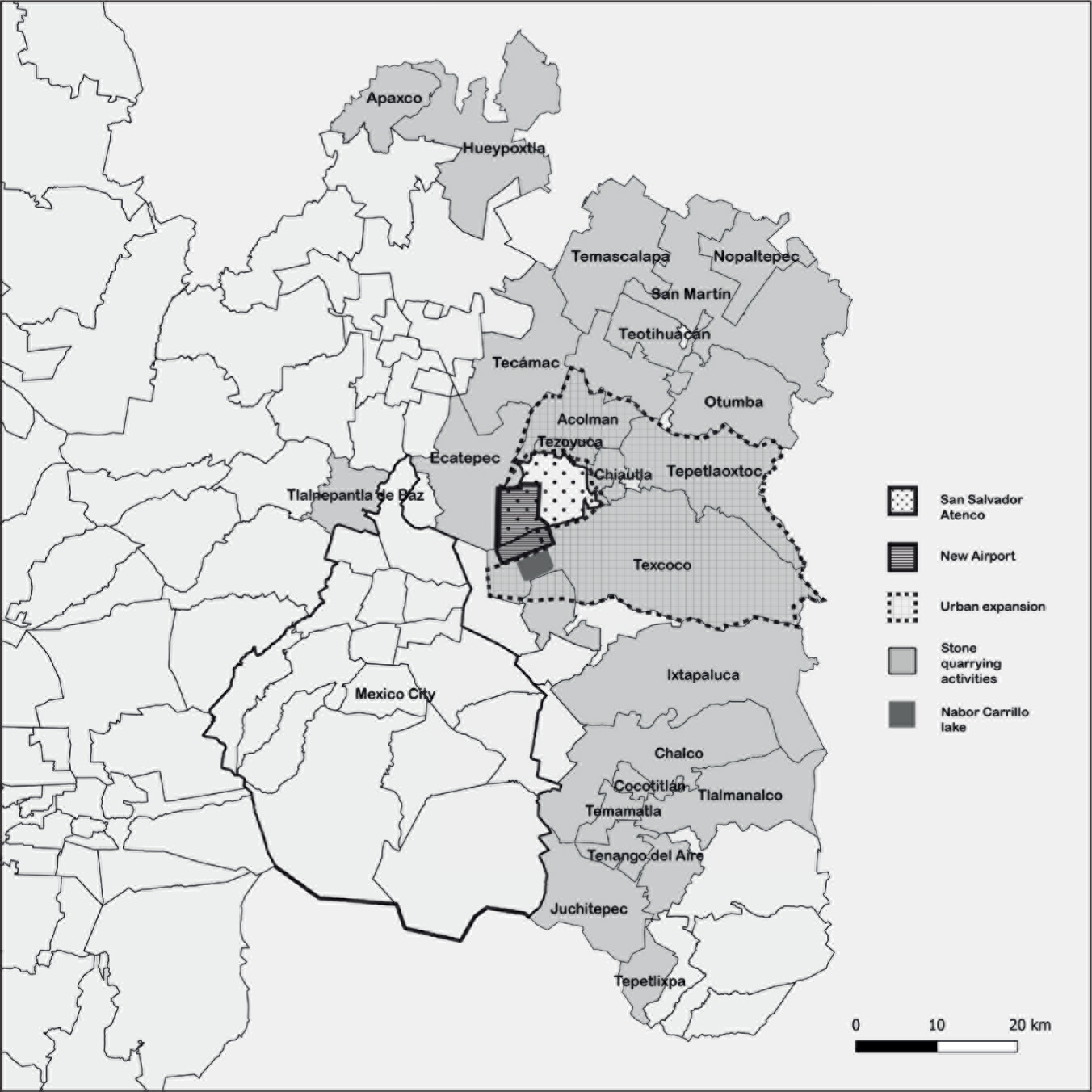
Because they were being built on muddy soils, the airport construction works—of pharaonic dimensions—required the stabilization of soils through a gigantic amount of stony material, which we have already described earlier in this chapter. This caused the extension of negative socio-environmental impacts to an enormous arc to the east of the construction perimeter in dozens of communities affected by local mining. In sum, the devastating effects of the project implied the draining of the Nabor Carrillo lake, the containment of waters from tributary rivers, the vanishing of lagoons and water mirrors, the dispersion of migratory birds, the urbanization of the area to the east of the project, a trail of extractive destruction, and the suffocation of the self-subsistence crop economies of peasant communities at the center of that whole territory. This can be better understood in Figure 2.
Under such adverse conditions, the FPDT modified its strategy: It tried to mobilize a large metropolitan sector in defense of the commons and the environment, no longer appealing exclusively to solidarity with the struggle against the dispossession of people. It denounced the airport as an attack against the viability of the reproduction of life in Mexico’s central basin as well as a danger for all, not only for the peasant economies on the banks of the lake.
Following that same line, the defense of the peoples was articulated not only with the municipalities affected by the construction works but also with a social sector that expressed itself in two forms: in social movements and in middle classes that were not organized but enjoyed visibility and political capital through social media. Gaining mass support against Texcoco’s project implies appealing, convincing, politicizing, informing, and mobilizing these sectors. The FPDT sought to gather allies in these fields while strengthening its resistance and communal organization.
The moment to go forward with this strategy came in 2018, after the electoral victory of Andrés Manuel López Obrador, the leader of the institutional left in the country. Although the president elect had not shined for his environmental sensibility nor for his closeness to the peasant resistance of the FPDT, his decisions implied a turning point in the conflict given his position surrounding the airport. He was in open opposition to the project due to its extreme costs, which would indebt his government and the country itself. Moreover, the president-elect completely shifted the circumstances of the conflict by subjecting the continuity of the construction works to a public consultation. By then, the project was about 30% complete and was carrying abnormal financial commitments and employing thousands of workers through large construction corporations such as CARSO and ICA, as we have already explained.
The peasants took the opportunity of the consultation organized by the elected government and called in many of their allied organizations to create their own initiative directed at mobilizing people against the Texcoco airport project. The result was the #YoPrefiero ElLago (#WePreferTheLake) campaign, which focused on the socio-environmental impacts on the lacustrine system, highlighting the defense of waters and birds. The campaign, designed so that metropolitan citizens could get involved, opened up various forms of individual as well as collective participation (Pineda, 2018).
#YoPrefieroElLago changed the coordinates of the debate by overflowing the technical and engineering controversies surrounding the discussion about the financial viability of the project. Instead of putting together a sophisticated structural explanation about the functioning of predatory capitalism, the campaign’s focus allowed the internet user to interconnect with others on the basis of a simple but powerful slogan that was nevertheless full of content. Instead of a duality between two projects or airport venues, the campaign put things in terms of a decision in favor of life, and thus against money, the real-estate project, and its financial interests. It summoned public intellectuals, renowned artists, celebrities, and social media personalities as catalysts for the campaign, and called for movements and organizations to share information against the airport project. Above all, the campaign represented an aesthetic, symbolic, and political shift in the discourse: It asked the common people, the online multitude, to join the initiative. This urgent call was answered: #YoPrefieroElLago became a viral phenomenon.
Scholars involved in the campaign as defenders of the lake were invited to a hundred interviews and debates in the mainstream media: radio, television, print, and digital written press. The debates were highly polarized, as the promoters of the government’s stance tried to label the environmental demands as radical. The grandiloquence of the confrontations only ended up attracting more attention to the arguments against the project.
More than 150 conferences, workshops, talks, and forums were conducted in the span of only 3 weeks, from small meetings of no more than 30 people in public squares to filled auditoriums in universities; from informative sessions in unions to mass meetings of the urban-popular movement. A total of 14,000 university students participated in a consultation that was conducted across more than 20 university schools and departments, where 80.9% voted against the Texcoco project. #YoPrefieroElLago had gone beyond social media to become a hundred small actions throughout all of the metropolitan area, mobilizing thousands.
The communal resistance had begun years ago and was conducted with a relatively low-profile. The FPDT began a slow and meticulous process of reintegrating the ejidatarios who, since the beginning of the NAIM’s construction, regrouped against territorial encroachment and the local powers linked to the interests of big capital. They set up protests and campsites to stop the advance of the highway construction works that would lead to the airport by passing over their lands and rights. In spite of having had to suffer violent repression geared at breaking them down, they remained an annoyance for the airport group.
Grupos de Choque violently attacked the peasants, who had set up camps on the land that would be used for the construction of access roads to the new airport. Intimidation through gunfire, aggression against activists, and the burning of the camps did not stop the FPDT’s resistance. It did, however, maintain a strong division and tension within the communities.
The #YoPrefieroElLago campaign mobilized the communities around the analysis of the consequences of the project: Wherever there were no safety conditions due to possible retaliations from political opponents, nightly meetings were conducted among families; information was left behind in local businesses to secretly distribute propaganda; in other places, in ejido assemblies or water committees, people would vote in a show of hands against the airport. In some instances, hundreds of ejidatarios or commoners assisted in forums organized in their own towns to analyze the impacts of the NAIM.
Thus, the #YoPrefieroElLago initiative provoked a communal, metropolitan, and viral mobilization that reached a million people and that unleashed a dispute over the meanings, contents, and arguments around the mega-project. This can maybe explain why Forbes magazine found that 60% of internet users disapproved of the NAIM’s construction and recognized that the main hashtag in the 38,366 conversations of the analyzed period was that of the campaign. Likewise, Forbes found that concepts of ecocide and corruption were the main concepts used by web surfers to refer to the NAIM. 4 A poll conducted by the Colectivo de Investigación y Análisis Estratégico en Ciencias Sociales found that the majority of survey respondents named digital media and the #YoPrefieroElLago campaign as their main source of information about the airport, with 69.41% of unfavorable opinions toward the Texcoco airport project. 5
The result of the consultation is that 69.87% of a little more than a million voters ended up rejecting the continuity of the construction works and supporting the presidential initiative to shift the airport base to another location. In the community of San Salvador Atenco, the epicenter of the FPDT and the campaign, 64.25% of a little more than 3,000 inhabitants rejected the megaproject. The second airport struggle had been won by the #YoPrefieroElLago campaign led by peasants in resistance, although they had done it under the political conditions determined and arranged by the transitioning government of Andrés Manuel López Obrador. The campaign had made thousands listen to the voice of the peoples and the history of dispossession. Many more understood the contradictions between nature and the market, and thus condemned the project, grasping that it was a symbol of profit maximization and of the logic of financial and corporate power. This enormous communitarian, environmental, popular, student, and citizen effort was conducted, of course, amidst conditions that were not of the social actors’ own choosing. If the first airport struggle of 2002 was won by the communities rallying against dispossession, the second struggle was won through the field of public opinion by this coalition in defense of the lake that wielded and defended environmental arguments. The Texcoco project had been defeated before it could even be finalized. The FPDT was a protagonist in the consultation that led to this result. However, its participation was nevertheless a subaltern condition, given that another political force defined the path toward the final decision.
President López Obrador had brought the conflict to the national agenda, but he had also marked a dubious path to confront financial and business power through a consultation that did not meet international standards for its realization and that, in other conflicts, was used as a device against community movements, on which infrastructure works were imposed.
Despite the financial outrage in international markets and the open opposition of business organizations, banks, and the pro-market sectors in political parties, universities, and mass media, the construction was canceled. The future of the lacustrine system then lay in the hands of the new government and its narrow environmental vision of communal territories.
This is why the peasants of the FPDT took the initiative once more, immediately presenting a new project called “Manos a la cuenca” (all hands on the basin). The fundamental principle of the project is the restoration of the lacustrine system through communitarian and state co-management. Thus, it seeks to reintegrate biodiversity, liberate the flows of water that make up the system of lakes and lagoons, and protect the peasant economies (FPDT, 2021). With this initiative, the inhabitants on the banks of the lake represent a communitarian environmentalism, that is to say, an autonomous project of relation, use, management, and caring for the lacustrine ecosystem based on communal power and organization. It is a vision that understands the power relations mediated through nature, as well as the dependency of people on agricultural land and on the whole territory of lakes, emphasizing the need for their collective management.
Manos a la Cuenca is the unfolding of a peasant movement against dispossession and toward a communal project of collective management of waters and biodiversity. A set of factors aligned to constitute an unconquerable barrier against the disappearance of Lake Texcoco: the communal resistance of a little more than two decades against the airport projects and the repression, the enormous peasant capacity and leadership to direct their scarce strengths toward the national agenda, the favorable opportunity of a government that was opposed to the airport, the response and empathy of an important segment of the urban classes, and the general displays of solidarity with the people among the wider public.
Today, the lacustrine system is undergoing a process of environmental restoration. Peasants continue to strive so that the new management of the lacustrine system includes their people and communities. The FPDT continues struggling in defense of peasant life, the lake, and its biodiversity because they know that the struggle against the interests of capital and its deployment in nature is far from over.
Footnotes
Declaration of Conflicting Interests
The author declared no potential conflicts of interest with respect to the research, authorship, and/or publication of this article.
Funding
The author received no financial support for the research, authorship, and/or publication of this article.