




Abstract
Artistic practice is applied as a tool of experimental research that acquires, as a necessary and decisive component, the identification of the organizational nature of the context on which it acts. The artistic frame allows the exceptional chance of developing experimentation within the spaces of everyday life, acting on its own operational rules. In response to the analysis of the context, an ‘organizational analogue’ is conceived and presented as a work of art. The ‘Analogous’ is not a representation or a performance, but rather the assumption, via linguistic mimesis, of a pre-extant object, to the shape of which a change is activated. The product is evaluated on the border of the language through which it interacts, allowing the components of the environment to negotiate its pertinence. An experimental approach based on which within the context one can find a game of which to identify the field, the rules and the players. An organizational artistic practice of playing that has juridical, economic and identity implications.
Keywords
Prologue
[A technical introduction]
For every action that one assumes to have activated a shareable meaning must account for the ‘game field’ from which it was generated, so as to prevent the spreading of the misunderstanding of itself as narrated. It was the rules of the meeting that established the game. Sixty minutes of dedicated attention from an academic audience, equipped with a microphone and a screen. The plenary is an already written story, with a monologic structural consistency. I will translate the keynote speaker intervention into the form assigned for performance, in a script (Steyaert & Hjorth, 2002) in which the sequence of empirical contributions exposed dialogues with the notes of a subtext of antecedent facts already processed in the research. Strings of photos, maps and drafts deliver the setting of images projected on the screen in the room. The trace of subdivision into acts relates to the direction of the plot proposed by the organizers of the workshop. The address is entrusted to the theoretic-experimental sequence. I cannot explain the object in any way other than what it already says about itself, replacing the nature of the object with words, since it is visual. What I can do is try to reason about the process.
Act I
[Organizational creativity]
[Daytime, interior. Conference hall of the Minoa Palace Hotel. No windows. Lights on. Screen lit up. People trickle in, saying ‘Good morning’ to each other, some holding a hot drink, some still sleepy-eyed. It’s 9 o’clock in the morning. A conference organizer stands up and introduces the event. It’s Antonio Strati, the professor who was the supervisor of my degree thesis and with whom I started my organizational research. I get up from my seat and I approach the lectern where I had already set up my PC with a PowerPoint presentation of about 300 pictures. I turn to the audience.]
[Pause]
I will illustrate the outcomes of research conducted using the tool of artistic practice that, by its very own nature, completes the reflection on content through its phenomenological declination and delegates the assessment of success to an aesthetic evaluation, which manifests itself in a clear-cut, subjective and shareable manner, which cannot be generalized and that admits the coexistence of opposite outcomes without however losing its valence as a hypothesis. The university background in sociology has equipped me with the most pertinent tools for consolidating a systematic research method focused on its own process. The inclusion of artistic processes amongst the experimental instruments has irreversibly characterized my approach to sociological research. This took place after my first experiences at the Faculty of Sociology of Trento, where through a performance for the course on work practices I addressed one of the issues of the course on organizational studies.
2003, The Iron Cage, with Density Spectrum Zone 0.1 by L. Cecchini 02/04, Facoltà di Sociologia, Università di Trento [the Max Weber text on bureaucracy recited as from inside the iron cage].
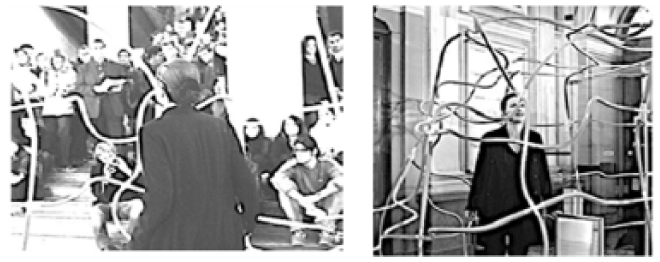
Many passages of this research are founded on evidences that I have intercepted and reprocessed thanks to the references of an intradisciplinary approach derived through theatre, art and sociology, namely the same ambits that had attracted me to organization studies, relating me to spaces, actions, objects and intentions because tacitly incarnated in already acquired practices (Nicolini, Gherardi, & Yanow, 2003) that allowed me to expand the range of their analytical management (Strati, 1999; Linstead & Höpfl, 2000; Strati & Guillet de Montoux, 2002; Schreyögg & Höpfl, 2004; Gherardi & Strati, 2012). The fact that I initially addressed scientific interlocutors has speculatively characterized my practice of research, creating the matrix for a basic structure. Having had to adapt my project methods to those of the language that existed in an institution unrelated to art, I acquired methodological perspectives that remained as field variables in the contextualization process of my next projects as well.
2004, Untitled 2004 # Paris, 07–10/09, in the 2nd Art of Management and Organisation Conference Paris, ESCP-EAP, Paris [the presentation of a paper turns into a party based on a script of incrementally surreal interferences].

Despite the vastness of provinces of meaning (Schutz, 1945) investigated in the analysis of frame (Goffman, 1974), it was in order to respond to the thematic proposal of a conference in Paris that I began to dialogue with the notion of frame by means of my artistic practice. It was suggested to conceive the frame as an enquiry into its beginning and its end (Derrida, 1987). I found great hospitality in this place that did not define in order not to start excluding; it coincided with the direction: ‘to see art as the very process of construction …’ (Höpfl, 2006), from the perspective of a management of frame that becomes sign of the authorial proposal. My exchange with the notion of frame is experimental, it has a configuration that is more volumetric than philosophical, more negotiated and compromised in practice than theoretical. In my empirical approach, the emergence of frame is a good clue for identifying what could probably exist and that, if it does not exist, I might try to activate as a hypothesis. The notion of frame revealed itself as a useful tool, an efficient vehicle between theory and reality because albeit in its theoretical conception it becomes a practical diaphragm. It allows one to shift from a perspective of representation to that of presence, to build up analytical thought about the situation to be defined.
2005, Do Not Cross the Passion Line, 09–11/06, in the International Conference on Organizational Learning and Knowledge: The Passion for Learning and Knowing, Università di Trento [re-contextualization of the performance ‘Untitled 2004# Paris’ according to a new theme, space, constraints and opportunities].

The notion of ‘frame’ allowed me to imagine the localization of the border between the ambits, not as a division between the respective languages but an imbalance in the thread that renews itself between them and offers itself as integrator of the change taking place and where the conversion of attribution is most feasible. When a space not assigned is involved by the frame of art it can reveal to the pre-existing context its own potential for flexibility and change by means of a language variable that insinuates itself and renders relative the circularity of the previous one. The power of the frame of art to which I refer is logical, mechanical, linguistic, systemic, rather than interpretative and humanistic. In its application, the frame of art can legitimize a state of exception (Agamben, 2003) from the rules in force and can authorize unexpected actions. In its perception, it becomes important that the frame of art be negotiated and derived from the attributed sense, without the positive prejudice of art. An effective frame. Regardless of whether it is rejected or accepted, the content, the object that possibly triggers the irradiation of the frame.
2005, Free University, 30/06–02/07, at the 21st EGOS Colloquium, Unlocking Organizations, Freie Universität Berlin [the organization is blocked by its own product during the period of the conference].
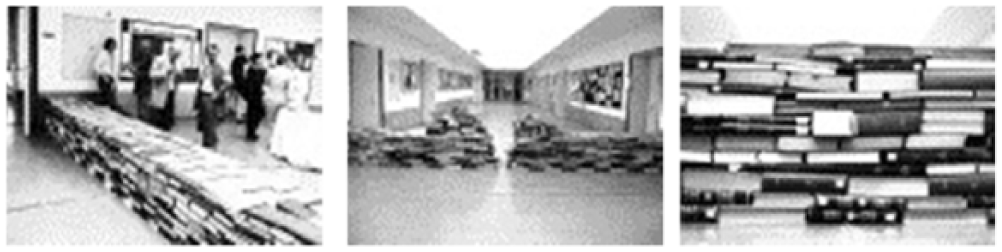
When I had to plan performances at off-premises conferences without the chance to make a preliminary visit, I referred to a remotely detectable organizational inspection with a flexible contextualization of the project on uniquely abstract organizational grounds that directed the projects towards the admission that any outcome of the performance was possible, without having to prove the concept at the basis of the work. This aspect of the acknowledgement of a non-performative risk from the point of view of narrative spectacularity, or of the number of participants, has continued to feature later on within a non-theatrical perspective that exploits the moment in which it is fulfilled in favour of an experimental interest in the field of research. In a performance, the conceptual basis overcomes any of its virtuous phenomenological developments, rendering inapposite the evaluation of its progress. There is no efficiency, there is transparency. Each performance already exists in the action of its being defined, after which it can have any consequence without changing. It’s its process structure.
Besides the limit of a dedicated logistical access, the academic ambit was no longer responsive from a semantic point of view. The sociological field of dedicated reflection, although stimulating and productive of fertile criticalities, could not become the experimental evidence of its own self-produced content. What was needed was the experimental environment of a non-academic field, the exit into spaces inhabited by customs and artefacts governed by another jurisdiction, within which to possibly start re-negotiating my access. In these everyday places the performance, object of the project, is the one that is already present in the space taken into consideration and involved with respect to the necessary permits. Within its circuit is only inserted a slight interference, a variation the effect of which might not even be noticed from an unknowing glance. The extent to which passers-by can negotiate a meaning for what they see is in agreement with all their other priorities and the willingness to reconsider and reorder them by passing through.
2005, Untitled 2005 (Green Woman on the Traffic Lights), 03/11, public street, Rovereto [permission to change the contours of the figure on the pedestrian traffic lights from male to female].
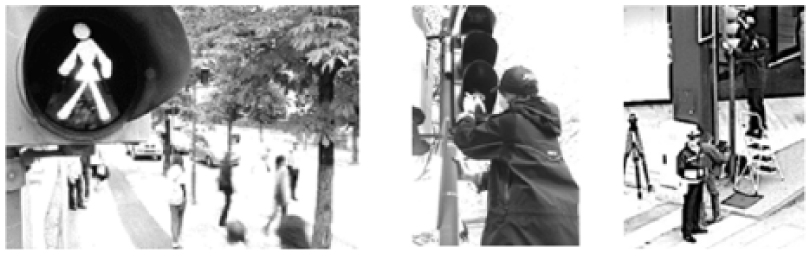
The organizational context is the consistency of the material that attracts my research. Artistic practice outside the frame of art takes on powerful experimental independence because the entire context with which it comes into contact becomes reactive, as the physical reagent of a conceptual assumption that is otherwise purely hypothetical. Each action is preceded by an organizational analysis. The first research phases, the first reactions to the proposal, whatever the answer, become part of the project, in the sense that it informs it about its direction. The constraints imposed by the context instruct the concept at the basis of the intervention, formulating a theoretical hypothesis of the present organizational dynamic. The entire process is included in the experimental verification, which means that the artwork is the outcome of the organizational grounds encountered. Each artistic intervention becomes a reaction to a function posed theoretically and evaluated at project level, then experimented and observed as data. In the process of negotiating this permit there emerges the tacit trace of how the issue around which the artistic project revolves is more or less shared, broadening the gesture of the intervention to contextual negotiations of an economic, legal, bureaucratic nature.
2005, Not Yet Titled (Women at Work), 04/11, on the occasion of the awarding of the final certificates for the ‘Master in gender policies’, Facoltà di Sociologia, Università di Trento [a ‘men at work’ sign is set up with the female figure].

Since its first approach, the institution obliged me to take its language into account in order to interact with it, subjecting interaction to the use of instruments that ensure the continuation of the organizational encoding of that space. Indeed, the institution ‘is’ its language and the resulting system of rules that ensure its continuity.
2005, Infirmitas sexus, 21/12, Corte Civile del Tribunale di Trento [a man dances at the sound of laws restricting the rights of women, and women wipe out his footprints].

So as not to suffer its order, one must know it and accommodate it, acting where it shows unregulated gaps, mimicking known forms so as not to scare it. Anarchically aligned. The permit comes before the doing and the artistic frame has the power to authorize it. Between the time necessary for access to be allowed and the moment in which it had been requested, there is a period within which everything else changes. Even over several years. One must adapt to this by renovating the contextualization. The advantage of not being able to realize a project is that, month after month, the project itself can grow and improve. Or it leaves off its sense of being realized. People’s scepticism towards contemporary art is the best way of screening the meaning of the project. When a competent institution fails to give you a permit, you are deprived of a logical ring that bases the project on the access to that place. Because it had all become bureaucratically inapposite. And when in the real world the possibility of intervening with a project had not been contemplated sometimes it could only seek refuge in the unreal space of a museum.
2006, Money Will Save the World, Festival dell’Economia, “Ricchezza e Povertà”, 01–04/06, Teatro Sociale, Trento [banknotes of the poorest countries instead of sandwiches in the vending machine].

2005, Aesthetics, Trading of Time and Creativity, 28/11, in ‘Linking Creativity and Culture for an Innovative Local Development’, MART – Museo di Arte Moderna e Contemporanea di Trento e Rovereto [creativity futures market where there are no private benefits for buyers].

From the point of view of organizational accesses, what is dedicated to art is a compromised space, not open to adversarial debate. It enjoys an unconditional positive prejudice, vis-a-vis each object that crosses its threshold, automatically attributable to the category of art production. The potentially ultra-organizable space, where a priori any proposal has the right to organize space without condition, as far as my practice is concerned, turns into anti-organizational space.
2007, Welcome to Italy, 04/05–10/06, Mart – Museo di Arte Moderna e Contemporanea di Trento e Rovereto, Rovereto [national flags cut off in proportion to the number of women elected in parliament].

All the spaces appointed for a specific functional gesture can be freed from their institutional cage at the instant in which one considers their component as organizational structure. This allows starting from the zero degree of organizational rhetoric with which one can manage an artistic project or any other efficient action in that space. The reflection on the artistic methodological process can be an exercise in identification in the potential for comprehension, approach, unveiling of the rhetoric of separation of ambit.
2006, The Doctoral School, 09–12/04, the 2nd International Doctoral School on Organizational Learning Knowing in Practice: How to Study It? Centro Conferenze Panorama, Sardagna [the methodological, scientific and artistic references mutually declare themselves].

I realized that the identification of one’s own research pathway happens retrospectively. The process of artistic research is activated by a direction clearly intuited and rigorously pursued, admitting that the possible emergence of meaning is postponed to a later phase, revealed through the various ambits of contextualization in an effective and experiential manner. ‘Through my doing’, within an open continuum of revision, the contents and tools continue to reveal themselves through the emergence of their recurrence. A plentiful amount of experience that by qualifying itself through repetition, has replenished with sensitive organizational quality the link between the issues at stake and the manner in which I addressed them.
2006, Disclaimer, 07/09, in the 3rd Art of Management and Organisation Conference, Akademia Pedagogiczna, Krakow [the scientific papers are stamped with a disclaimer that declares them fictional].
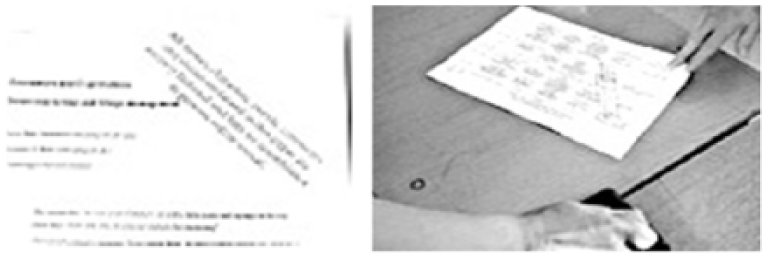
The manner in which I tackle a work has built itself up through all of the works I have done, and this is how it continues to develop. Likewise through all those I have abdicated from doing, those I have decided to postpone or which I have not been allowed to design. The build-up of a sequence of urgencies that have matured, as in a timeline, alternative to time’s flow, is the unexpressed part that relates to me, this area derived by subtraction, that which remains after attempting to give a name to everything and after having identified the spaces of a given rational and controlling parameter. It is the most ambiguous and vulnerable part of the technical body, although more active and accessible for the practice of art. I have never been in a hurry. We are animated by processes, not by time. Each day, each one of us derives his or her own organizational sculpture via the assembly of an aggregate of regulations with which he or she has dealt with and that he or she infers from intersections and segments compatible with his or her own processing tools. It’s about mechanisms of survival of sense, of an equilibrium sought between our being the inevitable organizational ‘author’ and this gravitational quality of organizational contingency. So, through my material translation of these objects in space, I transfer onto the phenomenological plane the temptation of interconnecting them semantically, venturing hypotheses within an organizational language of the ambit that has produced them. I cross the reasons pre-extant in the system’s circuit with those that stem from my personal selection of perspective. My personal lump of sense.
2008, Always Half Full, in Dai tempo al tempo (Give Time Your Time), 25/05–29/07, Fondazione Sandretto Re Rebaudengo, Guarene d’Alba [half full wine bottles expire as a product to become artwork].

Within this perspective, spaces are inhabited by rules that already indicate the implementation of this project, the script inherent in its development. The normative text precisely indicates the procedure of permits and actions that are granted, and those that are not specified will be defined by the person directly responsible. A permit is the acceptable threshold of the limits of an action; by asking how far one can go one traces the outlines of a design contained in things, in the mode of shared normative manifestation.
2008, Celata (sotto la piazza scorre una roggia) (Hidden. Under the square runs a canal), in Manifesta7 parallelevents, 5–17/07, Piazza Duomo, Trento [22 washing machines where the water once surfaced and the women wash their laundry].

Respectively, every artefact present in public space carries the traces of how its use has been designed and how its final definition has been culturally negotiated, locally. They are like chess pieces where each time you have to figure out the game by observing the moves. The fact that they are socially integrated and connected enables us to intervene on ramifications of the fabric of which they are made, to arrange an approach, for the purpose of closing in or subverting.
In organizational space, every place is already full. There is always already a performance going on. Whatever happens or does not happen in a place derives from the organizational premises of that space both in terms of customs and of regulations or institutional dynamics. This significant potential, active in every place, that pre-exists the gaze of the viewer, can be either ignored or integrated. In actual fact, it is never ignored, even when considered empty, because its conventional neutrality is accepted, derived from an already acquired level of organizational processing. When it is integrated into the thick network of information present, that which can be activated as premise to something else is selected.
2007, Histogram (ANSA – Parigi, 16 Nov), Paris, unrealized – 2010, Histogram, 30/09–04/11, Palais de la Bourse, Bruxelles [a histogram of co2 emissions in the form of grass on the stock exchange columns].

Something else inviting you to enter while generating possible borders. Coming from the outside makes you alert to everything and provides a small advantage over the rhetoric that anyhow always tends to take root.
2009, Chat, 05/06 2009–31/07 2010, Facoltà di Economia, Università di Venezia Ca’ Foscari, Cannaregio, Venezia [a ladder missing the first rungs up to 7 m shows by how much the sea would rise if the global temperature increased by 2°C].
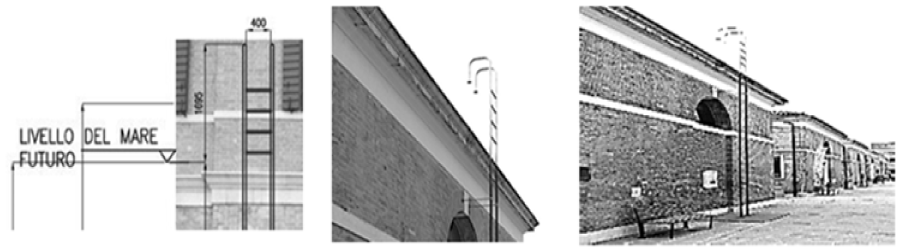
When a change of frame is triggered by the presence of an object, the collation of the negotiation can become a monologue, and it is within our repertory of prejudices and experience that a revaluation of the coordinates in place is engaged. And that invisible border, the existence of which was not known, becomes manifest precisely on the occasion of its defence or negation.
2009, indeposito, from 04/02, Patrimonio del Trentino Spa, Trento [temporarely unused spaces become a flexible and disseminated store of works].

In discussing with an antagonist or with an ally about the progress or the existence of the sense of what has been encountered, there is a spontaneous crossing over of the borderline. One crosses it by discussing it. By exchanging jargon, by revealing metaphors, by listening to what had not been imagined. In actual fact, it is variation without a border because precisely when one manages to detect it, the edge of that new jurisdiction of sense widens, always leaving the being that had detected it inside it. The circumscribed territory of frame is only surface area, the border exists only in the practice of its negotiation. The frame is a form of situational semantic gravity that conditions the perimeter of the action. It is a transplanted status, a realm of un-said rules, learned on one’s own and officially recognized in the field, an intuited exception, an approved deviation.
2009, Clean Floor, in The Researchers’ Night, 25/09, FBK – Fondazione Bruno Kessler, Povo [an atelier for scientists where the concept behind their research is converted into an artistic artefact].

The artistic language is by nature pure language, whose mandate is to escape from its own institutionalization via a constant postponement of experimental tension. In this way, it becomes manifest as border without being territory, a limit that recalls something else at the very instant in which it is defined, in its capacity as vehicle of a suggestion about what it could be before it already has been.
2010, Metodologie di conversione linguistica applicata (Methodologies for applied language conversion), in Platform Translation, 25/05–04/06, Museo Laboratorio di Arte Contemporanea dell’Università La Sapienza, Roma [the conversion lab developed in FBK translated in signs and materials within the institutional interface].

The artistic dimension is the dimension that, technically speaking, most closely responds to the possibility of a scientific laboratory, with respect to the dynamics of everyday life and of any social, introspective or institutional phenomena. A pure language laboratory, where language is experimented in its most conceptually abstract and empirically present form. As in a kind of a scientific neorealism in which artists were the first scientists of acted space. In an empirical manner, using a systematic process of sharing of results within their community, subjecting them to sense tests, they set up practical solutions, identifying notions and supporting a theory of the discipline. Within the prospect of a design that is never closed, where the result of a phase in turn becomes useful material for the next experimental passages, the exhibition dynamics is not considered the goal for the crystallization of the work but rather as a privileged experimental opportunity for interaction with the visitors.
Act II
[The play]
[I have finished the first part of my presentation. I feel satisfied, but then I realize that the time at my disposal is well over half-way gone, I must fly. I’m sorry, I was supposed to make only a methodological introduction, but I felt the attentive empathy of the audience and I lost myself in describing the details of the images. I start off again. I abandon the layout and I speak off the cuff, accelerating. Now we’re at the projects on play. Within the rigour of its rules I feel sufficiently strong enough to let myself become vulnerable to a poetic, even autobiographical, track.]
The idea of ‘game’ is historically implicit in the notion of frame, together with its tag of seriousness (Bateson, 1972), as a concerted modulation of a precise gesture of understanding, independently from the course of the ongoing situation. An enclave of meaning the behaviour of which is governed by more or less shared functional parameters. Thus each frame drags along its own rules and each rule leads to the assumption of a frame in force. Unlike a game field whose outer limits are the boundary between an internal and external space, between one action concerted by common intent and one by those who ignore it. A sports field is an excellent organizational microcosm on which to experiment change precisely because no one questions the rules that apply to it.
The object is bowled over by the semantic power of the frame that contains it and that is capable of changing it radically as a complement of its action, consequently renaming its nature. This causes a shift in the analysis level in my research and the object of reference inside the space becomes the frame and its organization. This is what I can work on experimentally, using the organizational spaces as a laboratory and the frame as material of the work piece, necessarily inserted within the otherwise irreproducible complexity of the everyday context.
2010, L’opera è il pubblico (The work is the public), in Il titolo è il pubblico, 08–23/10, Südtiroler Kunstlerbund, Bolzano-Bozen [the museum exhibits its objects in the space in accordance to the weight of the public entered].
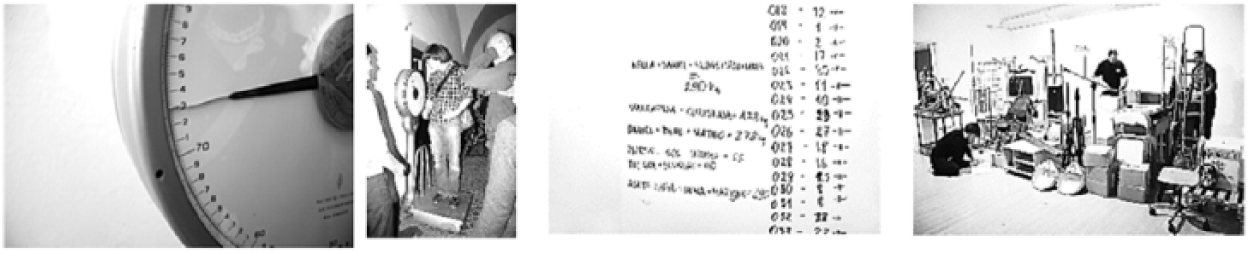
From reality in visual research there emerge many texts that I may recognize and fetch, as a basis for my art projects. Art research beyond content accounts for a process for analysing and selecting – within the different context levels – that which one can consider a glimpse of the unveiling of which to guide the various degrees of visualization. Not as creations but as visible activations. Included within reality is the public as well, which, like any other element, integrates in and becomes a part of the construction and can decide where to place itself, with the freedom of negotiating the sense of what it sees and the position of its presence in front of the object. The grounds of the context that each project element brings with it during construction, when a response to the completed work is reached, is further on: it reveals the advancement of the research direction, a change in language, in a dialogue that takes place outside myself because it is a dialogue between the object and the things that surround it, over which I have no control and that had not been taken into account or even imagined.
2010, Tennnis Homage to Albertina Eghenter, 17/10 2010–09/01 2011, Centre Court, Centro Tennis, Meranarena, Merano [once the net is halved, the court is adapted and the match starts as per the usual rules].

The acknowledgement of what is nakedly perceptible – the availability to acknowledge the ongoing outcome of something borderline banal or surreal – requires, as methodological premise, naïve, renewed and conscious wonder. Our lack of astonishment, the habit of accepting the fact that there is a piece of designed reality that compulsively replicates representations expected to be efficient, makes us deem credible that the frame of legitimization of which we have assimilated. The representative frame to which we unconditionally adhere to accustoms us to deem credible the contents without bringing the context into focus anymore. Through the insertion of an elementary gesture, of a minimal interference, into the mechanism I can activate the work, causing a grinding of the gears that results in a dismantlement of the most immediate process of the expected functioning. Each installation in space or in a mechanism, every object that causes interference, goes beyond what can be methodologically perceived and designed. It’s all the way to the extension of the frame, that starts from us and includes us. A reflexive black hole, of such semantic gravitational strength as to cancel the relaunching of the next transfer of sense. The elaboration of the tools should leave suspended, should allow for missing. The last word, the last frame would be the ongoing one, a priori undeterminable.
2011, Liturgia Breve (Brief liturgy), 25/05–06/06, Reale Accademia di Spagna a Roma, Bramante’s Tempietto, Roma [the outline of a gym mat follows the original plan by Bramante around the temple].

I take every expert decision, that appeals to a tacit knowledge built through the experience of a given practice, together with those who physically feel the limits beyond which it is not possible to deform the materials and practices, so as to contemplate the technical complexity of the work from within. Several purely formal choices are thus delegated, through an alienation in the aesthetic definition of the work, that is entrusted to the context up to that limit beyond which the idea would be distorted. It all belongs to a praxis of non-total control over the work, when the context, with all of its resources, has been included inside the work together with the rules that organize the space.
2011, Il tempo è il luogo (Time is the venue), 28/04–08/07, Festival delle Città Impresa, Fondazione March, Villa del Conte, Padova [in the industrial district a golf course with holes made up of the products of each company].

In terms of connection with the context, observational capacity regards the availability to notice, to grasp the significant aspects that emerge without warning. The first thing to emerge is a feeling of annoyance, intrusive and dirty; slowly one understands why, the superimpositions of codes, languages, references develop, we recover the information of that which, visually, had already spoken. Mutually, the art work renders each phase of its construction process, of the management of each of its phases turned into shape. The work is the process. With the physical materialization of the projects it is possible to observe the repetition of a rough sequence of phases and the emergence of specific categories implied in the practice of realization, the choice of which leads back to a direction of the ‘poetics’ of research.
2012, Il campo è ovunque (The field is everywhere), 16/01 Libera Università di Bolzano [a section of a sports court inserted into residual architectural spaces].

A substantial exploration of the field to procure the organizational matter for the artwork constitutes the procedural component of the path that needs to be accumulated, to connect the context to the proposed theme, experimenting the direction, the going towards, the tracing of the theme based on the opportunities offered by the context for its activation.
2012, Salita inversa (Reversed ascent), 5/02 Madonna di Campiglio, Pinzolo [the seats of the chairlift are taken outside of their circuit].
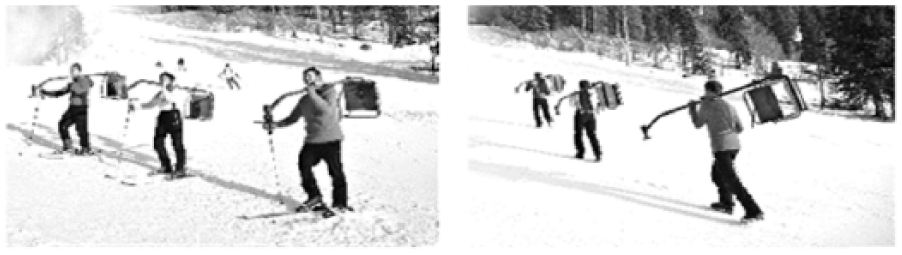
The relationship between pre-existing habits and the gesture produced by the applied interference can confirm the space of its discernible continuity. Even when completely changing the frame, the same place – both before and after – is integrated into the project due to its organizational peculiarities.
I am interested in rules and space, due to the pervasiveness of civilized experience and the apparent normality of norms. The permission to access the space was central to my first works, namely to consider a space and its regulatory consistency, within and without a system of rules, regulations, norms, habits. That which links a given space to the expected, obligated, envisaged behaviour has a unitary, compact and three-dimensional consistency that speaks of volumes in which one can be present or missing, the rules of which one can comply with or break. It is a sculptural structure of which the shape is organized and praxis is communicated. It is a perimeter that takes shape according to the behaviour of those who cross through it, where the gesture that abides by the rules does not alter it. The gesture that breaks the rules produces signs, anomalous traces, discontinuity, protuberances that generate new volumes, intersecting with the others. It is a lived, experienced organism, activated by various degrees of response to appointed expectations and proposed forms.
2012, reset, in Enacting populism in its mediæscape, 17/02–22/04, Kadist Art Foundation, Paris [permission to stop and to go back in the revision of unjust decisions now institutionalised].

2012, a.property, 13/05–16/09, in Mente locale, nuovi committenti per una mostra / VIAPAC project / Il Filatoio di Caraglio, Caraglio [a juridical gymnasium where one may exercise with facts that are not disciplined by law].

2013, Legally, Biennale Democrazia 2013, Torino [the round table on “PropertyFreeCertification” around the neon “Permission d’arrêter et de retour”].
2012–13 reset a.property legally [the title of the three exhibitions comprises a projectual phrase].
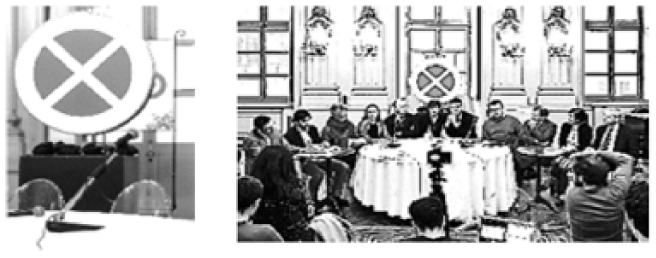
I am interested in the way in which the responses organize around the forecast processes as well as in what the regulations do not discipline because they have yet to foresee its gesture. I am interested in a system of openings, in glimpses of nonregulated matter, in non-disciplined facts, in non-censused actions, in not irregular but not yet regulated freedom. I wish that our staying in a space allowed us to read organized reality by distinguishing it from still organizable reality. I wish that as we cross through spaces we perceive their regulated consistency, taking on the potentiality of the gesture and of its subtraction. I wish that the symbols, foreseen actions and processes were unmasked of their consolidated inviolability and that we could imagine their pacific revision.
2012, Percorso Metodologico (Methodological route), 28/09, in La notte dei ricercatori, Università di Trento [streets renamed in accordance with the phases of methodological authentication].

Tools, where present, are the potential result of any experimental work. Or, at least, the possible manifestation of what already implicitly flows to stimulate research and that, in the shape of solution or of problem, becomes a category through which the work is confronted and realized. The tool is the device that allows one to cross the borders of something that has been institutionalized as such but that has lost contact with its own renegotiable borders. Something that has become invisibly omnipotent.
2013, Agonale, 12/05–01/09, in Autoritratti. Iscrizioni del femminile nell’arte italiana contemporanea, MAMbo – Museo d’Arte Moderna di Bologna [a dialectical playing field between two disciplines where they win only if they meet].

The notion of frame in my research has progressively revealed itself as the most strategic organizational material for animating the dialectic between different ambits the experiences of which one could want to interweave.
2013, Colo, is, colui, cultum, ère, in La cultura: spesa o investimento, 24/05, MUSE – Museo delle scienze, Trento [the name of the factory blooms, written with flowers where once it stood. Presentation].
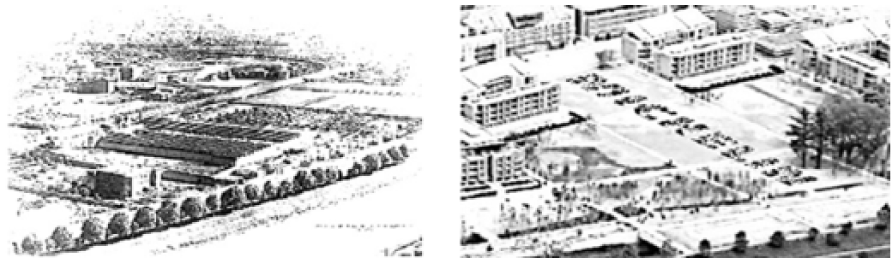
The non-designated places are preferred in my research, even designated with respect to my previous use. When an ambit consolidates itself into a typicality of research and attempts to institutionalize it, it contradicts its own premises, fuelling a symbolic relationship with the by now institutionalized and no longer effective ambit. Therefore I am always working on the borders, allowing them to change.
2014, Partout où les circonstances l’exigeront (Wherever circumstances require), in Esercizi di Rivoluzione, 29–31/11, MAXXI – Museo nazionale delle Arti del XXI secolo, Roma [a Court where the game consists of agreeing upon the rules before starting.].

Also proceeding with the production of the artworks, the poetic clump that is forming is itself another part of the content that needs to be contextualized. The semantic consistency of the poetic body can be intuited only after a certain time has lapsed, at a sufficient distance from it to allow us to view it in its complexity. So, to respect its continuity and its evolution, we need to trust in choices that are not fully predictable and justifiable. Thanks to this elusive margin, which leaves important variables uncovered, the research manages to anticipate and then surpass the rational cognitive boundary. The unfathomable parts of the organizational poetics escape the control aimed at achieving its coherent repetition and can evolve in surprising ways. I would be happy if through my work on rules it were possible to ‘play’ the chance of overturning the perspective from which we look at them. I wish we could notice that we are seeing things and that we could be amazed at seeing them again. I wish we could stop becoming used to anything. I wish that we could live a constant trauma of ordinary capability.
2014, S’ils n’ont pas de cerfs, qu’ils chassent des princesses (If they don’t have deer, let them hunt princesses), 06–09/11, in Stupinigi Fertile, Musei in Mostra – Artissima 21, Torino [a princess on stilts leaves deer footprints in the park].

The fact that, at the beginning and in part even now, I had had to deal with the production of the artwork independently, led to the project being built up by the contours of the ambits with which it was confronting itself, and how they answered it would answer, articulating itself. Each branching off of the implementation process proposing arguable criticalities enables one to realize and then directs towards solutions that it was impossible to fully assess from the very beginning. The ‘massive’ artwork was not the object here, but the organizational construction of that utopian compromise between the original idea and the available resources. If I had simply formulated and received the finished artefact I would have undermined from the outset the possibility of building a reason for pursuing the gesture. Everything I can do I have learnt because I have been placed in the position of having to understand what was going on. Vulnerable. Through trial-and-error, mostly error. As if it were a continuation of my education, a continuously changing methodological response, always conquered yet ignorant of the limits of possible action. I was aware that any exception to the transparency of the work process would have changed its meaning, detaching the idea from its realization, forcing the project towards unity through the a priori categories of artistic attribution.
Act III
[Entrepreneurship]
[Interior, daytime. Conference hall of the Minoa Palace Hotel. The people in the audience listen, amused. Antonio from the first row warns me that I still have 5 minutes. He opens the palm of his hand and pronounces ‘cin-que’ in labial Italian. I’m super late but comforted by the fact that something is happening, in its nature of participated sequence, in the discovery of its shareable meaning. After all, the entrepreneurship phase has just begun, it is under way, and I will understand only in the future what is happening.]
2011, ‘68TN, Fondazione Galleria Civica, Centro di Ricerca sulla Contemporaneità, Trento [research and editorial project on the year 1968 in Trento].
2012, Traccia 68_Sociologia_Trento (Track 68), from 05/09, in Tracce fuori mappa, Facoltà di Sociologia, Trento [audio guide of site of 1968 illustrated by those who experienced it].
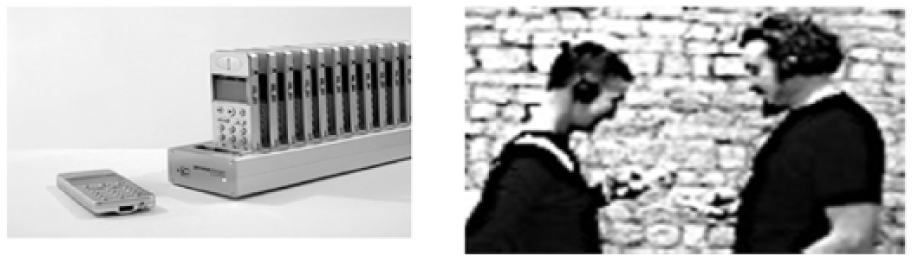
Because it is experimental, my artistic practice is in fact especially managerial. Decisional knots are tackled to safeguard the meaning that the organizational process has in constructing the meaning of the work, in a state of continuous aperture to the context, and listening to the structural and human resources. The core premise of my professional need is to have a strategic tool that enjoys the widest margin of freedom possible so as to be able to legally re-examine the rules of the game. Research conducted in an autonomous manner ensures that I can build ex-novo and submit to constant procedural analysis the decision-making processes, converting them into methodological suggestions with which to evaluate the alternatives regarding direction and articulate their sense with more awareness. Therefore, on the ridge of a difficulty in production, I attempt to convert criticalities into an independent production logic, within the processing of my own organizational technology, through the grades of artistic, analytic and practical/administrative legitimization. An entrepreneurial approach that answers to experimental urgency rather than to a board of directors, where the consistency of an asset risk is deposited in the transparency of the poetic trace. This approach, thanks to the roots of organizational aesthetics, can contemplate the organizational issues as theoretical charm. In my country, bureaucracy and law culturally and symbolically imprint the existential nature of the citizens, returning to the processes the legitimization of doing. From this perspective, I feel legitimized to address in my research the identifying terrain from which I come.
The process of experimental research needed to settle into a gesture that made it an enterprise, the macro-object that produced objects, a managerial artefact capable of generating materia-artefacts. The materia-artefact emerged gradually from the sequence of experimental works prior to achieving the complexity of a specifically designed object; from recognizing pre-existing objects to collecting them, to temporarily and marginally changing their shape or their use, until the type of practices to be activated called for increasingly inexistent objects the shape of which had to be intentionally negotiated with the makers, requiring an expert and economically responsible construction process. The managerial artefact took on a shape in symbiosis with its need to be so. The theoretical artefact is founded on experimentation and tries to recognize hypotheses. The results may be reflected in the theoretical artefact of an analogue. Through the artistic frame, what diverges from the conformity of a given parameter can be translated from anomalous into analogous. The organizational analogue is a planning material that maintains the structure of a recognizable and institutionalized artefact in which the interference inserted is not such as to overturn its identification but is capable of overthrowing its sense, that can be assimilated through its expected use. It is the product of a mimetic planning approach, a cross-ways of frames. It is the result of the attempt to insert variation contents into a pre-existing matrix. By following the rules, it is possible to create an autonomous system analogous to the expected process and that is reassuring in its own recognizability and attribution, integrating the change through the action associated with the same object. The analogue of use carries out its possible function of conversion of a context – changed but still recognizable – by testing the limit of non-attribution. That which in the beginning I defined as mechanism of a conceptual structure of the performance, subsequently was defined in terms of play, the mechanism of shared rules, field and players the constraints between which could be experimented with up to an expected contextualization of enterprise. An evolution of the organizational dynamics was therefore developed with a progressive adjustment of the instruments based on the degree of alignment between the respective receptors of research, of artistic practice, theoretical analysis and managerial initiative. The play script transforms from trace of improvisation in the performance into conceptual structure of an artistic action and then rules of a game and finally legal system for founding and managing the enterprise. The circumscribed space of the stage, compared to its assigned space, widens into a public and uncontrollable space, a space identified by a frame that is generated via irradiation of a possibly perceived gesture, into a field associated to rules all the way into the distributed space of a market. The actor, seen as textual protagonist, leaves it to the organizational artefact to activate a practice and then to the object to become the situational pivot of the action. Hence the people in the audience become passers-by possibly intercepted and then visitors, users of the project, and ultimately buyers.
2011, Annissima. Vendo ergo sum. Does the artist exist outside the art market? (with C. Pietroiusti as dealer) 04–06/11, Palazzo Sinigaglia, Torino [a personal pavilion in a private palace during the art fair].

2013, Collectors Anonymous, from 11/06 Basel, 17/10 London, 24/10 Paris [ads of meetings for addicted art collectors].

2015, Progetto di disordine (Disorder project), Chania [the typology and positioning of disorder in space is pre-ordered].

For research that formed in public spaces and concerned social themes, it was important to be able to develop projects for private clients in exclusive location, such as a yacht or a private bank, and acknowledge that it was possible to activate the same methodological approach. Although radically different in terms of type of constraints and of organizational dynamics, exclusive to an external public, the mechanism of the planning game worked also by integrating the client’s choices as contextual premises. Thus, the radius of practices triggered by the object contracts into aesthetic enjoyment and the symbolic challenge regarding its sense is taken to extremes. The artefact accepts the danger of transforming into the preciousness of materials and technologies, and runs the risk of being liked, as long as the game is revealed through a burst of laughter that understands its rules.
2013, Integrity, Private Collection, Basel [a shared sculpture “disintegrated” in the hands of 601 owners].

2014, Sea Specific_A, Private Collection [a lock for pleasant dreams. The heart of the boat pulsating in accordance with navigation].

Thanks to private collectors, I received the resources to concretely pursue my research, seeing it recognized as dignified work, either sitting at a table with the members of an international board of directors, periodically sharing aesthetic and symbolic choices according to which I could set up the sculpture and manage the performance of its use; or during an onsite inspection encouraged by the ship owner so that my position was respected along the decision-making process, requiring that the group of technical experts to accept the solution I conceived and not accept the limitations they imposed to simplify the project. In addition to the economic support, the most generous contribution was in terms of a shift in awareness, in the experience of being able to design on a continuously passable threshold of the possible, in the luxury of a thought that can be translated into object.
2014, Scaccchi. Omaggio al padre (Chesss. Homage to the father), 28/10, Private Collection, Roma [players can place a new chessboard on the side without adding pieces or changing rules].
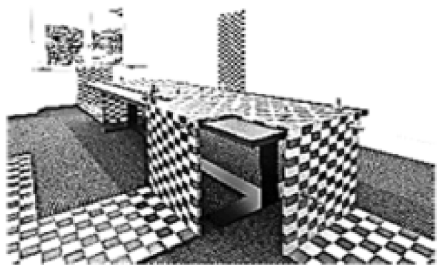
The chance of creating an extremely costly and unprecedentedly feasible object demands a complex process of study, design and production. The effort involved proves excessive for a single individual lacking negotiating experience in production relations. The foreign clients and their technical consultants do not want to interface directly with the national craftsmen and in their terms and conditions specify that I alone had to manage the entire production process. Suppliers’ mistakes and the swindle of a retailers with whom I had agreed to receive the finished product compromise the outcome but forge my experience. The economic responsibility I assumed to remedy the list of failures I underwent lead me to personally reconstruct the entire production process, carefully checking every piece of data and touching hands-on the quality of each small step forward. The more taken for granted the simplicity of a passage is and the greater the consequences of any misunderstanding would be, and so had to be supervised. In addition to the enrichment in useful data, I refine the references for negotiating the cooperation agreement with the suppliers involved, the true production permit, the access to possible realization, a tacit value on the price of the service requested. At the beginning an artisan discourages an anomalous production because it polarizes consolidated processes. Actual feasibility is built via a gradual process of experimental confidence with the technical aspects and thanks to the workmanship of the craftsmen who engage and critically elaborate the part they have been assigned to make.
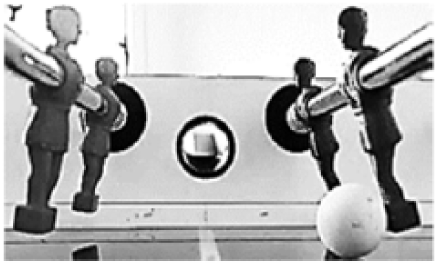
2015, Venus Ludens, 17/10, Ventura Contemporary Art Night, Officina temporanea, Milano [foosball table with female players].
2015, GapTransfer, 11/06, Lambrate, Milano [the gender pay gap percentage offered as a discount in participating shops].

Just as the project contextualizes experimentally in the field, so the object is built in the territory of its production process, defining its formal hypothesis in overcoming the various degrees of difficulty and from the answers to the processes that have been requested. It becomes fundamental to be able to work alongside the production partner to route at onset any realization problem towards an inventive alternative that integrates with the polarization of the object. In some cases it is like working at an industrial prototype, in the experimental phase of the study of a product not available on the market. My artistic practice has generated and historicized various kinds of prototyping, and some – according to the project – were even supposed to be distributed, but they never optimize the numbers. In order to allow myself to develop a production that is for more than the single specimen, I must legitimize its sense within the project, within a scope of contextualization that also includes that of its distribution as activator of a shared practice. By increasing the commitment of resources used, the need for economic sustainability that has joined the conceptual need and the production optimization that coincides with the possibility of distribution necessary for the project. The object becomes product available for its use in terms of action or thought. Each purchase we make nourishes the shared sense of a specific market. In the case of the practices I am interested in boosting, it is a symbolical micro-circuit that however shall find in every one of its purchasers the protagonist of the performance activated by the object.
2015, Scalfi&Eghenter Ltd, 14–19/04, Ventura Lambrate 2015, Milano Design Week, Milano [exhibition of designer objects that take on a corporate authorial identity].

I have never been able to take for granted the moment when an experimental research project can become a sellable object and therefore a product. I have always treated it as a content of the context whose sense I can reprocess. To become enterprise, as a practical and conceptual passage, I have to create a dedicated subject, having it mimic as a design enterprise, so as to be able to interface directly with the real user, free of the positive prejudice about contemporary art. In this way, the category of attribution as artist transforms into that of enterprise by the same name, in a shift of authorial identity that spreads to the means of production and reconnects with the theoretical investigation. With the help of a legal and administrative consulting structure as generous as it is knowledgeable, I set up the legitimization of the company and of the projects so that I can manage through it, becoming a legal entity that would allow me to enter the market in the guise of an assigned subject, on a par with the others involved in production, being able to use the same fiscal treatment and financial trust. Hence it becomes possible to provide a professional contribution to the realization of an experimental research through artistic practice. S&E design tests the notions of utility consigned to the object, intervening on the borders of the attribution. This is a mechanism of a planning game in which the data of the ethnographic analysis are transferred into reality, where the organizational constraints are translated into a variation of the object, to mobilize its meaning. S&E meets entirely induced needs that are irreplaceable because they are superfluous. Objects that do not satisfy needs but questions that it is a luxury to raise. A luxury of the mind. Urgency in practices. S&E products are functional scraps, the instigation of superstructural needs, transversal to customs and rules. Organization objects, procedural artefacts that enclose in their shape the practices of contextualized realization.
Hic et nunc, 2015 by Scalfi&Eghenter, 14–19/04, Ventura Lambrate 2015, Milano [bookshelf shaped as a map of the city in which it is installed and the clock without hours].

[Slide with clocks appears]
[As the available time expires I come out from behind the institutional lectern and run into the audience.]
THE END
Footnotes
Funding
This research received no specific grant from any funding agency in the public, commercial, or not-for-profit sectors.