




Abstract
Discrimination-health research has been critiqued for neglecting the endogeneity of reports of discrimination to negative affect and the multidimensionality of mental health. To address these challenges, we model discrimination’s relationship to multiple psychological variables without directional constraints. Using time-dense data to identify associational network structures allows for joint testing of the social stress hypothesis, prominent in discrimination-health literature, and the negativity bias hypothesis, an endogeneity critique rooted in social psychology. Our results show discrimination predicts negative emotions from day-to-day but not vice versa, indicating that racial discrimination is a risk factor and not symptom of negative emotion. Furthermore, we identify sadness, guilt, hostility, and fear as a locus of interrelated emotions sensitive to racism-related stressors that emerges over time. Thus, we find support for what race scholars have argued for 120+ years in a model without a priori directional restrictions and then build on this work by empirically identifying cascading mental health consequences of discrimination.
Keywords
Terms such as “microaggression” and “discrimination” are used to describe interpersonal manifestations of racialized oppression, mistreatment, and bias, whether intentional or not (Ong 2021; Priest and Williams 2018). Although many argue that discrimination, in its varied forms, is a consequence of systemic racism, others challenge the validity of discrimination reports and instead emphasize the ambiguity of perceptions in social life (Haidt 2017). Not surprisingly, opinions about racialized social experiences in the United States vary by race/ethnicity. For example, in a recent 2021 survey of 12,055 U.S. adults, 80% of African Americans reported that Black people face a lot of discrimination, relative to 54% of Hispanics, half of Asians, and only 38% of White adults (Daniller 2021), the group most likely to dispute the significance of racism (24 percent say “only a little” or “none at all” compared to 5 percent of African Americans). The contested view of discrimination in the United States is a microcosm for how Americans think about race/ethnic inequities across many facets of life where rival proposals are expressed as diametrically opposed explanatory pathways. These differing positions tend to be grounded in the distinction between social factors outside the individual (e.g., structural racism) and the processes at play within the individual (e.g., mental health).
Contested views about the validity of discrimination reports similarly divide research on the association between racism-related stressors and mental health. While the social stress hypothesis (SSH) posits that racism shapes interpersonal dynamics in ways that are emotionally and physically taxing (Priest and Williams 2018), advocates of the negativity bias hypothesis (NBH; Lilienfeld 2017) challenge evidence based on the SSH model and propose that prior mental health shapes perception. Research on threatening, exclusionary, and marginalizing encounters that contribute to systematic inequities by increasing stress (e.g. Chae et al. 2011; Goosby et al. 2018) are thus continually challenged by claims that those who experience negative emotionality are more likely to evaluate experiences as discriminatory (Lilienfeld 2017). In its most extreme form, certain scholars have used these critiques to contribute to a larger national dialogue and skepticism around racism, population health, and individual health dynamics (see Haidt 2017).
Additionally, discrimination-health research has been largely insulated from emergent multidimensional models of mental health that could deepen understanding of the granular dynamics undergirding the SSH. Extant studies primarily examine dimensions of mental health in isolation, linking discrimination singularly to distress (Borders and Liang 2011), cognitive functioning (Chae et al. 2016), and daily well-being (Ong et al. 2013), among others. Yet mental health is increasingly understood as a complex cluster of discrete and interrelated emotional dynamics (Aalbers et al. 2019; Borsboom 2017; Boschloo et al. 2016; Houben, Van Den Noortgate, and Kuppens 2015), with recent research finding that discrimination can create specific sequences of negative affect. An initial response of anger or grief after discrimination can transform into chronic “racial battle fatigue” (Hernández and Villodas 2020), for example, suggesting that current estimates of the marginal relationship between discrimination and aggregate affect underestimate discrimination’s cascading consequences.
In this article, we address these ongoing challenges in discrimination-health research by using an innovative methodological strategy. Our approach leverages individuals’ daily life time series to identify a predictive network structure where nodes are defined as variables with the paths between them derived from the time series’s statistical associational patterns (Aalbers et al. 2019; Asparouhov and Muthén 2020; Borsboom 2017; Bringmann et al. 2013; Hamaker et al. 2018; Jones, Mair, and McNally 2018). This strategy expands prior work by providing a framework to consider discrimination’s cascading consequences for multiple emotions without restrictions dependent on researchers’ preferred explanations (Brown et al. 2000; Hernández and Villodas 2020; Pavalko, Mossakowski, and Hamilton 2003; Walsemann and Gee 2009). Findings show that discrimination stimulates a locus of hostility, guilt, sadness, and fear over a two-week period but that discrimination is not predicted by prior emotion. We conclude by noting how these results, derived completely without a priori directional constraints, support a tradition of scholarship on racism and health dating back to W. E. B. Du Bois and Kelly Miller.
Literature Review
Overview
Racial and ethnic discrimination, products of racism and xenophobia, have been identified as key factors linked to both mental and physical health among people of color in an extensive and continually growing body of cross-disciplinary research (Lewis, Cogburn, and Williams 2015; Ong 2021; Williams and Mohammed 2009). Dominating this literature are (mostly cross-sectional) studies of mental health, with scholars documenting strong and consistent associations between interpersonal discrimination reports and various psychosocial indicators (Williams and Mohammed 2009). Furthermore, the racial discrimination and mental health association is documented across age and social status continua, ranging from adolescents (Priest et al. 2017; Seaton, Yip, and Sellers 2009; Smith-Bynum et al. 2014), university students (Salvatore and Shelton 2007) and graduate students (Burrow and Ong 2010), to U.S. adults more broadly (Broudy et al. 2007; Joseph et al. 2020) in midlife (Michaels et al. 2019) and later life (Aranda et al. 2012; Kim et al. 2017; Luo et al. 2012).
For the purposes of our study, we focus specifically on the emotion dynamics underlying mental health trajectories, considering discrimination as a racism-related stressor. Specifically, we jointly track how individuals feel during the course of daily life interlinked with their racism-related social experiences (see Cheadle et al. 2020).
Social Stress Hypothesis
A prominent explanation for the observed association between discrimination and mental health is the social stress hypothesis (SSH), which proposes that discriminatory experiences—ranging from microaggressive exclusions to potential violence—are social stressors detrimental to mental and physical health. The underlying assumption is that experiencing discrimination is threatening and stressful (Smith-Bynum et al. 2014), rather than negative feelings shaping the likelihood of perceiving discrimination. Consequently, the hypothesis is that discrimination increases negative emotionality through a series of physiological and psychological processes (Goosby et al. 2018; Major, Quinton, and McCoy 2002; Massey 2004; Smith-Bynum et al. 2014). Therefore, one way that structural racism contributes to both mental and physical health burdens is by organizing interpersonal dynamics via daily life social encounters.
Recent studies have attempted to capture the temporal nature of discrimination (i.e., repetitive, cumulative, anticipatory) and its downstream effect on psychological and physiological outcomes by leveraging repeated observations. Longitudinal studies have measured the association between discrimination and mental health across years (Seaton et al. 2009), and daily diary studies have documented fluctuations over days and weeks (Broudy et al. 2007; Douglass et al. 2016; Hoggard et al. 2015; Jochman et al. 2019; Ong and Burrow 2017). Even more granular studies attempt to capture associations within days (Joseph et al. 2020; Potter, Brondolo, and Smyth 2019; Torres and Ong 2010), with two recent studies going even further by colocating microaggressive discriminatory experiences with emotional arousal dynamically within days (Cheadle et al. 2020; Jelsma, Goosby, and Cheadle 2021; see also Zhang, Goodby, and Cheadle 2021). Whether measured across years, weeks, days, or within days, a consistent finding across these studies is that racism-related exposures can increase negative emotions and physiological patterns consistent with the “stress response.”
Within the context of this study, the SSH model proposes that discrimination exposure increases negative emotions and does not arise from them. Within the context of an analytic strategy that does not make directional assumptions, the hypothesis indicates that influence flows in only one direction, from the external social context and into the individual, where it is experienced with negative emotions.
Negativity Bias Hypothesis
What we term the negativity bias hypothesis (NBH) is a form of endogeneity bias proposing that discrimination reports are themselves outcomes of poor prior mental health (Hodson and Dhont 2015). The strongest NBH proponents argue “questionable interpretive practices” are common in the SSH literature and offer two critiques to justify this position (Jussim et al. 2016). The first critique maintains that race/ethnicity researchers are committed to only one interpretation and do not critically consider plausible alternatives, endogeneity concerns in particular (Lillienfeld 2017). Despite the broad findings consistent with the SSH, it is also true that longitudinal studies evaluating the NBH are less common, and even SSH proponents have noted that the potential biasing role of mental health endogeneity is underappreciated and undertested in the literature (Ong and Burrow 2017; Ong et al. 2013).
The second critique claims that there is an “insulation issue” in which discrimination-health research is characterized as being largely isolated from substantial bodies of conceptually and methodologically rich research in other areas (Lillienfeld 2017). This view has been articulated most forcefully by psychologist Scott Lilienfeld in his controversial 2017 article, and in like-minded critiques of racial microaggression literature (Haidt 2017; Lukianoff and Haidt 2018; for a detailed rebuttal, see Williams 2020). The belief is that the microaggression program of research would benefit from engagement with scholarship that considers the “contaminating influence of personality” (Lilienfeld 2017:159) on observable associations, particularly when the variable of interest (i.e., microaggression) is ambiguous or leaves room for interpretations or reactions to be shaped by participants’ personality traits.
Less forceful articulations of the NBH can be found throughout social psychology. Brief and colleagues’ (1988) concern that unmeasured negative affectivity biased estimates of job stress, for example, prompted systematic attention to endogeneity in occupational psychology (e.g., Brotheridge and Grandey 2002). Concerns about the unmeasured role of “personality” have similarly been raised in studies of genetics (Saudino et al. 1997) and in research on neuroticism (Lahey 2009). Discrimination-health researchers have themselves raised the possibility that “prior-race related stress” (Mendoza-Denton et al. 2002) or “race-based rejection sensitivity” (Mercer et al. 2011) could shape later emotions. Still, Mercer and colleagues (2011) found racial microaggressions do increase stress net of prior sensitivity, and more recent studies that addressed this concern largely find no evidence supporting the NB hypothesis (Brown et al. 2000; Mekawi et al. 2021; Pavalko et al. 2003; Walsemann and Gee 2009).
The NBH hypothesis, based on this literature, is the reciprocal of the SSH: Discrimination reports arise from negative emotionality (i.e., negatively biased social perception). In terms of a modeling strategy on time-dense, short-term data that does not make directional assumptions, this means that the flow of influence is from emotion states to perceptions of racism-related experiences.
Beyond “Mental Health” and Interpersonal Discrimination
Early empirical research on discrimination and health tended to define mental health as an aggregate category, such as depression and distress (Brown et al. 2000; Pavalko et al. 2003) or “health-related work limitations” (Walsemann and Gee 2009). Consequently, researchers have linked discrimination to a variety of discrete or aggregate poor health outcomes, such as depressive and anxiety symptoms (Levine et al. 2014; Smith-Bynum et al. 2014), cognitive functioning (Chae et al. 2016), loneliness (Priest et al. 2017), daily well-being (Ong et al. 2013), emotional distress (Borders and Liang 2011), rumination (Jochman et al. 2019), psychosocial resources (Joseph et al. 2020), and clinically diagnosed mental disorders (Gee et al. 2007; Pilver et al. 2011; Soto, Dawson-Andoh, and BeLue 2011).
Recent advances in psychopathology, however, emphasize that mental health is not a single quality but consists of dynamics between clusters of discrete underlying emotions (Aalbers et al. 2019; Borsboom 2017; Houben et al. 2015). Indicators of mental and physical health are also commonly comorbid (for a brief review of recent research, see Lewis et al. 2015), especially when viewed over time (Prince et al. 2007; Scott et al. 2016; Tegethoff et al. 2016). Some emotions may thus play more important roles in psychological functioning while others may be more peripheral (Bringmann et al. 2015, 2016), and psychopathologies may also play out in a temporal order dependent on the associations between emotion states (Aalbers et al. 2019).
This reconceptualization of mental health has direct implications for research on discrimination. In terms of temporal order, if depression at one time point can increase loss of interest in activities at a later point (Aalbers et al. 2019), it follows that discrimination-health research may be underestimating the consequences of discrimination by not evaluating how its immediate consequences pool into mental health trajectories over time. Recent research, for example, shows how fatigue, a core constituent of other depression symptoms (Boschloo et al. 2016), has been found to be a long-term consequence of chronic racism-related stressors that initially evoke anger or fear (Hernández and Villodas 2020; Thomas et al. 2006). Cross-sectionally, meanwhile, the conceptualization of mental health as a network of states implies that discrimination could stimulate some negative affect states and not others. Akin to Bringmann and colleagues’ (2016) finding that neuroticism consists of a dense network of specific emotional responses (e.g., anger, stress, anxiety, sadness), the emotions evoked by discrimination may be a unique constellation of states undetected in research based on aggregate measures or that examines outcomes independently of one another.
Researchers have also begun to consider how witnessing discrimination impacts mental health. In terms of vicarious discrimination, studies show that witnessing racism can have negative emotional and psychological consequences (Curtis et al. 2021; Freelon, McIlwain, and Clark 2016; Hicken et al. 2013; Tynes et al. 2019). Due to the increasingly virtual lives led by younger individuals, researchers have also begun exploring media and online exposure to vicarious racism (Jochman et al. 2019; Priest et al. 2017), defined as experiences and events of racism that are encountered through observation or learning (Harrell 2000). While the literature on vicarious racism exposure is somewhat limited at present, particularly in terms of testing the described hypotheses, evidence suggests that witnessing racist and discriminatory interactions among people who are members of one’s racial group is associated with negative emotions such as anger, anxiety, and feelings of isolation and rejection (Curtis et al. 2021; Truong, Museus, and McGuire 2016; Tynes et al. 2019). Given the relatively limited theorization around and critiques of vicarious racism and health links, we ground our theoretical commentary/contribution in interpersonal discrimination but include vicarious racism in our analysis for exploratory purposes and to provide more context to the discrimination-health associational network. This inclusion is important given that marginalized racial/ethnic groups, Black Americans in particular, are hypothesized to have greater exposure to vicarious racism.
To date, we are not aware of any research on discrimination’s (potential) endogeneity with mental health that also considers its capacity to have cascading consequences or that allows perceptions of discrimination to arise from such emotional cascades. In what follows, we employ a system of multilevel time-series models to evaluate patterns of interrelationships in daily life and move toward a refined understanding of what alternative hypotheses can contribute to discrimination-health research.
Methods
Data
Data for this study come from the StudentHD2 project, which was conducted at a large, predominately White, Midwestern research university campus during fall 2017 and spring 2018. The goal of StudentHD2 was to examine the dynamic experiences of psychological, physiological, and behavioral outcomes associated with a wide range of stressors among predominately racial/ethnic minority students. Students participated in intake and exit interviews sandwiching a two-week daily diary protocol with a detailed morning diary, administered through smartphone, that interrogated student experiences and feelings over the previous day. Having students document responses the following day rather than the same evening increased the range of experiences and responses that could be captured by facilitating inclusion of events happening at night. This study draws on data collected from detailed daily diary surveys, with a focus on different dimensions of emotionality. The sample was comprised of 81 Black, Latinx, and “other” students who collectively contributed 1,008 unique time observations via the surveys. The daily diary response rate was 89 percent, with students providing 12.4 days of data on average.
Measures
Emotion categories
Emotions were measured using the Positive and Negative Affect Schedule (PANAS-X; Watson and Clark 1994), a 60-item version of the PANAS that includes 13 different emotional categories. While the core order dimensions of Positive Affect (PA) and Negative Affect (NA) reflect global valence, the sub-scales reflect specific emotional states. 1 For this study, 10 measures were utilized that include six negative emotion scales (hostility, six items; guilt, six items; sadness, five items; fatigue, four items; fear, six items; and shyness, four items) and four positive emotion scales (joviality, eight items; self-assurance, six items; attentiveness, four items; and serenity, three items). Students were asked to what extent (none = 1, little = 2, some = 3, or lots = 4) they felt each of the items (emotions) on the previous day. Responses for each item were then averaged to create 10 mean emotion scales. To ensure that items in scales were equally weighted, each summed total was divided by the number of nonmissing items present.
Racism-related and subjective day summary
Three main predictor variables are used in the analysis: (1) interpersonal discrimination, (2) vicarious racism, and (3) day summary. Interpersonal discrimination was created using an event-based self-report of daily discrimination experiences across 10 items drawn from the Everyday Discrimination Scale (Williams et al. 1997) inspired by Essed’s (1991) work, Understanding Everyday Racism (0 = no, 1 = yes). Responses for each item were then averaged to create a mean discrimination scale. Second, a binary indicator for vicarious racism was created by asking, “Did you learn about racial injustices or the mistreatment of people of color online (such as Facebook, Twitter, newsfeed, etc.) or in the news yesterday (1 = yes)?” Last, day summary was included to capture students’ overall evaluation of their day and reflects responses to the question, “Overall, how good of a day did you have yesterday?” (1 = extremely good, 2 = somewhat good, 3 = neither good nor bad, 4 = somewhat bad, 5 = extremely bad). We reverse-coded day summary such that positive values of day summary reflect having a better, more positive day.
Analytic strategy
Our analytic strategy draws on recent work on Gaussian graphical models (GGMs) of time-series data (Epskamp, Waldorp, et al. 2018; for applications, see Aalbers et al. 2019; Fried and Cramer 2017; Fried et al. 2017; McNally et al. 2015). At core, this modeling approach leverages sequential univariate multilevel vector autoregressive (VAR; Bringmann et al. 2013), as we do here, or multivariate Bayesian dynamical structural equation models to estimate parameters (e.g., Haslbeck, Bringmann, and Waldorp 2021). Indexing over days,
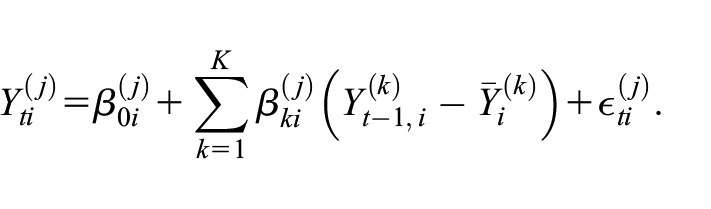
Because random intercepts (
Together, the regression coefficients (
The results produced by this temporal analysis can also be used to make inferences about contemporaneous, within-participant partial correlations and those between participants, which summarize averages over the study. The contemporaneous network reflects the within-day partial correlations net of the temporal network. Here, the Level 1 residuals (
All model parameters were estimated using the R package
Finally, to further assess how emotion states interrelate, we used the significant associations between the variables to construct weighted and binarized networks of the relationships in each set of results. The weighted network uses the absolute values of the associations and allows us to report which variables have the highest PageRank, a variant of power centrality, which can be used to evaluate which emotions are the most sensitive to changes among other variables.
2
The weighted network is also useful because it allows us to calculate the betweenness centrality of variables, which can be interpreted as a measure of the importance of a variable in mediating relationships between other variables. The binarized network, meanwhile, enters 1 in a cell
Results
Descriptive Statistics
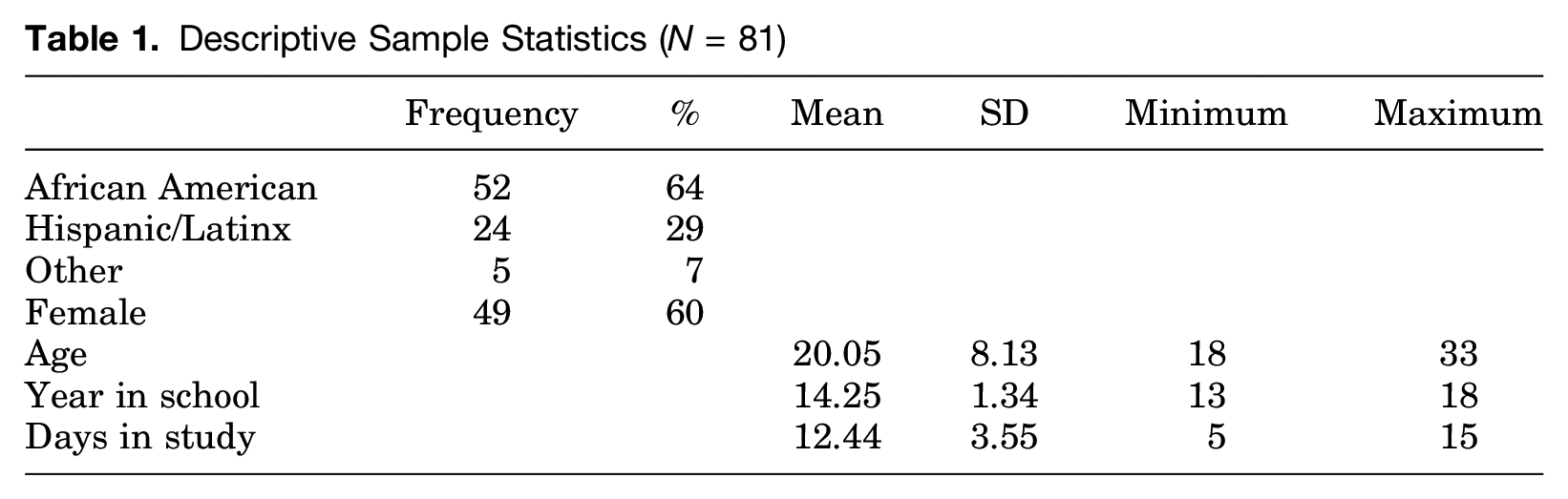
Descriptive statistics for the 81 participants are presented in Table 1. The sample includes the following race/ethnic groups: 52 African American/Black, 24 Hispanic/Latinx, and 5 others (3 = other, 1 = Continental African, 1 = White). Approximately 64 percent of the sample identified as African American/Black, 29 percent identified as Hispanic/Latinx, and 7 percent were classified as other for the purpose of the study. Sixty percent of the sample identified as female (n = 49), and the mean age of respondents was 20 years. Average years in school for participants was 14.25 with the following class year distribution: 30 freshman, 23 sophomores, 11 juniors, 11 seniors, and 6 students identifying as fifth years or higher.
Descriptive Sample Statistics (N = 81)
Descriptive statistics for the daily diary portion of the study are presented in Table 2. Mean responses for mental health scales ranged from 1.28 (shyness) to 2.49 (serenity) on a scale ranging from 1 to 4. In terms of variability, across the 10 mental health scales, intraclass correlations ranged from .39 (shyness) to .62 (self-assurance) such that roughly two-thirds to one-third of the variation in reported emotions stem from within-person variability. Reported interpersonal discrimination and vicarious racism had averages of .03 and .20 (scale range = 1–3), with 60 percent and 86 percent of variation within-person, respectively. Last, the average reported day summary was 3.758 (value between neither good nor bad [3] and somewhat good [4]), with 77 percent of variation within person.
Time Variant Variables (N = 81, Nt = 1,008)
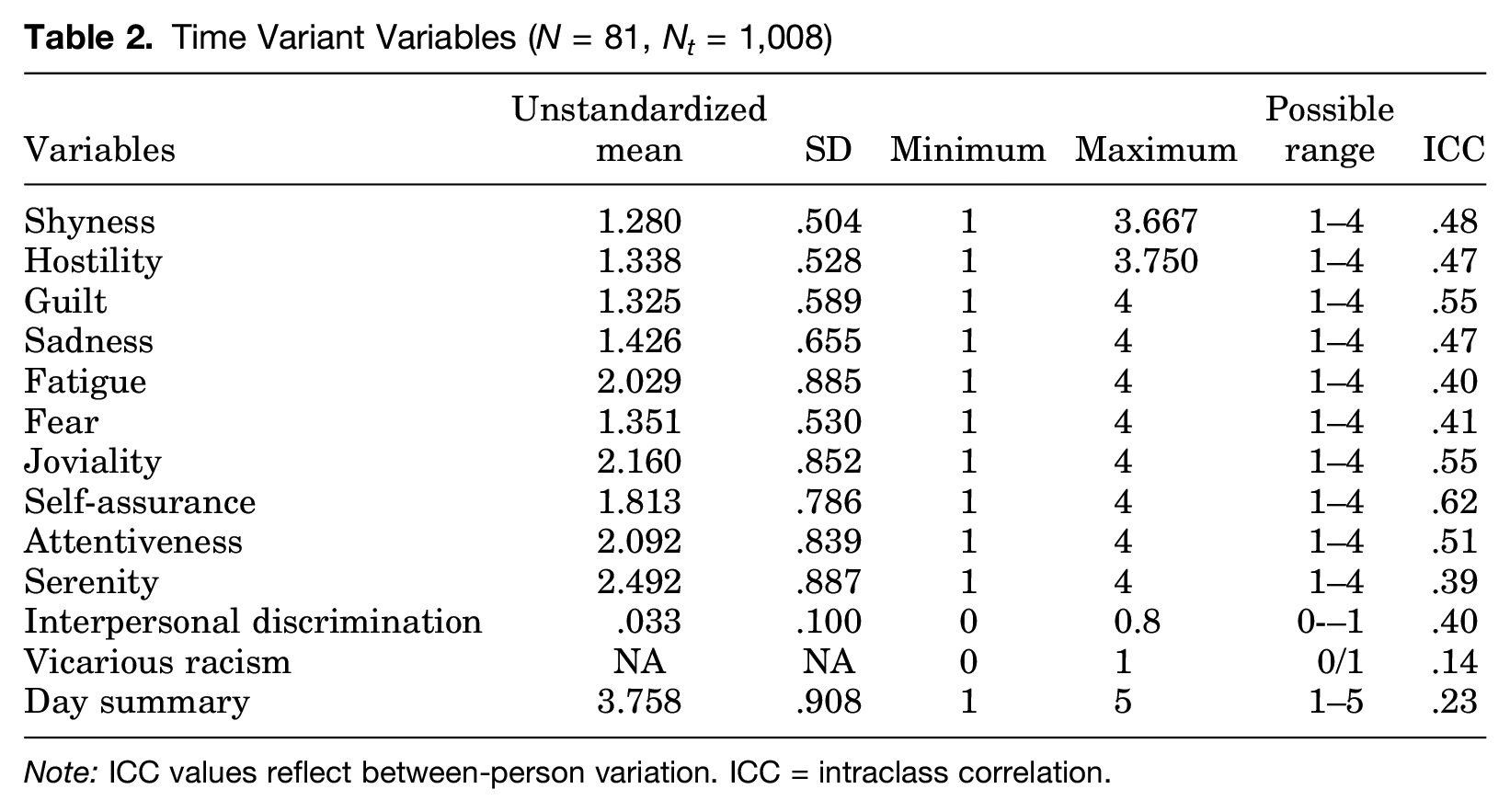
Note: ICC values reflect between-person variation. ICC = intraclass correlation.
Temporal Network, Day-to-Day
We proposed that our network approach helps understand the multiple and cascading consequences of discrimination for mental health. Does this network approach challenge or qualify the social stress (SSH) and negativity bias (NBH) hypotheses?
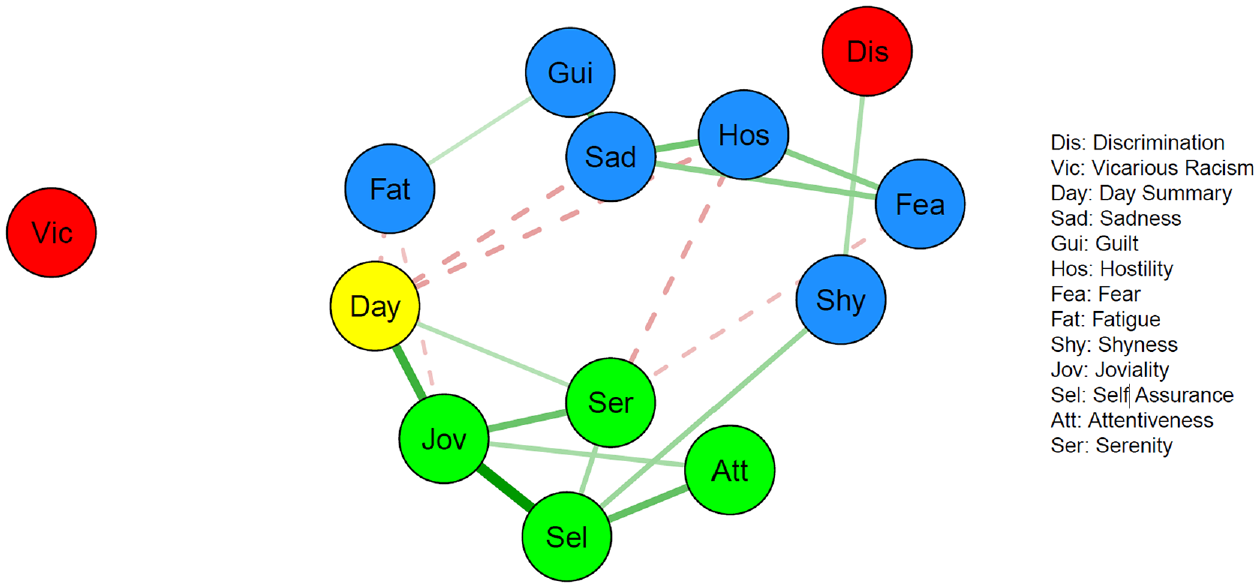
To present our results, we visualized the relationships created by our multilevel time series of emotional dynamics as a series of network diagrams. These diagrams visualize ties between variables only when they reach the point of statistical significance after adjusting for repeated testing (i.e., repeated tests across outcomes). Green ties represent positive associations between variables, and red ties represent negative associations between variables. The thickness of the colors represents the strength of an association scaled to the largest reported association in the model. Nodes are colored, meanwhile, by whether they represent positive emotions (green), negative emotions (blue), experiences of discrimination (red), or day summaries (yellow).
We begin with our temporal network in Figure 1, a directed network of relationships that can be used to jointly test the SRH and NBH. 3 Specifically, Figure 1 demonstrates how interpersonal discrimination, vicarious racism, subjective day summaries, and emotion measures predict each other from one day to the next. Critically, Figure 1 shows discrimination directly increases a specific set of negative emotions from one day to the next, controlling for the emotions’ prior day score. However, discrimination is not predicted by any emotion, contradicting the NBH. Instead, first-order associations are observed with multiple forms of negative affect such that discrimination predicts subsequent fear (B = .10, SE = .05, p = .045), hostility (B = .09, SE = .04, p = .039), sadness (B = .13, SE = .04, p = .002), guilt (B = .09, SE = .03, p = .007), and a bad overall summary of one’s day (B = –.12, SE = .05, p = .009). Meanwhile, vicarious racism predicts subsequent feelings of fatigue (B = .10, SE = .04, p = .008) and appears to be more responsive to prior emotional states. Although vicarious racism is not predicted by negative emotion, we note that high reports of joviality (B = –.14, SE = .07, p = .036) are associated with a decreased likelihood of reporting vicarious racism the next day, whereas an overall good summary of one’s day (B = .10, SE = .05, p = .037) appears to increase the likelihood of reporting vicarious racism the next day, potentially by altering online behavior (Tynes et al. 2008).
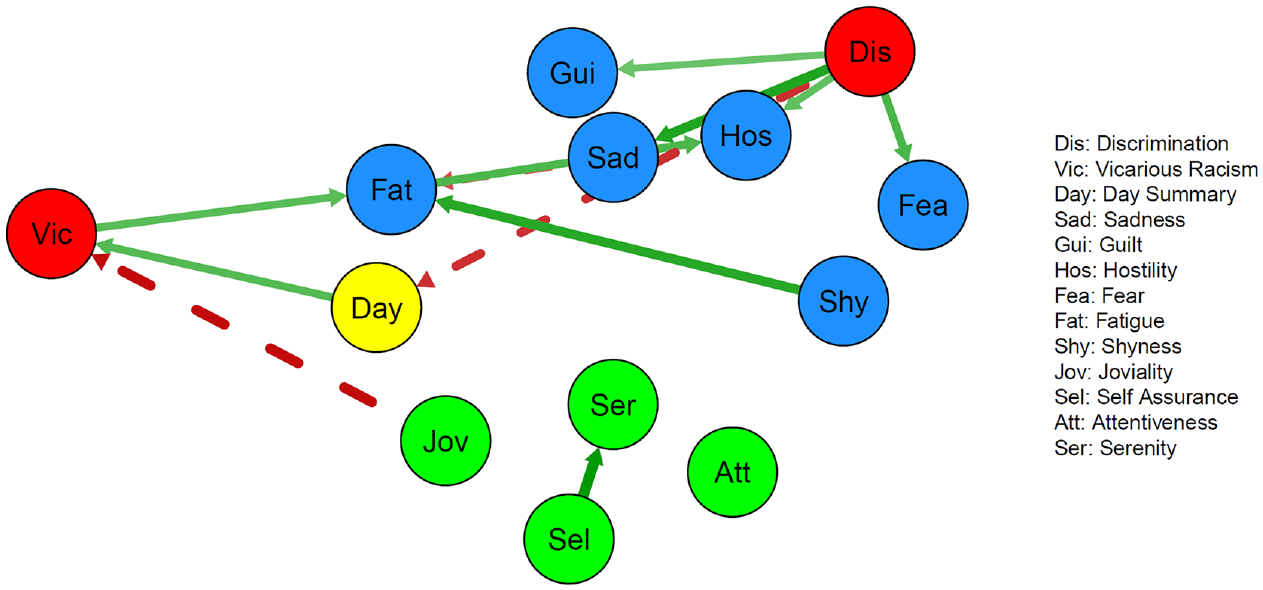
Temporal Network: Day-to-Day
Centrality measures for the temporal network further qualify the SSH. Discrimination is the most important predictor in the network. Discrimination has both an in-degree of 0, meaning that it is not significantly predicted by other variables, and the highest out-degree in the network, indicating it significantly predicted increases in five negative emotion states. At the same time, hostility and fatigue have the highest PageRank scores in the network, indicating that both states tend to be the endpoints in the network and that they are most sensitive to changes in other emotional states. This structure of relationships suggests that the experience of discrimination is a significant predictor of multiple dimensions of negative emotions. Meanwhile, hostility and fatigue tend to be the long-term consequences of shifts in other emotional states, a finding consistent with Boschloo and colleagues’ (2016) research on depression. However, we also note that reports of vicarious racism have the third highest PageRank in the network, suggesting that while interpersonal discrimination stimulates negative emotions, the likelihood that an individual reports a vicarious exposure may be more dependent on prior emotional states. Finally, we also note that fatigue has the highest betweenness centrality in the network, suggesting that fatigue links other negative emotional states together.
Contemporaneous network and between-subjects network
While the temporal network allows for directional tests of the relationship between discrimination and emotional dynamics, the contemporaneous and between-subjects (over time) networks facilitate an analysis of how emotions affected by discrimination adhere together within days and across persons. The contemporaneous network in Figure 2 shows the direct associations between variables in the same time frame (within-day) after controlling for all other temporal and contemporaneous relations. In general, the same-day correlations reveal a bipolar structure of associations where positive states tend to cluster with other positive states and negative states cluster to other negative states. For instance, joviality is positively associated with self-assurance (r = .35, p < .01), attentiveness (r = .21, p < .01), and serenity (r = .12, p < .01).
Contemporaneous Network: Same Day
More importantly, Figure 2 indicates that the four negative emotional states influenced by discrimination in the temporal network tend to be closely related on any given day. Hostility, fear, and sadness form an interlocked triad of negative states in the contemporaneous network, with hostility positively associated with fear (r = .16, p < .01) and sadness (r = .19, p < .01) and fear associated with sadness (r = .16, p < .01). Guilt is also associated with sadness (r = .20, p < .01) and weakly associated with fatigue (r = .08, p < .05). Read in conversation with the temporal network, Figure 2 indicates that discrimination not only influences multiple negative emotions but also tends to stimulate a specific locus of mutually reinforcing sadness, hostility, and fear. PageRank centrality scores, meanwhile, suggest sadness is the dominant emotion within the triad activated by discrimination (10.5 percent PageRank), followed closely by hostility (9.15 percent PageRank) and to a lesser extent fear (6.5 percent PageRank).
It should also be noted that the within-day contemporaneous network links discrimination to a negative emotion, shyness (r = .11, p = .02), and not to any positive emotions. At the same time, discrimination is unrelated to how participants summarized their day, vicarious racism (i.e., learning about racial injustice online), or any of the positive emotion measures. Importantly then, emotion states have the correlation structure expected from psychopathology models, recognizing that mental health is comprised of complex clusters of states that cohere together (Bringmann et al. 2013).
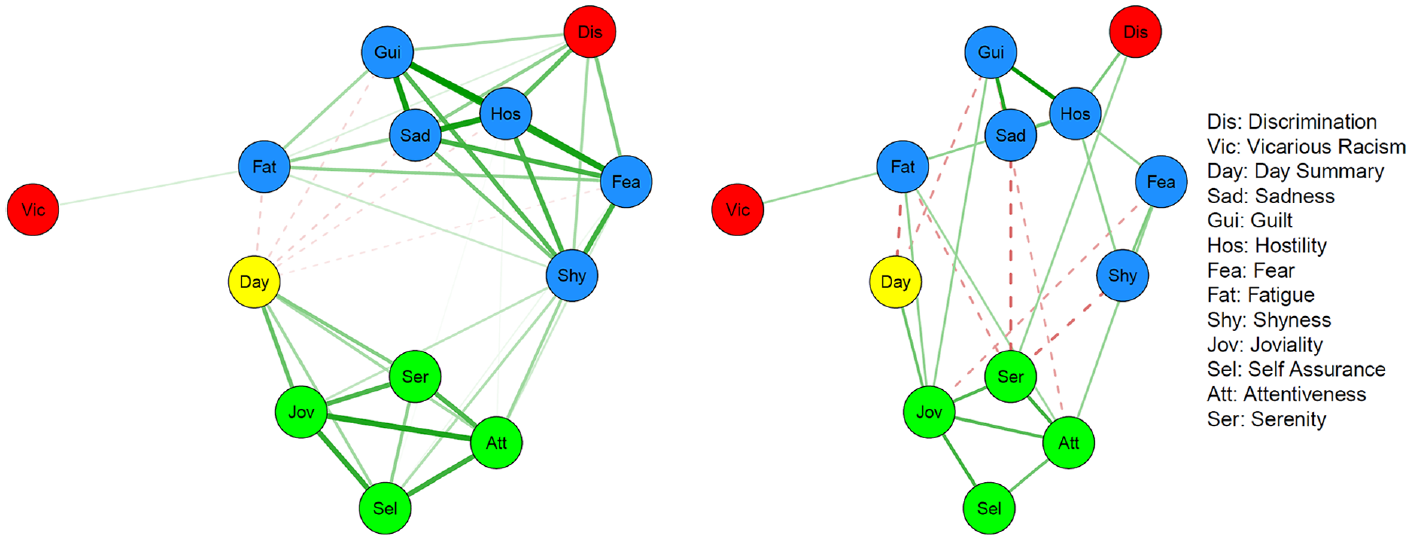
Finally, Figure 3 visualizes the between-subjects descriptive network in two ways. First, the zero-order correlations among the participants’ means over the study period and then as partial correlations among the residuals. The zero-order correlations on the left side of Figure 3 documents a cluster of negative emotions within which discrimination is integrated and then a cluster of positive emotions. The structure shifts considerably, however, once the temporal associations from day-to-day are accounted for. In particular, negative emotions and positive emotions become more integrated and less clustered net of the local lagged time dynamics. In other words, the positive and negative emotions tend to be more closely related once temporal processes are considered. Discrimination is also less integrated with the negative emotion cluster once the temporal structure is accounted for. One interpretation of this finding is that discrimination and negative emotions trends are largely independent once adjusted for the day-to-day dynamics in Table 1. Discrimination positively correlates with mean levels of hostility (r = .23, p = .01), but also with the positive state of serenity (r = .18, p = .02), possibly reflecting coping (DeLapp and Williams 2021). On the other hand, mean level of vicarious racism consistently positively correlates with mean level of fatigue (r = .17, p = .04). In general, those who reported better days on average tended to feel less fatigued (r = –.27, p = .01), less guilty (r = –.19, p = .03), and more jovial (r = .26, p < .01).
Between-Subjects Network: Zero-Order (left) and Partial (right) Correlations
Similar to the contemporaneous network (Figure 2), the between-subjects network (Figure 3) also identifies a triad of closely interrelated negative affective states: hostility, sadness, and guilt. Figure 3 indicates that individuals high on any one of these emotions tended to also be high on the other two emotions. Interestingly, fatigue and shyness tend to adhere relatively loosely to other negative emotions in the between-subjects network, appearing to contradict Boschloo et al.’s (2016) assertion that fatigue is a key locus for depression and negative affect. In this case, fatigue appears less related to negative emotions because it is related to both positive and negative affective states (betweenness centrality = 17.5, degree = 6), while shyness is simply less related to other affective states in general (betweenness centrality = .5, degree = 3).
Robustness Analyses and Multicollinearity
Subsequent robustness checks provide further support in favor of the social stress hypothesis (SSH) common in the discrimination literature. Specifically, we estimated lagged emotion fixed effects models independently across emotion categories, finding that only fear at time point
We also examined the potential for multicollinearity to undermine results given our approach simultaneously modeled multiple interrelated emotion states. To this end, we estimated a series of models using only subsets of the variables and reexamined the relations observed in the full temporal network (Figure 1). First, we examined discrimination and the cluster of variables it was found to predict at t. In this reduced model, discrimination predicted four of the five expected variables (fear was absent) and produced the same positive and negative associational patterns. While we did find a reciprocal relation between discrimination and guilt, we note that in the reverse association, guilt decreases subsequent discrimination, neither refuting the SSH nor supporting the NBH. Another model, including discrimination and its null associations in Figure 1, produced the expected null results, while other prior observed associations like vicarious racism forecasting fatigue or self-assurance predicting serenity remained intact.
The same pair of model subsets were constructed for vicarious racism. In both cases, each subset model produced results identical to the full model. Lastly, we verified that the subset of variables that were unrelated in the full temporal network remained unrelated when included together without variables that produced significant paths. In short, we evaluated a series of simpler models that considered variables based on patterns in the temporal network. That the returned results were essentially the same as those presented earlier indicates that the core results are robust and not driven by multicollinearity.
Discussion
This study utilizes a temporal approach linking racism-related stressors and short-term emotion dynamics in a sample of predominately Black and Latinx college students to estimate descriptive and inferential associational network structures that make no assumptions about path directionality. This treatment of all variables’ time series as interrelated processes jointly predicting and clustering with each other (Borsboom 2017), along with subsequent analysis of the resultant network structure, provides the opportunity to compare contrasting hypotheses for the association between discrimination reports and emotional states. In doing so, we offer new insights into the interplay between racialized social experiences, emotions in daily life, and mental health trajectories (Aalbers et al. 2019; Houben et al. 2015).
The first hypothesis, the SSH, is the model commonly described in the discrimination-health literature and posits that racism-related stressors negatively impact mental and physical health. The second hypothesis, the NBH, is an endogeneity critique with roots common to many different social psychological domains (Brief et al. 1998; Lahey 2009; Mendoza-Denton 2002; Saudino et al. 1997), and it proposes a reversed casual pathway linking preexisting mental health issues to perceptions of discrimination. Although the latter academic literature with respect to discrimination is small in magnitude, we believe it is more common in the public sphere where concepts like racism and critical race theory are hotly debated and attacked. In this study, we find no evidence supporting the NBH from results drawn from lagged temporal networks of emotions. Instead, our results are consistent with research supporting the SSH, particularly cross-lagged studies that identify perceived racial discrimination at Time 1 to be negatively linked to emotions at Time 2 (i.e., Seaton et al. 2009) after controlling for Time 1 emotions (Ong et al. 2013).
Furthermore, this network approach provides a framework for understanding discrimination’s multiple and cascading consequences. Disaggregating emotions into a set of discrete but interrelated states, we find that discrimination directly amplifies fear, hostility, sadness, guilt, and negative summaries of one’s day. In subsequent days, we then find that sadness, hostility, and fear tend to act as a locus of negative affect stimulated by discrimination, concatenating and cementing the negative effects of discrimination. Meanwhile, fatigue tends to be less closely related to other negative emotions over the study period.
Accordingly, our results expand understanding of the dynamic consequences of discrimination in daily life. In doing so, they somewhat contradict previous research on discrimination’s long-term consequences for chronic fatigue among racial minorities (Hernández and Villodas 2020; Thomas et al. 2006). We note, though, that this association may reflect the capacity of racialized social experiences to amplify one set of negative emotions over short durations. Following Hernández and Villodas (2020; see also Thomas et al. 2006), we posit that over a longer period of observation a positive temporal association between discrimination and fatigue, or “racial battle fatigue,” may have been identified. Our results drawn from two weeks in detail thus provide leverage on the intermediate consequences of discrimination, which could be expanded in longitudinal research focused on long-term mental health consequences. Additionally, the methodology employed here is uniquely qualified for addressing emerging theories of brain-body-mind dynamics that account for the brains’ monitoring of the social environment and anticipatory regulation of the body (Sterling 2012). Individuals can experience racism-related stress via discrimination and also come to anticipate it through social learning in a world organized by structural racism (e.g., Brondolo, Blair, and Kaur 2018).
We acknowledge that our sample has limitations. First, while a two-week daily diary protocol generated up to 14 observations per participant, other studies using this approach (i.e., Aalbers et al. 2019) have exploited within-day designs yielding longer and more granular time series. Second, this study uses a small convenience sample (i.e., predominately minority college students on predominantly White institution [PWI] campus with a relatively narrow age band), and replication, as well as larger and more heterogeneous random samples to increase generalizability, is needed. To this point, while we align ourselves with scholars who identify PWIs as places where racial/ethnic minority students encounter discrimination and vicarious racism (Jelsma et al., 2021; Jochman et al., 2019; Solórzano, Ceja, and Yosso 2000), we also acknowledge that operation, and thus detection, of the SSH and NBH might differ if another population was under investigation (i.e., middle-aged population with a longer history of prior discriminatory experiences and/or a different mix of mental and physical health morbidities). Fourth, because our study followed students for a maximum of two weeks, we could not examine relationships over longer time horizons to account for cumulative effects of discrimination or evolving identities. Given these limitations, our hope is to inspire future studies that possess sufficient scale and design features to facilitate strong, population generalizations about the links between the conditions of daily social life and the joint distributions of interrelated outcomes.
Conclusion
Advancements in statistical approaches, coupled with intensive longitudinal data drawn from racially/ethnically diverse samples, have made it possible to begin testing hypotheses in ways that decouple directionality assumptions, facilitating nuanced discussion of how racism-related stressors and health are dynamically associated as people navigate the real world. The groundwork for such a venture stretches back to the turn of the twentieth century, when scholars of color like W. E. B. Du Bois (1906) and Kelly Miller (1897) theorized that oppressive social conditions caused the poor health and premature deaths plaguing African American communities (Harrell et al. 2011). Later studies attempting to empirically capture this phenomenon largely fell into two camps: survey studies that developed and evaluated measures of racism as reported by participants (e.g., Detroit Area Study: Jackson and Williams 1995; National Survey of Black Americans: Jackson and Gurin 1979; Everyday Discrimination Scale (EDS): Essed 1991; Williams et al. 1997) and laboratory experiments in which participants were exposed to analogues of racist events, which led to explanatory biopsychosocial models of health (e.g., Clark et al. 1999; Harrell et al. 2011; Mays, Cochran, and Barnes 2007; Pascoe and Richman 2009).
These scholars, whose works created the discrimination-health canon, have consistently shouldered two tasks: articulating and making legible various forms of discrimination, and providing rigorous empirical support for the downstream negative consequences of these experiences. They grappled with the complex interdependencies of the social environment, psychological states, and human biology, yet only recently has it become possible to test hypotheses in ways that detangle structural paths and identify clustering patterns among multiple intersecting outcomes. Crucially, when we do so via our temporal network model, we find what race scholars have argued for years: perceived discrimination adversely impacts mental health, not vice versa. This finding is the product of a process that triggers subsequent cascades in multiple aspects of negative emotionality, which are themselves contemporaneously interlinked and which aggregate over time into clusters of negative and positive emotions. From this view, discrimination is a micro-sociological dimension of structurally patterned racism that adversely shapes emotion dynamics in the course of daily life. Such processes are then thought to work in conjunction with other patterns of racial domination and exclusion (Bonilla-Silva 1997) to contribute to mental and physical health inequities over the life course (Goosby et al. 2018).
Supplemental Material
sj-docx-1-spq-10.1177_01902725221123577 – Supplemental material for A Network Approach to Assessing the Relationship between Discrimination and Daily Emotion Dynamics
Supplemental material, sj-docx-1-spq-10.1177_01902725221123577 for A Network Approach to Assessing the Relationship between Discrimination and Daily Emotion Dynamics by Faith M. Deckard, Andrew Messamore, Bridget J. Goosby and Jacob E. Cheadle in Social Psychology Quarterly
Supplemental Material
sj-docx-2-pptx-10.1177_01902725221123577 – Supplemental material for A Network Approach to Assessing the Relationship between Discrimination and Daily Emotion Dynamics
Supplemental material, sj-docx-2-pptx-10.1177_01902725221123577 for A Network Approach to Assessing the Relationship between Discrimination and Daily Emotion Dynamics by Faith M. Deckard, Andrew Messamore, Bridget J. Goosby and Jacob E. Cheadle in Social Psychology Quarterly
Footnotes
Acknowledgements
We want to thank Julia McQuillan and Dan Hoyt for the instrumental support they provided to the development of this project.
1

2
PageRank was developed for Google’s search engine to determine which websites were endpoints because they tended to be hyperlinked by other websites that were often hyperlinked. PageRank ranks nodes as central if they are connected to other well-connected nodes, similar to other power centrality measures. PageRank is based on a random-walker model and can be interpreted as a consensus measure of power or centrality (Brush, Krakauer, and Flack 2013).
3
Note that we show a temporal network without self-loops to increase figure readability.
Funding
The author(s) disclosed receipt of the following financial support for the research, authorship, and/or publication of this article: This research was generously supported by the University of Nebraska-Lincoln College of Arts and Sciences. This research was also supported by Grant P30AG066614, awarded to the Center on Aging and Population Sciences at The University of Texas at Austin by the National Institute on Aging, and by Grant P2CHD042849, awarded to the Population Research Center at The University of Texas at Austin by the Eunice Kennedy Shriver National Institute of Child Health and Human Development. The content of this article is solely the responsibility of the authors and does not necessarily represent the official views of the National Institutes of Health or University of Nebraska-Lincoln.
Supplemental Material
Supplemental material for this article is available online.
Bios
References
Supplementary Material
Please find the following supplemental material available below.
For Open Access articles published under a Creative Commons License, all supplemental material carries the same license as the article it is associated with.
For non-Open Access articles published, all supplemental material carries a non-exclusive license, and permission requests for re-use of supplemental material or any part of supplemental material shall be sent directly to the copyright owner as specified in the copyright notice associated with the article.
