




Abstract
Grounded in a cultural–ecological perspective, the goals of this study were to examine the implications of young adolescents’ experiences of racial discrimination for the quality of relationships with mothers and fathers and to test whether sociocultural processes, such as youth ethnic identity and parents’ racial socialization strategies, moderated these linkages. Participants were older and younger adolescents in 176 two-parent African American families who completed questionnaires about their discrimination experiences, ethnic identities, and warmth and conflict in their relationships with parents. Mothers and fathers reported on cultural socialization and preparation for bias practices. Consistent with an emotional spillover hypothesis, discrimination was linked to poorer relationship quality with both mothers and fathers. Youth ethnic identity and mothers’ racial socialization moderated discrimination–relationship linkages. Findings were consistent with prior research on discrimination and highlight the protective nature of some sociocultural processes for family relationships.
In the face of efforts toward its mitigation, racial discrimination persists as a societal problem in the United States, and research on adolescence indicates that youth become increasingly exposed to discrimination across development (Brown & Bigler, 2005). African American adolescents are at greater risk for discrimination than youth of other racial–ethnic backgrounds (Phinney, 1996), with research showing that more than 90% have experienced discrimination at least once in their lifetimes (Brody et al., 2006; Gibbons, Gerrard, Cleveland, Wills, & Brody, 2004). Indeed, racial discrimination is characterized as an environmental stressor that puts youth at risk for psychological distress, externalizing behavior problems, and academic achievement (Brody et al., 2006; Wong, Eccles, & Sameroff, 2003).
A cultural–ecological framework highlights the special significance of sociocultural stressors and supports in and outside the family for ethnic minority youth (Garcia Coll et al., 1996). Research from this perspective shows that chronic stressors are linked not only to individual well-being but also to family relationship qualities (e.g., Murry et al., 2008). In contrast, sociocultural supports, including ethnic identity, defined as an individual’s sense of pride in and belonging to a racial–ethnic group, and racial socialization, or the practices by which parents transmit messages about race and ethnicity, have both been shown to be protective factors for youth in the face of racial stressors such as discrimination (e.g., Hughes & Chen, 1997; Phinney, 1992). The present study is aimed at filling an important gap in the literature by testing the links between racial discrimination and youths’ family relationship qualities and the potentially protective role of sociocultural supports in this process. We focus on two-parent African American families, a group that is largely underrepresented in empirical research on minority youth.
One mechanism by which environmental stressors may affect internal family dynamics is emotional spillover or the transfer of mood and affect from one setting to another (Bolger, DeLongis, Kessler, & Wethington, 1989). An emotional spillover hypothesis posits that stressors trigger emotional responses, which then extend beyond the individual to pervade aspects of their interpersonal relationships and family functioning (Nelson, O’Brien, Blankson, Calkins, & Keane, 2009). Empirical support for this hypothesis shows that adults’ maladaptive responses to extra-familial stressors directly interfere with their relationships (Murry et al., 2008) and parenting (Cummings & Davies, 2002). It is especially important to understand emotional spillover in African American families who may experience more chronic and severe stressors than majority culture individuals.
This study was designed to identify the implications of youth discrimination experiences for their family relationships. We had two specific goals. First, we measured the associations between the frequency of youths’ discrimination experiences and their reports of warmth and conflict with their mothers and fathers. Our second goal was to explore whether two types of sociocultural supports, youth ethnic identity (an individual characteristic) and mothers’ and fathers’ racial socialization strategies (family practices) moderated these links. We expected that discrimination experiences would be related to tensions, in the form of increased conflict and reduced warmth with mothers and fathers, but that in the context of sociocultural supports, associations between discrimination and relationship problems would be mitigated.
Youth Experiences of Racial Discrimination
Racial discrimination, “any behavior which denies individuals or groups of people equality of treatment which they may wish” (Stroebe & Insko 1989, p. 10), is a stressor for African American youth. Prior research on discrimination experiences of African American youth has focused on its implications for individual adjustment, and findings generally show that discrimination is linked to poorer emotional (Dubois, Braxton-Burk, Swenson, Tevendale, & Hardesty, 2002; Simons et al., 2002) and behavioral (Brody et al., 2006) well-being. Prior research also documents consistent gender and age differences in the frequency and adjustment implications of adolescents’ discrimination experiences. In general, males experience discrimination more frequently than females (e.g., Stevenson, Cameron, Herrero-Taylor, & Davis, 2002); one study also found that adolescent boys demonstrated more externalizing behaviors compared with girls when they experienced discrimination (Brody et al., 2006). With respect to age, longitudinal work shows increases in youths’ perceptions of discrimination and related distress (Fisher, Wallace, & Fenton, 2000) as they move through adolescence and, presumably, become increasingly exposed to members of other racial–ethnic groups. Building on this research, we measured the frequency of discrimination experiences of younger and older adolescent siblings and tested whether discrimination–family relationship linkages were stronger for boys and older youth.
Associations Between Extrafamilial Stressors and Family Relationship Qualities
Currently, no data exist on emotional spillover that results from discrimination for African American youth, although work by Feagin and McKinney (2005) reveals that African American adults’ experiences of racial discrimination at work have negative implications for their family relationship qualities. Research on work–family spillover and family stress also provides for hypotheses about associations between extrafamilial stressors and family relationship qualities (e.g., Doumas, Margolin, & John, 2003). For example, psychological distress at work has been linked to increased marital negativity and increased family conflict (Story & Repetti, 2006), and on days when mothers experienced greater work stress, they were more withdrawn from their children (Repetti & Wood, 1997). A body of work on family stress also reveals that economic distress disrupts parent interactions and parenting practices in African American families (Conger et al., 2002), and that stressful life events were directly related to heightened hostility and decreased relationship warmth in African American couples (Brody & Flor, 1998). In addition, the presence of multiple extra-familial stressors was directly related to African American mothers’ reports of poorer parent–child relationship qualities, and these negative associations were compounded by mothers’ discrimination experiences (Murry, Brown, Brody, Cutrona, & Simons, 2001).
Taken together, this research demonstrates that the implications of extrafamilial stressors extend beyond individual well-being to interfere with family functioning. However, previous research has tended to focus on stressors that originate in adults’ environments; almost nothing is known about whether youths’ discrimination experiences interfere with the quality of their family relationships, particularly during adolescence when family roles and relationships are changing. Furthermore, most of this research examines couple relationships or parenting, with the seeming assumption that emotional spillover is unidirectional, moving from parent to child (Almeida, Wethington, & Chandler, 1999). It may be, however, that this process is more bidirectional during adolescence when youth experiences become more influential in family dynamics.
Sociocultural Protective Factors: Youth Ethnic Identity and Parent Racial Socialization
A body of research has identified ethnic identity (Sellers & Shelton, 2003) and parents’ racial socialization practices (Neblett et al., 2008) as protective factors for individual well-being in the face of discrimination. Building on this work, we tested whether these two sociocultural factors were protective for family relationships when youth experienced discrimination.
Ethnic identity is among the most widely studied sociocultural factors in research on African American youth (Sellers, Smith, Shelton, Rowley, & Chavous, 1998). A strong ethnic identity is defined as an individual’s sense of affirmation and belonging to their racial–ethnic group in combination with involvement in ethnic behaviors and practices (Phinney, 1992). Prior research has found direct positive associations between ethnic identity and youths’ reports of academic achievement (Chavous, Bernat, Schmeelk-Cone, Caldwell, Kohn-Wood, & Zimmerman, 2003), self-esteem (Rowley, Sellers, Chavous, & Smith, 1998), and career attitudes (Smith, Walker, Fields, Brookins, & Seay, 1999), and negative links to psychological distress (Sellers, Caldwell, Schmeelk-Cone, & Zimmerman, 2003). Individuals who identify with their social group are likely to focus on positive group attributes (Tajfel & Turner, 1986), and as such, may be protected from the negative implications of discrimination. This buffering hypothesis treats ethnic identity as a protective factor that mitigates the associations between racial discrimination and adjustment problems (Yip, Gee, & Takeuchi, 2008). Consistent with this hypothesis, Sellers et al. (2003) showed that for African American adolescents and college students who reported weaker ethnic identities, associations between discrimination experiences and anxiety, distress, and depression were positive, but that discrimination was not related to negative adjustment for those who reported stronger ethnic identities. To the extent that a strong ethnic identity mitigates negative emotional spillover associated with racial discrimination, we predicted that associations between discrimination and parent–child relationship problems would be buffered for youth with stronger ethnic identities.
Racial socialization practices, or the ways that parents communicate beliefs and perspectives related to race and ethnicity, are important parenting dynamic in African American families (Hughes et al., 2006). Cultural socialization strategies refer to messages about race, cultural awareness, and pride. Parents may also prepare youth to recognize and actively cope with discrimination by openly talking about racism (Hughes & Chen, 1997). Past research has identified cultural socialization and preparation for bias practices as supports that protect youth from negative individual adjustment associated with discrimination experiences (Rivas-Drake, Hughes, & Way, 2009). This work also highlights the multifaceted nature of parents’ racial socialization messages in the links between racial socialization and youth well-being (Hughes et al., 2006). The protective nature of cultural socialization practices is evidenced by findings that negative associations between discrimination experiences and well-being were mitigated for youth whose parents talked more about cultural awareness and pride (Harris-Britt, Valrie, Kurtz-Costes, & Rowley, 2007). Evidence also supports the idea that, for youth who experience discrimination, preparation for bias messages enhances their coping repertoires, promotes self-esteem, and prevents mental health problems (Harris-Britt et al., 2007).
The role of racial socialization practices in the links between discrimination and parent–adolescent relationship qualities is important, but overlooked, in efforts to understand how sociocultural stressors and supports operate within African American families. In line with research that shows parents’ racial socialization strategies are protective factors for youth well-being, we predicted that when mothers and fathers reported more cultural socialization and preparation for bias practices, the associations between discrimination and parent–adolescent relationship problems would diminish.
The Present Study
To illuminate how discrimination and sociocultural protective factors operate within families, the present study was directed at two aims. First, we examined whether youths’ experiences of racial discrimination were related to mother–child and father–child relationship qualities in two-parent African American families. Consistent with an emotional spillover perspective, we hypothesized that more frequent experiences of discrimination would be associated with more conflict and less warmth in parent–adolescent relationships. Given research that males experience racial discrimination more frequently than females, (Stevenson et al., 2002) and that mothers and fathers convey different racial socialization messages (McHale et al., 2006), we tested whether these links differed for mothers and fathers and for sons and daughters. Because African American youth experience more frequent discrimination with age (Fisher et al., 2000), we also examined whether these links differed for older versus younger youth.
Our second goal was to examine the moderating roles of two sociocultural supports, individual ethnic identity and family racial socialization practices, in these linkages. We expected each type of cultural process to buffer youths’ family relationships from negative implications of discrimination, such that when youth reported a stronger ethnic identification or when mothers or fathers reported more cultural socialization or preparation for bias practices, associations between discrimination and relationship problems would be mitigated.
Method
Participants
The data came from mothers, fathers, and adolescents in 176 families that participated in the first phase of a short-term longitudinal study of relationships in two-parent African American families. Data collection began in 2003. Given the larger goals of the study, we targeted families that self-identified as Black or African American and included a mother figure and father figure who were living together with at least two adolescent-aged offspring. Recruitment took place in two urban centers in the northeast with substantial African American populations, and we used two strategies to generate the sample (see McHale et al., 2006 for more details on recruitment procedures). First, we hired African Americans residing in targeted communities to recruit families by advertising in businesses, churches, and at community events. Approximately half of the sample was recruited in this way. To recruit the rest of the sample, we purchased a marketing list of names and addresses of families with offspring in Grades 4 to 7. We sent letters describing the study, and interested and eligible families called a toll-free number or returned a postcard.
Of the original 202 families participating in the first phase of the larger study, 11 mothers and fathers who were not African American and 15 parents who were not currently in a couple relationship were omitted. Of the 176 families in the present analyses, mean ages of mothers and fathers were 40.64 years (SD = 6.00) and 43.66 years (SD = 7.99), respectively. Families were generally working and middle class, and the majority (80%) included two or three children (M = 2.82, SD = 1.15). On average, mothers’ education was 14.52 years (SD = 1.86) and fathers’ education, 14.13 years (SD = 2.37). Most parents were employed (86.02% of mothers and 91.53% of fathers), with fathers working more hours per week (M = 42.58, SD = 19.20) on average, than mothers (M = 33.05, SD = 18.12). Mothers’ and fathers’ combined mean income was $86,921.80 (SD = $56,554.79). With respect to couple relationships, 15 couples had cohabited for at least 4 years and the rest were married with an average marital duration of 14.04 years (SD = 6.89).
Target youth were two adolescent siblings from each family. Older adolescents were on average 14.05 years old (SD = 2.11) and younger adolescents’ mean age was 10.37 years (SD = 1.08). The majority of youth were biologically related to mothers (92.05% of older and 96.02% of younger adolescents) and fathers (75% of older and 79.55% of younger adolescents). The sample was approximately equally divided by gender (for older adolescents, n = 84 girls, n = 89 boys; for younger adolescents, n = 95 girls, n = 80 boys).
Procedures
Older and younger target youth and mothers and fathers were interviewed individually in their homes by a team of two interviewers, almost all of whom were African American. Family members reported on relationship experiences, individual characteristics and attitudes, personal experiences, and individual well-being during the past year. Interviews generally lasted 2 hours. During the interview, parents and youth were asked how they described themselves with regard to race (i.e., Black, African American, part African American), and this term was used throughout the interview. Following the completion of interviews, families received a $200 honorarium.
Measures
Youths’ experiences of racial discrimination were assessed with a measure adapted from Hughes and Dodge’s (1997) Racism in the Workplace Scale, Landrine and Klonoff’s (1996) Schedule of Racist Events, and Klonoff and Landrine’s (1995) Schedule of Sexist Events. The 16-item scale was used to measure the frequency of experiences of discrimination (e.g., “How often have kids at school called you names because you are African American?”). Youth responded using a 4-point rating scale that ranged from 1 = never to 4 = often, to describe how often they had experienced different types of discrimination. Cronbach’s alphas were .93 for older adolescents and .89 for younger adolescents’ experiences of discrimination.
Youths’ ethnic identity was measured using the 10-item Multigroup Ethnic Identity Measure (Phinney, 1992). Youth responded to 10 items (e.g., “I am happy that I am Black/African American”; “I am very proud of African Americans and the things they have accomplished”) using a 4-point scale (1 = strongly disagree, 4 = strongly agree) to describe their experiences. The items originally came from two subscales (Affirmation and Belonging and Ethnic Behaviors and Practices) that were highly correlated (r = .53, p < .01 for older adolescents and r = .63, p < .01 for younger adolescents) and thus averaged to create one indicator. Cronbach’s alphas were .80 for older and .82 for younger adolescents’ ethnic identity.
Racial socialization was assessed using two subscales from a measure developed by Hughes and Chen (1997). Mothers and fathers reported separately on their use of cultural socialization practices (five items; e.g., “I’ve taken my child to African American cultural events”) and preparation for bias practices (seven items; e.g., “I’ve talked to my child about racism”), using a 6-point rating scale that ranged from 1 = never to 6 = very often. Cronbach’s alphas ranged from .78 (mothers’ reports of cultural socialization with older adolescent) to .85 (fathers’ preparation for bias with older adolescent).
Parent–adolescent relationship conflict and warmth were assessed using two separate measures. Youth reported the frequency of conflict with mothers and fathers across 11 domains, such as chores and social life (Smetana, 1998) on a 6-point scale (1 = not at all to 6 = several times a day). Cronbach’s alphas ranged from .78 (younger adolescents’ conflict with fathers) to .85 (older adolescents’ conflict with fathers). Youth also reported on warmth with mothers and fathers (eight items, e.g., “My mother/father makes me feel better after talking over my worries with her”) using a 5-point rating scale (1 = not at all to 5 = very much) from the Child’s Report of Parental Behavior Inventory (Schaefer, 1965; Schwarz, Barton-Henry, & Pruzinsky, 1985). Cronbach’s alphas ranged from .82 (younger adolescents’ warmth with mothers) to .92 (older adolescents’ warmth with mothers).
Background characteristics of the family were reported by parents. This information included family members’ age, gender, education, and parental employment.
Results
Analysis Plan
To account for the nonindependence of the data (adolescents nested within families), we tested a series of two-level random intercept multilevel models (MLM). An MLM approach accounts for data clustering and allowed us to examine within-family differences in older versus younger adolescents’ experiences and family relationship qualities. We first estimated a series of separate models to test the main effect of discrimination for conflict and warmth with mothers and fathers and then added interaction terms involving gender and birth order. All models were tested using SAS Version 9.2. Given that analyses revealed no evidence that gender or birth order moderated discrimination–relationship quality links, we dropped these interaction terms but retained birth order and gender as controls in the final models. Given prior research on socioeconomic differences among African American and Caribbean Blacks (Hughes, 2003; Shaw-Taylor & Tuch, 2007) and implications of socioeconomic status for discrimination and racial socialization (e.g., Hughes et al., 2006), we controlled for family income in all models.
To address our second goal, interactions with youth ethnic identity, and mothers’ and fathers’ racial socialization practices were added, separately, to the main effects models. Variables that were included in interaction terms were mean-centered to reduce multi-collinearity. We used procedures outlined by Aiken and West (1991) to follow-up significant interactions. Specifically, we distinguished high (1 SD above the mean) versus low (1 SD below the mean) levels of each moderator variable and ran separate models for youth and who were high versus low on each sociocultural support.
Discrimination, Sociocultural Supports, and Parent–Adolescent Relationship Qualities
Means, standard deviations, and correlations for all variables are shown in Table 1. These data suggest that parents’ socialization practices with older and younger offspring were highly related. With respect to discrimination experiences, the means of older and younger adolescents’ ratings were well below the midpoint of the 6-point rating scale, indicating that, on average, youth in this sample had experienced discrimination relatively infrequently during the past year. Nonetheless, consistent with our first hypothesis, discrimination was significant and positively associated with conflict with mothers, γ = 0.46, SE = 0.09, t = 4.84, p < .01, and fathers, γ = 0.53, SE = 0.10, t = 5.52, p < .01, and negatively related to mother–child warmth, γ = −0.21, SE = 0.07, t = −3.03, p < .01.
Means, Standard Deviations (SD), and Correlations of Study Variables
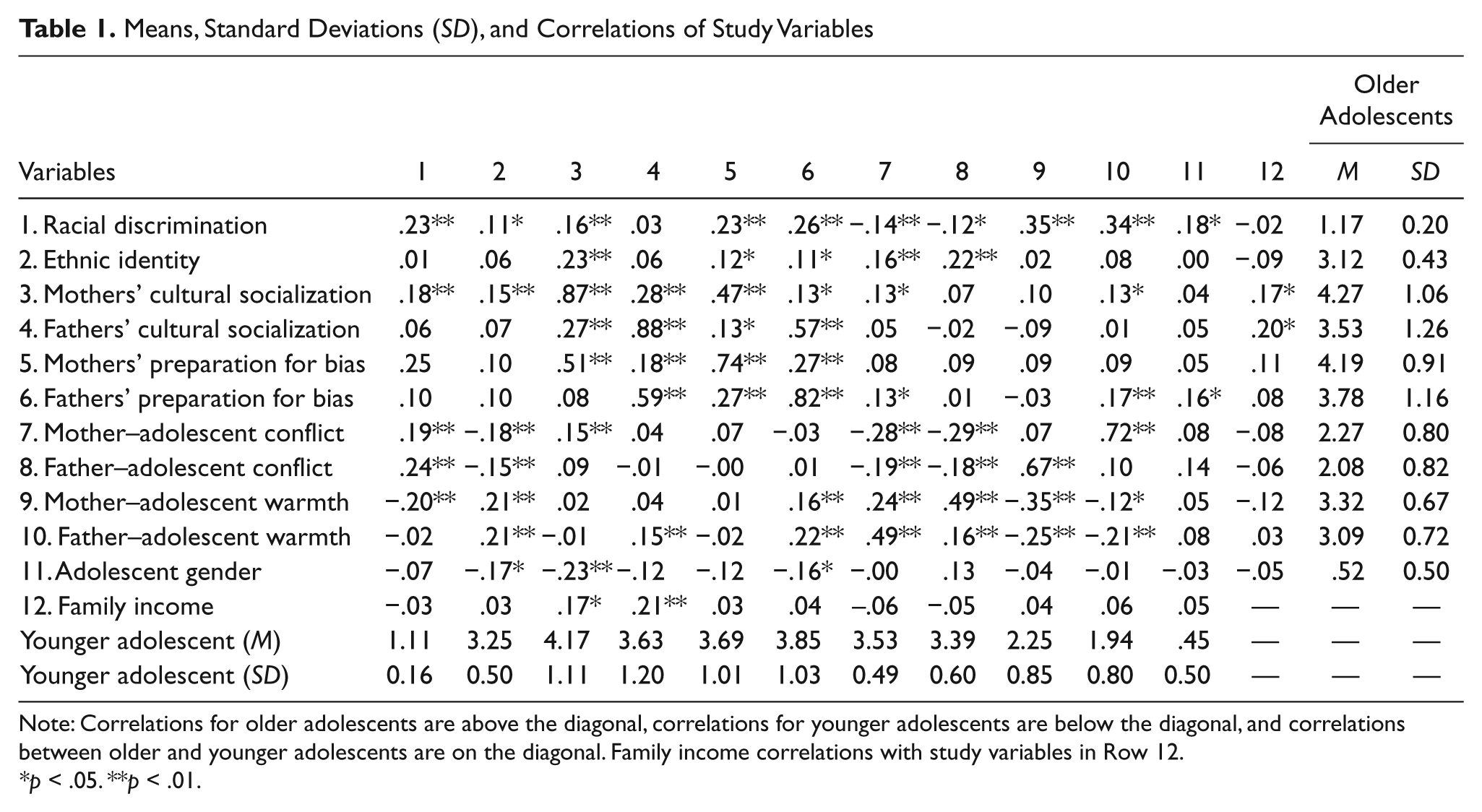
Note: Correlations for older adolescents are above the diagonal, correlations for younger adolescents are below the diagonal, and correlations between older and younger adolescents are on the diagonal. Family income correlations with study variables in Row 12.
p < .05. **p < .01.
The next step in the analyses revealed that both ethnic identity and racial socialization moderated these associations. Of 12 models tested, 5 interactions were significant and in the predicted direction. As a main effect, ethnic identity was negatively related to mother–adolescent conflict, γ = −0.19, SE = 0.09, t = −2.10, p < .05, and positively associated with warmth with mothers, γ = 0.25, SE = 0.07, t = 3.77, p < .01, and with fathers, γ = 0.30, SE = 0.08, t = 3.89, p < .01. Interactions between discrimination and ethnic identity were significant for conflict with mothers and fathers (Table 2). Follow-up tests showed that for youths with weak ethnic identities, the associations between discrimination and conflict with mothers, γ = 0.83, SE = 0.15, t = 5.38, p < .01, and with fathers, γ = 0.91, SE = 0.16, t = 5.78, p < .01, were positive. For youths with strong ethnic identities, links between discrimination and conflict with mothers, γ = 0.25, SE = 0.12, t = 2.09, p < .05 and with fathers, γ = 0.32, SE = 0.12, t = 2.72, p < .05 were also significant, but these associations were weaker. That is, as predicted, a stronger ethnic identity mitigated the positive association between youth discrimination and conflict with mothers and with fathers (Figure 1).
MLM (Multilevel Models) Coefficients Using REML (Restricted Maximum Likelihood) Estimation for Youth Discrimination Predicting Conflict and Warmth in Mother–Adolescent and Father–Adolescent Relationships, Moderated by Ethnic Identity

Note: Gender was coded as 0 = girls, 1 = boys.
p < .10. **p < .05. ***p < .01.
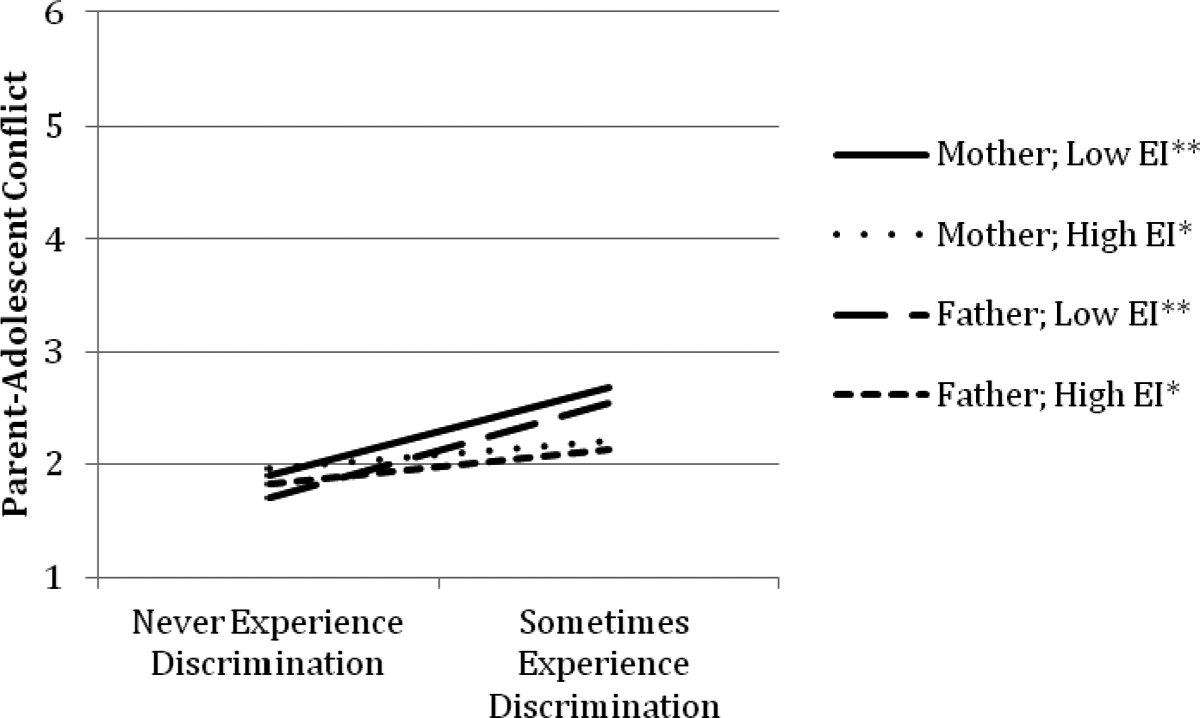
Discrimination × youth ethnic identity predicting conflict with mothers and fathers
Also as predicted, parents’ racial socialization practices were significant moderators for some discrimination–parent–adolescent relationship linkages. Main effects of racial socialization revealed that mothers’ cultural socialization, γ = 0.06, SE = 0.04, t = 1.65, p < .10, and preparation for bias, γ = 0.06, SE = 0.04, t = 1.66, p < .10, were marginally related to mother–adolescent warmth. Fathers’ cultural socialization was marginally related to father–adolescent warmth, γ = 0.05, SE = 0.03, t = 1.65, p < .10, and their preparation for bias was significantly associated with father–adolescent warmth, γ = 0.07, SE = 0.03, t = 1.94, p < .05. Significant interactions emerged between discrimination and mothers’ cultural socialization for mother–child conflict and warmth, and mothers’ preparation for bias moderated discrimination—mother conflict links; there were no significant interactions between discrimination and fathers’ racial socialization practices. Results are shown in Table 3.
Multilevel Model Coefficients Using Restricted Maximum Likelihood Estimation for Youth Discrimination Predicting Conflict and Warmth in Mother–Adolescent and Father–Adolescent Relationships, Moderated by Racial Socialization

Note: The moderator and interaction refers effect refers to the parent in each model. Gender was coded as 0 = girls, 1 = boys.
p < .10. **p < .05. ***p < .01.
Follow-ups showed that for youths whose mothers reported less cultural socialization, the link between discrimination and mother–adolescent conflict was strong and positive, γ = 0.85, SE = 0.16, t = 5.22, p < .01; this association was lessened for youths whose mothers did more cultural socialization, γ = 0.27, SE = 0.11, t = 2.53, p < .05 (Figure 2). With respect to mother–adolescent warmth, for youths whose mothers engaged in less cultural socialization, discrimination was negatively related to mother–adolescent warmth, γ = −0.47, SE = 0.11, t = −4.16, p < .01, whereas this link was nonsignificant for youths whose mothers reported more cultural socialization practices,γ = −0.13, SE = 0.08, t = −1.63, ns (Figure 3). Mothers’ preparation for bias also moderated the discrimination–mother conflict link such that, for youths whose mothers reported less preparation for bias, the association between discrimination and conflict was positive and strong, γ = 0.75, SE = 0.16, t = 4.50, p < .01, but this link was diminished for youths whose mothers reported more bias preparation, γ = 0.36, SE = 0.10, t = 3.51, p <.01 (Figure 4).
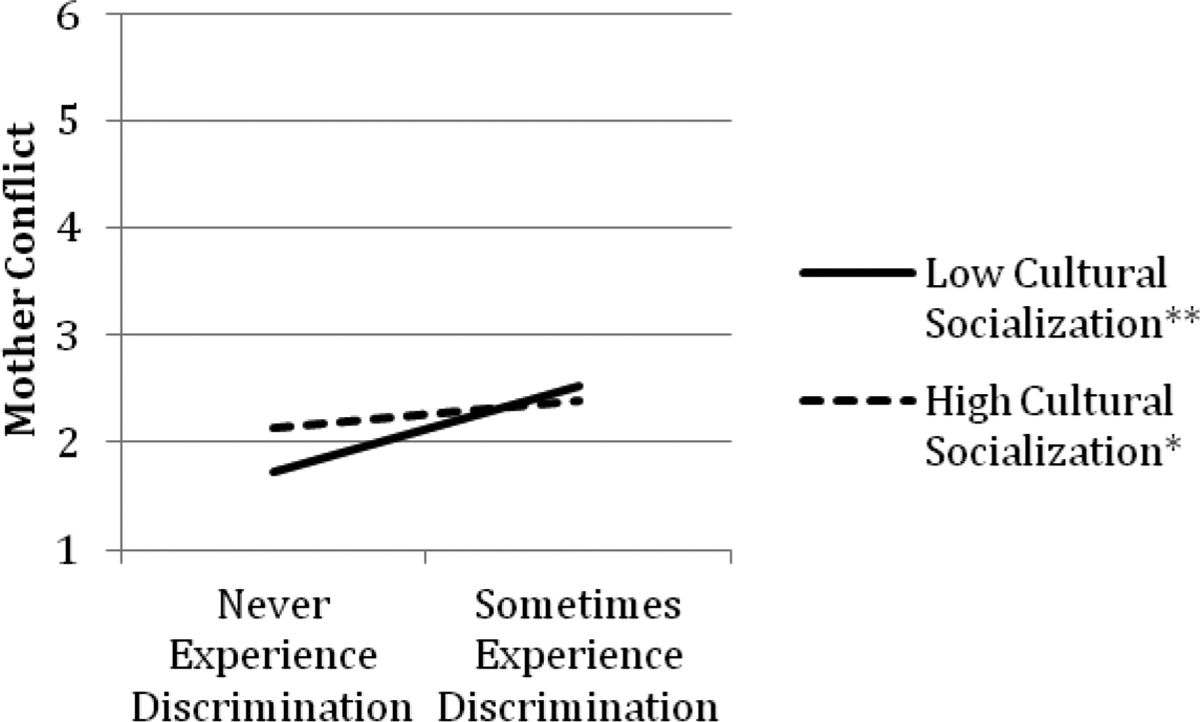
Discrimination × mothers’ cultural socialization predicting mother–adolescent conflict
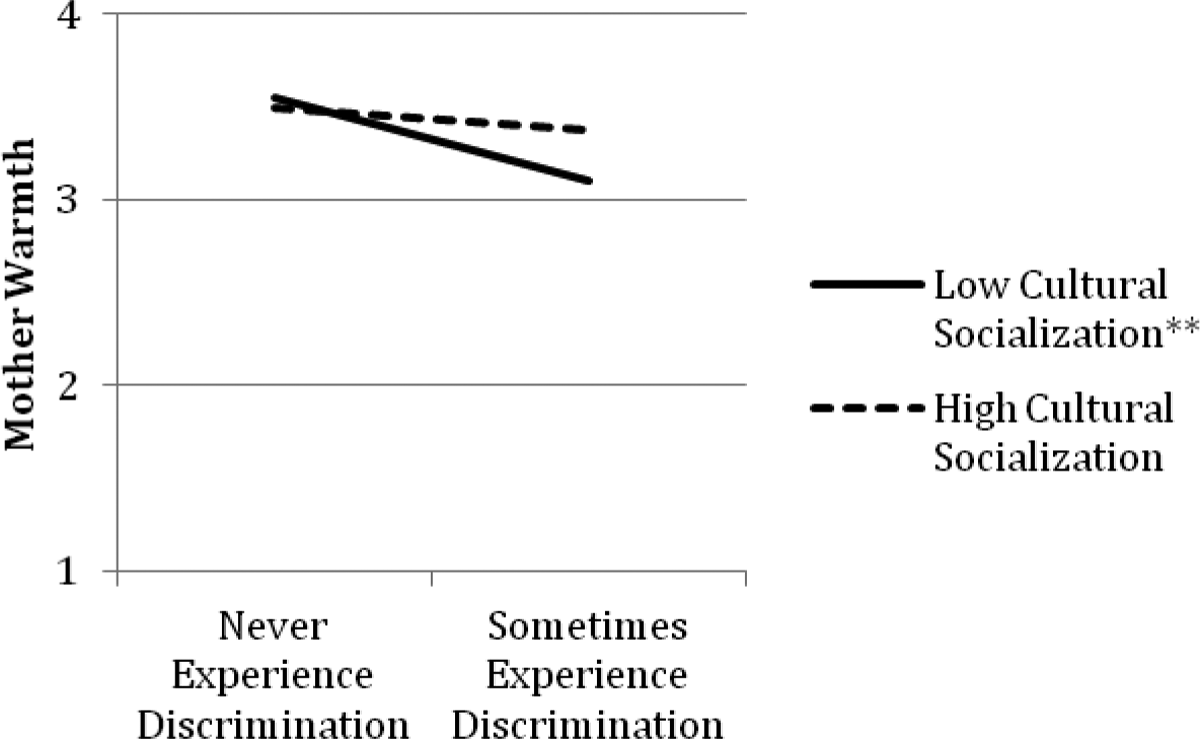
Discrimination × mothers’ cultural socialization predicting mother–adolescent warmth

Discrimination × mothers’ preparation for bias predicting mother–adolescent conflict
Discussion
A growing body of research demonstrates that racial discrimination is detrimental to the well-being of African Americans. We built on this work to understand the parent–child relationship implications of youths’ discrimination experiences. Our study contributes to existing literature in several ways. First, we gathered information from mothers, fathers, and older and younger sons and daughters in two-parent African American families, a group that is not well represented in empirical research. Our work also goes beyond existing research by providing initial insights into the family implications of sociocultural protective factors—ethnic identity and parents’ racial socialization practices—when youths are faced with the stressor of racial discrimination. Furthermore, we examined these processes during a critical time in development, adolescence, when youth become increasingly exposed to racial discrimination and when they undergo changes in their relationships with parents. Indeed, increased levels and variability of both discrimination and parent–child relationship qualities that emerge in adolescence may have allowed us to detect discrimination–relationship associations.
Findings related to our first goal were consistent with an emotional spillover hypothesis. Although infrequent, racial discrimination was a stressor in that it was linked negatively to youths’ relationships with their mothers and fathers: More frequent discrimination was associated with greater conflict with both parents and less warmth with mothers. The findings for parent–adolescent conflict support the idea that discrimination incites negative arousal in individuals, which spills over and manifests as heightened conflict in interpersonal relationships. In line with past research suggesting that mothers are more involved than fathers in youths’ daily lives (e.g., Maccoby, 2003), it may be that warm and involved relationships with mothers are more susceptible to emotional spillover from youths’ experiences: When youth experience discrimination, they may withdraw from mothers or express their distress in increased conflict, whereas their less involved or more formal or deferential relationships with fathers (Maccoby, 2003) may be less affected.
These linkages emerged despite the fact that youth in this sample experienced discrimination infrequently—between “never” and a “few times a year,” on average, highlighting the negative implications that discrimination has for family relationships. Inconsistent with prior research that documents stronger associations between discrimination and well-being for males and older adolescents (Fischer et al., 2000; Stevenson et al., 2002), however, we did not find evidence that discrimination–parent–child relationship links differed by gender or birth order. Compared with other studies of African American adolescents (e.g., Neblett et al., 2008; Seaton, 2010) the relatively low frequency of discrimination in this sample may be one reason for the lack of group differences.
Findings related to our second goal yield new insights into how sociocultural processes operate within families. Ethnic identity was associated with parent–adolescent relationships, such that youths with stronger ethnic identities had more warmth with mothers and fathers and less frequent conflict with mothers. Consistent with our expectations and with research that has demonstrated the protective function of ethnic identity for individual well-being (e.g., Sellers et al., 2003), ethnic identity protected youth from conflict with mothers and fathers when they experienced more frequent discrimination. It is important to note, however, that a strong ethnic identity only weakened these linkages: Even though discrimination occurred infrequently, ethnic identity did not completely eliminate the association between discrimination experiences and conflict between parents and youth.
With respect to the protective role of parents’ racial socialization in links between discrimination and parent–child relationships, only mothers’ cultural socialization and preparation for bias appeared to buffer the effects of discrimination: In the face of more frequent discrimination, cultural socialization protected against both higher conflict and lower warmth with mothers. In line with prior research (e.g., Hughes et al., 2006), and with the idea that mothers are more involved with youth than fathers, mothers engaged in cultural socialization practices more frequently, on average than did fathers, which may have been responsible for their stronger effects. It is also possible that mothers were more available or that youth initiated culture-related conversations with mothers and not fathers when they experienced discrimination, and that this communication, in turn, was protective for mother–adolescent relationships.
Mothers’ preparation for bias mitigated the association between youth discrimination and mother–adolescent conflict. On average, fathers engaged in as much preparation for bias as mothers; however, it may be that mothers and fathers used these practices in different ways. For example, fathers, who are more likely than mothers to experience discrimination themselves (e.g., Stevenson et al., 2002), may initiate discussions about race and discrimination, whereas mothers’ discussions may be more targeted and occur in response to youths’ discrimination experiences. As with cultural socialization strategies, it is also possible that youth sought advice or comfort related to racial biases from mothers versus fathers under different circumstances.
Also of note, linkages between mothers’ practices and parent–adolescent relationships indicated that it was less racial socialization that had stronger implications for relationship problems. Although greater racial socialization was also protective in mitigating negative implications of discrimination, these findings suggest that the absence of cultural-related conversations was especially detrimental for youth who experienced discrimination. Prior research documents that, in the context of discrimination experiences, youth who receive low levels of racial socialization exhibit the most stress and behavior problems (Neblett et al., 2008). Although a focus on individual adjustment was beyond the scope of this study, it is possible that youth adjustment problems were a factor in patterns of associations among discrimination, low levels of racial socialization, and poorer relationships with mothers and fathers. It is also possible that youth who had poorer relationships with their parents were less likely to engage in conversations about their discrimination experiences.
This work is not without limitations. Similar to prior research that has found links between adolescents’ reports of discrimination and self-reported adjustment problems (e.g., Brody et al., 2006), a limitation of the present study was the reliance on youth self-reports for discrimination and family relationship qualities. In addition, our correlational design does not allow for causal inferences: Longitudinal data would provide further insight into the direction of effects in these links. Finally, these results cannot be generalized beyond our sample of generally well-functioning, two-parent African American families. Nonetheless, our ethnic-homogenous design provided important insights into family processes in an underrepresented subgroup.
Indeed, findings from this study—that youths’ relationships with mothers and fathers are susceptible to emotional spillover from their discrimination experiences and that sociocultural processes mitigate these links—contribute novel insights to a small body of literature on “normative” processes in African American families. Findings also document key family differences in socialization practices and implications for parent–adolescent relationships and direct attention to the importance of exploring both mothers’ and fathers’ practices and relationships. Directions for future research include examining these links longitudinally. Over the course of adolescence, youth experience discrimination more frequently and undergo further changes in their relationships with parents, and developmental changes in ethnic identity and parenting practices also occur (Hughes et al., 2006). Further exploration of these associations in a sample of youth who experience discrimination more frequently is also warranted, as findings from this study suggest that sociocultural processes lessen, but may not fully protect against the negative impacts of discrimination for parent–adolescent relationships. In conclusion, the findings from this study make a valuable initial contribution to understanding spillover processes in two-parent African American families and illuminate the importance of studying differences within families and within a sociocultural context.
Footnotes
Acknowledgements
We thank Marni Kan, Ashleigh May, Cindy Shearer, Shawn Whiteman, Megan Baril, Sandee Hemman, and Kristen Johnston and Temple University’s Survey Research Center for their help in conducting this study and the participating families for their time and insights about their family lives.
The author(s) declared no potential conflicts of interest with respect to the research, authorship, and/or publication of this article.
The author(s) disclosed receipt of the following financial support for the research, authorship, and/or publication of this article:
This work was funded by a grant from the National Institute of Child Health and Human Development (RO1-HD32336-02, Susan M. McHale and Ann C. Crouter, Co-Principal Investigators).