



Abstract
This study examines the relationships among nonresident fathers’ financial support, informal instrumental support, mothers’ parenting and parenting stress, and their children’s behavioral and cognitive development in single-mother families with low income. Informed by stress-coping and social support models, this study estimates the mediating effects of nonresident fathers’ financial support on children’s outcomes transmitted through mothers’ parenting and parenting stress. The analyses use the longitudinal data from a subsample of 679 single mothers in the Fragile Families and Child Wellbeing Study. Results suggest that nonresident fathers’ financial support is directly associated with children’s cognitive development. Nonresident fathers’ financial support is found to have indirect effects on children’s behavior problems and cognitive development transmitted through mothers’ parenting and parenting stress. Informal instrumental support is directly and indirectly associated with both outcomes of children transmitted through maternal economic hardship, parenting, and parenting stress. The study discusses the policy and practice implications of these findings.
Keywords
Extensive research has focused on the effects of fathers’ financial support on their children’s development. Child support paid by the nonresident fathers is an important source of income for mothers and children. Child support payment can alleviate the economic disadvantage faced by single mothers and provide a less stressful home environment for children. Research suggests that this support is positively associated with a number of child well-being indicators, such as behavioral adjustment, educational attainment, school readiness, and cognitive outcomes (Amato & Gilbreth, 1999; Argys, Peters, Brooks-Gunn, & Smith, 1998; Baydar & Brooks-Gunn, 1994; Carlson & Magnuson, 2011; Graham, Beller, & Hernandez, 1994; Knox, 1996; Knox & Bane, 1994). In their meta-analysis, Amato and Gilbreth (1999) combined research findings from the 14 studies that had examined fathers’ financial support and their children’s achievement and behavioral outcomes. The results indicate that fathers’ child support is associated positively with children’s academic success and negatively with externalizing behavior problems, whereas it is not significantly associated with internalizing behavior problems (Amato & Gilbreth, 1999). Findings also suggest that an additional dollar of child support has significantly larger effects on child well-being than other sources of family income (Argys et al., 1988; Knox & Bane, 1994). A study focusing on African American welfare recipients and their children demonstrates that fathers’ formal and informal child support is significantly associated with better child behavior but not with children’s school readiness (Greene & Moore, 2000). Contrary to this evidence, recent studies do not confirm the association between fathers’ child support and their children’s outcomes (Hawkins, Amato, & King, 2007; King & Sobolewski, 2006). Results from these studies do not show any significant effect of child support on adolescent behavior problems and academic achievement. However, they used a dichotomized indicator of whether the father provided child support rather than more detailed information about actual payments. Carlson and Magnuson (2011) explain that the amount of support that mothers receive seems more important than whether fathers pay child support.
Another body of research has examined the relationships between and among fathers’ financial support, mothers’ parenting, and child outcomes (Jackson, Preston, & Franke, 2010; McLoyd, 1998). Nonresident fathers’ financial support can be additional economic resources for single mothers and their children. Greater economic resources enable mothers to purchase the necessary material goods and services, such as medical care, child care or schools, and books and toys, all of which improve developmental processes. Greater economic resources may also reduce mothers’ psychological distress, which in turn will reduce harsh parenting and thus benefit children (McLoyd, 1998). Empirical studies suggest that the provision of financial support from fathers, family members, or friends can ease mothers’ parenting stress and improve parenting functioning (Bradbury, Fincham, & Beach, 2000; Crnic & Greenberg, 1990; Melson, Windecker-Nelson, & Schwarz, 1998), whereas the absence of these resources can exacerbate parenting stress (Kurdek, 2005; Mulsow, Caldera, Pursley, Reifman, & Huston, 2002). In analyzing a longitudinal data set from poor and near-poor single Black mothers and their preschool children, for example, Jackson et al. (2009) found that mothers who received fathers’ child support payment had lower parenting stress than those who did not have child support. This study also shows that the increased mothers’ parenting stress is positively associated with more frequent problematic behaviors of their children. Still, it should be acknowledged that some researchers have found no relationship between fathers’ child support and mothers’ parenting (Hofferth, Forry, & Peters, 2010). Using data from the National Longitudinal Survey of Youth 1979, Hofferth et al. (2010) found that the increased fathers’ financial support was not significantly associated with the child-reported mothers’ parenting. However, this study focused on divorced families and their teenage children.
Notwithstanding the rigorousness of the research we have highlighted, the evidence from the previous studies is not without potential flaws. First, the effects of nonresident fathers’ financial support are still ambiguous. Whereas some studies have found its significant influences on mothers and children (Amato & Gilbreth, 1999; Argys et al., 1988; Greene & Moore, 2000; Jackson et al., 2009; Knox & Bane, 1994) others have not (Hawkins et al., 2007; Hofferth et al., 2009; King & Sobolewski, 2006). Second, there are only a few studies exclusively focusing on single-mother families with low income (Jackson & Huang, 2000; Jackson et al., 2009), whereas most of the studies include middle-class or divorced families. According to Nepomnyaschy and Garfinkel (2010), the majority of nonresident fathers do not provide child support. Furthermore, their financial support—especially when they are poor or have low income—may be too small or inconsistent to improve economic circumstances in the single-mother families (Cancian & Meyer, 2004; Mincy & Sorensen, 1998). Therefore, the effects of nonresident fathers’ financial support on low-income single mothers and children might not be consistent with the previous evidence. Third, little is known about the indirect or mediating effects of fathers’ financial support on child outcomes transmitted through mothers’ parenting. Previous studies have estimated the direct effect only, so that they might underestimate the total effects, including both direct and indirect ones of fathers’ financial support on mothers and children. Fourth, a majority of studies on nonresident fathers’ support have primarily focused on in-kind contributions such as regular contact or visitation (Amato & Rezac, 1994; Jackson, 1999; King & Heard, 1999), coparenting (Choi, 2010; Jackson, Choi, & Franke, 2009; Jackson & Scheines, 2005; Lamb, Pleck, & Levine, 1985; Levin & Pitt, 1995; McBride & Mills, 1993), or both (Choi & Jackson, 2011).
Question still remains concerning the mechanisms whereby nonresident fathers’ financial support might be associated with better outcomes for children from single-mother families with low income. Here, the present study examines the mediating effects of nonresident fathers’ financial support on their children’s behavioral and cognitive development transmitted through maternal parenting and parenting stress. More specifically, it seeks to determine whether nonresident fathers’ support is directly associated with single mothers’ parenting and parenting stress. It also considers whether fathers’ financial support is indirectly associated with the children’s development transmitted through maternal parenting and parenting stress in single-mother families with low income. In addition, the present study includes informal instrumental support from mothers’ family, relatives, and friends, and also compares the relative influence of different sources of support—between nonresident fathers’ financial support and informal instrumental support—on child outcomes.
Conceptual Model
Informed by social support (Belsky, 1984; Whitman, Borkowski, Schellenbach, & Nath, 1987) models, our conceptual model (Figure 1) begins with nonresident fathers’ financial support and informal instrumental support for single-mother families with the assumption that each of them will be related to maternal parenting and child development, and that the quality of parenting will be related to child outcomes (Belsky, 1984; Whitman et al., 1987). Insofar as fathers’ financial support and informal instrumental support can be considered an indicator of social support, there is ample evidence of the protective effect of social support on mothers’ parenting and parenting stress (Armstrong, Birnie-Lefcovitch, & Ungar, 2005; Ceballo & McLoyd, 2002; Green, Furrer, & McAllister, 2007; Jackson & Huang, 2000; Kotchick, Dorcey, & Heller, 2005; Raikes & Thompson, 2005; Taylor, Guterman, Lee, & Rathouz, 2009), and the children’s behavior problems and cognitive development (Appleyard, Egeland, & Stoufe, 2007; Crosnoe & Elder, 2004; Heard, 2007; Rockhill, Stoep, McCauley, & Katon, 2009; Stone, 2006). Again, empirical research finds that the quality of parenting is associated with the child outcomes (Amato & Fowler, 2002; Grych & Fincham, 1993; Mann & MacKenzie, 1996; McGroder, 2000).
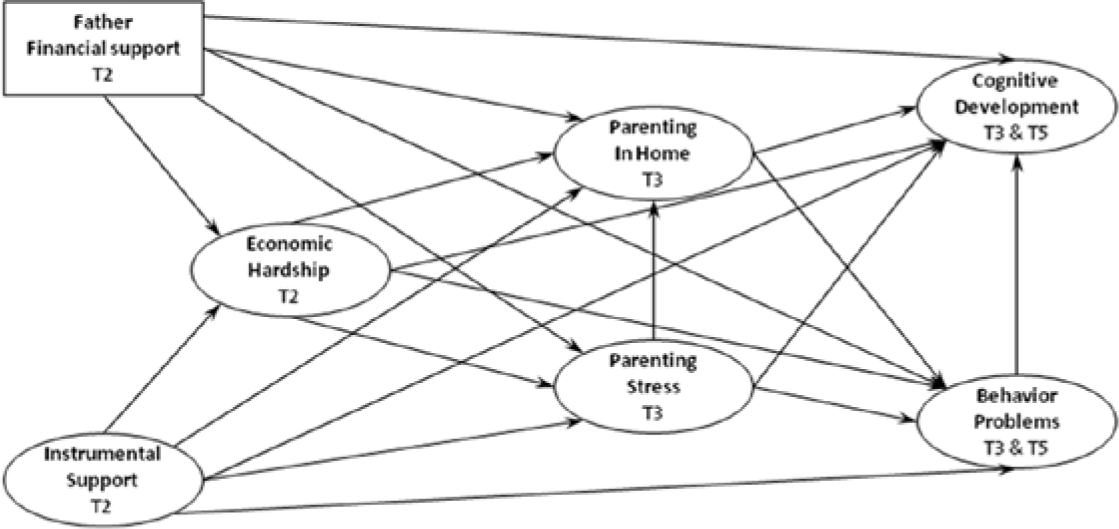
Conceptual model.
Consonant with stress-coping theory (Pearlin, Menaghan, Morton, & Mullan, 1981), this present study considers instrumental and financial support a coping resource for mothers that might reduce their economic hardship and parenting stress and improve parenting functioning. There is ample evidence that social support is a protective factor to reduce material hardship (Lee, Slack, & Lewis, 2004; Mayer & Jencks, 1989; McLoyd, 1990; Sullivan, Turner, & Danziger, 2008). Extensive research finds that reduced economic hardship is associated with more adequate parenting and less parenting stress, which are, in turn, associated with more optimal child outcomes (Brody & Flor, 1998; Conger, Conger, Glen, Elder, Lorenz, 1992; Elder, Eccles, Ardelt, & Lord, 1995). Numerous studies also present a direct association between economic status and children’s developmental outcomes (Aughinbaugh & Gittleman, 2003; Maurin, 2002; Taylor, Dearing, & McCartney, 2004). Children from economically disadvantaged families are more likely to have behavior and learning problems (Ackerman, Brown, & Izard, 2003). We hypothesize further paths from nonresident fathers’ financial support and informal instrumental support to economic hardship, to maternal parenting and parenting stress, and to child behavioral and cognitive development and from economic hardship to both child outcomes. Evidence also suggests that parenting stress is associated with less optimal parenting (Anthony et al., 2005; Crnic & Acevedo, 1995; Crnic, Gaze, & Hoffman, 2005). Therefore, our conceptual model includes another path from mothers’ parenting stress to their parenting as shown in Figure 1.
Focusing on nonresident fathers’ financial support, we attempt to advance prior research on father involvement in several ways. First, we estimate the effects of nonresident fathers’ support on both mothers’ parenting and their children’s outcomes. While examining the direct effect of nonresident fathers’ financial support on maternal parenting and parenting stress, we also focus on the mediating effect of fathers’ support on child outcomes transmitted through mothers’ parenting and parenting stress. Second, the current model includes not only fathers’ financial support but also informal instrumental support from mothers’ family, relatives, and friends. Thus, we compare the relative influence of different sources of support—nonresident fathers’ financial support versus informal instrumental support—on child outcomes. Third, we use structural equation modeling to test the relations proposed in Figure 1 and the estimated direct and indirect effects, accordingly.
Method
Data and Sample
This study used longitudinal data based on a subsample from the Fragile Families and Child Wellbeing Study (FFCW Study), which includes 4,898 births in 75 hospitals in 20 cities across the United States. The data consist of survey interviews with mothers and fathers at their children’s birth (baseline = Time 1; 1998-2000), at age 1 year (1-year follow-up = Time 2; 1999-2002), at age 3 years (3-year follow-up = Time 3; 2001-2003), at age 5 years (5-year follow-up = Time 5; 2003-2005), and more. For the present study, we used the data drawn from mothers’ baseline survey (Time 1), 1-year follow-up survey (Time 2), 3-year follow-up survey (Time 3), 3-year in-home study (Time 3), and 5-year in-home study (Time 5). Mothers who were screened out were as follows: those who planned to place the child for adoption, those for whom the father of the child was not living, those who did not speak enough English or Spanish to complete the interview, and those whose child was too ill for them to complete the interview (Reichman, Teitler, Garfinkel, & McLanahan, 2001).
Among the total 4,898 families in the data set, a subsample of 679 low-income single mothers and their children (356 boys and 332 girls) was included in the present study. We used 300% of the federal poverty line (FPL to determine low-income single-mother families. In general, income eligibility levels for pregnant women under Medicaid or State Children’s Health Insurance Program ranged from 133% up to 300% of the FPL (Ross, Horn, & Marks, 2008). The mothers—18 to 50 years old, unmarried, not cohabiting with the focal children’s fathers, and with incomes below 300% of the FPL at baseline—were, on average, 24.3 (SD = 5.2) years of age at Time 1. More than a third (35.1%) had completed high school, and about a third (33.0%) had some education beyond high school. At baseline, the mothers were almost equally divided among those who were employed (53.4%) and those who received public support, including public assistance or food stamps (44.8%). Average annual income at baseline was $7,798.3 (SD = 7,358.4; see Table 1).
Mothers’ Demographic and Socioeconomic Characteristics (N = 679).
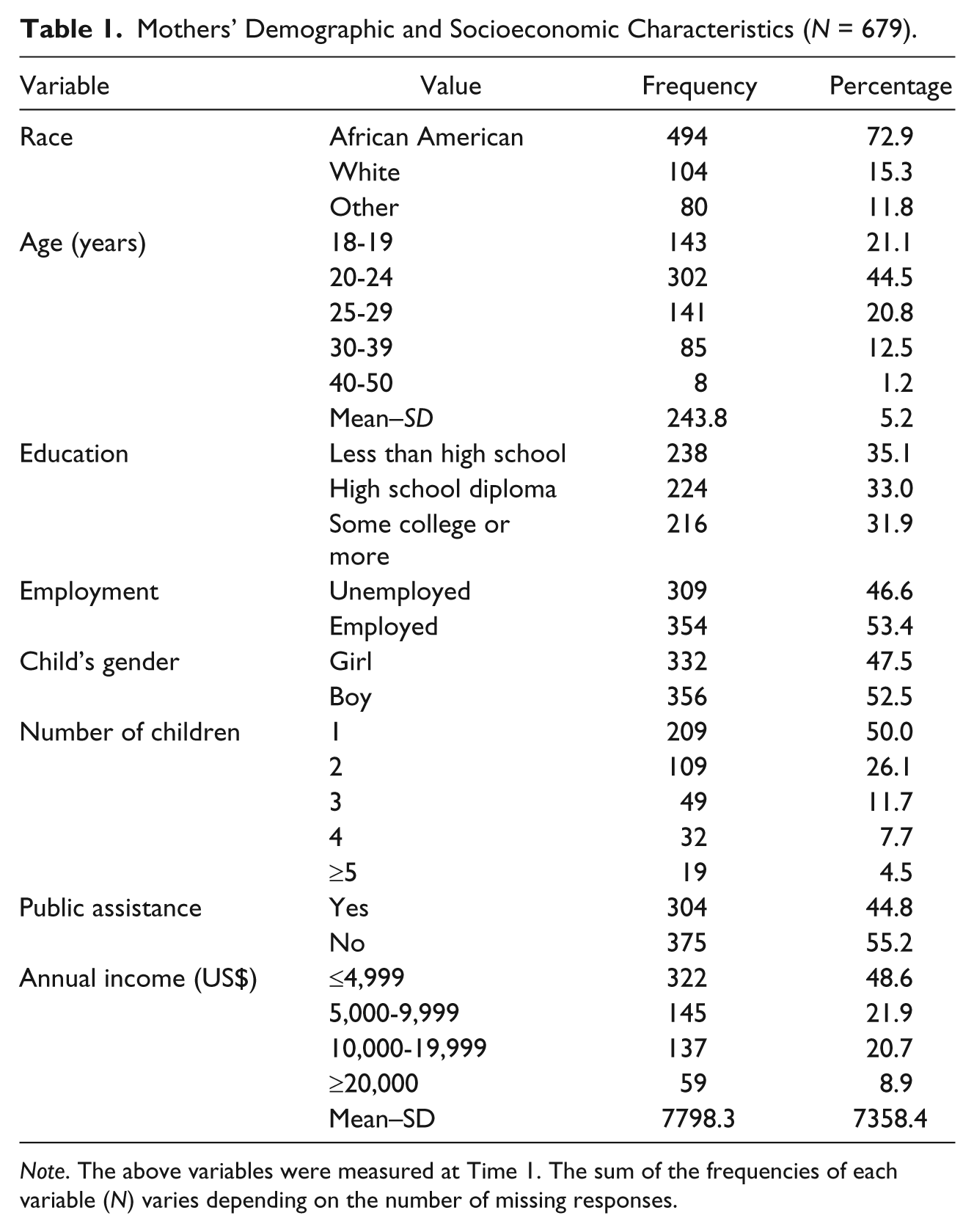
Note. The above variables were measured at Time 1. The sum of the frequencies of each variable (N) varies depending on the number of missing responses.
Measures
As discussed earlier, the conceptual model included nine variables as follows: nonresident fathers’ financial support, maternal instrumental support, and economic hardship measured at Time 2, mothers’ parenting and parenting stress at Time 3, and the child’s behavior problems and cognitive development both at Time 3 and Time 5. Whereas fathers’ financial support is an observed variable, the others are latent variables. Alpha coefficients were obtained for scales with multiple items. When calculating the mean value on scales, items were reversed (when necessary) so that a higher score indicates more of the attribute named in the label.
Nonresident fathers’ financial support at Time 2
Fathers’ financial support reflects the total amount of child support payment from nonresident fathers. Depending on whether parents had a legal or informal agreement, or no agreement, the question asked to mothers was “How much have you received from the father for child support?”
Informal instrumental support at Time 2
The variable is a six-item scale about mothers’ perceived instrumental support from family, relatives, and friends. Informal instrumental support measures mothers’ subjective judgment that someone will offer instrumental help in the form of money, time, in-kind assistance, and other explicit interventions during times of need. Mothers were asked to answer if they could get financial help when they needed it. The questions include “Could you count on someone to loan you $200?” “What about $1,000?” “Is there someone you could count on to provide you with a place to live?” “Is there someone you could count on to help you with emergency child care?” “Is there someone you could count on to co-sign for a bank loan with you for $1,000?” and “What about co-signing for $5,000?” Cronbach’s alpha for this measure of instrumental support is .69.
Maternal economic hardship at Time 2
The items measuring economic hardship are taken from the Survey of Income and Program Participation (U.S. Census Bureau, 1996) and the 1997 and 1999 New York City Social Indicators Survey (Social Indicators Survey Center, 2002, 2003). This scale with 12 items asks about financial difficulties experienced during the 12 months prior to the interview. Sample questions include “Did you go hungry?,” “Did you not pay the full amount of rent or mortgage payment?,” “Did you not pay the full amount of a gas or electric bill?,” “Was service disconnected by the telephone company because payments were not made?,” “Did you borrow money from friends or family to help pay bills?,” and “Did you move in with other people even for a little while because of financial problems?” Cronbach’s alpha for this measure of economic hardship is .66.
Mothers’ parenting in home environment at Time 3
This variable consists of a 16-item scale that is adapted from Home Observation for Measurement of the Environment (Caldwell & Bradley, 1984). Mothers were observed to assess if they responded verbally to the child’s vocalization, told the child the name or an object, caressed or kissed the child, slapped or spanked the child, expressed annoyance or hostility toward the child, and provided toys for the child during the visit. Cronbach’s alpha for this measure of parenting in home environment is .79.
Mothers’ parenting stress at Time 3
This variable consists of a 12-item scale. Many of the items are adapted from the Parent Stress Inventory (Abidin, 1995), whereas other items are original questions of the FFCW Study. Mothers were asked to describe how stressful having a child has been for them and to respond how much they agree with each statement. Sample statements include “You often have the feeling that you cannot handle things very well,” “You find yourself giving up more of your life to meet your children’s needs than you ever expected,” “You feel trapped by your responsibilities as a parent,” “Since having a child, you have been unable to do new and different things,” and “Since having a child, you feel that you are almost never able to do things that you like to do.” Cronbach’s alpha for this measure of parenting stress is .85.
Child behavior problems at Time 3 and Time 5
The aggressive behavior problems subscale from the Child Behavior Checklist is used to measure behavior problems (Achenbach, 1992). The FFCW Study includes 65 items from this scale. Each item was read to the child’s mother, who chose one of a range of possible answers, from “not true” (coded as 0) to “often or very true” (coded as 2). The items assess the frequency or intensity of behavior problems. Among the included items are questions that examine whether the child acts too young for his or her age, cannot concentrate, cries a lot, destroys things, does not get along with other children, gets in many fights, has angry moods, shows little affection toward people, wants a lot of attention, and has speech problems. Cronbac’;s alpha for this measure of behavior problems is .93 for Time 3 and .87 for Time 5.
Child cognitive development at Time 3 and Time 5
The Peabody Picture Vocabulary Test–Revised (Dunn, Dunn, Robertson, & Eisenberg, 1959) is used to measure children’s cognitive development. A widely used gauge of receptive vocabulary, the revised Peabody Picture Vocabulary Test measures the size and range of words understood by the respondent’s child. The test was administered on the child during the in-home interview conducted at Time 3 and Time 5.
Data Analysis
To estimate the direct and indirect effects of multiple predictors on child outcomes, this study uses structural equation modeling procedures. Structural equation modeling has the strength to construct latent variables such as mothers’ parenting, parenting stress, or other social or behavioral attributes. The influence of latent variables cannot be observed directly but are assessed by multiple indicators that are subject to measurement errors. Structural equation modeling incorporates multiple dependent variables in a model, includes variables that are both independent and dependent, and estimates both direct and indirect effects of each predictor on outcome variables (Bentler & Weeks, 1980; Kline, 2005). The analysis proceeds by specifying a model as in Figure 1. These analyses employ Mplus 4.21 (Muthén & Muthén, 2007) statistical software. We used maximum likelihood estimation to obtain consistent parameter estimates in modeling the missing data mechanism (Poon, Lee, & Tang, 1997; Tang & Lee, 1998; Yuan & Bentler, 2007).
Results
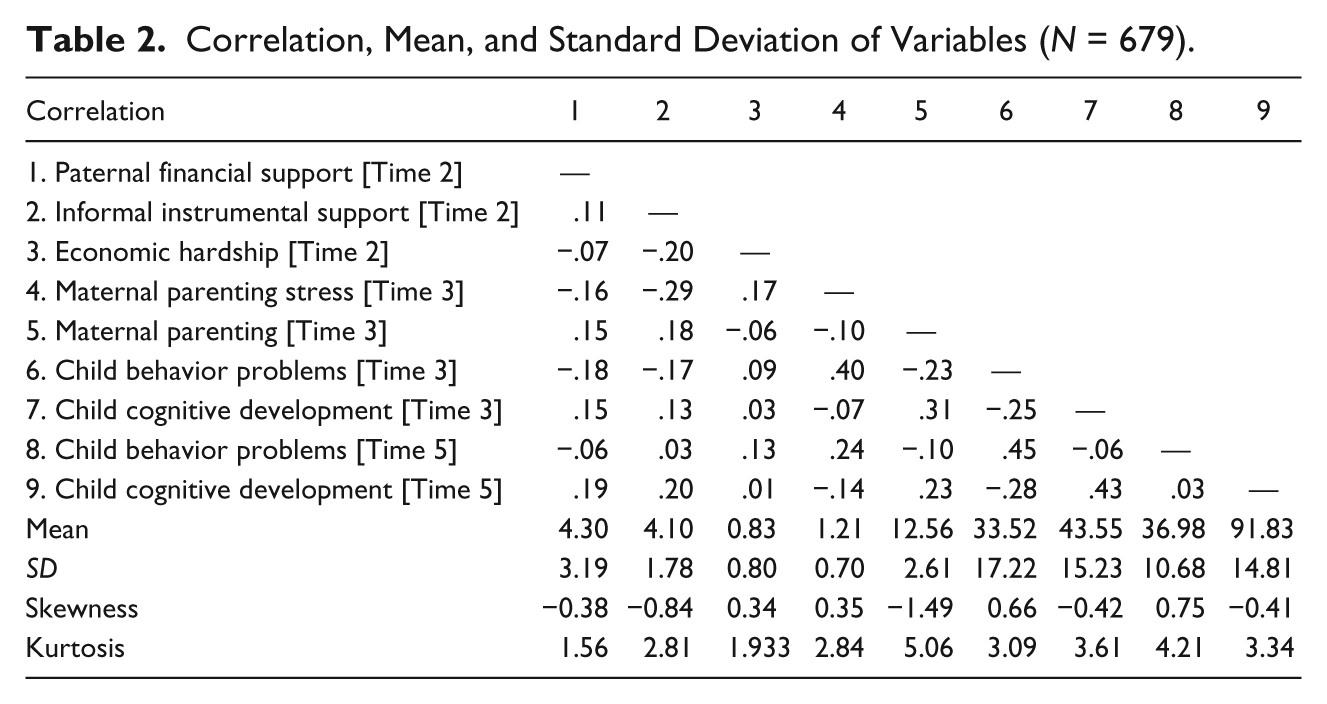
Table 2 presents a matrix summary of correlations, means, standard deviations, skewness, and kurtosis. Before this summary was created, the data were screened using tests for normality, outliers, and multicollinearity (Kline, 2005). The skewness ranges from −1.49 to 0.75 (0 for normal distribution) and the kurtosis ranges from 1.56 to 5.06 (3 for normal distribution). The correlational analyses shown in Table 2 examine the bivariate associations between the variables, and it should be noted that the independent variables are not highly correlated (coefficient r ranges from −.29 to .45).
Correlation, Mean, and Standard Deviation of Variables (N = 679).
The final structural equation model, shown in Figure 2, with 18 degrees of freedom, produced a chi-square of 34.46 (p = .01), a root mean square error of approximation (RMSEA) of .04, a comparative fit index (CFI) of .97, a Tucker–Lewis index (TLI) of .95, and a standardized root mean square residual (SRMR) of .03, all indicating a good fit to the data (Kline, 2005). Results found that there was a significant path from nonresident fathers’ financial support at Time 2 to children’s cognitive development at Time 5 (β = .13, p < .05). No other direct associations between fathers’ financial support and child developmental outcomes were found. The structural parameters show significant paths from fathers’ financial support at Time 2 to mothers’ in-home parenting at Time 3 (β = .17, p < .01) and parenting stress (β = −.12, p < .10) as expected. Both maternal parenting and parenting stress at Time 3 exhibited the expected associations with their children’s behavior problems at Time 3 (β = −.19, p < .001; β = .37, p < .001, respectively). Mothers’ parenting at Time 3 was positively associated with their children’s cognitive development at Time 3 (β = .27, p < .001) as well. Again, children’s behavioral problems at Time 3 were negatively related to their cognitive development at Time 3 (β = −.18, p < .001). Unexpectedly, mothers’ parenting stress at Time 3 was not found to have a significant relationship with the cognitive development at Time 3. Instead, mothers’ parenting stress at Time 3 and child behavior problems at Time 3 were positively associated with children’s behavior problems at Time 5 (β = .08, p < .05; β = .42, p < .001, respectively). Both child behavior problems and cognitive development at Time 3 were also found to have significant relationships with children’s cognitive development at Time 5 (β = −.16, p < .001; β = .36, p < .001, respectively).
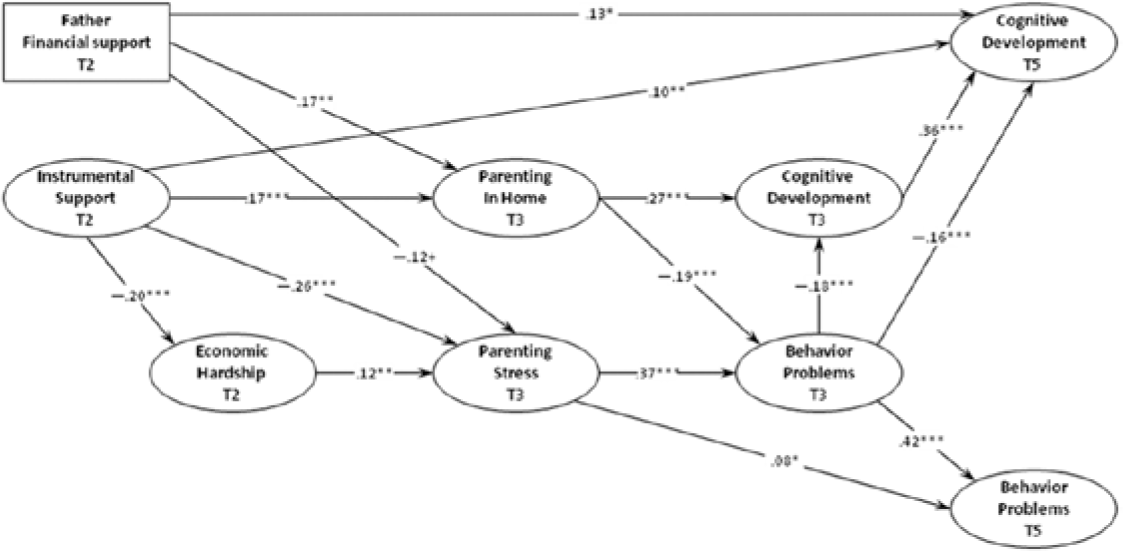
Final structural equation model (N = 679).
As shown in Figure 2, mothers’ perceived instrumental support from family, relatives, and friends was found to have a direct association with children’s cognitive development at Time 5 as expected (β = .10, p < .01). Informal instrumental support was significantly associated with mothers’ parenting and parenting stress (β = .17, p < .001; β = −.26, p < .001, respectively). Higher levels of maternal instrumental support were also associated with lower levels of economic hardship (β = −.20, p < .001), which was, in turn, associated with lower levels of parenting stress of mothers (β = .12, p < .001).
The decomposition of the direct and indirect effects, displayed in Table 3, shows that nonresident fathers’ financial support was related directly and indirectly to their children’s cognitive development at Time 5 (direct effect = .13, p < .05; indirect effect = .03, p < .01) and indirectly to their children’s behavior problems at Time 3 and Time 5 (indirect effect = −.08, p < .01; indirect effect = −.04, p < .01) and cognitive development at Time 3 (indirect effect = .06, p < .01) transmitted through mothers’ in-home parenting and parenting stress. Maternal perceived instrumental support also exhibited the significant direct and indirect effects on children’s cognitive development at Time 5 (direct effect = .10, p < .01; indirect effect = .05, p < .01). Instrumental support was also found to have indirect effects on child behavior problems at Time 3 and Time 5 (indirect effect = −.14, p < .001; indirect effect = −.08, p < .01) and cognitive development at Time 3 (indirect effect = .07, p < .01) transmitted through maternal economic hardship, parenting, and parenting stress. Regarding total effects, mothers’ parenting stress (total effect = .37, p < .001), in-home parenting (total effect = −.19, p < .001), instrumental support (total effect = −.14, p < .01), and fathers’ financial support (total effect = −.08, p < .01) were the most influential predictors of children’s behavior problems at Time 3, respectively. As shown in Table 3, mothers’ in-home parenting (total effect = .31, p < .001), children’s behavior problems (total effect = −.18, p < .001), mothers’ parenting stress (total effect = −.07, p < .001), instrumental support (total effect = .07, p < .001), and fathers’ financial support (total effect = .06, p < .01) were the salient predictors of children’s cognitive development in this study. Overall, mothers’ in-home parenting exhibited strong effects on children’s cognitive development at both Time 3 (total effect = .31, p < .001) and Time 5 (total effect = .14, p < .001). Meanwhile, mothers’ parenting stress was found to have large effect sizes on child behavior problems at both Time 3 (total effect = .37, p < .001) and Time 5 (total effect = .24, p < .001).
Decomposition of Direct, Indirect, and Total Effects (N = 679).
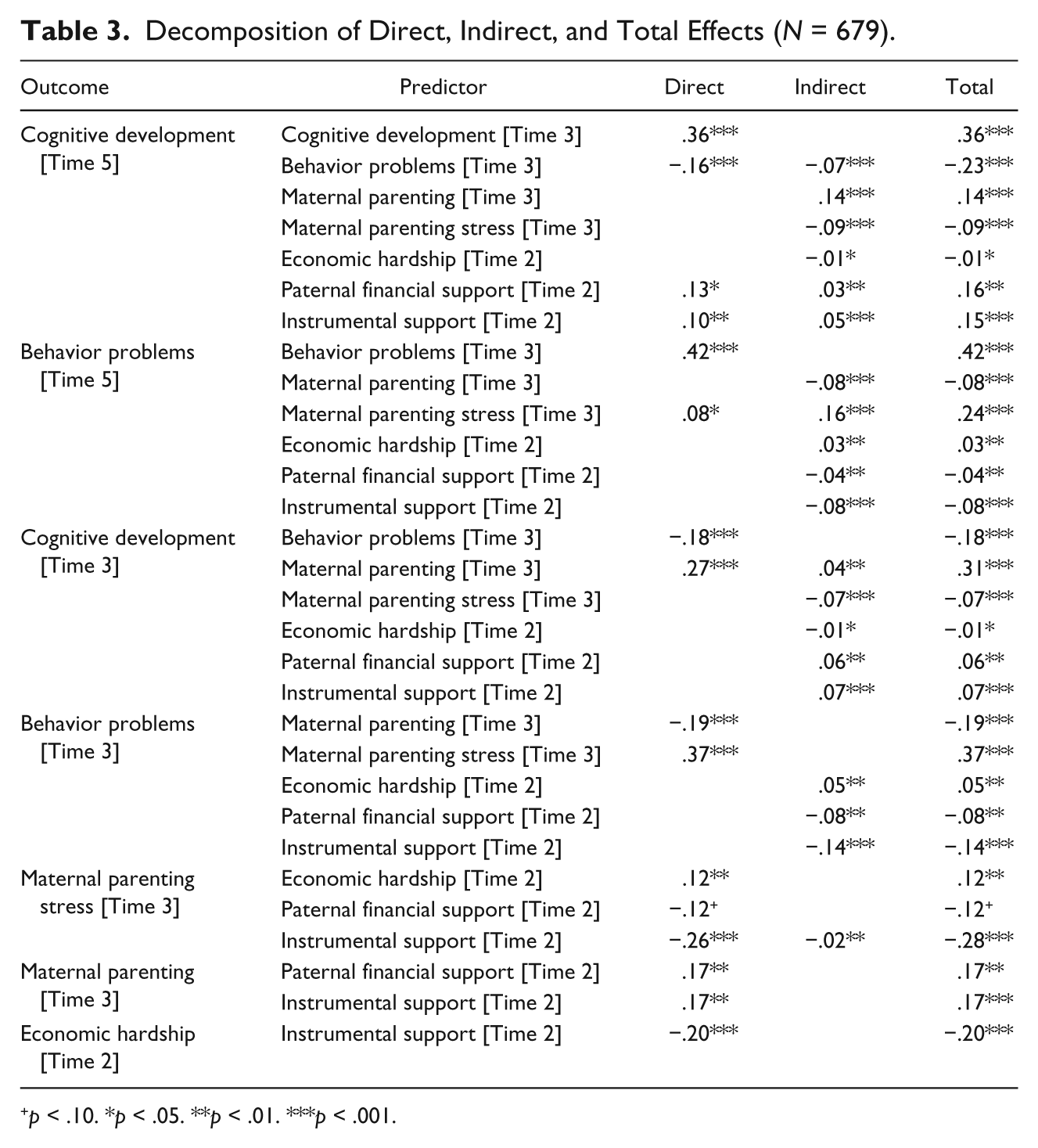
p < .10. *p < .05. **p < .01. ***p < .001.
Table 4 compared the effect size of nonresident fathers’ financial support on child outcomes with that of informal instrumental support. The sum of the absolute values of the total effect size was .34 for fathers’ financial support (direct effect = .13; indirect effect = .21) and .44 for informal instrumental support (direct effect = .10; indirect effect = .34). Although the total effect size of instrumental support was found to be greater than that of fathers’ support, the difference was modest.
Effect Size of Fathers’ Financial Support and Informal Instrumental Support (N = 679).

Discussion
The present findings suggest that nonresident fathers’ financial support can benefit their children’s behavioral and cognitive development. Although the direct effect of fathers’ support on child cognitive development at Time 5 only was found in this sample, its indirect effects on both child developmental outcomes at Time 3 and Time 5 transmitted through mothers’ parenting and parenting stress were significant at p < .01. This is partially consistent with the Whitman et al. model (1987) that posits a direct association between social support and child development. These results also support the Belsky (1984) model asserting that social support does not directly affect child development, but rather has an indirect impact through its influence on parenting.
Likewise, informal instrumental support was found to have a direct effect on child cognitive development at Time 5 only. The indirect effects of informal instrumental support on child outcomes transmitted through mothers’ parenting and parenting stress were significant at p < .01. Concerning the relative influence of sources of support, the total effect size of informal instrumental support on child developmental outcomes (total effect size = .44) is slightly larger than that of fathers’ support (total effect size = .34). Although the total effect size of instrumental support was found to be greater than that of fathers’ support, the difference was modest. Therefore, it is noteworthy to mention that the role of nonresident fathers’ financial support on child development can be as important as informal instrumental support for low-income single mothers.
Recall that stress-coping theory posits that mothers under economic distress and hardship use a variety of coping behaviors to contend with these conditions and circumstances through obtaining social resources and support (Pearlin & Schooler, 1978; Pearlin et al., 1981). The present findings do indeed suggest that mothers with higher levels of instrumental support are more likely to have less economic hardship, which in turn alleviates mothers’ parenting stress, and thereby promotes child developmental outcomes. These findings also confirmed family process perspectives (Conger et al., 1992; McLoyd, 1990) asserting that the risk factors caused by economic distress and hardship may have different effects on children’s development, depending on the presence of protective factors such as informal instrumental support for single mothers. The latter was found to mediate between economic hardship and child developmental outcomes in this study.
The results suggest that nonresident fathers’ financial support in single-mother families with low income might be a key determinant of the children’s behavioral and cognitive development. If valid, these results suggest that current policy initiatives to promote father involvement and responsible fatherhood with an emphasis of financial responsibility should be encouraged. For example, the Parents’ Fair Share aims to help low-income fathers find stable jobs, provide child support payment, and ultimately take a fuller responsible role in their children’s lives. Again, if valid, these results suggest that future programs and services to increase nonresident fathers’ child support payments through promoting or mandating their participation in employment-related activities through job retention services, community service jobs or stipend, or job training services should be recommended (Miller & Knox, 2001). Programs that aim to address both the employment and educational needs of parents who are at risk of unemployment and the developmental needs of their young children can be an exemplary intervention (Hsueh, Jacobs, & Farrell, 2011). For better developmental outcomes of children from single-mother families, these results also suggest that interventions and services promoting not only mothers’ parenting behavior but also their coping skills to utilize their social network, including family, nonresident fathers, and friends, should be encouraged. Again, mothers’ accessibility and availability to support from community agencies, work, or school should be promoted.
Despite its specified results, this study is limited in several ways that should be acknowledged. First, the measures for nonresident fathers’ financial support and informal instrumental support are not mutually exclusive. The FFCW Study data do not have separate questions about instrumental support provided by different sources such as father, family, relatives, or friends. This scale includes all sources of instrumental support provided for single mothers. When mothers were asked about instrumental support, they might also consider nonresident fathers’ instrumental support in it. Second, this study does not comprehensively include multiple dimensions of social support. For example, formal support (e.g., governmental support) or emotional support was not included in the current model. Third, the present study does not take into account changes in the amount of fathers’ financial support across time. Although the present data are longitudinal, the changes of variables over time are not reflected. Future research about nonresident fathers’ financial support in single-mother families with young children should be longitudinal, allowing for investigations that consider changes in nonresident fathers’ support across time. Researchers should attempt to devise more comprehensive measures to capture multiple dimensions of social support such as formal, informal, instrumental, or emotional support and also consider different sources of support.
Footnotes
Declaration of Conflicting Interests
The author(s) declared no potential conflicts of interest with respect to the research, authorship, and/or publication of this article.
Funding
The author(s) received no financial support for the research, authorship, and/or publication of this article.