



Abstract
Informed by a critical men’s studies perspective, as well as symbolic interactionist and life course themes, we explore how men’s relationship to the procreative realm is currently conceptualized in academic scholarship and public policy debates. We articulate opportunities to advance our conceptual understanding of men’s experiences with pregnancy and family planning by framing the procreative period as a multilayered, dynamic process. We also delineate a broader agenda for critical research on men’s participation in reproductive planning. In particular, we advocate that future research be guided by four strategies: comparative designs, diverse methodologies, prospective and retrospective longitudinal studies, and approaches that capture the multiple, interrelated layers of social life that affect men’s thoughts, feelings, and practices in the procreative realm.
In recent decades, scholars from multiple disciplines have increasingly explored how men from around the world think of themselves as persons capable of creating and nurturing human life as well as how they act when dealing with matters related to conception, pregnancy, abortion, and childbirth. Scholarship in this area—collectively labeled the procreative realm (Marsiglio, 1998)—focuses on seven diverse issues relevant to men. First, scholars have advanced conceptualizations and research strategies to study men’s fertility desires, motivations, and intentions in an individual and coupled context (e.g., Inhorn, 2012; W. Miller, Severy, & Pasta, 2004). Second, some researchers examine men’s awareness of their sperm quality as well as their exposure to or avoidance of drugs, alcohol, cigarettes, and toxic work chemicals (e.g., Bunting & Boivin, 2008; Lampic, Svanberg, Karlström, & Tydén, 2006). Third, a fair amount of work focuses on men’s contraceptive use as well as their efforts to foster conception (e.g., Glasier, 2010; Walker, 2010). Fourth, researchers consider men’s attempts to navigate infertility and cope with its consequences (e.g., seeking fertility tests; contemplating/pursuing surrogacy, assisted reproductive technology [ART], and adoption options; evaluating sperm and egg donors; contemplating and executing adoption; e.g., Dull, 2012; Greil, Slauson-Blevins, & McQuillan, 2010; Inhorn, Tjørnhøj-Thomsen, Goldberg, & la Cour Mosegaard, 2009; Oberpenning, Muthny, & Oberpenning, 2010). Fifth, some attention is given to men’s participation in the pregnancy process differentiated by whether the focal point is prospective fathers’ identities, pregnant women’s well-being, or fetuses (e.g., prenatal screenings, prenatal classes, social and financial support for pregnant women, prenatal breastfeeding classes; e.g., Cabrera, Fagan, & Farrie, 2008; Marsiglio, 2008; Rempel & Rempel, 2011; Susin & Giugliani, 2008). Sixth, a body of work analyzes the level and type of male involvement in childbirth and delivery processes (e.g., Fägerskiöld, 2008; Fletcher, Silberberg, & Galloway, 2004; Premberg & Lundgren, 2006). Seventh, an emerging literature explores men’s prenatal actions to prepare themselves and their families for a productive parenting experience (e.g., Genesoni & Tallandini, 2009; Hawkins, Lovejoy, Holmes, Blanchard, & Fawcett, 2008).
This broad terrain is primarily situated in several literatures: demography, fatherhood, and reproductive health. More specifically, scholars working in anthropology, gender studies, nursing, psychology, public health, and sociology have been the primary architects responsible for framing the issues and conducting empirical research. Scholarship addressing men’s involvement in caring for children far outweighs research on men’s experiences in the procreative realm. Yet men have compelling experiences in the procreative realm that deserve more attention. Every day, all over the world, men think about having babies, imagine themselves as parents, struggle with infertility, donate gametes, hear of unintended pregnancies, receive news of fetal abnormalities, make decisions about abortions, and become parents. Although feminist scholarship has centered these experiences in women’s lives, it has inadequately explored their meanings in men’s lives. Granted, research on women and reproduction does acknowledge that men influence women’s reproduction in a number of ways but “men need to be considered reproductive in their own right” (Inhorn, Tjørnhøj-Thomsen, et al., 2009, p. 3).
We seek here to advance understanding of men’s lives at the outset of their reproductive and fathering trajectories by presenting a multilayered conceptual framework. Our multidisciplinary perspective accounts for ecological- (e.g., cultural, economic, political, social institutional), interpersonal-, and individual-level phenomena while accentuating the relationship between these domains in a cross-cultural context. With a critical eye toward gender/masculinities, life course, and symbolic interactionist themes, we delineate a broad research agenda to capture men’s participation in the procreative realm while being sensitive to the import of historical and cultural context. We anchor our assessments by acknowledging the pivotal role public discourses and technological advancements/resources play in either enabling or constraining men’s opportunities in the procreative realm. Because our framework accounts for the full range of biological and social ties men forge with children they claim as their “own,” we discuss issues related to men irrespective of their sexual orientation. Where appropriate, we also acknowledge connections between areas involving sex, reproductive health, and procreation while paying attention to biological, cultural, social, and political processes. Finally, although we emphasize men’s individual lives and experiences, we show how men’s thoughts, feelings, and actions are often shaped selectively by their encounters with romantic partners over time through a gender-relational approach. 1
Procreative Decision Making
We initially conceptualize men’s experiences in the procreative realm by cataloging the diverse and contingent types of decisions men make over the course of their procreative lives, providing illustrative examples of research that has been conducted on points across this trajectory to date. Figure 1 portrays the interrelated decisions that illustrate current lines of research while offering directions for future work concerning men’s efforts to have or avoid having biological or adoptive children.
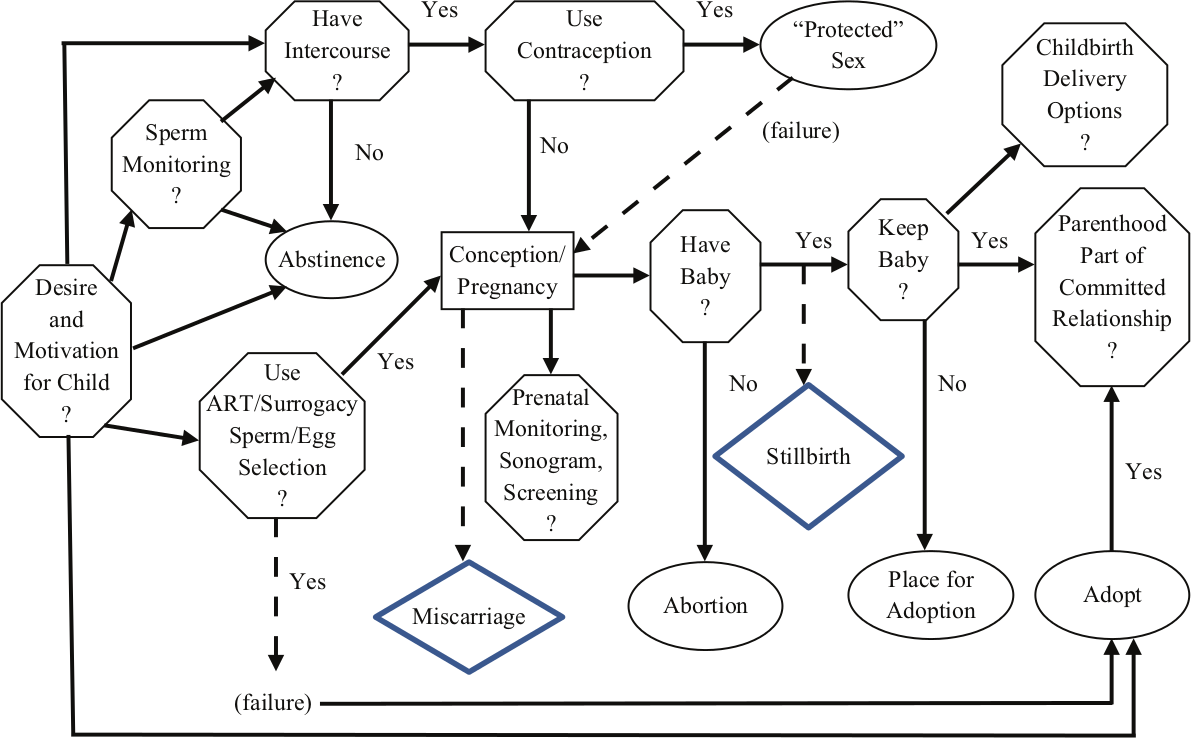
Procreative decision making.
Moving left to right in the figure, we initially highlight men’s desire and motivation to have a child. Marsiglio (1998) describes this motivation as a kind of “enduring disposition or personality characteristic. . . . It includes both ‘energizing’ as well as ‘directional’ qualities, providing men with a ‘readiness to act’ and a direction or agenda for their actions” (p. 107). Depending on a man’s life circumstances this disposition can exist largely as part of his latent consciousness—as an untapped potential, or it can be part of the man’s active, “wide-awake” consciousness that directly affects his behavior. A related notion involves thinking of a man’s “wish” for children. Jaccobs (1995) notes how this sort of wish involves both a “change” and “timing” element. A man may wish to bring about a change because he is experiencing discomfort between the current situation and alternatives. In addition, the man can assess when he wants the change to occur. A “latent wish” exists when a man does nothing to diminish this discomfort whereas a “manifest wish” includes instances in which a man does something concrete to bring about a change. Analyses that explore a man’s motivation for a child in the United States (Augustine, Nelson, & Edin, 2009), the Middle East (Inhorn, 2012), and elsewhere can shed light on the social psychology of becoming a father.
On a more practical level, men today have varied opportunities to monitor their sperm quality in an age in which fertility testing is more commonplace, the scientific community has made strides to document the relationship between men’s chemical exposure and their fecundity (Daniels, 2006; Figà-Talamanca, Traina, & Urbani, 2001), and there is a growing public awareness of these environmental forces on men’s fertility. Men, irrespective of sexual orientation or even if they are sexually abstinent, can proactively try to maximize their sperm quality by avoiding risky behaviors. Some, of course, are better positioned than others to do so (Bunting & Boivin, 2008; Dull, 2012; Lampic et al., 2006).
For heterosexual men, a wide range of research questions mediate the extent to which, and how, men consciously think about using contraception in any given sexual encounter or relationship, and if so, what methods are used (Glasier, 2010, Walker, 2010). Men’s contraceptive decisions are confounded because men may adopt condoms primarily or exclusively because they are worried about the transmission of a sexually transmitted infection or HIV/AIDS rather than pregnancy prevention. Nonetheless, among sexually active men, those who correctly use condoms reduce their chances of impregnating a partner irrespective of their motivation for engaging in safer sex.
Sometimes men adopt strategies to maximize their options for initiating a pregnancy. In addition to men who orchestrate their sexual lives in order to produce a conception naturally, some men find themselves contemplating and integrating ART procedures into their everyday practices (Dudgeon & Inhorn, 2003; Greil et al., 2010; Hadley & Hanley, 2011; Inhorn, Ceballo, & Nachtigall, 2009; Malik & Coulson, 2008; Throsby & Gill, 2004; Webb & Daniluk, 1999). In an intriguing minority of in vitro fertilization (IVF) cases, they will secure a sperm or an egg donation and/or contemplate using surrogacy to achieve fatherhood. Decisions about ART are often confounded by adoption decision-making processes as well (Crawshaw & Balen, 2010; see also discussion by Herrera, 2013).
Men who are involved knowingly in creating a pregnancy may face numerous decisions about their involvement with their partner’s pregnancy and their interactions with various health care professionals. Pregnant women, can be instrumental in opening or closing gates of opportunity for prospective fathers to relate to their pregnant bodies in intimate ways and to be involved in prenatal classes, examination sessions, and labor/delivery rooms. Similarly, health professionals who organize these services can entice fathers to take a more active role (Deeney, Lohan, Spence, & Parkes, 2012; Locock & Alexander, 2006; T. Miller, 2010). In addition, modern prenatal observation technologies provide men (and women) in many societies new and sometimes contentious options that parents in earlier generations did not have. Consequently, prospective parents have more tension points when making decisions about whether or not they should: learn a child’s biological gender, do genetic testing, or terminate a pregnancy that involves a fetus with a genetic defect.
Dheensa, Williams, and Metcalfe (2013) describe these tensions for prospective fathers attending antenatal screenings. Men who attended screenings had the opportunity to enact responsibilities associated with a paternal identity. However, when men received a high-risk result, their understanding of their child became splintered into a wanted imagined child and the potentially unwanted fetus. These men’s experiences are consistent with Katz-Rothman’s (1994) study of women’s experience of amniocentesis in which the women reported that screening and testing caused pregnancies to feel tentative. Attachment or bonding with the fetus/future child was put on hold while the implications of the screening results were worked through.
Although miscarriages are outside a prospective father’s control, researchers increasingly are exploring men’s responses to miscarriage events and their subsequent decisions to pursue immediately, delay, or avoid another pregnancy (Condon, 2011; Gold, Sen, & Hayward, 2010; Limbo & Kobler, 2010; McCreight, 2004). Similar types of questions can be asked of fathers who experience a stillbirth.
Undoubtedly, some of the most controversial issues in the procreative realm involve men’s legal standing and actions in the pregnancy resolution process. In most societies, men as individuals have no legal right to force the woman carrying their child to have an abortion or to bring a pregnancy to term. Exceptions to this rule where spousal authority is required for a woman to have an abortion include countries in the Middle East and North African (MENA) region, notably, Egypt, Iran, Iraq, Kuwait, Morocco, Syria, and the United Arab Emirates (Boland & Katzive, 2008). However, abortions are relatively common across the MENA region, approximately 1 in 10 pregnancies in the MENA region result in terminations (Hessini, 2007), and the dominant religion of the region, Islam, does not necessarily prohibit abortion for health and social care reasons of the mother or existing children prior to ensoulment of the fetus. This is variously interpreted as occurring at 40, 90, or 120 days following conception, depending on the school of thought within Islam (Hessini, 2007). Other countries where spousal authority is required for a woman to have an abortion include Guinea-Bissau, Japan, Republic of Korea, Malawi, and Nicaragua (Boland & Katzive, 2008). In addition, China’s law that a woman has no overriding priority over her spouse in deciding whether to have a child has been interpreted through the courts as a man’s right to prevent his spouse from having an abortion (BBC, 2012), even though China has otherwise relatively liberal abortion legislation (Singh, Sedgh, Bankole, Hussain, & London, 2012).
In other parts of the world, where women do not require spousal permission to seek a termination of pregnancy, research nonetheless suggests that male partners play a very significant role in how women choose to resolve an unintended pregnancy in their lives. (For further discussion of the research on the influence of male partners in relation to women’s abortion decision making, see Lohan et al., 2013.) In comparison to research on women’s experiences of abortion decision making, the views and experiences of men (as expressed from their own perspective or as part of a couple) are significantly underresearched (Lohan et al., 2013). Lohan et al.’s study (p. 1037) is a comparative analysis of how adolescent males in Ireland, Italy, and Australia consider the issue of an unintended pregnancy in their lives and how they might choose to resolve an unintended pregnancy during their adolescence. The brief discussion above relating to spousal authority also points to the potential value of international comparative research on men’s and couples’ experiences of resolving an unwanted pregnancy in jurisdictions where spousal authority is required, and where it is not, in order to better understand men’s diverse roles in abortion decision making within and between societies.
Another legal thicket affecting men includes the laws governing surrogacy, which vary considerably across jurisdictions. For example, unlike in the United States, a surrogate in the United Kingdom is considered to be the mother of the child, and if she is married, her husband is the legal father. This complicates gay men’s use of surrogates because a parental order must be established to ensure the gay couple can adopt the child. Moreover, gay men who have children via surrogacy abroad (a common practice because surrogates in the United Kingdom are unpaid and therefore rare) face a complex process in bringing the child back to the United Kingdom and achieving legal parenthood. Stateless children may be created. Commercial surrogacy is also banned across all Australian states and at least two Australian states have banned residents from pursuing extraterritorial commercial surrogacy. Second parent adoption for gay male couples is also not possible in most Australian states. Murphy’s study (2013) describes how high-earning Australian gay men negotiate parenthood through commercial surrogacy in the United States in the context of legal and immigration barriers to gay men becoming parents through surrogacy in Australia.
In relation to adoption within the context of heterosexual relationships, men have been gaining more rights. In many settings, governments are providing men the ability to veto adoption placements if they are willing to assume sole custody (O’Neill, Ban, & Swain, 2009; Wardle, 2010). In Herrera’s (2013) study, comparing men’s experiences of preparing for parenthood through either assisted conception or adoption in Chile, she argues that men are more willing to describe themselves as taking an equal role with their female partners or a lead role in pursuing parenthood through adoption than in relation to assisted conception.
Finally, advances in feminist thought, the emergence of natural child birth movements, and the countermovement to the perceived excessive medicalization of childbirth have resulted in prospective fathers having a stronger voice in determining how they will be involved in labor and delivery (Fägerskiöld, 2008; Leavitt, 2009; T. Miller, 2010; Reed, 2005). In societies outside the West, men are also encouraged to play a more significant role today in the labor and delivery process than in earlier eras (Greene et al., 2006).
As the preceding discussion illustrates, men potentially have a hand in all sorts of timely decisions that can affect their lives as well as the lives of mothers and children. However, few studies take a life history perspective and adequately examine men’s trajectories as they relate to their experiences in the procreative realm. These experiences can involve the same partner or involve multiple partners. Likewise, they may be centered in the same domain (e.g., prenatal experience with medical professionals for first child and then prenatal experience with medical professionals for subsequent children) or they can transcend domains (e.g., experience with abortion with same or different partner and then prenatal experiences with same or different partner).
Men’s Procreative Consciousness and Time
As suggested in Figure 2, our discussion of men’s decision making in the procreative realm explores men’s procreative consciousness and procreative identity over time. Men’s procreative consciousness, conceptualized as active and latent knowledge, perceptions, and emotions related to men’s perceived ability or inability to be procreative (Marsiglio, 1998), evolves over time as men encounter new partners and new scenarios. The figure depicts (see arrows moving left to right) the flow of men’s procreative consciousness and related experiences (top half) and nonprocreative life events (bottom half) as men age and encounter different romantic relationships (RP1-RP5). The broken line interspersed with vertical double-headed arrows displayed in the middle of the figure delimits these two life domains while conveying the idea that procreative and nonprocreative life experiences can affect one another. As men move through the life course they accumulate experiences across domains that shape their procreative identity.
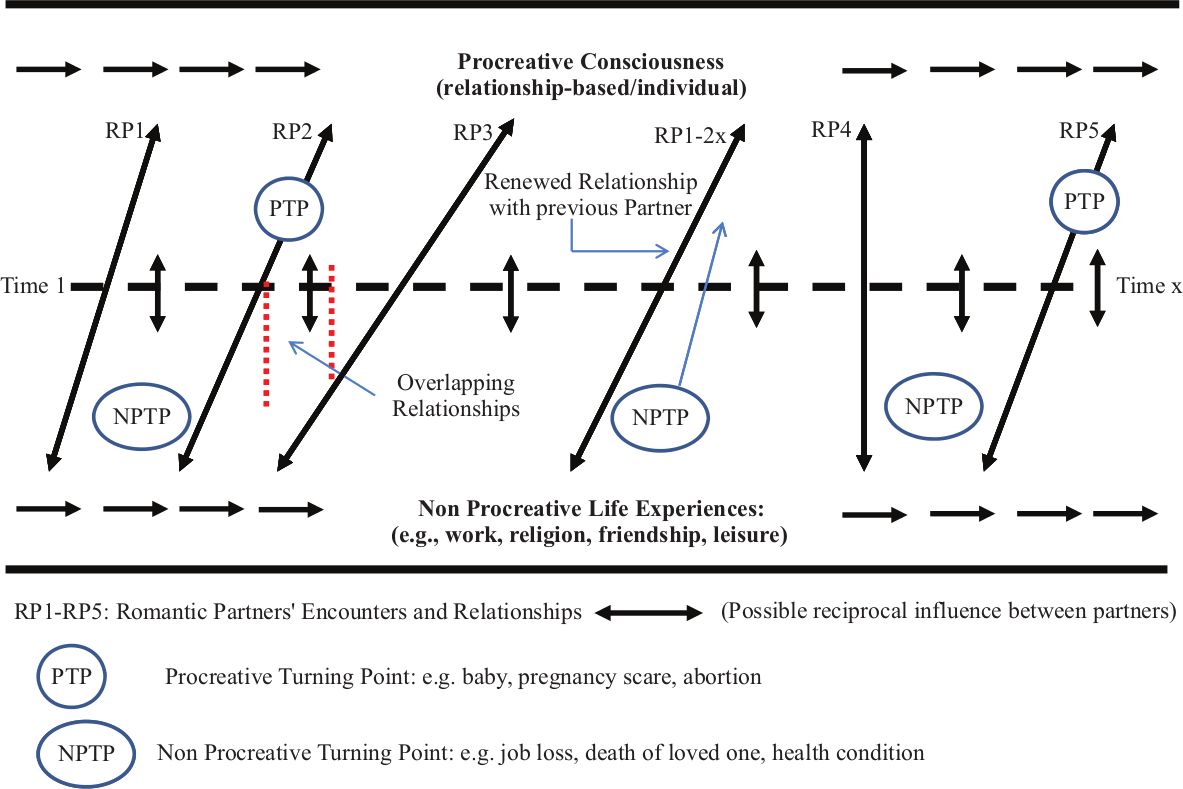
Life history perspective on procreative identity and consciousness.
Men express their procreative consciousness as either an individually based orientation that is not contingent on any particular romantic partner or their consciousness manifests itself in ways that are tied to specific romantic relationships. In the latter case, what men think and feel are intimately connected to expectations and arrangements they associate with a particular partner. At different periods in men’s lives, their consciousness may constitute a complex mix of individual- and relationship-based elements.
Men’s procreative consciousness can be influenced by various turning points or significant moments that result in men fundamentally changing their self-perception and their perspective on aspects of their life, others, and situations (Marsiglio & Hutchinson, 2002). Some turning points are anchored to events that directly represent the procreative realm (PTP: e.g., a pregnancy scare, abortion, or having a baby). Others initially stem from men’s life experiences outside the procreative realm (NPTP: job loss, death of loved one, health condition), but ultimately influence how men develop and express their procreative consciousness. Murphy (2013) uses Latour’s (2005) concept of “plug-ins” to describe some of the social exposures, such as conversations with other gay men or advertisements by commercial surrogacy organizations that generated new gay subjectivities over time. This study shows how being gay foreclosed the possibility of parenthood at one point in time but opened it up later when gay men became aware of new technical and social possibilities and began to imagine themselves as parents.
Researchers need to better understand the intersection between men’s procreative and nonprocreative life experiences as well as how men’s earlier turning point experiences affect their perceptions and behavior later on. Making sense of some men’s procreative lives is complicated if they either navigate multiple relationships/encounters at the same period in their lives or resume romantic/sexual relations with the same individuals after a hiatus. Another complicating condition is some men’s passive involvement in decision making to become parents. Based on her interviews with White heterosexual men in South African couples, Morison (2013) attributes men’s reluctance to articulate their involvement in decisions to become parents on two sets of norms. First, gender norms locate reproductive planning as a woman’s issue. Second, heterosocial norms construe childbearing among heterosexual couples as a taken-for-granted aspect of life that does not require deliberation. Indeed, an eschewal of “planning” parenthood, expressed by one of the participants in Morison’s study in the form of not wanting a “spreadsheet approach,” can be contrasted with the active planning and the production of a “flowchart” by one of the gay males considering parenthood through surrogacy in Murphy’s study (2013).
Determining when and how men build their own convictions from their experiences in specific relationships is an untapped and fruitful area of study. In general, our framework highlights how men’s decision making and procreative consciousness bring together social/interpersonal, cognitive/psychological, emotional, and biological/hormonal elements. These elements are particularly noteworthy in the case of multiple partner fertility.
Social Context for Procreative Decision Making
Our suggestions for a future research agenda emphasize the value of applying a life history perspective to understand men’s procreative experiences. We also recognize that men make their decisions in a larger, multilayered social context. Thus, we show in Figure 3 how men’s procreative decision making is intimately tied to a wide range of social and personal conditions. In the process, we propose new research opportunities that should lead to a more nuanced understanding of men’s diverse experiences in the procreative realm.

Social context for procreative decision making.
Ultimately, the key cultural discourses that pertain to prospective fathers and those with children are shaped by images and expectations associated with masculinities, families, and sexualities. Gender theorists have conceptualized masculinities as being socially constructed, varied, and part of a larger gender system anchored in hegemonic patterns of power relations that position men against women and more advantaged men against their less advantaged male counterparts (Connell & Messerschmidt, 2005). E. Anderson (2009) offers an alternative perspective by suggesting that more inclusive masculinities are emerging in cultural contexts to the degree that homohysteria—“culture of homophobia, femphobia, and compulsory heterosexuality” (p. 7)—diminishes. Similarly, Inhorn and Wentzell (2011) present ethnographic data to illustrate how men in the Middle East and Mexico, when confronted with the potential use of ARTs and erectile dysfunction drugs, practice embodied forms of “emergent masculinities” that challenge hegemonic norms about men’s expressions of manhood. The hegemonic and inclusive/emergent interpretations of masculinities can both inform how men orient themselves to health issues (Courtenay, 2000; Lohan 2007) and reproductive health more specifically (Dudgeon & Inhorn, 2003). Throughout the world, gendered social structures and men’s individual pursuit of the ideals of hegemonic masculinity (e.g., control, dominance, heterosexuality, strength, virility, and wealth) play a critical role in both sustaining a gendered division of labor and perpetuating a cultural landscape in which men engage in “manhood acts” designed to enhance their masculine self (Schrock & Schwalbe, 2009). More inclusive or progressive constructions of masculinity offer men (and women) opportunities to challenge convention and transform institutions so that diverse men who embrace a profeminist perspective can more fully and productively engage with the procreative realm.
Fathers, as embodied men, confront gendered social expectations about how they are supposed to orient themselves to families, children, and others. Although these discourses have typically defined men as breadwinners and the physical protectors of children, as well as being more peripheral than women to family planning activities, shifting public sentiment has raised the profile of men’s expected and actual involvement in all areas related to procreation. That sentiment also supports efforts to help fathers become nurturing-caregivers for their children (Marsiglio & Roy, 2012). Moreover, conventional public thinking that only heterosexual men should have and raise children has been challenged in many societies by a progressive discourse acknowledging gay men (and lesbians) as having legitimate rights to pursue parenthood. In the United States, for example, despite strong conservative views to the contrary, all but a few states permit gay men to adopt children (Goldberg, 2012) and to enter into legal contracts with surrogates to gestate and give birth to children on their behalf.
As our model illustrates, men’s procreative consciousness represents an important mediating force that can alter procreative decision making. Men’s procreative consciousness is shaped directly and indirectly by elusive cultural forces beyond the tangible social initiatives and institutional contexts relevant to men as procreative persons. The ability to imagine “possible selves” (Strauss & Goldberg, 1999)—in particular, to think of oneself as a procreative person, to have visions of becoming a father—is to some extent affected by the cultural and subcultural narratives filtered through everyday life. Family, friends, co-workers, and strangers can, in the course of their interactions with men, reinforce fertility values and norms common to a specific society or subculture. In many ways, though, these discourses and narratives are also integrated into the institutional structures that frame people’s lives. Varied government policies; public and private organizations and programs that pertain to health care, reproductive health, employment, and childcare; media portrayals—some fueled by scientific findings; and religious doctrine provide the most consequential mechanisms by which men come to develop their procreative identities and navigate the procreative realm. For instance, in recent years, the Western media (Carey, 2012) has highlighted research (Kong et al., 2012; see also Brahem, Mehdi, Elghezal, & Saad, 2011) suggesting that men who have children at later ages may increase their chances of begetting children with genetic defects, including autism.
The significance of the expanded public attention and scientific research on later-life paternity can be interpreted alongside the various “moral panics” that pertain to women delaying motherhood until their mid-30s and beyond. In the United Kingdom, the “leaving it too late” discourse has intensified public debate about older individuals having children while fueling the social egg freezing movement (Martin, 2010). Although little research examines the correlates of delayed parenting for men or the impact of how media attention to older parenting affects men’s sense of self as they contemplate or experience paternity at different ages, two recent studies (Roberts, Metcalfe, Jack, & Tough, 2011; Thompson & Lee, 2011) suggest that personal relationship and situational factors influence decisions to delay parenting for men as well as for women. This work raises further research questions in relation to men’s aging and their procreative consciousness: Will more men be motivated to freeze their sperm for their later use as the discourse about health risks and later-life reproduction ensnares older fathers, not just older mothers? To what extent will the current discrepancy in public scrutiny whereby older fathers are seldom challenged but older mothers are regularly castigated as irresponsible and selfish change over time?
Although there are plenty of examples of how diverse religious values across and often within cultures contribute to narratives that influence men’s ideas and actions, Inhorn’s research on the role that Islam has on Egyptian men’s decision making about ARTs is noteworthy. It illustrates the diverse meanings that technologies can assume in different cultural and religious contexts and the impact that both formal religions and everyday religious practices can have on constraining access to some forms of assisted conception (Inhorn, 2003, 2007, 2012; Inhorn & Tremayne, 2012).
From a historical perspective, modern technologies germane to the procreative realm have also altered the landscape for reproductive decision making. Technology’s influence on men’s procreative experiences is perhaps best illustrated by the emergence of ARTs such as intracytoplasmic sperm injection (ICSI), which has made it possible for men with very low sperm quality to have a genetically related child, something denied to them until relatively recently. Because social policies vary from country to country and even within some countries, and men differ in their financial resources, not all men have equal access to ARTs. Most IVF is not publicly funded. As an expensive technology, it is not available to less economically advantaged couples around the world (Nachtigall, 2005). Differential access of this sort may affect men’s procreative consciousness and influence the way they construct their procreative identities. Men’s consciousness will be shaped by whether they are oblivious to technological options or are aware of options that are beyond their means.
The context-specific cultural discourses associated with ARTs can also affect men’s willingness to entertain their use (Birenbaum-Carmeli & Inhorn, 2009; Culley & Hudson, 2007; Tremayne, 2001). Compared with men living in societies and cultures not favorably predisposed to the use of ART, men in more receptive places are probably more apt to entertain their use, though even within the West, cultural and religious minorities are differentially situated with respect to ARTs (Culley, Hudson, & van Rooij, 2009). Most of the limited research on men and ARTs has focused on how fertility treatment affects psychosocial functioning (Greil et al., 2010) and there are relatively few sociological studies of men’s attitudes about using ARTs. A recent survey of Canadian men found that although most anticipated becoming fathers at a later age, few were positive about using IVF and third party assisted reproduction in particular (Daniluk & Koert, 2012). Men’s reproductive concerns are also marginalized within anthropology (Dudgeon & Inhorn, 2009). Internationally, Inhorn’s extensive research has shown how the transfer of ARTs to the Middle East has fundamentally affected masculinities and gender relations more broadly (Inhorn, 2003, 2008, 2012).
One of the more notable developments, ICSI, opens up opportunities for countless men who would have, in previous eras, resigned themselves to a life of infertility (Marsiglio, 1998). They can now dream realistically that they may become a biological father and they are in a different position to negotiate their commitment to biological paternity with their partners. As with all forms of ART, men in economically advanced countries will be better situated than those living in poorer countries to use these specialized options. In some instances, affluent men in poor countries will also have access to ART, especially if they are prepared to seek treatment abroad (Inhorn, 2012).
When ICSI is not a viable option, techniques that rely on donor sperm may raise issues for men about their procreative adequacy in a more fundamental way (Daniels & Haimes, 1998; Marsiglio & Hinojosa, 2007; Throsby & Gill 2004). Thus, researchers should use a gender perspective when trying to understand the nature of men’s psychosocial concerns about using donor sperm as well as how couples negotiate the use and selection of specific donor sperm. Insights derived from these analyses can help fertility specialists and their support teams to better assist men and couples cope with the stress of infertility.
A common assumption has been that a diagnosis of infertility (for whatever cause) evokes greater distress for women than men (Greil, 1997). Conventional thinking suggests men and women have structurally different relationships to IVF because men and women are guided by different normative assumptions about the significance of childbearing, and the technology has more direct and negative effects on women’s bodies. However, recent research challenges this view by suggesting that infertility is a major life crisis for men as well as women (Greil et al., 2010; Malik & Coulson, 2008; Peronace, Boivin, & Schmidt, 2007), even though men are less likely to express emotional distress. Throsby and Gill (2004) argue that the meaning of IVF is mediated by a hegemonic masculinity, which equates “real men” with virility, indexed by fathering a child. Thus, infertility may engender feelings of humiliation, inadequacy, and public ridicule (Becker, 2000). This appears to be the case for both male factor and non–male factor infertility. This trope provides the context for how ARTs are experienced by men and how infertility is presented to others. Male factor infertility is rarely disclosed to others, and women often “take the blame” to circumvent the stigma of their partner’s inability to “father” a child. Even when men are asked directly in in-depth research interviews about their experiences of attempting to become a parent through ART, they may choose to prioritize their female partners’ experiences over their own (see Herrera, 2013).
Although most ART interventions target women’s bodies, men increasingly are also affected somatically as well as psychically by processes related to assisted conception such as ICSI (Inhorn, 2007). Rather than assuming men’s bodies are “untouched” by ARTs, research needs to explore the embodied experience of infertility for men and how this might affect reproductive decision making. In addition, how is men’s involvement with ARTs influenced by a system of “stratified reproduction” based on social class and race/ethnic concerns (Inhorn, Ceballo, et al., 2009)?
When babies are born today, men are faced with a very different scenario than just a few decades ago because DNA-based paternity testing can enable or force them to know with certainty whether they are the biological father to a particular child (Draper & Ives, 2009; Hubin, 2003; Marsiglio, 1998). For some men, this technology is liberating because it provides them the means to claim or dispute paternity—a reality that might otherwise not have been possible. At the same time, other men can no longer successfully deny their paternity; they must grapple with the identity issues that men experience when they are proclaimed fathers against their will. Overall, DNA technology complicates efforts to advance gender equity while giving men today a kind of certainty they lack because of the gendered nature of reproductive physiology. The technology also provides researchers with a host of options for conducting studies on how men think and feel about their suspected paternity and how men and women navigate those situations where doubts have entered into the taken-for-granted paternity establishment process (Anderlik & Rothstein, 2002; K. G. Anderson, 2006; Bellis, Hughes, Hughes, & Ashton, 2005).
Another more futuristic development is male hormonal contraception. For nearly three decades scholars have enthusiastically speculated on how the marketing of a highly effective male hormonal contraceptive would alter contraceptive decision making (Marsiglio & Menaghan, 1987; Oaks, 2009; Oudshoorn, 2003). Unfortunately, the real-world development and marketing of this male-oriented contraception has been much slower than anticipated. Despite a range of setbacks, the prevailing sentiment seems to be not if, but when, male hormonal birth control will be publically available. Thus, research that explores how men navigate opportunities to discuss and choose this form of birth control is timely and can be incorporated into speculative research or clinical trials, and then, ultimately, into future samples of men who actually have a chance to use it. This research can take into account how men have approached the use of other male forms of contraception like condoms and vasectomies with current or previous partners. In the meantime, life history analyses can examine how men’s earlier experiences with contraceptive decision making with the same or different partners influences their approach to a new male hormonal product.
Less marginal forms of technology that can affect how men and couples approach procreative issues involve reversible vasectomies (Chan & Goldstein, 2007; Marsiglio & Hinojosa, 2007) and Pro-Vas (a tiny titanium spring clip placed into the vas deferens that stops the flow of sperm). As the former technology is refined and becomes more accessible, it could shift perceptions of vasectomies and their use as an exclusively permanent form of birth control. Reversible vasectomies could alter the gender dynamics of couples’ contraceptive decision making by expanding the set of reliable options and might even be adopted by a small subset of men not in relationships who have a heightened sense of procreative responsibility. Similar patterns could result if Pro-Vas and comparable devices become a commercial success.
Men will continue to face difficult decisions as prenatal testing for fetal abnormalities becomes more refined. Modern technologies place couples in settings that earlier generations of prospective parents did not have. Research that considers the decision-making dynamics between partners as well as between partners and health care providers can reveal new patterns of gender communication in an arena ripe with emotional and ethical considerations (see Dheensa et al., 2013). Here again, men’s procreative history with their current partner or someone else may influence men’s attitudes about and approach to testing in a new pregnancy.
Consistent with Figure 2, the multilayered model outlined in Figure 3 depicts how interpersonal relations can influence men’s procreative consciousness and decision making. Some of the research relevant to these relationships focuses on both fertile and infertile couples’ negotiations as they make decisions about whether and how they are willing to become parents through typical heterosexual means, medicalized efforts, or adoption. When women share their concerns about their “biological clock” with their male partners, they can heighten men’s own awareness of their potential to procreate. Little has been done to explore the different styles couples use to discuss and negotiate their desires for or against having a(nother) child. In addition, we know little about how women draw on their own human and social capital to negotiate their interests effectively with men in the procreative realm.
In the eyes of men, they are likely to have at least a vague sense of whether they want to conceive, abort, or have a child through some alternative means. But it appears that men’s partners can alter the way they frame their approach to all sorts of procreative issues, including their own identity. So too, a wide range of individual attributes associated with men’s social and financial resources, demographics, emotional and psychological state of being, biological capabilities, and religious and nonreligious values may influence men’s self-image and the way they orient to the procreative realm.
Moving Forward
Generally speaking, our three conceptual models underscore the complexity of men’s procreative decision making while delineating the diverse set of key elements associated with this area of men’s lives. We do so by illustrating the dynamic nature of the elements in terms of how they can change over time and between different partners and in different cultural/national contexts. Viewed collectively, our models push scholars to broaden and deepen understanding of men’s experiences with the full range of interrelated issues associated with the procreative realm. Our framework encourages scholars to prioritize four principle strategies as they develop their future research agendas: comparative designs, diverse methodologies, prospective and retrospective longitudinal studies, and approaches that capture the multiple, interrelated layers of social life that affect men’s thoughts, feelings, and practices in the procreative realm. These strategies can easily accommodate the particular types of theorizing we noted at the outset in which gender/masculinities, life course, and symbolic interactionist themes guide our efforts to understand men’s procreative experiences.
Because phenomena that define the procreative realm are sensitive to the varying cultural and social contexts that give rise to men’s procreative experiences, more comparative research is clearly warranted. Cross-cultural scholarship needs to theorize and empirically explore how different contexts interact with individual-level consciousness and agency to shape men’s motivation for a child and procreative experiences. Although some comparative work has focused on men’s lives as fathers (Shwalb, Shwalb, & Lamb, 2012), there is far less comparative scholarship about the numerous activities we showcase here that involve men’s procreative consciousness distinct from hands-on fathering. Ideally, this research would not only compare men from and between relatively similar types of societies based on shared philosophical traditions (e.g., Western or Eastern). It would also examine the similarities and differences between societies that vary in their stance on women’s opportunities and family life. Creative analyses that stem from comparable data collection practices in industrialized and nonindustrialized societies may also generate valuable theoretical insights about how structural and interpersonal dimensions alter men’s approach to the procreative realm.
In many respects, survey research, compared with many qualitative designs, especially ethnographies, is better positioned to compare men’s standardized responses with similarly worded questions in different societies. Of course, researchers must overcome the practical logistics of using comparable sampling techniques and fielding a similar survey instrument in multiple languages, but when done well, the payoffs are considerable. The multilayered model we propose should help researchers make decisions about the relative need for particular constructs to be operationalized in quantitative analyses. Moreover, the model may inspire researchers to integrate different types of data based on varying units of analysis. For example, policy-level data and/or a content analysis of religious or media depictions of particular cultural discourses might be combined with individual-level survey responses. This type of creative mixed-methods approach could be used to compare men’s attitudes to, and experiences of, unintended pregnancy and abortion in different countries.
Although more difficult and rare, teams of qualitative researchers could in principle apply collaborative strategies even when using semistructured interview questions and fluid designs. Along these lines, researchers might ask men living in different countries who experienced an unplanned pregnancy to share their stories about how they discussed their dilemma with others, and how they negotiated with their partner whether to abort or carry a pregnancy to term. The men’s narratives should yield a better understanding of how men tend to manage an unplanned pregnancy. Do men treat the event as a secret, private matter that they process on their own or only with their partner or do they freely discuss it with trusted family, friends, or counselors? A similar line of questioning focusing on men’s handling of ART discussions and treatments could help structure a similar type of coordinated research effort in different countries. Whether it is a study of men’s motivations for choosing particular types of contraception, responses to an unplanned pregnancy, or their journeys into the world of ART, much can be gained by obtaining rich, personal stories from men situated in different cultural and social contexts. In addition, much could be gained by coordinating a mixed-methods approach to these and other types of procreative issues relevant to men.
Most research about men in the procreative realm tends to focus on a slice of their procreative experience, revealing a snapshot of an isolated portion of their lives at a particular point in time. Asking men about their discussions and use of birth control can lead to valuable insights, but a more nuanced approach would examine the dynamic nature of men’s procreative consciousness over time by using prospective or retrospective longitudinal designs. These studies need to account for men’s procreative life histories played out in the same or different relationships as well as their meaningful life experiences outside the procreative realm that influence their procreative decision making—in this instance decisions about birth control which may be connected to fertility beliefs and intentions. Under what conditions, if any, does going through an abortion with a previous partner influence a man’s motivation to be diligent in his contraceptive practice with his current partner? Or, to what extent and how does being employed in a secure, well-paying job versus being unemployed and looking for work for a long stint sharpen a man’s procreative consciousness and in turn affect his motivation to prevent an unplanned pregnancy? When a man reenters a romantic relationship with the same person he was involved with months or years before, how do memories anchored to an earlier iteration of his procreative consciousness affect how he thinks about and acts on his current set of circumstances? How do experiences of fatherhood affect men’s ambitions for grandfatherhood?
From a life course perspective, multiple partner paternity is one increasingly important circumstance for many fathers in the United States as well as other countries. The rising rate of men having children with different mothers, coupled with the added life history complexity associated with this fertility pattern, requires researchers to pay more attention to how men’s procreative consciousness is affected by cumulative and simultaneous relationship circumstances. To what extent do nonresident fathers, frustrated with their former partner for restricting their access to their children, alter their procreative consciousness as it relates to a new romantic encounter or relationship partner? Are they more or less diligent in using contraception? More or less compelled to have a vasectomy? More or less willing to invest time, money, and emotional energy into ART treatments?
In summary, we argue that there is considerable potential to study men’s experiences at the outset of the reproductive trajectory by focusing on how men perceive and prepare for fatherhood. Influenced by feminist theory and critical studies of men and masculinities, as well as symbolic interactionist and life course themes, we argue that far greater attention needs to be shown to how men emerge and express themselves as procreative beings. In ways that feminist theory has made explicit in women’s lives, reproductive issues do not simply become personally relevant for men at the birth or adoption of their children. Reproductive concerns can come to the fore much earlier as men, often in conjunction with their partners, strive to promote or restrict reproduction. Our discussion—illustrated by Figure 1—presents the procreative period as a multilayered dynamic process in which men are intrinsically involved. We also emphasize that men experience reproduction in diverse and heterogeneous ways. At several points, but especially in relation to Figure 2, we note men’s differential access to reproductive technologies, both in terms of restricting fertility (contraception and abortion) and especially in relation to promoting fertility through new reproductive technologies. Men’s reproductive stratification is readily apparent in three types of comparisons: men living in wealthy industrialized countries versus those who do not, men in liberal versus conservative regimes, and wealthy versus poor men in rich and poor countries. Further lines of stratification apparent in current research are differential access to new reproductive technologies as well as possibilities for adopting children based on sexuality, ethnicity, and culture. Finally, we advocate that future research be guided by four strategies: comparative designs to improve understanding of the variation in men’s experiences of similar time points in the procreative trajectory across different cultural contexts, particularly research that compares and contrasts experiences in the global north and the global south; diverse methodologies so that men’s procreation might be researched through qualitative as well as quantitative designs; prospective and retrospective longitudinal studies to capture the dynamic nature of the procreative period within men’s lives; and approaches that capture the multiple, interrelated layers of social life that affect men’s thoughts, feelings, and practices in the procreative realm.
Footnotes
Declaration of Conflicting Interests
The author(s) declared no potential conflicts of interest with respect to the research, authorship, and/or publication of this article.
Funding
The author(s) received no financial support for the research, authorship, and/or publication of this article.