




Abstract
Families in the United States are increasingly diverse, which has given rise to questions about the consequences these new family forms have for children’s outcomes. This study uses a life course perspective to examine the association between family transitions, nontraditional family structures (with particular attention to same-sex parent families), and children’s psychosocial well-being. The Early Childhood Longitudinal Study–Kindergarten cohort was used to examine children’s externalizing well-being, internalizing well-being, and interpersonal skills. Results indicate that nontraditional family structures are associated with poorer psychosocial well-being, but this is largely accounted for by changes and transitions experienced in the creation of new families. The findings provide a critical look at the assumptions embedded in arguments focused solely on family structure, and joins other research in calling attention to the importance of family processes for understanding the well-being of children.
Keywords
The 2000 Current Population Survey showed that less than 70% of children lived in households with two parents, and by 2014 fewer than 60% of children lived in households with married, two biological parents (U.S. Census Bureau, 2012). Historically, married, two-biological parent households have been idealized as the preferred family form and referred to in the literature as the “traditional family,” with any variation from this family structure labeled “nontraditional” (Macklin, 1980), and for ease of discussion, we adopt these heuristics. As the prevalence and diversity of family structures continues to increase and more children live in, for example, divorced, cohabiting, and single-parent families, researchers, policy makers, and social leaders alike have raised questions about how these new family forms shape children and their development (Cherlin, 2010; Nelson & Prasad, 2001).
Prior research has explored the consequences of living in nontraditional families for several developmental outcomes in areas of academic and educational achievement, problem behavior, substance abuse, and of particular interest to this study, psychosocial well-being (Amato, 2005; Potter, 2012; Sun & Li, 2009). In general, children living in nontraditional families (e.g., divorced, stepparent, or cohabiting parent families) tend to display more aggressive behaviors and greater anxiety/depressiveness (Dawson, 1991; Fomby & Osborne, 2010) than their peers in married, two-biological parent households, and such findings have contributed to a general concern with raising children in households with these types of parental arrangements.
Despite constituting less than 1% of all children in the United States, children in same-sex parent households, that is, children being raised by two moms or two dads, are at the epicenter of particularly contentious cultural and legal debates (Biblarz & Savci, 2010). At their core, these debates hinge on the question of children’s outcomes. A growing body of research examining the psychosocial well-being of children in same-sex parent families tends to show no systematic, negative consequences of living in these families (Tasker, 2005); however, these studies, along with others suggesting children may experience negative consequence (e.g., Regnerus, 2012), have been routinely criticized for their measurement and methodological rigor (Cheng & Powell, 2015; Manning, Fettro, & Lamidi, 2014; Nock, 2001; A. J. Perrin, Cohen, & Caren, 2013; Schumm, 2014). Prior studies have largely relied on data from children born into preexisting lesbian households (Bos, van Balen, & van den Boom, 2007; Van Gelderen, Gartrell, Bos, & Hermanns, 2013), or created measures of family structures based on data from a single point in time (Wainright & Patterson, 2006, 2008; Wainright, Russell, & Patterson, 2004). Missing from research is methodological and theoretical consideration of the changing family structure over time.
For many children, the family is not a static entity, and as it changes, previously established links between members of the household are challenged and sometimes broken. As different parent arrangements, practices, and available resources emerge, children are faced with evolving notions of their family unit (Powell, Bolzendahl, Geist, & Steelman, 2010) and often experience elevated stress and strain (Amato, 2005; Potter, 2010). Without considering these transitional experiences in the study of children in same-sex parent families, prior research has only captured part of what it means to live in such households. Research is needed that examines the consequences to disrupting the established (i.e., linked) lives of family members and the implications of familial change for children. Using the life course perspective, this study builds on earlier research and more fully examines the implications of living in nontraditional families and family transitions on children’s psychosocial well-being.
Life Course Perspective: Family Structure, Transitions, and Instability
The life course perspective offers a useful framework for conceptualizing the role of the family unit in children’s outcomes by calling attention to the linked lives of family members and the importance of timing (i.e., early childhood, middle childhood, or early adolescence) for understanding the consequences of life experiences. It asserts that development is not an isolated process but is the byproduct of other persons as well as culture and laws surrounding an individual (Elder, 1978). In childhood, the family is typically the primary context in which children’s “lives are lived interdependently” (Elder, 1998, p. 4), so changes to the family (e.g., divorce, unemployment, death, birth) tend to coincide with changes in individual development.
The life course perspective also allows for previously static classifications (e.g., single-parent, divorced, cohabiting) to be considered with attention to the dynamic processes subsumed in these structures over time (Cox & Paley, 2003). For example, divorced, cohabiting, stepparent, and single-parent families (Amato, 2010) experience more changes and transitions in their family structure, on average, than married, two-biological parent families, and these alterations in the family structure coincide with periods of adjustment as children redefine their family, as well as their role and identity in the new family form (Elder, 1998). Importantly, life course also asserts that changes or transitions are cumulative and build over time to form an individual’s trajectory or life path (Elder, 1998). Moreover, changes to the family structure during early childhood may have lingering consequences when children are older that are separate from subsequent transition experiences (Lansford et al., 2006); therefore, the number and timing of transitions are important to consider when examining the implications of family structure for an individual’s development.
Familial changes are often accompanied by psychological, social, and economic stress and strain (Fomby & Cherlin, 2007; Wu, Hou, & Schimmele, 2008), with each additional change corresponding to additional negative consequences. Researchers increasingly recognize the importance of considering family change and transitions for understanding the role of family structure in children’s development, especially with regard to children’s psychosocial well-being (Cavanagh & Huston, 2006; Hao & Xie, 2002). To this point, children from divorced and single-parent families may do worse than their peers from married, two-biological parent households on an array of developmental outcomes, but such evidence does not imply that these nontraditional families are inferior for raising children (see Amato, 2005; Raley & Wildsmith, 2004). Instead, findings from this line of research emphasize the importance of distinguishing between family transitions and family structure.
Particular challenges families face in the midst of change and transition are most often reflected in financial and material resources and parenting practices. Family transitions, such as divorce, result in the loss of a potential secondary income (McLanahan & Sandefur, 1994; Raley & Wildsmith, 2004; Sun, 2001). Changes in family structure also coincide with new parenting roles, as parental involvement with children can be redefined and adapted with the introduction or the removal of a parent from the household (Amato & Booth, 1996; Dolgin, 1996; Wallerstein & Blakeslee, 1989). There are a multitude of immediate and peripheral factors that contribute to the challenging circumstances of family transitions (Thomson & McLanahan, 2012), and while not all can be included here, the association between nontraditional families, family transitions, and children’s psychosocial well-being needs to be considered within the context of other changes to family processes and relationships (Amato, 2000; Hetherington, Bridges, & Insabella, 1998). Conflating structure with instability and its co-occurring changes to family processes leads to misleading and thus incorrect conclusions (e.g., Amato, 2010; Thomson & McLanahan, 2012). To date, studies of children in same-sex parent families have typically been unable to detangle these correlated influences.
Same-Sex Parent Families in the United States
Currently, it is estimated that about 115,000 same-sex parent couples in the United States are raising an estimated 170,000 to 270,000 children (Romero, Baumle, Badgett, & Gates, 2007). These families are formed increasingly through processes such as in vitro fertilization (Gartrell, Hamilton, & Banks, 1996), surrogacy (Bergman, Rubio, Green, & Padron, 2010; Berkowitz, 2013), and the adoption or fostering of children (Biblarz & Savci, 2010; Goldberg, 2010), which have the potential to provide children with familial stability in ways previously privileged to (married) two-biological parent households (Patterson, 2002). However, most children living in same-sex parent families enter these families following the dissolution of at least one of their parents’ previous different-sex relationship (Bigner & Jacobsen, 1989; Gartrell et al., 1999; Goldberg, Gartrell, & Gates, 2014). According to recent estimates, only 28% of gay fathers and 37% of lesbian mothers with children had them in the context of the current relationship (Henehan, Rothblum, Solomon, & Balsam, 2007). Moreover, estimates based on census data show that only 11% of children in same-sex parent households are stepchildren, adopted, or fostered, suggesting that only a small minority of children are beginning life in these households (Rosenfeld, 2010). The majority of these children enter these families through some type of transition in their parental arrangement and family structure. In this regard, most children in same-sex parent families have “undergone the tensions and reorganizations characteristics of parental divorce and separation” (Patterson, 2000, p. 1055).
Considering the experiences of these children, it might be expected that living in a same-sex parent family would be associated with poorer outcomes similar to those of children living in divorced or separated families, but research has not found this to be the case. Instead, children in same-sex parent families and their peers from married, different-sex parent households tend to exhibit similar outcomes with respect to their psychosocial development (Biblarz & Stacey, 2010; Tasker, 2005). For example, young children from same-sex parent families were equally successful at making the transition from home life to school (Perry et al., 2004), and adolescents who had lived with lesbian mothers displayed comparable levels of self-esteem, anxiety, and depressiveness (Fulcher, Sutfin, & Patterson, 2008; Gartrell & Bos, 2010); and exhibited similarly low levels of risky and problematic behaviors as their peers from married, different-sex parent families (Bos et al., 2007; Golombok et al., 2003; Wainright & Patterson, 2008; Wainright et al., 2004). Limited research has found evidence contradicting this larger body of research, which suggests that children in same-sex parent households experience negative consequences (Regnerus, 2012; Sullins, 2015), but it, as well as the other research suggesting “no difference” in the outcomes of these children, have been routinely criticized for their measurement and methodological limitations.
In the past few years there has been an increased call for research on the outcomes of children in same-sex parent families to examine the temporal experiences and diverse composition of these households (Cheng & Powell, 2015; A. J. Perrin et al., 2013; Schumm, 2014). Prior research on same-sex parent families has typically measured family structure based on data from a single point-in-time. Regnerus (2012), for example, classified individuals as growing up in a same-sex parent family if they reported one of their parents ever having a romantic same-sex relationship prior to the individual turning 18 years. In their prominent study, Wainright and Patterson (2008) identified same-sex parent families using data collected from the first-round parent interviews, which were carefully examined to insure proper classification but were still limited to classification based on one time point. If the majority of children in same-sex parent households were born into their families, then the need to incorporate time and transitions into research would be relatively minimal. However, most children enter same-sex parent families alongside a parent who was previously in a different-sex marriage or relationship (Goldberg et al., 2014; Stacey, 2006; Telingator & Patterson, 2008) making the need to incorporate time and transitions into analyses all the more pressing in order to gain better and more accurate understanding (Schumm, 2014). Gartrell and Bos (2010) have overcome this problem with their longitudinal study of a cohort of children born into lesbian families. While this growing body of work has offered unprecedented insight into the outcomes of children raised by same-sex couples, it too faces its own serious challenges as the families included in the study do not capture the diversity in the characteristics of same-sex parent households in society (e.g., Moore & Brainer, 2013).
Examining children in same-sex parent families over time in a large, nationally representative sample offers the opportunity to build on the accomplished works of others. Moreover, the application of the life course perspective to the study of same-sex parent, traditional, and other nontraditional families will help standardize the research on family structure, and in the process, call greater attention to the importance of family processes. Consequently, our study is guided by two research questions: (a) Is there a difference in the psychosocial well-being of children living in same-sex parent households compared with married, two-biological parent families, net of family instability and (b) how does the psychosocial well-being of children in same-sex parent families compare with their peers from nontraditional, different-sex parent families?
Method
Data
We used data from the Early Childhood Longitudinal Study–Kindergarten cohort (ECLS-K). Sponsored by the National Center for Educational Statistics, the ECLS-K is a seven-wave panel study that collected data from over 20,000 children during Kindergarten in the fall of 1998, and followed them through their eighth-grade year (Tourangeau, Nord, Le, Pollack, & Atkins-Burnett, 2006). Data for this study were collected when most children were in kindergarten, first grade, third grade, and fifth grade; data from eighth grade were not used in the present analysis as measures of our dependent variable were not collected in this wave. Extensive data were collected from multiple sources, including the child, a parent or guardian, and teachers to provide an encompassing view of children’s home and educational experiences.
Identifying Same-Sex Households
For each wave in the study, data from the ECLS-K family roster were used to classify children into one of eight family structures: married, two-biological parent; divorced; stepparent; single-parent; cohabiting; widowed; other (e.g., living with grandparent(s), aunt, uncle, cousins, or other nonrelative); and same-sex parent. Eight dummy variables were created corresponding to the different structures, and for each wave, if a child lived in that structure, it was scored a 1 (otherwise coded 0). This coding strategy created a time-varying measure of family structure, and enabled the corresponding measure of family transitions. Due to sample attrition, the number of children belonging to each structure varied by wave, but at kindergarten entry, there were 11,314 children in married, two-biological parent families, 1,153 children in stepparent families, 1,874 children in single-parent families, 2,886 children in divorced-parent families, 882 children in cohabiting parent families, 157 children in widowed parent families, 792 children in some “other” parent arrangement, and 72 children in same-sex parent families.
Families were labeled as “same-sex” if they satisfied one of six conditions: two “mother/female guardian” members, two “father/male guardian” members, a “mother/female guardian” and “girlfriend/partner of parent/guardian,” a “father/male guardian” and “boyfriend/partner of parent/guardian,” a “mother/female guardian” and a female “other nonrelative” between 21 and 49 years, or a “father/male guardian” and a male “other nonrelative” between 21 and 49 years. Adult respondents were not asked to report their sexual orientation, so cases that met one of the six conditions were visually inspected to verify its structure. For example, if a household had a “father/male guardian” and a “boyfriend/partner of parent/guardian,” its family roster data were visually inspected for another adult in the household, such as an adult female/girlfriend, which might suggest a family arrangement other than two male (i.e., same-sex) parents. After visual inspection, 155 children were classified as living in a same-sex parent family during at least one wave of the study.
Family Change Measures
At the core of our life course perspective is family change or transitions, which we measured using two variables. The first, cumulative number of family transitions, is a time-varying, cumulative count of the number of family transitions children experienced. The second, early family instability, is a time-invariant measure of children’s family structure at entry to kindergarten. Family structure at kindergarten entry was used as the closest available proxy to capture early childhood family life (i.e., transitions that may have happened prior to kindergarten). Despite the many advantages of using the ECLS-K, the data set does not provide detailed information on children’s family structure in the years prior to kindergarten, a limitation we recognize. Retrospective information was collected from the mother about her relationship status with the child’s biological father at the time of the child’s birth, but not enough detail was available to generate the eight-category family structure measures prior to entry in kindergarten. Note, preliminary analyses with children’s family structure at birth returned substantively similar findings to the results reported herein (results not reported), therefore, we opted to retain the more detailed, kindergarten-wave measures.
Psychosocial Well-Being
We examined three measures of children’s psychosocial well-being: externalizing well-being, internalizing well-being, and interpersonal (social) skills. These measures were taken from scales provided on the ECLS-K data file, and are based on teacher report of items adapted from the Social Skills Rating Scale (Gresham & Elliott, 1990). Externalizing well-being is based on how frequently a child argues, fights, gets angry, acts impulsively, and disturbs ongoing activities (α = .90). Internalizing well-being is based on how frequently a child acts anxious, appears lonely, exhibits low self-esteem, or seems sad (α = .78). Externalizing and internalizing were reverse coded for our analysis, such that a higher score indicates better well-being. Finally, interpersonal skills is based on children’s ability to form and maintain friendships, get along with people who are different, comfort or help other children, express feelings and ideas appropriately, and show sensitivity toward the feelings of others (α = .89) and coded such that higher scores indicate better well-being (Tourangeau et al., 2006).
Control Variables
We included a set of control variables associated with family structure, transitions, and children’s psychosocial well-being. The number of control variables was limited by the relatively small cell sizes associated with the time-varying measure of family structure. At Level 1, control variables were included for family poverty status (1 = annual family income below the poverty line) and parental investment (parents’ responses to questions on school involvement). At Level 2, we control for female (1 = yes), race/ethnicity (1 = African American), age at kindergarten (in months), first-time kindergartener status (1 = yes), and non-English language in the home (1 = yes). Children’s socioeconomic status at kindergarten entry was also controlled for by using the categorical composite variable provided by ECLS-K programmers, and including two dummy variables indicating if the child’s family was in the top or bottom quintile (middle three quintiles served as referent). Finally, to further account for the linked lives of family members, we included parental depressiveness to account for the potential transmission of psychosocial well-being of parent to child (Hammen, Hazel, Brennan, & Najman, 2012), and is a summed measure of 12 depressive symptoms at the kindergarten wave (e.g., respondent was unusually bothered, had a poor appetite, or felt lonely; α = .83).
Missing Values
Missing values were handled using the ICE command in Stata (Royston, 2007). A total of five data sets were imputed using all of the variables in the model to estimate the missing values. The amount of missingness per variable ranged from 0% (female/gender status) to 14% (first-time kindergarten status). Although all variables were included in the imputation of missing values to maximize the predictive power of the estimation equation, the original values for the dependent variables and family structure measures were retained to avoid having our results unnecessarily directed by imputed data (Von Hippel, 2007). Each set of analyses has a slightly different sample size to reflect differences in missingness of the dependent variables.
A set of logic rules were applied to fill in certain missing values for the family structure variable, where possible. The logic rules were as follows: If the first valid data for family structure did not appear until after the base-year wave, then the first observed value was applied retrospectively (corrected 1,213 missing values). Next, if a wave with missing data for family structure was preceded and followed by waves reporting the same value, then the missing data wave was set to the value of the bordering waves (corrected 1,344 missing values). Last, if a wave with missing data for family structure was preceded and followed by waves reporting different values, then the missing data were set to the value of the preceding wave (corrected 542 missing values). Missing values were allowed to remain for cases in which no valid response had ever been provided, and for all waves subsequent to the final valid response (e.g., if the last valid data were in Grade 3, then missingness was allowed to remain if present in Grade 5). The logic rules successfully filled in a portion of the missingness at all waves of the analysis: 49% in kindergarten, 21% in first grade, 13% in third grade, and 3% in fifth grade.
Analysis
The psychosocial outcome measures had high internal reliability but were also skewed reflecting the “good” ratings by teachers. Across the four waves of data, 17% of person-period observations for internalizing well-being received the highest possible value, 21% of person-period observations for externalizing well-being received the highest possible value, and 14% of person-period observations for interpersonal skills received the highest possible value. To address the truncated nature of our outcome measures and the longitudinal nature of our data, we utilized a random-effects tobit model (Wang, Zhang, McArdle, & Salthouse, 2009).
Since no prior research suggests that children’s psychosocial well-being should change in a linear fashion over time, we included time-varying dummy variables for time (i.e., a dummy variable for each wave of the study) to force as little restriction on the shape of children’s psychosocial trajectories as possible. Time-varying variables were included at Level 1, and our time-invariant measures at Level 2. All estimates were weighted to adjust the standard errors for clustering, as well as correct for the oversampling of certain racial/ethnic groups.
For our random-effects models, we used stepwise variable entry across three models to establish a baseline association between children’s family structure and children’s psychosocial well-being (Model 1), then included the sociodemographic variables (e.g., female status, race/ethnicity, age, parental depressiveness; Model 2), and finally introduced the family change measure (Model 3). The equations for Model 3 are presented below:
Level 1:

Level 2:





where Y* is the assumed underlying latent variable for each outcome measures of psychosocial well-being, TIME is the vector of time-varying dummy variables for each survey wave, FamStr is a vector of the time-varying dummy variables for children’s family structure, FamTrans is the cumulative number of family transitions, and X is the vector of time-varying covariates included in the model (i.e., poverty and parental involvement). In the Level 2 equation, FamK is the vector of dummy variables indicating the early family instability (i.e., family structure at kindergarten entry), and δ is the vector of sociodemographic control variables.
In addition to limiting the number of control variables, we could include in our models, the small cell sizes sometimes resulted in large-than-normal standard errors for the time-varying family structure measures. In order to avoid a Type II error (i.e., reporting a false-negative), we report statistical significance in the tables using a slightly elevated significance level, p < .10, and results are discussed with attention given to the direction of the estimated slope coefficients.
Results
Descriptive statistics in Table 1 (Level 1 variables) and Table 2 (Level 2 variables) display the distribution of children’s family structures and the mean number of cumulative transitions for each wave. Children in married, two-biological parent families were the most prevalent group in the sample; still, by fifth grade (Wave 5), the average number of family transitions per child was 0.56; that is, slightly more than one out of every two children had experienced a family transition. For the measures of children’s psychosocial well-being, there are no obvious linear or lower polynomial nonlinear patterns to the data, which reaffirm our decision to use dummy variables to specify the time component. Table 2 provides additional evidence of the different family structures that children experience early in life, with nearly 40% of the sample living in a nontraditional family by the time they started kindergarten.
Number and Percentage Distribution of Level 1 Family Structure and Mean and Standard Deviation of Cumulative Number of Family Transitions and Socioemotional Well-Being by Grade.

Note. Details may not sum to total due to rounding. All estimates are weighted.
Mean and Standard Deviation of Level 2 Covariates and Family Structure at Kindergarten Entry (N = 19,107).
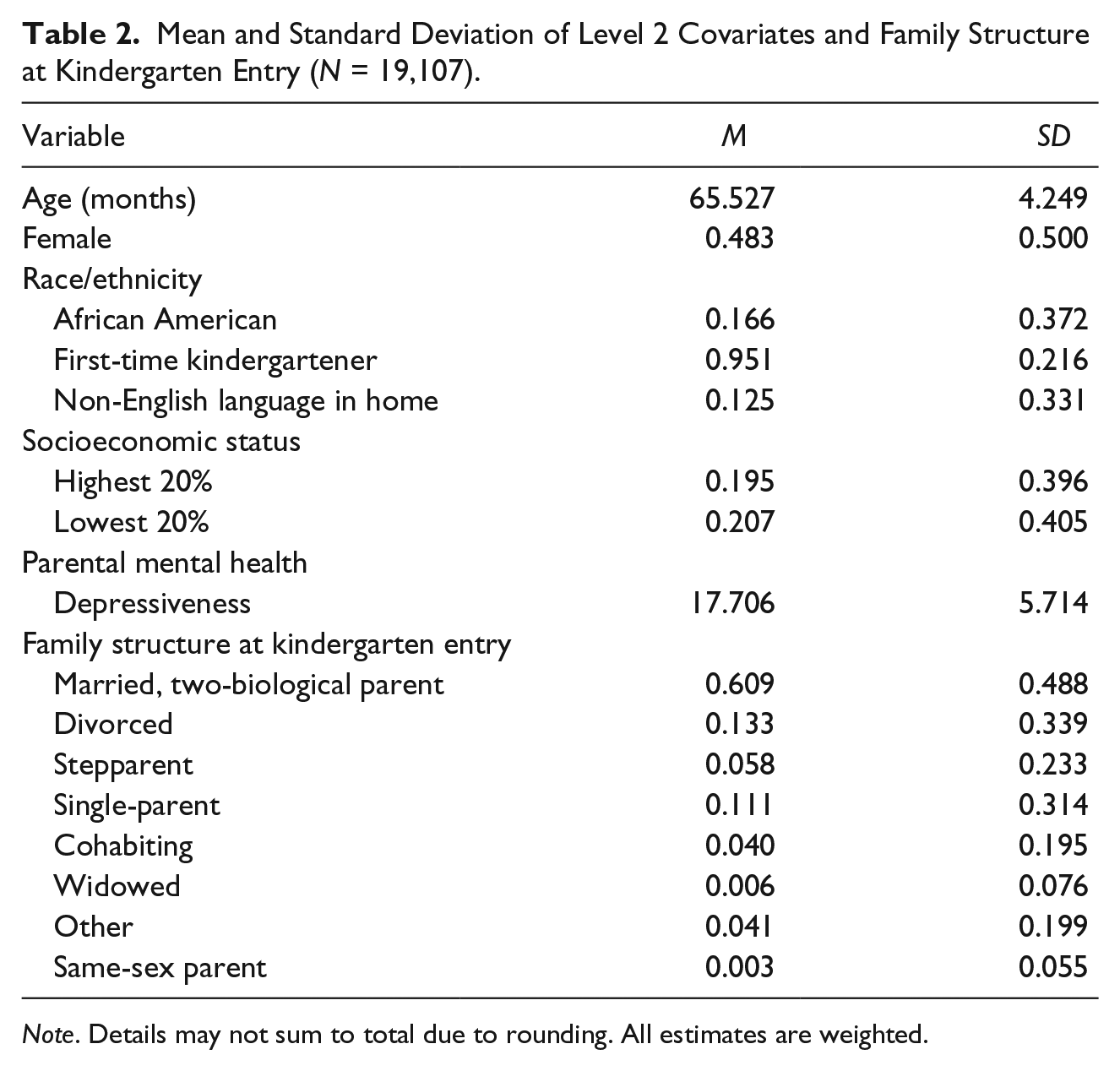
Note. Details may not sum to total due to rounding. All estimates are weighted.
Relative to Married, Two-Biological Parent Families
Table 3 reports the results from the models estimating children’s externalizing well-being. In Model 1, living in each of the nontraditional family structure types is associated with having poorer externalizing well-being relative to living with married, two biological parents. Controlling for nothing else, the externalizing well-being of children in same-sex parent families was expected to be lower by about 0.27 points than the externalizing well-being of children in married, two-biological parent families. Controlling for family poverty, parental involvement, parental depressiveness, and the array of sociodemographic factors reduced the gap in well-being by nearly one third, but continued to be statistically significant. Finally, Model 3 introduced the family change measures of cumulative family transitions and early family instability, which reduced the gap in externalizing well-being between same-sex parent families and married, two-biological parent families to statistical nonsignificance (p = .59). Of the family change measures, the measure of cumulative family transitions was not statistically significant; however, the kindergarten entry family structure variables were statistically significant.
HLM Regression Estimates of Association Between Family Structure and Children’s Externalizing Well-Being Relative to Married, Two-Biological Parent Families (N = 18,741).
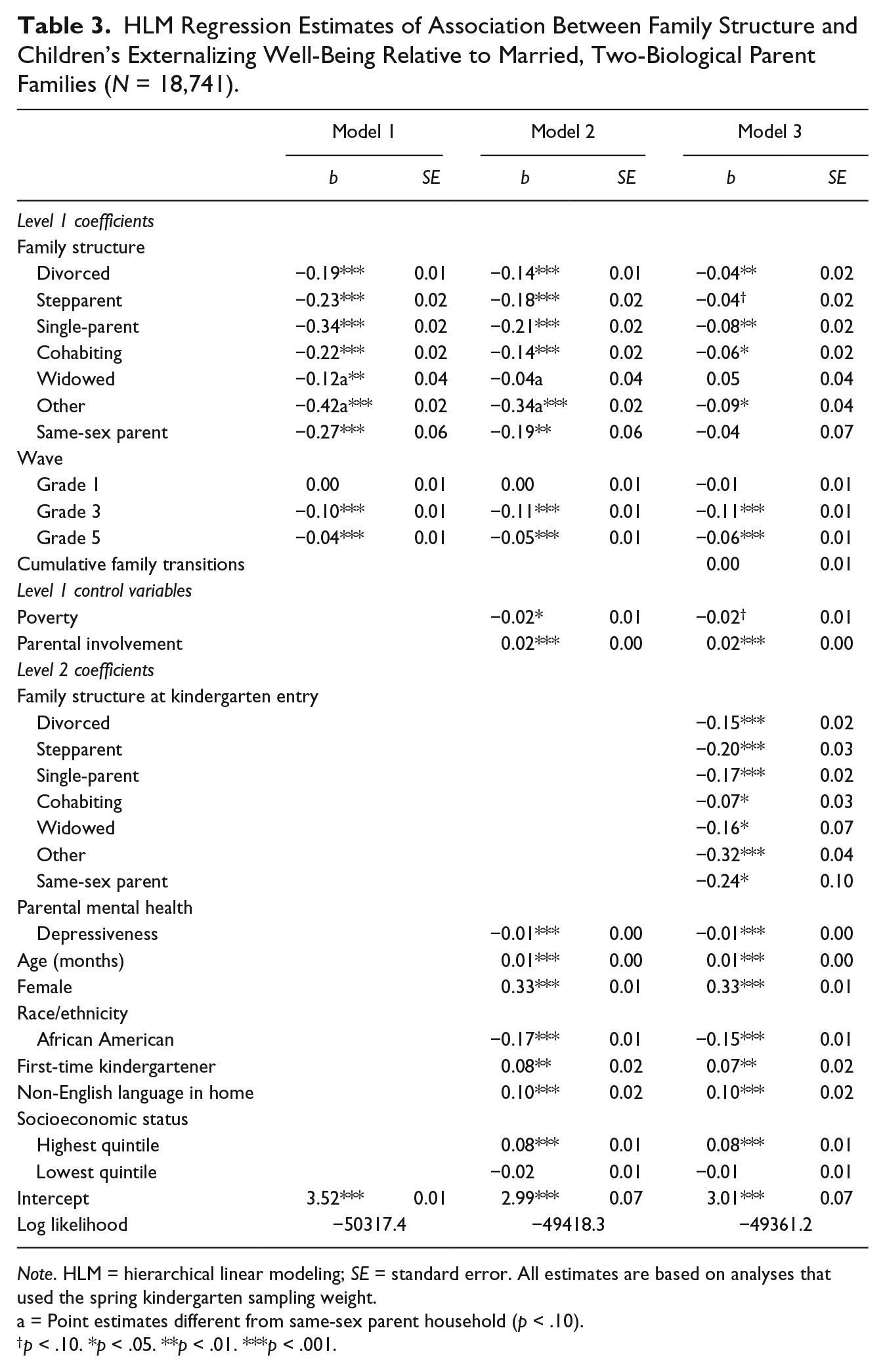
Note. HLM = hierarchical linear modeling; SE = standard error. All estimates are based on analyses that used the spring kindergarten sampling weight.
a = Point estimates different from same-sex parent household (p < .10).
p < .10. *p < .05. **p < .01. ***p < .001.
Table 4 reports the results from the models estimating children’s internalizing well-being. In Model 1, living in any nontraditional family structure is associated with poorer internalizing well-being relative to married, two biological parents. Controlling for nothing else, the internalizing well-being of children in same-sex parent families was expected to be about 0.21 points lower than the internalizing well-being of children in married, two-biological parent families. Controlling for family poverty, parental involvement, parental depressiveness, and the sociodemographic factors reduced this gap by nearly 25%, though it remained statistically significant (Model 2). Finally, Model 3 introduced the family change measures of cumulative family transitions and early family instability, reducing to the size of the internalizing well-being gap between same-sex parent and married, two-biological parent families by another 36% to statistical nonsignificance (p = .12). Of the family change measures, the measure of cumulative family transitions was negatively and statistically significantly associated with internalizing well-being, and only the indicator for divorce was significant among the early family instability indicators.
HLM Regression Estimates of Association Between Family Structure and Children’s Internalizing Well-Being Relative to Married, Two-Biological Parent Families (N = 18,724).
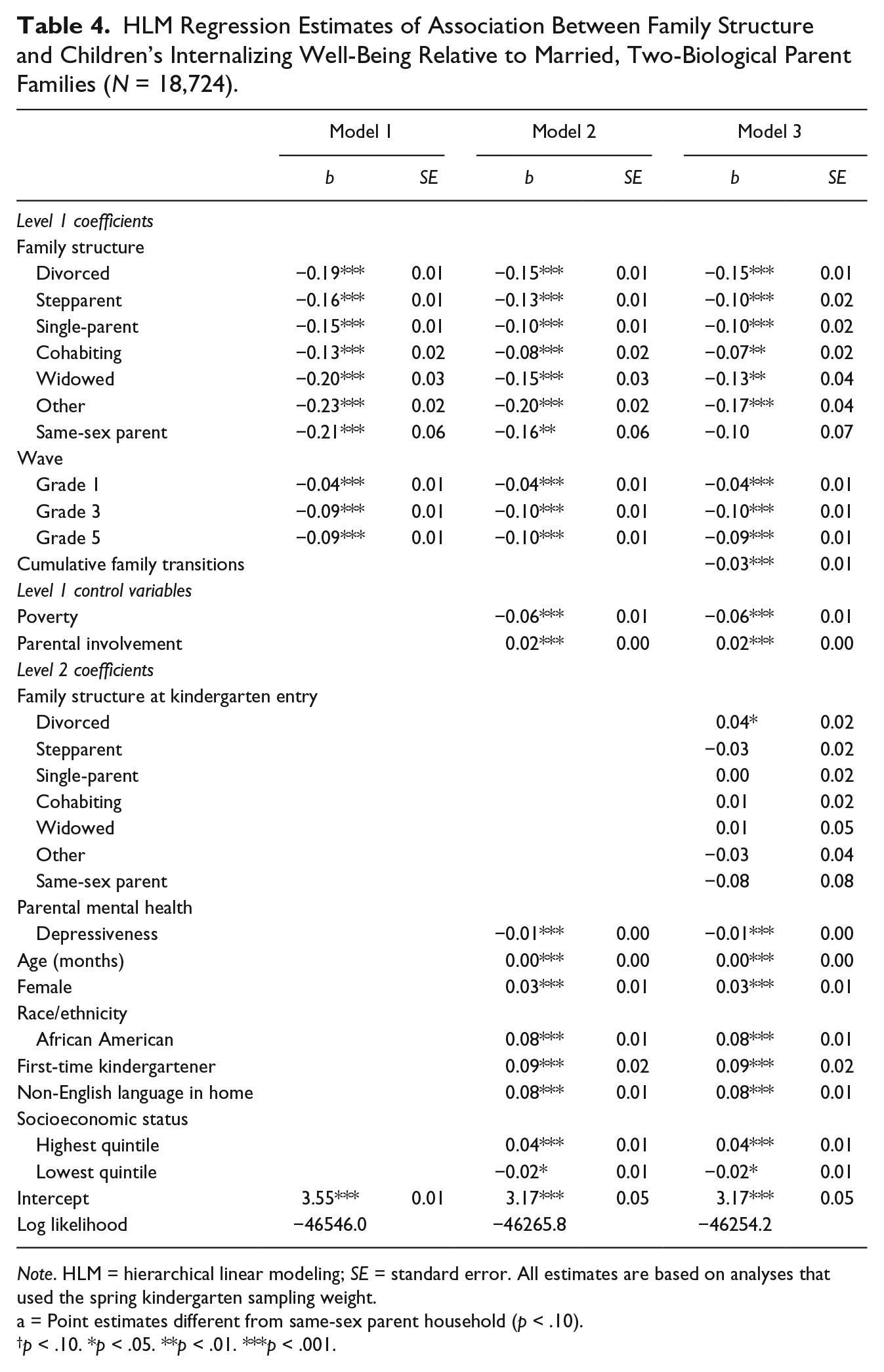
Note. HLM = hierarchical linear modeling; SE = standard error. All estimates are based on analyses that used the spring kindergarten sampling weight.
a = Point estimates different from same-sex parent household (p < .10).
p < .10. *p < .05. **p < .01. ***p < .001.
Despite reducing the coefficient for same-sex parent family to statistical nonsignificance, the size of the coefficient remained relatively large in the final model (and all other coefficients for nontraditional families remained statistically significant). The implications of this finding are unclear, though some prior research suggests that children in these households tend to exhibit slightly more depressive symptoms (Goldberg & Smith, 2013; Van Gelderen et al., 2013). Yet while the internalizing well-being of children in same-sex parent families may be marginally lower than their peers from married, two-biological parent households, it is generally indistinguishable from children in other nontraditional families (discussed below).
Table 5 reports the results from the models estimating children’s interpersonal skills. In Model 1, living in each of the nontraditional family structure types is associated with having poorer interpersonal skills relative to living with married, two biological parents. Controlling for nothing else, the interpersonal skills of children in same-sex parent families were expected to be about 0.29 points lower than the interpersonal skills of children in married, two-biological parent families. Controlling for family poverty, parental involvement, parental depressiveness, and the sociodemographic factors reduced the gap in well-being for children in same-sex parent families by more than one third, though it remained statistically significant (Model 2). Model 3 introduced the family change measures, and reduced the size of the interpersonal skills gap between same-sex parent and married, two-biological parent families by an additional 53% to statistical nonsignificance (p = .23). Of the family change measures, the measure of cumulative family transitions was negatively and marginally statistically significantly (p = .07) and five of the early family instability indicators were negatively and statistically significant.
HLM Regression Estimates of Association Between Family Structure and Children’s Interpersonal Skills Relative to Married, Two-Biological Parent Families (N = 18,706).
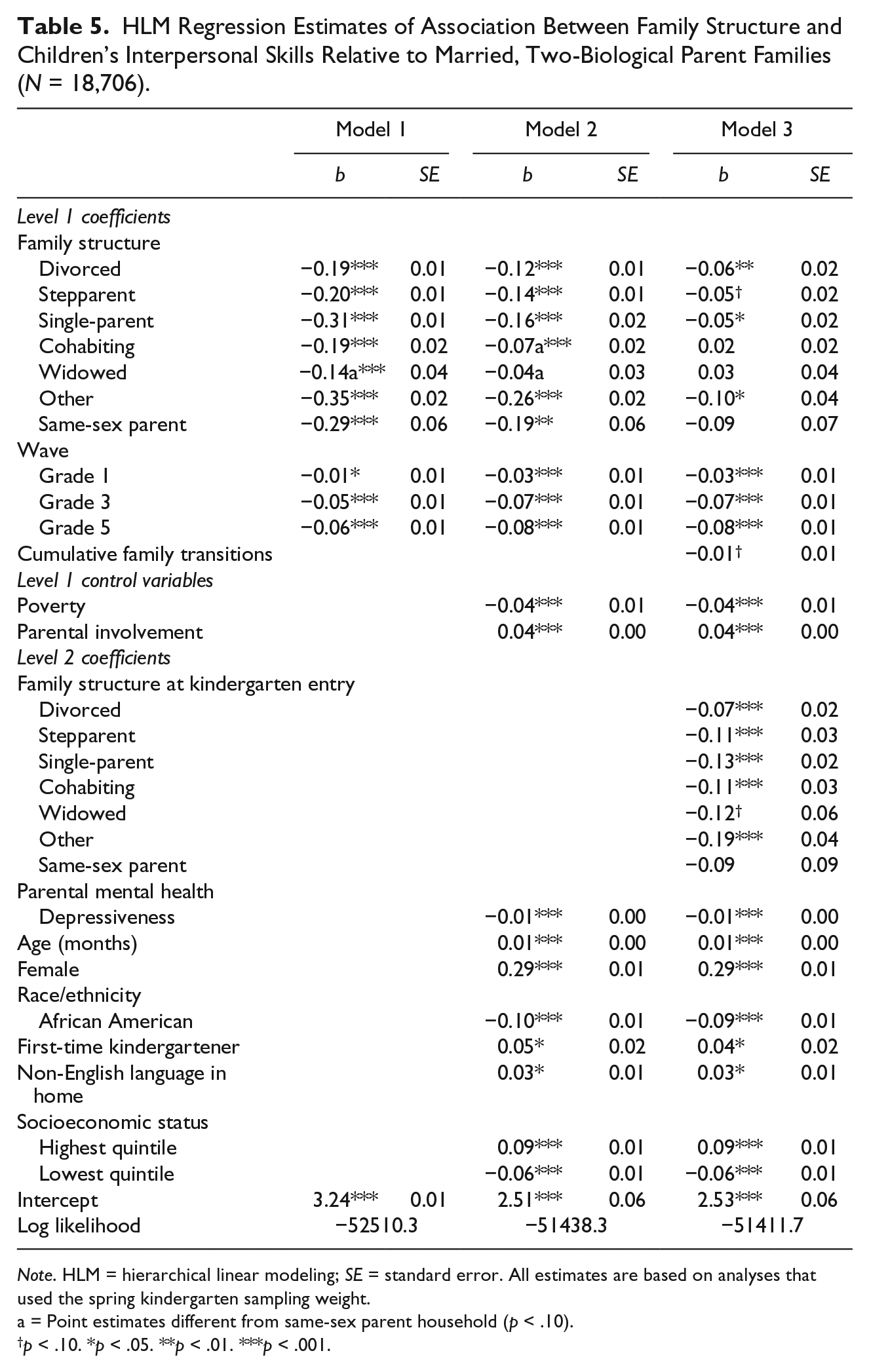
Note. HLM = hierarchical linear modeling; SE = standard error. All estimates are based on analyses that used the spring kindergarten sampling weight.
a = Point estimates different from same-sex parent household (p < .10).
p < .10. *p < .05. **p < .01. ***p < .001.
Results indicate children in nontraditional family structures, including children in same-sex parent families, generally have lower average psychosocial well-being than their peers in married, two-biological parent families at the basic, bivariate level. Changes in poverty status and parental involvement (i.e., changes co-occurring with family transitions), as well as level of parental depressiveness and select sociodemographic factors account for a portion of the observed differences in children’s psychosocial well-being, but differences remained significant. However, after including family change and early childhood transitions in the model, differences in the externalizing well-being, internalizing well-being, and interpersonal skills of children in same-sex parent households were no longer significantly different from their peers in married, two-biological parent families. Next, we consider whether the well-being of children in same-sex parent families differed from their peers in other nontraditional parent family structures.
Relative to Other Nontraditional Families
Comparing children in same-sex parent families with children in married, two-biological parent families provide evidence of baseline differences that are subsequently explained but leave possible differences in the well-being of children from different types of nontraditional families unexamined. By comparing children in same-sex parent families against their peers in other nontraditional families, we explored how the shared experiences of family transitions may similarly influence children’s outcomes regardless of parents’ sex. To make this comparison, same-sex parent families were set as the referent in our tobit models.
Tables 3 to 5 report findings from these analyses by designating statistically significant differences relative to children in same-sex parent families with superscript “a” sign. The predominant feature of these analyses is the lack of statistical significance, with many of the comparisons nonsignificant at the baseline. For example, in the baseline comparison of externalizing well-being, children in same-sex parent families differed significantly from children in only three other family types: married, two-biological parent families, widowed families, and other families—with the well-being of children in same-sex parent families being better than children classified in the other group (Table 3). In the baseline comparisons of internalizing well-being, children in same-sex parent families were only significantly different from children in married, two-biological parent families (Table 4). Finally, in the baseline comparison of interpersonal skills, children in same-sex parent families only differed significantly from children in widowed families and children in married, two-biological parent families (Table 5).
Controlling for family poverty, parental involvement, parental depressiveness, and the sociodemographic factors did little to alter the associations that existed (Model 2), suggesting that these factors did not distinguish nontraditional families from one another. In contrast, after entering the life course perspective, family change measures explained away the few remaining differences that existed between children in same-sex parent families and their peers in nontraditional households (Model 3). These results echo the findings from earlier that the linked lives of family members and family transition experiences contribute to many of the negative developmental outcomes sometimes assigned to nontraditional family structures.
Several supplemental analyses were conducted to determine if the findings of this study were robust to different model specifications. First, Tables 3 to 5 were rerun using hierarchical linear modeling, which relies on the observed values rather than the unobserved latent values of the dependent variable. While many of the baseline gaps were smaller using the hierarchical linear modeling approach (affirming the truncated nature of our data), substantive findings remained relatively unchanged. We also tested for interactions between family transitions and family structure (as well as certain characteristics of the children), but the sample size did not support this analysis. Most estimates were very unstable. We recognize this limitation and emphasize the importance of future research with larger samples to allow for more in-depth investigation. Finally, we limited our analyses to children who had at least one family transition to determine if family structure mattered specifically for those who had experienced change. Instability continued to play an important role. Each supplemental analysis is available from the authors on request.
Discussion and Conclusion
The American family is an evolving entity with new and different structures becoming increasingly visible and thus, scrutinized. While prior evidence suggests that nontraditional family structures are related to poorer outcomes for children, our introduction of the life course perspective challenges historically static conceptualizations of the family by calling attention to the process of family transitions. Studies of divorce and cohabitation have repeatedly demonstrated the importance of considering family processes as a fundamental basis to understanding children’s outcomes (Amato, 2000), yet so often this logic has been missing from research on same-sex parent families.
In this study, we operationalized life concepts of transitions, linked lives, and timing of life experiences of nontraditional families, with particular attention to children in same-sex parent families. We found that disparities in well-being were not inherent to the same-sex family structure but reflected familial changes and instability. In particular, while the family change measures accounted for differences in children’s well-being, the exact variables responsible for explaining the differences varied by outcome. The measure of early family instability (i.e., kindergarten entry family structure) were primarily responsible for explaining away the gap in children’s externalizing well-being and, in part, the gaps in interpersonal skills, while the cumulative number of family transitions accounted for the internalizing well-being gaps. This pattern was true for children in same-sex parent families, as well as children in other nontraditional family settings.
Results of this study can be seen as corroborating many previous findings documenting the importance of family instability in children’s psychosocial well-being (Amato, 2005; Fomby & Cherlin, 2007; Fomby & Osborne, 2010), as well as offering new insights into the experiences and outcomes of children in same-sex parent families. While establishing the causal origins of changes to children’s well-being is beyond the scope of this study, the findings do suggest that family structure transitions are a multifaceted experience with timing and other changes potentially playing antecedent to different outcomes. Our results may be construed by some readers to indicate a negative association between same-sex parent family structures and children’s psychosocial well-being; however, we would challenge such readers that family structure is only properly understood in the context of family processes and change. Our findings support the idea that children can thrive across family structures, but that disruption of family structure, regardless the type, has consequences (e.g., Manning et al., 2014).
Family transitions may be particularly salient to consider, when examining the outcomes of children in same-sex parent households, as recent evidence suggests that these children are at a higher risk of experiencing more of them (Lau, 2012). In general, same-sex relationships dissolve more often than different-sex relationships, which prior scholars have posited reflects a lack of cultural definitions and (until very recently) the absence of legal protections associated with marriage (E. C. Perrin, Siegel, & Committee on Psychosocial Aspects of Child and Family Health, 2013). Recent changes in U.S. law following the Obergefall v. Hodges (2015) decision provide American same-sex couples with unprecedented legal standing and rights to marriage. Today, same-sex couples can solidify their relationships with legal safeguards; elevating their commitments from being symbolic and sometimes ambiguous (Goldberg & Allen, 2013) to now include concrete legal protections. While the findings of our study cannot speak directly to the issue of same-sex marriage, it does proffer evidence of the importance stability has in shaping child development. To that end, if recent changes in the legal status of same-sex marriage in the United States provide institutionalizing forces that champion stability in these families, then the ruling would seem poised to only improve the developmental outcomes of children.
As with any study, the results reported herein must be considered within the context of its limitations. First, the roster data used to identify same-sex parent families while richly descriptive, provided no way to confirm with complete certainty the sexual orientation of the parents in the household. Our definition of same-sex parent family was dependent on the presence of two same-sex individuals in the household taking on parent or parent-like roles. Second, our definition of same-sex parents was focused on two-parent households as well, and it is very likely that a nontrivial percentage of single-parent families were headed by a gay, lesbian, or bisexual individual. Future research with more thorough data on the sexual orientation of parents will provide invaluable comment about any role sexual orientation may have in family processes and its contribution to parenting and child development.
In addition to our specific definition of same-sex parent families, our investigation is somewhat limited by the periodicity with which family roster data were collected. Data were not collected continuously or even annually, so our measures of family change are likely underestimating some children’s cumulative number of transitions. Underreporting the cumulative number of transitions likely means our models conservatively estimate the importance of change for children’s outcomes, further attesting to the importance of considering transitions in these types of studies. Second, of the same-sex parent households that were identified, the majority (90%) contained two women, so the research on gay fathers and their parenting experiences continues to be an understudied topic in need of additional research (Goldberg, 2012). An additional concern with this study is that children’s psychosocial well-being was based on teacher report, and while these measures have solid psychometric properties, they are not based on clinician or professional assessment. Third, our results must be considered with an eye to the historical context in which the data were collected. The fifth-grade data collection for the ECLS-K occurred almost a decade prior to major cultural and legal shifts in the status of same-sex couples in the United States. More contemporary data may reveal different patterns, meaning the results reported herein reflect a particular cultural time and place. Finally, the transitions for same-sex parent families included in our study are by definition transitions out of different-sex parent families and into a family headed by two moms or two dads. What our data did not allow us to consider are the transitions experienced between two same-sex parent family arrangements (e.g., lesbian mothers separate, and one of the mothers enters into a new relationship with another woman). Whether transitions matter differently depending on the presence of different- or same-sex parents in the households is an important avenue for future research to explore.
Our study supports the idea that poorer outcomes for children from nontraditional families, whether same-sex or different-sex, reflect the transitions and changes happening alongside these family structures. Keeping this in mind as research continues to examine and compare children in a variety of settings with one another will be important and cannot be overstated. For many children, the family is not a static entity, and only when research incorporates this into its methodological and theoretical underpinning will social reality be adequately captured.
Footnotes
Declaration of Conflicting Interests
The author(s) declared no potential conflicts of interest with respect to the research, authorship, and/or publication of this article.
Funding
The author(s) received no financial support for the research, authorship, and/or publication of this article.