




Abstract
There has been increased interest in U.S. parental leave policies, but relatively few studies have focused on how such policies may influence mothers’ well-being and parenting. This study addresses this gap by using data from the Fragile Families and Child Wellbeing Study to examine factors that predict the amount of time mothers take off work following childbirth and whether length of time off is associated with mothers’ risk of depression, parenting stress, and parenting practices. Results suggest that the majority of disadvantaged mothers take 3 months or less off from work after childbirth. Results also suggest that taking a month or less off work is associated with increased parenting stress, an increased risk of depression, and an increased likelihood of spanking relative to mothers who took more time off. Results also suggest that longer periods of time off are associated with more frequent engagement in developmental activities with the child.
Many modernized countries have national policies allowing parents to take paid parental leave, but the United States only requires that larger companies (i.e., those with 50 or more employees) allow employees to take up to 12 weeks of unpaid leave through the Family and Medical Leave Act (FMLA; Cantor et al., 2001; Han & Waldfogel, 2003). Indeed, the United States is the only developed country that does not offer some form of paid parental leave (Heymann & McNeill, 2013). This has led scholars, policy makers, and the media to increasingly focus on parental leave policies in recent years, considering whether expansions of parental leave would be beneficial in the United States. Such programs may help reduce work–family conflict and provide benefits to families, such as reduced stress, improved health, and the opportunity to develop bonds with their children from birth (Gault, Hartmann, Hegewisch, Milli, & Reichlin, 2014; Ruhm, 2011). Not surprisingly, 72% of respondents in the 2012 General Social Survey believe that employers should offer paid time off to new parents.
Despite this increased interest, there has been limited empirical research on whether and how parental leave in the United States may influence parents’ well-being and parenting practices. For example, research on mothers has largely focused on early maternal employment (e.g., whether mothers work during the child’s first year) and/or the influence of maternity leave on children (Brooks-Gunn, Han, & Waldfogel, 2010; Buehler, O’Brien, Swartout, & Zhou, 2014; Chatterji & Markowitz, 2012). Fewer studies have focused on how maternity leave may influence mothers, and the research in this area has produced mixed results. Longer periods of maternity leave may allow mothers more time to adjust to having a new child as well as time to develop bonds with their children (Baum, 2003; Hyde, Klein, Essex, & Clark, 1995). As a result, longer periods of time off from work may help reduce stress, improve mental health, and enable mothers to provide higher quality parenting to their infants (Clark, Shibley Hyde, Essex, & Klein, 1997; Staehelin, Bertea, & Stutz, 2007). Indeed, there is some evidence linking maternity leave to mothers’ and family well-being (e.g., Chatterji & Markowitz, 2012; Staehelin et al., 2007). However, other studies suggest that the relationship between maternity leave and mothers’ well-being is nonlinear (Dagher, McGovern, & Dowd, 2014; McGovern et al., 1997), and yet others find no direct influence of maternity leave on mothers’ well-being (Klein, Hyde, Essex, & Clark, 1998). To assess whether parental leave policies are beneficial for families, more research on how taking time off work after childbirth may influence families is needed.
The current study attempts to fill this gap in the literature by using two waves of data from the Fragile Families and Child Wellbeing Study to focus on whether and how time off work after childbirth may be associated with mothers’ well-being and parenting practices among a sample of disadvantaged mothers. Although the concept of well-being has many dimensions, this study focuses on mothers’ risk of depression and parenting stress. This study focuses on three research questions. First, what factors predict the amount of time off after childbirth among disadvantaged mothers? Second, is time off after childbirth associated with mothers’ risk of depression and parenting stress? Third, is time off after childbirth associated with mothers’ parenting practices? This study fills an important gap in the literature by using data on a diverse group of mothers (with regard to race/ethnicity and family structure), as previous studies have not yet fully examined the consequences of time off after childbirth for relatively disadvantaged mothers. Such a focus is needed because these mothers may be less likely to have access to FMLA or employer-based leave, may need to work to provide for their children (especially if a single mother), and may be at greater risk for experiencing stress due to hardship (Gielow, 2002; Heflin & Iceland, 2009; Joshi & Bogan, 2007). As such, this study will increase our understanding of whether and how time out of the labor force may provide benefits to mothers who may be especially likely to benefit from an expansion of parental leave policies in the United States.
Background
Rates of labor force participation among women (and mothers more specifically) remain high in the United States (Bianchi & Milkie, 2010). As such, understanding the determinants and consequences of taking time off from work is more important than ever before. Having a new child is a common life transition that leads women to take time off from paid employment. However, there is great variation in the amount of time off that women take. Recent analyses show that 96% (178 of 186 countries studied) of countries worldwide provide paid maternity leave. In fact, all high-income countries have national policies mandating paid maternity leave except the United States (Heymann & McNeill, 2013). Thus, whereas mothers in many European countries are eligible to take a year or more of paid leave, mothers in the United States often have to rely on using sick/vacation time or take unpaid leave (Ruhm, 2011).
The only U.S. policy that includes provisions for parental leave is the FMLA, which allows employees to take up to 12 weeks of unpaid leave after childbirth (Han & Waldfogel, 2003; Heymann & McNeill, 2013). Employees are eligible to take leave under FMLA if they work for an employer with more than 50 employees, and if they have worked for their employer for at least 1,250 hours in the previous year (Han & Waldfogel, 2003). In addition to FMLA, five states (California, Rhode Island, New Jersey, New York, and Hawaii) offer temporary disability insurance with partial wage replacement to mothers, and three of these states (California, Rhode Island, and New Jersey) also provide paid family leave with wage replacement to mothers after childbirth (Rossin-Slater, Ruhm, & Waldfogel, 2013; Winston, 2014). Although wage replacement is typically lower than in many countries with statutory leave policies (50%-66% vs. up to 100% in some countries), there is evidence suggesting that these policies have led to dramatic increases in rates and length of maternity and parental leave-taking in states that offer them (Bartel, Rossin-Slater, Ruhm, Stearns, & Waldfogel, 2015; Rossin-Slater et al., 2013). Because of the lack of a national policy on maternity leave, mothers’ access to leave is often dependent on whether their employer has a paid maternity leave program. Perhaps not surprisingly, periods of maternity leave are comparatively short in the United States, with most employed mothers returning to work within 3 months after having a child (Laughlin, 2011).
Evidence from Europe and other countries that have expanded their leave programs in recent years (e.g., Canada) suggest that access to statutory leave programs influences mothers’ behavior. In particular, increased leave entitlements have led to mothers spending more time at home during the first year of their children’s life (and thus less time at work), being more engaged in providing care to their children, and relying less on unlicensed care for their children (Baker & Milligan, 2010; Pronzato, 2009). There is also evidence suggesting that access to more extensive parental leave policies is associated with a lower risk of depression among mothers later in life (Avendano, Berkman, Brugiavini, & Pasini, 2015). Understanding how time off after childbirth in the United States, which is low by international standards, influences families is essential for assessing whether an expansion of leave policies (similar to what has happened in other countries) may provide benefits to families.
Conceptual Framework
The current study focuses specifically on whether and how length of time off after having a child is associated with mothers’ risk of depression, parenting stress, and parenting practices among a sample of relatively disadvantaged urban mothers. The literature on maternal employment and well-being highlights two potential hypotheses. First, the scarcity (or role conflict) hypothesis suggests that people have a fixed amount of time and energy; adding additional roles (such as the role of worker in addition to the role of mother) creates stress and conflict, limiting one’s ability to fulfill the demands of each role effectively (Goode, 1960). Such strain may be common among new mothers regardless of employment status, as infants are heavily dependent on parents for constant physical, emotional, and social care (Waldfogel, 2006). However, this strain may be especially prevalent among working mothers, as these mothers have to balance work obligations with adhering to cultural expectations of intensive mothering (Hays, 1996). Indeed, balancing work and family can create role conflict, contributing to higher levels of stress (Bianchi & Milkie, 2010). The link between role conflict and stress may be especially prevalent among low-income mothers, who may be employed in occupations that require shift work or nonstandard schedules, which can increase the difficulty of balancing work–family life (Joshi & Bogen, 2007). Such mothers are more likely to be in unstable relationships, and thus less able to rely on romantic partners for economic support (Cooper, Beck, Hognas, & Swanson, 2015; Sigle-Rushton & McLanahan, 2002). Thus, low-income mothers may be under greater pressure to work more hours. Stress resulting from work–family conflict can also contribute to lower mental health and lower quality parenting among mothers (Abidin, 1992; Umberson, Pudrovska, & Reczek, 2010).
Longer periods of time off work following childbirth may help alleviate some of the role conflict that occurs among employed mothers with young children. Longer periods of time out of the labor force may provide mothers with more time to adjust to their new situation and become comfortable raising their new child. Mothers may also have more time to physically and psychologically recover from pregnancy and childbirth without also worrying about employment obligations (Baum, 2003; Dagher et al., 2014; Hyde et al., 1995; Waldfogel, 2006). As a result, mothers who take longer periods of time off after childbirth may be less stressed, have better mental health, and engage in high-quality parenting practices more frequently than mothers who take shorter periods of time off. Indeed, research suggests that longer periods of leave are associated with fewer depressive symptoms among mothers (Chatterji & Markowitz, 2012; McGovern et al., 1997; Staehelin et al., 2007). Fewer studies have focused on the links between maternity leave, stress, and parenting practices, but there is some evidence suggesting that longer periods of leave are associated with lower levels of stress and higher quality interactions with infants (Chatterji, Markowitz, & Brooks-Gunn, 2013; Clark et al., 1997; Gault et al., 2014). This may be especially true for mothers who choose to not return to work after having a child. Mothers who do not return to work may have more time to engage in high-quality interactions with their children relative to mothers who are employed (Huston & Aronson, 2005; Nomaguchi, 2006). However, the benefits of not returning to work for mothers may be minimized if this was due to being laid off as opposed to choosing to stay home (Stephens & Levine, 2011).
In contrast to the scarcity hypothesis, the enhancement hypothesis suggests that multiple roles may be beneficial to individuals by contributing to social support, income, and self-esteem (Thoits, 1983). This hypothesis suggests that returning to work shortly after having a child may be beneficial to mothers in a variety of ways. For example, an early return to work is associated with increased income as many mothers do not have access to long periods of paid maternity leave (Baum, 2003). This is especially true for working class and minority women, who are more likely than other women to embrace a breadwinner role, and may be more in need of the income received from an early return to the labor force than middle/upper class and White women (Sorensen & McLanahan, 1987; Winslow-Bowe, 2006). In addition, employment may help mothers become better adjusted to their parenting role by allowing them time away from their children to focus on tasks unrelated to parenting. As such, employment may provide a boost in self-esteem, as going to work provides mothers with an additional source of social support and an opportunity to engage in prosocial activities (Nomaguchi, 2006). As a result, working mothers may also be motivated to engage in high-quality parenting because of the mental health benefits they receive from working; time away from children may lead mothers to feel refreshed and ready to devote quality time to their infant children (Hoffman & Youngblade, 1999).
The enhancement hypothesis suggests that length of time off after childbirth may be unrelated, or perhaps even negatively related, to mothers’ well-being and high-quality parenting practices. Indeed, there is some evidence to support this argument. Klein et al. (1998) find no evidence of a direct relationship between maternity leave and mothers’ mental health, and Dagher at al. (2014) find that depressive symptoms are higher among mothers who take more than 6 months of maternity leave compared with those who take less than 6 months leave (although length of leave is positively related to mothers’ mental health up until 6 months of leave). Early returns to work are also associated with higher incomes among new mothers, and maternal employment is especially beneficial for low-income families (Bianchi & Milkie, 2010). Moreover, some evidence suggests that maternal employment in the first year of life does not have any impact on parenting quality (Brooks-Gunn et al., 2010; Chatterji et al., 2013).
Overall, there is evidence in the literature to support both the scarcity and enhancement hypotheses. These divergent findings may be due to sampling differences (some studies rely on smaller regional samples whereas others use national longitudinal data) or variations in the operationalization of leave (some studies focus on days or weeks off from work whereas others use dichotomous cutoffs such as more or less than 12 weeks off). However, it does not appear that these divergent findings are because of differences in study design; all these studies use survey data, evidences supporting the scarcity and enhancement hypotheses have been found in both cross-sectional and longitudinal studies, and divergent findings have even occurred between studies using the same data set (Clark et al., 1997; Klein et al., 1998). Moreover, there is also evidence in support of each hypothesis in studies that have included lagged measures of mothers’ health and parenting to reduce the likelihood of reverse causation (Brooks-Gunn et al., 2010; Chatterji et al., 2013; McGovern et al., 1997).
It is also possible that these hypotheses actually offset one another; studies that find no relationship between time off after childbirth and various outcomes may be incorporating both benefits and detriments to longer periods of time off (e.g., Brooks-Gunn et al., 2010; Nomaguchi, 2006). Given these seemingly contradictory findings, and the lack of research on the influence of maternity leave on mothers more generally, more research in this area is needed. Research on the consequences of the amount of time off after childbirth among low-income populations is also understudied. The goal of the current study is to build on previous research by testing the scarcity and enhancement hypotheses to explore whether length of time off after childbirth may be related to mothers’ risk of depression, parenting stress, and parenting practices among a sample of relatively disadvantaged mothers.
Data and Method
Sample
The data for this study come from the Fragile Families and Child Wellbeing Study (FFCW). The FFCW is a longitudinal, birth cohort study that follows 4,898 children born between 1998 and 2000 and their parents. Fragile families are defined as unmarried parents and their children, and these data focus on an urban sample with high percentages of low-income, minority, and unmarried parents. Both parents were interviewed shortly after the child’s birth (W1). In addition, all parents were contacted for follow-up interviews approximately 1 (W2), 3 (W3), 5 (W4), and 9 years later (W5) (www.fragilefamilies.princeton.edu).
The sample for this study is restricted to mothers who were interviewed in both the baseline (W1) and 1-year follow-up surveys (W2). This restriction results in a loss of 533 mothers who were not interviewed at W2. Supplementary analyses suggest that mothers not interviewed at W2 were more likely to be non-White, older, less educated, have lower income, have more children, be an immigrant, have a child with low birth weight, and report that the child’s father is not working. As such, this study focuses on a more advantaged subset of mothers from the Fragile Families study.
In addition, only mothers included in the 18-city subsample were included, as these mothers were asked all relevant questions for this study. 1 This restriction results in a loss of an additional 578 mothers. The sample is also restricted to mothers who worked prior to having their child (273 mothers did not work prior to having their child). An additional 20 mothers were excluded because they did not reside with their children. Finally, the sample is further restricted to mothers who worked up until at least the start of the third trimester of their pregnancy (90 days) to capture mothers who were working up until the birth of their children. This restriction results in a loss of an additional 1,700 mothers. Extending the period of time off work prior to birth to 120 or 180 days does not substantially alter the results. Thus, the more restrictive sample is used to provide a conservative estimate of the relationships between time out of work after childbirth and mothers’ risk of depression, parenting stress, and parenting practices. These restrictions result in a final sample size of 1,726 mothers.
Variables
Parenting Stress
Parenting Stress indicates mothers’ level of agreement in the W2 survey (1 = strongly disagree to 4 = strongly agree) to the statements: (a) being a parent is harder than I thought it would be, (b) I feel trapped by my responsibilities as a parent, (c) taking care of my children is much more work than pleasure, and (d) I often feel tired, worn out, or exhausted from raising a family (α = .61).
Depression
Depression indicates whether mothers likely experienced a major depressive episode in the year prior to the W2 survey. Mothers were asked questions from the Composite International Diagnostic Interview–Short Form, and responses from these questions were used to generate the probability that mothers would be positively diagnosed as having had a major depressive episode (Kessler, Andrews, Mroczek, Ustun, & Wittchen, 1998). Mothers who meet these criteria were coded as 1, and mothers who did not meet these criteria were coded as 0. 2
Parenting Practices
Parenting practices are conceptualized in two ways. Developmental Activities indicates how many days per week mothers reported playing games, singing songs, reading, and telling stories to their children in the W2 survey (α = .68). Responses are summed and the mean is used as the indicator. Spanking is a dichotomous measure that indicates whether mothers spanked their children in the month prior to the W2 survey (1 = yes).
Time Off After Childbirth
In the W2 survey, mothers were asked how old (in months) their child was when they returned to paid work. This question is used to construct the measures of time off after childbirth. These measures include a dichotomous indicator of whether mothers did not return to work (1 = yes) at the time of the W2 survey and a continuous indicator of time off after childbirth (in months) for mothers who did return to work. In addition, because supplemental analyses suggested that the relationship between time off from work and the outcome variables was not always linear, months off from work are also collapsed into five categories: (a) one month or less (used as reference category), (b) 2 to 3 months, (c) 4 to 6 months, (d) more than 6 months, and (e) did not return to work.
Unfortunately, there is no information available in the FFCW on whether mothers returned to the same job after returning to work or what kind of leave (e.g., paid vs. unpaid, employer-based leave, FMLA) mothers took if they were able to take time off. Thus, conclusions from this study can only be made about the amount of time that mothers take off from work (whether through leave, by quitting, or by getting fired) after having a child.
Control Variables
A number of variables taken from the W1 survey that may confound the relationships between time off after childbirth and mothers’ risk of depression, parenting stress, and parenting practices are included as controls (e.g., Chatterji et al., 2013). Family structure is coded as (a) married to the birth father (used as reference category), (b) cohabiting with the birth father, or (c) single mother. Race/ethnicity is coded as (a) White (reference category), (b) Black, (c) Latino, or (d) other race/ethnicity. Education is coded as (a) below high school, (b) high school (reference category), (c) some college, or (d) college degree. Controls are also included for household income (ranging from 1 = less than $5,000/year to 9 = $75,000 or more/year), hours worked, number of other children, mother’s age (in years), child gender (1 = female), religious participation (ranging from 0 = never to 4 = once a week or more), whether the father is employed, whether the child had low birth weight, whether the mother was born in the United States, and number of other adults in the household. Traditional gender attitudes is indicated by mothers’ responses about the degree (1 = strongly disagree to 4 = strongly agree) to which it is better if the husband earns the main living and the woman cares for the family. Relationship quality with the birth father is taken from a series of questions about how frequently (0 = never to 2 = often) the birth father (a) is fair and willing to compromise, (b) expresses love and affection toward mother, (c) insults or criticizes the mother (reverse coded), and (d) encourages mother or helps mother do things that are important to her. Responses are summed, and the mean is used as the indicator (α = .64). Finally, child’s age (in months) at W2 is included in models predicting mother’s well-being and parenting practices. 3
Analytic Strategy
To examine the first research question, two models are used. First, a logistic regression model was used to assess whether the W1 control variables predict whether mothers do not return to work after childbirth. 4 Second, ordinary least squares (OLS) regression is used to assess whether the W1 control variables are associated with the continuous measure of time off after childbirth among mothers who returned to work (N = 1,571). This approach was used to avoid violating modeling assumptions that occurred with using the ordinal measure of time off after childbirth. Specifically, ordered logistic regression is not used because the proportional odds assumption was violated, and multinomial logistic regression is not used because the independence of irrelevant alternatives assumption was violated. Results using these approaches were generally consistent in supplementary analyses.
For the remaining research questions, OLS and logistic regression models were used. In each model, time off after childbirth and W1 controls were used to predict indicators of mothers’ risk of depression, parenting stress, and parenting practices. Most variables have few (less than 5% of total cases), if any, missing values. To preserve sample size, multiple imputation is used to account for missing data. Missing values are imputed using responses from all variables included in the analyses, and combined results from 10 imputed models are presented.
Selection
It is possible that any observed relationships between time off after childbirth and mothers’ risk of depression, parenting stress, and parenting practices may be due to selection. First, there may be factors that lead mothers to take longer periods of time out of the labor force as well as have higher levels of well-being and be more engaged parents. Thus, any observed association between time off after childbirth and the outcomes may be attributed to these selection factors. Second, there is the potential for reverse causality; mothers’ who are depressed, more stressed, or more engaged with their children may take longer periods of time off than mothers who are less depressed, stressed, and engaged. Third, because the sample for this study is restricted to mothers who are employed prior to the birth of a child (to predict, and assess the implications of, time off after childbirth), the analyses may not account for processes that may have selected mothers into employment.
To minimize selection issues, a few strategies are used. To reduce the likelihood that any observed relationships in this study may be attributed to selection effects because of observed characteristics, augmented inverse propensity weighted (AIPW) estimators are used. This approach, similar to propensity score matching (PSM), allows for the estimation of average treatment effects accounting for factors that may select people into certain treatments (e.g., lengths of time off after childbirth). In contrast to PSM, AIPW estimators can be used when there are multiple treatments, as in the case of this study (i.e., 1 month or less off, 2-3 months off, 4-6 months off, more than 6 months off, or not returning to work) (Cattaneo, 2010). AIPW estimators combine aspects of inverse probability of treatment and regression adjustment weighting and are more efficient than other estimators when models are estimated correctly (Cattaneo, 2010). For this study, all W1 controls (as described previously) are included in models that simultaneously predict both time off after childbirth and the outcome (parenting stress, depression, developmental activities, and spanking). Results from AIPW models that estimate the average treatment effects of length of time off are reported in the text. 5
In addition, to account for possible selection into employment (prior to childbirth), PSM models were used in supplementary analyses to estimate the propensity for mothers to be employed at W1 based on W1 characteristics (e.g., race/ethnicity, nativity, family structure, and education) using the full sample. The propensity scores from these models were then used as weights in regression models predicting time off after childbirth, mothers’ risk of depression, parenting stress, and parenting practices. In doing so, the regression results were weighted to account for observed factors that may select mothers into employment at W1. Results from these weighted models did not change the results of this study, and thus, are not included here.
Unfortunately, it is difficult to eliminate the possibility that any observed relationships may be due to unobserved factors. For example, decisions about when to return to work, as well as well-being and parenting practices, may be influenced by factors such as family support systems (e.g., proximity to family members who could help), child care options (and cost of options), availability of maternity leave (especially paid maternity leave), labor market conditions, and available transportation to work (Chatterji et al., 2013; Chatterji & Markowitz, 2012). Moreover, baseline measures of depression, stress, and parenting practices are not available to fully address the potential for reverse causality. To minimize these issues as much as possible, additional W1 variables were included in supplemental models to provide proxies for depression (health and substance use during pregnancy), stress (e.g., receiving housing subsidies, safety of neighborhood), commitment to parenting (e.g., thought about having an abortion), and support (e.g., having someone who can help with child care). None of these variables were significant predictors of time off after childbirth or any of the outcome variables, and thus, are not included here. Although these analyses do not eliminate the problems of reverse causality and selection based on unobservables, they do increase the confidence in the findings presented.
Results
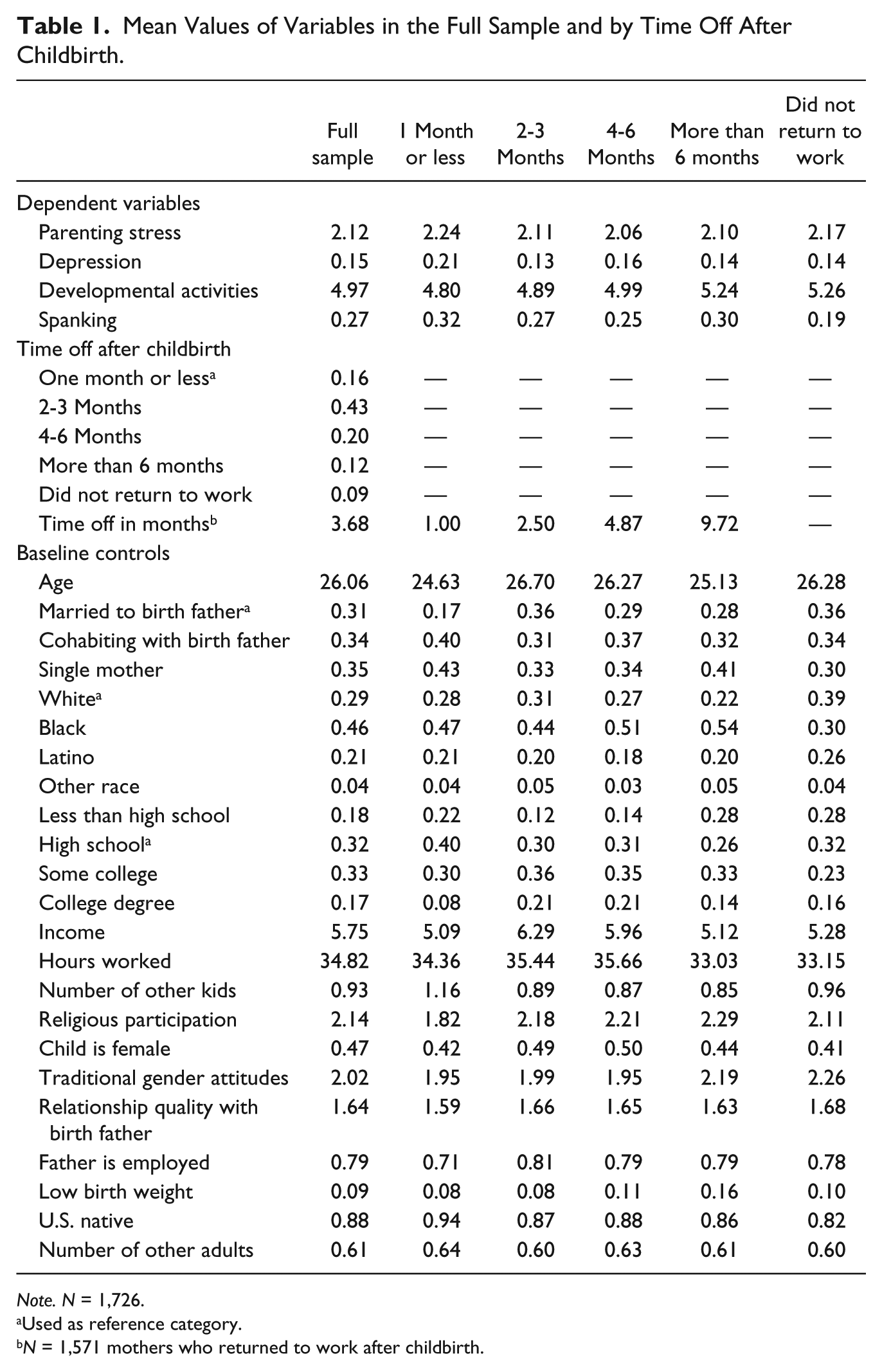
Mean values for all variables in the sample, and mean values by time off after childbirth, are presented in Table 1. Consistent with previous research, the average time off work after childbirth in this sample is 3.68 months. In fact, the majority of mothers take 3 months or less off from work after having a child, with 16% of mothers taking a month or less and 43% of mothers taking 2 to 3 months off. However, a notable proportion of mothers take longer periods of time off; 20% of mothers take 4 to 6 months off from work and 12% of mothers take more than 6 months off. A detailed breakdown of the number of months taken off from work (among mothers who returned to work) is presented in Figure 1. In addition, 9% of mothers in this sample did not return to work in the year following their children’s birth.
Mean Values of Variables in the Full Sample and by Time Off After Childbirth.
Note. N = 1,726.
Used as reference category.
N = 1,571 mothers who returned to work after childbirth.
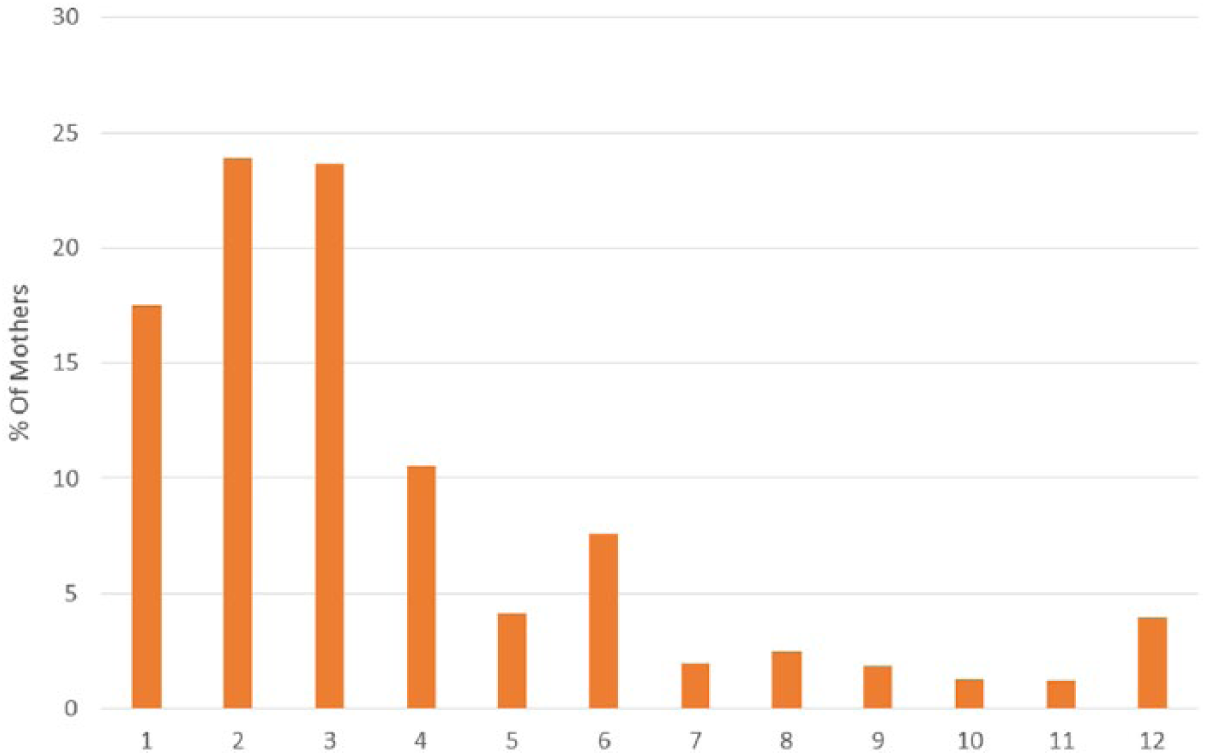
Months off after childbirth (N = 1,571 mothers who returned to work).
Summary statistics in Table 1 also suggest that mothers who take 1 month off from work, and mothers who do not return to work, are unique compared with other mothers (significant differences determined by two-tailed t-tests, results not shown). In particular, mothers who take 1 month off from work have higher parenting stress, an increased likelihood of depression, and engage in developmental activities less frequently than other mothers in the sample. These mothers also appear to be more disadvantaged, on average; mothers who take 1 month off are less likely to be married (and more likely to be cohabiting or a single mother), less likely to have completed college, have lower average incomes, are younger, and have more kids than other mothers in the sample. 6 In contrast, mothers who do not return to work appear to be more advantaged, on average. These mothers engage in developmental activities with their children more frequently, are less likely to spank their children, and are more likely to be White and married than other mothers in the sample. Mothers who do not return to work are also more likely to adhere to traditional gender attitudes.
To examine factors associated with taking time off after childbirth among disadvantaged mothers, logistic regression models are first used to predict whether mothers did not return to work. Results are presented in Table 2. Results suggest that Black mothers are more likely to return to work than White mothers. Having a higher income prior to childbirth also increases the likelihood of returning to work after childbirth. In contrast, mothers who adhere to traditional gender attitudes are less likely to return to work following childbirth.
Results From Logistic Regression Model Predicting Whether Mothers Did Not Return to Work After Childbirth.

Note. N = 1,726. OR = odds ratio; SE = standard error.
p < .10. *p < .05. **p < .01. ***p < .001.
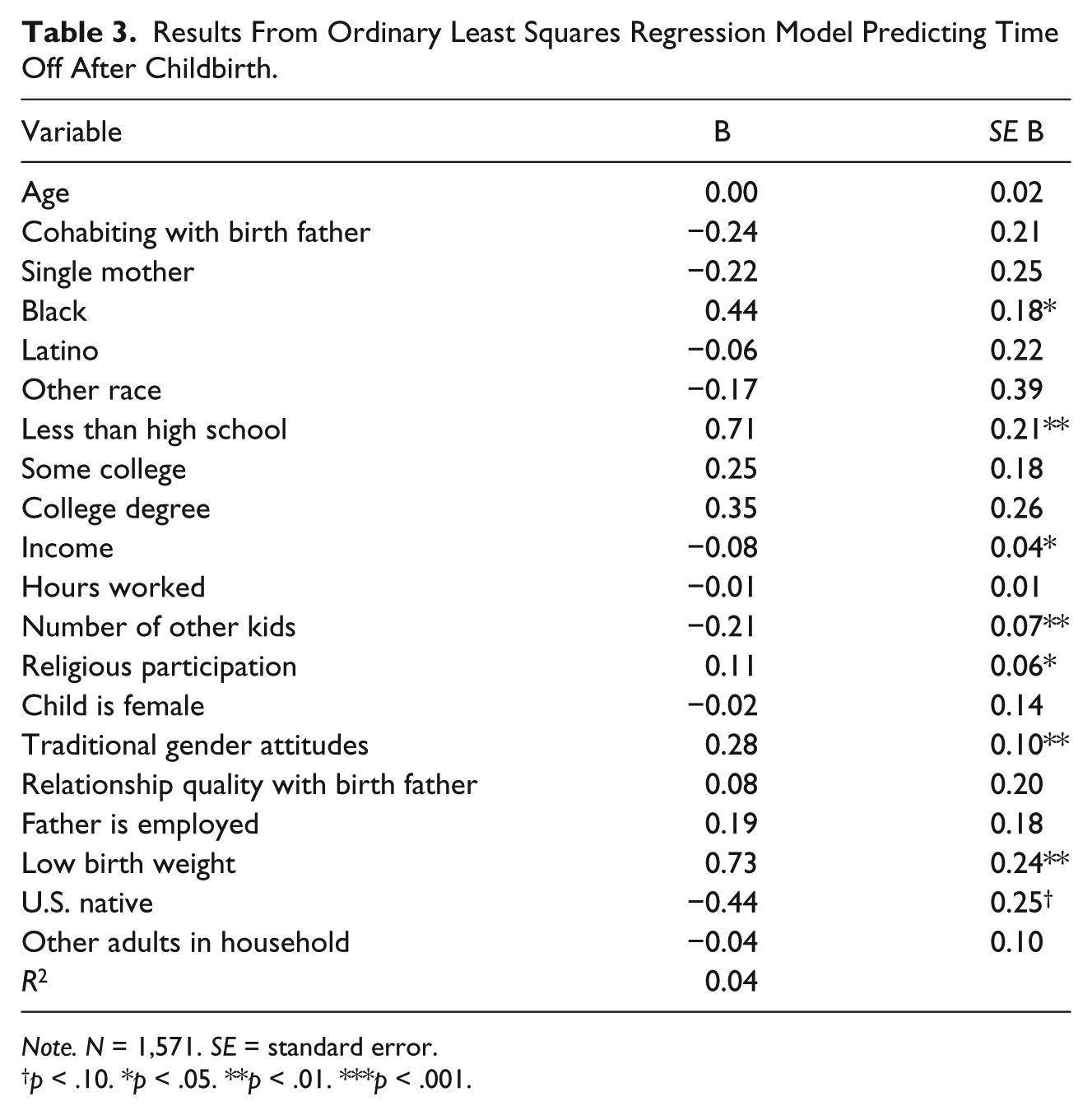
To further assess factors associated with taking time off after childbirth, OLS models are used to predict time off after childbirth (in months) among mothers who returned to work. Results are presented in Table 3. Results suggest that Black mothers and religiously active mothers take longer periods of time off work after childbirth. Mothers with traditional gender attitudes are also more likely to take extended periods of time off. Not completing high school and having a child with low birth weight are also associated with taking longer periods of time off from work. In contrast, having additional children reduces the likelihood of taking longer periods of time off from work. Income is also negatively associated with time off after childbirth.
Results From Ordinary Least Squares Regression Model Predicting Time Off After Childbirth.
Note. N = 1,571. SE = standard error.
p < .10. *p < .05. **p < .01. ***p < .001.
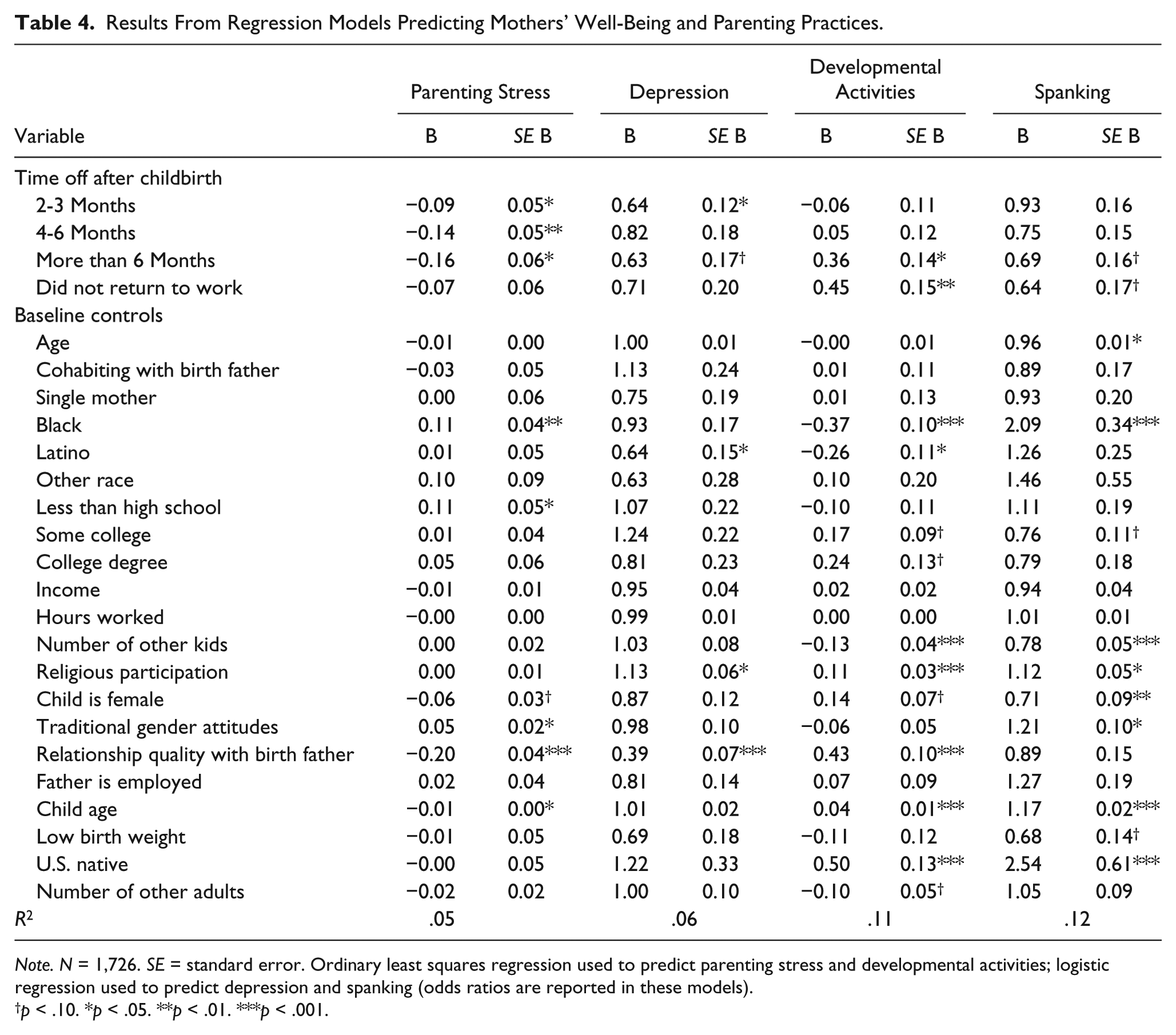
Results examining whether the amount of time off work after childbirth is associated with mothers’ risk of depression, parenting stress, and parenting practices are presented in Table 4. The ordinal measure of time off after work is used in these models. First, mothers who take 2 to 3, 4 to 6, or more than 6 months off from work all report lower levels of parenting stress than mothers who take 1 month or less off from work. These results are consistent in the AIPW models, which show that parenting stress is 6% lower among mothers who take 2 to 3 months off work (B = −0.13), 8% lower among mothers who take 4 to 6 months off work (B = −0.19), and 8% lower among mothers who take more than 6 months off work compared with mothers who take 1 month or less off (B = −0.18). However, these variations seem to be due to the uniqueness of mothers who take 1 month or less off work. As shown in the first column of Table 5, when the reference group is changed, the only significant difference is between mothers who take 1 month or less off from work and other mothers. The continuous measure of time off after childbirth is also negatively associated with parenting stress. Thus, it appears that taking a short period of time off work is associated with increased parenting stress relative to other mothers.
Results From Regression Models Predicting Mothers’ Well-Being and Parenting Practices.
Note. N = 1,726. SE = standard error. Ordinary least squares regression used to predict parenting stress and developmental activities; logistic regression used to predict depression and spanking (odds ratios are reported in these models).
p < .10. *p < .05. **p < .01. ***p < .001.
Results From Regression Models Predicting Mother’s Well-Being and Parenting Practices With Different Reference Categories and Measures of Time Off After Childbirth.
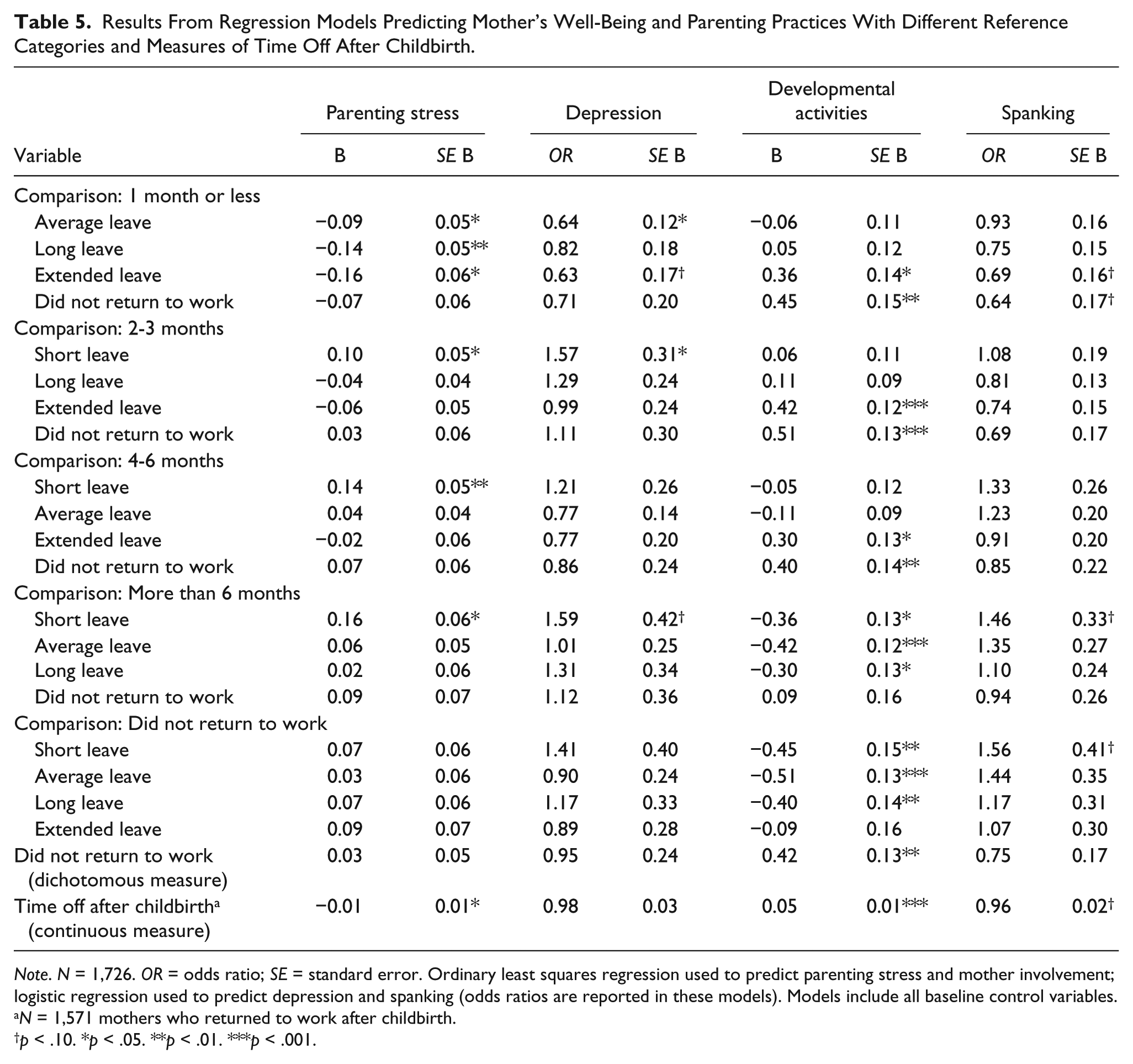
Note. N = 1,726. OR = odds ratio; SE = standard error. Ordinary least squares regression used to predict parenting stress and mother involvement; logistic regression used to predict depression and spanking (odds ratios are reported in these models). Models include all baseline control variables.
N = 1,571 mothers who returned to work after childbirth.
p < .10. *p < .05. **p < .01. ***p < .001.
Results in the second column of Table 4 suggest that mothers who take 2 to 3 months off work and mothers who take more than 6 months off (p < .10) are less likely to be depressed than mothers who take less than a month off from work. These results are consistent in AIPW models, suggesting that mothers who take 1 month or less off work are 57% more likely to be depressed than mothers who take 2 to 3 months off (B = −0.10) and 51% more likely to be depressed than mothers who take more than 6 months off (B = −0.11, p < .001). Taken together, results in the first two columns of Table 4 provide evidence that mothers who take only a short period of time off work after childbirth report lower well-being than mothers who take more time off after having a child.
Consistent with the scarcity hypothesis, results in Table 4 also suggest that longer periods of time off are associated with parenting practices. Specifically, mothers who take more than 6 months off work, and mothers who do not return to work, engage in developmental activities more frequently than mothers who take 1 month or less off from work. Results in Table 5 provide further support for these findings, suggesting that extended periods of time off (at least 6 months up to not returning to work) are associated with more frequent engagement in developmental activities regardless of the reference category. These results are also consistent in AIPW models, suggesting that mothers who take at least 6 months off from work (B = 0.42) and mothers who do not return to work (B = 0.46) engage in developmental activities 9% more frequently than mothers who return to work by 1 month after childbirth. These results also hold true in models that use a dichotomous measure of whether mothers did not return to work and models that use a continuous measure of time off after childbirth (as shown in the bottom two rows of Table 5).
Finally, results in Table 4 suggest that mothers who take at least 6 months off from work and mothers who do not return to work are less likely to spank their children than mothers who return to work in 1 month or less, but results are only marginally significant. However, results from AIPW models suggest that mothers who take more than 6 months off are 35% less likely to spank their children (B = −0.12, p < .01) and mothers who do not return to work are 39% less likely to spank their children (B = −0.13, p < .01) than mothers who take 1 month or less off work. After accounting for selection into time off work and spanking, it appears that returning to work within a month after having a child increases the likelihood of engaging in harsh forms of punishment.
Conclusion
Despite increased attention placed on parental leave policies in the United States, empirical research on the consequences of parental leave for parents is limited. The goal of this study is to contribute to this understudied area by focusing on whether time off from work after childbirth is associated with mothers’ risk of depression, parenting stress, and parenting practices.
Consistent with the scarcity hypothesis, results from this study suggest that taking only a month or less off from work after having a child is associated with increased parenting stress, an increased risk of experiencing a major depressive episode, and an increased likelihood of spanking the child relative to mothers who took longer periods of time off. Although results from this study did not find overwhelming evidence that longer periods of time off were associated with higher well-being among mothers, the finding that short periods of time off may be detrimental to mothers’ well-being suggests that it may be difficult to balance work and family life so quickly after having a child. Specifically, taking longer periods of time off from work (i.e., longer than 1 month) may allow disadvantaged mothers time to recover from childbirth emotionally and physically, and adapt to their new responsibilities parenting an infant. This time may help alleviate any role conflict that women face in trying to balance work and family life during the first few months of their children’s life, resulting in higher levels of well-being (Baum, 2003; Dagher et al., 2014; Hyde et al., 1995; Waldfogel, 2006). Alternatively, it is possible that mothers who take 1 month or less off from work may be at higher risk of experiencing depression and parenting stress. Indeed, these mothers appear to be more disadvantaged overall (less likely to be married, less likely to have completed college, have lower average incomes, etc.). Although this study attempted to minimize potential selection effects due to observed characteristics, future research should continue to investigate potential alternative causal pathways between time off after childbirth and mothers’ well-being.
The second important finding from this study is that longer periods of time off after childbirth are associated with greater engagement in developmental activities with the child (such as reading and singing to the child). In particular, levels of engagement in developmental activities were highest among mothers who took more than 6 months off or who did not return to work during the first year of their children’s life. Again, these results provide some support for the scarcity hypothesis, as mothers who take extended periods of time off work may be better able to focus on interactions with their children without also having to balance work responsibilities. This finding also supports previous research suggesting that role conflict may be minimized for mothers who do not return to work in the year following childbirth, allowing them to be more engaged in their children’s lives than employed mothers (Huston & Aronson, 2005; Nomaguchi, 2006). It is possible that mothers who took longer periods of time off did so because they planned on being more engaged in their children’s lives (suggesting reverse causality). However, regardless of the reason, research suggests that engagement in activities such as reading to young children are especially important for fostering cognitive development among infants (Berger, Brooks-Gunn, Paxson, & Waldfogel, 2008; Waldfogel, 2006). Thus, whether mothers choose to stay home longer or are able to be more engaged as a result of taking more time off from work, encouraging mothers to take longer periods of time off from work following childbirth may increase the likelihood that children are exposed to these developmental activities more frequently (and consequently contribute to children’s well-being). Future research should continue to examine this question in more detail.
Despite evidence in the literature, results from this study did not find any direct support for the enhancement hypothesis. This may be because of the sample used; disadvantaged mothers may benefit most from time off after childbirth due to a lack of quality daycare options for their children and higher levels of stress that may be associated with low wage work. Indeed, there is some evidence suggesting that benefits associated with maternity leave-taking are more pronounced among disadvantaged families (Berger et al., 2008; Brooks-Gunn et al., 2010).
However, this does not mean that early returns to work do not provide any benefits. For example, mothers who return to work early may experience increases in income. Indeed, supplemental models suggest that mothers who took at least 6 months off from work reported lower levels of income at W2 than mothers who took less time off work. Moreover, results suggest that there is no disadvantage to taking 2 to 3 months off compared with more than 6 months off (as the scarcity hypothesis would suggest) in terms of parenting stress, depression, and spanking. Thus, once disadvantaged mothers reach the threshold of taking 1 month off after childbirth, there does not appear to be any added benefit of taking additional time off for mother’s well-being or engagement in harsh parenting practices, which is consistent with the argument that returning to work does not disadvantage mothers. Future research should further test this hypothesis to better understand the trade-offs between early returns to work and longer periods of maternity leave.
Despite the strengths of this study, there are also a few limitations to note. First, the FFCW does not contain information about the motivations for taking longer periods of time off from work following childbirth. Because of limited information, the relationships between time off after childbirth and mothers’ risk of depression, parenting stress, and parenting practices may be due to selection. A number of strategies were used to minimize selection including controlling for potential confounding influences in the regression models, using AIPW models to account for selection on key demographic characteristics such as income, family structure, and race/ethnicity, weighting supplementary models to account for the propensity to be employed at W1, and incorporating additional variables in supplementary analyses to reduce the potential for reverse causality. Despite these attempts, it is still possible that mothers who take extended time out of the labor force are a select group that is able to take such a long period of time off (in contrast to families that cannot afford it, for example). Unfortunately, this study is not able to account for selection on unobserved factors and sample attrition, or fully eliminate the possibility of reverse causality, which is something that should be further explored in future research. Future research should also consider the possibility that the relationship between time off after childbirth and mothers’ well-being and parenting practices may vary by socioeconomic status, family structure, and other key characteristics. Moderating relationships explored in supplementary analyses did not reveal any significant interactions, but this should be examined further in future studies.
Although this study has implications for the larger policy discussion on parental leave, the FFCW does not contain information about maternity leave as there is no information on whether mothers returned to the same job after childbirth or what (if any) type of leave policy mothers had access to. Some mothers may work for companies that offer paid maternity leave, others may have used accrued vacation/sick time, others may have taken unpaid leave through FMLA, and some mothers may have quit their job prior to childbirth and returned to work at a different job. It is possible that mothers who took longer periods of time off were those who had access to more comprehensive paid leave policies. Occupational type (taken from W2) was included in supplemental models to assess whether mothers in more prestigious occupations (i.e., professional) took longer periods of time off than mothers in less prestigious occupations (e.g., labor, service). However, occupational type was unrelated to time off after childbirth and did not alter the results presented here. 7 In addition, variables that account for alternative sources of income that mothers may have access to if they left their job (welfare, food stamps, etc.) were included in supplementary models, but none of these variables were related to time off after childbirth or the outcome variables, and inclusion of these variables did not change the results. It is essential that future research focus on access to parental leave and how access to different forms of leave may motivate and/or constrain parents’ decisions about taking parental leave.
Overall, this study focuses on the important issue of parental leave, and contributes to the literature by focusing on how length of time off work after childbirth is associated with mothers’ risk of depression, parenting stress, and parenting practices. Results from this study suggest that taking less than a month off after childbirth may reduce mothers’ well-being and also that longer periods of time off from work are associated with increased engagement in developmental activities with their children. Thus, scholars and policy makers should continue to focus on the determinants and consequences of parental leave-taking to assess whether an expansion of leave programs may be beneficial to families.
Footnotes
Declaration of Conflicting Interests
The author(s) declared no potential conflicts of interest with respect to the research, authorship, and/or publication of this article.
Funding
The author(s) received no financial support for the research, authorship, and/or publication of this article.