



Abstract
Controlling and domineering attitudes of husbands are risk factors for women’s experience of physical, sexual, and emotional violence in Nigeria. Other studies imply that husband’s attitudes may also influence the risk of women’s justification of wife beating. Consistently, it was hypothesized that husband’s controlling and domineering attitudes would influence the relationship between women’s justification of wife beating and the three types of violence experience. Participants were 19,360 nationally representative sample of married women in Nigeria. Data were collected through face-to-face interviews. Regression analyses were conducted to analyze the contributions of justification of wife beating and husband attitudes to the three types of women’s violence experience. Findings showed that women who justified wife beating experienced more physical, sexual, and emotional violence. The relationship of justification of wife beating still persisted with sexual and emotional violence in the context of husband’s controlling and domineering attitudes. Implications of study findings were discussed.
Keywords
Intimate partner violence (IPV) is a pervasive phenomenon in sub-Saharan Africa. Estimates from the World Health Organization (2013) indicate that approximately 37% of ever partnered women experienced at least one act of male-perpetrated violence at some point in their lifetime. In Nigeria, evidence shows that about two thirds of women have experienced IPV (Ogunjuyigbe, Akinlo, & Ebigbola, 2005) in various forms in all major ethnic groups in the country (Nwabunike & Tenkorang, 2015). Studies demonstrate that male-perpetrated IPV adversely affect women and their children (United Nations, 2006; Yount, DiGirolamo, & Ramakrishnan, 2011), resulting in a variety of serious physical, emotional, and psychological harm (Caldwell, Swan, & Woodbrown, 2012; World Health Organization & London School of Hygiene and Tropical Medicine, 2010). Women who experience IPV are more likely to suffer injury, mental distress, poor health conditions, depression, pregnancy complications, and poor life satisfaction (Ellsberg, Jansen, Heise, Watts, & Garcia-Moreno, 2008; Ludermir, Lewis, Valongueiro, de Araujo, & Araya, 2010). In Nigeria, the psychological and physical problems are exacerbated by the inability of many affected women to seek help from avenues that can enable them obtain solutions to partner violence (Okenwa, Lawoko, & Jansson, 2009). A study showed that between 59% and 65% of women who experienced IPV in the country reported they did not obtain help (Adegbite & Ajuwon, 2015). There still exists an urgent need to further understand male-perpetrated IPV in the country.
Research suggests the need to examine attitudes of women toward husband wife beating and explore ways to inform interventions for lowering IPV (Alam, Tareque, Peet, Rahman, & Mahmud, 2018; Hindin, 2003). A great deal of evidence shows that it is common for women to justify wife beating in sub-Saharan Africa. For example, a study found that 75% of women in seven sub-Sahara African countries had justifying attitudes toward wife beating in a number of situations (Rani, Bonu, & Diop-Sidibe, 2004). In Nigeria, research has shown that more than one half of women approve of wife beating, and they consider wife beating necessary to enable men establish their masculinity in a family (Oyediran & Isiugo-Abanihe, 2005). Despite the plethora of studies on wife beating, there is limited knowledge of the link between justification of wife beating and IPV. Although a number of studies indicate that women who justify wife beating are more likely to experience partner violence (Nwabunike & Tenkorang, 2015; Yoshikawa, Shakya, Poudel, & Jimba, 2014), analyses of the relation between justification of wife beating and husband-perpetrated IPV are not universal. Studies are still needed to identify under what conditions approval of wife beating are most likely to provoke IPV. It has been suggested that women’s justification of wife beating may increase their likelihood of incurring IPV in various circumstances (Alam et al., 2018; Devenish, Hooley, & Mellor, 2018), particularly in sub-Sahara African contexts where men are expected to endorse controlling and domineering attitudes toward women (Amoakohene, 2004). Previous studies in Nigeria have shown that husband’s domineering attitudes increase the risk of male-perpetrated IPV (Nwabunike & Tenkorang, 2015; Sunmola, Mayungbo, Fayehun, Opayemi, & Morakinyo, 2018), it is not clearly known whether these husband’s attitudes also influence the risk of women’s justification of wife beating.
This gap is pertinent in historically patriarchal settings like Nigeria, where most women in marital unions hold wife beating acceptance attitudes and also have possibilities of exposure to husbands with controlling and domineering attitudes. In such settings, women who justify wife beating and also in union with husbands with domineering attitudes may have increased burden of IPV. Understanding women’s IPV risk associated with wife beating justifying attitudes, particularly among married women, will further enhance efforts to counteract prevalent rates of marital and domestic violence. The current study aims to offer knowledge on the nature of impact of women’s justification of wife beating on IPV in the context of husband’s controlling and domineering attitudes in Nigeria.
Theoretical and Empirical Perspectives
Husband’s Domineering and Controlling Attitudes
The feminist theories offer a theoretical perspective for understanding husband’s domineering and controlling attitudes and the motivation for IPV-related behavior (Anderson, 1997; Kimmel, 2011). According to propositions of the theories, gender is a form of structural inequality embedded in social relationships of men and women primarily to make women vulnerable to men’s control. Both men and women are organized through cultural norms to undertake differential gender roles that place women into unequal position of power relative to men (Risman, 1998). In social interactions, gender roles of men involve undertaking activities that portray men as dominant and enhance men’s ability to control women (West & Zimmerman, 1987). In this regard, societies confer dominance and power on husbands and expect wives to conform to subservient roles in relationships with their husbands. Marital power inequalities tend to increase the likelihood of women abuse, particularly in husband-dominated families (Coleman & Straus, 1986, Straus, Gelles, & Steinmetz, 1988). Studies suggest that there is a higher likelihood of male-perpetrated IPV, when men accept patriarchal beliefs that husbands should exercise exclusive power over their wives (Tenkorang, Owusu, Yeboah, & Bannerman, 2013; Yllo & Straus, 1990). Male dominance and control orientations in marital contexts is associated with increased likelihood of various forms of IPV against wives in sub-Sahara African countries, including Nigeria (Amoakohene, 2004; Anderson, 1997). Evidence from nationally representative studies in Nigeria shows that women whose husbands endorse domineering and controlling attitudes are more likely to report experience of physical, sexual, and emotional violence (Nwabunike & Tenkorang, 2015; Sunmola et al., 2018).
Other theoretical analyses suggest that socialization factors play a role in shaping the differential dispositions of men and women to adopt and undertake gender role expectations. According to social learning theory, individuals learn attitudes and behaviors by observing other persons, in particular social contexts, and the learning is enhanced through reward and punishment principles (Bandura, 1974). Cultural norms in sub-Saharan Africa dictate unequal socialization of men and women to express dominant attitudes and behaviors (Nwabunike & Tenkorang, 2015). In Nigeria, married men are socialized to become head of households and direct affairs of women, while wives are taught to comply with directives of their husbands (Iliyasu, Abubakar, Babashani, & Galadanci, 2011; Okulate, 2005; Sunmola et al., 2018). These findings suggest that women married to men who endorse domineering and controlling attitudes are at higher risks of reporting experience of IPV.
Wife Beating and Its Justification
Wife beating, an aspect of physical violence, is characterized by a husband’s administration of a physical strike on his wife with the intention to inflict punishment for perceived transgressions. Studies have shown that male-perpetrated violence is common in societies where institutional practices and norms promote male dominance (Levinson, 1989). Most of sub-Saharan Africa, including Nigeria, are male-dominated societies where wife-beating practices are common (Counts & Brown, 1992; Hindin, 2003), especially when women are considered to have stepped out of expected gender roles necessary for gratifying husbands in marital relationships (Miller, 1986). In an attempt to restore male patriarchal power and dominance in the event of perceived women deviations from expected roles, some husbands resort to beating their wives (Ofei-Aboagye, 1994; Okenwa et al., 2009; Tenkorang et al., 2013). Wife beating may occur on the basis of a husband’s judgment of what constitutes a partner’s wrongful behavior, particularly in cases such as a woman’s adultery, disobedience to a husband’s authority, and failure to properly take care of children (Hindin, 2003; Kim & Motsei, 2002; Nukunya, 2003). Findings from previous research show that male perpetrators of partner violence often believe their own ideas as a standard for what is right and rational, making it possible for them to justify attacking and beating of women (Stark, 2007).
Wife beating is not only a common practice, its justification is also diverse in most sub-Sahara African countries. Justification of wife beating entails subjective attitudinal perception and belief that a husband is approved to beat his wife in cases of transgression. Studies in many lower income countries, suggest that women justify wife beating more often than men (Uthman, Lawoko, & Moradi, 2009; Waltermauer, 2012). Consistent with the application of the social learning theory (Bandura, 1974), the justification of wife beating is a learned process from observations of social interactions within cultural contexts. An individual who observes or learns that men are approved and even sometimes positively reinforced for beating women in a bid to instill appropriate disciplines is likely to internalize such justifying attitudes. Studies have shown that women who have such attitudes are socialized to believe that men have rights to beat women when they deviate from expected gender roles (Jejeebhoy & Sathar, 2001; Schuler, Hashemi, Riley, & Akhter, 1996). Among the Tiv-speaking people of Nigeria, and many other ethnic groups in the country, women have been socialized and thought to accept wife beating as necessary and inevitable in marital affairs (Odimegwu, 2001). Generally, in sub-Saharan Africa, women are socialized to believe that wives must be guided by their husbands and that men have the right to punish their wives when they violate their expected roles (Lawoko, 2008). In such instances, gender norms have normalized wife beating to reflect it as an expression of affection by a husband, and consequently wives are often blamed for husband-perpetrated violence (Amoakohene, 2004; Ofei-Aboagye, 1994).
Social justification of wife beating has potential relevance for perpetrators, victims, and communities. Scholars have argued that in communities where wife beating is justified, a potential perpetrator will not only feel he has the right to beat his wife but also engages in the act if the need is perceived to arise (Horne, 1999; Waltermauer, 2012). In such communities, a wife is also likely to agree that her husband is justified to beat her. Accordingly, she will tend not to take recourse to report abuse to appropriate authorities when it occurs. In one study on the comparison of domestic violence among married women in various ethnic groups in Nigeria (Nwabunike & Tenkorang, 2015), it was found that women who expressed wife beating justifying attitudes in all the ethnic groups were more likely to experience physical, sexual and emotional violence. Researchers in the study inferred that women who approved of wife beating would have internalized relevant socialization norms of wife beating acceptance in ways that may make them readily attract violent acts to themselves. Consistently, a study in Ghana found that women who reported wife beating justifying attitudes had higher odds of exposure to husband-perpetrated physical and sexual violence (Tenkorang et al., 2013).
Demographic and Socioeconomic Factors
There is some evidence that demographic and socioeconomic variables may explain women’s differential tendencies to justify wife-beating attitudes, husband’s controlling and domineering attitudes, and experience of IPV. A study from Zimbabwe showed that women whose partners made less household decisions, who lived in urban areas, who were older, and who were from higher socioeconomic status were less likely to justify wife beating (Hindin, 2003). In Nigeria, it was found that husband’s controlling and domineering attitudes were negatively associated with women’s age, wealth status, and employment status (Sunmola et al., 2018). Partner control of economic resources is crucial to the experience of IPV. A number of studies have shown that women with more control over resources report reduced risk of IPV (Levinson, 1989). Consistently, previous studies report that persons with less access to resources, particularly lower class individuals, report greater stress in their intimate relationships and violence at home (Gallo, Bogart, Vranceanu, & Matthews, 2005; Staggs, Long, Mason, Krishnan, & Riger, 2007). Women who depend on their husbands for economic resources are likely to experience more IPV, presumably due to women’s inability to mobilize power to refuse husband-perpetrated violence (Gelles, 1983; Sagrestano, Heavey, & Christensen, 1999). Other studies have found that women who have access to financial support in the form of loans were less likely to report experience of sexual and physical IPV (Pronyk et al., 2006). In contrast, other studies have shown that women who are economically independent may also experience husband-perpetrated violence (Kimmel, 2002; Rocca, Rathod, Falle, Pande, & Krishnan, 2009). Presumably, such women may be perceived to be in a position to challenge patriarchal authority (Vyas & Watts, 2009). Previous studies have also shown that married women’s experience of IPV increases with age (until 30 years) and decreases with education (Conroy, 2014; Karamagi, Tumwine, Tylleskar, & Heggenhougen, 2006; Were et al., 2011).
Current Study
The current study examined how attitudinal risk factors in marital relationships could be linked to IPV. The study aimed to examine whether association between women’s justification of wife beating and IPV would be influenced by husband controlling and domineering attitudes. It was hypothesized that women’s justification of wife beating would have independent contributions to predict women’s experience of husband-perpetrated violence: (a) physical violence, (b) sexual violence, and (c) emotional violence. It was also hypothesized that husband’s controlling and domineering attitudes would influence the strength of the relationship between women’s justification of wife beating and the three types of IPV experience. While controlling for other relevant alternative hypotheses (i.e., demographic and socioeconomic factors), the current hypotheses were tested in a nationally representative sample of Nigerian married women.
Focusing empirical efforts on these hypotheses is crucial because of the vulnerability of women in husband-perpetrated violence in the country, including the danger of women’s exposure to potentially severe health consequences and difficulties to seek recourse to address violence. This study, therefore, expands our understanding of factors associated with women’s IPV experience and guides professionals to appropriately utilize strategies for managing partner attitudes for IPV reduction in marital relationships.
Method
Participants and Procedures
This study used data from 2013 Nigeria Demographic and Health Survey (NDHS). The NDHS sample data were designed to be nationally representative by employing stratified two-stage cluster designs within each of the 36 states and the Federal Capital Territory of the country. In the first stage, geographic units or enumeration areas within the country were sampled. In the second stage, a random sample of 40,680 households was selected from enumeration areas using probability sampling proportional to size. Every eligible female was approached and asked to participate in the study. A total of 38,522 female respondents, aged 15 to 49 years, were interviewed in selected households. A response rate of 98% was obtained for the study (National Population Commission & ICF International, 2014).
Data were collected through a collaboration between ICF Macro/MEASURE DHS and Nigeria’s National Population Commission with support from other agencies of government, research organizations, civil society organizations, and international development partners. Between February and May 2013, trained interviewers conducted face-to-face interviews with eligible women in selected households. The 2013 NDHS obtained information on women’s maternal and child health issues, sexual activity, fertility behavior, domestic violence, female genital mutilation, HIV/AIDS knowledge and behavior, and other sexually transmitted infections (National Population Commission & ICF International, 2014). The domestic violence module consisted of questions designed to tap various dimensions of physical, sexual, and emotional violence. Additional measures were employed to maintain confidentiality of responses of women to the domestic violence module. To ensure that other women and members of a household were not privy to information provided by respondents to the module, only one ever married woman was randomly selected from each of the selected households and interviewed on the module questions. In addition to this privacy measure, interviews took place in locations preferred by respondents, mostly within households or other facilities in the neighborhoods. The study employed the practice of same-gender interview between interviewers and respondents in the individual household interviews (ICF International, 2012), to reduce response biases due to interviewer gender (Scott & Shusheela, 1981). Ethical approval was obtained from the National Health Research Ethics Committee of Nigeria (National Population Commission & ICF International, 2014). This present study focused on a total of 19,360 married women who responded to the domestic violence questions.
Measures
Physical Violence
This measure uses seven questions to assess extent to which women ever experience husband-perpetrated physical attacks (National Population Commission & ICF International, 2014). Questions consist of whether husband, (a) “Push you, shake you, or throw something at you?” (b) “Slap you?” (c) “Twist your arm or pull your hair?” (d) “Punch you with his fist or with something that could hurt you?” (e) “Kick you, drag you, or beat you up?” (f) “Try to choke you or burn you on purpose?” and (g) “Threaten or attack you with a knife, gun, or any other weapon?” Each question is followed by a 0 (no) to 1 (yes) response option. Responses to the questions were summed to create a physical violence scale that ranged from 0 to 7, with higher scores representing more experience of physical violence. A Cronbach alpha coefficient of . 77 was obtained in the present study.
Sexual Violence
This measure consists of three questions to assess extent to which women ever experience husband-perpetrated aggressive sexual acts (National Population Commission & ICF International, 2014). Questions asked were about whether husband, (a) “Physically force you to have sexual intercourse with him even when you did not want to?” (b) “Physically force you to perform any other sexual acts you did not want to?” and (c) “Force you with threats or in any other way to perform sexual acts you did not want to?” Participants responded to each question on a dichotomous scale (0 = no, 1 = yes), and responses were summed to obtain a composite score. The scale ranged from 0 to 3, with higher scores representing more experience of sexual violence. An alpha coefficient of .71 was obtained.
Emotional Violence
This measure comprises three questions to assess extent to which women ever experience husband-perpetrated emotional abusive acts (National Population Commission & ICF International, 2014). Participants rated each of the questions (a) “Say or do something to humiliate you in front of others?” (b) “Threaten to hurt or harm you or someone close to you?” and (c) “Insult you or make you feel bad about yourself?” on a dichotomous scale (0 = no, 1 = yes). Experience of emotional violence was operationalized by a total score, with higher scores indicating more experience. An alpha coefficient of .71 was obtained.
Husband’s Controlling and Domineering Attitudes
This measure uses five items to assess the extent to which a woman report experience of controlling and domineering attitudes elicited by her husband (National Population Commission & ICF International, 2014). Sample items are “He is jealous or angry if you talk to other men?” “He frequently accuses you of being unfaithful?” and “He insists on knowing where you are at all times?” Each item was followed by a dichotomous response option, (0 = no, 1 = yes). The scale ranges from 0 to 5, with higher scores indicative of more experience of husband controlling and domineering attitudes. An alpha coefficient of .67 was obtained.
Justification of Wife Beating
Five items measure the degree to which women agree that it is proper for a husband to beat his wife in cases of her wrongdoing (National Population Commission & ICF International, 2014), with a 0 (no) to 1 (yes) response format. The items are (a) “Beating justified if wife goes out without telling husband,” (b) “Beating justified if wife neglects the children,” (c) “Beating justified if wife argues with husband,” (d) “Beating justified if wife refuses to have sex with husband,” and (e) “Beating justified if wife burns the food.” The scale was scored by summing up the responses, resulting in a range of 0 to 5. Higher scores reflect a greater tendency to agree that it is appropriate for a husband to beat his wife. A Cronbach’s alpha coefficient of .89 was obtained.
Decision-Making Autonomy Within Households
This instrument measures the extent to which women alone make final decisions in household matters (National Population Commission & ICF International, 2014). The measure comprises of three questions: (a) “Who usually makes decisions about health care for yourself?” (b) “Who usually makes decisions about making major household purchases?” and (c) “Who usually makes decisions about visits to your family or relatives?” Each question was followed by the following response options: (1) you, (2) your (husband/partner), (3) you and your (husband/partner) jointly, (4) someone else, and (5) Other. For each of the three questions, the response options were constructed into a dichotomous variable to represent patterns of decision making on the basis of whether a woman has the final decision in the matter (0 = no, if wife alone did not have the final decision, 1 = yes, if the wife alone had the final decision). Participants indicated how each of the questions applied to them, and their responses were summed. The scale ranges from 0 to 3, with higher scores indicative of more tendency to make final decisions alone in the household. Internal consistency was indicated by Cronbach’s alpha coefficient of .76.
Demographic and Socioeconomic Variables
Participants reported age (in years), education (0 = no education, 1 = primary education, 2 = secondary education, and 3 = higher education), employment (0 = not employed and 1 = employed), wealth status (0 = poorest, 1 = poorer, 2 = middle, 3 = richer, and 4 = richest), and place of residence (0 = rural area and 1 = urban area).
Analysis
Descriptive analyses were conducted to examine the distribution of demographic, socioeconomic, and IPV characteristics in the total sample. Variables were summarized using proportions for categorical variables and means and standard deviations for continuous variables. Pearson product-moment correlations were used to evaluate the bivariate relations between study variables. Demographic and socioeconomic variables (age, educational level, wealth index, employment status, place of residence, and decision-making autonomy) were examined in the bivariate correlations for their potential covariation with all other independent variables (justification of wife beating and husband controlling and domineering attitudes) as well as three dependent variables (physical, sexual, and emotional violence). All these demographic and socioeconomic variables were related to IPV in the present study and used as covariates. They are also commonly studied as covariates in existing studies of IPV in sub-Saharan Africa, and are considered to have theoretical significance (Nwabunike & Tenkorang, 2015; Sunmola et al., 2018; Tenkorang et al., 2013).
Three separate multiple regression analyses were conducted to assess the relationship between justification of wife beating and women’s experience of IPV outcomes (physical, sexual, and emotional violence). Analyses were also conducted to examine whether the effects of justification of wife beating on outcomes differed by husband’s controlling and domineering attitudes. For each regression analysis, the independent variables were entered in a two-block process after controlling for covariates by imputing the covariates first into the model to exclude the possibility of their effect on the key variables. In the first of the two blocks, the main effect of justification of wife beating was entered to examine its predictive effects on the outcomes. In the second block, the main effect of husband’s controlling and domineering attitudes were entered to determine if the variable influenced the predictive effect of wife beating justification on the outcomes.
Data were generated from edited and cleaned questionnaires. To verify the authenticity of data and resolve any inconsistencies, data were entered twice using the CSPro computer package and stored in computers. Analyses of the variance inflation factor (VIF) and tolerance showed that multicollinearity was not a problem in these data (i.e., VIF = 1.14, tolerance = .837). All analyses used domestic violence sampling weights and were adjusted for the multistage stratified cluster sample design. An alpha level of .05 was selected as the level of statistical significance.
Results
Sample Characteristics
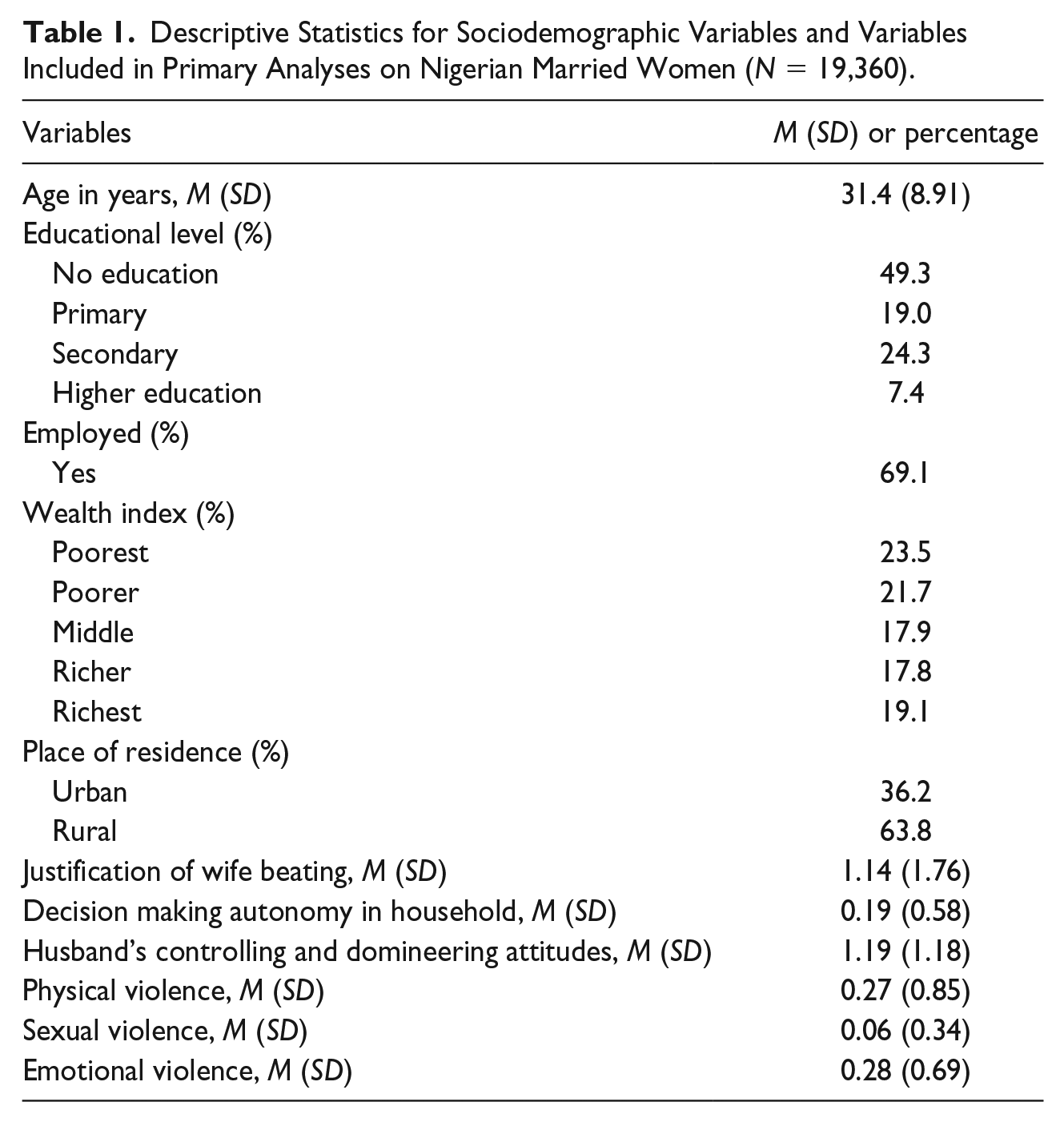
The sociodemographic characteristics of the sample are presented in Table 1. Sample participants were married women between 15 and 49 years of age (M = 31.4 years). The majority were living in rural areas (64%), had primary school education or none (68%), employed (69%), and belonging to middle-level wealth index or below (63%).
Descriptive Statistics for Sociodemographic Variables and Variables Included in Primary Analyses on Nigerian Married Women (N = 19,360).
Bivariate Correlations and Covariates
Bivariate correlations of study variables are shown in Table 2. Nearly, all variables correlated significantly with each other, and in the expected direction. Higher levels of women’s justification of wife beating, decision-making autonomy, husband’s controlling and domineering attitudes, and wealth status were correlated with higher levels of physical, sexual, and emotional violence. Being employed, living in urban areas, and higher levels of age were correlated with higher levels of all the forms of partner violence, except sexual violence. Higher levels of educational attainment correlated only with higher levels of physical violence. Preliminary analyses were conducted to examine whether demographic and socioeconomic variables covaried with predictor or dependent variables. As shown in Table 2, demographic and socioeconomic variables significantly covaried with predictors or dependent variables. Consequently, all the demographic and socioeconomic variables examined in the current study were included as covariates in subsequent analyses.
Correlations for Sociodemographic Variables and Variables Included in Primary Analyses (N = 19,360).
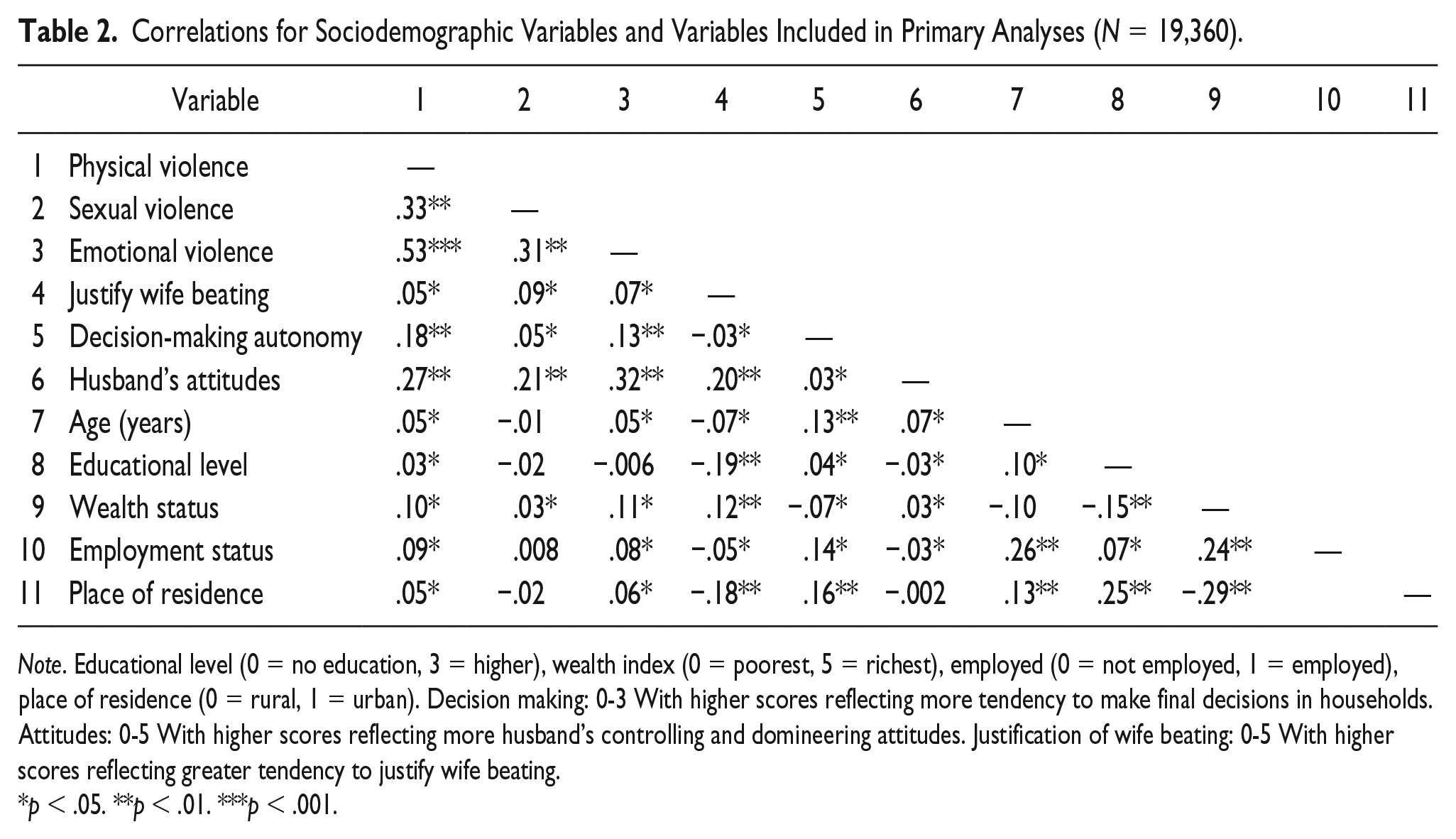
Note. Educational level (0 = no education, 3 = higher), wealth index (0 = poorest, 5 = richest), employed (0 = not employed, 1 = employed), place of residence (0 = rural, 1 = urban). Decision making: 0-3 With higher scores reflecting more tendency to make final decisions in households. Attitudes: 0-5 With higher scores reflecting more husband’s controlling and domineering attitudes. Justification of wife beating: 0-5 With higher scores reflecting greater tendency to justify wife beating.
p < .05. **p < .01. ***p < .001.
Regression Analysis
Physical Violence
In Block 1, the main effect of justification of wife beating was significant (β = .06, p < .01), indicating that higher levels of women’s justification of wife beating were associated with more experience of husband perpetrated physical violence. In Block 2, the main effect of husband’s controlling and domineering attitudes was significant (β = .26, p < .001) suggesting that more husband’s controlling and domineering attitudes were linked with more women’s experience of physical violence. When husband’s controlling and domineering attitudes was entered into the model, justification of wife beating was no longer a significant predictor (β = .009, p > .05; Table 3).
Summary of Regression Analyses for the Associations Between Justification of Wife Beating, Husband’s Controlling and Domineering Attitudes, and Physical Violence.
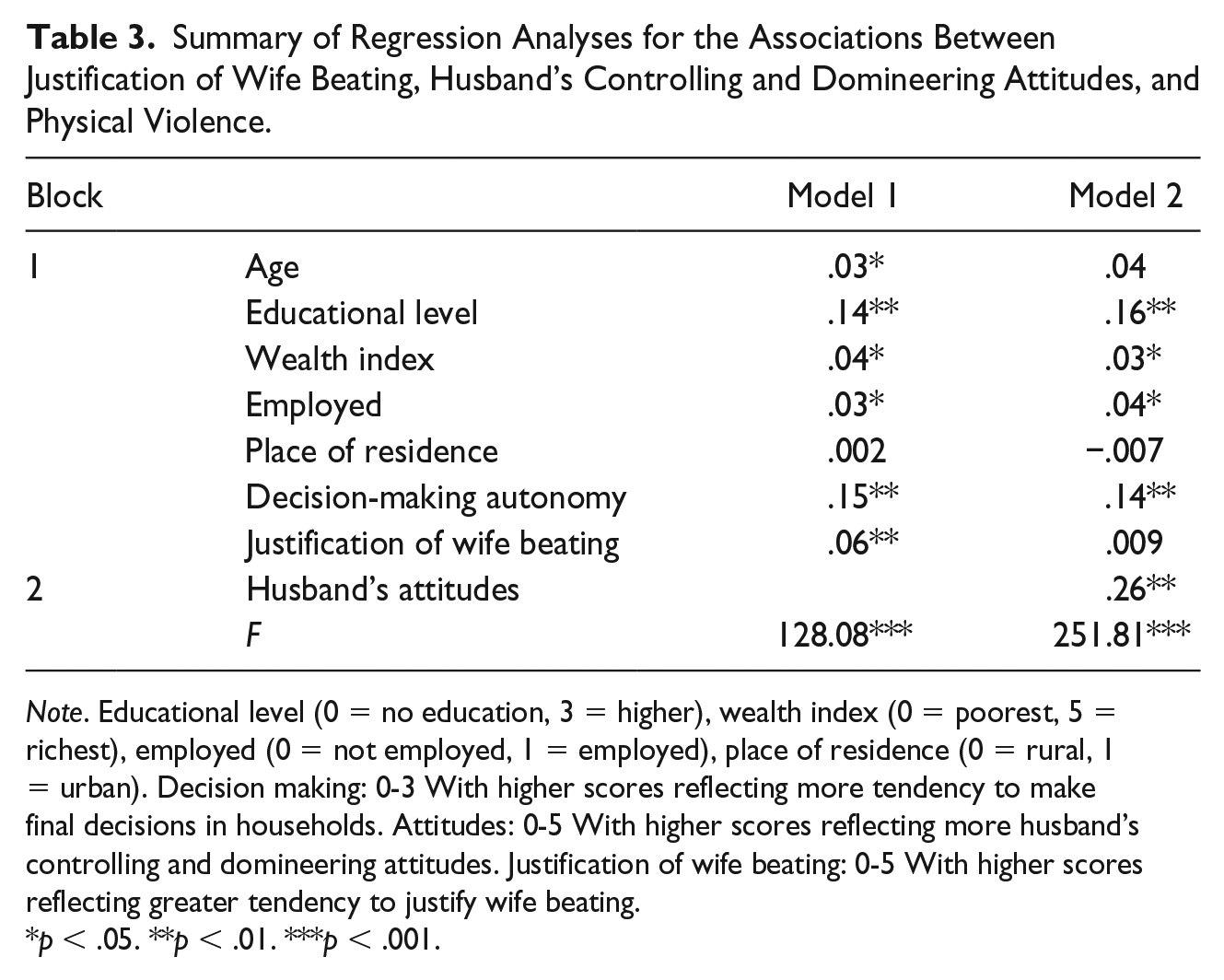
Note. Educational level (0 = no education, 3 = higher), wealth index (0 = poorest, 5 = richest), employed (0 = not employed, 1 = employed), place of residence (0 = rural, 1 = urban). Decision making: 0-3 With higher scores reflecting more tendency to make final decisions in households. Attitudes: 0-5 With higher scores reflecting more husband’s controlling and domineering attitudes. Justification of wife beating: 0-5 With higher scores reflecting greater tendency to justify wife beating.
p < .05. **p < .01. ***p < .001.
Sexual Violence
In Block 1, the main effect of justification of wife beating was significant (β = .09, p < .01), indicating that higher tendency to justify wife beating resulted in more experience of husband-perpetrated sexual violence. In Block 2, the main effect of husband’s controlling and domineering attitudes was significant (β = .20, p < .001) suggesting that more husband’s controlling and domineering attitudes were linked with more women’s experience of sexual violence. When husband’s controlling and domineering attitudes was entered into the model, justification of wife beating remained a significant predictor (β = .05, p < .01; Table 4).
Summary of Regression Analyses for the Associations Between Justification of Wife Beating, Husband’s Controlling and Domineering Attitudes, and Sexual Violence.

Note. Educational level (0 = no education, 3 = higher), wealth index (0 = poorest, 5 = richest), employed (0 = not employed, 1 = employed), place of residence (0 = rural, 1 = urban). Decision making: 0-3 With higher scores reflecting more tendency to make final decisions in households. Attitudes: 0-5 With higher scores reflecting more husband’s controlling and domineering attitudes. Justification of wife beating: 0-5 with higher scores reflecting greater tendency to justify wife beating.
p < .05. **p < .01. ***p < .001.
Emotional Violence
In Block 1, the main effect of justification of wife beating was significant (β = .09, p < .01), indicating that higher tendency to justify wife beating resulted in more experience of husband-perpetrated emotional violence. In Block 2, the main effect of husband’s controlling and domineering attitudes was significant (β = .31, p < .001) suggesting that more exposure to husband’s controlling and domineering attitudes were linked to more women’s emotional violence experience. When husband’s controlling and domineering attitudes was entered into the model, justification of wife beating remained a significant predictor (β = .03, p < .05; Table 5).
Summary of Regression Analyses for the Associations Between Justification of Wife Beating, Husband’s Controlling and Domineering Attitudes, and Emotional Violence.
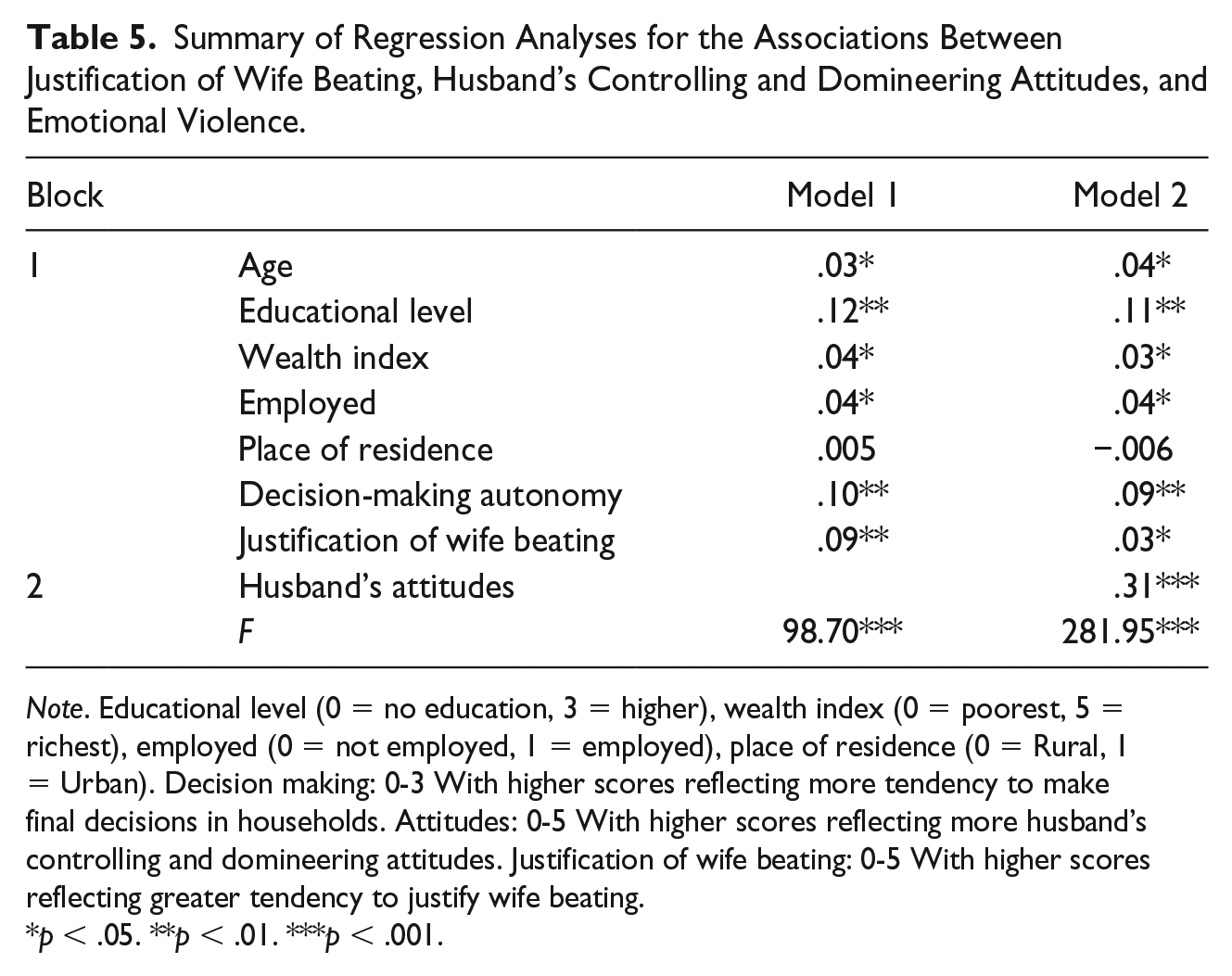
Note. Educational level (0 = no education, 3 = higher), wealth index (0 = poorest, 5 = richest), employed (0 = not employed, 1 = employed), place of residence (0 = Rural, 1 = Urban). Decision making: 0-3 With higher scores reflecting more tendency to make final decisions in households. Attitudes: 0-5 With higher scores reflecting more husband’s controlling and domineering attitudes. Justification of wife beating: 0-5 With higher scores reflecting greater tendency to justify wife beating.
p < .05. **p < .01. ***p < .001.
Discussion
This study examined ways through which attitudinal risks of justification of wife beating and husband’s controlling and domineering attitudes are linked to women’s IPV experience. It was hypothesized that husband’s controlling and domineering attitudes would influence the strength of the relationship between women’s justification of wife beating and the three types of IPV experience.
Consistent with hypotheses, the present findings indicate that women whose husbands endorsed controlling and domineering attitudes experienced more physical, sexual, and emotional violence. From a conceptual approach, this finding is in agreement with feminist theories on men’s controlling behavior (Anderson, 1997; Kimmel, 2011). In most of sub-Saharan Africa, structural arrangements put emphasis on gender by which men and women are organized to interact within various social networks. Gender relationships usually involve placing women in various social or occupational positions, favoring men to have more positions of power (Risman, 1998). In domestic and many other daily living, society utilizes gender to construct power differences between men and women by conferring authority on men in most interpersonal spheres. Husbands who have controlling attitudes tend to internalize and identify with cultural expectations that they need to show masculine characteristics in marital situations (Anderson, 1997). In a bid to bolster or shore up masculinity, or to prevent society from denigrating them as unmanly, husbands tend to control and dominate wives in daily engagements (Adams, 2007). Men with controlling attitudes often monitor and criticize women’s feminine identities and performance of stereotypic daily roles, such as dressing, appearance, home making, and caregiver skills (Hattery, 2009). Other researchers describe this phenomenon as “microregulation” of everyday women’s roles, in ways that controlling men tend to hold women accountable for performance (Stark, 2007). Women receive punishment from controlling men when women either resist to perform the roles or cannot adequately perform them. The present finding on the link between husband domineering and controlling attitudes and women’s report of IPV is consistent with extant literature. A previous nationally representative survey of the influence of husband’s domineering attitudes on women’s IPV experience in Kenya, showed that husband’s domineering attitude was a strong indicator of physical, sexual, and emotional violence in all the major ethnic groups in the country (Kimuna, Tenkorang, & Djamba, 2018). More specifically, women who indicated their husbands endorsed domineering attitudes were more likely to report experience of all the three types of violence. In accordance with the feminist theory, the present finding suggests that controlling and domineering husbands tend to activate the experience of IPV in their wives.
Previous research that examined justification of wife-beating variables and IPV experience of married women (Antai, 2011; Gage & Hutchinson, 2006; Nwabunike & Tenkorang, 2015; Yoshikawa et al., 2014) generally showed that women who approved of wife beating were more likely to experience husband-perpetrated physical, sexual, and emotional violence. Prior research observed that in patriarchal society, women are mostly socialized to believe that wife beating is a demonstration of a husband’s authority and love for his wife (Amoakohene, 2004; Jejeebhoy, 1998; Ofei-Aboagye, 1994). Consequently, women who internalize the norms are more likely to accept wife beating and unable to thwart the process that bring the phenomenon into marital encounters. The present finding extends the research by showing that justification of wife beating independently predict women’s physical, sexual, and emotional violence experience. However, the findings show that the effect of justification of wife beating persist on sexual and emotional violence (but not physical violence) among married women in the context of husbands controlling and domineering attitudes. Interpreted in the light of prior research, an individual is capable of simultaneously holding multiple attitudes concerning various objects and persons in an environment (Eagly & Chaiken, 1993; Fazio, 1986). Such attitudes have differential strength to influence a particular behavior (Petty & Krosnick, 1995). In the present study, the two attitudinal risk variables of justification of wife beating and husband controlling and domineering attitudes had impact on IPV in various ways. Compared with justification of wife beating, husband’s controlling and domineering attitudes had stronger predictive impact on women’s experience of physical, sexual, and emotional violence. However, women who approve of wife beating continue to have more experience of sexual and emotional violence when exposed to husbands who endorse controlling and domineering attitudes.
These findings suggest that women who experience partner violence due to their husband’s controlling and domineering attitudes are likely to experience more sexual and emotional violence, if they also hold wife beating justifying attitudes. Considered within the context of the general aggression model, if attitudes of husbands are controlling and domineering, wives who approve wife beating will be more likely to experience violence-promoting motivational states (DeWall, Anderson, & Bushman, 2011). Presumably, attitudes concerning acceptance of wife beating may make women acquiesce to actual partner violence based on a perception that include a belief that the society expects husbands to correct women through partner violence. There is, however, a need to subject the hypothesized interpretation to empirical verification. Future research is required to elucidate the nature of cognitive or other factors relevant as mediating processes that account for the link between women’s wife beating justifying attitudes and experience of partner violence.
There are several implications of this study. Women who approve of wife beating are likely to experience husband-perpetrated physical, sexual, and emotional violence in marital relationships, and these findings suggest that women’s sexual and emotional experience may persist under this condition if their husbands endorse controlling and domineering attitudes. As a priority, IPV prevention interventions are needed. In many low-income countries, such as sub-Saharan Africa, existing evidence shows that there is increasing emphasis on prevention of IPV against women through programs that address underlying risk factors that condone violence among others (Ellsberg et al., 2015). Using gender approaches, programs that empower men and women to improve knowledge, attitudes, relationship skills, and communication have been shown to reduce IPV in couples and men’s attitudes toward violence (Gupta et al., 2013; Hossain et al., 2014; Jewkes et al., 2008). At community level, relevant practitioners may be trained to identify risk attitudes of husbands and wives and utilize them in IPV reduction interventions. In all, these findings provide support for IPV reduction strategies that connect couples with interventions that address both husband and wife risk attitudes.
There are a number of strengths of the present study. Married women aged 15 to 49 years were assessed, which is a time period with increased IPV risks. The study also focused on a sample of nationally representative Nigerian married women, a population for whom very little is known about the interplay between husband controlling and domineering attitudes, justification of wife beating, and the three types of partner violence. In addition, the IPV scales administered in the current study are widely used, well-validated, and reliable assessment of physical, sexual, and emotional violence. Our study was also able to control for salient demographic and socioeconomic factors related to IPV experience of married women.
Despite the large number of participants (N = 19,360) and the various measurements utilized, the study was not without limitations. Although we controlled for a number of factors (age, educational level, wealth index, employment status, place of residence, and decision-making autonomy), there is the possibility of unmeasured confounding. Furthermore, data of the current study were cross-sectional, such that causal relations among the variables could not be determined. It is also relevant to the use of panel data and the analysis of how justification of wife-beating attitudes evolve over time are necessary to better understand how the justification attitudes of women influences their risk of IPV. In addition, the current study lacks objective measures of IPV. Use of self-reports for measuring IPV has been common also in previous studies. There is a need for more studies that include objective measures of IPV where feasible. Such measures can be used to reduce the possibilities of recall biases (Kahneman & Krueger, 2006). The use of objective measures of IPV is also appropriate to enable more accurate disclosure related to violence victimization and perpetration (Garcia-Moreno, Jansen, Ellsberg, Heise, & Watts, 2006).
To conclude, the current study showed that both women’s justification of wife beating and controlling and domineering husband attitudes had some associations with IPV variables. Women who approve of wife beating are likely to experience husband-perpetrated physical, sexual, and emotional violence in marital relationships, and these findings suggest that women’s sexual and emotional experience may persist under this condition if their husbands endorse controlling and domineering attitudes.
Footnotes
Declaration of Conflicting Interests
The author(s) declared no potential conflicts of interest with respect to the research, authorship, and/or publication of this article.
Funding
The author(s) received no financial support for the research, authorship, and/or publication of this article.
