




Abstract
Polygyny has shown a positive association with intimate partner violence, yet the nature and mechanisms of this association are not well understood. This study uses data from rural Mozambique to distinguish women in polygynous unions by rank and coresidence. Findings show that senior wives report higher rates of violence than their junior wife and monogamously married counterparts. At the same time, no difference is detected between junior wives and women in monogamous marriages. Additionally, the analysis finds that polygynously married women living away from their cowives report higher rates of violence than both women coresiding with cowives and women in monogamous unions, while the difference between the latter two categories is not statistically significant. However, the results also indicate that senior wives living away from their cowives face particularly high risks of violence. These findings illustrate the social complexity of polygynous marriages and resulting differential vulnerabilities of women in them.
Introduction
Intimate partner violence (IPV) is a pervasive global problem. Approximately 30% of women aged 15 and older around the world have experienced physical and/or sexual IPV in their lifetime (Devries et al., 2013). IPV is associated with worsening mental and physical well-being (e.g., Beydoun, Beydoun, Kaufman, Lo, & Zonderman, 2012; Dillon, Hussain, Loxton, & Rahman, 2013) as well as higher risks of death (Romero Mendoza et al., 2018). Polygyny, a marital structure common in sub-Saharan Africa, especially in its rural parts, is strongly associated with heightened rates of IPV (Amo-Adjei & Tuoyire, 2016; Uthman, Lawoko, & Moradi, 2010), and understanding the complexities of polygynous unions and their role in the production and perpetuation of IPV is critical to reducing it. However, most research showing that women in polygynous unions are at higher risks of reporting IPV relies on a dichotomous measure of marriage type with monogamy serving as the reference group, and sparse evidence exists on how cowives’ relative position in the marriage as well as their demographic characteristics may affect the way they are treated by their husbands (Jankowiak, Sudakov, & Wilreker, 2005). Yet, cowives’ rank and residential location are important in shaping the ways in which women interact with each other and with their husbands.
In sub-Saharan African contexts like Mozambique, where nearly 20% of married women aged 15 to 49 years are in polygynous unions (Ministerio da Saude, Instituto Nacional de Estatística, & ICF International [MISAU, INE, & ICFI], 2013, p. 63) and 33% of them report having been victims of physical violence (MISAU, INE, & ICFI, 2013, p. 258), understanding the intricacies of polygynous marriages and their relationship with IPV is critical to addressing IPV’s associated health and mortality risks. In this study, we extend current research relating IPV and polygyny by distinguishing women in polygynous unions by rank and place of residence. While IPV may involve physical, sexual, or emotional violence, we focus on physical IPV, the most widespread and the most clearly measured form of IPV (henceforth we refer to physical IPV simply as IPV). Our results suggest that women who have senior rank in polygynous unions are more likely to report experiences of IPV than both junior wives and monogamously married women, and that senior wives living apart from other cowives are especially vulnerable.
Background
Partner violence in many contexts serves to reinforce existing gendered power structures (e.g., Jakobsen, 2014; Jewkes et al., 2015; Weitzman, 2014). In Mozambique, about one in five men and women surveyed in the Demographic and Health Survey agreed that wife beating is a justified response to insubordinate behavior (MISAU, INE, & ICFI, 2013, pp. 239-240). These views reflect broader gender inequalities in that country and across the subcontinent that are entrenched in the dominant marital systems. Polygynous marriage, in particular, entails a hierarchy that supports a traditional gender ideology of male decision making and female subordination, which, in turn, may amplify risks of IPV.
Although plural marriages have existed to some degree in nearly all cultures (Zeitzen, 2008), polygyny is a particularly prominent feature of traditional marriage in many sub-Saharan societies (Lesthaeghe, Kaufmann, & Meekers, 1986). Despite many colonial and independent governments’ efforts to combat polygyny through legal and religious codes and some decline in polygyny levels in recent decades, the institution of polygyny in sub-Saharan Africa has shown remarkable persistence (Fenske, 2015), with polygyny rates ranging from 6% of married women in Namibia to 48% in Guinea (Chae & Agadjanian, 2019). Rural areas of the subcontinent tend to have higher rates of polygyny than urban areas (Jacoby, 1995).
Traditionally, polygyny is seen as an adaptive practice that enhances the productive and reproductive capacities of agricultural households (Jacoby, 1995). Polygynous marriage also signals to others that the husband can afford a large family and household (Wittrup, 1990; Zeitzen, 2008). Not surprisingly, then, polygynous men are more likely than monogamous men to view their wives as acquisitions (McCloskey, Williams, & Larsen, 2005). Moreover, compared with monogamously married women, women in polygynous unions usually rely more on their husbands for access to resources (Kalmuss & Straus, 1982; Yount & Li, 2009) and are under greater authority and decision-making power of their husbands and in-laws (Adams & Castle, 1994; Farrell, Masquelier, Tissot, & Bertrand, 2014). Consequently, partner inequality is typically more pronounced in polygynous marriages than in monogamous ones.
Wives’ reliance on their husbands for access to resources often leads to heightened risks of IPV (Kalmuss & Straus, 1982; Yount, 2005; Yount & Li, 2009), and there is a strong relationship between polygyny and acceptability of IPV (Amo-Adjei & Tuoyire, 2016) as well as a higher likelihood of reporting violence (Abramsky et al., 2011; Uthman et al., 2010). Amo-Adjei and Tuoyire (2016) found that polygynously married women in Ghana were significantly more likely to approve of wife beating compared with monogamously married women. Uthman et al. (2010) examined factors associated with IPV in 17 sub-Saharan African countries and found that women whose husband has multiple wives were more likely to accept it. Ickowitz and Mohanty (2015) reported that polygynously married women in Ghana were more likely than monogamously married women to experience IPV including slapping, kicking, verbal threats, and humiliation. In a study in Uganda, female focus group participants reflecting on IPV opined that women in polygynous marriages were most likely targets; the participants cited neglect, jealousy, and unequal love as common reasons for such violence (Karamagi, Tumwine, Tylleskar, & Heggenhougen, 2006).
Residential arrangements for women in both monogamous and polygynous unions in sub-Saharan Africa vary. In polygynous unions specifically, cowives may live in the same compound or they may live separately, either within the same village or farther away, usually at the husband’s discretion (Zeitzen, 2008). For families that can afford it, adjusting living arrangements to provide wives with their own accommodations mitigates tensions and hostility among wives (Jankowiak et al., 2005). Indeed, well-functioning polygynous families attribute their viability, at least in part, to having wives living in separate households (Slonim-Nevo & Al-Krenawi, 2006). Polygynous men whose wives live apart may also enjoy higher prestige relative to those whose wives live together (Wittrup, 1990).
Hierarchies of wives within polygynous unions have deep historical roots; one early ethnographic account from southern Mozambique describes the first, or senior wife as the “true” wife (Junod, 1912). Senior wives are typically older, as one major appeal of marrying an additional wife is the prospect of acquiring a younger, sexually more attractive, and more fertile and healthy female. Men may also marry additional wives in response to marital problems (e.g., childlessness or marital discord) rather than in a quest to assert affluence and status (Nwoye, 2007). In low-income settings such as our study site, chronic conditions associated with aging develop earlier than in high-income settings and may impair women’s productive capacity, thus also influencing men’s decision to seek additional wives.
Husbands often display emotional and/or sexual favoritism despite traditional expectations of fair treatment of cowives (Bove & Valeggia, 2009; Meekers & Franklin, 1995). Regardless of age, the senior wife typically enjoys higher status than junior wives and holds at least nominal authority over them (Gage-Brandon, 1992). First wives also often elicit a higher bride price and experience an extended period of monogamy during their prime reproductive years, both of which may further enhance the status of the first wife as additional (junior) wives enter the union (Gibson & Mace, 2006). Additionally, Matz (2016) found in Ethiopia that highly productive women are more likely to become first wives and disproportionately contribute to household income relative to lower-ranking wives, and thus, senior wives and their children may experience better treatment overall.
However, senior wives may be subject to mistreatment when new, more sexually attractive women enter the union. For example, research in rural Mali showed that spousal favoritism translates into differential treatment in the case of illness—senior wives were less likely to be accompanied to a healer by their husbands than were junior wives or only wives, even though there was no difference in payments rendered to healers for services (Bove, Vala-Haynes, & Valeggia, 2014). However, it has also been argued that problems arising in polygynous unions are not caused by the institution itself but rather by deviations from the traditional ideal in rapidly changing social environments, which often lead to abandonment or mistreatment of senior wives in favor of junior wives (Nnaemeka, 2005).
No prior research addressed the association between spousal residential arrangements and risks of physical violence in Africa, but research on the role of third party presence in violent domestic situations in Western settings, however sparse, indicates that the presence of another adult in the household may reduce the likelihood that women will experience violence compared with situations of social isolation (Wilkinson & Hamerschlag, 2005). Berk, Berk, Loseke, and Rauma (1983) argued that victims of IPV experience less severe injuries in the presence of a third party, which they described as a deterrent to extreme violence. In Middle Eastern and sub-Saharan African contexts, limited research has shown mixed effects of the presence of extended family on the risks of IPV. In Jordan, for example, while supportive extended family members may help reduce risks of violence, less supportive family members may be of little assistance (Clark, Silverman, Shahrouri, Everson-Rose, & Groce, 2010). In a study of female immigrants from Ghana and Nigeria in Australia, participants reported that informal extended family networks in their home countries played important roles as mediators during instances of IPV (Ogunsiji, Wilkes, Jackson, & Peters, 2012).
Hypotheses
Guided by the extant research, we formulate and test the following hypotheses. First, based on the reviewed literature on polygyny and IPV, we hypothesize that women in polygynous unions will be more likely to report IPV than their monogamously married counterparts. (Hypothesis 1). However, connecting the literature to the evidence on the contemporary evolution of the institution of polygyny and its possible implications for differences in the ways senior and junior wives are treated by their husbands, we propose two alternative hypotheses. First, if senior wives’ traditionally higher status has a protective effect, one can expect that senior wives should be less likely to report violence by their husbands (Hypothesis 2a). Yet, considering that polygynous unions increasingly reflect the reorientation of husbands’ sexual and social preferences toward junior wives, senior wives should, on the contrary, be more likely to report IPV than their junior counterparts (Hypothesis 2b).
Furthermore, we examine the association of cowives’ residential arrangements with reports of IPV. We argue that the presence of a coresident cowife, despite potential interwife tensions intensified by their proximity, should serve as a deterrent against IPV. Of course, specific residential arrangements of polygynous marriages may also reflect the nature of the relationship between the husband and his different wives. Regardless of the causal sequence, however, we hypothesize that cowives who live together will be less likely to report IPV than cowives who live apart (Hypothesis 3).
Finally, we include an exploratory hypothesis to assess the importance of rank and residence of polygynously married women jointly. We hypothesize that IPV risks for women who live away from their cowives will vary by polygyny rank, although we do not hypothesize directionality (Hypothesis 4).
Setting
Data for our analysis come from rural Mozambique, a country in Southeast Africa with a population of approximately 30 million (World Bank, 2017). After gaining independence from Portugal in 1975, Mozambique experienced a devastating 16-year civil war that ended in 1992. Despite remarkable economic progress with an average economic growth of 7% per year from 2005 to 2014 (UN-Mozambique, 2016), poverty reduction has occurred at a much slower rate; nearly 60% of the country’s population lives under the international poverty line of $1.25 per day (UNICEF, 2012). These challenges are exacerbated in rural areas where access to safe water, electricity, latrines, health services, and primary and secondary education is still severely limited (Fox, Bardasi, & Van den Broeck, 2005).
Our data were collected in rural areas of Mozambique’s southern Gaza province. The mainstay of the local economy is subsistence agriculture with most farming work performed by women. The area is characterized by a high level of male labor out-migration, mostly to neighboring South Africa. The area is predominantly Christian with considerable denominational diversity. Local society is traditionally patrilineal—an important risk factor for IPV in sub-Saharan African contexts (Asiedu, 2016)—with entrenched and pervasive gender inequality (Loforte, 2000). Marriage is nearly universal, virilocal and bridewealth based. Polygyny is common: According to the Mozambique DHS, only 59.8% of currently married women in Gaza were certain that their husband did not have another wife (MISAU, INE, & ICFI, 2013). As in other mainly Christian parts of the subcontinent, polygyny persists despite most Christian churches’ opposition to it (Agadjanian, 2019). Rates of marital dissolution in the area are high: A recent study using data from the same longitudinal project as ours reported that 13% of married women interviewed in 2006 were divorced or separated by 2009 (Agadjanian & Hayford, 2018).
Data and Method
Data
The data for the current study come primarily from Wave 3 of a longitudinal population-based survey of ever-married women conducted in in 56 villages of four rural districts (with a total area of 5,900 square miles and a total population of circa 700,000) of Gaza Province in southern Mozambique. The initial wave was carried out in 2006 and included standardized interviews with a probability sample of 1,680 married women aged 18 to 40 years. The sample was reinterviewed in 2009 (Wave 2) and 2011 (Wave 3). For respondents who were absent or refused in the second and third waves, women from the same communities with similar characteristics were randomly selected and added to the sample to prevent sample attrition. All waves had a participation rate more than 95%, and 77% of the original 2006 sample successfully reinterviewed in Wave 3. Data collection and analysis were approved by the Institutional Review Boards of The University of Kansas.
Among other characteristics, the survey collected information not only on monogamous versus polygynous status of respondents’ marriages but also on rank (first, second, third, etc., wife) of polygynously married women as well as their coresidence with other cowives. Several variables used in the analysis were gleaned from Waves 1 and 2 of the survey to capture patterns over time. The analysis is limited to women who were interviewed in all three waves and who were in a marital union, whether fully formalized or not, at the time of Wave 3, resulting in a final analytical sample of 1,429.
Method
To test our four hypotheses, we fit four multilevel binomial logistic regression models. In constructing the models, likelihood ratio tests are used to test for significant improvement in model fit resulting from the addition of the corresponding polygyny predictors relative to a model that includes controls only. For our independent variables, we also perform pairwise comparisons to examine mean differences in the comparison groups. The first model includes a dichotomy of being in monogamous versus polygynous union (Hypothesis 1). The second and third models provide estimates for our two categorical polygyny variables of interest—rank and residential location, with monogamous marriage as the reference group and the different aspects of polygynous union as the comparison groups (Hypotheses 2a, 2b, and 3). The final model disaggregates polygynously married women both by rank and residential location with women in monogamous marriages as the reference group (Hypothesis 4).
The outcome variable is a dichotomy derived from a question on the experience of physical violence perpetrated by the current marital partner in Wave 3. All married survey respondents were asked the question: “Did your husband ever beat you up?” Those who answered “yes” are coded as 1, and those who responded “no” are coded as 0 (the reference category). We excluded women who responded, “don’t remember” (n = 7). We also excluded women who responded “no” to having experienced violence in Wave 3 but responded “yes” to having experienced violence in earlier waves (n = 298). We did so because reasons for a mismatch in reporting violence in an earlier wave but not in the later wave are unclear: for example, women’s past reports of violence may have referred to a different partner; women may not remember previous instances of violence, or women may have reported violence in earlier waves but choose not to report violence in subsequent waves or reinterpret earlier instances of violence as nonviolent acts.
Reflecting our hypotheses, the predictors are polygyny status of marriage, the wife rank in the polygynous union, and coresidence with cowives. First, we created a dichotomous monogamous/polygynous variable differentiating between the reference group—those in a monogamous marriage—and those in a polygynous marriage. Second, within the polygynously married subsample, we use polygyny rank to separate senior and junior wives and compare each of these two categories to the monogamous reference group. In unions with more than two wives, the woman is coded as “senior” if she was the first wife. Women who reported being the second, third, or fourth wife are coded as “junior” wives. Third, a cowife residence variable distinguishes those polygynously married respondents who lived in the same household (residential compound) with their cowives and those who lived in different households from them; monogamously married women are again the reference. For those women with multiple cowives, respondents who had at least one cowife living in the same household are coded as “in same household.” Finally, we disaggregate women in polygynous unions by both rank and location. Monogamously married women are the reference group with comparison groups being senior women who lived with cowives, senior women who lived away from cowives, junior women who lived with cowives, and junior women who lived away from cowives. Just more than a quarter of the sample, 26%, were in a polygynous union, with senior and junior wives evenly divided. Slightly more polygynously married women in the sample lived away from their cowives (53%) than coresided (47%).
We include several social and demographic characteristics as controls. Respondent’s age is zeroed at 21 to reflect the minimum age of the sample. Age has been found to be negatively associated with increased likelihood of IPV (Ratner, 1992). In order to distinguish between formal and informal unions, we control for bridewealth status, the main mechanism of formalization of marriage in that context (Arnaldo, 2004) with no bridewealth paid being the reference category and the comparison groups being partial payment and full payment. We use a continuous measure of duration of current marriage in years (zeroed at 1, i.e., minimum duration) because of past findings showing that duration of marriage is positively associated with violence (Martin Tsui, Maitra, & Marinshaw, 1999). Guided by past research demonstrating a relationship between IPV and history of marital dissolution (Nouri et al., 2012), we include a binary variable for whether the respondent reported a previous marital union, with the reference being not previously married.
Number of children has shown an association with violence (Ruiz-Pérez et al., 2006); we therefore include a continuous variable for total number of living biological children. Evidence from similar settings suggests that women’s educational level is negatively associated with likelihood of reporting violence (Karamagi et al., 2006; Cau, 2017). We include education as a categorical variable with 0 years education as the reference group and two comparison groups reflecting Mozambique’s educational system—1 to 5 years of schooling (lower primary school) and 6 or more years (upper primary or above). We also control for religious affiliation as religion may be associated with IPV (Vakili, Nadrian, Fathipoor, Boniadi, & Morowatisharifabad, 2010). Religious affiliation is binarily coded with the reference group being “not affiliated with organized religion” and the comparison group being “affiliated with organized religion.”
We control for employment status; some research shows that women who are employed report higher risks of IPV (Ruiz-Pérez et al., 2006), while other research demonstrates that women who rely solely on their husbands’ earnings report higher rates of violence (Jewkes, Levin, & Penn-Kekana, 2002). Because women’s employment outside of subsistence agriculture in rural settings is often episodic and short-lasting, this variable was created using data from the three survey waves. For each wave, women were coded as employed or unemployed outside of subsistence farming. Women were then categorized as “unemployed across waves (reference), “employed across waves,” and “employed in some waves and unemployed in others.” We also include woman’s decision-making autonomy; although some research suggests that women’s increased autonomy results in lower rates of violence (Regassa, 2016), other studies argue that renegotiated power dynamics as a result of increased women’s autonomy lead to higher risks of experiencing IPV (Koenig, Ahmed, Hossain, & Khorshed Alam Mozumder, 2003). Autonomy was operationalized as a mean autonomy score across the three waves. The autonomy scale was constructed from eight statements regarding the need to ask a spouse or his adult family member for permission to perform various activities, including getting a job, visiting a friend, and having an HIV test. The autonomy scale is a continuous measure with scores ranging from 0 to 16. We acknowledge that women’s decision-making autonomy is related to other characteristics, but previous research has found that autonomy is not fully explained by those characteristics (e.g., Agadjanian & Hayford, 2018).
Given the importance of male labor out-migration in the study setting, we control for husband’s migration by including the cumulative duration of migration as reported in Wave 3 (2011). Finally, household socioeconomic status has been shown to affect the likelihood of IPV (Regassa, 2016); as a proxy for it, we include mean reported household assets across the three waves. Mean assets are weighted and scaled from 0 to 19 with possible reported assets of radio, television, refrigerator, metal or wooden bed with mattress, telephone, bicycle, motorcycle, automobile, plow, and water tank.
At the exploratory stage, we tested various alternative specifications of the dependent variable and the analytic sample, but the results were largely unaffected across the different specifications. For example, we replaced reported violence in 2011 with an “ever-reported violence across waves” variable to assess the effects of polygyny for women who reported IPV at least once across the three waves. We also included husband’s educational attainment as a covariate, as research shows a significant decrease in the likelihood of IPV for women who have more educated husbands (e.g., Mundhra, Singh, Kaushik, & Mendiratta, 2016). However, the addition of husband’s education did not noticeably change the results. Because nearly 15% of women in the sample did not know their husband’s educational level, we chose not to present the results of the models with husband’s education (these results are available on request).
All the models are fitted as multilevel logistic regressions using Stata 14. Women are nested within their village of residence in 2011. We acknowledge four important limitations. First, it is possible that some respondents may have underreported their exposure to husband’s physical violence (e.g., due to circumstances of interview, recall, or social desirability bias). However, there is no reason to suspect that underreporting would differ across marriage types. Second, our dataset only has a single, dichotomous measure of IPV. Real-life experiences of IPV are complex and could include instances of sexual, psychological, or verbal abuse. Yet, we believe that the examined type of IPV—physical violence—is more likely to be remembered and reported than more culturally ambiguous types. Third, we cannot account for violence, especially in its extreme form, that may have triggered marital dissolution. Yet, while our analyses may underestimate the scale of violence, they are unlikely to misrepresent it. Finally, polygynous rank may be subject to issues of concordance and missing information, a limitation of all polygyny research in sub-Saharan Africa (Omariba & Boyle, 2007). For example, some women in nonformalized partnerships may report being wives, some junior wives may report being senior wives, or some senior wives may report being monogamously married. However, our sample’s polygyny rates are close to those previously observed in Mozambique (e.g., Arnaldo, 2004; MISAU, INE, & ICFI, 2013, p. 63), which instills confidence in the accuracy of union characteristics in our sample.
Results
Table 1 presents the distribution of respondents who reported experience of IPV across the marital characteristics of interest. Overall, 38% of respondents reported having experienced IPV. Senior wives in polygynous marriages reported violence at a higher rate than monogamously married women and junior wives: 58% compared with 34% and 36%, respectively. Rates of reported violence were similar for women who lived in separate households from their cowives (46%) and those who lived in the same household as their cowives (47%). However, when we break down the polygynous subsample by place of residence, senior wives living separately from other cowives are more likely to report experience of IPV than are senior wives living in the same household (64% vs. 52%). Junior wives show the opposite pattern.
Reporting Intimate Partner Violence in Wave 3, by Marital and Residential Characteristics (Percentage).
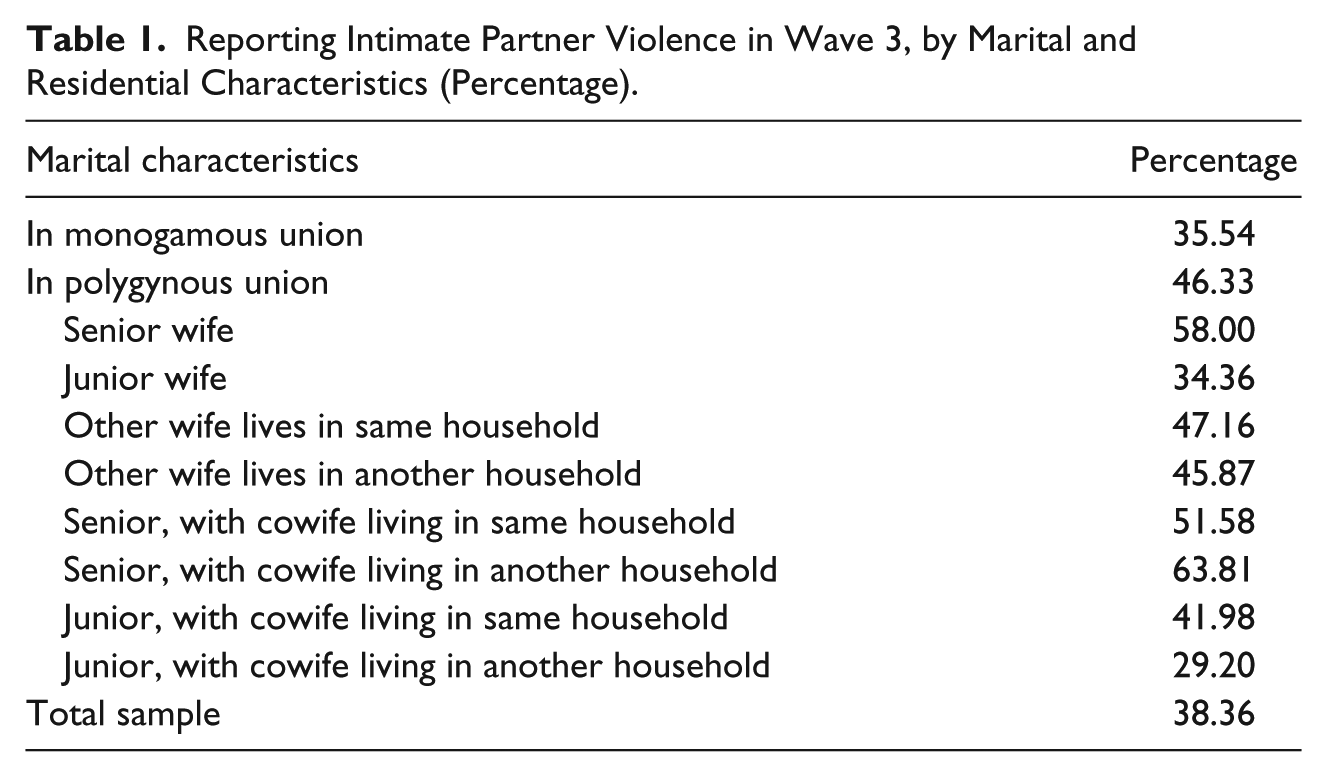
Table 2 shows the multivariable results. These results are reported as odds ratios (OR). All models that include the polygyny-related predictors provided statistically significant improvement in model fit relative to a model that only included controls (not shown). In Model 1, we test Hypothesis 1 by comparing women in monogamous and polygynous unions. In this model, being in a polygynous marriage was associated with a higher likelihood of IPV (OR = 1.50) net of other characteristics. Hypothesis 1 is therefore supported.
Multilevel Binomial Logistic Regression of Reported Intimate Partner Violence in Wave 3 (Odds Ratios).

Note. N = 1,429.
p < .05. **p < .01. ***p < .001.
Model 2 tests our alternative Hypotheses, 2a and 2b; that is, (a) women holding senior rank will be less likely to report violence and (b) women holding senior rank will be more likely to report violence. Distinguishing between senior- and junior-rank wives in comparison to their monogamously married counterparts suggests that women of senior rank have a significantly higher likelihood of reporting violence than not only monogamously married women but also junior wives, ceteris paribus. Being a senior wife is associated with a higher probability of reporting violence than being in a monogamous union (OR = 2.20), and senior wives also have a higher likelihood of reporting violence than junior wives (OR = 2.40 p < .01; not shown but available on request). In comparison, we find no statistically significant difference in reported violence between junior wives and monogamously married women. Hypothesis 2b is supported.
To test Hypothesis 3, in Model 3, we separated the polygynously married women who coreside with at least one other wife from those who live away from cowives. Conforming to our hypothesis, women living away from their cowives have a significantly higher likelihood of reporting violence than monogamously married women (OR = 1.84, p < .01). Polygynously married women living away from cowives also were more likely to report being victims of IPV compared with women who coresided with at least one cowife, even though after controlling for other factors the difference becomes marginally significant (OR = 1.51, p < .10; not shown but available on request). These results lend support to Hypothesis 3.
In Model 4, we disaggregate the polygynously married women both by rank and location to explore whether senior wives who live away from their cowives will be disadvantaged relative to senior wives who live with their cowives (Hypothesis 4). This model provides evidence that both rank and location contribute uniquely to estimates of risk of IPV. Women of senior rank in polygynous unions whose cowife(s) lives in another household are significantly more likely to report violence than monogamously married women (OR = 3.29). Furthermore, pairwise comparisons show that senior women who live away from their cowives also report higher rates of violence than all other categories of polygynously married women (not shown but available on request). At the same time, the difference in reporting IPV between coresident senior wives and coresident junior wives is not statistically significant (not shown).
In supplementary analyses, we separated junior wives by whether they were second wives (n = 142) or third and higher order wives (n = 35). We found that the difference in likelihood of reported IPV between senior and third wives is starker than the difference between senior and second wives (not shown but available on request). We also fitted models restricted to women with children, that is, excluding wives who may be newcomers to the marriage or who are infecund (a likely trigger of abuse in that context), and we also explicitly tested for effects of having more children; the results, however, remain largely unchanged.
We also estimated logistic regressions limiting the sample to women who were monogamous in 2009 to address the possibility that polygynously married wives could be reporting violence that occurred prior to transitioning from a monogamous to polygynous marriage. Unadjusted values provide evidence that women who transitioned into polygyny between 2009 and 2011 face higher risks of violence. For example, 49% of women who transitioned from monogamy to polygyny between 2009 and 2011 reported violence, contrasted with 31% among women who were monogamous in both 2009 and 2011. Full adjusted models also support these findings; once-monogamously married women whose husband married an additional wife between the waves have a significantly higher likelihood of reporting violence than monogamously married women (not shown but available on request).
Discussion and Conclusion
Our study offers unique insights into the complexities of polygynous unions and their potential implications for women’s exposure to risks of IPV. Although as in other IPV-focused research, we could not fully ascertain the causal mechanisms that lead to IPV, the patterns of the experience of violence among women in polygynous and monogamous unions that our analyses detected provide important guidance for a better understanding of connections between marital gender hierarchies and women’s IPV exposure, and consequently for reducing IPV-related health and mortality risks. Furthermore, elucidating differences in risks of violence across marital types provides evidence to address health and mortality disparities.
Prior research on polygyny and IPV, however limited, typically relied on a dichotomous measure of polygyny status to argue that polygyny increases women’s IPV risks. In this study, to capture the complexities of marital arrangements and experiences, we disaggregated women in polygynous unions based on seniority as well as separated women who live with their cowives from those who live apart to understand whether women in polygynous unions experience differential risks of violence depending on their relative position within the union.
Disaggregating polygynously married women by rank indicates no statistically significant difference in rates of reported violence for junior wives and women in monogamous marriages. However, women who hold senior rank in polygynous unions report higher rates of violence than both junior wives and monogamous women. At the same time, our findings do not mean to imply that junior wives or monogamously married women are immune to the risk of IPV.
Despite the traditional expectation that polygynous husbands treat their wives equitably, in practice they often give preferential treatment to some wives over others (Bove & Valeggia, 2009). Moreover, such preferential treatment often favors junior wives over their senior counterparts, despite the latter’s supposedly high status and authority. Although past studies do not connect this preferential treatment to violence exposure, our findings suggest that junior wives share a certain level of security in polygynous marriages that their senior counterparts do not. It is possible that senior wives—because of perceived authority and higher status in the marital union—are more likely to voice discontent with their husbands’ actions, especially those that explicitly or implicitly favor junior wives, and accordingly are more likely to be punished for doing so. The common belief that men must engage in physical violence to retain control of the household or risk losing their status as household head (Jakobsen, 2014) may therefore be particularly relevant to senior wives, whose relatively high status and authority over their cowives may translate into a threat to the husband’s supremacy.
Senior wives may not be as able as their junior counterparts to perform farm work or please their husbands sexually, which may also provoke violence against them. Given that polygynous unions are often seen as means to increase offspring, husbands may also give preferential treatment to junior wives if they are perceived to have greater reproductive potential. With this, junior wives may be more likely to be pregnant or take care of small children, which could offer them some protections against violence. Interestingly, however, we do not see significant differences in rates of reported violence by number of children. These results persisted in additional analyses in which we excluded women who did not have children. Future research should compare relative fertility rates of cowives to explore the potential connections between childbearing and IPV in polygynous unions.
Our finding that senior wives report violence at higher rates than do junior wives could be attributed in part to an exacerbation of a preexisting negative dynamic between the senior wife and husband prior to the arrival of a new cowife (Nwoye, 2007). Importantly, however, even when no marital tensions precede the arrival of a new wife, competition with junior wives can push senior-ranking wives out of their husbands’ favor (Farrell et al., 2014). As a new cowife joins the marriage, husbands may be more likely to express their discontent with the senior wife by resorting to violence (cf. McCloskey et al., 2005). At the same time, our finding that senior wives report IPV at higher rates than monogamously married women does not distinguish whether the violence occurred before or after an additional wife(s) was added. As such, this finding could be interpreted as indicating both preexisting negative marital dynamics and of a heightened likelihood of IPV against senior wives after additional wives are brought into the marriage. Although a small number of women in our sample transitioned from monogamous to polygynous unions between 2009 and 2011, our supplementary analyses provide some evidence that reported violence and onset of a polygynous union are closely related. However, these analyses cannot capture the possible selection of violence-prone men into polygynous unions.
We also found that polygynously married women, regardless of rank, who lived with their cowives did not differ in rates of reported IPV from women in monogamous marriages, once other factors were accounted for. In comparison, senior wives who lived away from cowives reported higher rates of violence than both monogamously married women and women who coresided with their cowives, again suggesting that polygynous marriage itself is not an inevitable pathway to violence. Of course, we acknowledge that both physical separation between spouses and the addition of junior wives may reflect the deterioration in the marital relationship, with violence being a possible component of that deterioration. However, another possible explanation for lower likelihoods of reported violence among senior wives whose junior counterparts live within the same household could be that in such arrangements cowives may cooperate to protect both own and children’s safety and well-being (cf. Dorjahn, 1988). And generally, the presence of a third party may deter husbands from perpetrating acts of violence (cf., Berk et al., 1983). Importantly, coresidence seems to benefit senior but not junior cowives (the difference between coresident and noncoresident junior wives was not significant in adjusted models). One possible explanation could be that benefits of junior status may supersede potential consequences of housing arrangements. Yet, we also recognize that residential separation of senior and junior wives may reflect two mirroring tendencies—ostracization of the former and preferential treatment of the latter. Although these suppositions cannot be directly tested with our data, they point to important directions for further research.
Finally, we should note the associations of IPV with other individual and household characteristics that our analysis detected. Thus, increased marital duration is associated with greater probability of reported violence. Interestingly, women with fully paid bridewealth have a lower likelihood of reported violence than women whose bridewealth has not been paid fully or at all. Marital payments, we suggest, may silence women’s voices and reduce their ability to act against the established gender hierarchy—and thus reduce the risks of husband’s physical violence that often arises from such actions. Net of other factors, age is negatively associated with reporting IPV. We also found that, aligned with research from similar settings, increased educational attainment is associated with decreased risks of IPV (e.g., Karamagi et al., 2006). Contrary to past research showing that higher socioeconomic status is associated with lower risks of IPV (e.g., Ackerson & Subramanian, 2008), we detected a modest, yet statistically significant, positive net association between the asset score and the likelihood of reporting IPV across the models. We propose that in a setting where the husband fully controls household assets, such assets may indicate his ability to assert his dominant household position and specifically use violence against his wife(s) in reinforcing this position. Finally, women affiliated with organized religion are significantly less likely to report violence than nonaffiliated women, net of other factors. These associations require further investigation that lies outside the scope of the current study.
Footnotes
Declaration of Conflicting Interests
The author(s) declared no potential conflicts of interest with respect to the research, authorship, and/or publication of this article.
Funding
The author(s) disclosed receipt of the following financial support for the research, authorship, and/or publication of this article: Data collection for this study was funded by the Eunice Kennedy Shriver National Institute of Child Health and Human Development Grant # R01 HD058365 (Agadjanian, V., PI).
