



Abstract
Single parenthood is often approached as a problematic situation. People become single parents through divorce, separation, or bereavement and have to cope with this situation. These transitions to single parenthood lead to unforeseen problems with respect to the organization of the household. Nevertheless, there are also single parents for whom single parenthood is a positive story. These people are single parents by choice. Today, it is no longer necessary to have a partner to start a family, as people are able to choose to become single parents through sperm donation or adoption. Hertz (2006) argues that single parents by choice might have remained single due to circumstances, but nevertheless had a strong desire to become a parent. This means that single parents by choice offer a different perspective on single parenthood, as they voluntarily choose to become parents on their own. Nevertheless, single parents by choice face the same issues as other single parents: to combine their work responsibilities and their parental roles. In this paper, we explore how single parents by choice became parents, and how this transition affected their other preparations for parenthood. The central research question in this study is therefore: “How does the way in which single parents by choice become a parent affect the reorganization of their lives in the facilitation of single parenthood?” We used qualitative in-depth interviews with 20 single parents by choice to explore how they organized their work-family life before and after giving birth.
‘How often does she stay with you?’ ‘Well, always.’ ‘Always, always?’ ‘Of course, I am a single mother!’ ‘And they are never with their father?’ ‘No (laughs). I am a single parent by choice.’ ‘Oh, a choice mum, that’s good to know.’ ‘Yeah, I really wanted to become a mother, through an anonymous donor.’ (Pina, 46, single mother by choice for 7 years)
Introduction
Families are a focal point in many research domains (Cutas & Chan, 2012a). Cutas and Chan (2012b) argue that the basic assumption on which many theoretical frameworks on families are based is a constellation of a mother and father, romantically involved with each other, who together parent genetically derived, naturally conceived children. As the research grew, this image expanded, and a nuclear family became an entity with its own specific characteristics. A nuclear family comprises two partners who conceive a child and extend the family system by connecting their own two families (White & Klein, 2008). In addition to the creation of a family system, the new parents have new functional roles within the nuclear family (Feinberg, 2002). Parents exchange responsibilities that are often gendered, for example the classic male-breadwinner model, in which men take up an economic role while women run the household (Lamb, 2013; Perrone et al., 2009; White & Klein, 2008).
However, many life course transitions have changed the concept of families over a short period of time (Widmer, 2016). The classic nuclear family is no longer the only family type, nor is it the norm. New family types have arisen in the form of same-sex couples (Burt et al., 2010), divorced families (Goldscheider et al., 2015), reconstituted families (Pasteels & Mortelmans, 2013), or even transgender families (Dierckx et al., 2015). Either the agents or the constellation of the family differs from the classic view as described by Cutas and Chan (2012a), or the configuration has increased in complexity. This evolution has been termed the family kaleidoscope (Mortelmans et al., 2016). One new family constellation has received only limited attention from family researchers and is the focal point in this study: single parents by choice.
Single parenthood by choice is essentially different from the other family types discussed in the literature. It does not start from a nuclear family type but challenges the theoretical stance that assumes a family is begun by two people and that single parents have to adapt to a change in circumstances. Thus, the preparations single parents by choice make to start a family are fundamentally different. Nevertheless, the specific context may affect the pathways to parenthood and thus this preparation. The aim of this study is to gain a better understanding of this phenomenon and its theoretical underpinning. Moreover, as there are different pathways to becoming a single parent by choice, there is a large variation in it. Therefore, we focus on the research question: How does the way through which single parents by choice become a parent affect the reorganization of their lives in the facilitation of single parenthood? We can break down this question into two parts, with the first part concerning the different ways singles come to be a parent by choice, and the second concerned with how these single parents by choice prepare themselves for parenthood. The subdivision of the question is necessary, as the different contexts and agents involved in the various pathways affect the preparations people may make.
Theoretical Background
Although single parenthood by choice is not a new phenomenon, the research is still limited. Generally, three questions can be asked in the field. The first question concerns the choice people make: Why do people become a single parent by choice? This question was addressed by Hertz (2006), who found that the choice to be a parent was associated with starting a household more generally, despite not having a partner. “Choice mothers” were not career women who were lacking time for relationships, or feminists who were averse to men, as may be popularly believed. Instead, they were likely to be women who had reached a biological point of no return and had made a deliberate decision to have children. Therefore, we can refer to the choice of single parenthood as a normative event in the life course that is performed in a non-normative way (McCubbin & Figley, 2014). The second question that might be asked concerns the ways single people become pregnant. The transition to single parenthood by choice can take various forms. Zadeh et al. (2013) described those parents who, by choice, used sperm donation in order to become pregnant (via fertility clinics). An alternative method was described by Pasch and Holley (2015), who investigated adoption, while Hertz (2006) noted another method: women who looked for a way to become pregnant on their own or through a chance pregnancy.
In general, any voluntary decision by a woman to become pregnant in the knowledge that she will be the sole parent can be defined as single parenthood by choice. With respect to this process of becoming a single parent by choice, a third question can be asked that is a more practical concern for people who work in the field: “In which ways do single parents by choice reorganize their lives to facilitate single parenthood (and how can they be supported)?” As Hertz and Ferguson (1998) found, single parents by choice navigate through daily life using a combination of financial and social resources. They concluded that financially wealthy parents by choice would rather pay for the help required, while people with high levels of social resources would rather rely on their networks. According to Hertz and Ferguson (1998), single parents who have both kinds of resources, generally use multiple strategies. However, although Hertz and Ferguson described strategies used by single parents by choice in daily life, it is not known how the elements in the process leading to single parenthood affected the challenges they face. To understand how potential single parents prepare their transition to single parenthood, we investigate the context in which the transition of singles to parenthood takes place.
Single Parenthood by Choice in the Life Course
In general, an evolution in thinking about parenthood transitions took place before researchers came to frame parenthood as a normative event in the life course. Early research used a perspective introduced by LeMasters (1957), which depicted the transition to parenthood as a time of crisis because it was seen to impose many challenges. While the stress factors have also been confirmed in recent research, parenthood is usually no longer considered to be a time of crisis, which changes the perspective we might take on single parenthood by choice (Leavitt et al., 2017). Rossi (1968) argued that the term “crisis” is a misnomer, and that the concept of transition is more appropriate, as most parents successfully manage the reintegration of their personal and social roles. Therefore, the transition to parenthood is better described as a “normative event” in the life course (a term coined by McCubbin & Figley, 2014) rather than a non-normative event. The difference between normative and non-normative events concerns common experiences in the life course, while non-normative events are those that most people are unlikely to experience and that have a major impact on an individual’s life. By labelling the transition to parenthood a normative event, the field of parenthood studies shifted from a crisis perspective to the life course perspective (Bengtson & Allen, 1993). From the latter perspective, family transitions are studied as mainstream events within the life course, although heterogeneous life courses are recognized.
The framing of single parenthood by choice as a normative event may also be related to the notion of the social construction of the life course as conceived by LaRossa and Sinha (2006). Their approach to life course theory relies on four central assumptions. First, life course transitions are conceived by people as a process of change and are thus “constructed.” Second, a transition only becomes real through verbal and nonverbal significations. Third, a transition is not apparent as a moment frozen in time, but concerns a series of actions over time. Fourth, a transition is only recognizable in its subsequent results and requires “biographical” work.
In summary, the literature on parenthood transitions has moved from a crisis perspective to a perspective that describes the transition as a socially constructed normative event that occurs within the life course. According Hertz (2006), single parenthood by choice should also be understood within the social and normative context that urges people to parenthood at a certain point in their lifetime. Singles also reach a point in time in which they want to become parents and must choose a pathway to parenthood. The different agents along the pathway to parenthood may influence the preparations that single people make to facilitate single parenthood.
As single parenthood by choice is seen as a socially constructed transition (as is parenthood in general), this transition also has to be seen in its social, legal, and normative contexts (LaRossa & Sinha, 2006). This context in which parenthood preparation takes place also affects and guides the parental transition. According to Storrow (2006), procreative freedom is limited by clinical and legal gatekeeping. The two main goals of such gatekeeping are identified as parental fitness tests and decision-making in the best interests of the child. However, from a linked-lives perspective, we might consider that there is also a form of social gatekeeping, as actors in close proximity to the potential single parent may have an impact on norms and attitudes, which can either nudge or prohibit singles from becoming parents on their own. Gatekeepers may have a significant influence in the preparation process, as they can empower or contest the choice to have children. As these gatekeepers play such an important role in the decision-making process, we will also take into account their role in preparing potential single parents through various screening procedures.
The Belgian Context
While most research on single parenthood by choice has taken place in Anglo-Saxon countries and Spain, here we describe the Belgian context (Golombok et al., 2016; Hertz, 2006; Hertz et al., 2016; Jadva et al., 2009; Zadeh et al., 2013). Although various types of single parenthood by choice might have been prevalent in Belgium for some time, there has only been a legal context for medically assisted procreation since 1999 (Royal Decree, 1999). Subsequently, medically assisted procreation could be formally organized for the first time in 1999. In addition, on March 15, 2007, the law on medically assisted reproduction and the disposition of supernumerary embryos and gametes was introduced, further facilitating medically assisted procreation (Nys & Wuyts, 2007). Belgium was among the last countries in Europe to facilitate medically assisted procreation, and these laws were only passed during a brief period in which the Christian Democrats were not in power. 1
The main authority for making decisions in Belgium now lies with the patient and clinician. For this reason, there are many liberties in relation to initiating pregnancy procedures. The only legal boundary to medically assisted procreation concerns an age limit of 47 years. However, fertility specialists and clinics do have some power to refuse clients based on moral grounds. This now makes Belgium quite a liberal country with respect to medically assisted procreation as most power lies with the specialists. The agents responsible for all fertility decisions (both for couples and for singles) are primarily the fertility experts and the patients themselves. Nevertheless, because the legislation is so lean, the preparation process followed by single parents by choice remains ill defined by the legal framework.
At the time of writing, there are no numbers on single parenthood by choice in Belgium. It is also difficult to track, as not all single parents by choice take a clinical pathway to pregnancy. We will discuss this further.
Method
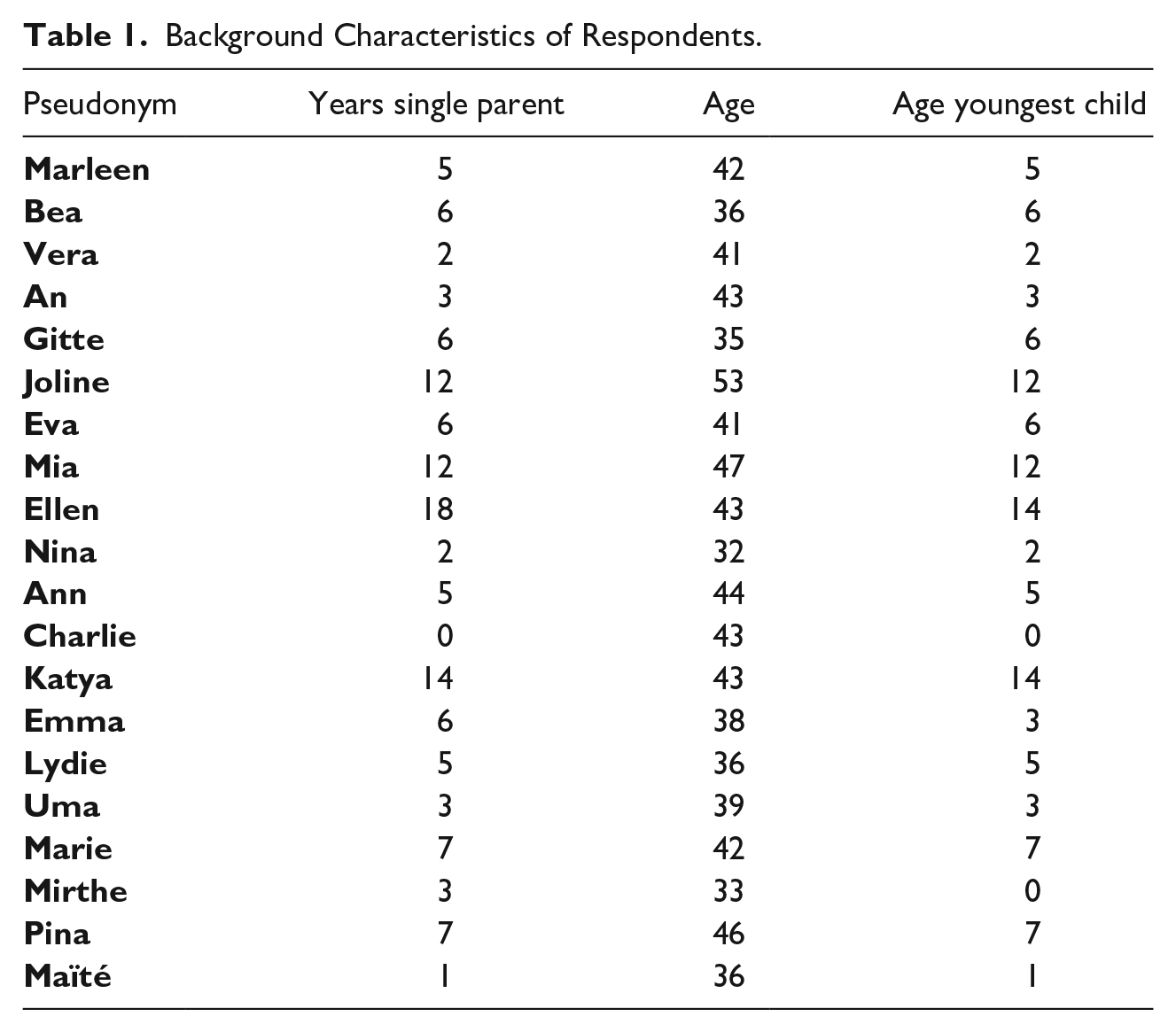
We conducted 20 in-depth interviews with single parents by choice. All of them were female, 2 with a mean age of 41 years (range 32–53 years). This group was a subsample of a larger sample population from a study on single parenthood in general. To be included in the sample, the respondents had to be the only adult in a household with children below the age of 18 years, or with children between 18 years and 24 years who were still students. The respondents were all working at least half-time. We used self-identification to categorize single parents by choice, which means that the individuals studied defined themselves as single parents by choice (which implies singleness during pregnancy and in giving birth). In this manner, we were able to open our research to the various ways of becoming a single parent by choice mentioned earlier. Table 1 presents the main characteristics of our interviewees.
Background Characteristics of Respondents.
A snowball sampling method was used to find participants for the study (Mortelmans, 2007). A request for participants was first made on social media, after which we asked whether interviewees knew other single parents by choice. In this way, we derived a random study population in which different types of single parents by choice became visible. The prevalence in our study population is not representative of the population of Belgium as a whole, as we found our respondents without using a random sampling framework.
In the interviews, we retrospectively asked about the participant’s approach to becoming a single parent. All of the interviews were transcribed after their completion. This allowed us to read the interviews systematically and identify the recurring themes. Using the interview transcripts, we first examined how each respondent became a single parent. These were the pathways we used in the results section. We found that the main recurring themes within the stories of becoming a single parent by choice were the following: choice, gatekeeping, preparation, and the other biological parent. For our study, we mainly focused on the relation between gatekeeping and the preparation for parenthood.
We used NVivo to restructure the interviews and analyze the transcripts (Mortelmans, 2011). Once we had identified four different pathways to single parenthood by choice, we categorized the interviews accordingly and then compared the elements of choice, gatekeeping, preparation, and the other parent in each pathway, identifying what was typical for each category.
Using the transcripts, fragments of the interviews were chosen to illustrate our findings. All of the respondents gave their informed consent and were given pseudonyms. Table 1 presents the background characteristics of the respondents. As there was a large range in years concerning the time that the respondents had been single parents, we were able to combine retrospective interviews that covered people who had already raised a child as a single parent by choice and others who could reflect on a pregnancy trajectory they had just undergone.
Results
In this article, we discuss how single parents by choice prepare for their life as a single parent. To do so, we follow the series of steps taken by single people to become single parents by choice, and subsequently we identify various aspects of the preparation. We take this position because the diverse aspects in the pathways to single parenthood by choice impact the way people prepare themselves. In the preparation for single parenthood, we could distinguish four different types of single parents by choice who self-identified as such. We will consider these categories in terms of the different ways potential single parents by choice prepared for parenthood. Therefore, our results are split up in two parts: in the first part, we explore the pathways to single parenthood, while in the second, we integrate these pathways into the preparations single parents make for single parenthood.
Part 1: Four Different Pathways to Single Parenthood by Choice
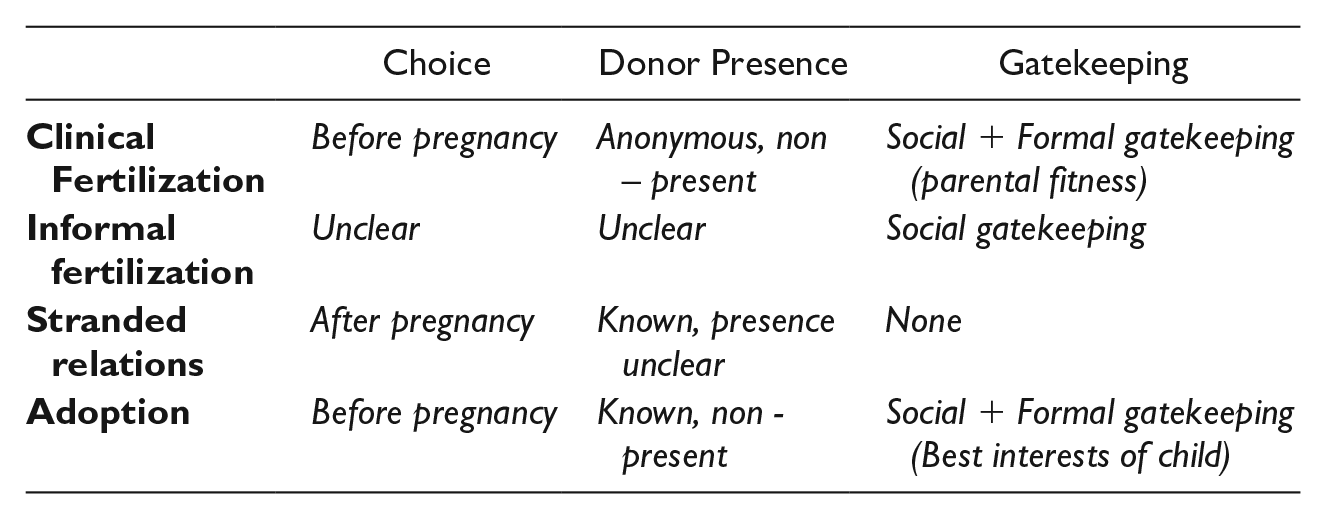
The first group are those who opted for clinical fertilization, whereby pregnancy occurs through in-vitro techniques and an anonymous sperm donor. The second group are singles who used informal fertilization. Here, there are two sub-types: when there is an agreement with a suitable father drawn from among their friends, where both agree to not wanting a relationship or to becoming joint parents; and another, more ambiguous type of informal fertilization, when someone approaches strangers with the aim of becoming pregnant. The third group includes people who became pregnant while they were in a relationship, but the child was not planned. For some of these couples, the pregnancy is a threat to the relationship, which ends before the “abortion deadline” is passed. This is important, as these individuals decide to keep the baby despite their single status, although they had the opportunity to terminate the pregnancy. 3 Some of our interviewees reasoned that they had to choose whether to terminate the pregnancy in order to maintain the relationship or leave the relationship to become a single parent. For some of the single parents we interviewed, this choice of remaining pregnant was so important that they defined it as single parenthood by choice. The fourth group includes people who have adopted a child. Single parenthood in this case does not involve parenting of a biological child, but a child with whom a single person takes on what we will call a social parenting role. There was only one interviewee in this category because of the difficulties that single people have in competing with couples in adoption procedures.
Characterizing Aspects of the Different Pathways
Choice
I became a single parent by choice but I am not single by choice. If I’d had the opportunity, I would have done it differently, but at a certain moment, I had been single a long while and I thought, if I have to choose now between a man and children, I will regret it if I do not choose children. (Mirthe, 33, single parent by choice for 3 years)
The notion of “choice” is complex in the concept of single parenthood by choice. Although the concept suggests a simple decision by a certain kind of person to remain single but have children, this is not true. Generally speaking, it is possible to distinguish between two moments in which people make the decision to become a parent on their own: they either choose to become a single parent before pregnancy occurs, or they find themselves pregnant at a certain point in time and decide that it is time to become a parent even though they are not in a stable relationship.
I was 23 when I went to the fertility clinic for the first time, my “biological clock” was already ticking back then. I felt ready to become a parent and as there was no partner at that time, I started gathering information. (Nina, 32, single parent by choice for 3 years)
The first group we examine are those who chose to become a single parent before they started any procedure to obtain children. From the types discussed earlier, this group includes clinical fertilization and adoption. Some people who attempt to become pregnant through the help of friends or strangers may also fit into this group, but this is more complex and case specific.
Most people make the choice to become a single parent because they consider that the time to become pregnant in the regular way is beginning to run out and there is no partner at hand. This choice is thus a deliberate one, as all options are taken into account before starting the procedure to become a single parent.
We had been together for two years when I got pregnant. I was still studying (. . .) and I became pregnant unexpectedly. It led to conflict with my partner (.. . .) that made me think, like: what do I want? I was 29. . .28 years old back then and I was thinking what do I want in life? Do I want to have children or don’t I? What has to change in my life? The only thing that had to change was my relationship, which was troubled anyway, and my work (.. . .) So in half a day, I made up my mind about all that (.. . .) I thought, I am 28, if I don’t do it now, perhaps I won’t have children for the rest of my life. (Gitte, 35, single mother by choice for 6 years)
A second group, which is more difficult to define, includes women like Gitte, who find themselves pregnant and have to make a decision about whether they want to remain pregnant without a partner or terminate the pregnancy. This may be the result of a relationship breakdown due to unplanned pregnancy, or an escapade with a stranger or friend. We argue that this type of choice is a different one, as the child was originally not planned, but is welcomed nevertheless. In this group, it appears that people are also triggered to think about single parenthood after they become pregnant, and they have to decide whether to remain pregnant and become a single parent. Similar to the previous group, part of the decision-making concerns the question of whether they will ever again be in a situation to become a parent. In addition, they also have to decide whether they want to take up the challenge on their own.
To make the situation even more complex, abortion is not always an option. This is one of the reasons why we relied on our interviewees to define or describe their status as a single parent by choice. Our interviewees emphasized that the decision occurred within a wider process and sometimes stressed that they had thought of abortion during this time. This study took place in Belgium, a country in which the abortion law is well recognized and has been a symbol of gender equality for some time.
Donor presence
I was afraid that after six months or a year he would come in and tell me the child was also his and that he had a right to it. (Mia, 47, single parent by choice for 12 years)
Although the concept of single parent by choice refers to singles taking on the care for a child on their own, every human being remains the product of a female ovum and a male sperm. In all of the different categories examined, the role of the other “parent” may differ greatly, ranging from a relationship in which the other biological parent remains uninvolved to those in which they are acknowledged and may even play a role in the child’s life.
You could ask what’s the difference, right? When you go to the fertility centre, you want sperm from a stranger. They rejected me, so I found a decent stranger on my own and never heard of him again. He doesn’t know that he is the donor of my child. (Katya, 43, single parent by choice for 14 years)
For singles who become pregnant through clinical fertilization or by interaction with a stranger, the donor’s involvement is small or non-existent. Sperm donorship in the Belgian context is anonymous and is a one-way, one-time interaction. In addition, people who seek fertilization through contact with a stranger often do not make contact afterwards, and use this means merely as an alternative way of becoming pregnant, not relying on the clinical pathway.
He chose to leave me when I was pregnant with his child and wanted to keep it. My biggest fear is that he will want to engage with his son and destroy the family that I’ve built on my own. (Uma, 39, single parent by choice for 3 years)
In the other typologies, the involvement of the donor may differ greatly. Most of our interviewees who became pregnant through interaction with a friend made an agreement with their friend, either orally or sometimes in writing, that they would not become involved in the upbringing of the child. There is the possibility of such an agreement being made by people whose relationship has broken down, but this is not always the case. Usually, interviewees feared the ex-partner might want to re-engage with the child.
Gatekeeping
Before someone can become a single parent by choice, they face a number of gatekeepers who might stand between them and parenthood. These gatekeepers manage the expectations that people have about single parenthood, either supporting someone in their choice and helping them prepare in the lead-time before birth or discouraging them and attempting to slow down the process. Based on our data, we could distinguish between social gatekeepers, evaluative gatekeepers, and selective gatekeepers. All have a different type of influence on singles on the pathway to parenthood, but all play a significant role.
It was a difficult story, not my friends of course, you choose friends similar to you, so they found it all exciting and they could understand that it was what I had to do (. . .) they understood it was important to me. My mother found it really hard, it took time before I convinced her. My brother took the middle ground. My sister-in-law (. . .) was really afraid and she kept on confronting me. (Joline, 53, single mother by choice for 12 years)
Everyone has social gatekeepers who influence their interaction with their social network and their relation to societal norms. Although single parenthood is accepted in Belgium, there is a bias towards the norm of two-parent families. Sometimes the social environment is very supportive, which makes the decision to start a single parent family easier. In other cases, someone in the network may oppose the decision, being concerned about the challenges of single parenthood. In both cases, an individual’s initial thoughts about single parenthood will change due to interaction with their network, expectations will be modified, preparations started, and agreements about possible difficulties made.
It is really serious, yes, absolutely. I came in and you first have to talk with an intake doctor and he decides whether you can go through to the psychologist, yes or no. The first question he asked me was quite out of the blue: “Why are you still single?”. (Charlie, 43, single parent by choice for 1 year)
As this quote suggests, a second type of gatekeeping is more formal and evaluative. It is done by people with the power to start and stop procedures. Within the pathways discussed earlier, people opting for clinical fertilization or adoption will come across these evaluative gatekeepers. In the group that had attended clinical gatekeeping, evaluative screening focused on parental fitness criteria, while the adoption procedure focused on the best interests of the child. Both screening procedures are also highly dependent on social gatekeeping, as some of the criteria in the evaluation of such gatekeepers can be perceived as reflecting recognized social norms. 4 Evaluative gatekeepers decide whether a person is fit to become a parent and thus whether to help someone become a single parent or not. This evaluation procedure has been perceived as stigmatizing single parents, as two-parent families are not subject to this.
Part 2: Preparation
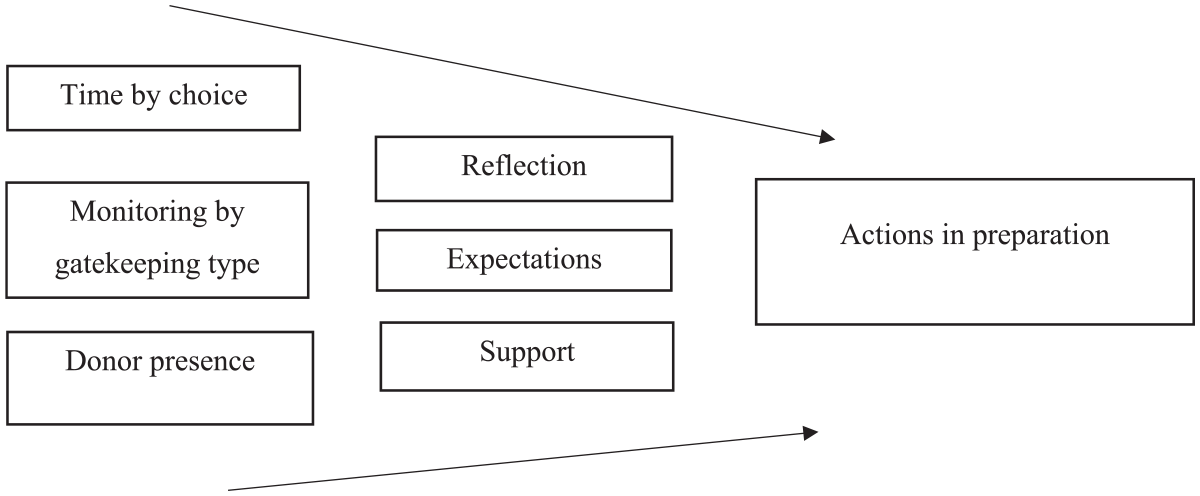
The different pathways discussed are important as they create different contexts in which preparations take place. In other words, preparation is highly dependent on the characteristics of the four different pathways to single parenthood by choice discussed earlier. Clearly, there is more time when the decision is made early. More importantly, however, is the degree of help people receive from their network, which is not the same for every single parent by choice. When people start a family with a partner in a traditional structure, expectations and preparation plans can be developed together. In a single parent family system, this process depends on a relationship with gatekeepers, who play a significant role. As preparation may occur in many different domains, we discuss how singles involve their network in their parenting, how they make a home for their child in a single parent family, how they adapt their working arrangements and how they look for social services to assist in their household routines.
Preparing a network
If you don’t have a stable family, no back-up plan or safety net, you should not try to have children. (Vera, 41, single parent by choice for 2 years)
Although not all of the expectations of future single parents by choice accord with their actual experiences, people do envisage the challenges of single parenthood and take steps to deal with them. The first acts after a decision to become a single parent concern strengthening links in the social network. The need for this might be influenced by professionals who have experience in helping single parents in their path to single parenthood. This might mean that people move closer to their family, or even re-establish contact after a period of separation or distancing.
I returned to Belgium when I was 6 months into my pregnancy (.. . .) I had been living here for a month and it was time and I gave birth (. . .) back then, when you became a single mother you had to create a family support group, because there was no father. (Ellen, 43, single parent by choice for 14 years)
Moving closer to family and friends is one thing, but some future single parents also explicitly ask people in their social network whether they can count on their support as a single parent. In this way, network support is taken into account before people become single parents. Moreover, social gatekeepers do become a part of the social support system of single parents by choice. We found that the decision to become a single parent was often dependent on what could be expected from the network. This is a major difference with other single parents, who have to respond to a sudden change in their situation. Single parents by choice can, and do, surround themselves with reliable peers before they become a parent.
I talked up front with people and said what I was planning to do, asking whether they would support me (. . ..) I explicitly asked them: If I go through with this and I need you, will you support me? Will you help me when I need you? (Marleen, 42, single parent by choice for 5 years)
Some single parents by choice had such a tight social network prepared to help that they moved in with them. In this way, network members almost became co-parents and were heavily involved in childcare. However, in general, moving in with network members was only a transition phase in the early years of the child’s life, after which the single parent started to live independently again.
Although preparing a network on which you can rely as a single parent is seen as an important step in the process of becoming a parent, it is not always self-evident. It is here that the social gatekeeping mechanism plays a role. Most interviewees felt supported by their network, or were able to convince their network that it was the right decision. A non-supportive network can influence the aspirations of a single person to become a parent. Some of the parents we interviewed were able to convince their networks that becoming a single parent was a good idea. Thus, a social network might be unsure about or hinder a decision at first, but can, over time, accept someone’s choice to become a single parent and, in fact, be involved as much as others.
Everyone was a little bit uneasy in the beginning. And I think my parents were also embarrassed, like: what are our friends going to say? Because it was not the ideal family picture. But I think everyone is used to it now. Now they see that I have a nice child and everything is OK. (Nina, 42, single mother by choice for 3 years)
The earlier in the process someone makes the choice to become a single parent, the more time they have to prepare a supportive network. Social gatekeepers are the first nodes in a safety net, while formal gatekeepers make people aware of the need for social support. Moreover, donors who are known may sometimes be seen as a node in the social network; however, as mentioned earlier, they are usually associated with a fear of the child being taken away.
The questions the psychologists asked about.. . . How are you going to deal with childcare? Which people would be available if someone had to take care of the child when I was sick, [this] made me aware that I had to talk about these things with my family. (An, 43, single mother by choice for 3 years)
Making a “home”
Not only do single parents prepare their social relationships for single parenthood, they also adapt their housing strategies. Our interviewees mentioned that they needed a bigger house, and some explored whether it was possible to buy a home rather than renting. People changed their living arrangements and prepared a “home” for their future child.
Everything had to be ready, so I sold my apartment before I gave birth. I bought a house. I’ve rebuilt the house, so it is a cosy home here. (Vera, 41, single parent by choice for 2 years)
It is not always possible to have child and single parent-friendly housing. One strategy that was often used by the single parents by choice that we interviewed was to move in with their parents for an initial period. This strategy gave them time to make changes more gradually, and it also balanced the need to recuperate from the initial changes before arranging a more permanent home for their child. Therefore, we might argue that the housing adaptations depend on the how much single parents by choice can rely on their social support network. Single parents with a small social network and little social gatekeeping usually look for solutions that allow them to handle the single parenting on their own.
I had been home for 9 months and that allowed me to make changes in the house (. . .) I took my time gathering some things, a bed and stuff like that (. . .) but I didn’t move immediately. I had an apartment with one bedroom, and after about 2 years I moved here, where I have two bedrooms. (Mia, 47, single parent by choice for 12 years)
Depending on the home, other changes might also be needed. For example, one person explained that they bought two of a number of things because they were going to live in a two-floor apartment. Another said they needed to organize home assistance because they could not handle all the household activities on their own. These adjustments may also differ for people who live in a city compared to those in a more rural area. Some people even moved to the city, as they considered life as a single parent would be easier there than in less dense areas.
It’s stupid, but I bought two of everything because I was alone, especially with the baby (. . .) a bouncer on both floors. If you have a bouncer in the bathroom, you can have a shower with him there. Two mobiles with music, you put him down and you have 20 minutes to deal with the washing. (Marleen, 42, single parent by choice for 5 years)
Thus, as for other aspects in the preparation, the characteristics of the pathway to single parenthood by choice affect the preparation of the housing situation. When the choice occurred at an earlier point in time, people had more time to find solutions to their housing situation. Nevertheless, gatekeepers may also raise awareness of the need to address the housing issue and/or offer solutions within the network.
Preparing for work
Not only do single parents need a home that they can run alone, they also need a workplace interface that makes it possible to meet all child-related responsibilities on their own. To manage their work-life balance, some single parents by choice look for greater stability in their job. Parenthood can be seen as an incentive to create more stability in one’s working life. Single parents by choice often attempt to adjust their job to “family-friendly” working hours and to work closer to home.
I was not the kind of person who chooses a permanent position [and] to stay in the same job for years. I have never stayed in any job for as long as I’ve been in my current job. (. . .) I used to work most during the children’s free time, but I stopped because I felt they wouldn’t like it. So, I looked for a regular job, preferably in the daytime. (. . .) So I ended up working in daycare, not far from where I live, so I could make time on Wednesday afternoons. (Joline, 53, single parent by choice for 12 years)
People prefer stability, and sometimes they have to adjust their career prospects due to their choice to become a single parent. Some jobs cannot be done by future single parents. This meant that some interviewees had to switch jobs to sometimes less attractive employment, which allowed them to start a family on their own.
I was used to switching between artistic projects and a nine-to-five job. I was really confident about opting for the latter, and getting a fixed contract, because I thought that was the only way to make ends meet. I can’t do evening jobs as a single parent, I can’t work in hospitality. (Marleen, 42, single parent by choice for 5 years)
Not only do single parents by choice change their work situation to facilitate single parenthood, they might also have to inform their employer of their decision, as they may sometimes be absent during working hours. This can be a difficult situation, as not all employers are keen on employees who create a more complex work-life situation. Moreover, they need a good relationship not only with their employer but also with their colleagues, who might assist in juggling working hours when the combination of work and family becomes more complicated.
Once you are in the process of becoming pregnant, you have to inform your employer because you often have to go to the clinic during working hours. I often had to switch [shifts] with colleagues to get this organised. (Marie, 42, single parent by choice for 7 years) When we were planning meetings together, normally I’m home on Friday and if I said I was willing to compromise, like [saying] I would come in the morning, some colleagues of mine would say: “No, you are meant to be at home then!” (. . .) They looked after me so I didn’t have to stretch myself too much. I did that for one or two years when my job was really fragmented and it caused a lot of stress. I needed these boundaries to balance my energy. (Mirthe, 33, single parent by choice for 3 years)
Not only may colleagues may be empowering in a practical sense but also, insofar as they are aware of the boundaries, a single parent must set to separate work from care. Work-life balance is more than a mere self-regulated problem. An understanding atmosphere is needed to be able to have appropriate time for childcare, as the earlier quote suggests. Therefore, the culture at work and the relationships with colleagues can prove to be crucial for single parents by choice. Also, here, aspects of the different pathways may affect how potential single parents by choice prepare for changes at work, as timing and advice can be important in the decision-making. Thus, it can be argued that in relation to the adaption of work situations, expectant single parents who have a larger gatekeeping network are assisted more in finding better options for their work-life combination.
Preparing social services
Future single parents face the challenge of adjusting their work and family life in a way that facilitates single parenthood. In the previous sections, we described how they prepared a network and adapted their work situation with the aim of making it easier to combine both family and work responsibilities. Another option for future parents is the use of various social services offered by organizations that help with household tasks. For many interviewees, outsourcing household tasks was one way to deal with the reality of a single parent family.
When I was pregnant, I searched for a daycare centre that opened at 6 am and I discovered one that did open at 6 in the morning. In this way, I could start work at 7. (Marie, 42, single parent by choice for 7 years)
In the beginning, single parents often choose to have help from maternity care services that assist them with basic tasks. Maternity care services in Belgium offer all kinds of help to recent mothers, and may help them with all aspects of running the household when they are not yet strong enough to do it by themselves. Maternity care is thus important at the beginning, as it can assist with any household task.
In the beginning, maternity care helped a lot because I couldn’t do a lot by myself. She did all the lifting here; she put my garbage out. I didn’t have anyone else, I was happy that maternity care could do that, that’s a good thing. (Marleen, 43, single parent by choice for 5 years)
After maternity care, our interviewees switched to daycare. Before giving birth, they had already explored which daycare centers were more affordable for single parents. Some interviewees had the opportunity to look for income-related daycare centers in their neighborhood.
You have two types of daycare. You have income-related centres and you have fixed costs. In my case, an income-related centre was much more affordable (. . .) I contacted them immediately when I was pregnant. You have to be really quick, but as a single parent you have priority. (Charlie, 43, single parent by choice for 1 year)
In addition to childrearing services, there are also services that focus explicitly on household tasks. However, using these services always involves finding a balance between costs and benefits. Although household services may make the daily life of single parents easier, the financial costs are sometimes too high.
You know, it would be helpful if I could have, like other families, help cleaning the house or hiring someone to do my laundry. But these things, being a sole breadwinner, are too costly. So you have to do it all on your own.. . . And use your family of course. (Eva, 41, single parent by choice for 6 years)
Discussion
We began by arguing that single parenthood by choice entails a non-normative transition towards a normative event. This means that the event of “becoming a parent” is normative, insofar as it is age-related and socially expected as progress to a new life stage. This was also apparent in our study population. Some of our respondents even argued that they were more integrated into the community through their newborn children. However, the transition is quite unorthodox, as it does not take the same form as most families. Therefore, it was important to examine which parts of the transition might be considered normative, and which aspects exceeded the boundaries of normative transitioning to parenthood. We thus approached the preparations of single parents by choice from a life course perspective. In this life course perspective, single parents by choice are guided by gatekeepers who both evaluate singles in their ability to parent on their own and advice on the preparation process.
We argued that there were four different pathways to single parenthood by choice, which had various impacts on the preparation process. First, there is clinical fertilization, a pathway that is also chosen by some couples who are unable to become parents in the regular way (Lorber, 2014). Therefore, it is not necessarily an indicative pathway for single parenthood by choice, but it is still a non-normative pathway to pregnancy for parents in general (Rossi, 1968). However, what is indicative for single parents by choice is the act of evaluative gatekeeping that does not take place for other parents in fertilization programs. This relates to the notion of the need to evaluate parental fitness, put forward by Storrow (2006). Singles are screened on their capabilities and on the circumstances or context of the decision to determine whether they can parent on their own.
Second, we described informal fertilization. The decision to become pregnant with the assistance of a friend or a stranger is non-normative, as most people start the road to parenthood with a romantically involved partner. Because they circumvent clinical fertilization, these single parents also avoid evaluative gatekeeping. However, social gatekeepers have an increasing importance in the guidance of singles to parenthood.
Third, we discussed women who became pregnant while in a romantic relationship but who subsequently experienced a relationship breakdown. For these single parents by choice, the start of the parenthood transition most resembled regular parenthood transition, but they were confronted with separation from their romantic partner early on. In this case, the choice concerns termination of the pregnancy or whether they want to face the challenge of single parenthood. Also, here, social gatekeeping was important, as the social safety net helped them to overcome the early difficulties they faced.
Finally, the fourth pathway to single parenthood by choice is adoption. Similar to clinical fertilization, this is a pathway that might also be taken by regular couples for a variety of reasons (Goldberg & Scheib, 2015), and it is also a non-normative pathway to parenthood in general, also entailing the obstacle of selective gatekeeping for all. This idea of selective gatekeeping relates to another idea put forward by Storrow (2006), concerning the best interests of the child. However, given prevailing norms, it is much harder for singles to prove that they will be adequate carers than it is for couples. Exploring these pathways was important for the study of the preparations made by single parents by choice, as each of them had a different starting point and each had different expectations due to their gatekeepers.
Earlier, we also suggested that these pathways embody or reflect other aspects of single parenthood by choice, which can help us to better define the element of choice. While some people become parents without any real planning, in single parenthood by choice, everything appears to be planned precisely. However, this preparation highly depends on the pathway to single parenthood. The choice to become a single parent can be taken either before impregnation or after impregnation. Thus, the stereotype of single parents planning their parenthood long in advance proves to be only partially true. Hertz’s (2006) argument that it is not necessary to throw out the baby with the bathwater offers a valuable explanation of why single parents decide not to abort. The fact of being pregnant may lead a woman to change her mind about having a child, while fears about time constraints and/or a desire for a normative progression to a new life stage might also convince her to have the child. This relates to normative ideas about parenthood that arise at a certain age, which also has a social function in terms of reintegration with a specific age group (LaRossa & Sinha, 2006; Nomaguchi & Milkie, 2003).
This preparation process is thus more organized and guided for single parents by choice compared to their divorced or separated counterparts, who are forced to respond to a change or crisis and adapt to single parenthood (Van Gasse & Mortelmans, 2018). Hertz and Ferguson (1998) constructed a 2 x 2 schema looking at strategies used in everyday life, and our results can be interpreted in the light of their idea of balancing social and economic resources. The strategies that we found were being used before giving birth entailed increasing economic resources (such as labor market position) as well as increasing social resources (by moving closer to people in their network and strengthening social ties). This demonstrates that singles were aware of the position, reflecting the typology developed by Hertz and Ferguson, and they reposition themselves depending on the way they plan to cope with the challenges of single parenthood in the future.
The contribution of this paper to the current literature lies in the connection of the process through which single parents by choice become parents and the preparations they make to reorganize their lives. As Hertz and Ferguson (1998) stated, single parents by choice look for combinations of social and economic solutions to adapt their daily life. However, our study also showed that the allocation of these resources depends on the following: (a) initial resources, (b) on the information people receive and (c) the social acceptance of a single person choosing to become a parent.
First, the initial resources of potential single parents are important. Some people have more or less social or financial resources and opt for social support or paid support. It should be noted that this also plays a role in selecting the way to become pregnant, as fertility treatments are rather expensive in Belgium. Second, the information that potential single parents have at their disposal also has an influence. We described different types of gatekeepers, who play influential roles in the preparations made by single parents by choice. Professionals have broader experience of the different ways people become single parents by choice and the various issues they face, while social gatekeepers might have their own experience with parenthood and become part of a social support network after the birth of the child. Third, the social acceptance of the pathway to pregnancy and single parenthood also influences the preparation. Some methods used to become pregnant are less accepted than others, and, as a result, potential single parents may have more or less opportunity to build a network of gatekeepers and future support networks. It may even lead to them making changes that enable them to single parent on their own.
Conclusion
The question of whether it is possible to start a family alone has already been extensively discussed by others (Golombok, 2013; Hertz, 2011; Hertz & Nelson, 2017; Zadeh & Foster, 2016). The findings reveal that some people are able to make such a parental transition on their own. They are in a position to shape their life circumstances to make them as suitable as possible to become a single parent. Single parents by choice prove to be able to prepare their lives to welcome a newborn on their own. This challenges the theoretical stance that assumes all families begin as nuclear families and become more complex over time.
Our study of single parenthood by choice was primarily explorative, attempting to understand how the manner in which people become a single parent by choice affects their preparation for parenthood. Being able to prepare for a transition that other single parents cannot anticipate is what partially defines single parenthood by choice. Although this topic has been widely explored in the Anglo-Saxon context, only limited studies have taken place in other countries. One minor innovation of this paper thus lies in its exploration of single parenthood by choice in the Belgian context, where it appears to have remained under the radar.
We argued that single parenthood by choice might be the least complex family configuration, but we could also argue that single parenthood by choice is embedded in the largest network of all the family types discussed. The role of gatekeepers within the process of single parenthood by choice requires more attention in future research, although we have unveiled some aspects of gatekeeping in single parenthood by choice. We found that gatekeepers played a role in the preparative process, having an influence on the expectations of single parents. Parents by choice face the same challenges as all other parents, but unlike other single parents, they have to face them on their own from the very early stages of their decision. However, unlike other single parents, single parents by choice have the specific ability to prepare for single parenthood. Existing “blueprints” for parental transition, in relation to both personal and professional networks, can assist women to prepare for the transition. Single parenthood by choice is thus not only a one-parent/one-child relationship, but involves a network of gatekeepers who influence the expectations and preparations of single parents.
This study framed single parenthood by choice within a life course and network perspective. In this way, single parenthood by choice was related to other parenthood transitions and was defined as a normative event within the life course. However, as we saw, expectations and preparations are influenced by network actors who we called gatekeepers. By allowing our respondents to define the nature of their single parenthood, we could identify the different decisions people make according to their life histories. Within this idea of life courses, this study also extends the literature on single parenthood in general through its exploration of a group for whom single parenthood is not a problem but an opportunity.
Related to other research, we found that single parents by choice not only rely on social and economic resources they already have to ensure a balance in their everyday life but also invest in social and economic resources to strengthen their position in the preparation phase. Therefore, this study also adds to the theory of Hertz and Ferguson (1998) on work-life strategies and the preparations that are made prior to the implementation of such strategies. Regarding single parenthood by choice as a normative event, future research should also pay more attention to the normative context in which parental expectations are raised in society. Only in this way can we deepen our understanding of the diverging identities of parents.
Footnotes
Declaration of Conflicting Interests
The author(s) declared no potential conflicts of interest with respect to the research, authorship, and/or publication of this article.
Funding
The authors disclosed receipt of the following financial support for the research, authorship, and/or publication of this article: This research is funded by the Institute of Science and Technology (IWT), with grant number 140069 for the research project Families in Transition, Transitions in Families (FiTTiF).
