




Abstract
Parents healthy behaviors have an undeniable influence on the long-term health of their children by preventing risky behaviors, as well as overweight or obese, which are currently a global problem. The aim of this study was to examine whether parents being ex-athletes is associated with their family having a healthy lifestyle and raising preschool children in healthy ways. An ex-athletes families (n = 350) with partners (mean age Mmother = 34.20, SD = 5.29; Mfather = 36.73, SD = 5.63) and children and a control group of families (n = 336; mean age Mmother = 34.47, SD = 5.05; Mfather = 36.88, SD = 5.69) participated in the study. We analyzed the influence of current participation in physical activity (PA) and proper nutrition habits of parents on the parents’ feeding styles and children PA. When at least one parent was an ex-athlete, the control over eating feeding style was used more often and the emotional feeding style was used less often in comparison to the control group. Children from families with an ex-athlete spent more hours per week on PA compared to children from the control group.
Introduction
Physical Activity and Healthy Eating Practices in Children
The positive influence of physical activity (PA) and optimal diet on the long-term health of children and youths is unquestionable and has been discussed in numerous scientific works (e.g., Janssen & LeBlanc, 2010; Jones et al., 2016). According to recommendations, preschool-aged children, i.e., those aged 3–5, should be physically active throughout the entire day (Piercy et al., 2018) or undertake at least three hours of light-to-vigorous PA per day (Skouteris et al., 2012), while children and adolescents aged 6–18 should engage in moderate to vigorous PA for at least 60 minutes per day (Piercy et al., 2018; Skouteris et al., 2012). Risk factors associated with the development of bad eating habits include early introduction of solid food, easy access to large portions of high-energy meals and snacks, preferences associated with unhealthy snacks and sweet drinks (e.g., using sweets as a reward), eating to regulate emotions (rather than hunger), children being discouraged from eating healthy meals through pressure at mealtimes, eating few fruits and vegetables, and becoming accustomed to eating out (Birch & Ventura, 2009). Poor eating habits and failure to meet the guidelines regarding PA result in an imbalance between energy intake and expenditure, leading to becoming overweight or obese—a problem that currently constitutes a global epidemic: in 2016 it affected one in five people aged 5–19 (WHO, 2018). The prevalence of unhealthy lifestyles is a worldwide problem, and in order to limit deaths from noncommunicable diseases by 2030, it is necessary to expedite activities aimed at reducing risk factors such as unhealthy diet and physical inactivity (WHO, 2018). It is difficult to change the health behaviors of adults, which is why interventions should be targeted at shaping healthy habits in the family environment of preschool children (Birch & Ventura, 2009).
The Influence of Family Environment on Children’s Health Behaviors
The family environment plays a key role in shaping health behaviors in children, both with regards to eating and ways of spending free time (Dong et al., 2016; Haddad et al., 2018).
Firstly, parents’ behaviors regarding healthy diet (Ventura & Birch, 2008; Yee et al., 2017), eating fruit and vegetables (Blanchette & Brug, 2005), eating out, and kinds of snacks eaten (Dong et al., 2016) are mirrored in children’s behaviors. Parental feeding practices and control of types of foods eaten stem from the parents’ feeding styles (Larsen et al., 2015), i.e., their approaches to nutrition, which interact with other factors in shaping the eating habits of children (Blissett, 2011). Research shows that feeding style is associated with both the body masses and genders of the child and parent (Lipowska et al., 2018).
Secondly, parents play a key role in socialization of sports participation, especially in the case of preschool children, who spend a significant part of their day at the family home and depend on feedback from their parents (Fredricks & Eccles, 2004). In line with the expectancy-value model, decisions made by a child about engaging in PA are made in the context of various choices—so it is key to understand the beliefs and behaviors of the adults. Parents may foster a child’s motivation in two ways: by helping them interpret experiences associated with PA and by providing such experiences (Fredricks & Eccles, 2004). The former is associated with parents encouraging their child to engage in physical exercise, while at the same time showing the child that they can be successful at sports (Fredricks & Eccles, 2004). Research shows that parental support (Beets et al., 2010; Edwardson & Gorely, 2010; Xu et al., 2015) and encouragement to do sports (Timperio et al., 2013; Tu et al., 2017; Xu et al., 2015) increase childrens’ PA levels. In the latter case, parents are the providers of sporting experiences, influencing motivation to undertake PA through organizing the child’s daily schedule, buying equipment for them, or by enrolling them in extracurricular sport classes (Fredricks & Eccles, 2004). Thus, parental control of PA helps make physical exercise an automatic behavior that is performed without deliberation, which is particularly important in younger children (Timperio et al., 2013).
Fredricks and Eccles (2004) indicate that the child’s characteristics are also important aspects which can change the beliefs and behaviors of parents. These factors include gender, beliefs about the child’s sport talent, and knowledge about to how help their particular child do sports (Fredricks & Eccles, 2004). If parents believe that PA is a domain which belongs to a greater extent to boys than to girls, then they will organize the child’s environment differently and, depending on the child’s gender, either encourage or discourage them from undertaking PA, leading to daughters and sons having different beliefs about their sport abilities (Fredricks & Eccles, 2004). Moreover, the broader social context in which the family functions is also important for the undertaking of PA. Sociodemographic factors such as education level, salary, marital status, employment, cultural traditions, number of children in the family, and local resources influence parents’ beliefs (Fredricks & Eccles, 2004). Taking part in sports incurs financial and time costs. Parents who are better-off financially have the ability to buy sport equipment and to pay for sport camps (Fredricks & Eccles, 2004). It should be mentioned that, in-line with Eccles’ model, parent and family characteristics are factors that can influence the parents’ role model behavior (Fredricks & Eccles, 2004). In this way, parents can also support their children by acting as PA role models (Edwardson & Gorely, 2010; Fredricks & Eccles, 2004; Fuemmeler et al., 2011; Timperio et al., 2013), which is particularly effective if they engage in physical exercise together (Anderson et al., 2015; Trost & Loprinzi, 2011; Tu et al., 2017).
It ought to be mentioned that the athletic history of the parents is among the family factors determining parents’ beliefs about sports. Parents’ positive childhood experiences with PA are one of the factors which influence parental behaviors supporting PA in preschool children (such as parental support and monitoring the children’s active behaviors; Loprinzi et al., 2013). Parents’ enthusiasm for and satisfaction derived from PA are mirrored in their children’s attitudes (Bassett-Gunter et al., 2017). For this reason, parents who used to do sports at a professional level are a particularly interesting group, because their lifestyles tend to be significantly different to those who have previously engaged in regular PA and those who have not undertaken PA at all.
Ex-athletes as Parents
Discontinuing a career in sport is a multifaceted process (Fernandez et al., 2006) and is associated with the need to overcome initial difficulties through the reconstruction of and adaptation to a new lifestyle and socioprofessional situation (Yannick, 2003). There exist some cross-cultural differences in this process as a result of the way sport is organized in different countries. For example, Polish athletes often study at university level in parallel to their sport career and the percentage of athletes who are married and have children is much higher than in Swiss and Danish athletes (Küettel et al., 2018). Moreover, interestingly Spanish research shows that retired athletes experienced more severe difficulties with family when the end of their sports career was sudden. The career path after sport life was also associated with difficulties in studies and financial areas in this case and results in problem with their family functioning (Barriopedro et al., 2019). The results of the European Perspectives on Athletic Retirement (EPAR) project also show the presence of cross-national differences in the process of sport retirement (Wylleman et al., 2004).
The aforementioned differences in the organization of the family life of Polish ex-athletes seem particularly important as research shows that levels of PA in parents are lower than in individuals of a similar age who do not have children; mothers are characterized by even lower levels of PA than fathers (Bellows-Riecken & Rhodes, 2008; Berge et al., 2011). Ex-athletes differ from non-ex-athletes in terms of their personal experiences with PA and perceptions of their ability to maintain an active lifestyle. Ex-athletes are characterized by higher levels of PA in comparison to non-ex-athletes (Bäckmand et al., 2010; Johansson et al., 2016; Kontro et al., 2018; Kujala et al., 2000; Pihl et al., 2006). The health of ex-athletes is, to a large degree, associated with their continuation of PA (Witkowski & Spangenburg, 2008), as those meeting recommendations regarding PA are at a lesser risk than sedentary ex-athletes of having metabolic syndrome (Batista & Soares, 2013), hypertension (Hernelahti et al., 2002), loss of trabecular bone mineral density (Tervo et al., 2009), knee and hip problems (Haljaste & Unt, 2010), higher total homocysteine level (Unt et al., 2008), being overweight, or presenting oxidative stress-related and inflammatory characteristics (oxidized LDL, diene conjugates, and high-sensitivity C-reactive protein; Pihl et al., 2006).
It should be added that a typical sport career in Poland lasts for a relatively long time, which influences the extent to which one identifies with their role as an athlete as well as whether one continues professional or recreational PA (Küettel et al., 2018). This phenomenon may translate into levels of support in organizing PA that ex-athletes give their offspring. Research shows that higher overall levels of parental support foster higher levels of PA in children (Beets et al., 2010; Edwardson & Gorely, 2010). Parents’ knowledge of recommendations regarding PA influences the amount of PA that their children engage in (Haddad et al., 2018); this knowledge ensures informational support—knowledge regarding the role of PA and its influence on health differs in ex-athlete parents in comparison to non-ex-athlete parents. For this reason, the experience of having done sports may modify parents’ behaviors related to organizing their children’s PA.
Present Investigation
Because of some inconsistencies in the data regarding the influence of parents on children’s PA, there is a clear need for studies to be conducted during the formative preschool and early elementary school years (Mitchell et al., 2012). Experiences associated with being a professional athlete definitely influence the development of beliefs regarding PA; however, studies which deal with the topic of ex-athletes as parents are scarce. Therefore, the innovation of this study consists in developing the issue of the family functioning of ex-athletes, but also the influence of their past sports career on current habits, their children healthy lifestyle. Moreover, examining both parents provides a more complete picture of the impact of the parents’ lifestyle on the child functioning. It has already been shown that children of physically active parents (both currently and in the past) engage in PA to a larger extent. However, doing sports is associated not only with physical training, but also with optimal diet. Hence, the following hypotheses were investigated:
In families with an athletic history, the current PA of the mother and father is higher and the eating habits are better in comparison to parents who are not ex-athletes.
One parent being an ex-athlete positively corelates with the presented feeding style and the children’s engagement in organized PA.
The current PA of parents positively corelates with their feeding style and their children’s organized PA.
Proper eating habits in mothers and fathers predict which of the four feeding styles they present towards their children.
Method
Participants
A total of N = 350 families of ex-athletes with partners and children (152 of whom were girls) participated in the study. In each family, both parents have completed questionnaires for only one child. Individuals who fulfilled the following criteria were included in the ex-athletes’ group: having played sports competitively for at least 5 years and having been a member of a sports club (M = 8.80, SD = 5.10). The participants in this group formerly practice martial arts (n = 55 male, n = 45 female), team sports (n = 90 male, n = 73 female), and individual sports (n = 53 male, n = 34 female). The average age of the female ex-athletes was M = 34.20 (SD = 5.29) and of the male ex-athletes was M = 36.73 (SD = 5.63). The control group consisted of an equivalent number of families (N = 336) in which neither of the parents had done sports in the past, according to these criteria. In the non-ex-athlete group, the average ages were M = 34.47 (SD = 5.05) for females and M = 36.88 (SD = 5.69) for males. The age of the children was purposely uniform (Mage = 5.6, SD = 0.17) to exclude its influence on the factors assessed in the study.
Socioeconomic status (SES) was also controlled for. We analyzed (a) the parents’ education levels (vocational education: 23% of mothers and 27% of fathers; secondary education: 28% of mothers and 36% of fathers; higher education: 49% of mothers and 37% of fathers); (b) the area of residence of the participants (33% lived in villages; 18% in small towns; 24% in towns; and 25% in big cities); and (c) whether the child had siblings (36% were only children).
Exclusion criteria included DSM-5 psychiatric diagnoses (American Psychiatric Association, 2013), neurological disorders, any known chronic illnesses among the adults, and any disability of the child.
Procedure
The protocol of this study was approved by the Ethics Board for Research Projects blinded for review (decision no. blinded for review). Individuals from a larger project regarding transgenerational transmission of health behaviors (described elsewhere) who met the inclusion criteria for this study were included (Lipowska et al., 2018). Prior to the study, written informed consent was obtained from the 686 families, who were also informed they could discontinue their participation at any time without repercussions. Respondents were given two weeks to complete the questionnaire pack; the data used for this study came from a larger survey and the questionnaires that constitute this study took around 30 minutes to complete.
The preparation of this article was supported by grant blinded for review from the National Science Centre, Poland.
We collected several different kinds of information using the Inventory of Physical Activity Objectives, the Health Behavior Inventory, the Parent Feeding Style Questionnaire, as well as a questionnaire assessing children’s levels of PA.
Measures
The Inventory of Physical Activity Objectives (IPAO)
IPAO by Lipowski and Zaleski (2015) was used to collect detailed interviews regarding the athletic past of the parents and their current engagement in various forms of PA. The questionnaire contains questions regarding whether one has done sport in the past and what discipline they practiced, for how long, and at what level. Analysis of the number of hours per month currently devoted to certain types of PA (e.g., gym, swimming, running, team sports, martial arts) is an important part of the questionnaire; additionally, respondents indicate whether they engage in these activities regularly or sporadically. The questionnaire also allows the analysis of the goals with which respondents undertake PA (Lipowski & Zaleski, 2015); however, this aspect was not used in the current study.
The Health Behavior Inventory (HBI)
HBI by Juczyński (2012) was used to analyze the frequency of engagement in health behaviors in four domains: proper nutrition habits, preventive behaviors, positive attitude, and healthy practices. One subscale of the questionnaire was used in the current study—proper nutrition habits: paying attention to proper diet; regular eating of fruits, vegetables, and wholegrain bread; and limiting intake of products high in fats, sugar, and salt. Internal consistency was assessed using Cronbach’s α, which was equal to 0.85 for the entire inventory and 0.60 for the proper nutrition habits. Participants assess 24 statements regarding having maintained certain habits over the past year on a scale from 1 (almost never) to 5 (almost always).
The Parental Feeding Style Questionnaire (PFSQ)
PFSQ by Wardle et al. (2002) was used to assess the parents’ feeding styles. This questionnaire consists of four subscales: instrumental feeding (using food as a reward for the child performing certain behaviors), emotional feeding (using food to ease difficult emotions), prompting and encouragement to eat (encouraging the child to eat a varied diet), and control over eating (analyzing the type and amount of food appropriate for the child). Participants assess 27 statements on a 5-level Likert-like scale, where 1 means I never do and 5 means I always do. Higher results on a subscale indicate higher degrees of using the associated feeding style. Cronbach’s α for individual subscales had satisfactory values between 0.67 and 0.83 (Wardle et al., 2002).
The survey for the assessment of children’s PA
Questionnaire was developed by blinded for review for the current project. Questions regarding the engagement of children in PA are directed toward parents, who indicate the number of hours per week that their child devotes to playing outside, organized sports classes, walks with parents, riding a bicycle, and playing at playgrounds. Parents were also asked to list additional school classes (outside of school/preschool) in which their child takes part and to make an assessment of the number of hours per week their child devotes to these classes. Moreover, the survey contains questions regarding the types of sporting equipment owned by the child. Parents also assess their children’s physical fitness on a scale from 1 (my child has very low levels of physical fitness) to 5 (my child has very high levels of physical fitness).
Results
The Sport Activities of Ex-athlete and Non-ex-athlete Parents
In order to test the relationship between the parents’ current sport activities and their experiences practicing professional sport, the percentage of people who currently practice sport was analyzed in the groups of ex-athlete and non-ex-athlete parents. Among the families surveyed, 152 mothers were ex-athletes and only 93 (61%) of them still practiced sport activities regularly; 198 fathers were ex-athletes, 171 (86%) of whom still practiced sport regularly—the difference was statistically significant (p < .001). In the next step, the families were divided into three groups: (a) neither of the parents currently practice sport, (b) one of the parents currently practices sport, and (c) both parents currently practice sport. Then, we calculated the frequency with which families with at least one ex-athlete appeared in each of these three groups. These results are shown in Figure 1. A chi-square test showed that the percentages of families with ex-athletes significantly differed from the percentage of families without ex-athletes in all three of the aforementioned groups, χ2 (df) = 73.93 (2), p < .01. As can be seen in Figure 1, as many as 54% of families with at least one ex-athlete were currently leading an active lifestyle with both parents regularly practicing sports.
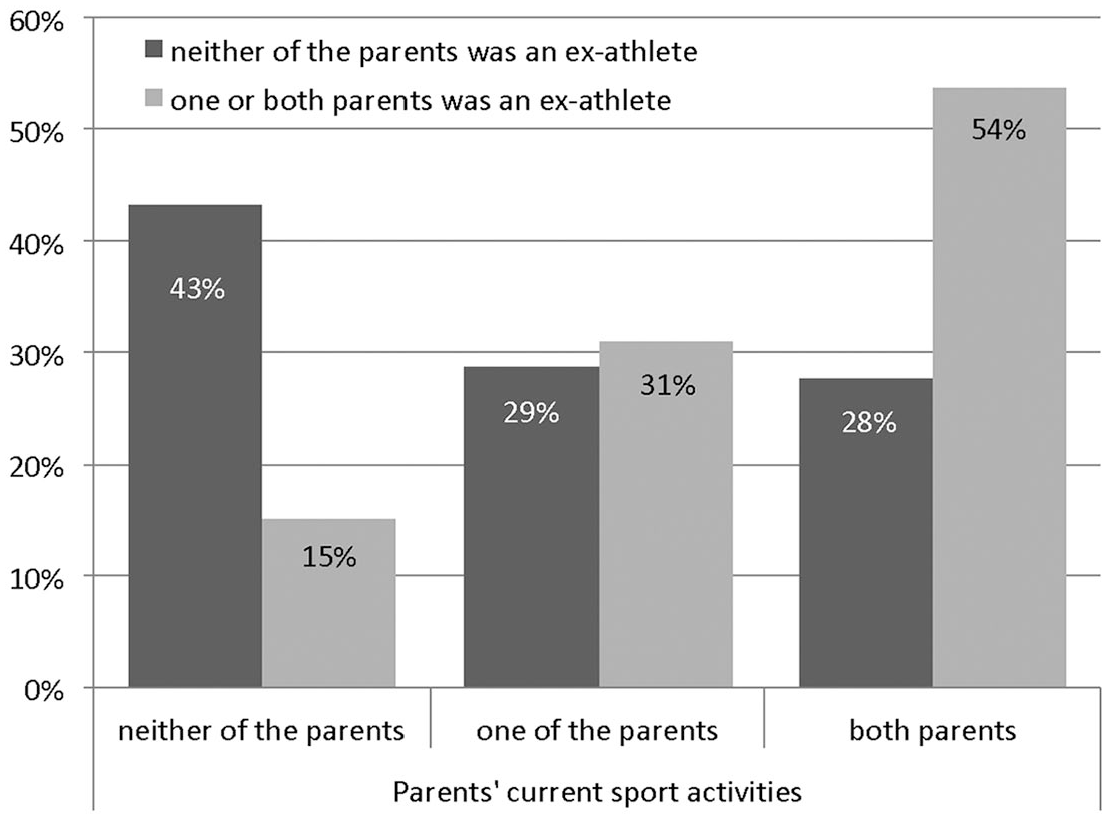
The percentage of families in which at least one parent was an ex-athlete and the percentage of families in which neither of the parents currently practice competitive sport in three groups of parents divided by the level of their current sport activity.
Proper Nutrition Habits in Ex-athlete and Non-ex-athlete Parents
In order to identify differences between mothers’ and fathers’ health behaviors in families with different sport histories, a series of paired samples tests was conducted. As can be seen in Table 1, regardless of whether one or neither of the parents was an ex-athlete, women had better nutrition habits than men. As we predicted, the difference was not statistically significant in the group in which both parents were ex-athletes. However, in this case, the number of people in the groups compared was the smallest, which is not without impact on the significance of differences.
Ex-athlete and Non-ex-athlete Parents and Proper Nutrition Habits.
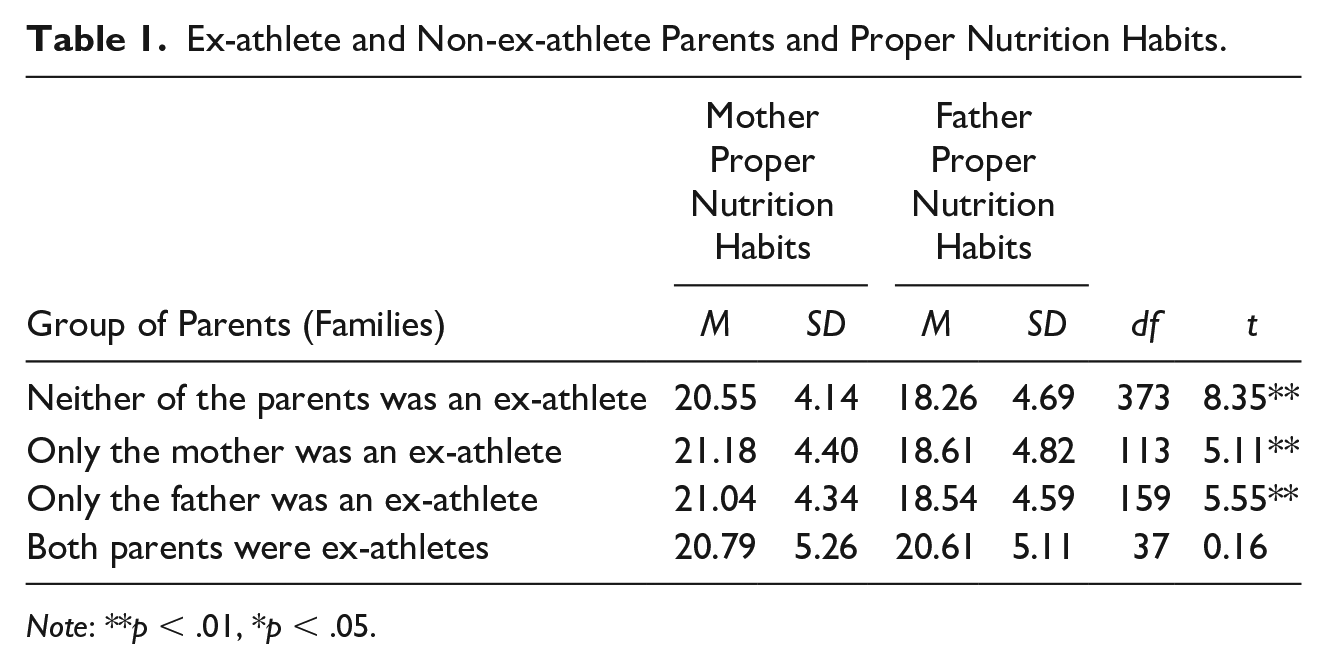
Note: **p < .01, *p < .05.
Mothers’ and Fathers’ Sport Activity, their Feeding Styles, and the Sport Activities of Their Children.
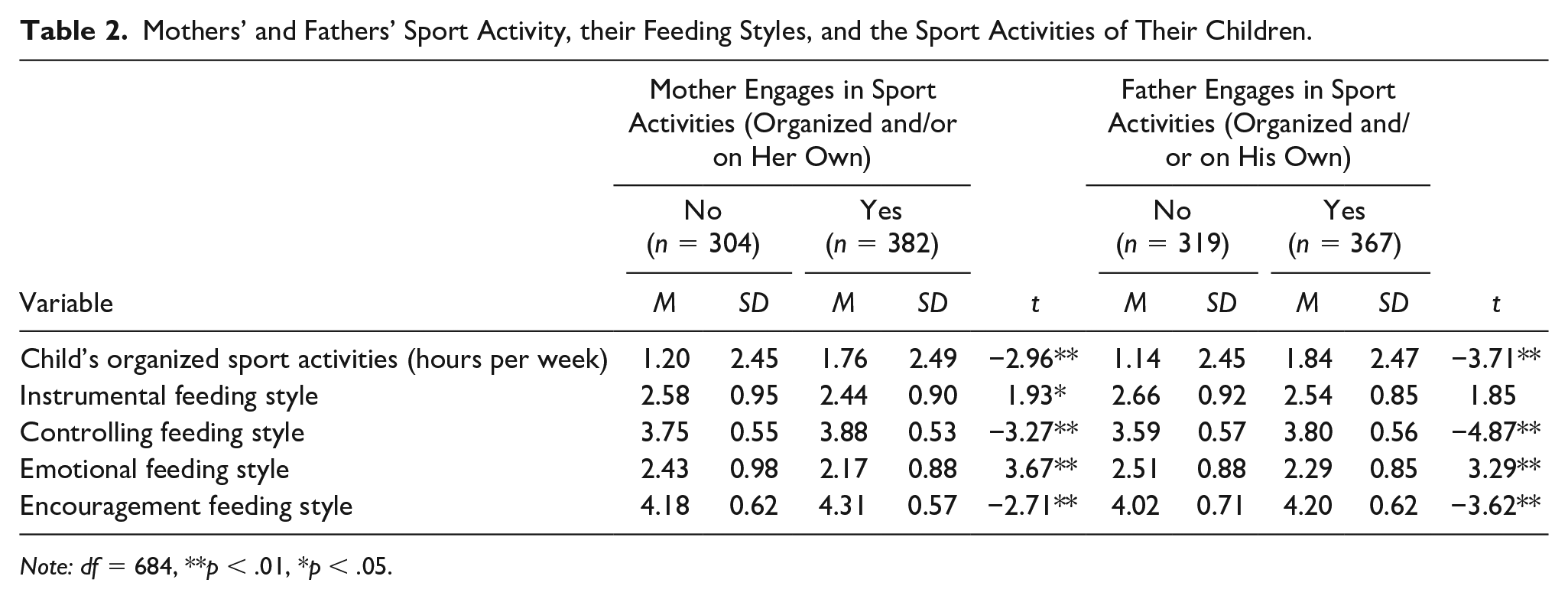
Note: df = 684, **p < .01, *p < .05.
Feeding Styles and Children’s Organized Sport Activities in Families with and without Athletic Histories
To verify that mothers’ and fathers’ individual athletic history experiences are related to their feeding styles and their children’s sport activities, we conducted an analysis of variance (ANOVA).
The actual conditions under which a child is brought up can be appraised with the simultaneous consideration of the feeding styles of both parents. Previous research has shown the compatibility of mothers’ and fathers’ tendencies in each of the four parental feeding styles (Lipowska et al., 2018). To calculate parental feeding styles (taking into account the tendencies of both parents), we used the model already tested by Lipowska et al. (2018). In this study, the model also proved to be well fitted to the data (χ2 = 55.91, df = 12, CFI = 0.97, RMSEA = .073). Factor loadings for mothers’ and fathers’ contributions to parents’ feeding styles model were respectively: .74 and .72 for instrumental, .71 and .73 for emotional, .68 and .72 for control over eating, .67 and .68 for encouragement feeding style.
In the next step, we compared the standardized factor scores of the parents’ feeding styles in two types of families: (a) those in which at least one parent was an ex-athlete and (b) those in which neither parent was an ex-athlete (Figure 2). The results of the independent samples tests showed that when at least one parent was an ex-athlete, the controlling feeding style was used more often and the emotional feeding style was used less often in comparison to when neither parent was an ex-athlete (respectively: t = −3.88, df = 684, p < .01; t = 2.12, df = 684, p < .05). For the other two styles, the differences were not statistically significant.
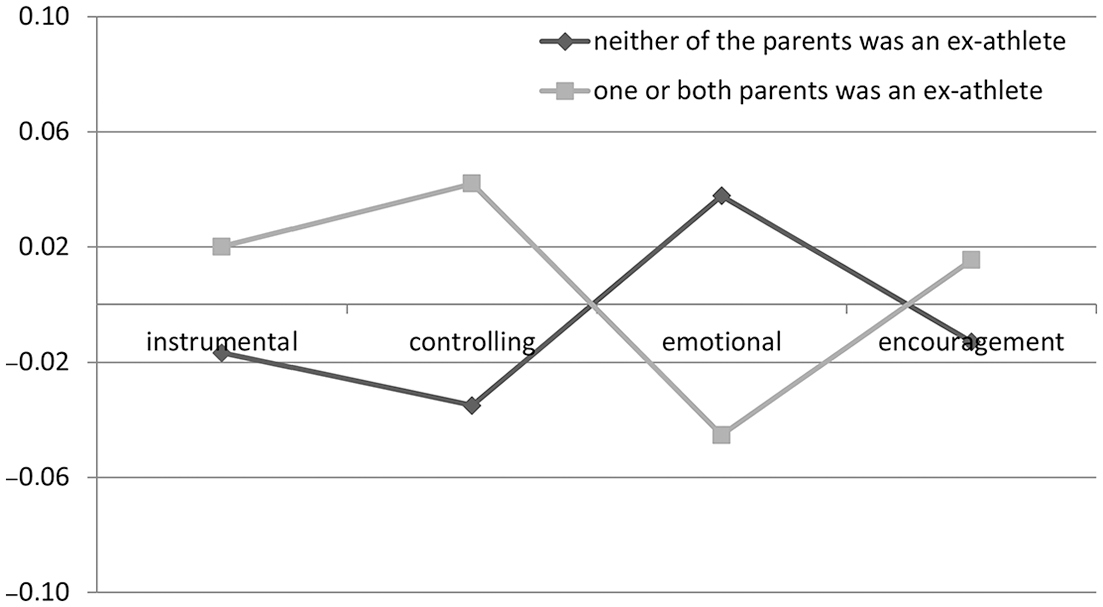
Ex-athlete status of the parents and (both) parental feeding styles (average of standardized factor scores).
We also examined whether children brought up in families with differing parental athletic histories differ in sport activity. The results showed that children from families in which at least one of the parents was an ex-athlete spent more hours per week doing organized sport activities (M = 1.78, SD = 2.83) compared to children from families in which the parents were not athletes (M = 1.29, SD = 2.14), t = −2.59, df = 684, p < .01.
Children’s Organized Sport Activities and Parental Feeding Styles in Families with and without Current Physical Activity
To verify that mothers’ and fathers’ current sport activities are related to their feeding styles and their children’s sport activities, we conducted a series of independent sample tests. The differences were significant between the group of mothers who currently practice sport and the group of mothers who do not practice sport regularly (Table 2). Mothers who engage in sport activities, in an organized manner or on their own, use controlling and encouragement feeding styles more often and the emotional feeding style less often in comparison to women who do not exercise. In addition, their children spent more hours per week doing sport activities. A similar pattern of differences was noted between fathers who are currently involved in sport activities and fathers who are not.
Similar comparisons to families with and without athletic histories were made for groups of families that differed in current level of parental sport activity (Figure 3). ANOVA results show that in families in which neither the mother nor father practiced sport regularly, parents were less likely to use controlling (F(2, 685) = 18.22, p < .01) and encouragement (F(2, 685) = 9.00, p < .01) feeding styles, and were more likely to use the emotional (F(2, 685) = 8.84, p < .01) feeding style in comparison to families in which at least one of the parents regularly practiced sport.
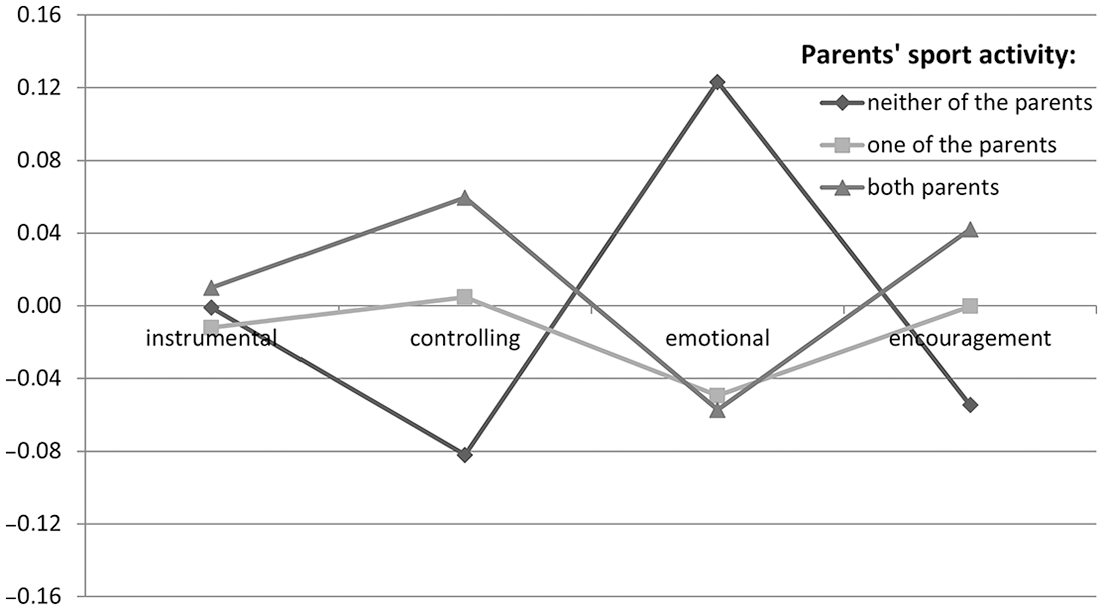
Parents’ sport activity and parental (both) feeding styles (average of standardized factor scores).
We also examined whether children brought up in families with current sport experiences differ in sport activity. As we expected, the sport activity of the parents is also important in relation to the number of hours spent by their children on sport activities (F(2, 685) = 7.98, p < .01). Children from families in which both parents practice sports spend more hours per week doing organized sport activities (M = 1.92, SD = 2.49) compared to children from families in which sport was practiced by one (M = 1.47, SD = 2.45) or neither (M = 1.02, SD = 2.44) of the parents.
Mothers’ and Fathers’ Proper Nutrition Habits and Feeding Styles
To test the hypothesis about the relationship between the parents’ proper nutrition habits and their feeding styles, we conducted four regression analyses in which the dependent variables were each of the four feeding styles, and the predictors were the mother’s and father’s proper nutrition habits. In all models, we also included the child’s sex as a potential moderator of these relationships.
The model for the parent’s instrumental feeding style variable turned out to be statistically insignificant—both at the level of predictors (F = 1.37, p = .23) and when considering the interaction with the sex of the child (F = 1.12, p = .34). Similar results were found for the parent’s emotional feeding style (F = 1.64, p = .15 and F = 1.12, p = .35, respectively). The model for the parent’s controlling feeding style variable was statistically significant. The mother’s proper nutrition habits and the father’s proper nutrition habits were found to be important predictors of this feeding style. There was no interaction effect of the child’s sex—for both boys and girls, the greater the mother’s (β = 0.19; p < .01) and father’s (β = 0.10; p < .01) proper eating habits, the more commonly the parents used the controlling feeding style, F(2, 683) = 20.32, p < .01; R2 = .05. The results also confirmed the hypothesis regarding the parent’s encouragement feeding style. The greater the mother’s (β = 0.14; p < .01) and father’s (β = 0.12; p < .01) proper eating habits, the more commonly they used the encouragement feeding style, regardless of the child’s sex, F(2, 683) = 15.52, p < .01; R2 = 0.04.
Discussion
Current Physical Activity and Eating Habits of Ex-athletes and Non-ex-athletes
This study shows that previous sport activity in at least one parent translates into current PA in both parents. This may be associated with behavioral self-regulation processes, on the level of processes taking place within the relationship; motivation associated with undertaking certain behaviors may ‘spread onto’ one’s partner (Berli et al., 2018; Morris & Roychowdhury, 2020). In our study, we observed a higher frequency of being currently engaged in PA in families with an athletic history, which is in line with evidence found by other authors; ex-athletes have been previously shown to currently undertake more PA than non-ex-athletes (Bäckmand et al., 2010; Johansson et al., 2016; Kontro et al., 2018; Kujala et al., 2000; Pihl et al., 2006). It ought to be added that a smaller proportion of female ex-athletes (in comparison to male ones) continue engaging in PA. This result corresponds with a meta-analysis by Bellows-Riecken and Rhodes (2008), in which it was shown that lower levels of engagement in PA in families with children are more prevalent in mothers than fathers. This may be associated with the stereotypical roles prescribed to women, which are more focused on performing household tasks (Kosakowska-Berezecka et al., 2016).
The athletic history of one parent does not differentiate the levels of healthy eating habits—in this case, the participant’s gender was more important. Independently of whether they used to be athletes, the mothers who took part in this study were characterized by better eating habits and health practices in comparison to fathers. International research also indicates that women make better nutrition choices than men (Wardle et al., 2004).
It should be added that differences between mothers and fathers in terms of proper nutrition habits in our study became blurred in two cases: if both parents were ex-athletes and when the father was currently engaged in PA. The first may mean that male ex-athletes are aware of the importance of nutrition and adjust their eating habits to their partner’s. Male athletes are characterized by poorer eating habits (e.g., eating fast food and consuming more alcohol) in comparison to female athletes (Hull et al., 2016); it could be inferred that their previously held eating habits would continue after their sport career comes to an end (Alexandra-Camelia & Nicolae, 2017). The second case could be explained by research that indicates that men know the value of healthy eating, but women are more convinced about the importance of this behavior (Wardle et al., 2004). This may mean that current the PA of men is a factor that positively influences their beliefs regarding the importance of healthy eating.
In summary, ex-athletes engage in PA to a greater degree; however, independently of having done sports in the past, women are more likely to follow the rules of healthy nutrition; thus, hypothesis 1—that in families with an athletic history, the current PA of the mother and father is higher and the eating habits better—was confirmed only for PA. In the case of proper eating habits, gender, rather than the athletic history of one parent, was a differentiating factor.
Organization of Children’s Physical Activity and Feeding Styles in Families of Ex-athletes and Non-ex-athletes
At least one parent having done sports in the past positively influences the time children spend on PA. From the perspective of children’s engagement in regular PA, an important role is also played by emotional and appraisal support, which are expressed through giving attention and encouraging children to engage in PA (Edwardson & Gorely, 2010; Haddad et al., 2018; Timperio et al., 2013). Instrumental and transportation support expressed through buying equipment, enrolling the child in sport classes, and transporting the child to such classes are also particularly important for younger children (Edwardson & Gorely, 2010; Timperio et al., 2013). It can thus be inferred that ex-athletes translate their own sporting experience into organizing the PA of their children and that they are willing to give their children greater support in this regard. Research by Downward et al. (2014) also suggests the existence of an intergenerational transfer from parents having done sports in the past to higher levels of PA in children. It should be noted that, in this case too, the gender of the parents matters. Our research found that whether or not a mother has done sports in the past is not related to the time devoted by her children to PA, while the father’s athletic history is, indeed, related to his children’s time devoted to PA. In contrast, the previously mentioned studies indicate that if the mother or father are ex-athletes, this should translate into higher levels of PA in sons. In the case of daughters, levels of PA were markedly lower in comparison to boys, and the mother’s athletic history was associated with an increase in the amount of time devoted to PA (Downward et al., 2014).
Parents are responsible for organizing the nutrition of the entire family, and if they have better habits in this regard, it influences the eating of everyone in the house (Campbell et al., 2007). Our research has shown that parents’ athletic history positively influences the feeding styles they use. Even if only one of the parents is an ex-athlete, both parents use the control over eating style more often and the emotional feeding style less often than do parents who are not ex-athletes. The control over eating style seems to be crucial for the management of the child’s diet, because it is the parents who decide the quantity and quality of the food eaten by the child. Research shows that this style of feeding is used to a lesser degree by obese mothers (Wardle et al., 2002) and is more often used by fathers with healthy body fat levels (Lipowska et al., 2018). Control over eating also positively correlates with proper eating habits in children, such as eating fruit and vegetables as well as eating breakfasts, and negatively correlates with eating high-energy-density food (Lo et al., 2015). In turn, the emotional feeding style is positively correlated with children’s snack consumption (Sleddens et al., 2010) and it may be associated with the development of unhealthy eating patterns (Larsen et al., 2015). In the context of parents’ feeding styles, it is worthwhile to take into account the gender of the parent. While the athletic history of mothers does not differentiate the presented feeding style, fathers who are ex-athletes are characterized by more beneficial feeding styles in comparison to non-ex-athlete fathers. However, it ought to be added that, in line with previous research, parents are compatible in terms of their nutrition styles (Lipowska et al., 2018).
It is remarkable that no differences were observed in terms of the instrumental feeding style between families in which at least one of the parents used to do sports and families in which at least one of the parents was currently doing sports. This is particularly important, because treating food as a reward (Wardle et al., 2002) may be associated with higher responsiveness to outside stimuli associated with food and thus increase the probability of snacking between meals (Sleddens et al., 2010). Elliott et al. (2016) indicated that parents of junior football players promote healthy eating until the weekend, when they allow eating unhealthy products postgame. This sends a mixed message, with food becoming a reward after an effort. It could be that in the case of our research, similar to results regarding the parents of young Australian athletes (Elliott et al., 2016), parents being unaware of the best practices for organizing the process of feeding of children shapes poor eating habits in the children. Thus, it is necessary to increase parents’ knowledge about the detrimental effects of regulating the mood and behaviors of children through food as well as the necessity to foster an interest in a wide variety of types of food (Sleddens et al., 2010).
Summing up, the athletic history of parents positively influences their children’s engagement in PA and the parents’ presented feeding style (more often using the controlling and encouragement feeding styles and less often the emotional feeding style); therefore, hypothesis 2 can be accepted.
Organization of Children’s Physical Activity and Feeding Styles in Families with and without Current Physical Activity
In the case of the PA of children, the current PA that mothers and fathers engage in is not without importance—it fosters higher levels of engagement in organized PA in their children (especially if both parents are physically active). Our results are in line with other studies, which showed that parental physical exercise contributes to children’s participation in after-school sport classes (Cleland et al., 2005) and frequent PA even in only one parent is associated with higher PA in children in comparison to families in which neither of the parents are physically active. The highest levels of PA are reported in children (independent of gender) whose parents both engage in PA (Dollman, 2010), especially when the parents’ levels of moderate-to-vigorous PA (MVPA) are high (Fuemmeler et al., 2011). Parents’ perception of the importance of their own PA influences their children’s participation in team sports as well as their overall levels of PA (independent of gender). Our study has also shown that the current PA of the mother is important for children’s participation in organized PA. This is in line with a study by Erkelenz et al. (2014), who also indicated that a mother’s health behaviors and support influence her children’s physical fitness. Mothers’ levels of activity are associated to a higher degree than fathers’ levels with the PA of 10-year-old children, and a mother’s behavior as a role model is more significant than that of the father (Bois et al., 2005). It should be noted that a mother’s beliefs about her ability to promote PA translate into MVPA in her children (Rohde et al., 2018).
It is interesting that, in terms of feeding styles, the current PA of at least one parent is also important. In families in which neither parent is currently physically active, parents are less likely to use controlling and encouragement feeding styles and are more likely to use emotional feeding styles than families in which one or both parents are physically active. In this case, it is worth paying particular attention to the positive aspects of the encouragement feeding style, i.e., inducing interest in a variety of types of food (Wardle et al., 2002); this is associated with lower consumption of sweetened and energy-dense products as well as eating a more varied diet (Sleddens et al., 2010). Previous research has also shown that parents of overfat daughters use this feeding style less often (Lipowska et al., 2018).
Summing up, in line with hypothesis 3, the present PA of parents translates into children’s engagement in PA and parental feeding style (more frequent use of controlling and encouragement feeding styles and less frequent use of the emotional feeding style, in comparison to physically inactive parents). It ought to be added that proper eating habits turned out to be a significant predictor of controlling and encouragement feeding styles in the parents. Thus, hypothesis 4—that proper eating habits in mothers and fathers predict feeding styles—can only be accepted in the case of two of the feeding styles.
Strengths and Limitations
The large sample of ex-athletes and age-matched individuals in the control group is a clear strength of the current study. Moreover, while issues regarding the health and continued engagement in PA of ex-athletes have been investigated in previous research, it is a novel approach to analyze a person’s athletic history in the context of their current PA and the nutrition of their entire family. Some limitations of the current study can also be identified. Because of the limited sample of married couples in which both individuals are ex-athletes, the results for such couples should be interpreted with caution. Apart from this, in the future it would be worthwhile to conduct longitudinal or retrospective studies, which could provide better insight into the past eating habits of the participants. It would also be interesting to extend the research to include cross-cultural comparisons, comparing the family functioning of ex-athletes in different countries. Furthermore, our study used self-description measures for parents as well as parents’ answers to detail the ways in which the children spend their time. Despite the fact that this type of data is commonly analyzed in research, it does not provide a full insight into the parents’ and children’s behaviors in real-life situations.
Conclusions
One parent having done sports in the past translates into organized PA and more positive feeding styles in a family, primarily through increasing levels of current PA and proper nutrition habits. The athletic history of fathers seems to be more important in this context. In families where PA is an important part of life (at least one parent used to do sports or currently engages in PA) more beneficial patterns concerning parental feeding styles are observed. It is, however, necessary to educate all parents about the detrimental effects of the instrumental feeding style on shaping poor eating habits in children. The obtained results can therefore help in creating psychoeducational programs, and also show hints on important issues such as diet and PA and their role in shaping healthy habits in the family. Moreover, paying attention to the above issues at the level of psychoeducation can significantly reduce the increase in the rate of overweight and obesity in children and adolescents.
Footnotes
Declaration of Conflicting Interests
The author(s) declared no potential conflicts of interest with respect to the research, authorship, and/or publication of this article.
Funding
The author(s) disclosed receipt of the following financial support for the research, authorship, and/or publication of this article: The preparation of this paper was supported by grant 2015/17/B/HS6/04144 from the National Science Centre, Poland.
