



Abstract
This study aimed to examine an integrated model of the mediation role of need satisfaction and frustration in the association between the sibling relationship and interpersonal competence and social anxiety in young adults and their siblings. In a sample of 1621 pairs of siblings with a range age between 16 and 30 years old, the actor-partner interdependence mediation model showed that (a) a positive sibling relationship promotes need satisfaction, while a negative relationship promotes need frustration; (b) need satisfaction to promote interpersonal competence, while need frustration promote social anxiety; and (c) a mediation role of basic need in the association between sibling relationship and social anxiety and interpersonal competence. The need satisfaction perceived by the older siblings is negatively related to social anxiety and positively related to the interpersonal competence of younger siblings. These results showed the importance of focusing on sibling dynamics in the family context using a SDT approach.
Introduction
The Sibling Relationship
A phenomenon across the world that is characterizing the young adults is the progressive increase of time spent at home with origin family, delaying the age of leaving the house (Seiffge-Krenke 2013). The economic crisis and the growing youth unemployment rate in Europe have further increased the number of young adults who live with their family of origin. As a consequence of this process, it is possible to observe new family dynamics that in the past were extremely limited (Conger & Little, 2010). Most of the studies on the family dynamics of young adulthood focused on the relationships with parents, and this has often led to consider the study of sibling relations as secondary (Cicirelli, 1995; Lindell, Campione-Barr, & Greer, 2014). Cohabiting siblings during the transition to adulthood provide a new line of inquiry about the involved processes and the dynamics that merit to be explored (Conger & Little, 2010). Although numerous studies (Deater-Deckard & Dunn, 2002; Yucel & Yuan, 2015) have shown that a positive relationship between siblings has a fundamental role for the adequate socio-emotional development of individuals from infancy to adolescence, siblings relationship undergoes numerous changes during the period of young adulthood that need a specific focus of research. Specifically, in the period of transition to adulthood, brothers and sisters need to adapt to the new roles and create new forms of relations (Havighurst, 1972; Weisskirch, 2018). The developmental task of young adults is to become separate adults from their origin families transforming their previous relations with parents in a mature horizontal relationship. Furthermore, is typical of this phase of live the necessity to develop advanced interpersonal skills that could be crucial in the working environment and the groups of the community. Moreover, long-term relationships with romantic partners begin to develop starting the formation of new intimate relationship bonds. For young adults, cohabiting sibling relationships provide excellent opportunities to practice with social competencies and skills needed to make a successful transition into adult life (Cicirelli, 2013). Furthermore, in sibling exchanges, young adults have also the opportunity to learn social abilities, such as problem-solving, emotion regulation, and conflict resolution that are crucial to face the challenges of adulthood (Conger, Williams, Masyn, Little, & Shebloski, 2009).
For siblings, living together in a transition period to adulthood can offer opportunities for mutual support in facing developmental challenges, but on the other hand, if the relationship between siblings is conflictual or negative, it can become an additional source of stress, making the process of acquisition of the role of adults even more difficult. Sibling relationships have an impact on psychological well-being across the life span and then also in young adulthood (Cicirelli, 1995; McHale, Updegraff, & Whiteman, 2012; Milevsky, 2005; Milevsky & Heerwagen, 2013). A positive sibling relationship is generally associated with life satisfaction, social competence, and academic achievement (Alfaro & Umaña-Taylor, 2010; Hollifield & Conger, 2015; Kramer & Conger, 2009), while a negative sibling relationship is generally associated with aggression, anxiety, and depressive moods (Buist & Vermande, 2014; Campione-Barr, Lindell, Greer, & Rose, 2014). Although the importance of relationships between siblings for social development in the different developmental ages has been shown in previous studies, the processes and psychological mechanisms through which this influence occurs are unclear.
Self-Determination Theory
Recent studies (van der Kaap-Deeder, Vansteenkiste, Soenens, Loeys, Mabbe, & Gargurevich, 2015; van der Kaap-Deeder, Vansteenkiste, Soenens, & Mabbe, 2017) have begun to identify the satisfaction and frustration of basic psychological needs, described by the self-determination theory (SDT; Ryan & Deci, 2017), as possible factors to explain the association between sibling relationship and psycho-social development. Self-determination theory is a macro theory of human development for understanding factors that promote or undermine motivation, psychological adjustment, growth, and development in several contexts and life domains (Ryan & Deci, 2017). Self-determination theory has an organismic perspective, assuming that all humans have an innate curiosity, proactivity, and predisposition to the social affiliation that is characterized by the inherent needs of a human being to be satisfied in the feeling of autonomy, competence, and relatedness. Within SDT, people’s psychological needs (autonomy, competence, and relatedness) are considered as “nutrients that are essential for growth, integrity, and well-being” (Ryan & Deci, 2017, p. 10) that require to be satisfied to have an optimal functioning (Ryan & Deci, 2017). The need for autonomy refers to the fact that people feel a sense of volition in their activities and that they are the sources of their behaviors; the need of competence, instead, implies a feeling of efficacy in the daily activities and the ability to manage specific or everyday situations; the need of relatedness, in the end, indicates a feeling to be connected and valued with others. Psychological need satisfaction is necessary for human development and countless studies have shown how satisfaction of needs produces well-being and positive adjustment, while when even one of the three needs is frustrated, this leads to ill-being and maladjustment (Ryan & Deci, 2017).
From the theoretical framework of SDT, a crucial role is attributed to social contexts that can support or thwart basic psychological needs, supportive social context promotes need satisfaction and in turn, this produces positive outcomes, instead of thwarting social context promotes a state of need frustration that have as consequences negative outcomes (Ryan & Deci, 2017). Specifically, in line with the SDT, siblings could be considered social contexts that can support or thwart psychological basic needs of autonomy, competence, and relatedness (van der Kaap-Deeder et al., 2017). Indeed, siblings that have a common interest and spend time together could support each other the satisfaction of the need of the relatedness, at the same time they could serve as a reciprocal model for learning to face the challenges of their age (need of competence) and to stimulate each other to take personal initiatives to be what they want to be (need of autonomy). On the contrary, however, negative sibling relations could promote a feeling of isolation (relatedness frustration), creating a sense of insecurity about interpersonal skills (competence frustration), and experiencing life events as more evaluative and pressuring (autonomy frustration).
The few studies regarding siblings and psychological basic needs (van der Kaap-Deeder et al., (2015); van der Kaap-Deeder, Vansteenkiste, Soenens, & Mabbe, (2017) focused on well-being, while the development of social skills is still unexplored. In turn, several studies (Ryan & Deci, 2017) have shown that the satisfaction of psychological basic needs could promote interpersonal competence and social skills, while a state of need frustration of these needs could harm social adjustment. Indeed, Costa, Ntoumanis, and Bartholomew (2015) have shown that need satisfaction promotes interpersonal competence (e.g., conflict management and providing emotional support), while need frustration promotes an excessive interpersonal sensitivity. In a sample of parents, Costa et al., (2019) have shown also that need satisfaction promotes a supportive interaction, while the perception of need frustration leads to a psychological controlling interaction. Furthermore, Michou, Mouratidis, Ersoy, and Uğur (2016) showed that students that reported higher social development goals reported also less need frustration, and La Guardia, (2007) reported also participants with a higher level of need satisfaction express more authentically their emotions.
Sociability in Young Adulthood
Classic sibling literature on social learning perspective has shown that adolescents and young adults could learn social competencies in their interactions with siblings by observing interactional styles and shaping in everyday interactions (Whiteman, McHale, & Soli, 2011). Considering the challenges that young adults need to face, it seems relevant to focus on social skills that could help them to orientate. Interpersonal competence, in fact, provides the basic aptitudes, such as disclosing personal feelings and using negotiation to manage conflicts with others that are associated with well-being and a positive adjustment (Buhrmester, Furman, Wittenberg, & Reis, 1988). However, from the dark side of social development, social anxiety could be a negative outcome extremely problematic for young adults (Cheng et al., 2015; Wong & Rapee, 2016). Social anxiety, in fact, is characterized by anxiety and fear in social situations and by the judgment of evaluation by others and represents a negative aspect of social development (Wong & Rapee, 2016). Thus, interpersonal competence and social anxiety could represent two central characteristics of social development in young adults, for which sibling relationships could provide an important context that could promote them through the satisfaction and frustration of psychological basic needs.
The Present Study
In this perspective, this study aimed to test an integrated model (Figure 1) of the mediation role of need satisfaction and frustration in the association between the sibling relationship and interpersonal competence and social anxiety in young adults and their cohabitating siblings. In fact, previous studies (van der Kaap-Deeder, et al., 2015, 2017) showed the relevance to take account of the interdependence between siblings, and for this reason, to better understand the sibling dynamics, this study uses an actor–partner interdependence model (APIM Kenny, Kashy, & Cook, 2006) that simultaneously tests the predictive role of the self-perceptions of both siblings in the prediction of their own variables and in the prediction of the variables of the other sibling. Considering the extreme complexity of large families, only couples of siblings cohabiting in families with only two children were included in this study. Hypothesized model.
For this reason, (a) the first hypothesis of this correlation research was to verify the association between older and younger sibling perceptions of the sibling relationship and older and younger sibling level of need satisfaction and need frustration. It was expected that in both the siblings, a positive perception of sibling relationship would be positively related to need satisfaction while it would be negatively related to need frustration. The second hypothesis (b) of this study was to verify the association between older and younger sibling level of need satisfaction and need frustration and older and younger sibling level of interpersonal competence and social anxiety. It was expected that in both the siblings, need satisfaction would be positively related with interpersonal competence and negatively related with social anxiety, while need frustration would be negatively related to with interpersonal competence and positively related with social anxiety. The third hypothesis (c) of this study was to test the mediation role of the older and younger level of need satisfaction and need frustration in the association between older and younger sibling perception of the sibling relationship and older and younger sibling level of interpersonal competence and social anxiety.
Method
Participants
A total number of 1621 pairs of biological cohabitating siblings (3242 participants) with a range age between 16 and 30 years old. Older siblings (718 males and 903 females) ranged between 18 and 30 years old with a mean age of 23.45 years (SD = 2.70), younger siblings (726 males and 895 females) instead ranged between 16 and 24 years old with a mean age of 19.65 years (SD = 2.46). A categorization based on the age of younger siblings reported that 374 younger siblings were adolescents with had an age between 16 and 17 years old, while 1247 younger sibling were young adults with an age between 18 and 24 years. Regarding age spacing between siblings, these ranges between 1 year and 8 years (M = 3.80, SD = 1.60), with 365 couples of siblings (23%) that have a difference of ages less or equal to two years, and 1256 couples of siblings (78%) that have a difference of ages higher or equal to 3 years. Examination of gender dyads showed that 851 couples of siblings (53%) were of the same gender, while 770 were couples of different gender (48%) and specifically, 337 couples of siblings (21%) were composed by two males, 381 couples of siblings (21%) were composed by the older sibling that was male and the younger sibling that was female, 389 couples of siblings (24%) was composed by the older sibling that was female and the younger sibling that was male, 514 couples of siblings (32%) was composed by two females. Regarding the education level, most of the older siblings obtained a high school diploma (N = 1166; 72%), 360 obtained a degree (22%), and 95 had a middle school certificate (6%). Most of the younger siblings instead had a high school diploma (N = 942; 58%), 84 obtained a degree (5%), and 594 had a middle school certificate (37%).
Procedure
The convenience sample of this study was composed of participants that were recruited by psychology graduated students inside their research activity didactic program at the University of Messina. Couples of siblings were recruited by soliciting volunteers through personal knowledge, acquaintances, friends, and appeals to the local community and organizations in Sicilia and Calabria (Italy). During the instruction for data collection was emphasized the need for heterogeneity regarding the gender dyads to have adequate representativeness of males and females but without imposing a priori constraints. Inclusion criteria were as follows: to be cohabitating siblings in the origin family at least one of the two siblings in the age range of 18–24; and only two siblings in the family. Psychology graduated students with siblings that meet the inclusion criteria from the same psychology class were not allowed to be contacted to be included in the study. Both siblings completed the questionnaires and both were free to provide their willingness to participate in the research. After that, the study’s purpose was described and both the siblings signed the informed consent (in addittion to the authorization of parents of participants under the age of 18); they completed the questionnaires individually under the supervision of a research collaborator. In the protocol for participants was clearly stated to answer to all the items and after the end of the filling the graduated students controlled with the participants that all the items were completed from both the siblings and in case of some missing answer, participants were invited to verify whether it was an oversight during compilation or an unenforceable answer. All the students before completing the questionnaires and upon delivery they were informed of the possibility of suspending their participation at any time without this leading to any consequence. Following the guidelines of the declaration of Helsinki and the Italian Psychological Association (AIP), the local ethical board approved the study and the privacy and anonymity of the data were guaranteed and the identification of the protocols of the pairs of siblings was carried out through the assignment of anonymous alphanumeric code.
Measures
Descriptive Statistics and Correlation Analyses.
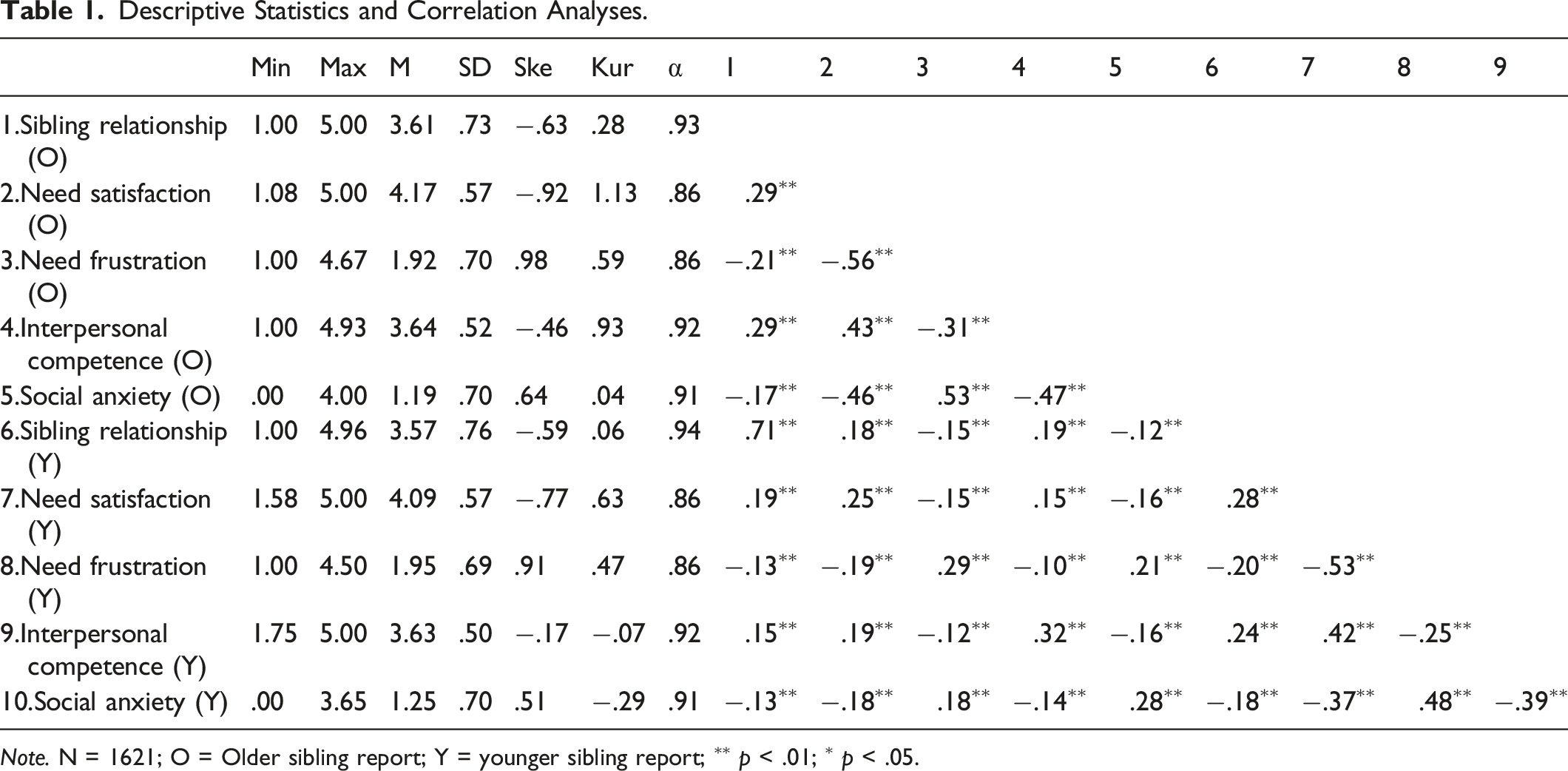
Note. N = 1621; O = Older sibling report; Y = younger sibling report; ∗∗ p < .01; ∗ p < .05.
Need satisfaction and need frustration were measured with the 24-item Basic Psychological Need Satisfaction and Frustration Scale (BPNSFS; Chen et al., 2015; Costa et al., 2017; Liga et al., 2018). Each item describes the satisfaction (e.g., “I feel a sense of choice and freedom in the things I undertake”) or the frustration (e.g., “I feel that people who are important to me are unfriendly to me”) of psychological basic needs using a 5-point Likert scale ranging from 1 (completely disagree) to 5 (completely agree). Previous studies showed good psychometrics characteristics for this scale (Chen et al., 2015; Costa et al., 2017; Liga et al., 2018), and reliability in this study was good (Table 1).
Interpersonal competence was measured with the 40-item Interpersonal Competence Questionnaire (Buhrmester et al., 1988). Each item describes an interpersonal situation and participants rate their level of competence and comfort in that situation using a 5-point scale, ranging from 1 (I’m poor at this; I’d feel so uncomfortable and unable to handle the situation, I’d avoid it if possible) to 5 (I’m extremely good at this; I’d feel very comfortable and could handle this situation very well). Previous studies showed good psychometrics characteristics for this scale (Buhrmester et al., 1988), and reliability in this study was good (Table 1).
Social anxiety was measured with the 20-item Social Interaction Anxiety Scale (Mattick & Clarke, 1998). Each item describes a perception of fear of interacting in social situations (e.g., I am tense mixing in a group) using a 5-point scale, ranging from 0 (not at all characteristic of me) to 4 (extremely characteristic of me). Previous studies showed good psychometrics characteristics for this scale (Mattick & Clarke, 1998), and reliability in this study was good (Table 1).
Data Analysis
To examine mediating mechanisms in dyadic data, the actor-partner interdependence mediation model was used (APIMeM; Ledermann, Macho, & Kenny, 2011). This model is an extension of mediators in the standard APIM for distinguishable dyads. Actor–partner interdependence model allows studying the role of personal predictor variables on personal and partner criteria variables and the role of partner predictor variables on personal and partner criteria variables. In this case, APIMeM was conducted to test the hypothesized model (Figure 1) examining the effect of perception of sibling relationship of both siblings (predictor variable) on interpersonal competence and social anxiety of both siblings (outcome variables) through need satisfaction and need frustration (mediating variables) of both siblings. In accordance with APIMeM, perception of the sibling relationship of a younger sibling was correlated with the perception of the sibling relationship of the older sibling. Need satisfaction and need the frustration of younger and older siblings were all correlated with each other and also interpersonal competence and social anxiety of younger and older siblings were all correlated with each other. Considering that in sibling relationship is the order of birth could differentiate the members within the dyad, the APIMeM model for distinguishable dyads was used differentiating between older and younger sibling. In addition, to control for the effect of background variables, age and gender of younger sibling and age and gender of older sibling were included as control variables adding paths to all the study variables. Furthermore, the age of younger and age of older siblings was allowed to correlate, while correlations with gender were set to zero.
Results
Preliminary Analyses
The descriptive statistics and correlations analyses for all the study variables are presented in Table 1. Correlations showed that perception of the sibling relationship, need satisfaction, and interpersonal competence of both older and younger siblings were positively related, while all these variables negatively correlated with need frustration and social anxiety of both older and younger siblings. Similarly, need frustration and social anxiety of both older and younger siblings were positively correlated among them.
Actor–Partner Interdependence Mediation Model
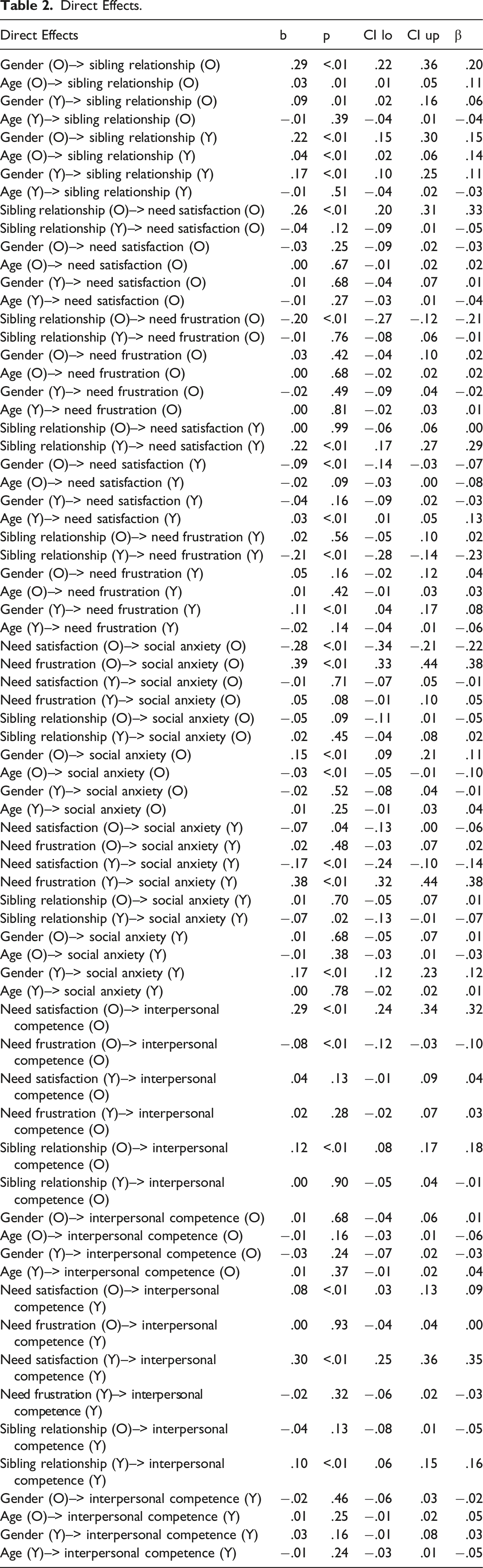
The hypothesized model was tested (Figure 2) and results of APIMeM indicated that the data fit well the model, χ2(5) = 14.61, p = .01, CFI = .99, RMSEA = .03, 90% CI (.02, .06), SRMR = .01. Examination of the direct effects (Table 2) showed that the perception of sibling relationship of older sibling positively predicted need satisfaction of older sibling, b = .26, p < .01, CI (.20, .31), β = .33, and interpersonal competence of older sibling, b = .12, p < .01, CI (.08, .17), β = .18, while negatively predicted need frustration of older sibling, b = −.20, p < .01, CI (−.27, −.12), β = −.21. Perception of sibling relationship of younger sibling, instead, positively predicted need satisfaction of younger sibling, b = .22, p < .01, CI (.17, .27), β = .29, and interpersonal competence of younger sibling, b = .10, p < .01, CI (.06, .15), β = .16, while negatively predicted need frustration of younger sibling, b = −.21, p < .01, CI (−.28, −.14), β = −.23. Furthermore, need satisfaction of older sibling positively predicted interpersonal competence of older sibling, b = 0.29, p < .01, CI (0.24, 0.34), β = .32, and interpersonal competence of younger sibling, b = 0.08, p < .01, CI (0.03, 0.13), β = 09, while negatively predicted social anxiety of older sibling, b = −.28, p < .01, CI (−.34, −.21), β = −.22, and social anxiety of younger sibling, b = −.07, p < .05, CI (−.13, −.01), β = −.06. Need frustration of older sibling, instead, positively predicted social anxiety of older sibling, b = .39, p < .01, CI (.33, .44), β = .38, and negatively predicted interpersonal competence of older sibling, b = −.08, p < .01, CI (−.12, −.03), β = −.10. Finally, need satisfaction of younger sibling positively predicted interpersonal competence of younger sibling, b = .30, p < .01, CI (.25, .36), β = .35, and negatively predicted social anxiety of younger sibling, b = −.17, p < .01, CI (−.24, −.10), β = −.14; need frustration of younger sibling positively predicted social anxiety of younger sibling, b = .38, p < .01, CI (.32, .44), β = .38. Structural model. Note. Only significant direct paths are reported for presentation and clarity purposes; coefficients of correlations between variables and paths from background variables were not presented for presentation and clarity purposes; standardized path coefficients. Direct Effects.
Indirect and Total Effects.
Discussion
The goal of the present study was to test in a SDT framework the role of sibling relationships in the promotion of interpersonal competence and social anxiety of young adults. Generally, results showed that not only own levels of need satisfaction and frustration are relevant for social outcomes but also that need satisfaction perceived by the older siblings has an impact for the social anxiety and interpersonal competence of younger siblings.
Specifically, the first purpose of this research was to verify the association between the perception of the sibling relationship and level of need satisfaction and need frustration. In accordance with SDT, social environments could be supportive or thwarting of psychological basic needs, and the results of this study extend this aspect in the sibling social context. Specifically, in both older and younger siblings, a positive sibling relationship promotes need satisfaction, while a negative sibling relationship promotes need frustration. These results are in line with previous studies (van der Kaap-Deeder et al., 2017) that reported that daily perception of sibling autonomy support and psychological control predicted, respectively, positively and negatively the satisfaction of psychological basic needs but provides also an additional contribution examining the perception of both the cohabiting siblings in a family environment. Furthermore, these results confirm the bidirectional association between young adult siblings (Whiteman et al., 2017) showing that the quality of the relationships between siblings has a strong impact for the adjustment not only for the younger sibling but also for the older.
The second purpose of this study was to verify the association between levels of need satisfaction and need frustration and levels of interpersonal competence and social anxiety. Results supported previous studies (Costa et al., 2015) on the positive association between need satisfaction and interpersonal competence in both siblings and the negative association between need frustration and interpersonal competence in the older sibling. In younger siblings, instead, need frustration was not related to interpersonal competence; however, the need satisfaction of older siblings was also positively related with interpersonal competence of younger siblings. This result confirms the interdependence of sibling relationships and suggests that older siblings could act as models for younger siblings promoting their interpersonal competence as the ability to initiate the interactions and offering emotional support. Similar results were also shown for social anxiety; specifically, in both siblings, own level of social anxiety was positively related with own level of need frustration, and negatively related with own level of need satisfaction. Furthermore, the need satisfaction of older siblings was also negatively related to social anxiety of younger siblings. These results demonstrated that individuals that do not feel free to make their own choices (need for autonomy), that feel not able to face social challenges (need for competence) and that feel rejected from others (need for relatedness), tend to develop a high level of anxiety for social activities. Furthermore, not only own level of need satisfaction has an impact on social anxiety but also older siblings with a high level of need satisfaction could create a positive social environment between siblings that could reduce the risk to develop social anxiety. The association between need satisfaction of older sibling with the interpersonal competence and the social anxiety (negatively) of the younger sibling is also in line with the social learning principle that generally is the older sibling to serve as a model for the younger (Whiteman et al., 2011), suggesting that although the psychological needs of both siblings are related with the social outcome of both siblings (as visible in the simple-correlation analyses), the social role of an older sibling could be perceived of greater value.
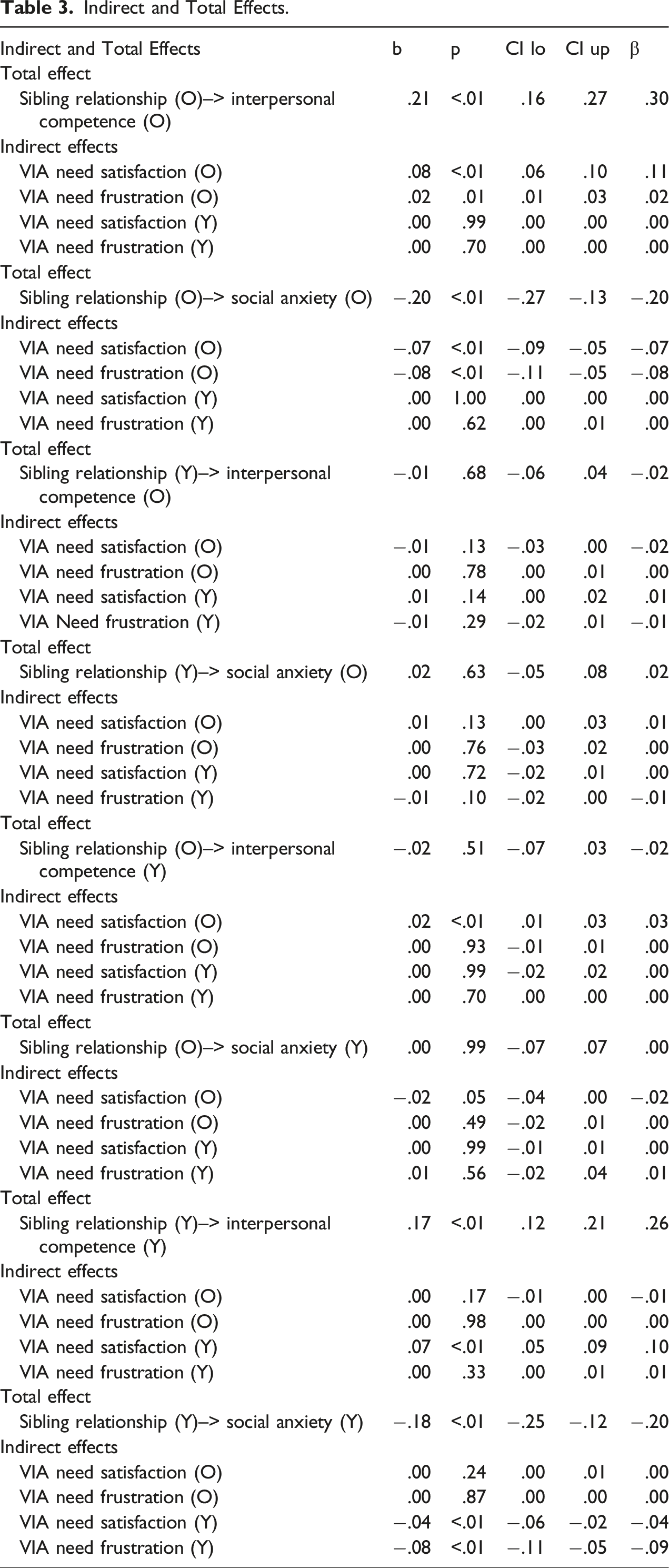
The third purpose of this study was to test the associations between the perception of the sibling relationship and the level of interpersonal competence and social anxiety. In line with previous findings on sibling relationships and social development (Deater-Deckard, & Dunn, 2002; Yucel, & Yuan, 2015), the examination of total effects of this study reported that in both siblings a positive perception of sibling relationships was related with interpersonal competence, while a negative perception of sibling relationships was related with social anxiety, and these associations were explained by the combination of direct and indirect effects. Specifically, own perception of psychological basic needs mediated the association between own perception of positive sibling relationships and interpersonal competence and own perception of negative sibling relationships and social anxiety. Overall, results clearly showed that siblings who experience a high level of positive sibling relationships are more likely to undergo need satisfaction and less need frustration, and in turn, this promotes interpersonal competence and reduces social anxiety. In this way, similarly to what already has been found in the parenting context (Costa, Cuzzocrea, Gugliandolo, & Larcan, 2016), sibling relationships that are perceived as supportive, friendly, and that stimulate free expression of own self could facilitate the development of social skills and interpersonal competence. On the contrary, sibling relationships that are perceived as thwarting, conflicting, and controlling could lead to isolation and insecurity about interpersonal skills, and as consequents, this could develop excessive sensitivity to the judgment of evaluation by others and fear in social situations. An interesting result is also the examination of the direct effects that showed that for both siblings a direct positive association was found between perception of sibling relationships and interpersonal competence, while sibling relationship perceived by the younger sibling had a negative direct association with own level of social anxiety. These results could be explained by the fact that siblings could promote social development not only by the mediation of psychological basic needs but also with a direct effect of modeling (Whiteman, Zeiders, Killoren, Rodriguez, & Updegraff, 2014). In sibling exchanges, indeed, siblings could learn social skills and become reciprocal models of social interactions. The integration of these results, with results showed in the first and second hypothesis suggests that the complexity of dyadic relationships between sibling tends to generate processes of mutual influence that could be manifested in different ways (e.g., modeling, supportive social context, and indirect effects).
The present study has several limitations. First, the correlation design of this study does not allow us to clarify the direction of dynamics over time. Although this study defines sibling relationship as an antecedent of need satisfaction and needs frustration, this could be also considered as an outcome. Future studies should try to investigate reciprocal relations using a longitudinal design. Furthermore, although in this study, multiple informants were used that allowed to control for the effects of both the siblings, a limitation to take into consideration is the sole use of questionnaire data, and for this reason, findings of within-person associations will be inflated due to mono-reporter bias. Future studies could examine actual relationships using observational design. Moreover, the scale used in this study did not differentiate between positive and negative sibling relationships, and future studies should try to extend these findings using a measure of warmth and conflict between siblings that are not two ends of the same continuum and thus should be studied separately. Another aspect to consider in future studies is the need to examine the role of other additional social sources (i.e., father and mother) in the family context. Finally, the use of a convenience sample of Italian cohabiting siblings represents an aspect that needs to be carefully considered for generalizing of the results.
From a practical perspective, this study provides a strong contribution in the understanding of the role of siblings in the family dynamics during the transition into adulthood, suggesting that the quality of sibling relationships can have a big impact on social development, through the mediation of psychological basic needs. Considering these results and that cohabiting sibling is a growing phenomenon, the importance of focusing on sibling dynamics in applied settings seems clear. This requires also more attention and future insights in this area of study, taking into account the feeling of need satisfaction and need the frustration of both siblings when addressing young adults.
