



Abstract
Research has demonstrated that caring for children with special health care needs (SHCN) affects parental health and well-being. The current study examines effects of community resources on physical and mental health of mothers and fathers caring for a child with SHCN. Analysis of the 2016 National Survey of Children’s Health found that fathers rated their physical and mental health higher than mothers. Greater neighborhood safety and fewer days missed school were significant community resources for both mothers’ and fathers’ physical and mental health. Health care resources were only significant predictors for mothers’ health but not for fathers’. The analysis found significant moderating relationships between days missed school and child symptomology and days missed school and maternal employment on mothers’ mental health. The importance of economic security and community resources for parental health when caring for a child with special health care needs is discussed, and practice and policy implications are developed.
Keywords
Research demonstrated that caring for a child with special health care needs (SHCN) affects parents’ well-being, health, and levels of stress (Bourke-Taylor, Pallant, Law, & Howie, 2012; Earle & Heymann, 2011; Ha, Hong, Seltzer, & Greenberg, 2008; Heiman, 2002; Hilbrecht, Lero, Schryer, Mock, & Smale, 2017; McCabe, Yeh, Lau, Garland, & Hough, 2003; McManus et al., 2011; Olsson & Hwang, 2008; Vaughan et al., 2012). As asserted by Breitkreuz, Wunderli, Savage, and McConnell (2014), research tends to focus on individual and family-level factors to explain these effects on parental and family well-being (Bethell et al., 2013), which has been found insufficient to adequately explain variations in health outcomes (Diez Roux & Mair, 2010). In addition, it appears that the majority of studies examine the effects on maternal or parental well-being without addressing the effects of gender on well-being (Garbarski & Witt, 2012; Pousada et al., 2013; Wang & Alvin Anderson, 2018). This current secondary data analysis of the 2016 National Survey of Children’s Health uses the concept of social ecology of resilience and examines the effects of community resources on mothers’ and fathers’ physical and mental health when caring for a child with SHCN.
Theoretical Frameworks
The current study is situated within two main theoretical frameworks: Exceptional care responsibilities related to caring for children with SHCN (Roundtree & Lynch, 2007; Stewart, Stutz, & Lile, 2018), and the social ecological concept of resilience (Breitkreuz et al., 2014; Ungar, 2011). Exceptional care responsibilities have been conceptualized as any care responsibilities that go beyond typical or traditional care expectations. This can include care for aging parents and young children, care for a sick spouse, or care for a child with SHCN. Special health care needs are defined as any chronic physical, developmental, emotional, or behavioral condition that requires services that go beyond what children without special health care needs use (McPherson et al., 1998). These care demands are characterized by greater intensity than typical care demands. They are often emergency driven, do not get easier over time, and require substantial adjustments by care providers and families. Stewart et al. (2018) developed the continuum of dependent care model based on exceptional care responsibilities and argue that family care exists on a continuum with typical care on one end and exceptional care on the other end. Access to resources in the carer’s environment including the family, the community, and the workplace plays a critical role related to stress and well-being experienced by care providers.
The social ecological concept of resilience provides additional understanding of the role of environmental resources for parents of children with SHCN. This concept assumes that thriving within adversity is influenced or activated by social and environmental factors (Breitkreuz et al., 2014; Ungar, 2011). Ungar (2011) defined four principles of resilience: Decentrality, complexity, atypicality, and cultural relativity. The principle of decentrality posits that resilience relies primarily on supportive physical and social environments. Complexity asserts that protective factors relevant for resilience are varied, contextual, and changing across the life span. Furthermore, Ungar (2011) argues that resilience needs to be understood as contextual as well, which is described by the principle of atypicality. Certain behaviors might be understood as problematic socially, but might be highly adaptive when considered within the specific context. For example, not allowing children to play outside might be considered problematic in terms of access to exercise and larger health outcomes, but it could be considered adaptive when children live in unsafe neighborhoods. Cultural relativity is also related to the principle of atypicality arguing that behaviors need to be interpreted within a cultural context and a historical time. In the context of the current study, the concept of social ecological family resilience is used to assess the impact of environmental factors on parental health, arguing that families caring for children with SHCN will do better in an environment that provides adequate, accessible, and culturally and individually relevant resources.
Factors Influencing Parental Health
Emerging empirical research supports the theoretical frameworks underlying this study and provides evidence for the effects of individual, family, and community resources on parental health when caring for a child with SHCN.
Individual and Family Factors
Exceptional care responsibilities have been found to impact parental well-being. According to Pousada et al.’s (2013) systematic literature review, the majority of studies reported a negative effect of caring for a child with cerebral palsy on parental physical and mental health and stress as compared to the general population of caregivers. Similarly, Earle and Heymann (2011) reported in their study analyzing nationally representative data from the Work, Family, and Community Nexus that caring for a child with SHCN negatively affected parents’ physical and mental health. These effects were found across different disability groups (Bourke-Taylor, et al., 2012; Schuh, 2008), with greater levels of behavioral problems, and cognitive and functional impairment resulting in greater negative effects on parents’ well-being (Pousada et al., 2013; Tobing & Glenwick, 2006; Vaughan et al., 2012). It is important to add that exceptional care responsibilities are not only family stressors but can also add to family resilience. Several qualitative studies have demonstrated that families can thrive when they are able to reframe the meaning of disability, spend time together as a family, and create new routines and rituals (Abu-Ras, Saleh, & Birani, 2018; Kendall & Shelton, 2003; Knestrict & Kuchey, 2009; Walsh, 2003). Family resilience or family functioning can therefore be negatively affected by exceptional care responsibilities, but greater family resilience can also be a protective factor and reduce parental stress and improve parental well-being (Pastor-Cerezuela, Fernández-Adrés, Pérez-Molina, & Tijeras-Iborra, 2020; Peer & Hillman, 2014).
Both parental stress and well-being and family resilience are affected by socio-economic factors. Hilbrecht, et al. (2017) reported in their secondary data analysis of 276 employed workers who were caring for an adult that their well-being was influenced negatively by hours spent with care activities and by the adequacy of available income and financial resources. This study measured well-being broadly including 13 domains. They asked participants about their satisfaction with physical and mental health, but also with their relationships, leisure, work, neighborhoods, or community amenities. A similar relationship of economic hardship and mental health was found for parents of children with SHCN (Lynch & Dickerson, 2012; Olsson & Hwang, 2008). Economic difficulties appear to affect family resilience independent of the level of child behavior problems (McConnell, Savage, & Breitkreuz, 2014), or might exacerbate the effects of children’s behaviors on health. For example, Garbarski and Witt (2012) reported in their study that the effect of children’s activity limitations on maternal physical health was greater for mothers living in poverty. Several qualitative studies confirm that parents of children with SHCN experience financial hardship (Breitkreuz et al., 2014; Heiman, 2002), related to the cost of care (Lynch & Dickerson, 2012) and the negative effects of exceptional care responsibilities on parental employment (Brannan et al., 2018; Porterfield, 2002; Sellmaier, Leo, Brennan, Kendall, & Houck, 2016). Financial strain and missing work are consequently indicators of objective caregiver strain (Brannan, Heflinger, & Bickman, 1997) addressing the connection between a family’s economic situation and the experience of stress.
There appear to be differences regarding stress and well-being between mothers and fathers of children with SHCN, even though this is not consistent across studies. Olsson and Hwang (2008) reported in their study of Swedish mothers and fathers of children with intellectual disabilities that mothers of children with intellectual disabilities had lower well-being scores than fathers of children with intellectual disabilities. Demands related to caring for a child with SHCN affected mothers’ mental health and self-rated physical health scores negatively, but did not affect fathers’ mental health and self-rated physical health (Earle & Heymann, 2011). Brannan et al. (2018) also reported that mothers of children with mental health issues scored higher on all dimensions of caregiver strain compared to participating fathers. Ha et al. (2008) found that mothers reported more somatic symptoms than fathers independent of the child’s disability status. In contrast, Schuh (2008) did not find any differences in levels of stress or well-being between fathers and mothers of children with disabilities. Further research looking at the effects of gender is therefore warranted.
Community Factors
A discussion of the relevance of community resources is needed to understand parental well-being according to the socio-ecological concept of resilience. Breitkreuz et al. (2014) report in their qualitative study that resilient families of children with disabilities were doing well because of the availability of qualified service providers such as therapists or respite workers. Accordingly, families who were struggling reported a lack of supportive services or a lack of qualified personnel. This resulted in additional stress related to working through barriers to access services or in stress because of an inability to recover from care responsibilities. This relationship between caregiver burden and health care was also found in quantitative research. Families who were able to access relevant health care services reported less caregiver burden (McManus et al., 2011). This included not only access to services but also the ability to navigate the system and the number of met health care needs. Access to health care was also related to the socio-economic situation of families, with poor families reporting more unmet health care needs. Families of color also reported less supportive relationships with the health care system (McManus et al., 2011).
Even resilient families stated in Breitkreuz et al.’s (2014) study that access to services was only possible through persistent advocacy and that friends and peers were critical for gaining necessary information about services. This need for parental advocacy also explains some of the time burden experienced by parents of children with SHCN (McManus et al., 2011; Rosenzweig, Brennan, & Ogilvie, 2002). Family members and friends are not only critical sources of information (Shilling et al., 2013), but they also provide child and respite care with resilient families reporting more supportive communities (Breitkreuz, et al. 2014; Ha, Greenberg, &, Seltzer, 2011; McCabe et al., 2003). Social support is not limited to supports from friends and families, but includes a families’ sense of supportive neighborhoods, which were found to improve both family functioning and mental health for mothers of children with autism spectrum disorder (Whitehead, 2017). Unfortunately, studies also demonstrate that parents often lack this support from family, friends, and neighbors (Rosenzweig, et al., 2002; McCabe et al., 2003; Whitehead, 2017). Social support and a sense of belonging in addition to a family’s economic situation appeared to moderate the negative effects of child behavior problems on family functioning and well-being (McConnell et al., 2014; Schoeder & Remer, 2007; Skok, Harvey, & Reddihough, 2006).
Child care and school services are additional community resources accessed by children with SHCN. Abu-Ras, Saleh, and Birani (2018) reported in their qualitative study of Palestinian mothers of children with disabilities that the inadequate school environment was one of the challenges they faced. This is also reflected in a majority of U.S. parents reporting difficulties in accessing special education services (Friesen, 1989). In addition, school personnel are often not trained to deal with special health care needs, especially with behavioral issues. This can result in schools calling parents to pickup their children (Rosenzweig, Brennan, & Ogilvie, 2002), and in children with disabilities being suspended from school in higher rates than their non-disabled peers (Sullivan, Van Norman, & Klingbeil, 2014). Not surprisingly, education was the second most cited concern of parents in a study by Heiman (2002). Parents also reported challenges in accessing child care and after-school services (Ceglowski, Logue, Ulrich, & Gilbert, 2009; Jinnah & Stoneman, 2007). These barriers were either related to the absence of appropriate services or issues regarding access to available services. Access was either limited by service providers who suspended children because of their disabilities and the associated care requirements or by parents who un-enrolled their children because of fear for their children’s health and well-being related to the low quality of services. Studies so far have documented that access to education can be a challenge and concern for parents with exceptional caregiving responsibilities, but there does not seem to be research to date that directly examines the effects of school services on parental health. Adequate school services could directly affect well-being, since parents would have one less factor that creates worry, or it could affect health indirectly. For example, access to child care and school services can allow continued employment for parents (Kagan, Lewis, Heaton, & Cranshaw, 1999; Rosenzweig et al., 2002), which could boost the family’s income and socio-economic situation. Child care and school could also function as a form of respite or a break for parents from providing care and supervision (Whitmore & Snethen, 2017), which could positively affect parental stress and well-being. It is therefore warranted to include a broader definition of community services beyond health care services to better understand the effects of different community resources.
Based on the socio-ecological concept of resilience, this study looks at community supports and socio-economic status as protective factors for the mental and physical health of fathers and mothers of children with SHCN, examining the following questions: Are there differences in physical health and mental health between mothers and fathers caring for a child with SHCN? What community factors (social support, health care, schools, and neighborhoods) affect parental physical and mental health when controlling for individual and family-level characteristics? Are there differences/similarities in factors for mothers and fathers? Do community resources moderate the effects of a child’s health symptomology and of employment on parental health outcomes? Are there differences/similarities in these moderating effects for mothers and fathers?
Methods
Procedure
Data for the 2016 NSCH were collected from June 2016 through February 2017 (Data Resource Center for Child & Adolescent Health, 2018). Data were collected from households with a child age 0–17 (U.S. Census Bureau, 2018). This current study only includes children of age 6 –17 because of its focus on school services. Each household received a paper or web screener survey followed if eligible by a topical survey about one selected child from the household. Surveys were available in both English and Spanish. Children with SHCN were oversampled by 80%. The overall response rate was estimated to be 40.7%.
Participants
There were a total of 11,392 children with SHCN included in the 2016 NSCH. This current analysis focuses on responses of adult one, who filled out the survey. This decision resulted in health information from 11,177 adults, with 73.5% identifying as female. Over three quarters of the children lived in two-parent households (77.6%), and identified predominately as non-Hispanic White (71.2%), followed by Hispanic (10.6%), multiracial (7.9%), and non-Hispanic Black (7.1%). There was a fairly even distribution of children identifying as male (56.5%) and female (43.5%). Households selected for this current analysis reported on average 1.80 (SD = .830) children, and the selected child was on average 11.04 (SD = 4.547) years of age.
Measures
Based on the theoretical models of exceptional care and the social ecology of resilience, and on existing empirical evidence, the current study included the following measures: Demographic information, socio-economic status, family resilience, and extent of exceptional care responsibilities were included as control variables, since current research already established the links between these factors and parental health. Community resource measures including both formal and informal supports were included to test the theoretical assumption that environmental resources can positively affect parental health and well-being.
Health Outcomes
Parental health outcomes were measured with two items, one asking participants to rate their physical health and one to rate their mental health each on a scale of 1 through 5 ranging from excellent to poor. Both items were reverse coded so that higher scores reflected better physical and mental health.
Demographic and Socio-Economic Measures
Socio-economic measures included highest level of education of the responding adult, a dichotomous variable about employment for 50 out of the last 52 weeks, and the household income level. Responses to the child’s household income level or federal poverty level (FPL) were provided in four categories including 0–99% FPL, 100–199% of FPL, 200–399% FPL, and 400% FPL or more. Additional demographic measures included age of the responding adult, age of the selected child, number of children in the household, race of the selected child, and marital status. Both race and marital status were recoded as dichotomous variables based on the number of cases in the different categories. Marital status was therefore coded as 0 for single headed households and 1 for married/partnered households. Child’s race was coded 0 for White, and 1 for all other racial identities.
Exceptional Care and Family Measures
One measure was included to control for the effects of exceptional caregiving responsibilities, which assessed both how often and how much the child’s conditions affected their daily activities. Answer options included 1 daily activities never affected, 2 daily activities moderately affected some of the time, and 3 daily activities consistently affected, often a great deal. Two variables were included that measured the time spent providing and arranging care with 1 no daily care, 2 one hour or less per week, 3 1–4 hours per week, 4 more than 5 –10 hours per week, and 5 11 hours or more per week care was either provided or arranged. The family resilience scale consisted of four components. The question asked participants to rate how often they would do one of the following when facing a problem: (a) talk together about what to do, (b) work together to solve the problem, (c) know about strengths to draw on, and (d) stay hopeful in difficult times. The answer options on the composite measure ranged from 1 all or most of the time to 0–1 items, 2 all or most of the time to 2–3 items, and 3 all or most of the time to 4 items.
Community Resource Measures
Community measures asked about health care, school, social support, and neighborhood safety. One question focused on family-centered care and asked participants “if the child received care during the past 12 months, did he/she receive family-centered care?” The variable was recoded into a dichotomous variable with 0 meaning no-family-centered care received, and 1 meaning either families did not have a health care visit in the past 12 months or families received family-centered care. Another health services question asked if the child had experienced any unmet health care needs with answer options being either 0 meaning no or 1 meaning yes. Two questions were included to measure support from schools. One item asked caregivers to think about the past 12 months and report how often the child’s school “contacted you or another adult in your household about any problems he or she is having in school.“(no times, 1 time, 2 or more times). They also indicated “how many days did this child miss school because of illness or injury?” (none, 1–3, 4–6, 7–10, 11, or more days). Informal social support was measured with a single item asking respondents if they had “someone that you could turn to for day-to-day emotional support with parenting or raising children.” Response options were either yes or no. One question asked participants if they thought that their child lived in a safe neighborhood with answer option 1 somewhat or definitely disagree, 2 somewhat agree, and 3 definitely agree.
Data Analysis
Descriptive analysis was employed in a first step to better understand the demographic make-up of the sample. Comparisons between all independent and dependent variables for mothers and fathers in the sample were included using either chi-square analysis for categorical variables or t-test analysis for ordinal variables. Odds ratios were calculated for select significant chi-square results to better understand the size of the effect. Correlational analysis was employed to examine relationships between all dependent and independent variables for both mothers and fathers. Variables included in the moderation analysis were either mean-centered or dummy coded depending on their level of measurement. Then, interaction terms were created to examine moderating effects of community resources on employment and child symptomology. Last, independent variables were included in a stepwise linear regression to predict mental and physical health outcomes for mothers and fathers of children with SHCN.
Results
The following sections will provide more insights into the differences between mothers and fathers along the dimensions of socio-economics, community resources, care demands, and health outcomes, in addition to the findings of direct and moderated effects of these dimensions on maternal and paternal physical and mental health.
Comparative Findings between Mothers and Fathers
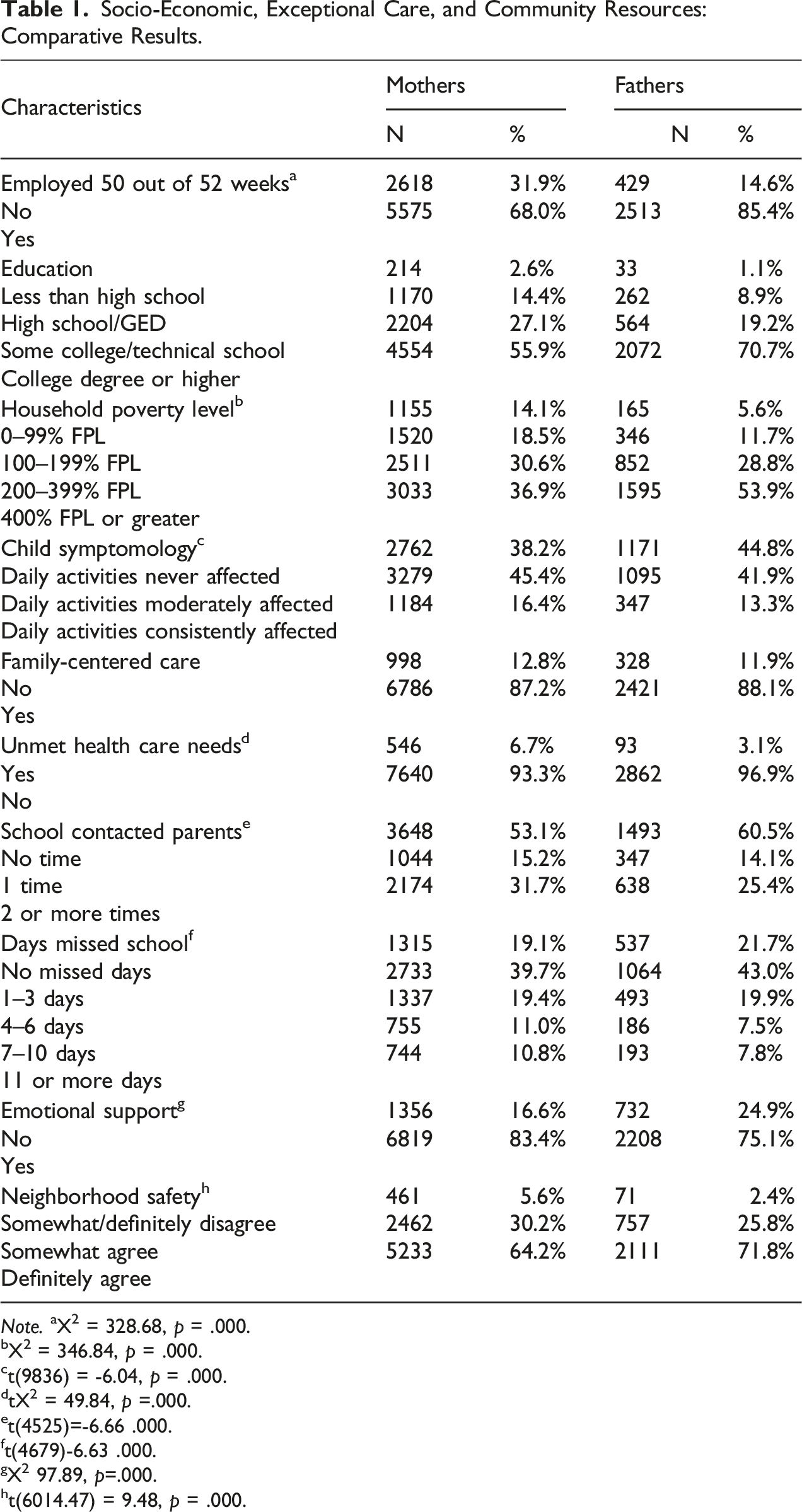
Socio-Economic, Exceptional Care, and Community Resources: Comparative Results.
Note. aX2 = 328.68, p = .000.
bX2 = 346.84, p = .000.
ct(9836) = -6.04, p = .000.
dtX2 = 49.84, p =.000.
et(4525)=-6.66 .000.
ft(4679)-6.63 .000.
gX2 97.89, p=.000.
ht(6014.47) = 9.48, p = .000.
There was a significant difference in employment status, with fathers being 2.7 times more likely to be employed 50 out of the last 52 weeks (X2 = 328.68, p = .000) than mothers. The majority of mothers reported a college degree or higher (55.9%), but there was a significant difference between gender and educational attainment, with fathers in this sample being 1.5 times more likely to have a college degree or higher. These differences in education and employment were reflected in household poverty levels with only 36.9% of mothers in this sample reporting household incomes above 400% or greater than the federal poverty level compared to 53.9% of fathers (X2 = 346.84, p = .000). Mothers (26%) were also significantly more likely to live in single-headed households than fathers (12.6%; X2 = 223.01, p = .000). There were also significant differences in the assessment of care demands with 45.4% of mothers rating the child’s health condition as affecting daily activities moderately some of the time, which was significantly worse compared to fathers’ rating (t(9836) = −6.04, p = .000). There were no significant differences in the ratings on time spent arranging or providing care with the majority spending no time (67.9% and 70% for mothers, 65.7% and 71.4% for fathers) or less than 1 hour (22.1% and 13.7% for mothers, 23.6% and 14.4% for fathers). Significant differences emerged in unmet health care needs, neighborhood safety, and school measures. Participating mothers (64.2%) definitely agreed with the statement that the child’s neighborhood was safe. This was significantly lower than the father’s rating of the child’s neighborhood safety (t(6014.47) = 9.48, p = .000). Mothers were also more likely to report unmet health care needs, more days being contacted by the school, and more missed days of school (see Table 1). Fathers’ physical and mental health ratings were significantly higher than mothers’ health ratings (t(5555.55) = 6.95, p = .000; t(5594.52) = 14.68, p = .000, respectively). Fathers reported an average score on the physical health question of 3.81 (SD = .89) and 4.12 (SD = .87) on the mental health question compared to mothers’ physical health score of 3.68 (SD = .96) and mental health score of 3.84 (SD = .94).
Community Variables Predicting Fathers’ and Mothers’ Physical Health
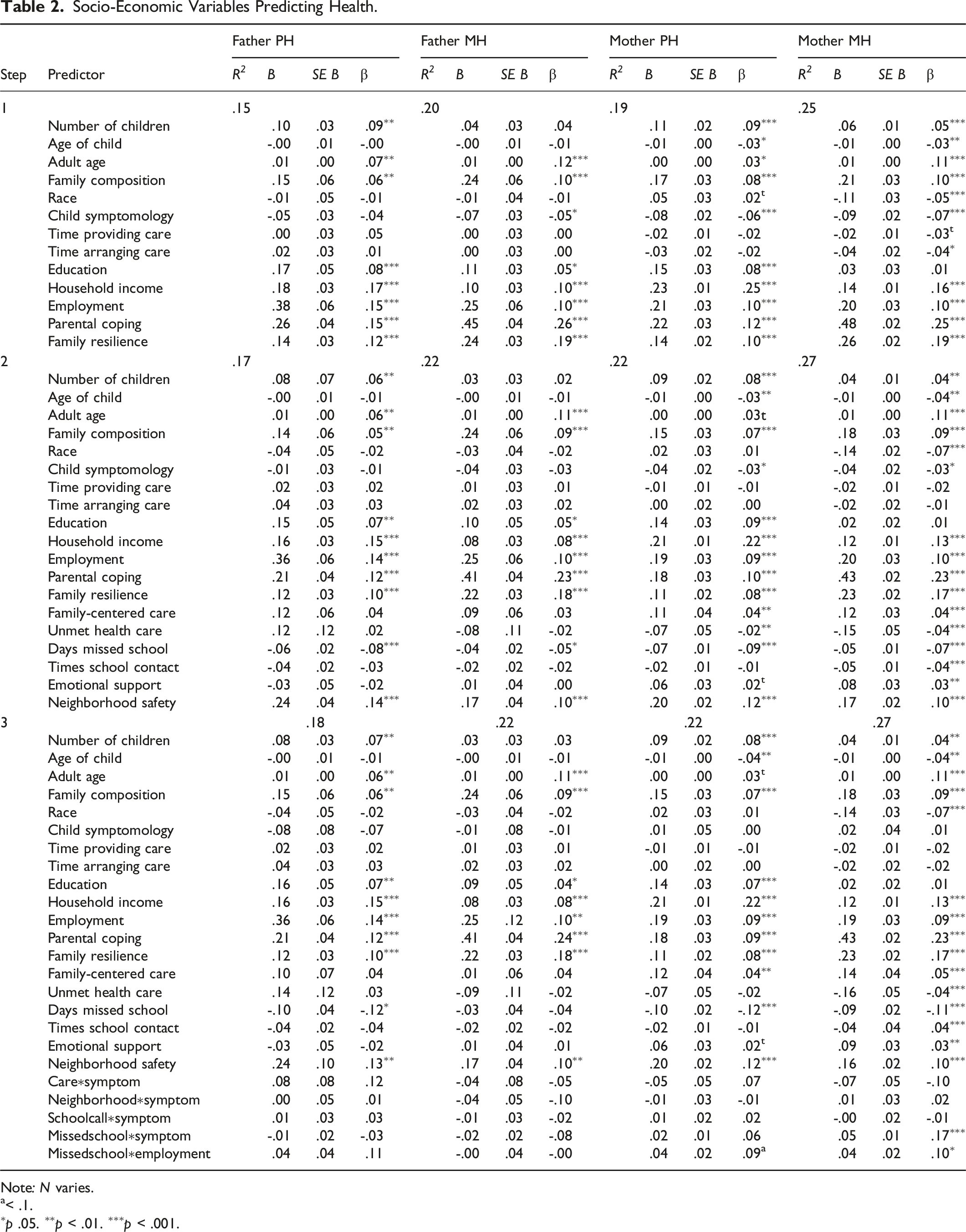
Socio-Economic Variables Predicting Health.
Note: N varies.
a< .1.
∗p .05. ∗∗p < .01. ∗∗∗p < .001.
Community Variables Predicting Fathers’ and Mothers’ Mental Health
Demographic, socio-economic, care, and community variables included in model 2 of the regression predicted 22% of fathers’ mental health and 27% of mothers’ (see Table 2). Older and married fathers and mothers reported higher mental health scores. For mothers, child’s age, race, and the number of children were also significant predictors of mental health. Child’s symptomology was a negative predictor of maternal mental health, with mothers whose children were affected more often and to a greater extent, having lower mental health scores. The effect of child symptomology on paternal mental health did not remain significant in step 2. All parents with higher incomes and more years of education who were employed 50 out of the last 52 weeks reported higher mental health scores. Fathers and mothers who were better able to cope with the demands of parenting and indicated more resilient families also reported better mental health. Similar to the findings on physical health, both neighborhood safety and the number of days missed school were significant predictors of both mothers’ and fathers’ mental health, but family-centered care, unmet health care needs, the number of times being contacted by the school, and emotional support were only significant predictors of maternal mental health.
Moderating Effects on Physical and Mental Health
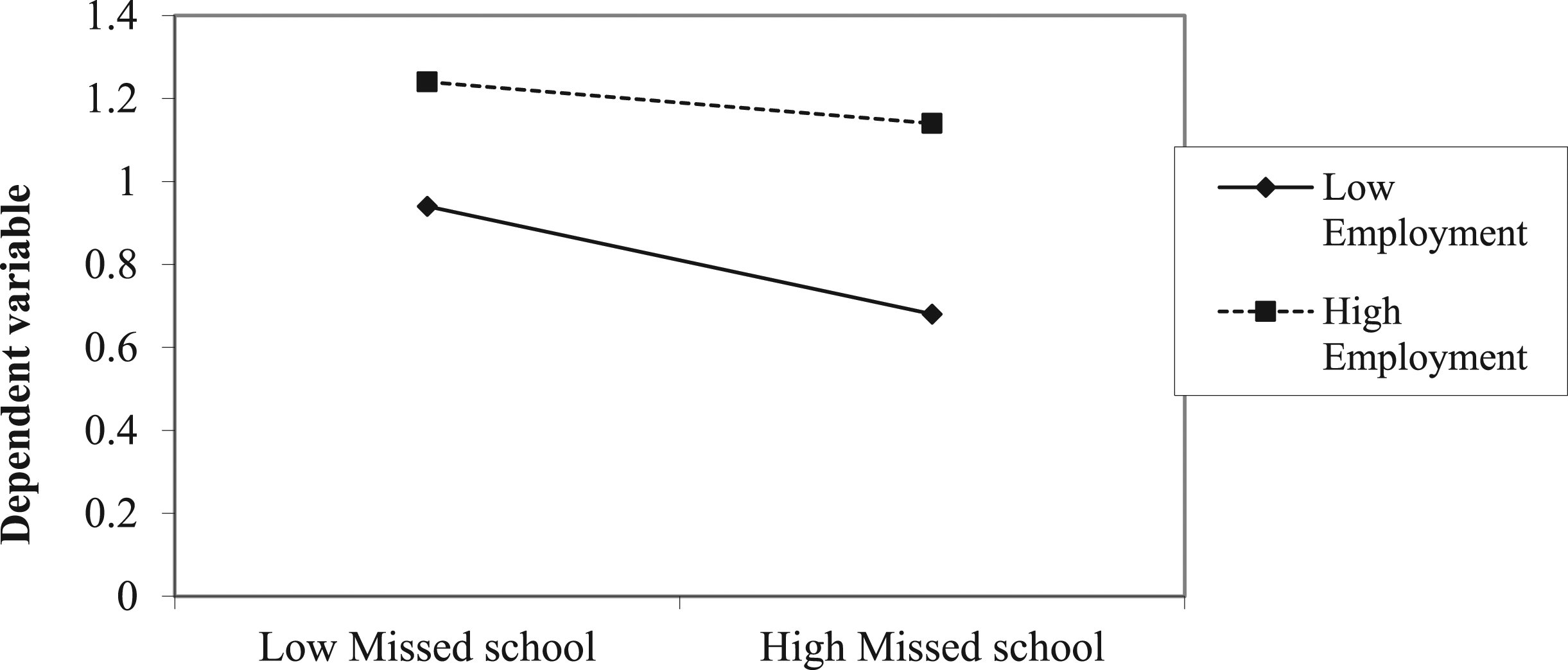
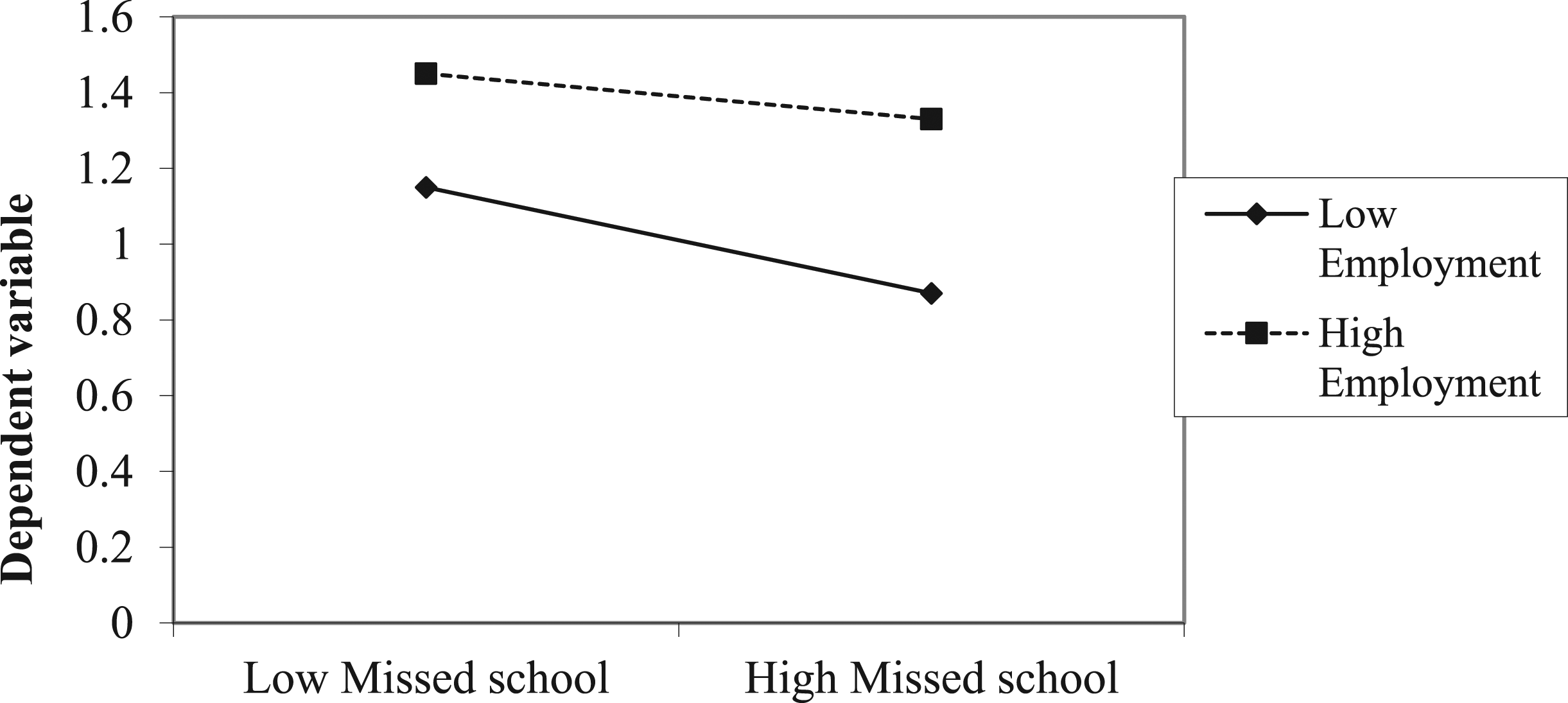
There were no significant moderating relationships for fathers’ physical or mental health, inclusion of the moderating relationships did not improve R2 for the final model predicting fathers’ physical and mental health (see Table 2). There were significant moderating effects for maternal mental health and a trend-level non-significant interaction for physical health. Inclusion of interaction terms did not improve overall variance explained for either maternal physical or mental health (see Table 2). Both the interaction between number of days missed school and child’s symptom level and the interaction between number of missed days school and employment were significant predictors of mothers’ mental health. Women whose children missed fewer days of school reported better mental health even with children with higher symptomology (see Figure 1). School attendance buffered the effects of a child’s symptomology on maternal mental health. This effect was greater for mothers of children with fewer symptoms. Mothers who reported being employed and whose children missed fewer days of school reported the highest mental health scores (see Figure 2). Missing more days of school had a smaller effect on employed mothers’ mental health scores compared to unemployed mothers’ mental health scores. Accordingly, mothers who reported not being employed and whose children missed more days of school reported the lowest mental health scores. Employment appeared to protect mothers’ mental health against the negative effects of missed school days. A similar trend level effect of employment and school attendance was found for maternal physical health (see Figure 3). Employed mothers’ physical health scores were higher than unemployed mothers’ physical health scores independent from the child’s school attendance, but increased missed days of school resulted in a greater drop in physical health scores for unemployed mothers than employed mothers. Employment therefore seemed to buffer the effect of school attendance on maternal physical health. School attendance moderating effects of child symptoms on maternal mental health. Employment moderating the effects of school attendance on maternal mental health. Employment moderating the effects of school attendance on maternal physical health.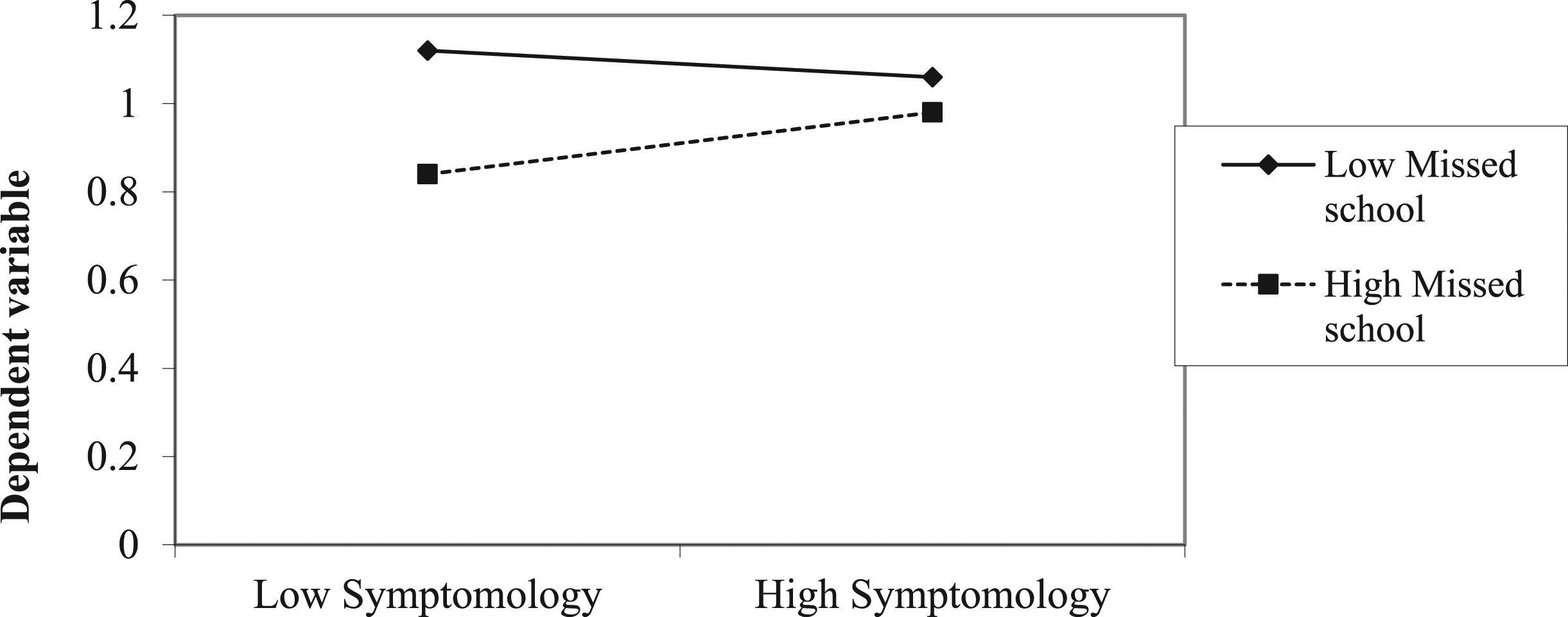
Discussion
Fathers in this study scored significantly higher on both physical and mental health outcomes than mothers. One reason for this difference could be the effect of employment and household income (Office of Disease Prevention and Health Promotion, n. d.). Mothers were significantly less likely to be employed 50 out of the last 52 weeks and reported significantly less household income. They also were more likely to live in single-headed households, which was another predictor of physical and mental health outcomes for both mothers and fathers. Socio-economic conditions for mothers were therefore significantly different from fathers, which might have affected health experiences. There were also differences in the factors predicting physical and mental health for mothers and fathers. For example, child symptomology and access to health care services were more relevant for mothers than for fathers. Mothers also rated their child’s symptomology as affecting daily activities more and were more likely to report unmet health care needs. Mothers therefore had a significantly different experience of their child’s symptomology and the effectiveness of health care services, which might explain why these factors were also more prevalent predictors of maternal not paternal mental and physical health. Since mothers were less likely to be employed, they might have also been primarily interacting with the health care system, which could explain that the absence of family-centered care was more relevant for their physical and mental health than for fathers. Emotional support was also only a significant predictor of maternal mental health. In Tower’s (2009) research, 50% of fathers reported that they did not have a friend to turn to for emotional support. The lack of statistical significance of emotional support as a predictor of paternal health outcomes might therefore be a consequence of their lack of social connectedness not a lack of their interest in or need for social support. Findings of this research confirm therefore the importance of including gender to better understand the nuances of risk and protective factors across gender.
All participants in this study had a child with SHCN, and findings support research that demonstrated the negative effects of caring for a child with SHCN on health and well-being (Earle & Heymann, 2011; Hilbrecht et al., 2017; McCabe et al., 2003; McManus et al., 2011; Olsson & Hwang, 2008). Even when including control variables, mothers who reported children with more severe symptomology reported both lower physical and mental health. The impact on fathers remained only significant for their mental health. Fathers tend to be less likely to provide day-to-day care for their children (Aumann, Galinsky, & Matos, 2011; Seltzer, Greenberg, Floyd, Pettee, & Hong, 2001), which might have a greater effect on physical well-being, for example, if lifting is required to perform hygiene routines. Worrying about the child’s future or about the family’s financial well-being might be factors playing into a sense of mental health, which appears to affect both mothers and fathers.
This study also confirms the socio-ecological model of resilience (Breitkreuz et al., 2014; Ungar, 2011) and the importance of considering structural factors when assessing health. Income and employment were significant positive predictors for both mothers’ and fathers’ physical and mental health. Financial stability as provided through employment can reduce financial worries that might affect mental health. It allows access to services and resources, such as health care, or healthy foods. Employment also appears to buffer the effects of a child’s missed days on maternal mental and physical health. In addition to economic factors, fathers and mothers’ health also profited from community resources. For example, neighborhood safety had a positive effect on parental physical and mental health. Experiencing ones neighborhood as safe allows for greater opportunities to exercise, which can both affect physical and mental health (Diez Roux, Mujahid, Hirsch, Moore, & Moore, 2016). If parents feel their neighborhood is safe for their children, they might also be more inclined to let them play outside, providing them possibly with short breaks and some respite for improved mental well-being.
Schools also appear to play an important role for parental physical and mental health, since more missed days of school negatively affected fathers’ and mothers’ health outcomes. Being contacted more often by the school was also a predictor of lower mental health scores for mothers. In addition to the direct effects of school attendance on mental health, there were also significant interactive effects between school attendance and child symptomology. Mothers of children even with more severe symptomology reported better mental health when their children missed fewer days of school than mothers of children who missed more days of school. Interestingly, mothers whose children missed more days of school reported better mental health when they indicated that their children had more severe than less severe symptomology. Mothers of children with more severe symptoms who missed a lot of school might have other supports in place that let them deal more effectively with issues around school attendance than mothers of children with less severe symptomology. For example, mothers of children with more severe symptoms might be at home because of the generally higher care demands or might have a more robust support network. Missing more days of school might therefore create less stress and strain. Mothers of children with less severe symptoms might be working because the care demands are generally less time consuming, relying on schools to supervise their children during their work days. A disruption in school attendance might then create greater stress and strain. Schools therefore can be a critical resource even when children experience greater limitations in daily activities, or they can create additional strain on mental and physical health, if they cannot provide adequate support. Similarly, adequate school support can be especially beneficial for unemployed mothers’ physical and mental health. Employment has been discussed as providing respite for parents of children with SHCN (Lewis et al., 1999; Venter, 2011), which can have a direct positive effect on parental well-being. Schools might have a similar effect, and for mothers who cannot use employment as respite, the break schools can provide seems to be especially salient (Whitmore & Snethen, 2017).
Limitations
There are certain limitations to this study that impact the generalizability of the current findings. The general sample of children for the National Survey of Children’s Health was randomly collected, but this does not apply to the subsample of children with SHCN. Children with SHCN were oversampled to make sure that a sufficient number of children with SHCN were represented in the final sample, which resulted in a total of 11,392 children identifying as having special health care needs. The majority identified as non-Hispanic White limiting the ability to undertake more nuanced analysis regarding the impact of race on health outcomes. In addition, racial information was only collected for the children, since this survey focused on children and not their caregivers. The child race variable is therefore only a proxy for measuring the impact of race on parental health. Respondents also only reported information for one of their pre-selected children. Parents might have been excluded from this study, because they did not report on their child with SHCN, but they might have had a child with SHCN in their household. This study was also not able to measure the effect of caring for several children with SHCN, since this information was not provided in the publicly available data set. Several of the measures used were only dichotomous measures such as employment status, emotional support, or family-centered care. A more nuanced measurement of socio-economic and community resources would have been helpful to better understand the effects of these factors on health.
Implications
This study provides important insights into the experience of physical and mental health for fathers and mothers of children with SHCN, despite these limitations. Future research should continue to explicitly distinguish between mothers and fathers when examining exceptional care experiences. As this study demonstrates, caring for a child with SHCN affects mental health for both mothers and fathers, but the influence of community resources seems to differ across gender. For example, health care services were more critical for mothers’ health than for fathers’. This study also provides empirical evidence for the socio-ecological resilience model, since individual, family, and community factors affected physical and mental well-being. In order to improve parental health outcomes, attention needs to be paid to socio-economic and ecological factors. For example, safe neighborhoods were positive predictors across health outcomes. Interventions therefore should include community development efforts to strengthen neighborhood’s physical environment and social supports (Diez Roux et al., 2016). In addition, services need to address the ability to engage in employment for parents of children with SHCN. Research shows that exceptional care responsibilities affect parents’ ability to maintain employment (Brannan et al., 2018; Sellmaier et al. 2016), which not only impacts household income but also parental health outcomes. More responsive child care and school services (Rosenzweig et al., 2002; Sellmaier, 2019) could address the specific needs of children with SHCN and help caregivers maintain employment (Sellmaier, Stewart, & Brennan, 2020). Integrating services such as mental health or occupational therapy services into the school setting can reduce the need for parents to transport children to appointments, and to take time off during the workday. Additionally, health care needs to focus on family-centered care that meets the needs of children with SHCN (Bethell et al., 2013).
Certain policy changes would also support health outcomes for parents of children with SHCN. Providing every employee with access to paid Family and Medical Leave and sick days would ensure that parents could meet care requirements without endangering their employment. Adequate health insurance coverage that allows access to treatment and equipment with affordable premiums and out-of-pocket costs would be necessary to improve household’s disposable income and to improve health outcomes. Insurance-covered access to respite care could also provide parents with some reprieve to recharge and recover, which would positively affect overall health.
These changes in policy and service delivery will not only benefit caregivers but also assure that parents can be the best care providers for their children. Addressing health concerns early will save insurance companies and the economy money in the long run, and will make sure, that parents and employees remain productive members of society.
Footnotes
Declaration of Conflicting Interests
The author(s) declared no potential conflicts of interest with respect to the research, authorship, and/or publication of this article.
Funding
The author(s) received no financial support for the research, authorship, and/or publication of this article.
