



Abstract
A remarkable rise in outsourcing domestic labor has been well documented, but the scope of the existing studies is limited. This study aims at investigating the factors and duration of using live-in domestic help in Hong Kong. The study also aims at disentangling the cross-sectional patterns in using paid domestic help into two different patterns: differential risks in the transition into the practice and the differential risks in the transition out from the practice. This study analyzes retrospective life-history data from a representative household survey (N = 2003). Discrete-time logit models were employed. The results show that employing live-in helpers is a stable practice that could last for more than a decade. Yet, the factors for using and ending the practice are different. The results show that the flexible outsourcing framework could satisfactorily explain the families employing live-in helpers but is less applicable in explaining the duration of the practice.
Introduction
Using paid domestic help is increasingly common in most post-industrial societies (Kornrich, 2012). Among societies where using paid domestic help is common, Hong Kong is a notable case for its high proportion of families employing foreign live-in domestic helpers (Cheung & Lui, 2017, 2021; Cortes & Pan, 2013; Groves & Lui, 2012). According to the last population by-census, about 15% of domestic households with married couples in Hong Kong employed at least one foreign live-in domestic helper (Hong Kong Census and Statistics Department, 2017). Besides Hong Kong, Singapore, Taiwan, and Canada have similar programs that allow families to employ live-in helpers or caregivers from foreign countries. Most of the existing studies about foreign live-in domestic helpers focused on the issues from the foreign live-in helpers’ perspective. For example, there is extensive evidence of exploitation and abuse of foreign live-in domestic helpers (Anderson, 2015; Constable, 2007; Lai & Fong, 2020; Tong & Jiang, 2020; Zimmerman et al., 2006). In contrast, we knew relatively little about the experience of the employers’ families. A growing body of literature has examined the factors of domestic outsourcing, which is closely related to employing foreign live-in domestic helpers (Baxter et al., 2009; Bittman et al., 1999; De Ruijter, 2004; Kornrich & Roberts, 2018; Pot, Zarit, Twisk, & Townsend, 2005; Windebank, 2010). Baxter et al. (2009) conceptualized the factors of using paid help into three domains: demand, resources, and attitudes. Past studies have found that resource-rich families with intense work-family conflict are the most likely to use paid domestic help.
Nevertheless, the scope of the existing studies on this topic is limited in many ways. First, none of the existing studies has explicitly incorporated a temporal dimension to consider the duration of employing domestic helpers. Although family researchers are aware of the increasing prevalence of using domestic help, there is no existing study examining the duration of the practice. The duration of the practice could have very substantial implications for family relations as well as child development. Second, the existing studies have only investigated the factors of using domestic help but did not go further to disentangle the patterns into a two-step process: the factors of starting the practice and the factors of ending the practice. All past studies implicitly assumed the factors of the two events are the same, which requires empirical investigation. There is no evidence suggesting the existing theoretical framework can be applied to predict both events. Lastly, the factors examined in relation to employing domestic helpers have been mostly limited to characteristics internal to households, with little consideration of the peer and socio-economic contexts.
This study expands the literature on domestic outsourcing by adopting Baxter’s framework of outsourcing (2009) to examine the use of live-in domestic helpers in the society with the world’s highest rate of using live-in helpers. By drawing data from a representative household survey with retrospective life events, this study is among the first to adopt an event-history analysis approach to study the factors of starting and ending the use of live-in help. The study aims at comparing the differential risks in experiencing two different events: the differential risks in the transition into employing domestic helpers and the differential risks in the transition out of employing domestic helpers.
Framework and Hypotheses
Needs, Resources, and Willingness: A Framework of Domestic Outsourcing
This study conceptualizes employing live-in domestic helpers as an option of domestic outsourcing to reconcile work-family conflicts. Domestic outsourcing refers to replacing domestic labor with the use of a wide range of paid domestic services, including meal preparation, dining out, use of childcare services, commercial laundry services, and the use of paid helpers for housekeeping (Sullivan & Gershuny, 2013). Past studies have suggested a wide range of relevant factors in flexible outsourcing (Baxter et al., 2009; Bittman et al., 1999; De Ruijter, 2004; Kornrich & Roberts, 2018; Pot et al., 2005; Treas & De Ruijter, 2008; Van der Lippe, Frey, & Tsvetkova, 2012; Windebank, 2010). Baxter et.al., (2009) conceptualized these factors of using flexible help into three domains: demand, resources, and attitudes. This study adopts a similar approach and conceptualizes the factors of employing live-in domestic help into three broad categories: need-based, resource-based and willingness-based factors.
Need-based factors refer to those that affect the intensity of work-family conflicts. Significant factors shown in past studies include indicators of high household demand, housework inequality that leads the wife to bear the entire burden, and high demands from work domains. Past studies have consistently shown the significance of child-related factors in domestic outsourcing (Cheung & Lui, 2021). Since the transition to parenthood significantly increases the housework burden, especially for women (Baxter et al., 2008; Craig et al., 2016; Kim & Cheung, 2019), past studies have found that couples with young children are more likely to outsource domestic labor (Cheung, 2014; Craig & Baxter, 2016; Sullivan & Gershuny, 2013). Meanwhile, as the demands from the household domain gradually diminish as the child ages, the expenditure on household services also declines (Brayfield & Hofferth, 1995). Other than child-related factors, past studies have also found that couples with women working long hours are more likely to use paid help (Baxter et al., 2009; De Ruijter, Treas, & Cohen, 2005; Van der Lippe et al., 2012). In addition, professional and managerial occupations are often associated with time- and strain-based work-family conflict. Couples working in professional and managerial positions are more likely to outsource domestic labor (Cohen, 1998; Raz-Yurovich & Marx, 2019). These factors suggest that one may seek paid help in resolving work-family conflicts. Following a similar logic, the availability of non-paid outside help, such as help from parents or other family members, to share the housework burden is a need-based factor because such help can relieve the housework burden from a couple.
Resource-based factors refer to those related to the ability to afford paid help. The most frequently examined resource-based factors include disposable income levels, wealth, and schooling (Baxter et al., 2009; Cheung & Lui, 2017; Kornrich & Roberts, 2018; Van der Lippe, Tijdens, & de Ruijter, 2004; Windebank, 2007). Past studies have consistently shown that families with greater economic resources are more likely to outsource domestic tasks. High-income couples are more likely to outsource than low-income couples (Bittman et al., 1999; Cohen, 1998; Gonalons-Pons, 2015; Gregson & Lowe, 2005; Spitze, 1999). In particular, some studies have shown that women’s economic resources are more closely related to the outsourcing of tasks traditionally defined as feminine, such as housekeeping and meal preparation, than are men’s economic resources (Cheung & Lui, 2017; Cohen, 1998; Sullivan & Gershuny, 2013). Due to the high-threshold nature of inflexible outsourcing, economically disadvantaged families would be very likely to face challenges in paying the wages and associated employment costs of live-in helpers. Therefore, only when the couples’ income level is substantially higher than the helper’s wage and the implicit economic costs are families able to afford the practice. Furthermore, due to high housing prices, the living space of ordinary families is very limited in East Asian cities. Employing a live-in helper implies an even more crowded household and greater invasion of privacy. Wealthy families who stay in large apartments can provide independent rooms for live-in helpers. Hence, household wealth (as indicated by house ownership and apartment size) is also positively related to the likelihood of employing a live-in domestic helper (Oropesa, 1993; Van der Lippe et al., 2012). In addition, resource-based factors are not limited to financial resources. Past studies have shown that women’s education level is positively related to the use of housekeeping services (Van der Lippe et al., 2004).
Willingness-related factors refer to favorable norms and attitudes, and perceptual barriers to the hiring decision. Employing a live-in helper may generate issues of distrust and sexual or parenting jealousy (Constable, 2007; Groves & Lui, 2012; Lan, 2006). A resource-rich couple who are in need may not necessarily hire help because they may not be willing to outsource domestic labor to outsiders (Treas & Lui, 2013). Past studies have shown various perceptual barriers to outsourcing domestic help. De Ruijter and Van der Lippe (2009), for example, found that couples with a low level of generalized trust are less likely to outsource childcare and home maintenance. Similarly, Baxter et.al., (2009) found that negative attitudes toward outsourcing domestic labor were negatively related to the use of paid help. Some couples do not outsource because they assign positive values to household chores and seek to resist the commodification of private life (Windebank, 2010).
Willingness-based factors are not necessarily attitudes. For example, Spitze (1999) found that couples are more likely to use paid domestic help if the practice is commonly adopted in their social circle, suggesting that a positive social norm toward outsourcing is positively related to the use of help. For some couples, especially those without any prior experience or without information about the experience, uncertainty may hinder them from employing a live-in helper. Couples who grew up in families with a live-in domestic helper or are situated in a social network where hiring help is common may have more information about the experience and get help easily in recruiting and training a live-in helper. Thus, these couples may have a higher propensity to employ live-in helpers. In a similar vein, being situated in a social context where hiring help is very common means there will be more social infrastructure in supporting the practice (e.g., more agencies, more governmental, and other channels providing relevant information, and social norms favorable to using paid help); couples might therefore be more willing to use help. In times of economic downturn or uncertainty, however, couples might be less willing to employ live-in helpers.
Employing Live-in Domestic Helpers as an Inflexible Outsourcing Option
The general framework for domestic outsourcing is mainly developed in contexts where live-in helpers are not common such as Australia and the Netherlands. In these contexts, domestic outsourcing mostly involves flexible arrangements. Households with different needs use outsourcing to different extents (Killewald & Gough, 2010). Households usually purchase services separately, and purchase them only for the moment when they need that particular service (Raz-Yurovich, 2014). The thresholds for purchasing these services are usually very low, and there is no commitment to use the service for a fixed period. Employing foreign live-in domestic helpers differs from other domestic outsourcing options in constituting an all-in-one package, outsourcing multiple tasks simultaneously, and in representing an inflexible arrangement with a high threshold and a long-term commitment (Raz-Yurovich, 2014). Households employing foreign live-in helpers in Hong Kong outsource cleaning, cooking, and childcare tasks to helpers (Constable, 2007). Therefore, domestic helpers are also major caregivers to children within these households (Groves & Lui, 2012). Meanwhile, employing a live-in domestic helper in Hong Kong is an inflexible arrangement and has a high threshold. Couples have to spend months completing the entire recruitment process (from interviewing, through visa clearance, and up to the arrival of the helpers) and are committed to a 2-year contract for each recruitment. There are also explicit legal requirements for income level and apartment size.
Despite this inflexible and high-threshold nature, the number of households using live-in helpers is growing rapidly. Employing live-in helpers has become an indispensable part of family life for many households in the region. In Hong Kong, according to the data analyzed in this study, only around 2% of married couples were employing foreign live-in helpers in 1984, but that figure had risen to 19.4% in 2018 (as shown in Figure 1). Despite the rising importance of live-in helpers to families in many societies, there is a lack of empirical studies of the patterns and factors of employing live-in helpers. How well the framework of domestic outsourcing, which was developed based on studies of flexible outsourcing options, can be applied to understand the increasing prevalence of employing live-in helpers, which by nature is inflexible with a high threshold), remains unknown. The trend of employing full-time live-in domestic helpers in Hong Kong.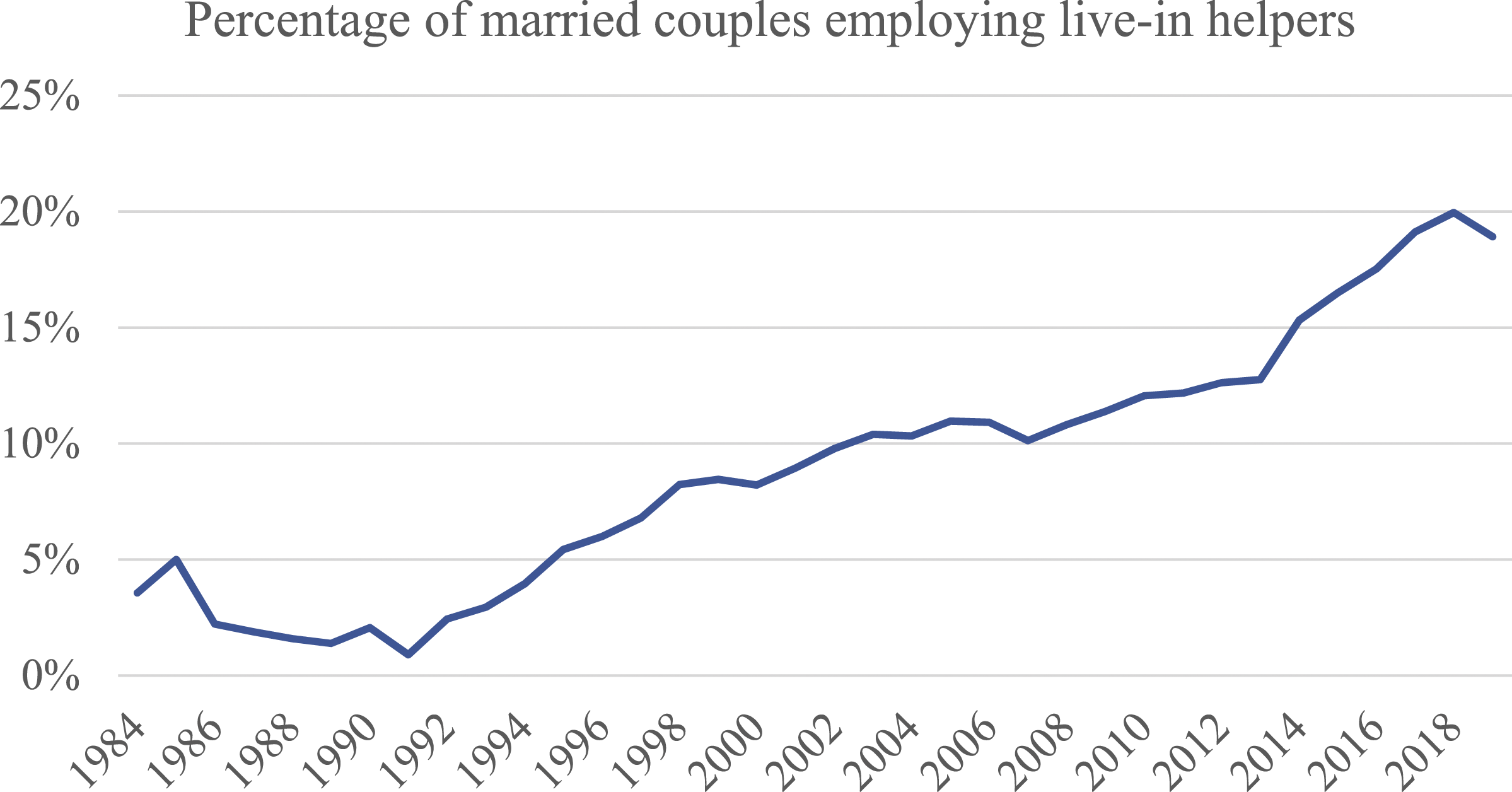
Duration as a Neglected Aspect in Domestic Outsourcing
Most past studies on the use of paid domestic help rely on cross-sectional data and measure the percentage of the sampled families currently using domestic help. One of the major problems of these cross-sectional studies is their inability to study the time dimension of domestic outsourcing. In the literature, the duration of households outsourcing domestic labor and its factors is mostly unknown. It is unclear whether outsourcing domestic labor to the service economy is mostly a temporary arrangement or a regular practice that lasts for years. Neglecting the time dimension of domestic outsourcing is an important omission in the literature. The duration of outsourcing domestic labor might have profound implications on family dynamics and outcomes. For example, parent–child relations might not be significantly affected by the presence of a live-in helper for only a few months. However, the impact might be significant if the live-in helper was employed for many years. Similarly, the prolonged presence of a live-in helper may also alter the spousal relations and child development. Also, understanding the duration of the practice for the employers’ families may help us understand general social conditions that give rise to the helpers' exploitation and abusive experience. The information about the duration of the practice can also help policymakers predict future labor demands for foreign domestic helpers.
Theoretically, the cross-sectional patterns between the different factors and outsourcing are the combined results of two different events: the differential risk of entrance and the differential risk of exit. The first event is related to the differential risks of starting the practice, while the second event is related to the differential risks of leaving the practice. Take the relationship between family resources and hiring help as an example. Assuming that resource-rich families have a higher tendency to use help but that all families who hire help retain the practice for the same duration, the prevalence of hiring help would appear to be higher for resource-rich families. However, assuming that all families have the same tendency to hire domestic help but that families with fewer resources cannot retain the practice for very long, the prevalence of hiring help would also appear to be higher for resourceful families. In addition, the lack of significant relationships between some factors and hiring help could be a consequence of conflicting effects of these variables on the start and the end of the practice. To use a hypothetical example, if the number of children has a positive effect on starting to use help (due to the extra housework burden), but families with more children are also likely to end the practice sooner (due to greater financial stress), the conflicting effects of the number of children in starting and leaving the practice may result in a misleading lack of significant association in a cross-sectional snapshot. The use of cross-sectional data in past studies prevents us from comparing the relative importance of the two events in creating the social patterns of using help. Knowing the relative importance of differential risks in experiencing the two events and their associated factors of the two events can help us to understand the nature of the social patterns of outsourcing domestic labor. To fill the above gaps in the literature, I examine the roles of need-based, resource-based and willingness-based factors in the transition into the practice and duration of the practice.
Data and Methods
Sample and Data
The data for this study were taken from a representative household survey conducted in Hong Kong between November 2018 and July 2019. The survey covered married couples in Hong Kong with wives aged between 18 and 55. A two-stage stratified sample design was adopted, with the records in the frame of quarters first stratified by geographical area and type of quarters. For the second stage, eligible married couples were invited for interviews. One member of the married couple was randomly sampled for the interview. Face-to-face interviews with structured questionnaires were carried out by the interviewers. Of the 2943 valid addresses sampled, 2003 cases successfully completed the interviews, providing a response rate of 68.1%. The refusal rate and non-contact rate were 19.3% and 12.6%.
The questionnaire used in the survey measured a wide range of respondent and household characteristics, including resources, housework arrangements and family relations. Despite the nature of the cross-sectional survey, retrospective life histories of marriage, childbirth, living arrangements, employment, and the use of live-in domestic helpers were also collected. Employing a domestic helper requires a long recruitment process and couples have to complete many complicated procedures. Couples, therefore, have good records and memories of the timing of the start and the end of the practice. Hence, recording the event-history record with a retrospective design is feasible. There were a small number of cases with missing values, mainly for the income and employment variables. A listwise deletion strategy was adopted to handle the cases with missing values. The analytic sample size was 1980 (after 23 cases were excluded from analysis).
Analytical Approach
This study used discrete-time logit models (Allison, 2014) to examine the factors associated with (1) the duration from marriage to starting to employ domestic helpers (Entrance Model), and (2) the duration from starting to employ domestic helpers to the end of the practice (Exit Model). The durations were measured in the number of years. The units of analysis for the discrete-time logit models were person-year observations. For the first set of analyses (of the duration from marriage to starting to hire help), person-year data were constructed from the year of marriage until the year of hiring live-in help (if ever hired a helper) or the year of being interviewed (if never hired a live-in helper). There were 19,203 person-year observations made for the first set of analyses. For the second set of analyses (of the duration from the start of using help to the end of using help), person-year data were constructed from the year of entrance until the year of exiting the practice (if ever ended) or the year of being interviewed (if still hiring). There were 3242 person-year observations made for the second set of analyses. Note that there is a tiny proportion of cases (2%) for those who ever hired live-in help had more than one entrance and exit (Hiring the helper after the first childbirth, and discontinued the practice a few years later, and re-entrance of the practice after the second childbirth). To avoid complications, only the first entrance and exit are examined.
For each set of analyses, two discrete-time logit models were estimated. In the first model, I included time since marriage (in years) and marriage cohorts (a set of dummies) as the only covariates. This model examined the baseline hazard rate of transition for different cohorts. The purpose of the first model is to help understand the changes in the risk of experiencing events across marriage cohorts. The intercept and the coefficients of time since marriage and marriage cohorts were combined to produce the cumulative incidence rates for the transitions for different marriage cohorts. In the second model, I additionally included all sets of explanatory variables (need-based factors, resource-based factors and willingness-based factors) in the analysis to examine their net impacts on the hazard rate.
Variables
Dependent variables. There are two time-varying dependent variables in this study: (1) start of employing live-in help, and (2) end of employing live-in help. The dependent variables were recorded as binary outcomes indicating whether the transition events occurred in a particular year: 0 indicates the transition event did not happen in that person-year observation, while one indicates the transition event did occur in that person-year observation. For the Entrance Model, of 19,203 person-year observations, there were 515 transition events. For the Exit Model, of 3242 person-year observations, there were 142 transition events.
Independent variables. The key independent variables were the same in the two transition models. In both models, I included time since marriage (in years) (Entrance Model) or time since hiring (in years) (Exit Model) to examine whether the hazard rate changed over the years. As an additional analysis, I also tested several polynomial specifications to examine the nonlinearity in the relationship between time and hazards. In both models, the second-order and above polynomial functions were not statistically significant and hence are not reported in the results section. As the sample includes couples married in different periods, I also include marriage cohorts (a series of dummy variables indicating that the couples married in the 1980s, 1990s, 2000s, or 2010s) in the models.
The explanatory variables were divided into three sets: need-based factors, resource-based factors, and willingness-related factors. In each set of factors, some measures are time-invariant, while others are time-varying. The need-based factors include having a child that year (Yes = 1), the number of children, and the age of the youngest child, which are indicative of the extent of the housework burden. The couples’ full-time work statuses and occupational statuses in professional/managerial positions were also included, as these indicate the time availability. As housework demand may change along with age, the ages of the couples were also included in the model. All of the above factors are time-varying measures. Lagged measures (t − 1) were used for the work-related variables to avoid the problem of reverse causality. In addition, co-residence statuses with couples’ parents in the marriage year (Yes = 1) were also examined as these may be an indication of outside help to relieve the housework burden and hence of a lower level of need for outsourcing the tasks. Due to data limitations, this measure was only taken at the time of marriage and is time-invariant.
Resource-based factors include the couples’ years of schooling and combined incomes at marriage (in HK$), the relative share of the couples’ income earned by the wife (as a percentage) and the level of household wealth (in percentiles). The couples’ incomes at marriage were measured in Hong Kong dollars. As the couples married in different periods, the income level was not directly comparable due to inflation; dollar amounts were therefore adjusted to 2019 levels by considering the official historical data of price indices. The household wealth level was calculated as a composite score of apartment size (number of rooms and toilets), homeownership and ownership of vehicles. The score was then ranked in descending order and recoded as a percentile.
The last set of factors is those that are willingness-related and includes couples’ histories of growing up in families with live-in helpers before marriage (0–2, indicating whether none, one or both of them grew up with live-in helpers) and the commonness of using live-in helpers in their social circles. The commonness of using live-in helpers was calculated as a composite score measuring how common it was to hire live-in helpers among couples’ relatives, friends, neighbors, and colleagues (on a scale of 1–5, from 1 = Not common at all to 5 = Very common). These items indicate how familiar the couples were with the experience of living with a helper at home and with social norms favorable to the practice. Familiarity with the experience and with favorable social norms will remove barriers to the hiring practice. The above items are time-invariant measures. In addition, the percentage of households in Hong Kong using live-in helpers at particular years was obtained from the official census data and was also included. The widespread nature of the practice in the territory indicates lower levels of information and transaction costs involved with the hiring practice, and hence implies a favorable social condition for hiring. The unemployment rate (in %) and inflation rate of the years (in %) were also obtained from official data sources and included in the model. A high unemployment rate and inflation rate, while controlling for the couples’ employment statuses and income levels, may indicate economic uncertainty and hence relate to a lower level of willingness to hire and a higher level of willingness to stop hiring. The percentage of households using live-in help, the unemployment rate and inflation rate are time-varying measures.
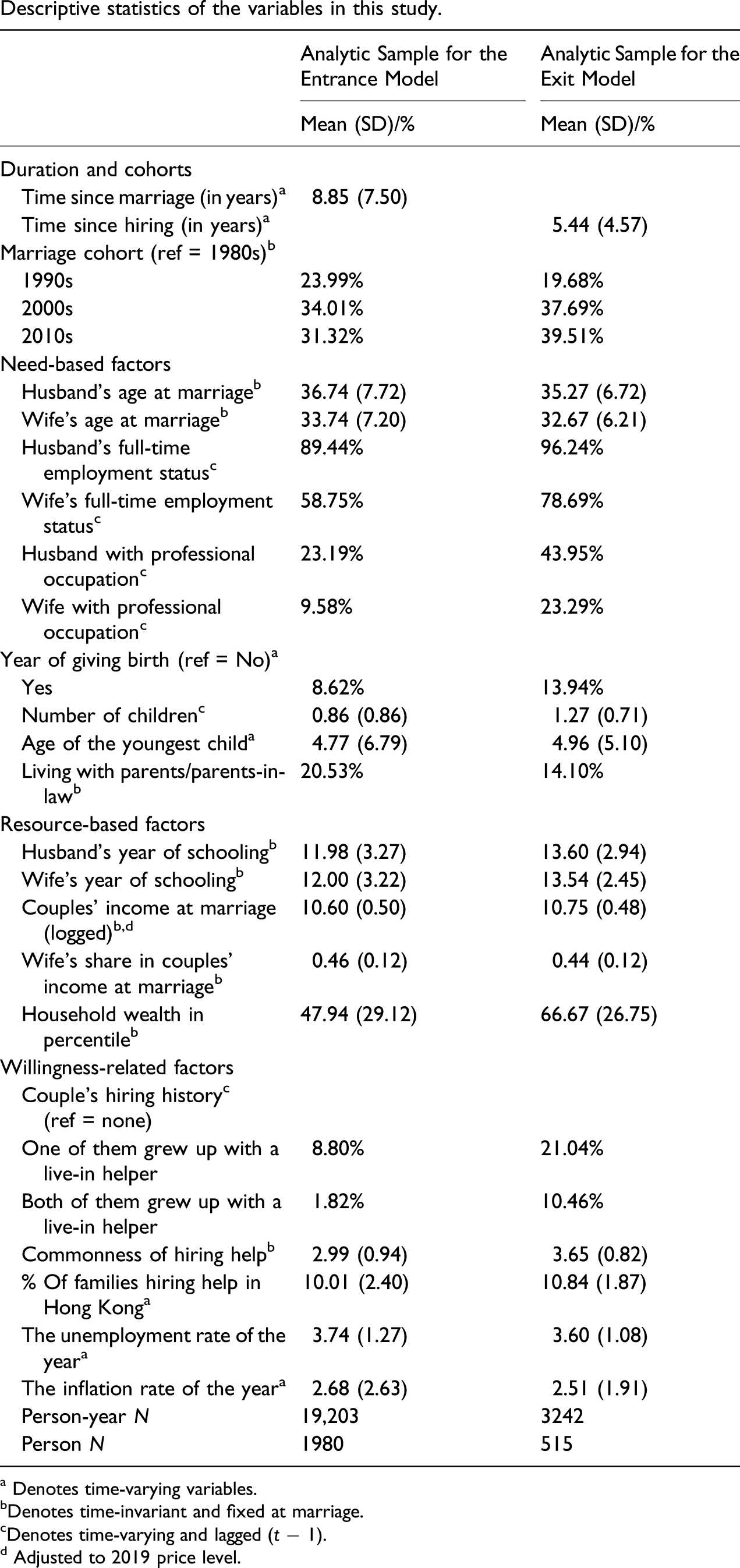
In general, the distributions of the variables (such as employment, income, education level, and age) in the analytic sample for the entrance model are similar to the married population in the official census data. The distribution of the variables in the analytic sample for the exit model differs from the analytic sample for the entrance model. Families who hired live-in helpers constitute a selected group of more resource-rich, have more housework demands, and are more familiar with the practice. Descriptive statistics of the variables for the analytic samples of the entrance and exit models are included in the Appendix.
Alternative Specifications for Robustness Check
Additional analyses are conducted to check for the robustness of the main findings. First, Cox proportional hazards models were estimated instead of discrete-time logit models. The strength, direction, and statistical significance of the variables between the models all remain the same. Only results from the discrete-time logit models are reported because logistic regression is more familiar to most researchers and more intuitive. For income variables, information for income at marriage and income at the current year are available. Linear interpolation between the two income points was conducted, and income at marriage was replaced by an interpolated income trend (as a time-varying variable) in the additional analysis. Again, the results remain the same with this alternative specification. Results with income at marriage are reported because this specification requires fewer assumptions.
Results
Of the surveyed couples, 18.47% were employing a domestic helper at the time of interviews, and 25.71% had employed a domestic helper at some stage since getting married.
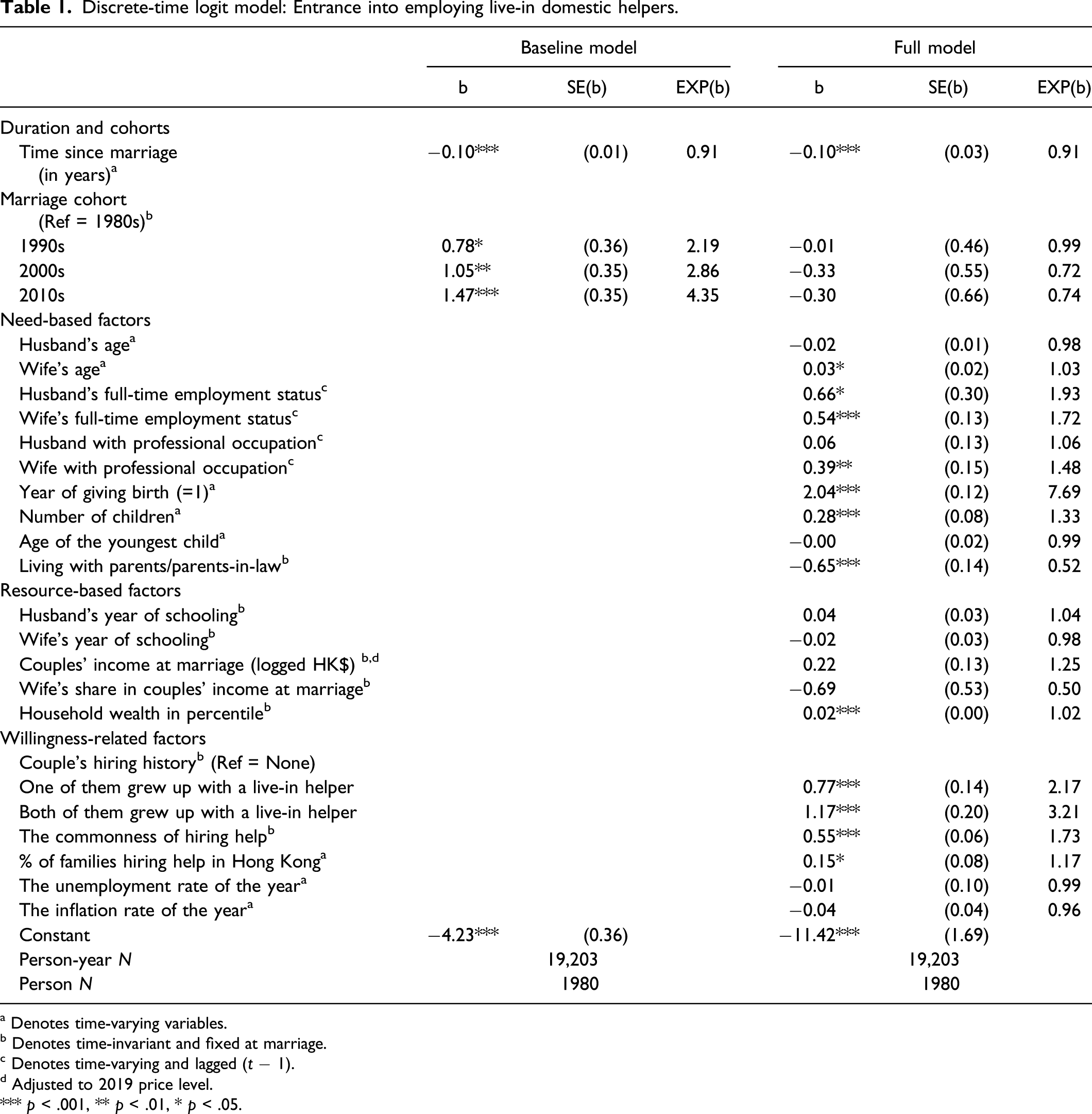
Discrete-time logit model: Entrance into employing live-in domestic helpers.
a Denotes time-varying variables.
b Denotes time-invariant and fixed at marriage.
c Denotes time-varying and lagged (t − 1).
d Adjusted to 2019 price level.
*** p < .001, ** p < .01, * p < .05.
Figure 2a shows the cumulative incidence rate of starting the practice over the years after marriage, as derived from Model 1. The result indicates that the risk of transition to using domestic help was particularly high in the first few years of marriage. The figure also clearly visualizes the dramatic differences in hazard of the entrance between different marriage cohorts. For couples married in the 1980s, around 1.3% started employing a domestic helper by the end of the first year of marriage, and the cumulative incidence rate of using help increased to nearly 5% and 8% by the fifth and 10th year after marriage. For couples married in the 1990s, around 2.8% started employing a domestic helper by the end of the first year, and the cumulative incidence rate of using help increased to nearly 11% and 17% by the fifth and 10th year after marriage, respectively. For couples married in the 2000s, around 3.6% started hiring help in the first year of marriage, and the cumulative incidence rate of using help increased to nearly 14% and 22% by the fifth and 10th year after marriage, respectively. For couples married in the 2010s, around 5.4% started hiring help in the first year of marriage, and the cumulative incidence rate of using help increased to nearly 21% and 31% by the fifth and 10th year after marriage, respectively (a) Cumulative incidence rate for the start of employing live-in domestic helpers. (b) Cumulative incidence rate for the end of employing live-in domestic helpers.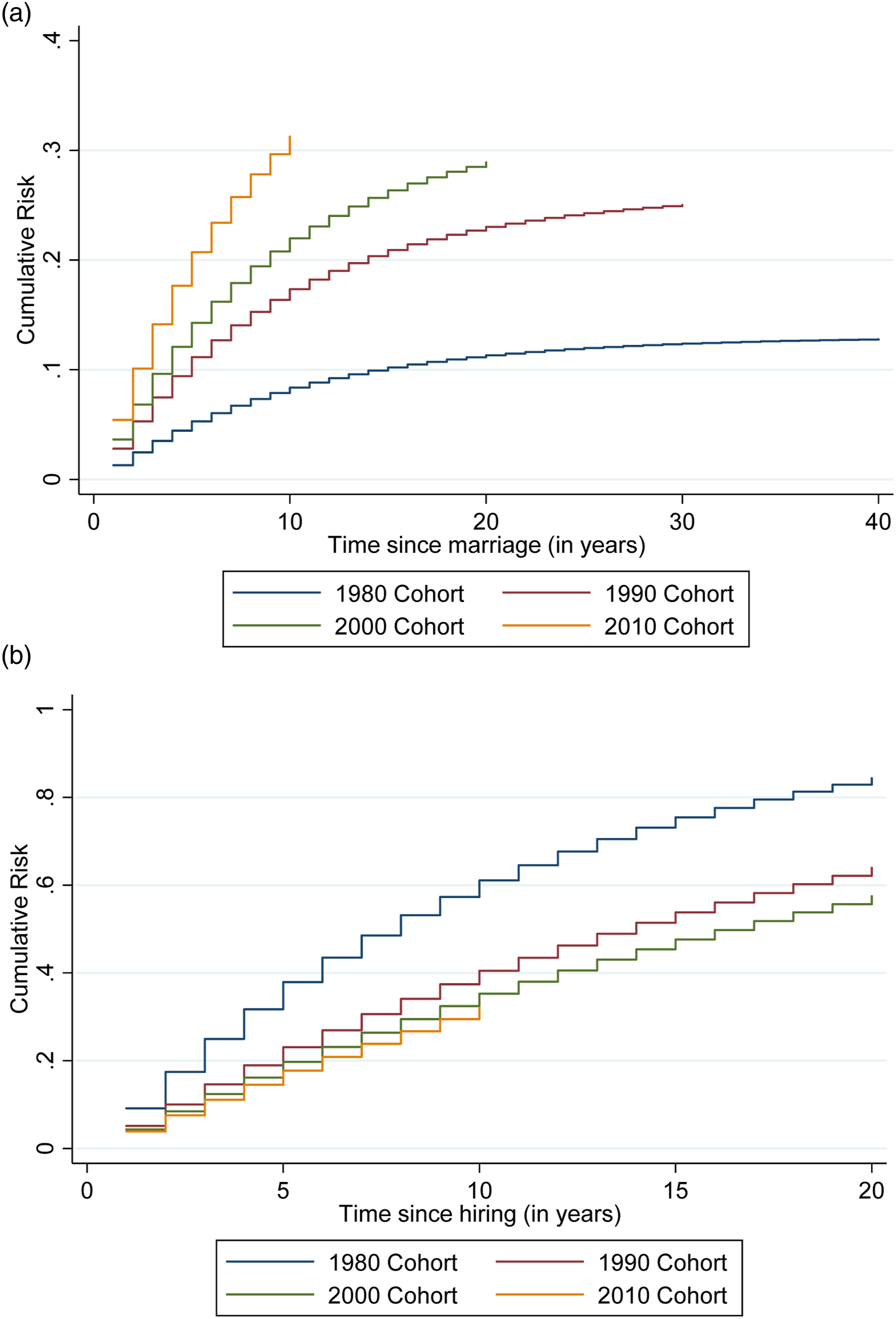
In Model 2, three additional sets of explanatory variables of hiring help were included. Consistent with the findings of some past studies, various factors related to housework burden were associated with the risk of transition to the start of hiring help. The hazard of employing live-in helpers was much higher in the years when the wives gave birth to children (Hazards OR = 7.69, 95% CI = 6.03–9.80). The number of children was also positively associated with the hazard of hiring (Hazards OR = 1.33, 95% CI = 1.13–1.57). Rather than increasing housework demands, living with parents seems to ease the burden for the couples: co-residence with parents or in-laws was associated with a lower hazard of employing live-in helpers (Hazards OR = 0.52, 95% CI = 0.39–0.69). Other than factors that are directly related to housework burden, factors related to time availability were also associated with the hazard of the entrance. Full-time employment for both husbands and wives (Hazards OR = 1.72, 95% CI = 1.33–2.22) were positive factors in the transition to hiring. Couples with wives working in a professional or managerial occupation also showed higher hazards of the entrance (Hazards OR = 1.48, 95% CI = 1.11–1.98). However, there was no evidence showing the same impact from the husband’s professional or managerial occupation. The wife’s age was also found to be positively associated with the hazard.
We found only one resource-related factor significantly associated with the hazard of entrance into employing live-in domestic helpers: household wealth, as indicated by the level of property assets, was positively associated with the hazard. Couples living in larger apartments and owning vehicles are more likely to be able to afford to employ a live-in helper (Hazards OR =1.02 per percentile increase in household wealth). Surprisingly, income levels at marriage, at either the couple level or in terms of relative share, were not significantly associated with the hazard of using live-in paid help.
In addition to the above two sets of factors, the results indicated that willingness-related factors were also significantly associated with the hazard of the entrance. Couples who grew up with a live-in helper at home have more experience and hence are more likely to hire live-in help when they form their own family. One of a couple growing up with a helper at home was associated with a higher hazard of entrance (Hazards OR =2.17, 95% CI = 1.66–2.82), and the hazard is even higher when both grew up with such an arrangement (Hazards OR =3.21, 95% CI = 2.19–4.71). Couples living in a social circle where hiring help is common were also more likely to employ live-in helpers (Hazards OR =1.73, 95% CI = 1.53–1.95). In addition, couples were more likely to employ live-in domestic helpers when a higher percentage of the population was using live-in help (Hazards OR =1.17 per increase in the percent of families hiring help in Hong Kong, 95% CI = 1.01–1.35). However, this study found no statistical evidence that the macro-economic environment, such as the unemployment rate and inflation rate, was related to hiring practices.
After controlling for the three sets of explanatory variables, time since marriage was still negatively and significantly associated with the hazard of the entrance (Hazards OR = 0.91, 95% CI = 0.86–0.95), suggesting that the hazard rate declined over time after marriage. Nevertheless, the coefficients of marriage cohorts turned from positive to negative and were no longer significantly associated with the hazard of employing live-in helpers after controlling for the explanatory variables. In other words, the three sets of explanatory variables completely accounted for the differences in the hazard between cohorts.
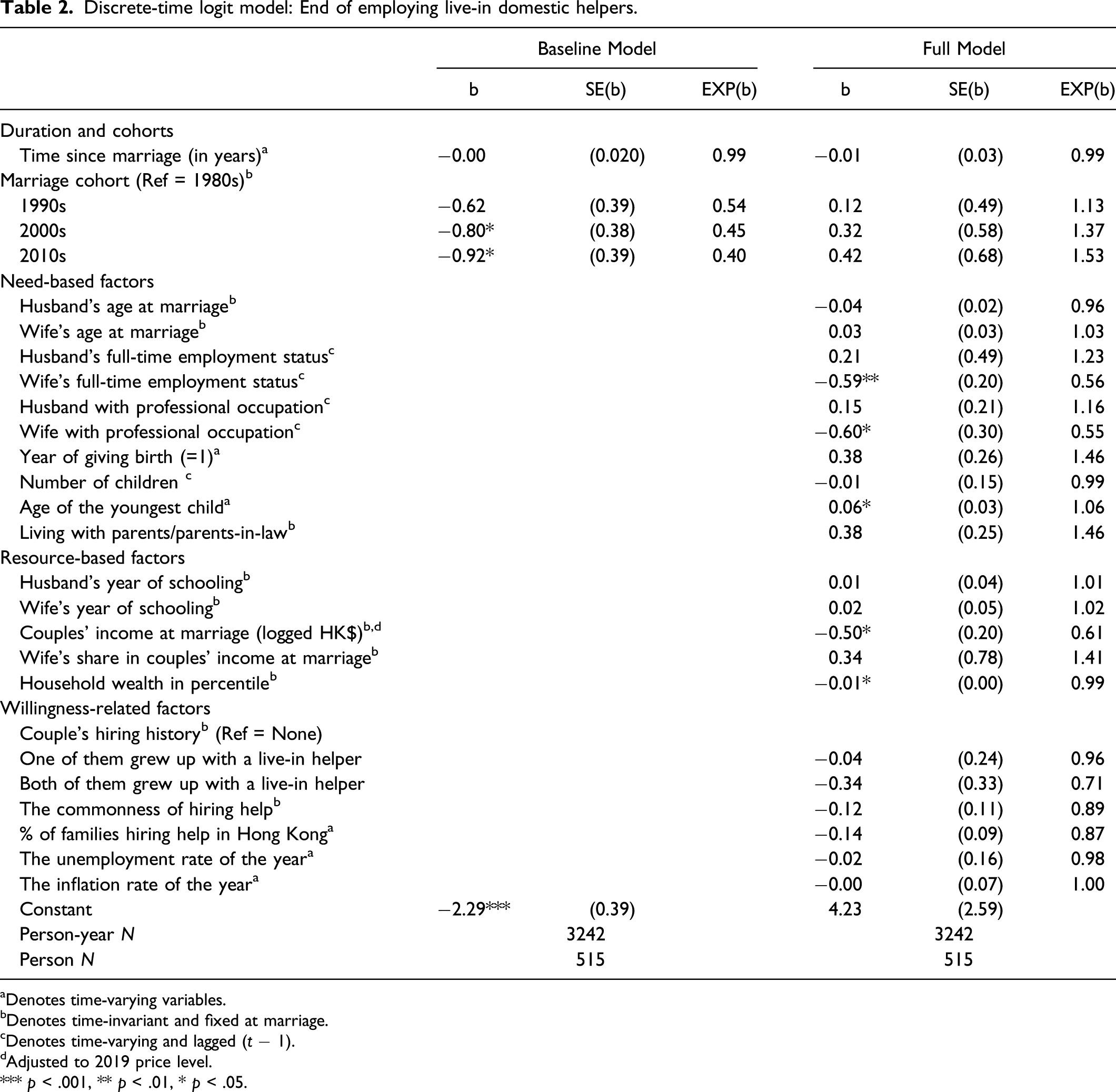
Discrete-time logit model: End of employing live-in domestic helpers.
aDenotes time-varying variables.
bDenotes time-invariant and fixed at marriage.
cDenotes time-varying and lagged (t − 1).
dAdjusted to 2019 price level.
*** p < .001, ** p < .01, * p < .05.
Figure 2(b) shows the cumulative incidence rate of exiting the practice over the years of hiring, as derived from Model 1. The result indicates that employing domestic helpers at home was not a temporary arrangement, especially for the more recent marriage cohorts. Most of the couples who employed live-in helpers maintained the practice for more than 6 years. For couples who married in the 1980s and who hired live-in help, only around 50% of them ended the practice within 7 years, and the cumulative incidence rates of ending the practice within the first, fifth and 10th year of hire were 9%, 38%, and 61%, respectively. For couples who married in the 1990s and who hired help, around 50% ended the practice within 14 years of hiring, and the cumulative incidence rates of ending the practice within the first, fifth, and 10th year of hire were 5%, 23%, and 40%, respectively. For couples who married in the 2000s, around 50% of them ended the practice within 17 years of hiring, and the cumulative incidence rates of ending the practice within the first, fifth, and 10th year of hire were 4%, 20%, and 35%, respectively. For the 2010s cohort, the cumulative incidence rates of ending the practice within the first, fifth, and 10th year were 4%, 18%, and 32%, respectively.
Again, three additional sets of explanatory variables for hiring help were included in Model 2. Compared to the entrance model, relatively few factors were associated with the hazard of transition in the exit model. Couples with full-time employed wives showed a lower hazard rate of ending the practice (Hazards OR = 0.56, 95% CI = 0.37–0.83). Couples with wives working in a professional or managerial position also showed a lower hazard of exit (Hazards OR = 0.55, 95% CI = 0.31–0.99). The age of the youngest child was positively associated with the hazard (Hazards OR = 1.06, 95% CI = 1.01–1.12), probably because a grown-up child generates fewer housework demands.
Some resource-related factors were associated with the duration of the practice. Resource-rich couples tended to maintain the practice for longer once they started employing live-in helpers. Couples with higher income levels at marriage showed a lower hazard rate in exiting the practice (Hazards OR = 0.61 per percent increase in income, 95% CI = 0.41–0.90). Household wealth was also negatively associated with the hazard (Hazards OR = 0.99 per percentile increase in household wealth, 95% CI = 0.99–0.99). Couples living in larger apartments and owning vehicles were more likely to employ the helpers for longer.
Lastly, no willingness-related factors were significantly associated with the duration of the hiring practice. In other words, the results suggest that the duration of employing live-in helpers was determined by need-related and resource-related factors only. After controlling for the three sets of explanatory variables, the coefficients of marriage cohorts turned from negative to positive and were no longer significantly associated with the hazard of exit. The three sets of explanatory variables completely account for the differences in the duration of using live-in helpers among marriage cohorts found in Model 1.
Discussion and Conclusion
This study expands the literature on housework and domestic outsourcing by investigating the factors and duration of families employing live-in domestic helpers. This study has several theoretical and empirical contributions. First, the results suggest that not only employing live-in domestic helpers has become increasingly popular among recent marriage cohorts, but also employing live-in helpers is a relatively stable practice that can last for more than a decade. In addition, this study is among the first to show a stabilizing trend of the practice, with recently married couples tending to maintain the practice for even longer. With a significant proportion of families employing live-in helpers and the practice lasting for a substantial period of time, not only live-in domestic help is a very important part of family life in Hong Kong, but many children growing up in these families are taken care of by the foreign live-in helpers almost for their entire childhood. The prolonged presence of the live-in helpers may change the children’s perceptions of parent-child relations. Spousal interactions could also be affected significantly by the prolonged presence of a non-family member at home. Given this finding, it is surprising that the impacts of employing foreign live-in helpers on family relations remain largely unexplored in the literature (Cheung, 2014). Future studies on the relationship between this practice and family relations are warranted.
Summarizing the factors of employing live-in helpers in this study.
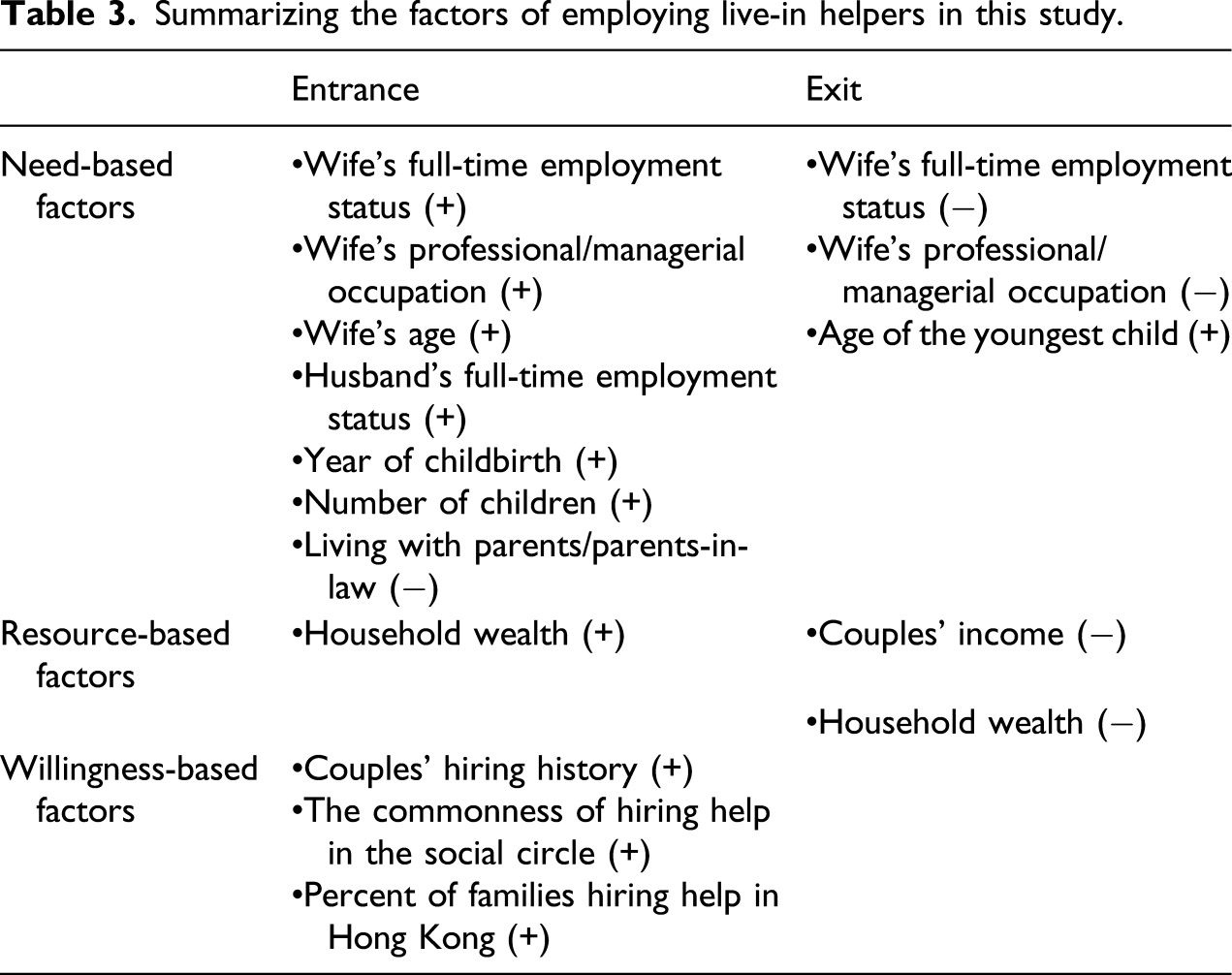
Third, this study also found some factors of employing foreign live-in helpers that have interesting implications. Most need-based factors were found to be related to entrance into the practice, but only a few were related to the duration of using help. Having children increases the housework burden drastically (Kim & Cheung, 2019) and creates a much more intense conflict between work and family (Baxter et al., 2008). The risk was exceptionally high in the year that a woman gave birth to a child. In addition, a wife’s full-time employment status and professional work status are significantly associated with higher risks of the transition into the practice and lower risks of exit (i.e., longer duration). It appears that the wife’s work status is more influential in shaping a family’s experience of using help. To put this into context, housework inequality in Hong Kong is significant and comparable to other Asian societies (Cheung & Lui, 2017, 2021). Regardless of the man’s work status, most of the housework burden is borne by women in Hong Kong. Interestingly, this study also found a new demand-based factor of domestic outsourcing in the local context. Parental co-residence was negatively related to the entrance of the practice. This suggests that co-residence with parents implies the availability of help from the parents for housework rather than an increased housework burden in Hong Kong.
This study also generates a few new findings related to resource-based factors. In contrast to most previous studies, this study found that couples’ income levels at marriage were not indicative of the risk of starting the use of live-in help. However, couples’ income levels at marriage were found to be indicative of the duration of the practice for those who do use live-in help. In other words, regardless of income level, families with needs were likely to use live-in help. But among these families, only those with higher income levels can take this practice for long. This finding helps us understand the correlation between income level and hiring help shown in cross-sectional studies (e.g., Cheung & Lui, 2017; He & Wu, 2019). The positive correlation between income and employing live-in help in past studies with cross-sectional data (Bittman et al., 1999; Spitze, 1999; Windebank, 2007) was not driven by differential entrance risks but mainly by differential exit risks. This finding has profound implications on how we understand class inequalities in reconciling work-family conflict. Resource-rich families are more able to buffer from work-family conflict not because they are more likely to outsource. It is only because needy families with fewer resources could not afford to outsource the family work to the helpers for a more extended period.
This study also revealed several new willingness-based factors. The increasing prevalence of using live-in helpers creates favorable conditions for latecomers to hire a helper. The latecomers may have experienced living with a helper when they are young and hence are more likely to outsource when they grow up. The increasing prevalence of using live-in help within their social circles creates favorable norms for those who are interested in hiring help (Spitze, 1999). The high prevalence of using help in society also provides more free information for hiring help. Personal experience and the popularity of live-in help among the social network and society are willingness-based factors. They reduce the information cost in searching and undertaking the practice. These findings are new but consistent with past studies showing the significance of attitudinal factors in using paid domestic help (Baxter et al., 2009; De Ruijter & Van der Lippe, 2009; Spitze, 1999). These newly found willingness-based factors have implications in the trend of employing live-in helpers in Hong Kong. The rapid increase in the prevalence rate of using live-in helpers, as shown in Figure 1, appears to be first driven by need-based and resource-based factors and further accelerated by willingness-based factors when the practice became more common. However, this study also found that these factors are not significantly associated with the duration of employing live-in helpers. The duration of the practice seems to be more closely related to the needs and resources of the families but less related to factors external to the families.
There are limitations in using retrospective life-history data. Previous studies have shown that generalized trust level and attitudes toward using help are important willingness-based factors. Due to possible recall bias, attitudinal variables could not be included in the analysis. This study may also suffer from selection bias because only currently married individuals were sampled for interview. Divorced, separated and, widowed persons were not included in the sample. With reference to census data, it is estimated that around 10% of the ever-married population were thus excluded. Therefore, the findings of this study may not be generalizable to those who experienced transitions to divorce, separation or widowhood. Ideally, it would be best to observe the couples from the year of marriage until they hire a helper or divorce. Future studies may benefit from collecting prospective data to study this important topic.
Footnotes
Declaration of Conflicting Interests
The author(s) declared no potential conflicts of interest with respect to the research, authorship, and/or publication of this article.
Funding
The author(s) disclosed receipt of the following financial support for the research, authorship, and/or publication of this article: This work was supported by the Research Grants Council, University Grants Committee ECS/HKBU/28603817.

Appendix
Descriptive statistics of the variables in this study.
| Analytic Sample for the Entrance Model | Analytic Sample for the Exit Model | |
|---|---|---|
| Mean (SD)/% | Mean (SD)/% | |
| Duration and cohorts | ||
| Time since marriage (in years) a | 8.85 (7.50) | |
| Time since hiring (in years) a | 5.44 (4.57) | |
| Marriage cohort (ref = 1980s) b | ||
| 1990s | 23.99% | 19.68% |
| 2000s | 34.01% | 37.69% |
| 2010s | 31.32% | 39.51% |
| Need-based factors | ||
| Husband’s age at marriage b | 36.74 (7.72) | 35.27 (6.72) |
| Wife’s age at marriage b | 33.74 (7.20) | 32.67 (6.21) |
| Husband’s full-time employment status c | 89.44% | 96.24% |
| Wife’s full-time employment status c | 58.75% | 78.69% |
| Husband with professional occupation c | 23.19% | 43.95% |
| Wife with professional occupation c | 9.58% | 23.29% |
| Year of giving birth (ref = No) a | ||
| Yes | 8.62% | 13.94% |
| Number of children c | 0.86 (0.86) | 1.27 (0.71) |
| Age of the youngest child a | 4.77 (6.79) | 4.96 (5.10) |
| Living with parents/parents-in-law b | 20.53% | 14.10% |
| Resource-based factors | ||
| Husband’s year of schooling b | 11.98 (3.27) | 13.60 (2.94) |
| Wife’s year of schooling b | 12.00 (3.22) | 13.54 (2.45) |
| Couples’ income at marriage (logged) b , d | 10.60 (0.50) | 10.75 (0.48) |
| Wife’s share in couples’ income at marriage b | 0.46 (0.12) | 0.44 (0.12) |
| Household wealth in percentile b | 47.94 (29.12) | 66.67 (26.75) |
| Willingness-related factors | ||
| Couple’s hiring historyc (ref = none) | ||
| One of them grew up with a live-in helper | 8.80% | 21.04% |
| Both of them grew up with a live-in helper | 1.82% | 10.46% |
| Commonness of hiring help b | 2.99 (0.94) | 3.65 (0.82) |
| % Of families hiring help in Hong Kong a | 10.01 (2.40) | 10.84 (1.87) |
| The unemployment rate of the year a | 3.74 (1.27) | 3.60 (1.08) |
| The inflation rate of the year a | 2.68 (2.63) | 2.51 (1.91) |
| Person-year N | 19,203 | 3242 |
| Person N | 1980 | 515 |
a Denotes time-varying variables.
bDenotes time-invariant and fixed at marriage.
cDenotes time-varying and lagged (t − 1).
d Adjusted to 2019 price level.