



Abstract
Home environments suffered a range of stressors during COVID-19 pandemic. This study examines the impact of these stressors on children’s well-being by households’ conditions. Participants included main caregivers (N = 615) with a child under the age of 3 in a developing Latin-American country. We use multivariate analysis to explore associations between these shocks, the childrearing environment, and children’s well-being. We find that households with lower education and recipients of government assistance were more exposed to negative shocks linked to COVID-19. However, the most educated households were more likely to face an increased burden of childcare. Exposure to negative shocks was associated with a deterioration in the emotional well-being of adults, a higher prevalence of intra-family violence, and behavioral changes in children. Households that reported more time spent caring for children, as well as difficulties in combining care and work, showed higher levels of parental depression and worse indicators of parenting quality. We observe a drop in the frequency of parental involvement in didactic and socializing activities with their children, and a poorer mental health status for the main caregiver (mostly mothers).
Keywords
Introduction
The economic, health, and social changes that occurred in the wake of the pandemic had profound effects on household resources, family dynamics, and the emotional and physical well-being of adults. Because of the importance of a nurturing environment for children’s development during the first years of life, it is critical to understand how these cumulative stressors placed undue strain on the lives of young children. This paper analyzes the impact of the COVID-19 pandemic on a sample of Uruguayan families with children aged 0–36 months. We identify households that were more likely to experience negative economic shocks and heavier burdens of care during the pandemic and associate these events to parental well-being, the childrearing environment, and children’s safety and socioemotional health.
In relation to Uruguay, the health emergency and lockdown began in March 2020. The first stage of the pandemic took place until the beginning of December 2020 and was characterized by a controlled situation, with sporadic outbreaks. Then, between December 2020 and the end of May 2021, a phase of intense community transmission began. The country entered its third stage in June 2021, moving into a more controlled zone in the context of the vaccination plan implementation (GACH, 2021). Uruguay’s early childhood centers remained mostly closed during the first half of 2020 and between March and April 2021.
While a number of papers have reported a negative association of the pandemic on the well-being of children and their caregivers, most research we are aware of refers to developed economies. For example, Gassman-Pines et al. (2020) report lower well-being for American families who faced loss of employment and income, increased burden of care, or illness during 2020. Also for the United States, Kalil et al. (2020) show that COVID-19-related job and income losses are strongly associated with depressive symptoms among adults with children. Huebener et al. (2020) find that the pandemic resulted in lower life satisfaction among German parents with children, in particular for those with lower education and for women. Beland et al. (2020) show that Canadian women receiving financial aid, facing unemployment threats, or having difficulties in meeting their financial obligations or basic needs due to COVID-19 were more likely to report high levels of family stress and domestic violence. McCrory et al. (2020) and Di Giandomenico et al. (2020) also find higher levels of burnout, stress, and anxiety in women from the United States and Italy, particularly among those who report increased time spent caring for their children.
The evidence also points to increased levels of aggression toward children. Brown et al. (2020) find higher levels of child abuse in lower socioeconomic households and in households exhibiting anxiety and depressive symptoms in the wake of COVID-19. Lawson et al. (2020) and Kalil et al. (2020) find that parents who lost their jobs or decreased their income during the pandemic were more likely to lose their temper and psychologically assault their children.
In addition to focusing on a developing country, and unlike most of the work mentioned above, we focused our analysis on families with children up to 36 months and thus managed to cover a stage of the life cycle that is crucial for the process of children’s skill formation. In this paper, we also contribute to the literature by considering several pathways through which the pandemic affected childrearing environments and the well-being of young children. We distinguish economic shocks from childcare difficulties and explore how each of these had an impact on household violence and aggression toward the child, accidents at home, adult depression, and child socioemotional development.
Our findings suggest that the pandemic severely affected household resources and childrearing environments. Households with lower levels of education and recipients of state assistance were more likely to suffer from negative economic shocks linked to COVID-19, including unemployment, income declines, debt, and food insecurity. Such contingencies associate strongly with behavioral changes and accidents in children, a deterioration in the emotional well-being of the caregiver and a higher prevalence of domestic violence. On the other hand, we find that more educated households were more likely to suffer from difficulties in reconciling care and work. These households also show higher levels of caregiver depression, more behavioral changes in the child, and a higher probability of psychological aggression against the child.
When comparing the pandemic period with previous years, we observe a lower frequency of parental involvement in didactic and socializing activities. We find significant differences in the socioemotional development of children, as well as a higher probability that the child suffers an accident. This comparison also allowed us to confirm that the economic shocks that could potentially be more attributable to the pandemic were indeed more prevalent during the pandemic than in previous years. Finally, we find a deterioration in the emotional well-being of the caregiver (mostly mothers in our sample) during the pandemic. Our findings not only shed light on the consequences of the pandemic for short-run policy purposes but also help to create more awareness on the impact of external stressors on parents and children in vulnerable settings.
Methods
Procedure
The data in this paper come from a survey of families with children aged 0 to 3 who, in 2020, enrolled in 39 “Children and Family Care Centers” (CAIF) distributed in 14 departments of Uruguay. 1 CAIF centers are publicly funded, privately managed early childhood centers, whose purpose is to guarantee the protection and promote the rights of children since their conception until the age of 3, prioritizing the access of those who come from families in poverty and/or social vulnerability. 2
Between December 2020 and January 2021, we collected data on the child’s socioemotional development using an online survey completed by the child’s main caregiver. We complemented this information with a telephone survey administered to the same caregiver between March and April 2021, which inquired about the household’s sociodemographic characteristics, the economic and organizational effects of the pandemic on the household, the childrearing environment, and the well-being of the caregiver and the child (in Table A1 in the Appendix, we describe the main instruments used to measure the outcomes of interest). 97% of the questionnaires were completed by the children’s mothers. The data, which we refer to in this paper as “CAIF2021,” included 615 households.
For the purposes of comparison with pre-pandemic periods, we used two additional data sets: (a) a survey similar to the one in this report, administered in 2018 to families with children aged 0–3 who were enrolled at CAIF centers (we refer to this data as “CAIF2018”); and (b) data from the 2018 wave of the Uruguayan Nutrition, Child Development and Health Survey, 3 a nationally representative sample of all Uruguayan children younger than 59 months residing in 2018 in private households in localities of 5,000 or more inhabitants (we refer to this data as “ENDIS2018”). We restrict the ENDIS sample to children aged 36 months or younger that attended CAIF centers.
Measures
Demographic Characteristics
Available sociodemographic variables include the age and gender of the child, age and education of the mother, number of household members, and indicators of government assistance, employment status of the main caregiver, parents’ cohabitation status, and region of residence.
Economic Shocks
Regarding the effects of the pandemic on the household, we inquired about the occurrence of negative shocks in the past 12 months, including (i) employment shocks, (ii) decreases in income, (iii) higher debts, (iv) food insecurity, (v) death of a family member or friend, (vi) divorce, (vii) problems with the law, (viii) accident or serious illness, and (ix) problems with substance abuse. For each of these events, we defined a dichotomous variable that took the value 1 if the event in question occurred to any member of the household in the past 12 months and 0 otherwise. Food insecurity took the value 1 if the caregiver reported that in the past 12 months, there were days when there was nothing to eat in the household. On the basis of these outcomes, we constructed an Index of Negative Economic Shocks that captures the intensity with which the pandemic affected the household financially and economically. Following Kling et al. (2007), we first standardized variables (i) to (iv) and then summed them up. The initial standardization implies that a larger weight is given to observations with a “yes” response as the prevalence of the “yes” responses in the original dummy decreases. The index, thus, over-weights negative shocks with low prevalence and underweights negative events that are more common. As noted by Kling et al. (2007), relative to working with each variable separately, the aggregation improves statistical power to detect effects that go in the same direction within a domain. After constructing the index, we standardize it so that any changes can be interpreted in terms of standard deviations.
Childcare Burden
In addition, we assessed the burden of childcare experienced by the main caregiver by defining the following dichotomous variables: (i) whether the caregiver increased the time spent caring for the child in the period, (ii) whether the caregiver had problems balancing work and caregiving tasks, and (iii) whether the caregiver had to reduce the time spent in leisure activities. As with the Index of Negative Economic Shocks, we followed Kling et al. (2007) and constructed an aggregate Index of Difficulties with Childcare by first standardizing and then summing up the above defined dummy variables. The index overweights difficulties with childcare less likely to occur and underweights difficulties shared by a larger fraction of the sample. We also standardize the index following construction so that we can interpret changes in terms of standard deviations.
Childrearing Environment and Caregiver Well-Being
To measure the childrearing environment and caregiver well-being, we considered the following outcomes: (i) weekly frequency of parental involvement in physical games, didactic games, and socialization activities (adapted from the parental involvement scale of Cabrera et al. (2004)), which are three outcomes that assume values between 1 and 6, where 1 is never and 6 is almost always or always and which we standardize so as to make them comparable with other continuous outcomes; (ii) physical aggression toward the child (adapted from Strauss et al.’s (1998) Parent–Child Conflict Tactics Scale), which takes the value of 1 when the adult responds having hit the child with an object, pinched, or slapped him/her sometime, several times, or always in the last 6 months, and 0 otherwise; (iii) psychological aggression, which assumes a value of 1 when the adult reports having shouted loudly at the child, swore, or threatened the child sometime, several times, or always in the last 6 months, and 0 otherwise (Strauss et al., 1998); (iv) intra-family violence which assumes a value of 1 when the respondent reports having been a victim of physical or psychological violence sometime in the last 6 months, and 0 otherwise; and (v) caregiver’s risk for depression, which is captured using the reduced version of the Center for Epidemiological Studies Depression Scale (CES-D) (Andresen, 1994; Zhang et al., 2012) and takes the value of 1 if the person was at risk of depression (CES-D score ≥ 10) and 0 otherwise.
Child Well-Being
Finally, we assessed the well-being of the child in three ways. We defined a dichotomous variable equal to 1 if the caregiver reported having observed during the past 6 months any of the following changes in the child: changes in temperament, sleeping difficulties, loss of appetite, weight gain, or other changes, and 0 otherwise. We also constructed an indicator of whether the child suffered an accident in the same period. And we measured whether the child was in a socioemotional risk zone using the Ages and Stages Questionnaires: Social Emotional, Second Edition (ASQ-SE) scale (Squires et al., 2015).
Sociodemographic Characterization of Households
Household sociodemographic characteristics.
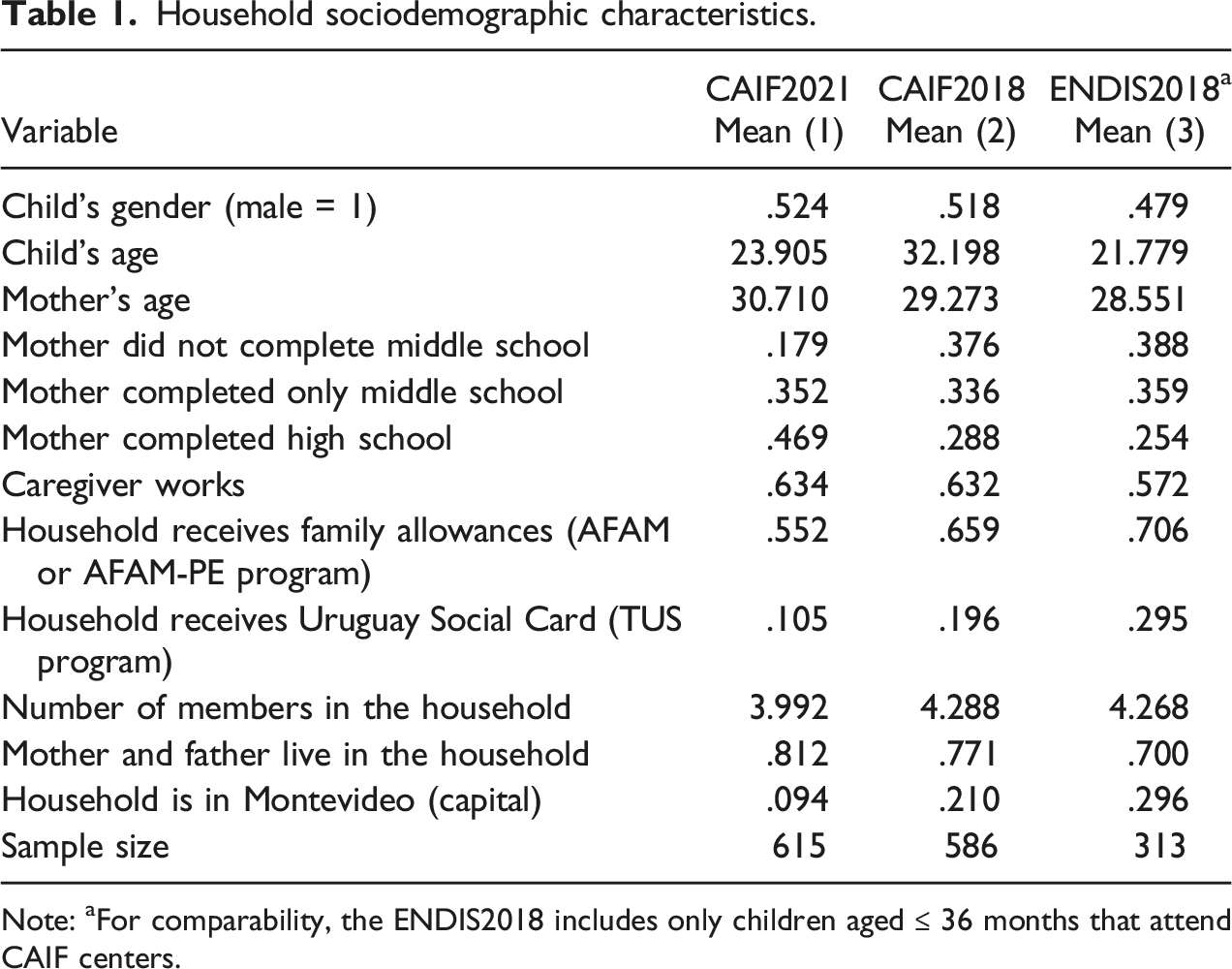
Note: aFor comparability, the ENDIS2018 includes only children aged ≤ 36 months that attend CAIF centers.
Data Analysis
We use two approaches to describe the changes experienced by Uruguayan families with young children during the pandemic. First, we explore families' own self-reporting of negative shocks and changes in the burden of care experienced during the first year of the pandemic and use linear probability models to relate these changes to sociodemographic characteristics of the household. We then associate these negative economic shocks and changes in the burden of care with measures of the childrearing environment (including caregiver involvement with the child, caregiver mental health, and aggression toward the caregiver and the child), and with measures of the child’s well-being, after accounting for sociodemographic characteristics and childhood center fixed effects. For each outcome variable, 
Second, we compare some of the outcomes in the CAIF2021 sample with similar outcomes collected in the ENDIS2018 and CAIF2018 samples. As Table 1 shows, the samples obtained in the pandemic and pre-pandemic period differ in terms of the sociodemographic characteristics of the population studied. In particular, the CAIF2021 sample has a higher fraction of high school graduates and a lower percentage of households receiving government assistance. To make these samples comparable, and to more accurately capture differences of interest that could be attributable to the pandemic, we use an inverse probability weighting model (Horvitz and Thompson, 1952). This model weights observations from the CAIF2021 sample by the inverse of the conditional probability of belonging to this sample and observations from the ENDIS2018 and CAIF2018 by the inverse of 1 minus the conditional probability of participating in the CAIF2021 sample.
We construct the conditional probability or propensity score, as a function of the following covariates: child’s age, mother’s age, number of household members, and dichotomous variables indicating the child’s gender, mother’s education (middle school completion and high school completion), government assistance, region of residence (Montevideo vs. rest), whether the child’s mother and father live together in the household, whether the mother responded the survey, caregiver employment status, and, if applicable, whether the center implemented a parenting program. 6 Table A5 in the Appendix shows that household characteristics are balanced across the CAIF2018 and CAIF2021 samples after weighting on the propensity score (using standardized mean differences and the ratio of variances).
Results
Self-Reported Negative Shocks and Changes in the Burden of Care
Shocks and resource constraints experienced by the household during the pandemic (years 2020 and 2021).
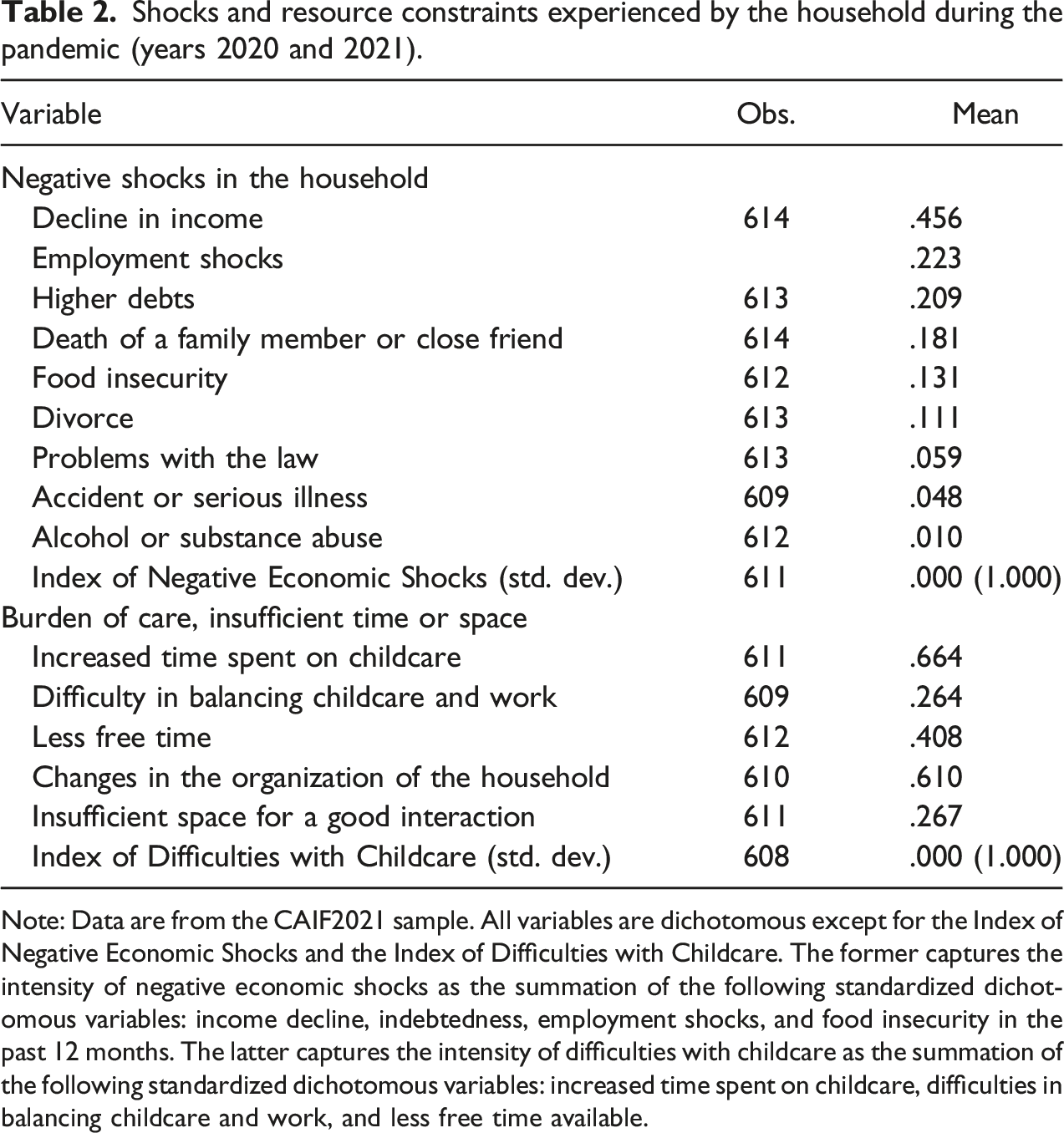
Note: Data are from the CAIF2021 sample. All variables are dichotomous except for the Index of Negative Economic Shocks and the Index of Difficulties with Childcare. The former captures the intensity of negative economic shocks as the summation of the following standardized dichotomous variables: income decline, indebtedness, employment shocks, and food insecurity in the past 12 months. The latter captures the intensity of difficulties with childcare as the summation of the following standardized dichotomous variables: increased time spent on childcare, difficulties in balancing childcare and work, and less free time available.
The pandemic also led to changes in the organization of caregiving for a large majority of the participating families in the sample (61%). Sixty-six percent of respondents said the time spent caring for their child increased during the pandemic, while 26% admitted to having problems balancing work and caregiving tasks as a result of COVID-19. Forty-one percent of respondents reported that they had to reduce the time spent in leisure activities, and 27% said that the physical space was insufficient for a good coexistence. Note that, unlike other variables in Table 2 which are binary, the “Index of Difficulties with Childcare” is a standardized variable that turns “no” responses into negative values and “yes” responses into positive ones. This explains why the mean of the index is close to zero.
Associations Between Negative Shocks, Increases in the Burden of Care, and Sociodemographic Household Characteristics
Sociodemographic characteristics associated with the intensity of negative economic shocks and of difficulties with childcare.
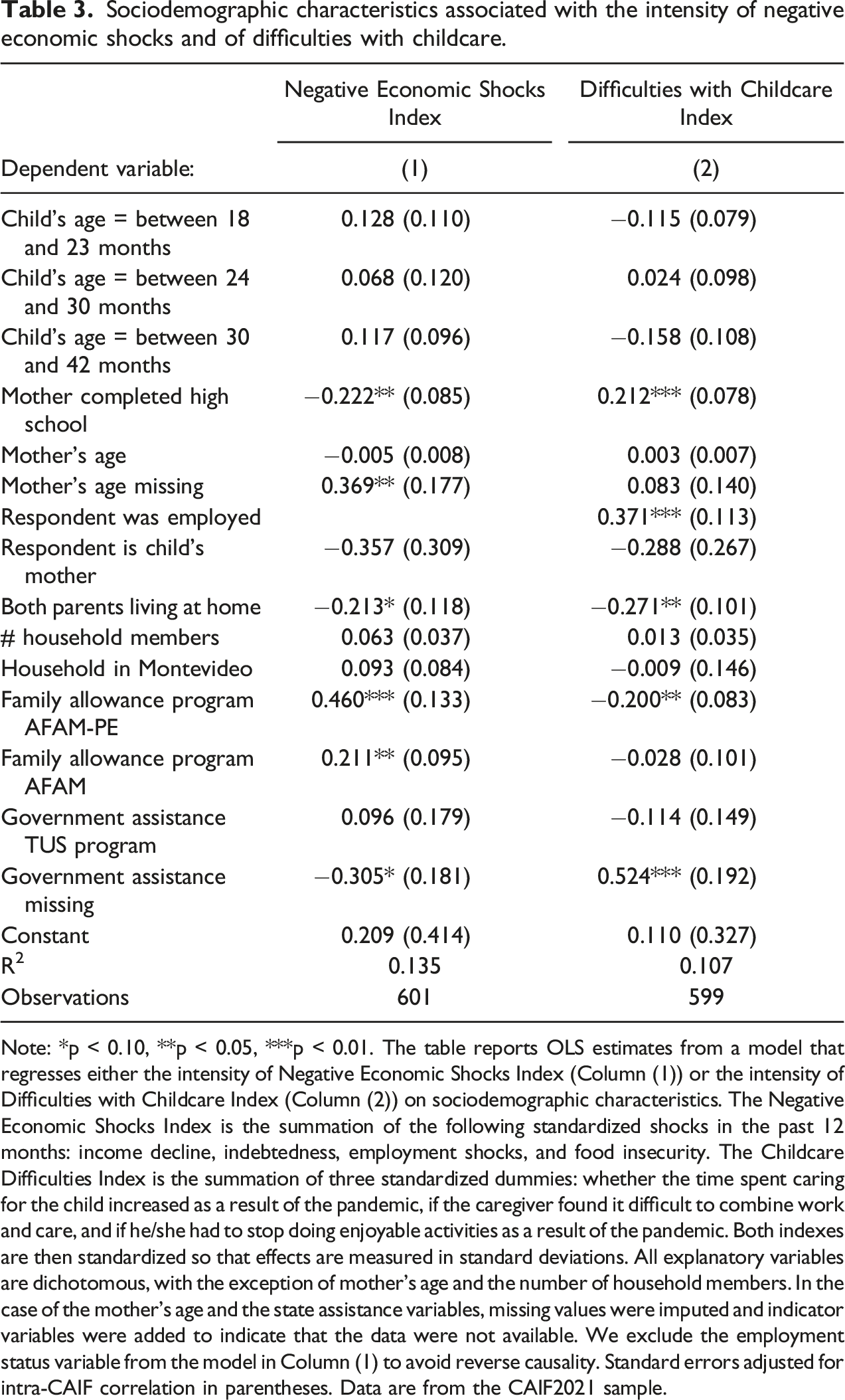
Note: *p < 0.10, **p < 0.05, ***p < 0.01. The table reports OLS estimates from a model that regresses either the intensity of Negative Economic Shocks Index (Column (1)) or the intensity of Difficulties with Childcare Index (Column (2)) on sociodemographic characteristics. The Negative Economic Shocks Index is the summation of the following standardized shocks in the past 12 months: income decline, indebtedness, employment shocks, and food insecurity. The Childcare Difficulties Index is the summation of three standardized dummies: whether the time spent caring for the child increased as a result of the pandemic, if the caregiver found it difficult to combine work and care, and if he/she had to stop doing enjoyable activities as a result of the pandemic. Both indexes are then standardized so that effects are measured in standard deviations. All explanatory variables are dichotomous, with the exception of mother’s age and the number of household members. In the case of the mother's age and the state assistance variables, missing values were imputed and indicator variables were added to indicate that the data were not available. We exclude the employment status variable from the model in Column (1) to avoid reverse causality. Standard errors adjusted for intra-CAIF correlation in parentheses. Data are from the CAIF2021 sample.
Column (2) identifies characteristics associated with the standardized Index of Childcare Difficulties. Unlike economic shocks, childcare problems are more severe when caregivers are more educated, employed, and live in households that do not receive financial assistance from the government. Households in which the mother completed high school report more intense difficulties with caregiving and leisure time than other households (coefficient of .212); the Index of Difficulties with Childcare increases by .371 standard deviations when the caregiver is employed and decreases by .2 standard deviations when the family is beneficiary of AFAM-PE family allowances. These are households that, most probably, counted on the care provided by early childhood centers and other care arrangements prior to the pandemic. The presence of both parents at home, on the other hand, reduces the intensity of the reported difficulties by .271 standard deviations, suggesting benefits from the division of childcare tasks within the household.
Negative shocks, Caregiving Difficulties, and Childrearing Environment
Associations between economic shocks/childcare difficulties and childrearing environment.
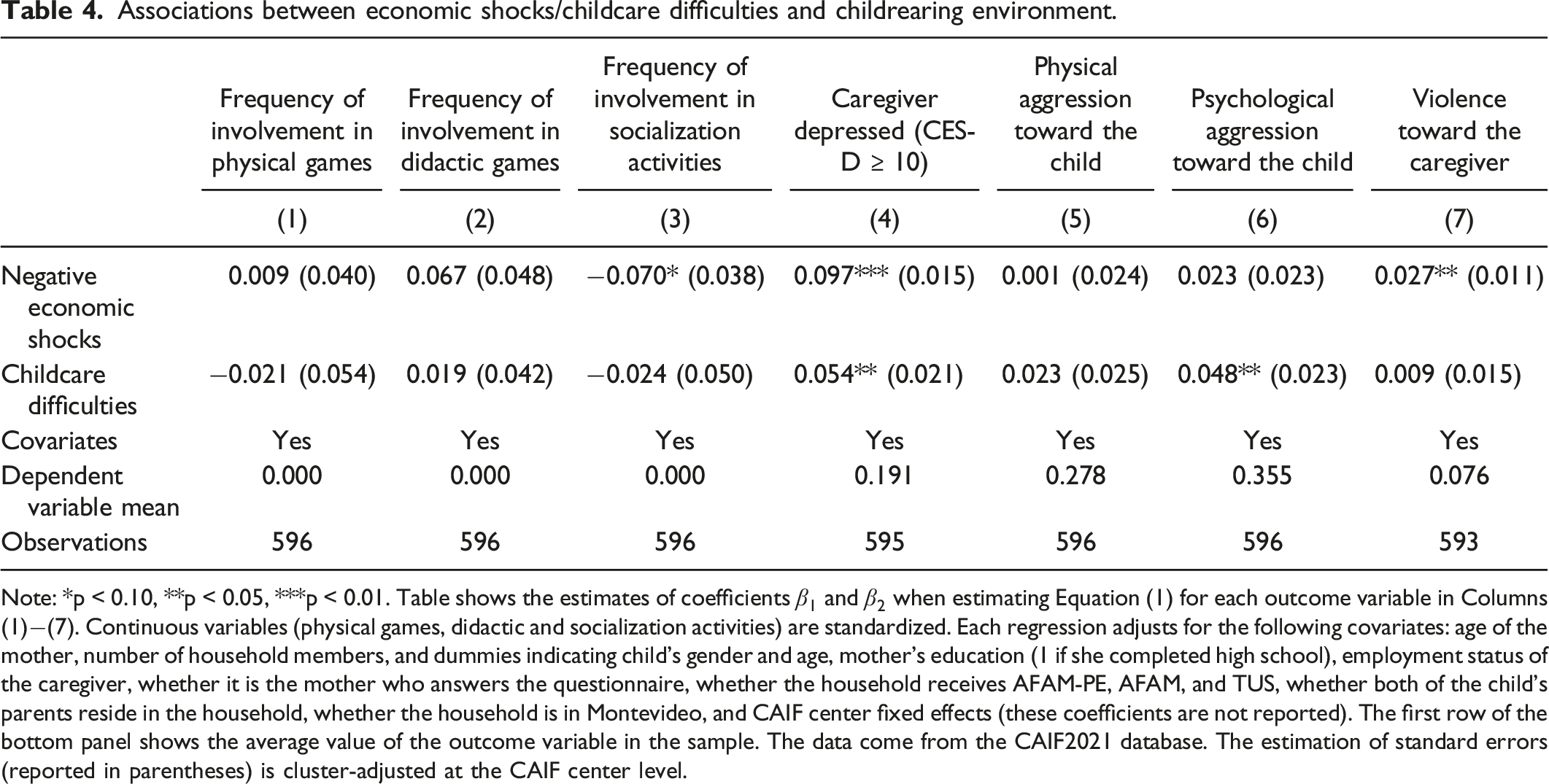
Note: *p < 0.10, **p < 0.05, ***p < 0.01. Table shows the estimates of coefficients
We do not observe statistically significant effects of economic shocks on the frequency of parental involvement (except for socialization activities although the effect is weak) nor on measures of aggression toward the child. Households that experienced negative economic shocks show more violence toward the child’s mother: a one standard deviation increase in the exposure to negative shocks increases the probability of violence toward the caregiver by 2.7 percentage points. In addition, the risk of depression of the caregiver (CES-D) increases by 9.7 percentage points when the intensity of exposure to negative shocks is one standard deviation higher, a 50% increase relative to the average rate of depression of 19%.
The intensity of childcare difficulties is also associated with a lower well-being and more aggression: a one standard deviation increase in childcare difficulties is associated with a 5.4 percentage point higher likelihood of caregiver depression and a 4.8 percentage point higher likelihood of psychological aggression toward the child.
Negative Shocks, Caregiving Difficulties, and Children’s Well-Being
Children’s changes in attitudes and behaviors and physical safety during the pandemic.
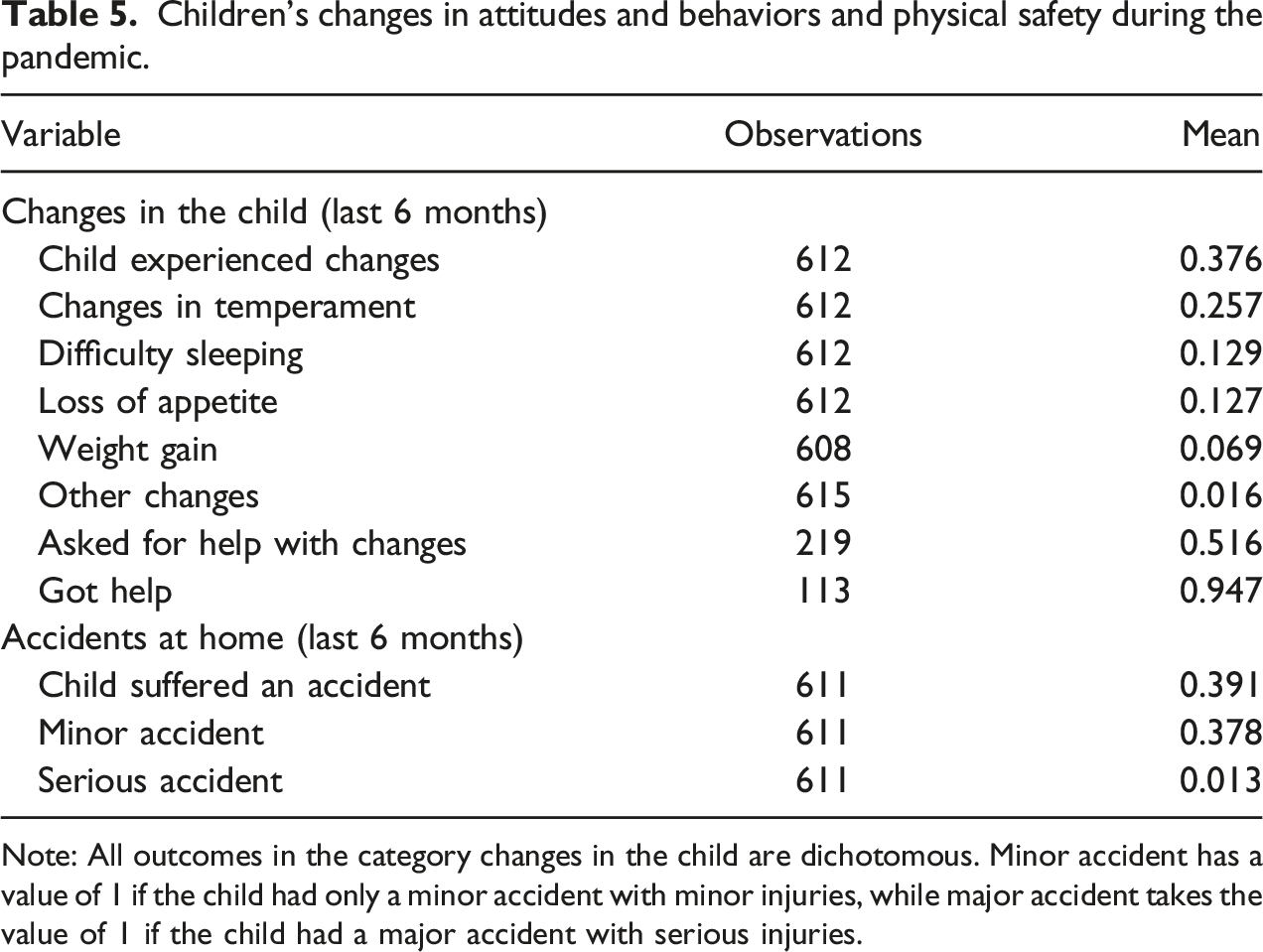
Note: All outcomes in the category changes in the child are dichotomous. Minor accident has a value of 1 if the child had only a minor accident with minor injuries, while major accident takes the value of 1 if the child had a major accident with serious injuries.
As for physical safety, accidents were reported in 39% of children, although a very small fraction led to serious injuries according to the caregivers’ reports. The changes in the organization of work that the pandemic brought through (e.g. remote work), added to the lack of childcare alternatives, made it difficult for many adults to reconcile childcare and work, increasing the likelihood that children spent time unsupervised, and thus the risk of accidents.
Associations between negative economic shocks, difficulties in childcare, and child well-being.
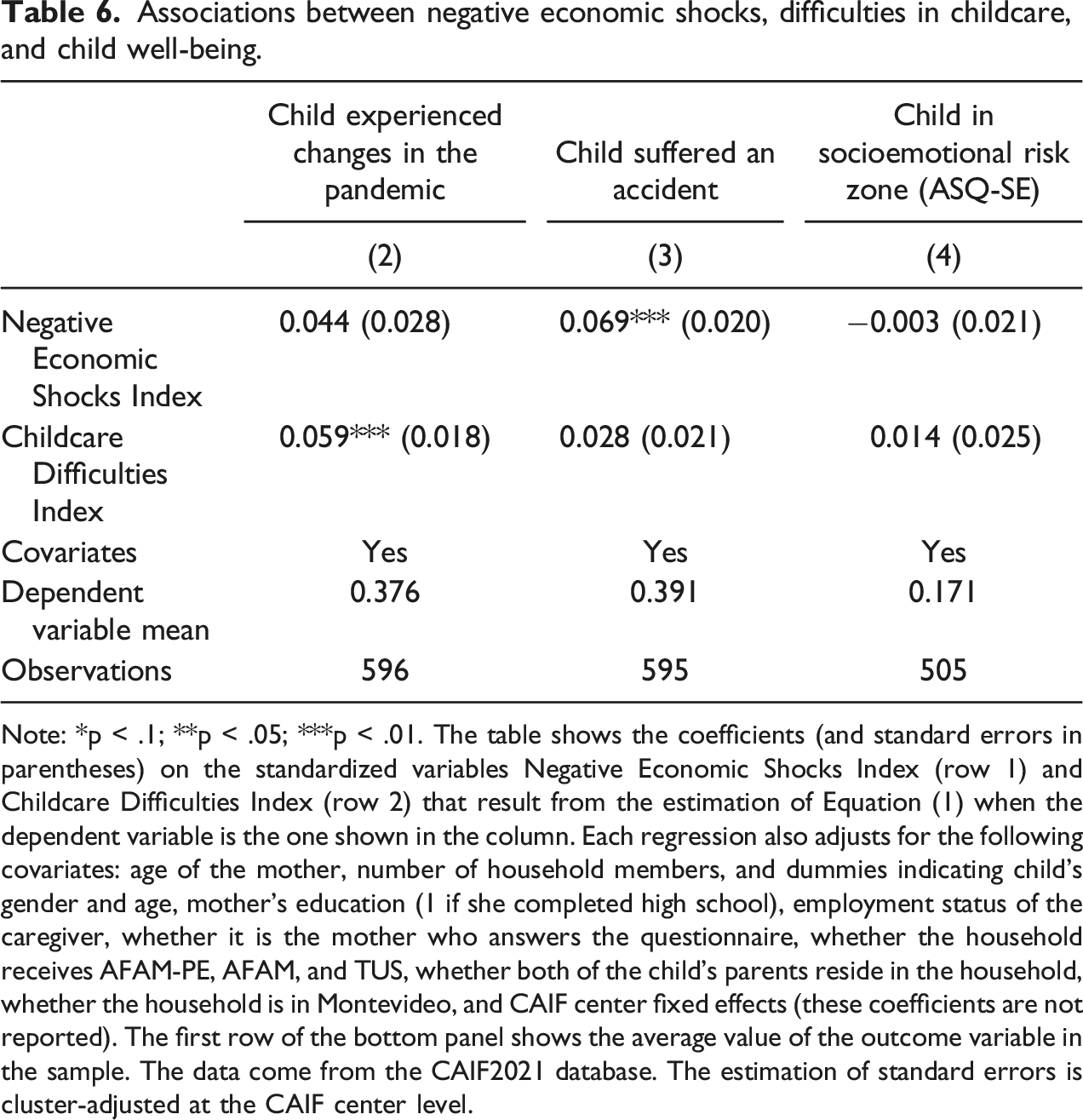
Note: *p < .1; **p < .05; ***p < .01. The table shows the coefficients (and standard errors in parentheses) on the standardized variables Negative Economic Shocks Index (row 1) and Childcare Difficulties Index (row 2) that result from the estimation of Equation (1) when the dependent variable is the one shown in the column. Each regression also adjusts for the following covariates: age of the mother, number of household members, and dummies indicating child’s gender and age, mother's education (1 if she completed high school), employment status of the caregiver, whether it is the mother who answers the questionnaire, whether the household receives AFAM-PE, AFAM, and TUS, whether both of the child's parents reside in the household, whether the household is in Montevideo, and CAIF center fixed effects (these coefficients are not reported). The first row of the bottom panel shows the average value of the outcome variable in the sample. The data come from the CAIF2021 database. The estimation of standard errors is cluster-adjusted at the CAIF center level.
Taken together, the results from this section and the previous one indicate that households more affected by negative economic shocks or by difficulties in caregiving as a result of the pandemic are more likely to show mental health problems among caregivers, higher levels of aggression, and negative changes in children, even after controlling for socioeconomic status and demographic characteristics of the household. When assessing these findings, it is important to consider, however, that the above associations do not necessarily represent causal effects; the associations may be biased by reverse causality or omitted variables. For example, a depressed mother may be more likely to report economic or childcare difficulties. Or a parent with a mental health problem may be more likely to experience financial problems during the pandemic, as well as caregiving problems. To further explore this, in Appendix Tables A2, A3, and A4 we show that the main results hold when successive controls are incorporated into the model specification (after controlling for household socioeconomic and demographic variables, and CAIF fixed effects). Under the assumption that unobservable household characteristics are correlated with observables, this robustness test provides some confidence that selection bias would not be critical.
Pre–Post Comparison of the Childrearing Environment and Child and Caregiver Well-Being in Pandemic versus Pre-Pandemic
Parental involvement and child and adult well-being before and during the pandemic (inverse probability weighting models).
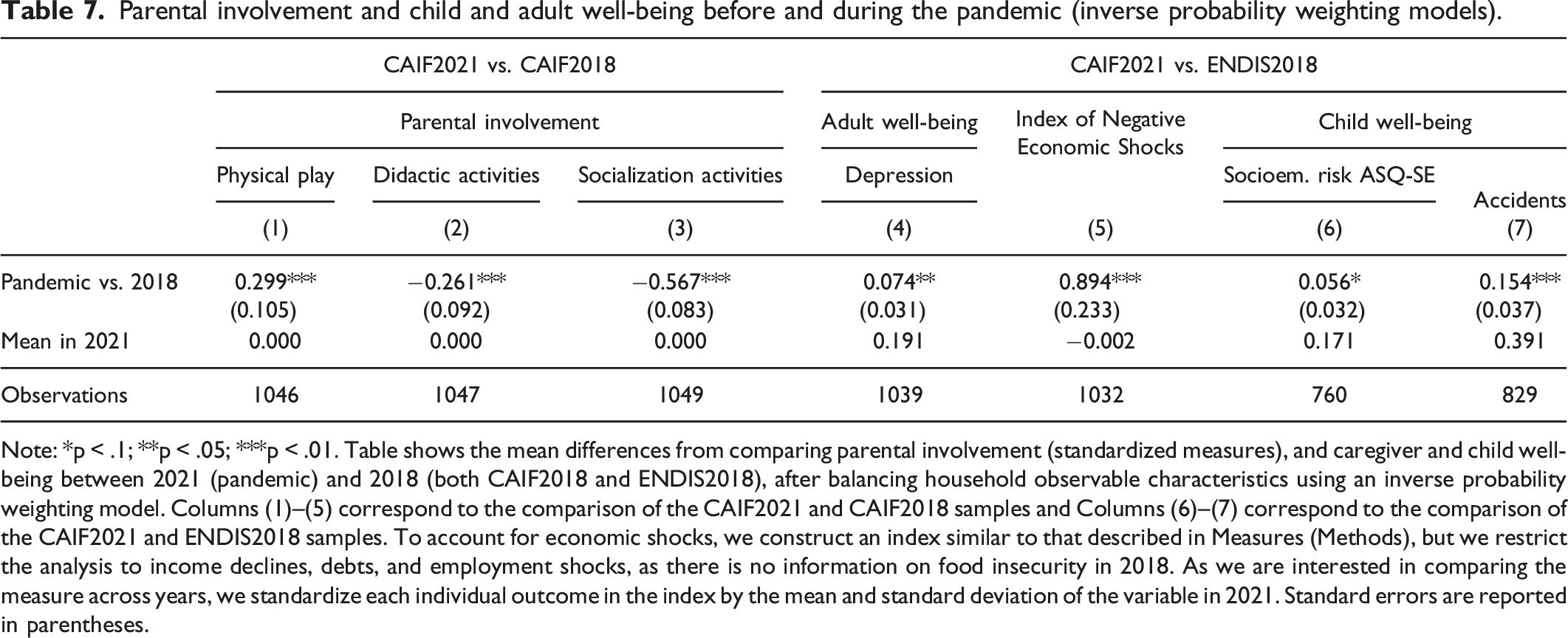
Note: *p < .1; **p < .05; ***p < .01. Table shows the mean differences from comparing parental involvement (standardized measures), and caregiver and child well-being between 2021 (pandemic) and 2018 (both CAIF2018 and ENDIS2018), after balancing household observable characteristics using an inverse probability weighting model. Columns (1)–(5) correspond to the comparison of the CAIF2021 and CAIF2018 samples and Columns (6)–(7) correspond to the comparison of the CAIF2021 and ENDIS2018 samples. To account for economic shocks, we construct an index similar to that described in Measures (Methods), but we restrict the analysis to income declines, debts, and employment shocks, as there is no information on food insecurity in 2018. As we are interested in comparing the measure across years, we standardize each individual outcome in the index by the mean and standard deviation of the variable in 2021. Standard errors are reported in parentheses.
When comparing the CAIF2021 sample with the CAIF2018 sample (Columns (1) to (5)), we find that the pandemic increased the time spent on physical play but decreased the time spent on didactic and social activities with the child. Parental involvement in physical activities increases by .299 standard deviations during the pandemic, whereas involvement in didactic and socialization activities contracted by .261 standard deviations and .567 standard deviations, respectively. These results indicate a lower investment in stimulating activities (reading, telling stories, and singing) and, as expected due to the decreased mobility, fewer interactions of the child with peers and other adults. Regarding the emotional well-being of the caregiver, Column (4) shows an increase in the risk of depression of 7.4 percentage points. The comparison of the CAIF2021 and CAIF2018 samples also allowed us to confirm that the shocks we potentially attribute to COVID-19 were more severe during the pandemic first year relative to a normal year (Column (5) of Table 7). These results complement the findings in the previous section showing a positive association between economic and childcare difficulties linked to COVID-19 and the probability of depression.
Columns (6) and (7) of Table 7 assess changes in children’s well-being based on a comparison with the ENDIS2018. We observe an increase of 5.6 percentage points (33% relative to an average risk rate of 17.1% under the pandemic) in children’s risk of socioemotional problems, as measured by the ASQ-SE scale (statistically significant at 10%). And we observe an increase of 15.4 percentage points in the probability that the child suffers an accident. This effect would be a lower estimate of the total effect given that in the ENDIS2018 the reference period for the question is the last 12 months, while in CAIF2021 it covered the last 6 months.
Discussion and Conclusions
The social distancing and mobility reduction measures that emerged globally in 2020 in response to the COVID-19 pandemic led to major shifts in two types of household resources: economic resources and time. Both of these constraints affected household dynamics and parenting environments, although unevenly. First, our findings indicate that a significant fraction of households were subject to negative economic shocks potentially linked to COVID-19, such as lower income, debts, and food insecurity. These shocks were more prevalent in households of lower socioeconomic status, potentially exacerbating their vulnerability. We find that caregivers in households experiencing negative economic shocks were more likely to be depressed and suffer aggressions. And children in these households experienced attitude and behavior changes and a higher risk of accidents.
Confinement also brought significant changes in families' childcare arrangements and use of time. In particular, the total closure of early childhood centers between March and June 2020 and the subsequent gradual and hybrid reopening, coupled with the reduced availability of help from grandparents and other relatives due to the risks of COVID-19, led to significant declines in the supply of childcare, triggering organizational problems in the household and difficulties combining care and work. Our work finds that, in contrast to economic problems, these difficulties were more likely to happen in households with more educated and working mothers, and in households that did not benefit from government assistance. Lack of time and problems in balancing care and work were associated with lower women’s socioemotional well-being and an increased likelihood of poorer parenting styles, including psychological aggression to the child.
Maternal depression is one of the features most strongly related to the strength of negative economic shocks and to childcare difficulties faced by households. Furthermore, when compared with data from previous surveys of similar families, the risk of maternal depression is significantly higher during the pandemic. Maternal depression is an important risk factor in the formation of attachment and in the cognitive, emotional, social, and behavioral development of children (Cummings and Davis, 1994; Smith, 2004; Gregoire and Manning, 2009), effects that we also find in our analysis.
The economic and time management stress associated with the pandemic, as well as changes in household routines, affected the quantity and quality of time spent with children. While engagement in physical activities with the child increased, we found lower parental involvement in activities relevant to the child’s cognitive stimulation, such as reading or storytelling. Children not only witnessed changes in the dynamics and environment of their homes; they also suffered a significant reduction in face-to-face care time in childhood centers, as well as other interruptions in extra-familial bonds due to social distancing measures. The conjunction of these factors may contribute to explain why approximately one in four children exhibited changes in their temperament during the pandemic, increasing the risk of socioemotional problems and accidents compared to 2018.
In terms of intervention and public policy, the results of this study first suggest the need to continue monitoring and alleviating the socioeconomic stress faced by many households, particularly those with lower education and recipients of government assistance. Although the problems related to childcare were gradually resolved, at least for families that counted on them prior to the pandemic, the economic recovery has been slower and not necessarily even for different households. Ensuring protection of basic needs in vulnerable households continues to be a priority.
Second, our findings underscore the challenge of responding institutionally to the problem of gender violence and maternal mental health that increase during crises. The shocks faced by families and their effects on young children during the pandemic call for programs that can support them during and after downturns, help them manage stressors, and help them respond to problems in a timely manner. Institutions working with young children should be prepared to identify families in these situations, guide them through the health care and judicial systems, and provide them with tools to mitigate impacts on their children. The health care system should make it easier to access treatment for mental health conditions.
Our analysis is not exempt from limitations. As noted above, our work is descriptive and is limited to finding associations between the pandemic or its material and time derivatives on the childrearing environment and the well-being of its members. The analysis also refers to the first year since the inception of the pandemic, and some scales measured the situation in March 2021, when the local context of the pandemic had begun to appear more complicated as a result of an increasing number of cases and deaths in Uruguay. We are unable to assess how permanent the identified changes in childrearing environments and well-being were. Subsequent studies should address the longer-term consequences of the pandemic on children, women, and family well-being in general. Finally, while we did not specifically aim at collecting only data from the mother, the vast majority of survey respondents were mothers. This limits our ability to analyze other types of interactions at the household level, such as the impact of the pandemic on the well-being of adult males or intra-household power balances.
Supplemental Material
Supplemental Material - Household’s Stressors and Well-Being During the Global COVID-19 Pandemic
Supplemental Material for Household’s Stressors and Well-Being During the Global COVID-19 Pandemic by Ana Balsa, Juanita Bloomfield, Alejandro Cid, Martina Lorenzo, and Paula Patrone in Journal of Family Issues
Footnotes
Declaration of Conflicting Interests
The author(s) declared no potential conflicts of interest with respect to the research, authorship, and/or publication of this article.
Funding
The author(s) received no financial support for the research, authorship, and/or publication of this article.
Ethical Approval
The project was approved by the Institutional Review Board at Universidad de Montevideo.

Data Availability Statement
Supplemental Material
Supplemental material for this article is available online.
Notes
References
Supplementary Material
Please find the following supplemental material available below.
For Open Access articles published under a Creative Commons License, all supplemental material carries the same license as the article it is associated with.
For non-Open Access articles published, all supplemental material carries a non-exclusive license, and permission requests for re-use of supplemental material or any part of supplemental material shall be sent directly to the copyright owner as specified in the copyright notice associated with the article.
