



Abstract
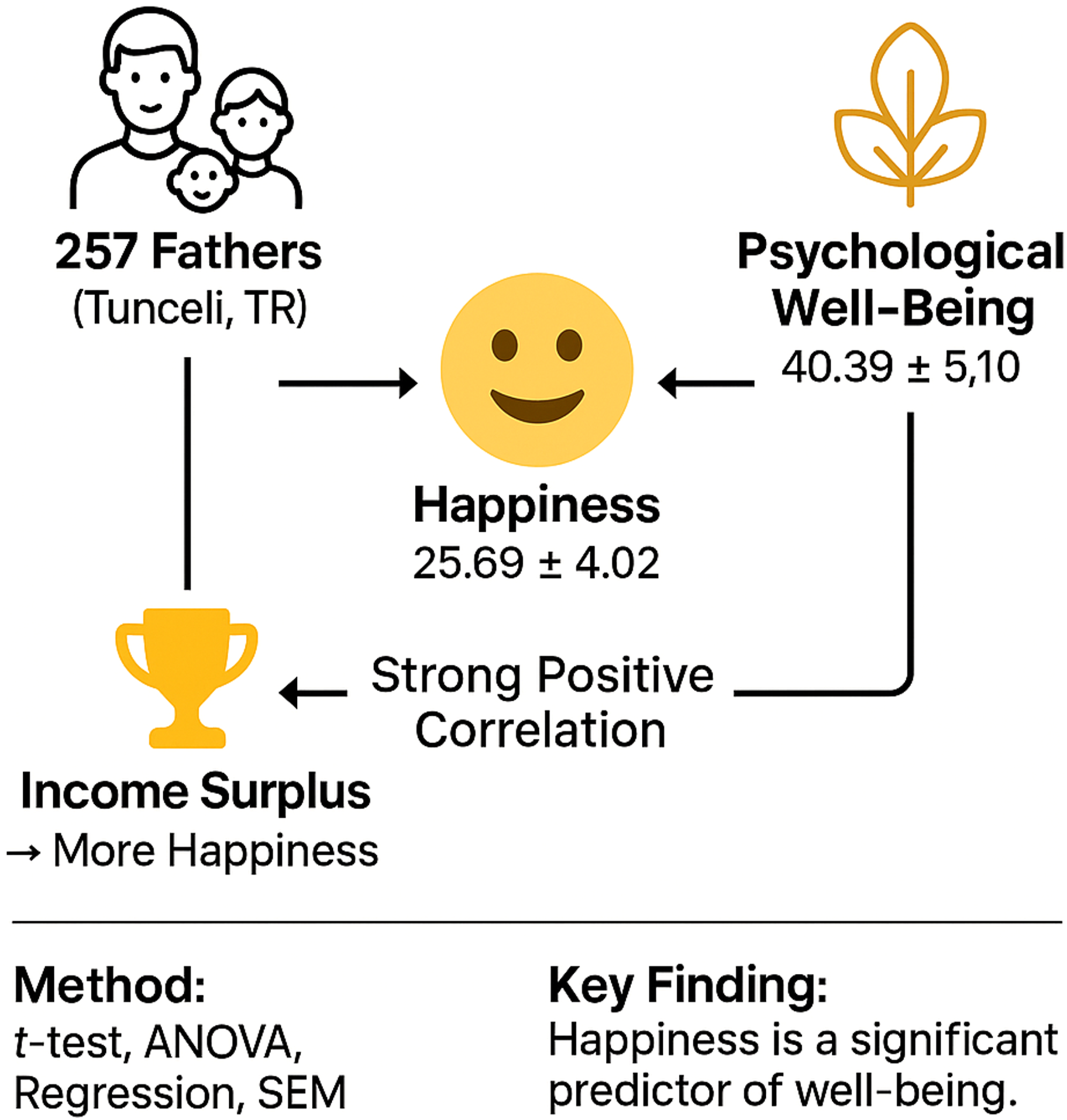
Fatherhood significantly influences psychological well-being and happiness, yet fathers particularly of young children are underrepresented in research. This study examines the relationship between happiness and psychological well-being in this group. This study aims to explore the relationship between happiness and psychological well-being among fathers of children in early childhood. A descriptive-correlational study was conducted with data collected online using validated self-report questionnaires on demographic characteristics, happiness, and psychological well-being from 257 participants. A statistically significant, strong, and positive relationship was found between happiness and psychological well-being (r = 0.626, p = 0.000). Regression analysis revealed that happiness explained 39.2% of the variance in psychological well-being and was a significant predictor (R2 = 0.392). Each unit increase in psychological well-being was associated with a 0.794-unit increase in happiness (β = 0.794; p < 0.05). Fathers’ happiness is a key determinant of their psychological well-being and psychosocial interventions targeting fathers may enhance both paternal and child well-being.
Get full access to this article
View all access options for this article.