




Abstract
The present study aimed to explore the relationship between psychological flexibility (PF), parental reflective functioning (PRF) and their independent associations with parental stress. PF is described as the process of noticing and accepting thoughts and feelings and continuing to act in line with one’s values. While PRF involves: Pre-mentalising (PM), Certainty about mental states (CMS) and Interest and curiosity in mental states (IC). A total of 362 parent/carers of children aged 0–10 years old completed an online questionnaire. There were significant correlations with all aspects of PRF (higher PM, lower IC and lower CMS), and lower PF, with higher levels of parental stress. When considering covariates and both constructs in the regression model, PF and aspects of PRF (PM and CMS subscales) still independently predicted parental stress. Lastly, PF significantly correlated with all aspects of PRF (lower PM, higher CMS and IC). The results suggest that the constructs of PRF and PF, despite their overlap, appear to have partially independent associations with parental stress. Therefore, this study is tentatively supportive of a rationale for integrating both relevant theoretical models within parenting interventions, in order to provide additive benefit in alleviating parenting stress.
Introduction
Parenting stress can be defined as the aversive psychological reaction to the demands of being a parent which results in negative feelings towards the self and the child (Deater-Deckard, 1998). It is estimated that 36–50% of parents experience significant stress related to their parenting, child behaviour or child development (Akister & Johnson, 2004; Reijneveld et al., 2008). Parenting stress often arises when the demands of the parenting role and its responsibilities are inconsistent with parents’ expectations, or there are insufficient resources to meet these demands (Chung et al., 2024). The Parental Stress Model (Abidin, 1992) outlines factors that influence parenting stress such as a parents’ marital relationship, parent or child characteristics, the environment and stressful life events. Sleep disturbances, work–family conflict and financial stress have all been found to impact parental stress (Hagen et al., 2013; Nomaguchi & Milkie, 2020). These factors can result in negative parental appraisals, causing emotional stress, perceived difficulties in their parent–child relationship and difficulty in managing child behaviour (Abidin, 2012).
The demands of parenthood and the resulting parenting stress have been found to be associated with certain parenting styles. For example, parental stress is associated with an increased tendency towards authoritarian (low warmth and high control) and permissive parenting styles (high warmth and low control) (Han & Lee, 2018; Mak et al., 2020), intrusive parenting (Ispa et al., 2004) and more ineffective disciplinary actions (Chung et al., 2021). Furthermore, the impact of parenting stress can lead to problems in the parent–child relationship such as a poorer quality relationship (Deater-Deckard, 1998), fewer maternal positive behaviours (Crnic et al., 2005) and lower quality of parental openness in communication (Ponnet et al., 2013). Parenting stress can also impact broader parental mental health and wellbeing (Kwok & Wong, 2000). For example, studies have shown higher parenting stress is associated with symptoms of anxiety and depression (Rollè et al., 2017), greater psychological distress (Park et al., 2022) and higher parental burnout (Hai Ninh Nguyen, 2021).
Parenting stress has also been associated with negative impacts for the child, such as difficulties in attention, cognitive development and emotional regulation (Guajardo et al., 2009; Mathis & Bierman, 2015; Neece et al., 2012). In terms of child development, a study in the USA examined data from 229 families and found children of parents with high stress were more likely to report child emotional problems and poorer child social competence (Anthony et al., 2005). Furthermore, a systematic review found associations between child psychological problems, child externalising and internalising problems and maternal parenting stress (Fang et al., 2024). It is important to note that most studies exploring parental stress use a correlational design and so the causal nature of the relationships cannot be certain. A longitudinal study of 404 families in the USA examined the impact of parenting stress on child behaviour and found bidirectional relationships; parenting stress was both affected by and affected negative parenting and child externalising problems (Mackler et al., 2015).
It is relevant to consider the factors that influence parenting stress because these factors could inform parenting interventions, which can be used to promote the mental health and wellbeing of children. For example, an important aspect of parenting is a parent’s ability to respond sensitively to a child’s needs. Parental sensitivity is important as it has been found to have negative correlations with parenting stress (Gabler et al., 2018; Van Den Heuvel et al., 2022). A parent’s ability to be sensitive to the needs of their child is influenced by their ability to have self-awareness of their own internal processes, as well as emotion regulation skills (Carreras et al., 2019). Two relevant psychological constructs relating to self-awareness, developed from different theoretical underpinnings, are parental reflective functioning (PRF) and psychological flexibility (PF).
Parental Reflective Functioning (PRF)
Parental reflective functioning (PRF) refers to a parent’s capacity to reflect on their own internal mental states when interacting with their child, alongside the ability to envision their child as motivated by their own feelings and desires (Ensink & Mayes, 2010; Luyten, Nijssens, et al., 2017). Reflective functioning is used interchangeably with the term “mentalisation” and considered intrinsic to emotion regulation and productive social relationships (Fonagy et al., 2002; Slade, 2005). PRF is a key construct rooted in Bowlby’s Attachment Theory (Bowlby, 1969), which links early parent–child interactions to the child’s attachment security and relatedly their social and emotional development. For example, a parent’s capacity to hold in mind their child’s feelings, desires and intentions, allows the child to discover their own internal experience via their parents’ representation (Slade, 2005). The parent’s representation of the child’s internal experience is crucial to the child ultimately developing their own reflective functioning capacities (Ensink & Mayes, 2010; Slade, 2005). For example, a parent who labels their child’s emotion such as saying “you must feel really frustrated”, is helping the child to learn about their own internal experience.
PRF is considered complex, multi-dimensional and regarded as having several distinct factors. PRF can be measured using the reflective functioning coding system in the Parental Developmental Interview (PDI) (Slade et al., 2004). However, this method of measurement is often impractical, subjective and time-consuming (Ye et al., 2022). The Parental Reflective Functioning Questionnaire (PRFQ) (Luyten, Mayes, et al., 2017) is a self-report measure that assesses the dimensions of PRF in a briefer and less time-consuming format. Psychometric assessment of the measure identified three meaningful and consistent factors of PRF: (i) Pre-mentalising (PM) (i.e. tendency to make maladaptive attributions about the child’s intentions); (ii) Certainty about mental states (CMS) (i.e. a parent’s inability to recognise that mental states are not readily apparent); and (iii) Interest and curiosity in mental states (IC) (i.e. the parent’s active curiosity about and willingness to understand the mental states of the child) (Luyten, Mayes, et al., 2017). Considering the multi-faceted nature of PRF, it’s important to consider the different dichotomies involved. For example, parents could be overly certain about the mental states of their child (“hypermentalising”), or their recognition of mental states could be felt to be completely opaque or even totally absent (“hypomentalising”) (Luyten, Nijssens, et al., 2017). Ideally, parents would fall between these two extremes so as not to overly attribute or under-attribute their child’s mental states.
The capacity to demonstrate PRF is crucial in influencing parents’ ability to cope when facing stress related to the demands of parenthood (Duncan et al., 2009). PRF has been linked to child outcomes, such as the development of secure attachment and the child’s capacity for their own reflective functioning (Sharp & Fonagy, 2008). Considering parental outcomes of PRF, Rutherford et al. (2013) found that higher levels of IC (interest and curiosity in mental states) were related to increased tolerance of infant distress.
Studies have also examined the direct relationships between PRF and parenting stress. For example, it was found that mothers demonstrating mind-mindedness (a form of mentalisation) reported less parenting stress (McMahon & Meins, 2012), whereas higher pre-mentalising (PM) scores were related to higher levels of parental stress (Longobardi et al., 2025; Luyten, Nijssens, et al., 2017; Nijssens et al., 2018; Steele et al., 2020). However, there have been mixed findings regarding the IC and CMS subscales. Luyten, Nijssens, et al. (2017) and Longobardi et al. (2025) found IC and CMS were not associated with parental stress, and similarly, Özbilgin (2023) found that CMS did not significantly predict parental stress. However, Steele et al. (2020) found that CMS was significantly positively associated with parental stress, and Ye et al. (2022) found CMS and IC were negatively correlated with parenting stress. These mixed findings are not surprising considering the nature of these subscales, that is, as mentioned scores at the either extreme of CMS are an indicator of maladaptive mentalisation (Luyten, Nijssens, et al., 2017). For CMS, “scores on this scale may range from a tendency of parents to be overly certain about the mental states of their child…reflecting intrusive mentalising or hypermentalising, to hypomentalising, that is, an almost complete lack of certainty about the child’s mental states” (Luyten, Nijssens, et al., 2017, p. 8). Thus, the optimum CMS values may be in a mid-range. This could explain the differential findings in relation to their relationship with parental stress. For IC, one would expect higher interest and curiosity in mental states would be beneficial as it involves the parent considering the child’s mental state; however, there are mixed findings with its association with parenting stress, suggesting higher scores, but not to an extreme level, may be ideal.
Psychological Flexibility (PF)
Psychological flexibility (PF) is defined as the process of noticing and accepting thoughts and feelings as they are (without trying to control or change them) and continuing to act in line with one’s values (Hayes et al., 2012). Psychological flexibility has three key aspects: (i) being open to experience with acceptance and perspective, (ii) being aware in the present moment and, (iii) being committed to value-directed actions (Hayes et al., 2012). PF is theoretically rooted in Relational Frame Theory (Hayes et al., 2001) and associated with Acceptance and Commitment Therapy (ACT; Hayes et al., 2012) which has a central aim to increase PF. PF is related to a variety of positive outcomes, including higher quality of life, greater emotional wellbeing, more adaptive psychological functioning and better coping strategies (Bond & Bunce, 2003; Bryan et al., 2015; Hayes et al., 2006). Conversely, a review of the literature found psychological inflexibility had significant associations with depression, anxiety and stress symptoms (Yao et al., 2023), and greater emotional reactivity.
In parenting, PF is seen as an individual’s ability to accept negative thoughts and emotions about their parenting, whilst engaging in value-based behaviours that promote sensitive responses to a child’s needs (Brassell et al., 2016; Burke & Moore, 2015). Low parent PF has been found to relate to poor outcomes in parents and children. For parents, the tendency to avoid, suppress or modify uncomfortable experiences (psychological inflexibility), has been related to greater depressive symptomatology and greater distress (Coyne et al., 2011; Moyer & Sandoz, 2015). Furthermore, a study by Burke and Moore (2015), found increased parent PF was related to greater use of positive parenting strategies (e.g. letting the child know when they have done something good). It has been suggested that the association between parent PF and positive parenting strategies is related to parents with higher PF being better able to maintain present moment and non-judgemental awareness of their internal experiences, allowing them to engage in value-driven positive parenting practices (Brassell et al., 2016; Burke & Moore, 2015; Moyer & Sandoz, 2015). For example, a parent who values being patient, can allow feelings of stress and irritation to be there whilst waiting for their child to complete an activity, that is, acting in line with their values as a parent, rather than wanting the difficult feelings to go away.
PF, similarly to PRF, has been associated with parenting stress. Studies have found that low parent PF is directly associated with higher levels of parenting stress (e.g. Chorão et al., 2022; Fonseca et al., 2020). This relationship can be understood in various ways. For example, lower parent PF means parents may evaluate their unpleasant inner experiences of parenting stress negatively, which makes them more likely to practice avoidance and suppression strategies (Fonseca et al., 2020). These avoidance strategies, although seemingly effective in the short-term, may in the long-term, magnify negative internal experiences (Hayes et al., 2012), leading to increased parental stress (Sairanen et al., 2018). Conversely, as mentioned, higher parent PF has been found to increase adaptive parenting strategies (e.g. lower use of harsh and negative strategies) (Brassell et al., 2016; Burke & Moore, 2015), which is associated with less parent–child conflict (Steele & McKinney, 2019), and therefore lower parenting stress (Daks & Rogge, 2020).
The Relationship Between Psychological Flexibility and Parental Reflective Functioning
The two constructs discussed above have developed through different theoretical pathways; PRF from Attachment Theory (Bowlby, 1969), and relatedly Mentalisation-Based Treatment (Bateman & Fonagy, 2016); and PF from Relational Frame Theory (Hayes et al., 2001) and associated with this, Acceptance and Commitment Therapy (Hayes et al., 2012). Specific differences in the nature of the constructs exist. PF has an additional focus on values; having clear values might help a parent regain focus and purpose when under intense demands. Whilst PF is fully focused on a person’s own experiences, PRF involves both focusing on one’s internal processes and perspective taking of the child’s internal experiences; being able to reflect on their child’s feelings might increase empathy and understanding of their child’s behaviour, thus decreasing distress (Mehrabi et al., 2022). Despite their differences, both PRF and PF are similar in that they focus on the individual’s self-awareness and relationship with their thoughts and emotions, and as discussed above, both are predictive of more adaptive parenting strategies and lower parenting stress.
Little research has been conducted on the relationship between PRF and PF and how they are associated with parenting stress. There are two studies to the researcher’s knowledge that have examined these constructs together. One study concluded that mentalisation (PRF) and PF can predict psychological distress in pregnant women; with a significant positive correlation found between mentalisation and PF (Mehrabi et al., 2022). However, this study did not explore a parent population or include parental stress as a study variable. Another study included both PRF and parent PF and found both contributed to parental self-efficacy, which in turn contributed to parental coping strategies (Reich et al., 2025). However, this study did not include parenting stress or consider the relationship between the PRF and PF.
The Current Study
The above summary of the literature has highlighted how understanding the factors that contribute to parental stress has implications for child outcomes. The extent to which problems in PRF and PF have independent associations with parental stress is an important topic for intervention development. For example, evidence of independent associations would indicate that interventions that promote both higher levels of PF and PRF might have a greater impact on reducing parenting stress than interventions that solely focus on improving one of these areas. Therefore, there remains a need for research to better understand these relationships. This study aimed to explore the relationship between PF and PRF and how they are independently associated with parental stress.
Hypotheses
(1) Regarding PRF, based on theoretical reasoning, and partly supported by prior research, it was hypothesised that: (a) Higher levels of misattribution of the child’s intentions (PM) and lower levels of interest and curiosity about the child’s mental states (IC) would be significantly associated with higher levels of parental stress. (b) The tendency to be certain about mental states (CMS) would not be significantly associated with parental stress based on the reasoning that hypo-mentalisation or hyper-mentalisation (i.e. extreme scores) is not adaptive. (2) Based on both theoretical reasoning and past research, it was hypothesised that lower levels of PF would be significantly correlated with higher levels of parental stress. (3) Due to theoretical reasoning that whilst overlapping, each construct has some distinct processes, it was hypothesised that both PRF (in terms of higher PM and lower IC) and lower PF will independently statistically predict higher levels of parental stress.
Method
Participants
Demographic Information for Participants
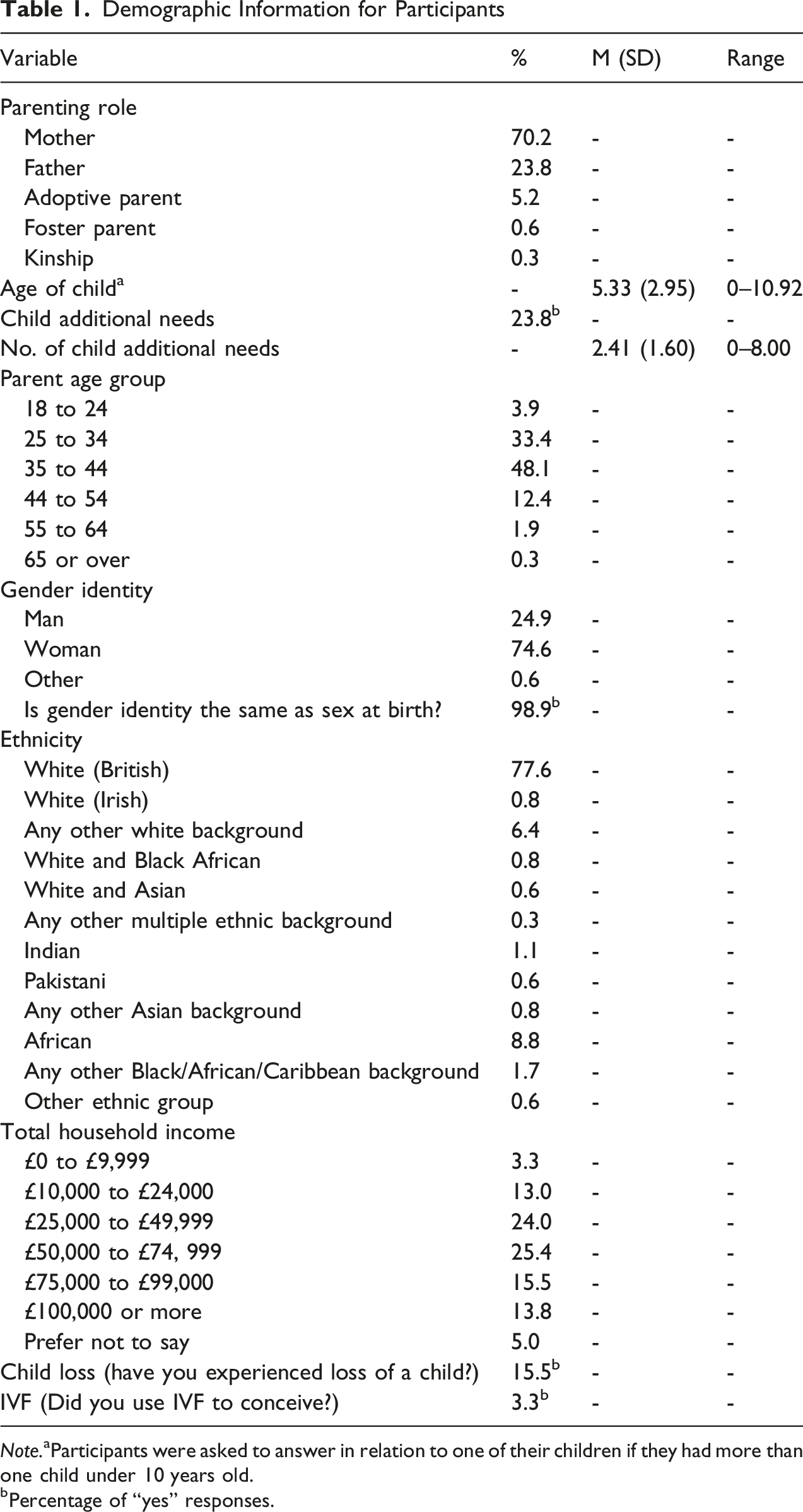
Note.aParticipants were asked to answer in relation to one of their children if they had more than one child under 10 years old.
bPercentage of “yes” responses.
Measures
The Parental Stress Scale (PSS) (Berry & Jones, 1995) is a measure designed to assess parental stress and parents’ feelings about their parenting role. It has 18 items exploring both positive and negative aspects of parenthood. It asks parents to describe their relationship with their child (e.g. “I am happy in my role as a parent”; “I sometimes worry whether I am doing enough for my child (ren)”; “I feel overwhelmed by the responsibility of being a parent”). Statements are rated on a five-point scale (1 = Strongly disagree, 2 = Disagree, 3 = Undecided, 4 = Agree, 5 = Strongly agree). Scores range from 18 to 90, with higher scores indicating higher levels of parental stress. Good internal consistency of the PSS has been found across a range of samples (Berry & Jones, 1995), and research has indicated the measure has good convergent validity (Zelman & Ferro, 2018).
The Parental Reflective Functioning Questionnaire (PRFQ) (Luyten, Mayes, et al., 2017) is designed to measure parental reflective functioning, that is, the capacity of the caregiver to reflect on their own internal mental states as well as their child’s. It has 18 items asking caregivers to what extent they agree or disagree with the statements. It includes three subscales: Pre-mentalising modes (PM) (i.e. tendency to make maladaptive attributions about the child’s intentions) (e.g. “My child cries around strangers to embarrass me”); Certainty about mental states (CMS) (e.g. “I always know what my child wants”), and interest and curiosity in mental states (IC) (e.g. “I like to think about the reasons behind the way my child behaves and feels”). Statements are rated on a seven-point scale from 1 (Strongly disagree) to 7 (Strongly agree). The measure produces a score for each of the three subscales, lower scores on the pre-mentalising (PM) subscale indicate increased mentalising and for certainty about mental states (CMS) and interest and curiosity about mental states (IC), a mid-range is ideal. The PRFQ has been described as having good validity and reliability (α = .60) (Fathi et al., 2020).
The CompACT (Francis et al., 2016) is a tool for measuring psychological flexibility (PF), which is defined as the process of noticing and accepting thoughts and feelings as they are and continuing to act in line with one’s values (Hayes et al., 2012). It has 23 items and participants are asked to rate the statements on a seven-point scale from 0 (Strongly disagree) to 6 (Strongly agree). It includes three subscales: openness to experience (e.g. “One of my big goals is to be free from painful emotions”); behavioural awareness (e.g. “I rush through meaningful activities without being really attentive to them”) and valued action (e.g. “I can identify the things that really matter to me in life and pursue them”). The measure also produces a total PF score, with higher scores indicating greater PF. The CompACT has been shown to demonstrate good internal consistency (r = .34), and good concurrent validity with all subscales (Francis et al., 2016).
Potential confounding variables of interest were also collected including experiences of stressful life events, which were measured using the Social Readjustment Rating Scale (SRRS) (Wallace et al., 2023) (updated from SRRS). This measure has high reliability (r = .89 to .96) and temporal validity (Gerst et al., 1978). Demographic data was also collected: gender, parenting role, age of parent and child, ethnicity, socioeconomic status (total household income), use of IVF, child loss and child additional needs. To ensure participants responded accurately to the measures, attention checks were used for the main study variables. The three attention checks asked participants to respond in a certain way, for example, “please could you choose the following option, 1. Does not describe me well, for this item”. The participants who did not respond correctly were excluded from the study.
Procedure
The research procedure consisted of two phases. In the first phase participants were recruited between June 2024 and December 2024 using opportunity sampling through an online questionnaire on Qualtrics. The study was advertised on social media, parent support organisations, local community hubs and schools. Snowball sampling was also used to aid recruitment, whereby participants were invited to share the study link to other parent/carers they know. In the first phase, 403 participants agreed to take part in the study, 99 of these participants were excluded due to incomplete data, 14 were excluded due to failing the attention checks and three did not meet the study inclusion criteria (child over 10 years old) This resulted in 287 participants’ data included in the study.
In the second phase of recruitment in January 2025, the online recruitment website Prolific was used in order to target demographic characteristics that had a lack of representation in the first phase of recruitment. Prolific was used to recruit fathers and parents from culturally diverse backgrounds in the UK. In this phase, 81 participants were recruited, two were excluded due to incomplete data, two were excluded for not meeting the inclusion criteria (child over 10 years old) and two were excluded due to failing the attention checks, this resulted in 75 participants’ data included in the study. The total number of participants included in the study from both recruitment phases was 362.
Sample Sizes and Data Analysis
A G-power analysis prior to recruitment was used to determine an a priori sample size of 84 participants (d = .30, power = .80 and α = .05). The effect size was determined by exploring the present literature in the area which indicated that correlations between measures of parental mental health/parental stress and the constructs of PF and the PM subscale of PRF are commonly of medium strength (e.g. Moyer & Sandoz, 2015; Nijssens et al., 2018). Due to uncertainty in the hypotheses particularly the mixed findings related to the IC and CMS subscales of PRF (and the potential that some previous research was underpowered to detect smaller effects), the sample size was maximised to increase the study’s power to detect smaller effects.
IBM SPSS Statistics Version 25 was used for the analyses. The data was analysed using Pearson’s correlational analysis to explore relationships between each construct (PRF, PF and parental stress). The data was then analysed using bivariate correlations to explore any effects of potential covariates on the main study variables (e.g. age, gender and stressful life events). Effect sizes of 0.10 indicated a small effect, 0.30 indicated a medium effect and 0.50 indicated a large effect (Cohen, 1988). For the significant correlations found, a multiple regression analysis was used to examine the degree to which the constructs independently relate to parental stress, controlling for the significant covariates found. Visual inspection of the raw data and interpretation of the Cook’s distance and Studentised residuals found no obvious outliers, or large variability between scores, and therefore, no data was omitted.
Results
Descriptives
Descriptives of the Main Study Variables
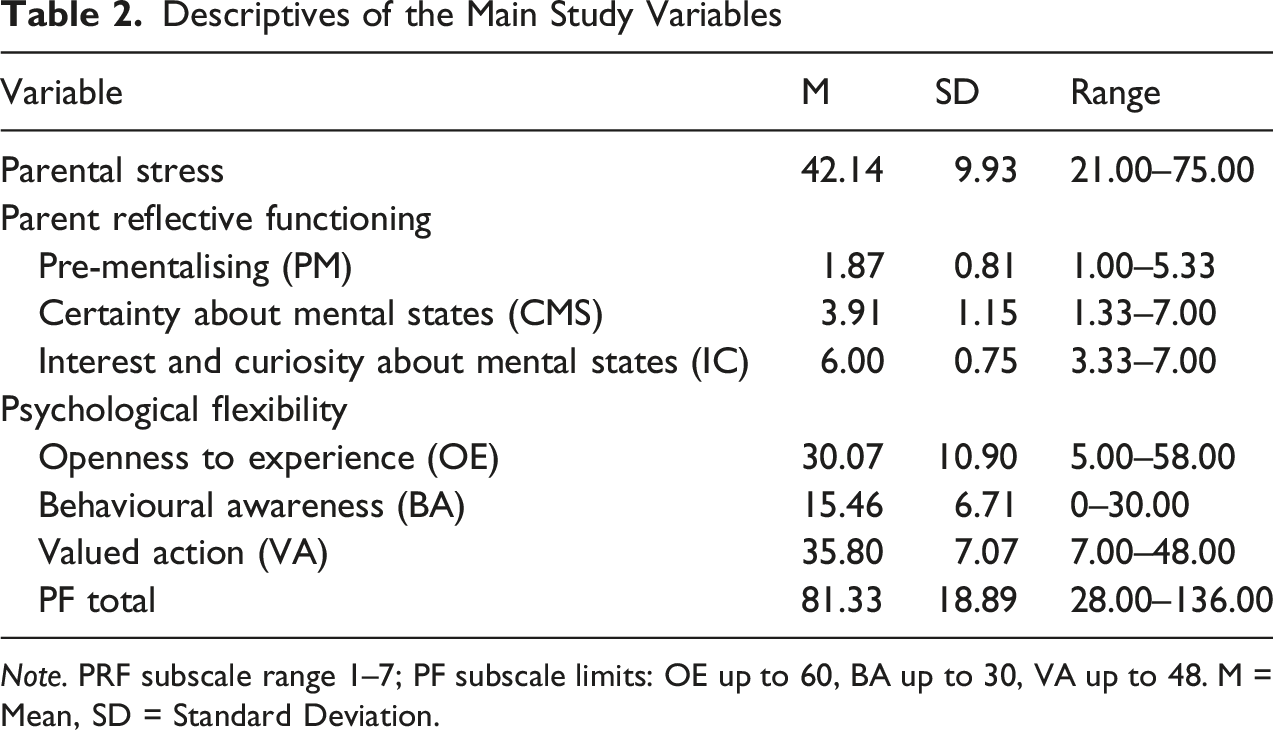
Note. PRF subscale range 1–7; PF subscale limits: OE up to 60, BA up to 30, VA up to 48. M = Mean, SD = Standard Deviation.
Relationships Between PRF, PF and Parental Stress (Hypotheses 1 and 2)
Correlations Between Main Study Variables
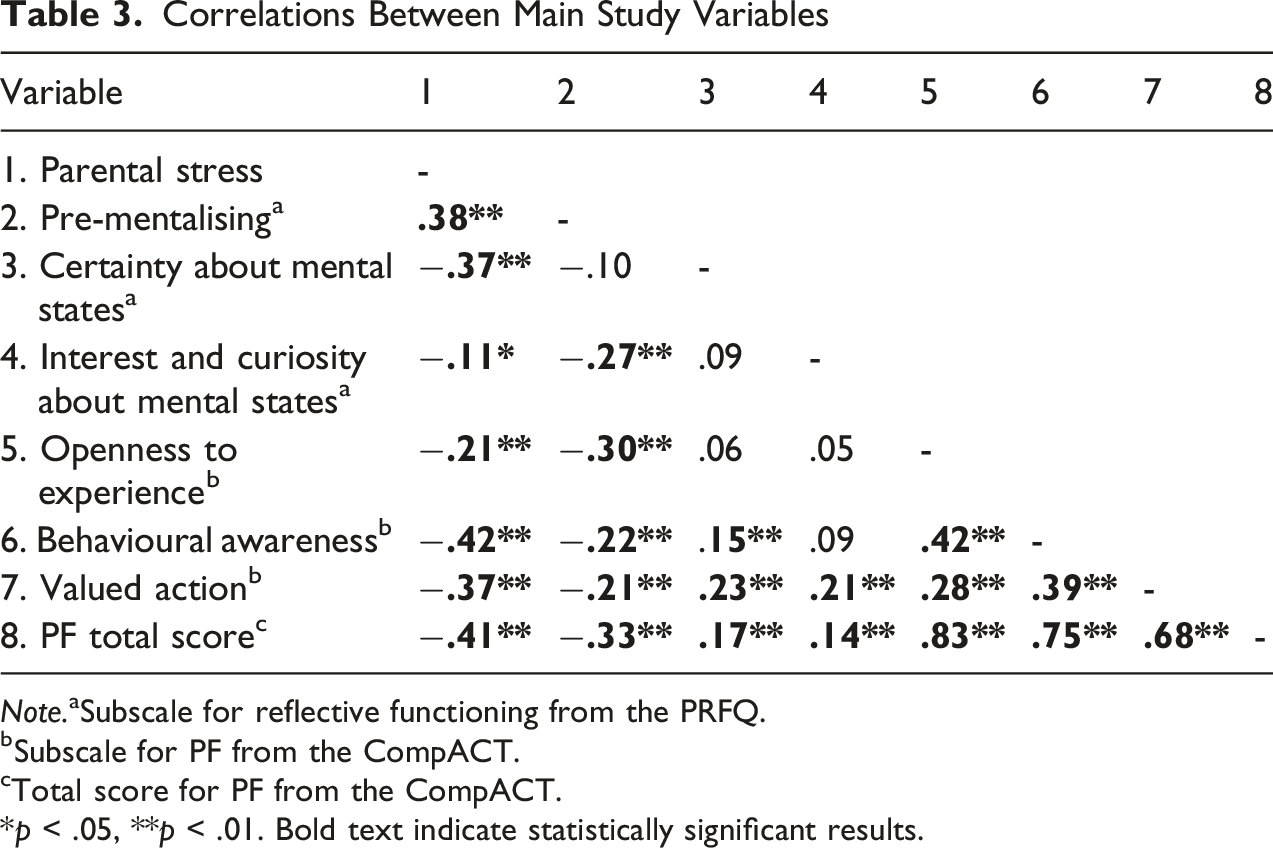
Note.aSubscale for reflective functioning from the PRFQ.
bSubscale for PF from the CompACT.
cTotal score for PF from the CompACT.
*p < .05, **p < .01. Bold text indicate statistically significant results.
Lastly, psychological flexibility (PF) significantly correlated with each of the parent reflective functioning (PRF) subscales. Specifically, PM was significantly negatively correlated with PF total, whereas CMS and IC were significantly positively correlated with PF total.
PF subscales significantly correlated with each other, therefore for subsequent analysis, the PF total score was used to reduce the numbers of variables in the analyses. For the PRF subscales, each subscale was used in subsequent analyses because past research did not indicate an accumulative score being justifiable, and the current study shows that each PRF subscale did not correlate with each other. Considering variability in past research regarding IC and CMS subscales and their relationship with parental stress, a multiple regression was used to test whether the relationship between CMS and IC and parental stress followed a curved (quadratic) pattern. The quadratic trend of the CMS and IC subscales were non-significant (CMS: p = .950, IC: p = .182), indicating there wasn’t a significant quadratic effect on the relationship between CMS/IC and parental stress. Scatterplots are presented in Appendix A.
Covariates
Preliminary correlational analyses (see Appendix B) indicated that of the demographic and covariate variables, both the presence of and number of child additional needs correlated significantly with the study variables of parental stress, PF and PRF. Particularly, higher number of child additional needs was related to higher parenting stress and lower PF. As the presence of (i.e. “Yes/No”) and number of child additional needs variables were highly correlated (r = −.80), only number of child additional needs was included in subsequent analyses (in order not to violate the multicollinearity assumption of multiple regression). Also, ethnicity was significantly correlated with parental stress, and the PM and CMS subscales of PRF; therefore, ethnicity was also included in subsequent analyses.
Whether PRF Variables and PF Independently Statistically Predict Parental Stress (Hypothesis 3)
Multiple Linear Regression Models: The Contribution of PF and PRF to Parental Stress
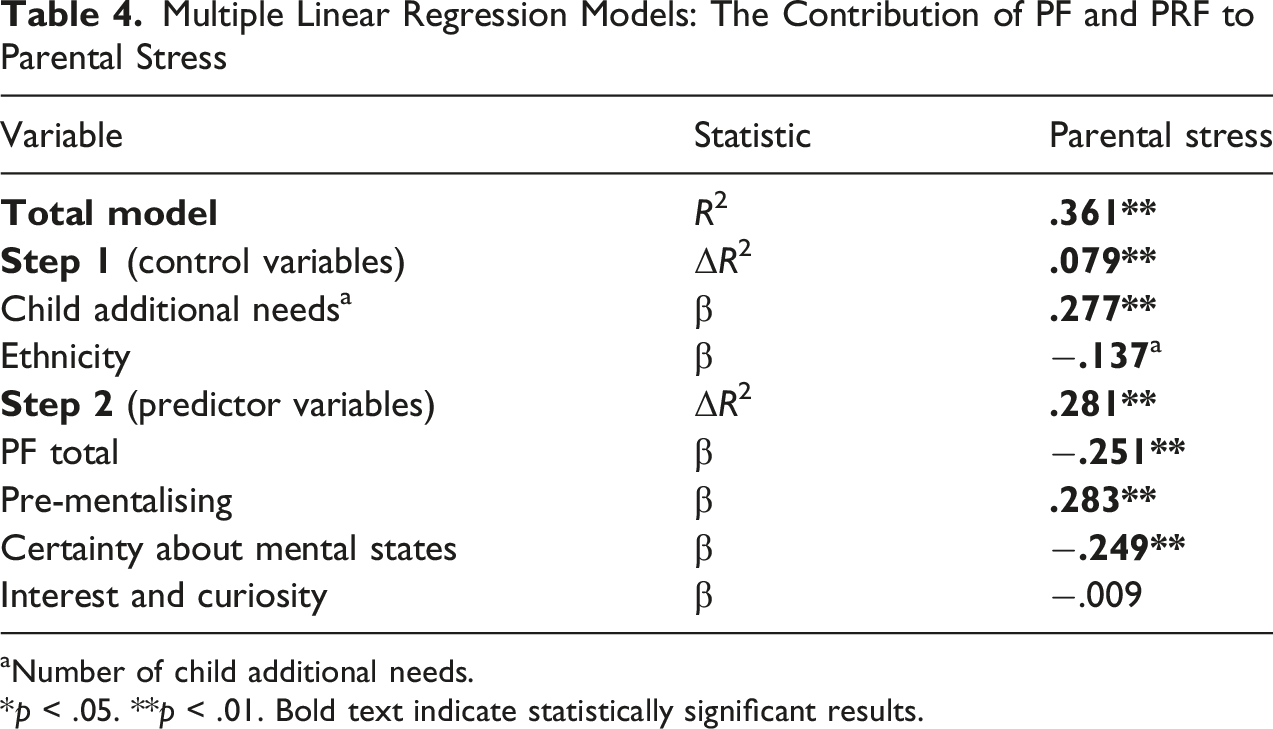
aNumber of child additional needs.
*p < .05. **p < .01. Bold text indicate statistically significant results.
For parental stress, the number of child additional needs and ethnicity were entered as covariates in the first step, and were both significant statistical predictors of parental stress, [F (2,358) = 15.46, p < .001], and together accounted for 7.9% of the variance in parental stress. Thus, being a parent of a child with a higher number of additional needs, or from a minority ethnic background predicted higher parental stress. The second step indicated that PF and PRF accounted for an additional 28% of the total variance in parental stress [ΔR2 = .28, F (6,354) = 33.28, p < .001]. PF, pre-mentalising (PM) and certainty about mental states (CMS) made a significant contribution to the variance of parental stress. Higher levels of pre-mentalising (PM) predicted higher levels of parental stress, whereas higher levels of PF and certainty about mental states (CMS) predicted lower levels of parental stress. When controlling for other variables in the regression, interest and curiosity about mental states (IC) no longer contributed significantly to the model.
Discussion
This is the first study that aimed to explore the relationships between parental reflective functioning (PRF), psychological flexibility (PF) and parental stress in a parent population. PRF (specifically, higher pre-mentalising (PM), lower Interest and Curiosity (IC), and lower certainty about mental states (CMS), and lower PF, were significantly correlated with higher levels of parental stress. Also, when considering covariates and both constructs together in the regression model, lower PF and PRF (higher PM and lower CMS subscales) still independently predicted higher parental stress.
PRF and Parental Stress
The hypothesis that higher PM (i.e. higher levels of misattribution of the child’s intentions) would significantly correlate with higher levels of parental stress (hypothesis 1a) was supported, which is consistent with previous research which found that PM had a significant positive relationship with parental stress (Longobardi et al., 2025; Luyten, Nijssens, et al., 2017; Nijssens et al., 2018; Steele et al., 2020). The relationship between PM and parental stress can be understood through the potential impact of PRF on the parent–child relationship. PRF has been associated with parents being able to tolerate child distress (Rutherford et al., 2013), and having increased empathy (Borelli et al., 2021; Yavuz et al., 2024). This is important as empathy can act as a protective factor for parents’ wellbeing (Ho et al., 2014; Manczak et al., 2016) and is itself a predictor of parental stress (Choi, 2010). In addition, the relationship between greater PRF and parental stress could be explained via its influence on positive child outcomes; for example, PRF predicts better emotional regulation (Álvarez et al., 2022) and fewer behaviour problems in children (Smaling et al., 2016), thus potentially reducing distressing child behaviours and therefore stress in the parenting role.
The hypothesis that lower levels of IC (interest and curiosity about the child’s mental states) would be correlated with higher levels of parental stress (hypothesis 1b) was supported. This is consistent with some previous research such as Ye et al. (2022) and Steele et al. (2020) who also found a negative correlation but is contrary to research that found no significant correlation (Longobardi et al., 2025; Luyten, Nijssens, et al., 2017). In the current study, the strength of the correlation between IC and parental stress was only small and quadratic regression analysis confirmed that this small linear relationship was not disguising any non-linear effects. In the regression analyses when controlling for covariates, PF and the other PRF variables in the model, IC no longer predicted parental stress. The inconsistent findings in relation to IC and parental stress may be due to the populations studied. For example, Luyten, Nijssens, et al. (2017) and Longobardi et al. (2025) studied parents of younger children (0–6 years) and found no correlation between IC and parental stress. Studies that have found a significant correlation included parents of older children such as the current study (0–10 years), Steele et al. (2020) (0–19 years) and Ye et al. (2022) (9–12 years). The different findings in these studies could be explained by research that suggests that PRF functioning improves as the child age increases, “the capacity to consider the child as a psychological agent improves, specifically, after the first year of life” (Álvarez et al., 2022, p. 8); therefore, PRF in parents of older children may have a larger influence on parental stress. Overall, considering the regression analyses, there is no strong support for IC, as measured by the PRFQ, having a significant association with parental stress when taking into account other aspects of PRF and PF.
The significant negative association between certainty about mental states (CMS) and parental stress (i.e. lower certainty being associated with higher levels of parenting stress) is contrary to hypothesis 2a which predicted no association with CMS and parental stress. The hypothesis of no linear relationship was partly due to theoretical reasons (that extremes of certainty or non-certainty would potentially relate to high parental stress); however, no non-linear relationships were indicated in quadratic regression analyses. The finding in the current study is nevertheless consistent with some previous research, despite not being in line with our hypothesis. Specifically, Ye et al. (2022) who studied 2,021 parents and found CMS negatively correlated with parenting stress. Also, Özbilgin (2023) found that there was a significant negative correlation between CMS and parental stress, similarly to the current study; however, this relationship did not remain when controlling for self-compassion, adaptive perfectionism and maladaptive perfectionism in their regression model. Conversely, Steele et al. (2020) found a positive relationship between CMS and parental stress in a study of 284 parents with Borderline Personality Disorder traits (BPDT), contrary to the current study. However, the authors (Steele et al., 2020) recognised that the population studied (parents with BPDT) had increased non-mentalising and certainty about mental states than those with lower BPDT traits, which could have impacted the associations found. The CMS finding in the current study is also contrary to studies that have found no association between CMS and parental stress (Longobardi et al., 2025; Luyten, Nijssens, et al., 2017).
Whilst accepting the limitations of a cross-sectional analysis in terms of inferring causality, the finding in the current study suggests that parents having certainty when determining their child’s wants or needs (higher CMS) may potentially be protective in terms of reducing parental stress. This could be explained by research that has found that parental confidence and competence is negatively associated with parenting stress (Liu et al., 2012), that is, parents who are more confident in their certainty of knowing their child’s mental states, experience less parental stress. This finding can also be explained by research that associates higher CMS with parental self-efficacy (the parent’s belief in their ability to be a good parent [Bandura, 1982; Reich et al., 2025). Parental self-efficacy subsequently predicts positive outcomes for parents such as improved mental health (Albanese et al., 2019), potentially reducing parental stress.
It is important to note that having high levels of certainty is not consistent with the concept of “reflective functioning” (which would consist of a level of uncertainty about others’ mental states), and so the findings in this study suggests that different aspects of PRF can have differential associations with parental stress (i.e. some protective such as having low PM, but others not protective such as having uncertainty about the child’s mental states). However, this study was cross-sectional, and thus, it could be that high levels of parental stress lead to lower levels of CMS due to stress impacting upon the parent’s ability to reflect on the child’s mental state. Future longitudinal studies could contribute further to understanding the likely complex relationships between the different aspects of PRF and parental stress.
PF and Parental Stress
The current study provided robust evidence for a significant association between lower PF and higher parental stress, which is consistent with previous research (e.g. Chorão et al., 2022; Fonseca et al., 2020). This finding can be understood through PF’s potential influence on both child and parent outcomes. For example, PF has been found to be associated with the parent’s ability to regulate their own emotional experience (Dehghani & Kadkhodaee, 2024) and increased parental empathy (Valdivia-Salaset al., 2021), which is crucial in the parent’s ability to cope with parenting stress (Duncan et al., 2009). Also, lower parent PF is related to greater distress and internalising problems in children (Coyne et al., 2011; Moyer & Sandoz, 2015; Williams et al., 2012), likely leading to increased stress for parents. Furthermore, higher PF has been associated with improved quality of life, emotional wellbeing and psychological functioning (Bond & Bunce, 2003; Hayes et al., 2006); hence, these parents may be more likely to report less parenting stress due to the positive impacts on their general functioning. Parent PF is also associated with more adaptive parenting strategies (Burke & Moore, 2015), leading to less parent–child conflict (Greco & Eifert, 2004), and therefore lower parenting stress (Daks & Rogge, 2020). Although some factors are detailed here, it is reasonable to suggest that there are likely multiple mechanisms that are contributing to the relationship between PF and parental stress found in this study.
PRF and PF
The study also provided evidence that aspects of PRF and PF were significantly associated with each other. There is only very limited research examining these factors together. This finding is consistent with one study that has examined mentalisation and PF and found a significant positive correlation (Mehrabi et al., 2022). We can understand this finding considering the conceptual overlap between PRF and PF as they both are focused on awareness of internal processes and experiences. Reich et al. (2025) also looked at these constructs in the context of parenting coping strategies and found that both PF and PRF total score contributed to parental self-efficacy, which in turn contributed to a higher use of proactive coping strategies and lower level of disengagement coping strategies. This could also explain the findings in the current study; if aspects of PRF and PF contribute to improved parenting coping strategies then this could lead to reduced parental stress levels.
Covariates
In terms of covariates, parents of children with additional needs were found to have higher levels of parental stress, consistent with previous research (e.g. Baker et al., 2002; Lopez et al., 2008). Parents with children with additional needs were found to have lower levels of PF (albeit a small negative correlation), also consistent with previous research (e.g. Emerson et al., 2021; Reich et al., 2025). A potential explanation for these findings is that increased demands of parenting may reduce a parent’s ability to demonstrate PF (Whittingham et al., 2013). Considering these factors, this parent population have been a target for interventions; a review of ACT interventions for parents of children with additional needs has shown them to be effective in increasing PF in parents (Li et al., 2023). Lastly, being from a minority ethnic background was also significantly related to parental stress, consistent with research by Nomaguchi and House (2013) who explained that associations between ethnicity and maternal parenting stress could be representative of structural disadvantages (e.g. disparities in family income and employment).
The Independent Contributions of PRF and PF in Predicting Parental Stress
When including child additional needs and ethnicity as covariates, aspects of PRF (specifically, higher PM and lower CMS) and lower PF still predicted higher levels of parenting stress in the regression model (accounting for 28% of the variance above and beyond child additional needs and ethnicity). This finding was only partly consistent with hypothesis 3, that stated that both PRF (in terms of higher PM and lower IC) and lower PF will independently statistically predict higher levels of parenting stress; therefore, the finding regarding CMS was not expected. However, whilst acknowledging the limitations of a cross-sectional study such as this, the results confirm that despite conceptual overlaps between PRF and PF, they each are of individual potential independent relevance to understanding parental stress (specifically both lower levels of misattribution of the child’s intentions and higher levels of PF are potential important factors in protecting against parental stress).
The influence of PM, PF, child additional needs and ethnicity on parental stress aligns with the Parental Stress Model (Abidin, 1992) which outlines the influence of parent and child characteristics on parenting stress. For example, child additional needs could be acting as a relevant child characteristic in this model and explain our finding that parents of children with additional needs experience increased stress. The model also further postulates implications of increased parental stress, such as increases in negative parenting (e.g. physical discipline) (Abidin, 1992), which impacts child impaired cognitive performance, peer isolation and behavioural problems (Wiggers & Paas, 2022). The findings also can be understood in the context of the Family Stress Model (FSM) (Conger et al., 2010). The FSM outlines the process by which economic pressures impact negative child outcomes through parenting stress, and that there are additional protective and risk factors that may intensify or dampen the family stress process (Conger et al., 2010). PF and lower levels of PM as shown in the current study could act as the protective factors posited within the FSM, working to reduce parental stress and ultimately poor child outcomes.
To understand the findings that both aspects of PRF and PF independently predict parental stress we can consider this through their distinctive processes. PF and PRF are both self-focused regarding the parents’ internal experiences, but PRF includes the parent’s capacity to reflect on the experience and perspective of their child which adds an important extra dimension. Also, PF offers an additive benefit of being value-driven, that is, parents with higher PF are following their values regarding what sort of parent they would like to be. Each concept is absent from the other, and therefore, these distinct differences may explain why they both independently predict parental stress.
Strengths and Limitations
The current study, to the author’s knowledge, is the first to examine the concepts of PF and PRF together and their interaction with parenting stress, which has important implications for parenting interventions. One of the study’s key strengths is its large sample size (N = 362) and thus its ability to detect smaller effect sizes. Also, most studies in the research area include only mothers, have limited numbers of fathers and/or do not include other parenting roles such as adoptive parents, foster parents or kinship parents, with little ethnic diversity in the samples. This study benefited from two recruitment phases to ensure that underrepresented groups were targeted such as fathers and parents from different ethnic backgrounds. As the study was conducted online without the presence of the researchers, there was risk of “extreme responding” (respondents tending to choose only the highest or lowest response available, regardless of their actual opinion); however, the study benefited from attention checks to ensure these respondents were excluded from the study, reducing the risk of bias or noise in the results.
The study has a number of limitations, such as its cross-sectional design. This means it is more difficult to comment on the causal nature and direction of the relationship between the main study variables. For example, does higher PF and aspects of PRF mean that parents experience less stress in their parenting role, or is it that lower levels of parenting stress mean parents are more able to demonstrate aspects of PRF and PF? Also, the measures used were self-report measures, and so despite study participation being anonymous, there is still a risk of response bias, especially in parenting research, as parents may exhibit social desirability and respond in line with social norms and expectations of parenting. A study by Morsbach and Prinz (2004) found high levels of consistency in perceptions of the social desirability of different parenting behaviours, meaning some parents may respond the way they “think they should” in terms of their parenting.
Study Implications
The study suggests that improving both PF and aspects of PRF (particularly in terms of lowering levels of “pre-mentalising”) may have benefits for reducing parental stress. This was also suggested by Reich et al. (2025) who proposed the potential benefit of improving both PRF and PF in parent populations. Therefore, there is a rationale for interventions that target both these distinct concepts. This would involve the combining of two theoretical models to inform parenting interventions, which is not often utilised within intervention studies. Specifically, this would involve the overlapping concepts of the variables (e.g. reflecting on your own internal processes, but also considering the child’s internal experiences and engaging in value-driven behaviours). Such an approach would be consistent with “modular interventions” which involves treatment based on “therapeutic elements common to multiple evidence-based practices” (Kininger et al., 2018, p. 1). There is a growing evidence base for this approach, for example, Weisz et al. (2012) explored the combination of three separate treatments (CBT for anxiety, CBT for depression and behavioural parent training) and found this modular treatment produced significantly more improved clinical outcomes compared to usual care and standard evidence-based treatment. Similarly, Chorpita et al. (2017) found those who received modular treatment experienced significantly faster improvement in symptoms over a shorter time compared to usual treatments. Also, Chorpita et al. (2015) found that clinicians viewed modular treatment more favourably relative to manualised interventions and usual care. In summary, a modular approach to parenting interventions including both improving aspects of PRF and PF could have additive benefits to usual care and higher acceptability among professionals. Research would also benefit from exploring the impact of improving either factor (aspects of PRF and PF) has on the other, as this would have further implications for which elements to include in interventions aimed at reducing parental stress and increasing positive parenting practices.
Directions for Future Research
More longitudinal research is needed to explore the causal relationships between PRF, PF and parenting stress. Considering the findings of the current study, the research area would benefit from studies examining parenting interventions that aim to improve both aspects of PRF and PF, and the benefits for parental stress and subsequent outcomes for children. Increasing both PF and aspects PRF within an intervention would involve incorporating skills from Acceptance and Commitment Therapy (Hayes et al., 2012) and mentalising-based parenting programs (e.g. Mentalisation-Based Treatment [MBT; Bateman & Fonagy, 2016]). This would add to the research exploring combined treatments and increase understanding of how this approach compares to treatments which only focus on increasing either PRF or PF. It would also provide important implications for parenting intervention research and implementation. In addition, further research is needed to clarify the relationship between PRF’s dimensions and parental stress, including the intricacies of the CMS and IC subscales considering the differing results in the research area. Questions remain as to whether there is an ideal range for these subscales, the current study found evidence that hypermentalising (i.e. higher CMS) was protective for parental stress, whereas the authors of PRFQ suggested this level of hypermentalising would be maladaptive for parents (Luyten, Nijssens, et al., 2017).
Closing Statement
Considering the implications of both PRF and PF for parental stress and subsequently parent and child wellbeing, this study contributes to the existing research but also offers a new perspective for future parenting interventions, suggesting the potential for combining two theoretical models to provide a potential additive benefit for reducing parenting stress.
Supplemental Material
Supplemental material - The Relationship Between Psychological Flexibility and Parental Reflective Functioning, and Their Association With Parental Stress
Supplemental material for The Relationship Between Psychological Flexibility and Parental Reflective Functioning, and Their Association With Parental Stress by Katherine M. Freeman, Christopher W. Hobson, & Victoria M. Samuel in Journal of Family Issues.
Footnotes
Acknowledgements
The authors thank the parents and carers who gave their time to participate in this study. The ideas and opinions expressed herein are those of the authors alone, and endorsement by Cardiff University is not intended and should not be inferred.

Ethical Considerations
The authors affirm having followed professional ethical guidelines in preparing this work. The present study received ethical approval from the Ethics Committee Cardiff University (Reference: EC.24.02.13.6938R).
Consent to Participate
These guidelines include obtaining informed consent from human participants, maintaining ethical treatment and respect for the rights of human or animal participants, and ensuring the privacy of participants and their data, such as ensuring that individual participants cannot be identified in reported results or from publicly available original or archival data.
Funding
The authors disclosed receipt of the following financial support for the research, authorship, and/or publication of this article: This work was supported by the South Wales Doctoral Programme in Clinical Psychology (DClinPsy).
Declaration of Conflicting Interests
The authors declared no potential conflicts of interest with respect to the research, authorship, and/or publication of this article.
Data Availability Statement
The data that support the findings of this study are available from the corresponding author, KF, upon reasonable request.
Supplemental Material
Supplemental material for this article is available online.
References
Supplementary Material
Please find the following supplemental material available below.
For Open Access articles published under a Creative Commons License, all supplemental material carries the same license as the article it is associated with.
For non-Open Access articles published, all supplemental material carries a non-exclusive license, and permission requests for re-use of supplemental material or any part of supplemental material shall be sent directly to the copyright owner as specified in the copyright notice associated with the article.
