




Abstract
The current study examined associations between stepparent involvement in discipline and adolescent maladjustment, as well as factors that moderate these associations. Using survey data from 507 U.S. adolescents (ages 13–18) residing with a stepparent, we assessed links between stepparent discipline and two indicators of maladjustment: conduct problems and depressive symptoms. Regression analyses revealed that greater stepparent involvement in discipline was associated with higher levels of both conduct problems and depression. Tests of moderation indicated that these associations were most pronounced among adolescents identifying as non-Hispanic White and in families self-described as financially well off, and least pronounced among adolescents identifying as non-Hispanic Black or Asian. Longer stepparent-adolescent relationship duration also attenuated associations between stepparent discipline and adolescent depression. Findings underscore the importance of considering cultural and economic contexts, as well as relationship timing, when addressing stepparent involvement in discipline. Implications for family-focused practice and future research are discussed.
Stepfamilies are an increasingly common developmental context for youth, which form when one or both adults in a new committed couple relationship bring a child or children from prior relationships (Ganong & Coleman, 2017). Approximately 16% of children under the age of 18 in the United States (U.S.) live in a stepfamily at any given moment (Pew Research Center, 2015). Moreover, family demographers have estimated that nearly one-third of children will spend time living in a stepfamily before reaching legal adulthood (Teachman & Tedrow, 2008)—a projection consistent with the observation that 33% of young adults report having a stepparent (Pew Research Center, 2011).
The unique dynamics and challenges associated with stepfamily formation make it a critical site for research and practice innovation aimed at supporting families and the children and youth who reside in them (Ganong & Coleman, 2017; Papernow, 2013, 2018). Common stepfamily challenges include ongoing tensions between ex-partners, the inherent ambiguity of new stepfamily relationships, conflict between children and new stepparents, parents and stepparents having disagreements about parenting tasks and approaches, and children experiencing adjustment difficulties, among others (Jensen, 2021a; Papernow, 2013, 2018). Stepfamily challenges have implications for child well-being and adjustment, the magnitude of which might be especially pronounced for stepfamilies involving adolescent stepchildren (Jensen, 2025a; 2025b). Indeed, adolescent stepchildren have relatively longer periods of pre-stepfamily life from which to contrast the family dynamics that unfold following stepfamily formation. In addition, adolescents experience a host of developmental changes that warrant adaptation in families of any kind—changes such as (a) rapid growth in the amygdala (i.e., emotion-processing region of the brain), (b) gains in cognition that can increase adolescents’ ability to levy criticism and idealism, (c) numerous physical changes that accompany puberty, and (d) growing prioritization of friendships and peer relationships (Berk, 2023).
Just as stepfamily challenges have drawn attention, so too have strategies for meeting them (Ganong et al., 2025; Papernow, 2013, 2018). On this front, both practice- and research-driven insights have consistently highlighted the value of stepparents avoiding direct involvement in disciplinary practices, especially (a) early on in stepfamily formation and (b) when stepfamilies form in the presence of relatively older children, including adolescents (Ganong et al., 2011, 2025). Although stepparents might be tempted to assume a disciplinary role in an effort to overcome the ambiguity inherent in the stepparent role, children rarely respond positively to stepparents operating as a disciplinarian; instead, children generally prefer that their parents retain responsibility for discipline (Ganong et al., 2022, 2025; Gosselin & David, 2007; Sanner et al., 2022). Indeed, in a recent qualitative study focused on advice for new stepparents from the perspective of stepchildren who experienced stepfamily formation during adolescence, one direct piece of advice was for stepparents to “back away from discipline” (Jensen, 2025a, p. 11).
From a relationship development perspective, stepparents avoiding direct involvement in discipline can support a family’s efforts to tactfully integrate a new stepparent into the family system (Ganong et al., 2011). Stepparents avoiding direct involvement in discipline also can create a social environment that is more hospitable for cultivating stepparent-child relationship quality (Ganong et al., 2011). Stepparents who prioritize warmth, support, and connection when engaging with their stepchildren, especially early on in the stepfamily formation process, are more likely to attain high-quality stepparent-child relationships over time (Jensen & Howard, 2015; Jensen & Zhao, 2025; Sanner et al., 2022). In addition to promoting child and youth well-being across numerous domains (Jensen, 2022), high-quality stepparent-child relationships might enable gradually more stepparent involvement in disciplinary practices or other forms of authoritative engagement with stepchildren, should that be desired by members of a particular family (Jensen, 2019; 2021b). A stepparent’s eventual involvement in discipline also tends to be most effective when such stepparent roles, functions, or expectations are clearly defined and communicated (Gosselin & David, 2007).
Extant research also has endeavored to assess direct associations between stepparent involvement in discipline and youth outcomes. For instance, relatively severe forms of disciplinary practices implemented by stepparents, such as corporal punishment and verbal aggression, have been linked to higher levels of both internalizing and externalizing problems among children in stepfamilies (Lewis, 1999). Various forms of punishment issued by a stepparent also have been linked to lower levels of emotional health among adolescents in stepfamilies (Fine et al., 1991). Additional studies highlight how overly permissive caregiving contexts can increase youths’ risk of internalizing and externalizing problems. In such contexts, stepparents’ efforts to carefully monitor or otherwise tactfully control youth behavior has been linked to reduced levels of youth externalizing problems (Nicholson et al., 2002). Additional studies have showcased non-significant direct associations between stepparent authority-seeking behavior and adolescent outcomes (Kuryluk, 2018; Leidy et al., 2011). Nuanced findings from this literature signal the value in attending to various forms of adolescent adjustment (e.g., internalizing and externalizing) and features of the larger family environment and other dyadic relationships when assessing the potential consequences of stepparent involvement in discipline. The literature also highlights opportunities to continually update assessments of stepparent involvement in discipline and its associations with adolescent well-being.
Although links between stepparent involvement in discipline and youth maladjustment have been highlighted in both empirical and clinical literatures, far less is known about for whom and under what conditions such links are most or least pronounced. Understanding nuances of these sorts could assist family practitioners in directing their attention to situations in which youth might be at especially high risk of maladjustment when a stepparent engages in disciplinary practices. In the context of limited empirical guidance on this front, we now turn to theory to aid in identifying plausible moderators of the link between stepparent involvement in discipline and adolescent maladjustment. When available, relevant literature also is summarized.
Theoretical Framework
Multiple theoretical perspectives point to plausible moderators of the association between stepparent involvement in discipline and adolescent maladjustment. First, the integrative model of parenting highlights important distinctions between parenting practices (i.e., what parental figures do) and parenting style (i.e., the emotional and relational climate in which parenting practices are implemented; Darling & Steinberg, 1993). Parenting styles are viewed as a potential moderator of links between a particular parenting practice and a child outcome. In the context of the current study, it is theoretically plausible that the quality of the parent-adolescent and stepparent-adolescent relationships could moderate an association between stepparent involvement in discipline and adolescent maladjustment. High-quality relationships between an adolescent and their parental figures might buffer the extent to which stepparent discipline exerts influence on adolescent maladjustment; that is, relatively warm, supportive, and satisfying parent-adolescent and stepparent-adolescent relationships might increase an adolescent’s ability to tolerate a stepparent’s involvement in discipline, resulting in fewer internalizing and externalizing problems—a possibility with some empirical support (Kuryluk, 2018; Leidy et al., 2011; Nicholson et al., 2002; Yuan & Hamilton, 2006).
Second, social domain theory highlights how children and youth evaluate authority, rules, and social interactions across various domains of social life (Smetana et al., 2014; Turiel, 1983, 2015). With respect to stepfamily life, social domain theory calls attention to the factors that likely shape how adolescents perceive the legitimacy of their stepparent’s attempts to assume control or authority. Plausible factors on this front include stepchild age, stepparent-adolescent relationship duration, and the presence of a nonresident parent. Turning to stepchild age, youth generally seek greater autonomy as they progress through adolescence, resulting in the need for families of any kind to adapt. Relatively older adolescent stepchildren might be especially resistant to a stepparent’s involvement in discipline, seeing it as illegitimate as they near legal adulthood and increasingly seek opportunities to realize their independence. This dynamic could magnify associations between stepparent discipline and adolescent maladjustment among older, versus younger, adolescent stepchildren. In terms of stepparent-adolescent relationship duration, longer-term relationships could increase the amount of legitimacy adolescents grant their stepparents. As a result, longer stepparent-adolescent relationships might mitigate associations between stepparent discipline and adolescent maladjustment (Yuan & Hamilton, 2006). Turning to the presence of nonresident parents, adolescents with actively involved nonresident parents might question the authority of their stepparents more than their counterparts who do not have actively involved nonresident parents. Thus, the presence and involvement of a nonresident parent might exacerbate associations between stepparent discipline and adolescent maladjustment, as the presence of an involved nonresident parent might weaken the effectiveness of stepparent discipline if adolescents view their stepparent’s role as redundant, contested, or illegitimate.
Third, cultural ecological theory (particularly as reflected in García Coll et al.’s [1996] integrative model) highlights cultural norms—including those related to discipline, authority, and family structure—and developmental adaptations tied to race or ethnicity (among other identities and social locations; García Coll et al., 1996). For instance, families connected to East and Southwest Asian cultures might express relatively high levels of filial piety, a Confucian virtue of respect and duty toward one’s parental figures and elders with an emphasis on family loyalty, honor, and care (Kyeong et al., 2025). In this context, stepparents might be expected to engage in disciplinary practices while also receiving an added measure of deference from their stepchildren. Family primacy can also take the form of familism, often manifested among families with Hispanic/Latinx identities, and communalism, often manifested among families with Black/African-descent identities (Kyeong et al., 2025). Whereas familism promotes the valuing of extended family, communalism promotes the valuing of non-biological kin in one’s community. The various forms of family primacy (and norms around caregiver discipline; that is, cultural normativeness) found across cultural identities and backgrounds could influence the extent to which stepparent discipline associates with adolescent maladjustment. More specifically, cultural contexts in which various forms of family primacy and associated acceptance of stepparent involvement in discipline are least pronounced could yield relatively stronger associations between stepparent discipline and adolescent maladjustment, as stepparents might receive less deference from their stepchildren in these environments (Stewart & Limb, 2020).
Fourth, gender schema theory highlights the processes by which individuals internalize culturally prescribed gender roles, which can shape how children and youth come to understand ostensibly appropriate behavior and sources of legitimate authority (Bem, 1981; Starr & Zurbriggen, 2017). In general, internalized gender roles might shape how adolescents interpret emotional tone, intent, or expectations of obedience in the context of stepparent discipline. Consequently, adolescent boys and girls might respond differently to stepparent discipline, and reactions to stepparent discipline might also be shaped by whether the stepparent possesses the same or different gender as the adolescent stepchild. Taken together, both adolescent gender and stepparent gender might moderate associations between stepparent discipline and adolescent maladjustment.
Fifth and lastly, the family stress model emphasizes how economic hardship can elevate caregiver stress and mental health concerns, increase interparental conflict, inhibit productive parenting processes and behaviors, and ultimately impact child developmental outcomes (Conger et al., 2010). The unique demands that can accompany stepfamily life might accentuate the dynamics emphasized by the family stress model (Zhao et al., 2026). In terms of how financial hardship might moderate associations between stepparent discipline and adolescent maladjustment, at least two possibilities seem plausible. On one hand, adolescents in stepfamilies reported as financially insecure might experience greater levels of overall stress, which might heighten their sensitivity and reactivity to stepparent involvement in discipline (especially when such discipline is viewed as unjust or unduly harsh). On the other hand, it is possible that adolescents in financially strained stepfamilies will be more accepting of a stepparent’s involvement in discipline if they interpret their stepparent’s behavior as an effort to help the family navigate difficult times. Thus, we expect a stepfamily’s financial standing to moderate associations between stepparent discipline and adolescent maladjustment; however, the direction of moderating influence is debatable.
Current Study
Extant literature highlights the value of continual assessments of the role stepparent involvement in discipline plays in shaping adolescent well-being. Gaps in the literature also highlight valuable opportunities to assess a series of plausible moderators of associations between stepparent discipline and adolescent maladjustment. New insights on this front could richly inform the work of family-focused practitioners and service providers. Consequently, the core aims of the current study are twofold. First, we aim to assess average associations between stepparent discipline and adolescent maladjustment (i.e., depression and conduct problems) using recently collected data from a sample of adolescents residing with a stepparent in the U.S. Second, we aim to test a set of theoretically plausible moderators of the association between stepparent discipline and adolescent maladjustment. Figure 1 offers an efficient visualization of all hypothesized moderators under examination and their theoretical basis. Hypothesized Moderators of Association Between Stepparent Discipline and Adolescent Maladjustment. Note: NR = nonresident. Bold font is used to highlight specific theoretical perspectives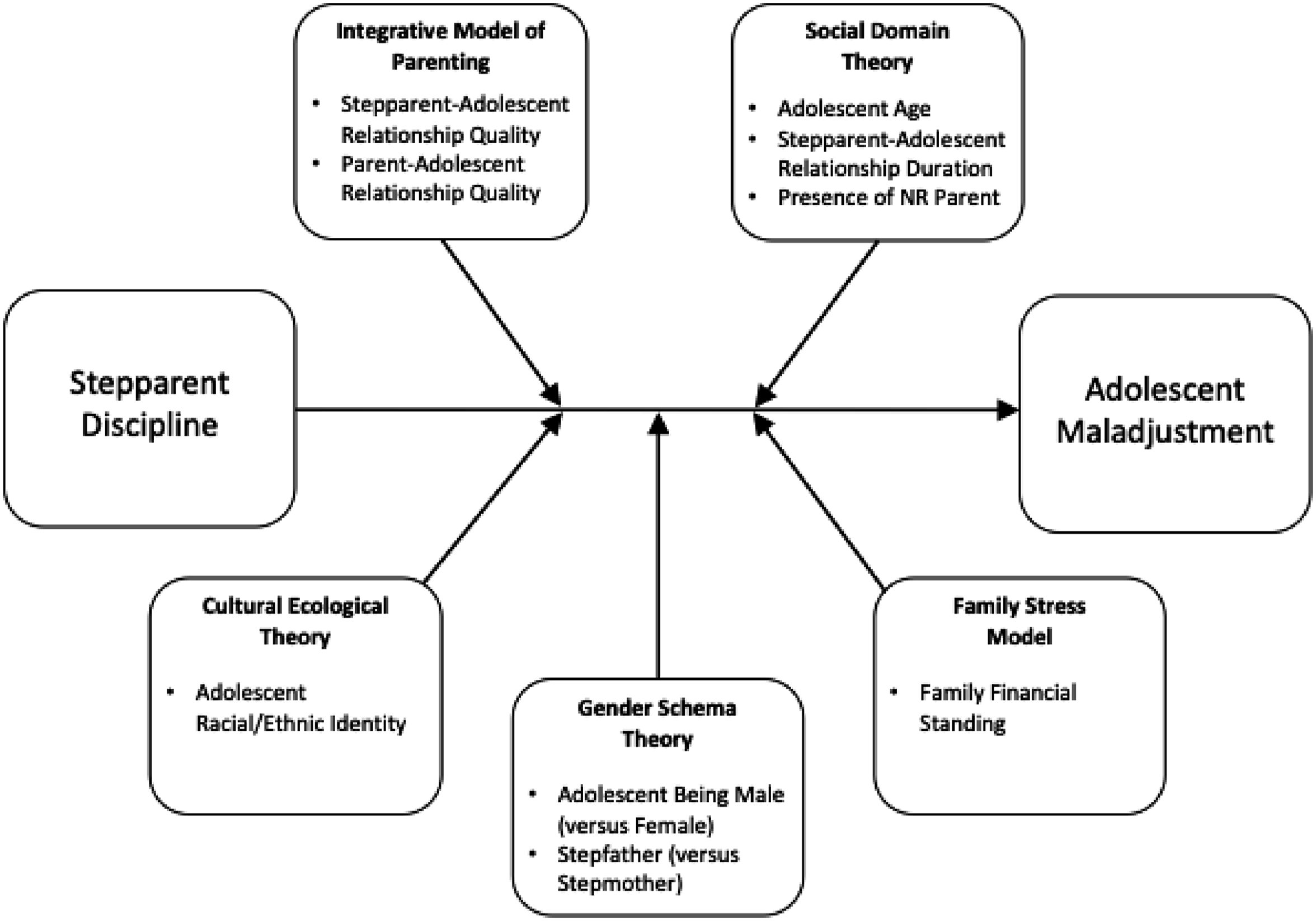
Methods
Data Collection and Sample
Qualtrics research panels were used to collect data from 507 adolescents across the U.S. who were living with a stepparent they acquired at some point from age 10 onward. After securing appropriate informed consent and assent depending on the age of the adolescent respondent, the respondents completed a pilot-tested web-based survey with items asking detailed information about their experiences interacting with their resident stepparent, the quality of various family relationships (i.e., resident parent-child, nonresident parent-child, stepparent-child), and numerous indicators of adolescent well-being. The survey also included items about adolescents’ sociodemographic and family characteristics. The average survey duration was 22.8 minutes. All study procedures received ethical approval from the University of North Carolina at Chapel Hill's Institutional Review Board (approval #: 24-0878) in June 2024, and all data were collected in February 2025.
Adolescent respondents had a mean age of 15.36 years (SD = 1.58 years; range: 13 to 18 years) and 46% identified as female. In terms of racial/ethnic identity, 62% of respondents identified as non-Hispanic (NH) White, 20% as Hispanic, 14% as NH Black, and 4% as NH Asian/Other. With respect to national region, 41% of respondents resided in the Southern region of the U.S., 21% in the Midwest, 20% in the West, and 18% in the Northeast. Stepparent-adolescent relationships had an average duration of 2.69 years (SD = 2.20 years). The average number of household residents was 3.79 (SD = 1.25). The sample included both married and unmarried different-gender and same-gender stepcouples; the following specific stepfamily types were represented: 39% mother-stepfather, 26% father-stepmother, 25% father-stepfather, and 11% mother-stepmother families. Fifty-two percent of the stepfamilies included residential stepsiblings and 47% included half-siblings.
Measures
For internalizing, the Patient Health Questionnaire-9 (PHQ-9) modified version for adolescent respondents was used, which measures depressive symptoms (Johnson et al., 2002). Adolescents were asked to indicate how often during the past 2 weeks they experienced each of the following depressive symptoms: (a) feeling down, depressed, irritable or hopeless; (b) little interest or pleasure in doing things; (c) trouble falling asleep, staying asleep, or sleeping too much; (d) poor appetite, weight loss, or overeating; (e) feeling tired or having little energy; (f) feeling bad about yourself—or feeling that you are a failure or that you have let yourself or your family down; (g) trouble concentrating on things like school work, reading, or watching TV; (h) moving or speaking so slowly that others could have noticed or being so fidgety or restless that you were moving around a lot more than usual; and (i) thoughts that you would be better off dead or thoughts of hurting yourself in some way. Response options ranged from not at all (0) to nearly every day (4). Sum scores were estimated (values ranging from 0 to 27;
Data Analysis
We used ordinary least squares (OLS) regression modeling to assess direct and moderated associations between stepparent discipline and adolescent maladjustment. Separate sets of models were estimated for adolescent conduct problems and adolescent depression. Each set of models was specified in a stepwise manner, beginning with a model in which stepparent discipline was included as the sole predictor (Model 1), followed by a model in which all hypothesized moderators were added as predictors (Model 2), followed by models in which single interaction terms were tested distinctly for each hypothesized moderator (Models 3-11). Robust standard errors were specified in all models to address non-negligible levels of heteroskedasticity. We then produced data visualizations to aid in the interpretation of significant interaction effects. Missing data were minimal (only 0.44% of study variable values were missing) and likely Missing Completely at Random (MCAR; results from Little’s chi-squared test for MCAR: χ2 [7] = 6.19, p = 0.52; Little, 1988). Consequently, listwise deletion was used in the context of regression modeling, with an analytic sample size of 482 across models (Enders, 2010). All data analyses, including the production of data visualizations, were conducted using R.
Results
Adolescent Conduct Problems
Adolescent Conduct Problems Regressed on Stepparent Discipline and Hypothesized Moderators
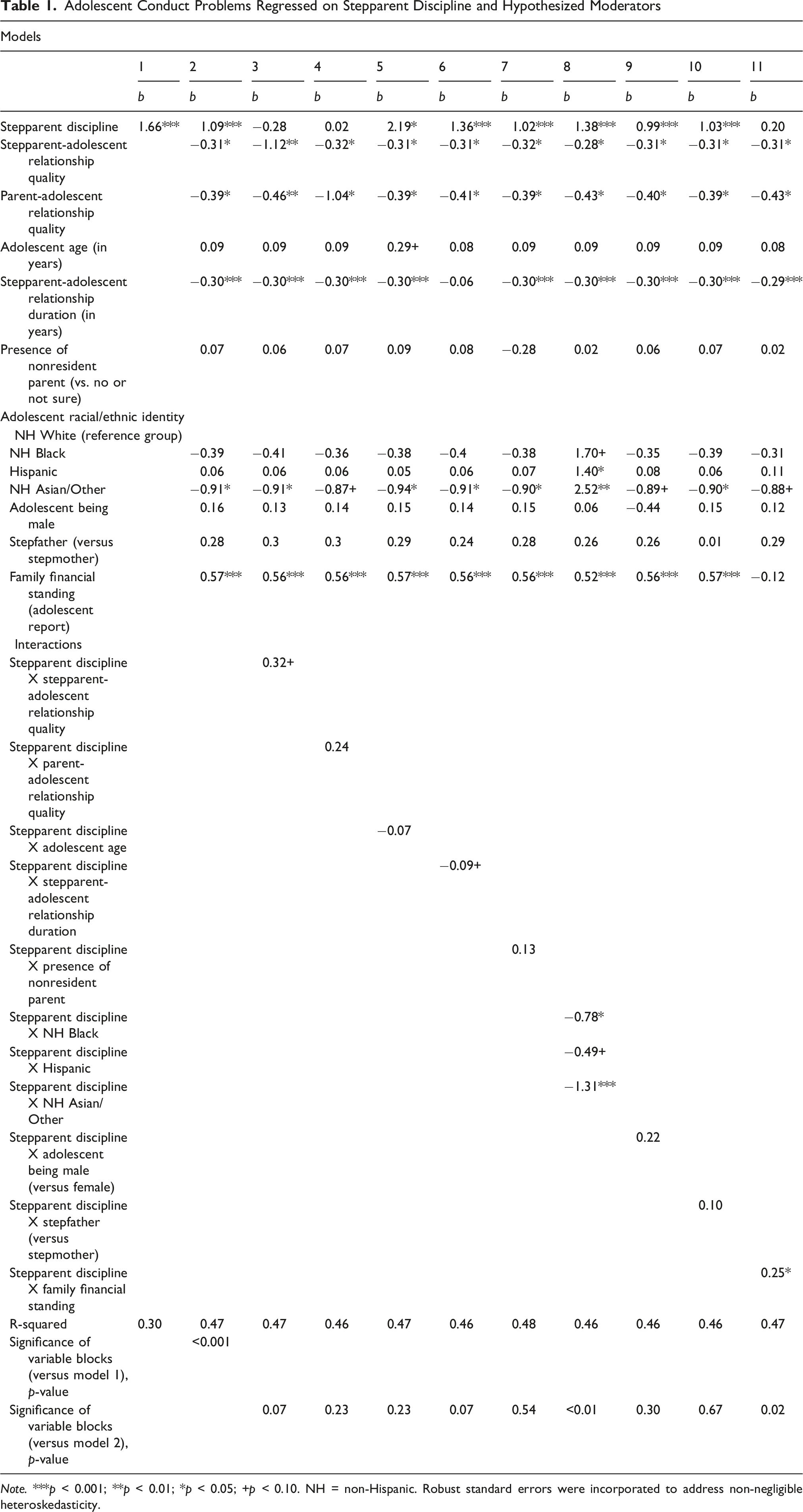
Note. ***p < 0.001; **p < 0.01; *p < 0.05; +p < 0.10. NH = non-Hispanic. Robust standard errors were incorporated to address non-negligible heteroskedasticity.
Interaction models revealed that the association between stepparent discipline and adolescent conduct problems varied across social and contextual domains. First, significant two-way interactions emerged between stepparent discipline and racial/ethnic identity. Specifically, treating NH White as the reference group, interactions involving NH Black (b = −0.78, p < 0.05), Hispanic (b = −0.49, p < 0.10), and NH Asian/Other (b = −1.31, p < 0.001) groups were significant. As depicted in Figure 2 (Chart A), the positive association between stepparent discipline and adolescent conduct problems was strongest among Hispanic and NH White adolescents, whereas the association was comparatively weaker among NH Black and NH Asian/Other adolescents. Also significant was the interaction between stepparent discipline and family financial standing (b = 0.25, p < 0.05). As depicted in Figure 2 (Chart B), the positive association between stepparent discipline and adolescent conduct problems was most pronounced among stepfamilies perceived as “very well off” and least pronounced among stepfamilies perceived as “not at all well off.” Visualization of Significant Interactions Involving Adolescent Conduct Problems. Note: NH = non-Hispanic. Shaded regions represent 95% confidence intervals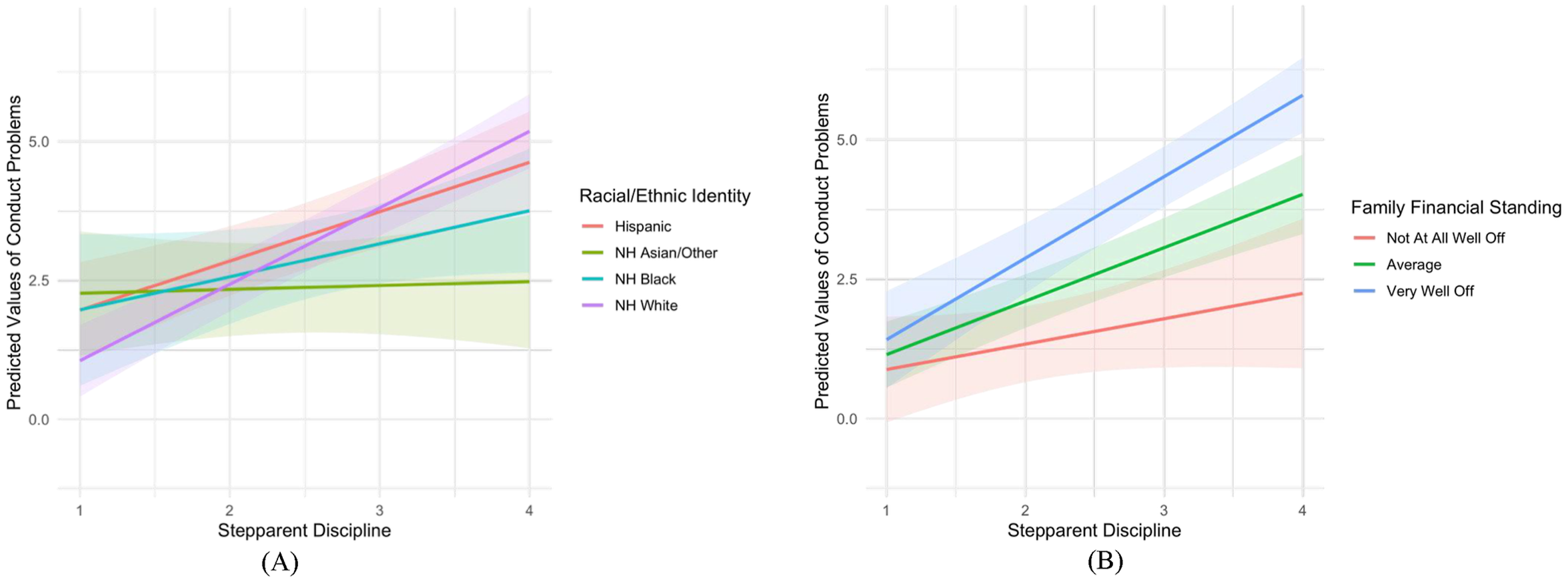
Other moderation effects related to adolescent conduct problems were either marginally significant or non-significant. For instance, a negative interaction between stepparent discipline and stepparent-adolescent relationship duration approached significance (b = −0.09, p = 0.06), suggesting that the positive association between stepparent discipline and adolescent conduct problems may weaken as stepparent-child relationships become longer in duration (see Supplemental Figure 1, Chart A for a visualization). The marginally significant interaction involving stepparent discipline and stepparent-adolescent relationship quality was positive, suggesting that the association between stepparent discipline and adolescent conduct problems might be partially contingent on perceived relational warmth or cohesion; high levels of stepparent-adolescent relationship quality might mitigate the influence of stepparent discipline on adolescent conduct problems at relatively low levels of stepparent discipline (see Supplemental Figure 1, Chart B for a visualization).
Adolescent Depression
Adolescent Depression (PHQ-9) Regressed on Stepparent Discipline and Hypothesized Moderators
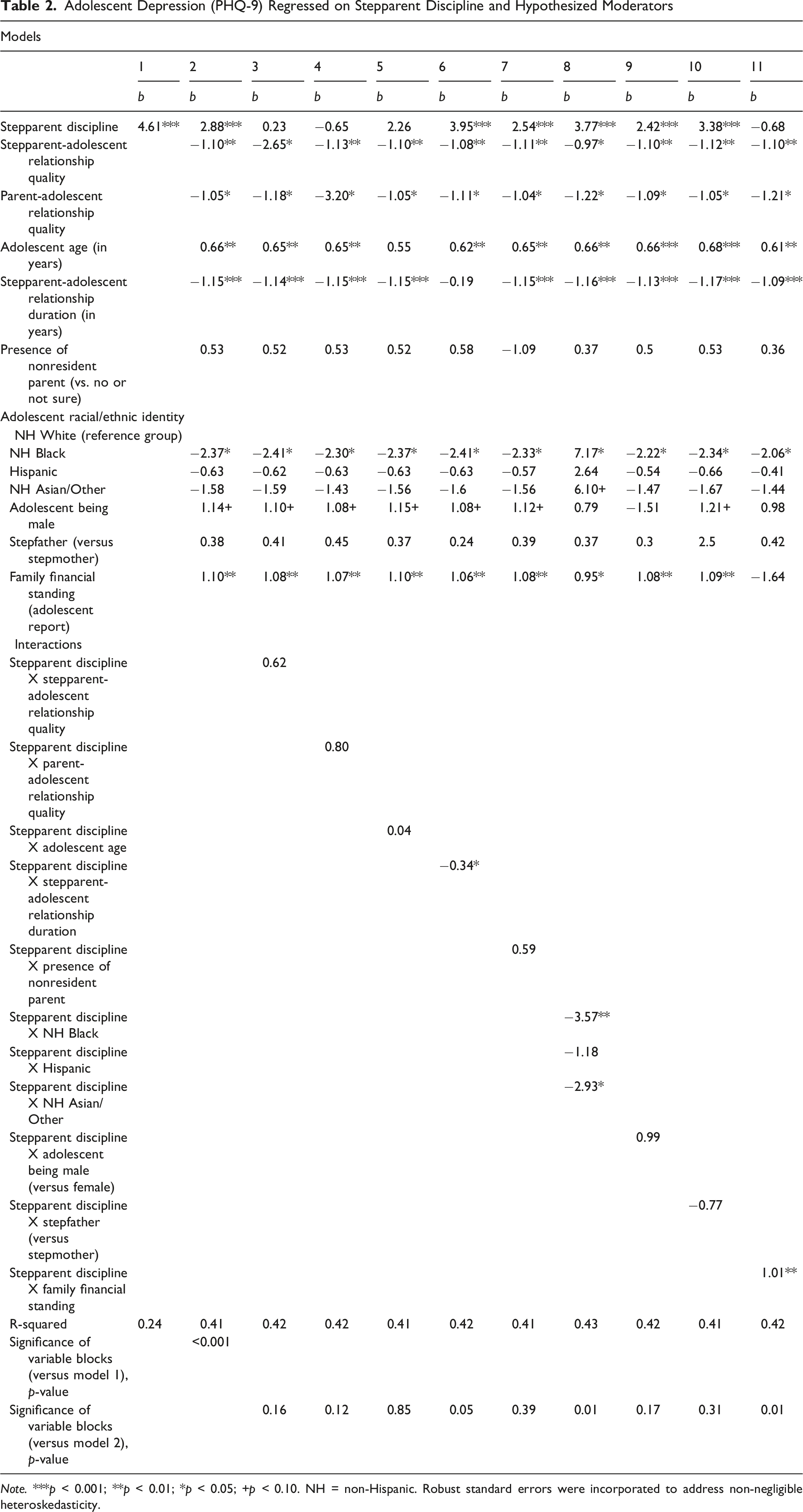
Note. ***p < 0.001; **p < 0.01; *p < 0.05; +p < 0.10. NH = non-Hispanic. Robust standard errors were incorporated to address non-negligible heteroskedasticity.
Significant moderation patterns emerged for relationship duration (b = −0.34, p < 0.05), racial/ethnic identity with NH White as the reference group (NH Black [b = −3.57, p < 0.01]; Hispanic [b = −1.18, non-significant]; NH Asian/Other [b = −2.93, p < 0.05]), and family financial standing (b = 1.01, p < 0.01). As shown in Figure 3 (Chart A), the positive association between discipline and adolescent depression was strongest among Hispanic and NH White adolescents, mirroring the pattern observed for conduct problems. The significant interaction between stepparent discipline and stepparent-adolescent relationship duration (Figure 3, Chart B) indicated that the positive association between stepparent discipline and adolescent depression weakened as stepparent-adolescent relationships increased in duration. The interaction between stepparent discipline and family financial standing showcased a similar pattern as that found with respect to conduct problems (see Figure 3, Chart C); higher levels of family financial standing magnified the positive association between stepparent discipline and adolescent depression. Visualization of Significant Interactions Involving Adolescent Depression. Note: NH = non-Hispanic. Relationship duration measured in year units. Shaded regions represent 95% confidence intervals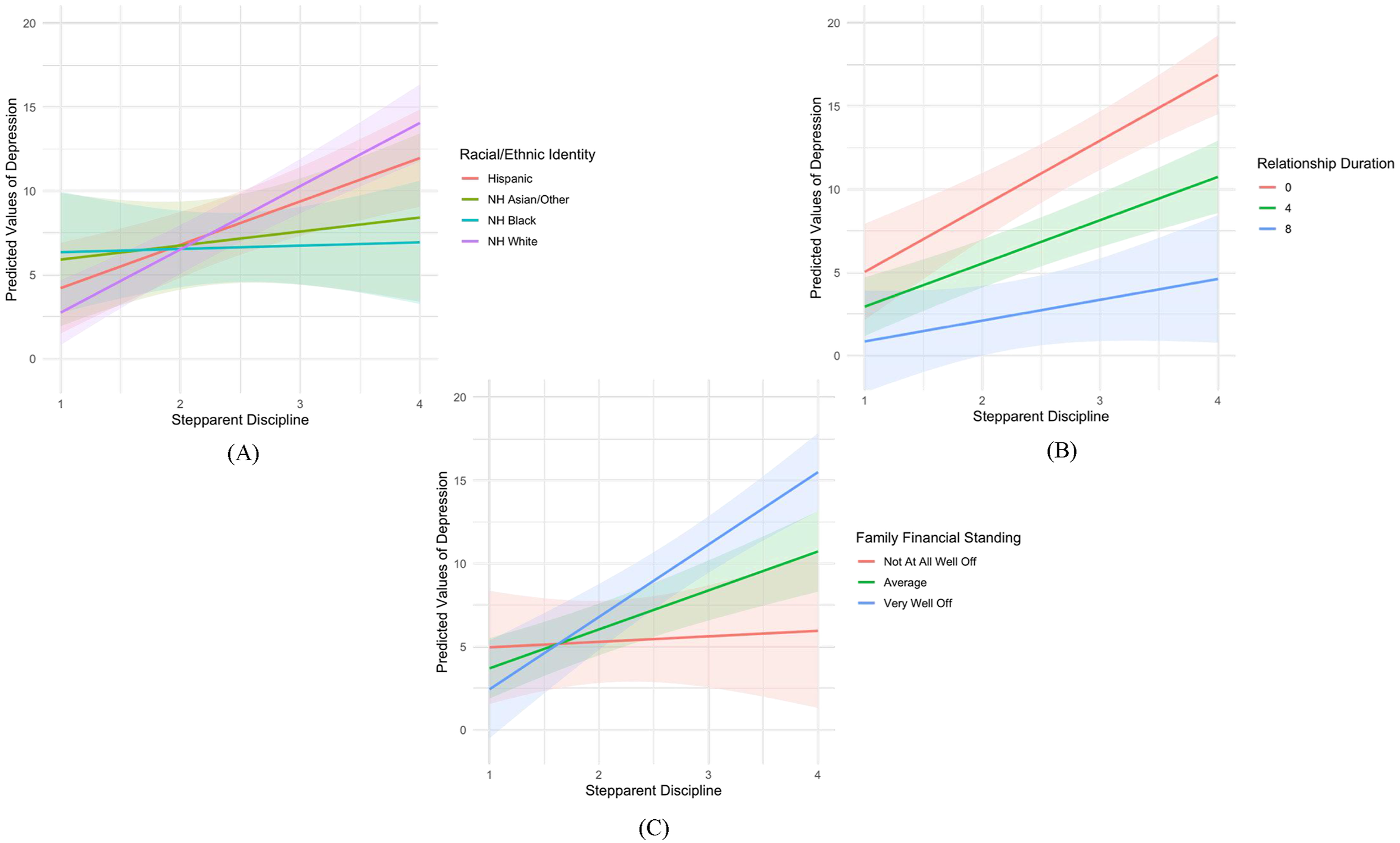
Discussion
The first aim of the current study was to assess average associations between stepparent discipline and adolescent maladjustment among a sample of adolescents residing with a stepparent in the U.S. Our analyses featured significant average associations, with a one-standard deviation increase in stepparent discipline being associated with roughly half-standard deviation increases in both adolescent conduct problems and depression (and roughly one-third-standard deviation increases in the context of adjusted models; Model 2). These findings align generally with past research (Fine et al., 1991; Lewis, 1999), as well as observations made by experienced stepfamily practitioners (Papernow, 2013, 2018). Still, careful interpretation is warranted with respect to apparent associations between stepparent discipline and adolescent maladjustment in our sample, in large part because the data analyzed were cross-sectional. Longitudinal data would be needed to better establish the temporal precedence of associations—it is possible (and perhaps likely) that adolescent maladjustment and stepparent discipline associate in a bidirectional, transactional manner over time (Lansford et al., 2018). We return to these points when discussing study limitations and future directions for research.
Summary of Findings
Note. NH = non-Hispanic. A “Yes” response indicates an interaction effect that was significant at the p < 0.05 level. A “Marginally” response indicates an interaction effect that was significant at the p < 0.10 level.
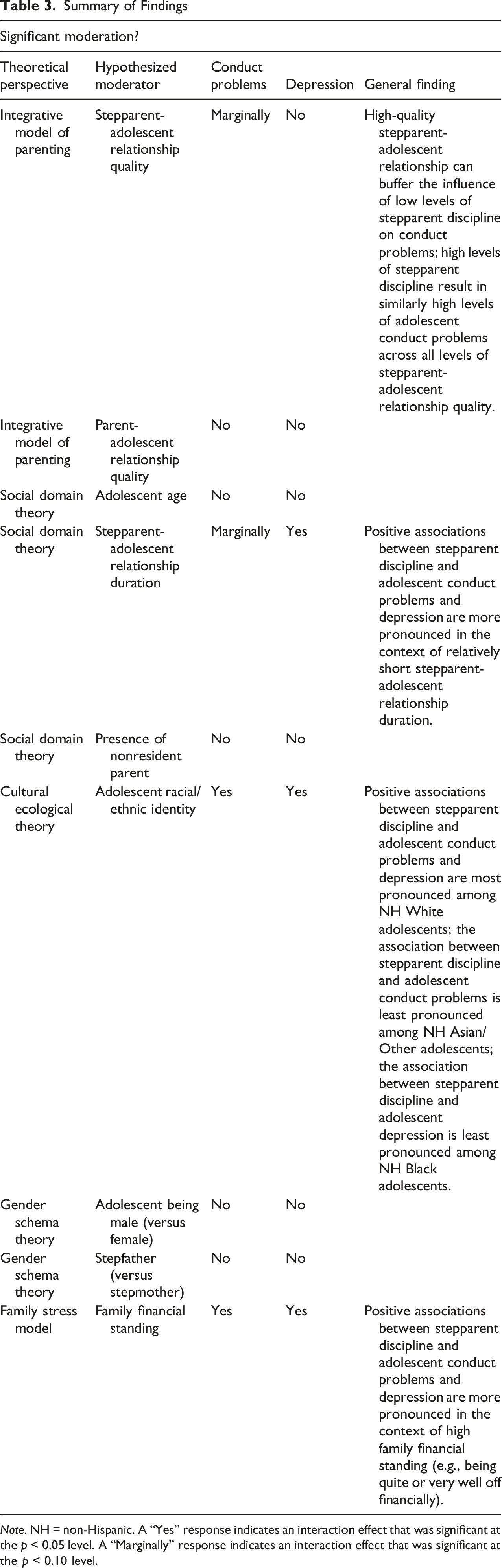
Turning to adolescent racial/ethnic identity, we found that positive associations between stepparent discipline and adolescent conduct problems and depression appear most pronounced among NH White adolescents, followed by Hispanic adolescents. In contrast, the association between stepparent discipline and adolescent conduct problems appears least pronounced among NH Asian/Other adolescents, and the association between stepparent discipline and adolescent depression appears least pronounced among NH Black adolescents. Consistent with cultural ecological theory, these findings appear to support the possibility that cultural environments marked by relatively higher levels of certain forms of family primacy reduce adolescents’ sensitivity to stepparent involvement in discipline. NH Black adolescents, for instance, might experience relatively higher levels of communalism, and stepparent discipline could be experienced through the lens of cultural normativeness, whereby discipline becomes perceived as a protective measure as opposed to an act of hostility or injustice (Deater-Deckard et al., 2003; Gershoff & Grogan-Kaylor, 2016; Lansford et al., 2004, 2005; Simons et al., 2002). Cultural normativeness might also be experienced by NH Asian youth, particularly in the context of elevated levels of filial piety (Kyeong et al., 2025; Liu & Wang, 2018; Ng et al., 2011; Pomerantz & Wang, 2009). Filial piety emphasizes respect for parental figures, and discipline is often viewed as an expression of love and care in Asian culture (e.g., “I love you, so I ‘guan’ [discipline] you,” Chao & Aque, 2009; Chao, 1994); therefore, NH Asian youth may be more likely to perceive their stepparents as legitimate and well-meaning authority figures. The generally non-significant differences between NH White and Hispanic adolescents with respect to interaction effects might suggest that family primacy in the form of familism, although promotive of the prioritization of immediate and extended family members, does not necessarily reduce adolescents’ sensitivity to stepparents’ involvement in disciplinary practices.
Turning next to family financial standing, we found that positive associations between stepparent discipline and adolescent conduct problems and depression appear more pronounced in the context of high family financial standing (e.g., being quite or very well off financially). This suggests that adolescents from relatively wealthier stepfamilies could be more sensitive to stepparent involvement in discipline. One possibility is that for stepfamilies facing financial hardship, the potential influence of stepparent discipline on adolescent maladjustment is overshadowed by other significant stressors, including housing instability and food insecurity (Flouri & Midouhas, 2017). Stressors linked to limited financial resources might also shift adolescents’ perceptions about stepparent discipline such that discipline is interpreted as an effort to support the family’s management of economic and other related challenges. In addition, research highlights how youth in relatively high-resource family environments exhibit greater tendencies to assert themselves, self-advocate, and openly challenge authority (Calarco, 2014; Côté et al., 2021; Schneider & Schenck-Fontaine, 2022). As a result, adolescents in relatively high-resource stepfamilies might be especially resistant to stepparents’ attempts to engage in discipline, resulting in relational tensions and stress that contribute to elevated levels of adolescent conduct problems or depressive symptoms.
Our results also yielded partial support for social domain theory (and the associated test of stepparent-adolescent relationship duration as a moderator). Relatively longer stepparent-adolescent relationships offer the time needed to effectively build role clarity and trust, establish shared routines and relational meanings, and increase the perceived legitimacy of stepparent authority and efforts to engage in discipline. As a result, longer relationships marked by repeated positive interactions might help youth interpret stepparent discipline as well-intended guidance rather than as hostile or unjust, potentially weakening associations between stepparent discipline and adolescent depression (and possibly conduct problems). Although only marginally significant, stepparent-adolescent relationship quality also might be a noteworthy moderator of links between stepparent discipline and adolescent conduct problems. In potential support of the integrative model of parenting, a high-quality stepparent-adolescent relationship might buffer the influence of stepparent discipline on adolescent conduct problems (especially at relatively low levels of stepparent discipline)—a possibility with empirical substantiation in the broader literature and across various contexts (Germán et al., 2013; Lee & Watson, 2020; McLoyd & Smith, 2002). Our findings also tentatively suggest that high levels of stepparent discipline yield similarly high levels of adolescent conduct problems across all levels of stepparent-adolescent relationship quality. Thus, the potential protective effect of stepparent-adolescent relationship quality might be most operative at lower levels of stepparent discipline.
Theoretical and Practical Implications
Foremost, our findings highlight that stepparent involvement in discipline—although showcasing positive associations with adolescent maladjustment, on average—should not necessarily be viewed as uniformly and comprehensively beneficial or harmful. The influence of stepparent discipline likely depends on the intersection of relational timing and quality, cultural meaning, and economic context. Interventions designed to strengthen stepfamily functioning and promote adolescent well-being should therefore attend jointly to relationship processes, cultural norms, and contextual stressors. Early in the formation of a stepfamily, practitioners could help families prioritize emotional connection and collaborative rule-setting long before stepparents assume any amount of disciplinary involvement. Programs intended to support stepfamilies also should incorporate culturally responsive practices that recognize the diverse ways families negotiate, interpret, and navigate caregiver authority. Practitioners, service providers, and policymakers also should attend to the economic conditions in which stepfamilies operate, striving to address financial stressors and associated burdens that might overshadow or otherwise obfuscate stepfamily-specific challenges and demands.
Limitations and Future Directions
Interpretations and conclusions should be informed by several important study limitations. First, our cross-sectional design restricts causal interpretations. Future research should leverage longitudinal data, firmly establishing temporal precedence between measures of stepparent discipline and measures of adolescent maladjustment. Second, all study measures relied on adolescent self-reports, which could introduce common method variance and otherwise fail to account for the experiences and perceptions of other family members. Future research would be strengthened by use of multi-informant data, enabling the triangulation of responses across multiple family members to distinctly or jointly represent relevant stepfamily experiences and youth outcomes. However, it is worth noting that our data collection efforts were explicitly designed to foreground and center adolescent perspectives, in large part to address the common omission of child perspectives related to stepfamily life. Third, we were unable to incorporate a detailed measure of nonresident parent involvement, instead having to rely on a coarse measure of whether a nonresident parent was present or a feature of the larger family environment in general terms. This limited our ability to assess nonresident parent involvement as a continuous moderator of links between stepparent discipline and adolescent maladjustment—an important direction for future research to pursue.
Supplemental Material
Supplemental material - Stepparent Involvement in Discipline and Adolescent Maladjustment: What Factors Moderate the Association?
Supplemental material for Stepparent Involvement in Discipline and Adolescent Maladjustment: What Factors Moderate the Association? by Todd M. Jensen, Ruogu Xu, & Yushan Zhao in Journal of Family Issues.
Footnotes
Ethical Considerations
This study received ethical approval from the University of North Carolina at Chapel Hill IRB (approval #: 24-0878) on June 6, 2024.
Consent to Participate
The need for written consent was waived; however, an online consent form with electronic agreement was issued to and secured by participants, in accordance with the IRB-approved protocols.
Funding
The authors disclosed receipt of the following financial support for the research, authorship, and/or publication of this article: This research received support from a Population Research Infrastructure Program (iPOP) award to the Carolina Population Center (P2C HD050924) at The University of North Carolina at Chapel Hill by the Population Dynamics Branch (PDB) of the Eunice Kennedy Shriver National Institute of Child Health and Human Development.
Declaration of Conflicting Interests
The authors declared no potential conflicts of interest with respect to the research, authorship, and/or publication of this article.
Data Availability Statement
The data that support the findings of this study are available from the corresponding author upon reasonable request.
Supplemental Material
Supplemental material for this article is available online.
References
Supplementary Material
Please find the following supplemental material available below.
For Open Access articles published under a Creative Commons License, all supplemental material carries the same license as the article it is associated with.
For non-Open Access articles published, all supplemental material carries a non-exclusive license, and permission requests for re-use of supplemental material or any part of supplemental material shall be sent directly to the copyright owner as specified in the copyright notice associated with the article.
